22 Playroom Organization Ideas for 2026
This post may contain affiliate links: full affiliate disclosure.
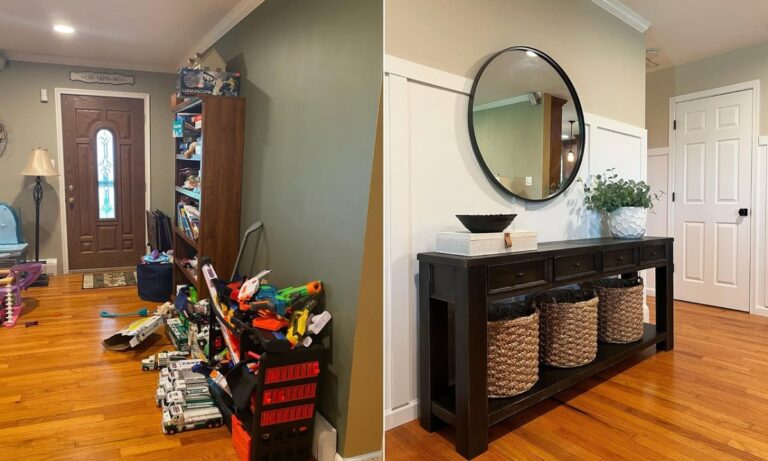
I stepped on a LEGO last week when I went into our playroom. There were jigsaw pieces all over the floor, cars beneath the couch, and cuddly animals on the chair.
It seemed like the mess came returning no matter how many times we cleaned it. If your playroom looks like this, the problem is probably not the number of toys.
The main difficulty is that most toys don’t have a clear place to go. Kids throw things out when everything is messed up, and cleaning up becomes a fight.
In this article, I will show you 22 practical ways to organize your playroom. Each idea helps you make better use of the space you already have.
Let’s jump in!
Contents
- 1 How Do You Organize a Messy Playroom Without Throwing Toys Away?
- 1.1 Rainbow Decor
- 1.2 Wooden Zones
- 1.3 Cube Sorting
- 1.4 Grid Shelves
- 1.5 Play Stations
- 1.6 Closet Storage
- 1.7 Wall Cubes
- 1.8 Bin Labels
- 1.9 Display Shelves
- 1.10 Glass Cabinets
- 1.11 Drawer System
- 1.12 Category Wall
- 1.13 Activity Corner
- 1.14 Dress Rack
- 1.15 Basket Cubes
- 1.16 Open Shelves
- 1.17 Corner Storage
- 1.18 Built-ins
- 1.19 Book Cubes
- 1.20 Number Bins
- 1.21 Basket Cubby
- 1.22 Library Wall
- 2 FAQs
How Do You Organize a Messy Playroom Without Throwing Toys Away?
It’s not typically because you have too many toys if your playroom is always messy. Most of the time, toys don’t have an obvious spot to go.
Kids dump out their toys to get what they want when everything is mixed up in big bins or on the floor. They never know where to put them back.
The best approach to remedy this is to set up a simple system. To begin, put toys that are same in groups and then give each group its own place to store them.
Put things in containers, baskets, or on shelves where kids can readily reach. When each toy has a “home,” it’s easier to clean up and the playroom stays neat without tossing away toys.
Save this article for later! 👇👇
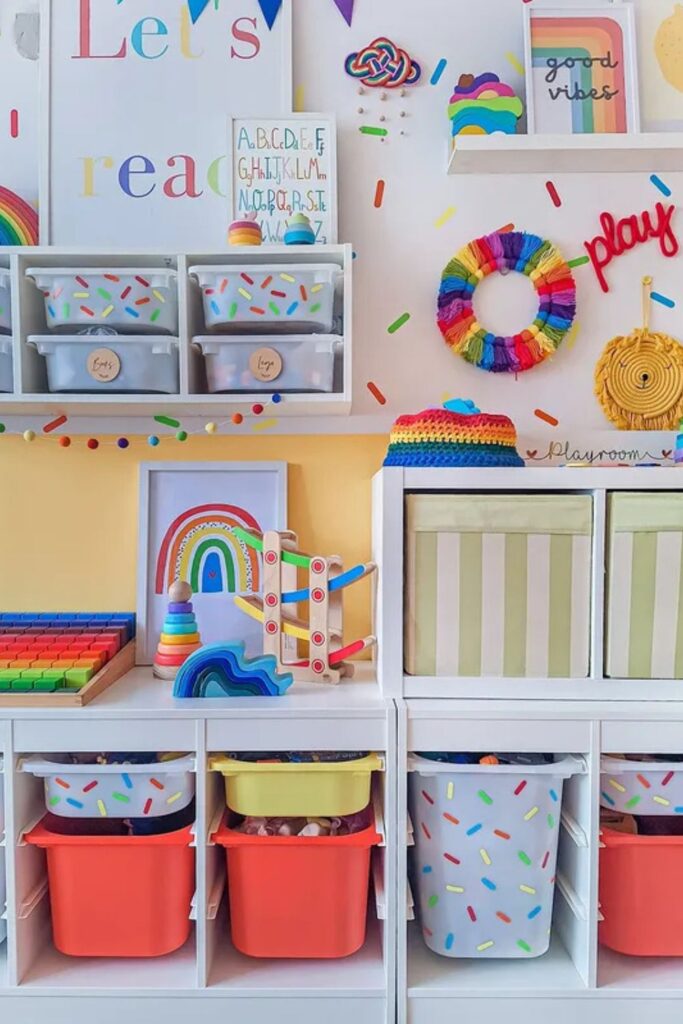
Rainbow Decor
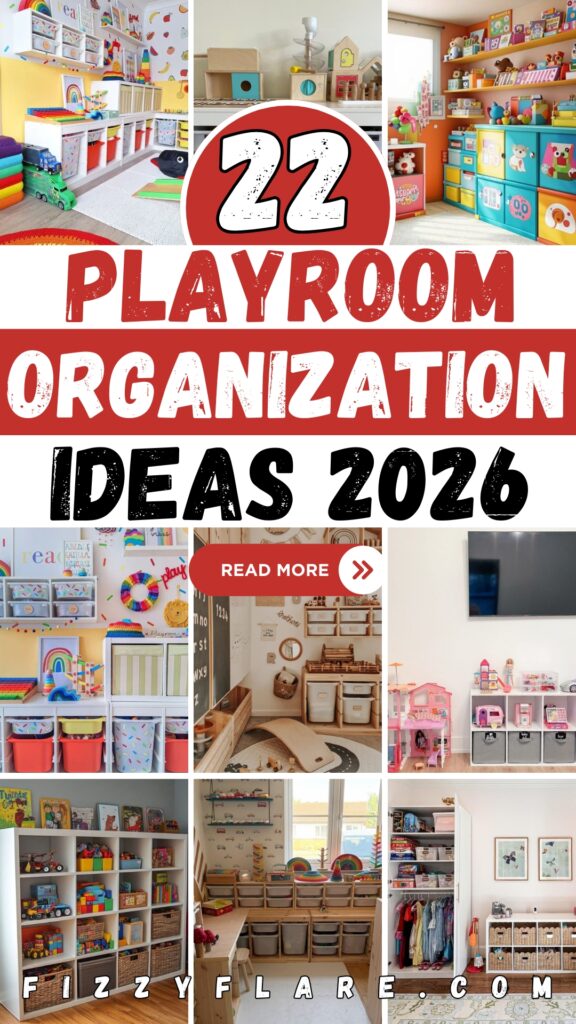
Bright colors can make toy storage feel fun instead of messy. A simple cube shelf like this works best when each bin holds one toy category.
Give each type of toy its own container so youngsters always know where to put items. For example, give blocks their own bin, cars their own bin, and puzzles their own bin.
Kids can see their toys better when they are in clear or patterned bins instead of on the floor. Put the shelf at the right height for kids so they can easily reach and put away their toys.
Wall shelves above the unit are perfect for books or modest decorations that encourage play without taking up floor space.
Adding fun wall art and bright accessories makes the storage look more like furniture and less like basic furniture in the playroom.
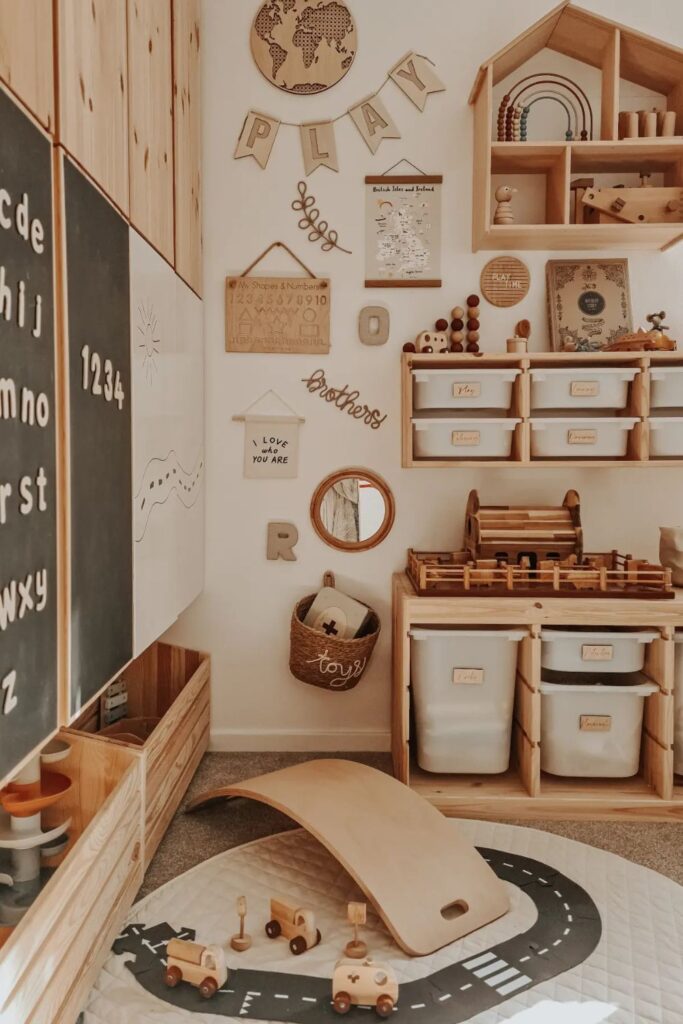
Wooden Zones
Playrooms feel calmer when toys are organized by activity instead of random bins. A simple way to do that is by creating small play zones like this setup.
One part has learning resources like the blackboard and letter wall, and the basement storage has labeled containers that keep items organized.
Puzzles, stacking toys, and other things that youngsters use a lot might go on little wooden shelves on the wall.
Try to keep toys that kids use a lot at their level and ornamental items higher up. Natural wood shelves also help everything come together.
Kids know exactly where each toy goes when the space is divided into learning, construction, and pretend-play areas. This makes cleaning up easy.
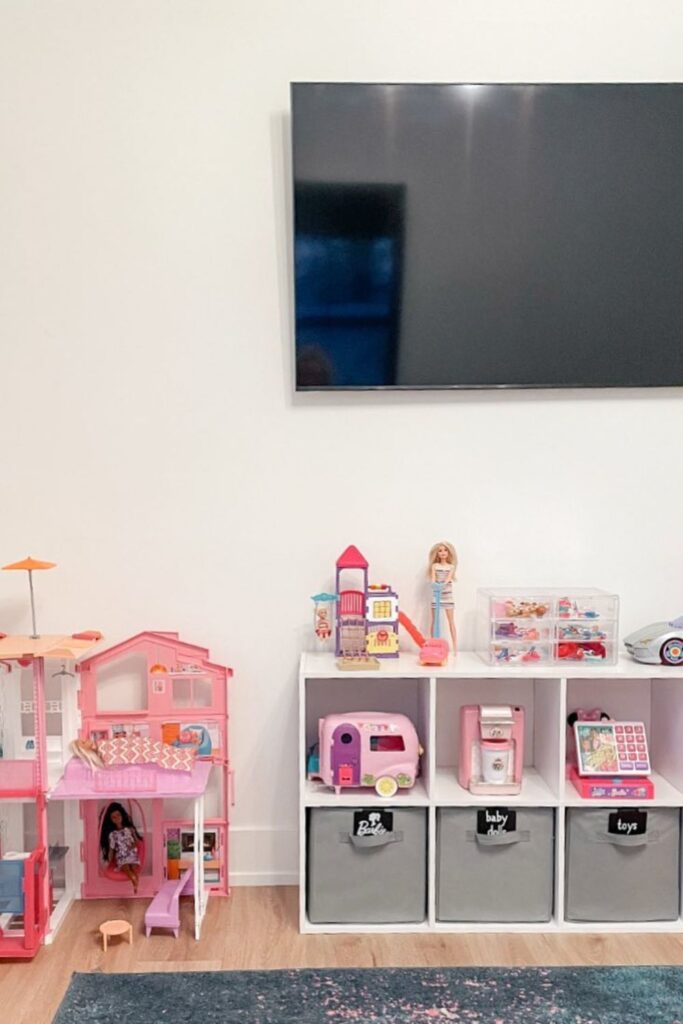
Cube Sorting
Toy clutter usually happens when everything ends up in one big box. Cube shelves fix that problem because each space can hold a different toy category.
Give each cube a different purpose, such one for dolls, one for toy vehicles, and one for books. This way, kids can find what they need without having to throw everything out.
The fabric bins inside the cubes keep smaller toys organized and out of sight. Open cubes are also good for bigger things that don’t fit in bins, such dollhouses or playsets.
Putting the shelf against a wall keeps the middle of the room clear for play, and the flat top is an excellent place for kids’ toys that they use a lot.
It’s considerably easier to clean up when you have simple category containers like “baby,” “toys,” or “sports.”
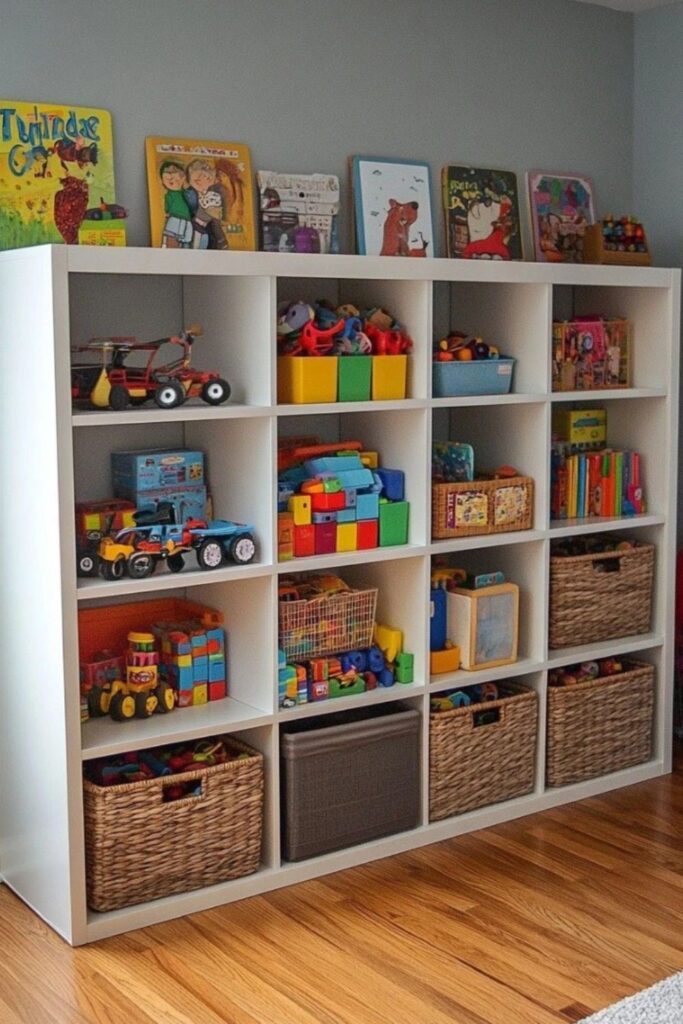
Grid Shelves
Overflowing toy bins make it hard for kids to find anything. A wide grid shelf solves that by giving each toy type its own compartment.
You can keep blocks, automobiles, puzzles, and books in their own cubes so they don’t get jumbled up.
Bigger cubes are great for big toys, and baskets on the bottom row keep tiny things that make a mess out of sight.
Put toys that youngsters use every day in the middle cubes so they can reach them easily. Use the top row for books or display items.
When each cube has a distinct categorization, cleaning up is a short task instead of a long job of sorting.
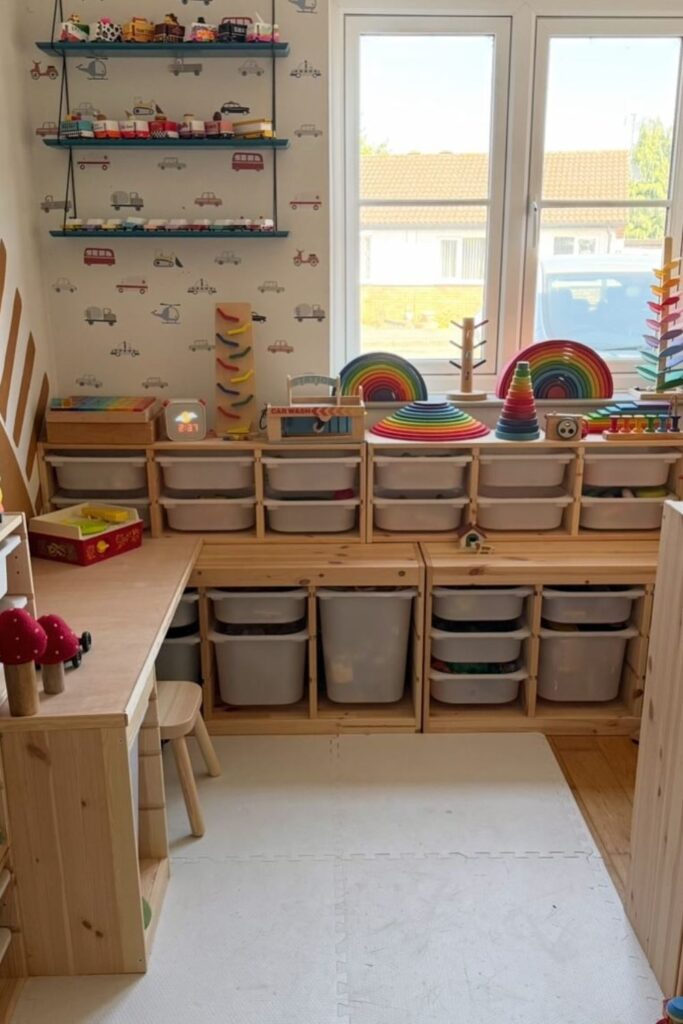
Play Stations
Mess spreads quickly when every toy lives in the same area. Dividing the room into small play stations makes everything easier to manage.
One side can have constructing toys, another can have puzzles or learning activities, and bins underneath can keep extra toys out of sight and organized.
These low wooden shelves are great because kids can get to their toys without asking for help. Underneath the tabletop, storage bins keep things out of sight but still easy to get to.
This kind of setup works well along a wall or under a window where natural light makes playing more fun.
Kids can also use clear stations to help them clean up because each activity has its own location.
Closet Storage
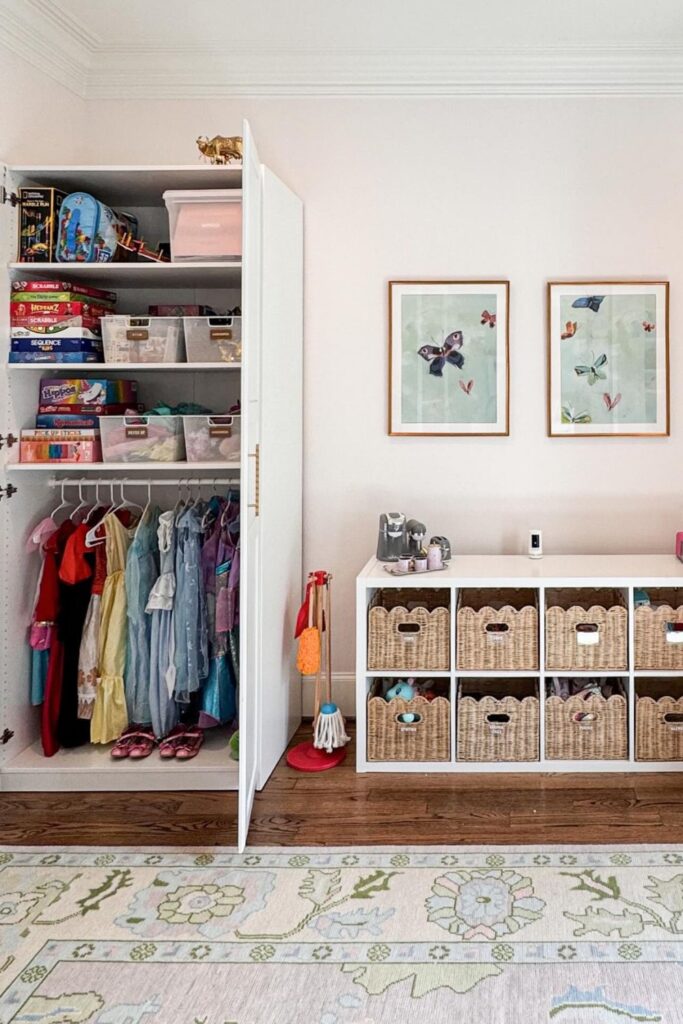
Toy clutter often spreads because bigger items have no proper place to go. Turning a closet into organized toy storage solves that quickly.
Hanging rods are great for dress-up clothes because they let kids view the clothes and pick them out easily while they play pretend.
Board games, craft kits, or activity boxes that you don’t need to get to every day can go on the upper shelf. Clear containers let you see small items so they don’t get lost in random bins.
The closet holds most of the toys, while cube shelves with bins nearby hold the everyday ones.
This kind of layout works well in bedrooms or playrooms that are shared and don’t have a lot of space.
Wall Cubes
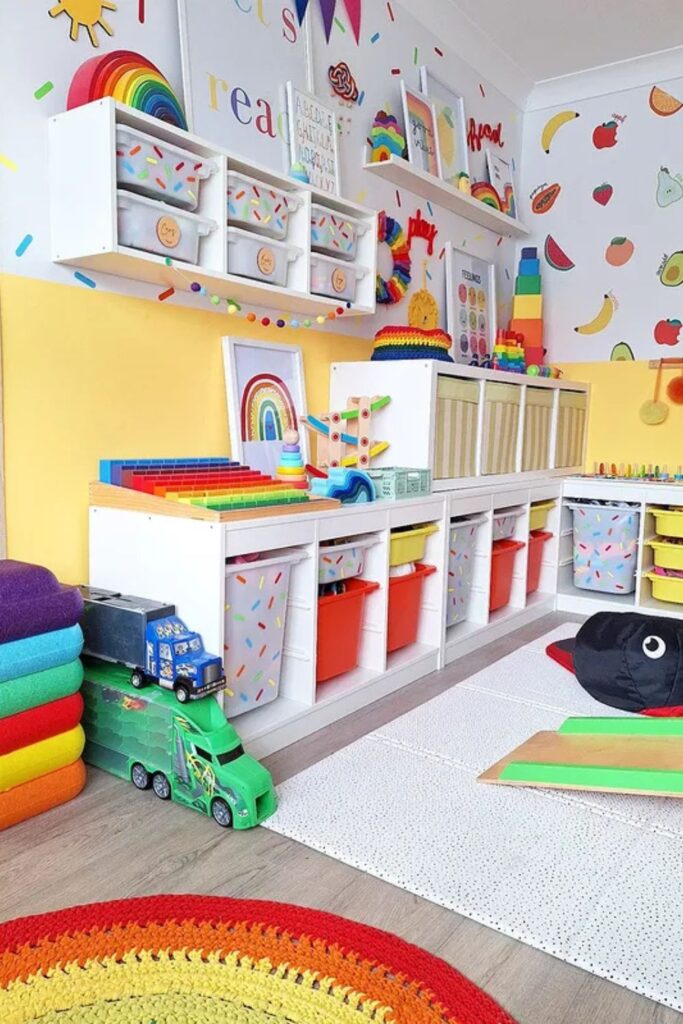
Floor space disappears fast when every toy needs a place to sit. Wall-mounted cubes free up the ground while still keeping toys organized and easy to grab.
Each cube has small containers that can hold puzzle pieces, construction blocks, or craft supplies so that nothing gets mixed up.
To make a layered system where toys that are used often are easy to reach and display items are higher up, mount the shelf slightly above the primary storage container.
The lower cube shelves with colored bins hold most of the toys, and the wall unit keeps the smaller groups apart.
In playrooms with lots of light, combining wall storage with low cabinets is a great way to keep things organized while still leaving lots of floor area for constructing, drawing, or pretend play.
Bin Labels
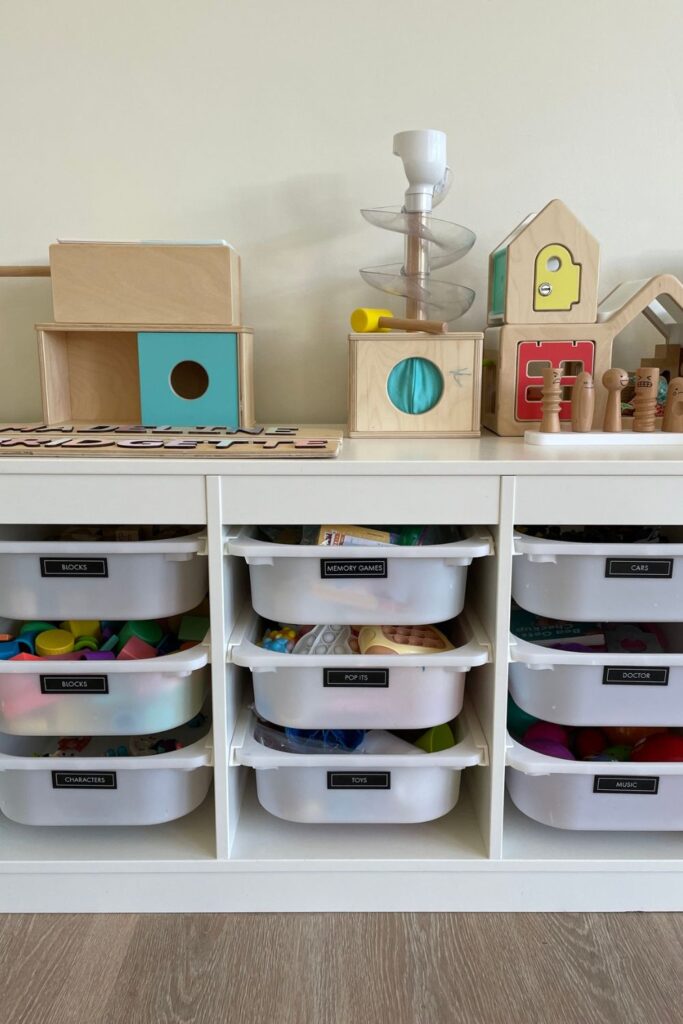
Searching for toys becomes frustrating when everything gets tossed into random containers. Clear bins with simple labels solve that problem instantly.
Kids know exactly where to search and where to put things back after playtime because each container can carry only one type of item.
Such books, vehicles, or construction pieces. Cubby shelves that are low work best since kids can take the bins out by themselves.
The approach is easy to follow even while you’re cleaning up quickly because of the label stickers or little tags.
Putting activity toys on the top surface also keeps the things you like close by while the others stay organized below.
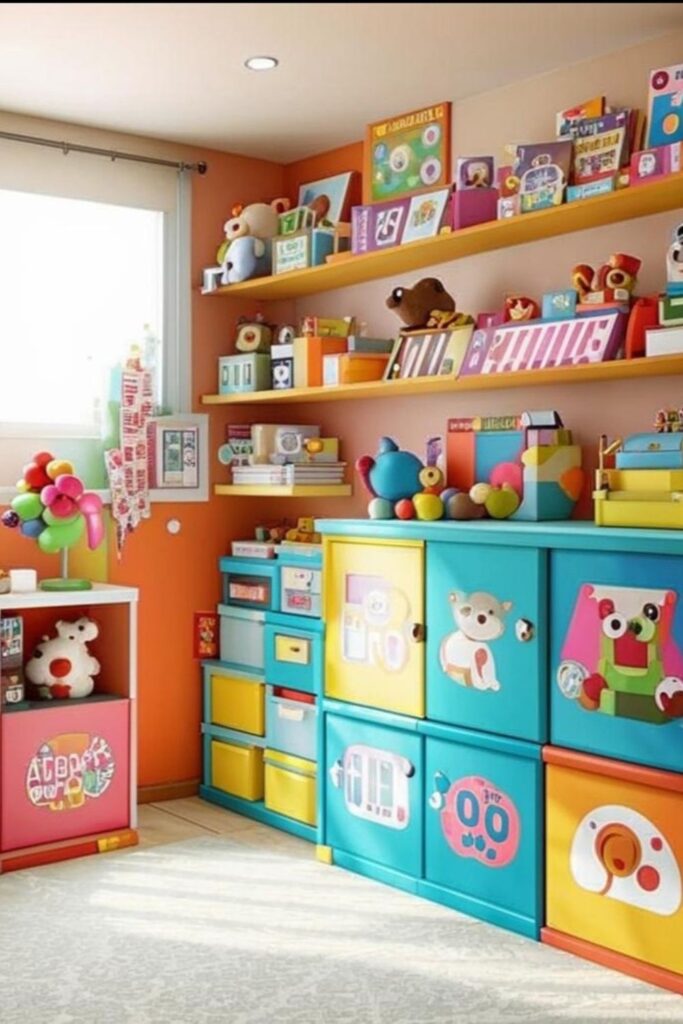
Display Shelves
Books and smaller toys often disappear inside deep bins where kids forget about them. Long wall shelves keep favorite items visible and easy to grab.
Putting books with their covers facing out makes kids want to read them since they can easily tell what they are.
You may put smaller toys, puzzles, or keepsakes next to the books without taking up space on the floor.
The shelves above show off goods that are used more often, while the storage drawers below hold bigger toys.
Putting shelves on the wall also makes empty wall space into usable storage without making the room feel crowded.
Glass Cabinets
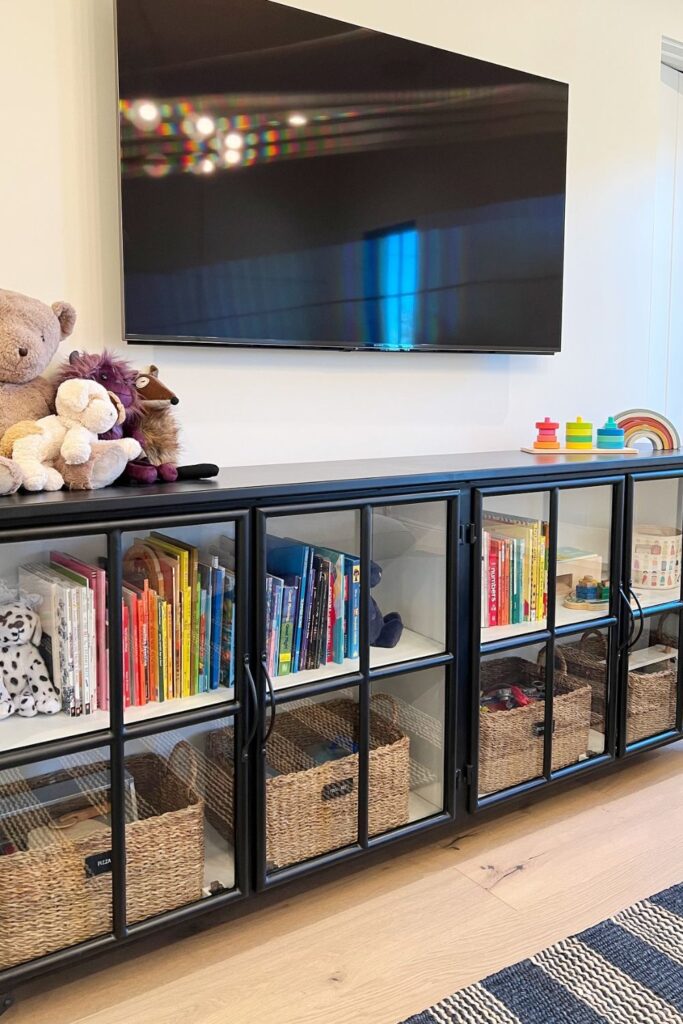
Some toys create visual clutter even when they’re technically organized. Glass-door cabinets solve that by keeping everything contained.
But still letting you glimpse what’s inside. Dust can’t get to books, puzzles, and plush animals, while woven baskets inside the cabinet keep smaller objects together.
This long cabinet is great for putting under a TV that is placed on the wall or along an empty wall where typical toy bins can look chaotic.
Kids can open the doors to get what they need and then close them to make the room look neat again right away.
Putting open book storage and hidden baskets in the same cabinet maintains the space useful while keeping it tidy and grown-up, which goes well with the rest of the house.
Drawer System
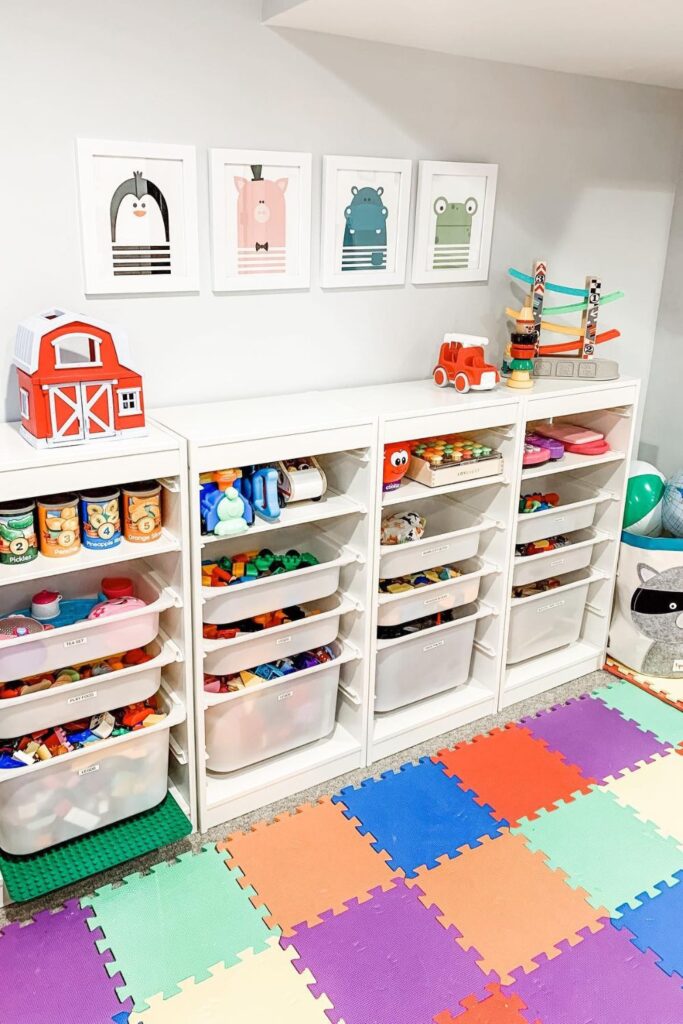
Toy pieces scatter everywhere when storage is too deep or mixed together. Shallow pull-out drawers solve that by keeping toys separated and easy to see.
The small drawers can house building blocks, figures, or art items. The big bins at the bottom can hold bigger toys.
Kids can pull out a drawer, play with it, and then push it back in without spilling everything on the floor.
Putting many thin drawer units along one wall also makes a long play area on top for playsets, barns, or car tracks.
Putting labels on the drawers helps kids remember where to put each toy.
This kind of arrangement is great for LEGO, puzzle pieces, and little items that tend to get misplaced in big containers.
Category Wall
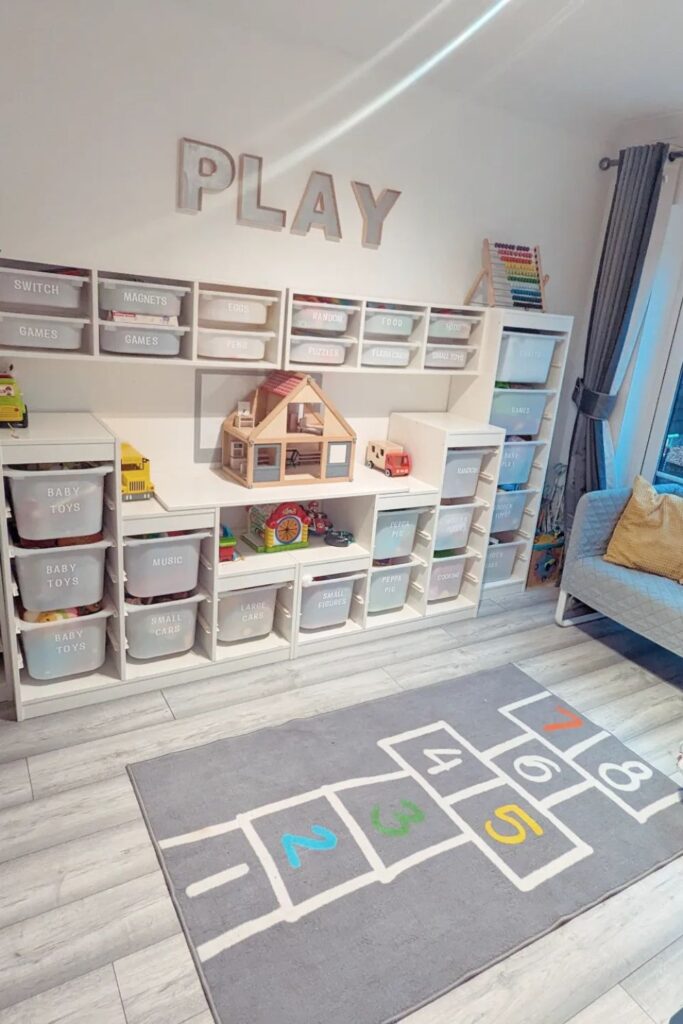
Toy mess becomes easier to control when every category has a clearly labeled spot. A long storage wall like this turns one side of the room into a complete organization system.
Kids can find their toys faster if they have separate bins for puzzles, blocks, cars, and games instead than having to look through a bunch of odd containers.
When kids can match toys with the label on the container, it makes cleaning up a lot easier as well.
Younger kids can reach daily toys on the lower shelves, and smaller objects like magnets or craft supplies can be stored in the upper bins.
If you have playsets or dollhouses that stay out throughout playtime, a central tabletop space is a good place for them.
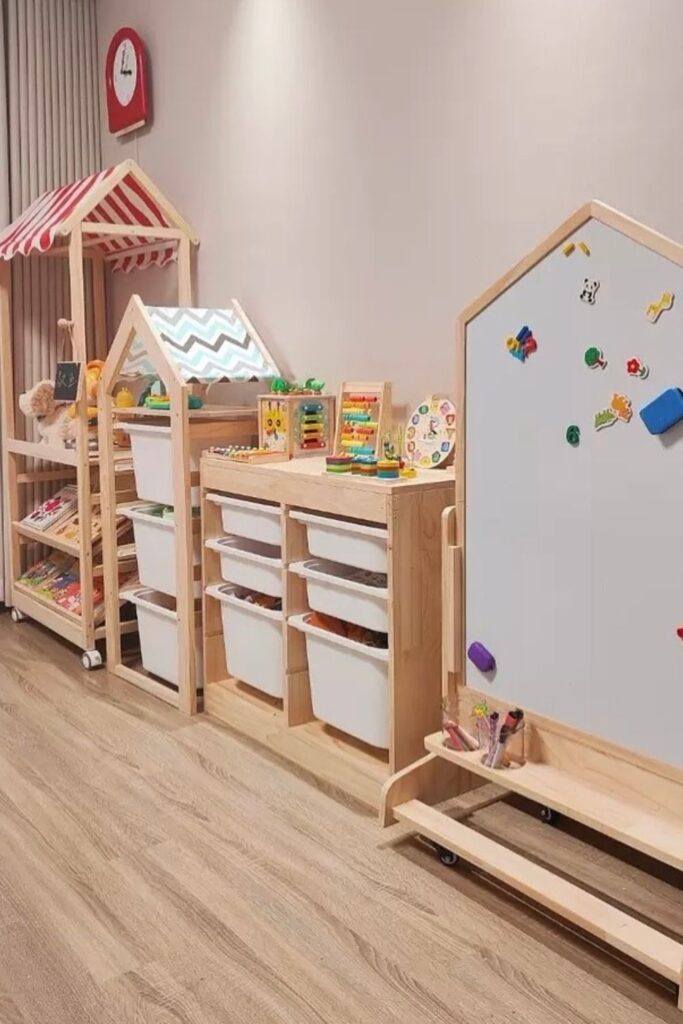
Activity Corner
Some toys work better when they stay in one dedicated area instead of moving around the room.
This little activity space keeps learning materials, books, and painting supplies in one spot. You can put crayons, puzzle pieces, or small building items in storage trays.
Under the table so that everything is easy to reach as you play. A rolling whiteboard or drawing board adjacent makes the room a small creation center.
Where youngsters can draw, write, or play with magnets. Small bins on shelves keep things organized without making the table messy.
This kind of design works best along a wall since it keeps all the learning activities organized while yet leaving a lot of open floor area for other toys.
Dress Rack
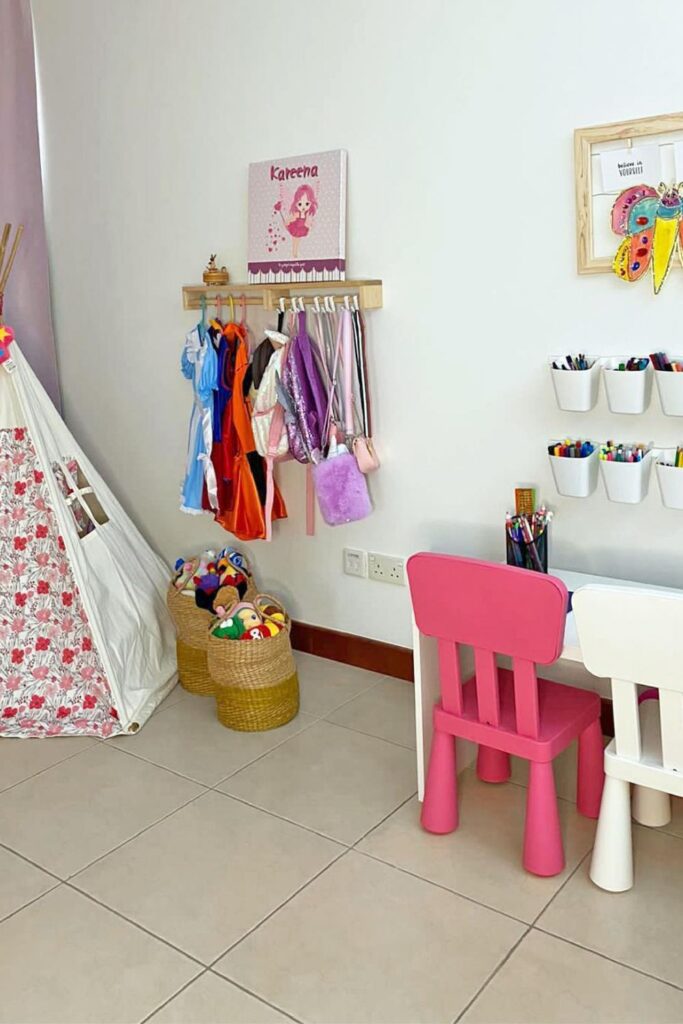
Costumes usually end up crumpled in toy bins where kids forget they even exist. A small dress-up rack turns those outfits into part of the playroom display.
while keeping them in order. Kids can easily pick out outfits for pretend play when you hang dresses, capes, and accessories on low hooks.
Baskets underneath can contain masks, crowns, or small props so that everything stays in one place.
Putting a play tent nearby makes a great place for youngsters to change costumes and jump right into imaginative games.
Wall-mounted containers next to the table keep craft items neat without taking up too much space on the desk.
Basket Cubes
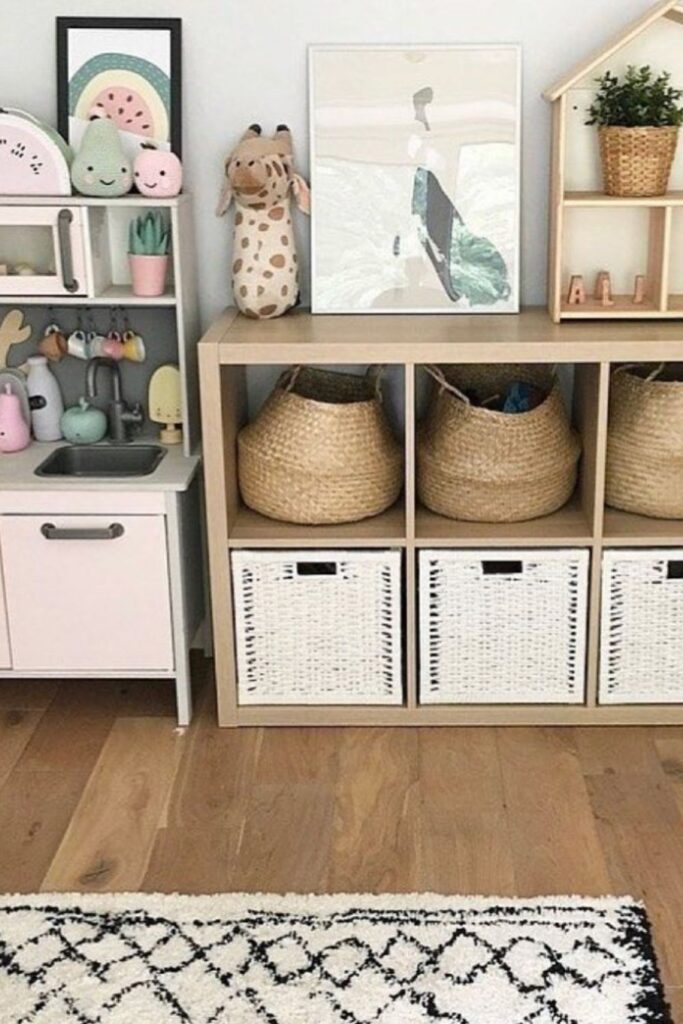
Toy clutter looks overwhelming when everything stays out in the open. Large woven baskets inside cube shelves create hidden storage that still stays easy to use.
You can put a toy category in each basket, like cuddly animals, construction blocks, or play food, and the shelf won’t look chaotic.
Natural baskets also make toy storage look less harsh, which helps the playroom fit in with the rest of the house.
Kids can pull the baskets out and slide them back in after they’re done playing if you keep them on lower cubes.
The flat surface above the cubes is great for play kitchens, dollhouses, or ornamental shelves that show off your favorite toys without making the room look messy.
Open Shelves
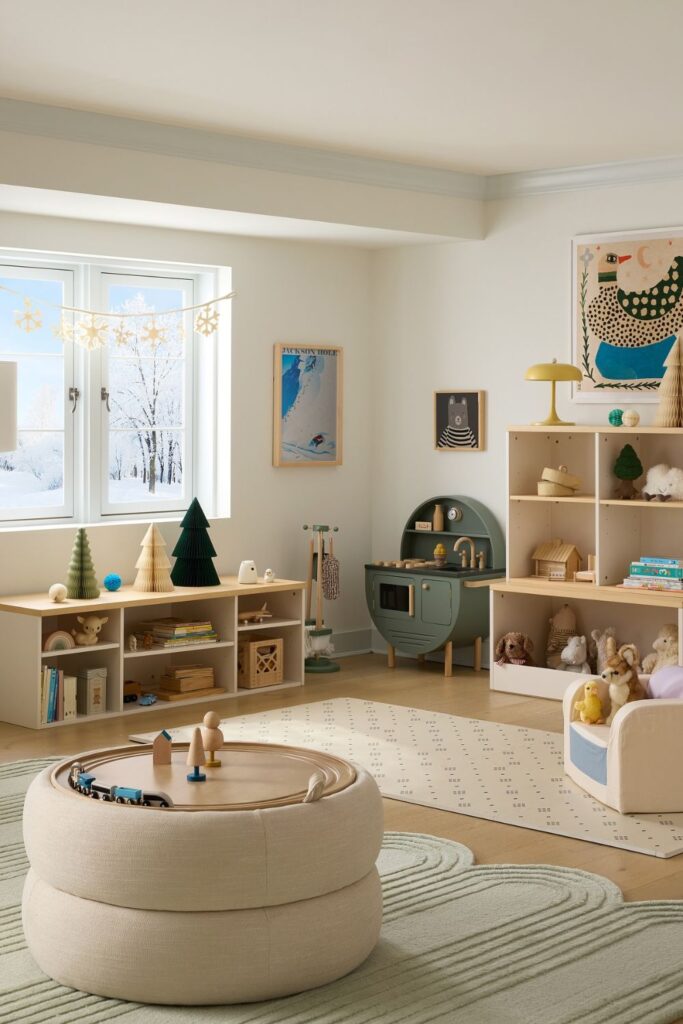
Large toy bins often hide half the toys kids own. Open shelving keeps everything visible so children can choose toys without dumping containers onto the floor.
Low shelves are great for showing off wooden toys, books, and tiny play sets that look attractive.
Putting toys that youngsters use a lot on the lower levels makes it easier for children to get them on their own during playtime.
You can put decorative objects or seasonal toys on the upper shelf to keep them orderly and out of the way.
Kids are also more likely to focus on one activity instead of spreading toys all over the place if there are only a few on each shelf.
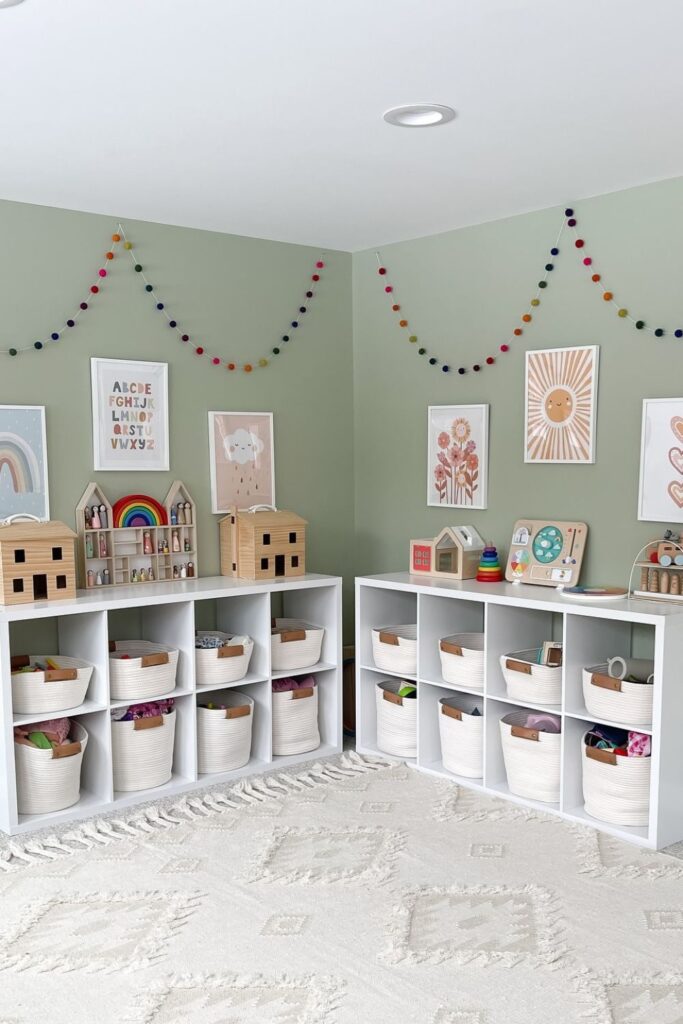
Corner Storage
Unused corners often become dead space in playrooms, yet they can hold a surprising amount of toy storage.
Putting two cube units along the walls right away makes the corner a handy place to store things.
There are soft baskets within each cube that assist keep the shelves neat and tidy while separating the different types of toys.
Kids can keep their dolls, blocks, and pretend-play items in separate baskets so they don’t get mixed up.
Putting decorative toys like dollhouses or stacking toys on top of each other makes a fun display without taking up too much space on the floor.
Built-ins
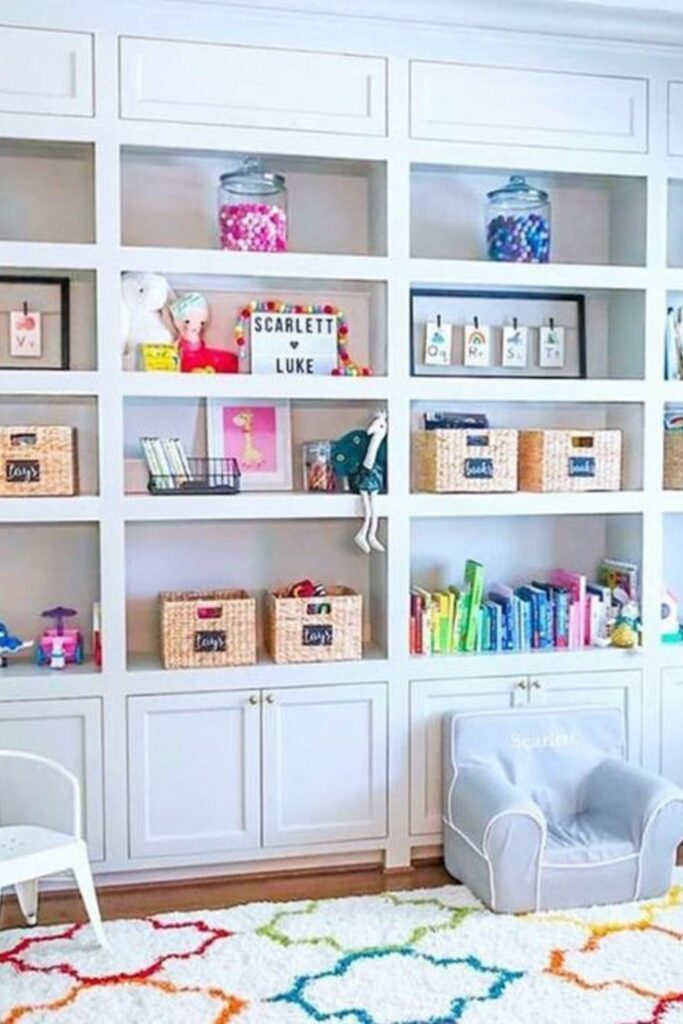
Wall storage can hold far more toys than scattered shelves around the room. Built-in shelves create a full organization wall.
Where each part has a reason for being there. Kids may easily take up a book from the middle shelf since it stays upright.
Baskets on the center shelf can separate toys by category. Adding charm to the room with decorative jars and framed pieces on upper shelves won’t get in the way of play.
Closed drawers at the bottom keep bigger toys or things that aren’t used every day out of sight.
This kind of arrangement works best in bigger playrooms or family rooms where the toy storage needs to fit in with the rest of the house.
Book Cubes
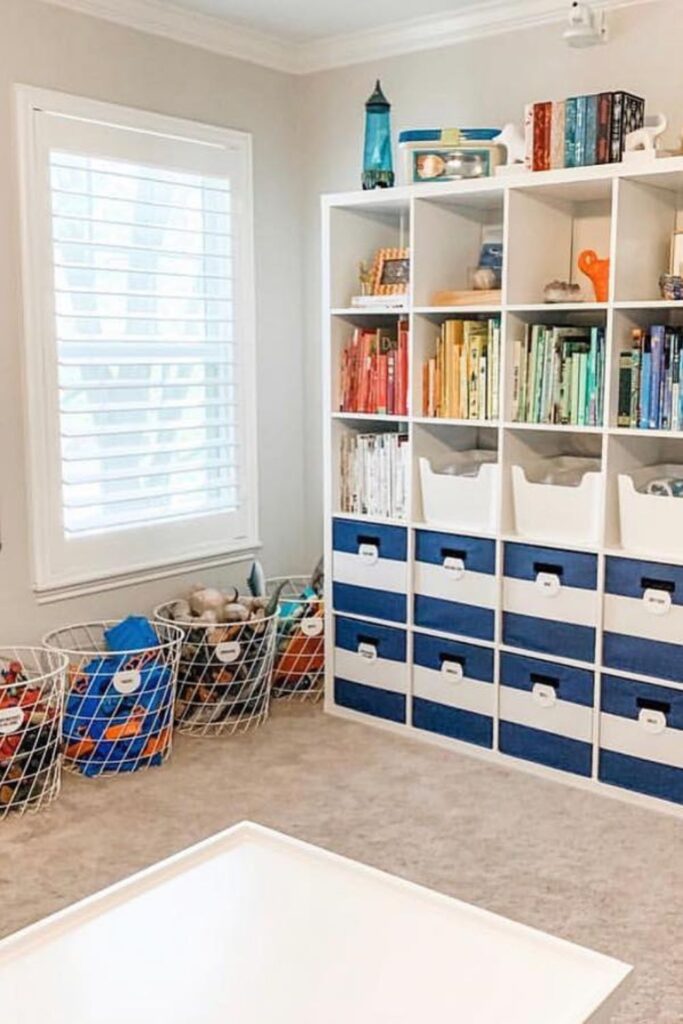
Book piles can quickly take over a playroom if they don’t have a dedicated spot. A tall cube shelf like this keeps reading materials and toys organized in one clean wall system.
Upper cubes are great for books that are organized by size or theme. This makes it easy for kids to pick up a story during quiet time.
The fabric drawers below hide smaller toys, puzzles, or art objects that tend to make a mess. By combining open cubes with closed drawers, you can maintain the area balanced.
Some things will be visible while others will be hidden. You may also quickly retrieve sports balls or bigger toys that don’t fit in bins by putting wire baskets next to the shelf.
This kind of storage wall puts books, toys, and supplies for activities all in one clean place.
Number Bins
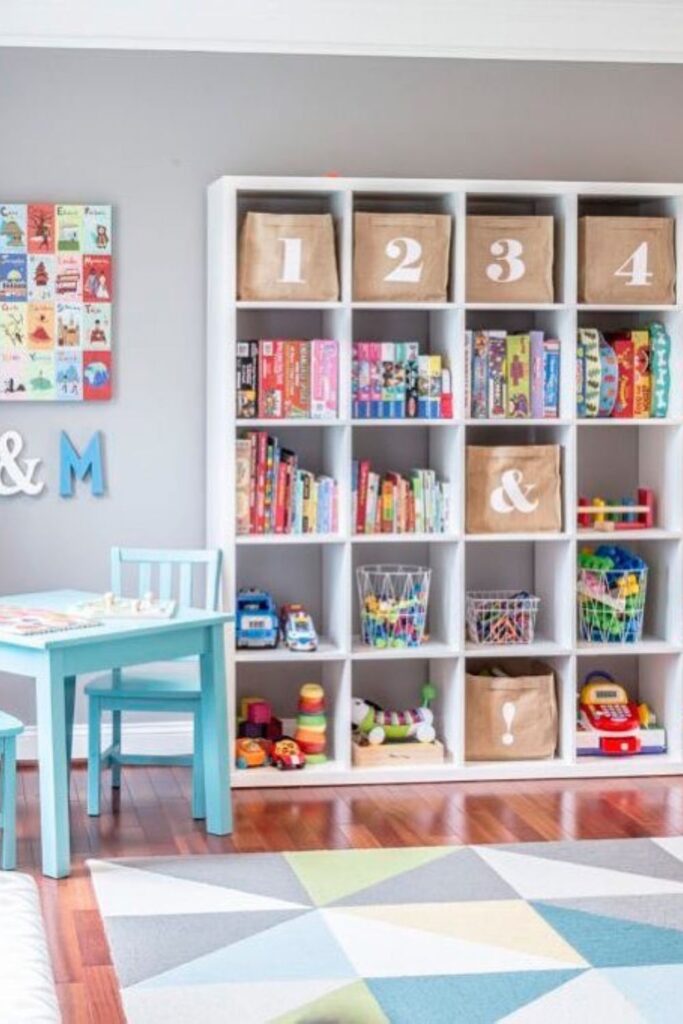
Toy cleanup becomes much easier when storage follows a simple system kids can remember. Numbered bins inside a large cube shelf.
Make sure each type of toy has an obvious place to go without necessitating excessive labels. Each container can hold a different type of toy.
Such as building blocks, automobiles, puzzles, or craft supplies. Kids rapidly learn that toys go back to the numbered space they came from, which makes cleaning up faster.
Books and bigger toys that are simpler to access without containers fit well in open cubes between the bins.
In bigger playrooms where you desire one central storage station, a shelf like this fits well against the wall.
Basket Cubby
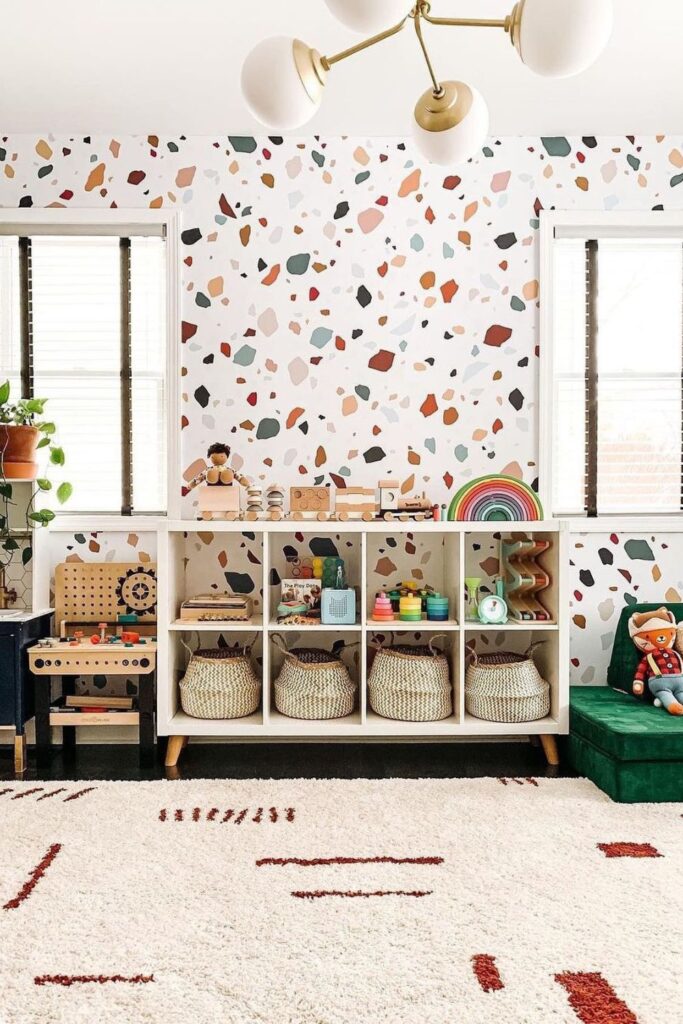
Floor clutter drops quickly when toys move into a simple cubby system. Each cubby can hold a woven basket that groups similar toys together blocks in one.
Fake food in one, little figures in the next. During playtime, youngsters can effortlessly slide the baskets out, and when they’re done, they can put them back on the shelf.
For toys that kids use every day, open cubes above the baskets are great since kids can reach them without having to search through bins.
Putting a long cubby shelf under the windows lets in a lot of natural light while also giving you a lot of storage space.
Putting together exhibit space and hidden baskets in the same unit keeps the playroom neat while still seeming fun and welcoming.
Library Wall
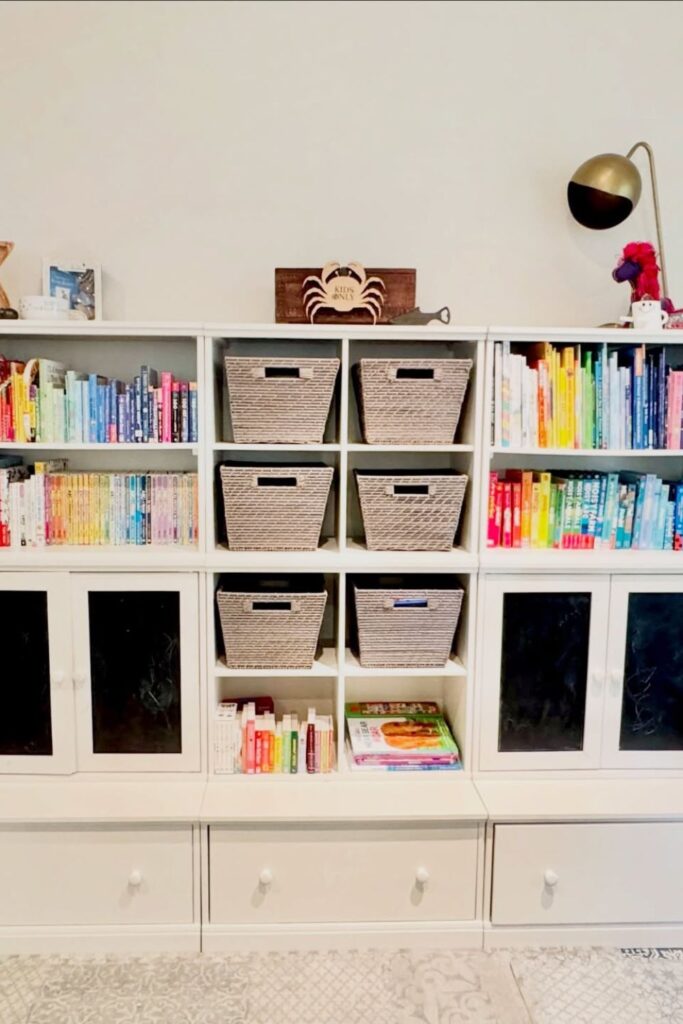
Books pile up quickly when they don’t have a dedicated reading zone. A wide shelf like this turns one wall into a mini playroom library while still storing toys neatly.
Open cubes on the top rows make it easier for kids to see and select out books during reading time.
You can put smaller toys like puzzles, figures, or craft supplies in the middle portion without making the shelves look messy.
Closed cabinets underneath hide bigger things that don’t need to be on view. Making a library-style storage wall is a great idea for playrooms where reading is a regular part of the day.
Organizing books by color or theme not only makes the shelf seem nice, but it also helps kids discover their favorites faster.
FAQs
How do you organize a playroom so kids actually keep it clean?
When the storage system is straightforward and easy to use, kids are more inclined to tidy up. Children will know exactly where each toy goes.
If you use low shelves, labeled containers, and distinct toy categories. It also helps to keep storage at kid height so they can get toys and put them back without help.
Limiting the quantity of toys in each bin keeps the messes from getting too big and speeds up the cleanup.
What is the best way to organize toys when you have too many?
Begin by putting toys into groups, such as building toys, dolls, puzzles, and art supplies. Put toys in separate bins or baskets for each category so they don’t get jumbled up.
Big cube shelves with baskets are great because they keep toys separate but easy to reach.
Putting some toys away for a few weeks and then switching them out with others can also help keep things tidy and keep kids interested in their toys.
You may like to read!
- 26 Dresser Organization Ideas
- 18 Water Bottle Organization
- 22 Linen Closet Organization Hallway
- 21 Lazy Susan Organization Ideas
- 22 Nail Polish Organization Ideas

Fasial is the founder of the Fizzy Flare. He has been a passionate blogger since 2021. He ran three different websites in the past few years. Now he is focusing on Fizzy Flare to build an audience and help them organize their life.