21 Boot Storage Ideas for 2026
This post may contain affiliate links: full affiliate disclosure.
Your boots are undoubtedly the reason why your entryway always appears dirty, no matter how often you clean it. They take up a lot of space, fall over.
And when there isn’t a good spot for them, they end up all over the floor. A single rainy day or muddy walk may make the whole region look like a mess.
The good news is that this problem is surprisingly straightforward to fix once you know how to store things.
Your boots will stay organized, safe from damage, and your doorway will always seem clean and welcome if you make a few clever alterations.
In this article, I’ll show you 21 boot storage ideas. Discover the best ways to store boots.
Let’s jump in!
Contents
- 1 What Are The Smartest Boot Storage Ideas For Entryways?
- 1.1 Boot Hangers
- 1.2 Floor Row
- 1.3 Shelf Wall
- 1.4 Boot Cubbies
- 1.5 Peg Rack
- 1.6 Boot Cabinets
- 1.7 Boot Section
- 1.8 Boot Bags
- 1.9 Boot Display
- 1.10 Boot Tower
- 1.11 Boot Rack
- 1.12 Boot Slots
- 1.13 Boot Rail
- 1.14 Boot Shelf
- 1.15 Boot Drying
- 1.16 Boot Locker
- 1.17 Boot Basket
- 1.18 Boot Bench
- 1.19 Boot Organizer
- 1.20 Boot Hooks
- 1.21 Boot Cubby
- 2 FAQs
What Are The Smartest Boot Storage Ideas For Entryways?
Boots are frequently the main reason why your entryway gets messy in the first place. They are big and taller than normal shoes, and if they don’t have a place to go.
They rapidly pile up by the door. If you just leave them on the floor, they will tumble over, get dirty, and make the whole area look messy.
The best method to store boots in an entryway is to give them their own space. A modest rack, a storage bench, wall hooks, or even just a tray for damp boots could work.
When each pair has its own place, your doorway stays tidy, your boots keep their shape, and it’s easy to grab the pair you need.
Save this article for later! 👇👇

Boot Hangers
Tall boots usually lose their shape when they’re folded or pushed into a tight shelf. Hanging them from a rod with sturdy boot hangers.
keeps the shafts straight and stops creases from accumulating over time. For this configuration, a basic clothing rod.
Put in a closet or along the wall of an entryway works great. Clip-style or curved boot hangers keep each pair safe and let the material breathe.
This type of storage is great for leather or suede boots that need to stay upright to keep their shape.
Put a shelf above the rod for little goods or seasonal items, and leave some space between each pair so they don’t rub against each other.
Floor Row
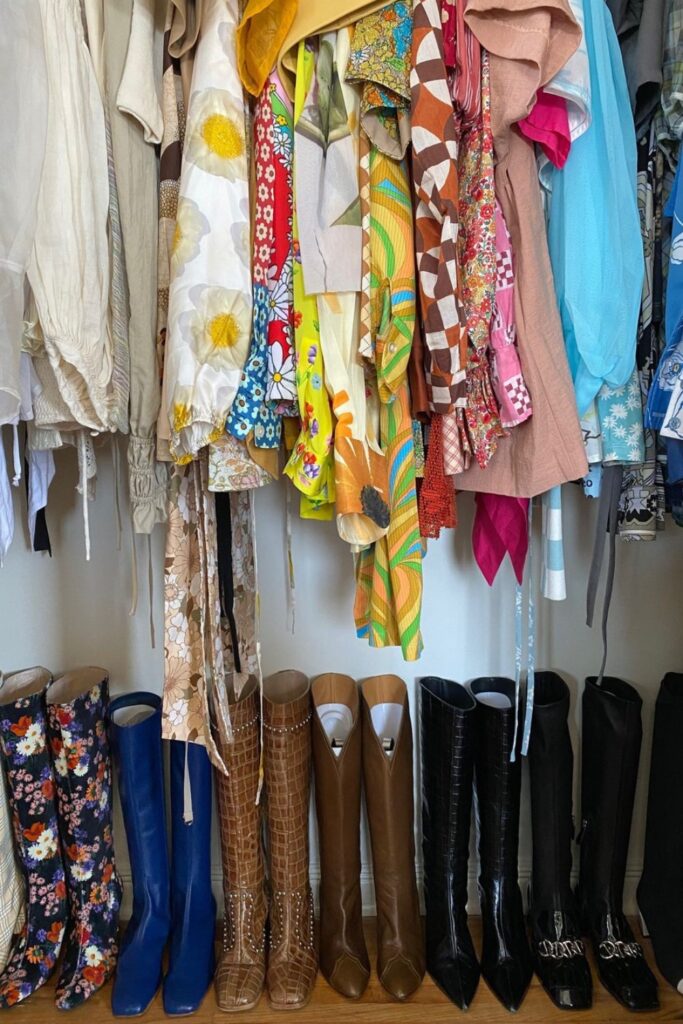
Boots leaning against walls often collapse and crease, especially when the shafts are soft.
Putting them in a simple floor row keeps every pair visible and helps them preserve their shape. This design works great in a small space on the floor under a clothing rack or closet rod.
Put a pair of boot shapers or rolled-up magazines inside each boot to keep the shafts straight and stop them from bending over time.
When you have pairs lined up next to each other, it’s also easier to get what you need without having to sift through a bunch.
This method works well in closets or dressing rooms where the space above is already occupied for hanging garments. The empty floor space below can then be used to store boots.
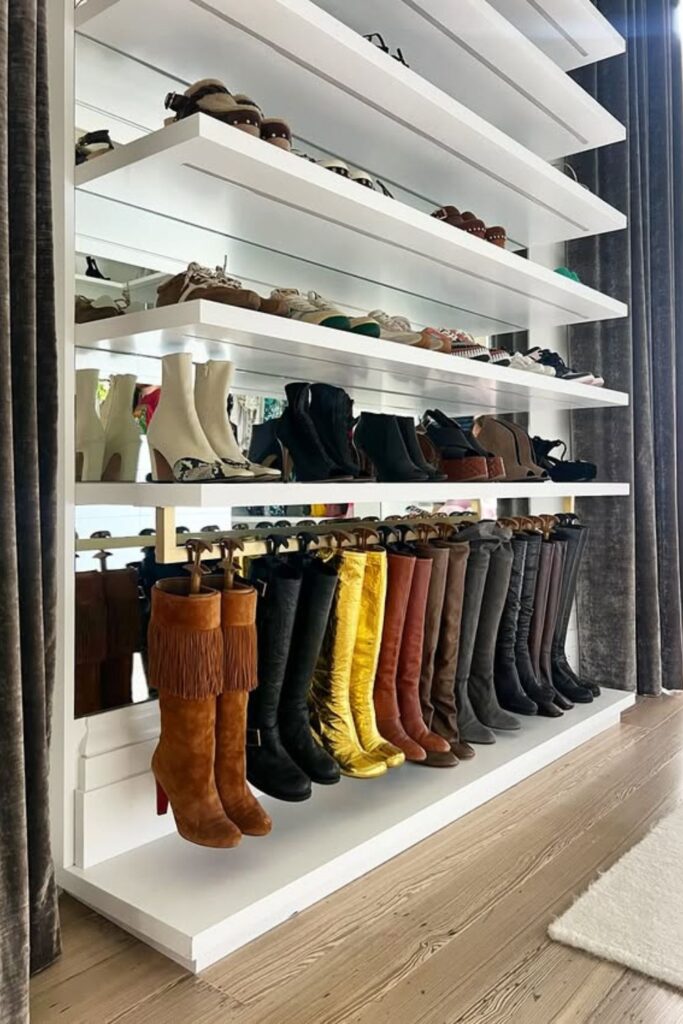
Shelf Wall
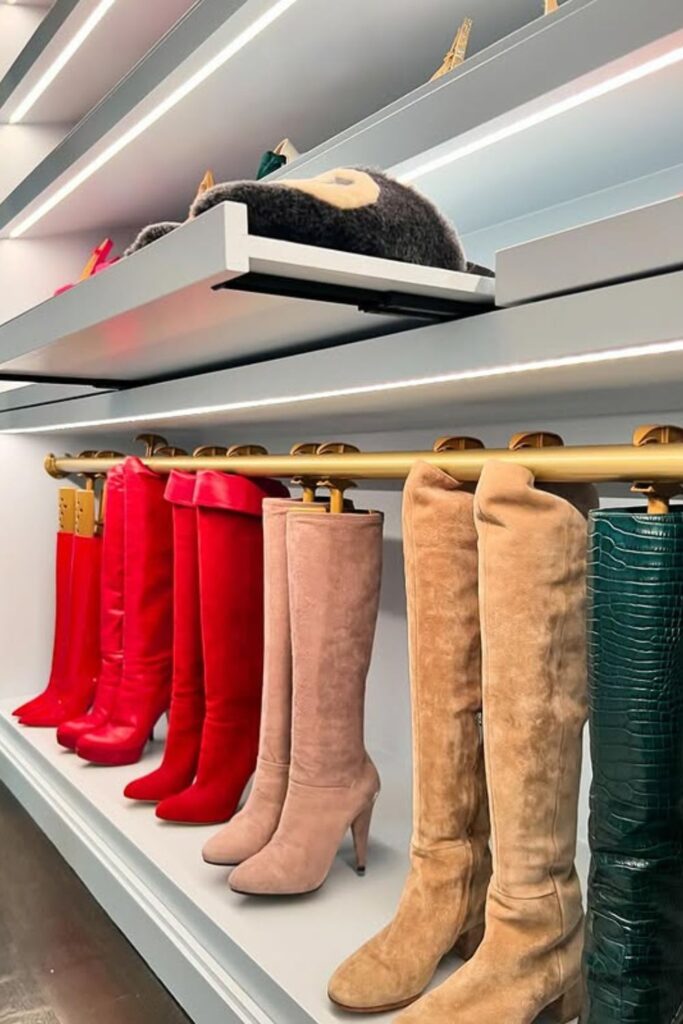
Dedicated shoe shelving often wastes the bottom space, yet that lower level is perfect for tall boots. Turning the base of a full-height shelving wall into a boot zone.
Keeps pairs upright while making the whole setup feel organized instead of crowded. Installing a rod with boot hangers below open shelves works.
Especially well because shorter shoes stay on the shelves while tall boots hang neatly underneath. This layout fits beautifully in walk-in closets or dressing rooms.
Where footwear needs its own display area. Spacing the boots evenly along the rod prevents creasing and keeps every pair visible at a glance.
Adding LED strip lighting under the shelves also makes the storage feel more intentional while helping you quickly spot the pair you want to wear.
Boot Cubbies
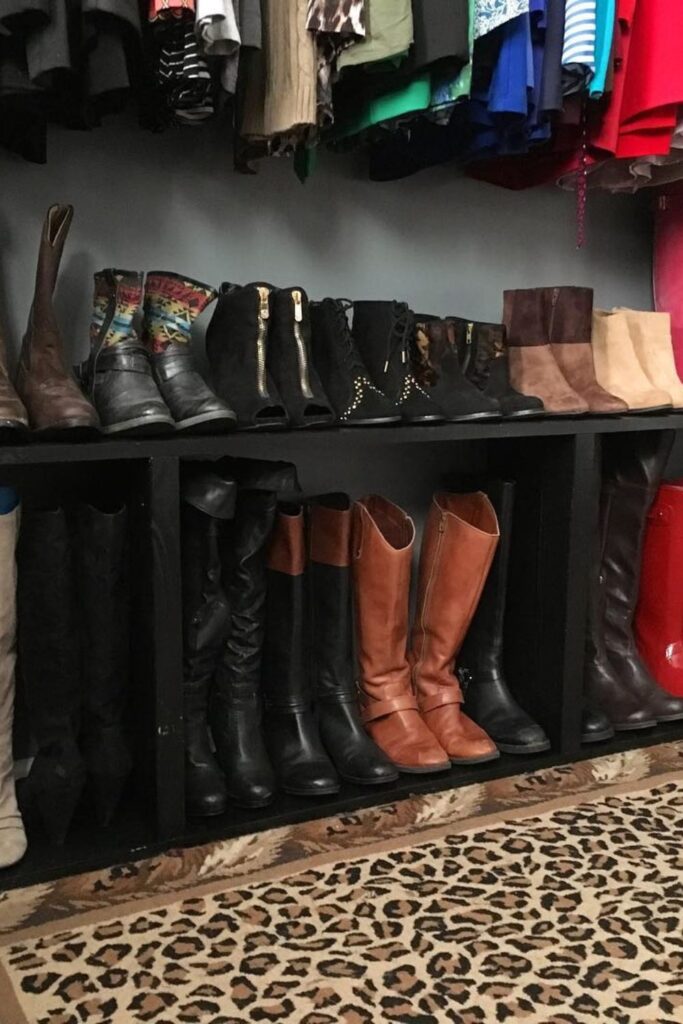
Tall boots rarely fit well on standard shoe shelves, which makes open cubbies a much smarter solution.
Each vertical compartment allows a pair ample room to stand up straight without bending or falling over.
This idea works great with a small cubby bench or low storage box, especially in closets or entryways where there is space on the floor.,
Put one pair in each compartment so that the boots stay apart and are easy to grab. This design also maintains the shafts supported by the side panels.
Which helps keep them from getting creases over time. Dark wood or black cubbies are good for everyday usage since they cover scuffs from outdoor boots.
Peg Rack
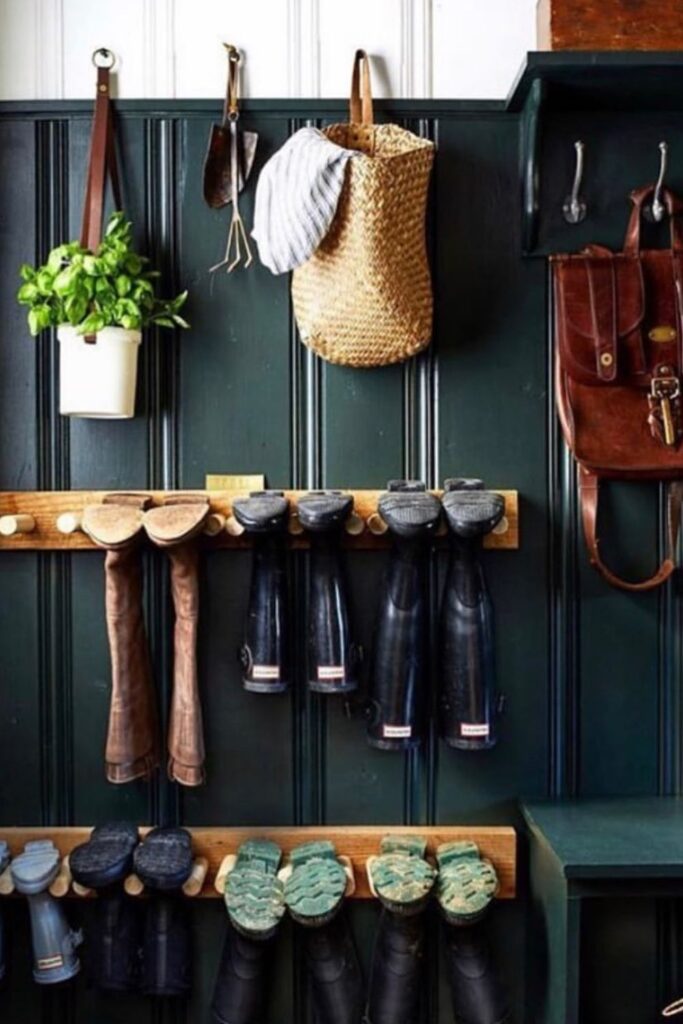
Rain boots tend to stay wet longer when they sit flat on the floor. Turning them upside down on a simple peg rack allows air to circulate.
The wetness dries significantly faster inside the boots. This kind of setup works nicely with a wooden rack with equally placed pegs on the wall. T
Put each boot on a peg with the opening facing down so that water can drip out instead of gathering inside.
This idea works best for entryways, mudrooms, and back doors because people use outdoor boots a lot in those areas.
Installing two rows of pegs offers capacity for numerous pairs without taking up floor space. A little bench nearby makes it easier to put them on before you leave.
Boot Cabinets
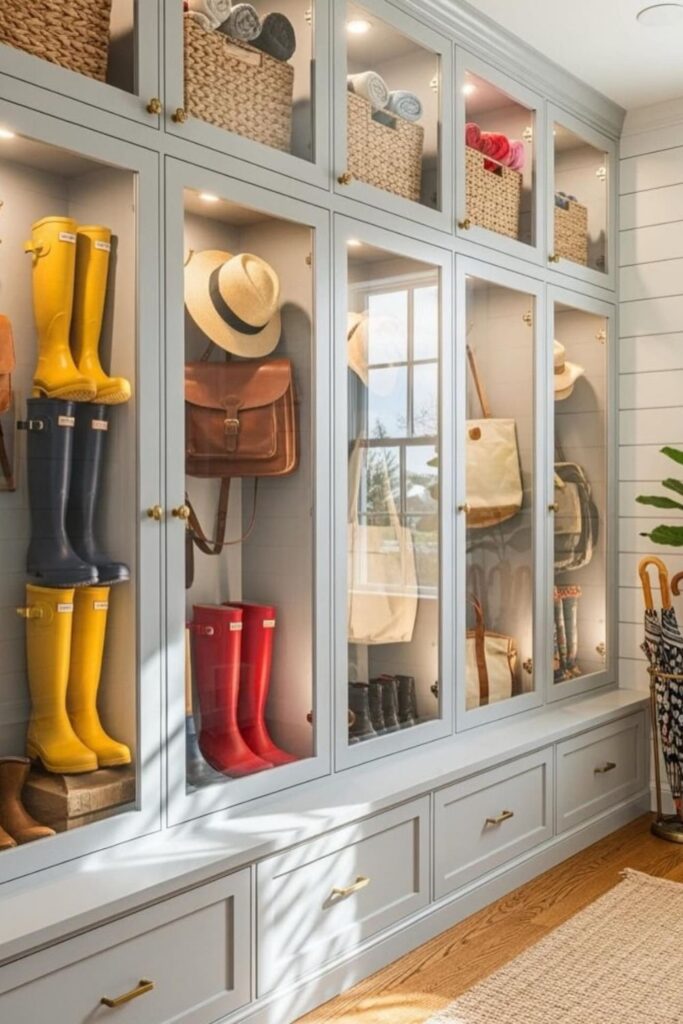
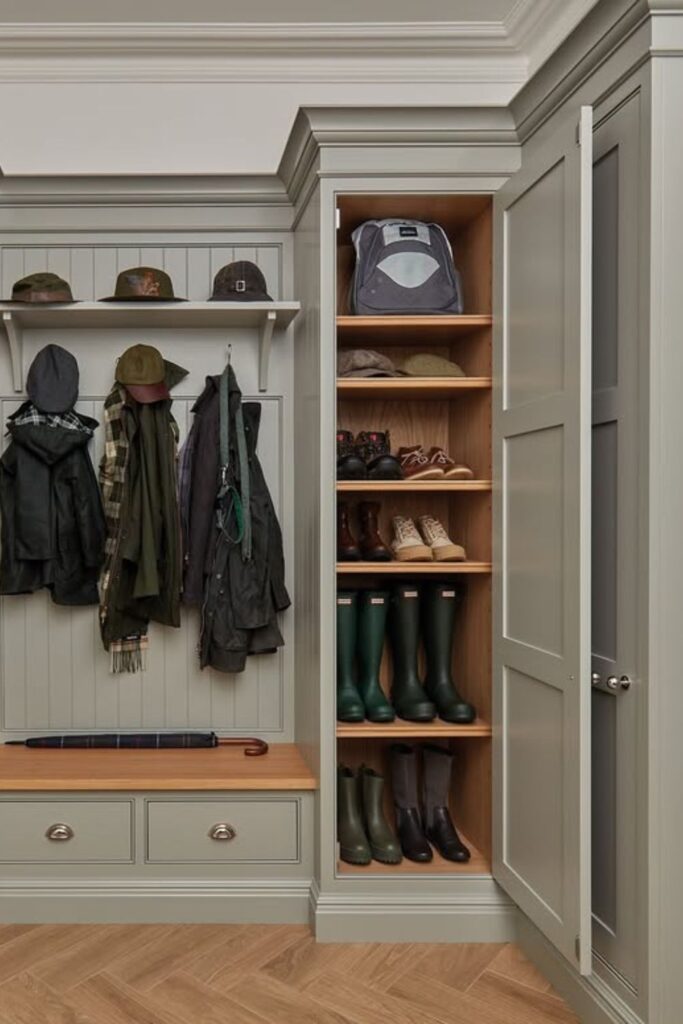
Hidden storage keeps entryways looking calm even when several pairs of boots are used every day.
Tall cabinets with glass doors are a neat way to store boots and keep them safe from dust. Each vertical portion is tall enough for rain boots and tall leather pairs.
To stand up straight without bending. Built-in cabinets are great for mudrooms or big entryways where you can repurpose wall space into organized storage.
The lower part of the cabinet is for boots, and the hooks within can carry bags or hats. Adding lights inside also helps you find the pair you need fast before you leave.
This arrangement is great for homes with more than one family member because each shelf or area can easily become a person’s own boot place.
Boot Section
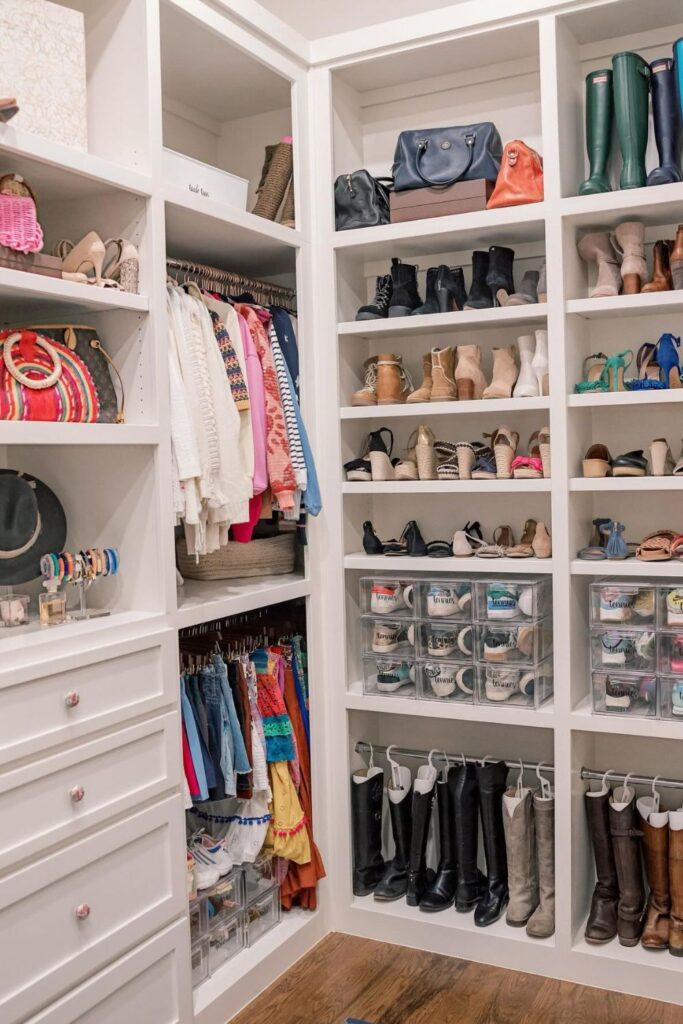
A closet becomes far more practical once tall boots get their own dedicated section instead of competing with regular shoes.
If you leave the bottom row of built-in shelves open, boots will have enough vertical space to stand up straight without bending.
Putting that area together with basic boot shapers keeps the shafts straight so that leather and suede don’t get wrinkled over time.
This kind of configuration works well in walk-in closets where there are existing shelves above that hold heels, flats, and bags.
Putting boots on the bottom level also makes them easier to grab when you’re getting dressed because you can see everything at once.
Boot Bags
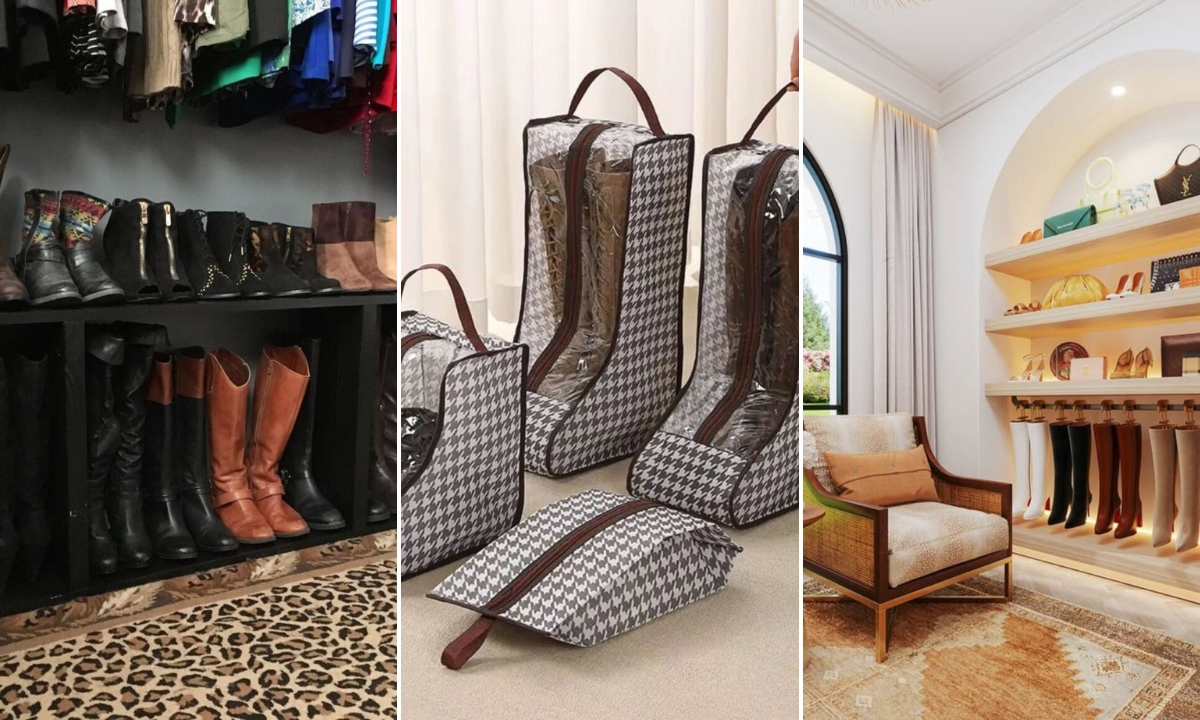
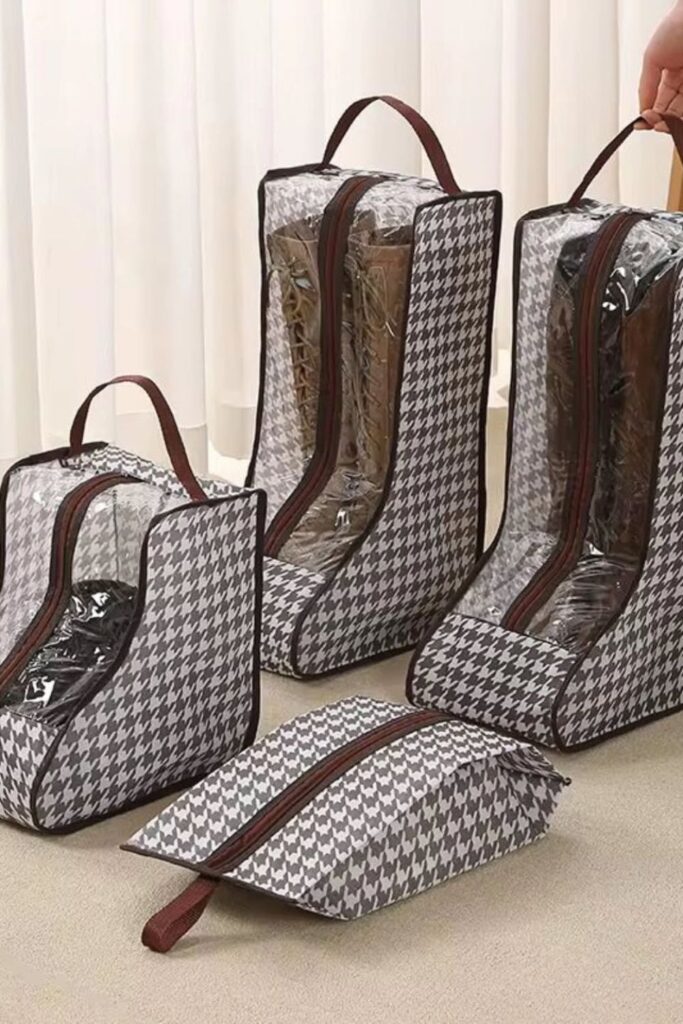
Dust, scratches, and creases often ruin tall boots when they sit unprotected in a crowded closet. Structured boot storage bags solve that problem.
By giving each pair their own room that is closed off. These zippered organizers keep the boots standing up, and the glass panels let you see what’s inside without having to open every bag.
When you’re not using your seasonal boots, you may safeguard them by putting them on a closet shelf or laying them up neatly along the floor.
The built-in handles make it easy to travel with a pair of shoes because you can carry them without hurting other clothes in your suitcase.
Individual storage bags are great for protecting leather or suede boots from dust and moisture when they are being stored for a long time.
Boot Display
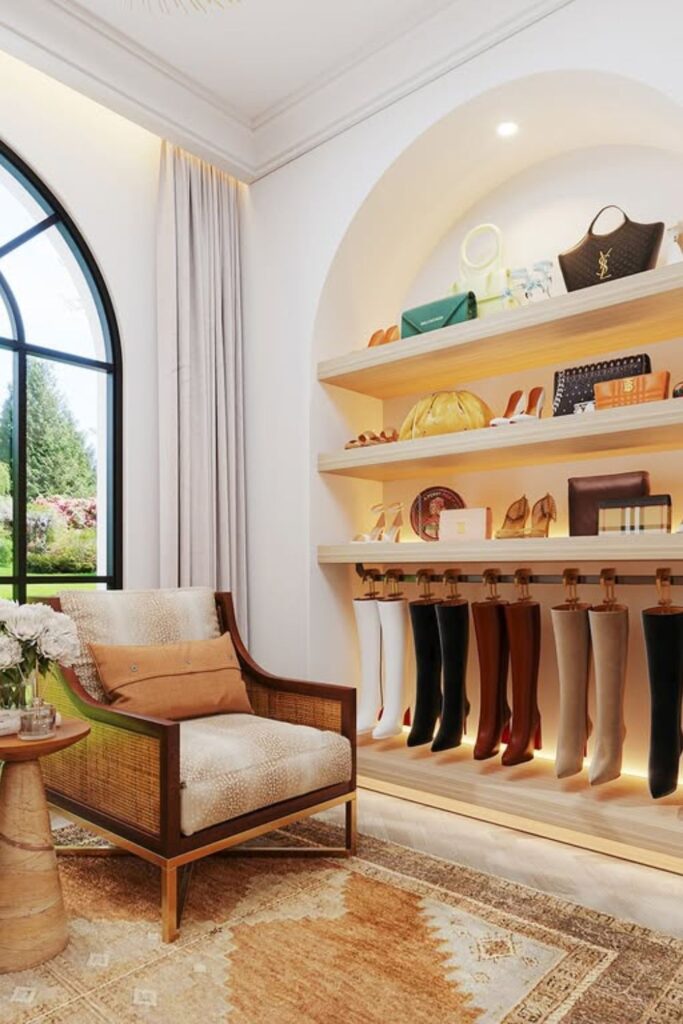
Turning boots into part of the room’s design makes storage feel intentional instead of hidden away.
A floating shelf with a hanging rod underneath makes a tidy display where boots stay upright and are simple to get to.
The shelves above accommodate shoes, bags or small accessories, and each pair hangs neatly from boot hangers.
This kind of system looks great in dressing rooms, walk-in closets, or even attractive entryways where shoes become part of the decor.
The soft light under the shelves makes the boots stand out and maintains the area bright so that all of them can be seen.
Boot Tower
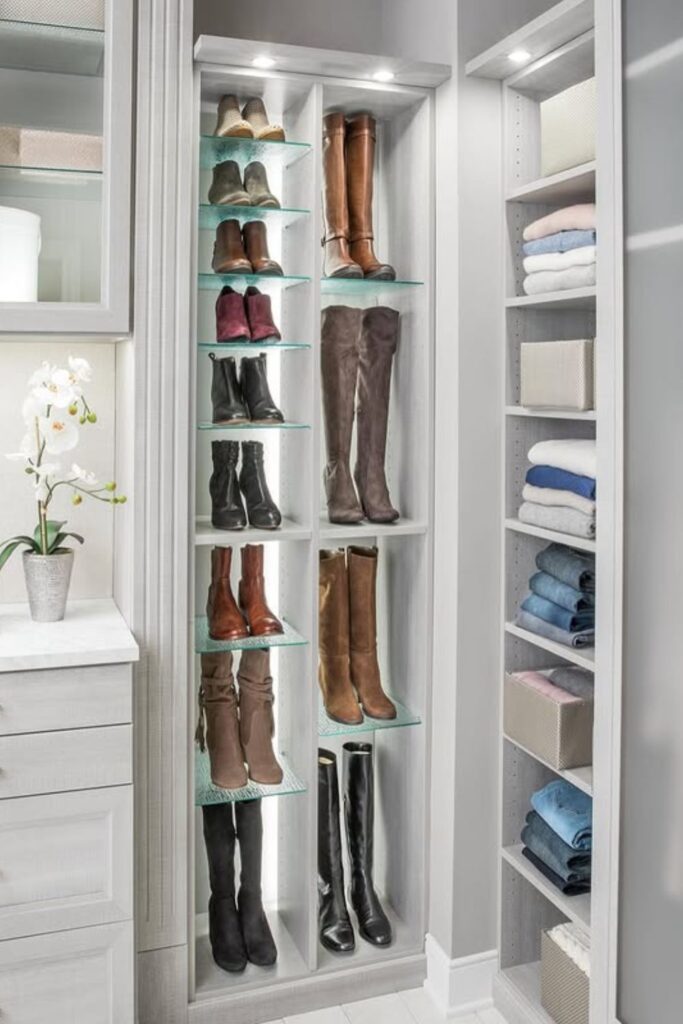
Tall boots need vertical space more than wide shelves, which is why a narrow boot tower works so well.
This type of cabinet goes from the floor to the ceiling and turns a narrow wall portion into orderly storage, with each pair standing up straight on its own level.
If you use glass or open shelving, the boots will be easy to view and the layout will stay neat instead of congested.
Putting taller boots on the lower shelves stops them from tipping over, and ankle boots can sit on the higher shelf.
Built-in lights above each section also assist show off the pairings and make the closet feel livelier.
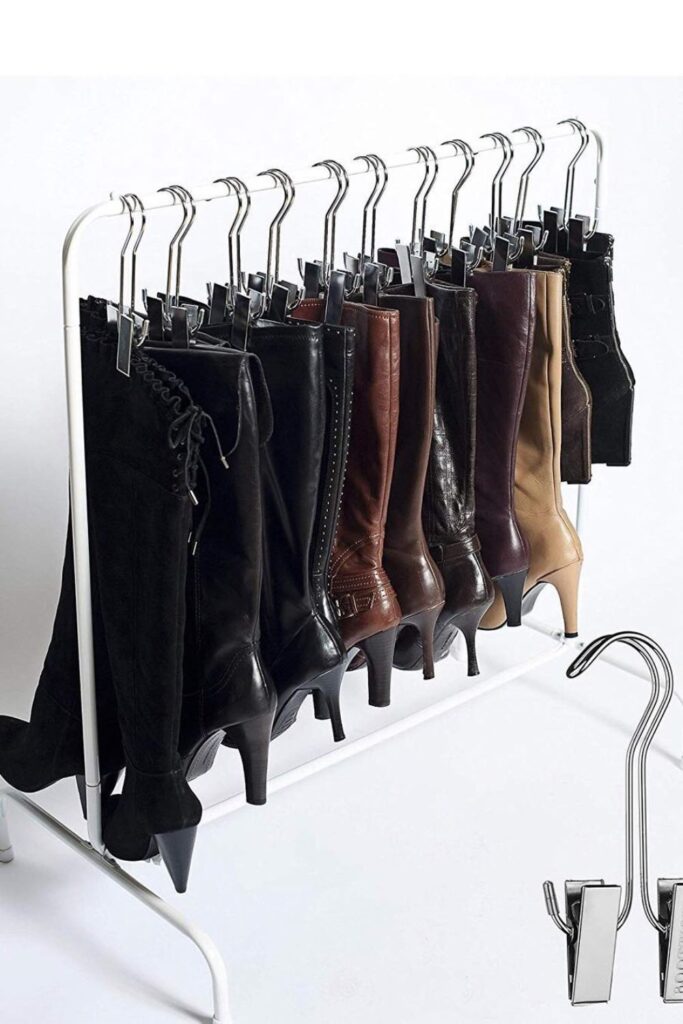
Boot Rack
Crowded closets quickly turn tall boots into a wrinkled pile unless they’re kept upright. A simple standing rack with clip hangers solves.
That issue by suspending each pair to maintain the straightness of the shafts. The rack maintains the boots equally spaced and visible.
While the metal clamps hold onto the top edge of the boots. Without constructing shelves, you may quickly create organised vertical storage.
By placing a rack like this along an underused wall or within a closet. Leather boots are particularly beneficial since hanging them.
It’s also simple to switch up seasonal boots without completely rearranging the closet if you have a few additional hangers on hand.
Boot Slots
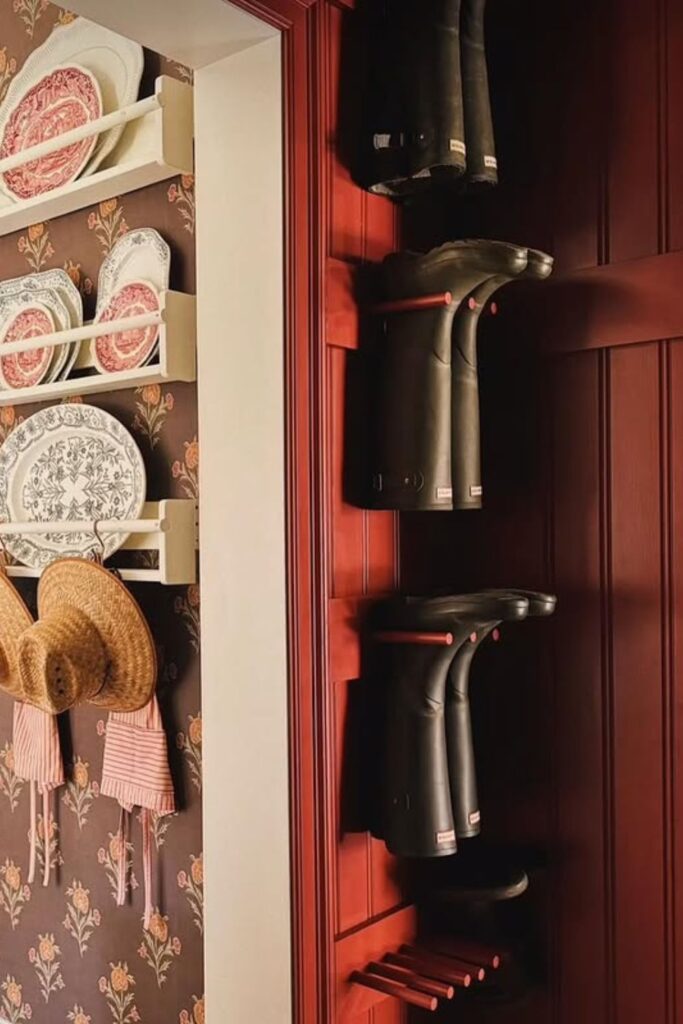
Wet boots usually end up scattered near the door, which quickly turns the entryway into a messy zone.
By providing each pair with a separate resting spot while keeping the soles off the ground, vertical wall slots address that issue.
Simple holders with slim wooden poles positioned horizontally allow the boots to slide in upside down. After rain or snow, this position helps the boots dry more quickly.
By allowing moisture to drain and air to the circulate within. Because outdoor footwear is typically utilised in mudrooms and back entrances.
Tall boots are kept balanced without coming into contact with the wall by evenly spacing the rods. Adding a tiny drip tray underneath can also capture excess water and keep the floor clean.
Boot Rail
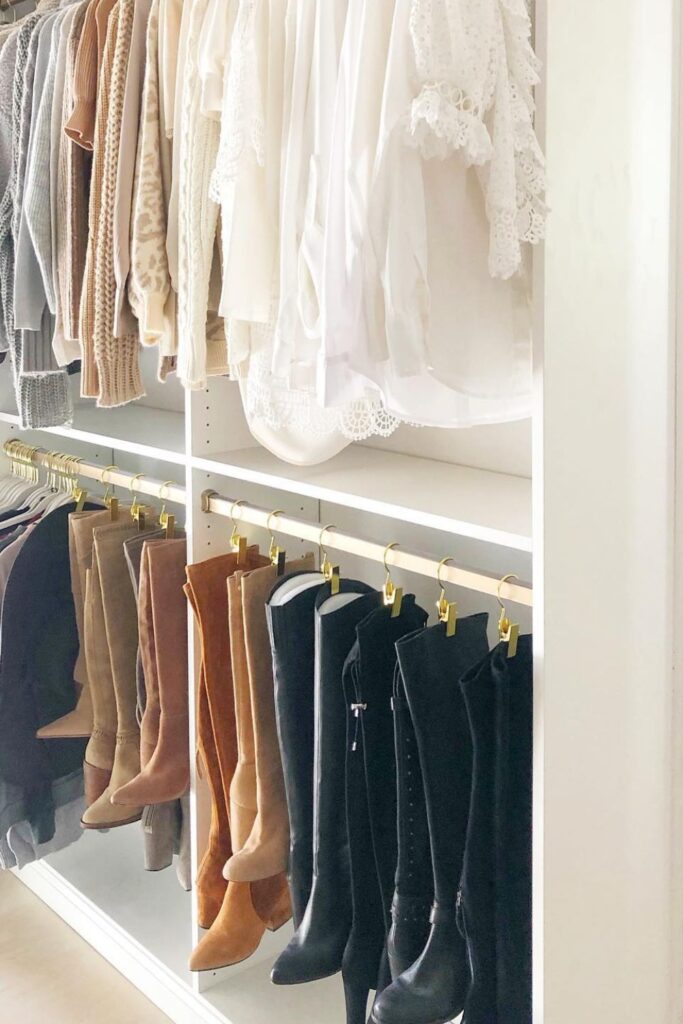
Closets often have unused space below hanging clothes, which makes a lower rail perfect for tall boots.
Adding a second rod with clip hangers makes the system cleaner because the boots hang nicely instead of folding up on a shelf.
The clips hold the top edge of each pair in place, and the shaft hangs naturally. This configuration is great for suede or leather boots that get wrinkled easily.
When you store them flat. Putting the rail a little lower than the clothing rack keeps the boots visible without getting in the way of longer clothes above.
With only a small change like this, you can turn a normal closet space into a place to store boots without having extra shelves.
Boot Shelf
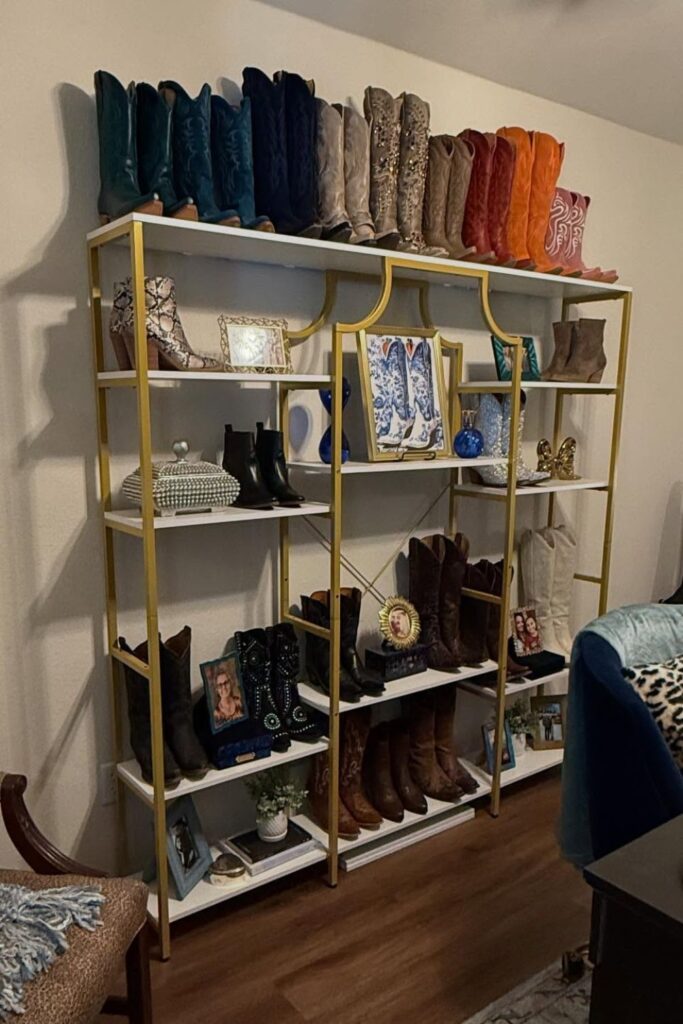
Colorful boots can easily become part of the room’s decor when they’re arranged on open shelving.
A tall, free-standing shelf provides each pair its own level and keeps everything in view instead of hiding it in a closet.
Putting taller boots on the top level makes a strong display, and the lower shelves can house shorter pairs, accessories, or decorative items.
This kind of system is great for dressing rooms, home offices, or bedrooms where boots are worn a lot and need to be simple to get to.
Grouping the boots by colour or style also makes the whole display look planned instead of messy.
Boot Drying
Outdoor boots often carry snow, mud, or rain back into the house, so letting them dry properly becomes just as important as storing them.
A wall-mounted drying rack with angled arms keeps each pair off the floor and lets air flow through the boots. If you slide them upside down over the arms.
The moisture will drain out instead of sticking in the lining. This setup works well in mudrooms and garage entrances.
Since people normally take off their boots as soon as they step in. Putting the rack over a waterproof mat also stops water from getting on the floor.
You may easily take the boots back to their customary storage after they are dry, and they won’t smell like dampness.
Boot Locker
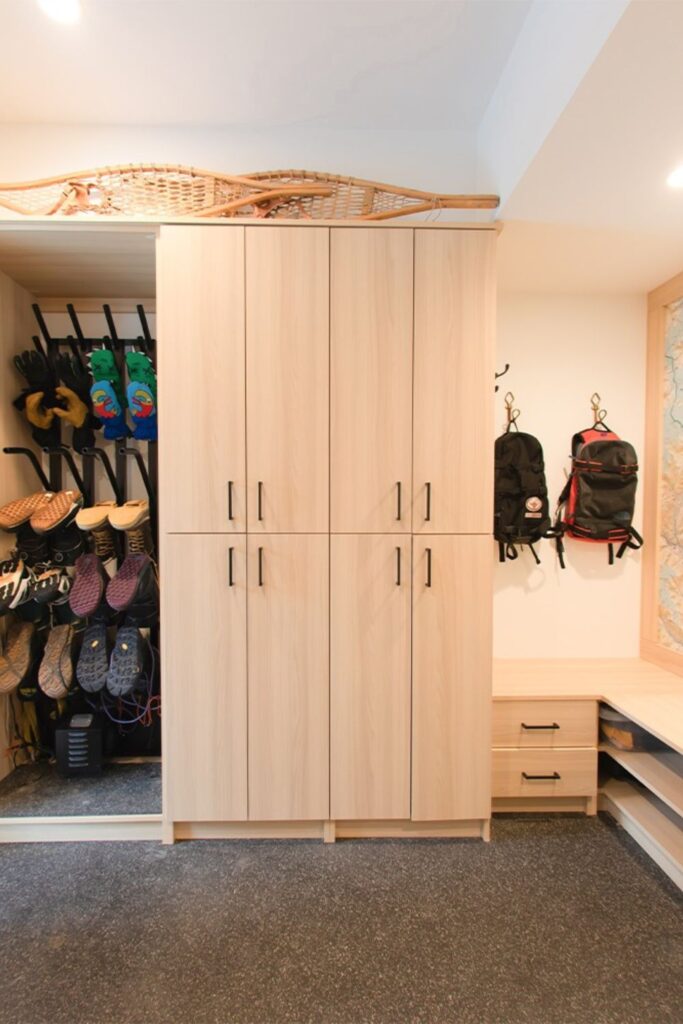
Busy entryways feel far more organized when boots have a hidden place instead of lining the floor near the door.
A tall mudroom locker cabinet keeps the area appearing neat from the outside while giving each pair its own shelf.
Deep shelves let rain boots and tall outdoor shoes stand up straight without bending, which makes them last longer.
Putting boots on the lower levels also makes it easy to get to regular shoes when you leave the house.
The upper shelves can hold smaller shoes, luggage, or seasonal apparel, so everything stays in one little area.
Boot Basket
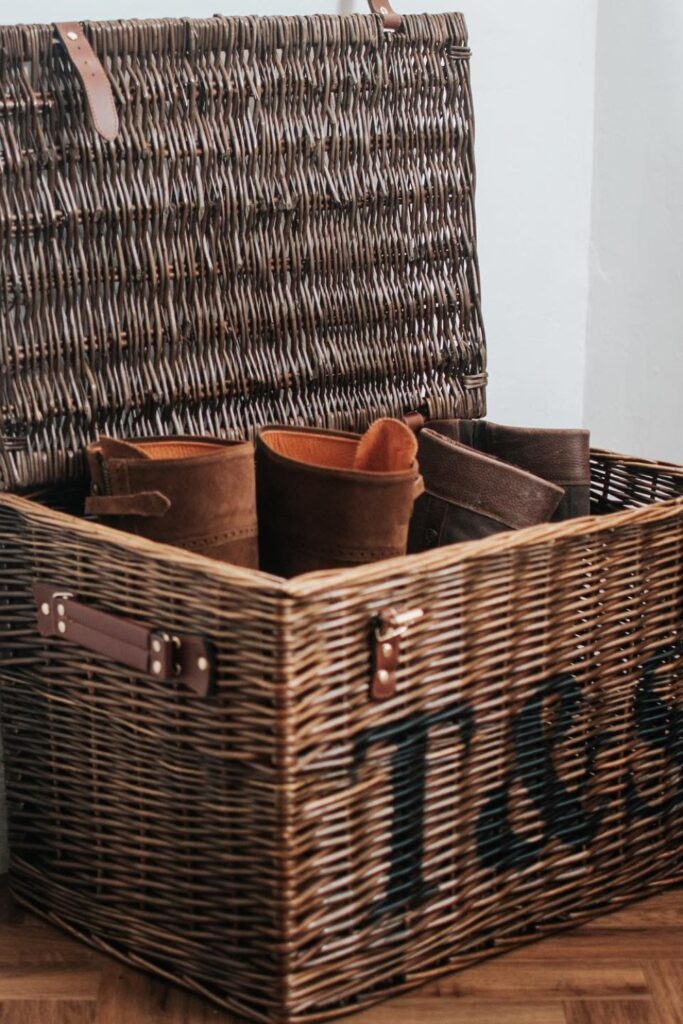
Entryways often need a quick drop zone where boots can go without creating clutter across the floor.
A big woven basket works surprisingly well for this because it keeps everything in one place and hides the shoes.
The tall sides assist hold up the shafts so that the boots don’t entirely fall apart, especially if they are standing up in the basket.
Putting a strong basket near the door makes it easier to get into the house boots go right inside instead of piling up around the door.
Natural wicker or rattan also looks good in mudrooms, cottages, or other rustic spaces. Putting a little mat underneath can catch dirt or moisture, which keeps the floor clean even after it rains.
Boot Bench
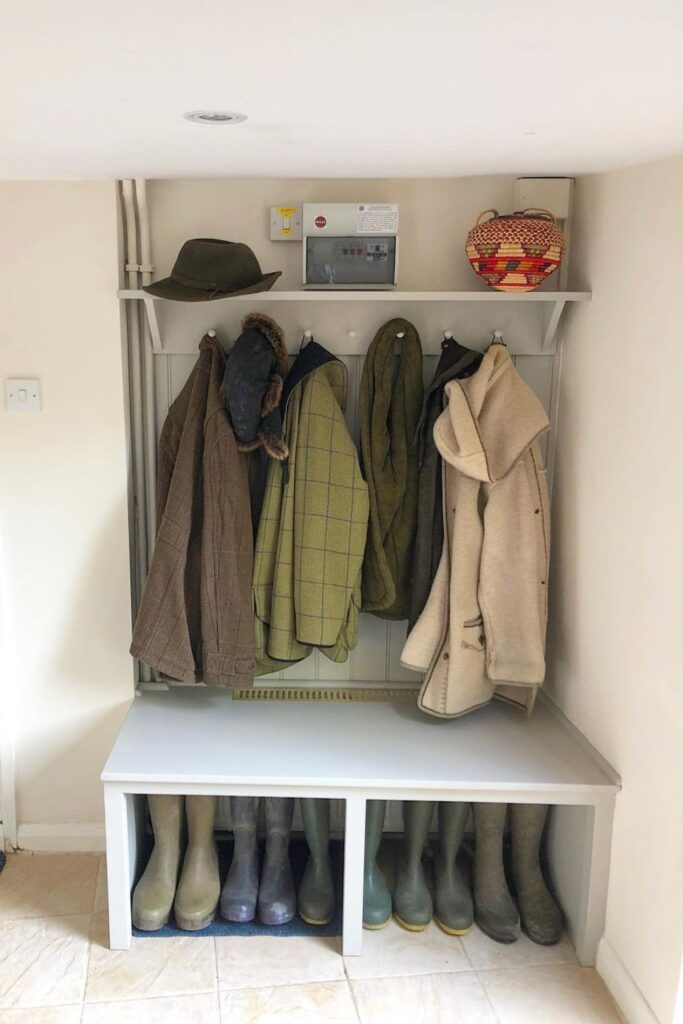
Busy entryways work best when boots have a clear place to land the moment you walk in. A storage bench with open compartments underneath creates that simple system.
The top surface is a nice place to sit while you take off your boots, and the cubbies underneath keep all of your shoes in order instead of all over the floor.
If you leave adequate vertical room in each compartment, tall rain boots can stand up straight without bending.
This setup works well in mudrooms and back entrances because that’s where people normally take off their shoes straight immediately.
Adding a waterproof mat or tray inside the cubbies also helps keep the floor cleaner after wet days by catching debris and moisture.
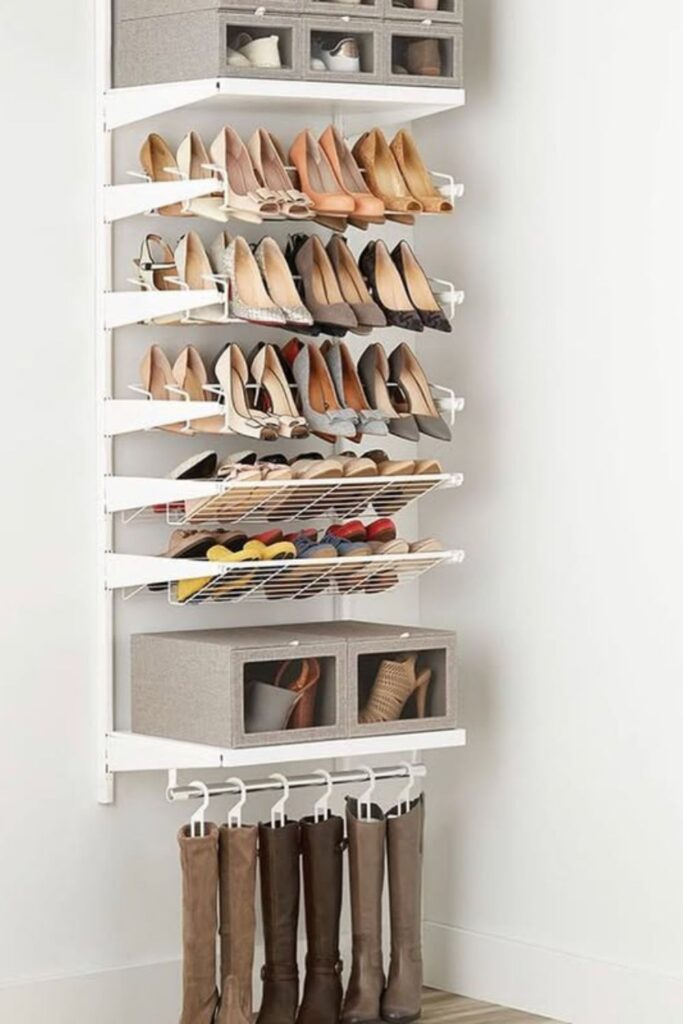
Boot Organizer
Because ordinary shelves don’t leave enough height, small closets often have trouble with tall boots.
A vertical wall mounted organizer fixes that by putting angled shoe racks above and a hanging rod below just for boots.
This arrangement makes it simple to see daily shoes and gives tall boots their own room to hang correctly.
Clip hangers keep the shafts from bending, which helps them keep their shape over time.
Putting in a system like this is especially helpful in small closets or corners where there isn’t much floor space.
Putting boots at the bottom also makes them easy to grab when you leave, and the top shelves are still for lighter shoes and accessories.
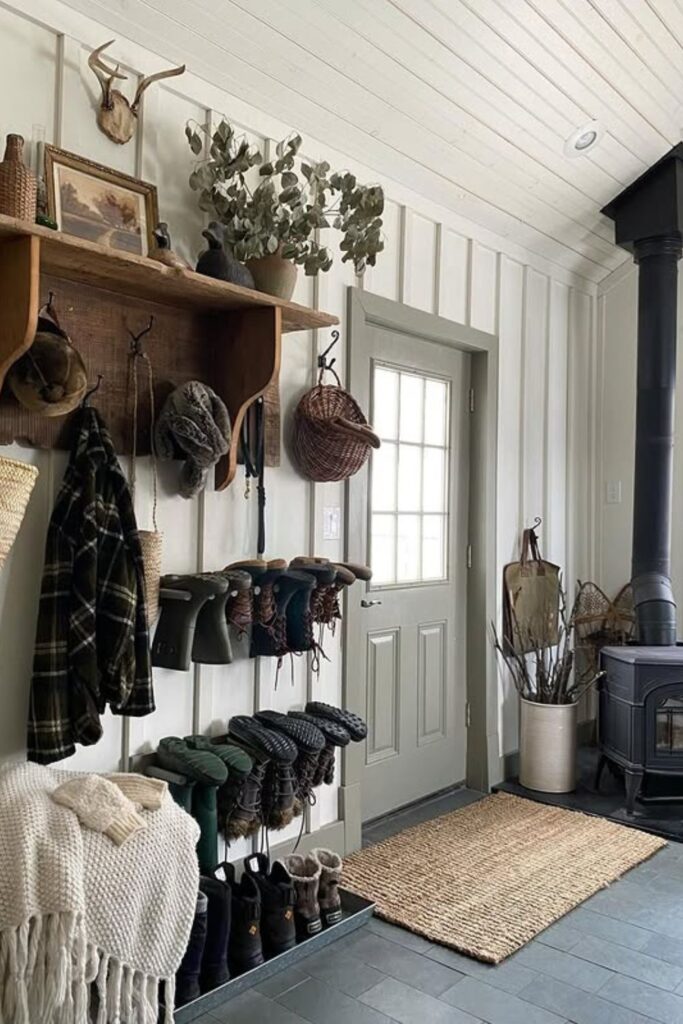
Boot Hooks
Outdoor boots dry faster and stay organized when they’re lifted off the floor instead of sitting in a corner.
A useful system is made by putting wall hooks at varied heights so that boots hang upside down with the soles facing the wall.
This arrangement lets water drain and keeps muck from spreading on the floor. This design works well in mudrooms and cabin-style entryways.
Since people normally take off their boots as soon as they go in. Installing strong hooks into wall studs makes sure that heavy rubber boots stay put.
If you leave a little space below the hooks, you can also store everyday shoes there. This turns a simple wall part into a great place to store boots.
Boot Cubby
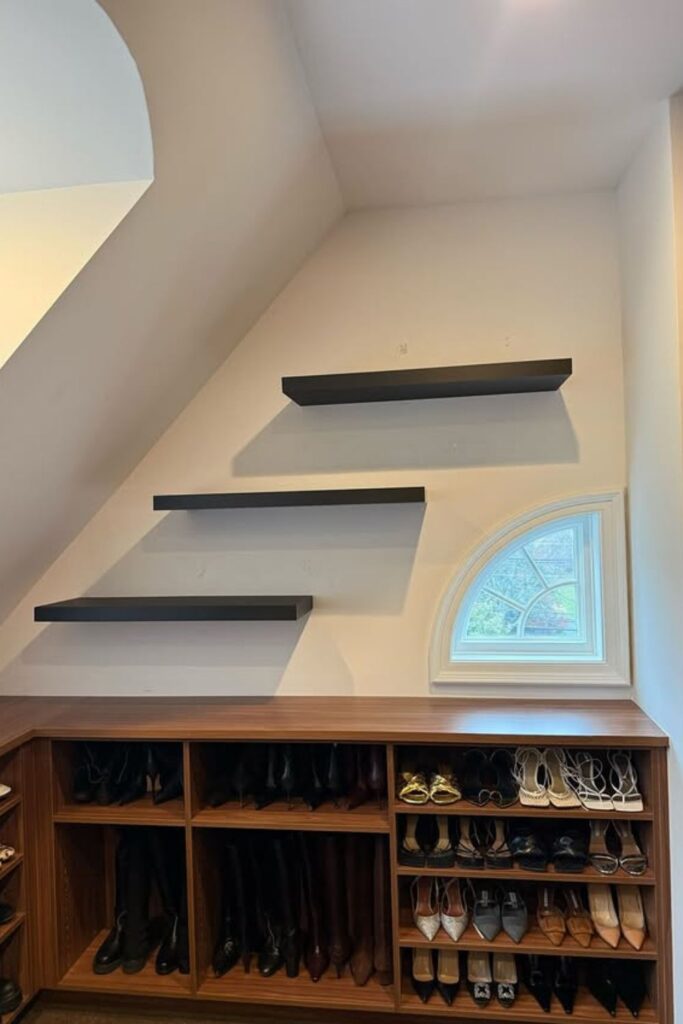
Sloped ceilings and awkward corners often leave closets with dead space that’s hard to use. A built-in cubby system turns that tricky area into practical boot storage.
Tall boots can stand up straight without bending over, while lower shelves next to them can house heels or flats.
Putting the boot portion on the bottom row makes it easier to grab pairs when you get dressed. Wood dividers also keep each pair apart.
So they don’t lean on each other and lose their shape. This kind of layout is great for under stairs, in attic closets, or on walls that aren’t straight.
Adding floating shelves above the counter gives you more room for bags or other things without making the boot storage below too crowded.
FAQs
How can you store tall boots without ruining their shape?
When you store tall boots upright instead of folded, they stay in better shape. Boot hangers, boot shapers, or special cubbies can assist keep the shaft from collapsing.
Standing boots upright with a little space between each pair also keeps them from getting creased if the shelves are deep enough.
What is the best place to store boots in an entryway?
The greatest place is near the door, where people normally take off their boots. This room would be great for a storage bench with cubbies, a wall rack, or a small boot tray.
These methods avoid muddy or damp boots from getting all over the place and make them easy to grasp when you leave.
You may like to read!
- 19 Toy Storage Ideas
- 20 Pencil Storage Ideas
- 22 Kitchen Wall Storage
- 19 Storage Bench Ideas
- 20 Closet Door Storage

Fasial is the founder of the Fizzy Flare. He has been a passionate blogger since 2021. He ran three different websites in the past few years. Now he is focusing on Fizzy Flare to build an audience and help them organize their life.