22 Clothes Storage Ideas for Small Spaces in 2026
This post may contain affiliate links: full affiliate disclosure.
If your room is small, you probably know how quickly clothes can fill it up. One day everything appears good.
Then the next day your closet is full, there are pants on the chair, and jackets hanging on the door. It starts to seem like your space is too small to keep your clothes in order.
But the size of the room isn’t generally the underlying problem. It’s the way the space is being used.
You can fit a surprising amount of clothes in even the smallest rooms if you know how to store them well.
Looking for better organization? This article explores 20 creative clothes storage ideas to maximize every inch of your space.
Let’s jump in!
Contents
- 1 What Are the Best Space-Saving Clothes Storage Ideas for Tiny Rooms?
- 1.1 Closet Zones
- 1.2 Split Storage
- 1.3 Open Rack
- 1.4 Wardrobe System
- 1.5 Entry Closet
- 1.6 Compact Locker
- 1.7 Shelf Combo
- 1.8 Double Hanging
- 1.9 Mini Closet
- 1.10 Box Storage
- 1.11 Center Drawers
- 1.12 Rack Drawer
- 1.13 Wall Rod
- 1.14 Rolling Rack
- 1.15 Pipe Shelves
- 1.16 Drawer Tower
- 1.17 Narrow Wardrobe
- 1.18 Folded Stacks
- 1.19 Corner Setup
- 1.20 Shoe Shelves
- 1.21 Wall Panels
- 1.22 Door Storage
- 2 FAQs
What Are the Best Space-Saving Clothes Storage Ideas for Tiny Rooms?
Clothes can take over a tiny area very quickly. A few shirts on a chair become a pile, jackets start hanging on the door, and before you know it, the closet is filled.
It can seem like there’s no place left to put anything. It’s excellent news that you don’t need a bigger room; you just need to use the space in a different way.
When every part of a small room has a purpose, it works best.
You can store a lot more clothes than you think if you employ vertical space, concealed storage, and easy ways to organize.
The ideas below will help you keep your clothes tidy without making your room feel too small.
Save this article for later! 👇👇

Closet Zones
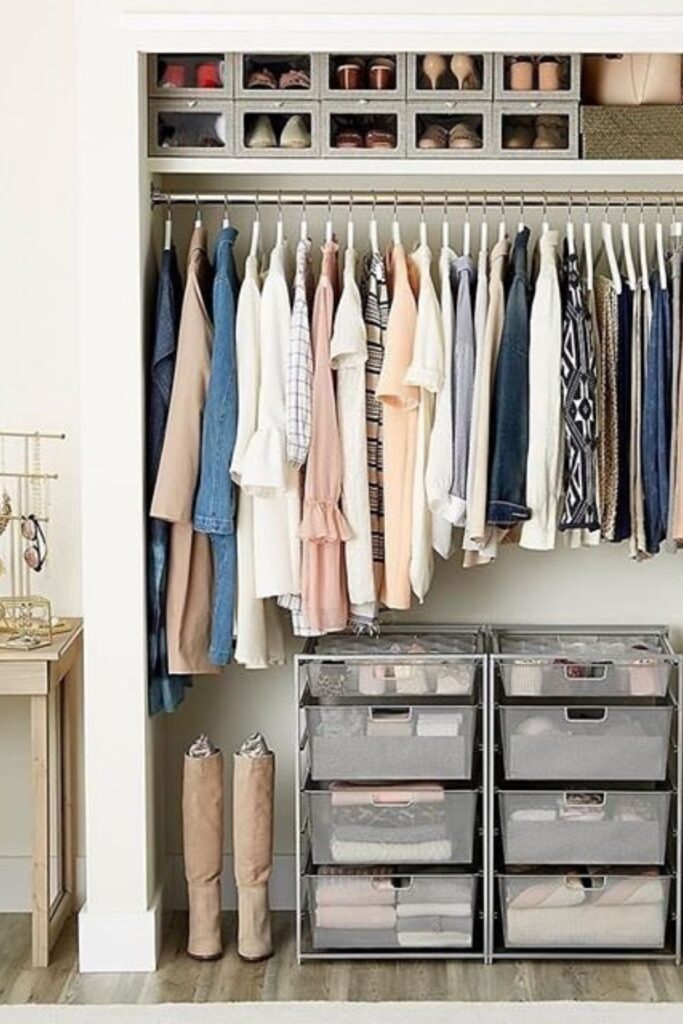
Closet space feels limited when everything gets mixed together. Dividing it into clear zones instantly makes it more useful.
Put everyday clothes on a single pole at eye level so you can easily reach them. Put shoes or anything you don’t wear every day on the top shelf.
You can keep pairs of shoes visible and separate by adding small cubby organizers. You can also use the space on the floor.
By putting stackable drawers underneath to store folded clothes, luggage, or accessories. This layout is best for bedrooms.
With small closets since it maximizes every inch of space from top to bottom without making the room feel cluttered.
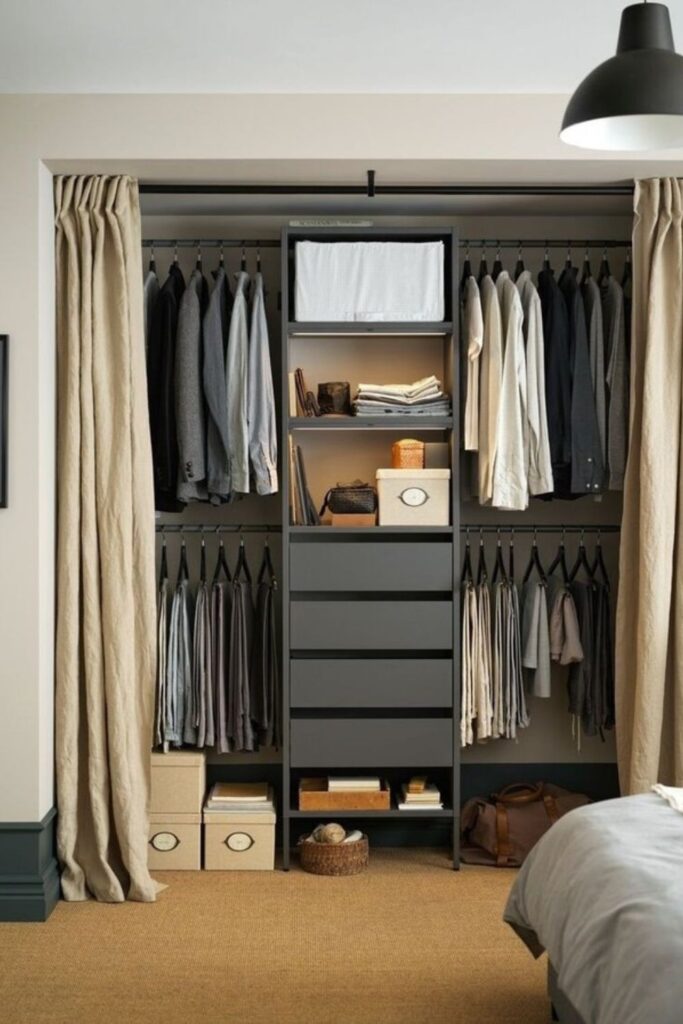
Split Storage
Closets start working better once hanging and folded clothes are separated. Installing double rods on both sides.
Makes space for shirts, jackets, and shorter things without making one bar too full. A large drawer unit in the middle makes room for folded clothes accessories.
And tiny things that frequently go lost. There are open shelves above the drawers that keep things like towels or boxes.
Within reach without making the hanging space messy. If doors feel heavy or take up too much space, curtains on both sides work well.
This configuration works best in bedrooms with broader closet openings because it divides one big area into three smaller, more orderly ones that are easier to manage.
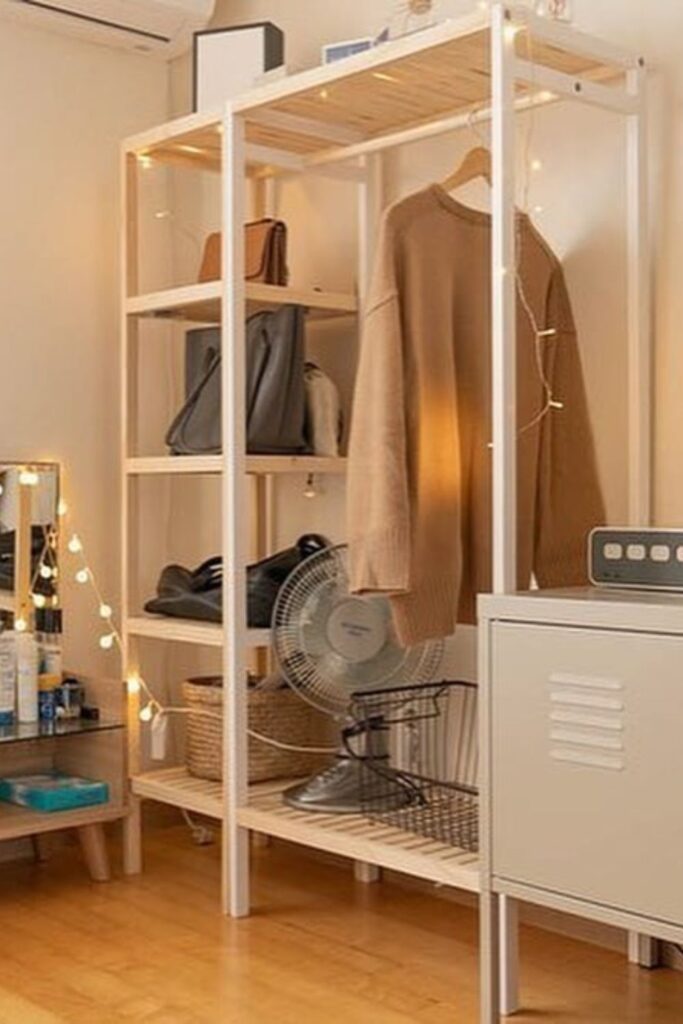
Open Rack
Extra wall space can easily turn into a full clothing area without needing a closet. A freestanding rack with built-in shelves.
It gives you a place to hang up your clothes every day while keeping shoes, purses, and folded things clean below.
Keeping everything in plain sight makes it easier to stay organized because nothing gets lost in the back.
This setup is best for small bedrooms or studio apartments because it substitutes heavy wardrobes with something lighter and more flexible.
Putting it in a corner or next to other furniture keeps the space neat. Adding a few baskets or boxes to the shelves keeps smaller items from looking messy.
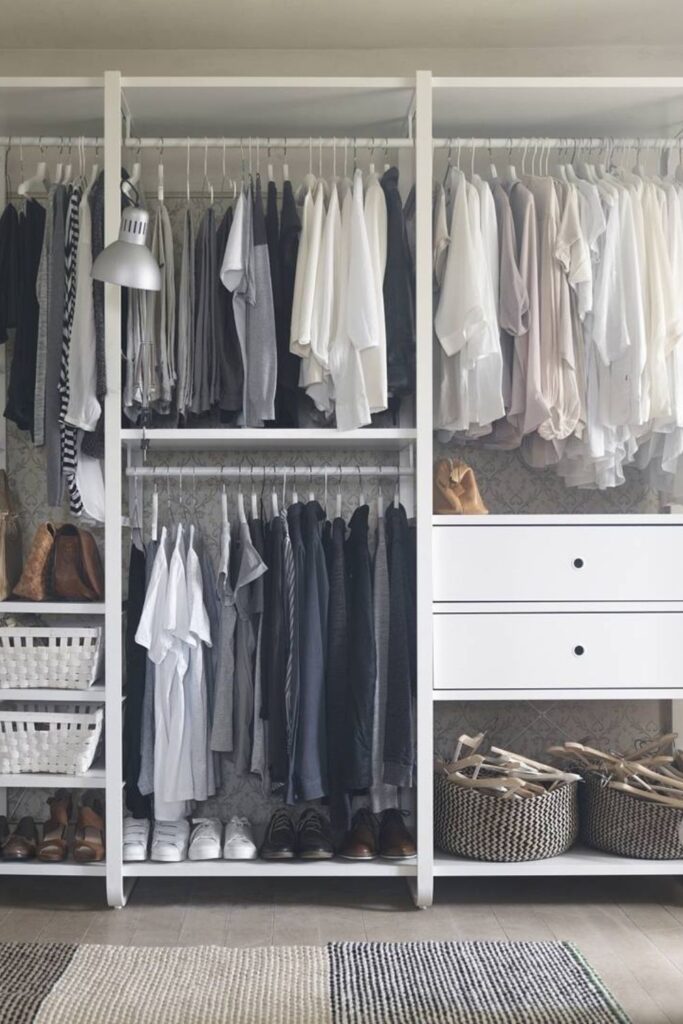
Wardrobe System
Clothes start taking over when everything gets stored in one crowded section. Breaking storage into dedicated sections.
It makes a big difference in how much you can really fit. For shirts and shorter items, use multiple hanging rods.
For longer items, place them in a separate compartment so they don’t take up vertical space. Put drawers in for items that don’t need to be hung up.
And utilize open shelves or baskets for shoes and other things. This layout works better with wider walls because you can spread everything out instead of stacking it.
It is easier to maintain organized and keep clothes from stacking up again when each category is in its own place.
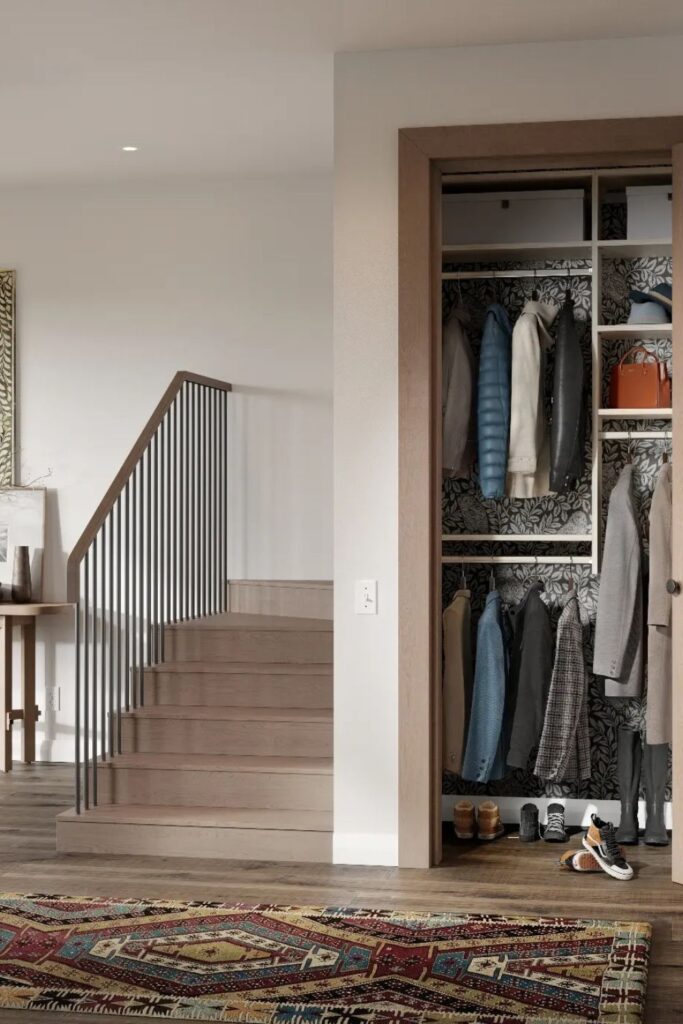
Entry Closet
Narrow spaces near entryways often get ignored, even though they can store a surprising amount of clothing.
Making a small closet into a useful storage space is a good idea for jackets, coats, and other things you use every day.
Adding shelves on one side makes room for bags, folded clothes, or storage boxes while still leaving room for a hanging line for coats.
Instead of piling up next to the door, shoes can stay neatly lined up at the bottom. This configuration is helpful for homes with limited bedroom storage.
Because it moves larger items like coats out of the bedroom and makes more room in the closet where it is most needed.
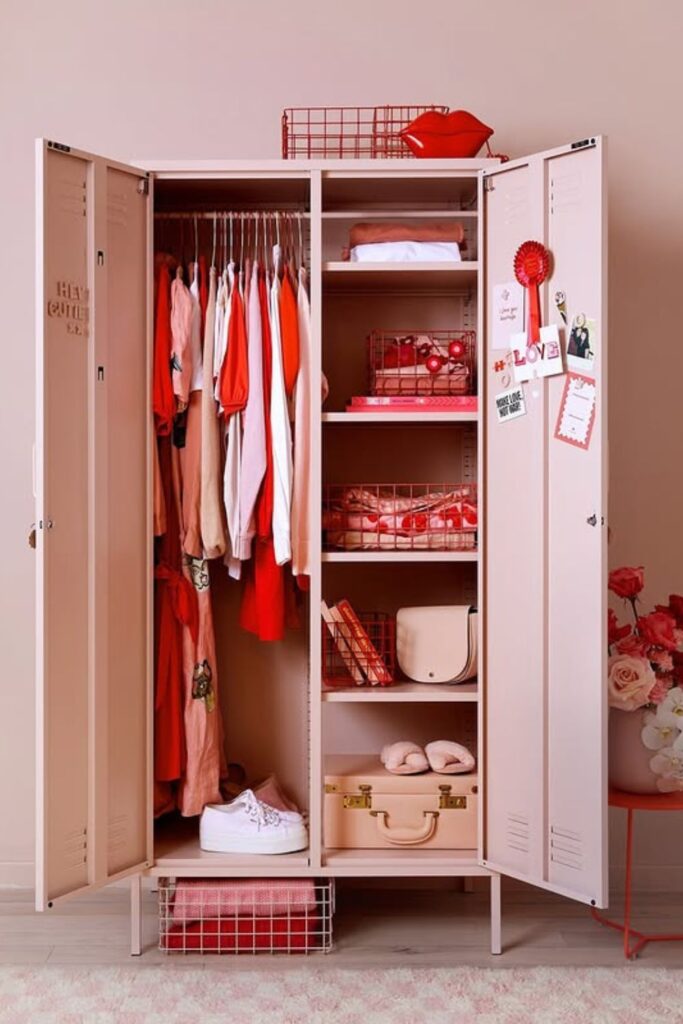
Compact Locker
Small rooms don’t always have space for a full wardrobe, but a narrow locker-style cabinet can still handle a lot more than it looks.
Use one side to hang up garments like shirts and dresses, and use the other side for shelves for folded clothes.
Bags, or storage baskets. Wire containers or boxes keep tiny objects organized and easy to get to.
There is room underneath for shoes or an auxiliary basket for things that don’t fit in the main basket.
This setup is best for bedrooms with tight corners or not a lot of wall space because it allows you both hanging and shelf storage without taking up much space.
Shelf Combo
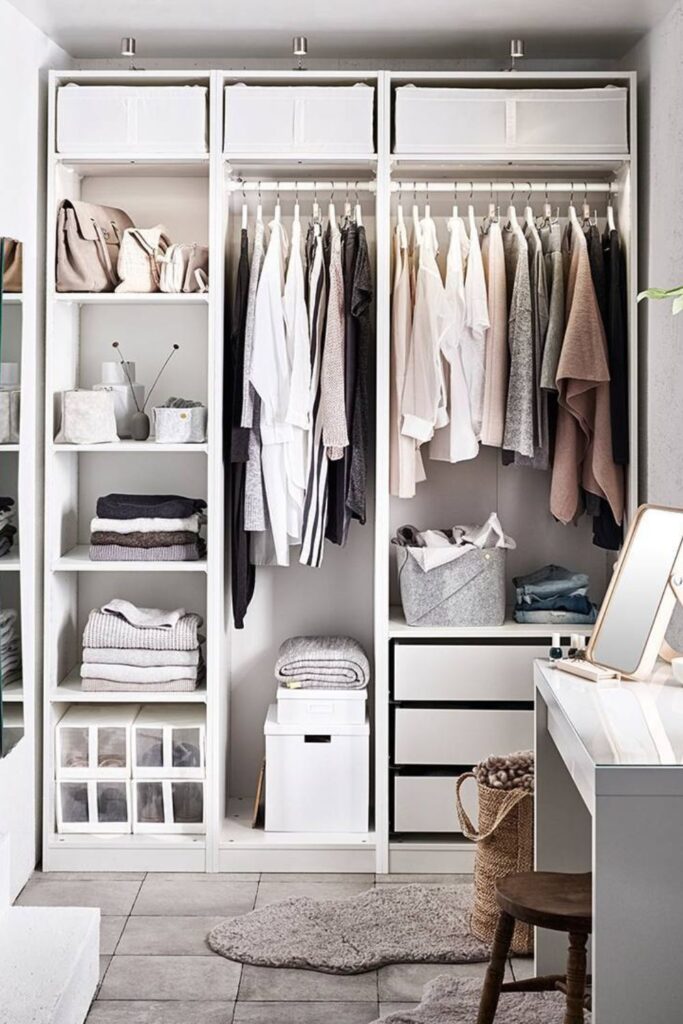
Empty vertical space inside a closet often goes unused, even though it can hold a large portion of your clothes.
Putting together shelves, hanging rods, and drawers makes the system more balanced. Put folded clothing.
Like jeans and sweaters on one side of the shelves and hang up your everyday clothes in the middle so you can easily get to them.
Drawers at the bottom assist keep tiny things that frequently make a mess. Things you don’t use every day fit perfectly in storage bins on the top shelves.
This configuration works best in rooms with shallow closets because it keeps everything ordered and visible without making piles of clothes.
Double Hanging
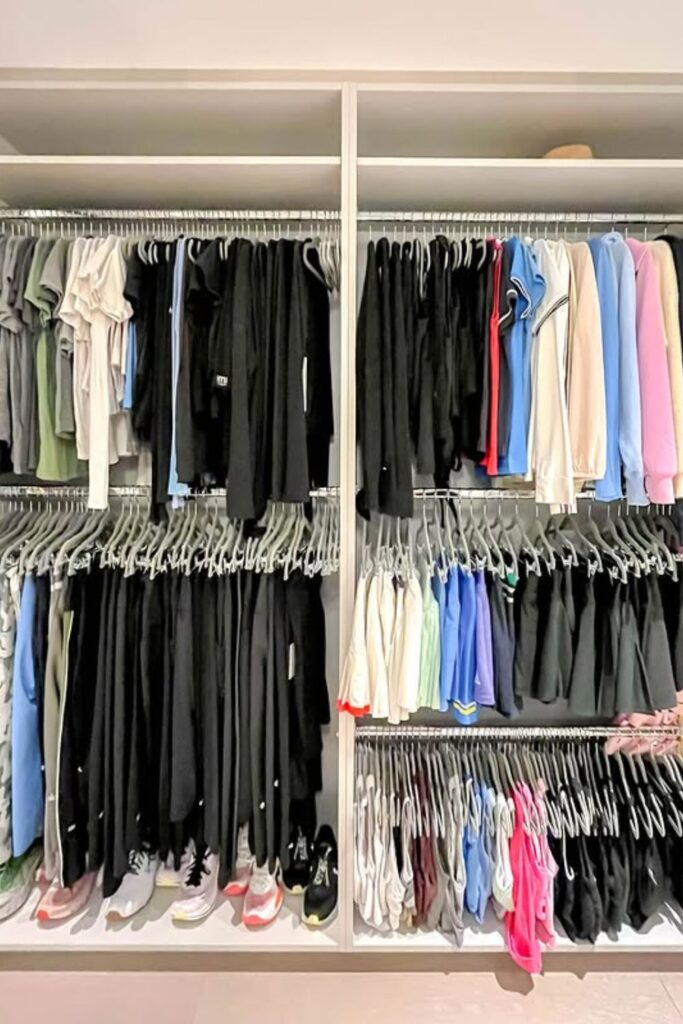
Closet space fills up fast when everything shares one rod. Adding a second rod underneath instantly.
Gives you space for twice as much things, especially shorter ones like shirts, t-shirts, and slacks that are folded and hung up.
It’s easier to find what you need when you keep similar things together on each level instead of having to search through layers.
You can keep your shoes in a line at the bottom so that no space is wasted. This solution works best in closets.
That are tall enough since it turns empty air space into useful storage without needing any extra furniture.
Mini Closet
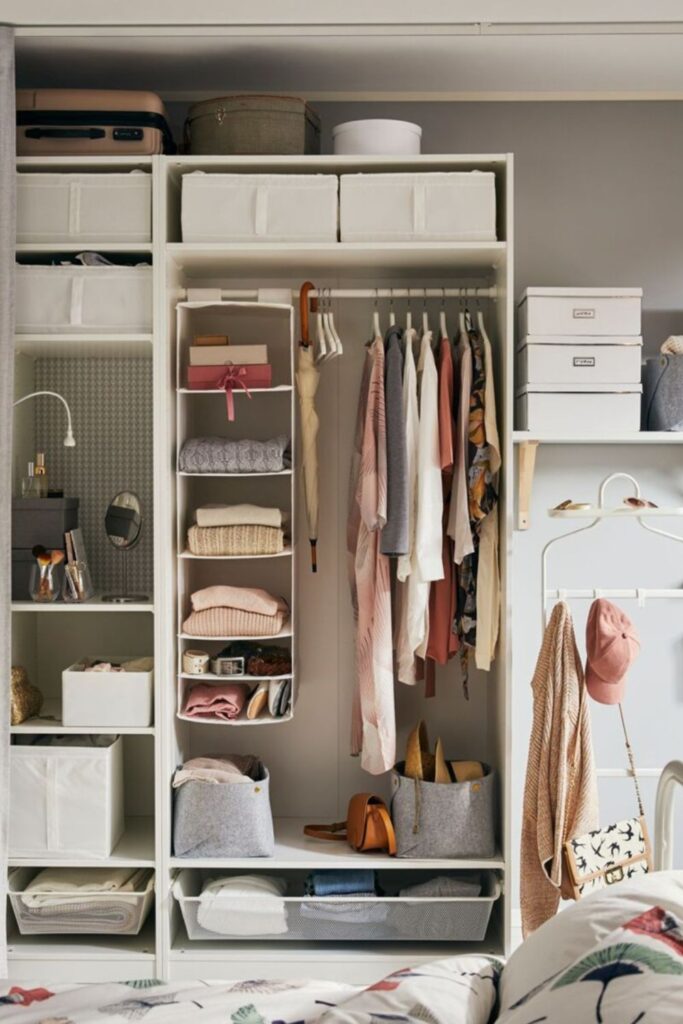
Limited bedroom space doesn’t always allow for a full wardrobe, but a compact closet setup can still handle daily essentials.
Adding thin shelves next to one part for hanging clothes keeps folded goods neatly piled without taking up extra space.
Storage compartments on the top and bottom help keep things tidy and make the most of every inch.
In small spaces where swinging doors would take up too much space, a curtain works nicely instead.
This layout works best in smaller bedrooms because it makes a full clothing area in a small space without making the room feel crowded.
Box Storage
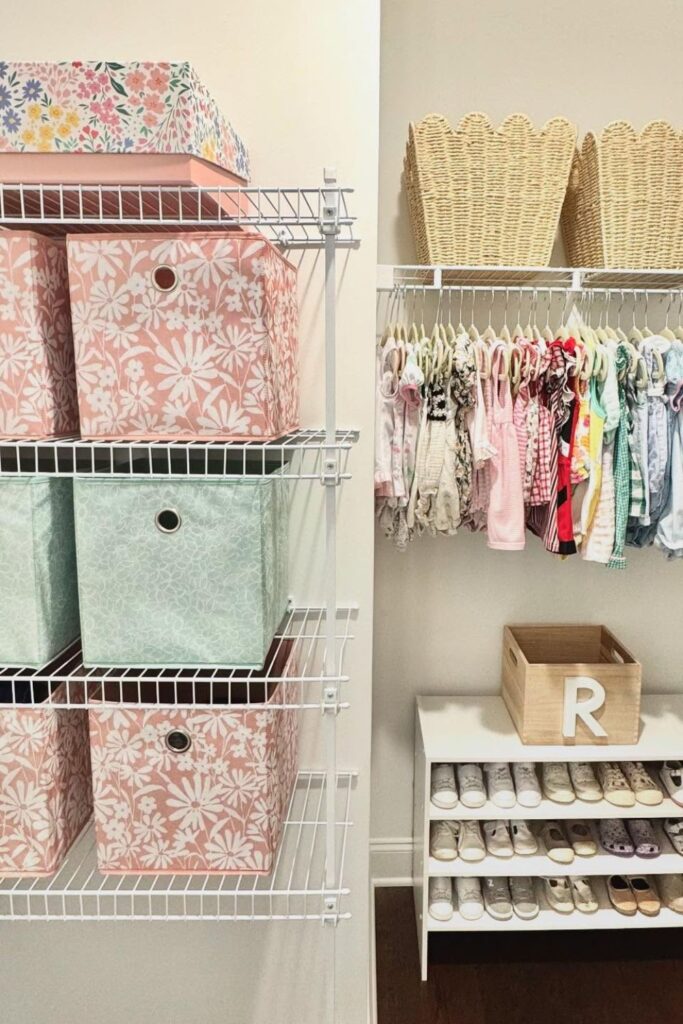
Clutter builds up fast when small items don’t have a place to go. Using matching storage boxes on open shelves.
Hides everything yet makes it easy to get to. Put stuff like clothes, accessories, or extra linens in each box.
So that the shelves don’t look messy. You can quickly discover what you need without opening every bin if you label them or use various colors.
This works best in closets with open wire shelves because the boxes stay in place without slipping through gaps.
It is also easier to clean and rearrange when everything is in boxes since things stay together instead of spreading out.
Center Drawers
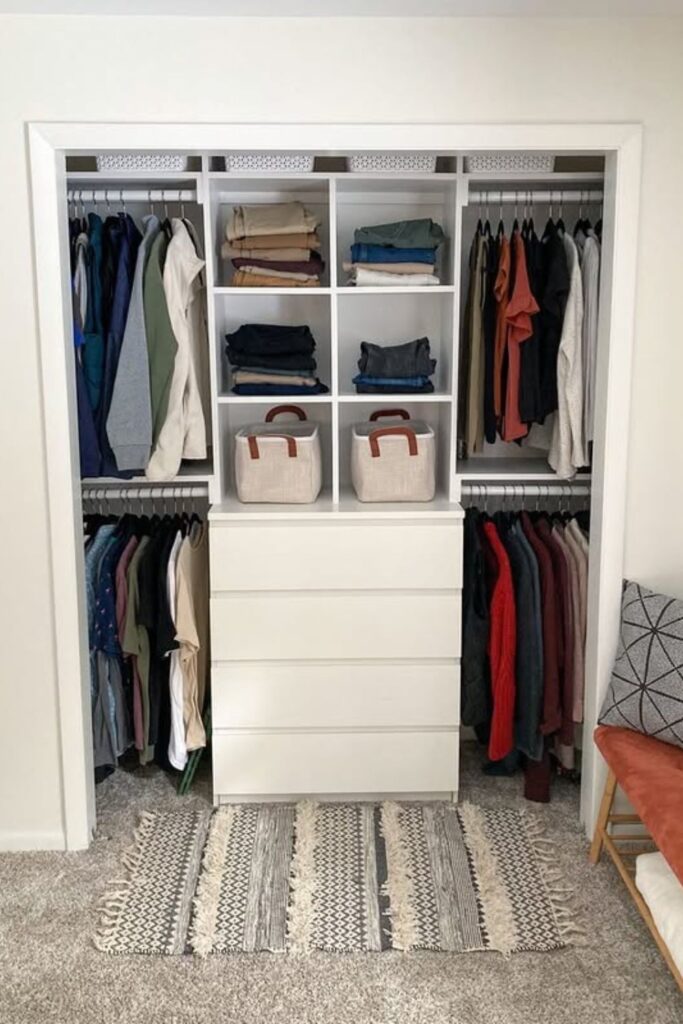
Closets feel crowded when folded clothes compete with hanging items for space. Adding a drawer unit in the center.
Makes things easy to find and keeps everything in its own space. Hang garments on both sides so you can easily get to them.
Use drawers for t-shirts, jeans, or other little things that don’t need to be on hangers. Open cubbies.
Above the drawers are great for putting folded stacks or storage bins out of the way while still being able to see everything.
This configuration works best for closet openings that are medium to large since it breaks up the area into smaller sections that are easier to keep clean and stops clothes from stacking up.
Rack Drawer
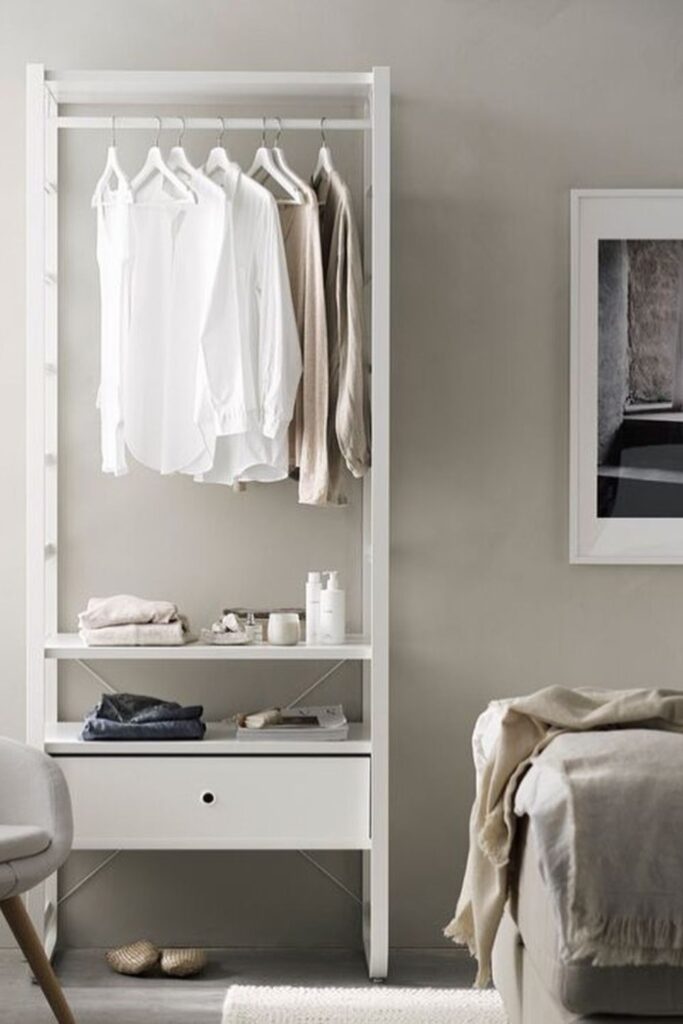
Floor space next to the bed can quietly turn into a useful storage spot. A slim rack with a built-in drawer.
Allows you room to hang up your daily clothes while keeping folded garments and other important items out of sight.
Only putting clothes that you wear often on the rack helps keep it from being too crowded and makes everything look tidy.
The shelf in the middle can contain small things like skincare or accessories so that nothing gets lost in the room.
This configuration is best for bedrooms that don’t have closets or have very little storage space since it makes a small, all-in-one garment area without necessitating big furniture.
Wall Rod
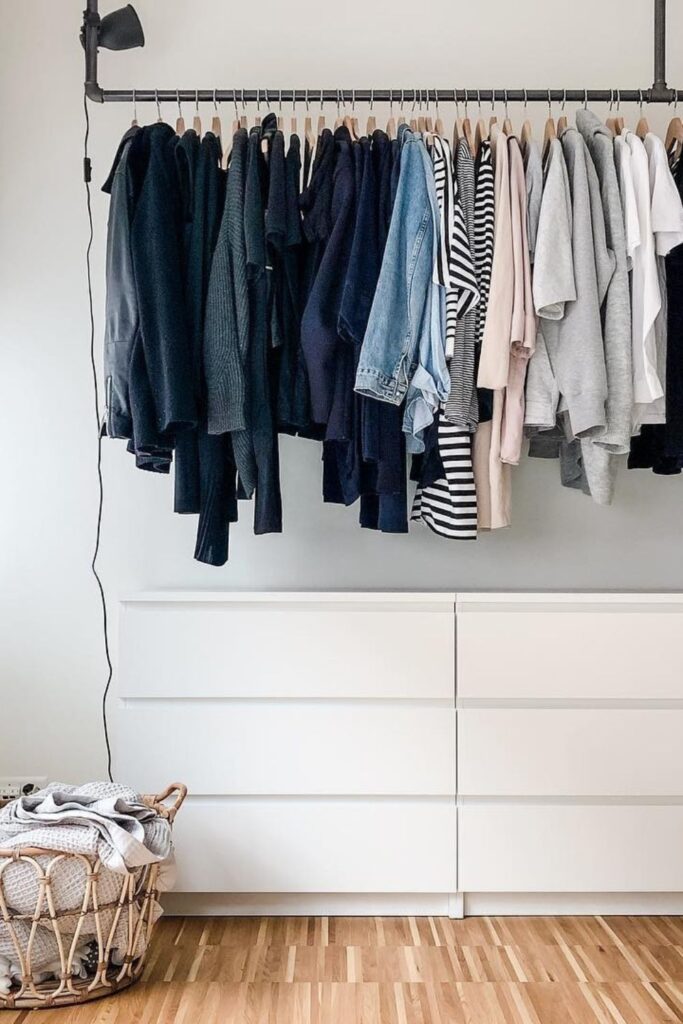
An empty wall can do the same role as a closet area, therefore you don’t always need one. Putting a single rod above a low dresser.
Makes it easy to keep hanging and folded clothes in one spot. You may put drawers underneath the rod.
If you keep it high enough.So you don’t waste any floor space. The dresser handles folded clothes.
Like jeans or t-shirts, while daily outfits are easy to get to. If your bedroom doesn’t have a closet or has limited storage.
This is the best option because it turns a blank wall into a useful wardrobe without taking up too much space.
Rolling Rack
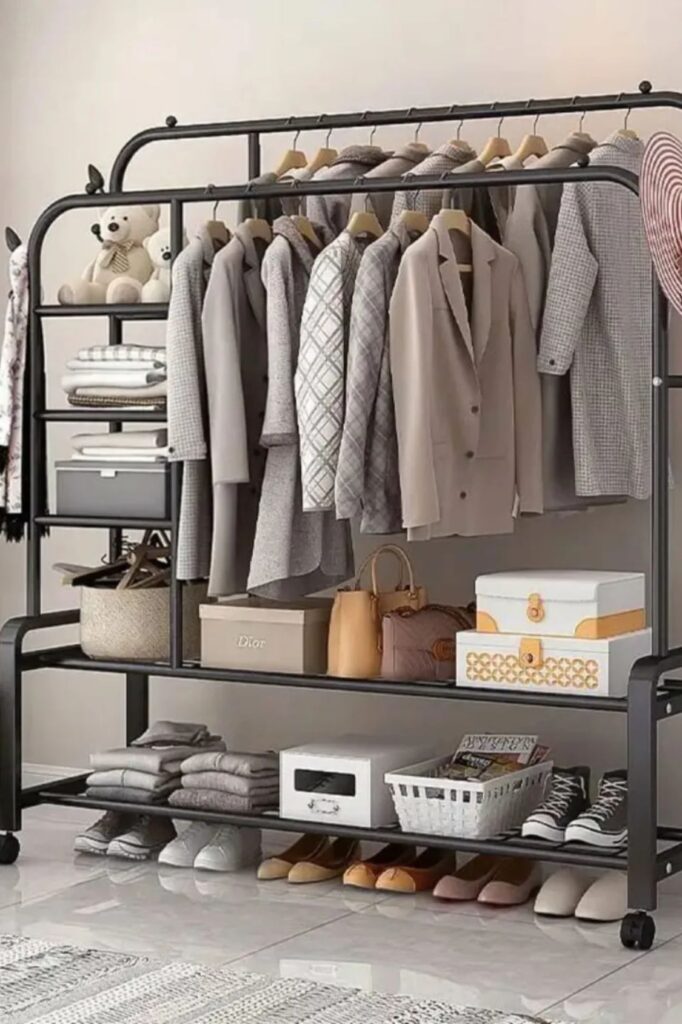
Limited space often needs something flexible that can move with your layout. A rolling rack with shelves solves.
That gives you storage, hanging space, and the ability to move about all in one configuration. Put your everyday clothing on the top bar.
So you can see them, and use the side shelves for bags, boxes, or folded things. The bottom shelf is a good place for shoes, so they don’t get all over the floor.
This is best for rooms that need to be rearranged often because you can move the rack around without having to raise heavy furniture.
Putting everything in one transportable unit also makes more room in other parts of the room.
Pipe Shelves
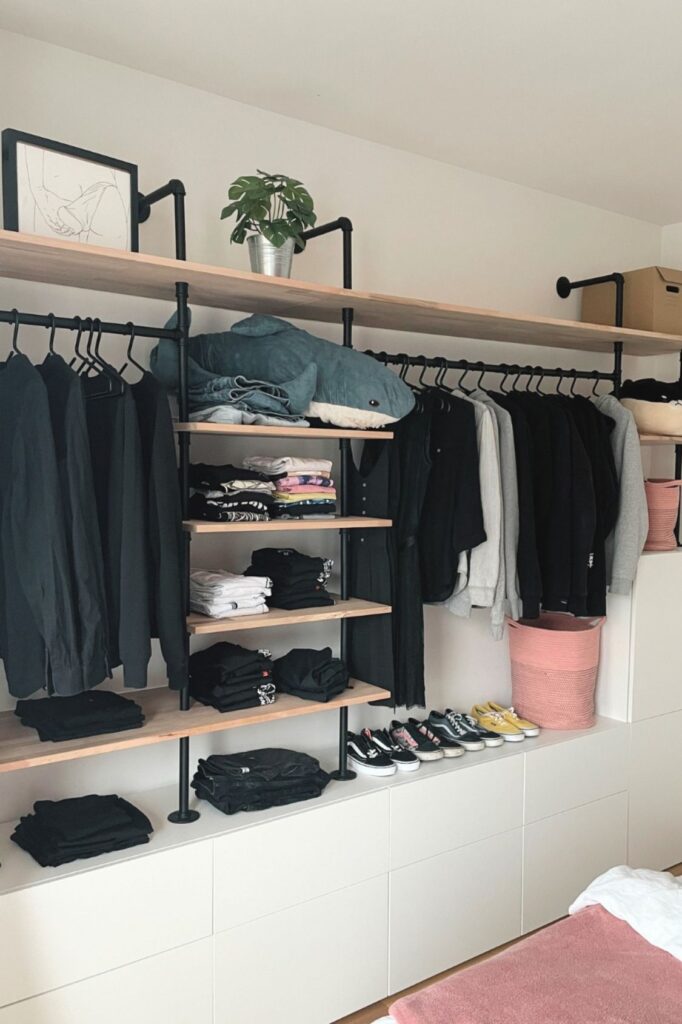
Empty walls can hold far more clothes than most closets when you build upward instead of outward.
A pipe-style rack and lengthy shelves make a whole storage system on one wall. Put your jackets.
And everyday items on the rods and your folded garments, bags, and storage boxes on the shelf. Adding lower cabinets or drawers underneath.
Gives you extra storage space so that nothing looks congested. This setup works best in rooms with long, empty walls since it uses vertical space while spreading things out horizontally.
Separating things by category in each section makes it easy to keep everything clean and keeps garments from piling up.
Drawer Tower
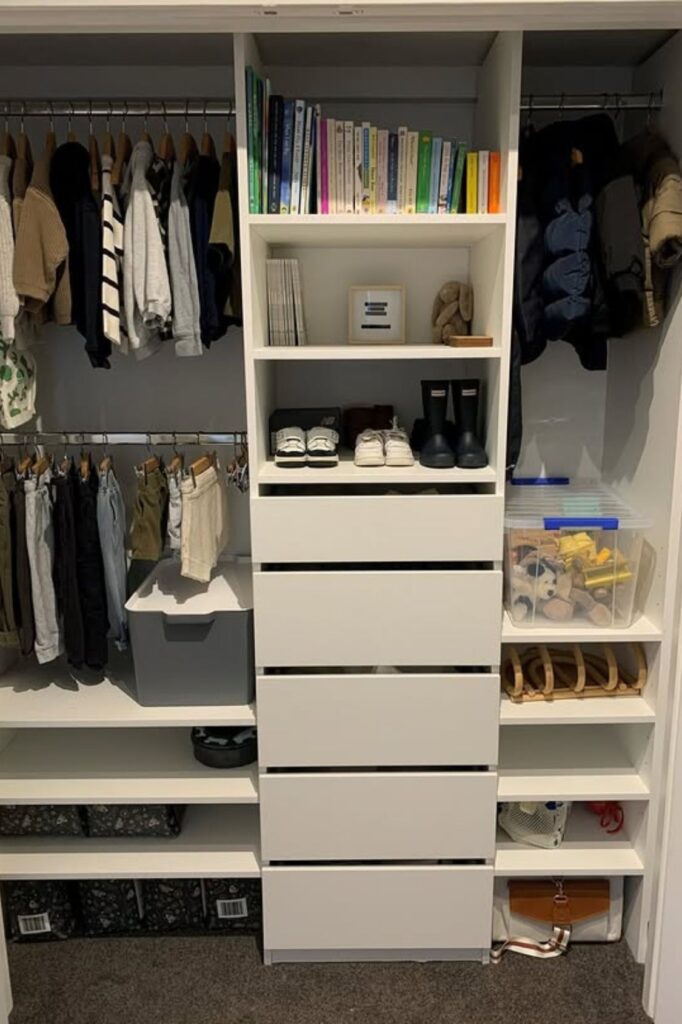
Clothes get harder to manage when everything is either hanging or stacked in one place. Adding a tall drawer unit in the middle.
Makes it easy to keep track of minor things so they don’t go misplaced. Leave space on both sides for shirts and coats to hang.
Use drawers for things like t-shirts, undergarments, or pants that are folded. You can put shoes, books, or storage boxes on open shelves.
Above the drawers without making the main space look messy. This configuration works best in closets that are wide enough.
Since it breaks up the space into smaller parts that are easier to clean and keeps everything neat and visible.
Narrow Wardrobe
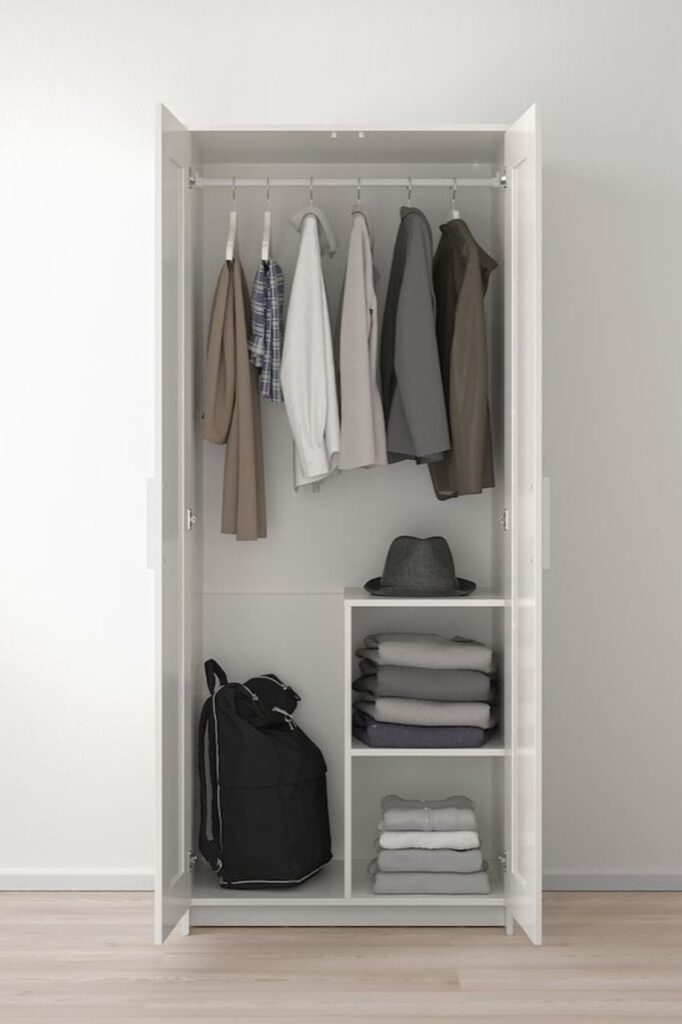
Tight rooms don’t leave space for wide storage, but a tall narrow wardrobe can still handle everyday clothing.
Without taking over the whole room. The top has a hanging space that saves shirts and coats from being wrinkled.
And the small side shelf part makes place for folded garments or other important items. Putting bigger things like bags or backpacks at the bottom.
Helps keep the space balanced without making the hanging area too crowded. This setup works best in corners or gaps in the wall that aren’t being used because it fits into locations.
Where bigger furniture wouldn’t. It also doesn’t feel cramped when you only keep clothes that you wear often inside.
Folded Stacks
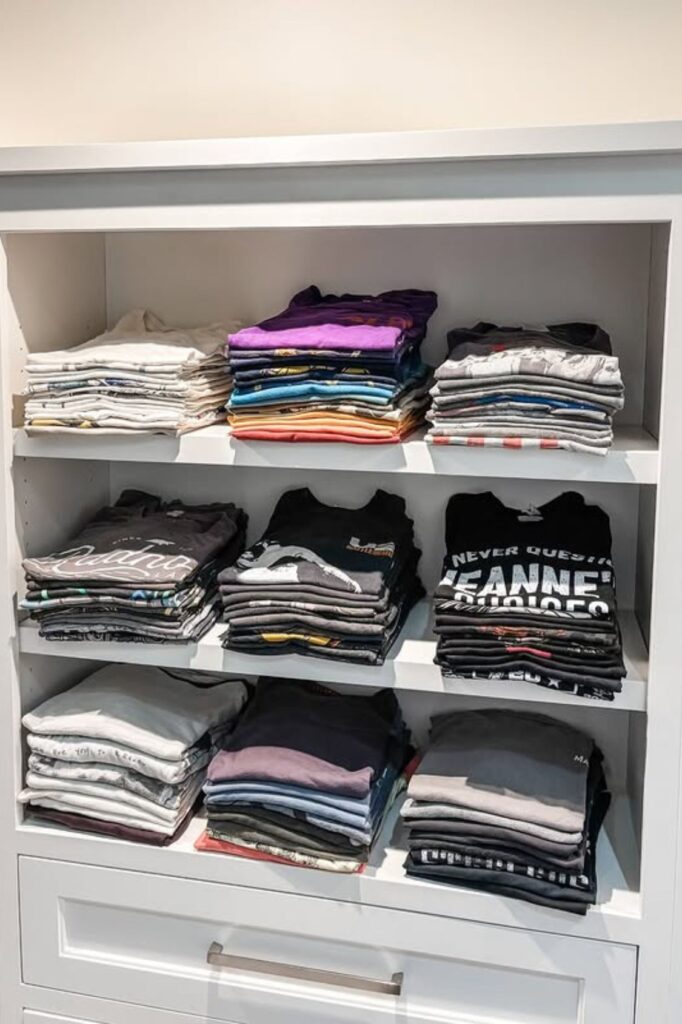
Drawers fill up quickly when bulky clothes are stuffed inside without structure. Using open shelves for folded stacks.
Keeps everything in sight and makes it easy to handle. Put things that are alike in the same place.
Such t-shirts in one area and hoodies in another, so they don’t get mixed up. Keeping stacks clean and the same size stops them from falling over.
Shelves with more than one compartment are the ideal since they divide categories on their own, so you don’t need extra organizers.
This setup is best for rooms with limited drawer space since it moves folded garments out of drawers and makes room for smaller objects.
Corner Setup
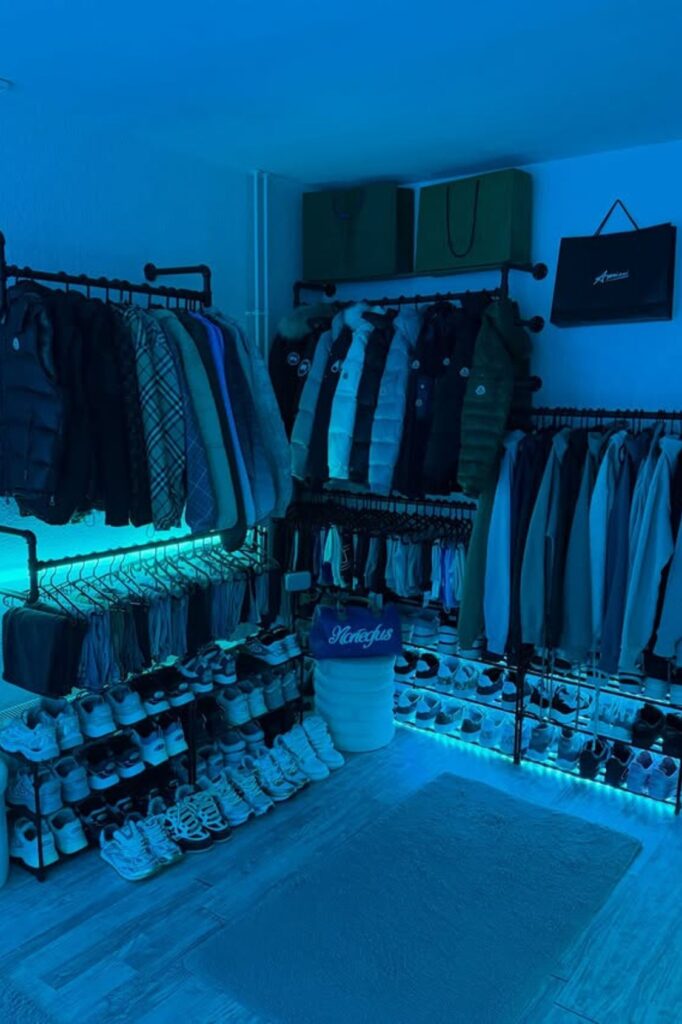
Even though they may carry a full wardrobe system, corners generally stay empty. Putting rods on the walls.
On two sides of the corner makes it a full wardrobe area. Put jackets and other heavy things on the upper rods.
And everyday clothes on the lower rods. This will keep everything within reach. Putting a shoe rack.
Under the floor keeps it tidy and stops clutter from spreading. This layout is best for small rooms.
Since it uses space that would otherwise be wasted while still making everything easy to see and get to.
Shoe Shelves
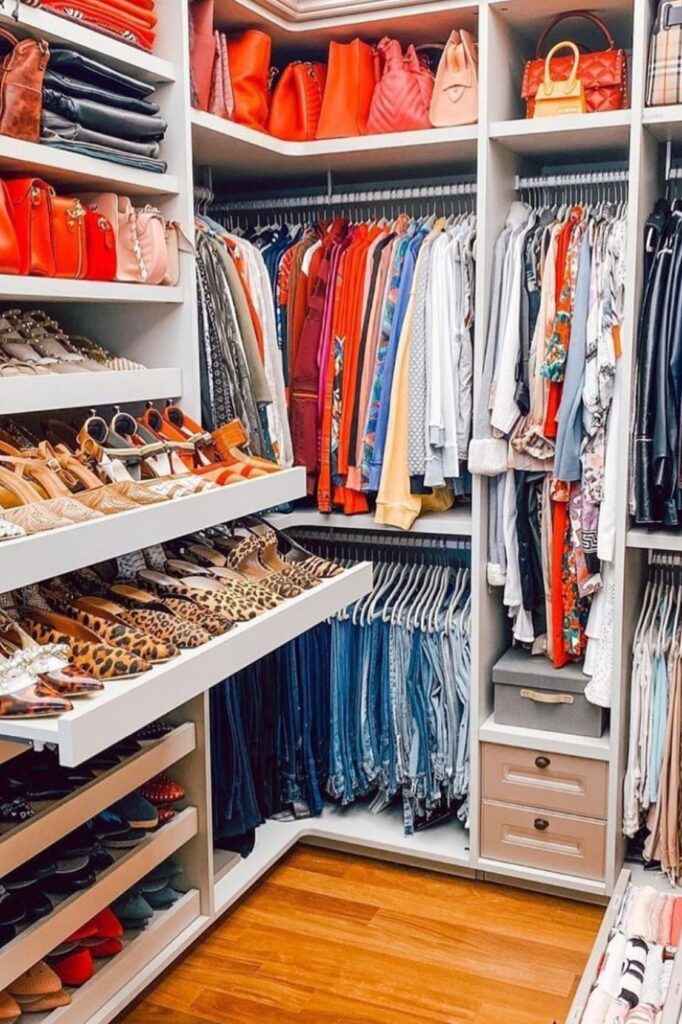
Shoes often end up all over the floor, wasting space that could be used better. Adding angled or stacked shoe shelves.
Along one side makes it easy to see and grab every pair. If you keep them at a small angle, you can view.
Everything at once without having to sift through stacks. Putting shoes on the vertical wall space.
Makes room for other things at the bottom of the closet. This design is best for closets with a lot of shoes.
Because it keeps everything in one place and makes the remainder of the closet look neat and tidy.
Wall Panels
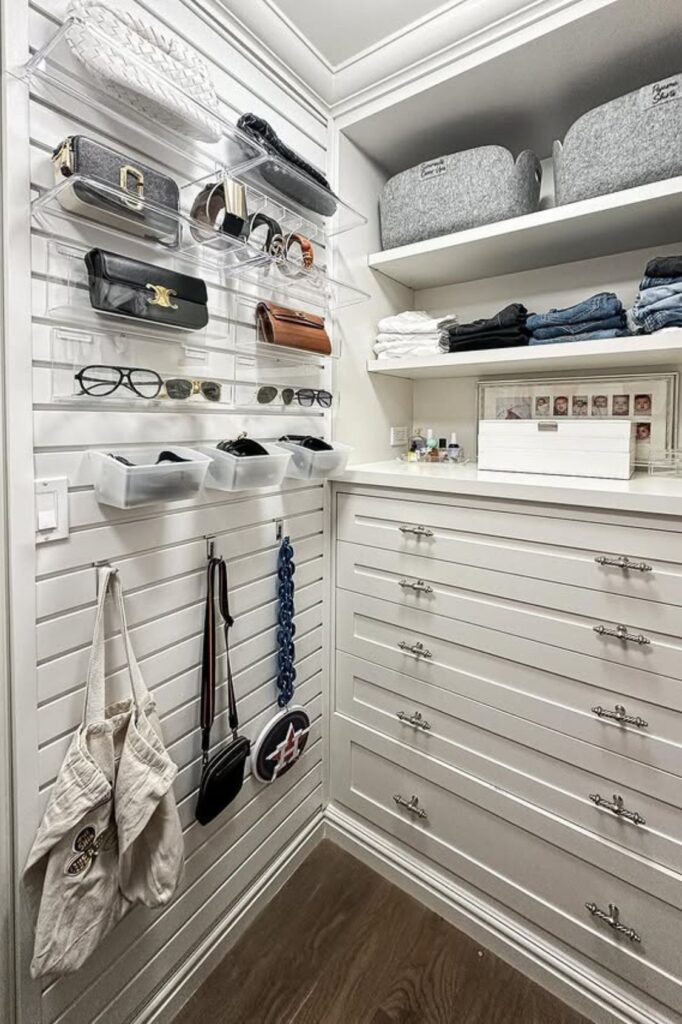
Accessories often get lost in drawers where you can’t see anything at once. Using wall-mounted panels.
With clear shelves, bags, sunglasses, and small accessories are simple to see and get to. If you keep everything.
Out in the open, you can find things faster without having to search through boxes. The drawers underneath.
Can hold clothes, and the wall can hold smaller things that tend to make a mess. This solution works well in corners.
Or tiny closet sections because it converts vertical space into organized storage without taking up more space.
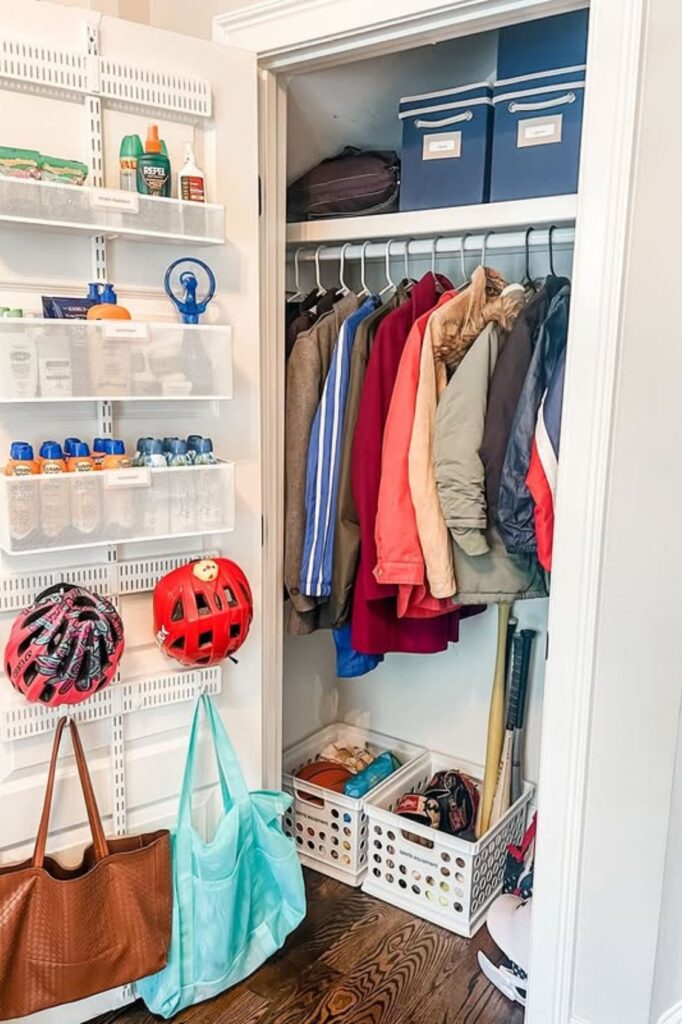
Door Storage
Back-of-door space usually goes unused, even though it can hold a surprising number of items. Installing.
Putting up hanging organizers or mounted baskets on the door gives you more storage space without taking up any floor space.
Use it to keep little things like bags, accessories, and daily necessities from getting in the way of other things on shelves and in drawers.
When you’re in a hurry, it’s simple to grab things you use a lot from the door. This configuration is most useful for small closets since it adds storage space.
Where there wasn’t any before. This helps you keep the main closet area less crowded and more orderly.
FAQs
How can you store clothes in a tiny room without a closet?
If you put things up the proper way, a small room without a closet can nevertheless hold a lot of clothes.
Use a clothing rack with shelves or drawers so you can hang and fold things all in one area. Wall-mounted shelves or rods are also good.
What is the best way to maximize space in a small closet?
Using the height is the best method to make a small closet feel bigger.
Adding a second hanging rod might quadruple the space you have for shorter garments like shirts.
Put things you don’t wear regularly on shelves or in storage bins on top. Putting shoes and other little things to the bottom of the closet keeps it clean and makes it easy to keep clean.
You may like to read!
- 21 Boot Storage Ideas
- 20 Pencil Storage Ideas
- 22 Kitchen Wall Storage
- 19 Storage Bench Ideas
- 20 Closet Door Storage

Fasial is the founder of the Fizzy Flare. He has been a passionate blogger since 2021. He ran three different websites in the past few years. Now he is focusing on Fizzy Flare to build an audience and help them organize their life.