25 Coat Closet Organization Ideas for 2026
This post may contain affiliate links: full affiliate disclosure.
Look into your coat closet. You’re not the only one who has coats that are too tight, shoes that are piled on the floor, and scarves that seem to disappear when you need them.
Because there isn’t enough room to keep everything orderly, narrow coat closets typically become dumping grounds.
The good news is that the layout is the problem, not the closet. Even a small, tight closet can store coats, shoes, and everyday goods without looking cluttered.
If you have the correct storage options. This post will show you simple methods to use every inch of your compact coat closet so that it stays neat and easy to use every day.
In this article, I will show you 25 clever Coat Closet organization ideas. These simple tips will help you keep your space neat, practical, and easier to manage.
Let’s jump in!
Contents
- 1 What Are The Best Storage Solutions For A Narrow Coat Closet?
- 1.1 Open Shelving
- 1.2 Double Rods
- 1.3 Shelf Baskets
- 1.4 Bin Dividers
- 1.5 Door Hooks
- 1.6 Rod Sections
- 1.7 Rack Station
- 1.8 Vertical Cubby
- 1.9 Door Organizer
- 1.10 Labeled Bins
- 1.11 Peg Board
- 1.12 Tall Cubbies
- 1.13 Family Zones
- 1.14 Clear Boxes
- 1.15 Bag Hooks
- 1.16 Shoe Shelves
- 1.17 Wall Rails
- 1.18 Box Shelves
- 1.19 Drawer Tower
- 1.20 Side Towers
- 1.21 Basket Cubbies
- 1.22 Top Baskets
- 1.23 Split Levels
- 1.24 Shoe Tiers
- 1.25 Shoe Tower
- 2 FAQs
What Are The Best Storage Solutions For A Narrow Coat Closet?
It can be annoying to have a narrow coat closet because everything fights for the same small space.
Coats become stuffed together, shoes pile up on the floor, and tiny things like gloves or scarves easily get lost in the jumble.
Save this article for later! 👇👇

Instead of fighting the narrow space, the best way to fix this issue is to use storage that fits. Using vertical space, slender organizers.
And clever zones for different things makes the closet a lot easier to keep organized. The appropriate setup makes it easy to hang jackets, store shoes.
Without getting in the way of the floor, and get to things you use every day. When every inch has a purpose, even a little closet may function surprisingly well.
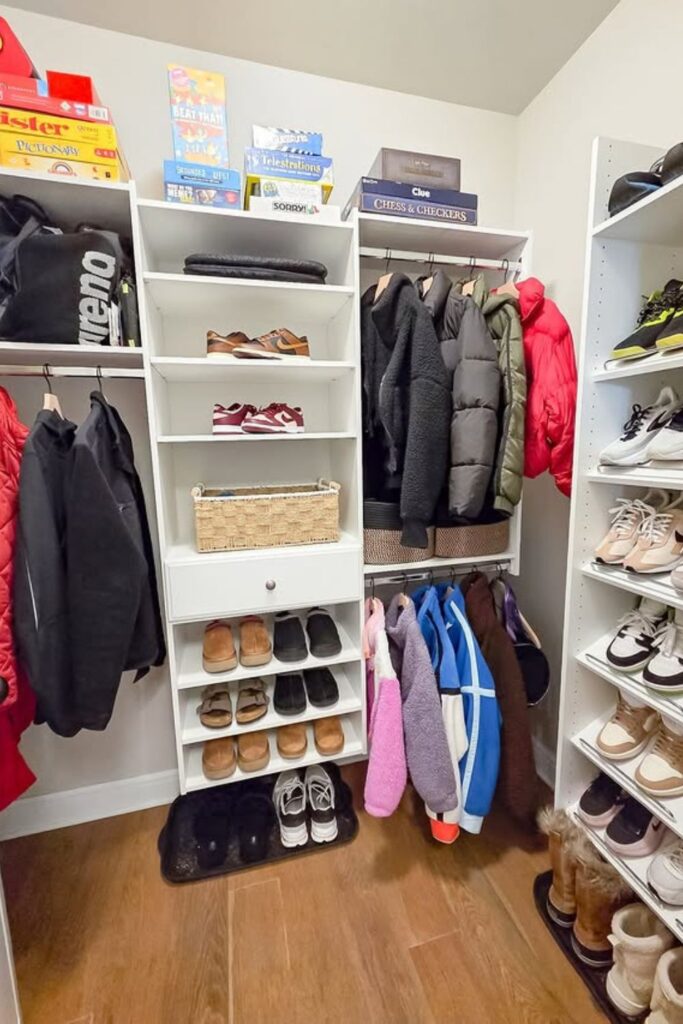
Open Shelving
Tight closets become much easier to manage once storage moves upward instead of spreading across the floor.
This tall shelving unit makes clear areas for shoes, folded things, and everyday goods without making the room appear small.
Lower shelves are great for everyday shoes since they keep them off the floor and simple to get to.
You can put baskets for gloves, scarves, or other little things that tend to get lost on the middle shelves. Upper shelves hold things that aren’t utilized as often.
Such board games or seasonal gear. Pick a thin shelf system that fits the depth of your closet, and make sure that each level is just for one type of item.
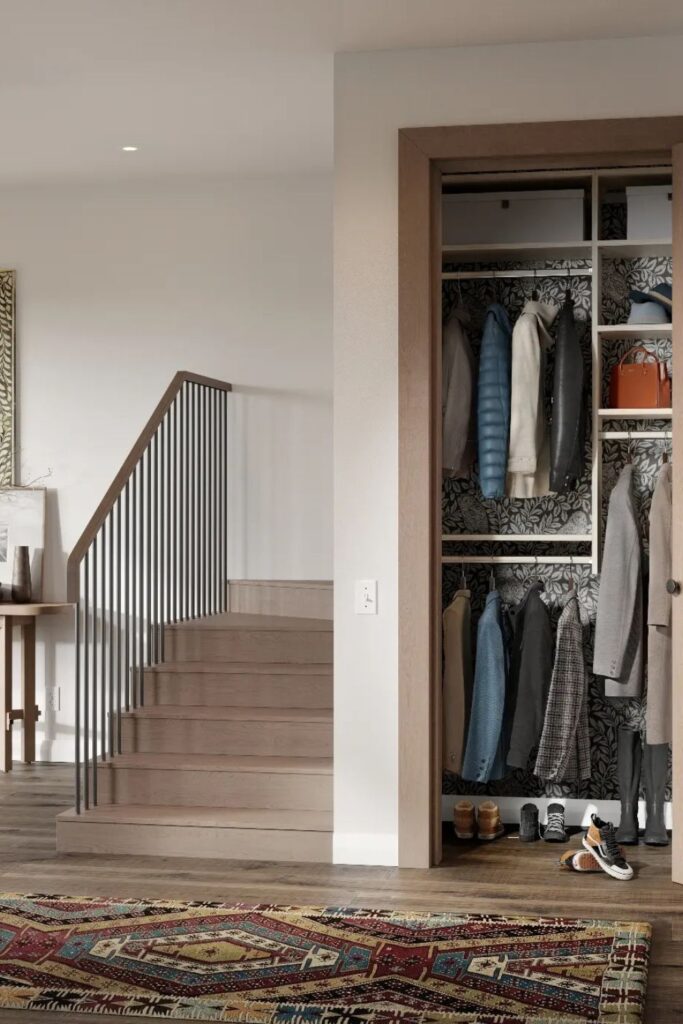
Double Rods
Narrow closets waste a surprising amount of space when only one hanging rod is used. Splitting that vertical area into two rods.
Instantly doubles the closet’s capacity for coats. The bottom rod is great for shorter jackets, kids’ coats, and light layers.
The upper rod is better for bulkier winter coats. Shoes can still sit neatly on the floor without getting in the way of hanging space.
Put the second rod about midway between the top rod and the floor so that the coats don’t touch.
This configuration works really well in family houses where a lot of jackets are used every day. It gives everyone their own space without making the closet too full.
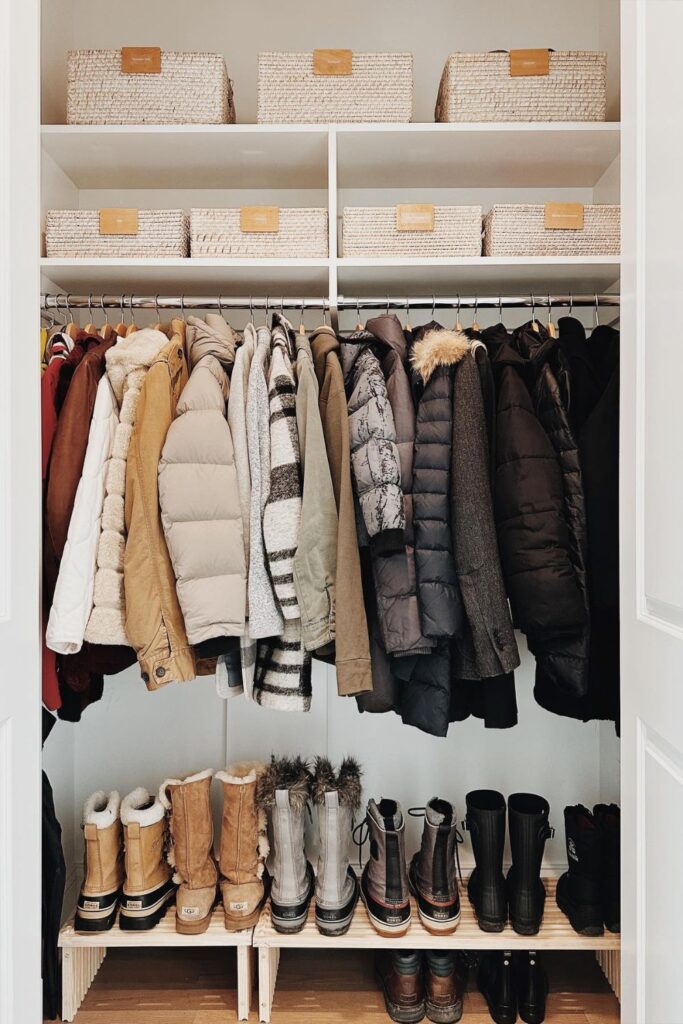
Shelf Baskets
Clutter usually starts when small items don’t have a clear place to land. Woven baskets on the top shelves solve that problem by turning open space into organized storage.
Nothing is buried under coats because each basket may carry a category, such gloves, scarves, caps, or even pet leashes.
Putting them on the top shelves keeps the hanging space clear and makes it easy to get to seasonal accessories.
Labels make it clear to everyone in the house where items go. Pick baskets that fit the shelf width precisely so the area seems neat instead of messy.
The closet feels calmer right away when accessories are put in baskets, and ordinary things don’t get lost in the shuffle.
Bin Dividers
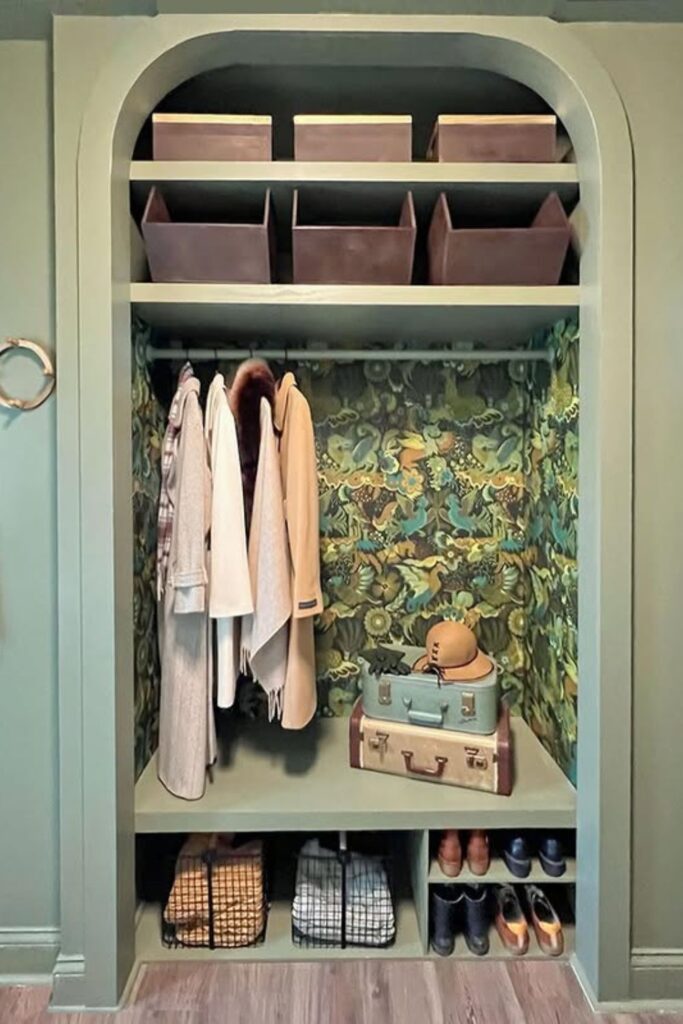
Loose items tend to spread out quickly on open shelves, which is why divided bins can change how a small coat closet works.
Each category has its own section, so hats, gloves, scarves, and other tiny items don’t get mixed together.
These bins work best on the upper shelves since they keep things ordered instead of messy when you store them up high.
You can see what’s inside open-top containers without having to open them. To keep the system easy to use, give each person or item type its own container.
When little goods have their own compartments, the remainder of the closet stays cleaner and it’s easier to find things you use every day.
Door Hooks
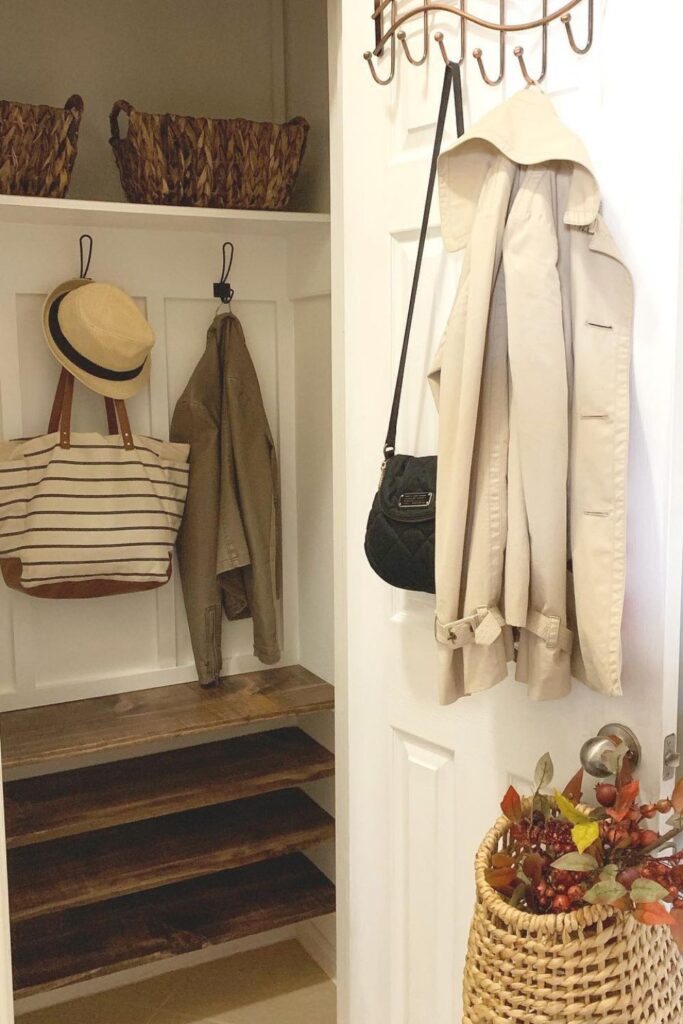
Hidden storage often sits right behind the closet door. Hanging a multi-hook rack on the inside instantly creates a drop zone for items you use every day.
You can keep lightweight coats, purses, or umbrellas here without taking up rod space. This is especially useful in small closets where every inch counts.
The main rod is for bigger jackets, while the quick-grab items are easy to access as soon as the door opens.
It’s easy to put up: you may either use an over-the-door hook rack or screw a thin hook bar into the door panel.
When you move your daily necessities to the door, the rest of the closet stays peaceful, and coats on hanging cease getting pushed away.
Rod Sections
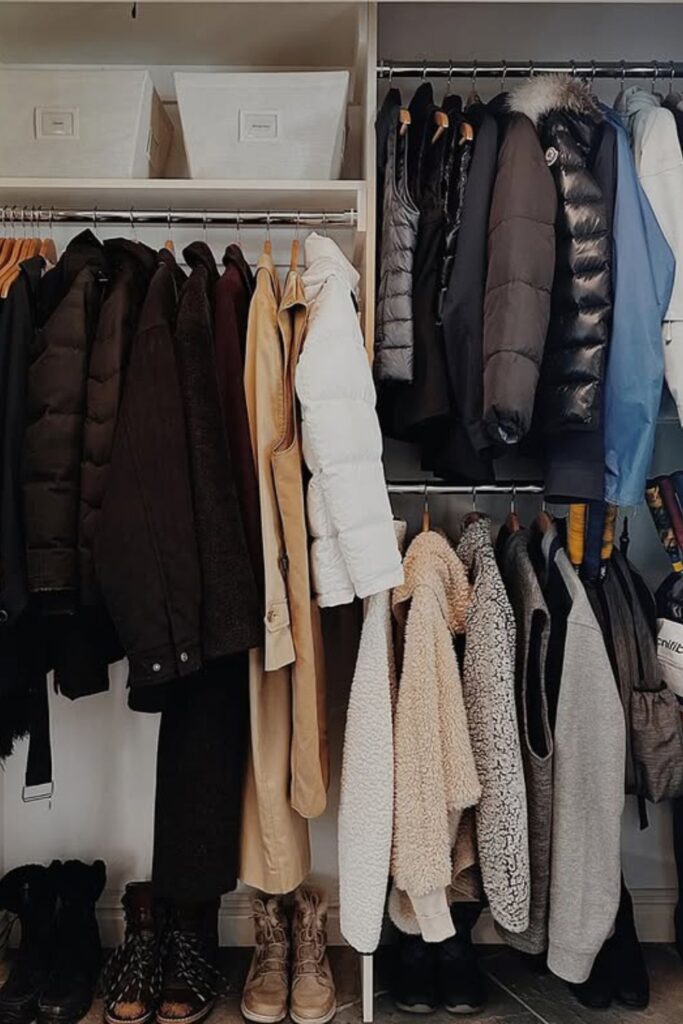
Crowded closets often happen because every coat shares the same rod. Splitting the hanging space into sections creates instant order.
One side may accommodate bulkier winter coats, while the other side can hold lighter coats or shorter items like hoodies and sweaters.
The bottom part is great for things that don’t need to be as tall, so you can stack more clothes without having to squeeze them all together.
It’s also easier to find what you need on hectic mornings if you keep similar items together. To set this up again, put in a second rod or split the closet into two hanging areas.
The closet feels less crowded and is easier to keep clean when coats are sorted by category.
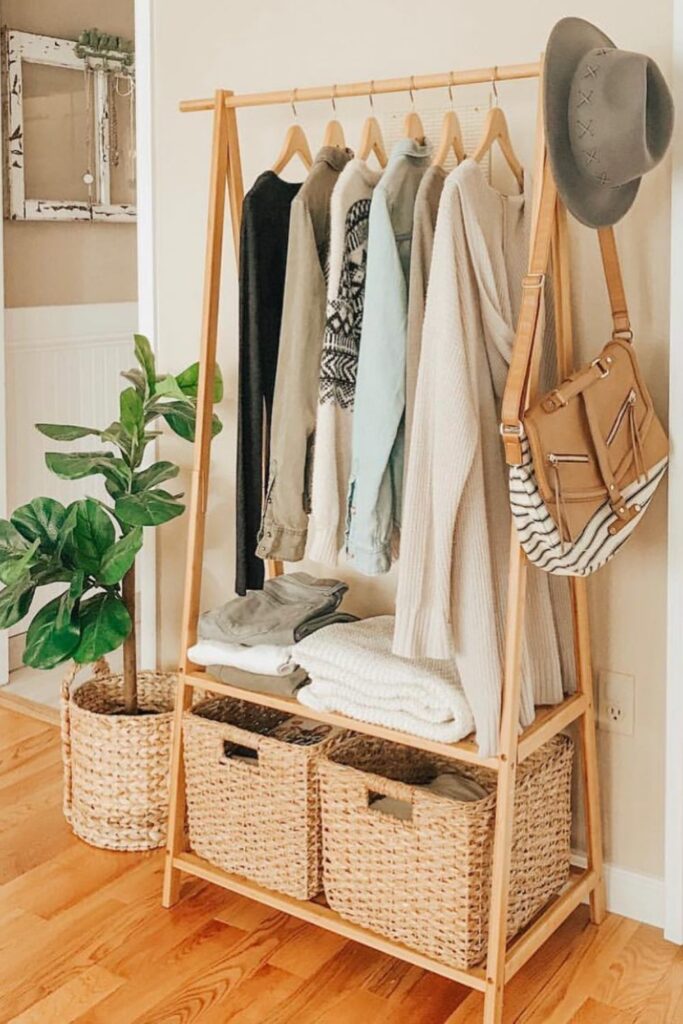
Rack Station
Entryways without a built-in closet still need a clear place for coats to land. A freestanding rack creates that drop zone while keeping everything visible and easy to reach.
The top bar is where you hang your daily jackets to keep them from being wrinkled. The bottom shelf is where you can store folded sweaters or seasonal layers.
Underneath the work area, storage baskets are great for scarves, gloves, and other little things that tend to get in the way on tables and chairs.
Put the rack next to the door so that coats automatically go back to the same position when you get home.
Choosing a narrow wooden frame makes the setup feel light instead than heavy, which is useful for small entryways that don’t have a standard coat closet.
Vertical Cubby
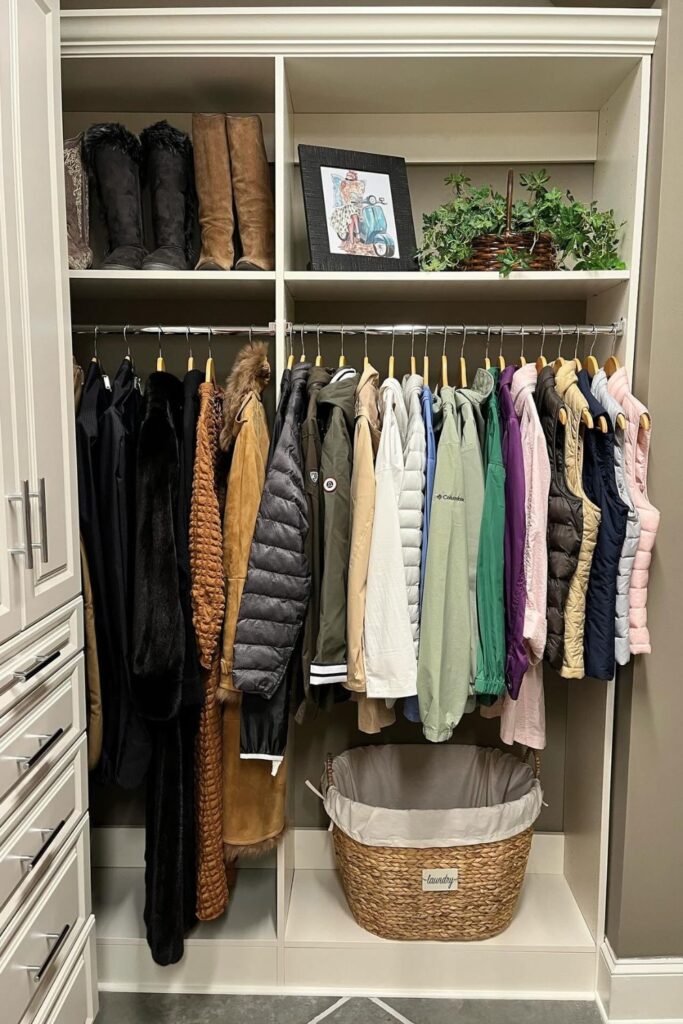
Coats take most of the attention in a closet, but boots often end up scattered on the floor. Tall cubby compartments solve that problem.
By putting big shoes in their own vertical zone. The taller parts of winter boots keep them upright so they don’t fall over and lose their shape.
Nearby, shorter containers can hold sneakers or other shoes you wear every day. Putting shoes in their own column helps keeps jackets clean and dry.
By keeping dirt and moisture from coming in from outside. To make this layout again, put a thin vertical divider next to the hanging rod and build stacked cubbies inside it.
The closet floor stays free and the whole space looks much more tidy once the boots have a place to stand.
Door Organizer
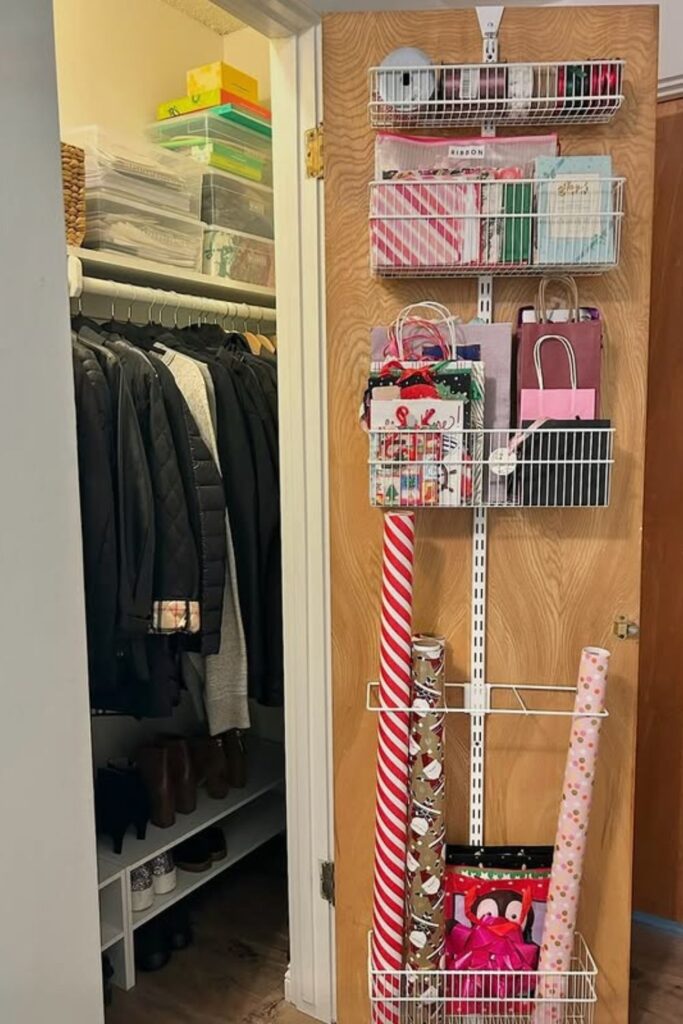
Unused door space can quietly become one of the most valuable storage areas in a narrow coat closet.
Putting a vertical wire organizer on the inside of the door makes several levels for things that tend to go lost around the house.
You can keep gift bags, wrapping paper, small boxes, or seasonal goods neatly placed without touching the main closet shelf.
By keeping these things on the door, they won’t have to fight for space with coats and shoes.
Adjustable rail systems are the ideal since they let baskets move up and down as your storage needs vary.
Labeled Bins
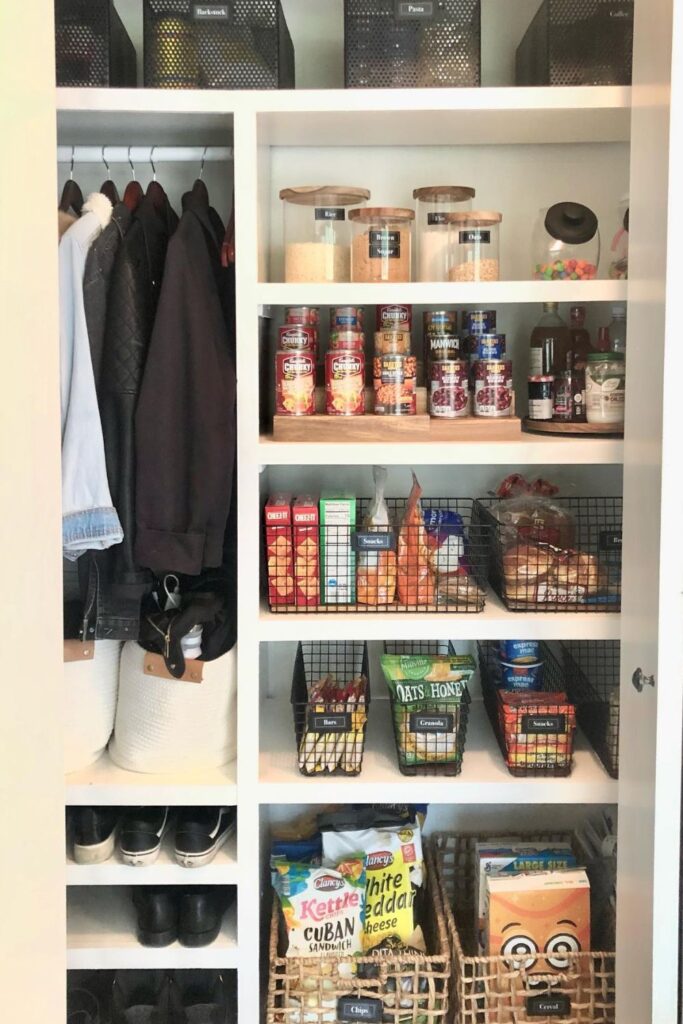
Searching through a crowded shelf slows everything down, especially when multiple items share the same space.
Labeled bins solve that problem by dividing a huge shelf into smaller, more orderly pieces. Each container can hold a certain type of item.
Such scarves, hats, gloves, pet supplies, or even minor housekeeping things that should be near the door.
Everyone in the house can easily put things back where they belong if they have clear labeling. Wire baskets or open bins are great since you can see what’s within without having to dig.
Put these bins on middle or upper shelves where things that are loose like to gather. It doesn’t take much work to keep the closet organized once each group has its own labeled box.
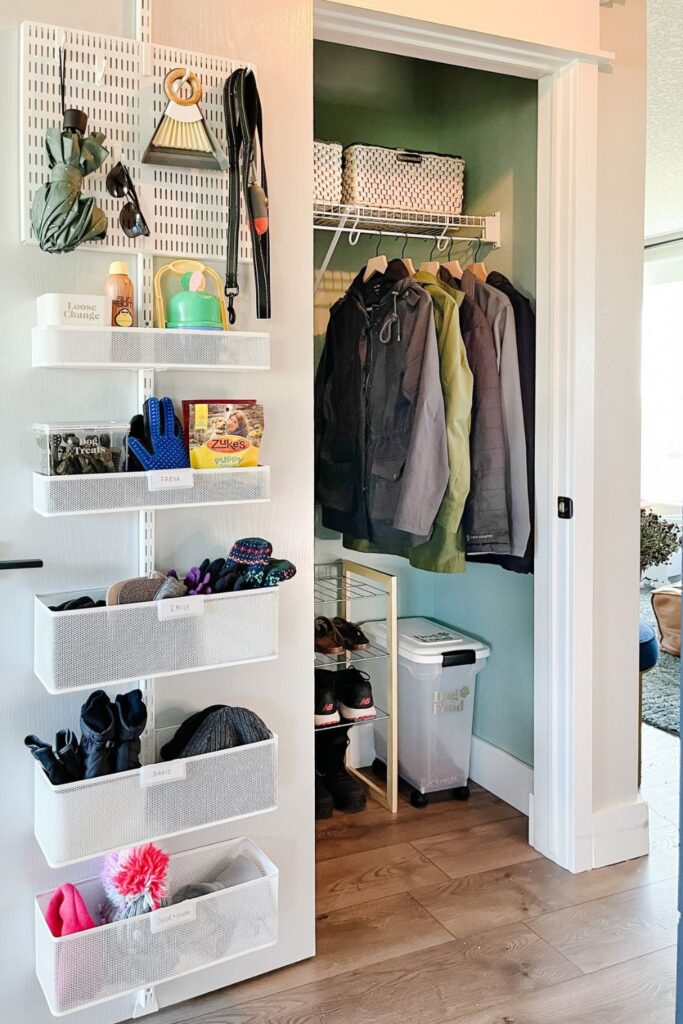
Peg Board
Blank wall space near a coat closet can easily turn into a practical storage zone. A peg board system adds flexible hooks and small shelves.
Where ordinary things can be seen and kept in order. Dog leashes, gloves, hats, and tiny accessories hang neatly on the closet rack without taking up too much space.
For things like keys and eyeglasses that people frequently leave on counters, baskets affixed to the board work nicely.
The best thing about them is that they are flexible; hooks and bins may move around as storage needs alter.
Put the board next to the closet door so that you can easily reach things you use often when you leave.
Tall Cubbies
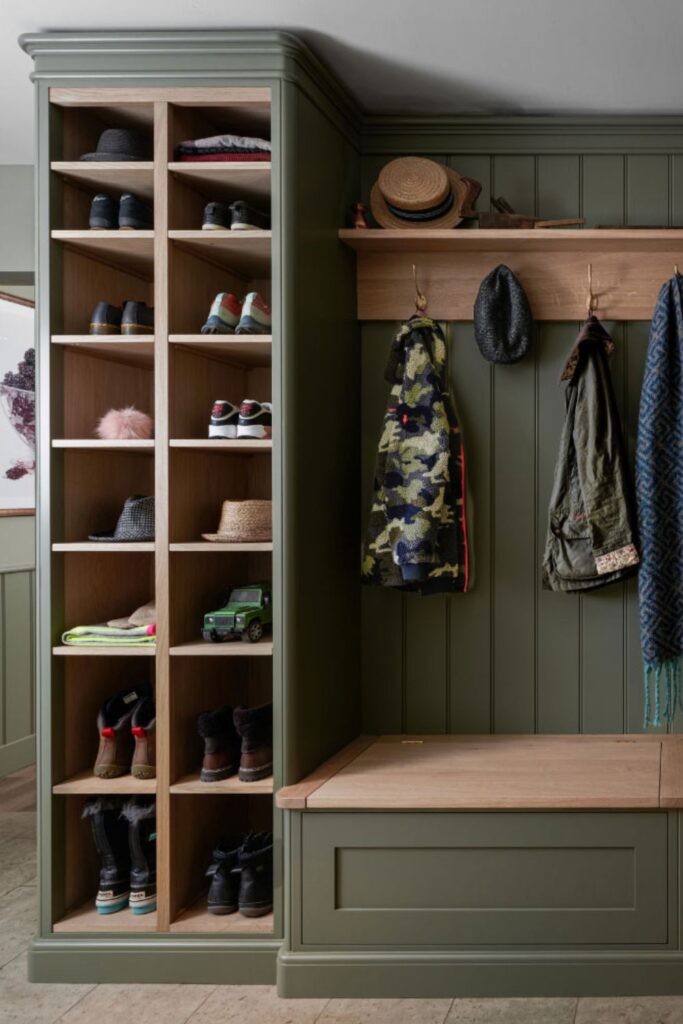
Shoes and small accessories often pile up because standard closet shelves don’t give them clear boundaries.
Tall cubbies fix that by making separate spaces for each pair, so they each have their own place.
Stacking narrow cubbies vertically is a terrific way to employ height, especially in small entry closets where there isn’t much floor room.
You can put footwear, boots, caps, or folded clothes on each shelf without their becoming mixed up.
The lofty structure also helps keep the closet looking neat because everything stay in their own regions.
Family Zones
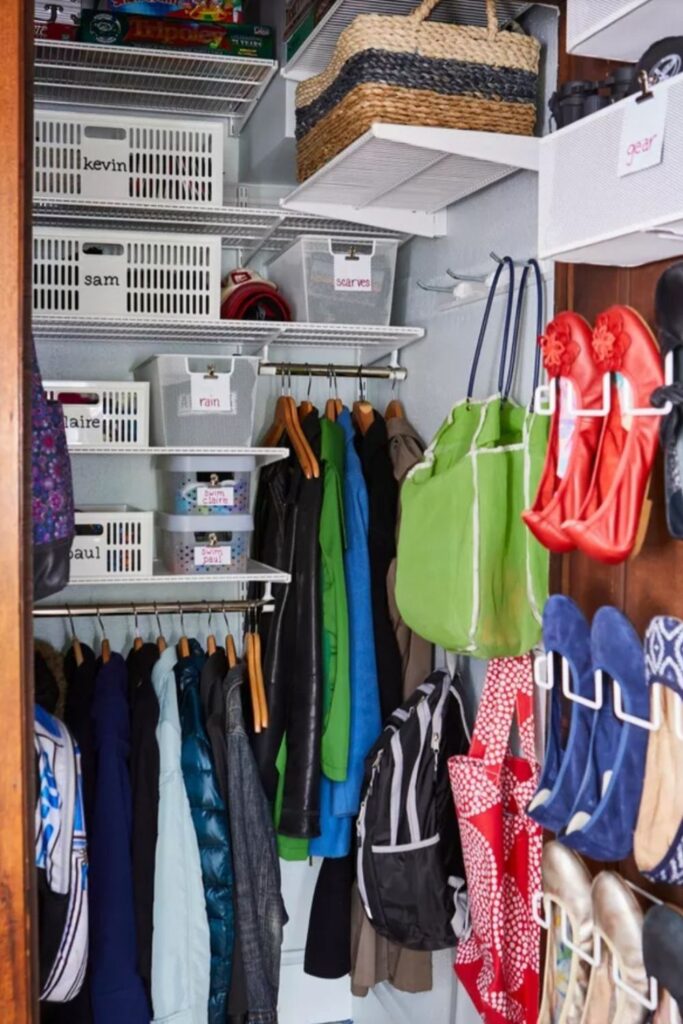
Shared closets get messy fast when everyone drops their things in the same place. Creating labeled zones.
Maintains the area tidy and stops coats and other items from becoming mixed up. Giving each family member a shelf or bin.
Makes it easy for them to find their hats, gloves, or other minor stuff. You can also divide hanging portions so that jackets stay together per individual instead of making one big row.
Hooks on the wall or door help you keep bags and other things you use a lot off the floor. This setup is great for busy homes.
Because everyone knows where their things go, which makes it easy to keep the closet clean, even on busy mornings.
Clear Boxes
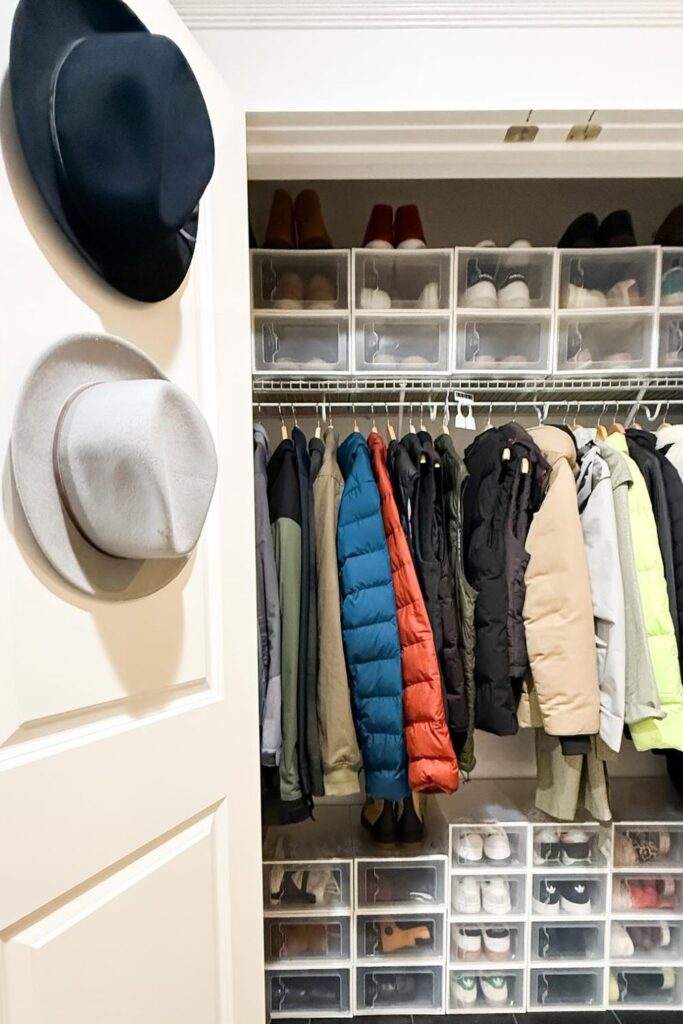
Finding the right pair of shoes becomes much easier once everything is visible. Clear storage boxes turn the upper shelf into a neat display.
where every pair is safe but easy to find. Each box makes a separate location for shoes, so they don’t get mixed up and stacked on top of each other.
This arrangement works well above the hanging rod, where typical storage tends to get cluttered.
Putting the boxes in rows keeps the shelf neat and stops dust from getting on the shoes. Pick containers that can be stacked and have apertures in the front.
So you can take out shoes without moving the whole row. The closet feels more organized and practical right away when shoes are put in clear boxes.
Bag Hooks
Handbags often end up tossed on shelves or buried under coats, which makes them hard to grab when you’re heading out.
Wall hooks on the inside of the closet door make it easy to hang up everyday bags so you can see them and get to them.
This arrangement keeps bulkier bags and totes from taking up important shelf space and stops straps from getting caught in jackets.
Install some strong hooks at varying heights so that several bags can hang without getting in the way of each other. Keeping them on the door also makes the closet look more balanced.
Coats stay on the line, shoes stay on the shelves, and bags have their own space. The closet seems much more orderly as soon as the bags are on hooks.
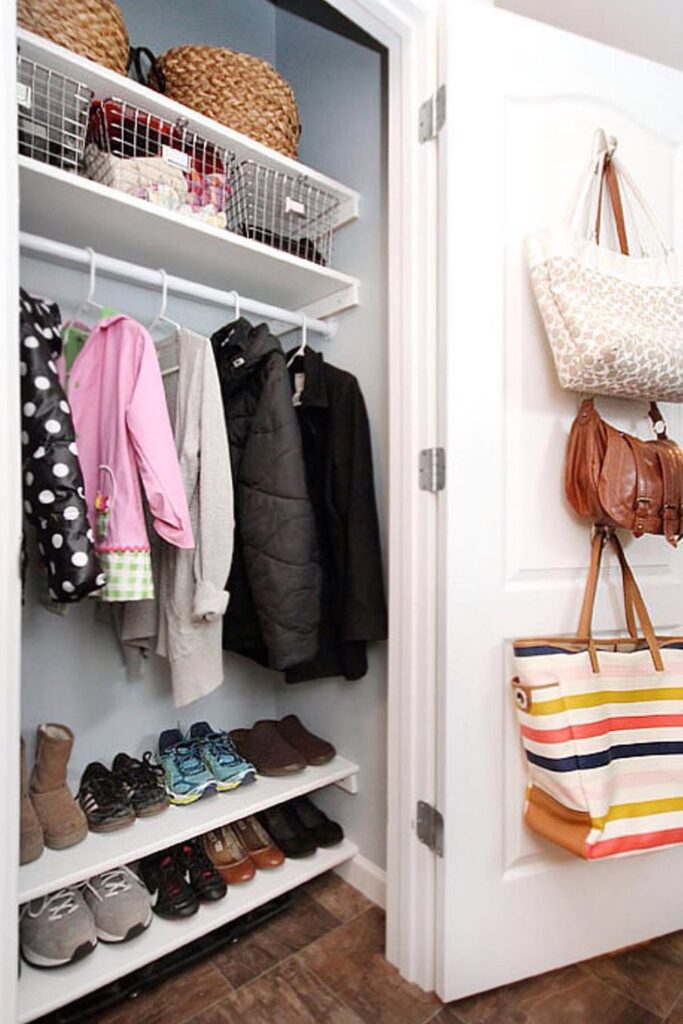
Shoe Shelves
Floor space disappears quickly when shoes pile up under hanging coats. Adding tiered shoe shelves beneath the rod.
keeps shoes in order without taking up room that could be used for hanging things. There is room above each level for jackets and other gear.
And each level has more than one pair of shoes. Open wire shelves are great because dirt and moisture from shoes may fall through them instead of building up on a solid surface.
Put the shelving unit right under the coat rod so that the vertical space stays even: coats go on top and shoes go on the bottom.
The closet floor stays free and the whole space feels much more organized when shoes are put on shelves just for them.
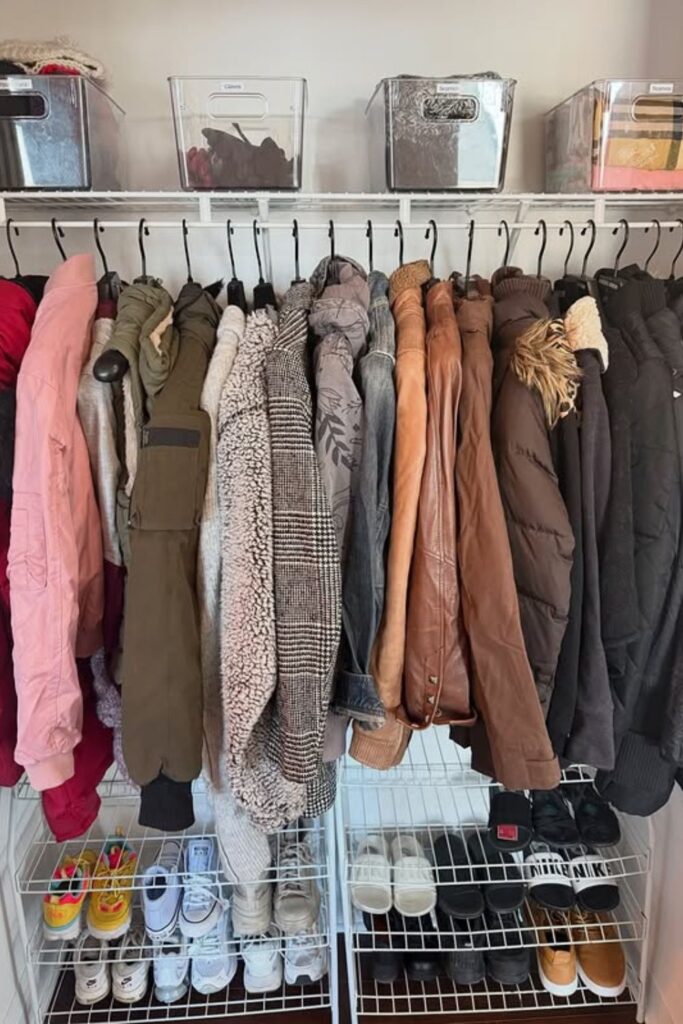
Wall Rails
Side walls often sit unused while the main rod carries all the weight. Adjustable wall rails solve that by turning one vertical surface into flexible storage.
Sliding baskets can keep tiny items like gloves, dog toys or cleaning supplies without taking up too much space on the shelves above.
There are hooks along the bottom rail that make it easy to keep leashes, keys, or reusable bags that you need to get to. In narrow closets, the approach works effectively.
Because everything stays against the wall and doesn’t get in the way of walking. Put in a vertical rail system.
Then install baskets and hooks that can move around as your storage needs vary. The closet suddenly feels bigger and more orderly when the side wall becomes useful storage.
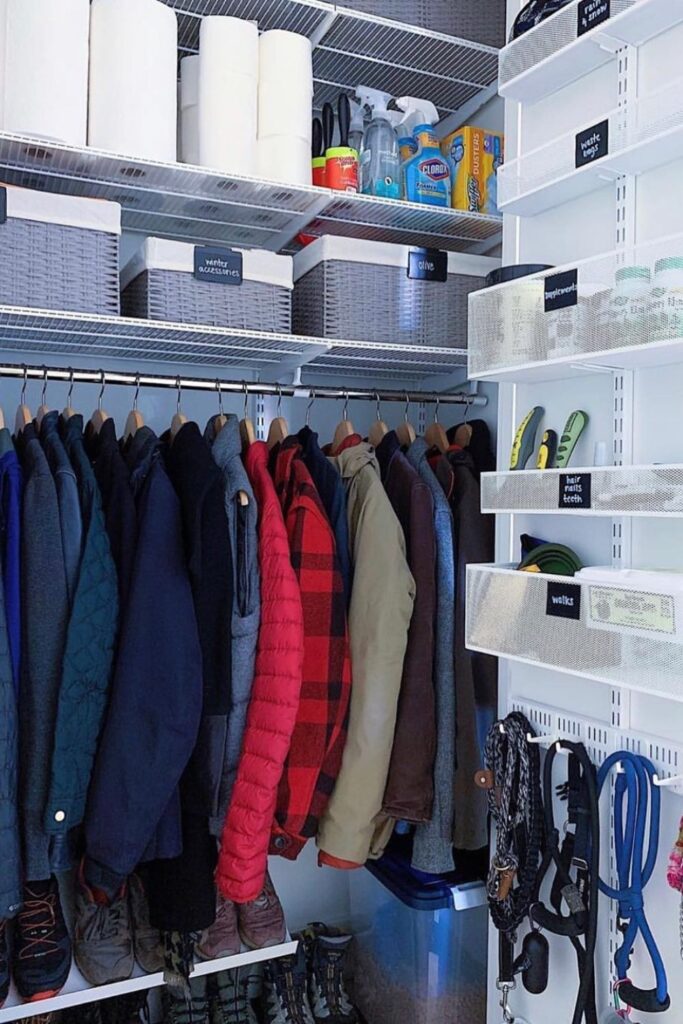
Box Shelves
Empty space above the hanging rod often turns into a messy pile of random items. Structured box shelves solve.
By splitting the top half into neat, tidy sections. You can put storage boxes for seasonal accessories, spare scarves, or things you don’t use every day in each cubby.
Keeping these boxes the same size keeps the closet looking neat and keeps little things from spreading out on the shelf.
The open center part also makes room for things you use often so you can easily get to them. If you want to recreate this plan, it works best in closets with extra height.
Just add horizontal shelf and divide it into square divisions. The whole closet feels more purposeful and useful once the top space is used for storage instead of as a dumping ground.
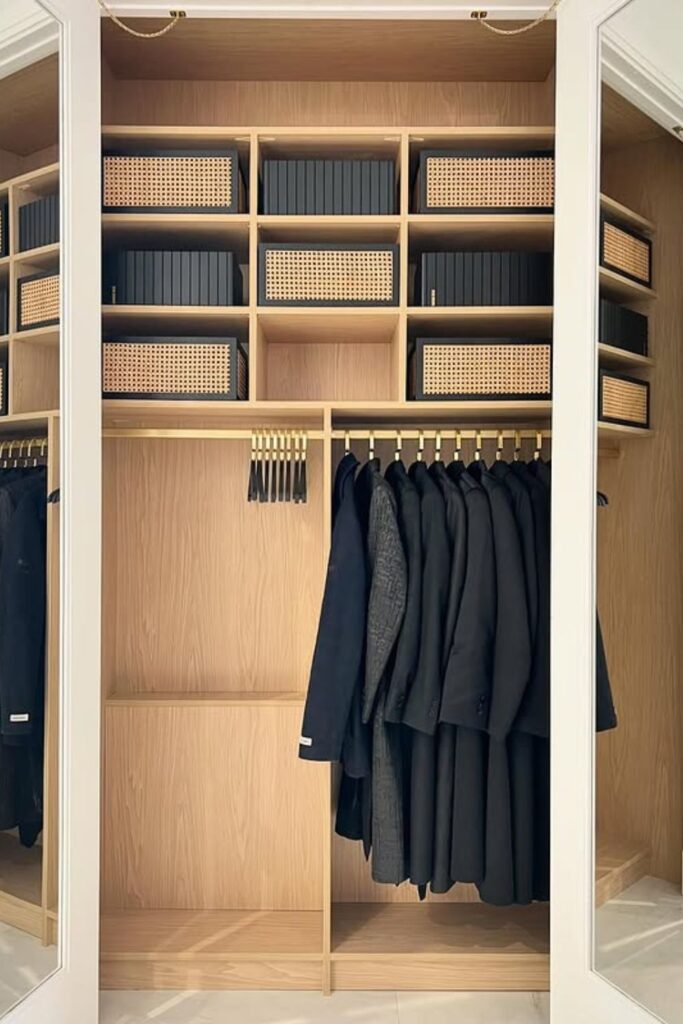
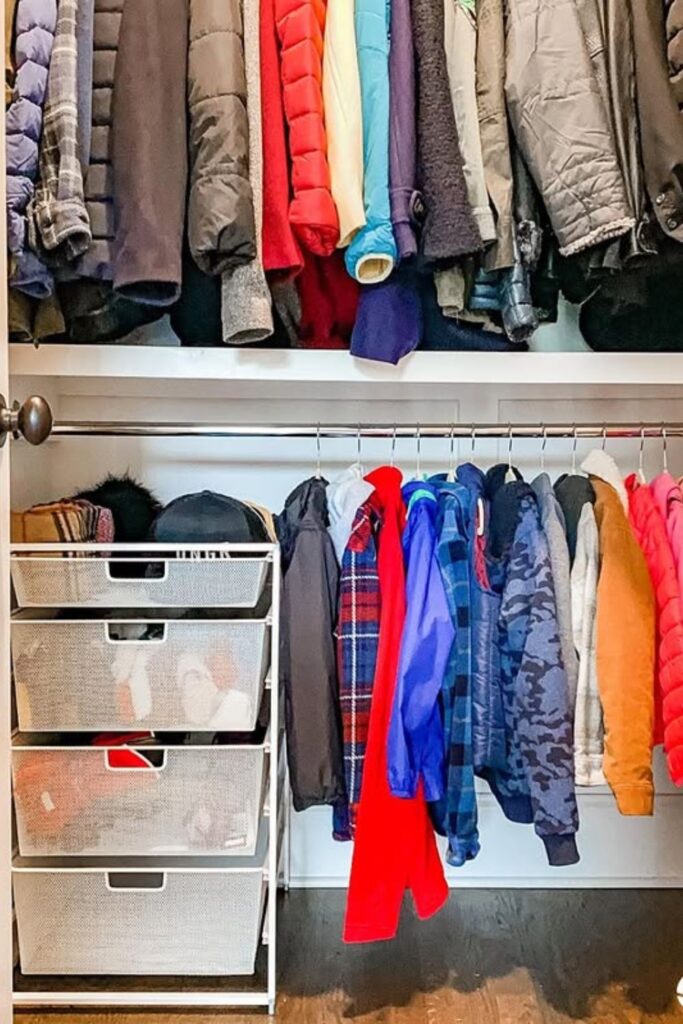
Drawer Tower
Loose accessories can quickly take over a coat closet, especially when gloves, hats, and small winter gear have no clear place to go.
A narrow drawer tower lets you store things vertically without getting in the way of the hanging rod.
You can keep tiny things separate by putting them in distinct drawers instead of under coats. It’s easier to see what’s within mesh or open-front drawers, which saves time when getting ready.
Put the tower next to the hanging part so that the closet still feels balanced. Narrow drawer units are preferable since they fit neatly into empty corners.
And keep everything easy to reach. Once you put minor things in drawers, it’s much easier to maintain the closet clean all week.
Side Towers
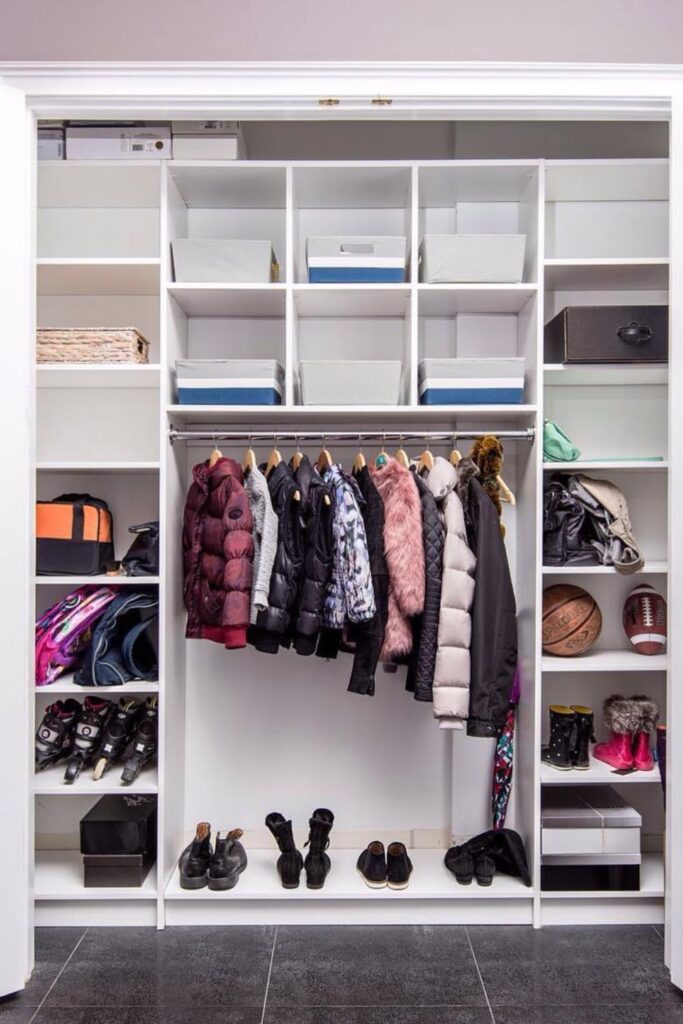
Closet space becomes much easier to manage once storage spreads vertically along the sides.
Tall side towers make shelves where shoes, luggage, sports gear, and seasonal things can stay separate from each other.
This way, coats stay in the middle and everything else has its own space. Shoes and boots fit comfortably on the lower shelves.
And bags and other common items fit well on the middle shelves. Upper cubbies are great for containers or things you don’t use very often.
To recreate this layout, all you need to do is put up small shelving columns next to the main hanging area.
Basket Cubbies
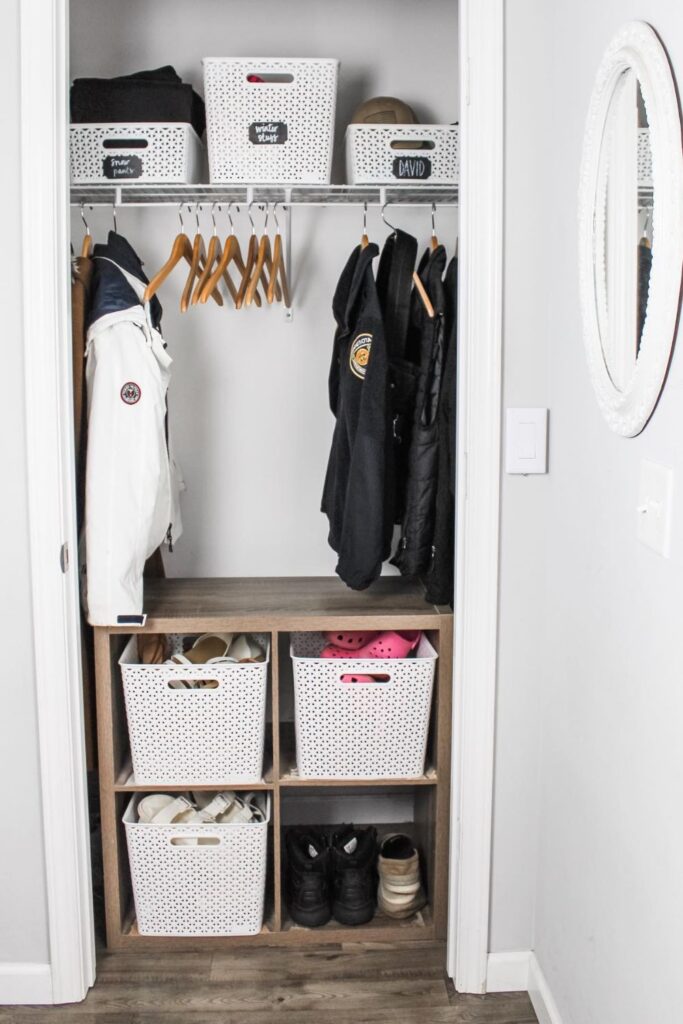
Small closets feel messy when loose items stack on top of each other. Basket cubbies fix that by giving every category a contained space.
Instead of spreading out across the shelf, gloves, scarves, kids’ apparel, or everyday shoes can each have their own bin.
You can keep things you use a lot in the lower cubbies and seasonal accessories in the upper shelf.
Because everything follows the same visual pattern, matching containers also make the closet look cleaner.
Once the cubbies are full, the hanging part stays open, and jackets stay in the spotlight instead of fighting with other goods.
Top Baskets
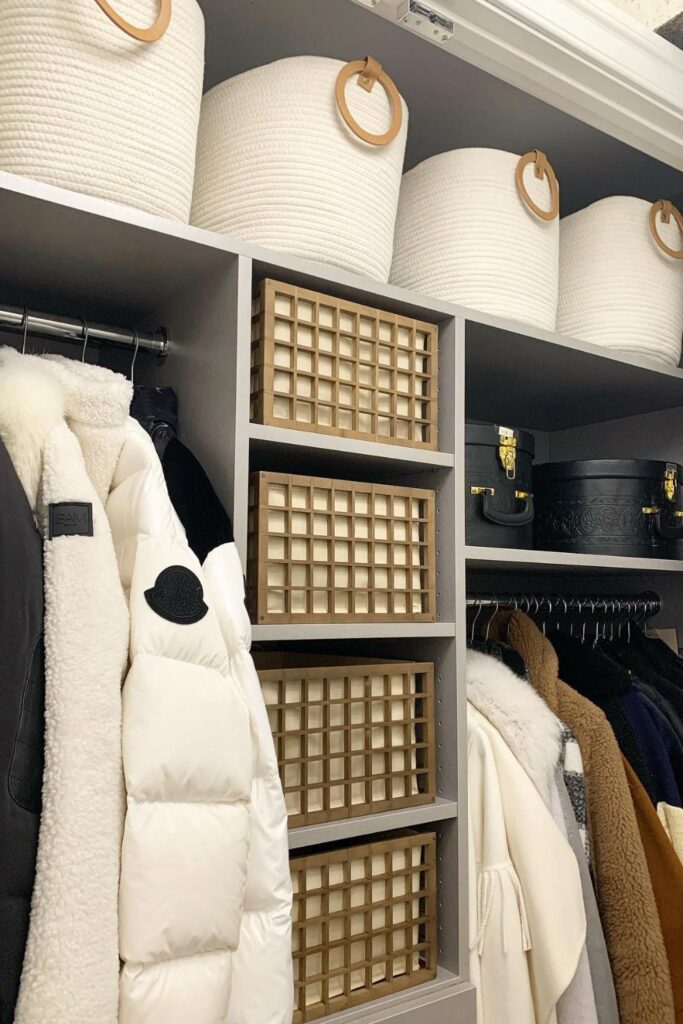
Upper closet space often turns into a dumping area where items pile up and become hard to reach.
Large storage baskets fix that by putting things into tidy, easy-to-handle groups. Each basket can house additional scarves, winter clothes, seasonal accessories.
Anything you don’t need every day. Putting them all in a line on the top shelf helps the closet look more organized than packed.
Soft fabric baskets are great because they’re light and easy to draw down when you need to. To keep the system easy to use, try putting related things in the same place.
When the top shelf has orderly baskets instead of loose junk, the whole closet feels calmer and more useful right away.
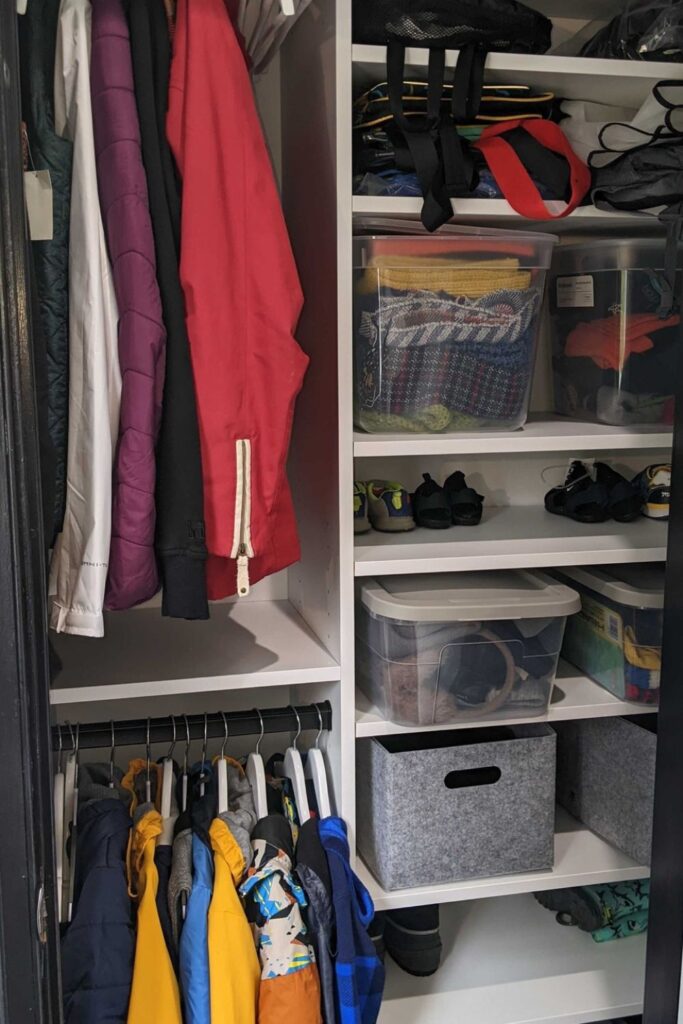
Split Levels
Closets often feel crowded because long coats take up the entire vertical space. Splitting the hanging area into two levels solves that problem.
While making space for diverse kinds of clothes. The upper rod can handle longer jackets and heavier apparel, while the lower rod is better for kids’ coats or shorter layers.
Putting shelves next to the rods offers little objects a place to stay, so gloves, bags, and seasonal apparel stay organized in bins.
You can easily see what’s inside clear containers without having to rummage through stacks. This configuration is great for small closets with lots of height but not much floor space.
The closet can hold more things without making the space feel smaller if it has both top and lower hanging portions.
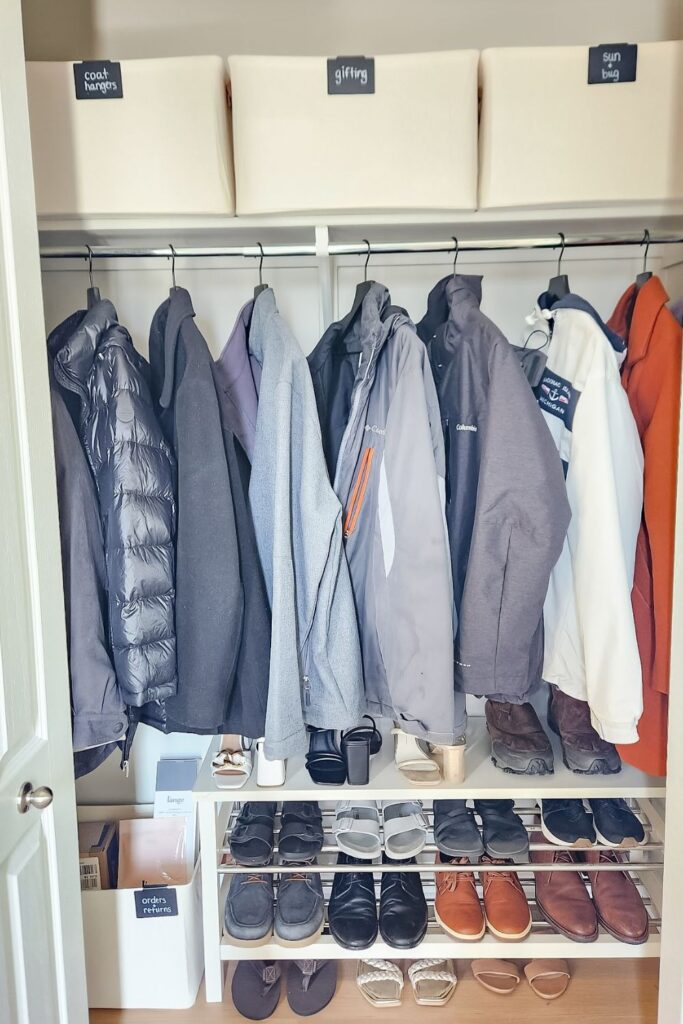
Shoe Tiers
Shoe clutter disappears quickly once footwear gets its own layered storage. Tiered shelves under the coat rod create a clean structure.
Where each pair sits next to each other instead of in jumbled clumps. The lower level is good for everyday shoes.
While the upper level is better for dress shoes or shoes that are only used during certain seasons. Keeping shoes off the ground also keeps dirt from outdoors off of outerwear.
Narrow tier racks are great because they fit perfectly at the bottom of a coat closet without getting in the way of strolling.
When shoes are put in ordered levels, the floor of the closet stays free and the whole room feels much more organized.
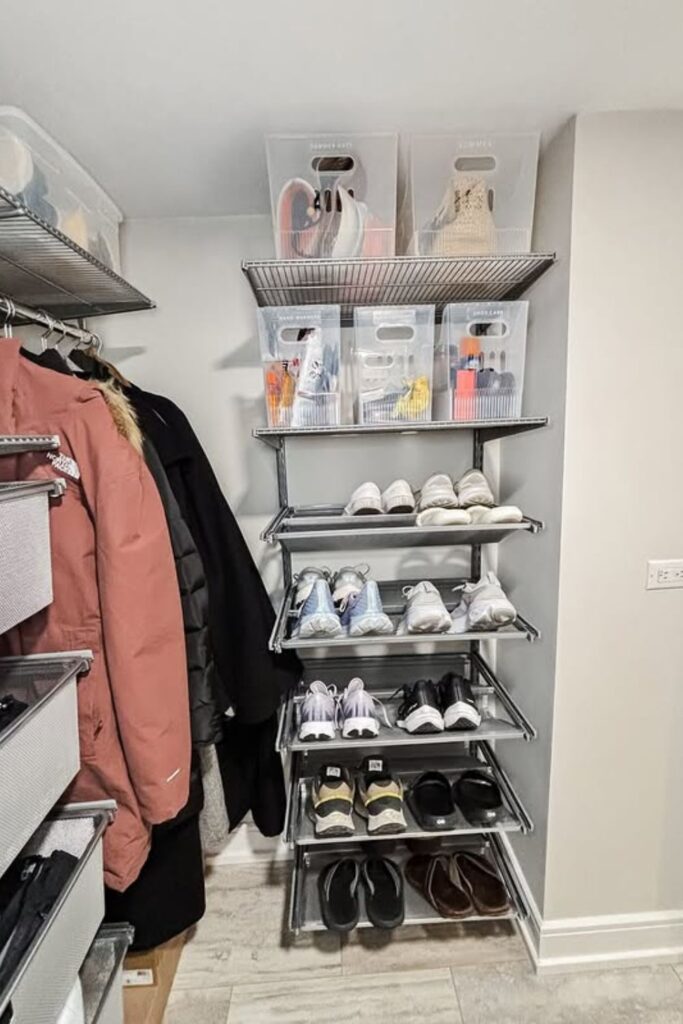
Shoe Tower
Footwear often becomes the biggest source of clutter in a narrow coat closet. A vertical shoe tower fixes that by stacking storage upward instead of spreading it across the floor.
Multiple tilted shelves let you see each pair while taking up very little horizontal space. You can easily get to your everyday sneakers on the middle levels.
While pairs that you don’t wear as often stay higher or lower on the rack. Clear boxes above the shelves keep smaller things like gloves or seasonal accessories.
From getting mixed up with shoes. If you put a slim tower against the back wall or side corner, the hanging part will be free for coats.
The closet floor quickly feels more spacious and orderly when shoes are moved to a vertical rack.
FAQs
How do you organize a narrow coat closet without making it feel crowded?
Instead of just using the primary hanging rod, use vertical space first. Adding upper shelves, slender shoe racks, or stacked storage boxes.
Helps maintain the closet balanced and moves things off the floor. Put things that are comparable together so that jackets stay in one place while shoes, bags, and accessories.
Each have their own section. Even if the space is tiny, the closet feels less confined when everything has a home.
What should you store in a coat closet besides jackets?
You can also keep things like shoes, umbrellas, bags, scarves, caps, and gloves in a coat closet.
Putting these smaller things in baskets or labeled boxes helps keep them apart from outerwear. You may also add shelves or cubbies to store seasonal items like winter clothes or rain gear.
This makes the closet a useful place to drop off stuff you need when you leave or enter the house.
You may like to read!
- 26 Dresser Organization Ideas
- 21 Freezer Drawer Organization
- 21 Corner Cabinet Organization
- 23 Paper Organization Ideas
- 22 School Organization Ideas

Fasial is the founder of the Fizzy Flare. He has been a passionate blogger since 2021. He ran three different websites in the past few years. Now he is focusing on Fizzy Flare to build an audience and help them organize their life.