21 Belt Storage Ideas for 2026
This post may contain affiliate links: full affiliate disclosure.
A nice leather belt can endure for years, but a lot of people don’t know how to take care of theirs.
They put belts in a drawer, fold them too tightly, or hang them in a closet that is too humid. Over time, the leather will crack, bend, or lose its shape.
You’re not the only one who has heard this before. The good news is that it’s not hard to keep leather belts safe if you store them the appropriate way.
A few simple things you can do can keep the leather looking new and polished for a long time.
In this article, I will show you 21 belt storage ideas you can easily use in your home to keep your belts organized and easy to find.
Let’s jump in!
Contents
- 1 How Do You Keep Leather Belts in Good Shape During Storage?
- 1.1 Belt Tower
- 1.2 Drawer Grid
- 1.3 Wall Display
- 1.4 Hanger Hooks
- 1.5 Buckle Rack
- 1.6 Clip Hanger
- 1.7 Peg Holder
- 1.8 Divider Drawer
- 1.9 Hook Hanger
- 1.10 Shelf Hooks
- 1.11 Pull Rack
- 1.12 Belt Box
- 1.13 Accessory Drawer
- 1.14 Wall Strap
- 1.15 Rod Hooks
- 1.16 Clear Organizer
- 1.17 Fabric Divider
- 1.18 Shelf Rows
- 1.19 Display Island
- 1.20 Belt Tray
- 1.21 Luxury Drawer
- 2 FAQs
How Do You Keep Leather Belts in Good Shape During Storage?
Leather belts are harder than they look, but how you store them matters a lot. The leather will progressively crack, stretch, or lose its shape.
If you bend it too tightly or leave it in a wet closet. That’s why it’s important to have good storage habits.
The idea is to keep the belt dry, relaxed, and supported so that the leather stays soft.
Save this article for later! 👇👇

You can hang belts on hooks, roll them up loosely in a drawer, or put them in a belt organizer to do this.
Don’t make tight folds or stack things too high. If you store belts the right way, they won’t wear out as quickly and will look nice for years.
Belt Tower
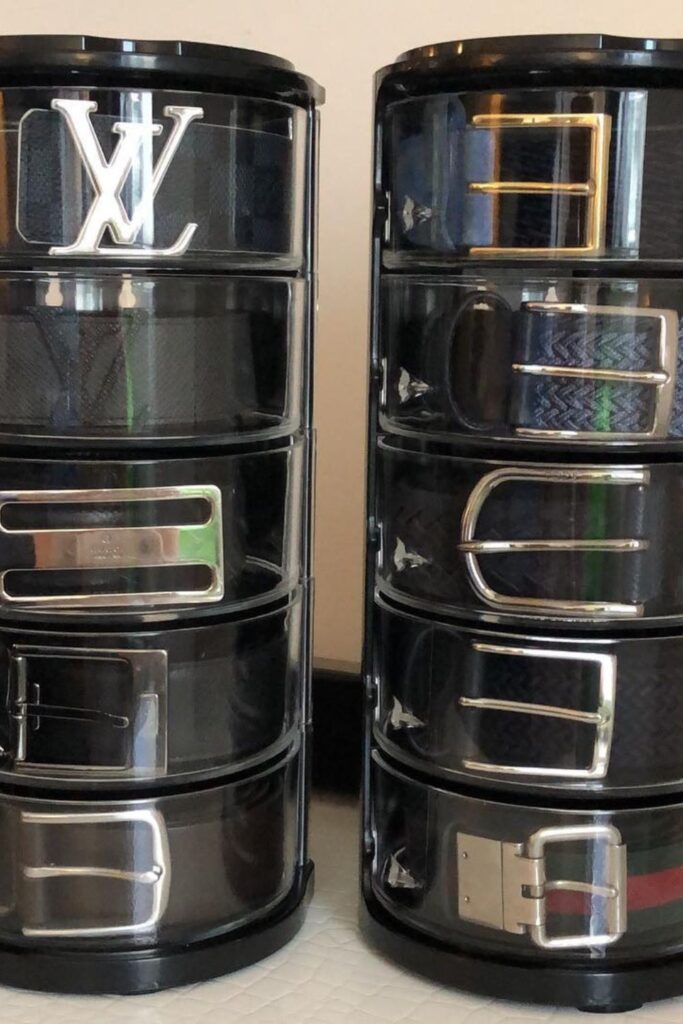
Limited shelf space often turns belt storage into a messy pile. A vertical belt tower solves that problem while keeping every belt visible.
These glass containers that stack on top of each other enable you roll each belt up neatly and put it in its own space.
The buckles are on the outside, which makes it easy to find the style you want without having to unlock drawers or search through a pile.
The best place to recreate this configuration is on a dresser, a closet shelf, or in a corner of a wardrobe.
Use clear rotating organizers or stackable storage cylinders to make sure that each tier only houses one belt. Instead of folding the belts, roll them up.
Drawer Grid
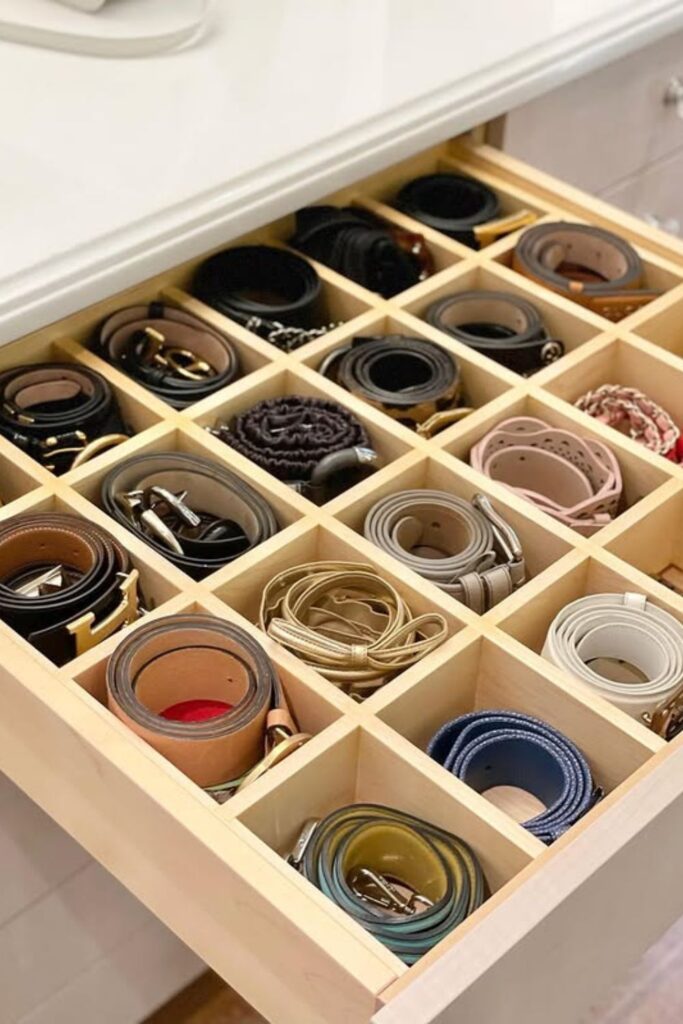
Hidden storage can feel surprisingly satisfying when every belt has its own spot. A drawer grid like this turns a regular drawer into a neat belt organizer.
Without taking up any more space in the closet. The little compartments prevents the belts from sliding around, and rolling each one into a loose circle keeps the leather relaxed.
This design works nicely in dresser drawers, walk-in closets, and wardrobe drawers that traditionally house accessories.
You may make the same grid layout with wooden or acrylic drawer dividers. Each square has one rolled belt in it, which maintains the collection neat.
And protects the leather from bending when other things are on top of it. This kind of organized drawer is great for people who have a lot of belts and like to keep their storage neat and tidy.
Wall Display
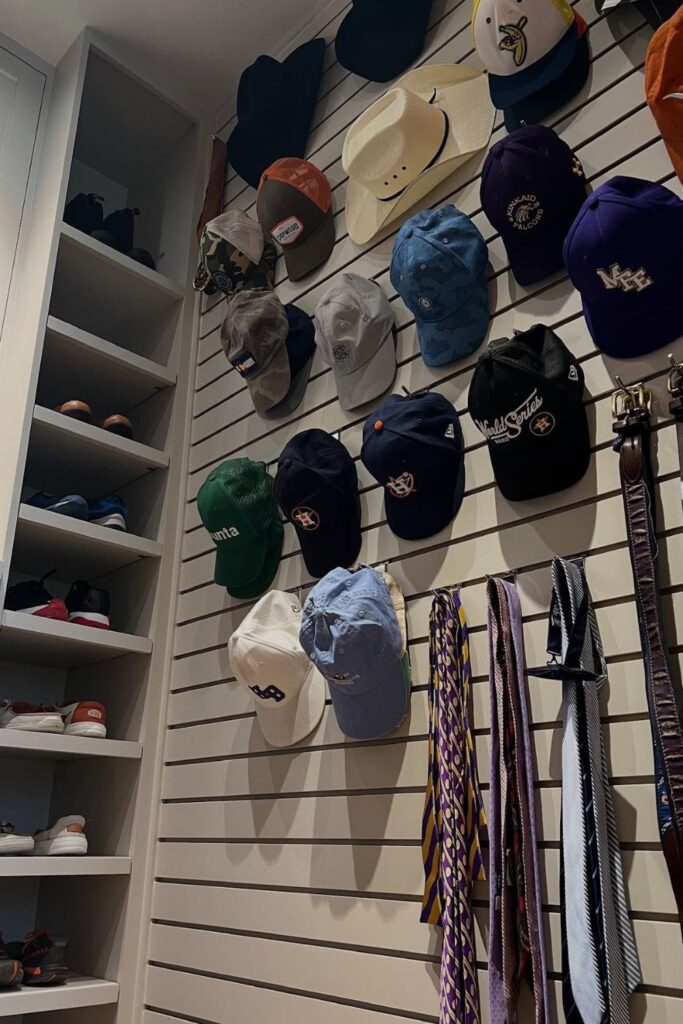
Empty closet walls often go unused yet they can become one of most practical places to store belts.
This kind of slat wall makes vertical space into a full accessory station, where belts hang nicely instead of being hidden in drawers.
When you hang belts by the buckle, the leather stays straight and doesn’t get the deep bends that develop when belts are folded.
This setup works well in walk-in closets, dressing rooms, or corners of wardrobes where there is open wall space.
Put up a slat wall panel or basic wall rails, and then hang metal hooks across one row. One belt may fit on each hook, so everything is easy to see and grab.
Hanger Hooks
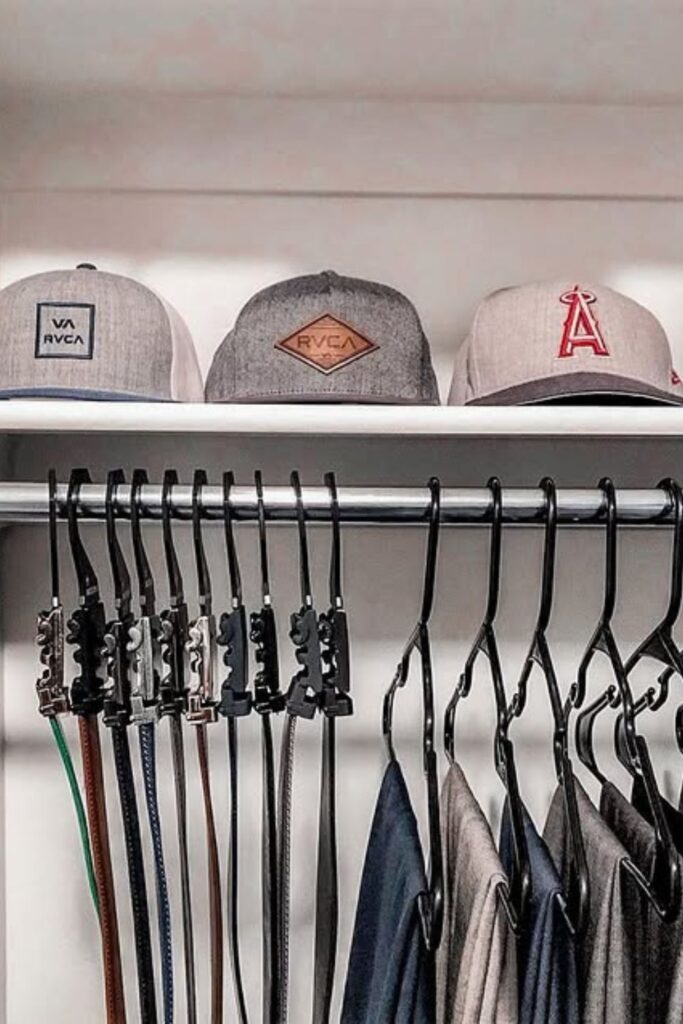
Morning routines feel smoother when belts hang right next to your clothes instead of hiding somewhere else.
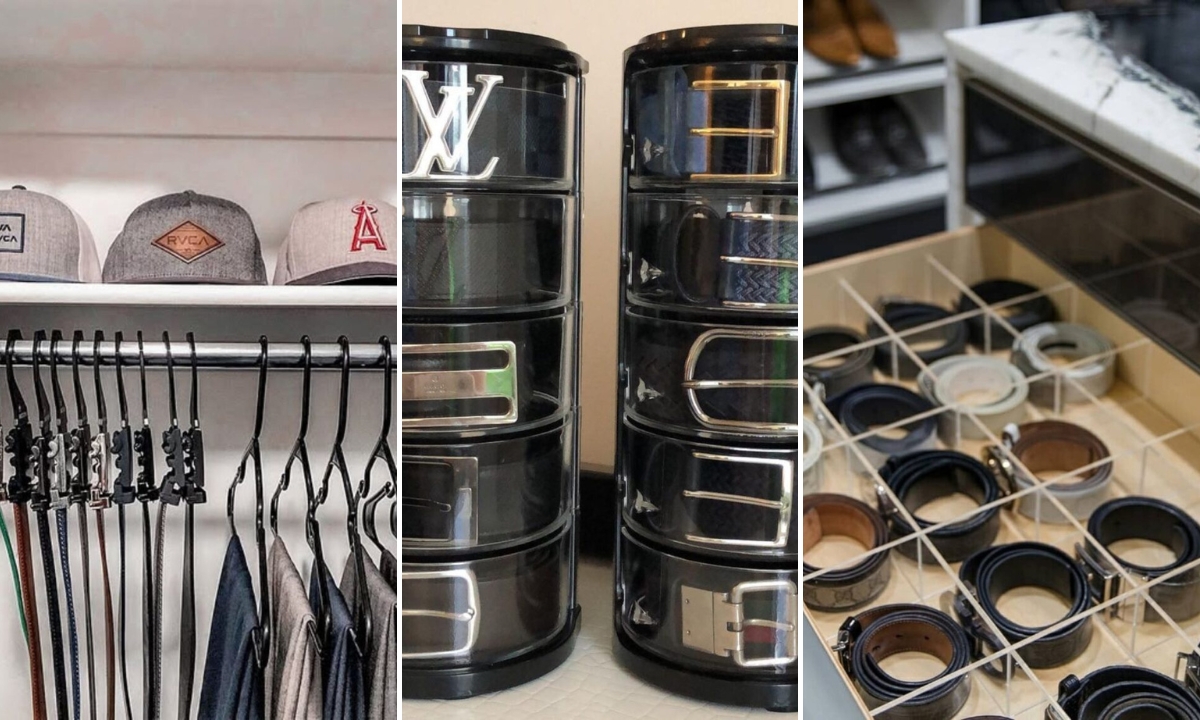
Small hooks on the closet rod keep all the belts hanging straight. This keeps the leather from bending and makes it easier to see the buckles.
You simply need a few multi-hook belt hangers or clip-style belt organizers that hang directly on the closet rod to make this work.
Each hook supports one belt by the buckle, which keeps the strap from creasing and hanging organically.
Putting them next to shirts or pants works best in small closets where there isn’t much room for drawers but there is room for vertical rods.
Buckle Rack
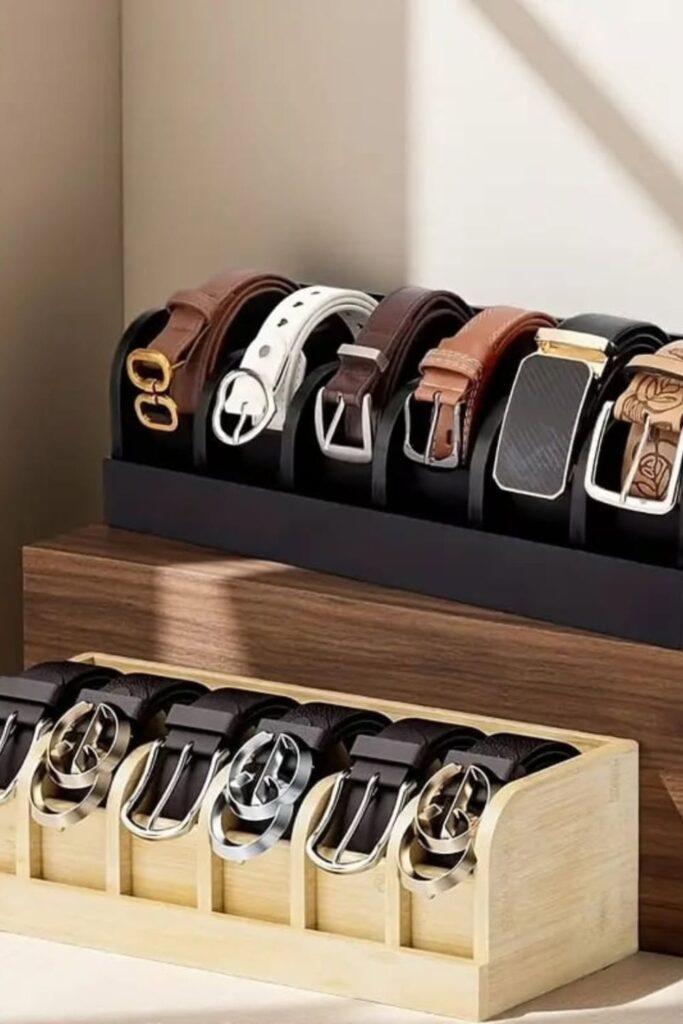
Choosing a belt becomes much easier when the buckle is the first thing you see. A buckle rack like this lines belts upright in separate slots.
Setting up a similar arrangement on dressers, closet shelves, or wardrobe compartments where accessories generally go works great.
A belt rack made of wood or acrylic with curved slots keeps each belt coiled up and the buckle facing forward.
Gently rolling the strap before putting it in the slot keeps the leather from getting wrinkled and maintains it relaxed.
This solution also makes your closet feel like a tiny showcase area by organizing your belts by color or style. It keeps everything neat and easy to find.
Clip Hanger
Closets with limited drawer space often need a smarter way to store accessories. A multi-clip hanger solves that instantly by turning a single hanger into a full belt organizer.
The leather stays flat since each belt hangs straight from its own clip. This stops the bends that come when belts are folded.
It’s easy to put this up again, and it works in practically any closet. Just like a typical clothes hanger, hang a belt hanger with several metal clips on the closet rod.
You should attach each belt via the strap or buckle so that it hangs freely. It is also easier to pick a belt when you are getting ready if you line them up by color or style.
This kind of storage is great for folks who have a lot of belts but want to keep everything in one little space.
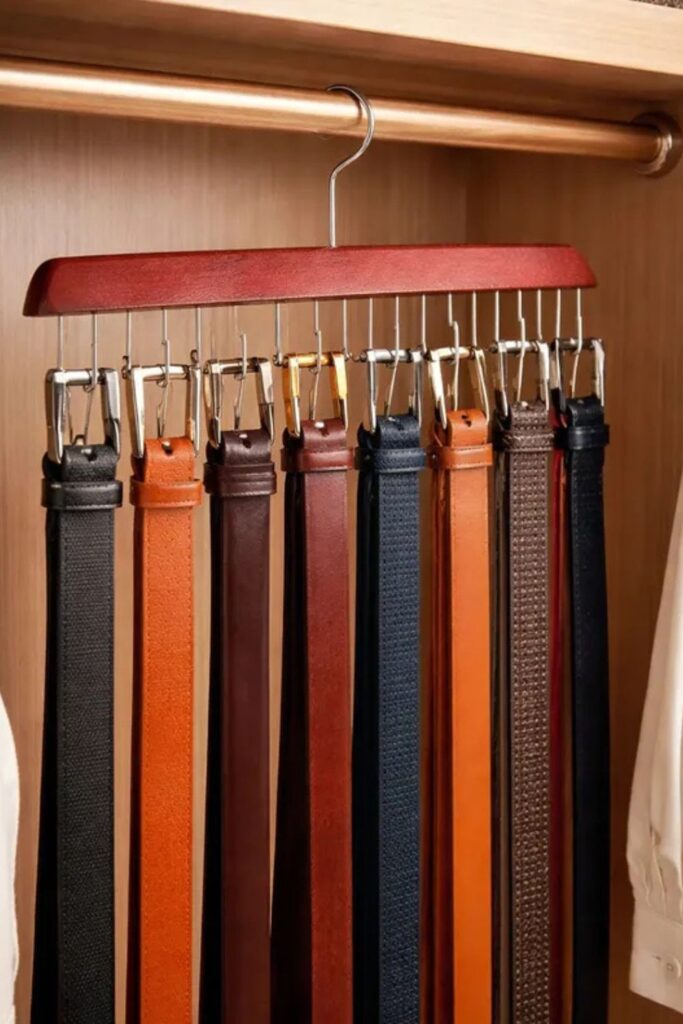
Peg Holder
Quick storage works best when grabbing a belt takes only a second. A simple wall peg holder like this keeps one or two everyday belts within easy reach.
While keeping them from bending in a drawer. The strap will rest naturally if you loop the belt over the peg. This will keep the leather smooth instead of making sharp creases.
This kind of setup works well in closets, next to dressing mirrors, or even behind closet doors. You can make it again with just a few small pegs or knobs on the wall.
If you space out a few pegs in a row, you may make a small belt station where each belt hangs on its own.
This kind of simple setup is great for belts you wear every day because they stay visible, neat, and easy to grab without having to search through other accessories.
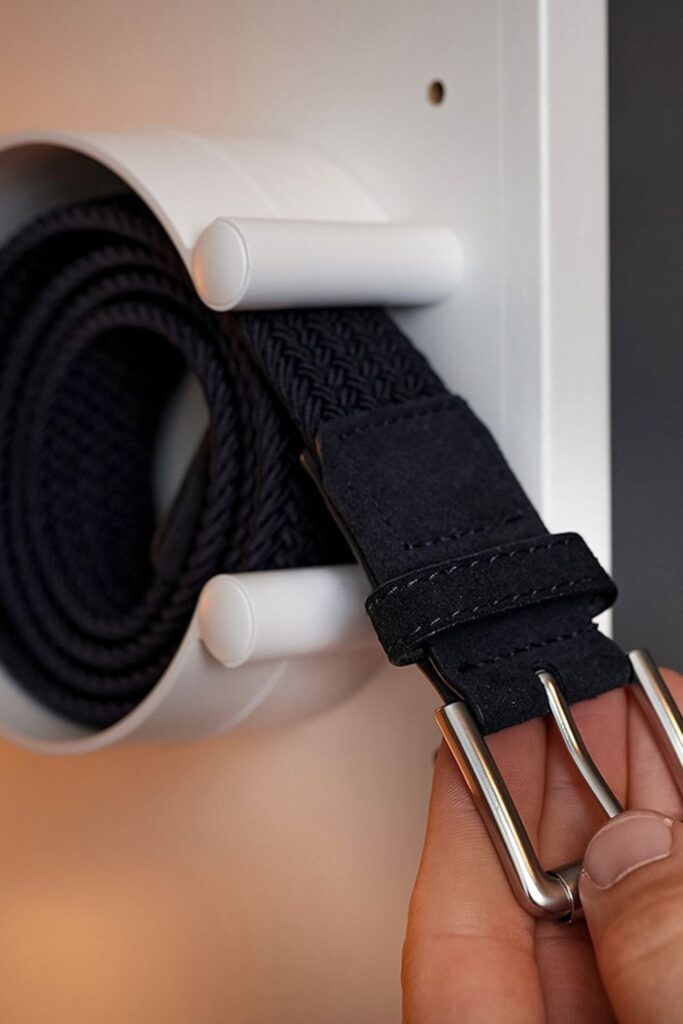
Divider Drawer
Deep drawers often become a dumping ground for belts, where everything stacks on top of each other and the leather slowly bends out of shape.
The whole system is different when you add a grid divider. Each belt is wrapped up in its own square, which keeps the straps apart and stops the buckles from harming the other belts.
This kind of configuration works best in large dresser drawers or closet island drawers where you keep your accessories.
You may make the same grid layout with adjustable acrylic or wooden dividers. Roll each belt up loosely and put it in its own portion.
This will keep the leather from being too tight. When you have drawers like this, you can view all of your belts at once, which makes it easier to pick one that goes with your outfit.
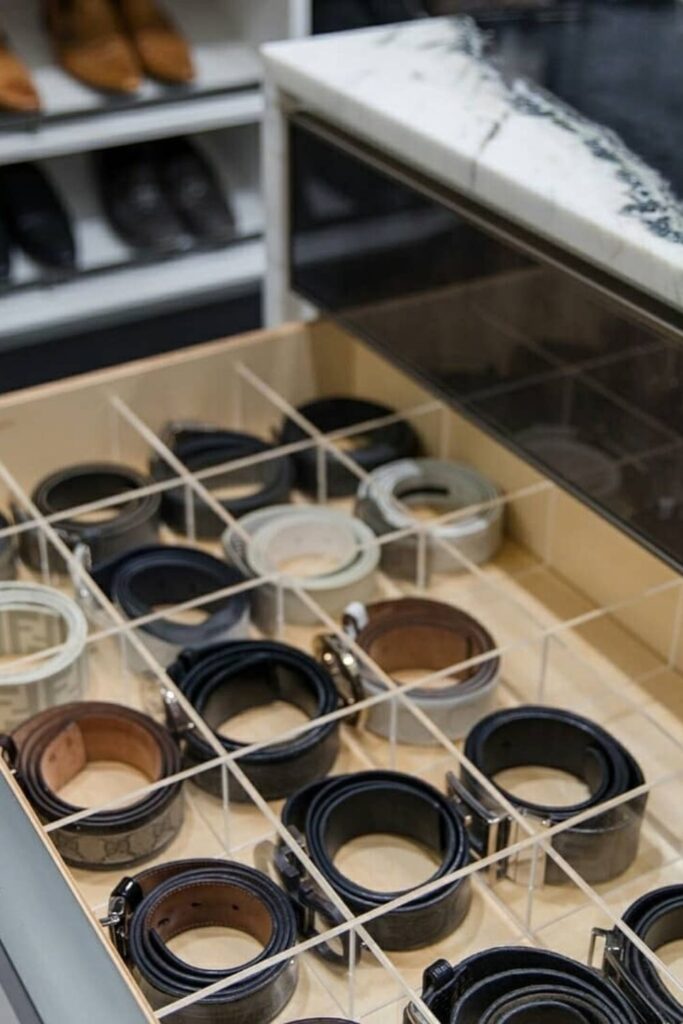
Hook Hanger
Closet rods already hold shirts and jackets, so adding a hook hanger like this turns the same space into a simple belt station.
A single hanger has several curved hooks that hold each belt in its own space without taking up more space in the closet.
It’s easy to set up something like this because the organizer hangs straight on the closet rod, just like regular clothes hangers.
Each hook supports one belt by the buckle, which lets the strap hang naturally without folding. Putting belts on one hanger also keeps them apart from other accessories.
So they don’t become tangled with ties or scarves. This kind of compact solution works well in small closets where there isn’t much room for drawers but there is room for hanging things.
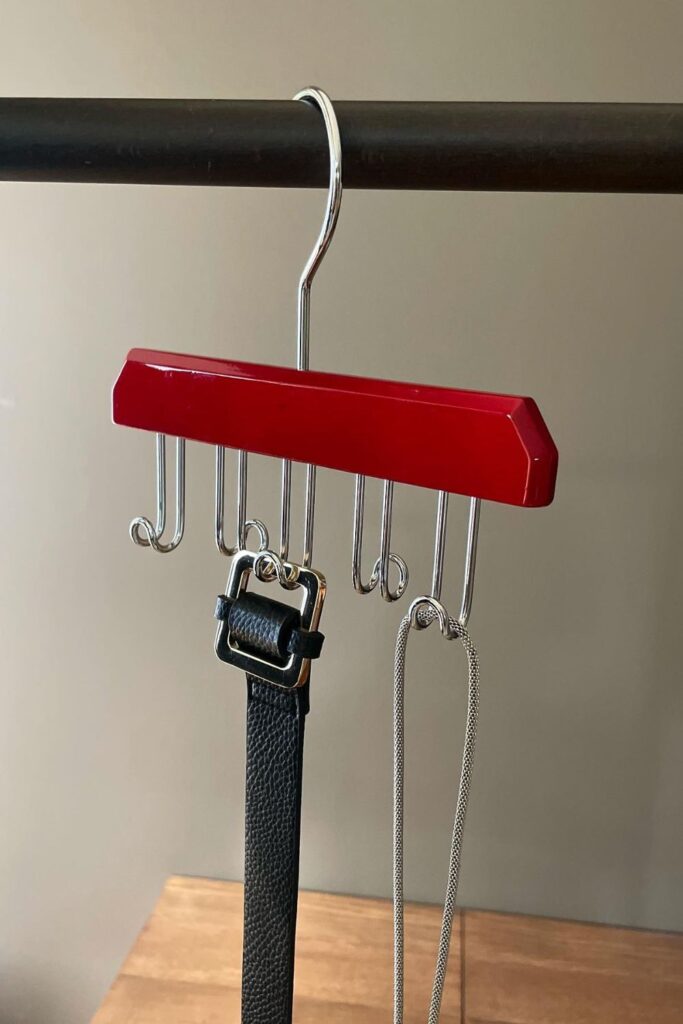
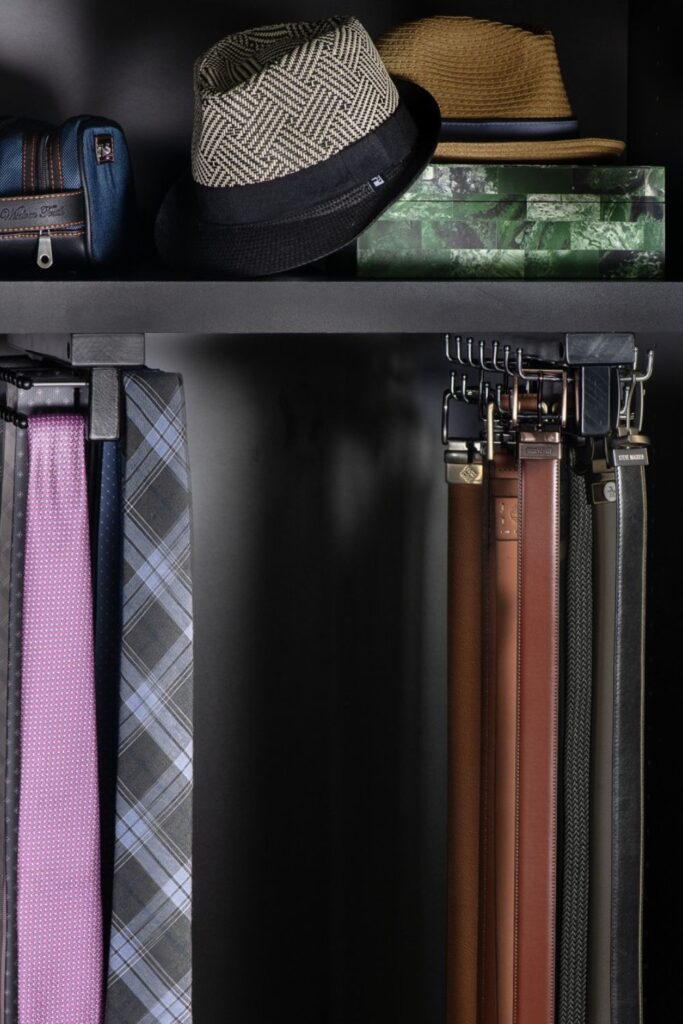
Shelf Hooks
Closet shelves usually hide empty space underneath, and turning that area into belt storage makes the whole closet work smarter.
These clip-on shelf hooks hang right under a shelf, making a vertical row for belts that doesn’t touch the main garment pole.
The straps hang straight down, which keeps the leather from bending and keeps its natural shape.
This design works nicely in closets, wardrobe cabinets, or dressing rooms with strong shelves. Put an under-shelf belt hanger or hook rack on the edge of the shelf so it hangs down.
Each hook retains one belt by the buckle, so they don’t touch each other and are easy to get to.
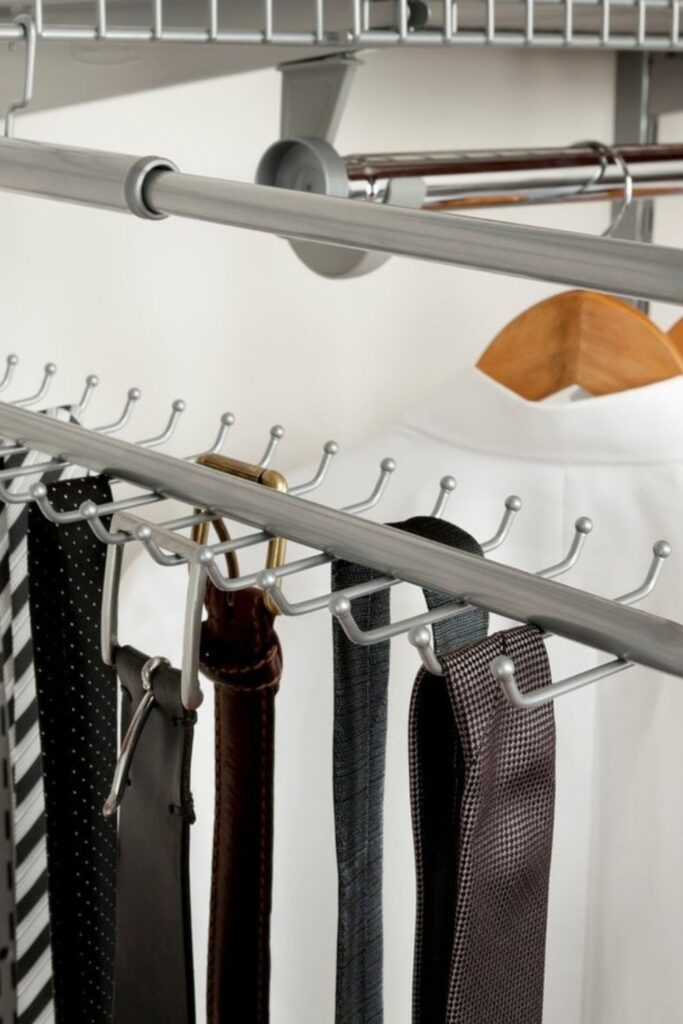
Pull Rack
Closets become much easier to manage when accessories slide out instead of hiding behind clothes.
With just one simple move, this pull-out rack brings belts forward, making it easy to see all of your options without having to hunt through drawers or shelves.
Installing a comparable system works best in walk-in closets, wardrobe cabinets, or closet organizers with rails that can be moved.
A sliding belt rack attaches to the closet frame and moves out like a drawer. Each hook holds one belt by the buckle, which keeps the strap straight.
Putting belts on a sliding rack helps keeps them clean next to shirts or jackets, making a small accessories section that is easy to find and stay organized.
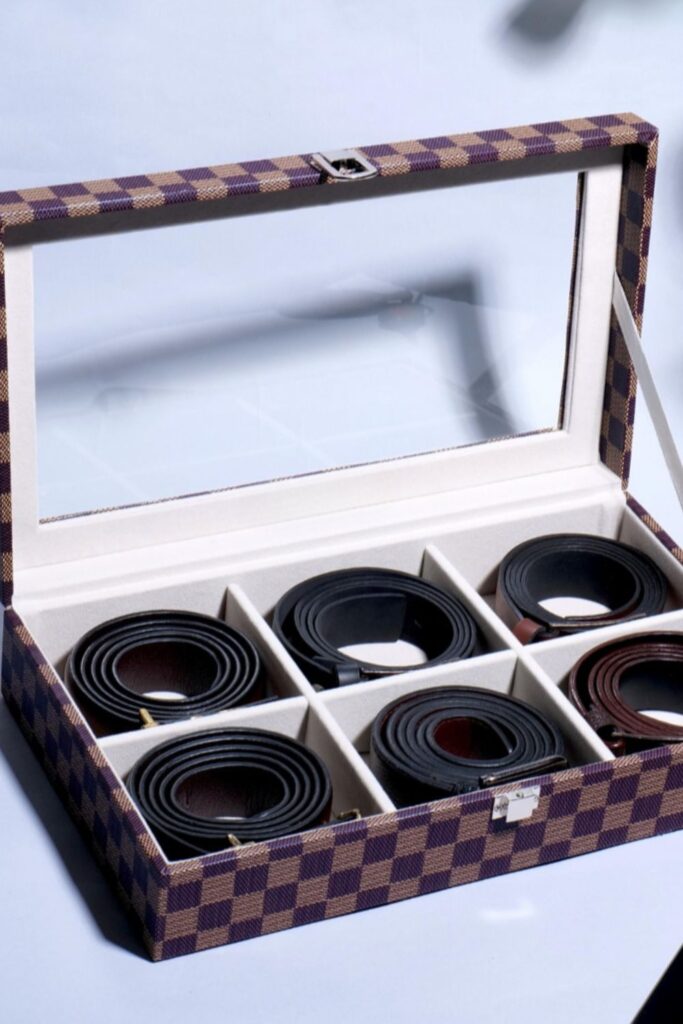
Belt Box
Special belts deserve storage that protects them from dust, scratches, and bending. A divided belt box like this keeps every belt rolled neatly inside its own compartment.
The lid protects the leather from moisture and sunlight. When you open the box, you can see the whole assortment at once.
This makes it feel more like you’re picking out a belt from a display than looking through a pile of stuff.
This setup works well for dress belts, designer belts, or belts that you don’t use very often. The separators in the storage box.
Keep the straps apart so that the buckles don’t grind against each other. Gently rolling each belt before putting it inside keeps the leather soft.
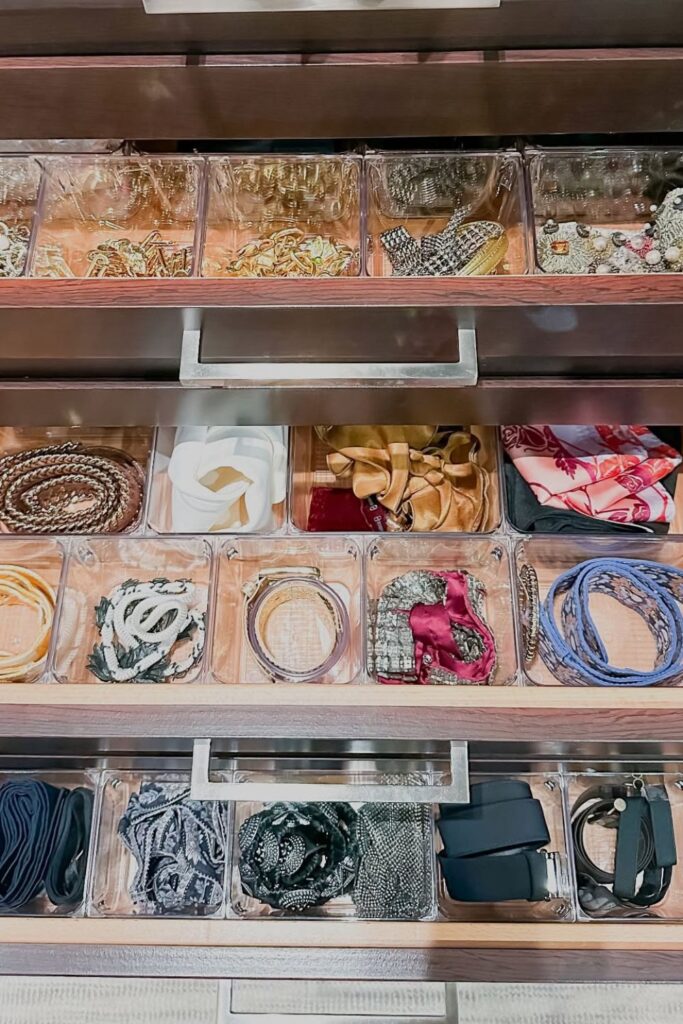
Accessory Drawer
Closet organization becomes much easier when belts share space with other accessories instead of hiding somewhere else.
This accessory cabinet is great for keeping belts neatly folded up in clear sections with scarves, jewelry, or small fashion items.
Each belt has its own space, which keeps the straps from getting tangled and the buckles from scratching other things.
This kind of drawer configuration works best in dressers, closet islands, or wardrobe drawers that already have accessories in them.
Rolling the belts loosely before putting them inside protects the leather from getting too tight and makes the buckle easier to view.
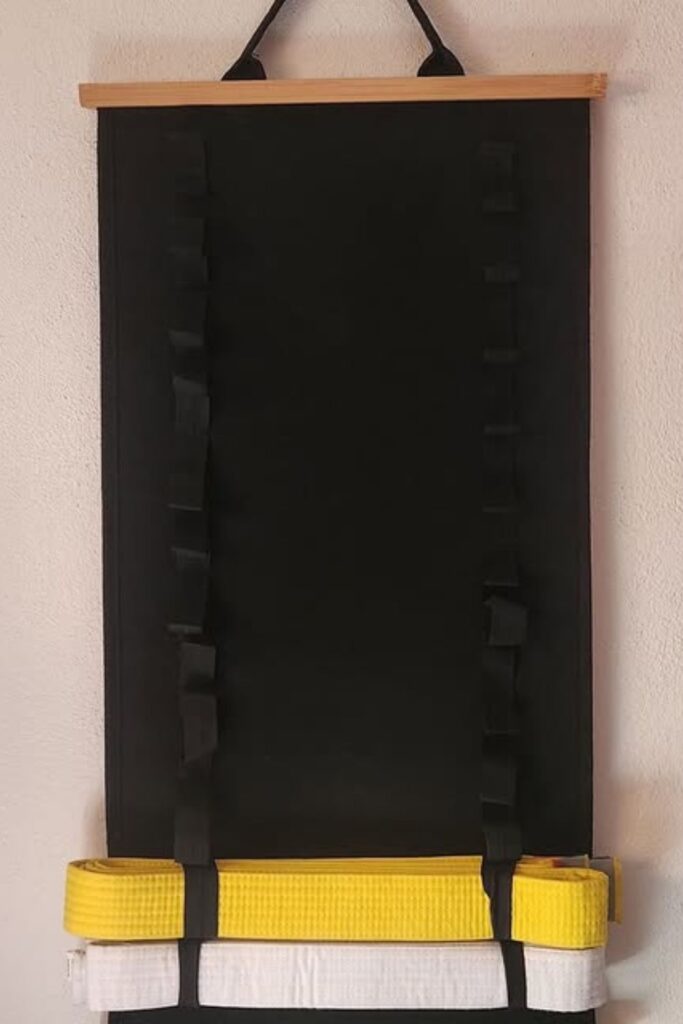
Wall Strap
Sometimes the simplest wall piece can double as smart belt storage. A hanging strap board like this keeps belts secured vertically without taking shelf or drawer space.
The elastic straps keep each belt in place, while the bottom bar holds the wrapped strap up, keeping the leather from bending in a strange way.
This kind of setup works nicely in small closets, on bedroom walls, or behind doors where there isn’t much room.
You can use a hook or a mounted frame to attach a fabric organizer board or strap-style holder to the wall.
Put the rolled-up part of the belt on the bottom support and slide the belt beneath the elastic bands.
Rod Hooks
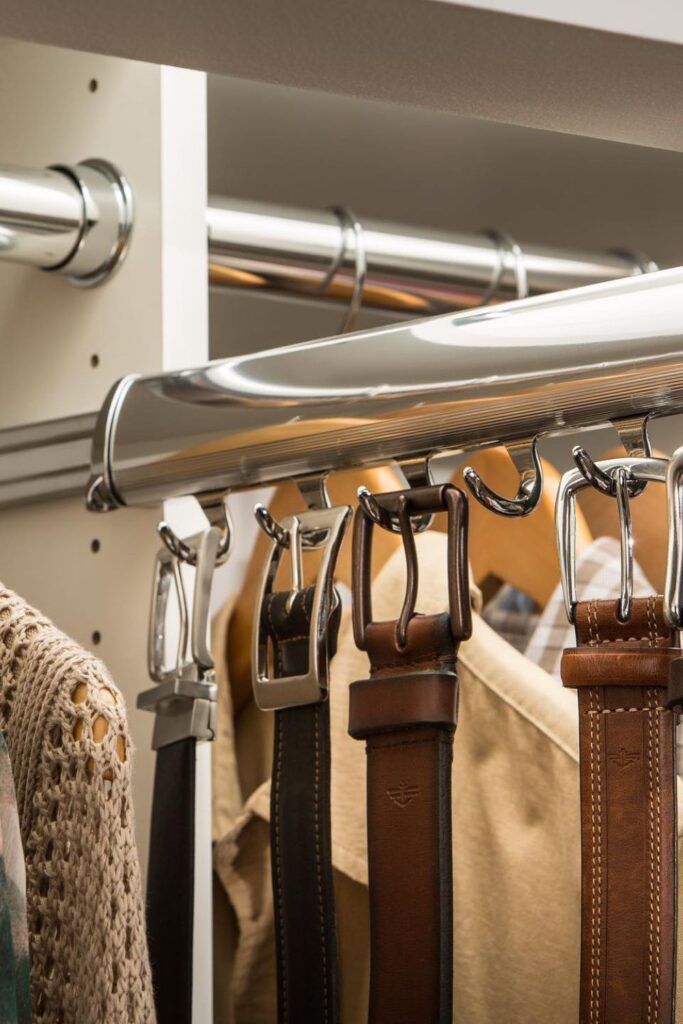
Closet rods usually hold clothes, but adding a row of small belt hooks transforms the same bar into a neat accessory zone.
When you hang belts by their buckles, they stay straight and easy to see, which makes it much faster to grab the proper one than to hunt through drawers.
This kind of system works well in wardrobes or walk-in closets where people wear belts a lot.
You don’t need any tools to attach clip-on belt hooks or multi-hook organizers to the rod. Each hook holds one belt, so the strap swings naturally without severe bends.
Putting belts next to shirts or coats also makes it easy to plan an outfit because everything you need for the appearance is in one spot.
Clear Organizer
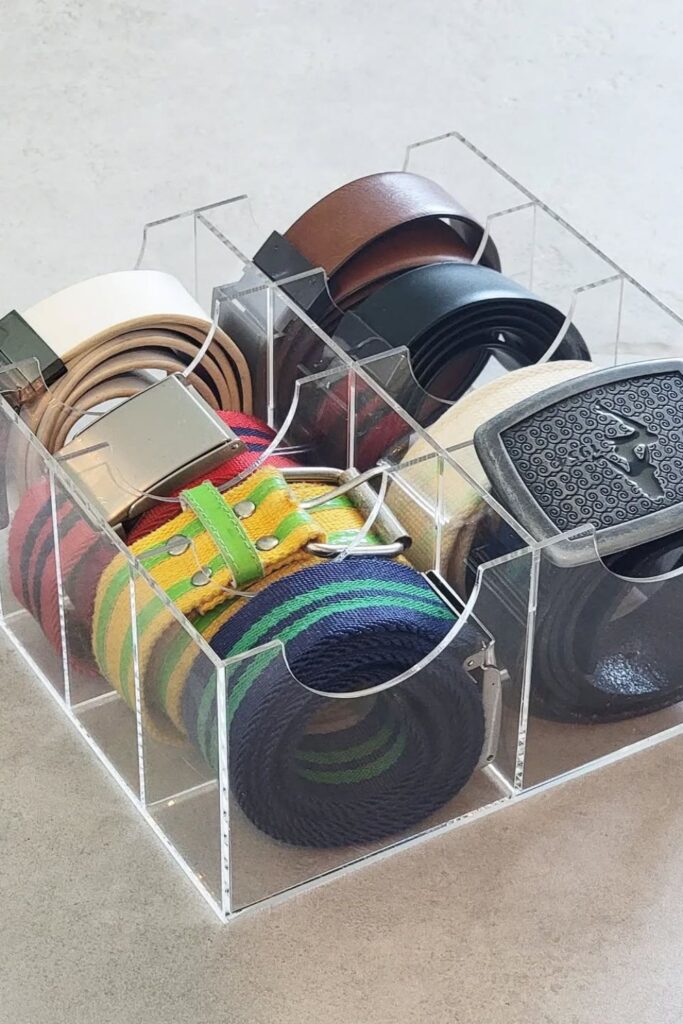
Seeing every belt at a glance makes choosing one much easier, especially when colors and buckle styles vary.
This clear acrylic organizer keeps belts folded up in separate compartments and lets the buckles face forward.
There are no overlaps, so there are no tangled straps and no time wasted looking for things. This layout works nicely on dresser tops, closet shelves.
Inside wardrobe compartments where accessories may be seen. Acrylic belt organizers with separate sections keep each belt separate and the whole collection clean.
Gently rolling the strap before putting it in the slot helps the leather preserve its natural shape.
Fabric Divider
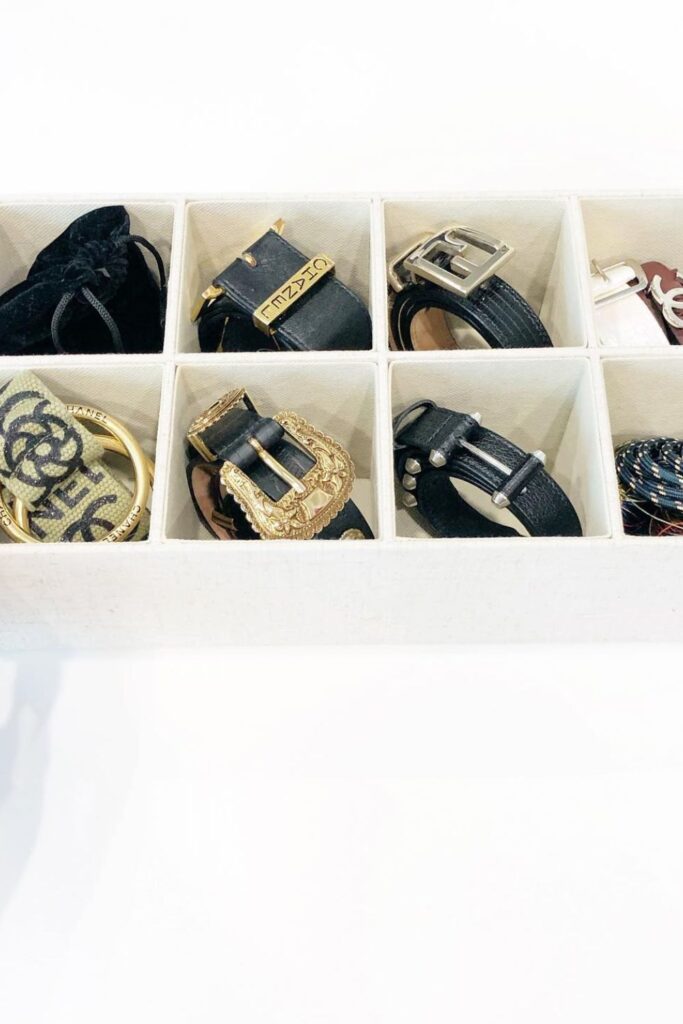
Neat rows inside a drawer can completely change how belts are stored. A fabric divider tray like this keeps each belt rolled inside its own soft compartment.
This keeps straps from getting tangled with other accessories or pushing against one other.
Setting up a similar method in dressers, wardrobe drawers, or closet islands where smaller items are kept works nicely.
Square divisions in fabric drawer organizers make it easy to store each belt in its own space. Rolling the belts loosely before putting them inside helps the leather.
Keep its natural curve without severe folds. Soft dividers also keep buckles from damaging other belts, which is great for fragile or designer pieces that need a little additional attention.
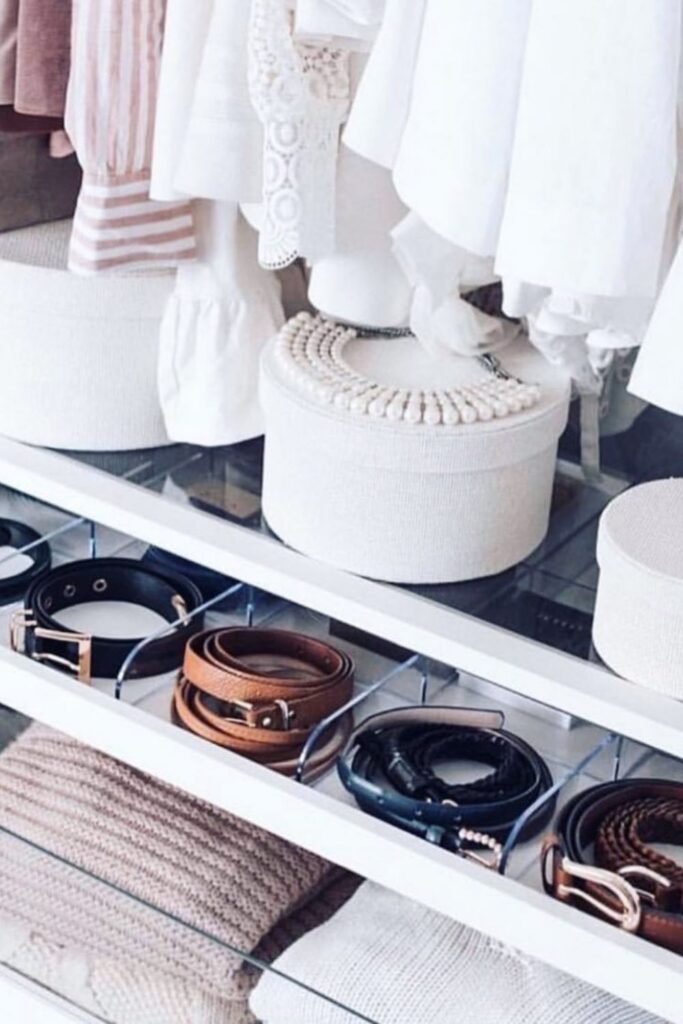
Shelf Rows
Lower closet shelves often become wasted space beneath hanging clothes, yet they can work perfectly for belt storage.
Clear shelf dividers and neatly coiled belts make neat rows where every buckle is simple to see and reach.
The straps are slack inside each segment, which helps the leather preserve its natural curve instead of bending too tightly.
This configuration works nicely in walk-in closets or wardrobes with open shelving under clothes that are hanging.
You may make the same neat rows with acrylic shelf dividers or little trays with compartments. Rolling the belts up and putting one in each compartment.
Display Island
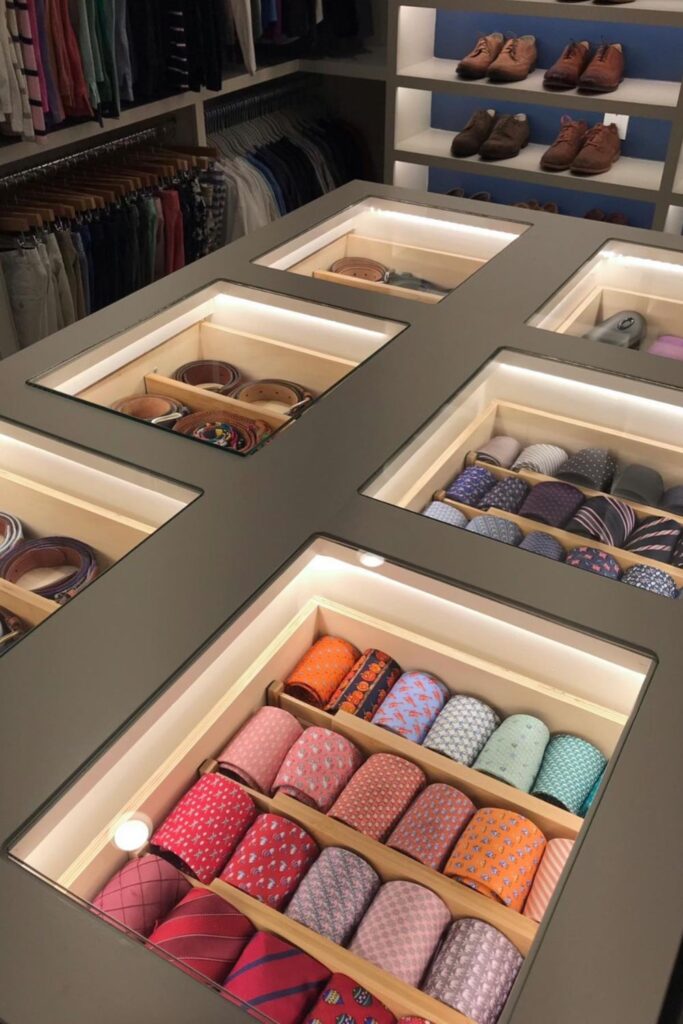
Closet islands often hide one of the most organized ways to store belts. Glass-top compartments turn the drawer surface into a visible display.
Where belts are coiled up and stored in wooden sections. The buckle is easy to find without having to open drawers or move other items, and each belt stays separate.
This configuration works best in big walk-in closets or wardrobe islands with deep drawers. Putting wooden divider trays in shallow drawers.
Makes it easy to separate each rolled belt into its own space. A glass panel on top protects everything safe from dust and lets you see everything.
This kind of organized display makes you appear like you have a handpicked collection of belts, yet it still keeps each one safe and ready to wear.
Belt Tray
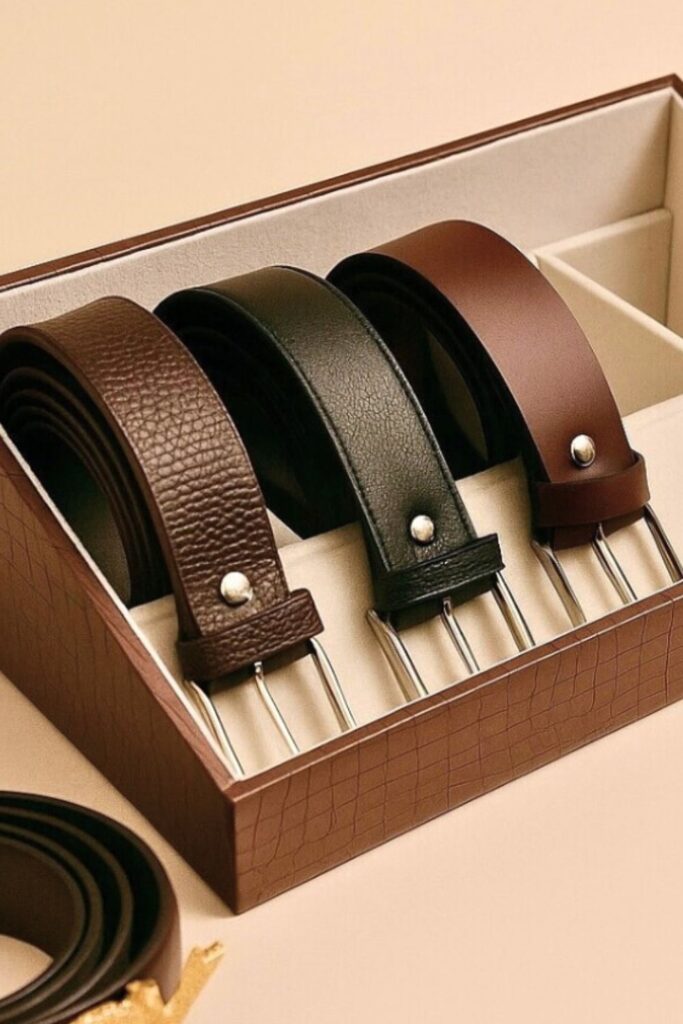
Sometimes the simplest storage works best when belts stay visible but still protected. A structured belt tray like this keeps a few everyday belts rolled neatly.
While holding the buckles forward to make them easy to see. The straps lay comfortably inside the divider slots, which keeps the leather from becoming tight folds.
You can set up a similar space on dressers, closet shelves, or in wardrobe drawers where you keep your everyday accessories.
A divided tray made of leather, wood, or fabric-lined material makes separate spaces for each belt. Rolling the belt loosely before putting it in keeps the leather soft and smooth.
This kind of compact tray is great for folks who prefer to switch between a few favorite belts and want to keep them organized and quick to get to.
Luxury Drawer
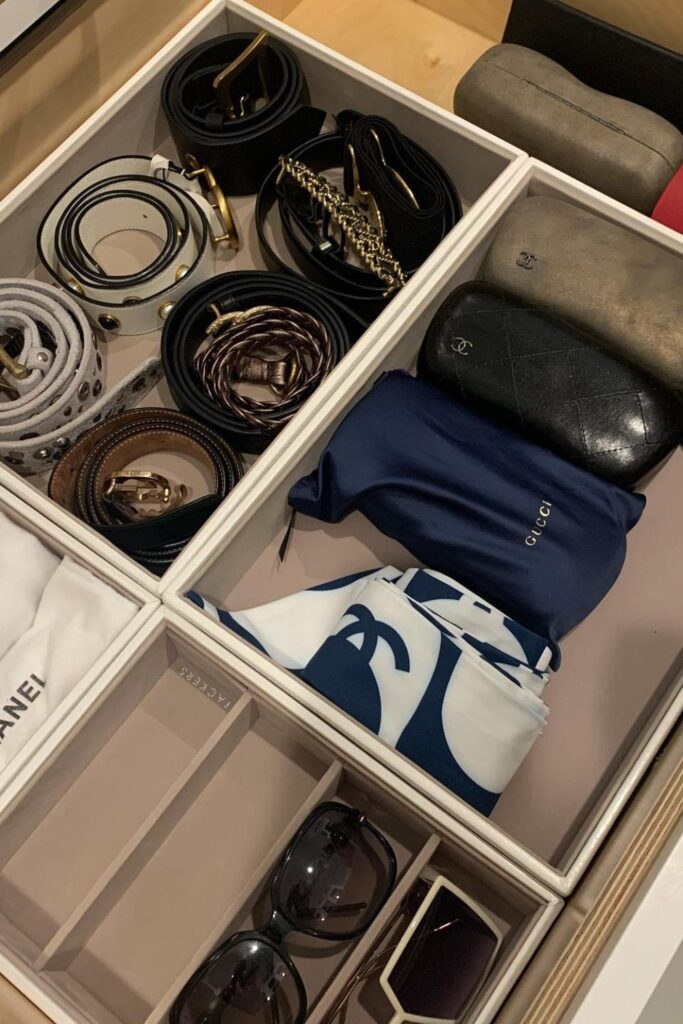
High-end accessories deserve storage that keeps everything organized and protected at the same time.
This luxury drawer configuration keeps belts, sunglasses, scarves, and tiny leather goods all in one neat location by putting them all together.
When you roll each belt into a loose circle, it keeps deep wrinkles from forming and makes it easy to see the buckles when you open the drawer.
This kind of setup works well in dresser drawers or closet islands with organizers that can be taken out.
Soft-lined trays or modular drawer inserts make separate spaces that keep accessories from rubbing against each other.
FAQs
How do you store belts without damaging the leather?
To keep leather belts in good shape, you should avoid putting too much pressure on them and folding them too tightly.
If you roll the belt loosely or hang it by the buckle, the leather will preserve its natural curvature. Keeping things dry and out of direct sunshine also stops.
Is it better to hang belts or roll them for storage?
Depending on how much space you have, either option will work well. Hanging belts from hooks or hangers saves them from being creased and makes them easy to see.
This works well in closets. Rolling belts is ideal for trays or drawers since it keeps the straps small and protects the leather from severe bends.
You may like to read!
- 25 Holiday Decor Storage
- 20 Pencil Storage Ideas
- 24 Sweater Storage Ideas
- 20 Sock Storage Ideas
- 25 Hoodie Storage Ideas

Fasial is the founder of the Fizzy Flare. He has been a passionate blogger since 2021. He ran three different websites in the past few years. Now he is focusing on Fizzy Flare to build an audience and help them organize their life.