24 Sweater Storage Ideas for 2026
This post may contain affiliate links: full affiliate disclosure.
Sweaters that are too big might fill up your closet faster than you think. One day, everything appears good; the following day.
Your shelves are full of thick knits that keep sliding off, your drawers won’t close right, and the one sweater you want is constantly at the bottom of the pile.
A lot of people also hang their sweaters, but later they see that the shoulders are stretched and the cloth is misshaped. It’s hard to store sweaters because they’re soft, heavy, and big.
But if you store them correctly, you can keep them neat, save room in your closet, and keep them safe from damage.
In this article, I will show you 24 Amazing sweater storage ideas you can try to keep your closet neat and organized.
Let’s jump in!
Contents
- 1 How Do You Store Sweaters Without Stretching Them?
- 1.1 Color Zoning
- 1.2 Shelf Stacks
- 1.3 Bed Drawers
- 1.4 Clear Bins
- 1.5 Zipper Bags
- 1.6 Shelf Dividers
- 1.7 Cabinet Shelves
- 1.8 Fabric Boxes
- 1.9 Folding Hang
- 1.10 Color Stacks
- 1.11 Drawer Folding
- 1.12 Closet Layers
- 1.13 Drawer Dividers
- 1.14 Cube Shelves
- 1.15 Labeled Bins
- 1.16 Upper Storage
- 1.17 Neutral Stacks
- 1.18 Rolled Rows
- 1.19 Vertical Shelves
- 1.20 Color Hanging
- 1.21 Shelf Sections
- 1.22 Stack Trays
- 1.23 Acrylic Stacks
- 1.24 Grid Shelves
- 2 FAQs
How Do You Store Sweaters Without Stretching Them?
Don’t hang your sweaters like you would an ordinary shirt. This is the easiest way to keep them from expanding. Sweaters are composed of soft knit fabrics.
So when you hang them up, gravity slowly pulls the threads down. This causes those irritating lumps on your shoulders and makes your shape loose with time.
Save this article for later! 👇👇

Put your sweaters away on shelves or in drawers instead of hanging them up. Put the sweater flat, tuck the sleeves in, and then fold the body in half or thirds so that it fits beautifully.
Try folding things vertically in drawers if you want to make them easy to get to. You can see all of your sweaters at once, and nothing gets stretched, wrinkled, or lost in a chaotic pile.
Color Zoning
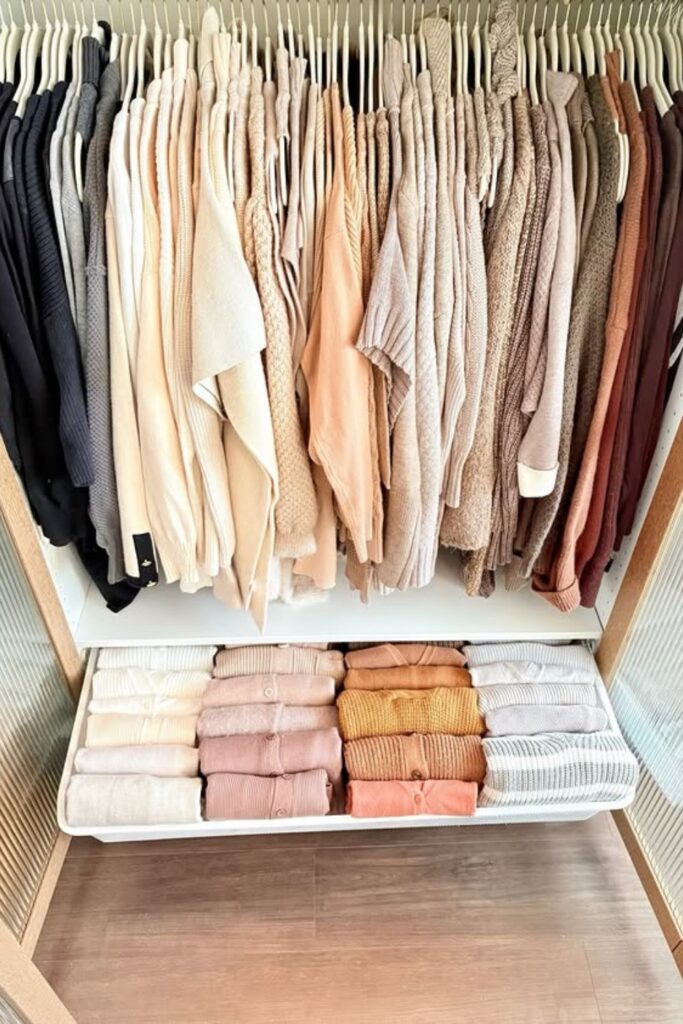
Clothes feel easier to manage once every shade has its own place. Neutral sweaters grouped from light to dark create a calm visual flow.
And make it easy to find something that goes with the remainder of your outfit. Put sweaters in groups by color family.
Then hang them up so that related colors are near to each other. Soft knits, light cardigans, and thin pullovers are all good choices here.
Because they keep their shape better on hangers. You can shift bulkier sweaters to the bottom drawer, where they will be supported by folding.
A short pull-out drawer below the rod gives you more space to store nicely folded knits, which keeps the closet from getting too full.
Shelf Stacks
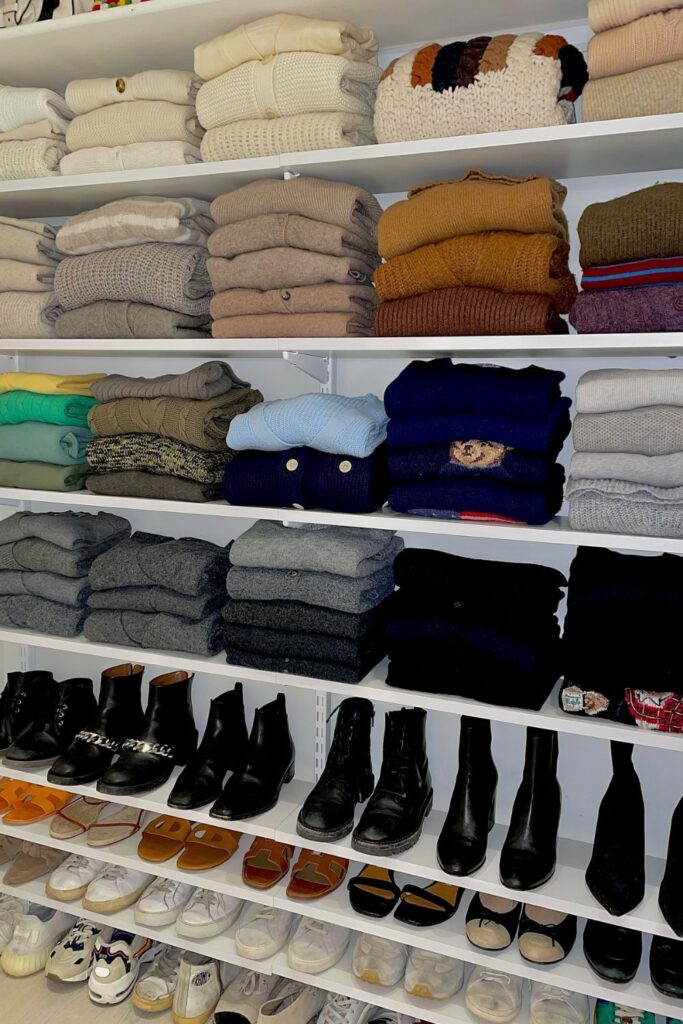
Order starts to appear once bulky sweaters move off hangers and onto open shelves. Fold each sweater into a compact rectangle and stack them in short piles.
So the weight stays evenly spread out. Heavy knits should go at the bottom of each stack, and lighter sweaters can go on top without damaging the fabric.
These wide closet shelves make it easy to sort by color or fabric type, which helps you find what you need.
Without messing up the rest of the pile. Also, leaving some space between stacks protects things from falling over.
A simple closet shelf can become a useful place to store sweaters by putting clean rows of folded sweaters on it.
Bed Drawers
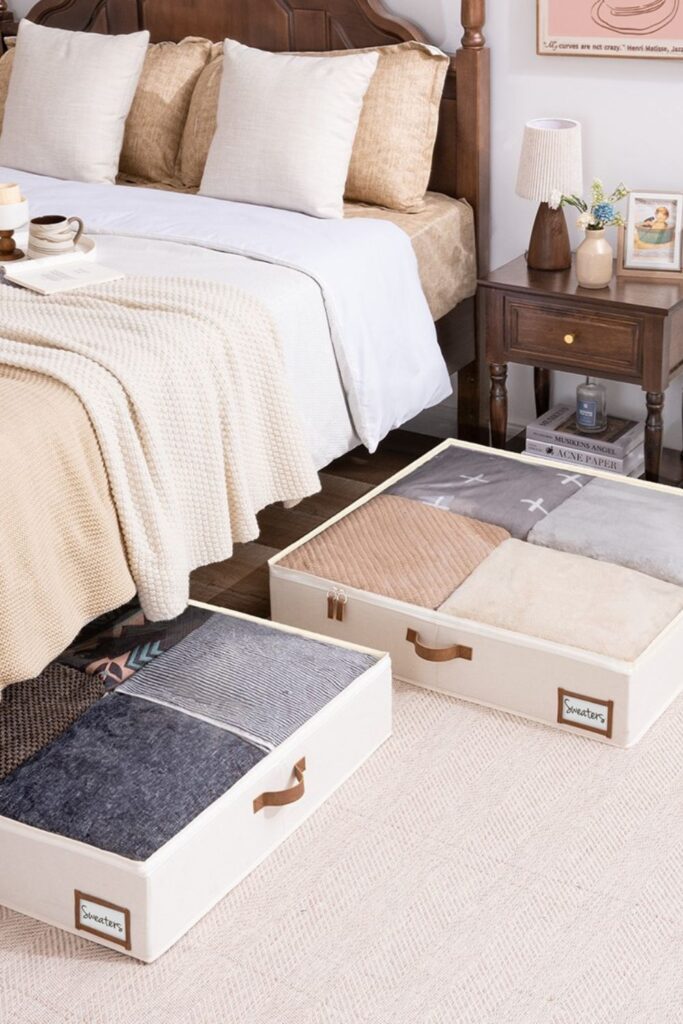
Seasonal sweaters often take up valuable closet space, especially during warmer months. Sliding storage drawers under the bed creates a hidden spot.
Where big knits may keep safe without taking up too much space in your closet. Fold sweaters into flat rectangles.
So that they fit neatly in the sections. When the weather gets cold again, it’s easy to find things if you separate them by color or fabric type.
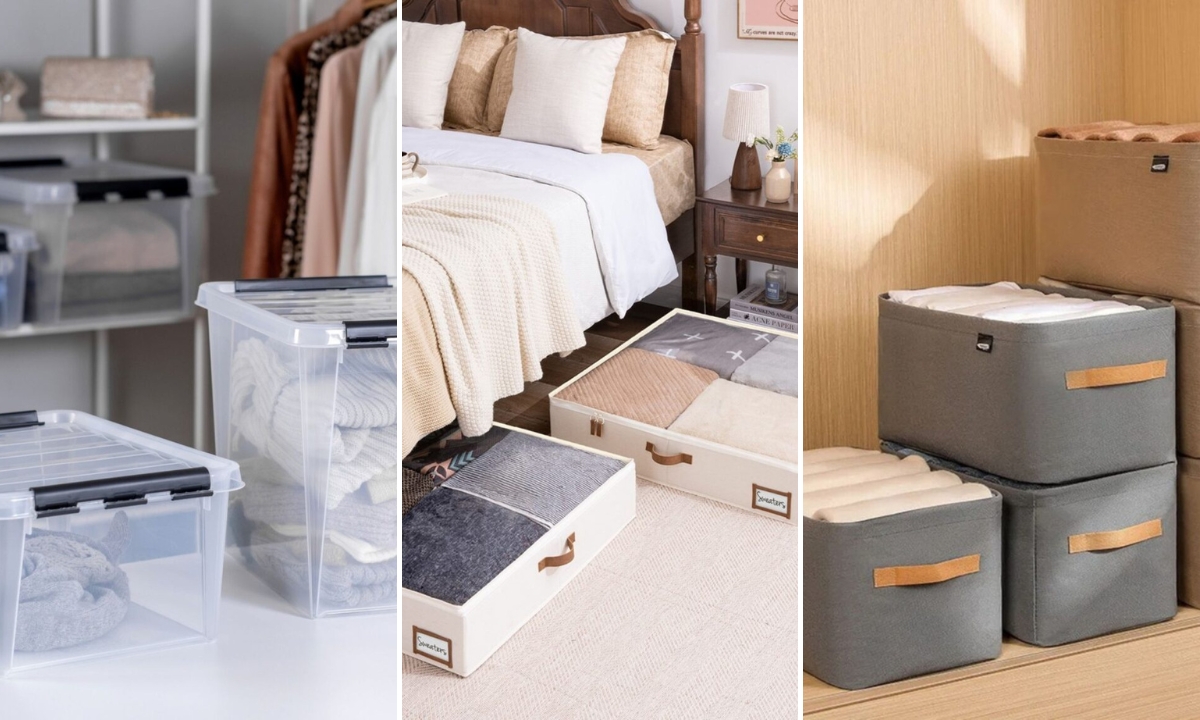
Solid storage bins with lids keep dust off your sweaters while still letting you get to them quickly.
This layout is best for bedrooms with small closets since it uses up floor space under the bed that would otherwise be wasted.
Clear Bins
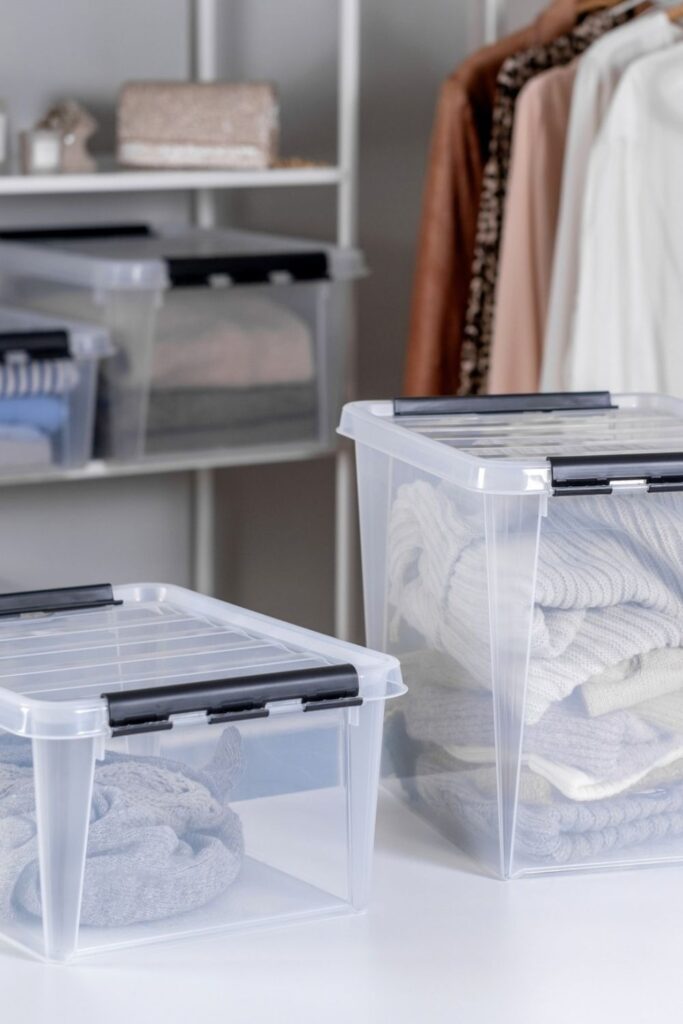
Dust, moisture, and moths often damage sweaters long before anyone notices. Airtight storage bins solve that problem while keeping everything visible.
Put sweaters in clear boxes and stack them up so they’re easy to find and stay safe. The clear sides make it easy to find the sweater.
You want without having to open every package. This design works nicely in closet shelves, wardrobe tops, or storage rooms, especially for knits that aren’t in season.
When you have a lot of bins, labeling each one by color or fabric type helps keep things in order.
Sweaters that are clean, dry, and stored this way stay fresh for months and keep their shape until it gets cold again.
Zipper Bags
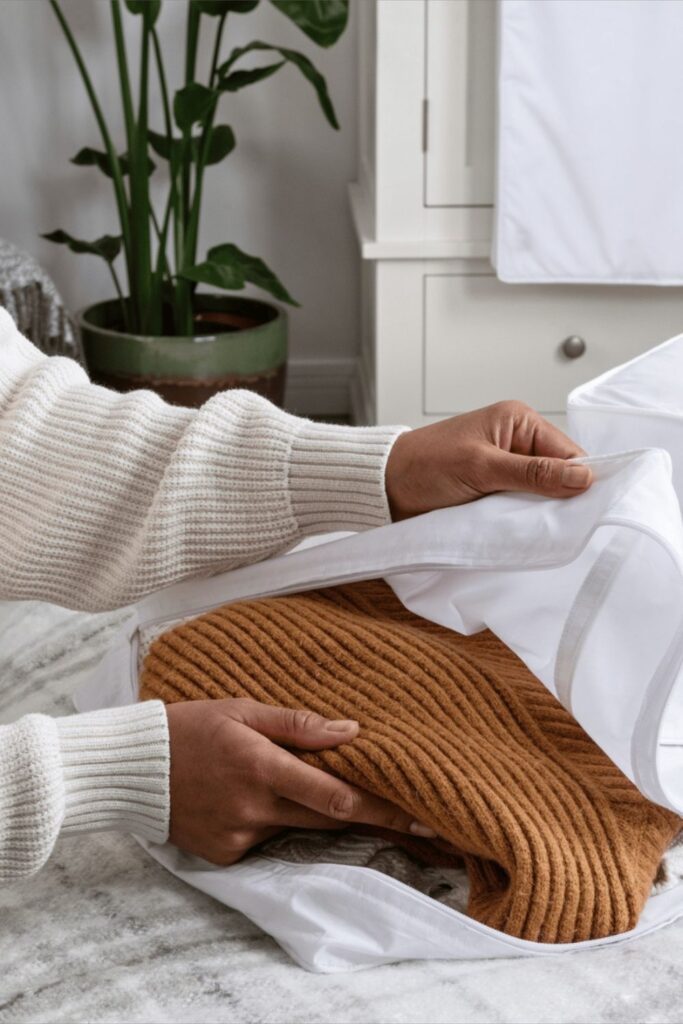
Protective zipper bags make it much easier to store sweaters for the season. These fabric storage bags protect sweaters from dust.
While yet letting the fabric breathe. Fold each sweater carefully and put them flat in the bag so that the knit.
Doesn’t become stretched or compressed. When it’s warm out, these bags can be stored in closets, under beds, or on shelves.
Panels that are clear or mesh make it easy to view what’s within without having to open every bag.
This manner of storing sweaters keeps them clean, neat, and ready to wear when it gets cold again.
Shelf Dividers
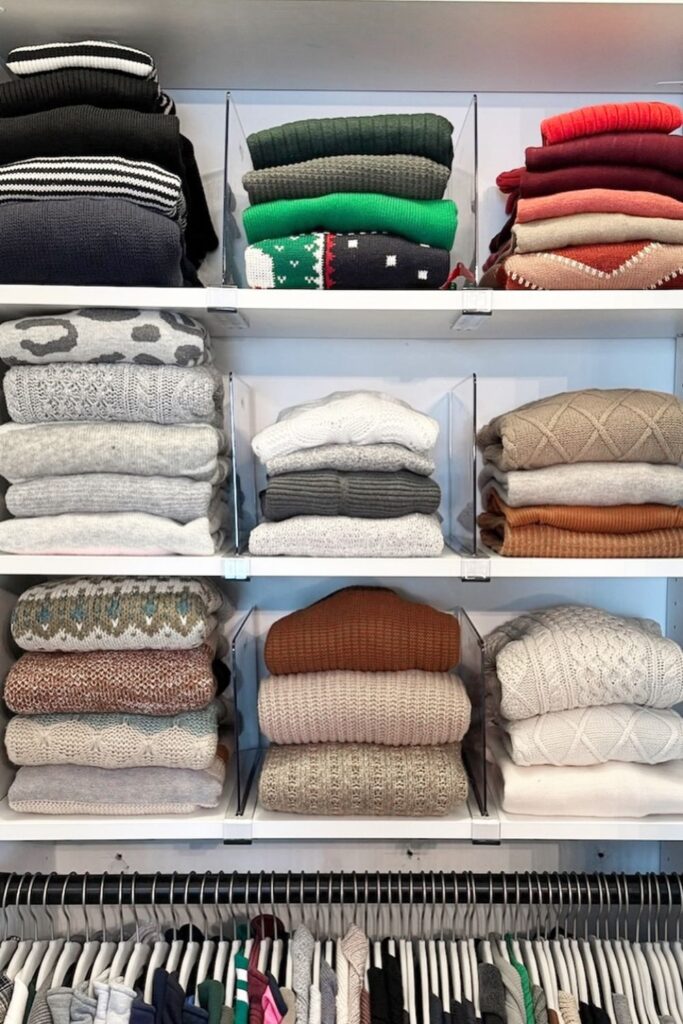
Pulled one sweater from a stack and watched the whole pile collapse? Shelf dividers stop that problem instantly.
Clear dividers make separate lanes on each shelf, so every stack of sweaters stays up even when you take something out of the middle.
To keep the structure, fold the knits into even rectangles and make sure each stack is around four or five pieces tall.
Heavier sweaters should be on the bottom and lighter ones should be on top.
This configuration works well in closets with large shelves because the dividers keep stacks from sliding sideways.
Organized divisions also make it easier to categorize sweaters by color, fabric, or season. This keeps the whole closet appearing neat and easy to keep track of.
Cabinet Shelves
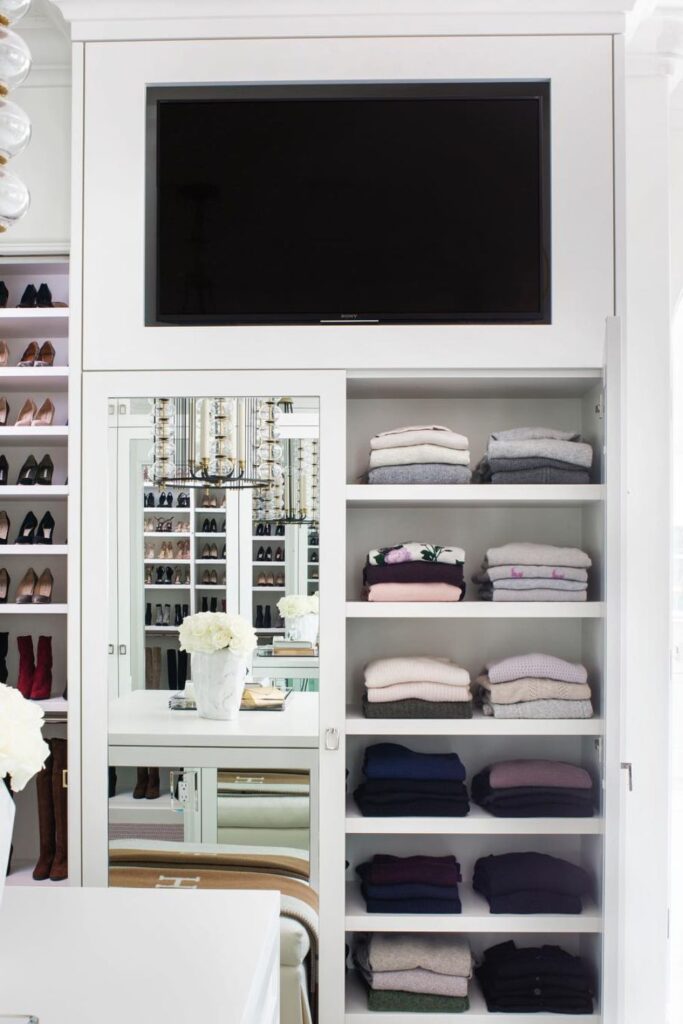
Closets often run out of room fast once bulky sweaters start piling up. Built-in cabinet shelves solve that by giving each stack its own level.
Rather of packing everything into a small area. In addition to keeping each shelf neat, folding sweaters into little rectangles stops materials from straining under their own weight.
Here, short stacks are ideal three or four sweaters per pile makes everything accessible without upsetting the others.
Sweaters retain their color and shape longer because to cabinets like these that shield knitwear from sunshine and dust.
This arrangement works well in bedrooms with tall cabinets or custom closets because vertical storage transforms wasted wall space into a tidy, well-organized sweater zone.
Fabric Boxes
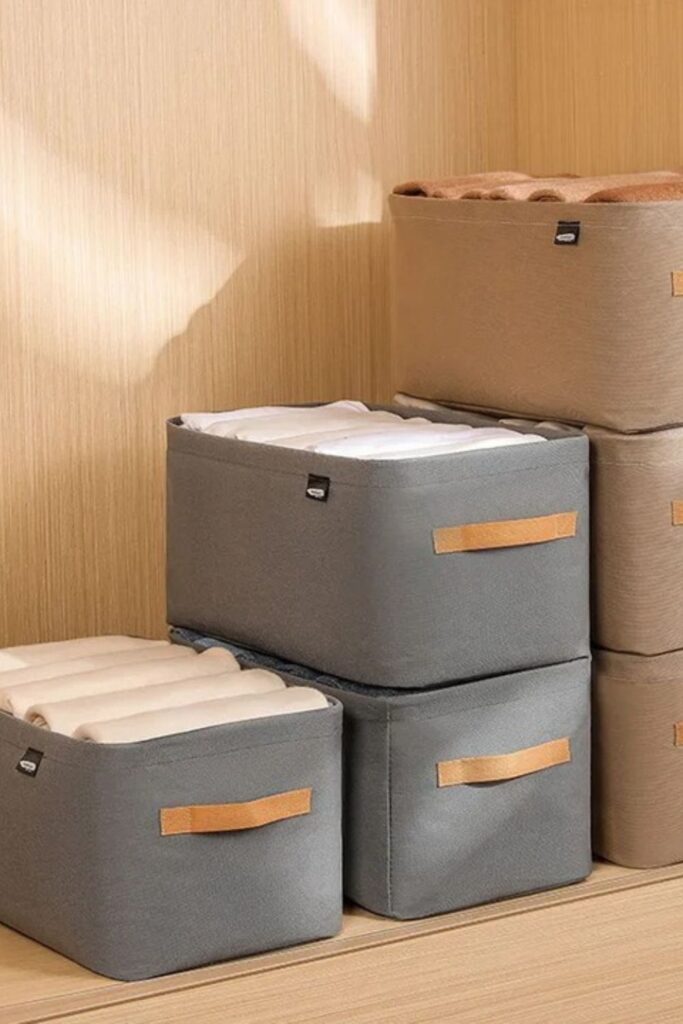
Seasonal sweaters deserve a place where they stay protected but still easy to grab when needed.
Fabric storage bins create a pleasant, airy environment that keeps knitwear from getting crushed or dirty.
Sweaters should be folded vertically within each box to make the most of available space and to make it easy to see each piece without having to go through a pile.
These boxes can be neatly stacked on upper shelves, wardrobe corners, or closet floors. When the weather shifts and thicker sweaters become popular again.
Additionally, neutral fabric containers complement the majority of closet designs, making sweater storage appear tidy rather than disorganized.
Folding Hang
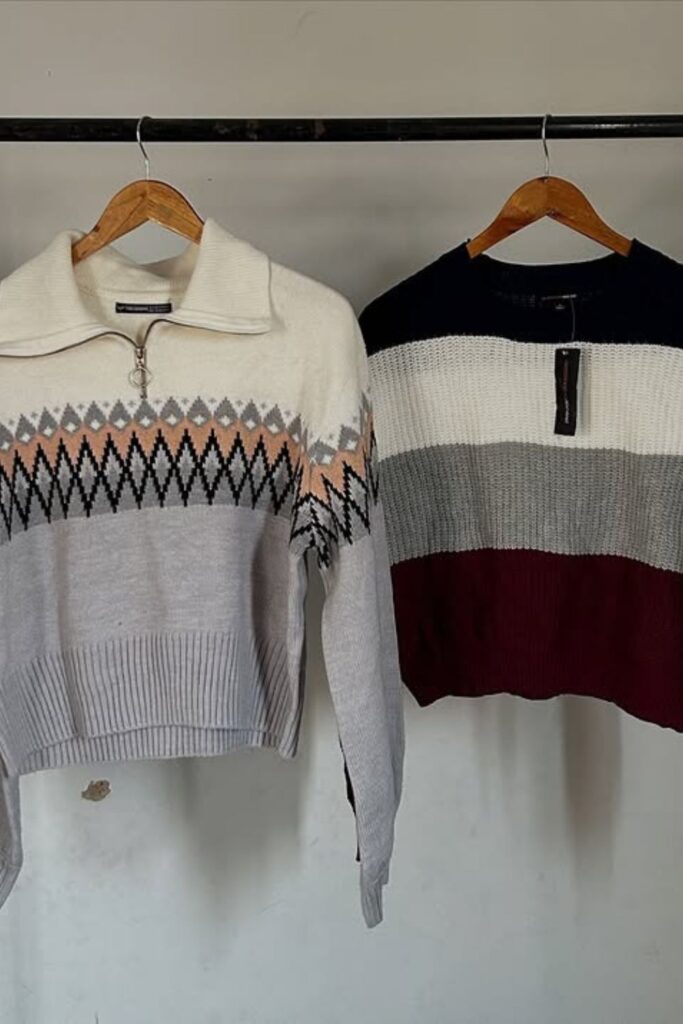
Gravity stretches knitwear faster than most people realize. Hanging a sweater the normal way pulls weight directly on the shoulders.
Which, after a few wears, results in that loose, distorted appearance. Folding the sweater in half and laying it over the hanger is a preferable method.
The cloth maintains its natural shape since the body and sleeves are supported across the bar.
Because they offer a larger surface that holds the yarn firmly, wooden hangers are ideal in this situation. Adequately spaced closet rods also aid in preventing bunching.
This technique works well for lightweight sweaters, cropped knits, and regular pullovers since they stay visible without stretching.
Color Stacks
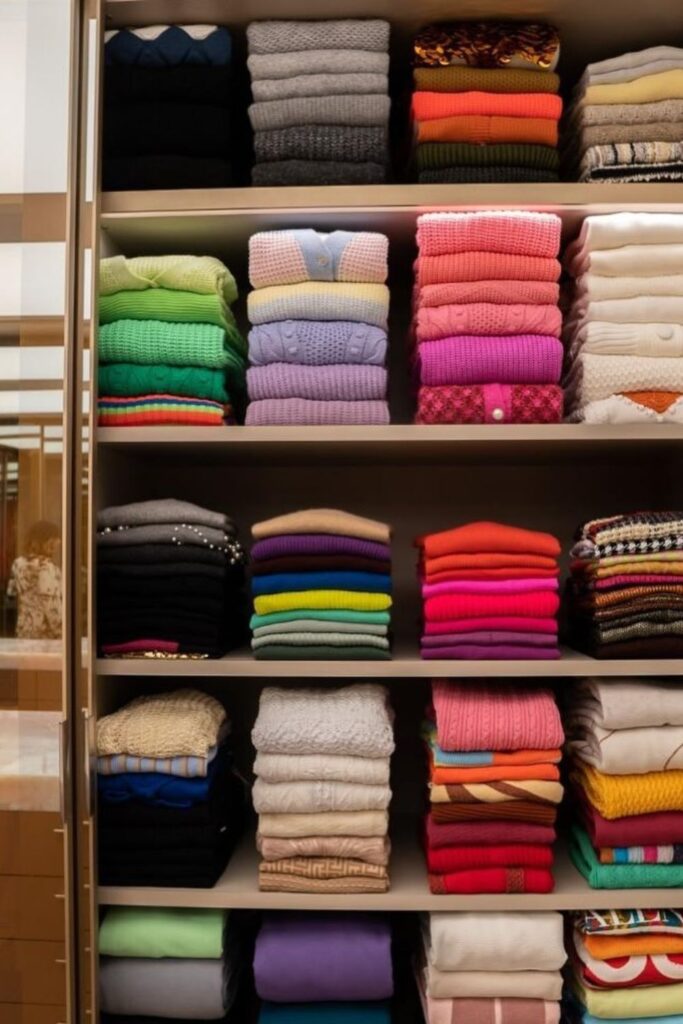
Bright sweaters become much easier to manage once every shade gets its own stack. Grouping similar colors together turns a crowded shelf into a system.
Where clothing is put together more quickly. To ensure that each pile remains sturdy, begin by folding sweaters into consistent rectangles.
While neutrals remain together on a different shelf, rich tones like reds, greens, or pinks can form distinct stacks.
Because they keep sweaters from sliding or changing shape under excessive weight, short heaps are the most effective.
Because deep closet shelves allow many stacks to sit side by side without mixing, they are ideal for this concept.
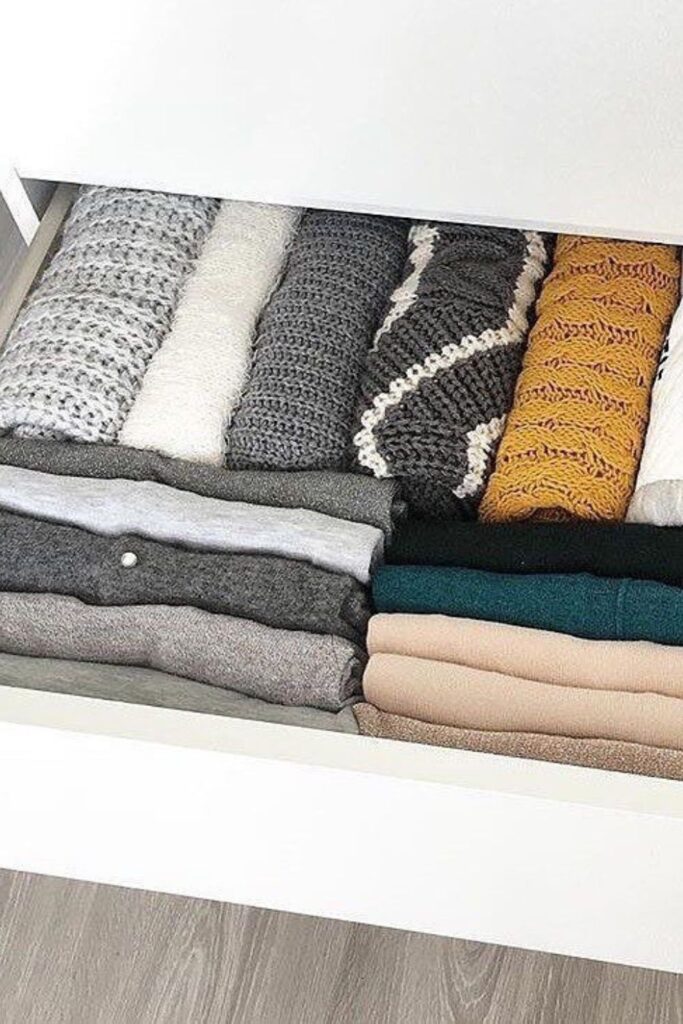
Drawer Folding
Messy sweater piles disappear once drawers switch to vertical folding. Rolling or folding sweaters upright.
Lets each piece sit next to each other so you can see the whole drawer at once. Taking one sweater out of the closet doesn’t mess up the rest.
So the space stays nice even after daily use. Fold each sweater into a little rectangle, then stand them up like files in a cabinet.
Medium or shallow drawers are preferable since they keep the sweaters supported and simple to get to. Separating heavier knits from lighter ones also helps keep the rows even.
This approach of organizing makes it possible for a single drawer to carry a lot more sweaters while still making it easy to find what you need.
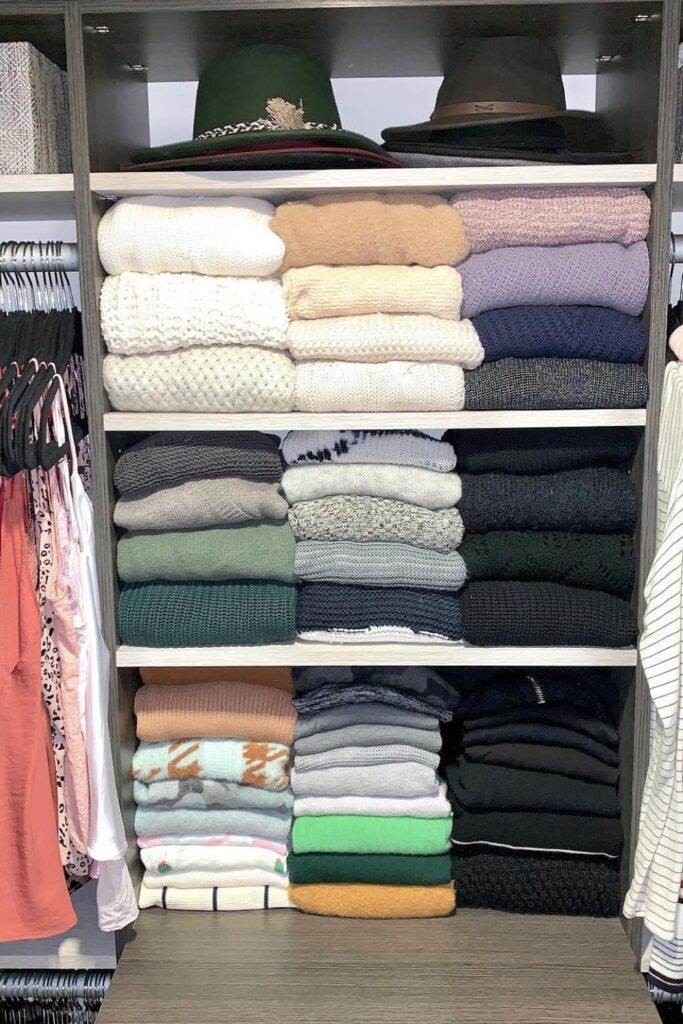
Closet Layers
Closet space works harder once sweaters move into dedicated shelf layers instead of mixing with hanging clothes.
Folding knits into little stacks lets each shelf contain a small group without crushing the fabric below.
Upper shelves are great for lighter sweaters or seasonal clothes while everyday knits can stay on the middle levels where they are easy to get to.
Short stacks help keep their structure and stop the pile from sliding when you pull out one sweater.
Wardrobes with both hanging rods and open shelf work best with this design since shirts and coats stay on hangers and sweaters stay neatly folded in their own space.
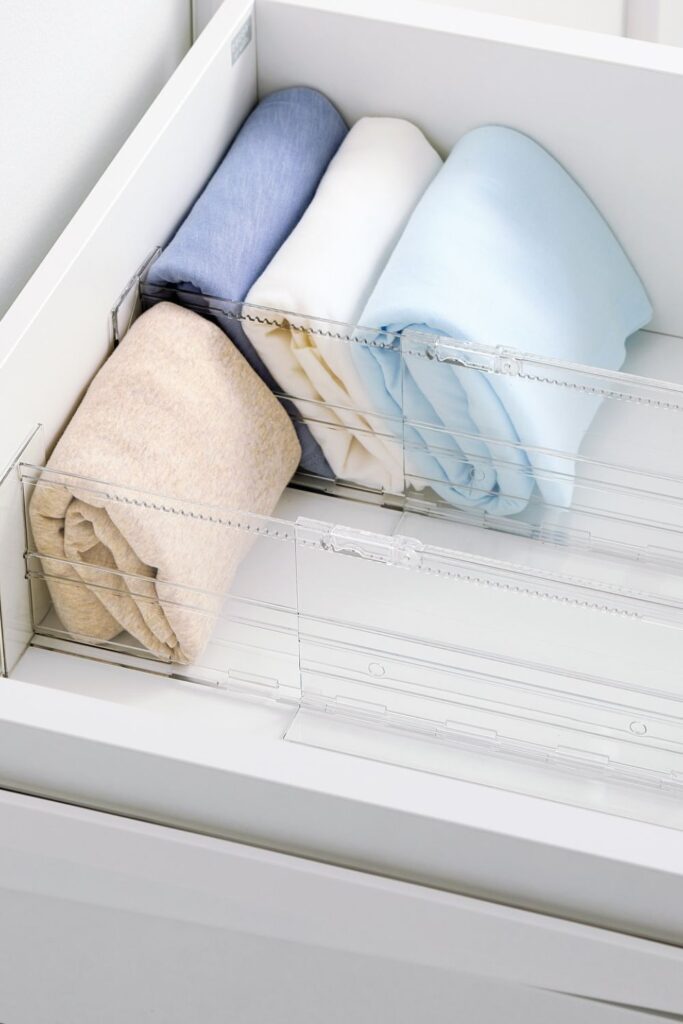
Drawer Dividers
Order inside a drawer disappears quickly once sweaters start sliding into each other. Adjustable drawer dividers fix that by creating separate lanes.
Where every folded piece stays put. When you fold sweaters into small rectangles, they can stand up on their own.
Making it easy to see all of your options without having to rummage through the pile. Clear dividers are great.
Because they help you keep things in order while yet letting you see everything at once. This configuration works well for wide dressers.
Organized rows also make it easy to pick out clothes every day because taking out one sweater doesn’t mess up the remainder of the drawer.
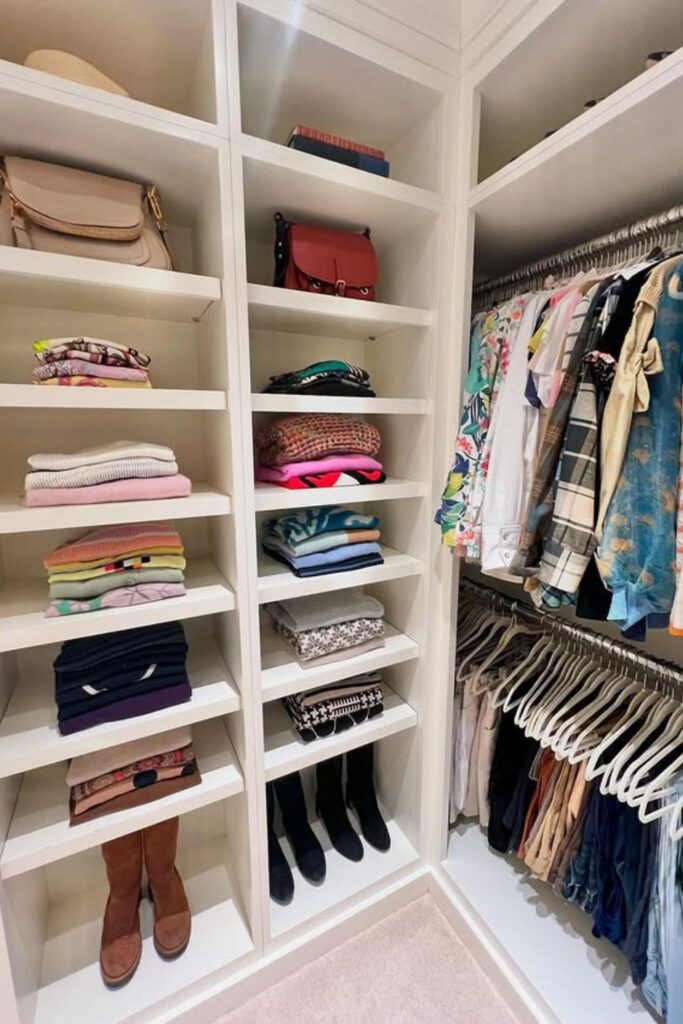
Cube Shelves
Closets feel instantly calmer once sweaters move into individual shelf cubes instead of large open piles.
Small compartments automatically stop each stack from getting too tall, which keeps sweaters from falling over when one is lifted out.
Folding each sweater into a small rectangle keeps all the cubes neat and easy to care for. These smaller sections are excellent for light knits, cardigans, or daily sweaters.
Because they stay visible without taking up the whole shelf. This design works best with closet systems that include a lot of square sections.
Since each cube serves as a small storage area. This manner of organizing sweaters makes it easier to find them, and the whole wardrobe looks neat and tidy.
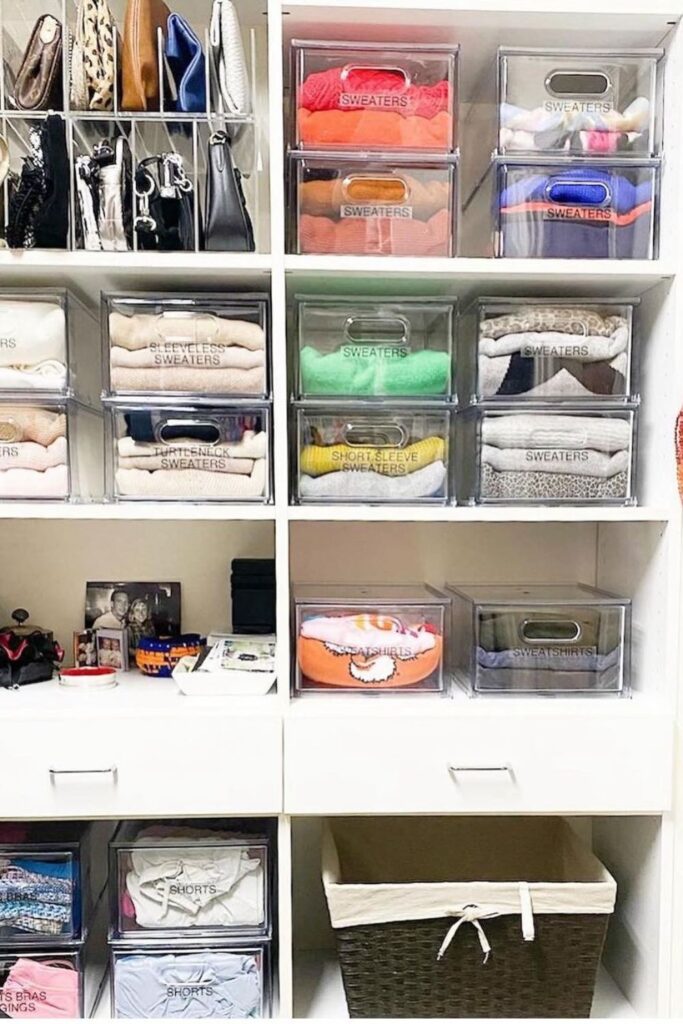
Labeled Bins
Clutter fades quickly once every sweater category gets its own labeled bin. Clear containers make it easy to see what’s inside while simple labels.
Take you immediately to the proper section without having to look through piles. Before putting sweaters in the bins, fold them into tidy rectangles.
This way, each bin will have a small group instead of a jumbled pile. To make it easier to switch things out throughout the year.
Put things like turtlenecks, lightweight sweaters, and seasonal knits into their own groups. This strategy works best with closet shelving units.
Labels that are organized also assist keep the system going over time, making it easy to put sweaters back where they belong after wearing them.
Upper Storage
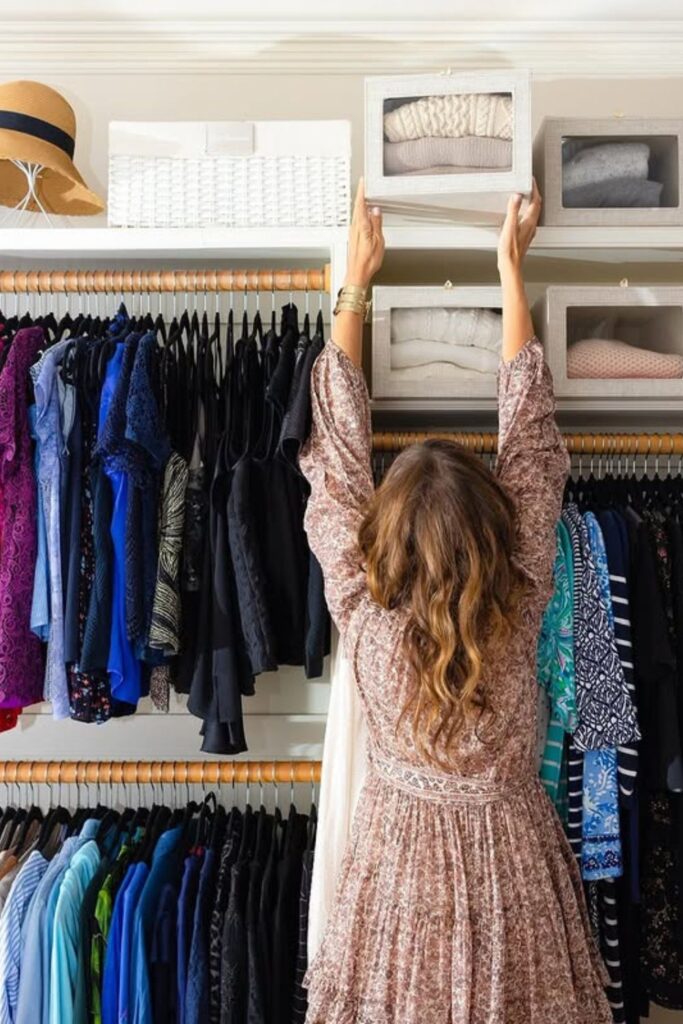
Closet tops often sit empty while sweaters crowd the lower shelves. Using the upper shelf for storage boxes.
Instantly clears up useful space below. Put your sweaters in structured fabric boxes after folding them properly.
This will keep the knits safe from dust and light. Window-style lids let you easily view what’s within without having to pull down every box.
This is a great place for seasonal sweaters because they don’t need to be used every day. Putting boxes next to each other keeps the shelf level and stops stacks from falling over.
Organizing unused vertical space for sweater storage keeps the rest of the closet cleaner and easier to utilize.
Neutral Stacks
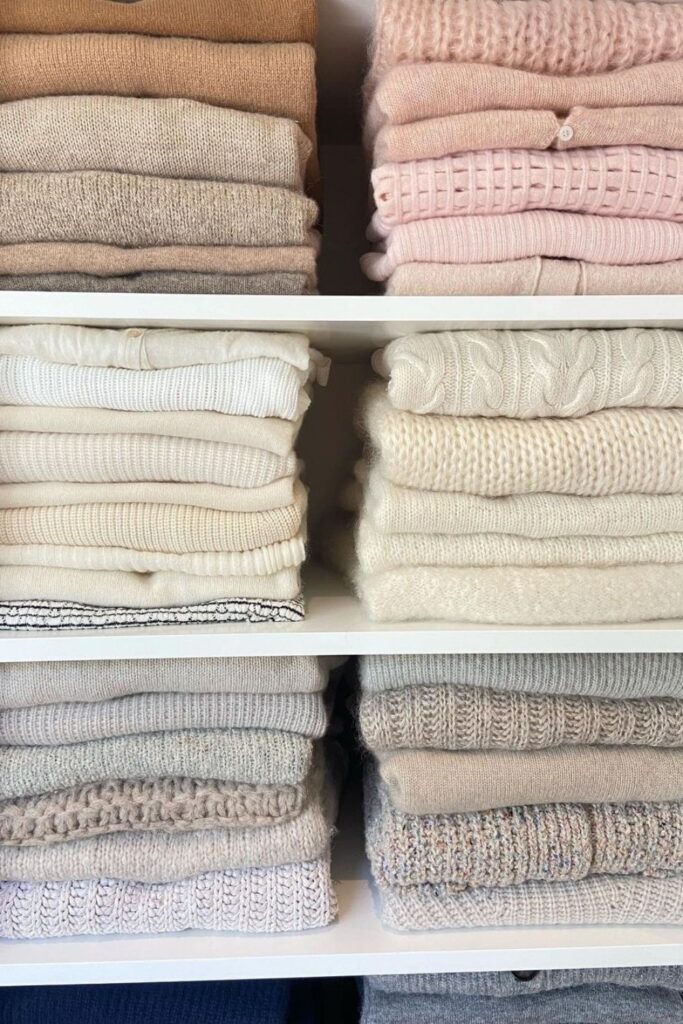
Calm closets often start with simple color grouping. Sweaters in neutral tones stack beautifully together.
This is because comparable colors make every shelf look neat and balanced. Folding each sweater into the same size.
Keeps the stacks even and stops the pile from tilting or sliding. Light knits should be near the top, and thicker winter sweaters should go at the bottom to give them more support.
Shelves with clear space between stacks make it easy to keep the arrangement up. This method works best in closets.
With neutral wardrobes because all the colors go well together and it’s still easy to find the precise sweater you want.
Rolled Rows
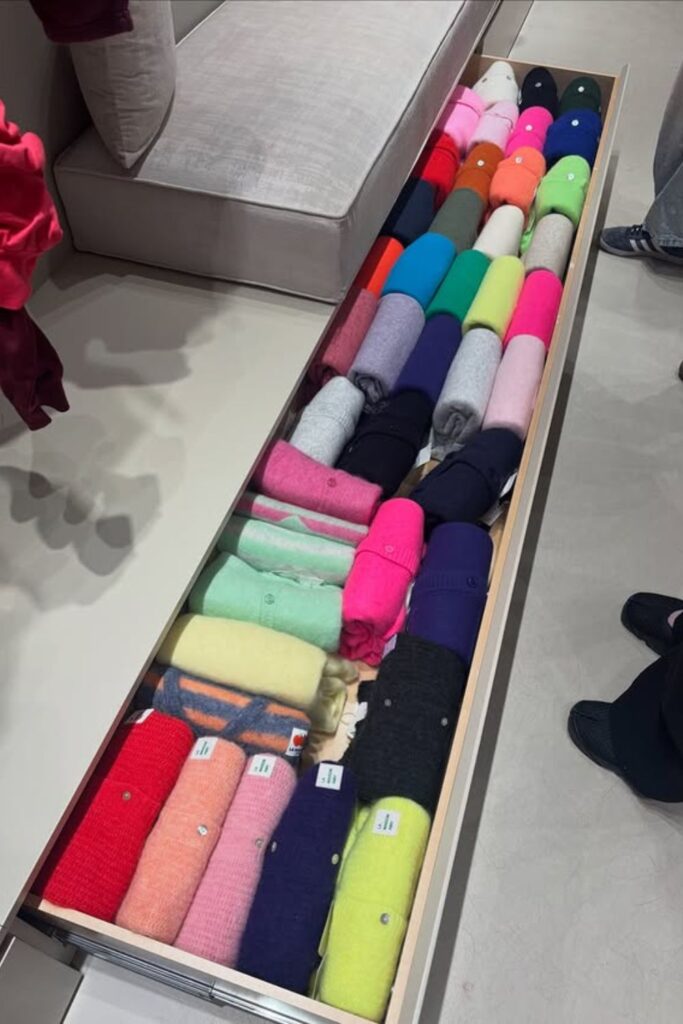
Deep drawers become far more useful once sweaters switch from stacked piles to rolled rows. Rolling each sweater into a soft cylinder.
They can line up neatly next to each other, making the whole drawer a clear view of all the choices.
You can easily see bright colors or patterned knits without having to move other sweaters. Fold the sleeves in, then roll the sweater tightly from the bottom up to keep its shape.
This style works best with long drawers or bench storage compartments because the greater depth lets numerous rows fit easily.
With this kind of organization, a single drawer may accommodate a lot of sweaters and keep them all visible and wrinkle-free.
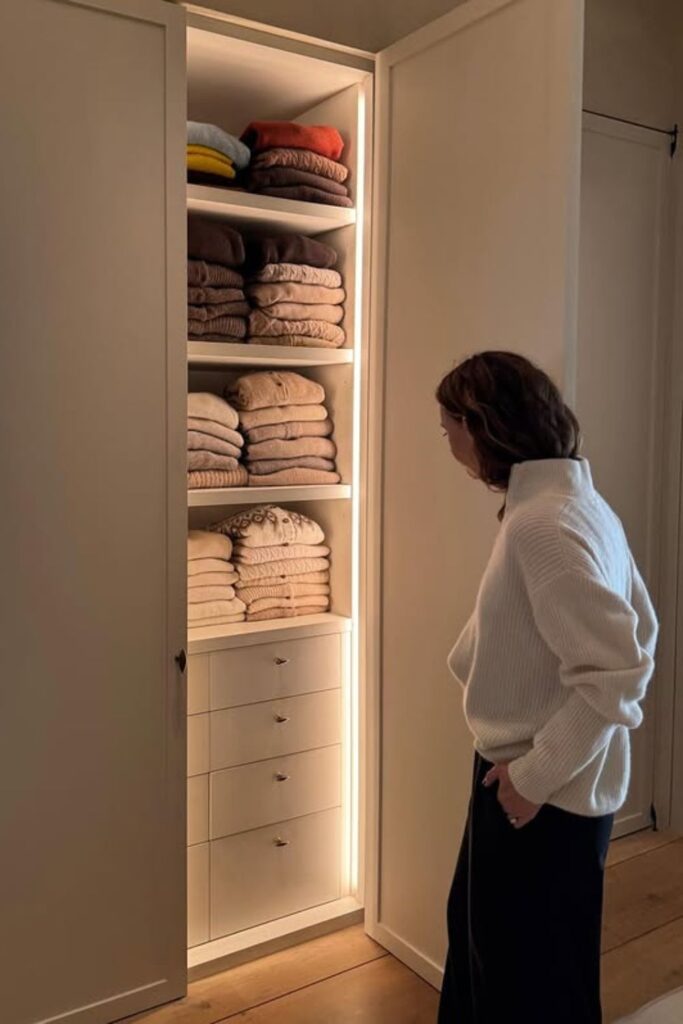
Vertical Shelves
Tall cabinets quietly solve one of the biggest sweater storage problems limited closet space.
Putting folded sweaters on narrow vertical shelves lets you fit more pieces without making one shelf too full.
Make sure the stacks are minimal and the sweaters are folded uniformly so that the weight stays balanced and the sweaters stay in shape.
Middle shelves are the greatest place for everyday knits because they are simple to reach. Thicker winter sweaters can go higher or lower depending on the season.
This kind of built-in wardrobe tower makes a dedicated sweater zone out of space that isn’t being used.
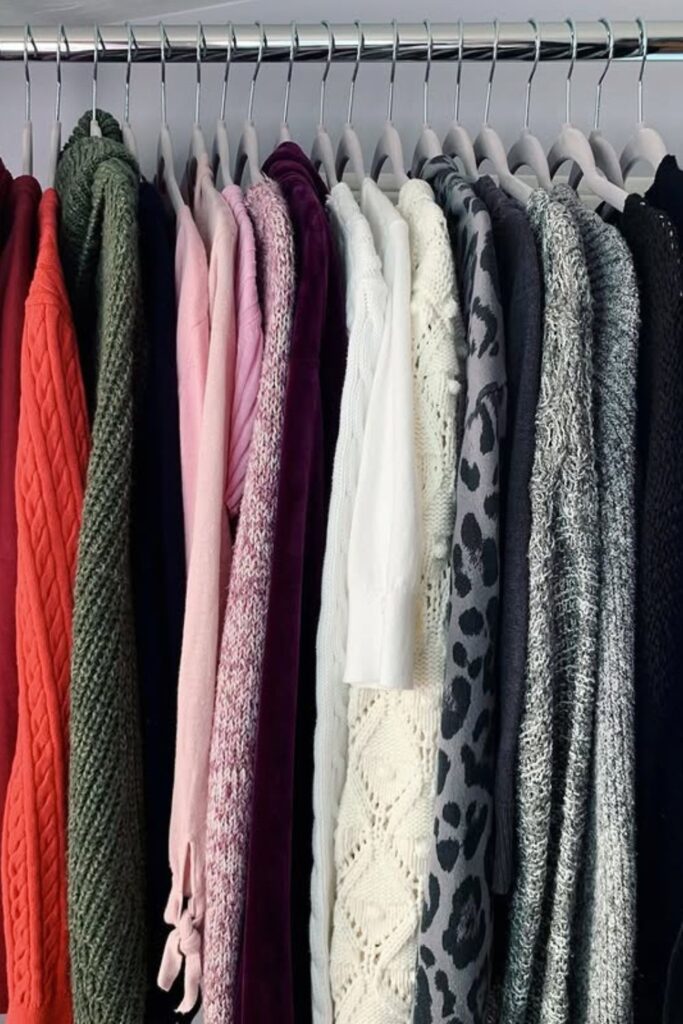
Color Hanging
Closet rods become far easier to manage once sweaters follow a simple color flow. Arranging knits from bold shades to softer neutrals.
It makes a smooth visual transition that helps you find the proper item fast. This strategy works well with lightweight sweaters and thinner knit tops.
Because they don’t put as much strain on the shoulders when they hang. Wider hangers give more support and help keep the shape of the clothes.
Leaving some space between each sweater also stops the textiles from bunching up. Organizing color rows not only.
Keeps the closet appearing neat, but it also makes it easier to design outfits because things that go together stay together.
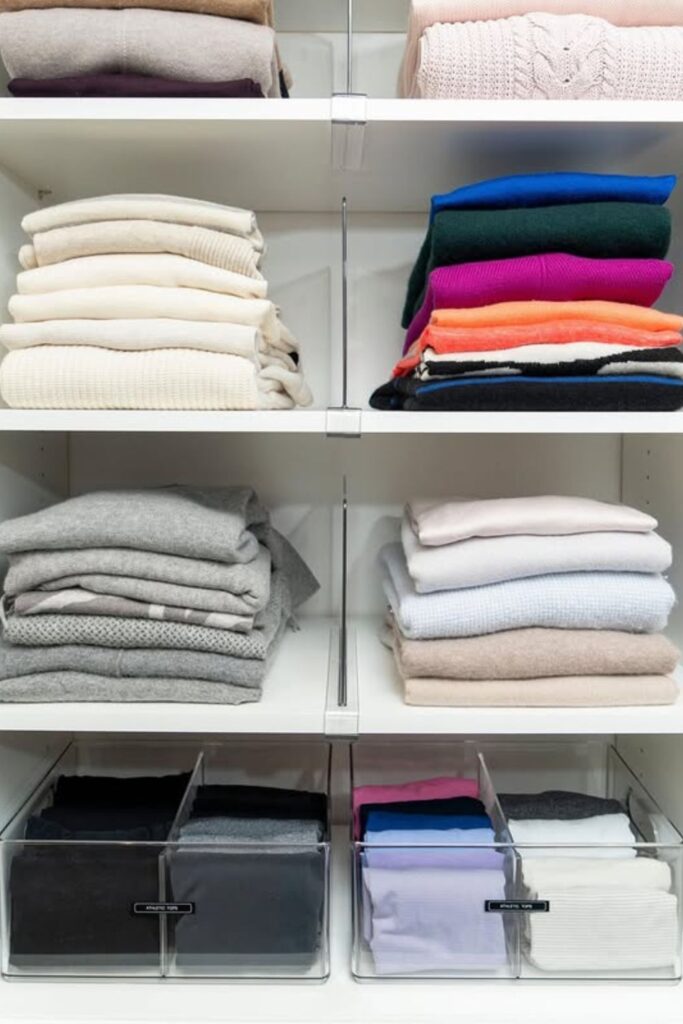
Shelf Sections
Wide closet shelves often turn messy when sweaters start blending into one large pile. Dividing the shelf into small sections.
Makes things instantly organized. Keeping the stacks nice and easy to care for is as easy as folding sweaters into even rectangles.
And putting each stack in its own space. You can keep neutral sweaters in one area and colorful or patterned knits in another.
Clear organizer containers that carry thinner sweaters or lightweight tops also work well on lower shelves.
These kinds of structured divisions stop stacks from sliding about on the shelf and make it easier to retrieve one sweater without messing up the rest of the wardrobe.
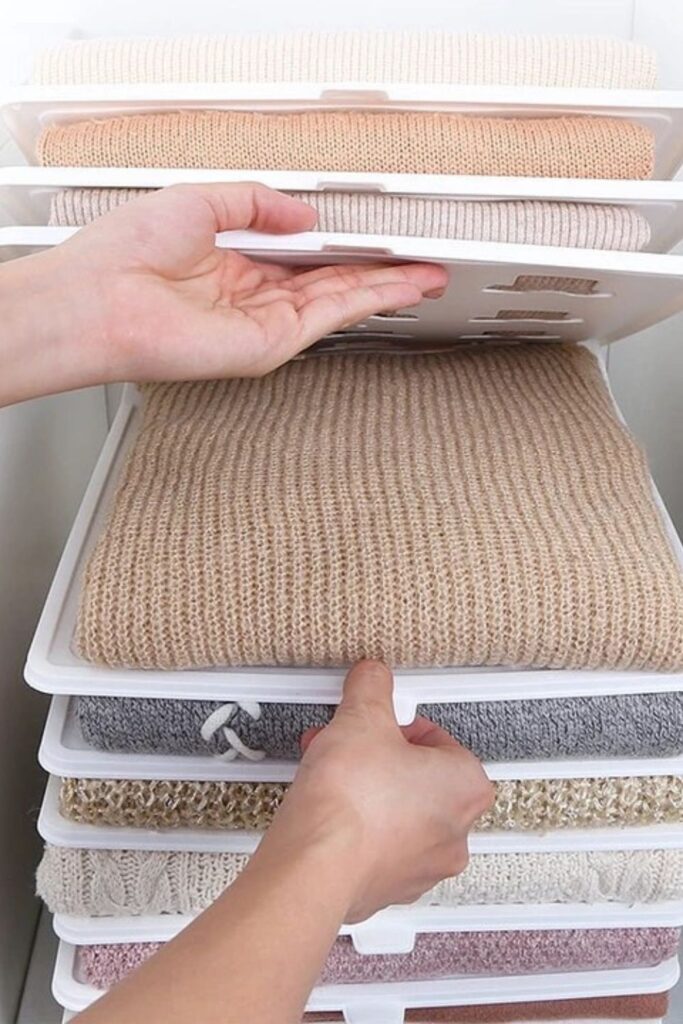
Stack Trays
Pulling one sweater from a tall pile usually ruins the entire stack. Sliding tray organizers fix that problem by giving each sweater its own level.
Each folded knit is on its own tray, so taking one piece doesn’t bother the others. Sweaters stay flat, which helps them keep their shape over time.
This method works well in closets with shallow shelves because trays keep stacks from leaning or sliding.
Just fold each sweater into a rectangle that is the same size and put it on a tray. Then, stack them all together.
This kind of organized layering makes it easy to see every sweater while keeping the whole shelf neat and tidy.
Acrylic Stacks
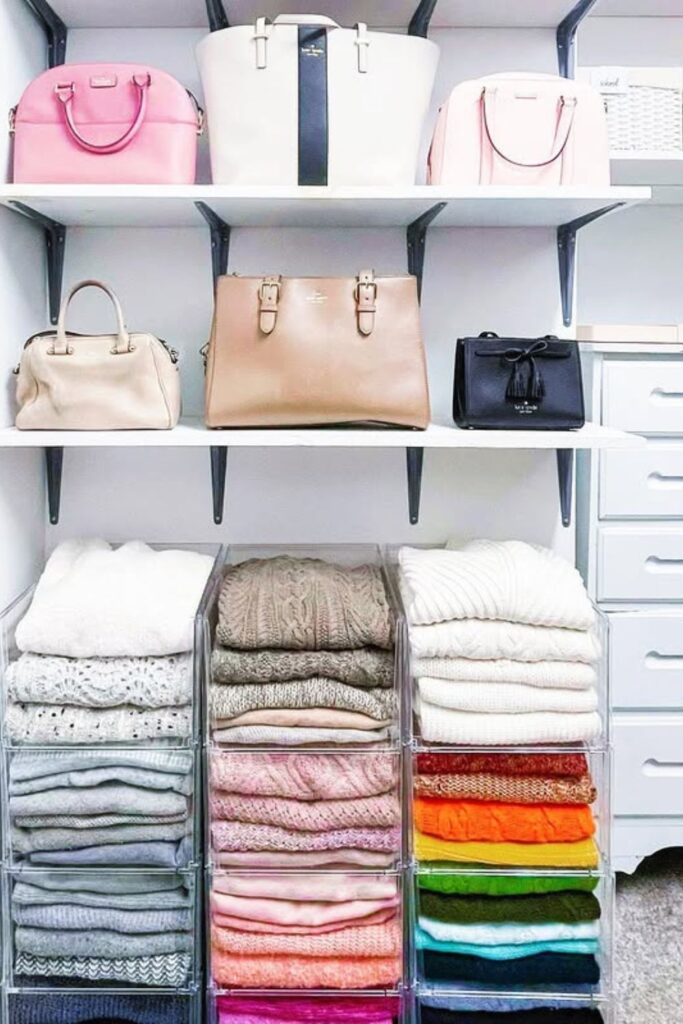
Bulky sweaters often disappear into messy piles once several pieces share the same shelf. Acrylic drawer organizers create clear vertical sections.
That keep each stack together and easy to get to. When you fold sweaters into even rectangles, they fit neatly into each container without slipping into the heaps next to them.
The clear sides make it easy to observe all the colors and textures without having to peel the stacks apart.
This solution works well in closet corners or on lower shelves since the drawers turn empty space into organized sweater storage.
Putting knits of the same color or thickness in each section makes it easy to keep the whole wardrobe clean all season long.
Grid Shelves
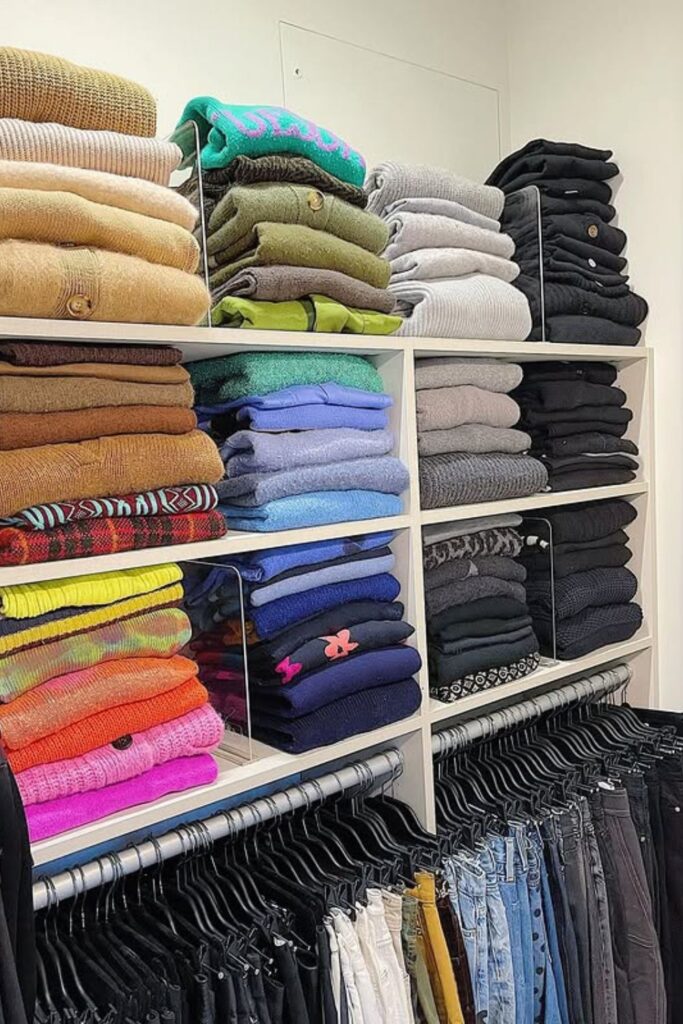
Large sweater collections quickly become overwhelming without structure. Grid-style shelving solves that by breaking the space into multiple square compartments.
Where each stack stays in its own space. When you fold sweaters into neat rectangles, each part stays neat and the stacks don’t slide into each other.
It’s also simpler to find what you want at a glance if you put related colors or types of knit together in each cube.
Mid-level shelves are great for everyday sweaters since they are easy to get to. Upper sections are better for seasonal clothes.
Closet systems with built-in cubbies make it easy to keep heavy knitwear tidy by giving each sweater its own space.
FAQs
Should sweaters be folded or hung in a closet?
Folding is better for most sweaters since knit fabrics stretch out readily when they are heavy. When you hang heavy sweaters on tiny hangers.
They can make bumps on your shoulders and slowly change the contour of the sweater. Folding them neatly on shelves, in drawers, or inside storage bins.
You can sometimes hang lightweight sweaters on broad or padded hangers, but you should always fold heavy knitwear for the greatest results.
What is the best way to store sweaters for the off-season?
Before putting away your sweaters, wash them so that dirt and body oils don’t draw moths. After they are dry, fold them neatly and put them in boxes.
Made of breathable fabric or bins that are sealed. Putting sweaters in a cool, dry place like a closet shelf, under-bed storage box, or labeled container will help.
Keep them safe from dust and moisture. Adding lavender sachets or cedar blocks can also help keep moths from ruining things while they are being stored for a long time.
You may like to read!
- 25 Holiday Decor Storage
- 20 Pencil Storage Ideas
- 22 Kitchen Wall Storage
- 20 Sock Storage Ideas
- 25 Hoodie Storage Ideas

Fasial is the founder of the Fizzy Flare. He has been a passionate blogger since 2021. He ran three different websites in the past few years. Now he is focusing on Fizzy Flare to build an audience and help them organize their life.