20 Sock Storage Ideas for 2026
This post may contain affiliate links: full affiliate disclosure.
You’re not the only one who has trouble finding a matching pair of socks in morning. When you do laundry socks seem to get lost.
Get mixed up with other pairs, or pile up in an untidy drawer. What should be a fast grab before you leave the house often turns into a tiny annoyance every day.
The good news is that this problem is easier to solve than most people imagine. You can keep your socks together, stop losing pairs.
And make your drawer much easier to manage by following a few basic habits and smart storage tips.
In this article, I will share simple 20 sock storage ideas that help you organize your socks easily and make your closet or dresser look cleaner.
Let’s jump in!
Contents
- 1 How Can You Keep Socks From Getting Lost or Mixed Up?
- 1.1 Grid Organizer
- 1.2 Clip Hanger
- 1.3 Sock Dispenser
- 1.4 Drawer Trays
- 1.5 Rotating Rack
- 1.6 Labeled Bins
- 1.7 Fabric Boxes
- 1.8 Honeycomb Divider
- 1.9 Shelf Bins
- 1.10 Drawer Channels
- 1.11 Color Rows
- 1.12 Vertical Slots
- 1.13 Minimal Drawer
- 1.14 Door Pockets
- 1.15 Wall Dispenser
- 1.16 Peg Board
- 1.17 Mesh Dividers
- 1.18 Grid Boxes
- 1.19 Box Sections
- 1.20 Sock Basket
- 2 FAQs
How Can You Keep Socks From Getting Lost or Mixed Up?
Socks often get lost because they get mixed up in the laundry or pile up without a clear way to organize them.
Keeping each pair together from the beginning is the best approach to stop this from happening. Put your socks together when you take them off.
instead than throwing them into the laundry basket one at a time. You might also use a small mesh bag just for socks.
This keeps all of the pairs together while they wash and stops them from getting lost behind other clothes.
Put socks in separate compartments or small bins after washing them so that various varieties don’t get mixed up.
Save this article for later! 👇👇

Grid Organizer
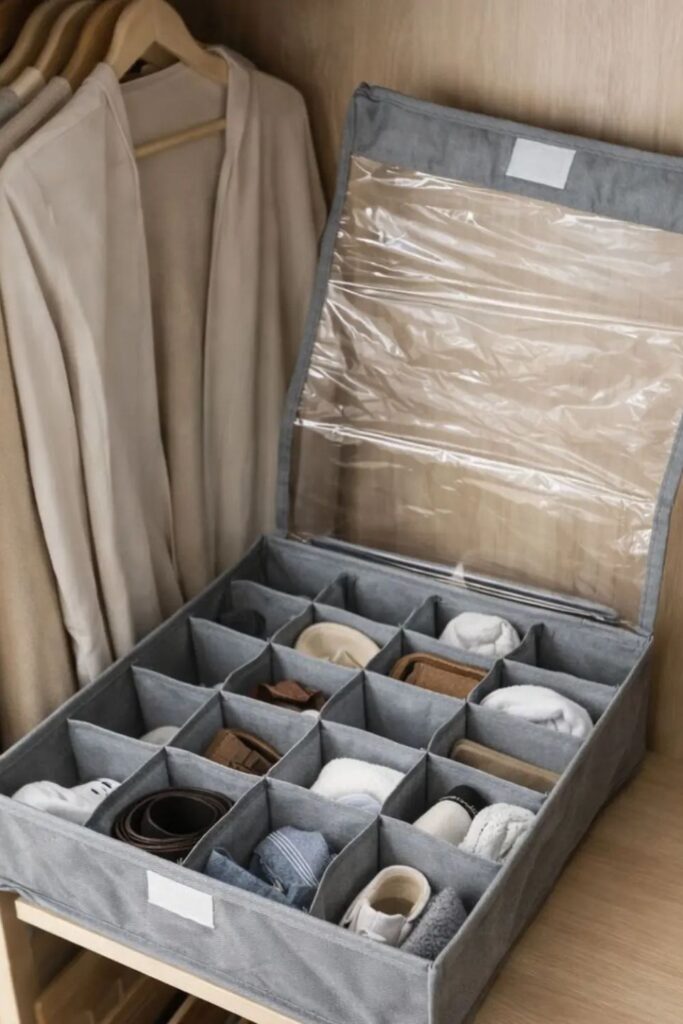
Closet shelves often turn into random piles where socks disappear under other accessories. A fabric grid organizer instantly brings order by giving every pair its own small compartment.
Put one on a shelf in your wardrobe like this, roll up some socks, and then place them into each square.
Individual slots keep pairs from becoming mixed up.So it’s easy to retrieve socks instead of having to dig through a pile.
Extra compartments can also accommodate tiny things like ties, belts, or rolled-up underpants. Soft fabric organizers are great for closets because they are light and flexible.
If you don’t have enough drawer space, you may easily copy this layout by putting a compartment organizer on a shelf or in a big drawer.
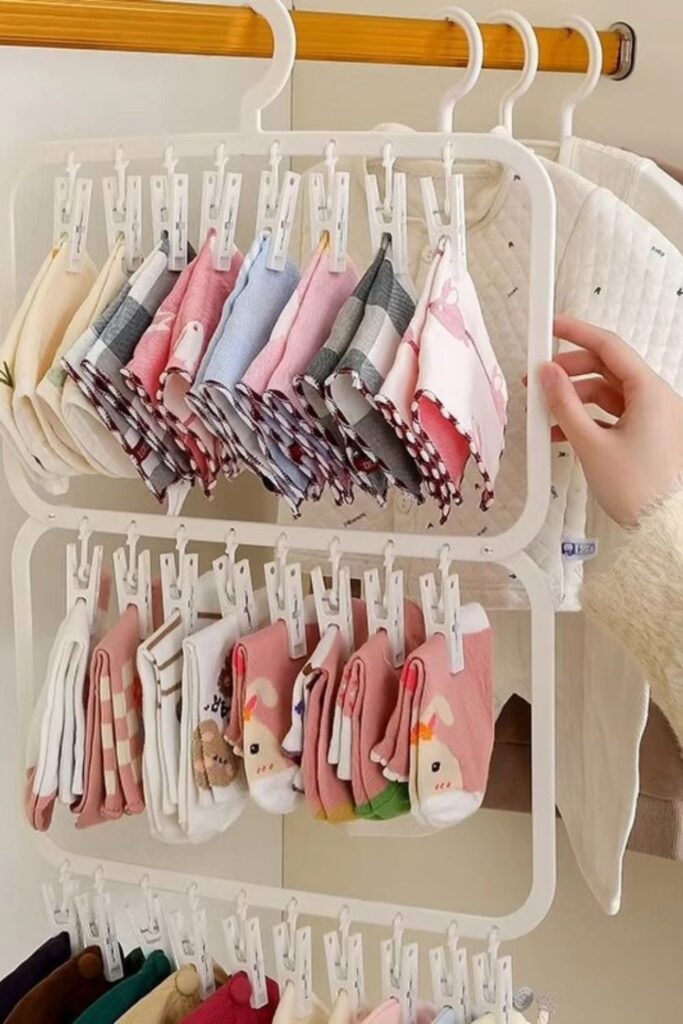
Clip Hanger
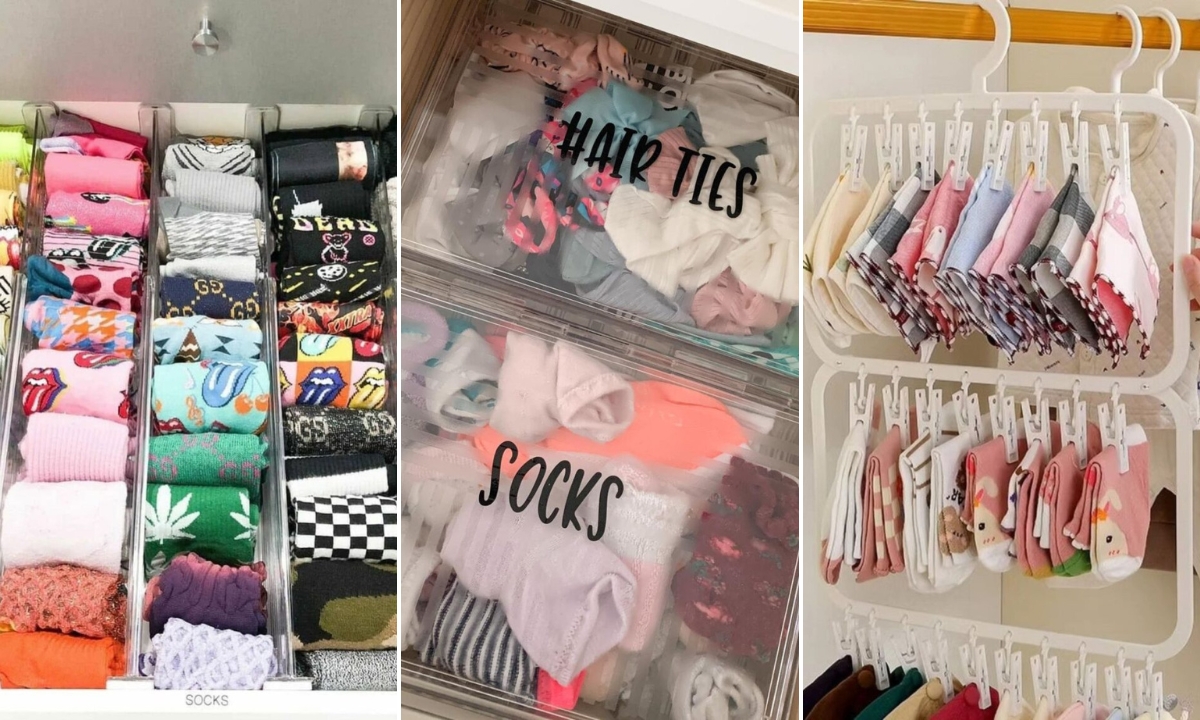
Closet rods can do more than hold shirts. Clip hangers turn that unused vertical space into a smart place for socks.
Fold each pair in half and use the little clips to hold them together. This way of hanging them keeps all of the pairs exposed.
Which makes it faster to choose out socks than to look through drawers. This solution works best for narrow wardrobes because it uses air space instead of shelf space.
This kind of multi-clip hanger can hold a lot of pairs while yet being small on the rod. It’s easy to do it again.
Just put a clip hanger in your wardrobe and sort your socks by color, season, or how often you wear them so you can always find what you need.
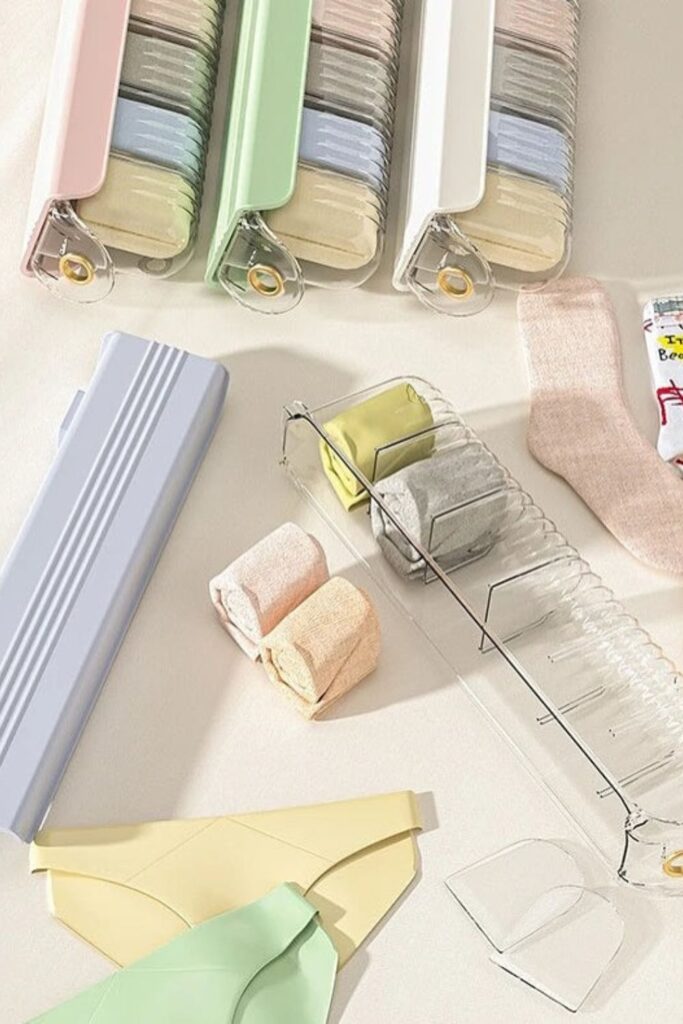
Sock Dispenser
Grab-and-go storage makes mornings much easier, especially for everyday socks. A clear dispenser like this works almost like a paper towel holder.
But instead, it keeps rolled-up socks in a neat pile. To keep them small and easy to grip, roll each pair up firmly and insert them inside the tube.
Taking out one pair maintains the others in order, which stops socks from spreading across shelves or drawers.
This layout is best for small apartments, dorm dorms, or shared closets since it keeps things neat without taking up a lot of space.
Put the dispenser in a closet, on a wall, or along the edge of a shelf so that socks are always easy to see and reach.
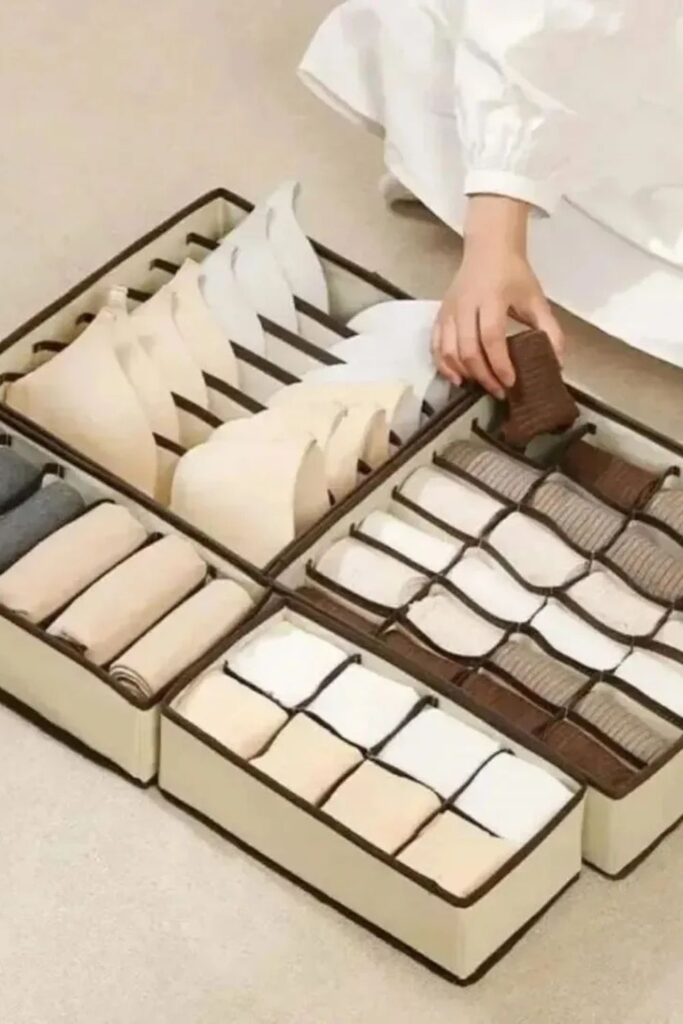
Drawer Trays
Morning routines become smoother once every pair sits in its own little space. Drawer trays like these break a large drawer into organized sections.
So that the socks don’t pile up on top of each other. Rolling each pair before putting it in the grid keeps everything standing up and simple to see.
You may quickly choose the color or style you want without having to sift through layers. Multiple trays also help keep socks organized by kind.
Such as daily socks, thicker winter pairs, or delicate ones. Putting these organizers in deep dresser drawers works best, especially when loose stacks tend to fall over.
Simple compartment trays convert a messy drawer into a neat, easy-to-clean solution right away.
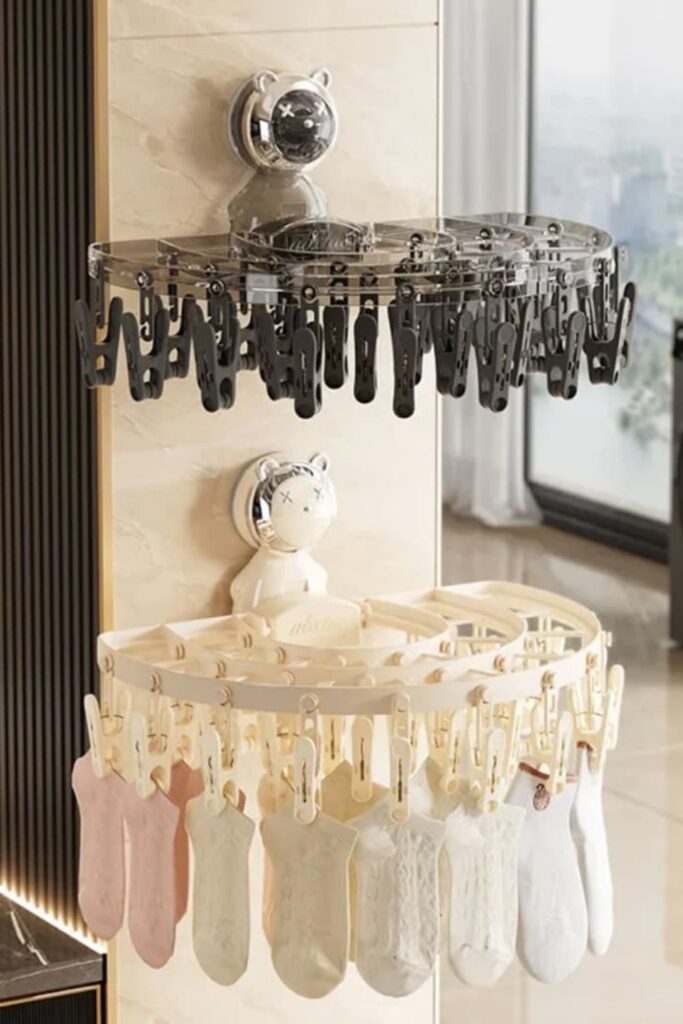
Rotating Rack
Laundry areas often lack a simple spot to handle small items like socks. A rotating clip rack solves that by keeping every pair hanging in one compact circle.
After washing, clip your socks and let them air dry without spreading them out on chairs or railings.
The spinning design makes it easy to get to any pair without having to take others off. Installing is quick with wall mounts or suction bases.
Especially near washing machines, bathroom tiles or balcony walls. It makes doing laundry every day a lot easier when socks dry and stay together in the same spot.
This design is best for small homes and apartments since it saves floor space and keeps socks neat and ready to wear.
Labeled Bins
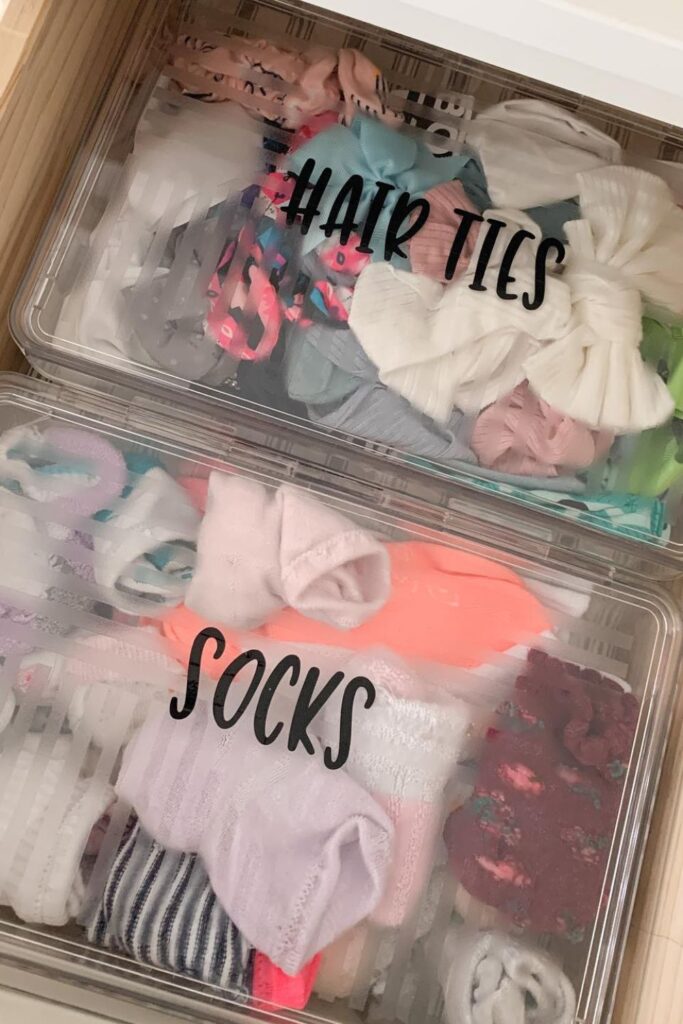
Matching socks becomes easier when small drawer containers handle the sorting for you. Clear labeled bins like these create.
Instant compartments in a drawer keep socks together instead of mixing with other things. When you roll each pair before putting them inside.
You can see everything at a glance. You can also view what’s inside immediately with clear lids without having to open every container.
This setup is best for busy homes because everyone can put socks back in the proper place after doing laundry.
Most drawers can hold simple plastic or acrylic bins that keep tiny things from getting everywhere.
Fabric Boxes
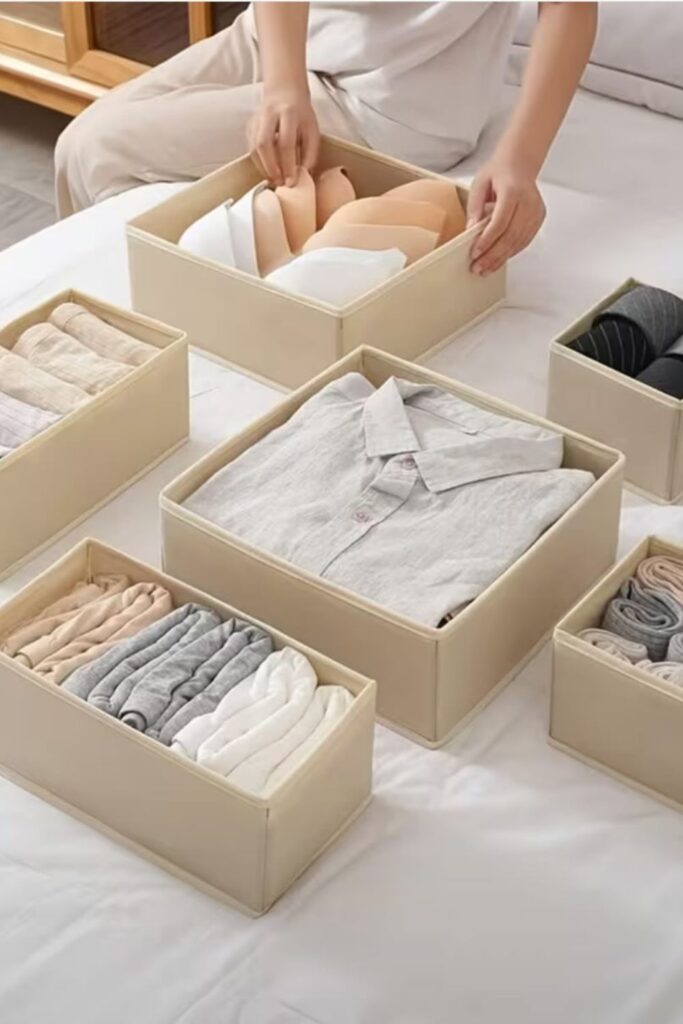
Loose drawers quickly become messy once socks start piling on top of each other. Soft fabric boxes solve that problem.
By making simple areas for different things inside your dresser. When you roll up your socks and line them up next to each other.
You can see every pair instead of having them hidden in a pile. You may also put underwear, shirts, or seasonal items in separate boxes.
Which helps keep the whole drawer organized. Fabric organizers are great for deep drawers where little things tend to slide about.
The lightweight edges of the boxes make them flexible, so they fit well in drawers of varying sizes.
Honeycomb Divider
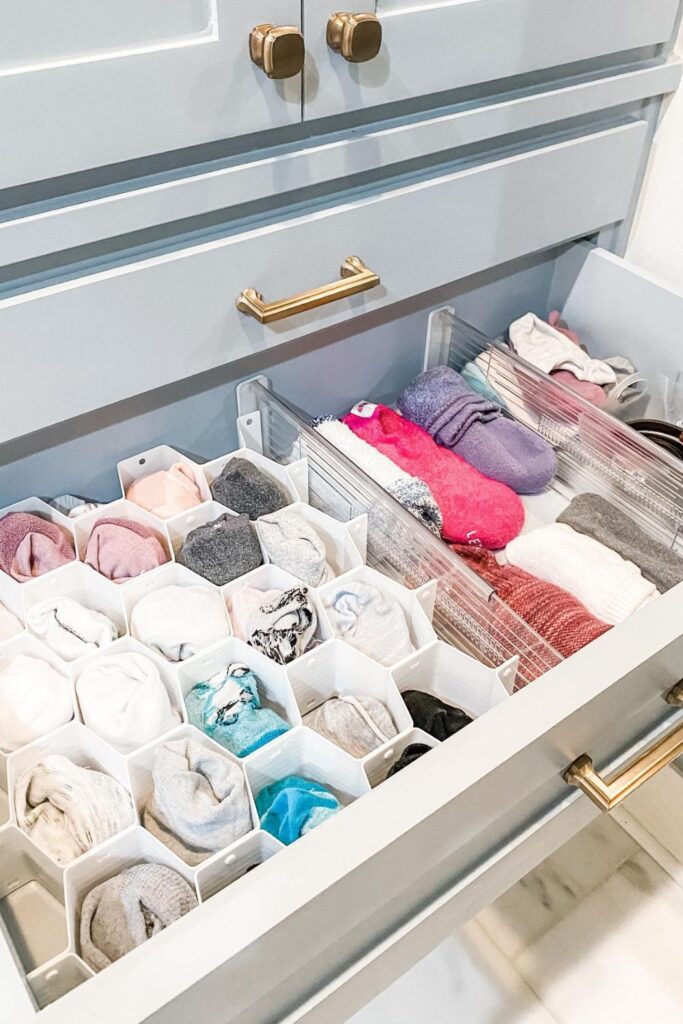
Order inside a sock drawer becomes effortless once each pair has its own small cell. Honeycomb dividers create dozens of tiny compartments.
That keeps socks from becoming mixed up or sliding into untidy piles. To keep all the colors and styles visible at a glance, roll or fold each pair and stand it up.
It doesn’t take long to find the proper pair because nothing is hidden under a stack. Most dresser drawers can easily hold adjustable honeycomb organizers.
Which may be expanded to fill the area neatly. Smaller parts are great for ankle socks, and somewhat bigger ones can contain heavier winter socks.
This kind of setup keeps drawers neat and makes it surprisingly easy to choose out socks every day.
Shelf Bins
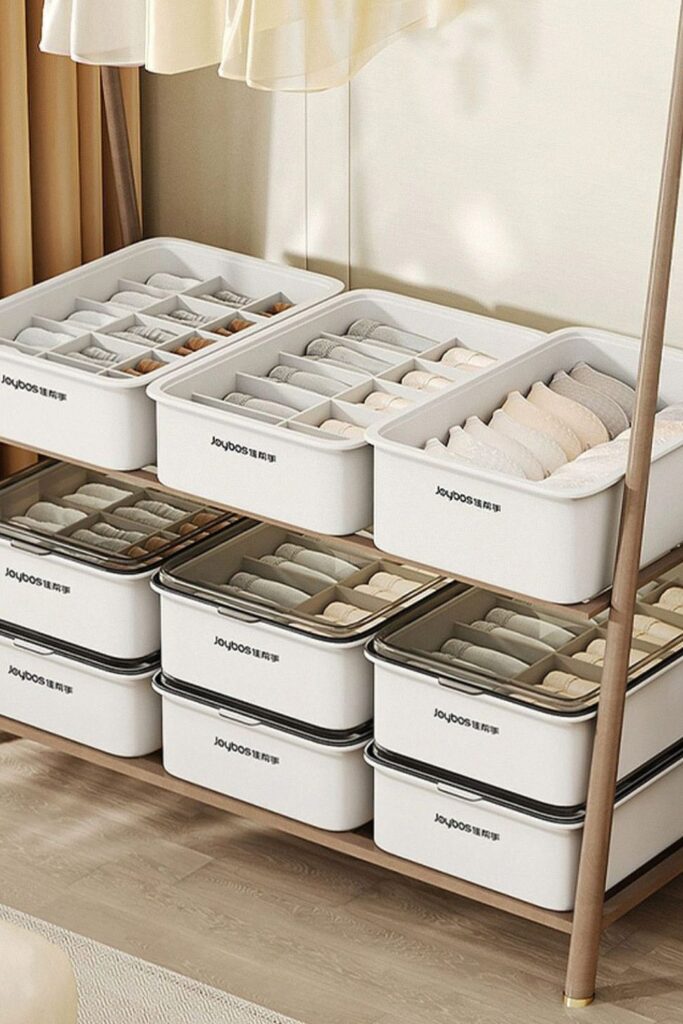
Overflowing drawers usually mean socks need their own dedicated storage spot. Shelf bins like these create a simple system.
Where each container has pairs that are neatly coiled up instead of loose piles. Putting things on an open shelf in the closet makes everything easy to get to.
And frees up room in the drawers. Inside the bins, dividers help keep daily socks, thicker winter socks, and special styles apart.
Clear lids make things even easier because you can see what’s inside without having to open every box.
This solution works best for bigger wardrobes since it lets you stack or line up more than one bin on a shelf.
Drawer Channels
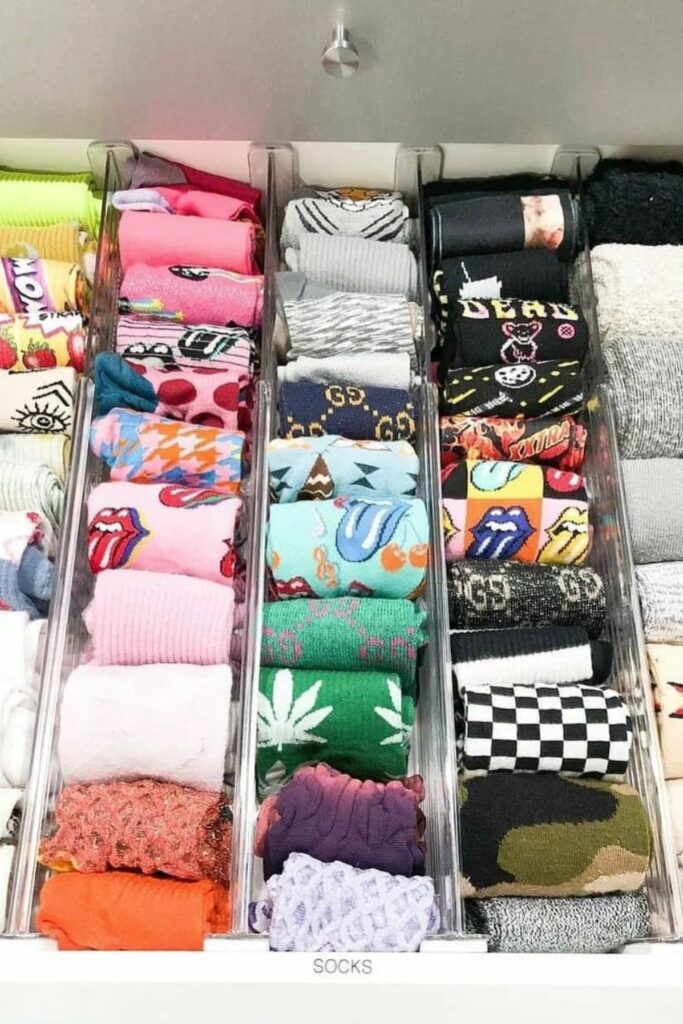
Colorful sock collections quickly become a tangled pile without clear sections. Narrow drawer channels solve that by creating long lanes.
Where each pair can sit neatly wrapped up and straight. These sliding separators assist keep groups apart.
For example, they can keep sports socks in one row, casual socks in another, and thicker winter socks in the end.
You can see patterns or colors right away by quickly looking across the drawer instead of going through stacks.
Plastic channel organizers work best in large dresser drawers because they help keep rows of socks neat.
Color Rows
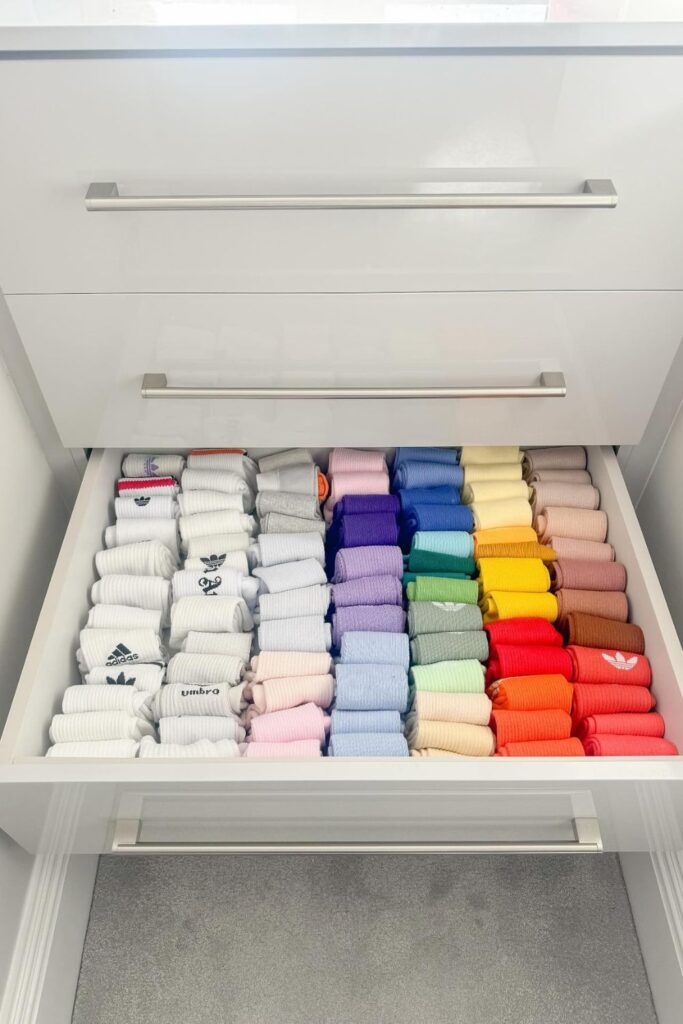
Finding the right pair becomes effortless once socks are arranged by color in clean rows. Rolling each pair tightly and lining them side by side creates a system.
Where you may see all the shades at once. Light colors can go on one side, dark colors can go on the other, and brilliant colors can make their own part in the middle.
Instead of hiding pairings under unsightly stacks, opening the drawer displays all of the options right away.
This configuration works well with deep dresser drawers since they have ample room to make several rows.
Rolling your socks regularly keeps them standing up, which helps keep the neat rainbow layout and makes choosing socks every day quick and surprisingly fun.
Vertical Slots
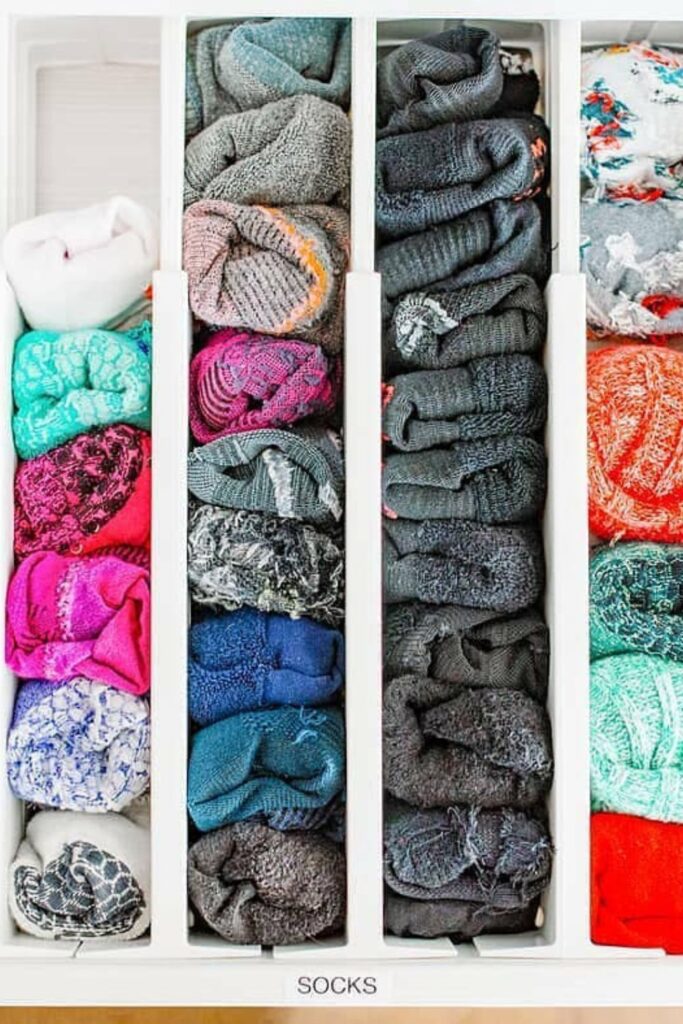
Stacking socks on top of each other usually leads to messy piles where the bottom pairs disappear.
Vertical slots fix that problem by giving each row its own limited space. You can see every pair of socks from the top if you fold or roll them and stand them up.
It’s easy to separate thicker winter socks, daily socks, and colorful types into different areas. Taking out one pair doesn’t mess up the rest.
Thus the drawer stays neat even after regular use. These long divider trays fit well in large dresser drawers and make messy things into neat rows right away.
This kind of setup is great for folks who have a lot of different kinds of socks since it keeps everything neat and easy to find.
Minimal Drawer
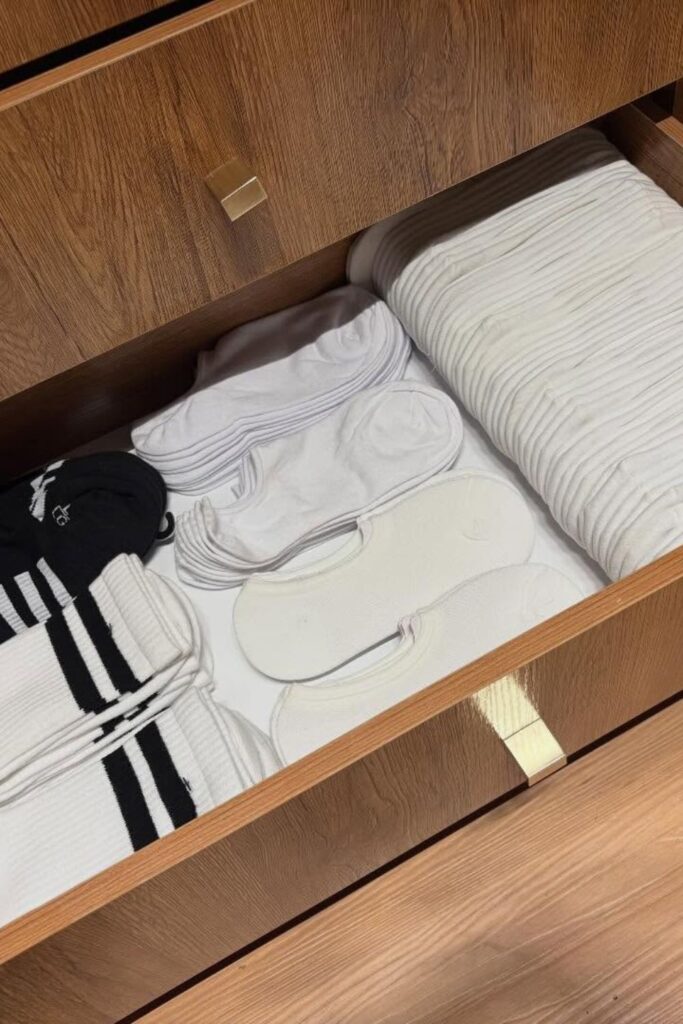
Sometimes the simplest system works best. A clean drawer layout like this keeps socks organized without adding extra containers or dividers.
Folding pairs neatly and arranging them by type makes it easy to see what’s in the drawer. You can put your athletic socks on one side.
Your no-show socks in the middle, and your bulkier socks around the edge. If you keep comparable styles together, they won’t get mixed up after a few applications.
Wide dresser drawers are great for this method since they allow you ample room to organically separate groups. It’s also easy to keep the order.
Just put each pair back in the same place after laundry, and the drawer stays neat without having complicated organizers.
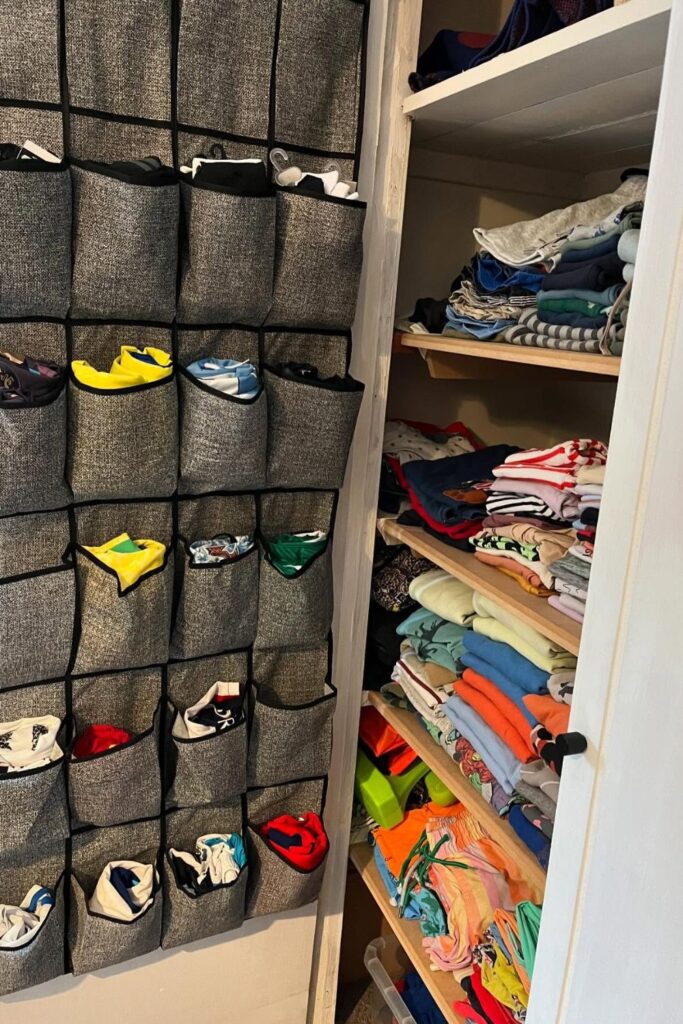
Door Pockets
Empty closet doors hide a surprising amount of storage potential. Hanging pocket organizers turn that unused surface into a smart place.
Help keep socks in order and easy to find. Putting each pair in its own pocket keeps them apart instead than letting them pile up in drawers.
You can put everyday socks, sports socks, or seasonal socks in different rows so you can see everything at once.
This kind of fabric pocket organizer can be put up fast with hooks or a simple hanging bar over the entrance.
This design is best for small closets because it adds vertical storage without taking up shelf space.
Wall Dispenser
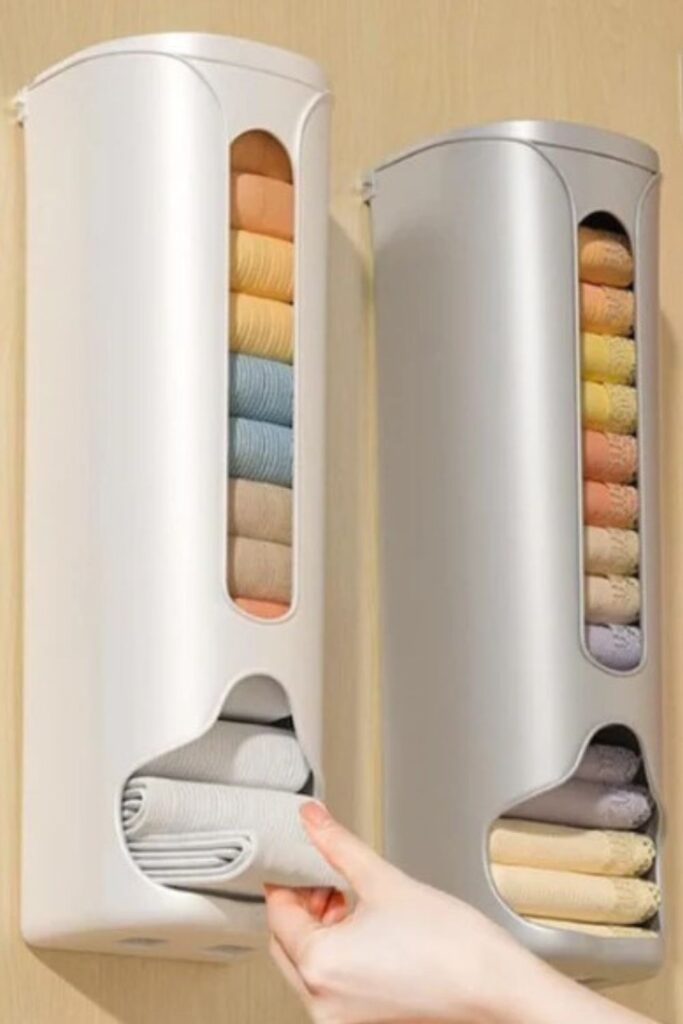
Morning routines move faster when socks stay ready in one easy spot. A wall-mounted dispenser like this stores rolled pairs vertically.
So, when you need one, they all slide out from the bottom. You can retrieve a pair of socks in seconds from the aperture below.
And loading them from the top maintains the stack neat. Putting the dispenser in a closet, on a wardrobe wall, or even near the dressing area frees up a lot of space in your drawers.
Vertical storage is best for small bedrooms since it keeps things off of dressers and shelves.
Rolling socks tightly before putting them in helps them slip easily. A simple wall dispenser makes it easy to keep your socks clean and ready to wear.
Peg Board
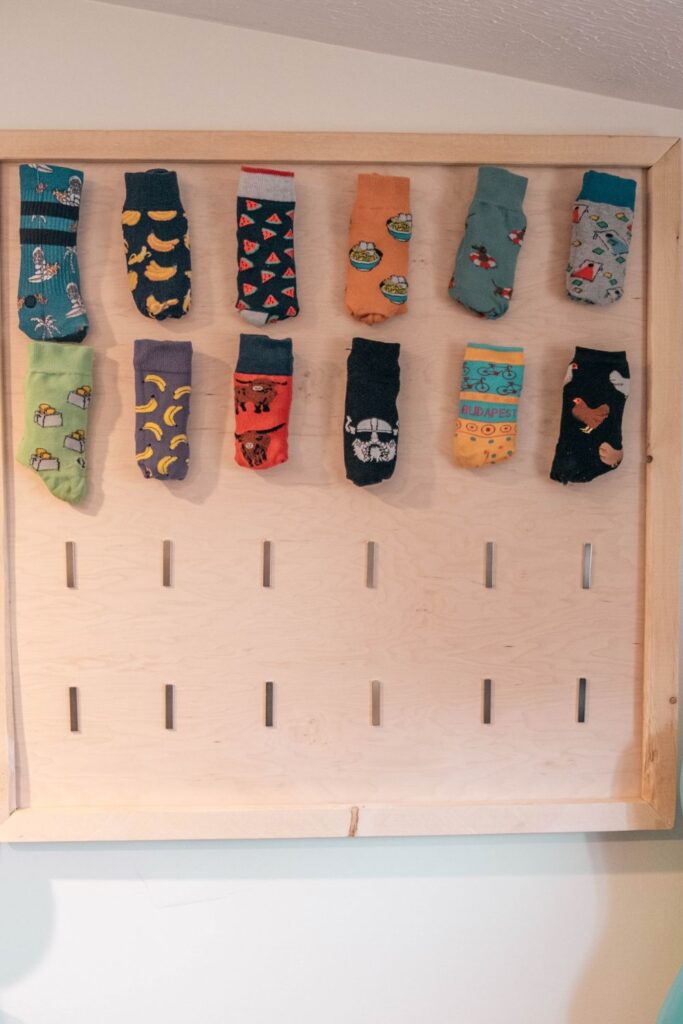
Creative storage can turn socks into part of the room’s decor. A wooden peg board like this keeps pairs visible while also saving drawer space.
To keep the socks in neat rows across the board, slip each pair over the little pegs. This is a great way to show off colorful or patterned socks.
Almost like a tiny wall gallery. Putting the board near a closet, dressing area, or washing room makes it easy to get to your usual socks.
Peg boards are very flexible since the pegs may be moved around anytime the layout needs to alter.
Anyone who likes neat spaces with a creative touch can use a simple wall-mounted peg board to make this idea work.
Mesh Dividers
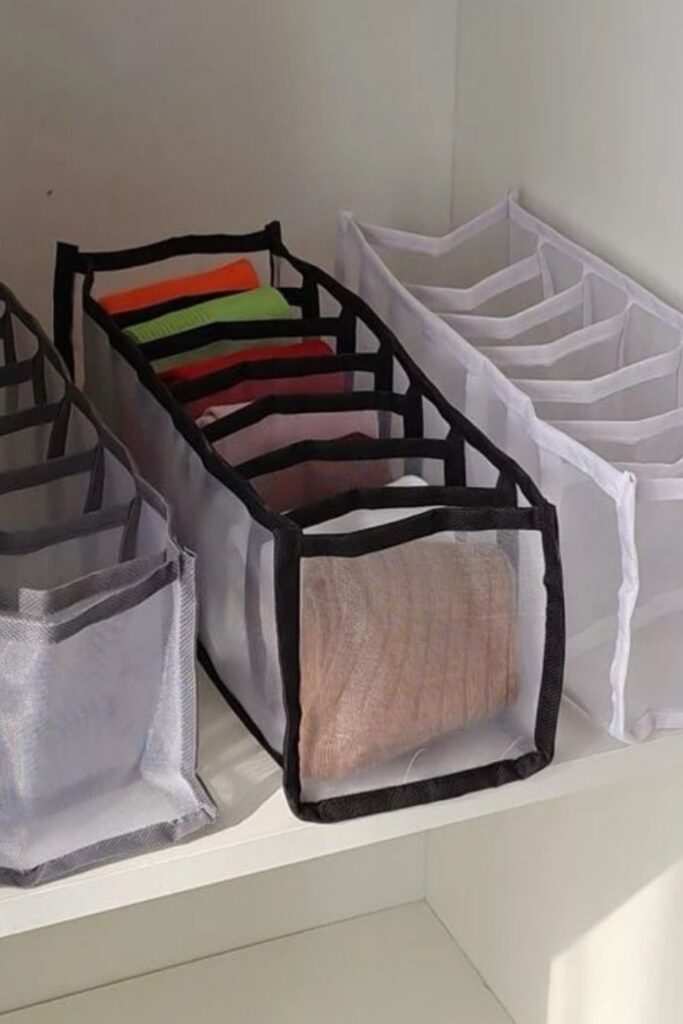
Cluttered shelves often make small items like socks disappear behind stacks of clothes. Mesh divider organizers solve that problem.
By making chambers that let air flow through them and keep each pair in its own slot. Putting rolled-up socks into these fabric portions.
Keeps them standing up and makes them easier to see from the front. The lightweight mesh sides let air flow through which is great for freshly washed socks or delicate materials.
Putting these organizers on closet shelves, inside wardrobes, or even in deep drawers instantly adds structure without hefty containers.
You can put multiple divider boxes next to each other to arrange socks by color, season, or how often you wear them.
Grid Boxes
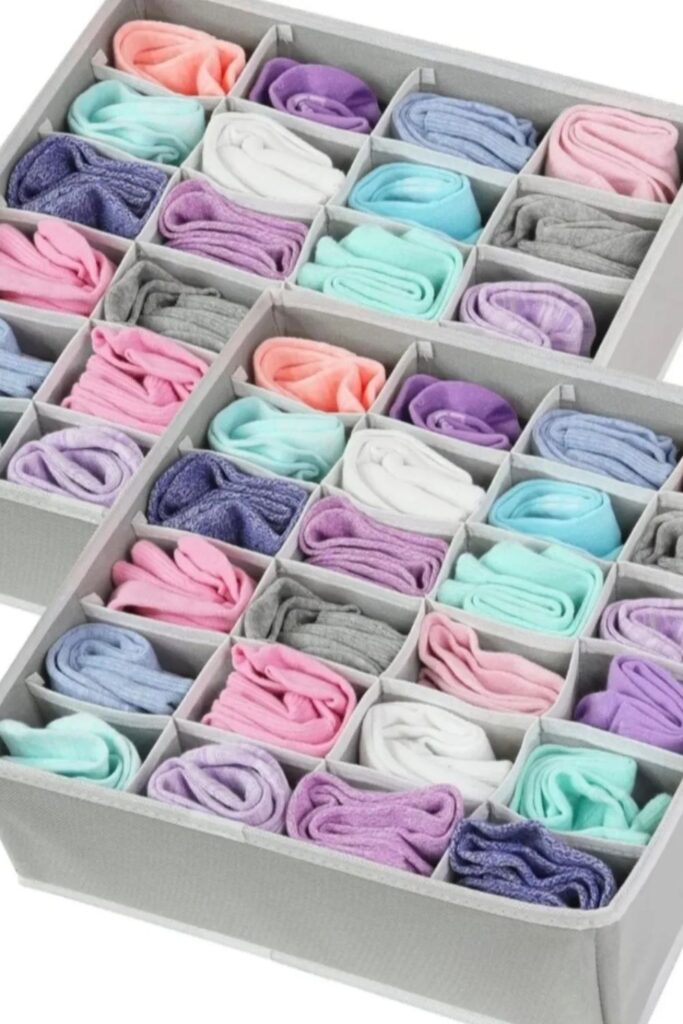
Small drawers often become chaotic because socks slide into one big pile. Grid boxes solve that instantly by dividing the space into neat little squares.
Where each pair keeps apart. Before putting socks in, fold or roll them up to keep each compartment neat and easy to look at.
Morning routines go by faster when all the colors and styles are right in front of you instead of being hidden under layers.
These fabric grid organizers fit wonderfully in dresser drawers closet shelves, and garment compartments.
When each pair gets its own square, drawers stay neat for longer and finding matching socks is almost too easy.
Box Sections
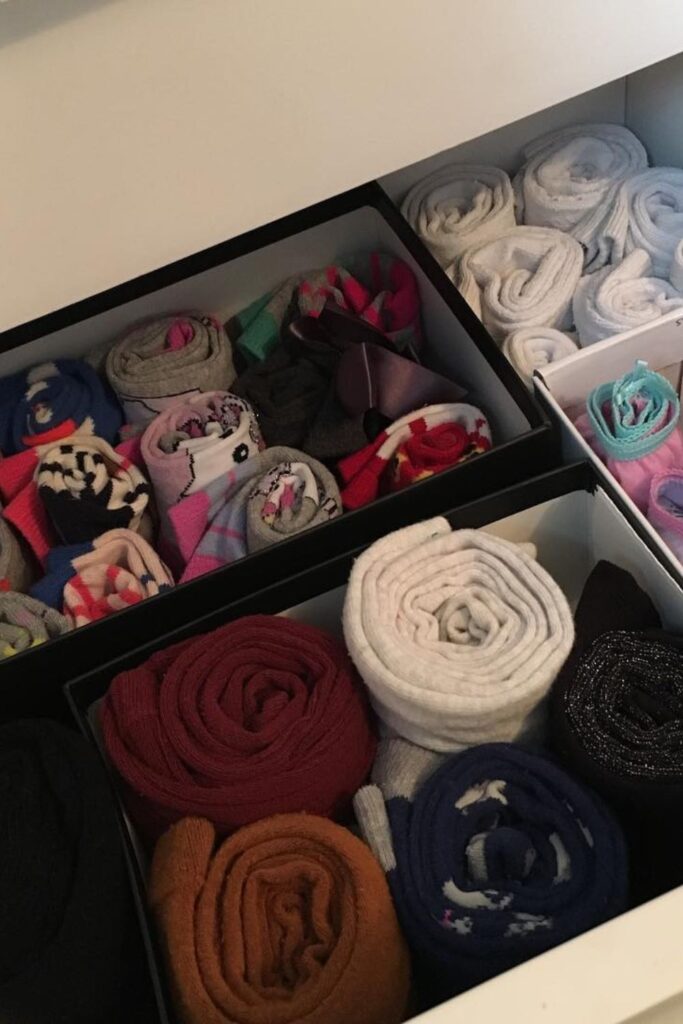
Rolling socks into compact bundles creates a clean system that fits perfectly inside simple drawer boxes.
Each area has a tiny group of pairings, which keeps styles from combining into one big pile. You can keep thick winter socks in one box, everyday socks in another.
And tiny socks in the last area. Taking out one pair doesn’t mess up the rest because they are all securely wrapped and standing up.
These square storage bins are great for medium- or deep-drawer socks that like to move around.
After doing the wash, it’s simpler to keep the drawer organized if you group socks by kind or family member. This way, every pair can go back to its right place.
Sock Basket
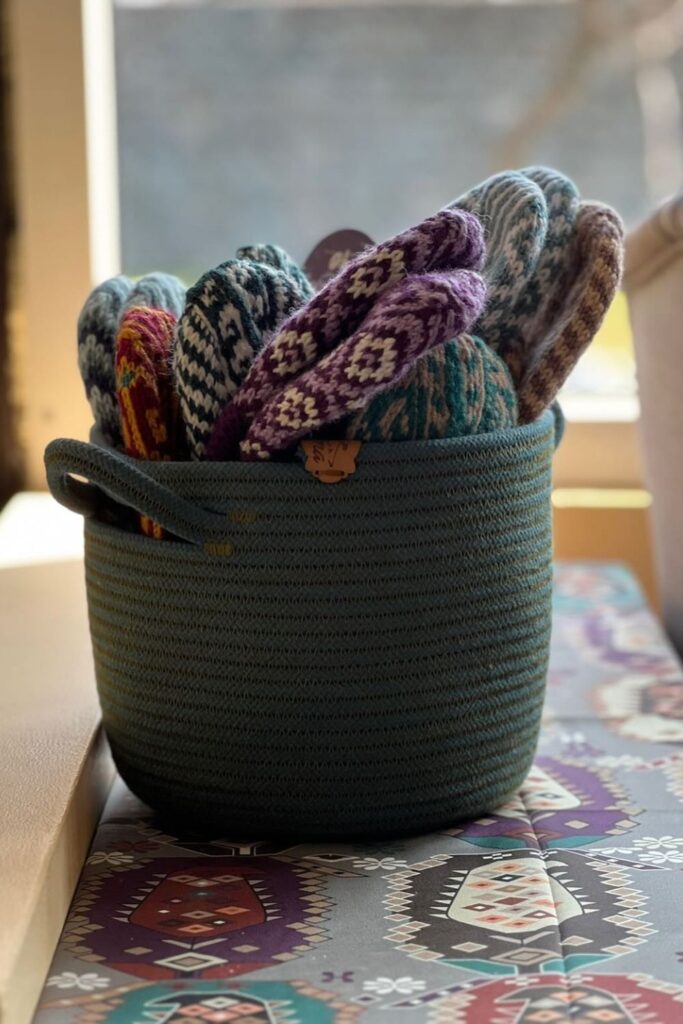
Cold-weather socks often stay in constant rotation, so keeping them in a simple basket can make daily use easier.
A soft woven basket like this one is the perfect place to store thick knit pairs. They stay visible and easy to grab.
Putting the basket next to a dresser, next to the bed, or near the door makes it easy to get to your warm socks on cold mornings.
To keep the basket neat and not transform it into a messy pile, roll or fold each pair before putting them in.
This configuration is both useful and visually warm because decorative baskets go well with bedroom or living area decor.
FAQs
How often should you reorganize your sock drawer?
Sock drawers generally get cluttered over time when people put pairs back after doing wash or wearing them. Every few weeks, a short reorganization helps keep things in order.
Take a few minutes to refold pairs, throw away any socks that are too worn out, and put them back in their sections or organizers.
What is the best way to store seasonal socks?
You don’t have to keep your thick winter socks and light summer socks in the same place all year.
Putting pairs that aren’t in season in a different box or basket saves everyday drawers from getting too full.
You may like to read!
- 21 Boot Storage Ideas
- 20 Pencil Storage Ideas
- 22 Kitchen Wall Storage
- 19 Storage Bench Ideas
- 22 Umbrella Storage Ideas

Fasial is the founder of the Fizzy Flare. He has been a passionate blogger since 2021. He ran three different websites in the past few years. Now he is focusing on Fizzy Flare to build an audience and help them organize their life.