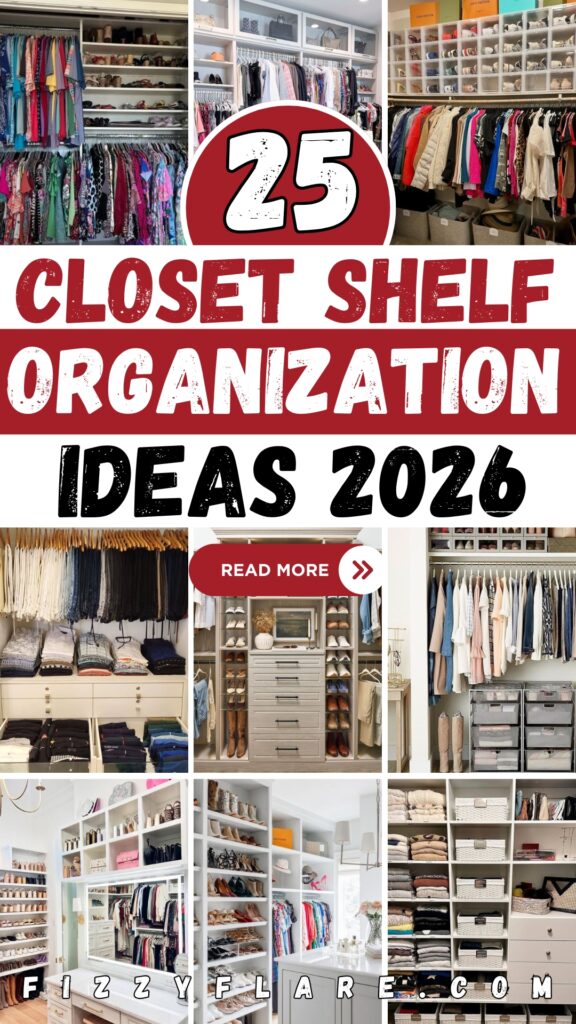
25 Closet Shelf Organization Ideas for 2026
This post may contain affiliate links: full affiliate disclosure.
You’re not the only one whose closet shelves look nice for a day and then turn into a mess again. You try to keep things neat by folding your sweaters and stacking your jeans.
But a few days later, everything falls apart. Clothes fall into each other, small things disappear in the back, and all of a sudden the whole shelf feels messy again.
People often say they just need to “organize better,” but the underlying problem is that open shelves don’t give your belongings any structure.
The good news is that you don’t need a new closet. You can finally keep everything nice, separate, and easy to get to for a lot longer with the correct storage containers.
In this article, you will discover 25 brilliant Closet Shelf organization ideas perfect.These solutions will help you create a cleaner, more functional space in your home.
Let’s jump in!
Contents
- 1 What Are the Best Storage Containers for Closet Shelves?
- 1.1 Shoe Cubes
- 1.2 Double Hanging
- 1.3 Display Shelves
- 1.4 Shoe Cubbies
- 1.5 Shoe Towers
- 1.6 Color Sections
- 1.7 Cube Zones
- 1.8 Heel Shelves
- 1.9 Category Cubes
- 1.10 Accessory Cubes
- 1.11 Denim Stacks
- 1.12 Shoe Shelves
- 1.13 Lit Shelves
- 1.14 Purse Shelf
- 1.15 Labeled Baskets
- 1.16 Label Boxes
- 1.17 Uniform Folds
- 1.18 Shoe Wall
- 1.19 Closet Columns
- 1.20 Fabric Cubes
- 1.21 Open Shelves
- 1.22 Color Rows
- 1.23 Display Drawers
- 1.24 Shelf Sections
- 1.25 Drawer Rows
- 2 FAQs
What Are the Best Storage Containers for Closet Shelves?
The shelf itself is usually not the problem if your closet shelves continually developing into messy mounds.
Everything is in open stacks, and there is nothing to hold things in place. Storage containers fix this by giving each type of item its own place.
Fabric bins are great for storing clothes like t-shirts and leggings since they keep delicate things together.
Save this article for later! 👇👇
You can see what’s inside clear plastic bins without having to dig through mounds. Woven baskets are perfect for holding tiny things like scarves and jewelry.
Shelf dividers also keep folded stacks from sliding into each other. Your shelves stay neat and easy to clean if each items has it own container.
Shoe Cubes
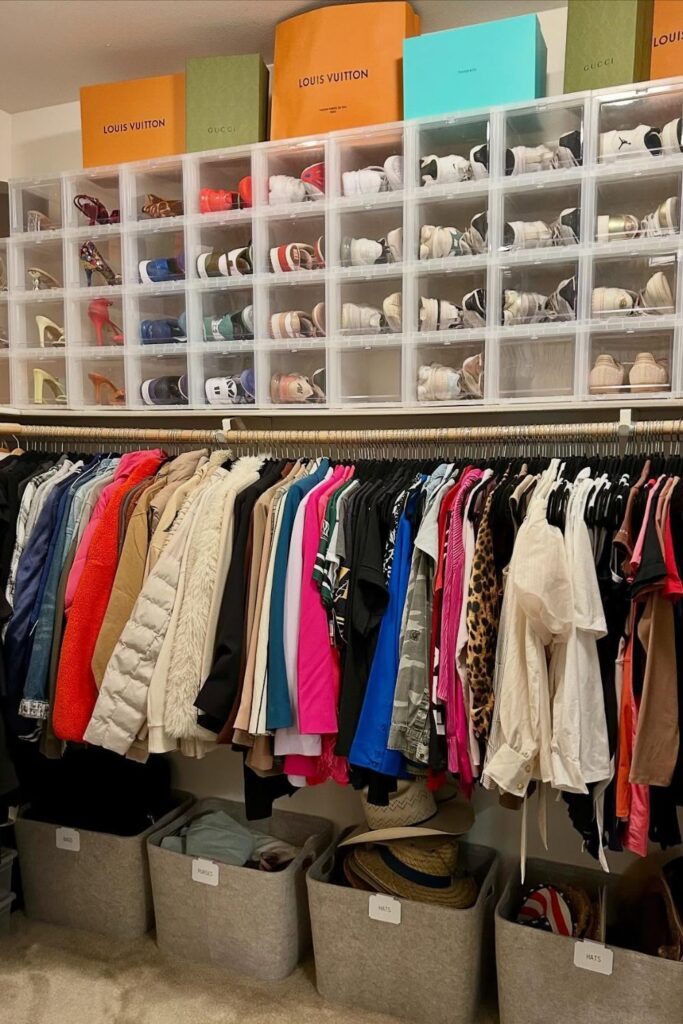
Sneaker piles quickly turn messy when pairs sit on open shelves. Clear shoe cubes solve that problem by giving every pair its own space.
Putting them on the top shelf keeps them safe and easy to see, and it frees up the bottom of the closet for clothes.
You can easily find the right pair without having to open a lot of boxes because the fronts are clear.
This configuration works best on long closet shelves where there is room for things to go sideways.
When you have a lot of sneakers or heels, they stay organized longer because each pair may go in and out without bothering the others.
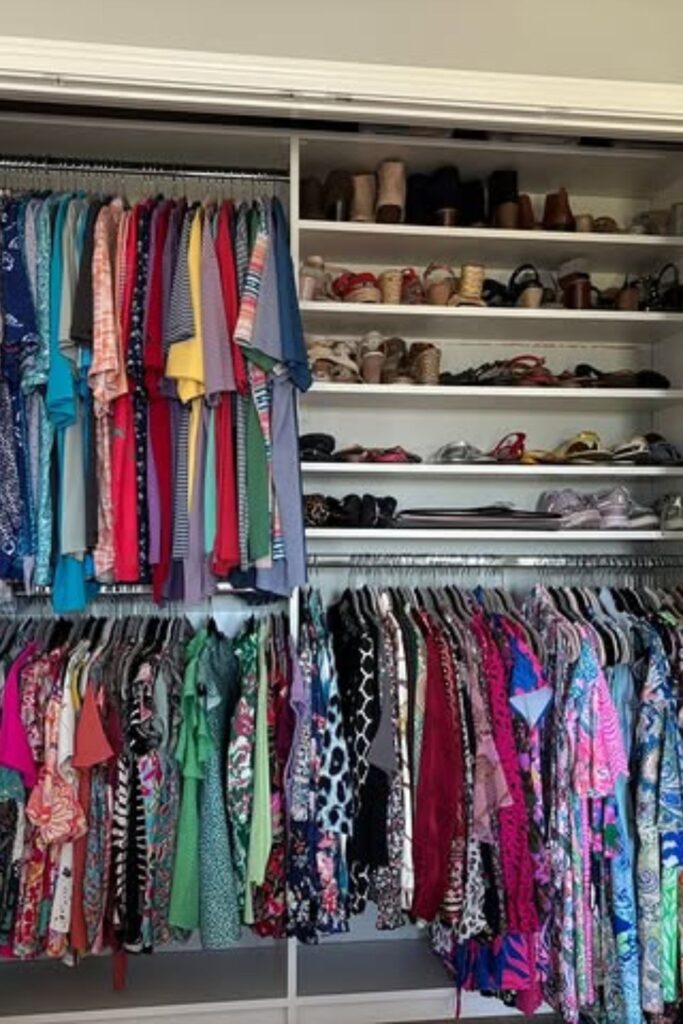
Double Hanging
Closets get crowded when everything’s fighting for the same space on one rod. A two-tier system solves it.
And you don’t need a bigger closet. Tops stay up top in short pieces while skirts or folded bottoms hang nicely below.
Keeps everything in sight and stops that cluttered look. Getting it set up is easy than you think.
Just add a second rod or use a basic adjustable one. Best for when you have not many full length outfits.
Once you have broken it down that manner, you will see how much extra space you truly had and were not using.
Display Shelves
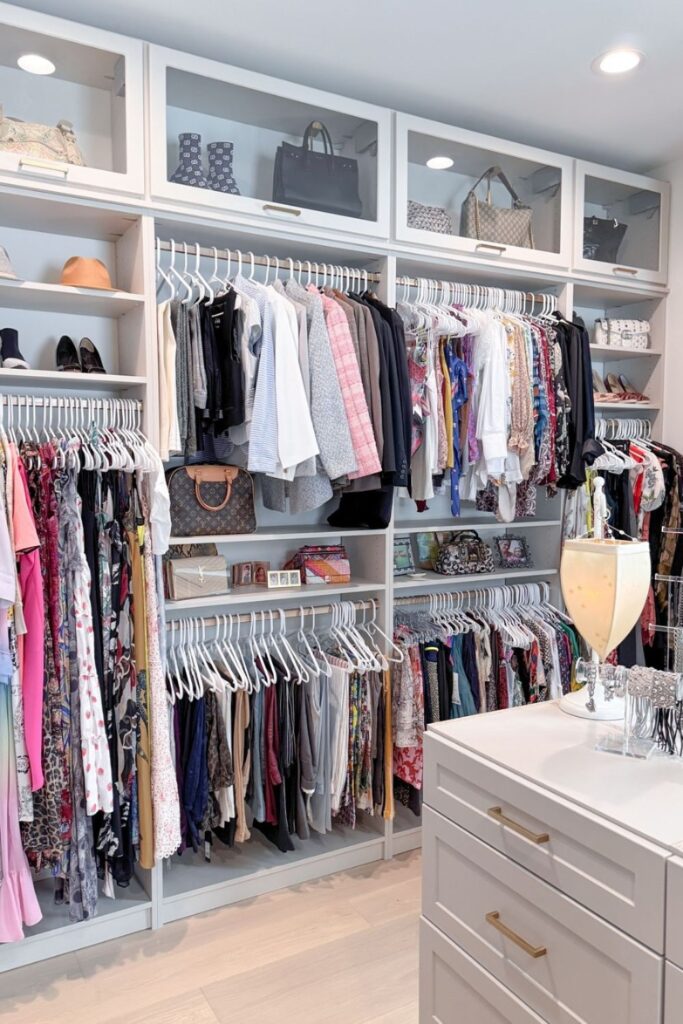
Luxury bags and accessories often disappear inside crowded closets, which makes it easy to forget what you own.
Upper display shelves fix that by giving special things a place to be safe and visible. When you put structured bags, hats, and statement shoes next to each other.
Instead of stacking them, they look cleaner. This kind of setup works best with glass-front cabinets or open cubbies.
Putting it near the top of a wardrobe keeps ordinary clothes below and turns the top into a display area.
Accessories that stay upright, are easy to reach, and are always visible while getting dressed make collections feel more organized.
Shoe Cubbies
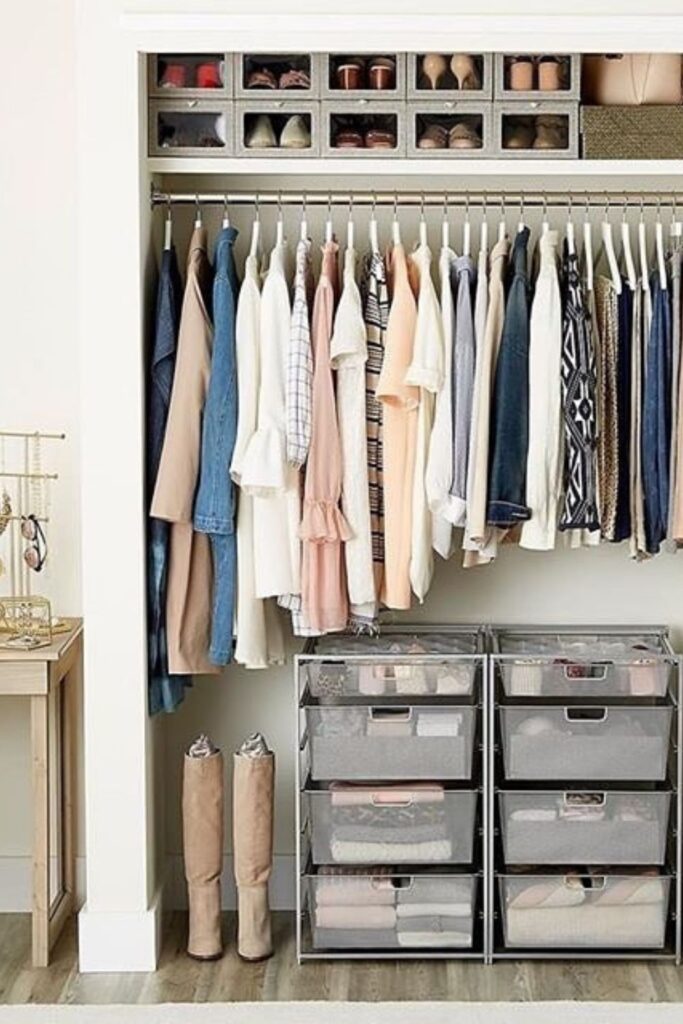
Unused space above a clothing rod can quietly become one of the most useful storage spots in the closet.
There are little nooks on the top shelf that are great for storing shoes that usually end up on the floor.
You can easily see and grab each pair because they slip into their respective compartment. Narrow compartments are great for heels, flats.
And sandals because they keep pairs standing up without stacking them. This design works well in closets with a tall shelf above the rod where clothes hang.
Adding simple divider boxes quickly turns that empty strip of space into a nice shoe wall that keeps the rest of the closet tidy.
Shoe Towers
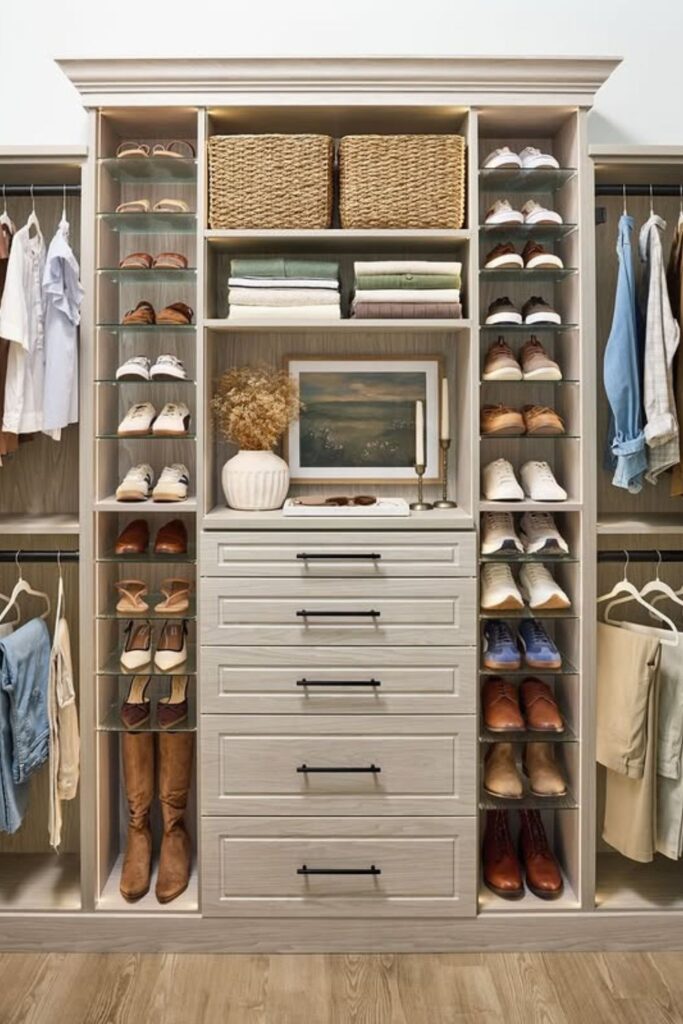
Floor space disappears fast when shoes pile up in random corners of the closet. Vertical shoe towers solve that problem by turning narrow side sections into organized storage.
One pair fits on each shelf, which keeps everything easy to see and access instead of in chaotic piles.
Tall sections are great for keeping sneakers, flats, and heels that usually wind up on the floor.
The greatest place to set this up again is along the walls of a closet. Where the vertical space is often empty.
Slim shelves piled from bottom to top make a tidy shoe wall that keeps shoes orderly. The middle of the closet is still available for drawers or folded clothes.
Color Sections
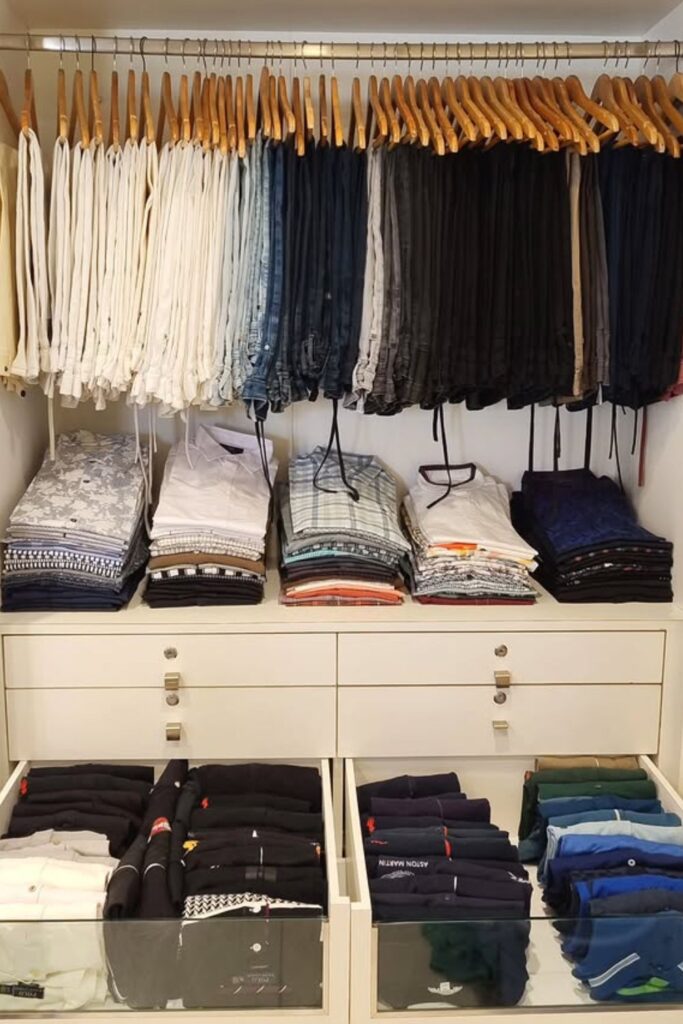
Clothing becomes much easier to manage once similar shades sit together instead of mixing randomly on the rod.
Putting shirts and jackets in color order makes natural sections that help the closet look calmer and easier to scan.
It’s easy to find what you want when you have light colors on one side and dark pieces on the other. You don’t have to slide hangers back and forth.
To set this up again, you first need to sort your clothes into simple color families like whites, neutrals, blues, and blacks.
The folded stacks on the shelf below can be arranged in the same way so that the whole section looks neat. It takes less time to get ready because you know where each piece goes.
Cube Zones
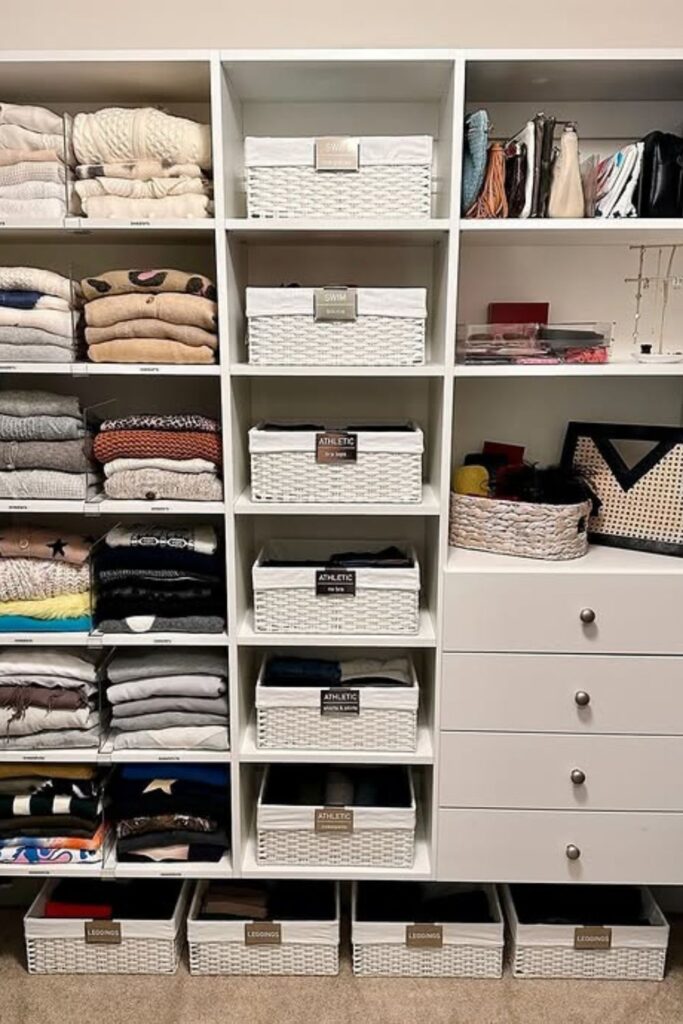
Open cube shelves work best when every section has a clear purpose instead of becoming random storage.
When sweaters, activewear, accessories, and bags each have their own cube, it’s easy to keep track of them.
Woven baskets keep little things from sliding around or making a mess of the space. To recreate this layout, you need to give each container a category.
So that the stacks stay the same and are easy to keep up with. Middle cubes are great for everyday clothes because they are at eye level.
Organized cubes make it easy to find things in a big closet by turning the wall into simple zones where everything has a defined location to go back to after use.
Heel Shelves
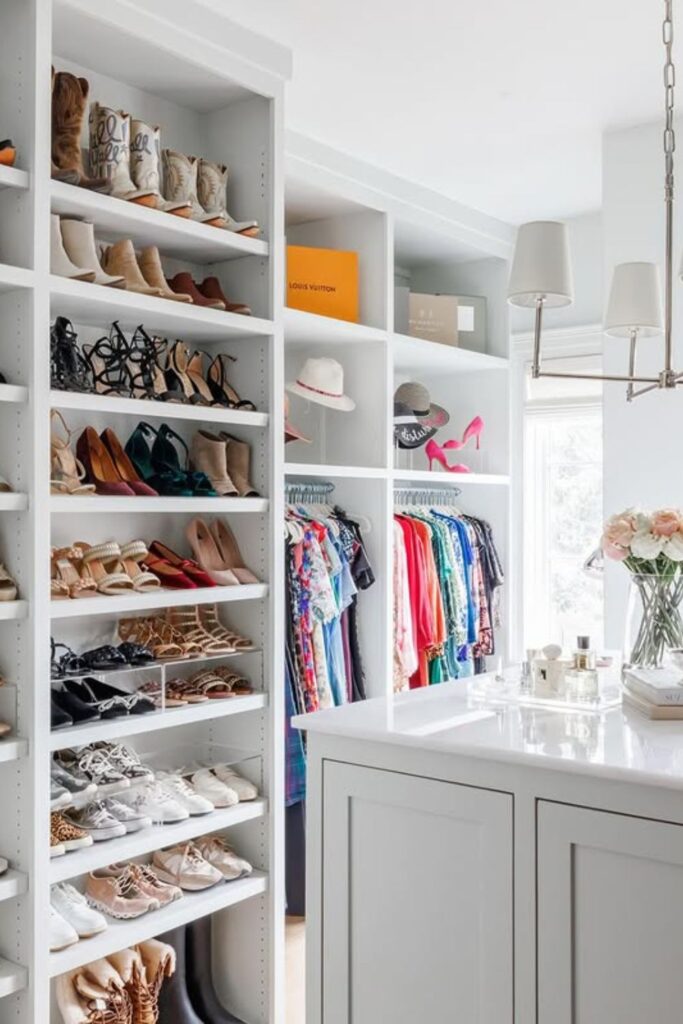
Large shoe collections quickly take over closet floors unless each pair has a clear spot. Tall vertical shelving creates dedicated rows.
Where you can easily see and grab heels, sandals, and flats. If you space each shelf just so, you can’t stack them, which keeps shoes from getting scuffed or lost in the back.
Narrow shelves are great for closet walls since they can carry a lot of pairs without taking up too much space.
To set this up again, you need to measure the height of the shoes and change the spacing between the shelves so that each row matches one category.
Your daily favorites can sit at eye level, and your seasonal pairs can move up or down to keep the shoes you use the most close at hand.
Category Cubes
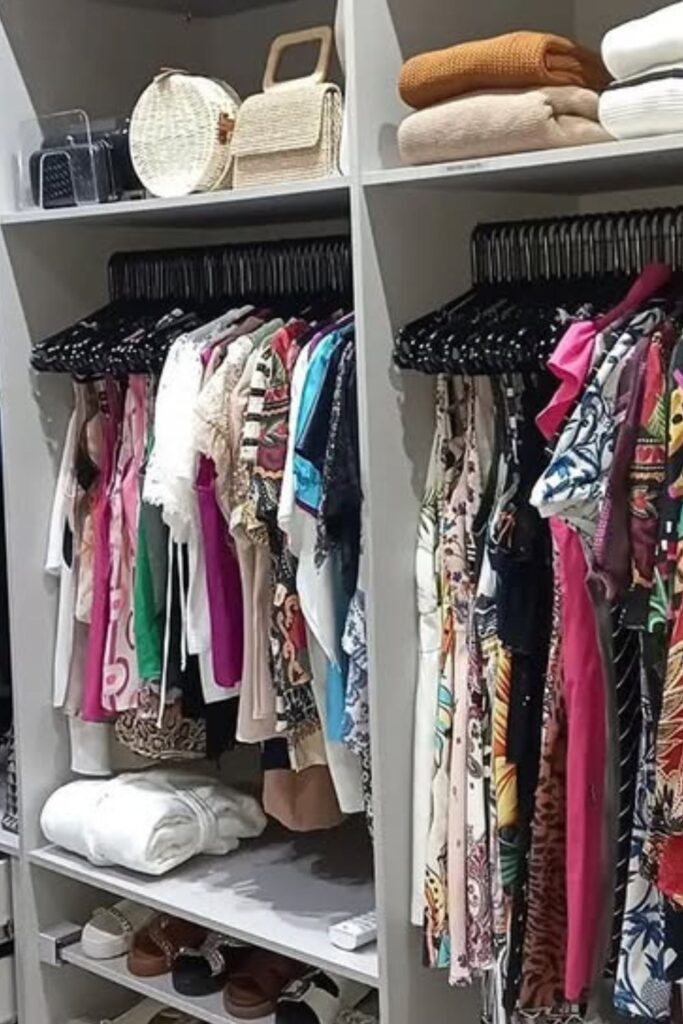
Closet walls become far easier to manage once every section holds a specific type of item.
Separate cubes for folded sweaters, handbags, and accessories keep everything from becoming mixed up on one shelf.
Open compartments above the hanging rods make it easy to see and put things back in their proper place after using them.
Modular closet systems with vertical dividers already in place are the ideal for recreating this configuration.
Folding knitwear into nice stacks keeps those cubes clean, and handbags or clutches stay upright so they don’t lose their shape.
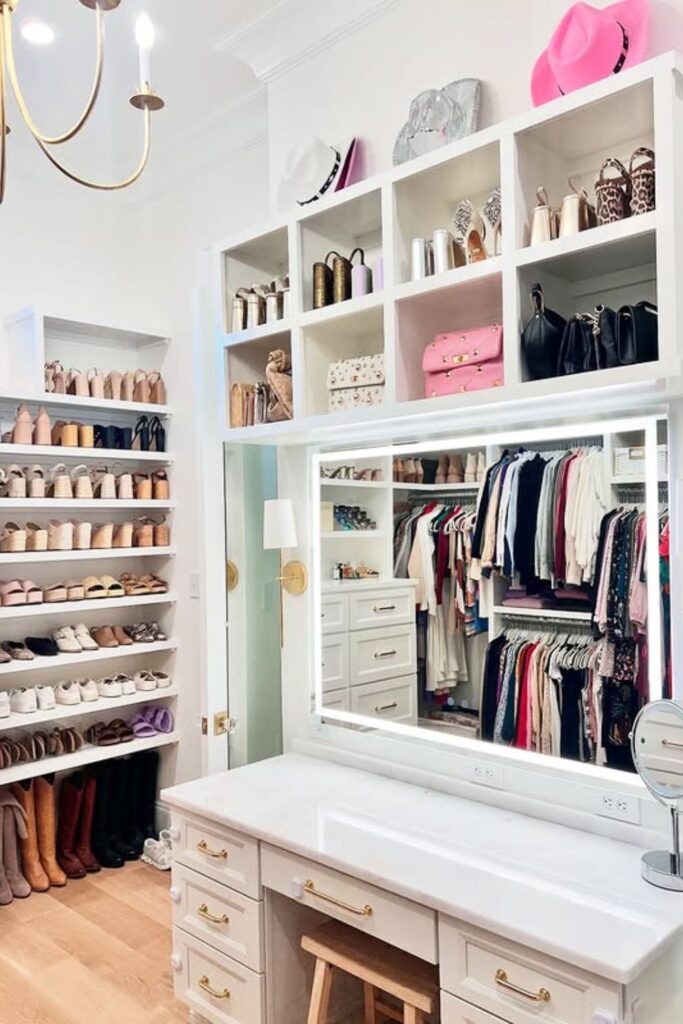
Accessory Cubes
Favorite accessories often end up hidden in drawers, which makes them easy to forget. Open cube shelves solve that problem.
By keeping handbags, hats, and statement shoes out in the open but still properly organized. When structured pieces are piled together.
They don’t keep their shape as well as when they are standing up in their respective compartments.
Placement works well above clothes that are hanging up, where bigger shelves would otherwise be empty.
To recreate this idea, you need to give each cube a different type of accessory so that everything has a set place.
Denim Stacks
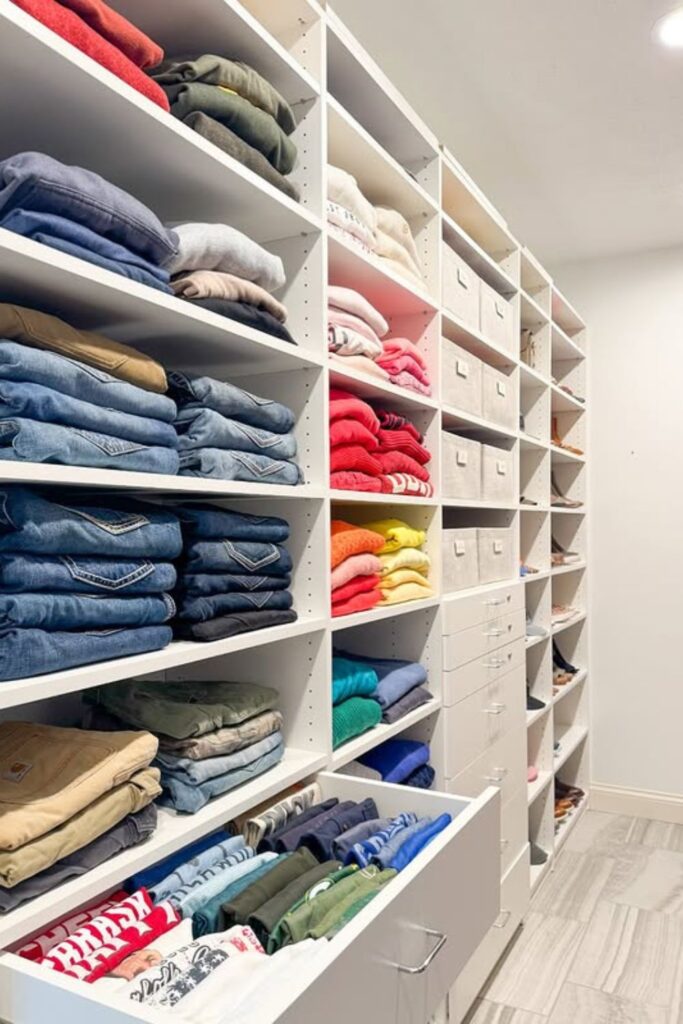
Jeans become surprisingly easy to manage once every shelf holds only one type of fold. Stacking denim by shade keeps darker pairs together.
while lighter washes are in their own section, which makes it easier to find the pair you desire. This solution works best with wide shelves.
because folded pants need some space to sit flat without falling off the side. To put this up again.
You need to fold each pair the same way so that the stacks stay stable. If you leave little spaces between piles, they won’t fall into each other.
This whole wall of shelves puts big pieces of denim into neat rows that keep that way even when you use them every day.
Shoe Shelves
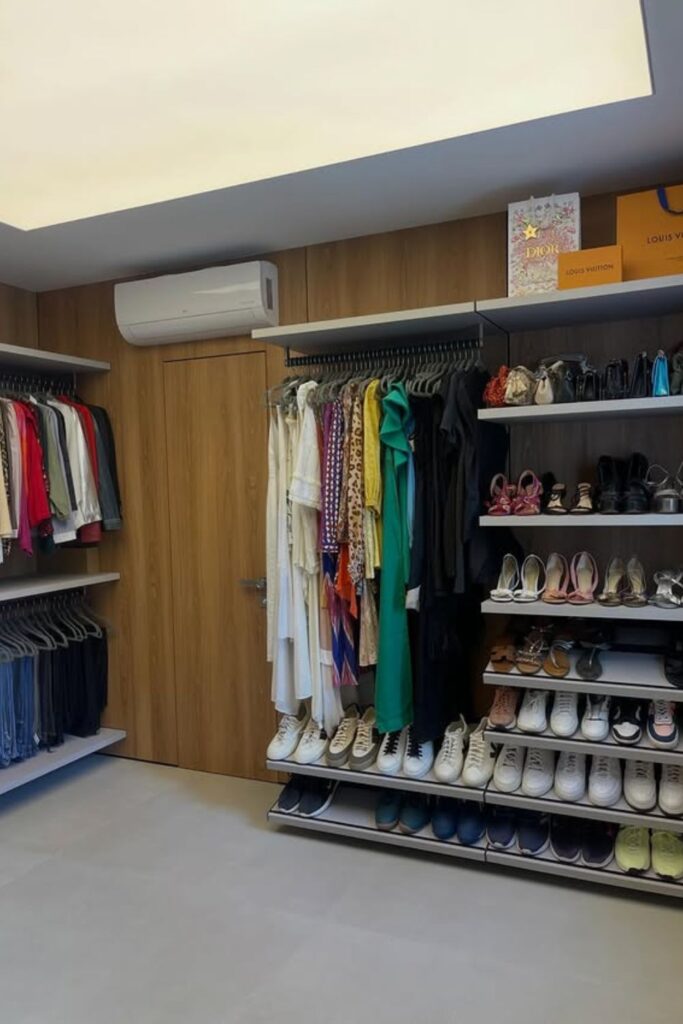
Footwear often becomes the biggest source of closet clutter once pairs start stacking on the floor.
While lighter washes are in their own section, which makes it easier to find the pair you desire. This solution works best with wide shelves.
Because folded pants need some space to sit flat without falling off the side. To put this up again.
You need to fold each pair the same way so that the stacks stay stable. If you leave little spaces between piles, they won’t fall into each other.
This whole wall of shelves puts big pieces of denim into neat rows that keep that way even when you use them every day.
Lit Shelves
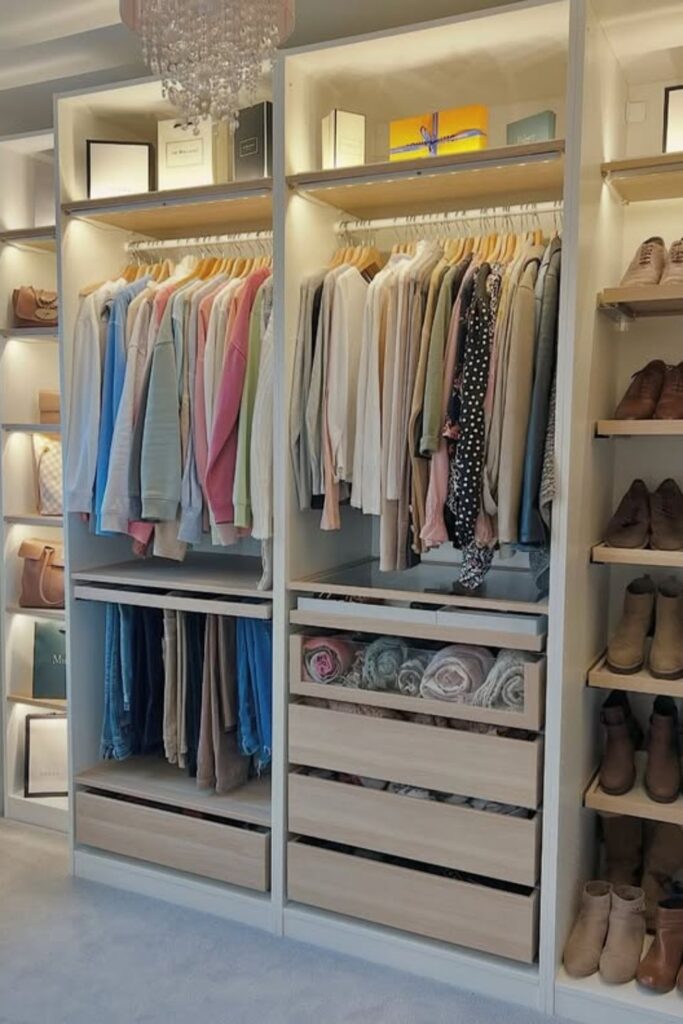
Closet shelves become far more useful once lighting highlights each section. Built-in lights above the shelves.
Make it easy to find folded clothes, purses, and accessories without having to dig through piles. Soft lighting also helps define distinct areas.
So each shelf feels like it was put there on purpose instead of being cluttered. This technique works well in deeper closets when things are hidden by shadows near the rear.
Putting small LED strips or puck lights under each shelf will instantly make the room brighter.
Everyday items like sweaters and handbags are easy to find, and ornamental boxes on the top shelf give the closet a professional finish that keeps it looking orderly and balanced.
Purse Shelf
Handbags often lose their shape when they sit in crowded drawers or get stacked on top of each other.
Dedicated purse shelves fix that by providing each bag ample room to stand up straight. Because nothing rubs against them, structured bags stay in better shape.
Placement works best on upper shelves where things don’t need to be reached every day but can still be seen.
It’s easy to set this arrangement again: just put one or two bags on each shelf and don’t fill the area too much. Smaller clutches can go in beautiful baskets.
While larger handbags can stand on their own. A neat row of bags not only helps the closet seem better, but it also keeps your collection safe.
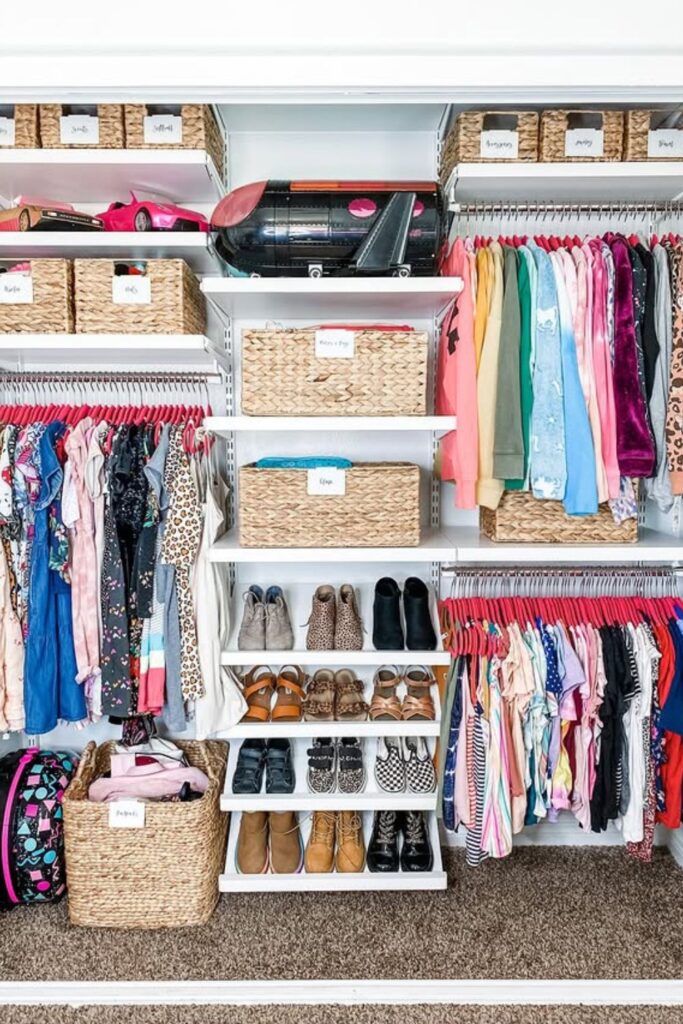
Labeled Baskets
Small items can quickly scatter across closet shelves unless everything has a defined container.
The challenge is solved by putting comparable items together in woven baskets with basic labeling.
Each basket makes it easy to discover pajamas, swimsuits, accessories or seasonal things because it clearly outlines what goes inside.
This approach works especially effectively on upper shelves, where loose clothes would ordinarily accumulate into messy mounds.
Using baskets that match keeps the closet appearing neat, and the labels make it easy to know where to store things.
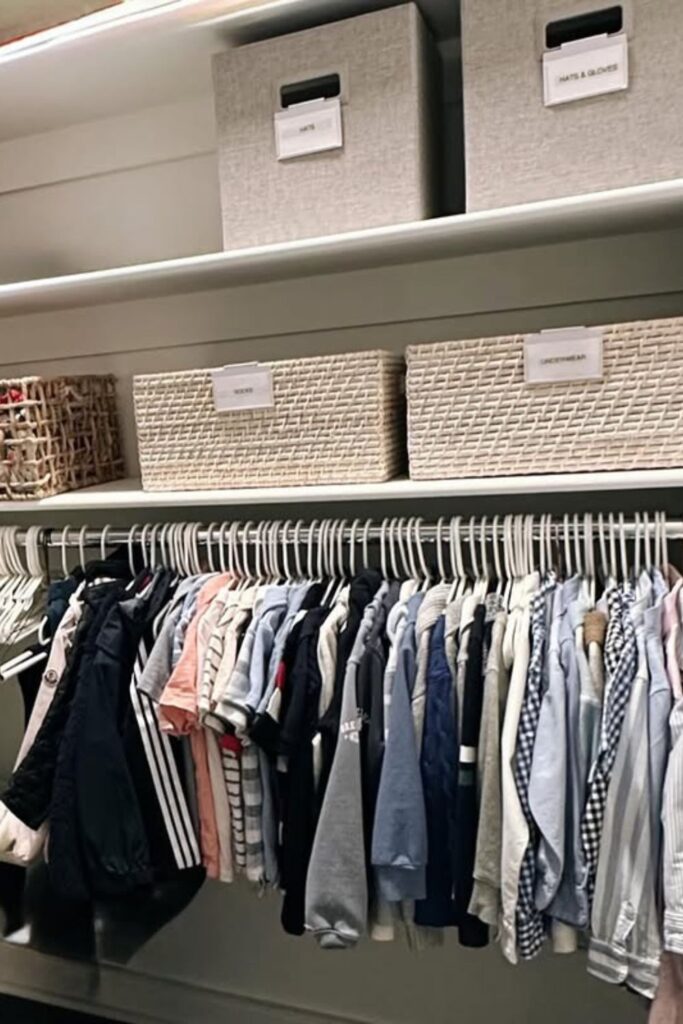
Label Boxes
Upper closet shelves work much better when storage boxes clearly show what belongs inside.
Labeled fabric bins keep hats, gloves, and other seasonal items separate from regular clothes below.
Soft storage boxes are easy to slide on and off shelves, so they’re great for things you only need a few times a year.
To set this up again, you need to put comparable things together and then put them in different containers. Clear labeling on the front stop you from having to look for things later.
Neutral boxes also make the closet look cleaner because everything is in the same style and they hide minor things that would otherwise make the closet look messy.
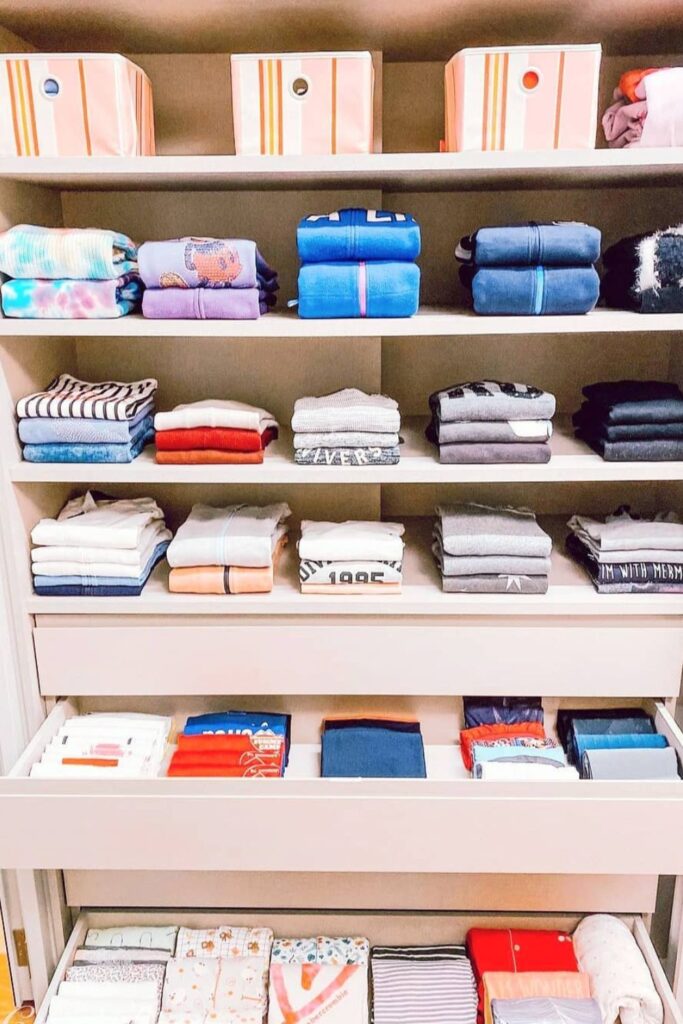
Uniform Folds
Closet shelves stay neat much longer when every piece of clothing is folded the same way. Uniform folding creates stacks that sit flat and stable.
instead of leaning or slipping apart after a few days. This method works best with t-shirts, sweatshirts, and other casual items.
Because they stack easily and don’t take up too much shelf space. To start putting this system back together.
You need to fold everything into rectangles that are all the same size. Shorter stacks keep clothes from falling over when you take something out of the middle.
These kinds of shelves are much easier to keep clean because everything goes back to its neat place after laundry day.
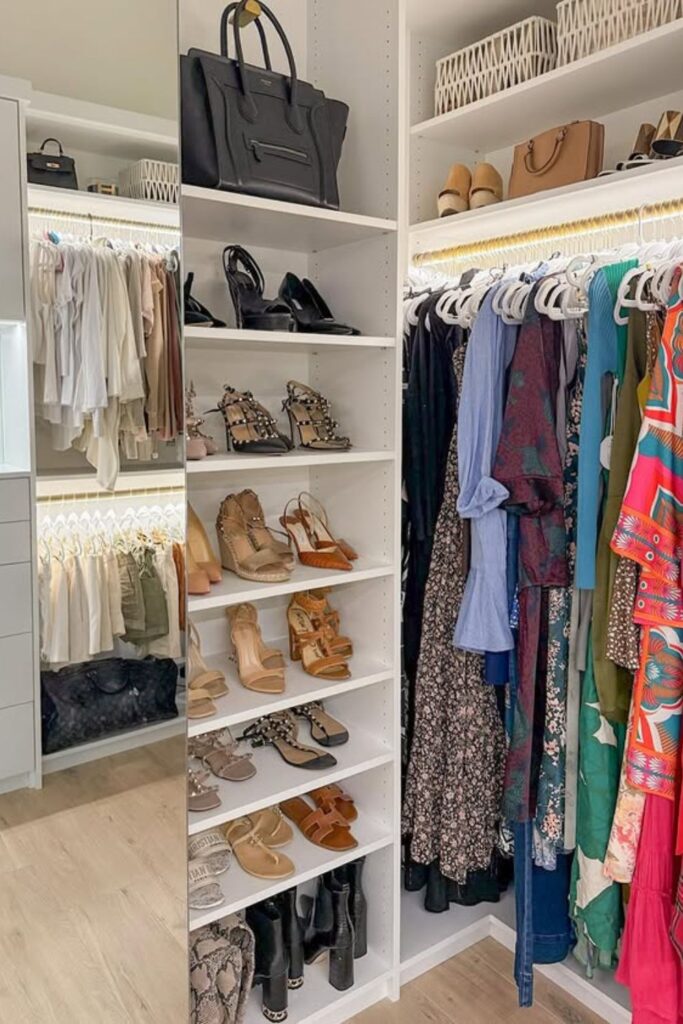
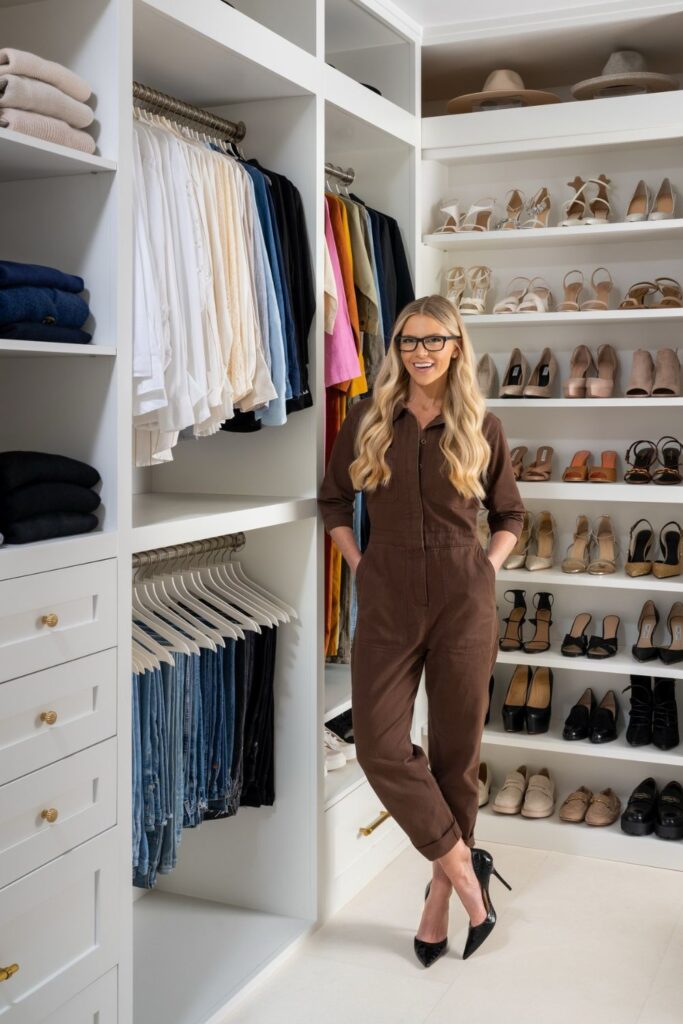
Shoe Wall
Large shoe collections become easier to manage once one full section of the closet is dedicated to footwear.
Vertical shelving turns an empty wall into neat rows where every pair can be seen and kept apart. Instead of stacking on the floor, heels, sandals, and flats are lined up neatly.
This protects delicate shoes and makes it easier to arrange outfits. It works best to recreate this idea in tall closet corners where shelves can go from the floor to almost the ceiling.
Changing the space between the shelves makes it possible for different types of shoes to fit comfortably.
Everyday shoes should stay at eye level, but special occasion heels can shift to higher rows to make it easier to get to everyday shoes.
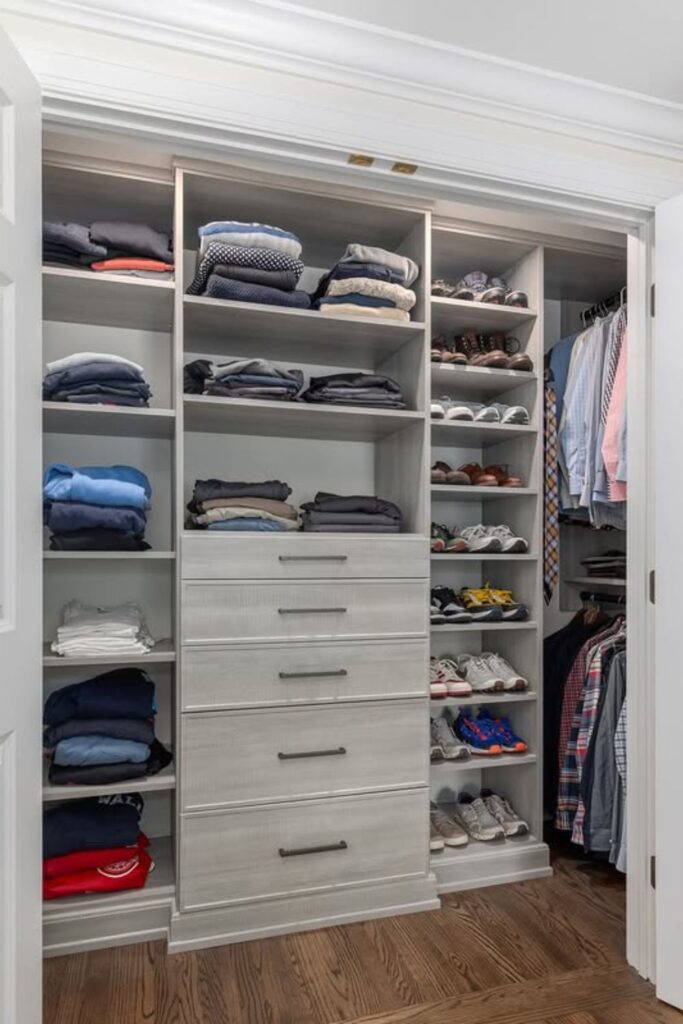
Closet Columns
Large closets feel much easier to manage once the space is divided into clear vertical sections.
Tall columns make separate spaces for folded clothes, drawers, and shoes, so they don’t have to fight for the same shelf.
On one side, there are stacks of sweaters and pants that stay neat, and on the other side, there is a small column of shoe shelves that keeps shoes off the floor.
This configuration works best in reach-in closets that are not very deep but are tall. Built-in drawers in the middle.
Give you extra storage space for tiny clothes items like socks or undergarments. Organized columns make the closet work like a system, with a designated position for each type of item.
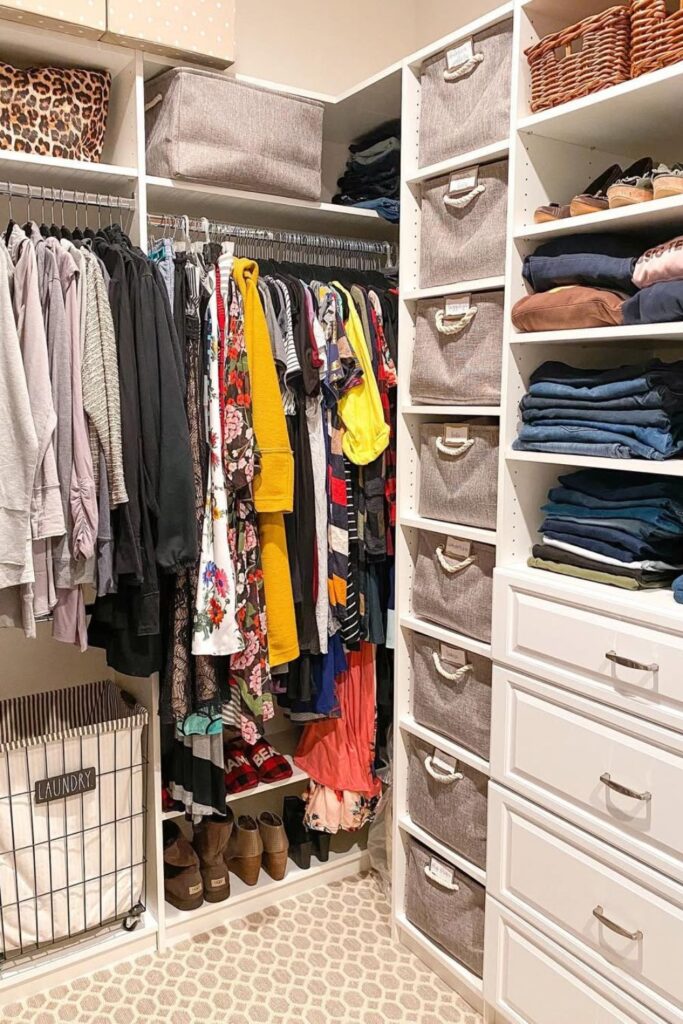
Fabric Cubes
Loose clothing and small accessories tend to scatter across shelves unless they’re contained in something structured.
Fabric cube bins make it easy to keep things like workout gear, scarves, or seasonal outfits together in separate areas.
Soft bins slide in and out effortlessly, so they are great for narrow vertical shelves that could get dirty otherwise.
This setup works best in tall side parts of a closet where you can stack many cubes from top to bottom.
Using the same bins maintains the area looking clean while still disguising the mess inside. To keep things in order, give each cube a category.
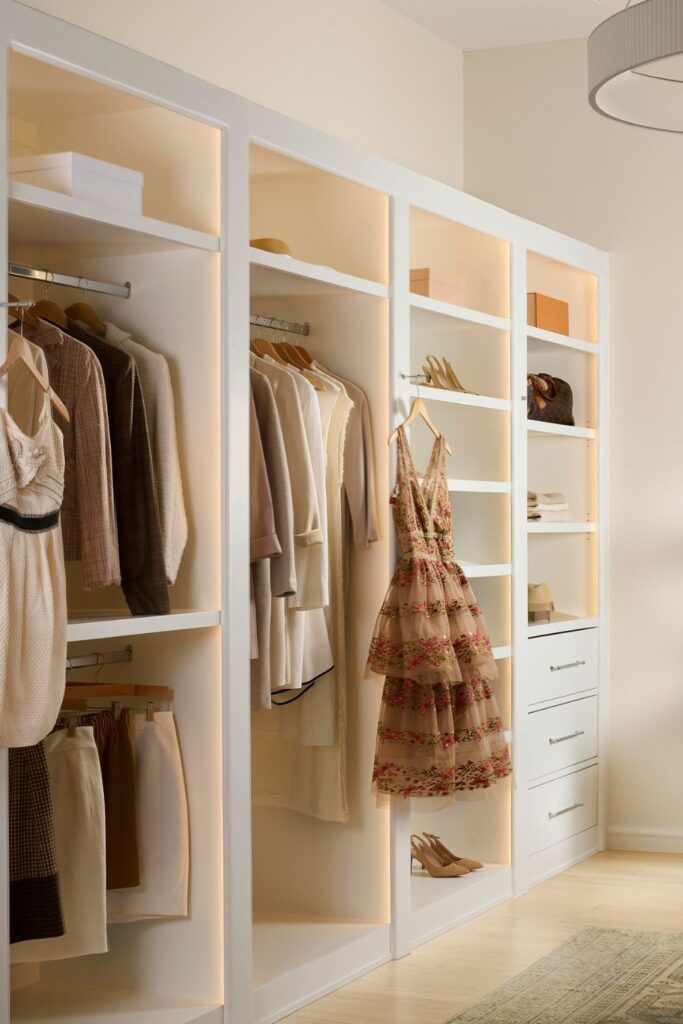
Open Shelves
Extra closet space often goes unused when shelves are hidden behind doors or crowded with random items.
Open shelving modifies that by making each area a visible storage space for shoes, clothes, and accessories.
When you fold sweaters, handbags, and heels, they are easier to find because they are all in plain sight instead of being hidden away in drawers.
This configuration works well on long closet walls where the vertical parts can repeat in a neat pattern. Putting only a few things on each shelf makes the room feel less cluttered.
Open shelves that are well-organized make it easier to choose out clothes every day because you can see and reach everything easily.
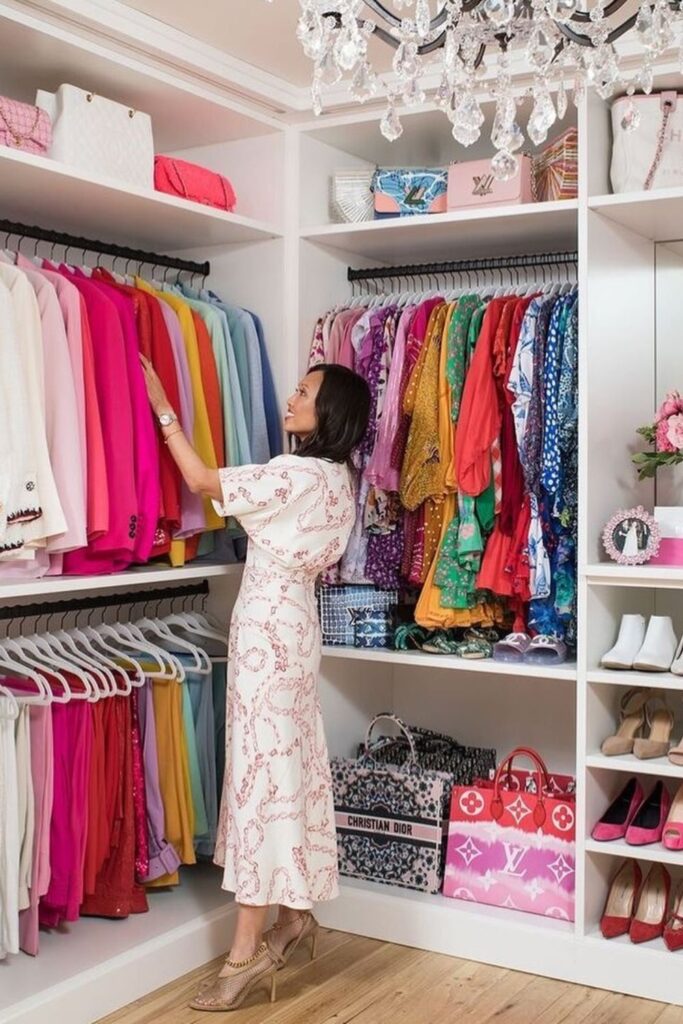
Color Rows
Outfits become easier to choose when clothing is arranged by color instead of random order. Bright pieces, neutrals, and darker tones.
Each one produces its own division along the hanging rod, which makes the closet look much more organized right away.
Color rows also help you keep track of what you own at a glance, so you don’t buy the same color twice.
To recreate this notion, you should start by putting garments into simple color groups like whites, pinks, blues, and patterns.
You may keep the whole closet looking balanced by putting folded sweaters or handbags on the shelves above them in the same color scheme.
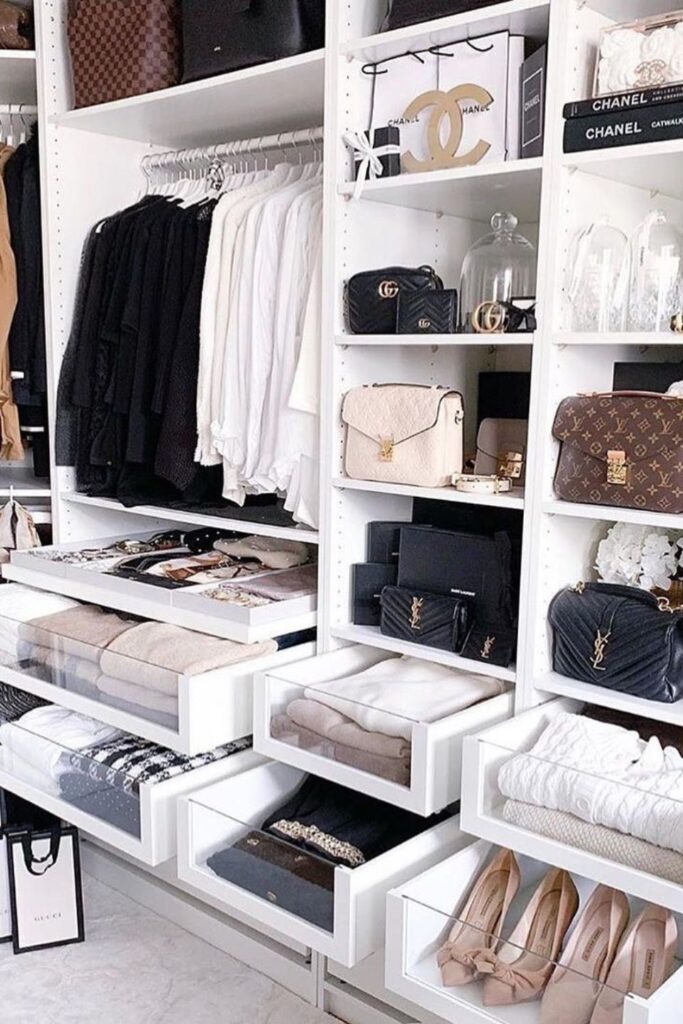
Display Drawers
Accessories often disappear inside deep drawers where items pile on top of each other. Shallow display drawers.
Solve that problem by spreading jewelry, belts, and small accessories. over a level surface where everything is still visible.
These sliding trays are great for hanging clothes since they use space that would otherwise be empty.
To set this up again, you need to add pull-out organizers or tray-style drawers that open easily. Soft dividers in the trays keep fragile things from moving around.
Organized display drawers make it easier to swiftly choose accessories while keeping smaller items safe and in order.
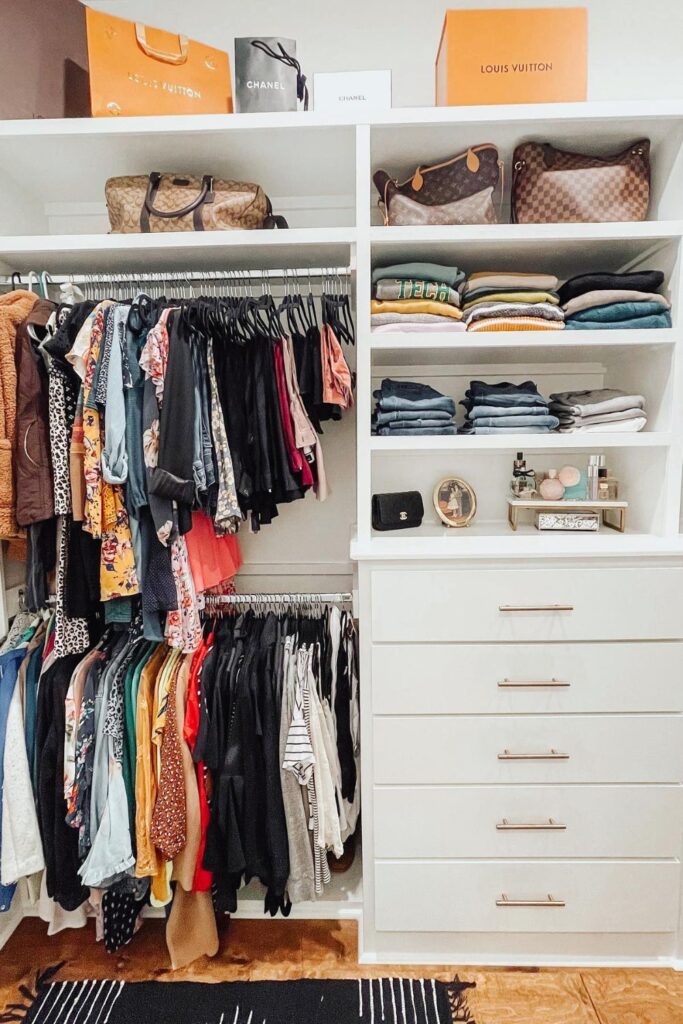
Shelf Sections
Closet shelves stay far more organized when each section holds a specific type of item instead of mixing everything together.
One row can house folded sweaters, another can hold trousers, and a third shelf can carry handbags so they stand up and are easy to get to.
Putting clear portions on shelves stops stacks from spreading all over the room. This plan works best in closets with large shelves.
Where a lot of different types of things normally fight for the same space. First, give each item of clothing its own shelf so that everything has a set place to go.
You know exactly where to find and put back each thing when the shelves are organized. This makes daily tasks easier.
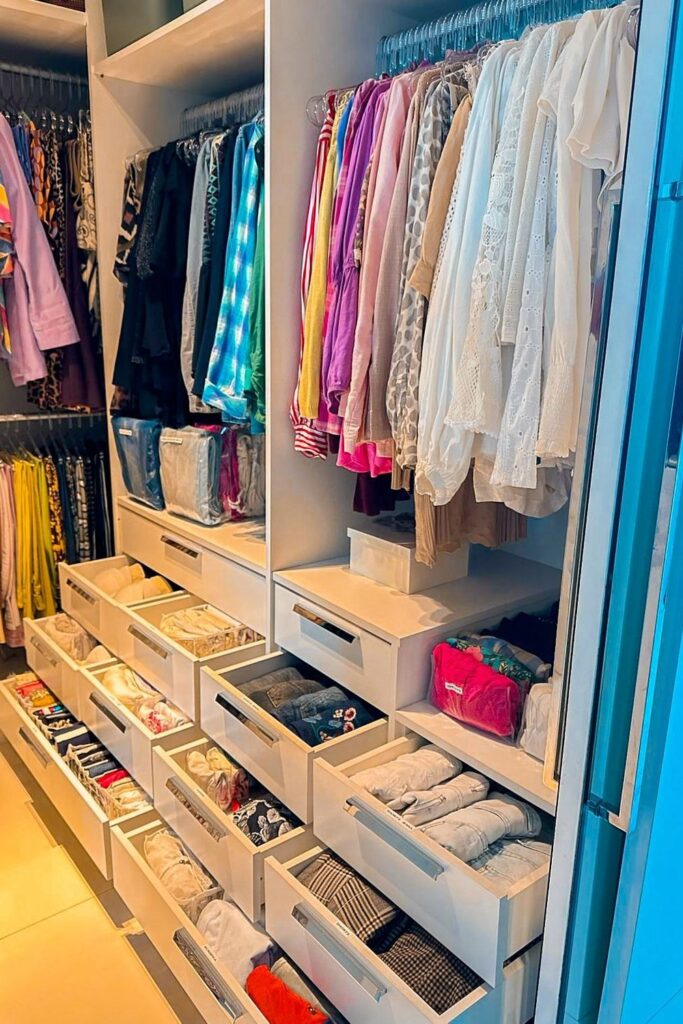
Drawer Rows
Small clothing items easily turn into clutter when they’re stacked deep inside one drawer. The difficulty is fixed by using several shallow drawers that order things into neat rows.
Where everything can be seen. It’s a lot easier to keep track of socks, underwear, and accessories when each drawer just has one type of item.
Pull-out drawers that are put below hanging rods make use of vertical space that would otherwise be empty.
This technique works well in closet sections where there is extra space under the clothes racks. You can see all the pieces at once by using simple folding methods to make things stand up.
Rows of organized drawers make daily tasks go faster because nothing gets lost at the bottom.
FAQs
How do you keep closet shelves from becoming messy again?
When stacks are too big or things don’t have a place to go, closet shelves tend to get filthy. It’s a significant deal to have smaller stacks and easy-to-use storage containers.
Shelf dividers, baskets, or fabric bins can help keep garments from sliding into each other by keeping each category separate.
Also, leaving some free space on each shelf helps keep everything in order because shelves that are too full fall over rapidly after being used every day.
What should go on the top shelf of a closet?
Items that aren’t used every day do best on the top shelves. Seasonal clothes, travel bags, extra bedding, or storage boxes fit well in that space.
Because you don’t need to get to them very often. When you use labeled bins or storage baskets, it’s easier to find things.
When you need them and keep them tidy. Also, keeping lighter things on the top shelf makes them safer to get to and move around.
You may like to read!
- 26 Dresser Organization Ideas
- 21 Freezer Drawer Organization
- 26 Behind The Door Organization
- 23 Paper Organization Ideas
- 25 Coat Closet Organization

Fasial is the founder of the Fizzy Flare. He has been a passionate blogger since 2021. He ran three different websites in the past few years. Now he is focusing on Fizzy Flare to build an audience and help them organize their life.