21 Corner Cabinet Organization Ideas for 2026
This post may contain affiliate links: full affiliate disclosure.
You’re not the only one who has opened a corner kitchen cabinet and been frustrated right away. It looks like a nice place to store stuff at first.
But it quickly turns into a jumbled pile where things disappear in the back. Things become stuck in the pots, small things slip out of reach, and every time you need something.
You have to take half the cabinet out to get it. The good news is that this problem is easier to fix than most people realize.
You can make that odd corner cabinet one of the most handy places to store things in your kitchen with some smart arranging tips.
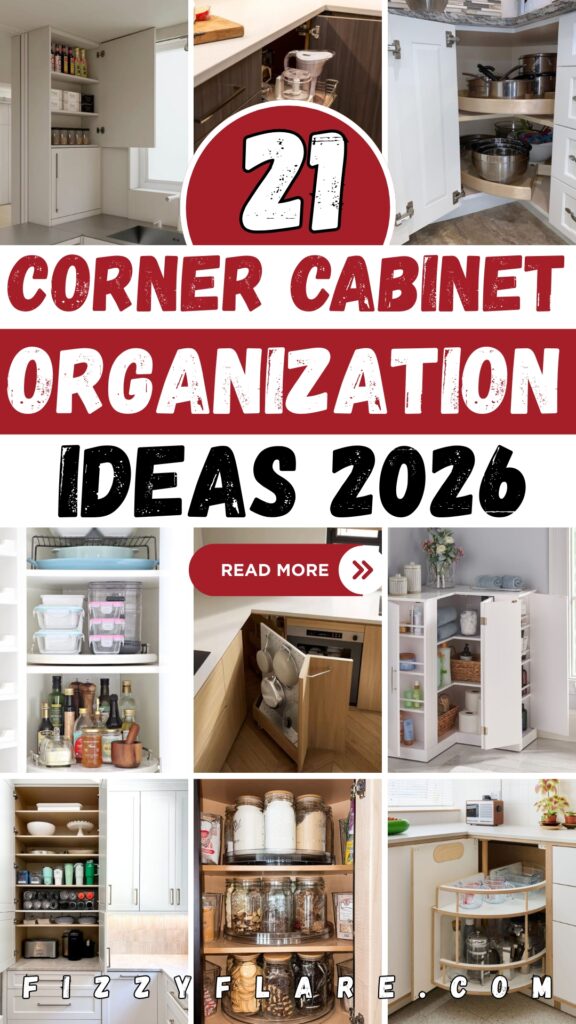
In this article, I will guide you through 21 inspiring corner cabinet organization ideas. These ideas will help you create a more organized and stress-free home.
Let’s jump in!
Contents
- 1 How Do You Maximize Space Inside a Corner Kitchen Cabinet?
- 1.1 Vertical Shelves
- 1.2 Rotating Shelves
- 1.3 Pull-Out Baskets
- 1.4 Slim Shelving
- 1.5 Double Turntables
- 1.6 Pan Storage
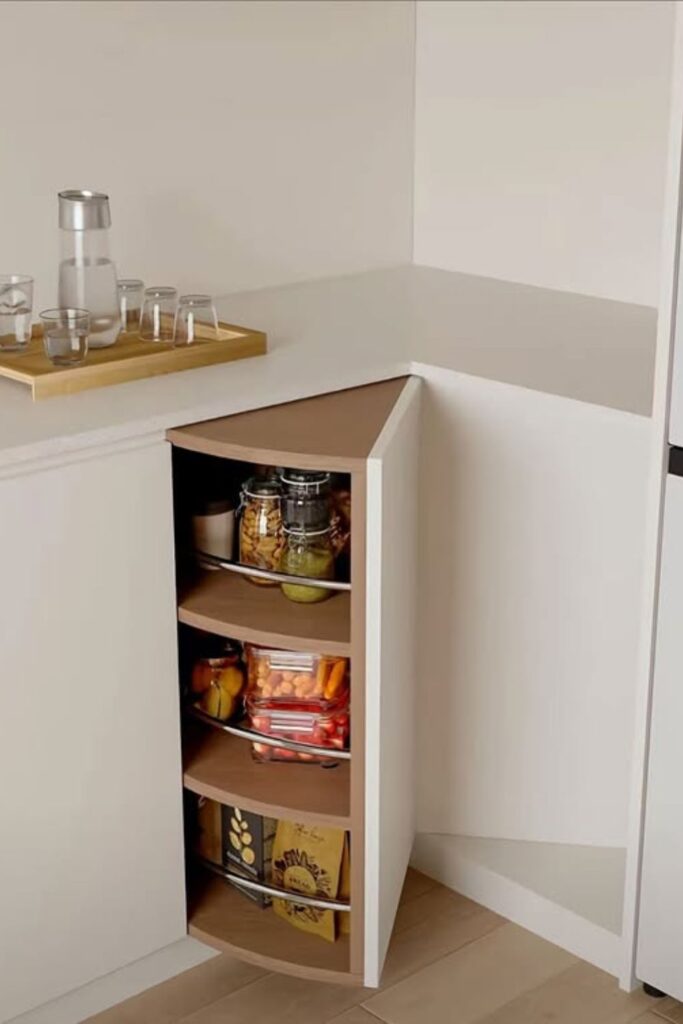
- 1.7 Curved Shelves
- 1.8 Grid Compartments
- 1.9 Pantry Turntables
- 1.10 Shelf Zoning
- 1.11 Sliding System
- 1.12 Swing Shelves
- 1.13 Corner Carousel
- 1.14 Corner Pullouts
- 1.15 Spice Turntables
- 1.16 Tiered Rotation
- 1.17 Corner Drawers
- 1.18 Glass Storage
- 1.19 Wooden Pullouts
- 1.20 Tall Pantry
- 1.21 Appliance Nook
- 2 FAQs
How Do You Maximize Space Inside a Corner Kitchen Cabinet?
A lot of the time, corner kitchen cabinets feel bigger than they are. The room stretches far into the corner, which makes it simple to forget about things that are pushed to the back.
The most important thing is to make it easier to get to and arrange every area of that space. Instead of random junk, start by putting things you really use there.
Save this article for later! 👇👇
Then, to keep things from getting lost at the rear, add basic equipment like rotating trays, pull-out shelves, or compact storage bins.
You can make that uncomfortable corner into a storage space that really works for you by organizing the cabinet in layers and giving each thing a clear spot.
Vertical Shelves
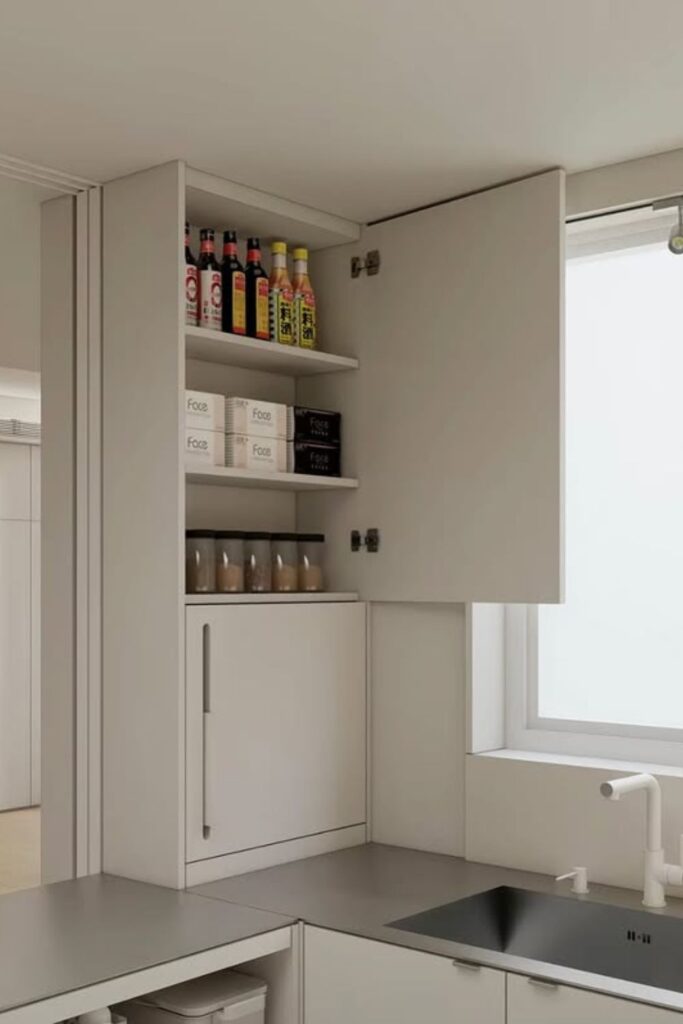
Tall corner cabinets work surprisingly well when shelves are used to create clear vertical zones.
You can see that each shelf has a different type of item on it: sauces on top, packaged things in the middle, and jars on the bottom.
This approach of arranging things makes everything easy to see instead of putting things in a deep pile.
Put the tallest bottles on the top shelf first so they don’t get in the way of smaller things. Boxed items or containers that stack neatly fit perfectly on the middle shelves.
Grouping comparable things together makes the cabinet easier to use and prevents the problem of having “everything shoved in the corner.”
Rotating Shelves
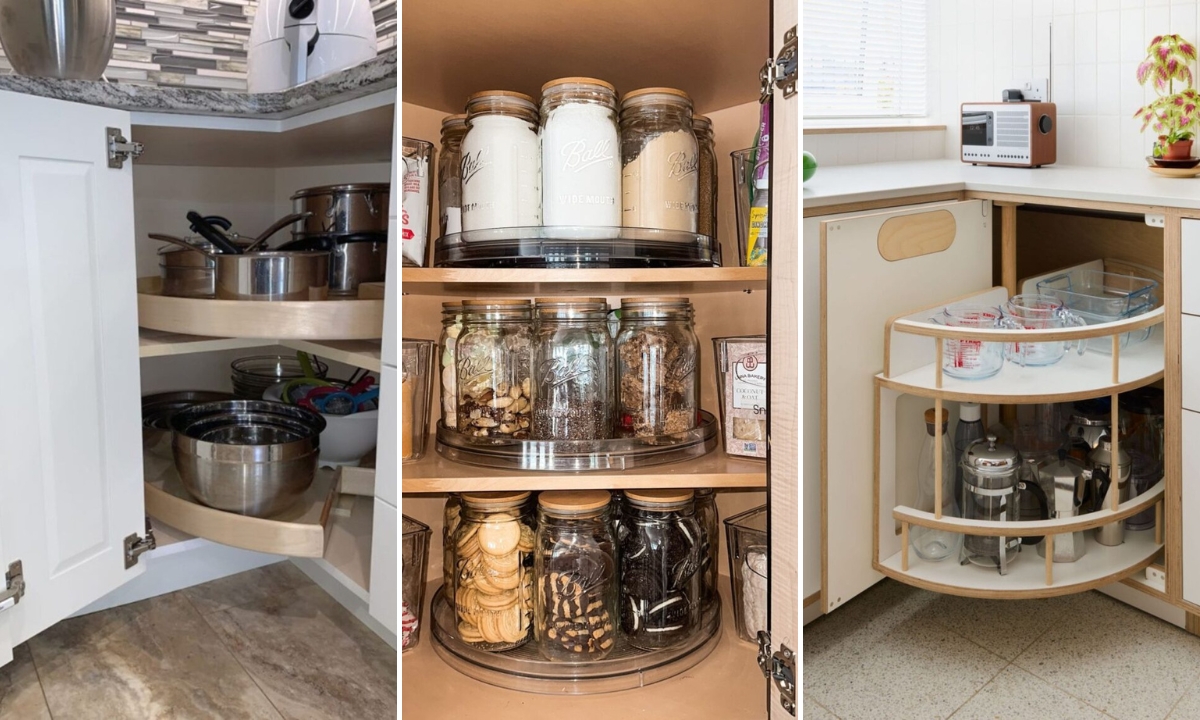
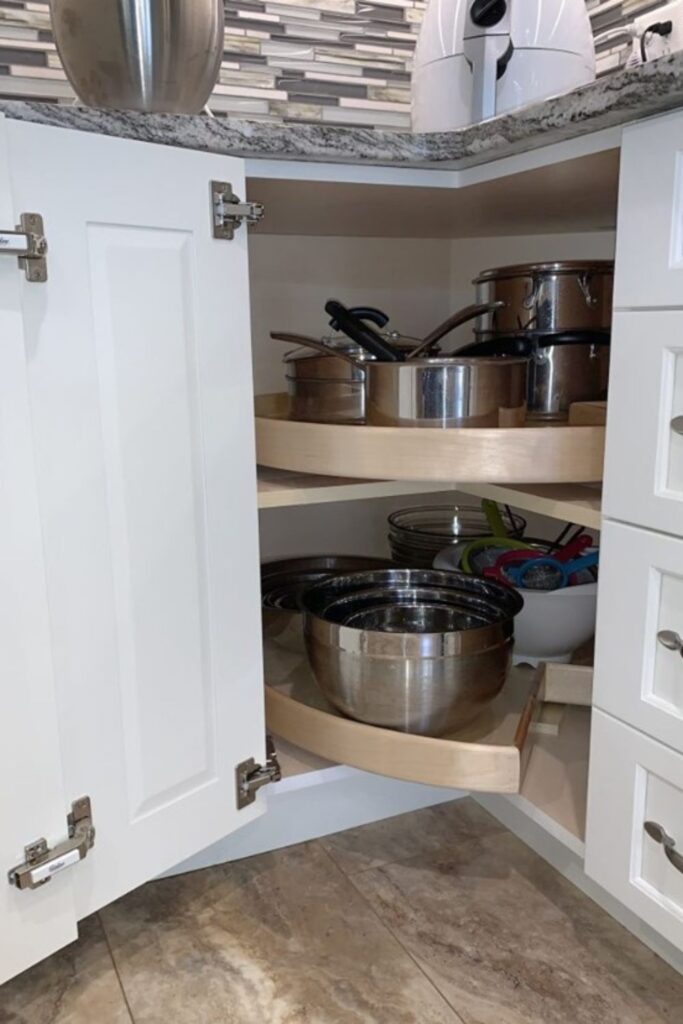
Deep corner cabinets stop being frustrating once everything can spin toward you. Rotating wooden trays like these let pots, pans, and bowls.
Go to the front instead than getting lost in the back. Heavy pots and pans work best here since the spherical shelves hold the weight.
While still making everything easy to reach. Put the bigger pots on the outside so they may turn.
Without hitting each other. You can put smaller things, like lids or mixing bowls, in the middle.
It’s lot easier to cook when you can just spin around to get a pan instead of digging among a pile of pots and pans in a dark corner.
Pull-Out Baskets
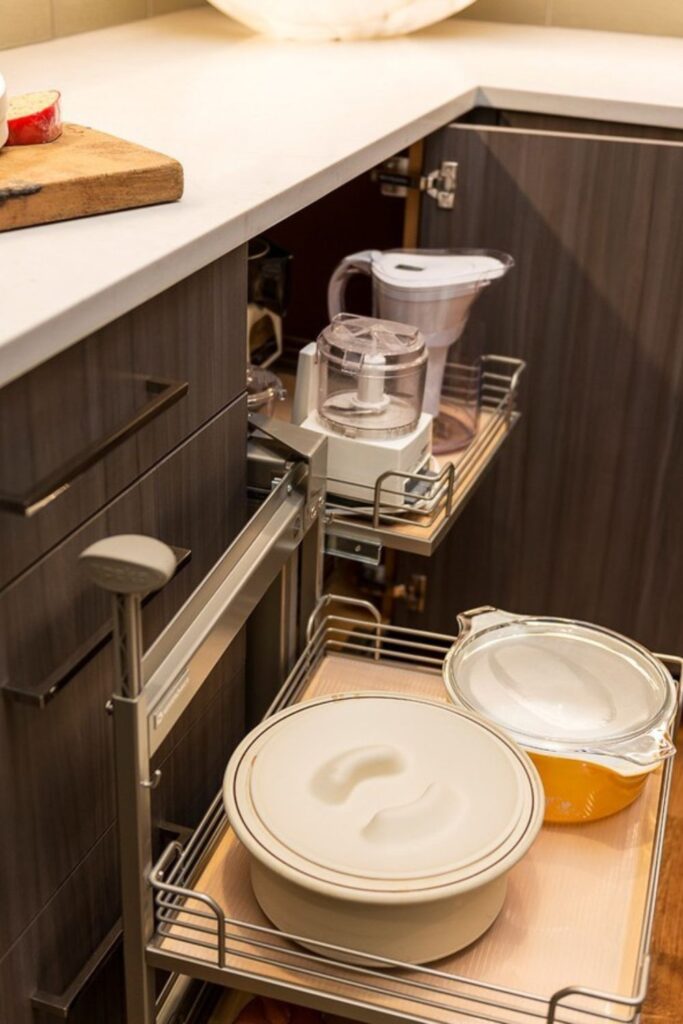
Hard-to-reach corners become much easier to manage once storage can slide forward. Pull-out baskets like these bring everything out of the cabinet.
So nothing stays concealed in the rear. These trays are great for small appliances, cookware, or baking tools.
Because the strong frame keeps heavier things from rolling around. Placement is important here: put tools.
You use often on the front tray and appliances you don’t use as often on the deeper one. Most of the time, putting up a sliding rail system.
Inside the cabinet makes it easy for the baskets to slide. It’s lot easier to cook every day when you can just pull out the shelf to get to the blender or dish.
Slim Shelving
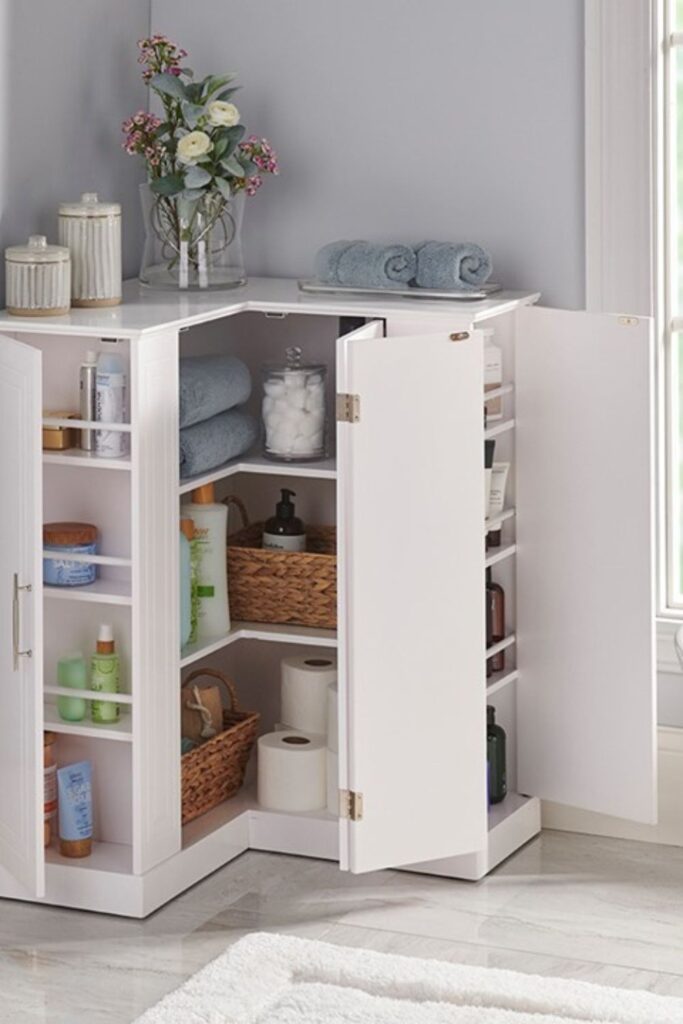
Unused corners become surprisingly useful once narrow shelves divide the space into small storage zones.
Slim vertical shelves on the edges of cabinets are useful for things that tend to get lost under bigger containers.
You can fit toiletries, skincare bottles, or other tiny bathroom items without wasting space. Baskets in the middle area assist.
Keep things ordered by grouping comparable items together instead of letting them get scattered.
Adding narrow racks to the inside of the door also makes the cabinet feel less cluttered while giving you more storage space.
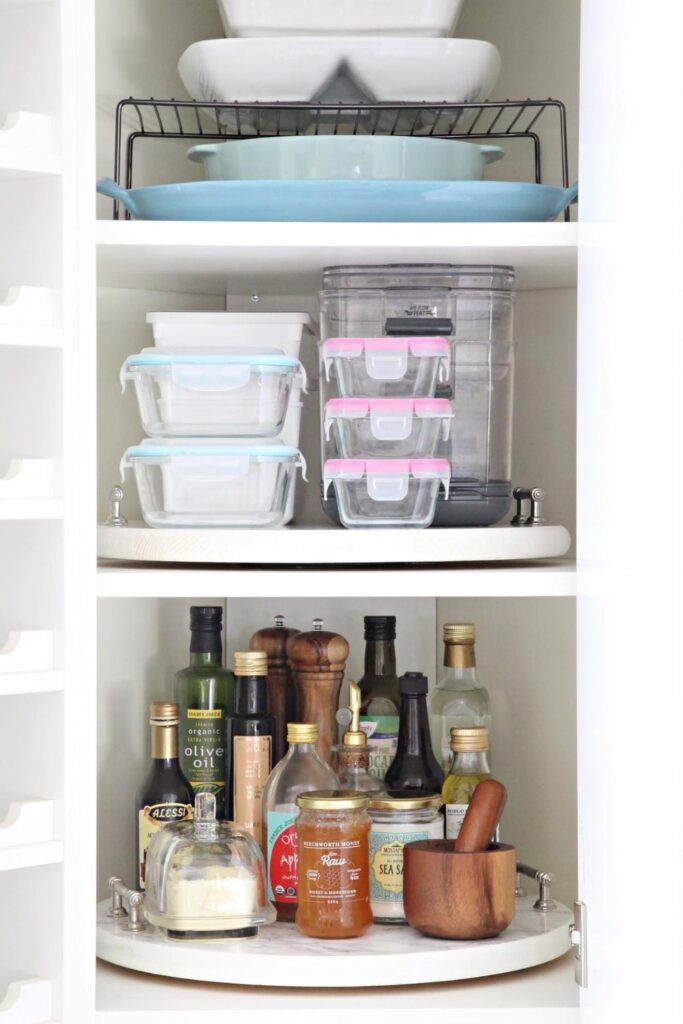
Double Turntables
Round organizers instantly solve the biggest problem inside deep corner cabinets—items hiding in the back.
Putting two rotating trays on different shelves makes layers that are neat and clear, so you can see all the bottles and containers.
Lower trays are great for storing cooking oils, sauces, and spice jars since they move forward quickly when you spin them.
Upper trays can house food containers, lids, or smaller pantry items that tend to get lost. Clear containers make it easy to see what’s inside and keep everything looking tidy.
Putting taller bottles on the outer edge makes it easier for the tray to turn without knocking anything over.
This kind of rotating storage keeps the cabinet useful instead of letting it become a forgotten corner.
Pan Storage
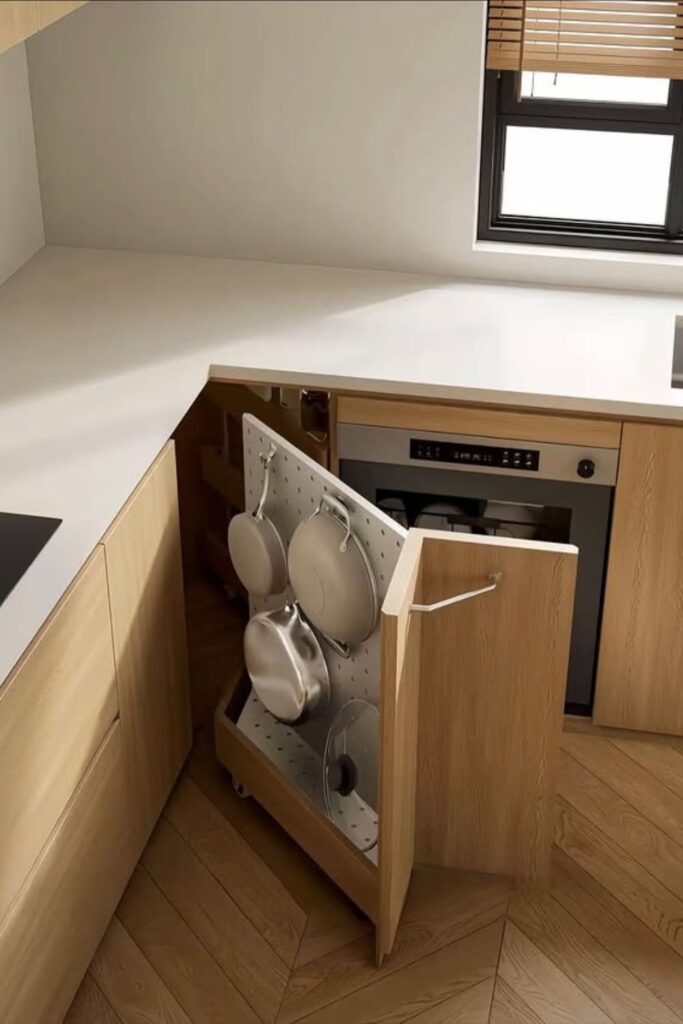
Bulky pans usually create chaos inside corner cabinets because stacking them quickly turns into a noisy pile.
Vertical storage fixes that by giving each pan its own place to hang. This pull-out panel makes the whole arrangement even better.
Because everything moves forward as the door opens. Put hooks or small brackets on a strong board so that each pan hangs by itself instead than on top of another.
Along the outside edge, where they are simple to reach, larger skillets and lids fit well. It’s easier to cook.
When you can just pull out a pan instead of having to search through a pile of heavy pots and pans.
Curved Shelves
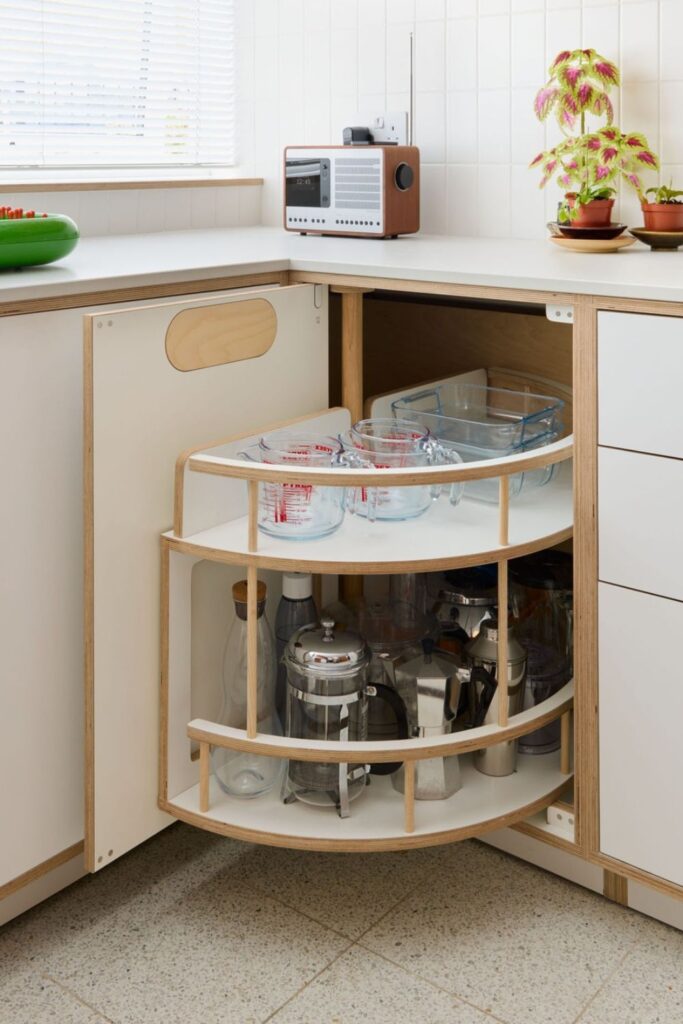
Deep corner spaces become far more usable once shelves follow the natural curve of the cabinet.
These rounded tiers make it easy to get to things because nothing gets stuck in the sharp back corner.
Kitchen equipment, glass containers, and coffee gear are all easy to find and use. The upper levels are great for lighter things like measuring cups or baking plates.
The bottom shelf is great for heavy things like appliances or bottles. Adding tiny guard rails around the perimeter stops everything from moving as the shelf moves.
This kind of curved storage makes a hard-to-reach nook into a useful space where everything is easy to see and access.
Grid Compartments
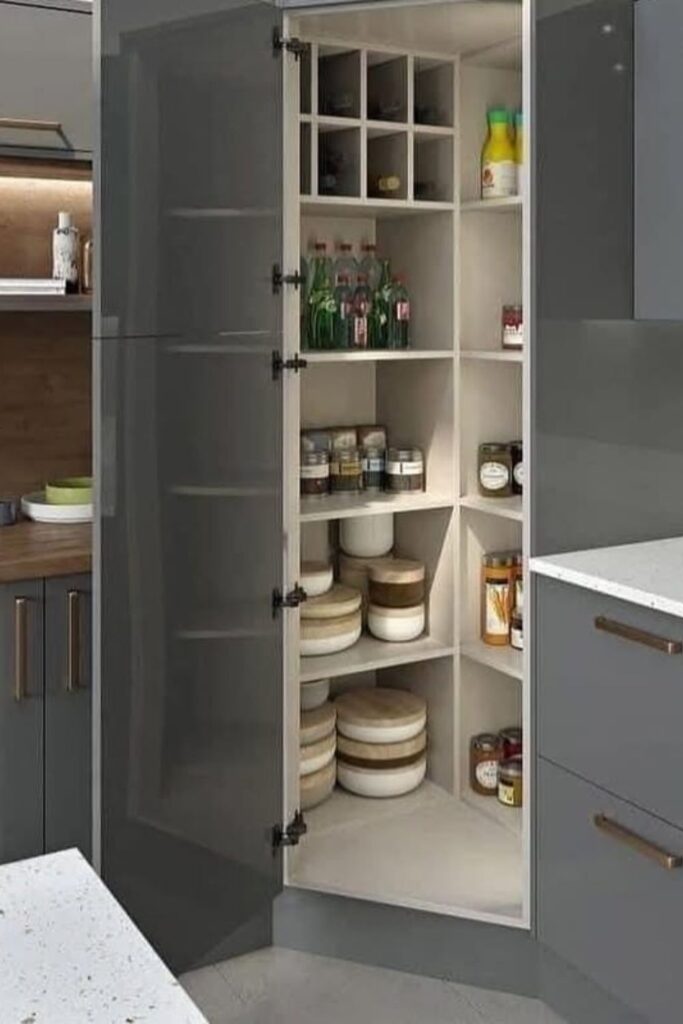
Deep corner cabinets feel much easier to manage once the space gets divided into small compartments.
Shelves that look like grids make it easy to see where different things are, so nothing gets lost under bigger containers.
Small cubes toward the top are useful for holding glasses or spice jars. Taller parts can hold bottles, condiments, or food from the pantry.
Bigger bottom divisions are great for bowls or storage containers that fit together neatly. To make this layout again.
You normally need to install custom dividers or modular shelf inserts that separate the cabinet into portions.
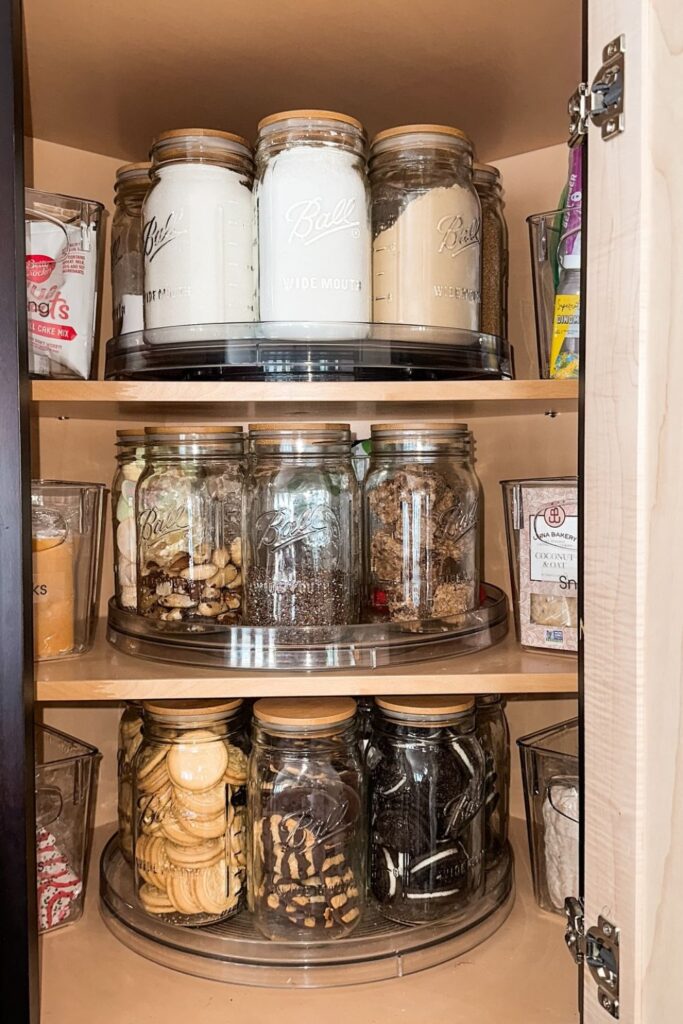
Pantry Turntables
Organizing dry foods becomes much easier once jars can rotate toward the front instead of hiding in the back.
These trays are great for holding glass jars of flour, sugar, snacks, or baking supplies since they keep everything together without making a mess.
When you stack a turntable on more than one shelf, each level can house a different type of pantry item.
Clear containers help keep things looking neat and make it easier to see what needs to be filled up.
When every ingredient slides forward instead of hiding behind larger containers, pantry corners stay useful.
Shelf Zoning
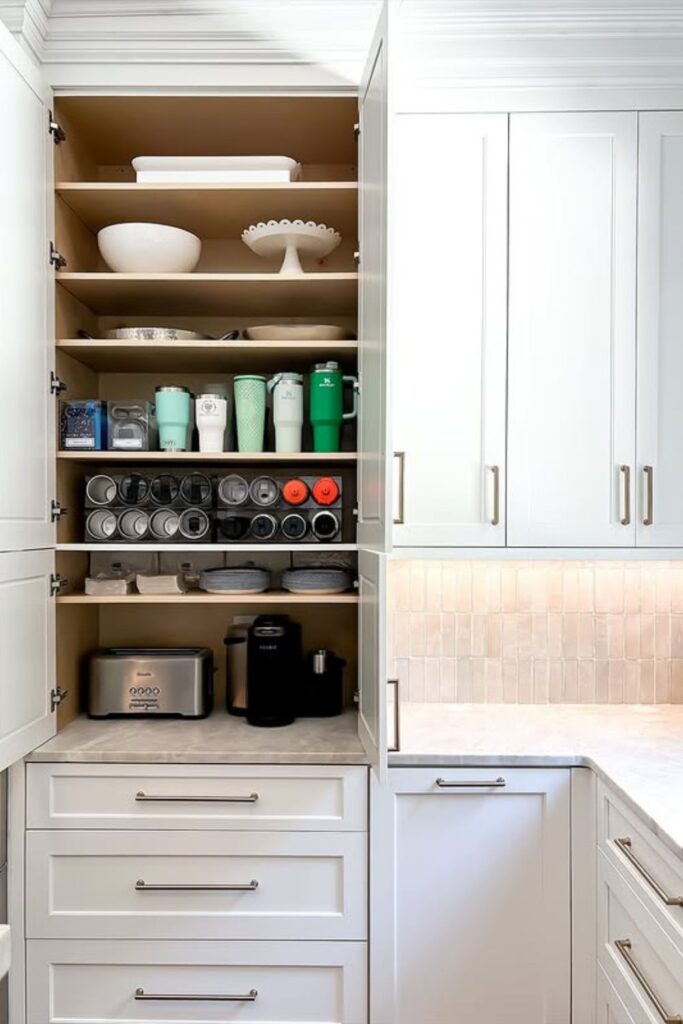
Clutter disappears quickly once each shelf has a clear purpose. Tall corner cabinets like this work best.
When each level is in charge of a different type of culinary item. You can put serving bowls or dishes that you don’t use every day on the upper shelf.
Middle shelves are great places to keep drinkware, cups, and coffee supplies so they’re always simple to get to.
A simple spice rack on one shelf keeps little jars from sliding about and keeps them orderly. Heavier equipment, like a toaster or coffee maker, should go on the lower shelves.
By splitting shelves into zones like this, you may make one big cabinet into numerous smaller, more organized portions that are easier to clean and use.
Sliding System
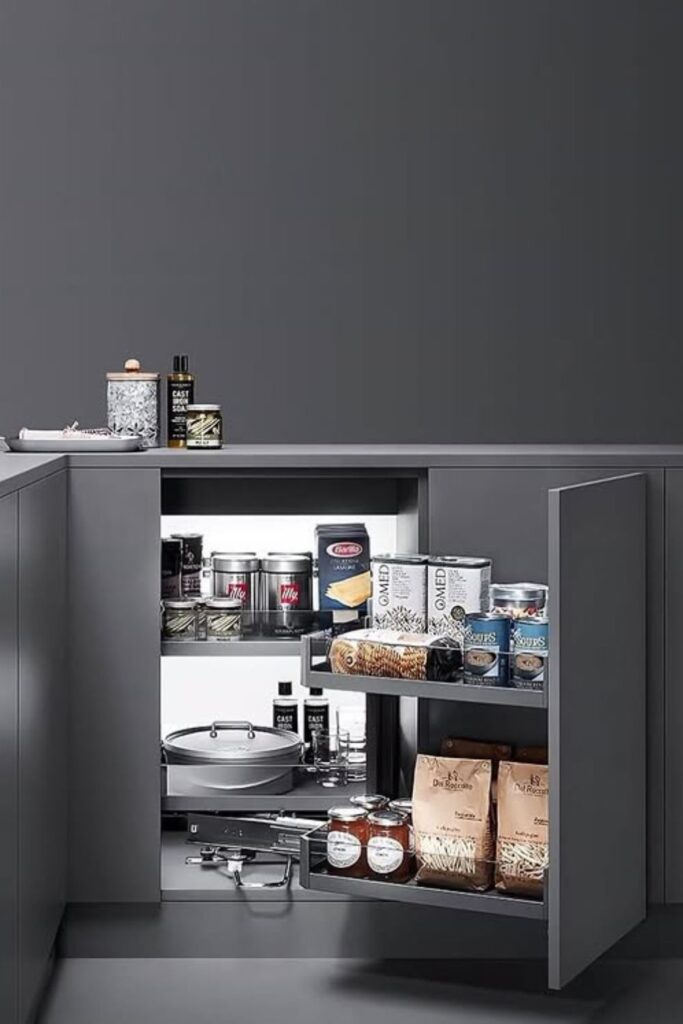
Hidden corners become much easier to use once storage can glide out toward you. A sliding corner system like this pulls shelves forward.
So things like food and cookware don’t stay hidden at the back of the cabinet anymore. The front trays are for jars or meals that are used a lot.
While the deeper part behind them can keep pots or bulk ingredients. Putting heavier things on the bottom shelf helps keep the movement smooth and even.
Installing normally means putting up a pull-out rail system that is made just for corner cabinets.
Storage is now much easier to utilize because you don’t have to bend over or dig among stacked goods to get to the rear.
Swing Shelves
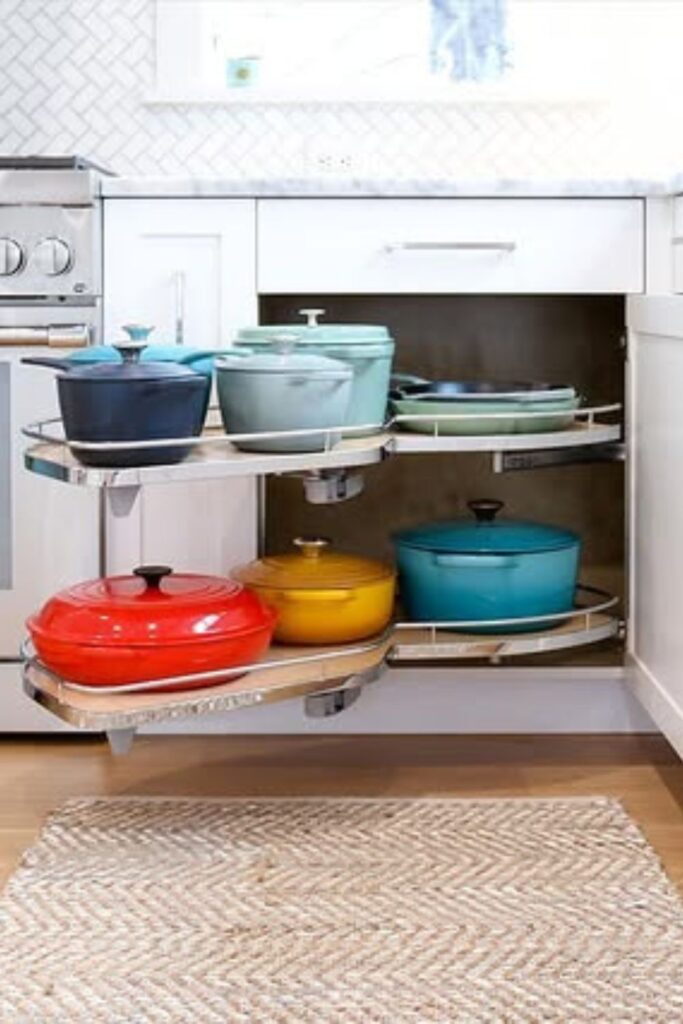
Heavy cookware becomes much easier to handle once shelves swing out of the cabinet instead of staying trapped in the corner.
This kind of revolving swing system pushes each shelf forward so that big pots and Dutch ovens are directly in front of you.
The rounded trays maintain everything in equilibrium, and the metal arms make sure the movement is smooth.
Lower shelves are better for heavy pots and pans because they keep the weight equally distributed.
The upper tiers can store lids or pots that are lighter. Adding a swing-out mechanism to the cabinet right away fixes the deep-corner problem.
Corner Carousel
Awkward cabinet corners feel much more useful once shelves follow a rotating carousel design. Curved tiers like these.
Instead of hiding jars and food containers in a dark corner, put them out in the open. Snacks, pantry items, or small jars of ingredients fit wonderfully.
Because each shelf makes a simple circle for storage. Put the taller jars on the outer border so they are simple to reach when the door opens.
Heavier food containers fit better on the lower levels, whereas lighter goods fit better on the upper levels.
This kind of rotating storage makes a small corner cabinet into a surprisingly useful pantry space where everything is easy to get to.
Corner Pullouts
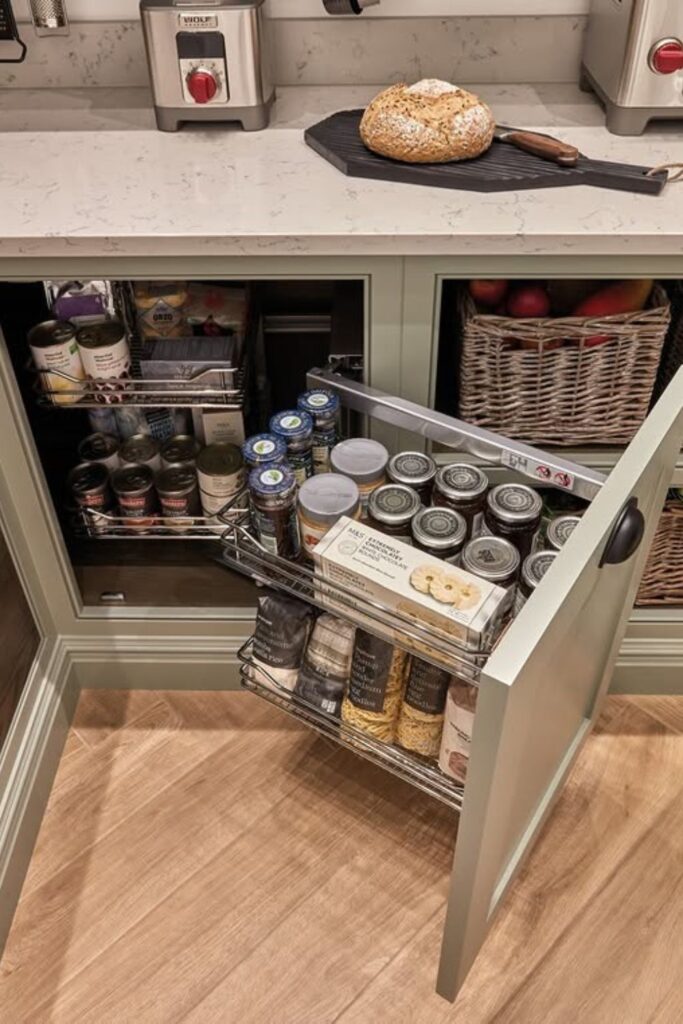
Blind corner cabinets stop wasting space once shelves can slide completely outside the cabinet.
This pull-out rack system brings two layers of storage to the front, so jars, spices, and other items are easier to see instead of lurking in the back.
The front baskets hold materials that are needed often, and the middle rack maintains spare supplies neatly stowed behind them.
Metal wire baskets keep the air flowing and stop anything from tipping over while the tray travels.
When everything comes to you instead of making you reach deep into the cabinet, pantry corners are a lot easier to use.
Spice Turntables
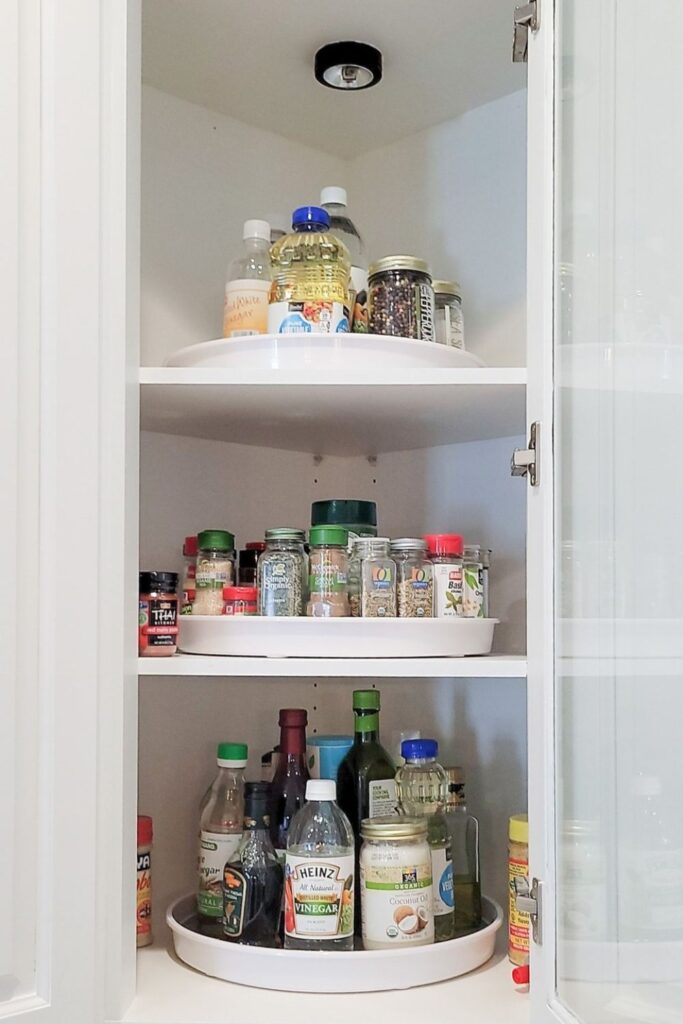
Small bottles quickly create clutter inside corner cabinets unless they can move freely. Rotating spice turntables solve that problem.
By quickly spinning the jars so that they are all visible. The tray has enough room for oils, vinegars, seasoning jars, and sauces, so nothing gets trapped in the rear corner.
Putting larger bottles on the outside edge keeps the rotation going smoothly, while smaller spice jars can go in the middle.
Multiple shelves work even better when each level has a distinct type of item, such spices, sauces, or cooking oils.
These simple rotating trays convert a messy corner cabinet into a clean, easy-to-use cooking area.
Tiered Rotation
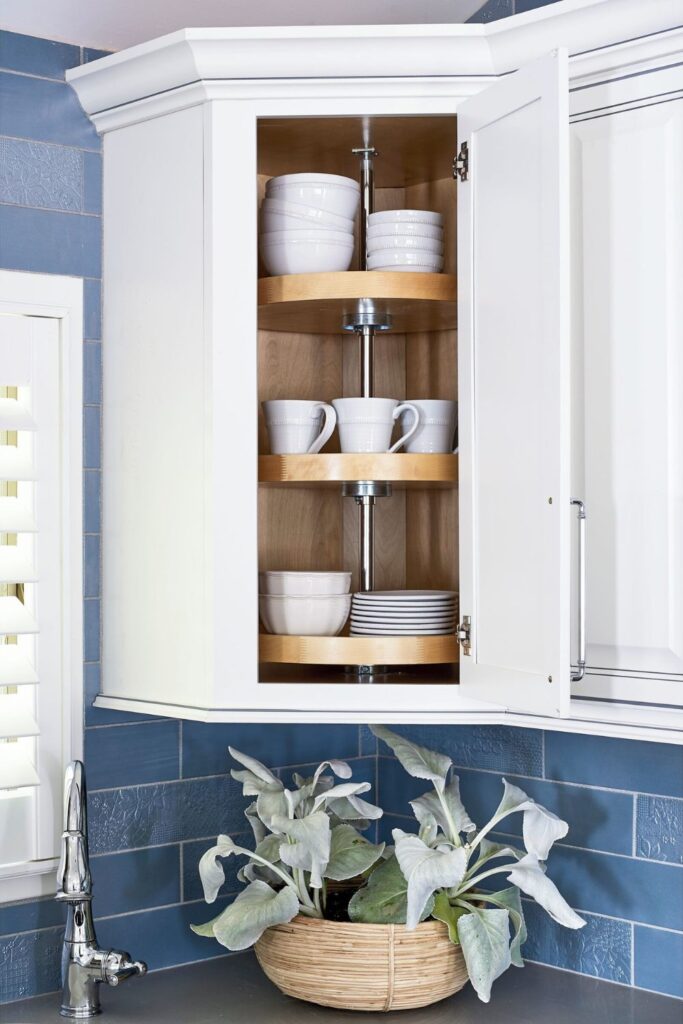
Tall corner cabinets become much more functional once shelves rotate around a central pole.
Tiered rotating shelves keep cups and plates apart while still letting everything spin to the front.
Plates and bowls keep balanced on the lower levels, while lighter mugs and serving bowls fit well on the upper shelves.
Installing is easier with a central pole arrangement since each shelf connects to the vertical rod instead than the walls of the cabinet.
A short turn brings the proper thing to the front, so your daily dishes stay orderly and easy to get to. You don’t have to reach deep into the cabinet.
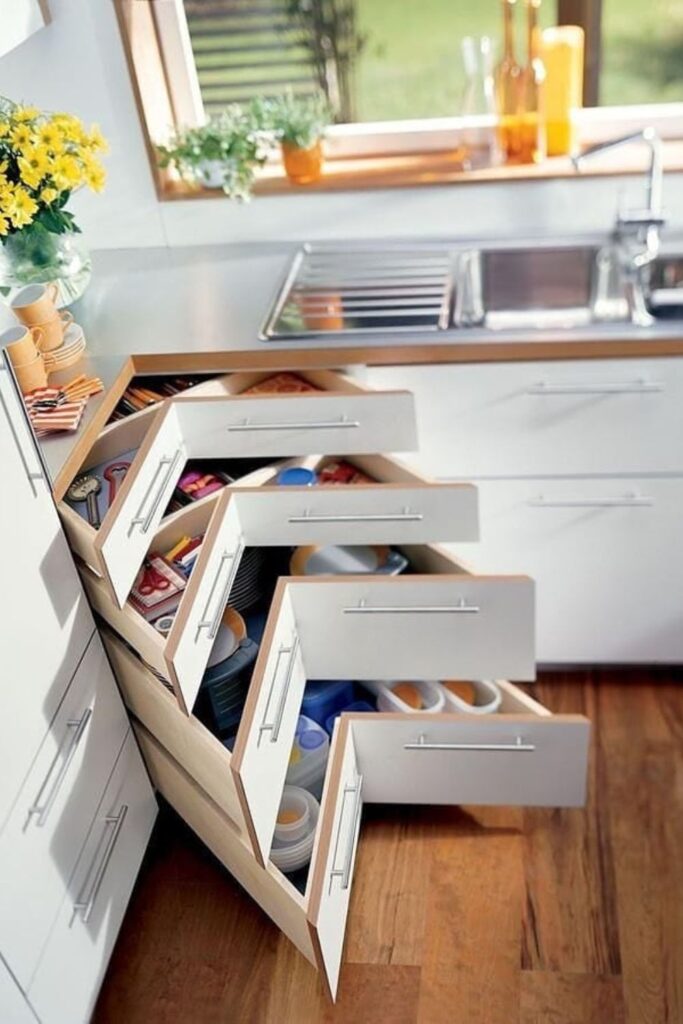
Corner Drawers
Triangular drawers turn an awkward corner into one of the most practical storage spots in the kitchen.
Each drawer slides out all the way, so you can see everything without having to crawl through a deep cabinet.
Because the form is inclined, kitchen equipment, measuring cups, lids, and small utensils fit properly.
The top drawers are great for tiny equipment, and the bottom drawers are better for storing containers or mixing bowls.
These corner drawers make cooking easier every day because it’s easy to get a tool by opening a drawer instead of reaching deep into a hidden cabinet.
Glass Storage
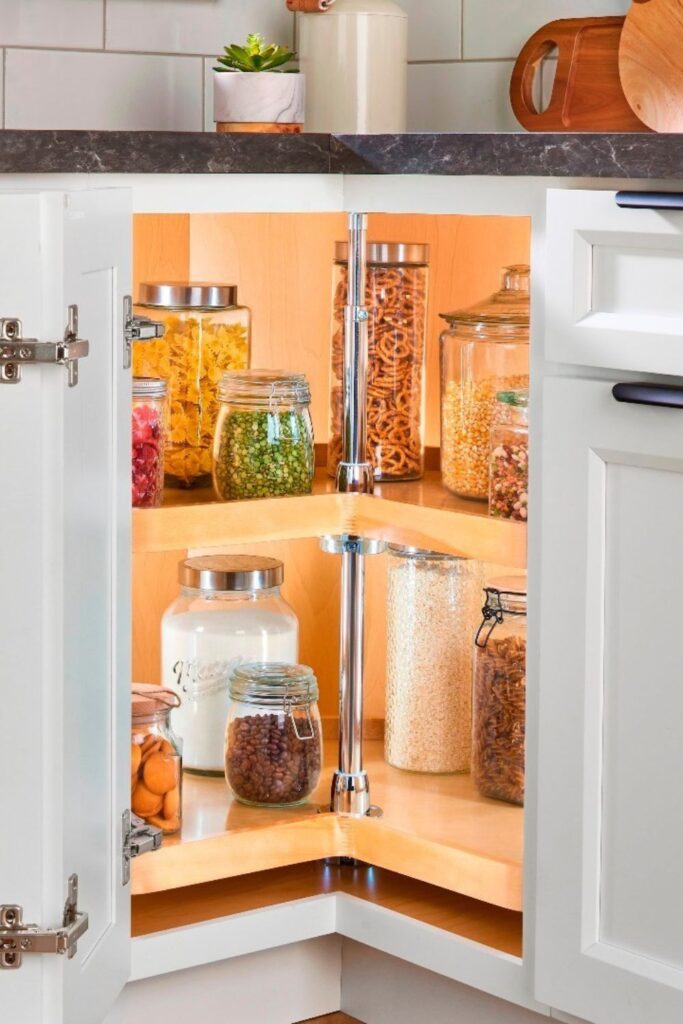
When you put dry foods in clear glass containers instead of random packaging, the corners of your pantry stay clean.
These tall jars make it easy to keep pasta, rice, beans, or snacks in order while still being able to see everything at a glance.
A rotating corner shelf with a pole in the middle helps move each jar forward so that nothing gets lost behind another container.
Put the bigger jars on the outside where they are easier to reach, and the smaller ones can stay in the middle.
Using containers that match also makes things look cleaner and keeps half-empty boxes from taking up additional space.
Wooden Pullouts
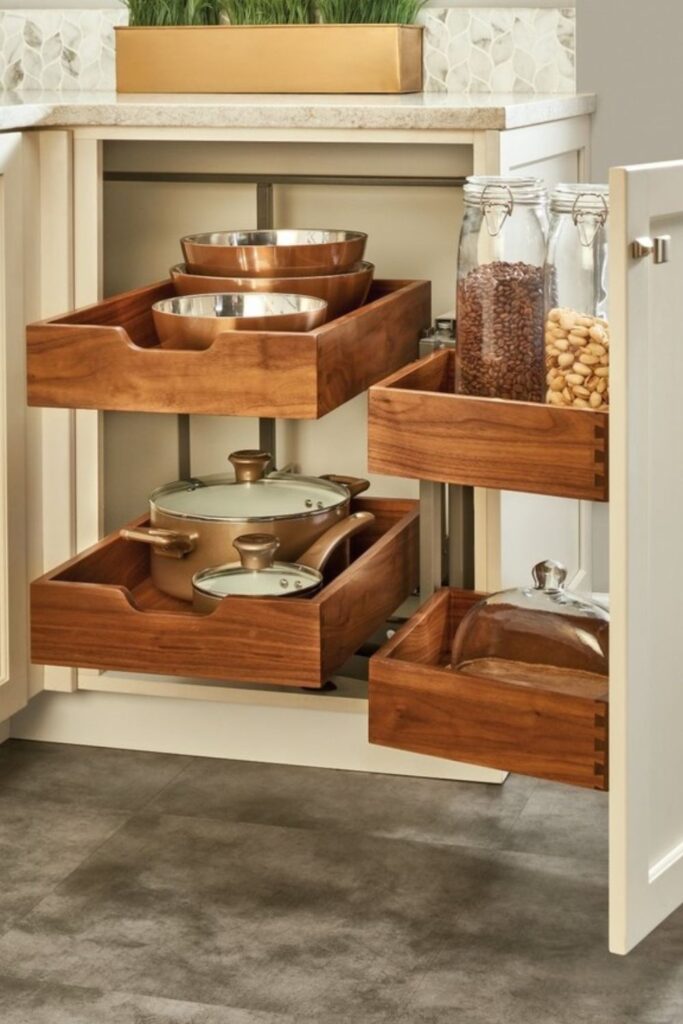
When storage trays pull out toward you, corner cabinets feel very different. These wooden pullout boxes.
Make different levels for pots, jars, and kitchen gadgets. So you don’t have to stack everything together.
You can put lighter things like bowls or pantry jars on the upper trays. And heavy pots and pans on the lower trays, which are deeper.
Solid wood boxes retain things in place so that nothing moves when the shelf does. Putting a pull-out frame within the cabinet lets each tray go forward easily.
It is easier to keep track of things when they are all visible instead of being hidden in the back corner.
Tall Pantry
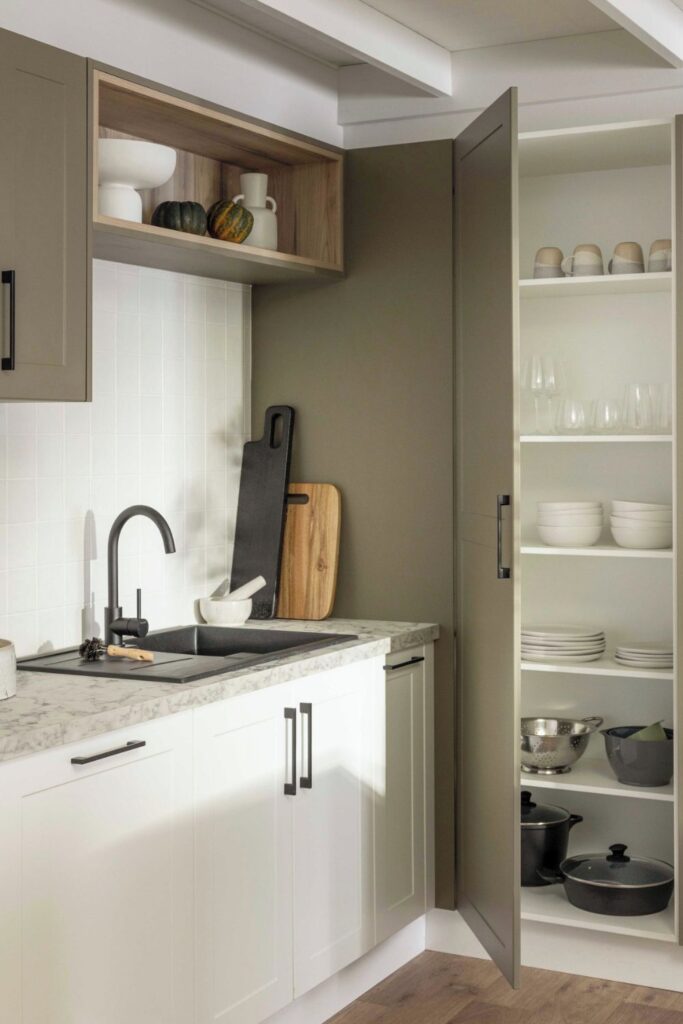
Corner spaces become incredibly valuable once they’re turned into a full-height pantry. Floor-to-ceiling shelving like this creates multiple storage levels.
where things you need in the kitchen are easy to find and access. Upper shelves are good for holding serving dishes or things you don’t use very often.
Everyday plates, bowls, and glasses can go on the middle shelves so they are easy to reach.
Lower shelves are great for heavy pots and pans because it’s easier to lift them from waist height. Grouping related things together on each level helps keep things in order.
This type of tall corner cabinet turns a space that is often ignored into a very useful storage area that helps with everyday cooking.
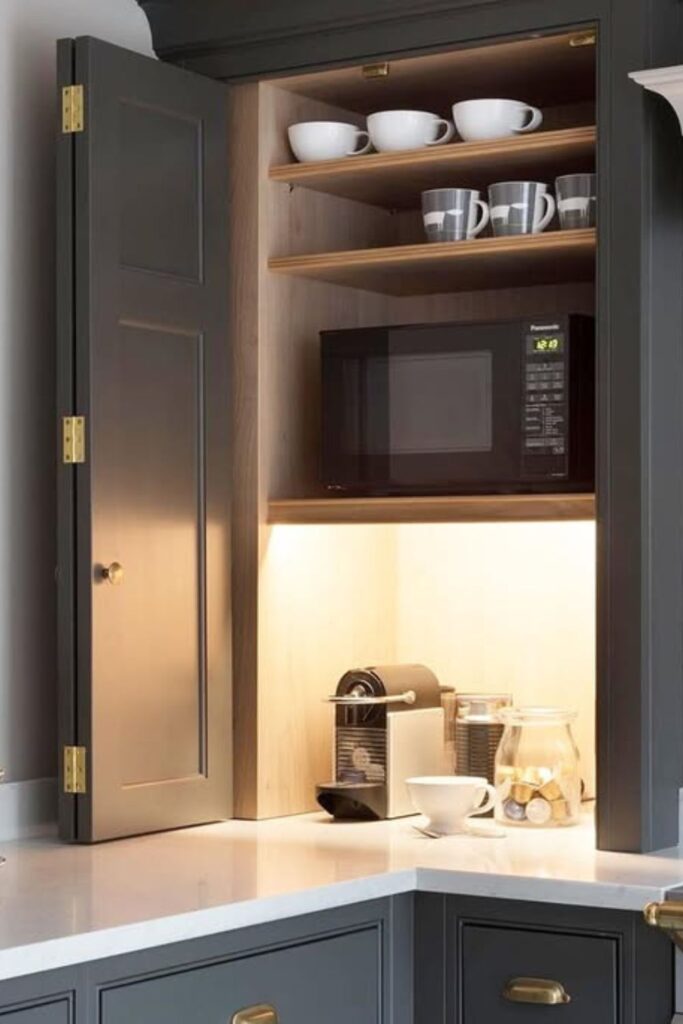
Appliance Nook
Unused corner cabinets can easily transform into a compact appliance station. Built-in shelves create a dedicated spot.
Where little kitchen appliances stay in order instead than making the counter look messy. The middle shelf is a good place for a microwave.
And the top shelves are perfect for holding mugs or coffee cups that are ready to use. You may turn the lower space into a mini coffee station with a machine, sugar jars.
And other minor things. Putting a power outlet inside the cabinet makes it easy to utilize appliances without having to move them.
This approach of organizing corners keeps the counters clear and makes the cabinet a useful place to cook and drink.
FAQs
What should you avoid storing in a corner kitchen cabinet?
Things that are fragile or that you use every day usually don’t function well in corner cabinets.
Deep corners can make it tougher to handle fragile foods, and instruments that you use a lot may be hard to reach.
Put things like pots, food from the pantry, small appliances, or extra containers there instead. Those things demand deeper storage and don’t need to be accessed all the time.
Are corner cabinet organizers worth installing?
Corner cabinet organizers can really help you use the space better. Pull-out shelves, lazy Susans.
And swing-out trays are examples of systems that move things from the rear to the front. This keeps things from getting messy and wasting space.
Adding an organizer to your cabinet can convert it into one of the most useful storage spaces in the kitchen if it feels like a “black hole” where items disappear.
You may like to read!
- 26 Dresser Organization Ideas
- 21 Freezer Drawer Organization
- 22 Playroom Organization Ideas
- 23 Paper Organization Ideas
- 22 School Organization Ideas

Fasial is the founder of the Fizzy Flare. He has been a passionate blogger since 2021. He ran three different websites in the past few years. Now he is focusing on Fizzy Flare to build an audience and help them organize their life.