19 Jacket Storage Ideas for 2026
This post may contain affiliate links: full affiliate disclosure.
If your jackets smell musty every time you pull them out of storage, you’re not alone. You wash them, fold them neatly, tuck them away, but a few months later, that stale smell is back.
It feels like you did everything right, yet something still went wrong. The problem isn’t the jacket. It’s the way it’s being stored.
Once you fix the storage setup, the smell stops coming back. Let’s set up a jacket storage system that keeps everything fresh.
In this article, you’ll see how to store jackets without smelling them musty and 19 storage ideas.
Let’s jump in!
Contents
- 1 How Can I Store Jackets Without Them Smelling Musty?
- 1.1 Double Rod Layout
- 1.2 Industrial Pipe Rack
- 1.3 Ladder Shelf Rack
- 1.4 Labeled Bin System
- 1.5 Maxed Closet Rail
- 1.6 Built-In Closet Zone
- 1.7 Hidden Mudroom Nook
- 1.8 Wall Hook Grid
- 1.9 Clear Bin Storage
- 1.10 Panelled Entry Bench
- 1.11 Open Utility Shelving
- 1.12 Closet Nook Setup
- 1.13 Freestanding Coat Stand
- 1.14 Slim Wall Hooks
- 1.15 Door Hook Solution
- 1.16 Sectioned Closet System
- 1.17 Mini Mudroom Closet
- 1.18 Compact Entry Closet
- 1.19 Divided Hanging Zones
- 2 FAQs
How Can I Store Jackets Without Them Smelling Musty?
If you want your jackets to stay fresh in storage, you have to control two things: moisture and airflow.
Musty smells don’t appear out of nowhere. They happen when even a little dampness gets trapped in a dark, closed space.
Never store a jacket that hasn’t been properly washed and completely dried. Even small amounts of sweat or body oil can create odor over time.
Next, avoid sealing jackets in airtight plastic unless you’re 100% sure they’re bone dry. Instead, use breathable garment bags or fabric bins.
Store them in a cool, dry place, not a damp basement or humid closet. If your space tends to hold moisture add cedar blocks, silica gel nearby.
And don’t overpack storage containers. When air can move, smells don’t build up. Control moisture, allow airflow, and your jackets will stay fresh all season.
Save this article for later! 👇👇

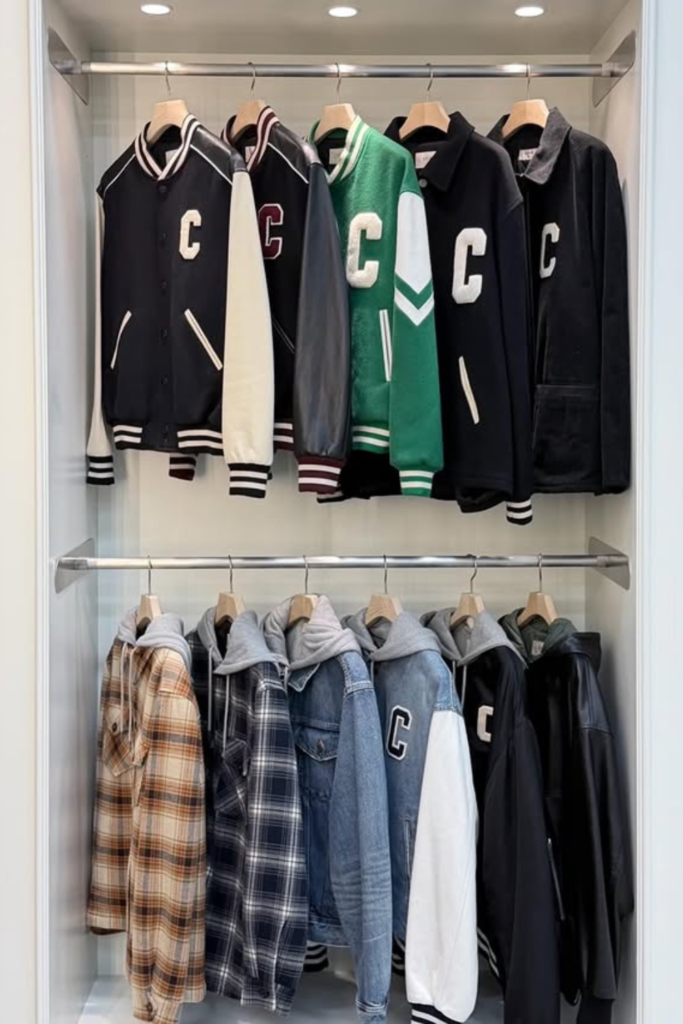
Double Rod Layout
Closet space doubles the moment you stop stacking everything on one rail. Matching wooden hangers keep everything aligned.
Adding a second hanging rod instantly separates heavier jackets from lighter layers, so nothing feels crammed.
Use the top rod for structured pieces like varsity or wool jackets, and keep casual layers below for daily grab-and-go access.
Built-in ceiling spotlights above the rods brighten the whole section and make the closet feel intentional, not crowded.
Clean lines, proper use of vertical space, and airflow between pieces keep your jackets organized and fresh.
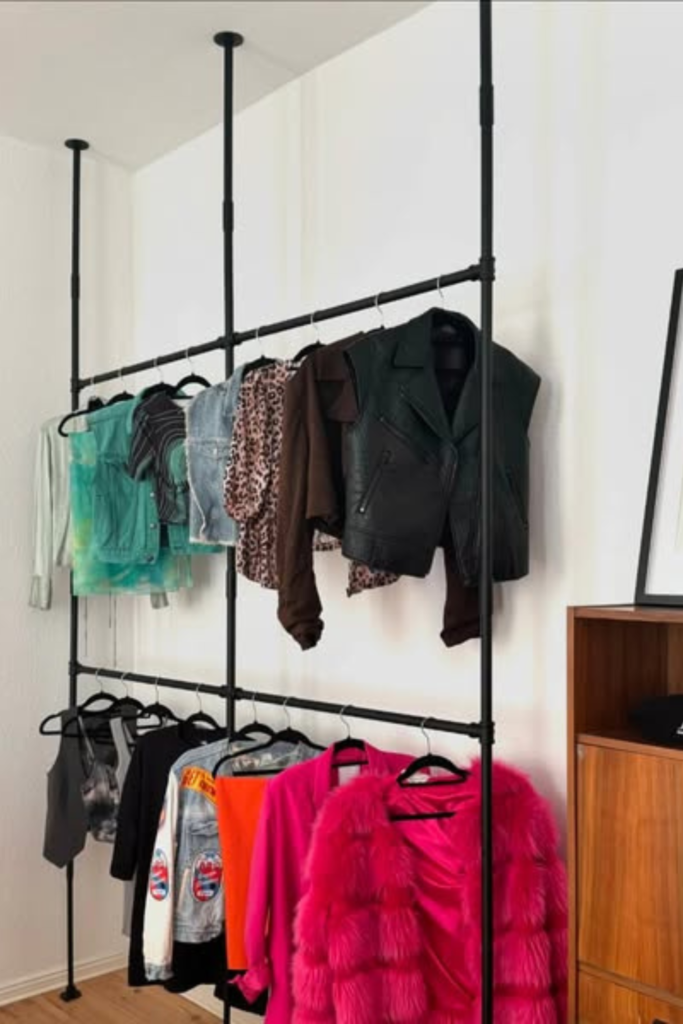
Industrial Pipe Rack
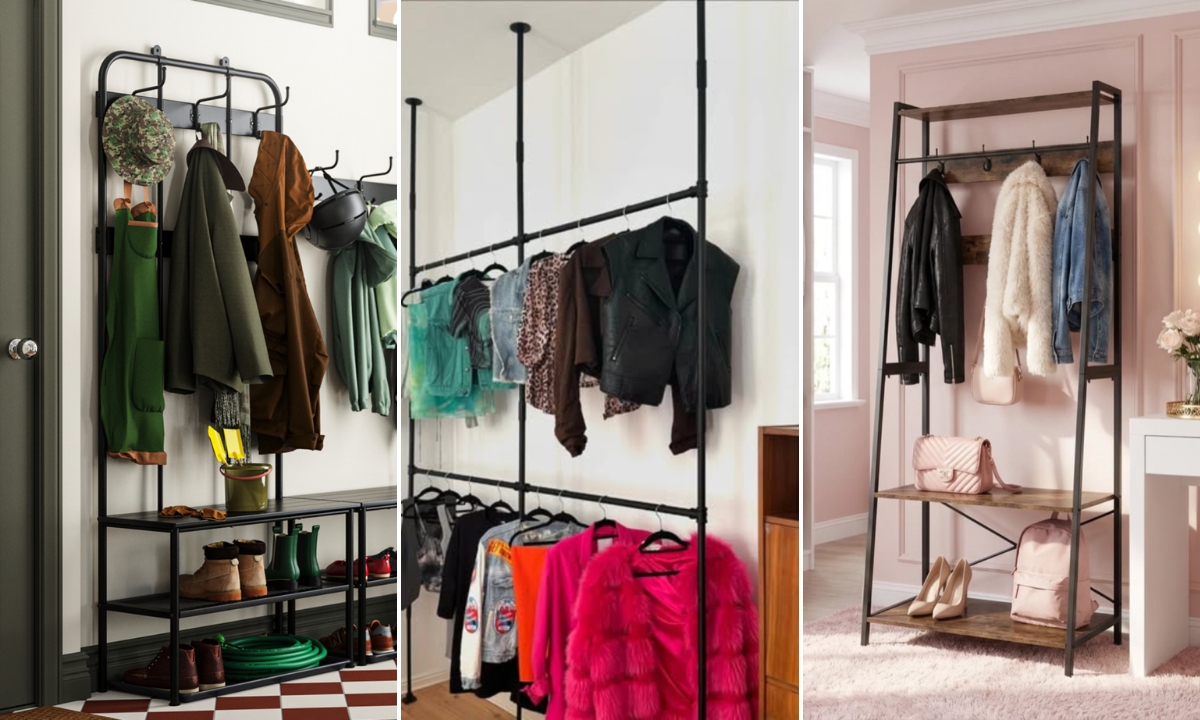
Go vertical and bring the rack out into the room. Freestanding pipe rack like this turns your jackets into part of the decor.
Heavy pieces sit on the top bar; everyday layers hang below, so weight stays balanced, and nothing bends.
Black metal pipes give structure and hold bulkier coats. Anchore vertical poles securely between the floor and ceiling.
Add two horizontal bars. Keep the spacing wide enough so air can move between jackets, which alone helps prevent musty smells.
Natural daylight keeps the area bright, while the dark frame adds contrast and definition against light walls.
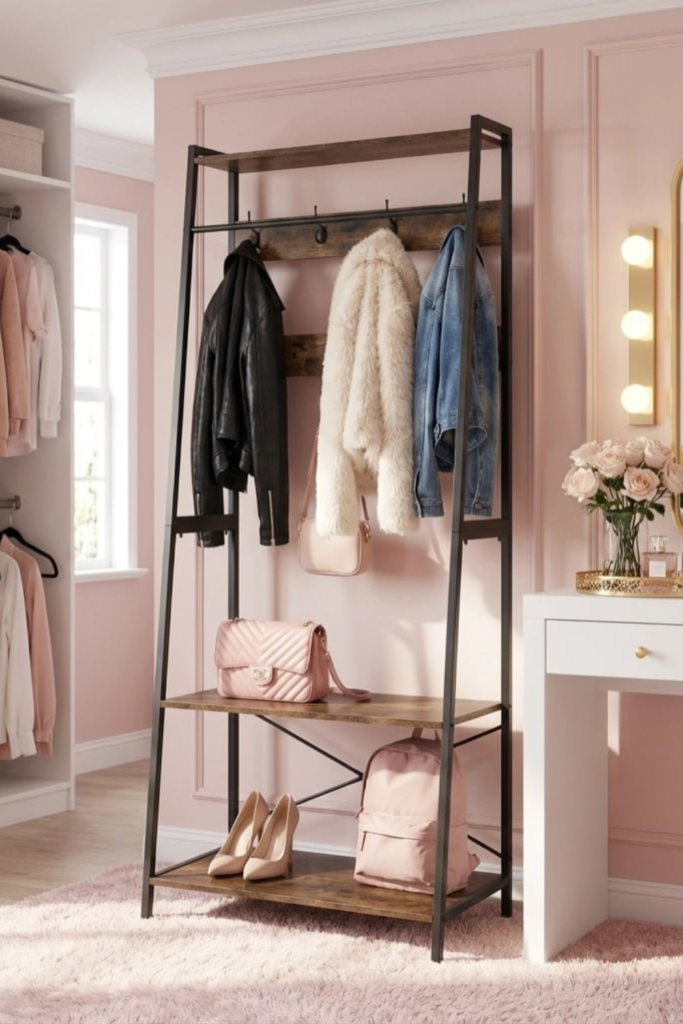
Ladder Shelf Rack
Style and storage can live in the same corner. A ladder-style rack like this works beautifully in bedrooms, dressing rooms.
Best in wide entryway where you want jackets visible but controlled. Hang daily layers on the middle hooks.
Keep bags within reach, use the lower shelf for shoes or storage boxes. Open sides allow air to move freely, which helps prevent trapped moisture.
Recreate the setup by placing the rack against a solid wall and keeping spacing intentional so it doesn’t look crowded.
Warm vanity bulbs layered beside the mirror add a soft glow, while natural daylight keeps the space bright and fresh.
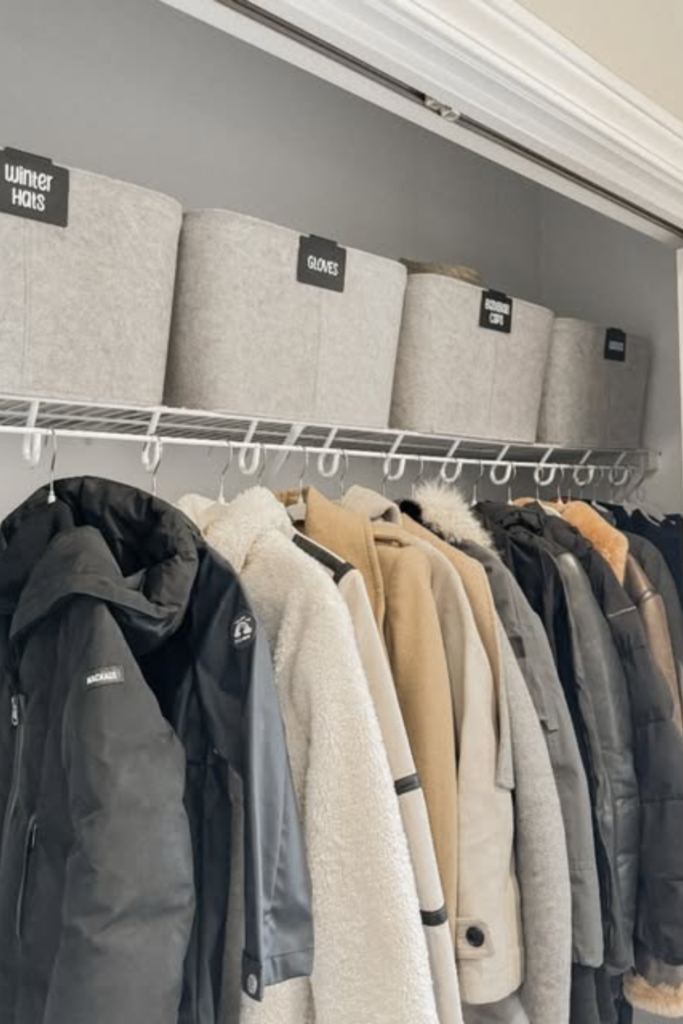
Labeled Bin System
Storing winter coats below and labeled fabric bins above creates a simple system you can actually maintain.
Use the top shelf for off-season items like gloves, scarves, and lighter layers, and clearly label each bin.
You don’t have to dig through everything later. Wire shelving keeps air circulating, helps prevent trapped moisture and stale smells.
Recreate it by installing a sturdy shelf above your hanging rod and choosing breathable fabric containers.
Soft overhead lighting keeps the space bright, while neutral tones make the closet feel clean instead of cluttered.
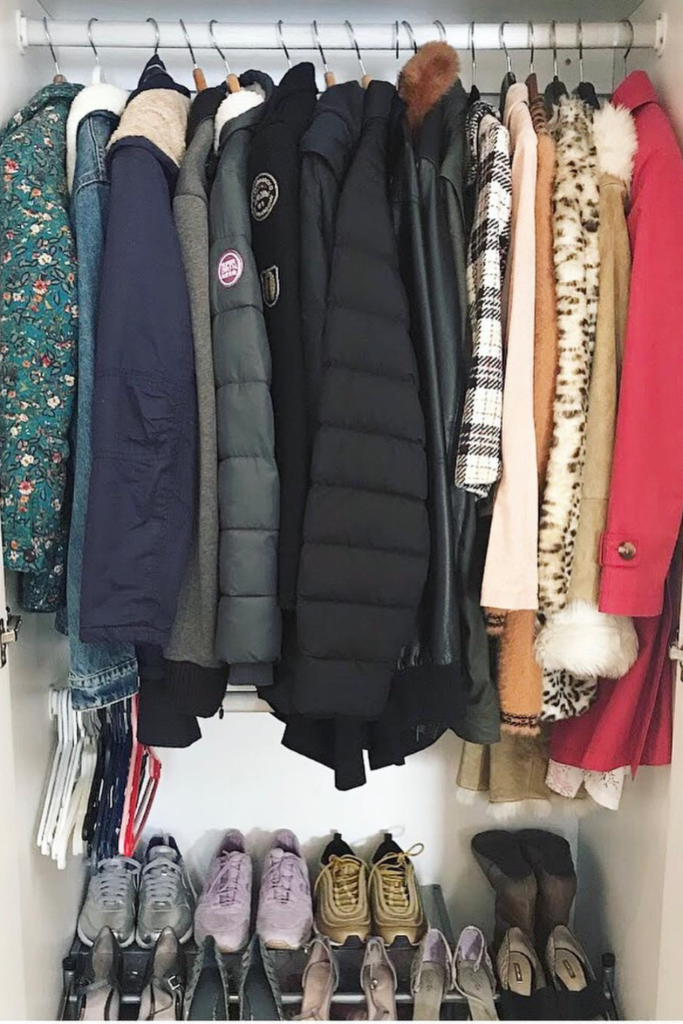
Maxed Closet Rail
Cramming every jacket onto one rod might feel efficient, but tight spacing traps air and creates wrinkles.
Spread hangers evenly so sleeves don’t overlap and fabrics can breathe. Group heavier winter coats on one side.
Lighter layers on the other to make daily picking easier. Swap thin wire hangers for sturdy wooden or velvet ones.
Protect shoulders and keep pieces aligned. Use the floor space wisely with a slim shoe rack instead of loose pairs scattered underneath.
Recreate this setup by decluttering first, then reinstalling the rod at the right height for your longest coat.
Built-In Closet Zone
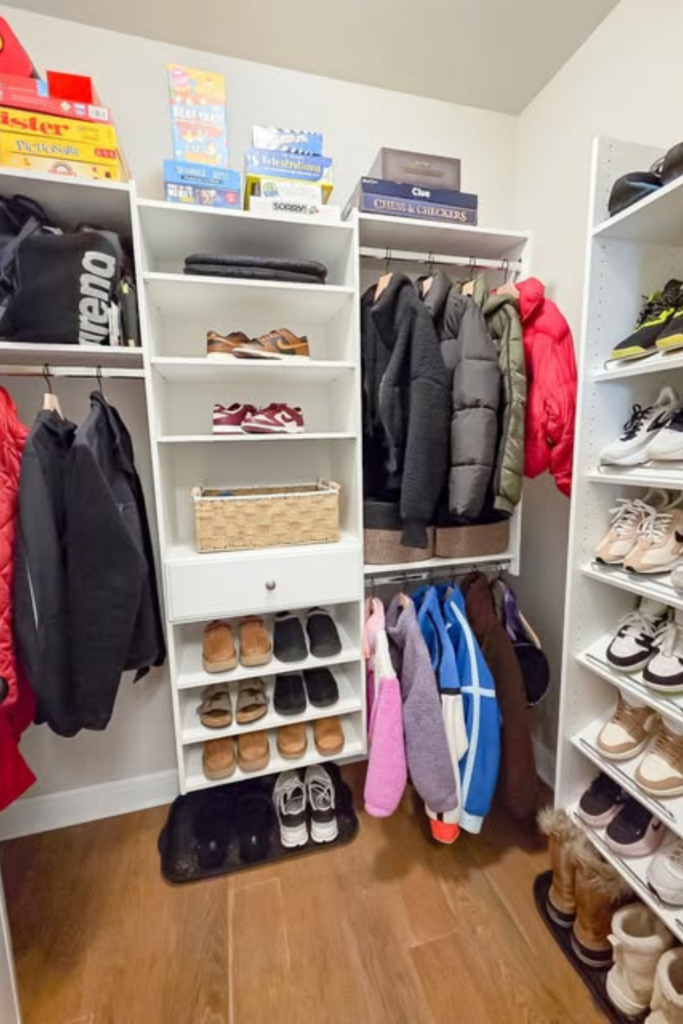
Shared spaces feel smaller when jackets fight for room with shoes and random clutter. Creating clear zones solves that instantly.
Dedicate one hanging section to outerwear only; keep everyday coats at eye level, use modular closet units that mix hanging rods.
Move off-season pieces higher or lower. Surrounding shelves handle shoes, bags, and folded items so nothing piles on the floor.
Open shelving improves airflow, helping prevent moisture from becoming trapped inside bulky coats.
Bright ceiling lighting keeps the entire space well-lit, while white shelving reflects light, making the closet feel bigger and cleaner.
Hidden Mudroom Nook
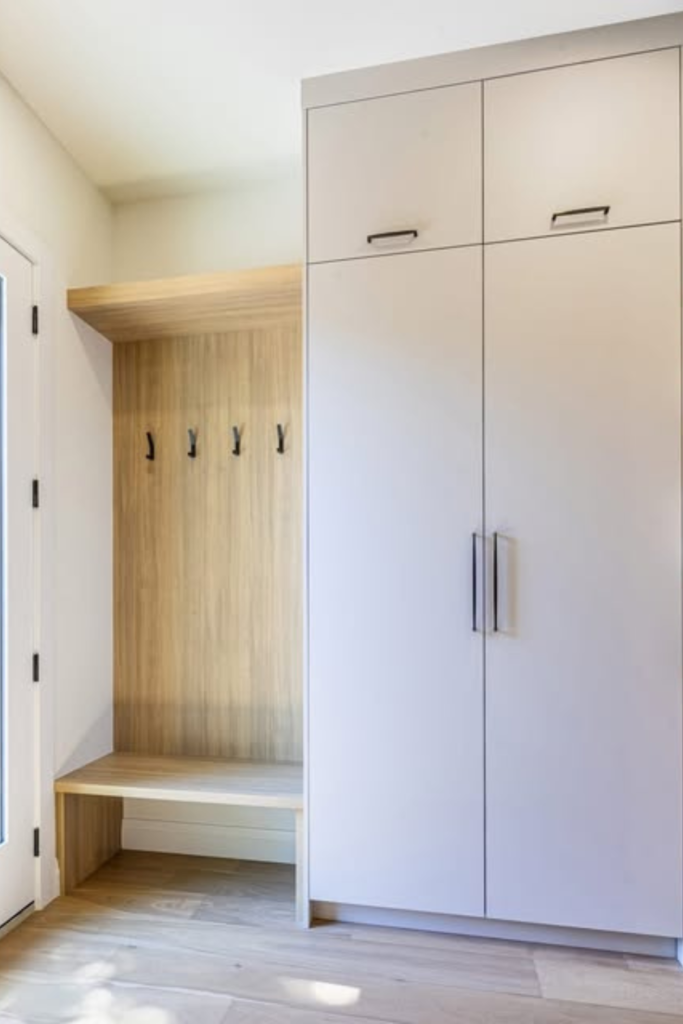
Walk in, hang it up, sit down routine becomes effortless with a built-in nook like this. Wood paneling adds warmth and texture.
Wall hooks handle daily jackets so they don’t crowd your closet, while the bench gives you a place to drop bags or change shoes.
Closed cabinets beside it hide seasonal coats and extras, keeping the space calm instead of cluttered.
Recreate the setup by carving out a small wall section near your entry and adding sturdy hooks spaced wide enough for airflow.
Natural daylight from the nearby window keeps everything bright and fresh. Open hooks for daily use, closed storage for the rest.
Wall Hook Grid
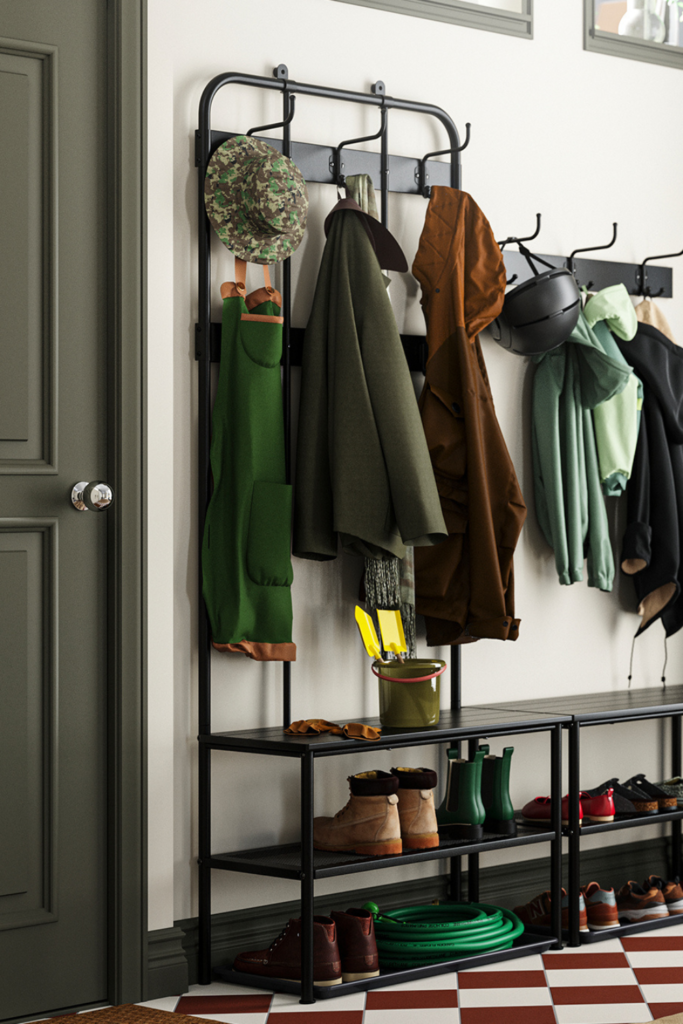
Entryway mess usually happens because jackets land on the nearest chair. Keep hooks at different heights if kids use them too.
Mounted hook grid fixes that fast. Wide, spaced-out hooks give each coat its own spot, so fabrics can breathe.
Pair it with a slim bench underneath to hold shoes and bags, keeping everything off the floor, this method works well.
Recreate the setup by securing a sturdy metal or wood hook rail into wall studs, then add open shelving below for boots.
Natural light from nearby windows keeps the area bright, while dark hardware adds contrast and structure without feeling bulky.
Clear Bin Storage
Digging through mystery boxes every season wastes time. Clearly labeled bins solve that problem instantly.
Store gloves, scarves, and small winter layers in transparent containers above your hanging rod so you can see what’s inside.
Keeping coats below on evenly spaced hooks allows airflow and prevents fabrics from pressing together too tightly.
Wire shelving underneath works well for shoes because air moves freely, reducing trapped moisture.
Bright overhead lighting reflects off the white shelves, making the entire closet feel clean, organized, and easy to maintain.
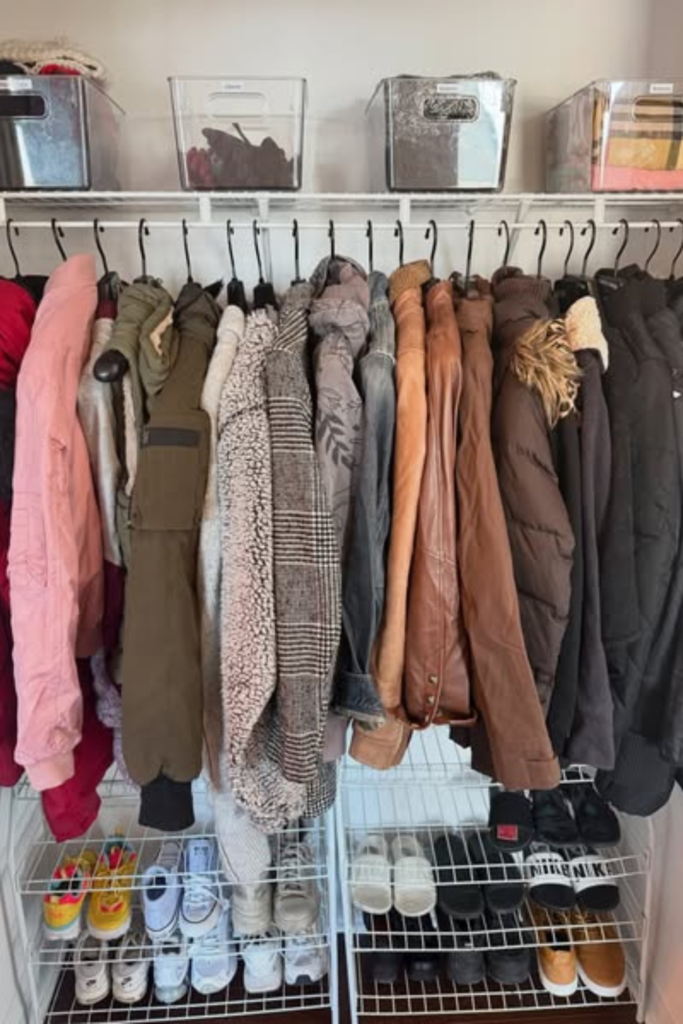
Panelled Entry Bench
Walking into a calm entry changes everything. A panelled wall with built-in hooks gives each jacket a defined place.
The bench below keeps shoes and bags from spreading across the floor. Coats hang with space between them.
Allowing air to circulate so fabrics dry properly after rain or snow. Recreate this by adding vertical wall paneling for structure.
Install sturdy hooks evenly across the board. Built-in drawers under the bench hide gloves and scarves, keeping surfaces clear.
Soft recessed ceiling lights brighten the nook, and natural light from the nearby window keeps the area feeling fresh instead of heavy.
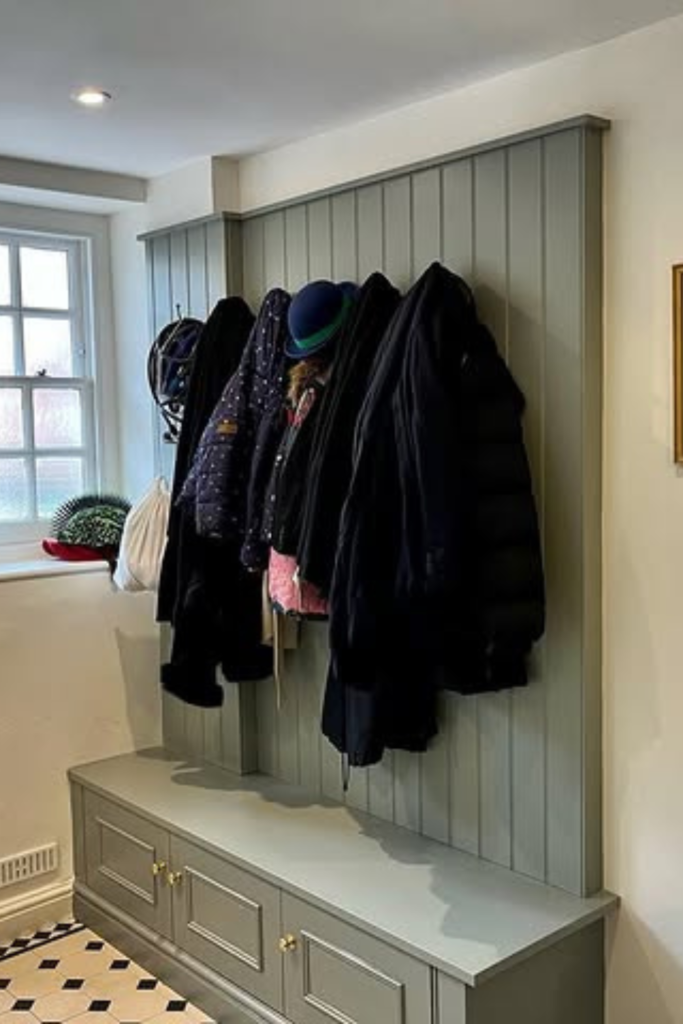
Open Utility Shelving
Busy households need storage that can handle real life. Recreate the look with modular metal shelving that you can adjust as needs change.
Open utility shelving like this keeps jackets, shoes, bags, and gear in one controlled zone instead of scattered around the house.
Hang longer coats on one side and use adjustable wire shelves for folded puffers and seasonal layers.
Open racks allow air to circulate, which helps jackets dry properly after rain or snow. Add bins for smaller items so nothing gets lost.
Bright overhead lighting keeps everything visible, while the open design prevents damp, trapped air from building up.
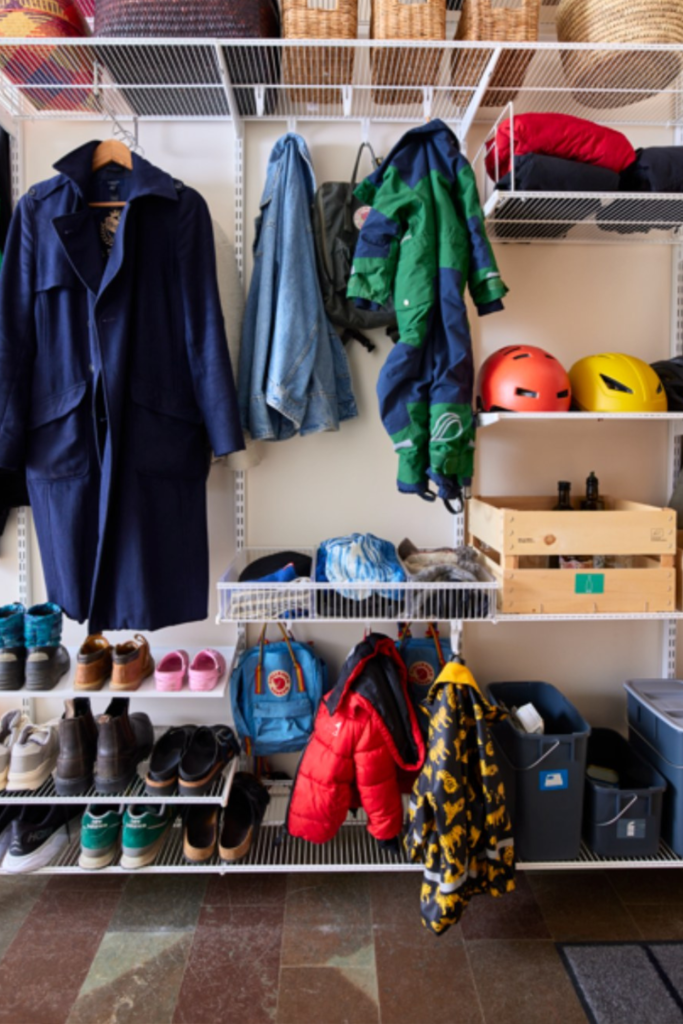
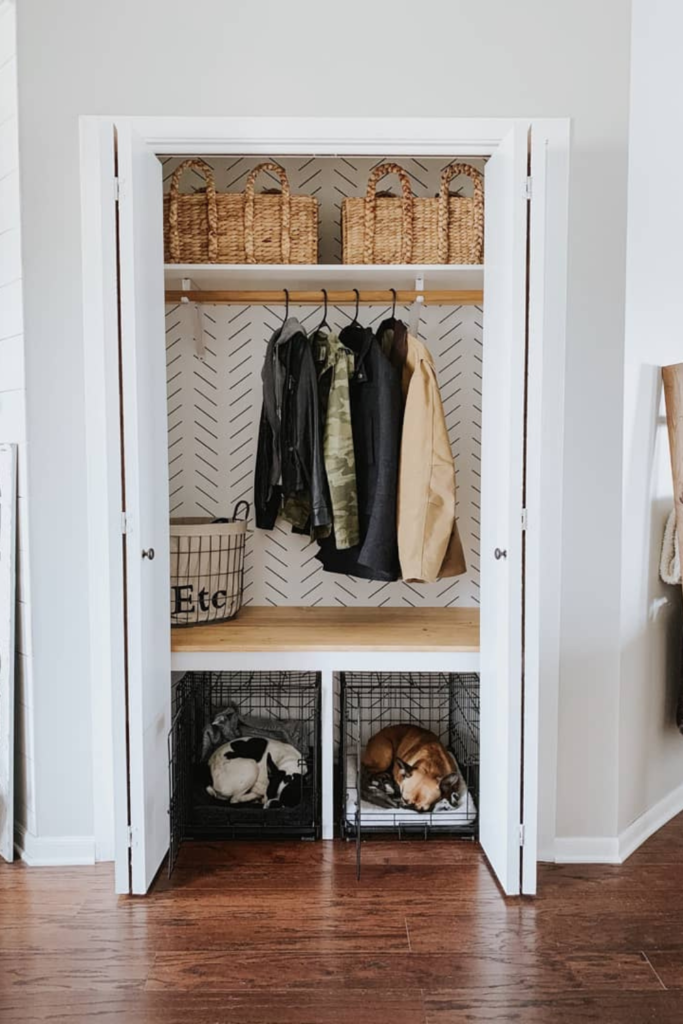
Closet Nook Setup
Single wooden rod keeps daily coats easy to grab, while the wide shelf above holds woven baskets for gloves, hats, and off-season layers.
Open space below prevents crowding and allows air to move, helping fabrics stay fresh. Remove bulky doors, if needed.
Add simple paneling or patterned wallpaper to provide structure. Keep hangers evenly spaced so jackets don’t press against each other.
Natural light from nearby rooms keeps the nook bright, while light-colored walls reflect that glow and make the small space feel open rather than boxed in.
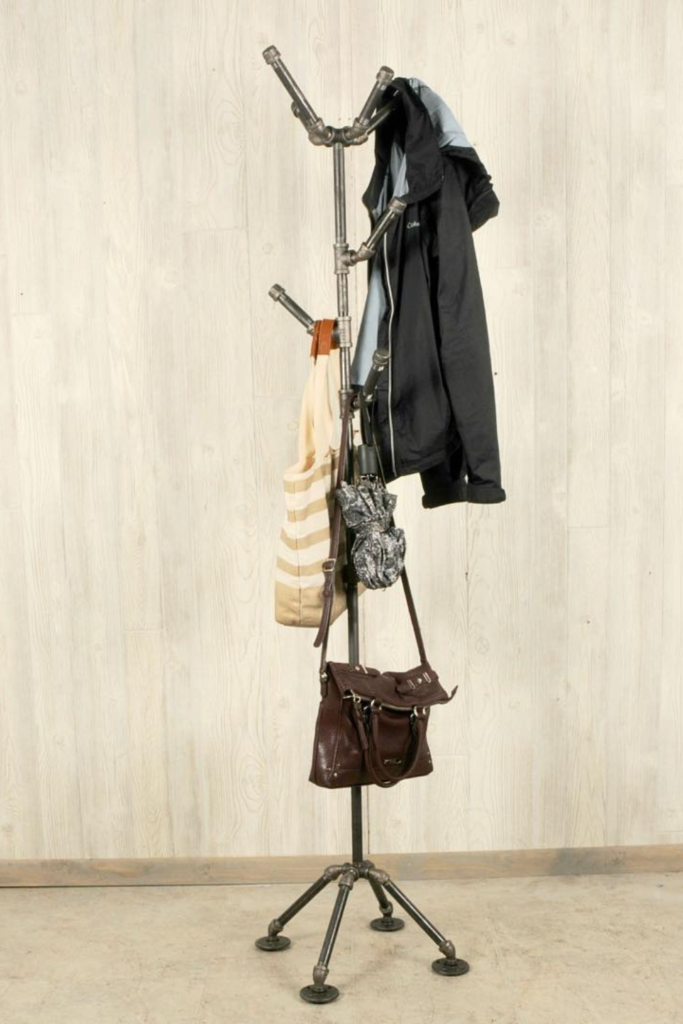
Freestanding Coat Stand
Corners often go unused, yet they’re perfect for quick jacket storage. Simple, movable, and easy to reset when clutter builds up.
Freestanding coat stand lets you hang vertically without drilling into walls, making it ideal for rentals or small entryways.
Spread jackets across multiple arms instead of stacking them on a single hook so air can move between layers.
Keep heavier coats lower for balance and lighter items up top. Place the stand near the door, but not blocking traffic flow.
Metal finishes add an industrial edge, while neutral walls and natural light keep the setup from feeling bulky.
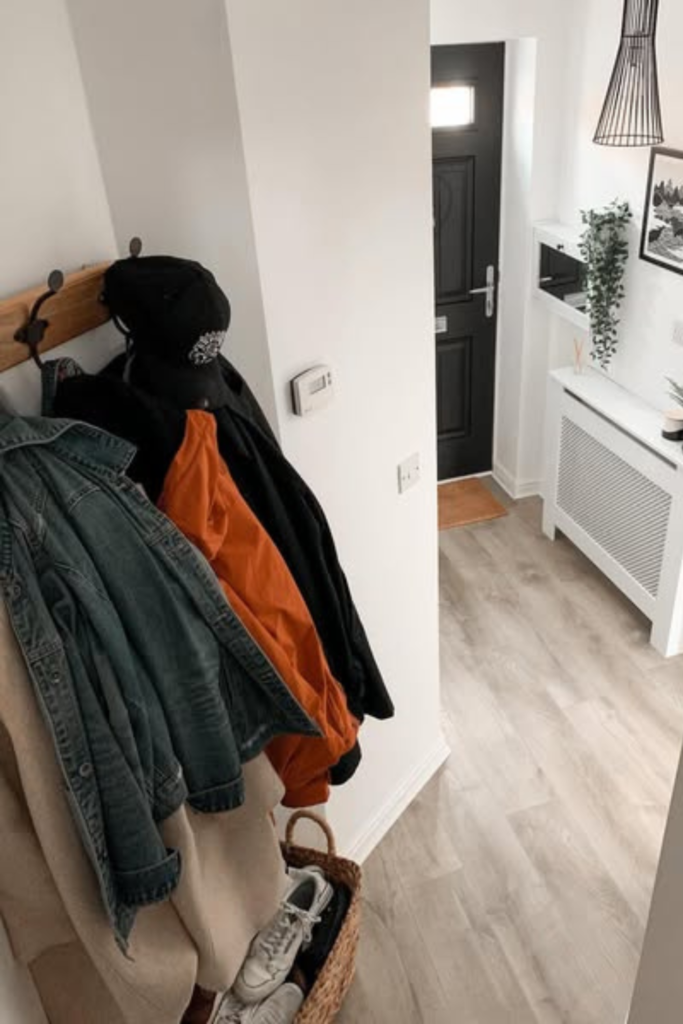
Slim Wall Hooks
Narrow hallways don’t leave room for bulky racks. A simple row of slim wall hooks keeps jackets off chairs without crowding the space.
Mount them at shoulder height so coats hang naturally and don’t drag against the wall. Space each hook far enough apart.
Sleeves don’t overlap, allowing air to circulate and dry damp fabric. Add a small basket underneath for shoes or scarves.
Soft pendant lighting above and natural light from the entry door keep the area bright and welcoming, rather than cluttered.
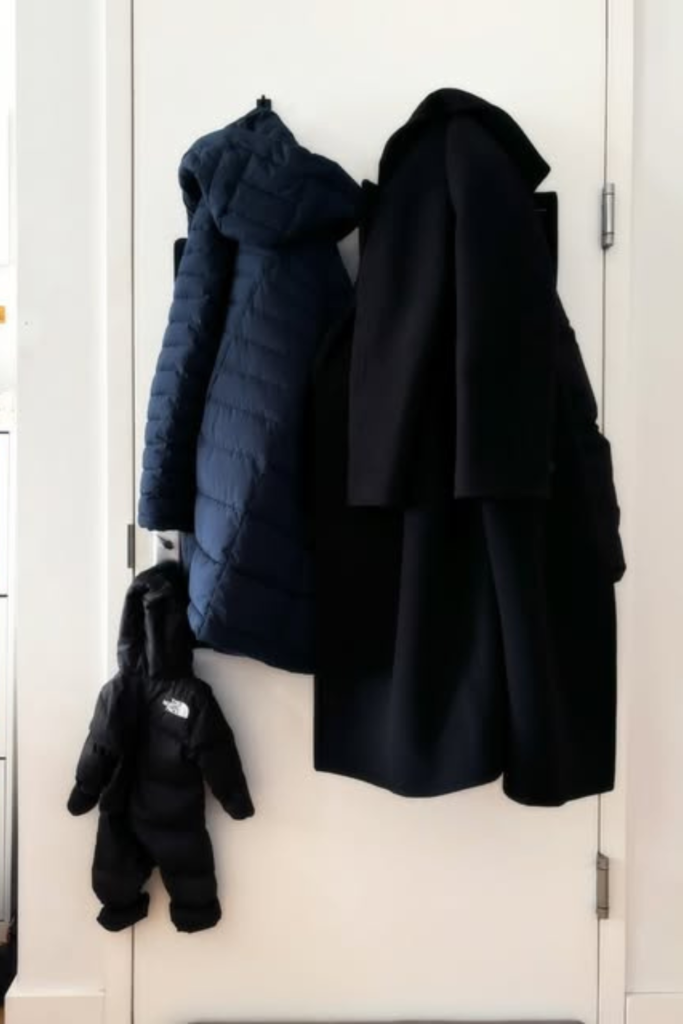
Door Hook Solution
Closet full? Use the back of the door. Over-the-door hooks turn wasted space into instant jacket storage, with no tools required.
Hang heavier coats on the top hooks and keep lighter pieces lower to balance the weight. Leave small gaps between items.
Fabric can breathe instead of pressing flat against the door. Perfect for apartments, kids’ rooms, or temporary setups.
Choose slim metal hooks so the door still closes properly. Bright hallway lighting keeps everything visible.
The clean white door keeps the setup looking simple instead of crowded. Quick fix, zero renovation needed.
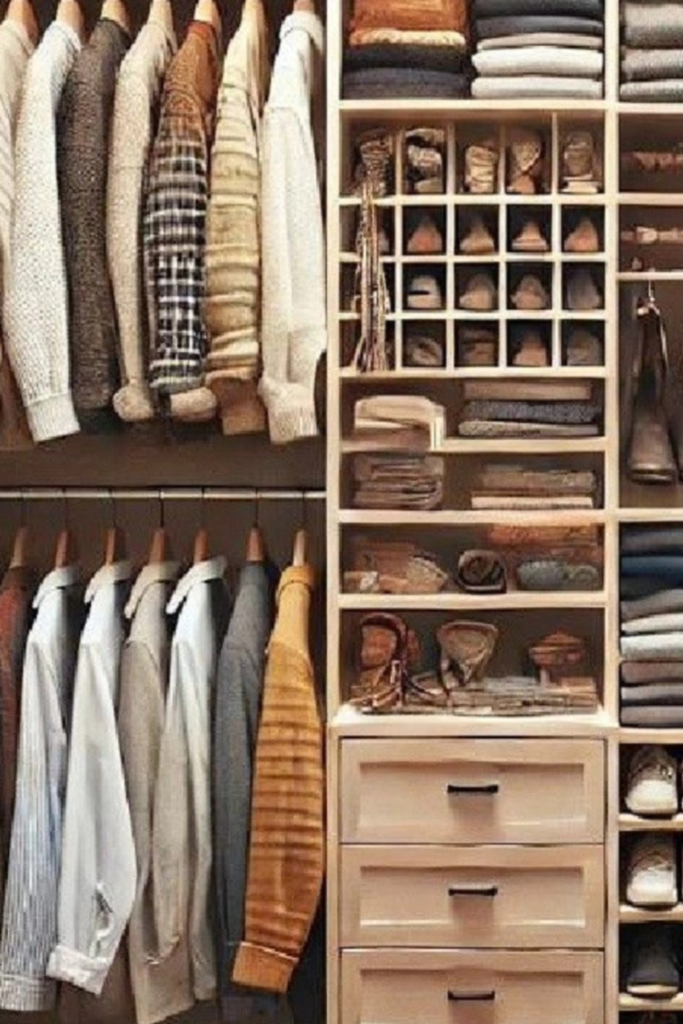
Sectioned Closet System
Crowded closets feel smaller, everything fights for the same space. Dividing your closet into clear sections changes that immediately.
Use modular closet units that mix rods, drawers, and shelves. Hang jackets and structured layers on sturdy wooden hangers.
Shoulders keep their shape, use a second rod below for lighter pieces to double the capacity. Add cubbies for folded knits.
Small compartments for accessories. Open shelving allows air to circulate, helping prevent stale smells during long-term storage.
Warm interior lighting layered inside the closet keeps the space inviting and makes every item easy to see and grab.
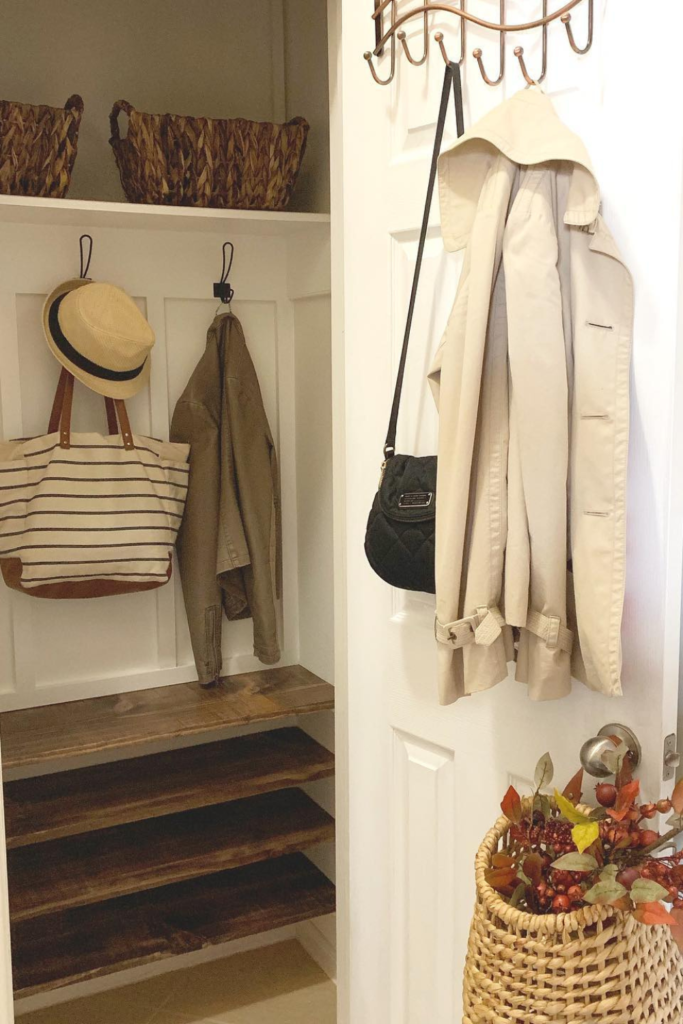
Mini Mudroom Closet
Tiny closets can still work hard when you give them structure. Add a simple wood bench and paneling to define the space.
Small nook like this can serve as a functional jacket station with just a few hooks and open shelving, works best.
Hang daily coats on sturdy wall hooks instead of piling them on a single hanger so the fabric stays smooth and aired out.
Use the top shelf for woven baskets to hold scarves or gloves, and keep the lower shelves clear for shoes.
Warm indoor lighting keeps it cozy, while the open layout prevents trapped moisture from building up behind closed doors.
Compact Entry Closet
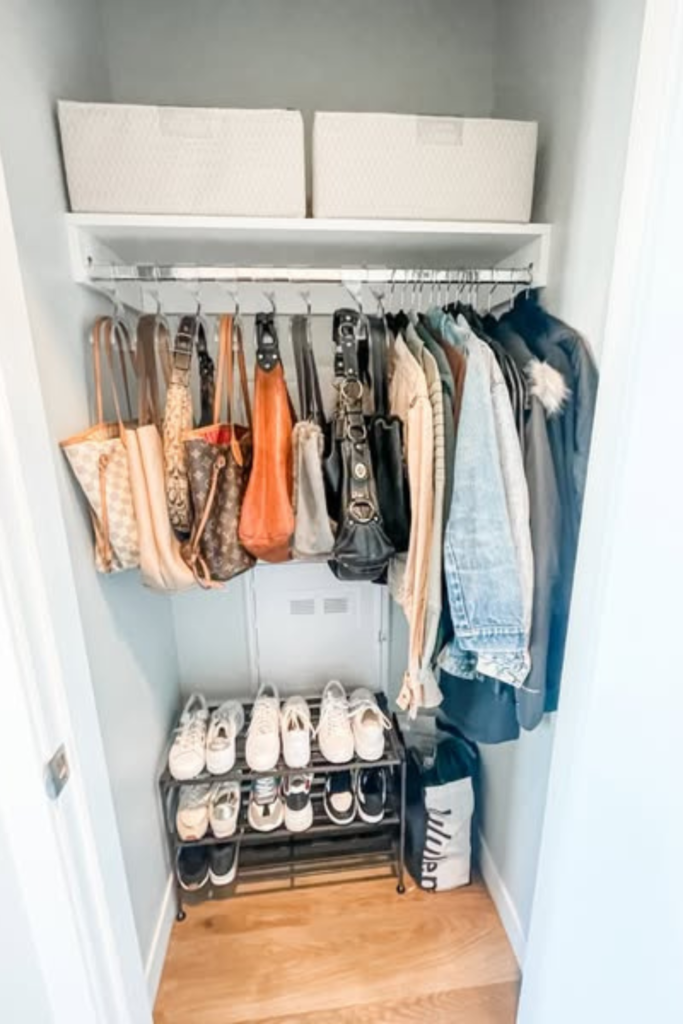
Small entry closets feel cramped fast unless every inch has a job. Install a single sturdy rod for jackets.
Keep hangers evenly spaced so sleeves don’t overlap. Use the upper shelf to store matching bins to hide seasonal extras.
Keep the look clean. Slide a narrow shoe rack underneath to lift footwear off the floor and improve airflow.
Hanging bags on the same rod keeps daily essentials in one zone instead of scattered around the house.
Bright overhead light reflects off light-colored walls, making the tight space feel open and easy to maintain.
Divided Hanging Zones
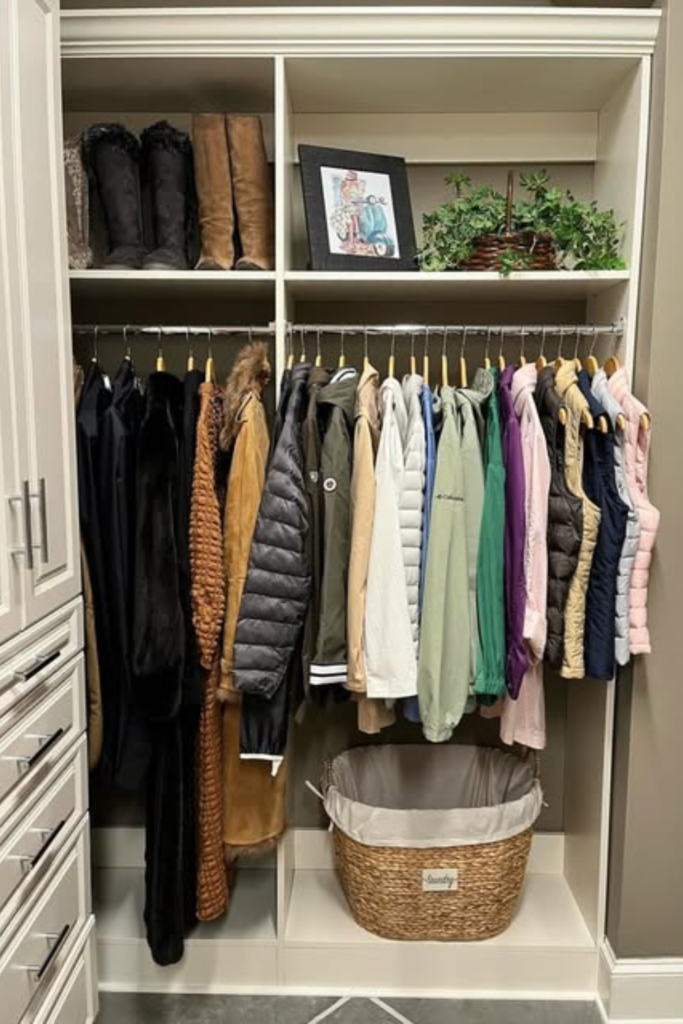
Mixing long coats with short jackets wastes vertical space. Split the closet into clear hanging zones so each length has the right section.
Keep full-length coats on one side and shorter puffers or denim jackets on the other to prevent crowding.
Leave small gaps between hangers so air can move and fabrics don’t press together. Use the top cubbies for boots or storage bins,
Keeping heavy items off the floor. A woven basket below catches laundry or accessories without creating clutter.
Use center divider panel and sturdy rods on both sides. Soft interior lighting keeps the closet bright and makes every layer easy to find.
FAQs
Can I Store Jackets in Plastic Bins?
Plastic bins work, but only if you do it right. Storing a slightly damp or unwashed jacket in a sealed container traps moisture inside.
When the musty smell starts. Always wash and fully dry jackets first. Add a moisture absorber before closing the lid. Don’t overpack the bin
Air still needs a little room to move. If your storage area is humid, breathable fabric containers may be a better option.
How Do I Store Winter Jackets Long-Term?
Long-term storage starts with cleaning. Dirt, sweat, and body oils cause odors over time. Dry the jacket completely.
Hang it in a cool, dry space if possible. For bulky puffers, avoid long-term vacuum sealing, as it can compress the insulation.
Use wide hangers to protect the shoulders and leave space between pieces. Check stored jackets every few months to prevent moisture buildup and keep everything fresh.
You may like to read!

Fasial is the founder of the Fizzy Flare. He has been a passionate blogger since 2021. He ran three different websites in the past few years. Now he is focusing on Fizzy Flare to build an audience and help them organize their life.