18 Attic Storage Ideas for 2026
This post may contain affiliate links: full affiliate disclosure.
Most individuals walk into their attic with a simple goal: to store a few things. But they rapidly find out that the area is tougher to use than they thought.
The ceiling slopes down, boxes are stacked up in random places, and it becomes a mini treasure hunt to discover anything afterward.
The attic quickly becomes a messy place to store things instead of a functional place to store things. But the truth is that your attic might be one of the best places in your home.
To store things. When you know how to use the strange angles, put in the right shelves, and organize things correctly, that chaotic area can become a clean, easy-to-use storage area.
This article explores 18 creative Attic storage ideas for modern homes. These simple solutions will help you maximize space.
Let’s jump in!
Contents
- 1 How Can I Turn My Attic Into Useful Storage Space?
- 1.1 Knee Cabinets
- 1.2 Triangle Shelving
- 1.3 Walk-In Layout
- 1.4 Window Shelves
- 1.5 Shoe Wall
- 1.6 Peak Storage
- 1.7 Slope Shelving
- 1.8 Rafter Shelves
- 1.9 Wardrobe Wall
- 1.10 Angled Closet
- 1.11 Island Storage
- 1.12 Hidden Cabinets
- 1.13 Vanity Storage
- 1.14 Vanity Cabinets
- 1.15 Rack Storage
- 1.16 Bin Stacking
- 1.17 Corner Shelving
- 1.18 Open Wardrobe
- 2 FAQs
How Can I Turn My Attic Into Useful Storage Space?
Using your attic space properly is the first step to making it useful storage. First, get rid of everything so you can see how much space you really have.
Next, assess the floor. If it merely has exposed joists, install some cheap plywood planks to make a safe place to store boxes.
Next, use the attic’s low sides for shelves or storage bins. This area is often wasted. Leave the middle open so you can simply stroll about and get stuff.
Protect things from dust and heat by putting them in strong, sealed bins. Label everything so you can find it later.
Without having to search through stacks. These few improvements can make an untidy attic into a useful storage space.
Save this article for later! 👇👇

Knee Cabinets
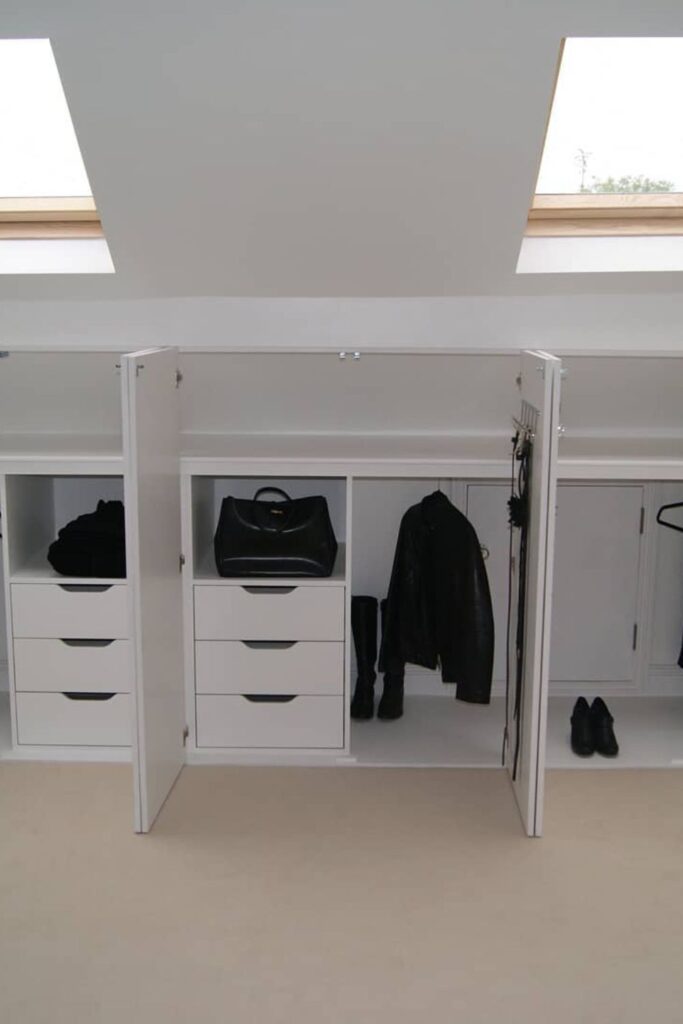
Sloped attic walls often create a strip of space that’s too low to walk through, which makes it perfect for built-in storage.
If you put knee-wall cabinets in that space, it will suddenly turn into an organized closet. Put a row of low cabinets along the slope, and then use drawers, shelves.
And hanging rods to separate the inside based on what you want to keep. Clothes, backpacks, and shoes work best because they don’t need much height.
Simple hinged doors keep things out of sight and keep dust off of them. Skylights above let in natural light, which makes the space easier to utilize.
Putting storage like this precisely under roof windows can turn the whole attic wall into a tidy, useful closet area.
Triangle Shelving
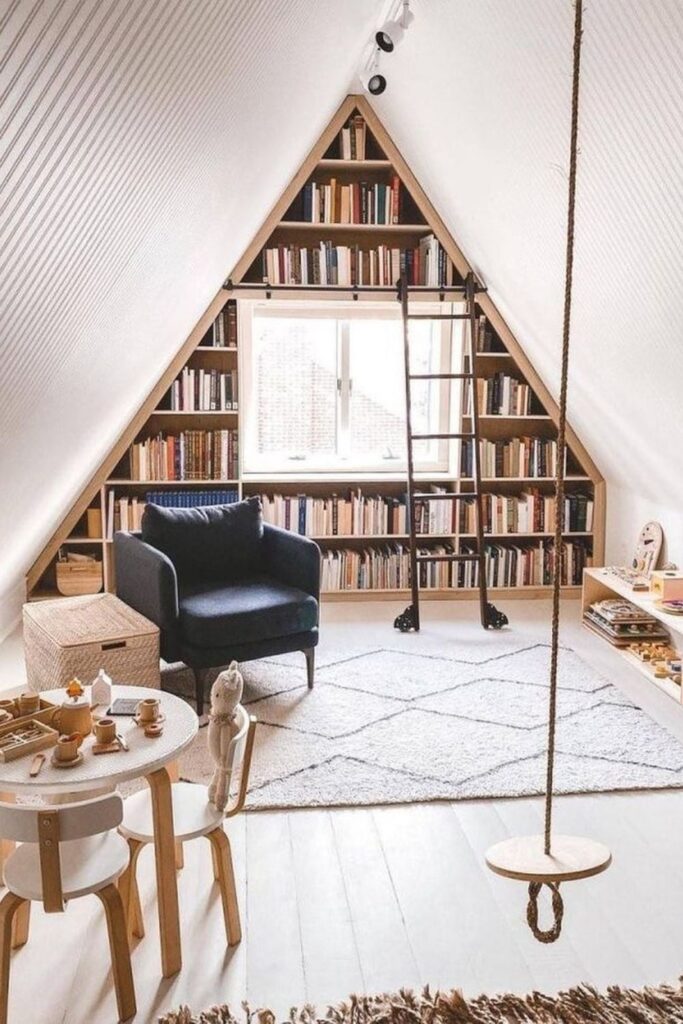
Sharp attic peaks usually become empty space because regular shelves simply don’t fit there. Custom triangular shelving solves that problem by following the exact shape of the roof.
You can store books, decorations, or storage boxes on shelves that are the same slope as the wall without losing any height.
First, make a simple wooden frame that follows the angle of the rafters. Then, put shelves inside the triangle that are set evenly apart.
The lower shelves may contain heavy things, and the upper shelves are good for lighter decorations or books you don’t read every day.
This design with a sliding ladder makes it easy to get to higher shelves, turning an inconvenient attic peak into a beautiful and useful storage wall.
Walk-In Layout
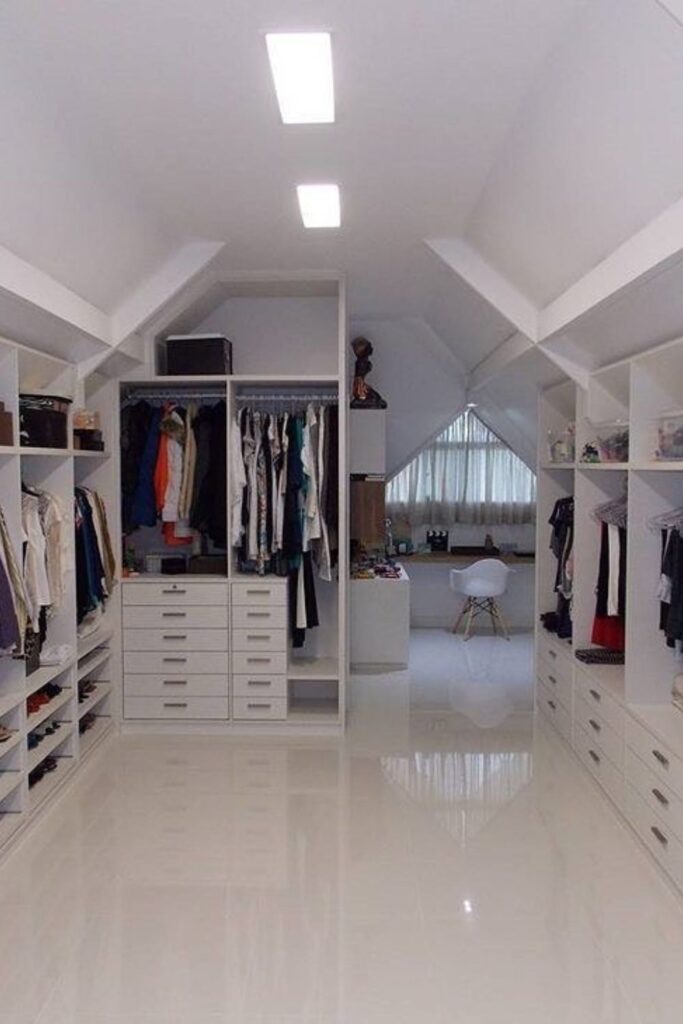
Long attic spaces often become chaotic because storage gets pushed randomly along the walls. Turning both sides into organized wardrobe units.
Makes the walk-in space feel more like a dressing room than an attic by giving it a logical arrangement. Put full-height shelves and hanging rods along either wall.
But leave the middle open so people can move about. The drawers at the bottom are great for keeping tiny things like accessories.
While the upper shelves are great for folded clothes or storage boxes. If you keep the central aisle clear, you can get to anything without having to sift through stacks.
Bright lights on the ceiling are also quite helpful in small attic areas. They make the whole area feel open, clean, and easy to use every day.
Window Shelves
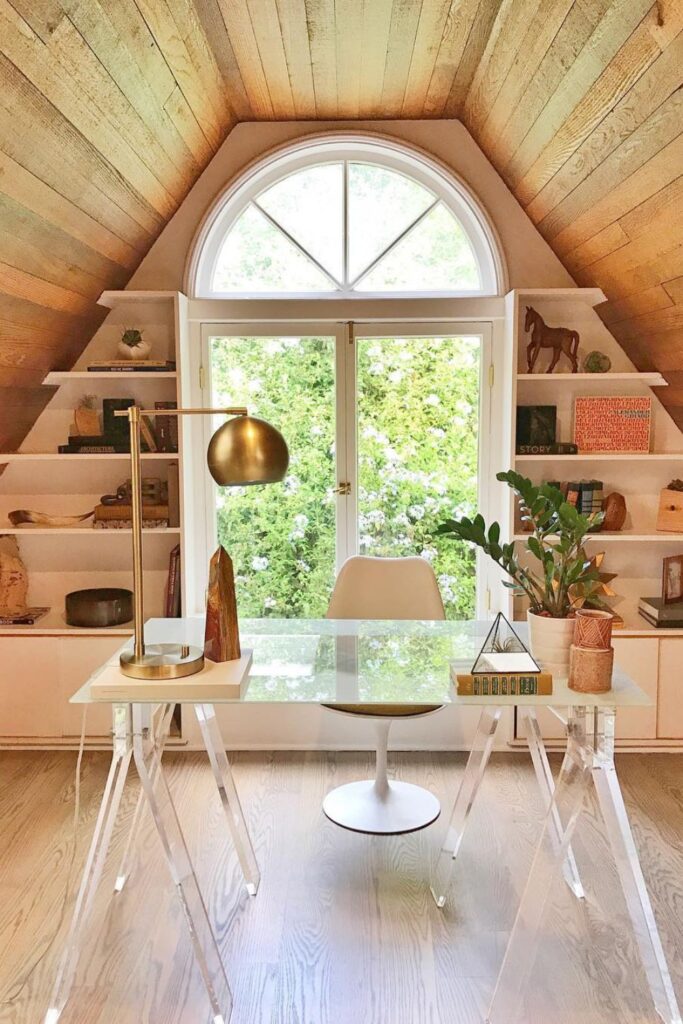
Attic gable walls usually leave awkward triangular gaps on both sides of a window. Turning those narrow spaces into stepped shelves.
keeps the area from becoming empty and instead makes it useful. If you build shelves that follow the slope of the roof.
You may fit books, tiny storage boxes, or decorations on them without sacrificing vertical space. You can put heavier things on the lower shelves and lighter things.
You don’t need every day on the upper shelf. Putting shelves around a window also leaves the center open for a desk or small office.
If you match the angles of the shelves to the lines of the ceiling, the storage will look like it was meant to be there and the whole wall will feel planned and orderly.
Shoe Wall
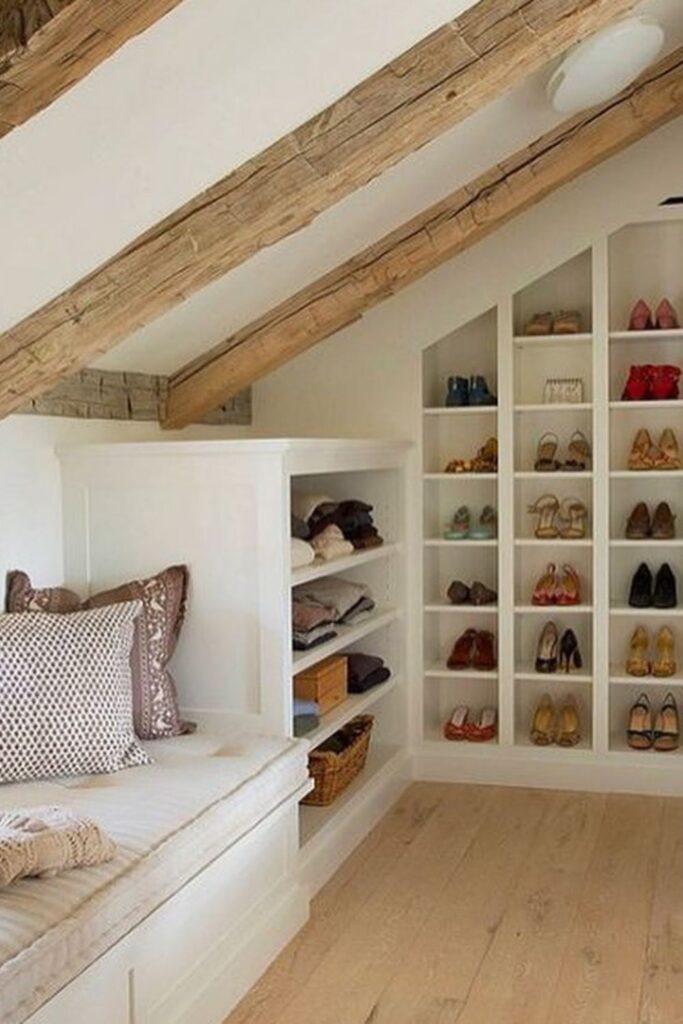
Attic walls with sloped ceilings often leave a narrow vertical section that works perfectly for organized shoe storage.
Instead of stacking them in unsightly clumps, turning that wall into a grid of small cubbies makes it easy to see and access every pair.
Building shallow square compartments is the ideal way to store shoes because they don’t need a lot of depth.
There are several types of shoes in each row, including heels, sneakers, sandals, or boots. This keeps everything in order.
Keeping the units from floor to ceiling also helps use vertical space that is frequently wasted in attics.
Peak Storage
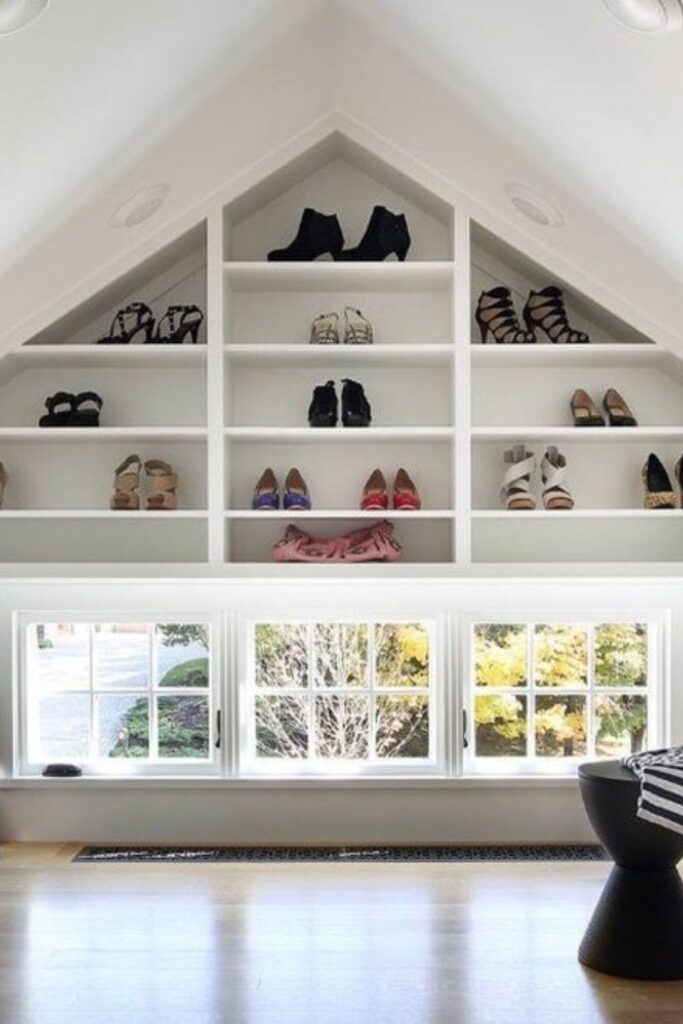
Roof peaks often create a tall triangular section that most people leave empty. Turning that space into open shelving.
Gives you a showcase and storage space that suits the shape of your attic right away. Shelves that fit the slope of the ceiling make every level usable.
Instead of wasting the top section of the area. This is a great place for shoes, luggage, or small storage boxes because each shelf is simple to see and access.
The lower walls can store deeper shelves or drawers for bigger things, while the peak part can hold lighter things.
You can keep the central wall useful by putting shelves above a window like this. This way, the storage can go up while the floor stays open and free of clutter.
Slope Shelving
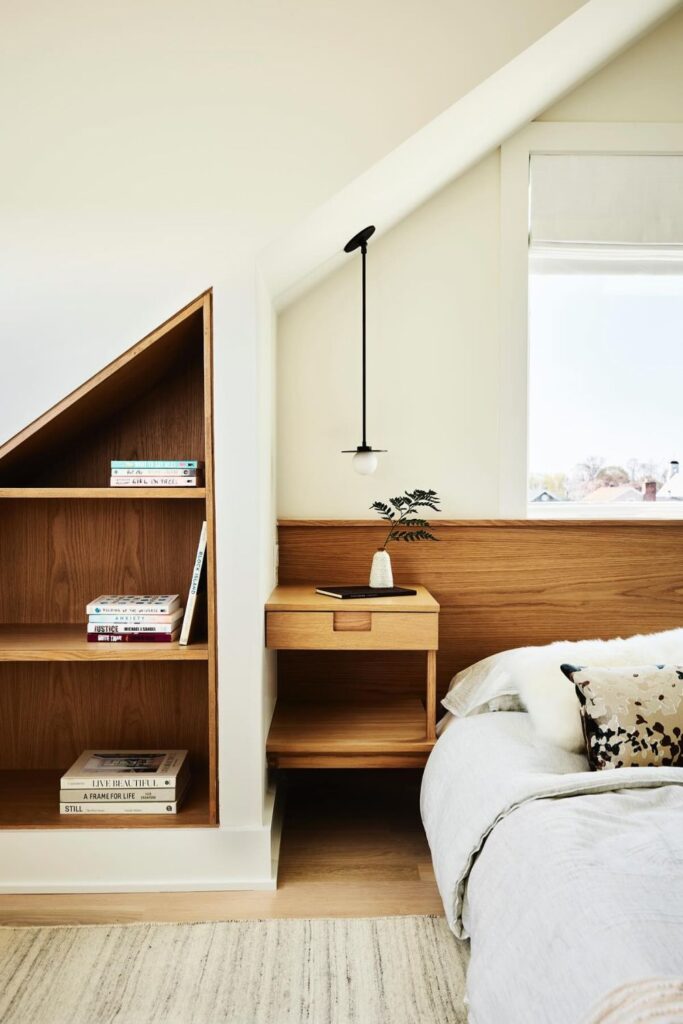
Roof slopes usually leave a triangular gap along the wall that standard furniture can’t use. Custom shelves built to match that angle.
Make the uncomfortable space useful for storage without getting in the way of the room. A basic wooden unit carved to fit the ceiling line is great for holding books, decorations.
Or tiny storage baskets. The lower parts may handle larger things, and the top triangle is perfect for lighter things.
In small attic bedrooms, leaving the design open instead of adding doors makes the shelves feel lighter.
Putting shelves like this next to a bed or sitting area also keeps everyday items close at hand and makes sure that the sloped corner doesn’t go to waste.
Rafter Shelves
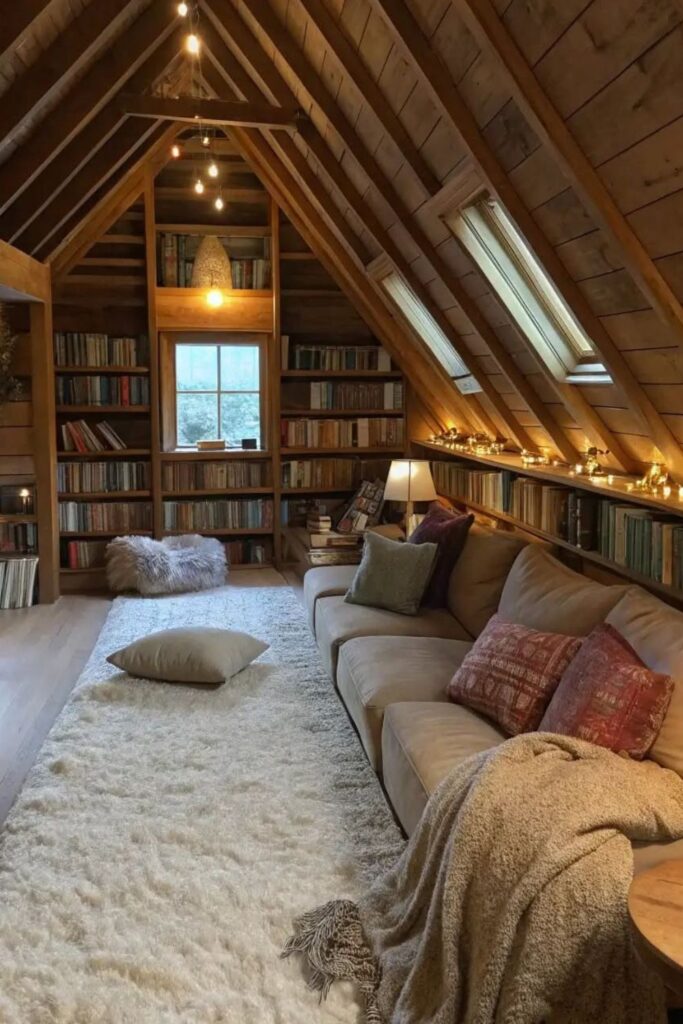
Exposed rafters often leave a long strip of space where the roof slopes down, and that area works perfectly for low-profile shelving.
If you run a continuous shelf along that line, it will make a natural area for books, storage boxes, or ornamental items that won’t get in the way of the main walking space.
The wood shelves that follow the angle of the rafters fit in well with the rest of the attic and make the storage look like it was put in rather than added later.
Also, keeping the shelf low makes it easier to get to things when sitting on neighboring chairs. Soft lighting around the edge of the shelf.
Can make the storage stand out and make it feel warmer. This can turn a plain attic wall into a useful and comfortable storage space.
Wardrobe Wall
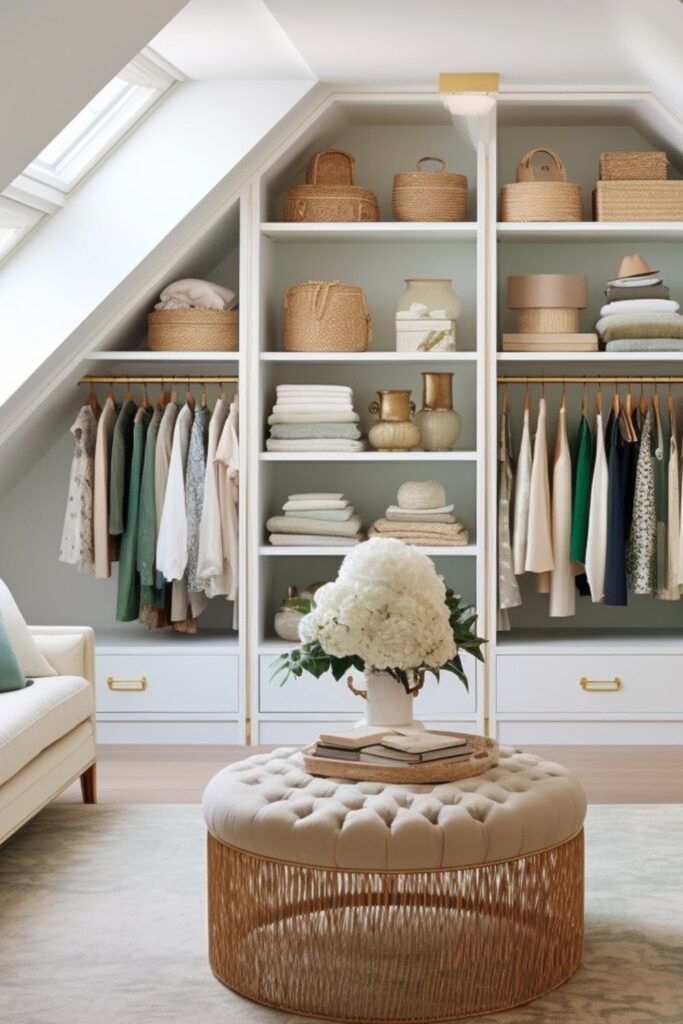
Attic slopes don’t have to limit clothing storage if the cabinets follow the roofline. Built-in wardrobes that mirror the ceiling angle allow hanging rods, drawers.
And shelves that fit snugly into the wall so that there are no vacant triangular spaces. The taller sides are great for hanging shirts, dresses, or jackets.
While the middle area is great for storing folded items, baskets, or ornamental storage boxes. There are drawers at the bottom to keep tiny things like scarves and accessories in order.
The attic feels tidy and planned when everything is constructed into one long wall instead of having individual pieces of furniture.
There is also a little sofa area in front that makes the space feel more like a pleasant dressing room where you can go through clothes or keep seasonal clothes neatly.
Angled Closet
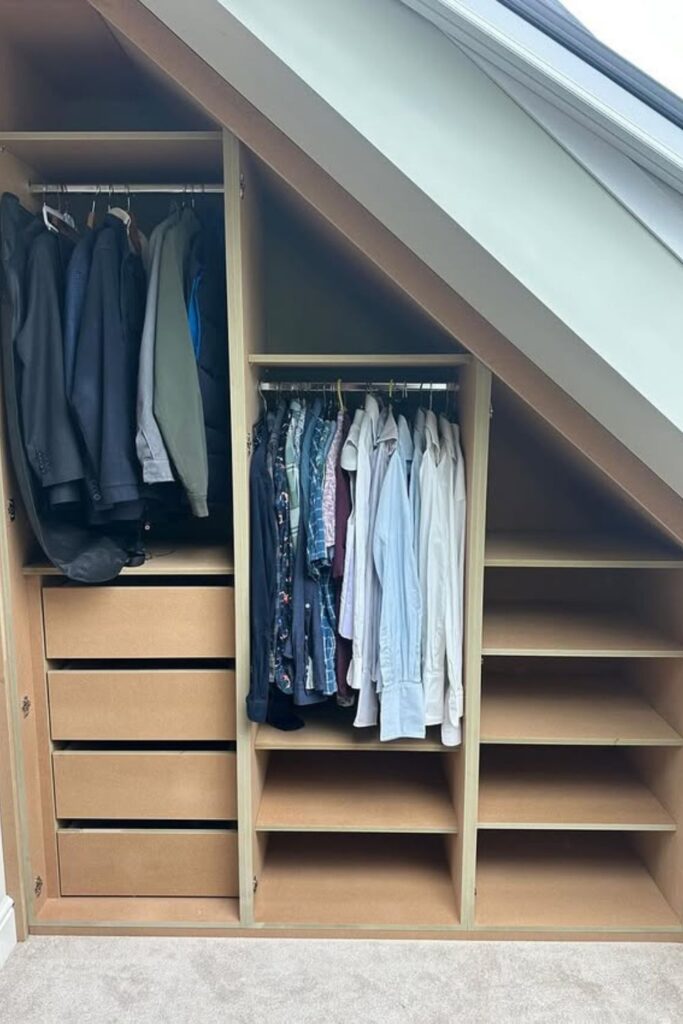
Slanted attic ceilings often make regular wardrobes impossible to fit, which is why custom closets work much better in these spaces.
Cabinets that follow the roof angle let you add full garment storage without leaving empty spaces behind the doors.
Hanging rods for jackets or shirts can go in the taller parts, while the lower parts can be used as shelves for folded clothes, shoes, or storage boxes.
There are drawers on the bottom that assist keep smaller things in order and easy to get to. Building the closet right into the slope also makes the room look cleaner.
Because everything is flush with the wall instead of jutting out like regular furniture. This method works best in small attic bedrooms where you need to make the most of every inch of space.
Island Storage
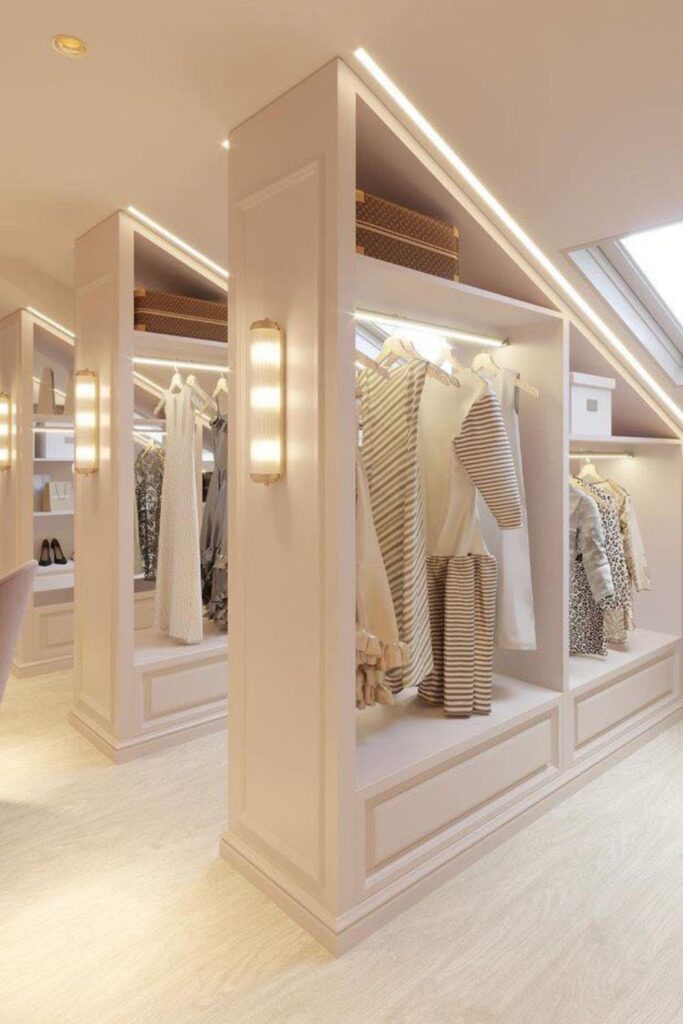
Attic rooms with enough headroom in the center can benefit from freestanding wardrobe islands.
Putting open closet units in the middle instead of shoving all the storage against the walls gives more hanging space and keeps both sides easy to get to.
The clothing racks inside the island are great for dresses, shirts, or outfits you wear a lot. The higher shelves are good for storage boxes or things you only use once in a while.
The built-in lights along the borders also make it easier to see the clothes, which is helpful when there aren’t many windows in the attic.
Instead of utilizing big doors, keeping the structure open keeps the middle of the space from seeming congested.
Hidden Cabinets
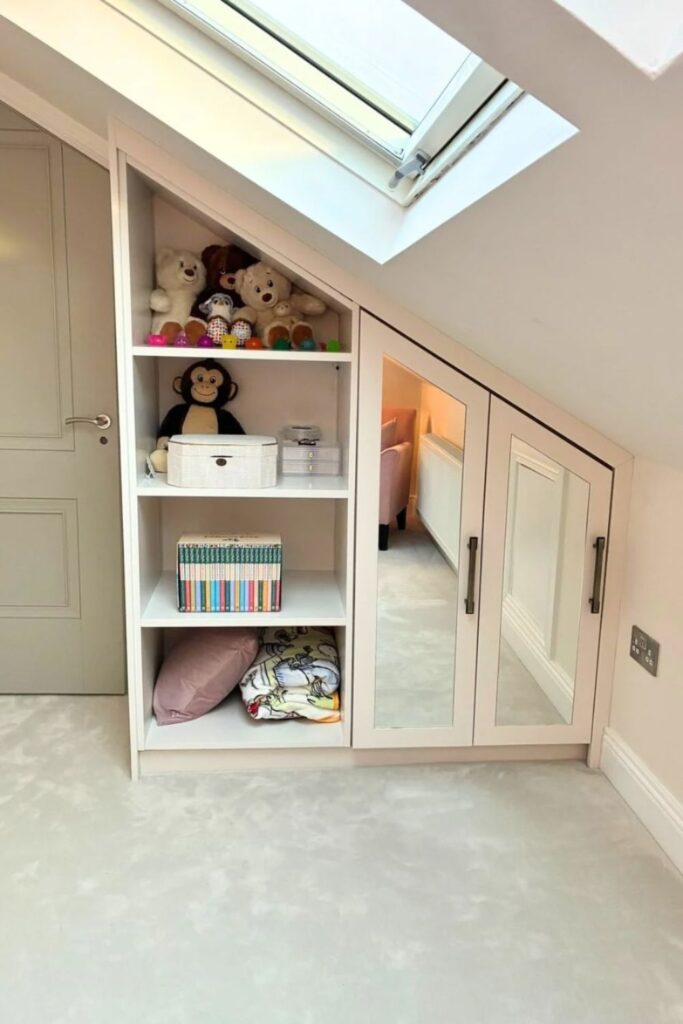
Sloped attic corners can hide surprisingly useful storage if cabinets follow the roofline. A built-in unit like this turns the lowest part of the wall into organized shelves.
And hidden cupboards instead of empty space. Open shelves on the taller side are great for books, toys, and other ordinary goods.
The angled cupboards with doors keep bigger objects out of sight and safe from dust. If you make the cabinet height match the slope.
It will look like the complete unit was built into the structure instead than added later. Adding mirrored doors.
Also reflects light from windows or skylights nearby, which makes small attic rooms feel brighter and gives them useful hidden storage.
Vanity Storage
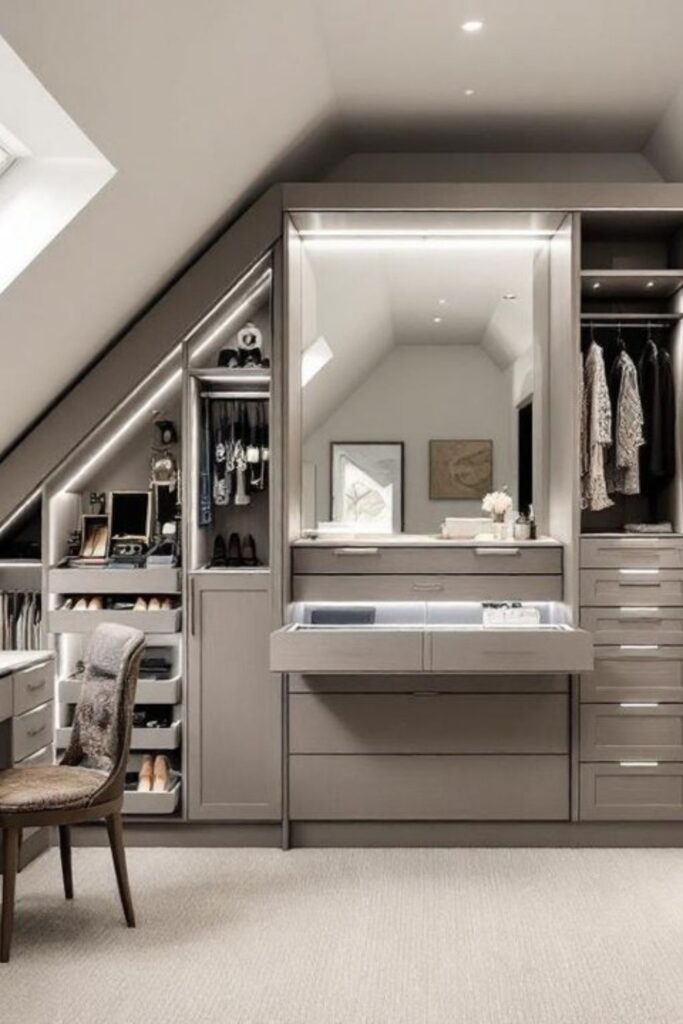
Attic corners near skylights can easily turn into a compact dressing and storage zone. Built-in cabinets that follow the roof slope allow drawers, hanging rods.
And shelves that open up to fit perfectly along the wall without taking up too much space. A center vanity with a mirror is a good place.
To keep jewelry, accessories, and other daily necessities. Side cabinets help keep clothes and folded objects in order.
Lower drawers help keep smaller items like scarves, belts, and makeup separate so that you can always find what you need.
There are lights inside the cabinets and surrounding the mirror, so the space is useful even when the natural light changes.
Vanity Cabinets
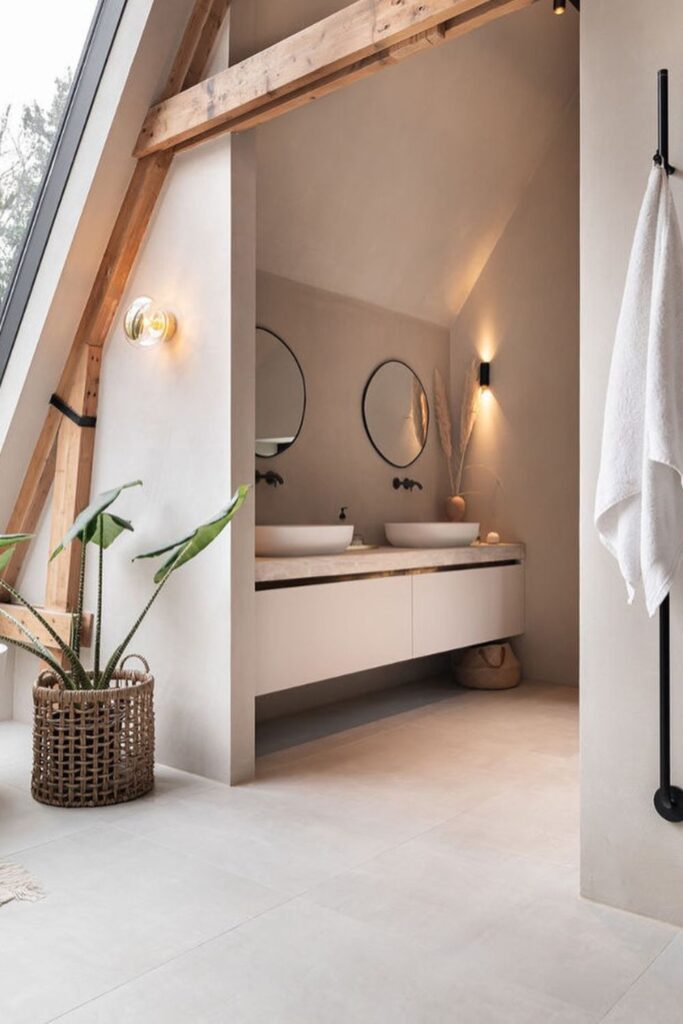
Attic bathrooms often have limited wall height, which makes floating vanity cabinets a smart storage solution.
Putting drawers under the sink keeps things orderly and makes the room feel bigger by leaving the floor open.
You can keep towels, toiletries, and cleaning items neatly stored within without making the countertop messy.
Putting the vanity against a shorter wall is a good idea because sinks don’t need the whole height of the ceiling.
Soft lighting surrounding mirrors and natural light from neighboring skylights also assist make the area brighter, which makes it easier to use the storage.
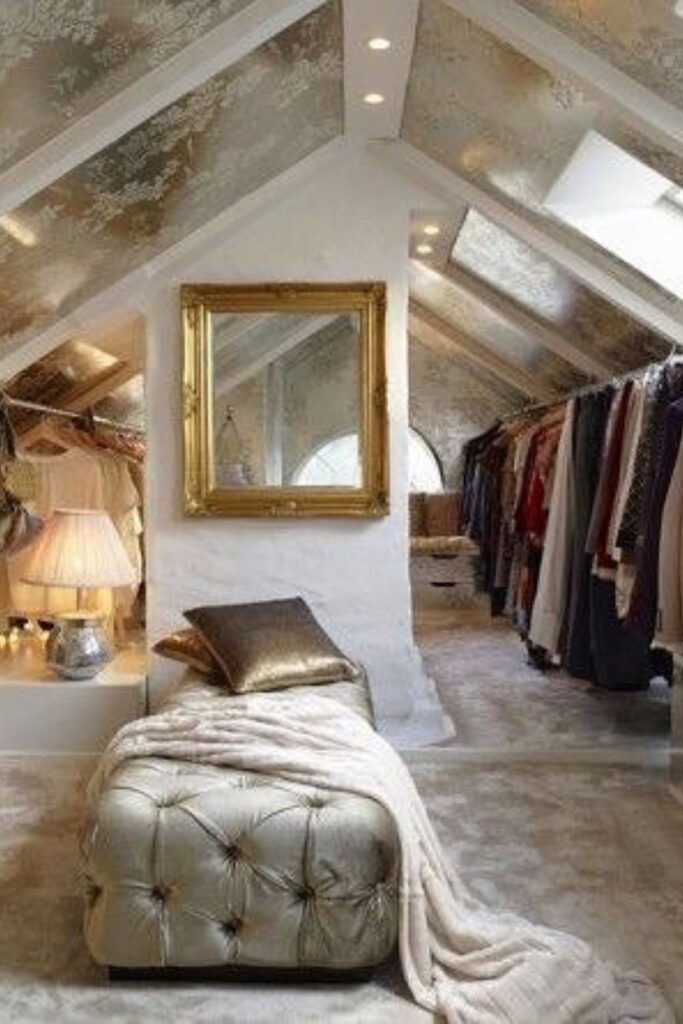
Rack Storage
Long attic walls under skylights create the perfect place for extended clothing racks. Installing a continuous hanging rod along the slope.
Instead of being crammed into small closets, it lets jackets, dresses, and shirts stay out in the open. You may still use the wall well by keeping the rack a little lower than the skylight line.
This way, clothes won’t block natural light. You may keep the whole area organized by putting shoes, bags, or folded goods on shallow shelves or cubbies at the ends.
Adding drawers under the rack is another way to keep smaller items organized without making the room feel crowded.
This kind of layout works best in narrow attics where a single arranged wall of clothes keeps the middle of the room open and simple to stroll through.
Bin Stacking
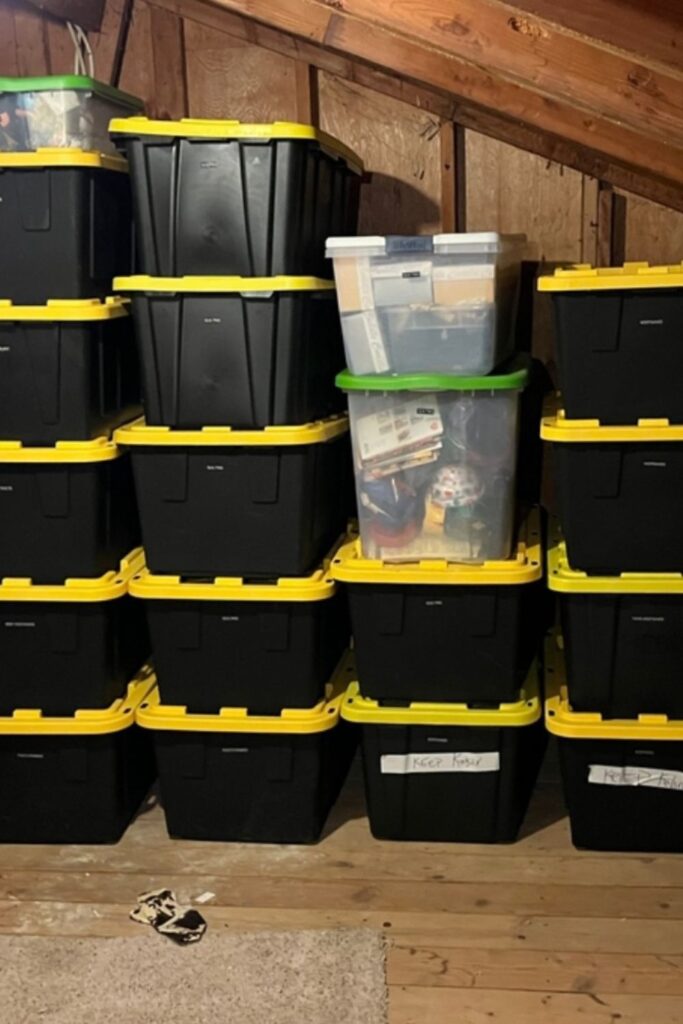
Attic floors with exposed rafters and sloped ceilings work perfectly for stacked storage bins. Heavy-duty plastic containers with secure lids protect items.
From dust, bugs, and variations in temperature in the attic. Stacking the same bins on top of each other keeps everything stable and makes greater use of the vertical space.
Along the lower wall, where standing height is limited. By labeling each box, you can discover seasonal decorations, old papers, or keepsakes without having to open every box.
Putting the bins on a tiny plywood platform or attic flooring boards also keeps them from pushing down on the insulation.
This kind of system is great for unfinished attics where practical storage is more important than built-in furniture. It can turn a basic corner into a long-term storage area.
Corner Shelving
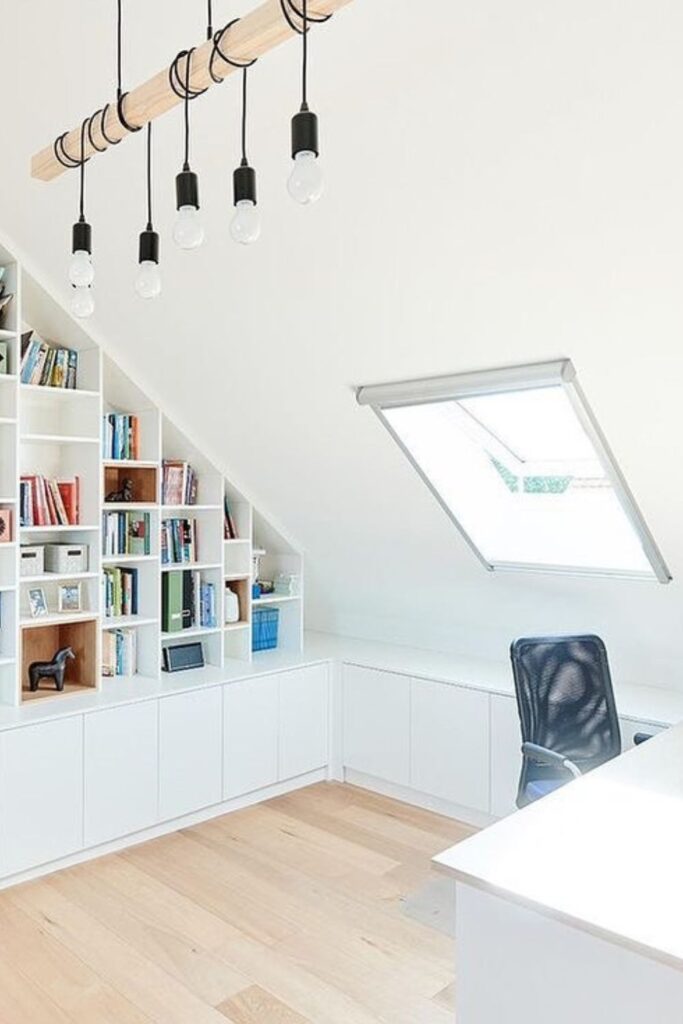
Sloped attic corners often become dead space where regular furniture can’t fit. Built-in shelving that follows the roofline turns that awkward area into a highly organized storage wall.
If you have a reading area or a place to work in the attic, small cubbies and open shelves are great for books, office supplies, decorations, or storage boxes.
If you put less attractive things like files, electronics, or extra supplies in the lower cupboards under the shelves, the area will look cleaner.
If you match the shelves to the angle of the ceiling, you may use every inch of that corner. This kind of setup is great for attic offices.
Since it lets you store things and work at the same time without making the place feel cramped.
Open Wardrobe
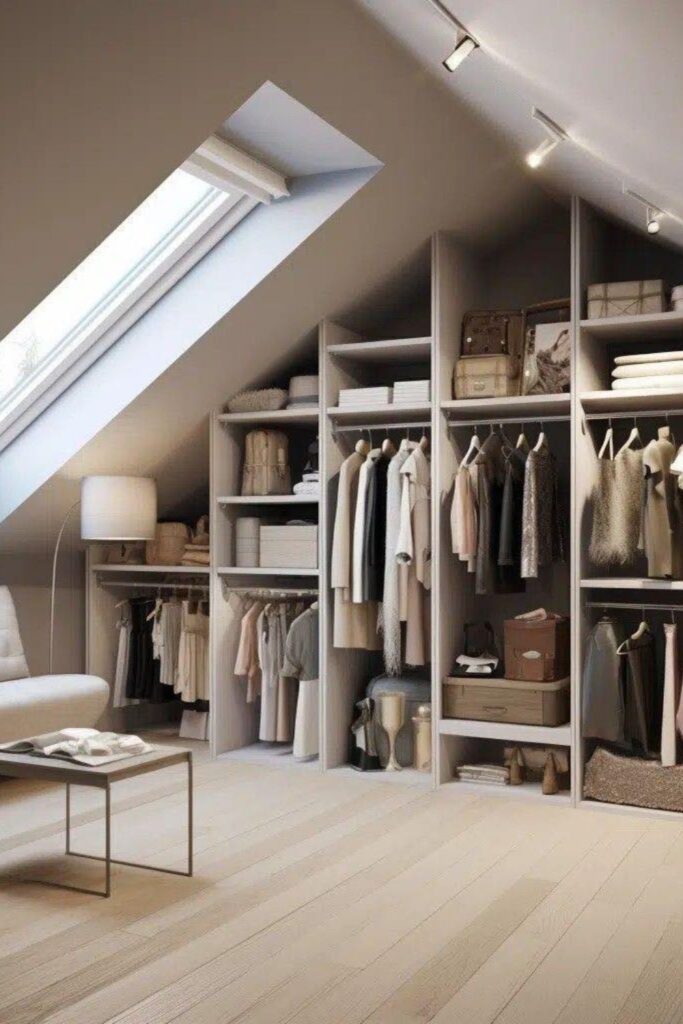
Long attic walls under a roof slope work perfectly for an open wardrobe system. Vertical sections with hanging rods, shelves.
And little compartments keep different sorts of clothes organized without taking up a lot of space with big doors.
Dresses or coats can go on taller parts, whereas shirts, folded items, or accessories can go on shorter racks.
Upper shelves near the slope are a good spot to store boxes, bags, or seasonal items that you don’t use every day.
Also, leaving the wardrobe open lets you see everything, which makes it easier to choose out clothes and stops clothes from being lost in deep cupboards.
FAQs
Can attic storage damage insulation?
Putting large boxes directly on attic insulation can damage it. When insulation is compressed, it can’t control temperature as well, which might make heating and cooling bills go up.
Adding basic plywood floors or raised storage platforms above the joists protects the insulation and gives you a stable place to store bins and boxes.
What type of storage works best in small attics?
Storage that follows the roof slope works well in small attics. Built-in shelves, tilted cabinets, and low storage units along the walls allow you use spaces that are too short to stand in.
Putting shelves and bins around the lower edges and keeping the central walkway open makes it easier to get about and keeps everything within reach.
You may like to read!

Fasial is the founder of the Fizzy Flare. He has been a passionate blogger since 2021. He ran three different websites in the past few years. Now he is focusing on Fizzy Flare to build an audience and help them organize their life.