17 Lunch Box Organization Ideas for 2026
This post may contain affiliate links: full affiliate disclosure.
You open your lunch box, and everything is mixed, leaking, or crushed. Sauce ends up where it shouldn’t, fruit turns soggy.
Container still wastes space. That’s not a food problem, it’s a container problem. When you use the wrong containers, even careful packing fails.
In this article, you’ll find 17 Lunch Box Organization ideas that work in 2026.
Let’s jump in!
Contents
- 1 What are the Best Containers for Lunch Box Organization?
- 1.1 Built-In Meal Zones
- 1.2 Size-Sorted Storage
- 1.3 Modular Snack Layers
- 1.4 Color-Coded Sections
- 1.5 Mini Cup Control
- 1.6 Grab-And-Go Drawer
- 1.7 One-Box Balance
- 1.8 Mix-And-Match System
- 1.9 Shelf-Based Grouping
- 1.10 Stacked By Purpose
- 1.11 Vertical Lid Control
- 1.12 Repeatable Lunch Formula
- 1.13 Accessory Sorting
- 1.14 Brand-Based Stacks
- 1.15 Portion-Smart Layout
- 1.16 Pre-Packaged Pairing
- 1.17 Balanced Bento Routine
- 2 FAQs
What are the Best Containers for Lunch Box Organization?
The best containers are those that stop leaks, save space, and speed up packing. If a container doesn’t seal properly.
Food will spill no matter how careful you are. If it’s bulky or oddly shaped, it will waste space and crowd everything else.
And if it’s hard to open or clean, you’ll avoid using it. A good lunch box container fits your lunch box, keeps different foods separate.
Once you choose containers that match how you pack and eat, organizing your lunch box stops feeling like a daily struggle and starts feeling automatic.
Save this article for later! 👇👇
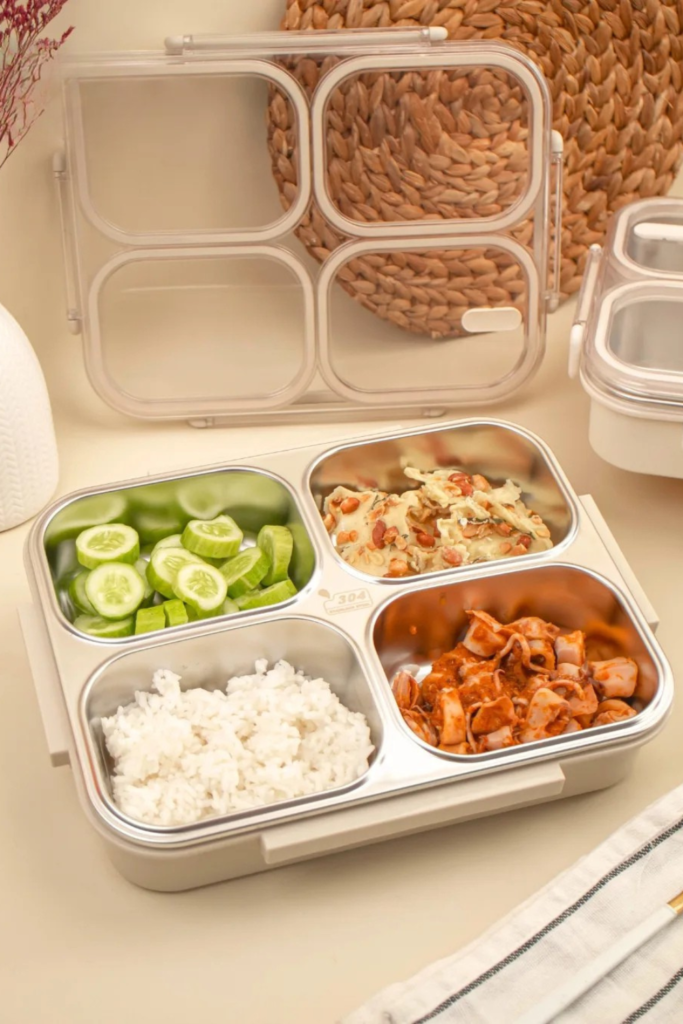
Built-In Meal Zones
Start with a container that already divides your food, works best for hot meals, saucy dishes, and rice-based lunches.
Each section controls portions, keeps flavors separate. Choose a box with welded compartments rather than removable dividers.
Neutral tones, metal interiors, and tight lids create a clean, structured look that feels organized even before food goes in.
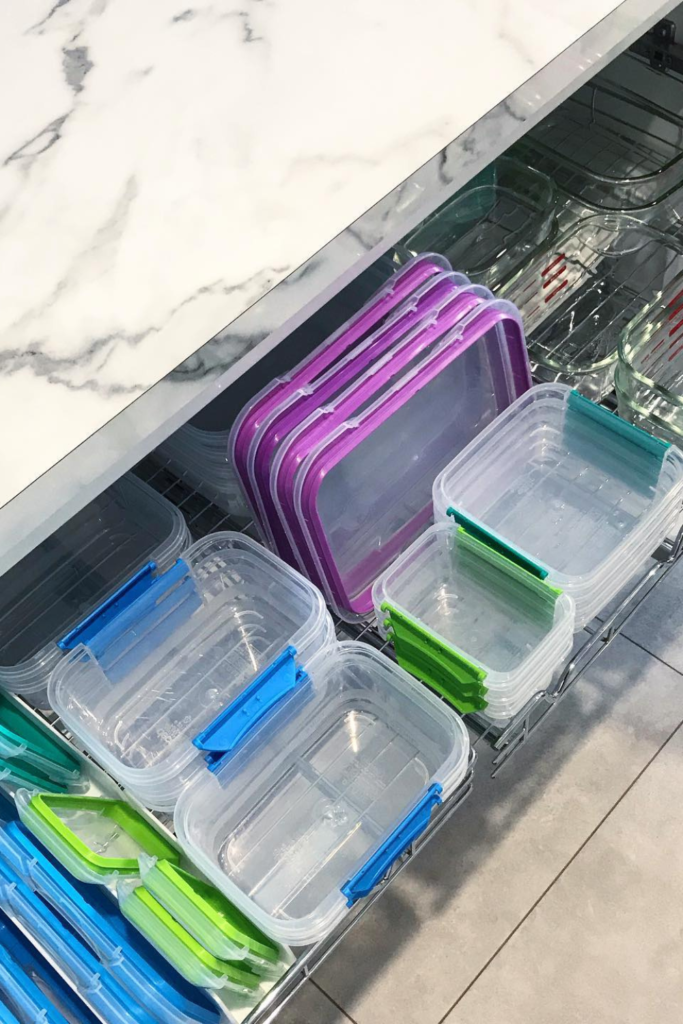
Size-Sorted Storage
Packing feels easier once containers stop fighting for space. A drawer setup like this works best for families or for anyone.
Group containers by size and store lids vertically so nothing gets buried. Recreate it with pull-out racks or shallow bins.
Clear boxes, color-coded lids, and straight lines layer a clean, functional look that keeps decisions fast on busy mornings.
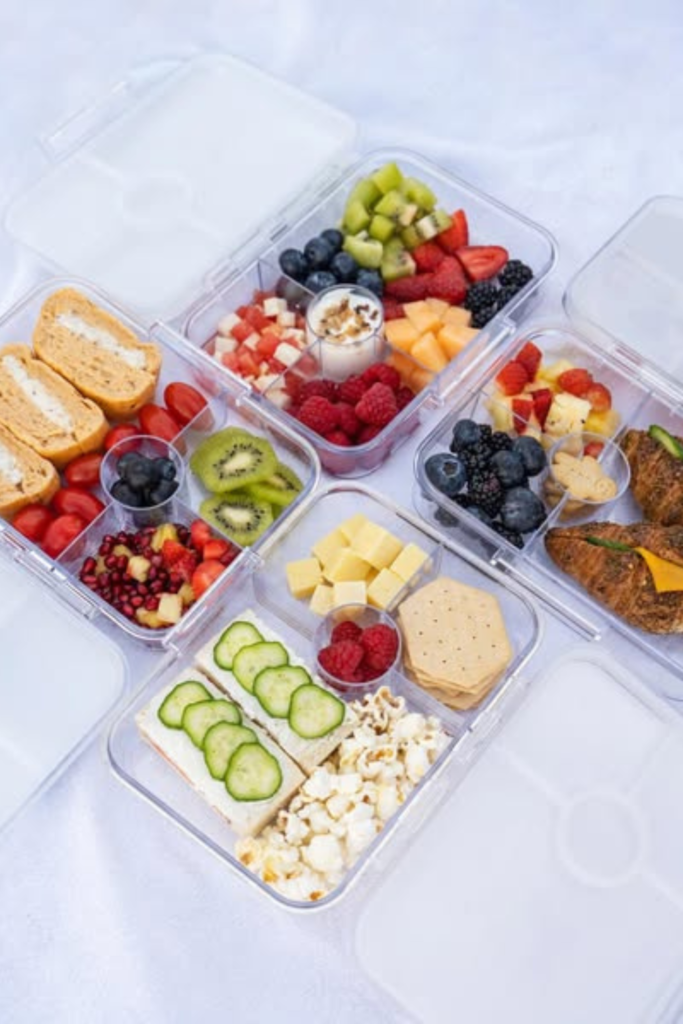
Modular Snack Layers
Busy days work better with containers that break meals into small, flexible parts. Use shallow square containers.
Add mini cups inside for dips or toppings. Stack different food groups separately so you can mix and match.
Clear walls, repeated shapes, and colorful foods layered side by side create a clean, organized look without feeling crowded.
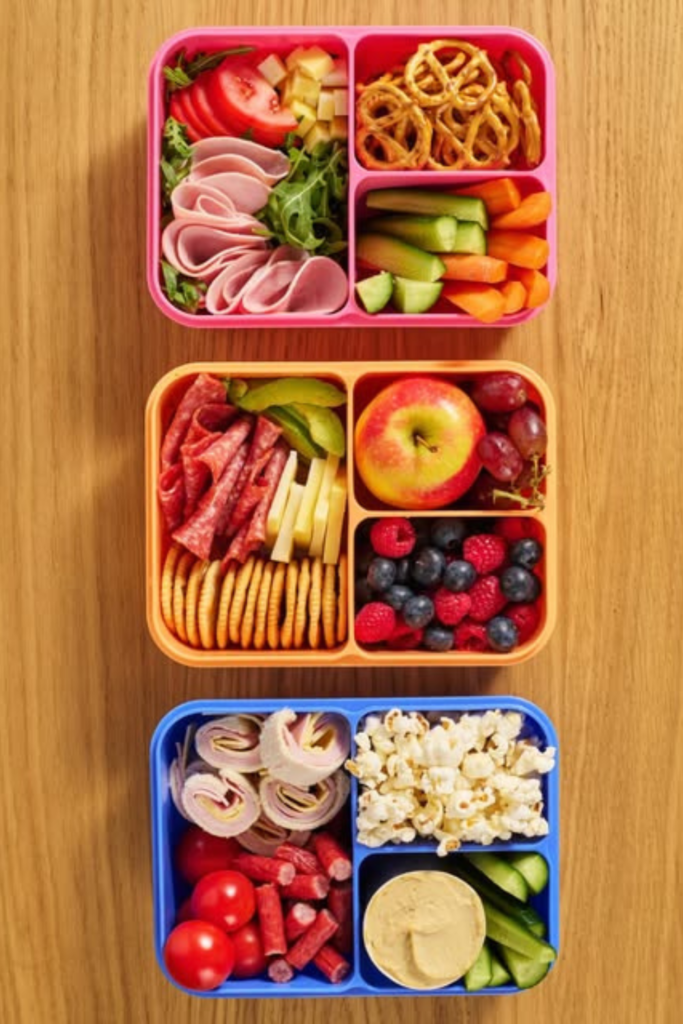
Color-Coded Sections
Visual order makes packing faster and eating easier. A bento like this works best for kids or picky eaters who like clear separation.
Assign each section a food type protein, fruit, crunch, and treat. Recreate it with fixed-compartment boxes in bold colors.
Bright containers, evenly filled sections, and contrasting foods layer a playful look that still feels controlled and organized.
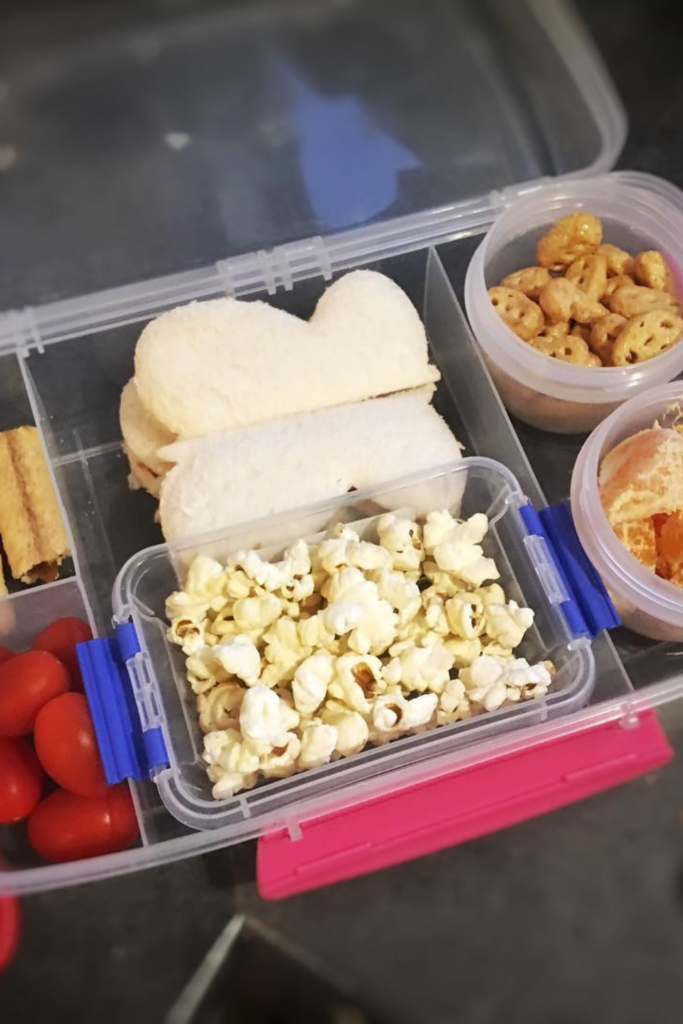
Mini Cup Control
Small foods stay under control when they get their own containers. This setup works best for kids’ lunches or snack-heavy days.
Drop silicone or plastic cups inside a larger bento to separate dry snacks, fruit, and treats. Recreate it by mixing one main box.
Two or three mini cups. Clear plastic, bright lids, and layered textures keep everything visible and easy to grab.
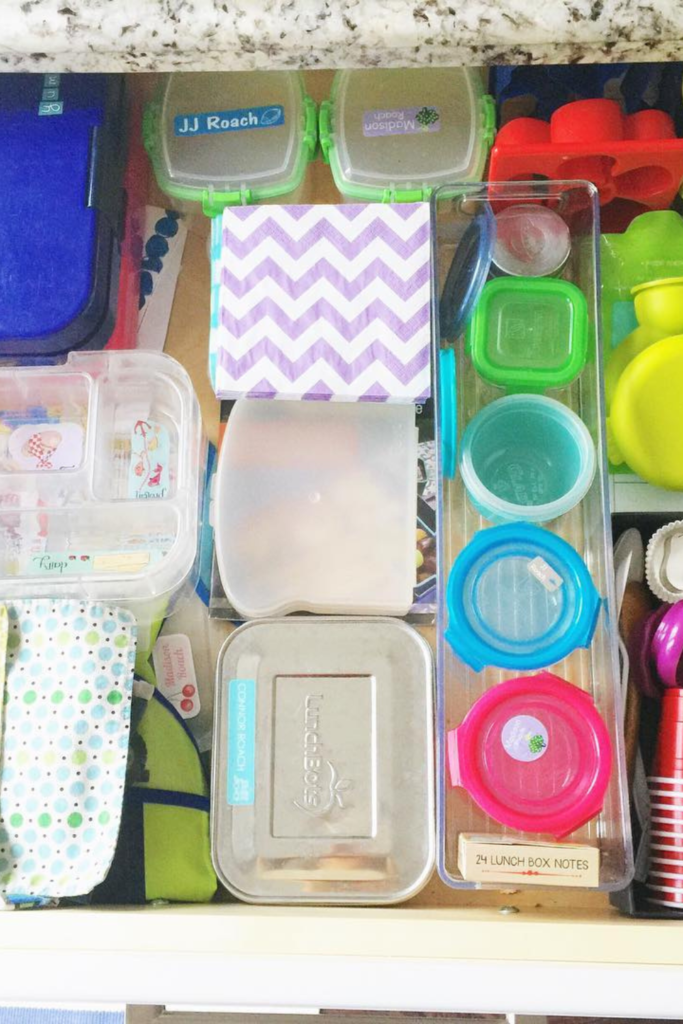
Grab-And-Go Drawer
Morning chaos drops fast once every lunch tool lives in one place, works best for families packing multiple lunches daily.
Group boxes, cups, napkins, and accessories by function. Recreate it using shallow dividers and vertical bins for small items.
Bright lids, soft liners, and clear sections layer a system that lets anyone pack without asking questions.
One-Box Balance
Balanced lunches feel easier when one container handles everything. Layout like this works best for school days or long outings.
Snacks and mains need equal space. Use a multi-compartment bento with one large section and several small ones.
Fill gaps with fruit and crunch. Soft pastels, solid dividers, and snug compartments layer a tidy, no-overthinking setup.
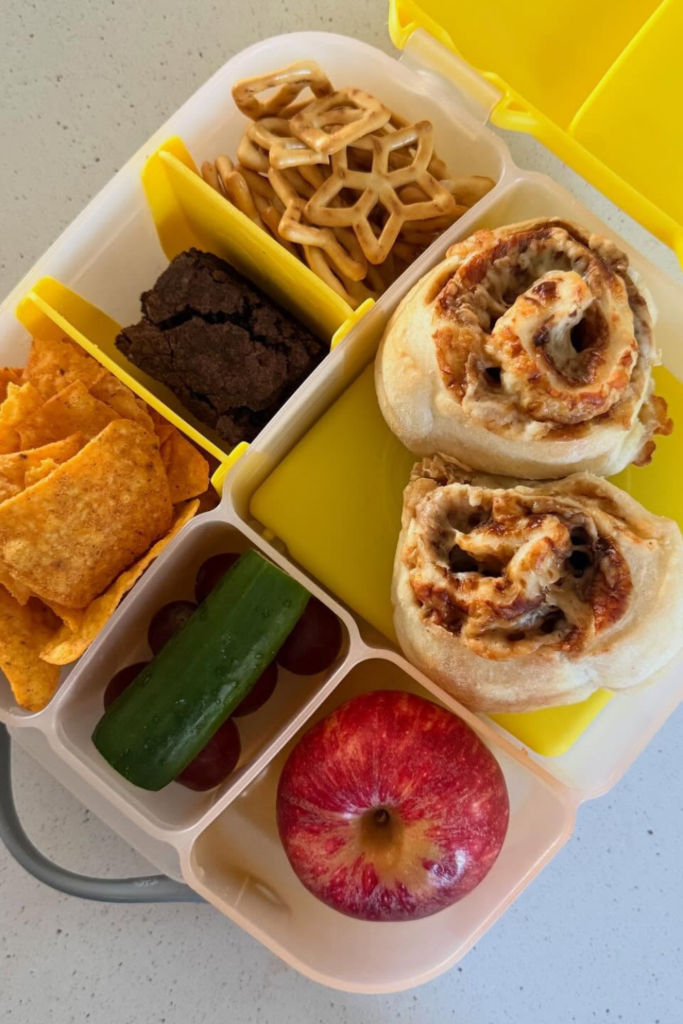
Mix-And-Match System
Different days need different setups, and flexible pieces make that possible. Use a main bento, then rotate silicone pods.
Mini boxes based on the food. A system like this works best for families packing multiple lunches with changing menus.
Pieces fit across boxes, use soft pastels, rounded edges, and layered inserts create a playful but controlled setup.
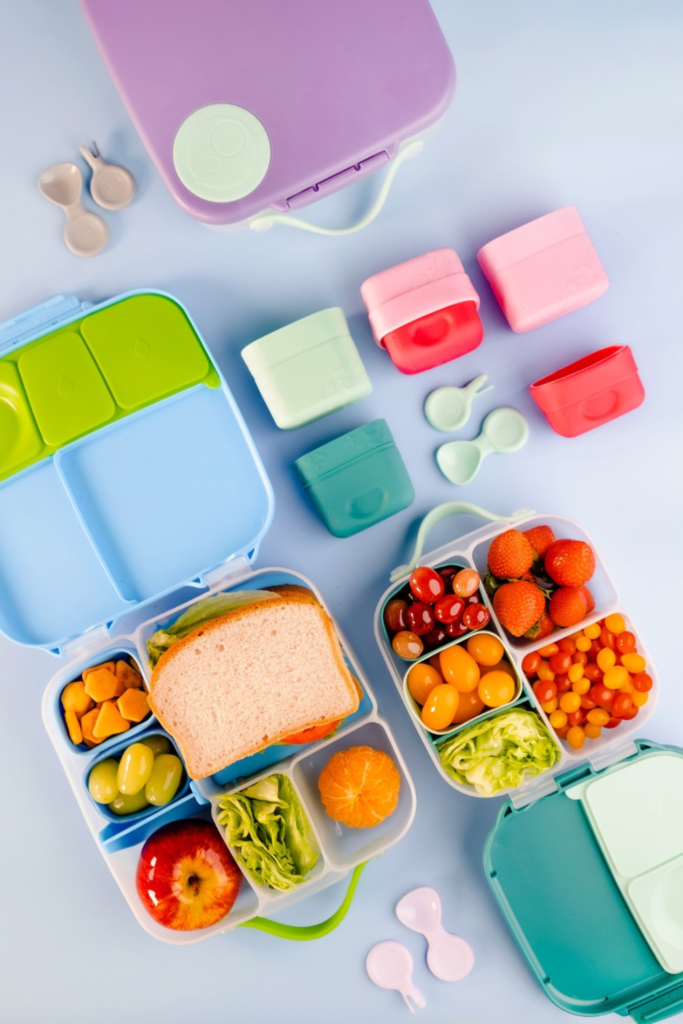
Shelf-Based Grouping
Cabinet space works better once containers stop stacking randomly. Assign each shelf one container type.
This fits homes that prep lunches ahead of time or store extra containers, nesting same-size boxes and placing lids flat on top.
Clear glass, uniform shapes, and calm spacing layer a quiet, organized look that makes grabbing the right container automatic.
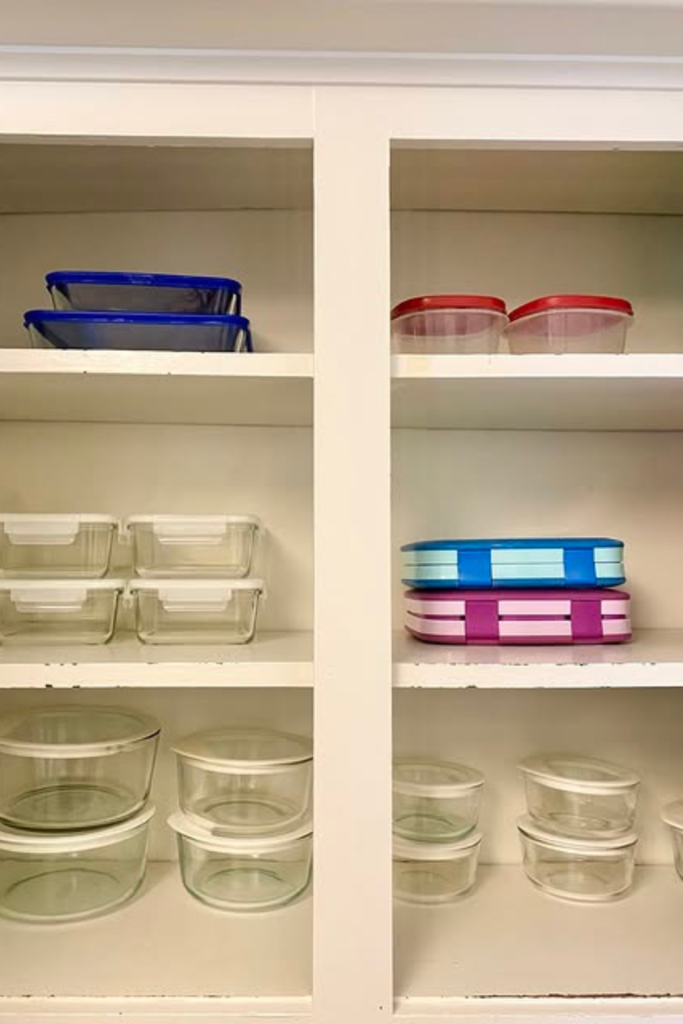
Stacked By Purpose
Decision fatigue disappears once containers earn a specific role, fits households rotating between school, work, and outings.
Stack lunch boxes by use daily basics, extras, and travel pieces. Recreate it by limiting shapes and repeating colors.
Matte finishes, soft pastels, and clean stacks layer a calm, intentional look that keeps lunch prep from spilling into chaos.
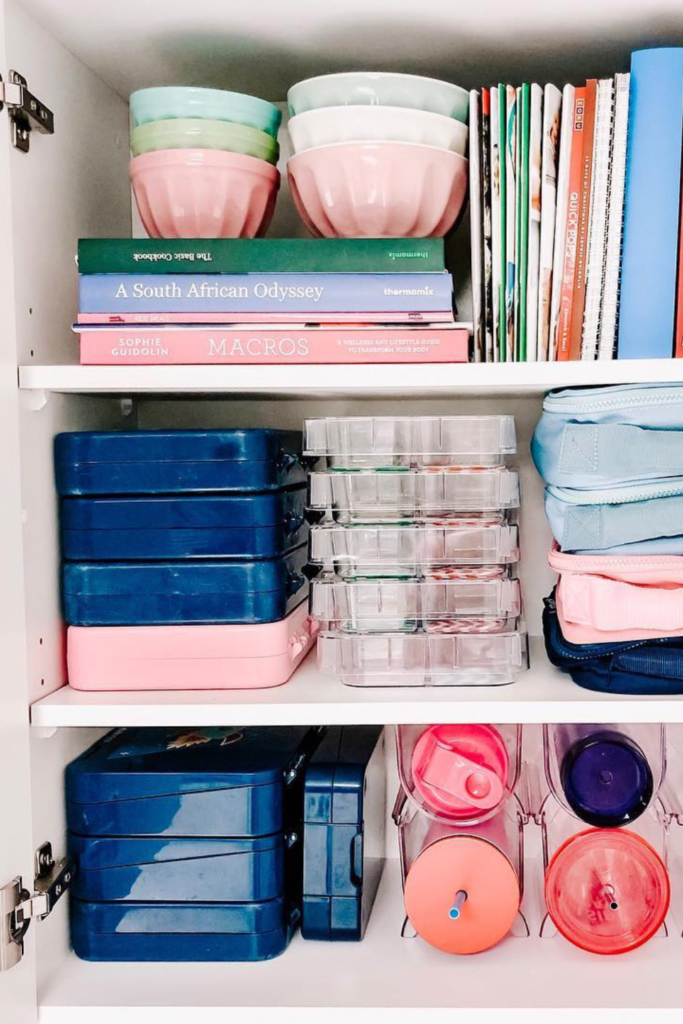
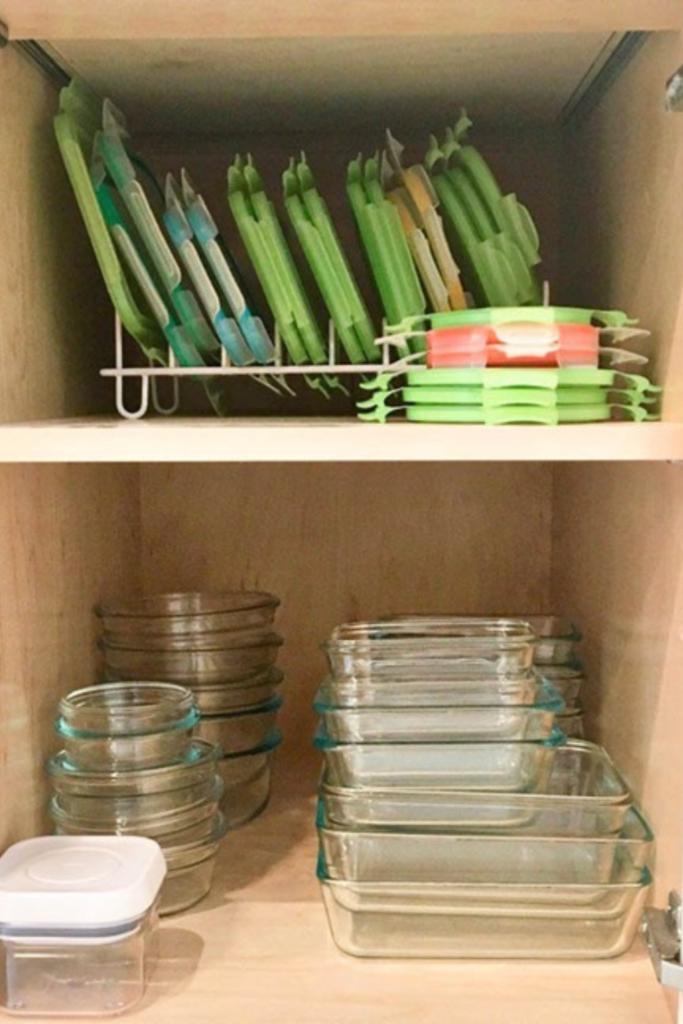
Vertical Lid Control
Lost lids slow everything down before packing even starts, works best for glass containers and meal prep boxes with flat lids.
Stand lids upright using a simple rack so every size stays visible. Recreate it with plate organizers or file racks.
Clear glass bases, stacked bowls, and evenly spaced lids layer a system that keeps matching pieces together.
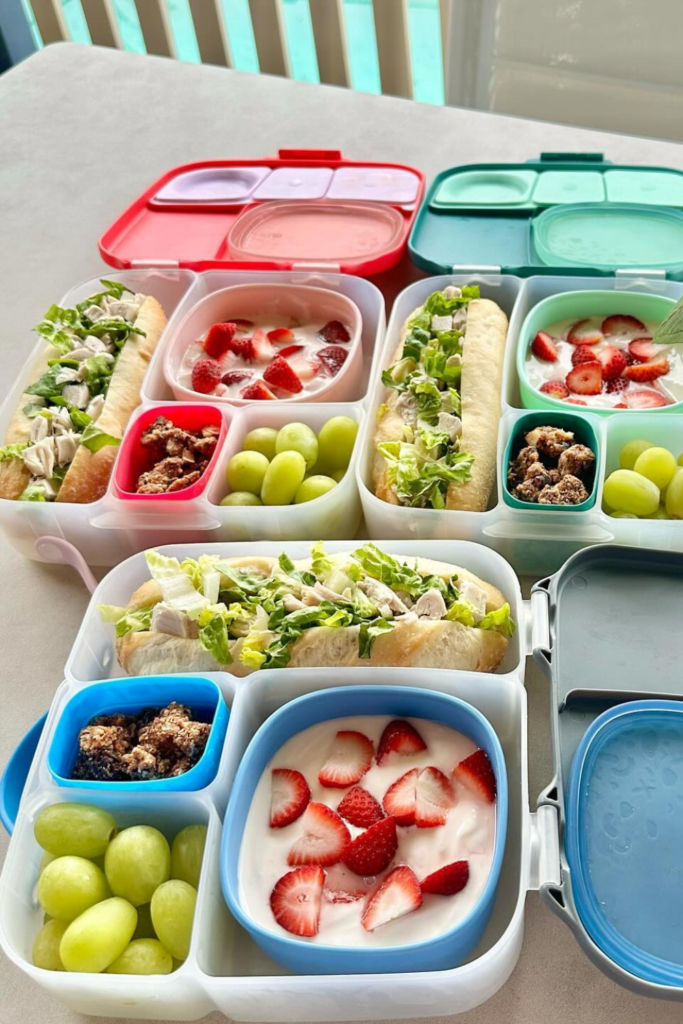
Repeatable Lunch Formula
Consistency saves time when you pack multiple lunches at once. Choose identical bento boxes and assigning fixed roles.
Keep the container layout the same and only change the food inside each section, this setup works best for families.
Matching shapes, coordinated colors, and mirrored layouts layer a system that turns packing into muscle memory.
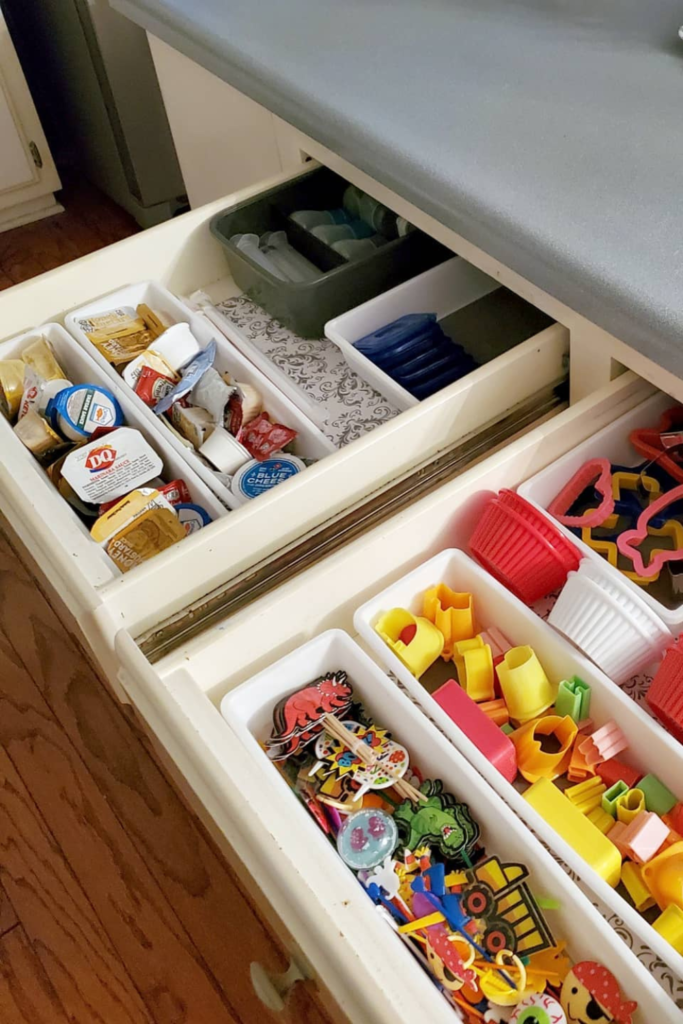
Accessory Sorting
rawer like this works best for families who use cutters, cups, picks, and snack molds often. Sort accessories by type.
You grab exactly what you need without digging. Tiny tools create big messes when they don’t have a home.
Bright silicone pieces, clean white dividers, and open sections layer a playful system that keeps prep fast instead of frustrating.
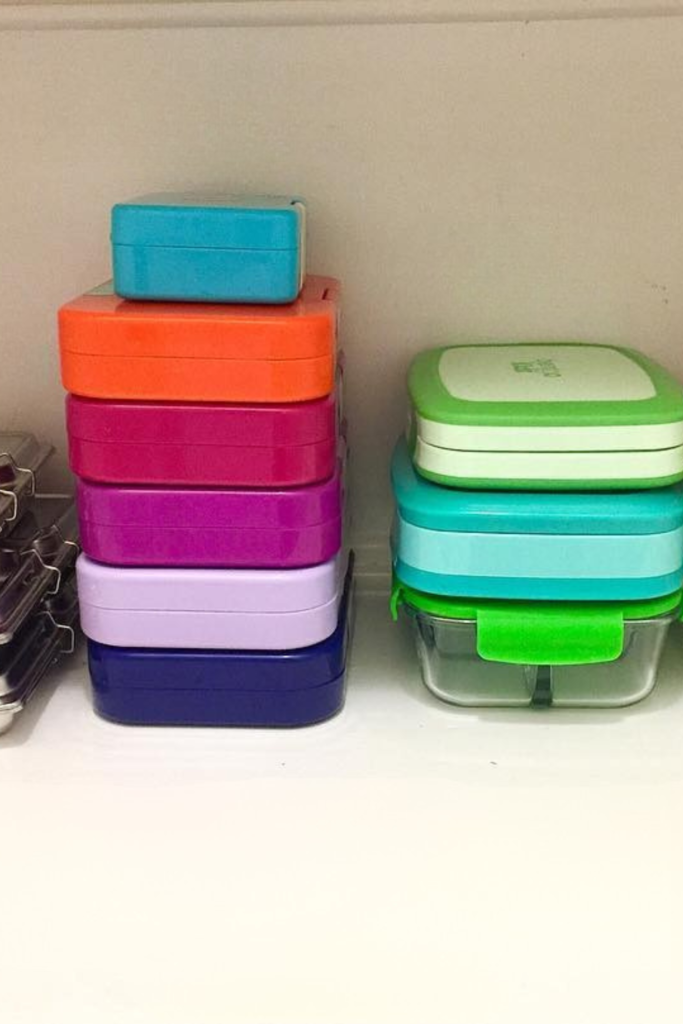
Brand-Based Stacks
Too many lunch boxes feel ovrwhelming until each type gets its own lane, works best when you rotate between different brands.
Stack identical boxes together so sizes and inserts always match. Recreate it by dedicating one stack per lunch box system.
Repeated shapes, bold colors, and clean vertical lines layer a visual order that makes choosing the right box quick and stress-free.
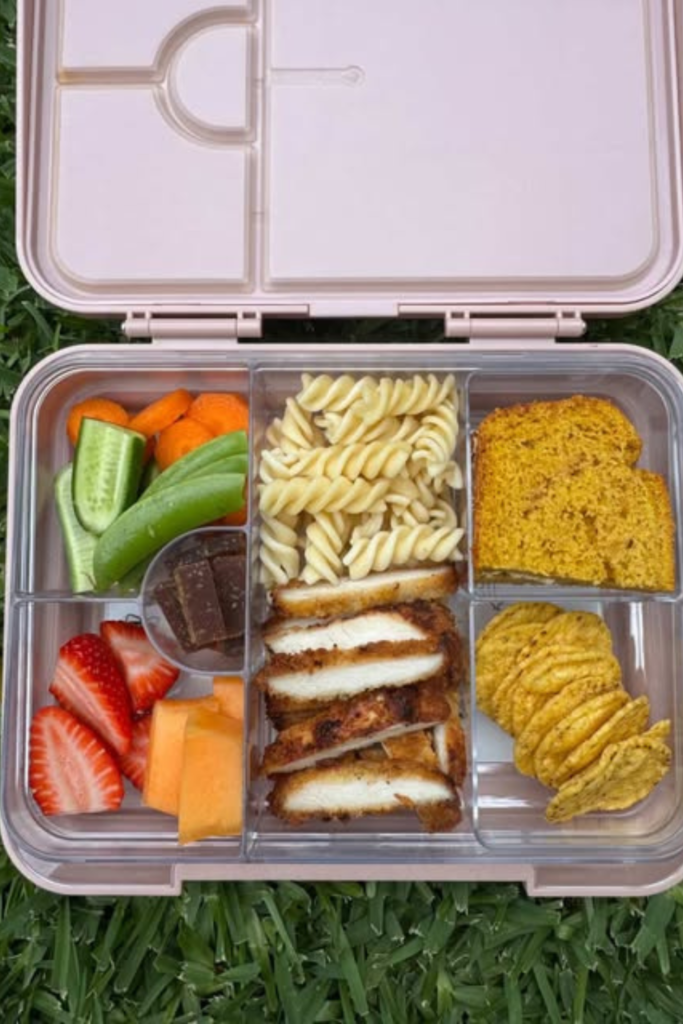
Portion-Smart Layout
Overpacking creates waste, and underpacking leaves kids hungry. A divided box like this works best for balanced school lunches.
Fill one larger section with protein or pasta, then use smaller compartments for fruit, veggies, and crunch.
Choose a bento with varied section sizes. Neutral tones, tight dividers, and evenly filled spaces layer a clean, controlled meal setup.
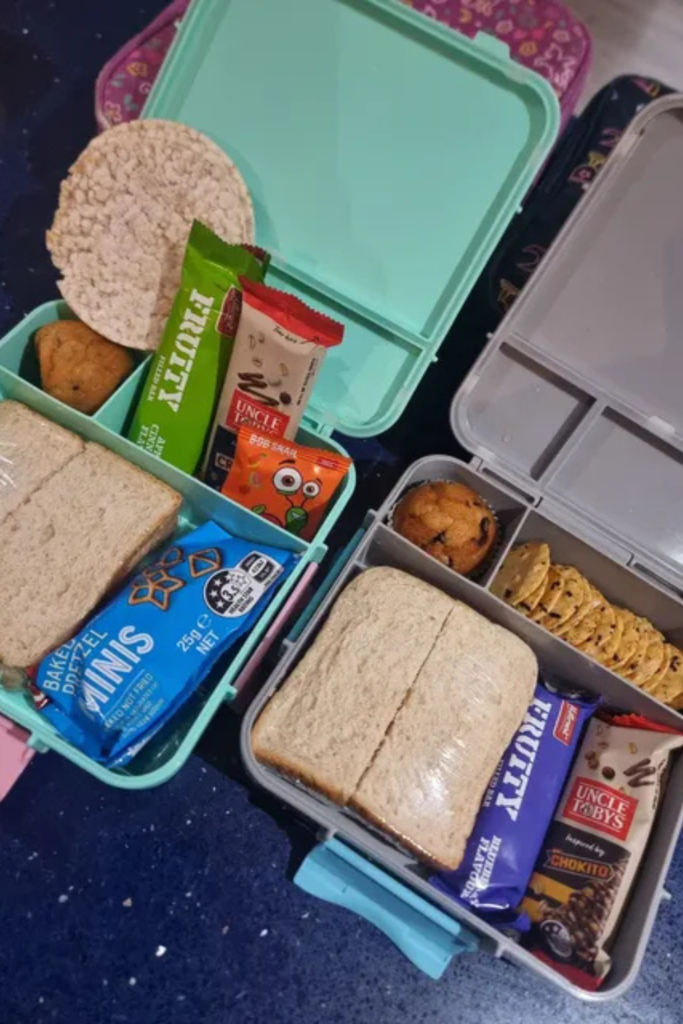
Pre-Packaged Pairing
Layout like this works best for busy mornings or older kids. Combine one homemade item with a few pre-packaged snacks.
Some days need speed over perfection to control time and portions. Leave space in one large compartment for a sandwich.
Lining packaged items neatly beside it. Compact boxes, straight edges, and sealed snacks layer a practical, no-stress setup.
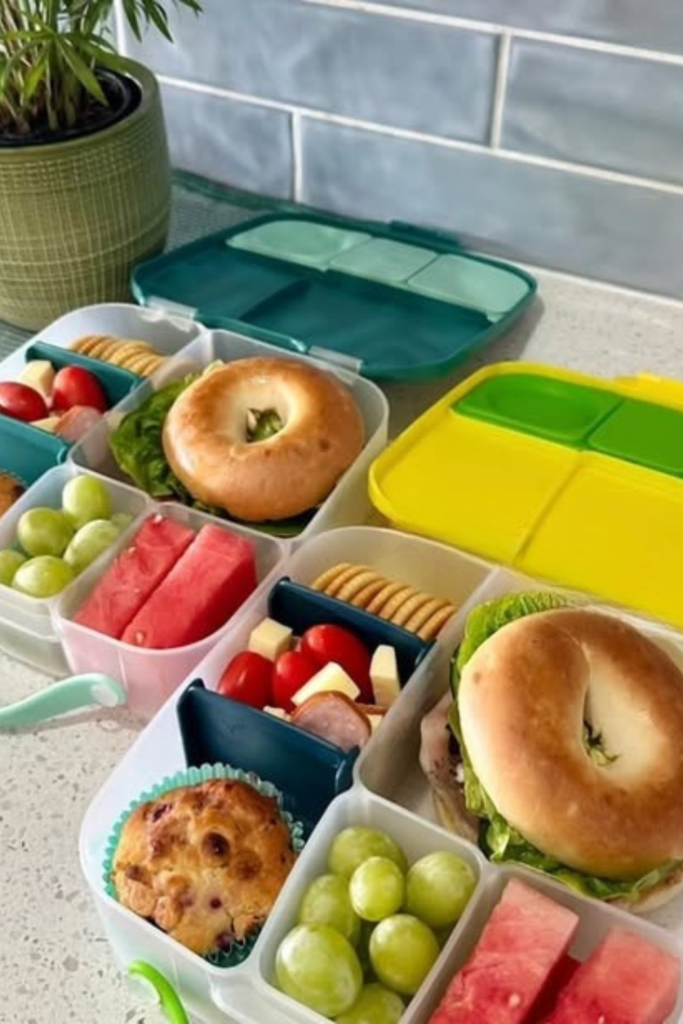
Balanced Bento Routine
Packing feels smoother once every section has a job, works best for school lunches that need protein, fruit, veggies.
Place the main item in the largest space, then build around it with color and texture. Follow the same food formula daily.
Crisp dividers, bright lids, and evenly spaced portions layer a lunch that looks organized and stays separated.
FAQs
How many containers do you actually need?
Most people own far more containers than they use. Daily lunches usually work best with two or three reliable boxes and a few small inserts.
Extra containers create clutter and slow you down. Stick to a core set that fits your lunch bag, stacks easily, and cleans fast.
Should you mix container brands or stick to one system?
Mixing brands works only when sizes line up. Random containers cause lid chaos and wasted space. One main system with matching inserts.
Keeps packing simple and storage clean. If you do mix, choose pieces that nest together and share similar shapes so everything still fits without forcing it.
You may like to read!
- 26 Dresser Organization Ideas
- 26 Japanese Organization Ideas
- 22 Junk Drawer Organization
- 22 Junk Room Organization
- 27 Fridge Organization Ideas

Fasial is the founder of the Fizzy Flare. He has been a passionate blogger since 2021. He ran three different websites in the past few years. Now he is focusing on Fizzy Flare to build an audience and help them organize their life.