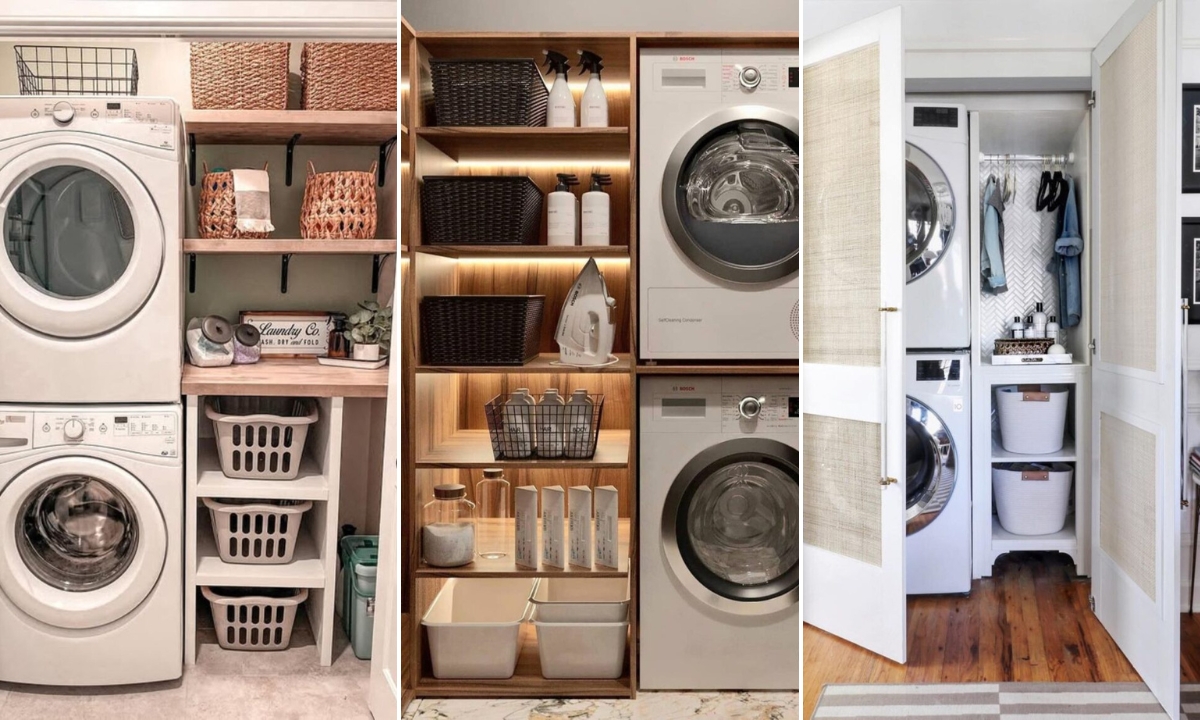
25 Laundry Closet Organization Ideas for 2026
This post may contain affiliate links: full affiliate disclosure.
Something falls out when you open your laundry closet. Again. The mop is blocking the door, the detergent is crowded into one corner, and there isn’t enough room to fold a shirt.
You’ve attempted to “organize” things before, but the space is just too little. That seems to be the case.
The truth is that your closet isn’t the problem. The setup is. If you use the appropriate areas in the correct method, a small laundry closet can hold more than you think.
In this article, I will share 25 simple Laundry Closet organization ideas you can implement this year. They will help you turn messy areas into clean and organized spaces.
Let’s jump in!
Contents
- 1 What Are the Best Storage Solutions for a Narrow Laundry Closet?
- 1.1 Vertical Pantry
- 1.2 Stacked Storage
- 1.3 Lit Shelves
- 1.4 Hanging Rod
- 1.5 Floating Shelves
- 1.6 Basket System
- 1.7 Sort Cubes
- 1.8 Folding Counter
- 1.9 Built-In Storage
- 1.10 Hanging Shelf
- 1.11 Shelf Layers
- 1.12 Door Storage
- 1.13 Cabinet Wall
- 1.14 Slim Shelves
- 1.15 Hidden Cabinets
- 1.16 Vertical Compartments
- 1.17 Storage Wall
- 1.18 Glass Cabinets
- 1.19 Labeled Baskets
- 1.20 Wall Organizer
- 1.21 Counter Cabinets
- 1.22 Hook Station
- 1.23 Supply Tower
- 1.24 Appliance Nook
- 1.25 Hanging Rail
- 2 FAQs
What Are the Best Storage Solutions for a Narrow Laundry Closet?
If your laundry closet feels cramped, it’s not because it’s small; it’s because the space isn’t working for you. Every inch counts in a narrow arrangement.
Think about putting vertical shelves above the washer and dryer, slim rolling carts next to them, and storage doors that you might not be using yet.
You also require areas. Things you use every day should be easy to reach. The backstock goes up. Hooks hold big tools instead of them sitting on the floor.
The space feels bigger and easier to handle right away when you stop thinking it like a typical closet and start treating it like a system.
Save this article for later! 👇👇

Vertical Pantry
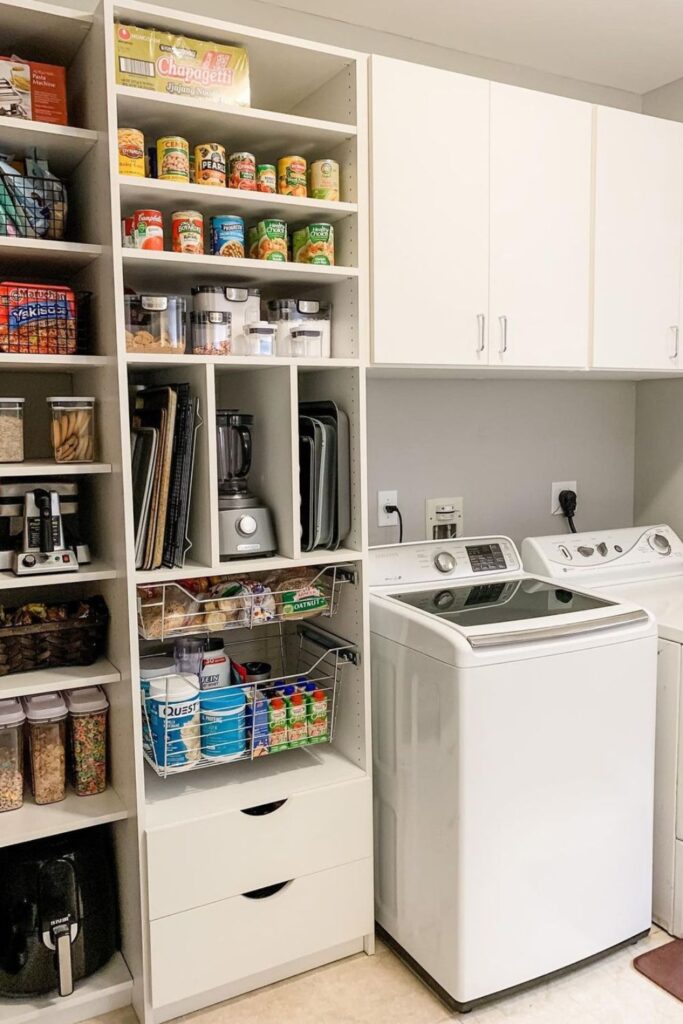
Floor space disappears fast in a narrow laundry closet, which is why tall storage like this works so well.
A full-height shelving unit turns one wall into a vertical pantry where everything has its own space.
Everyday things are at eye level, whereas bulk supplies and tiny appliances are at the bottom.
Clear containers make things less messy right away and make it easy to identify what you need more of.
Baskets help keep tiny things that might ordinarily make a mess on open shelves together. Another common problem is objects being lost in the back.
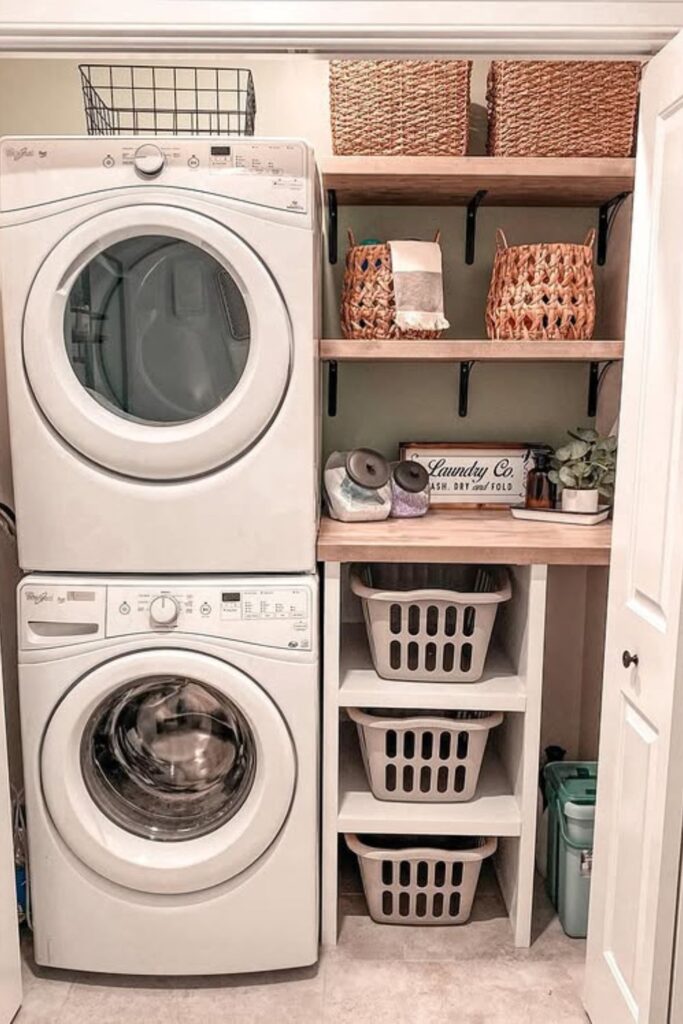
Stacked Storage
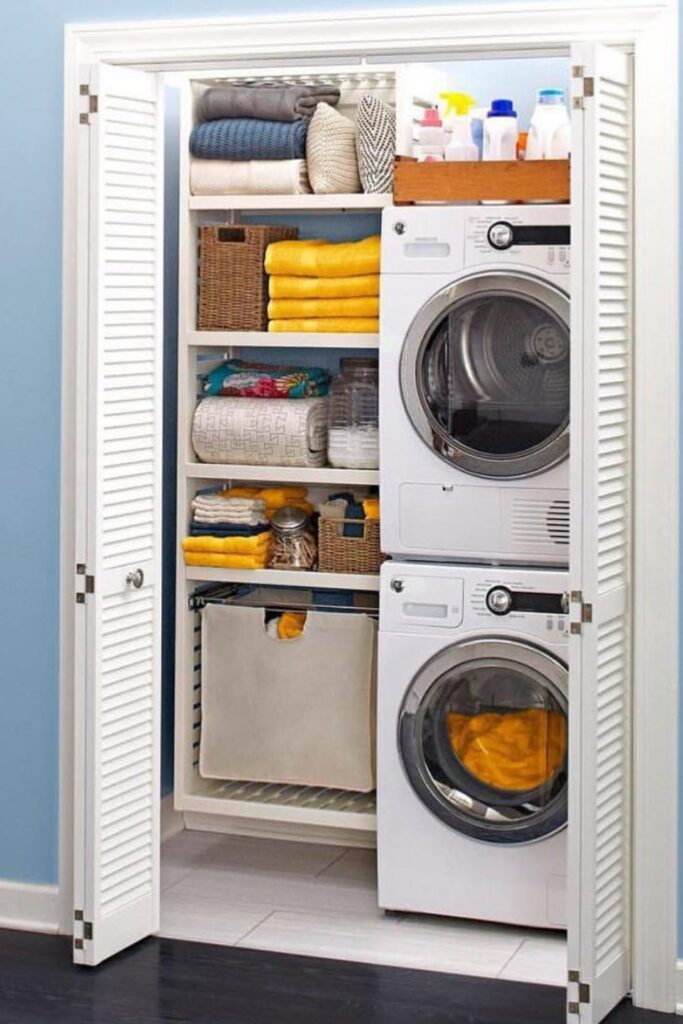
Stacking machines already saves half the floor space, so the next smart move is building storage right beside them.
This narrow column of shelves makes the empty side wall a washing area. Towels, folded linens, and cleaning supplies may all be kept in order without taking up space around machines.
Open shelves are great for this because everything is simple to see and reach on laundry day.
Woven baskets help hide little things like clothes or dryer sheets, while clear jars keep powders and pods from getting soiled.
See the hamper on a pull-out shelf toward the bottom? That little alteration keeps filthy clothes off the floor and makes it easy to sort them before they go in the washer.
Lit Shelves
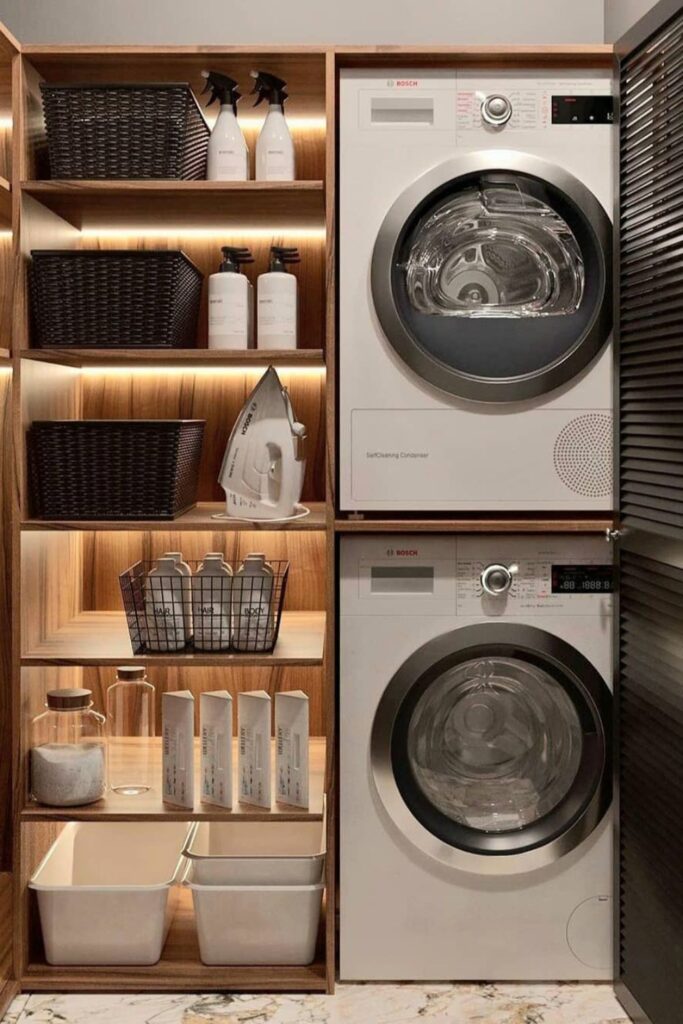
Laundry closets often feel dark and cramped, which makes finding small supplies frustrating. Adding warm strip lighting under each shelf changes that instantly.
You can see every level, and the closet feels more like a built-in cabinet than a utility place that’s tucked away.
Adding baskets to wood shelves keeps the arrangement organized without making it look messy.
Bigger woven bins hide big things, and smaller containers carry detergents, sprays, and laundry additives so that bottles don’t get all over the shelf.
Notice how the iron and other appliances sit on their own level. This keeps them from competing with daily items.
Hanging Rod
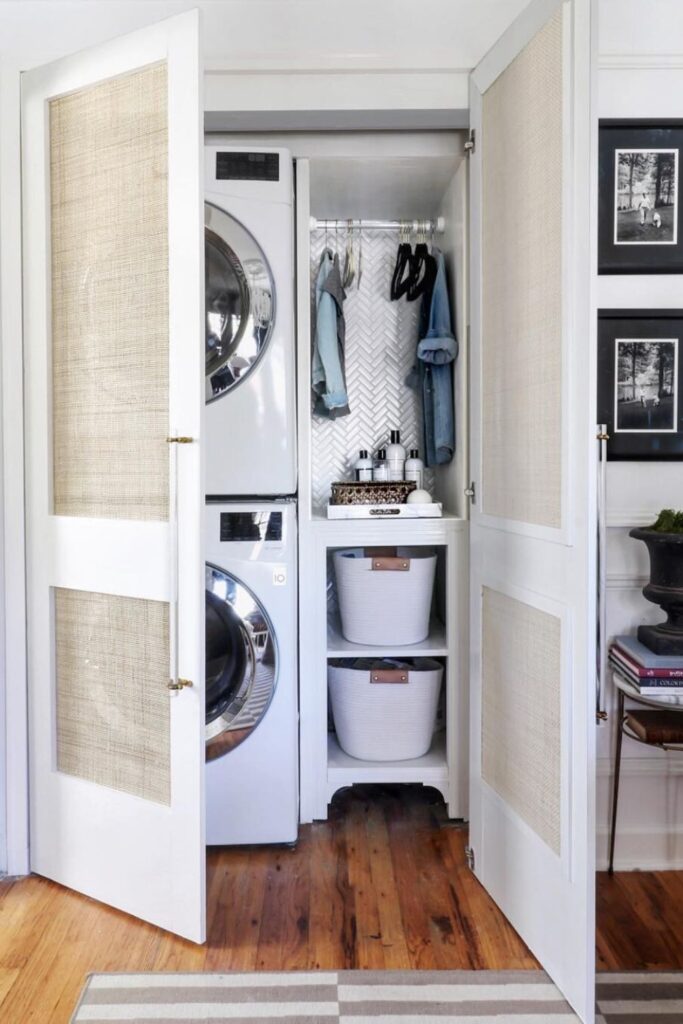
Laundry closets become far more useful once you add a place to hang clothes right out of the dryer.
A simple rod over the washing makes a place to dry shirts, delicate textiles, or anything that wrinkle easily right away.
This closet is too small for a lot of folding surfaces, so vertical hanging space is the best solution that doesn’t take up any extra floor space.
With just a few narrow hangers, this small area may become a mini wardrobe space while you do laundry.
There are shelves below the pole that contain baskets for folded towels or sorted items. This keeps everything in one little area.
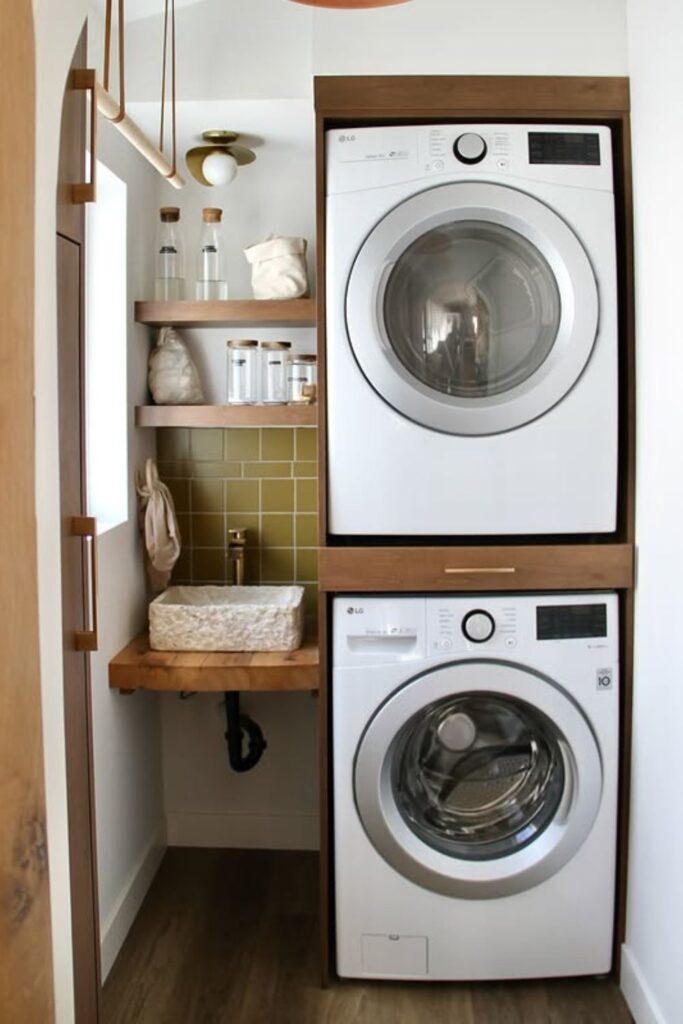
Floating Shelves
Wall space beside stacked machines often sits empty, even though it’s one of the easiest places to add storage.
A few floating shelves can quickly turn that empty space into a basic supply station without getting in the way of the small passageway.
During a wash cycle, it’s easy to access laundry jars, detergent bottles, and small containers that are neatly lined up.
Putting things on open shelves also stops the impression of being crowded that big cabinets might give you in small closets.
That provides room for a small countertop where you may put a basket, clean up stains, or put clothing down while you sort them.
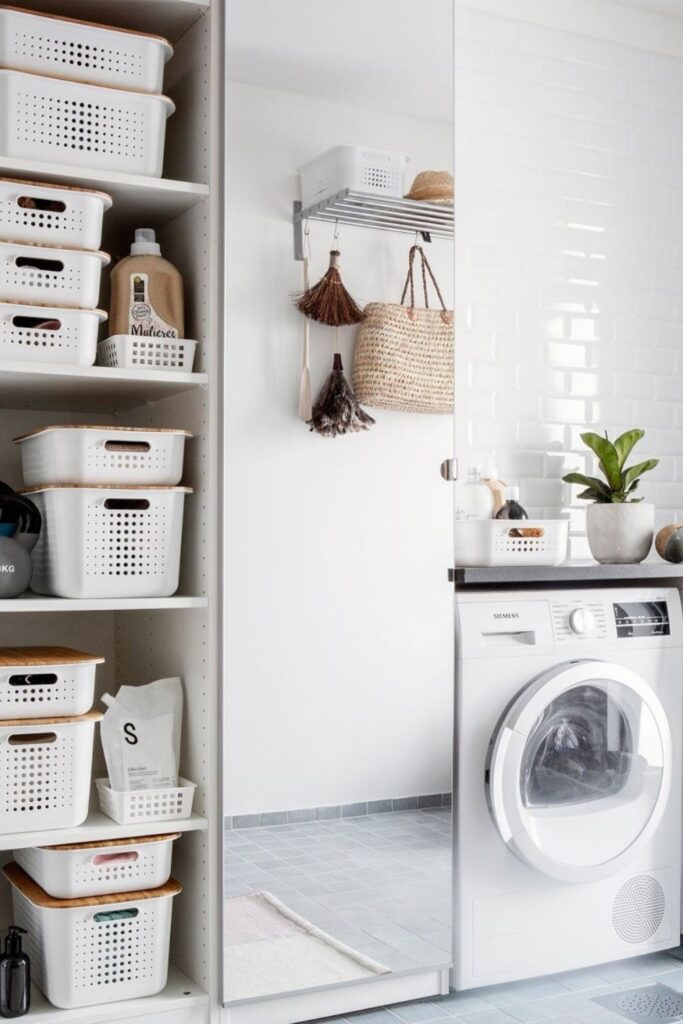
Basket System
Small laundry items love to spread everywhere dryer sheets, cleaning cloths, stain removers, random supplies.
This simple basket arrangement keeps those little things together without making the shelves look messy.
Each bin is like a small group of its own. One houses cleaning supplies, another has washing supplies, and a third holds extra things that tend to float around the area.
The shelves seem neat even when they’re full because all the baskets are the same. Stackable bins also make it easy to keep the closet clean. .
Take one out, get what you need, and slide it back in. No digging through heaps or knocking over bottles.
Sort Cubes
Laundry piles disappear faster once sorting becomes part of the closet itself. A vertical row of cubbies like this turns the narrow side wall into a built-in sorting station.
There are numerous categories for each basket: whites, darks, towels, or fragile things. Instead of putting everything in one bin, garments go right into the right basket.
That little habit saves time when you need to start a laundry. Open cubbies make it easy to take out and slide back in baskets.
This is great for small laundry closets when room is restricted. There are floating shelves above the cubbies that can hold folded towels, attractive baskets, or containers of detergent.
This design works best next to stacked machines where there is a tight vertical space. If you build simple cubbies that fit common laundry baskets, your closet may both a place to store.
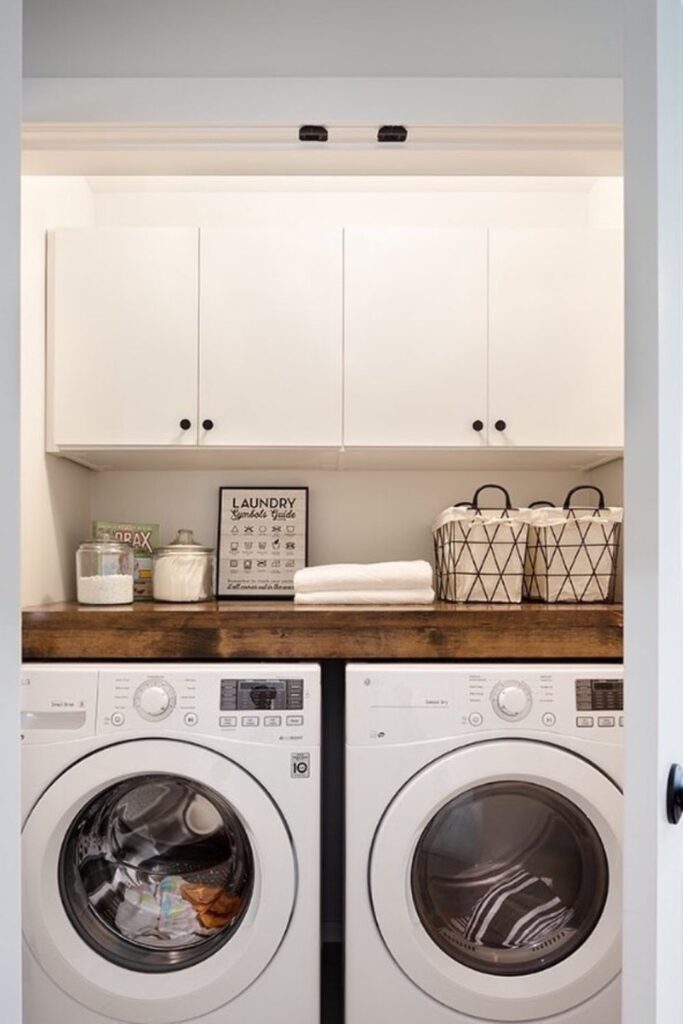
Folding Counter
Laundry closets become far more functional once you add a solid surface above the machines.
This basic wood countertop makes a folding station right away, where clothing may be sorted, folded, or piled shortly after they come out of the dryer.
Without a counter, clothes frequently wind up on top of the machines or in another room in the house.
A permanent surface puts everything in one place and helps the laundry room feel less cluttered.
Upper cabinets take order to the next level by hiding cleaning supplies, detergents, and extra objects that might otherwise make the space look messy.
Built-In Storage
Laundry closets start working better the moment storage is designed around the machines instead of added later.
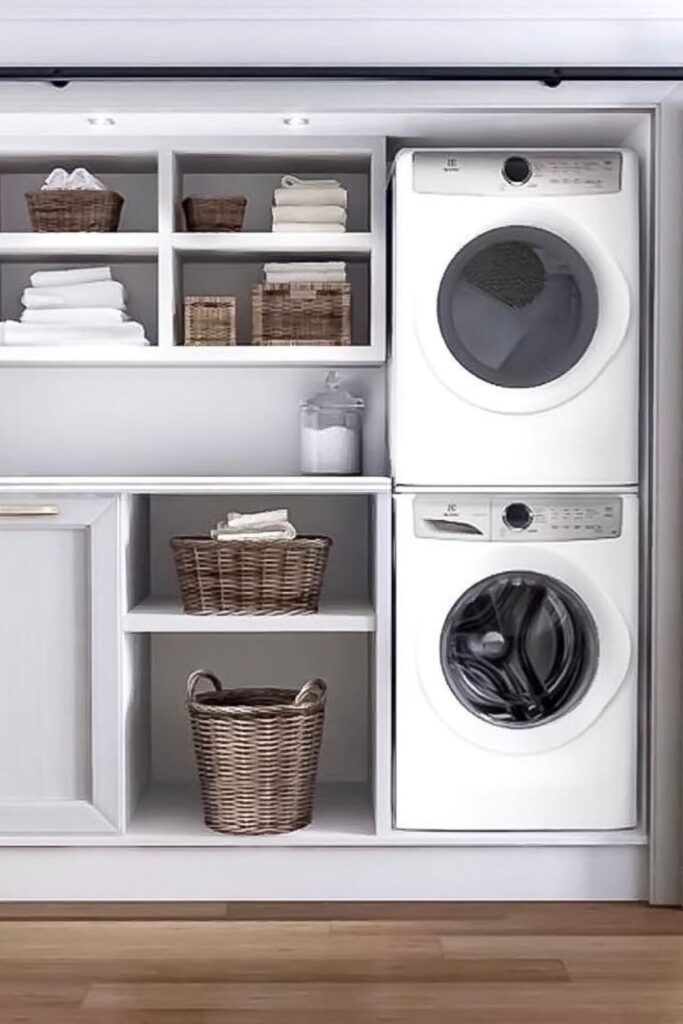
This built-in plan makes use of every part of the wall. There are upper cubbies for folded towels, open shelves for baskets, and a special place for the stacked washer and dryer.
Divided cubbies keep linens from falling into each other by keeping them separate. Woven baskets hold little things like clothes or washing materials.
That would otherwise make open shelves look messy. The lower compartments can also be used to store hampers, which keeps filthy clothes out of sight but yet simple to reach.
The layered layout is one thing that helps this setup work well. There is storage above and next to the machines, so nothing else takes up the same area.
Hanging Shelf
Laundry routines become smoother when clothes have somewhere to hang the moment they leave the dryer.
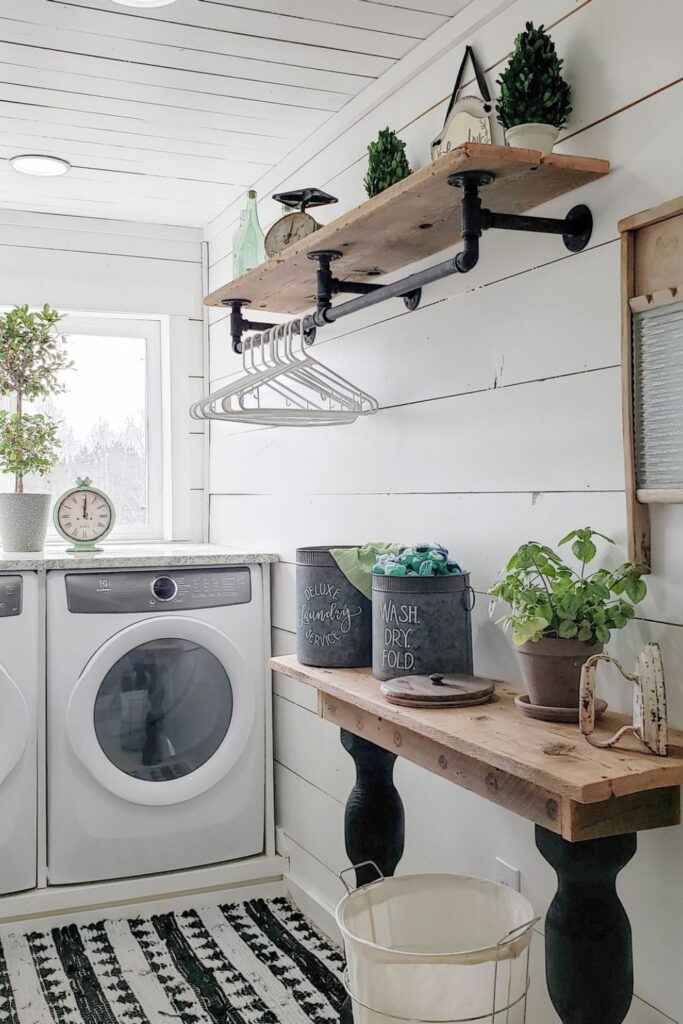
This shelf with a built-in hanging rod solves two problems at once: it gives you storage space above and a place to dry things below.
The top shelf is for little decorations, jars, or laundry supplies that you don’t need to get to every day.
Instead than moving wet garments around the house, they stay right where they are when they are being washed.
This configuration maintains the limited workplace open by being mounted high on the wall. This makes the equipment and countertop still feel like they are close by.
Shelf Layers
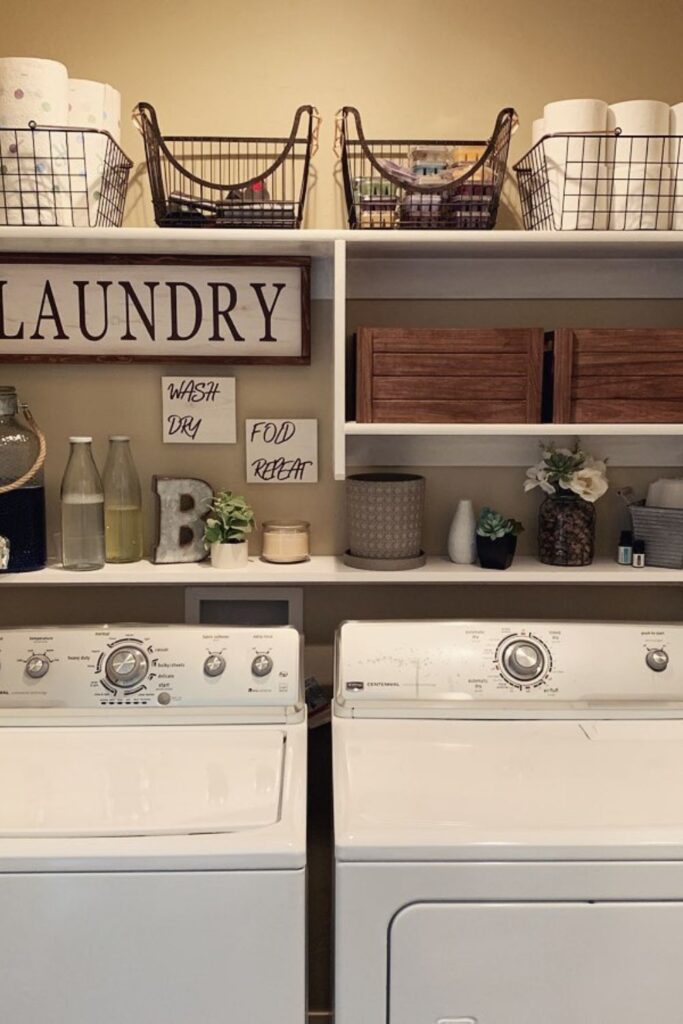
Empty wall space above the washer and dryer can hold far more than people expect. Adding multiple shelf levels like this creates a vertical storage wall.
Where ordinary laundry supplies are kept in order instead of stacking up on top of the machines.
Wire baskets hold large things like paper towels and extra stuff, while wood boxes keep smaller items together.
A large center shelf becomes the main work area, where jars, bottles, and detergents that are used often are easy to reach.
Smartly using corner space that would normally go to waste, narrow side shelves make the most of it.
Door Storage
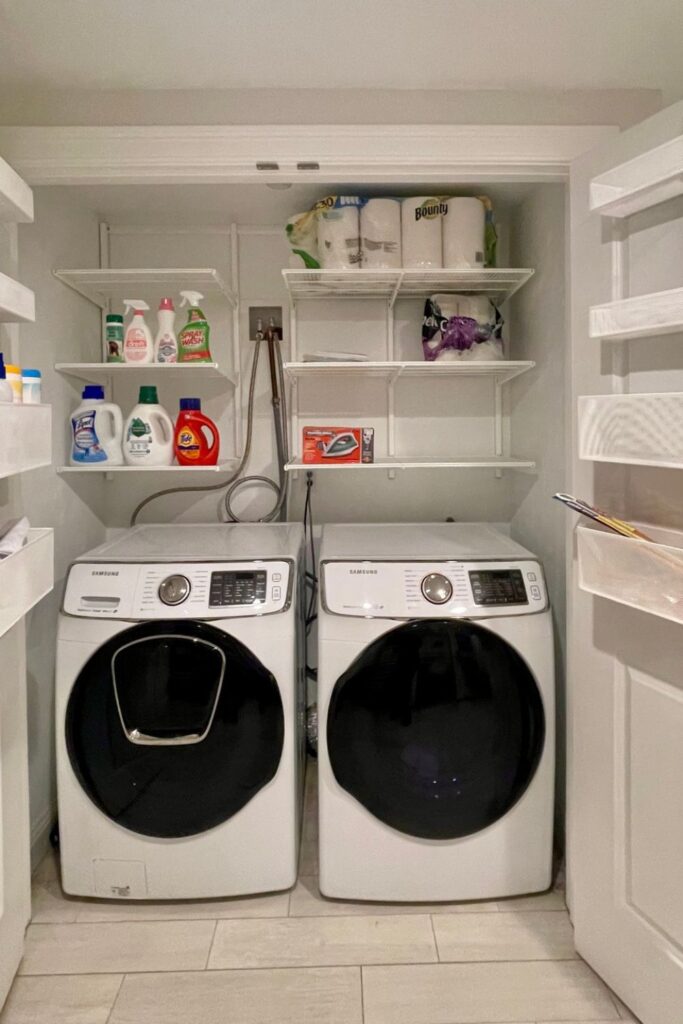
Laundry closets usually have one overlooked storage area the back of the doors. Adding vertical door racks instantly creates extra space for supplies.
Slim baskets carry cleaning supplies like sprays, detergents, and other small goods that usually take up space on shelves.
It’s easy to grab a product on washing day because everything is at eye level. It also keeps bottles from building up on the dryer or washer.
The door racks hold daily supplies, and the wall shelves behind the machines keep open for larger goods like paper towels and extra products.
That barrier keeps the closet neat even when there are a lot of things in it. This idea works great in small laundry rooms when there isn’t much floor space.
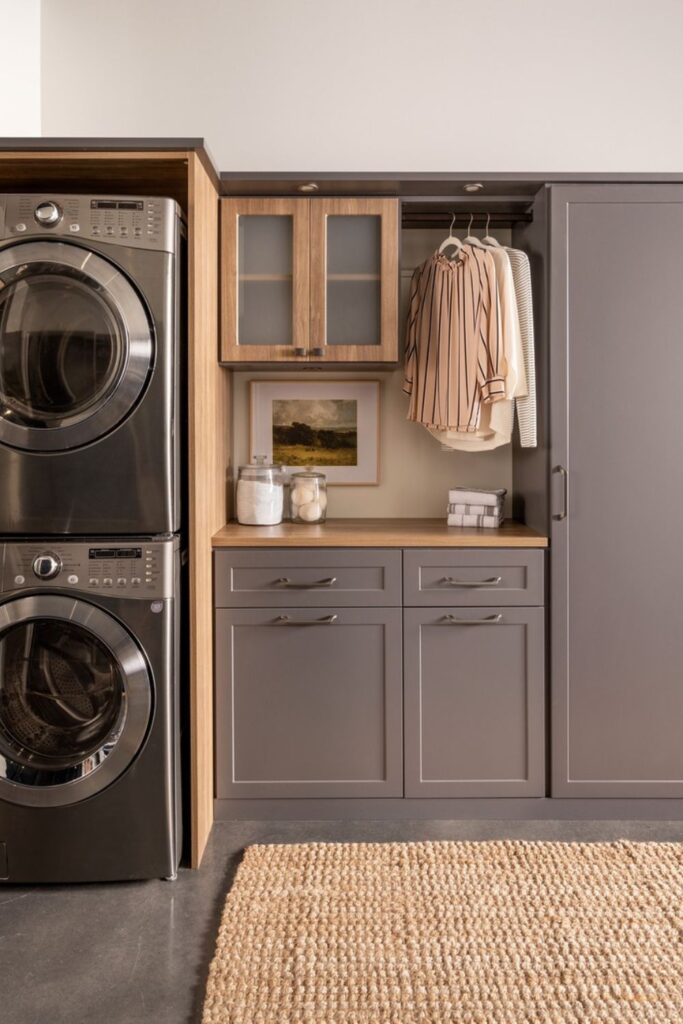
Cabinet Wall
Laundry areas start to feel organized when storage is built around the machines instead of scattered across shelves.
With a cabinet wall like this, the whole sector becomes a well-organized system where everything has a home.
The countertop in the middle is a separate folding station that keeps laundry activities from spilling out throughout the room.
Cabinets underneath cover big things like cleaning supplies, detergents, or extra linens so the space looks clean.
There is a little hanging area above the counter so freshly dried shirts can stay wrinkle-free while you finish folding the rest of the load.
Slim Shelves
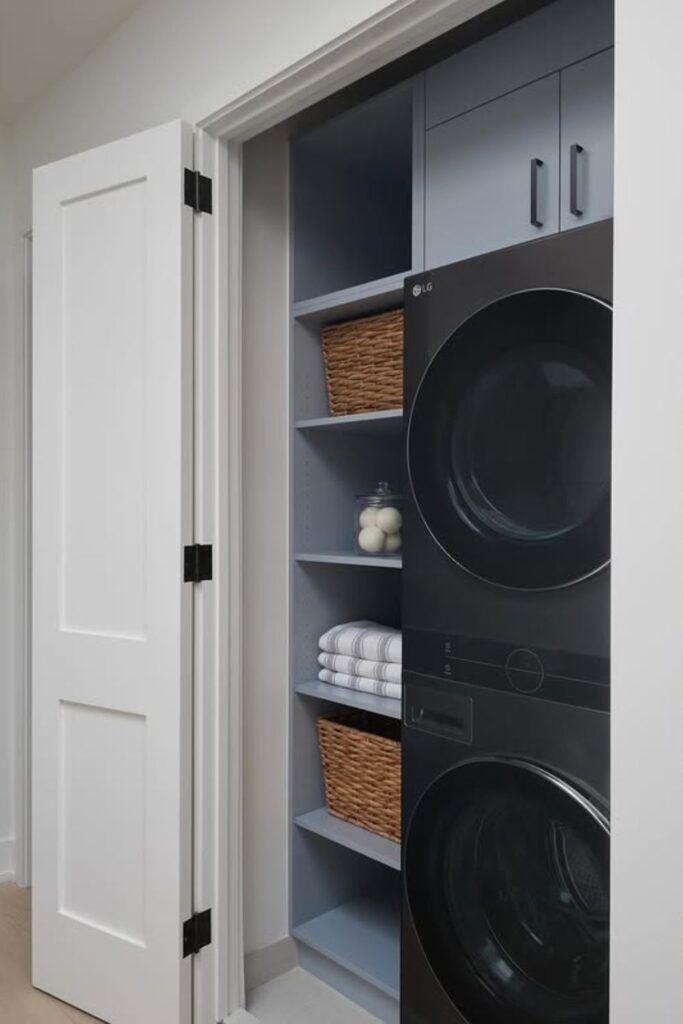
Tight laundry closets rarely have extra floor space, which makes narrow vertical shelving one of the smartest upgrades you can add.
This slender column fits neatly next to stacked machines and makes a small wall into handy storage.
During laundry cycles, open shelves make it easy to see and retrieve everyday items. A level of folded towels is on top of a level of woven baskets.
That keep little items like dryer sheets, stain removers, or cloths that would typically make a mess. A little cabinet over open storage keeps the area balanced.
The cabinet hides things that are used less often, while the shelves hold things that are utilized all the time. That mix keeps the closet from looking full even when it’s full.
Hidden Cabinets
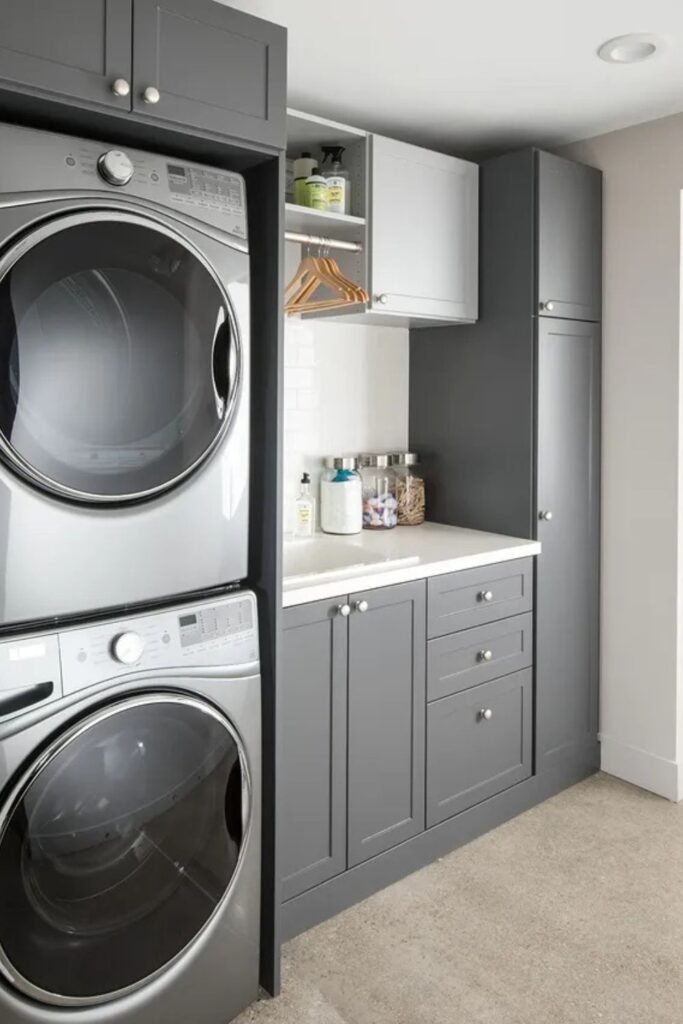
Laundry spaces instantly feel calmer when most supplies stay out of sight. A cabinet-heavy setup like this hides detergents, cleaning tools, and bulk products behind closed doors.
When you stack machines, the wall around them is free for a full storage system. The lower cabinets keep heavier things and extra laundry supplies.
And the countertop makes a tidy place to fold clothes directly next to the dryer. Drawers underneath assist keep tiny things like clothes, pods, and accessories.
A tiny cupboard with a hanging rod over the counter offers another useful layer. Instead of piling up on the machines, freshly dry clothing can hang there for a few minutes.
This plan works well in narrow laundry rooms where appliances are stacked on top of each other and leave one wall open.
Vertical Compartments
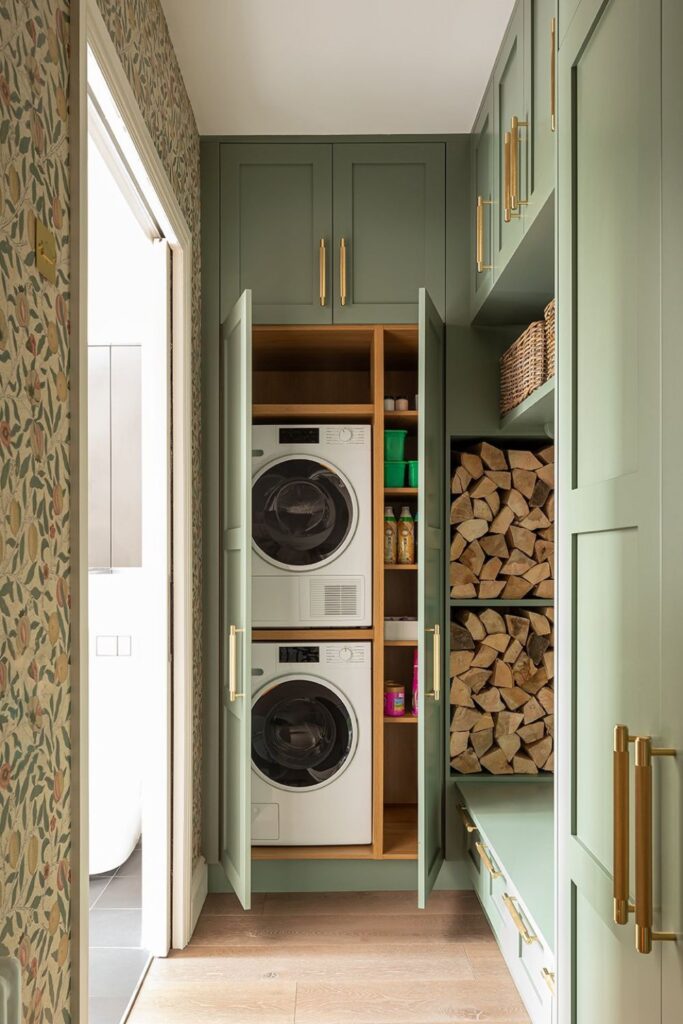
Narrow laundry closets benefit most from storage that climbs upward instead of spreading outward.
This kind of tall cabinet architecture makes a thin wall into multiple stacked sections, each with its own purpose.
The washing and dryer are in the middle, while thin side cubbies hold detergents, bottles, and other small items without getting in the way of the machines.
Each shelf houses a separate type of item because the compartments are split up vertically. This keeps anything from becoming mixed up.
The upper cabinets hold things that you don’t need every day, while the middle shelves keep things you use a lot close at hand.
Storage Wall
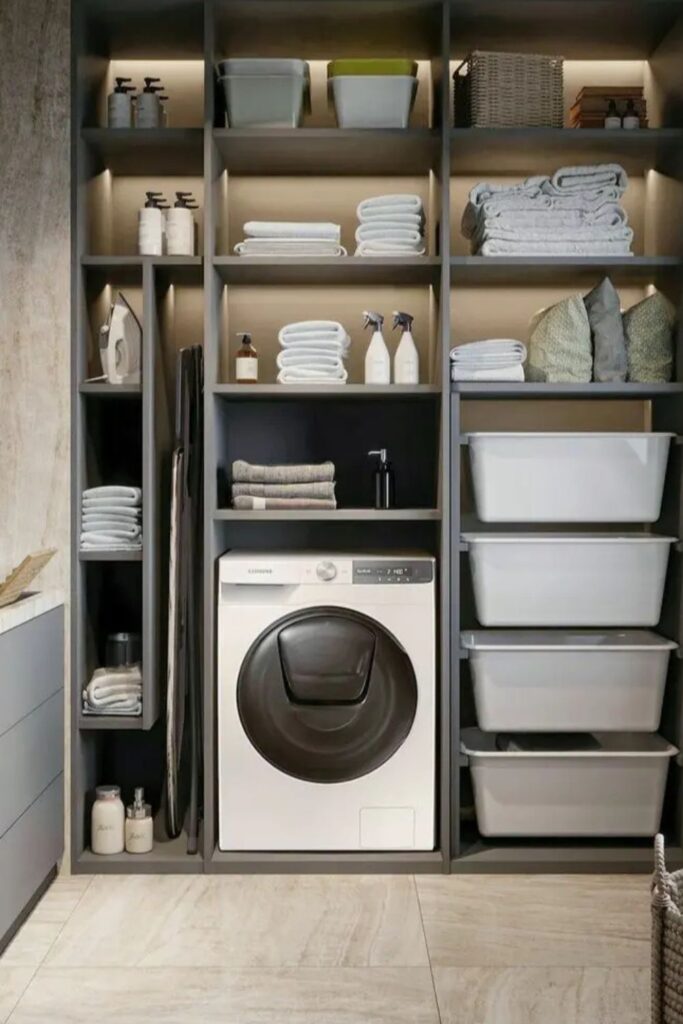
Laundry spaces become far easier to manage once everything lives on one organized wall. A full shelving system like this turns the entire back wall into a structured layout.
Where each item, from towels to detergents, has its own space. Wide compartments at the top are good for storing things like bins and backup supplies.
The middle shelves hold folded towels and ordinary items that you need to reach, while the narrow side sections hold things like ironing boards or cleaning supplies.
On the right, deep pull-out tubs make a built-in sorting system that lets you separate your clothing before it even gets to the washer.
That one easy function can save you time every week. This layout works well in laundry rooms where there is an empty wall next to or behind the machines.
Glass Cabinets
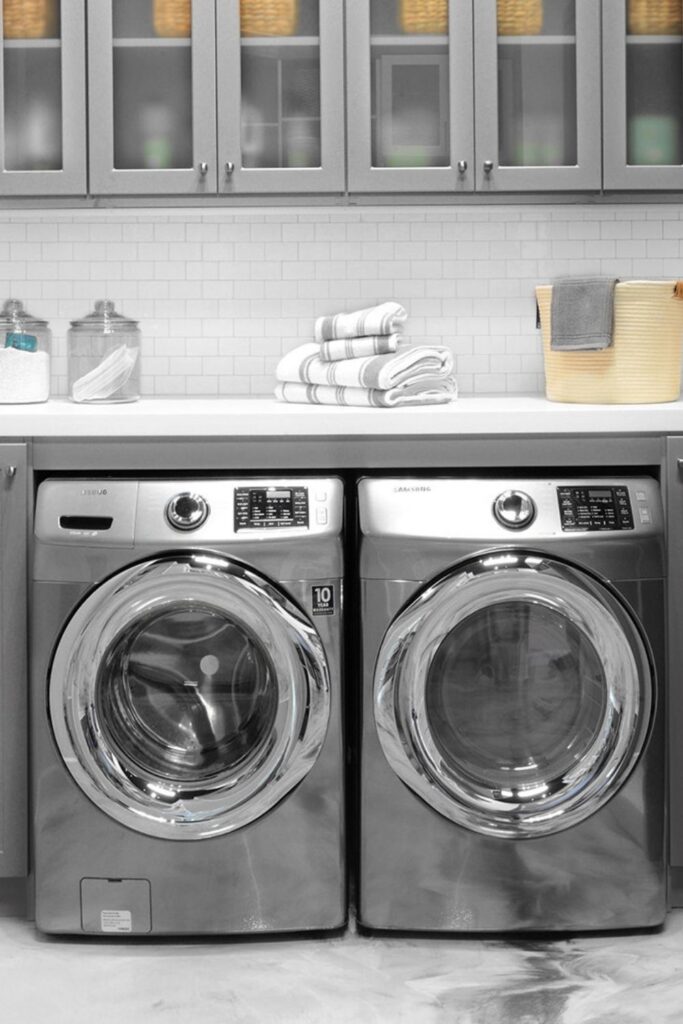
Laundry rooms feel far less cluttered when supplies stay behind closed doors. Glass-front cabinets solve that problem while still keeping everything visible enough to grab quickly.
Instead of collecting dust on exposed shelves, detergents and other items are safe but easy to find.
The large counter under the cabinets is where you fold clothing, stack towels, or sort laundry baskets.
The counter runs across both devices, making a single environment where chores may be done without having to move things around.
Clear jars on the counter keep supplies that are used often orderly and keep big bottles of detergent from taking over the surface. That one little tweak keeps the workspace clean.
Labeled Baskets
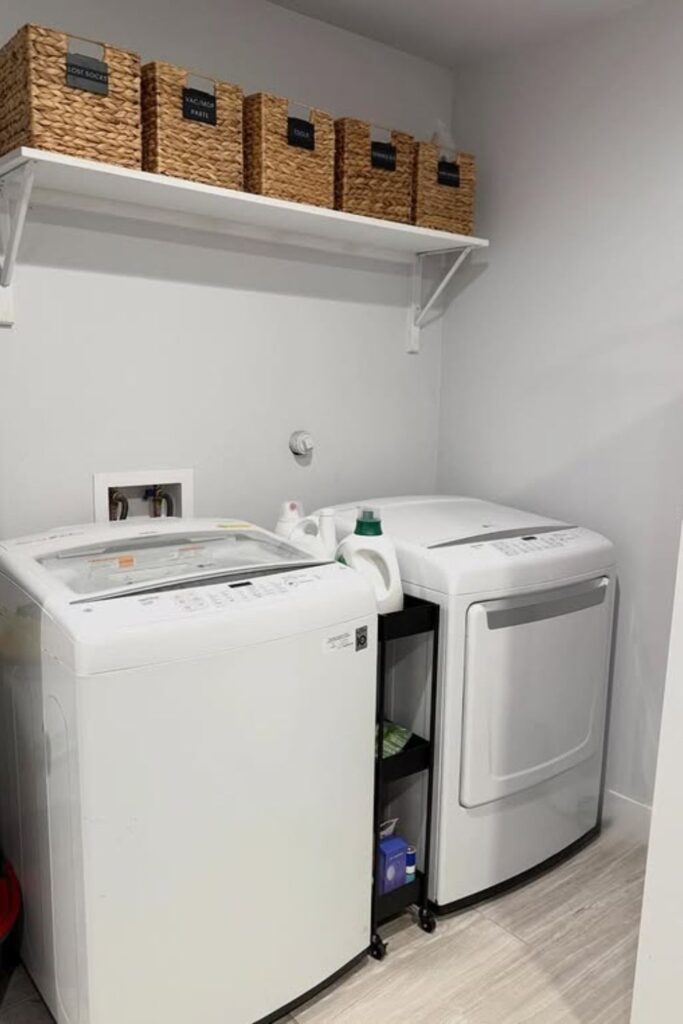
Laundry supplies multiply quickly, and without clear categories they turn into clutter. A row of labeled baskets like this keeps everything sorted before the mess even starts.
One type of material goes in each bin: extra detergent, cleaning cloths, dryer sheets, or excess supplies.
Putting the baskets on a single shelf above the machines sucks up vertical space that would otherwise be empty.
The wall seems tidy even when all the bins are full because the containers match. A sleek rolling cart next to the washer gives another handy way to store things.
It keeps things you need every day close to the machines, so you don’t have to reach up to the shelf every time you do laundry.
Wall Organizer
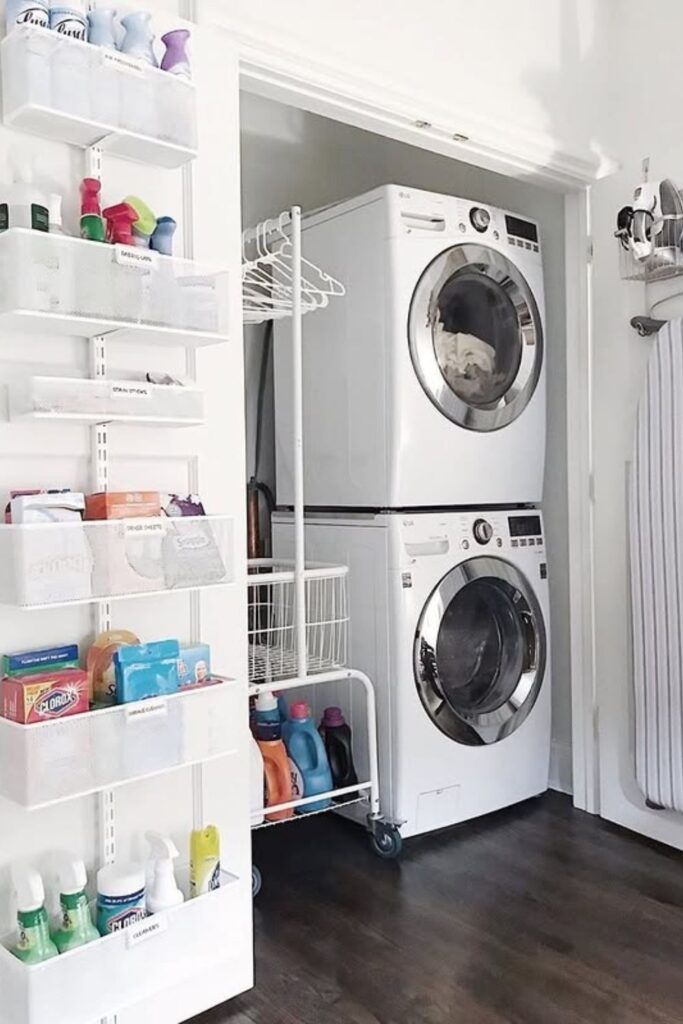
Empty wall space can hold far more than most laundry closets use. A vertical wall organizer like this turns a blank side wall into a complete supply station where every product has its own shelf.
Shallow bins keep cleaning sprays, stain removers, and detergents apart so that bigger bottles don’t cover them up.
You can easily identify what need to be refilled because each level is visible. You don’t have to crawl into cabinets.
A movable cart next to the stacked machines gives you even more flexible storage for heavier bottles and things you use every day.
It slides out when you need it and then neatly disappears back into the small space. A mounted rack for ironing tools and accessories makes good use of the door.
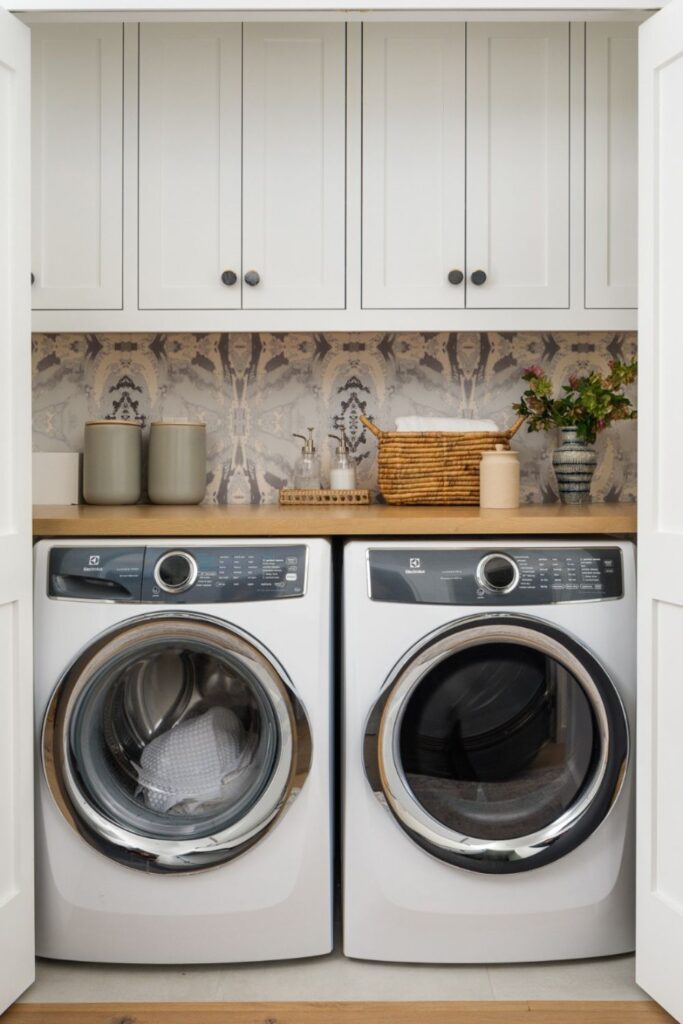
Counter Cabinets
Laundry closets feel instantly more functional once storage and workspace are combined. A wide countertop above the washer and dryer creates a simple folding station.
While cabinets above take care of the mess that generally sits out in the open. You can keep the closet looking clean even.
When it’s full by hiding cleaning supplies, detergents, and backup items behind the cabinet doors.
The counter below becomes the place where you accomplish your usual tasks, including folding clothing, putting baskets down, or putting laundry materials down throughout a cycle.
There are decorative jars and baskets on the counter that help keep tiny things together so the area doesn’t feel cluttered.
Hook Station
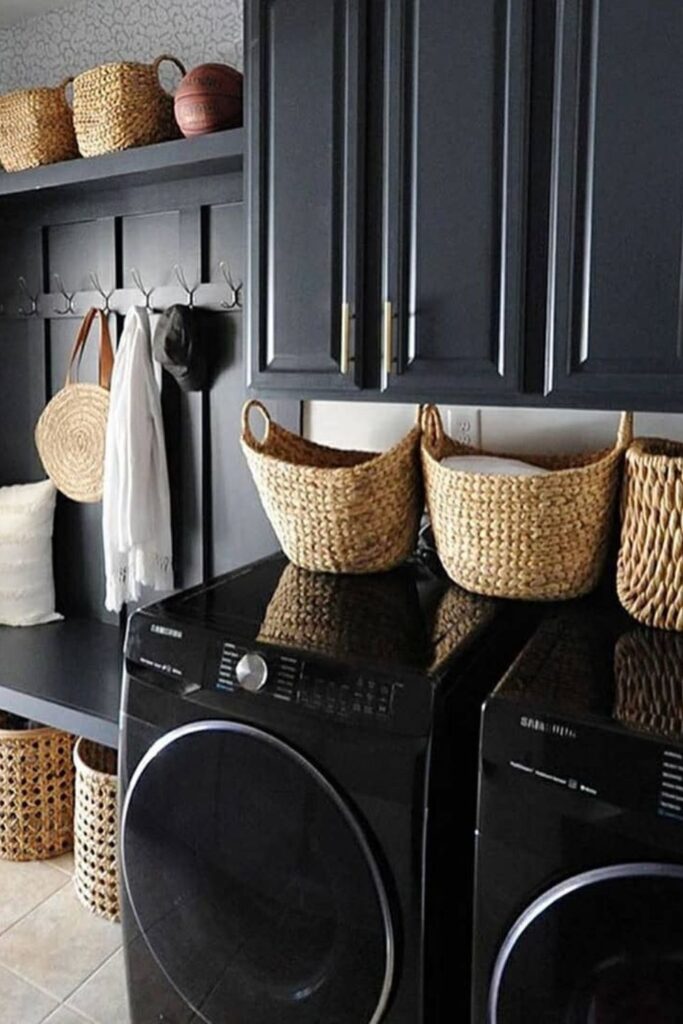
Laundry spaces become much easier to manage when everyday items have a quick place to land.
A hook station like this makes an empty wall a useful place to drop off bags, cleaning cloths, caps, or light laundry tools.
Hooks that are mounted keep things off the counter and out of baskets, where they tend to get lost.
A strong shelf above them carries woven bins for backup supplies or seasonal goods that don’t need to be accessed every day.
That layered layout leverages the wall vertically without making the room feel too small. A big bench-style counter behind the machines makes it even more helpful.
Supply Tower
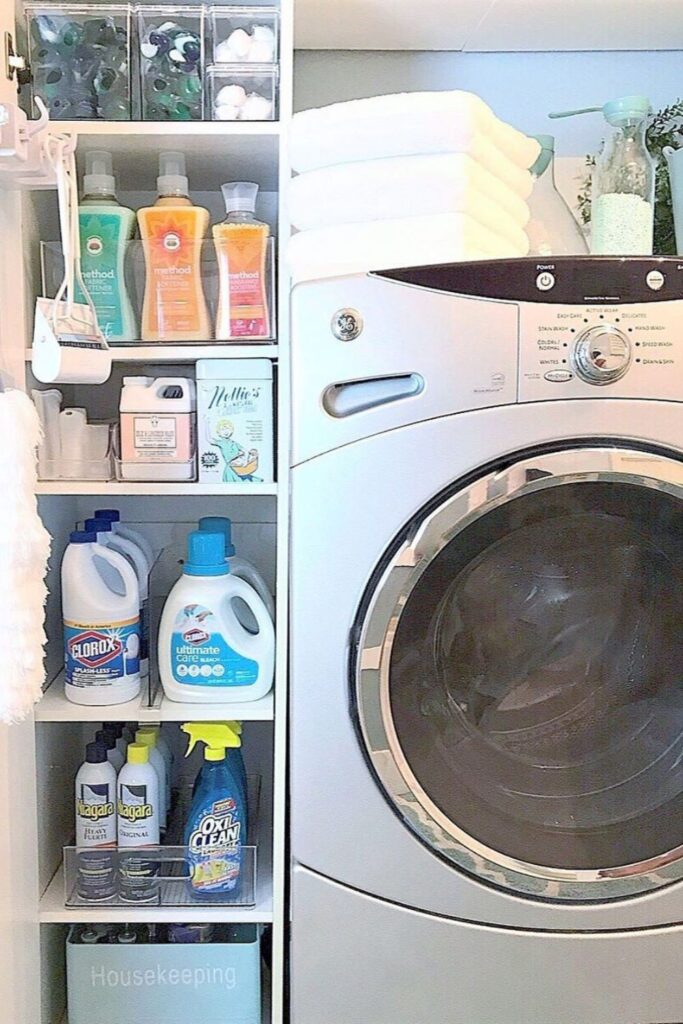
Laundry products can easily take over the room if they don’t have a dedicated home.
A narrow supply tower like this keeps everything organized in one vertical column right beside the washer.
There are different types of cleaning products on each shelf. For example, there are detergents on one shelf, stain removers on another, and cleaning sprays on the bottom shelf.
Small bins and clear containers keep bottles from moving around and make it easy to detect when anything is running low.
Hooks on the side wall make it even more useful by storing brushes and dusters close at hand but off the floor.
This configuration works effectively in small laundry rooms where the machine leaves a small space next to the wall.
Appliance Nook
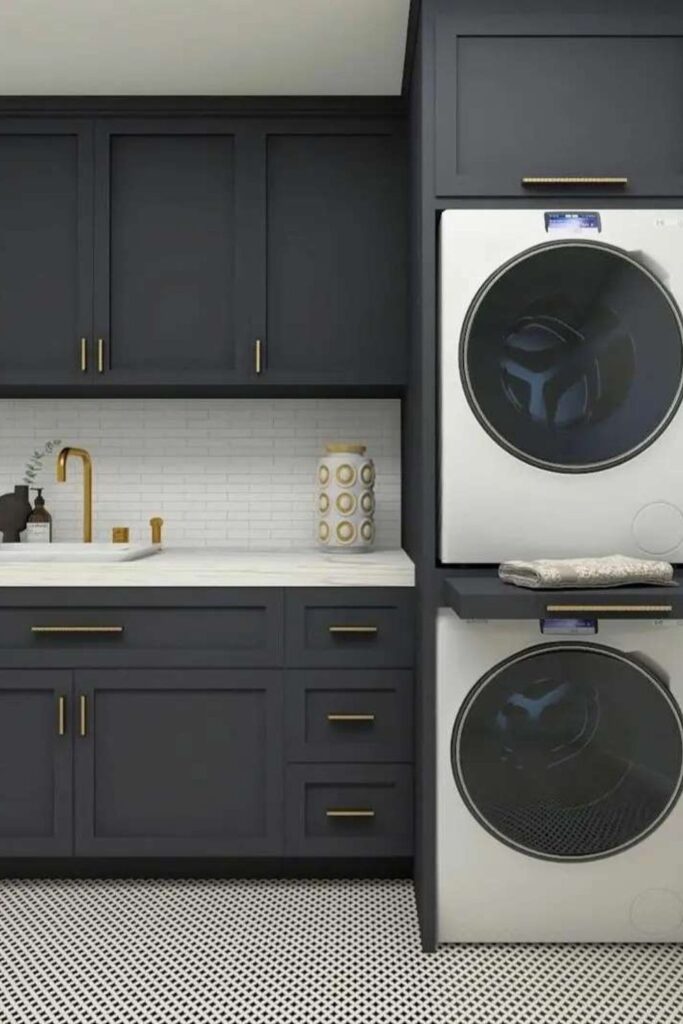
Laundry machines often look bulky when they sit out in the open. Framing them inside a built-in nook instantly makes the space feel cleaner and more organized.
Instead of fighting with everything else, the appliances become part of the cabinets. Putting the washer and dryer on top of each other makes more room on the wall for storage.
The cabinets above house cleaning materials and detergents, and the drawers below the counter hold smaller things like cloths, pods, and cleaning equipment.
A little ledge between the machines makes it easy to put folded towels or laundry items there while they are running.
The counter next to the machines becomes the main work area where you can easily fold and organize things.
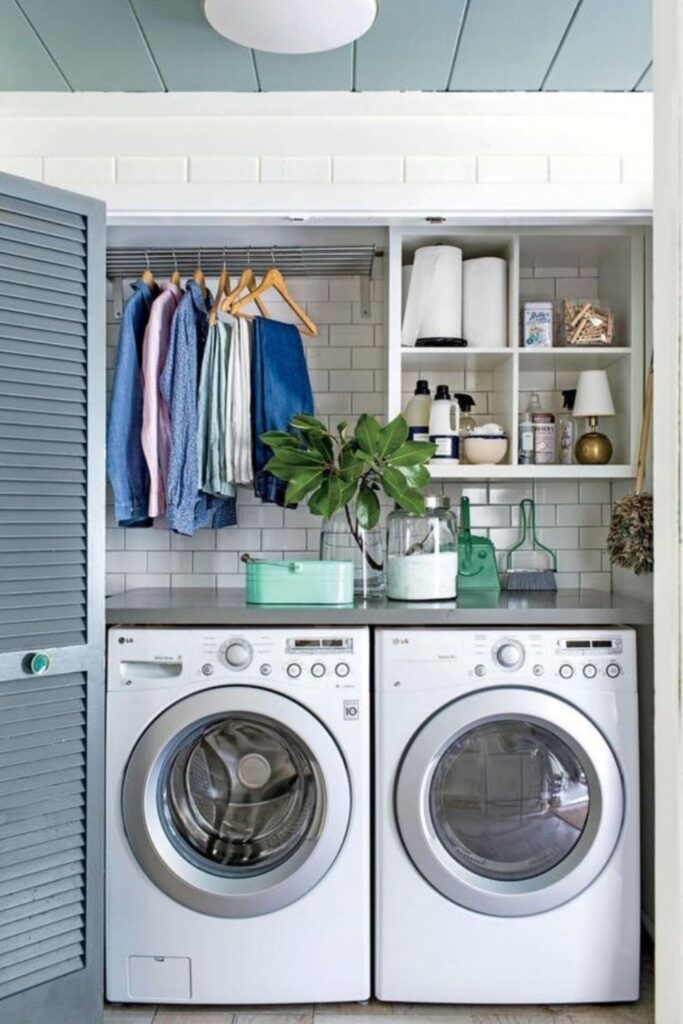
Hanging Rail
Wrinkles usually appear the moment clothes leave the dryer and land in a basket. A simple hanging rail above the machines prevents that problem instantly.
You can put shirts, jeans, and other delicate textiles on hangers right away, even if they’re still warm.
The rail is directly below a set of cubby shelves, which keeps laundry supplies in order without taking up space for hanging things.
Paper towels, detergents, and other cleaning tools stay neatly stacked in the open compartments, making them easy to grasp when it’s time to wash.
Adding a countertop over the machines makes them even more useful. You can fold clothes there, and the hanging rack can hold things that shouldn’t get wrinkled.
FAQs
Can a narrow laundry closet still have a folding space?
If you use the space above the machines effectively, even a small laundry closet can have a place to fold clothes.
Putting a countertop over two side-by-side washers and dryers makes a flat surface for folding clothing right away.
The idea is to keep the folding station next to the dryer so that garments may be folded right away instead of stacking up somewhere else.
What is the easiest way to add storage without remodeling a laundry closet?
Begin with the parts that most people don’t pay attention to, such doors and walls. A modest shelf above the machines can house labeled boxes or baskets for supplies.
Door organizers provide you more room to store cleaning sprays and detergents without taking up floor space.
Slim rolling carts can fit neatly between machines and walls, making tiny spaces useful storage areas without the need for any major installation.
You may like to read!
- 26 Dresser Organization Ideas
- 18 Water Bottle Organization
- 20 Coffee Station Organization
- 21 Small Fridge Organization
- 22 Gym Organization Ideas

Fasial is the founder of the Fizzy Flare. He has been a passionate blogger since 2021. He ran three different websites in the past few years. Now he is focusing on Fizzy Flare to build an audience and help them organize their life.