16 Goat Pen Ideas DIY For 2026
This post may contain affiliate links: full affiliate disclosure.
If you’ve been hunting for goat pen inspiration, you are likely feeling a bit swamped. The goal is simple a pen that stays standing and keeps the goats in, and doesn’t break the bank.
Unfortunately, much of the advice out there glosses over the real issues: available space, structural integrity, and the lessons learned the hard way.
That’s where this article comes in. We’ll cut through the jargon and show you what truly works.
You’ll learn how to build a DIY goat pen that suits your property, your finances, and, most importantly, your goats, without the trial-and-error approach.
In this article, I will show you 16 amazing DIY Goat Pen ideas you can try right away in 2026.
Contents
How Big Should a Goat Pen Be for One or More Goats?
This is where things often go sideways. If the pens dimensions are inadequate, goats become restless, anxious, and begin plotting their escape.
A good guideline is to provide each goat with a minimum of 20–25 square feet of space. But that’s really just the starting point.
Adding another goat isn’t as simple as cramming them in you must increase the pen’s size accordingly.
If you anticipate keeping them indoors for extended periods err on the side of a larger pen.
More room translates to more contented goats, fewer squabbles, and significantly reduced escape attempts.
Save this article for later! 👇👇
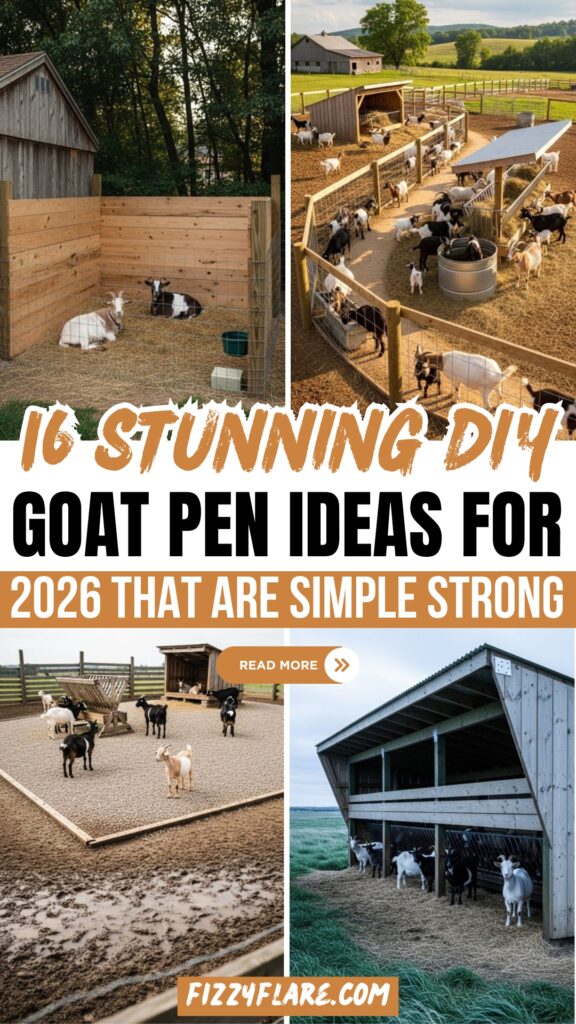
Can You Build a Goat Pen Using Pallets or Scrap Wood?
Yes, it’s possible, but only with the right approach. Pallets and leftover wood are fine for temporary pens but they’re not suitable for anything more substantial.
If the wood is flimsy or the spaces are too large and goats will find a way to escape, either by climbing, pushing, or getting wedged.
Use sturdy pallets, fasten them securely and always incorporate a robust frame.
For a cost effective solution that endures or consider combining pallets with metal panels or fencing, rather than depending solely on wood.
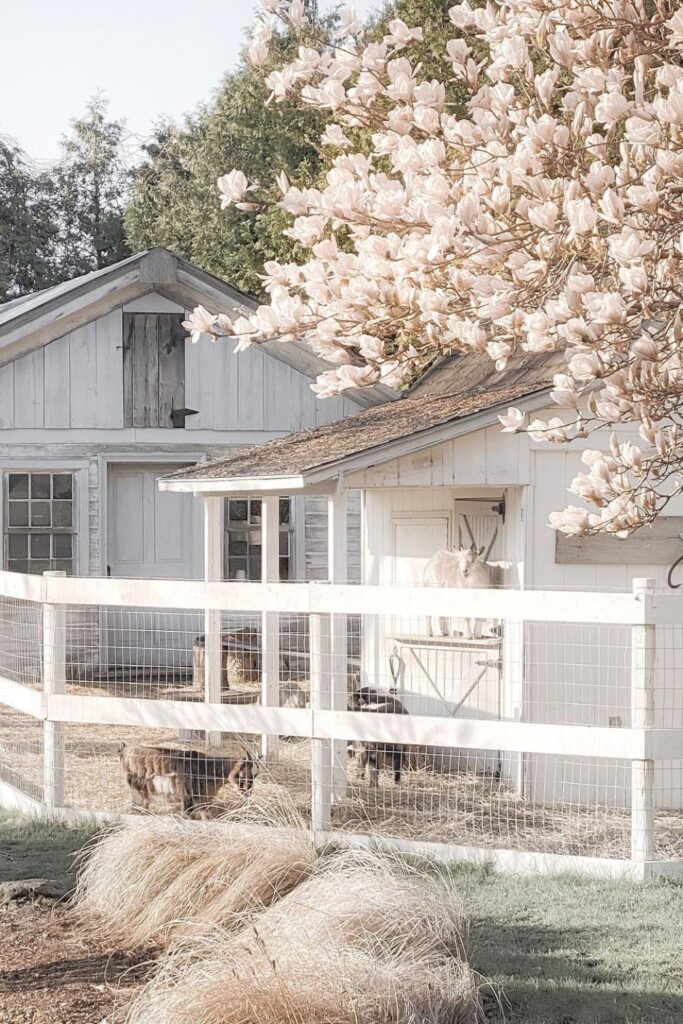
Barn Pen
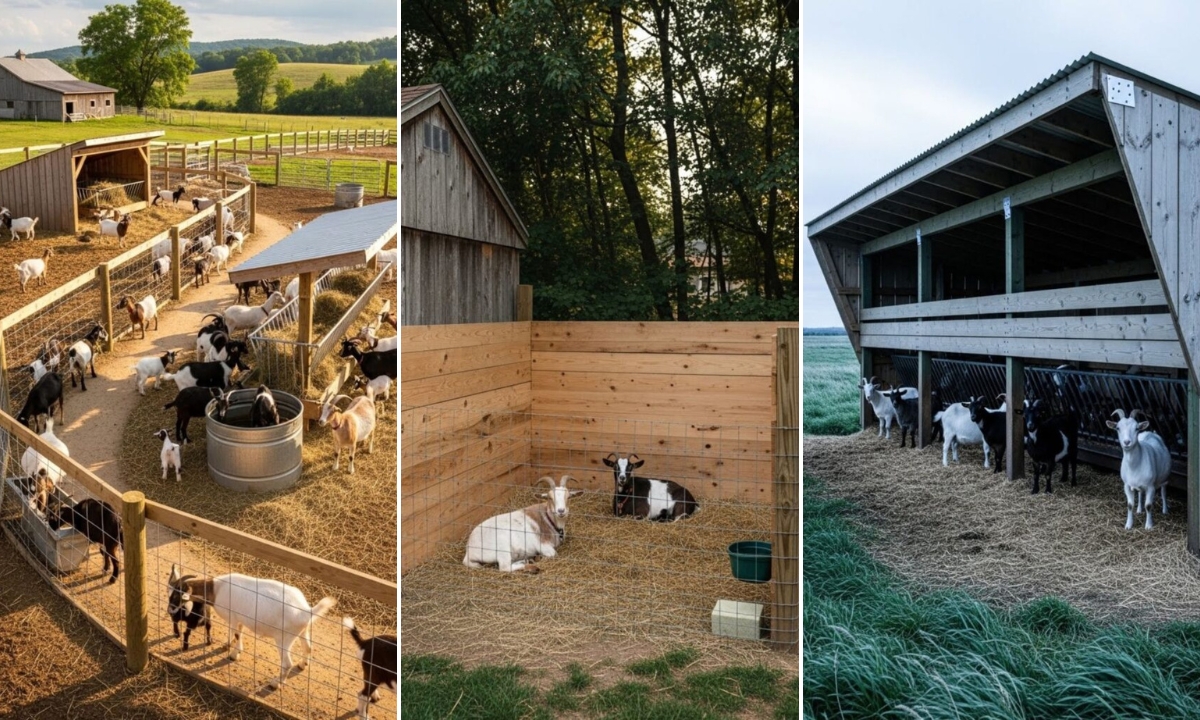
Morning chores stay simple when goats live in a pen like this. A wooden fence backed with wire mesh keeps them visible, contained, and calm.
While the barn-style shelter gives instant cover from rain or heat. Building something similar works best on flat ground with permanent posts set deep.
Let the shelter open and straight into pen so the goats choose and when to rest instead of being forced inside.
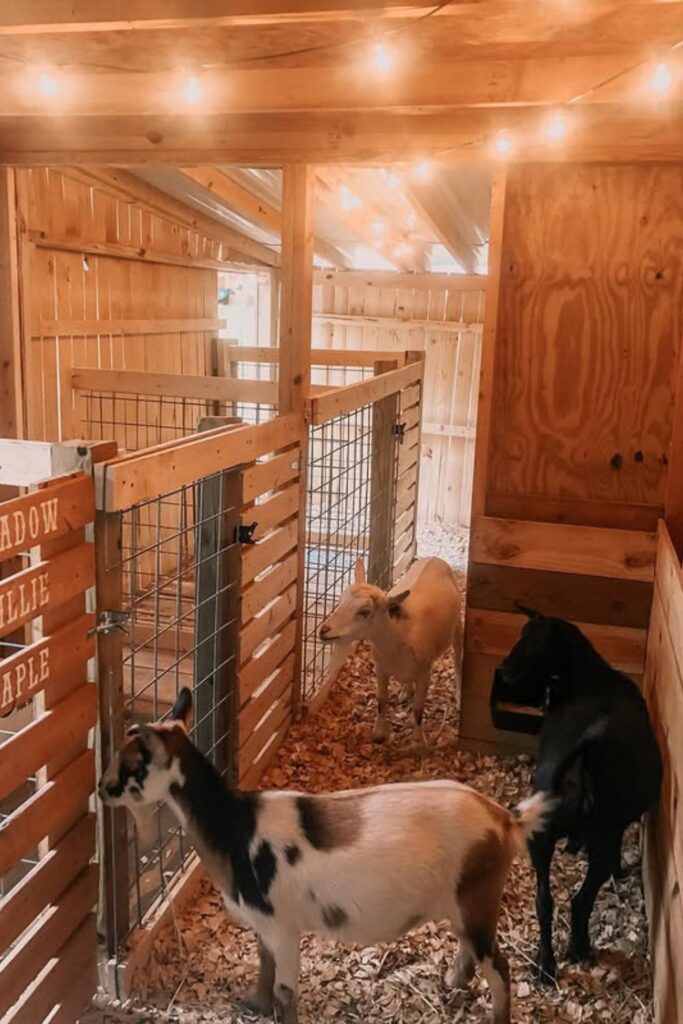
Stall Layout
Busy goat keepers usually end up needing separation, and a layout like this solves it without building multiple sheds.
Wooden stall walls, combined with wire-panel gates, facilitate good air circulation and simplify the management of feeding, breeding, or kidding.
You can replicate this setup by constructing basic dividers within a shed and installing livestock panels as gates.
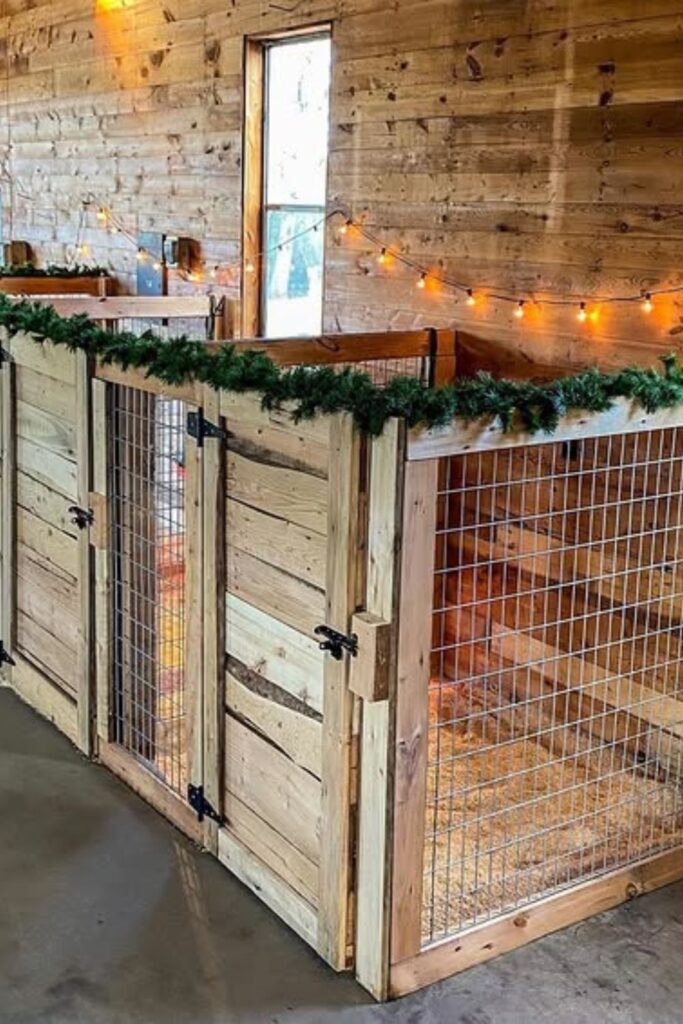
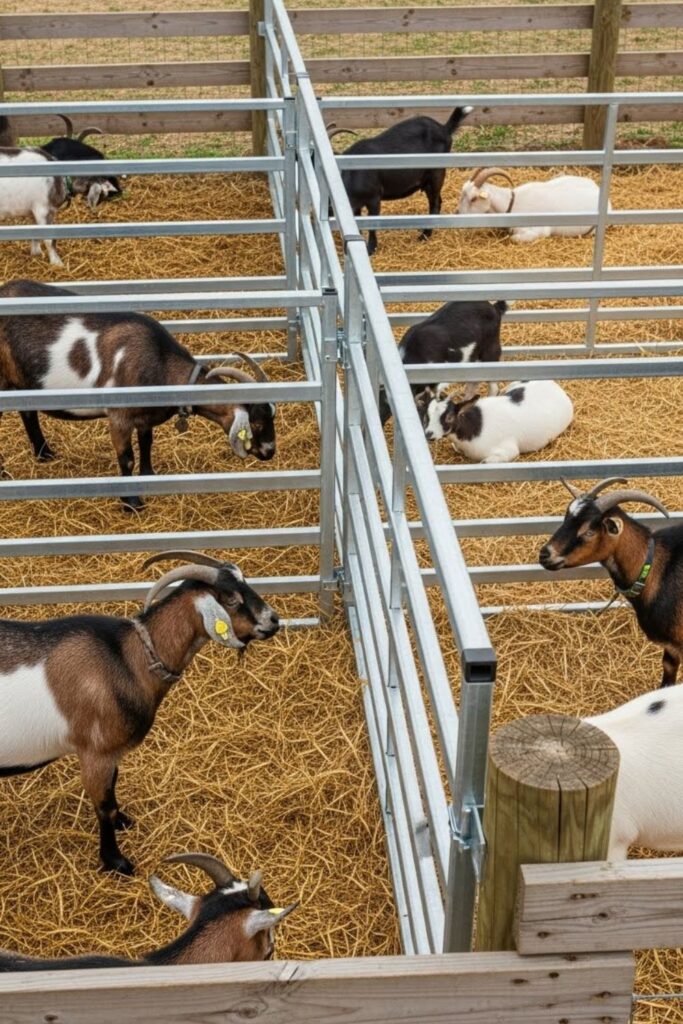
Modular Stalls
Space control becomes easy when goats each have a defined area without feeling boxed in.
This kind of arrangement works wonders in barns, offering the adaptability needed for feeding and kidding or temporary separation.
To replicate it, you’d construct low wooden frames and then attach wire panels, using them as swing gates.
Field Shelter
Open pasture setups fall apart fast without a dry fallback spot, and a shelter like this fixes that problem.
The sloped roof directs rainwater, and the open front provides easy access for the goats, preventing congestion.
Replicating this design is most effective in expansive pastures, utilizing pressure-treated posts, straightforward siding, and woven wire fencing.
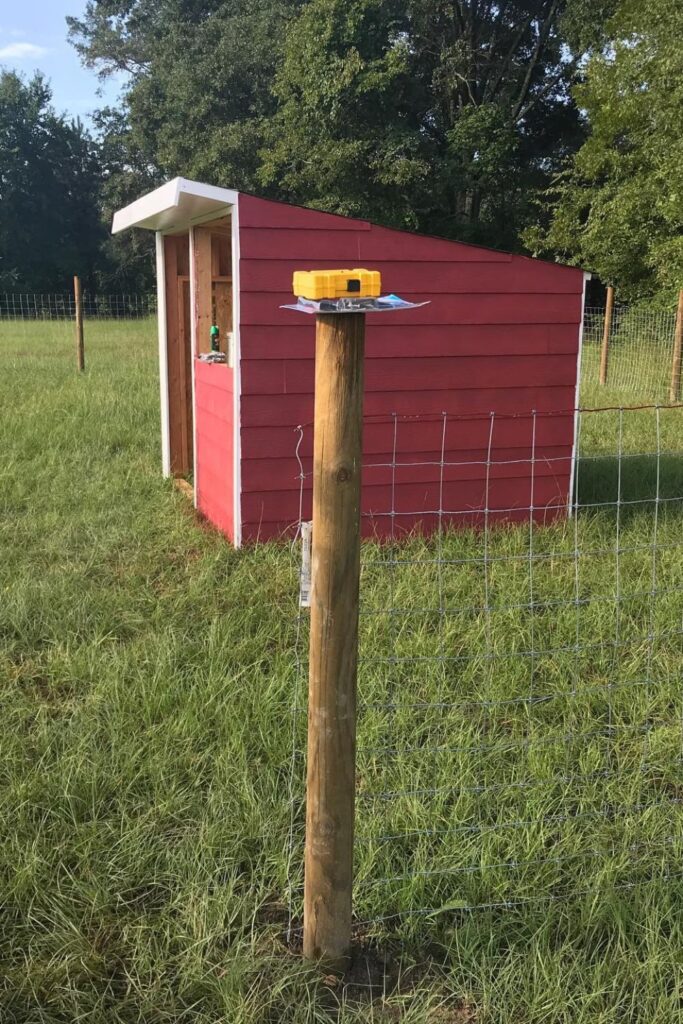
Raised Shelter
Flooded floors and soggy bedding become a non-issue with a setup lifted off the ground like this.
Elevation is key for keeping goats dry or boosting airflow and its a real boon in places with lots of rain or a tropical climate.
To replicate this setup and start by stacking sturdy blocks or short posts. Then, build a shelter using scrap wood on top of that.

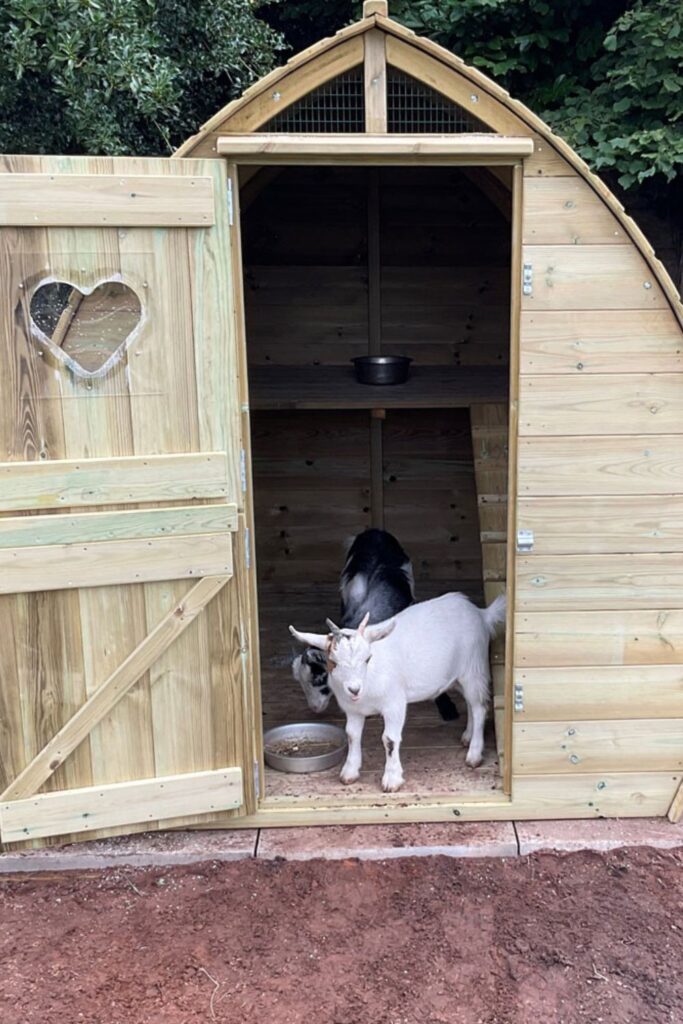
Barrel Shelter
Curved walls change everything when space is tight and wind is a problem. An arched shelter like this naturally deflects rain and blocks drafts, making it ideal for small yards.
Constructing one involves either curving slender boards over a basic framework or adapting a sizable barrel-like construction.
Ensure the door is both broad and low to facilitate goat entry, and position the structure on a sturdy foundation to avoid any future movement.
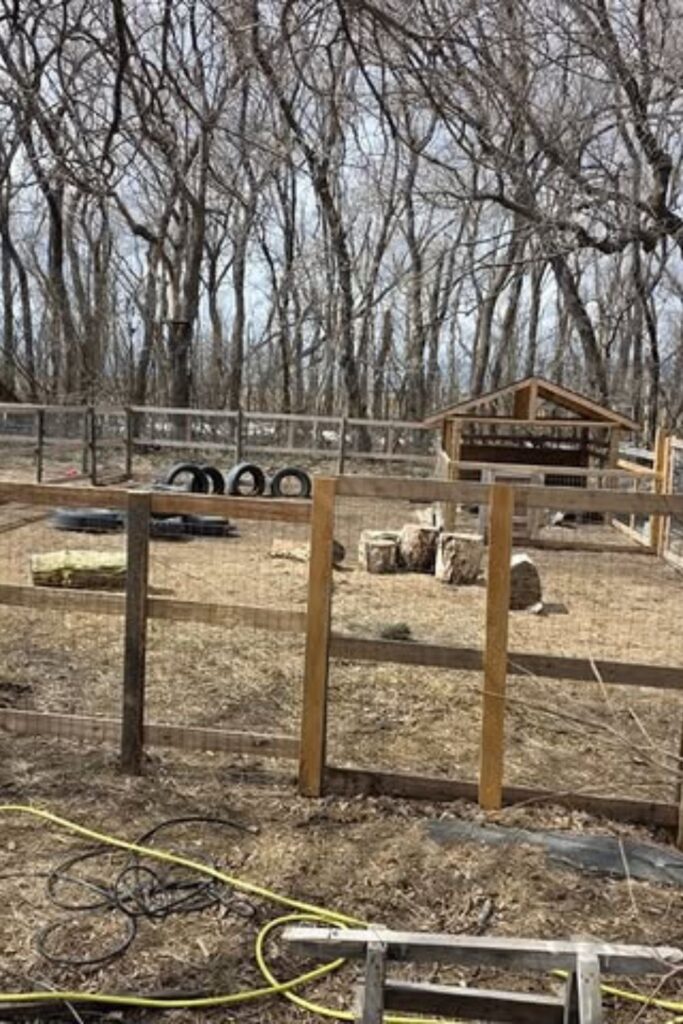
Play Pen
Bored goats turn destructive fast, and a pen like this gives them something to do. Open space paired with logs, tires, and simple climbing features keeps goats busy.
And more relaxed as the day progresses. The method is most effective on expansive areas, allowing the fencing to create a broad loop rather than a constricting square.
Incorporate a modest shelter at the far end, encouraging the goats to roam around rather than congregating in a single, and muddy location.
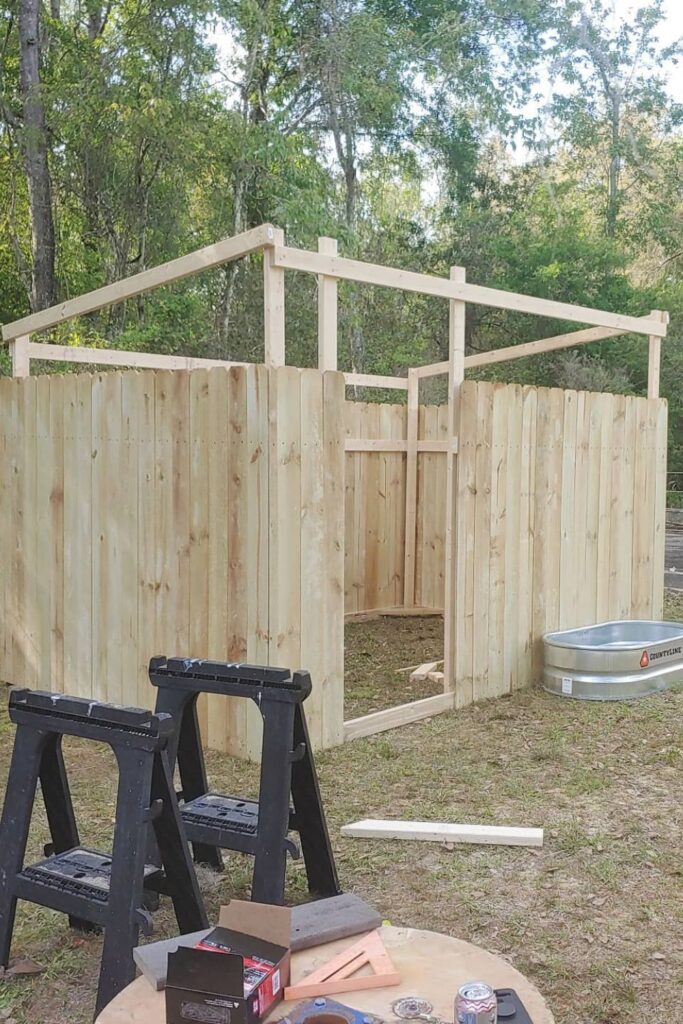
Half Shelter
Walls that stop wind while leaving the top open strike a smart balance in mild climates. A build like this works well when you want airflow without fully closing goats in.
Building it again involves putting in sturdy corner pillars, then adding vertical boards up to shoulder height. A simple roof may be framed later, if necessary.
Starting with a half-finished version also helps manage expenses and allows for gradual upgrades, avoiding the need to dismantle anything.
Shade Zone
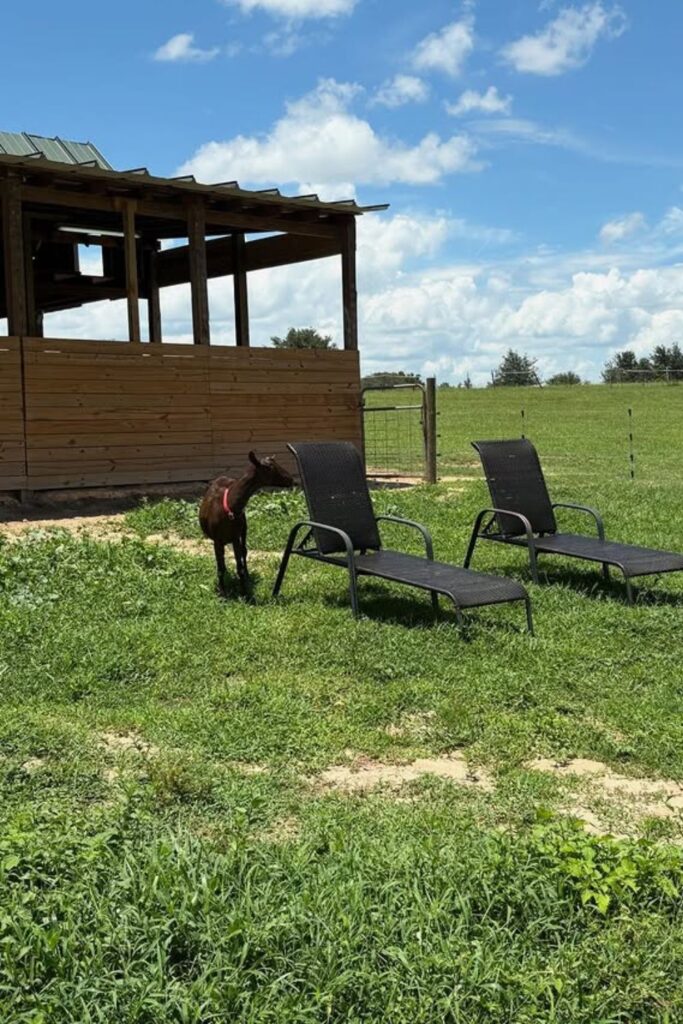
Hot days change goat behavior fast and shaded lounging spots like this keep them from crowding the shelter.
Open sided shade combined with elevated resting spots and provides goats with both ventilation and a comfortable place to relax.
To replicate this setup in open pastures, a straightforward roofed structure is all that’s needed, along with robust platforms or even old outdoor furniture.
Mobile Shelter
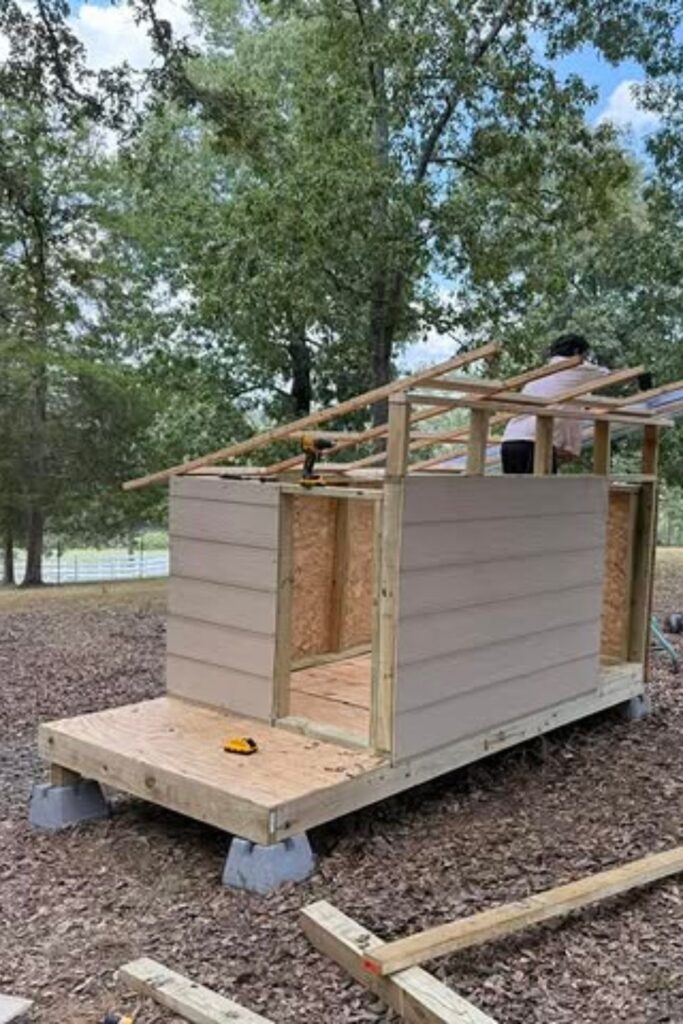
Flexibility matters when grazing areas change and a build like this makes moving goats easier without rebuilding pens.
A lifted foundation helps keep the interior dry and the lightweight construction allows the shelter to be relocated easily when the pasture needs it.
For a successful rebuild and start by placing the structure on concrete blocks or skids keep the walls straightforward and robust.
Feed-First Pen
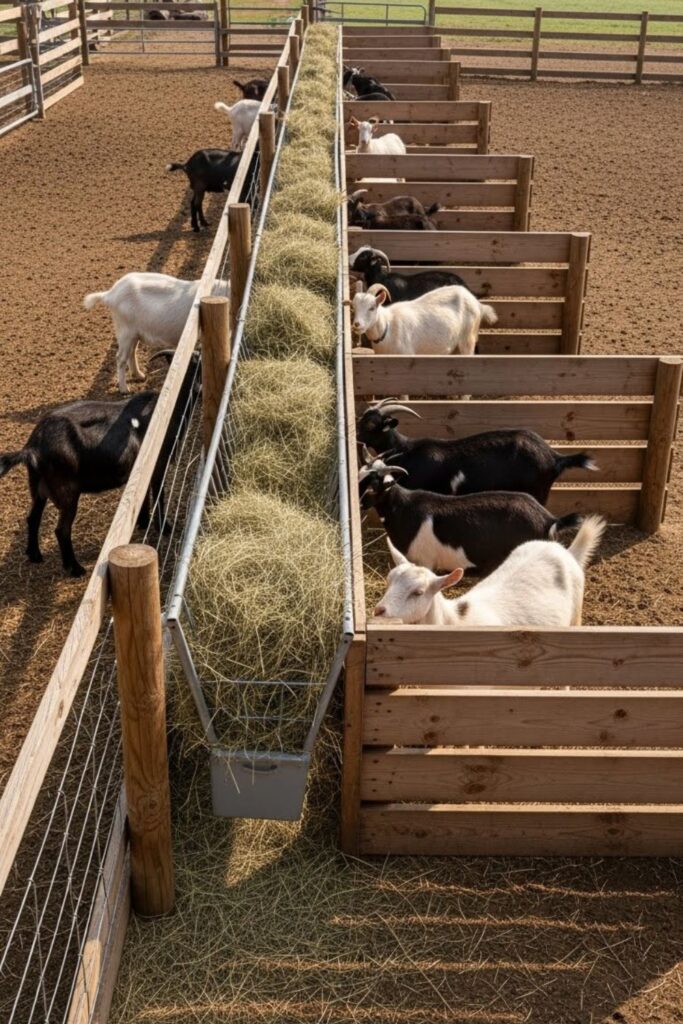
Feeding time turns chaotic fast when goats rush the same spot. A feed-first pen flips the logic by designing the pen around the feeder.
Begin with a long narrow space and placing hay along a fence. This design encourages goats to disperse rather than congregate.
Erect sturdy dividers at intervals to prevent the more assertive goats from monopolizing access.
Dry-Core Pen
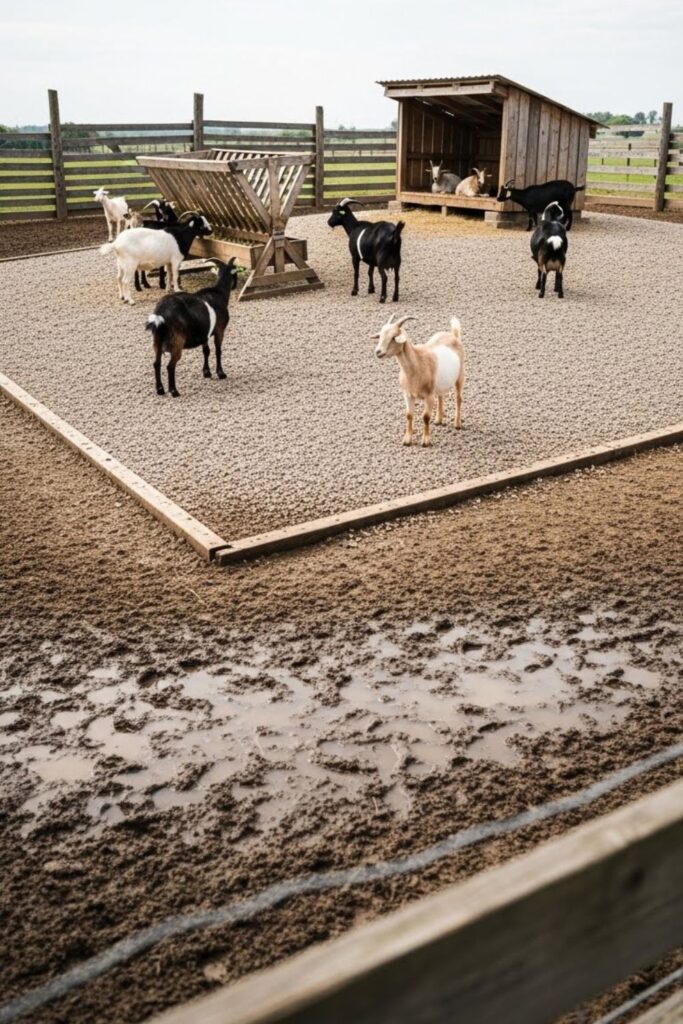
Mud ruins more goat pens than predators ever will. A dry-core pen focuses on one simple goal keeping hooves dry year-round.
Start by elevating the pens center with gravel and compacted soil then create a slope that radiates outward.
Position shelters and feeders and water sources exclusively at the highest point. Goats instinctively congregate in drier areas, effectively training the pen’s layout.
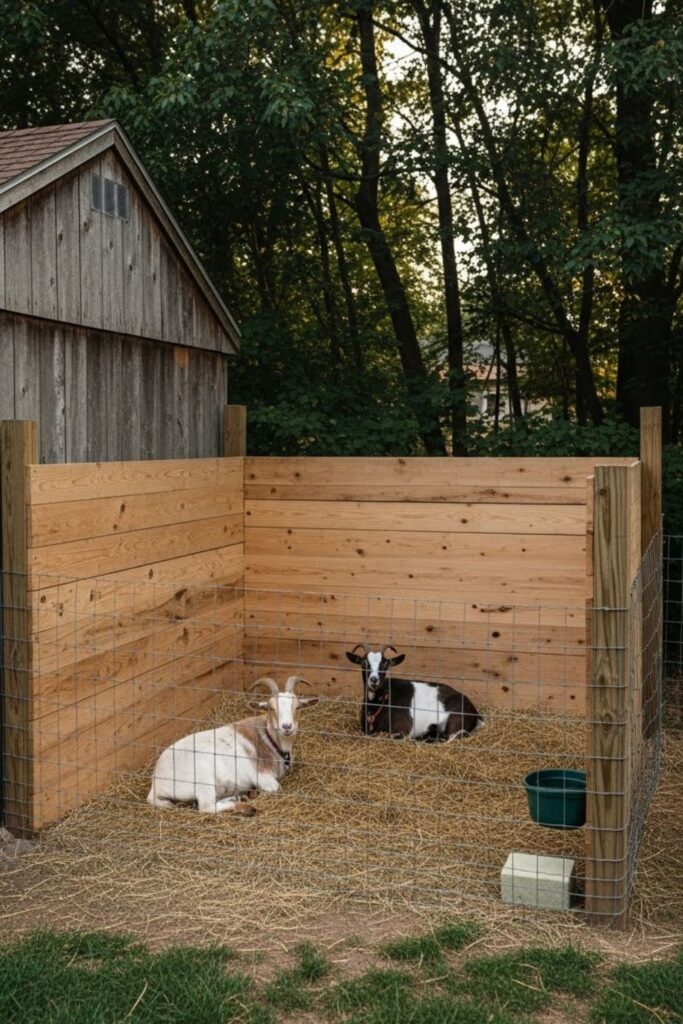
Quiet Corner Pen
Noise-sensitive goats struggle in busy yards, especially near dogs or kids. A quiet corner pen uses solid fencing on two sides to block movement and sound.
Build it against an existing wall, shed, or tree line to cut down on construction. Leave the rest open for airflow.
Goats settle down more quickly when visual distractions are minimized, which in turn reduces fence testing and pacing.
Split-Use Pen
Some pens need to change jobs without rebuilding. A split-use pen solves that by dividing one enclosure into two zones using a removable center panel.
On a typical day, the goats roam freely. But when its time to kid when someone gets sick, or when feeding routines shift, you can quickly create a divide.
Just slide the divider into place and the animals are instantly separated, no need to move them. And Construct the divider using framed livestock panels that easily hook into position.
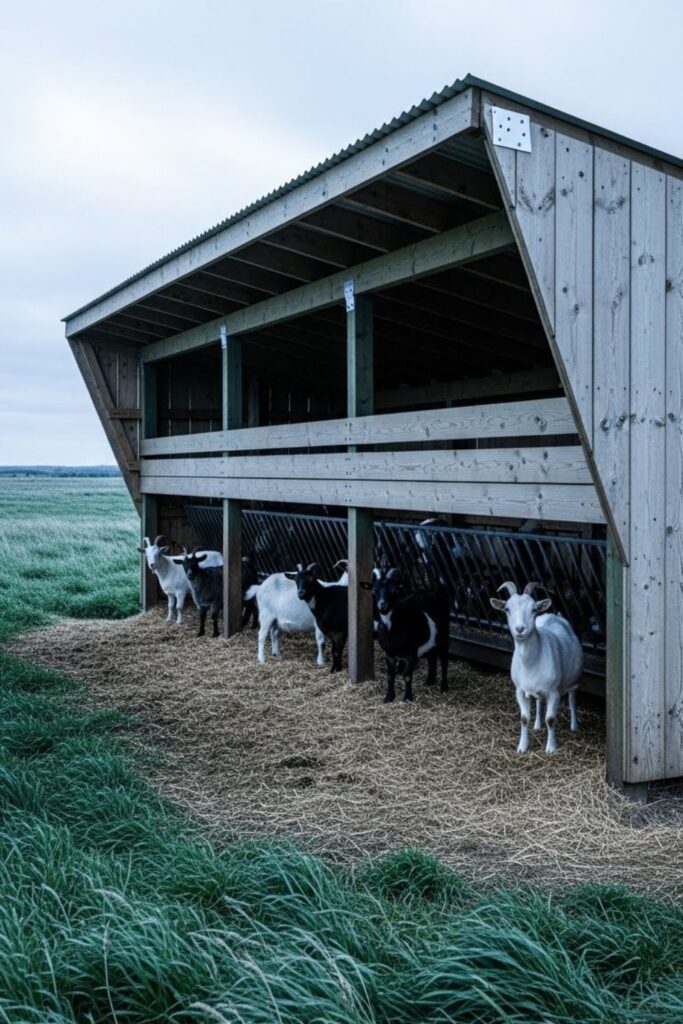
Wind-Channel Pen
Cold wind hits goats harder than low temperatures. A wind-channel pen blocks prevailing wind while letting fresh air flow safely overhead.
Angle solid walls diagonally, rather than enclosing everything to redirect the wind upwards and away.
This design helps keep goats warmer and eliminating condensation. Construct shelter with the staggered boards offset panels and avoiding flat walls.
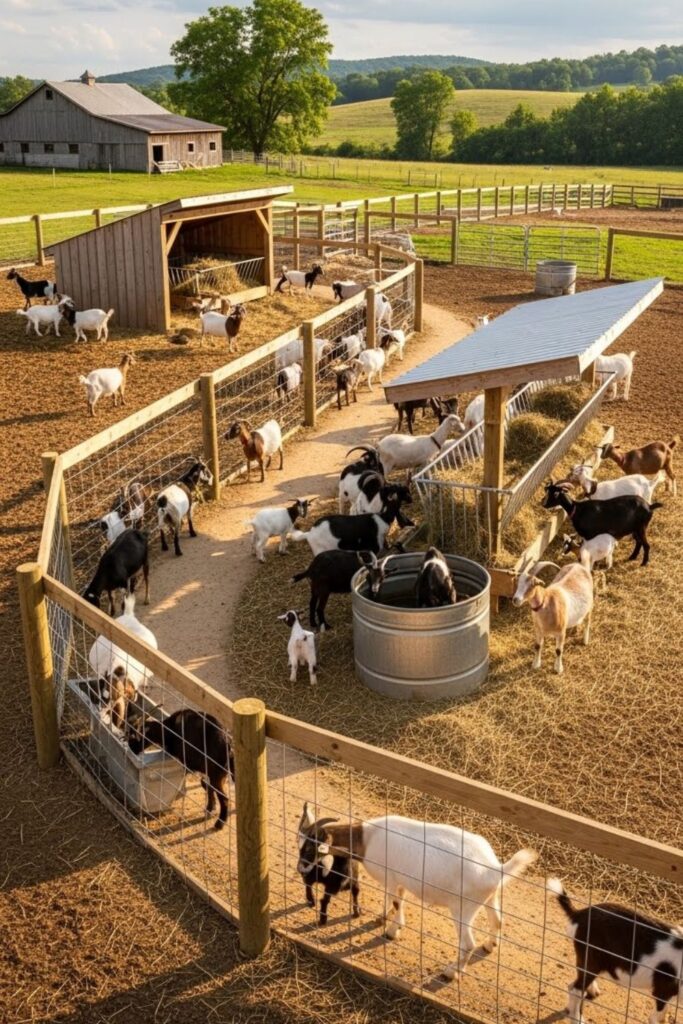
Routine Path Pen
Goats thrive on routine and pen design can enforce it. A routine path pen creates a natural loop from shelter to water to feed without crossing paths.
Gates, panels and other barriers subtly direct movement, rather than dictating it. Goats tend to settle into a routine which lessens both aggression and the strain on fences.
To implement this, space out resources and use short fence sections to manage the flow of animals.
FAQs
Can goats stay in the same pen all year, or do they need changes by season?
Goats can certainly stay in the same pen all year but the environment shouldn’t remain static. During the summer months they require shade and good ventilation.
Conversely, winter demands windbreaks and dry bedding. Failing to adapt to the changing seasons can lead to stress health problems or a muddy mess.
Fortunately, small adjustments such as blocking the wind and improving drainage, or relocating feeders can have a significant impact without necessitating a complete overhaul.
Why do goats keep testing fences even when the pen looks secure?
Fence testing often signals an issue within the pen rather than a flaw in the fence. Goats are driven to escape by a lack of space and boredom inadequate footing, or competition for resources.
If they’re persistently leaning and climbing, or pushing against the fence, address the environment before anything else.
When goats are content and engaged, the pressure they exert on the fence will naturally decrease.
You may like to read!
- 20 DIY Bicycle Rack Ideas
- 26 DIY Christmas Ornaments Ideas
- 19 DIY Lamp Shade Ideas
- 20 DIY Solar Garden Lights Ideas

Fasial is the founder of the Fizzy Flare. He has been a passionate blogger since 2021. He ran three different websites in the past few years. Now he is focusing on Fizzy Flare to build an audience and help them organize their life.