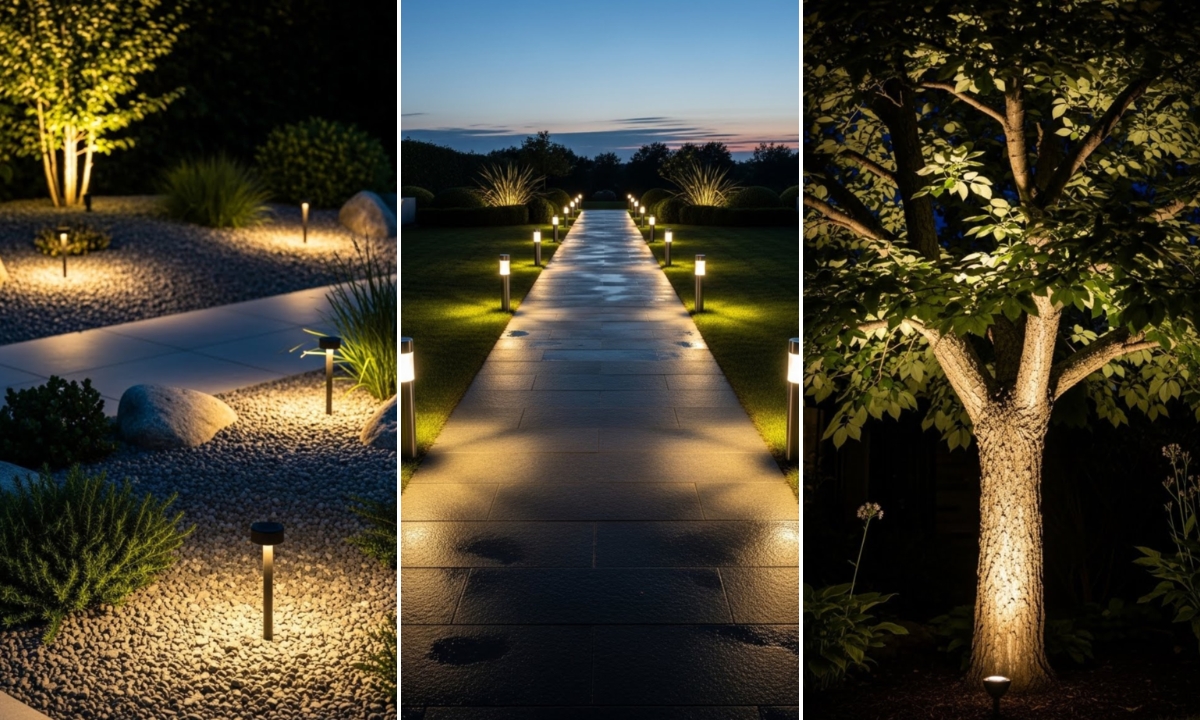
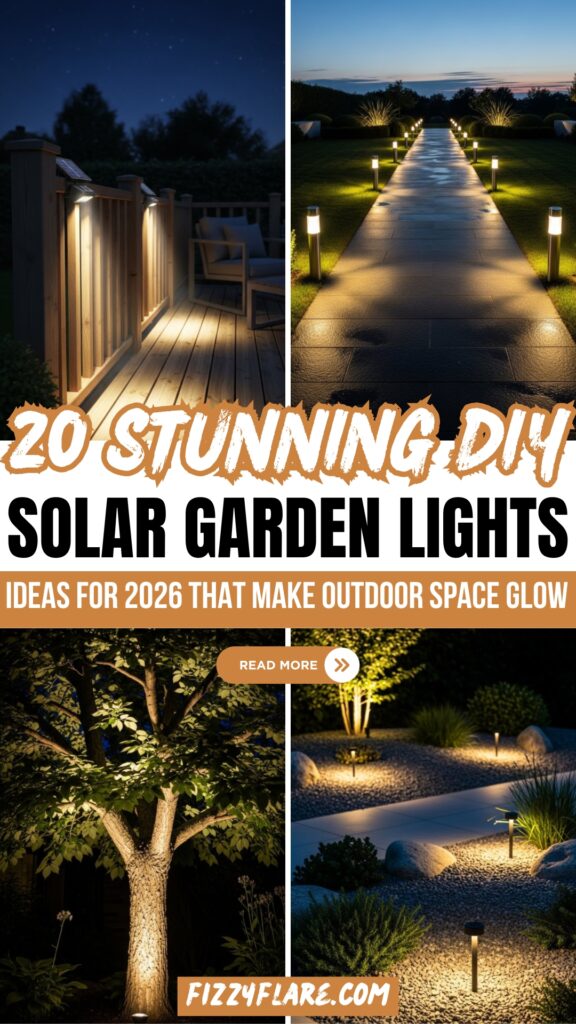
20 DIY Solar Garden Lights Ideas for 2026
This post may contain affiliate links: full affiliate disclosure.
You’re not the issue if you’ve attempted to make your own solar garden lighting and were let down. After a few evenings, the lights become weak, inconsistent, or dead.
Because most manuals omit important details. Because of this, solar projects frequently feel complicated rather than straightforward.
When done correctly, solar lighting is neither complicated nor costly. Before making any connections, it’s important to grasp a few fundamentals.
In this article, you’ll find 20 ideas Diy Solar Garden Lights that works best for 2026.
Contents
- 1 How to make solar powered garden lights?
- 1.1 Recessed Path Lighting
- 1.2 Fence Wall Wash
- 1.3 Solar String Canop
- 1.4 Solar Globe Accents
- 1.5 Layered Patio Lighting
- 1.6 Firefly Garden Lights
- 1.7 Hanging Solar Bulbs
- 1.8 Café String Lighting
- 1.9 Solar Lantern Clusters
- 1.10 Glowing Floor Orbs
- 1.11 Poolside Lantern Glow
- 1.12 Backyard String Glow
- 1.13 Pergola Path Lighting
- 1.14 Pathway Globe Lights
- 1.15 Solar Step Markers
- 1.16 Planter Edge Lighting
- 1.17 Solar Bollard Lines
- 1.18 Tree Uplight Glow
- 1.19 Railing Accent Lights
- 1.20 Rock Bed Illumination
- 2 FAQs
How to make solar powered garden lights?
It’s easier to make solar-powered yard lights than most people realize, but only if you follow the logic correctly. You start by gathering sunshine.A battery is then used to store the energy.
Lastly, you use the electricity you’ve stored to turn on a light automatically at night. The system fails if any one of these steps is performed incorrectly.
This part will teach you how to select the right solar panel, pair it with the right battery, and connect everything so the light turns on at night and stays off during the day.
Additionally, you’ll discover what errors most do-it-yourself solar lights make and how to prevent them in the first place.
Save this article for later! 👇👇
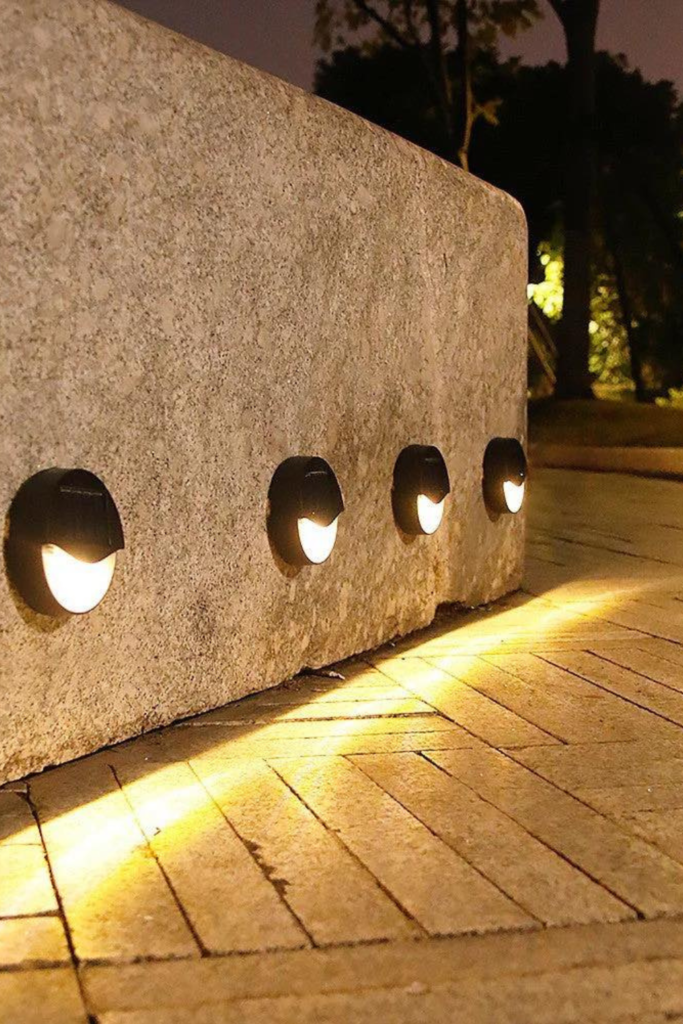
Recessed Path Lighting
You want light without obvious fixtures, this concept works best along low walls or elevated borders.
Install solar stake heads sideways into wall cutouts or use tiny, elegant or soft cozy solar wall lights in the garden.
A gentle, glare-free glow can be produced by angling the light downward so that it spreads across the route.
Fence Wall Wash
You want your garden to feel peaceful, quiet, and well-lit, this arrangement is perfect to prevent light outward.
Use solar wall lights evenly along fences. Pre-made solar wall fixtures or homemade housings with diffused lenses.
This is ideal for nighttime leisure areas since it combines gentle seating area illumination with ambient wall lighting.

Solar String Canop
You want soft overhead light, this concept works best over patios, pergolas, or lounging spaces instead of pulling them taut.
Use solar string lights with warm LEDs and drape them gently, the layered strings add depth and coziness to the room.
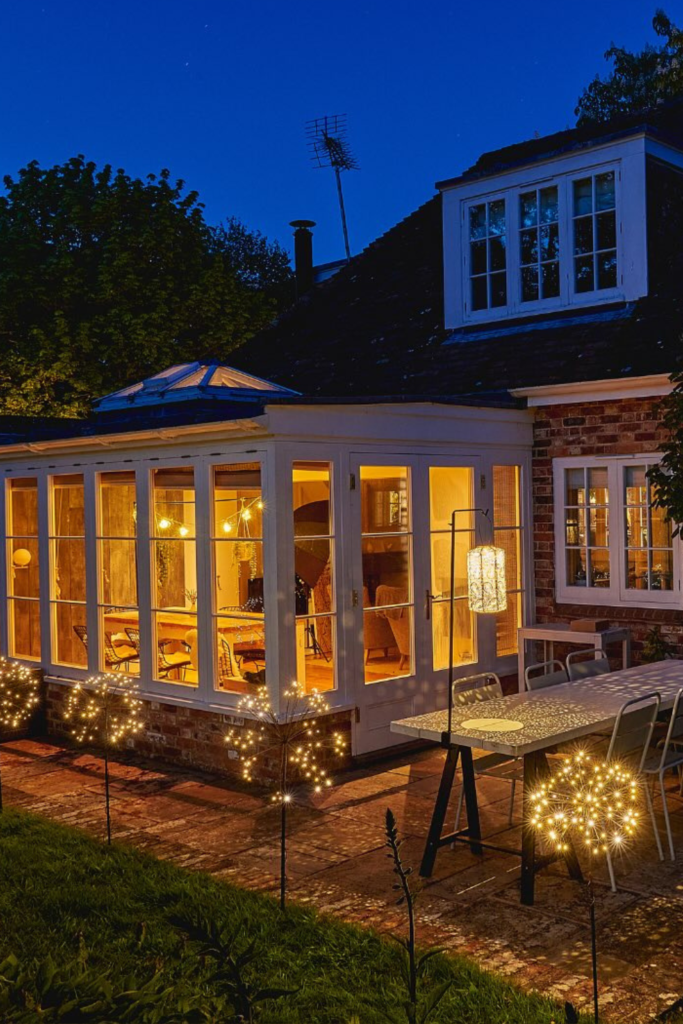
Solar Globe Accents
You want soothing light without harsh lighting, this concept works best around patios or dining spaces, spread fairy-ball lights.
Solar globe lights equally along the edges. The illumination is low and unobtrusive, that gently framing the space.
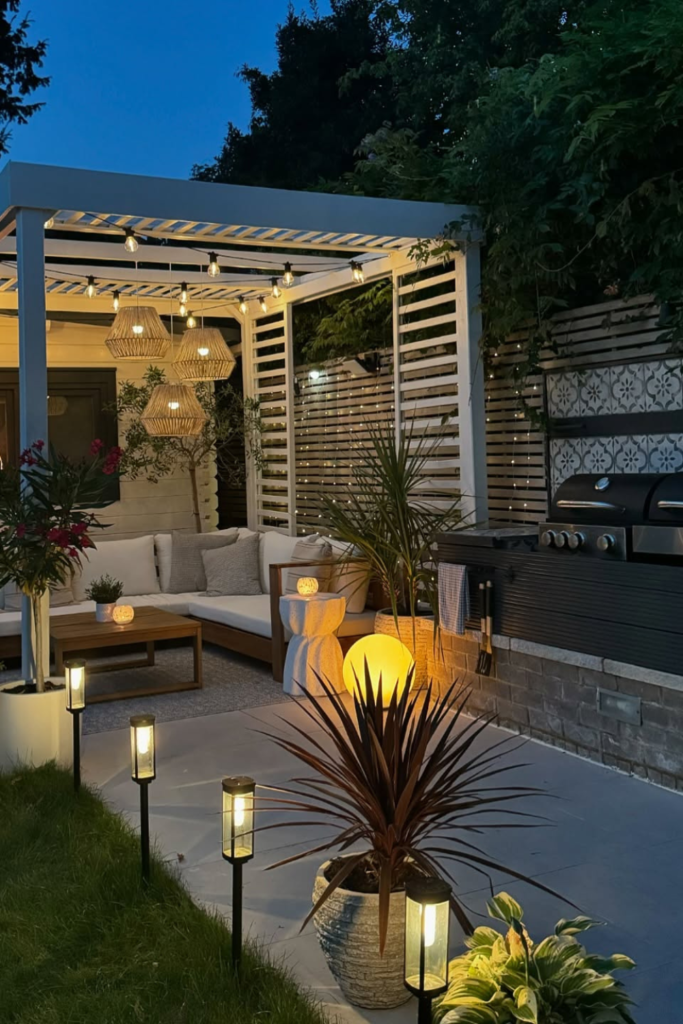
Layered Patio Lighting
You want visibility and mood in one area, this arrangement works well. Add a few illuminating accents.
Add next to the seats and solar stake lights along walkways with hanging solar strings on the garden.
The area feels bright without being harsh, thanks to each layer performing a distinct function.
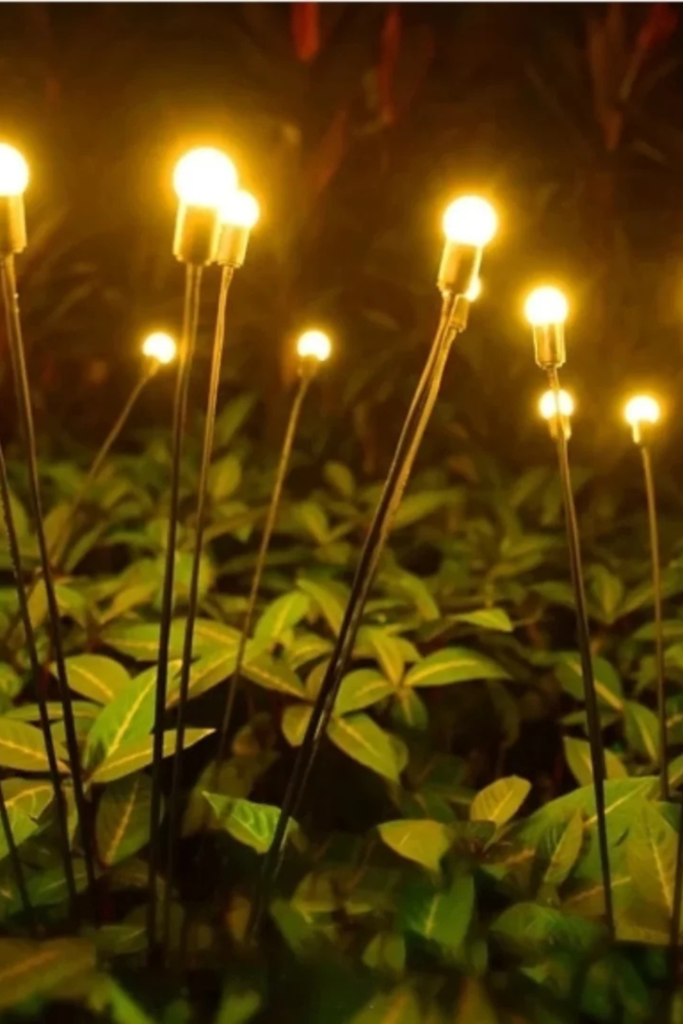
Firefly Garden Lights
This concept is most effective in flower beds when you want light but don’t want any visible equipment, change the height.
Your thin solar stake lights, use warm LEDs at night, a soft, organic glow is produced by the dispersed arrangement.
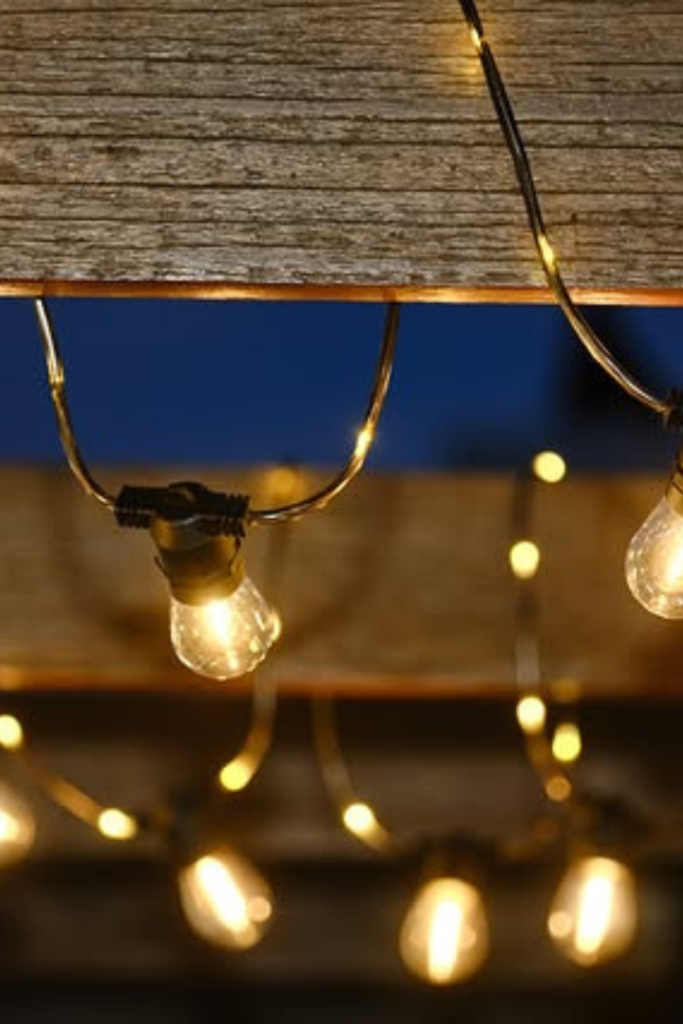
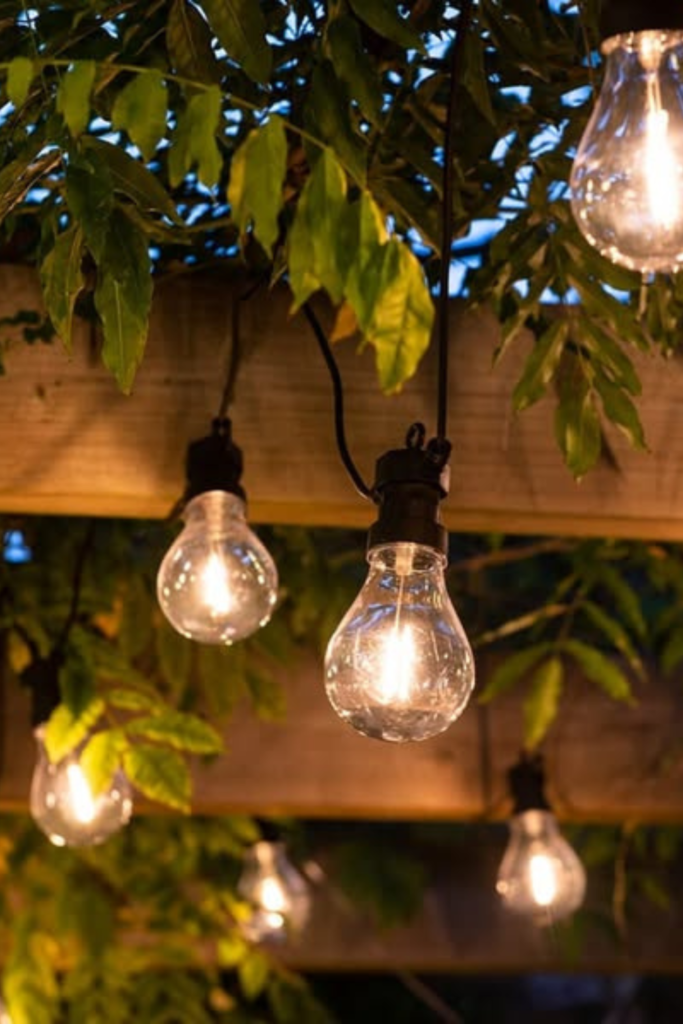
Hanging Solar Bulbs
When you want warm light to be seen, this approach works well beneath pergolas, tree branches, or wooden beams, maintain a relaxed appearance.
Use individual solar bulb lights rather than tight strings. Make the light appear natural rather than contrived, space them unevenly.
Café String Lighting
This concept is ideal for patios or open yards where you desire a vibrant, communal atmosphere.
Hanging the light strings in the style of a solar café between poles, trees or walls that looks cozy.
The room remains cozy and welcoming despite the powerful ambient light produced by the exposed bulbs.

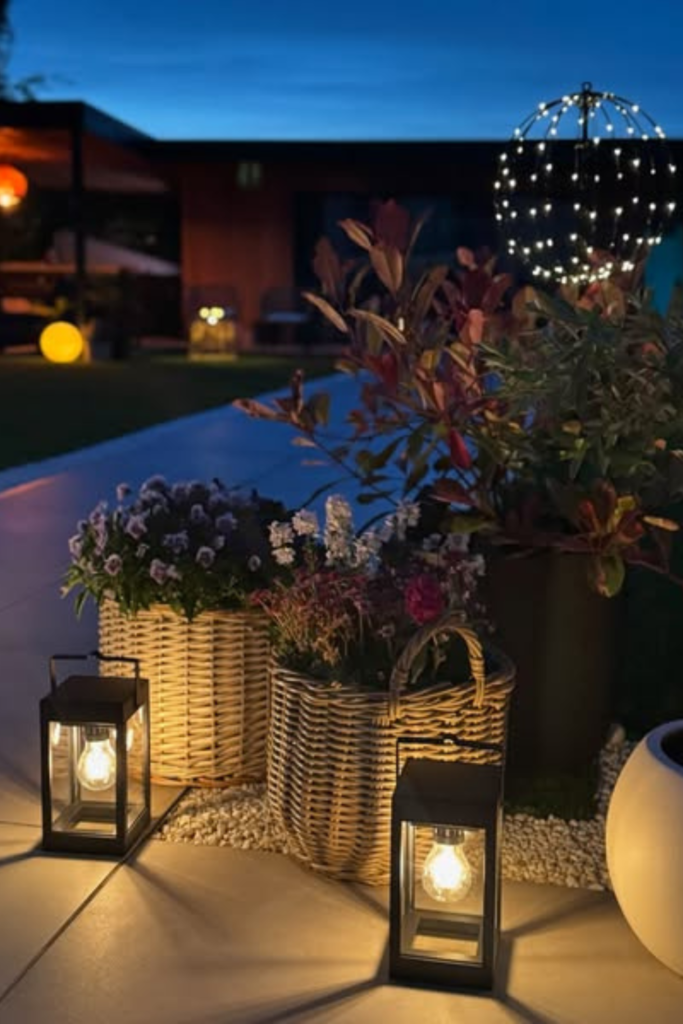
Solar Lantern Clusters
When you want adjustable lighting, this works best along patios . Instead of dispersing small solar lanterns, cluster them.
Around furniture or pots. Warmth is added without overwhelming the room, thanks to the deliberately clustered glow.
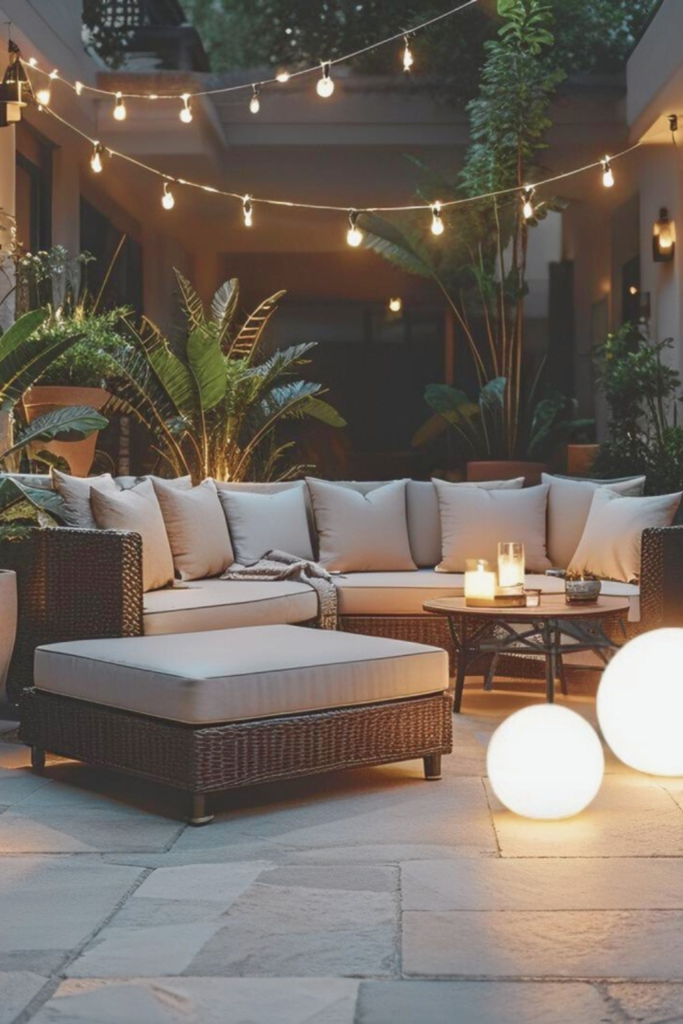
Glowing Floor Orbs
You desire soothing light at ground level, this concept works best in seating spaces. Instead of placing solar globe lights along walkways.
Arrange them close to furniture. Appealing and well-balanced without being overly bright, pair them with ceiling string lights.
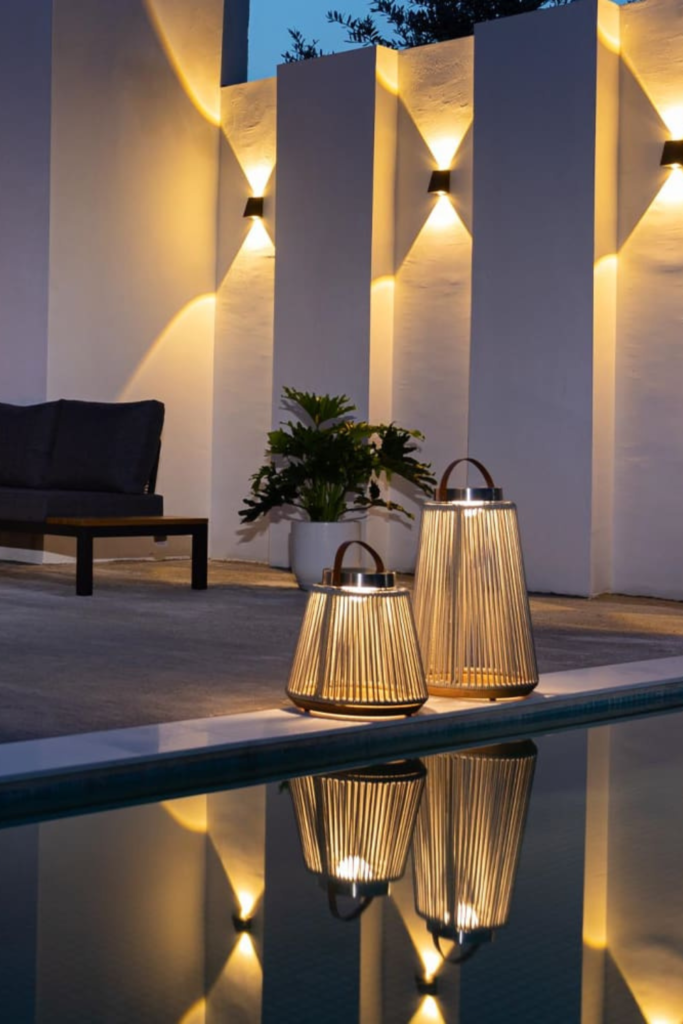
Poolside Lantern Glow
This concept is ideal for areas with pools or contemporary patios where you want illumination. Use open slatted solar lamps.
Position them near the ground when the light reflects off surrounding surfaces, it produces a serene, elegant glow that is not overly bright.
Backyard String Glow
This works best in garden dining areas where you want warmth without heavy lighting. Hang solar string lights.
Between trees, fences, or the house with a gentle dip. The overhead glow defines the space and makes it feel intimate.
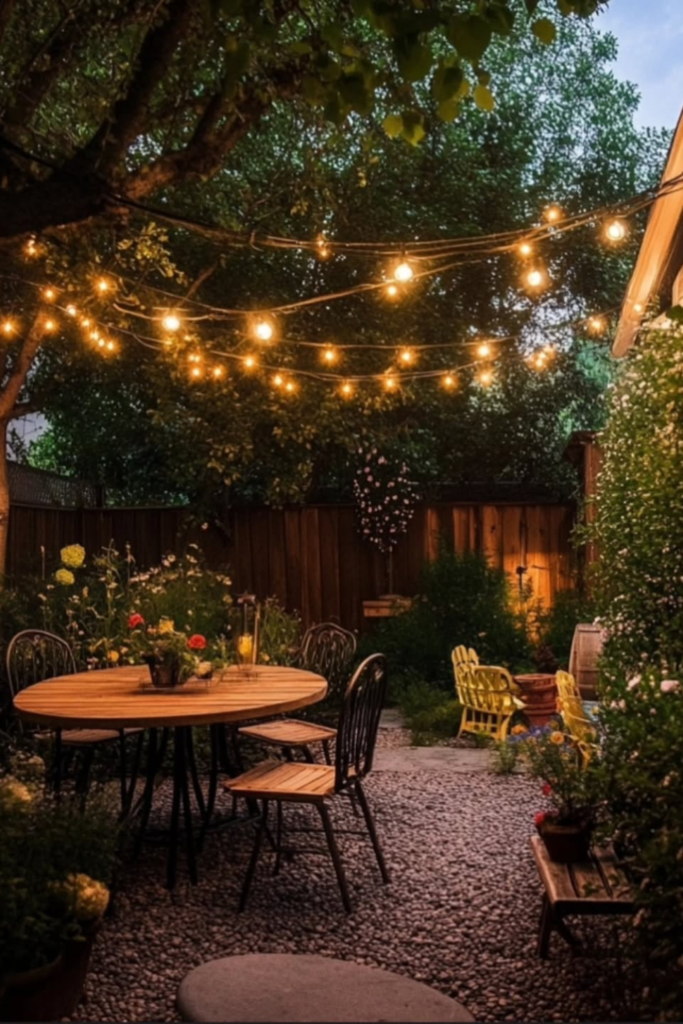
Pergola Path Lighting
You want to direct movement without taking over the room, this is the most effective method, maintain gentle pergola lighting above.
Use thin solar stake lights along the walkway. While maintaining a calm, harmonious environment, the mix establishes a clear direction.
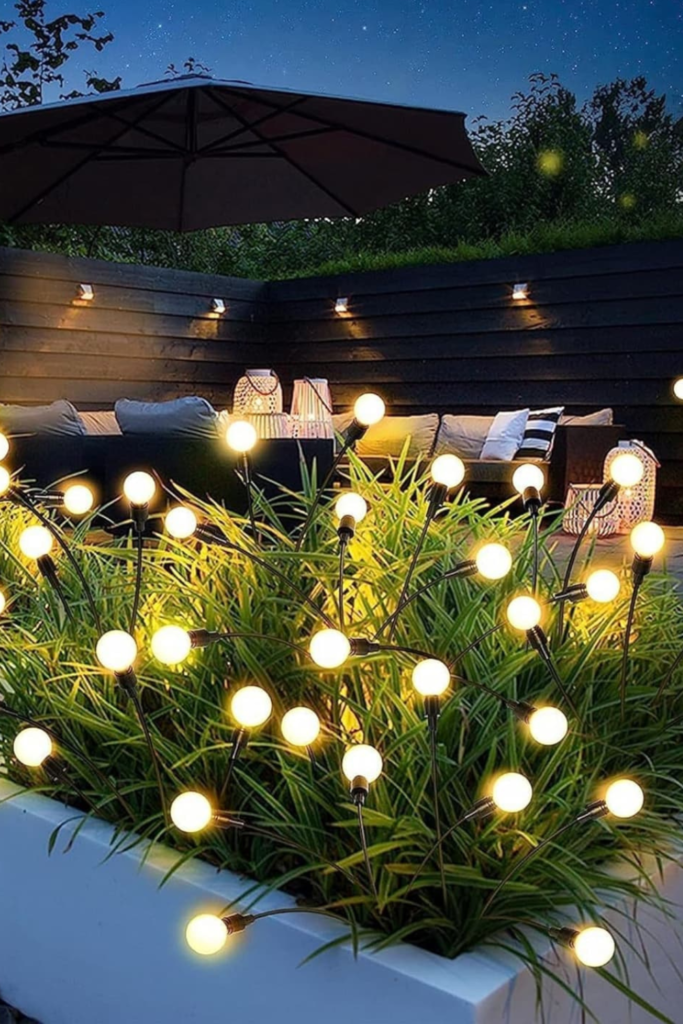
Pathway Globe Lights
When you want light that is aesthetically pleasing rather than utilitarian, this works best along decks or garden walkways.
Use solar globe lights with built-in fairy LEDs and distribute them properly. The gentle illumination adds a sleek appearance while directing movement.
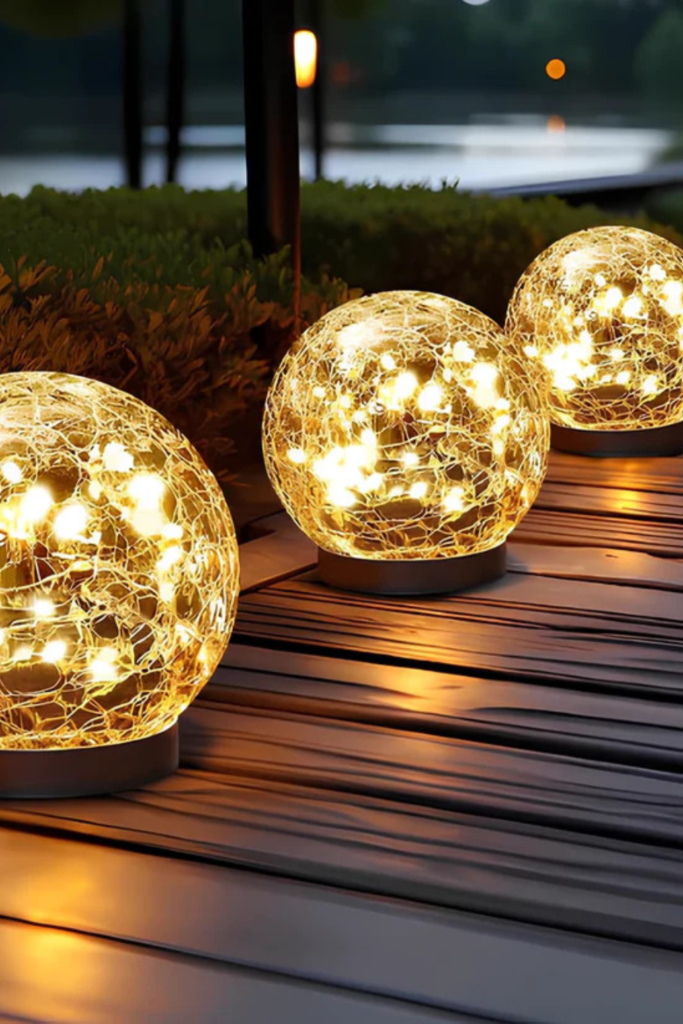
Solar Step Markers
This is most effective on outdoor steps where nighttime visibility is important. Place tiny solar lights along the side edges or straight into step risers.
You can utilize downward-facing skinny wall lights. The illumination is modest and clearly guides each step without overpowering the steps to its low placement.

Planter Edge Lighting
You want lighting without installing visible equipment, this concept is ideal. Inside the upper border of huge pots, conceal tiny or thin solar strip lights.
A gentle glow is produced by the light reflecting off the earth and plants. This is particularly effective on balconies or patios with little space.
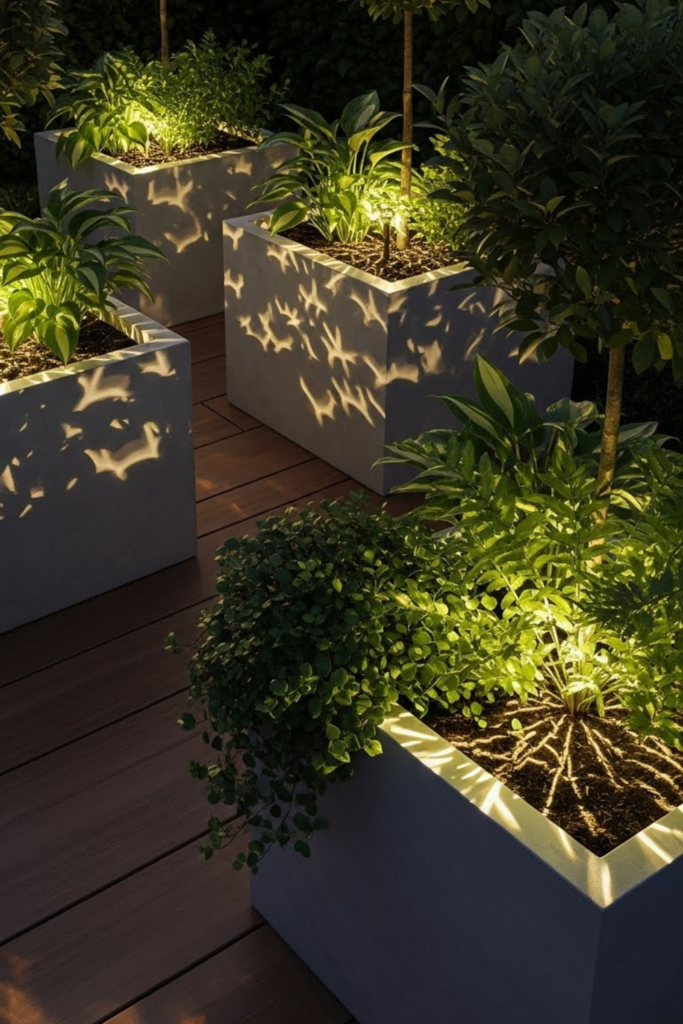
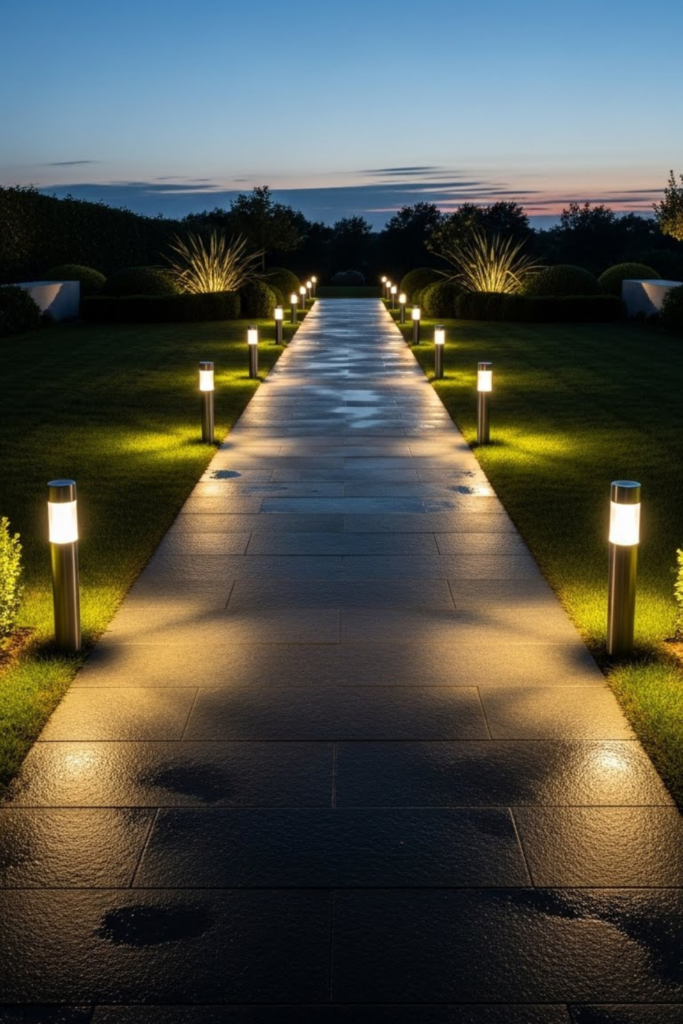
Solar Bollard Lines
Use this to make walkways and lawns appear tidy and well-organized. Structure and direction are created.
Placing short solar bollard lights in straight lines. Make the light feel deliberate rather than dispersed.
Keep the spacing constant. This arrangement strikes a balance between aesthetics and functionality.
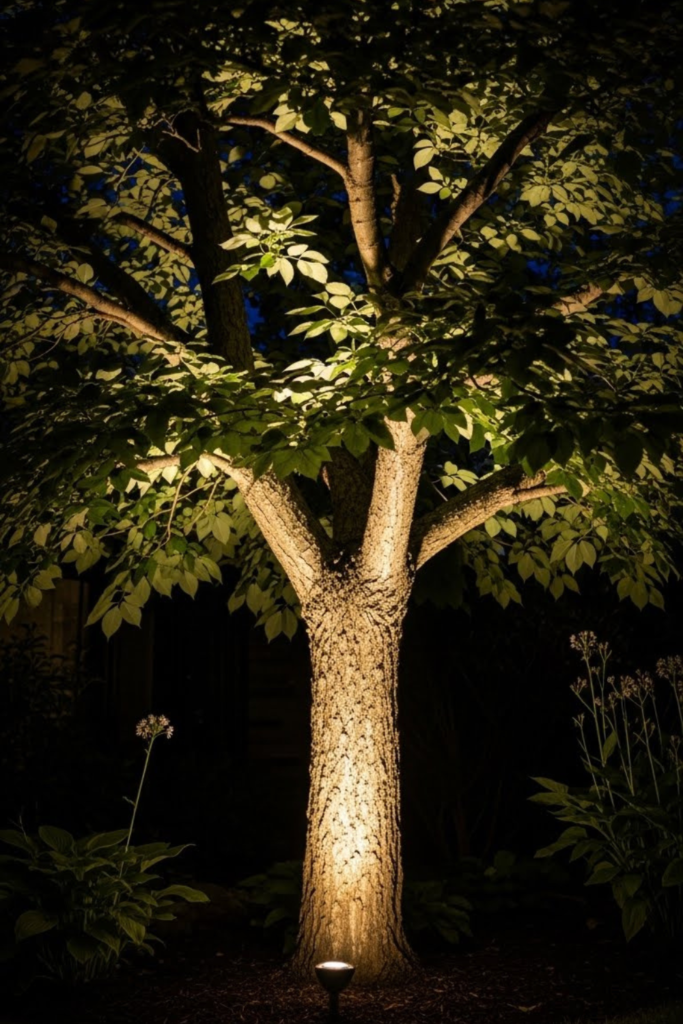
Tree Uplight Glow
You want to draw attention to a single prominent feature rather than illuminating everything, this works best.
A solar spotlight should be positioned at the base of a tree and pointed upward toward the canopy or trunk.
Drama and depth can be added with just one light. Make the beam feel concentrated rather than harsh, keep it narrow.
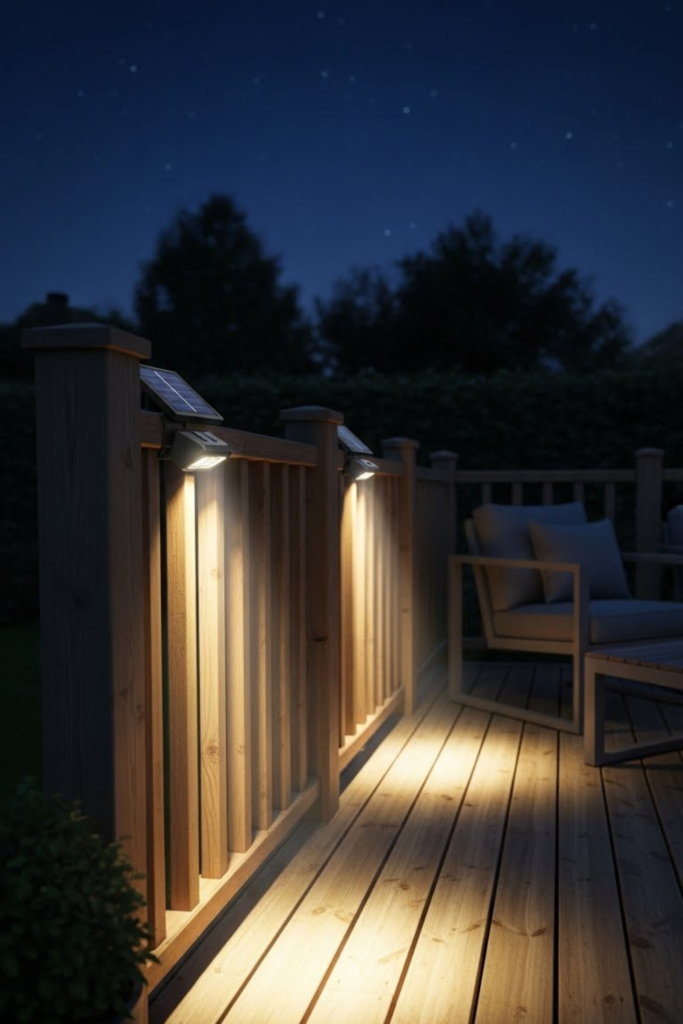
Railing Accent Lights
For decks and balconies with little floor area, this concept works well. Place tiny solar lights around the inside edge of handrails or beneath railings.
The region underneath is softly illuminated while the light remains hidden. Without overcrowding the area, it’s a fantastic method to provide safety lighting.
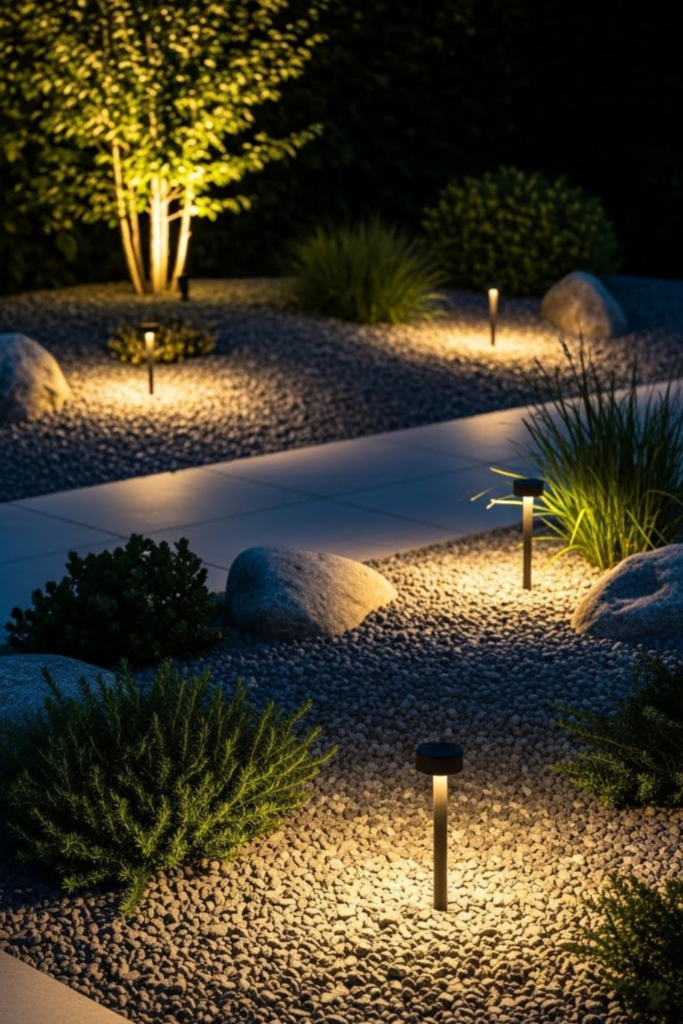
Rock Bed Illumination
Gardens with stone or gravel elements benefit greatly from this. Instead of utilizing towering stakes, use low-profile solar lights positioned between rocks.
During the day, the light appears invisible, blending into the surroundings. The stones sparkle subtly at night without any visible light sources.
FAQs
How many solar panels do I need to run a grow light?
The grow light’s power and the number of hours you want it to operate will determine this. One modest solar panel won’t be sufficient.
Most grow lights consume much more energy than small garden LEDs. To store energy during the day, you typically need several panels, a big battery, and a charge controller.
The light may briefly turn on and then switch off if the battery-sizing stage is skipped. Before sizing panels and batteries, always determine the grow light’s wattage.
How to charge solar lights if there is no sun?
Solar lights only store what they collect; they cannot charge themselves in the absence of sunlight. They charge slowly on cloudy days, and the battery runs out.
After a few days without sunlight. Manual charging is the only workaround. If the design permits it, you can connect the light to a USB charger or remove the rechargeable battery.
Use a suitable charger. Solar lights simply cannot be recharged without sunlight or manual charging.
You may like to read!
- 12 DIY Acrylic Paint Storage Ideas
- 26 DIY Christmas Ornaments Ideas
- 19 DIY Lamp Shade Ideas
- 23 DIY Backyard Wedding On A Budget

Fasial is the founder of the Fizzy Flare. He has been a passionate blogger since 2021. He ran three different websites in the past few years. Now he is focusing on Fizzy Flare to build an audience and help them organize their life.