This post may contain affiliate links: full affiliate disclosure.
Plants have a funny way of taking over a room.
You start with one little pot on a windowsill. Then another appears beside the sofa. Before long, there are pots on the floor, crowded onto tables, and squeezed into every spot that gets a little sunlight.
The plants may be beautiful, but the room can start to feel messy.
That is where a plant stand helps.
Instead of spreading pots across every available surface, a good plant stand gives them height, groups them together, and turns the collection into part of the room rather than something you are constantly trying to find space for.
And you do not need to buy an expensive stand to get that effect.
Some of the best DIY plant stand ideas are surprisingly simple: a wooden bench, a small table, a few shelves, an old pallet, hanging boards, or even something made from materials you already have.
The 21 ideas below include options for living rooms, balconies, porches, patios, and gardens, so you can choose something that actually fits your space and your plants.
Save this article for later.
Before You Build a DIY Plant Stand
A pretty plant stand is only useful if it works for the plants sitting on it.
Before choosing a design, think about where the stand will live.
Indoor stands need to fit the room without blocking walkways or becoming unstable around children and pets. Outdoor stands need materials and finishes that can handle moisture, sun, and changing weather.
Light matters too.
A stand can lift a plant closer to a bright window, but stacking plants vertically can also cause taller plants to shade the smaller ones underneath. Arrange your plants according to the light they actually need rather than simply filling every shelf.
And finally, check the weight.
A wet ceramic pot filled with soil can be much heavier than it looks. Shelves, hooks, benches, and hanging systems should all be strong enough for the plants you plan to use.
Once those basics are sorted, you can have much more fun with the design.
21 DIY Plant Stand Ideas
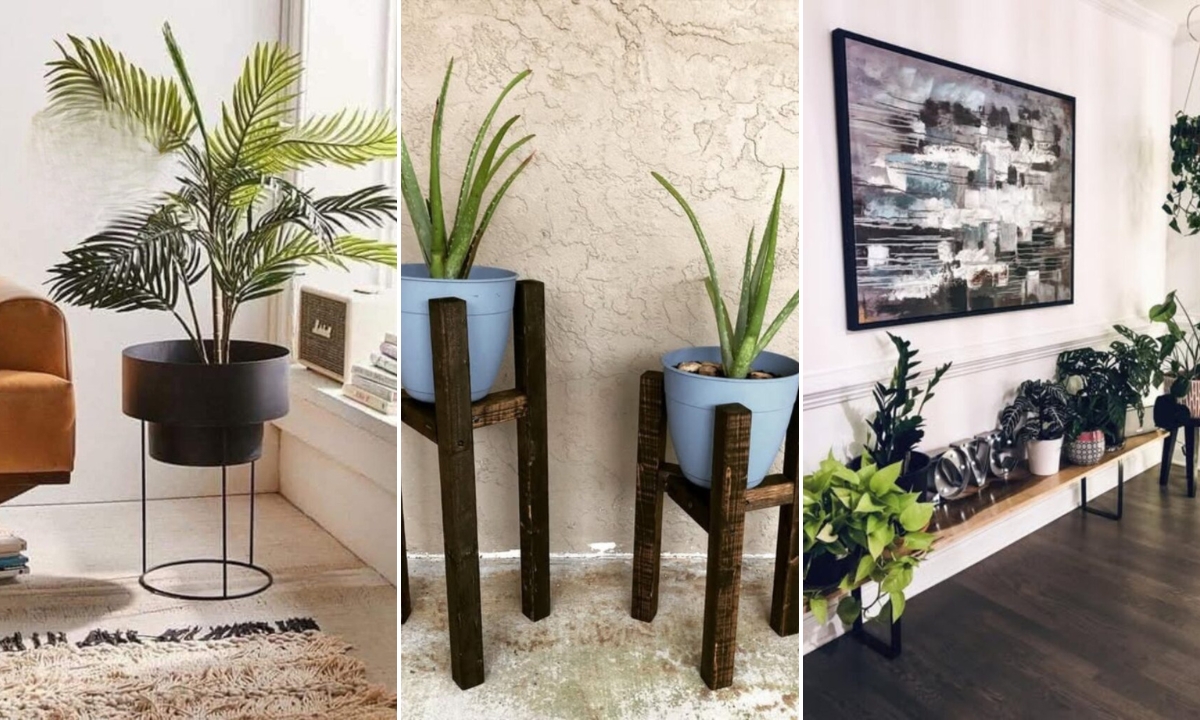
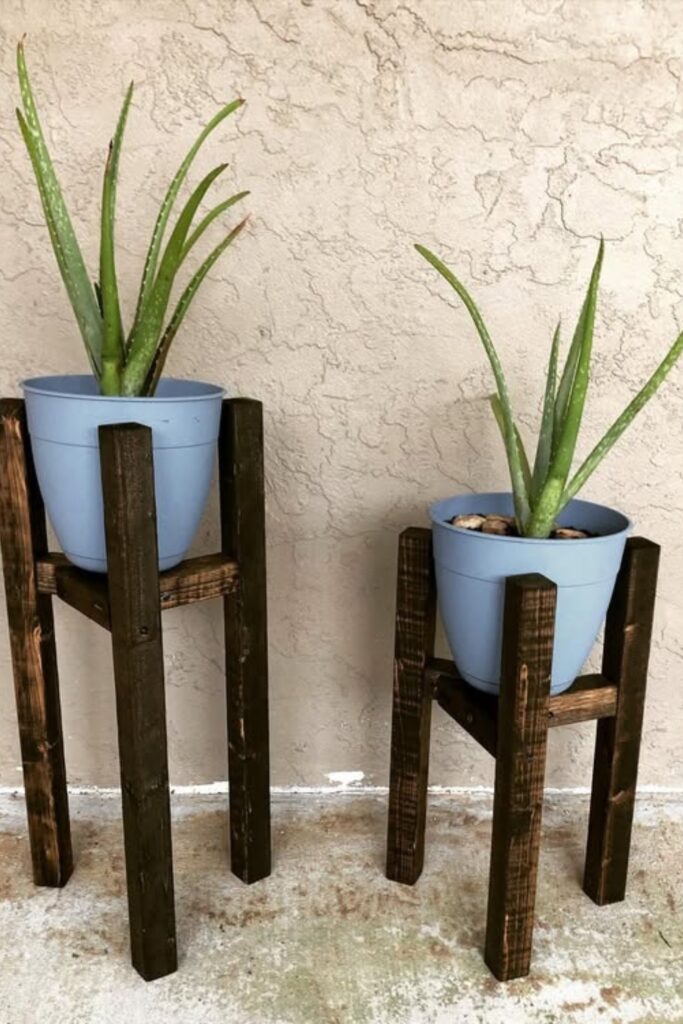
1. Clean Wooden Plant Stands
Sometimes the simplest plant stand looks the most polished.
A small wooden stand raises a single pot off the floor just enough to make it feel intentional rather than forgotten in a corner.
The basic shape can be very simple: four legs with a square or rectangular frame at the top.
You can leave the timber natural for a warm Scandinavian-style look, stain it darker for a more traditional room, or paint it to match your furniture.
If you are building several stands, make them in different heights.
Grouping two or three plants at slightly different levels creates a much more interesting display than placing all the pots in one straight line.
These work especially well beside a sofa, near a window, or in an empty bedroom corner.
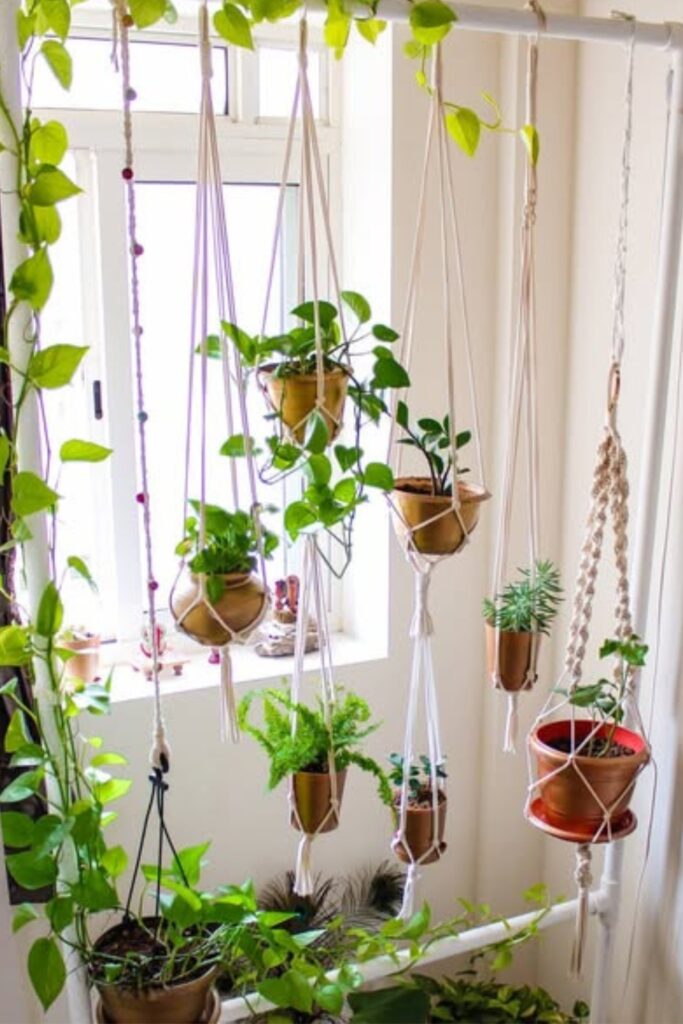
2. Create a Hanging Plant Corner
If floor space is disappearing quickly, look up.
A hanging plant corner lets you display several plants without adding another piece of furniture to the room.
You can suspend small pots from a secure ceiling-mounted or wall-mounted support and vary the hanging lengths so the plants create a soft layered effect.
Trailing varieties work especially well because the leaves naturally fill the vertical space.
Macramé hangers also add texture without making the arrangement feel heavy.
If you like this look but do not want to make every hanger yourself, you can see macramé plant hangers on Amazon.
Before installing anything overhead, make sure the hook or support is appropriate for the ceiling or wall structure and for the combined weight of the pot, wet soil, and plant.
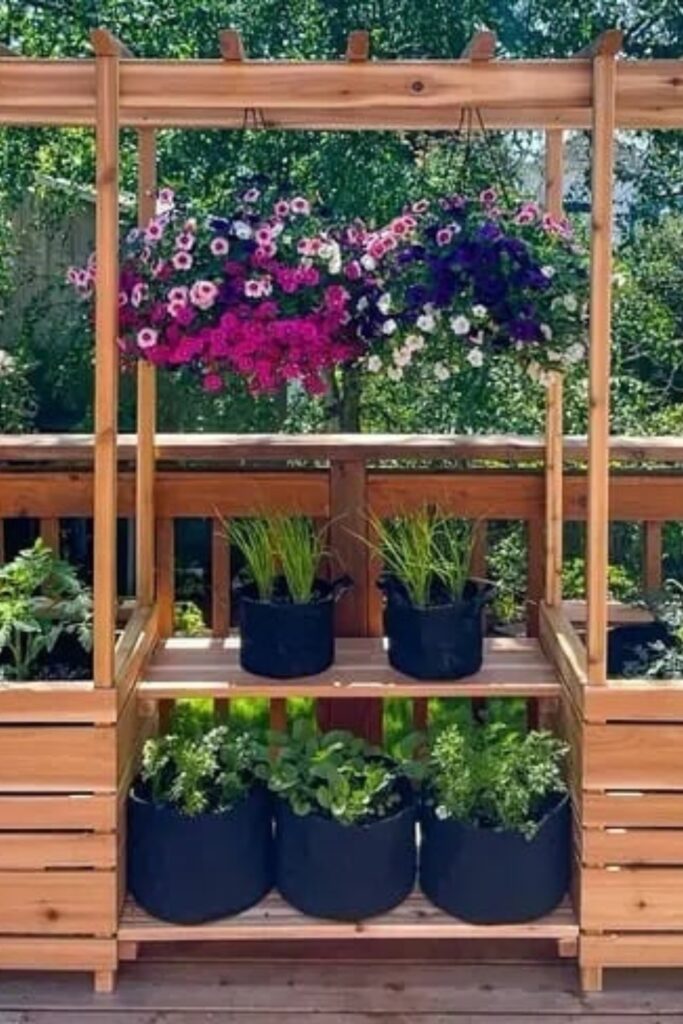
3. Build a Full Garden Plant Station
If you have lots of plants, one tiny stand may not solve the problem.
A larger garden station gives you room for hanging baskets, larger planters, herbs, and smaller pots all in one structure.
A pergola-style frame works particularly well outdoors.
The upper beam creates a place for hanging baskets, while shelves and lower planter areas provide room for everything else.
This kind of arrangement can turn an empty patio wall into a proper little garden zone.
If you enjoy building outdoor planters too, you may also like these 28 DIY planter box ideas.
For outdoor use, choose timber and fasteners suitable for the weather and protect the finished wood appropriately.
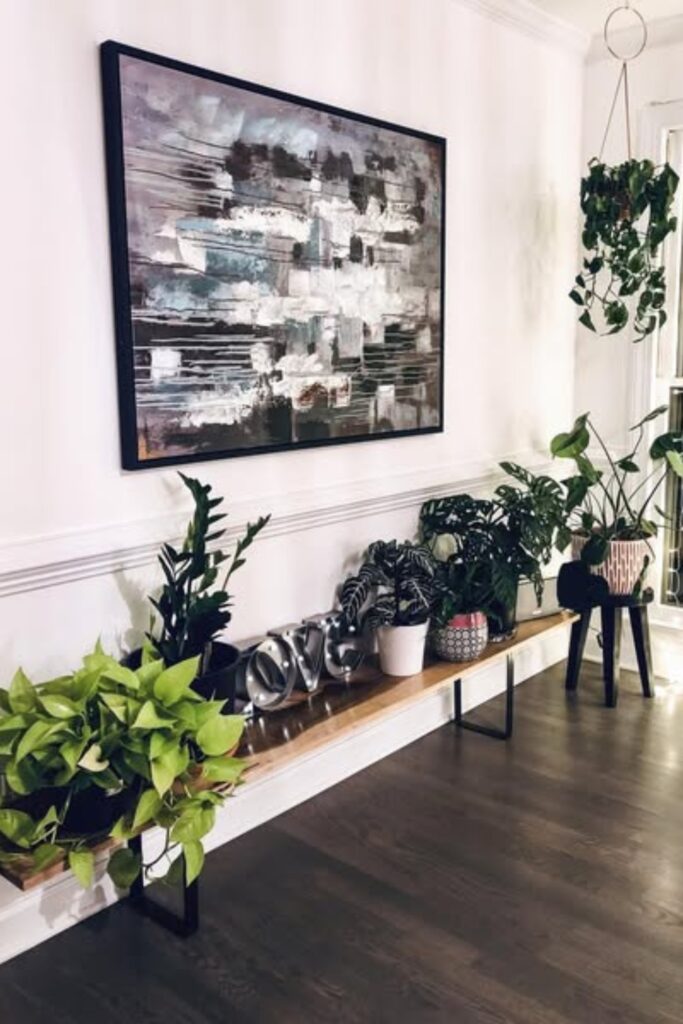
4. Make a Long Bench Plant Display
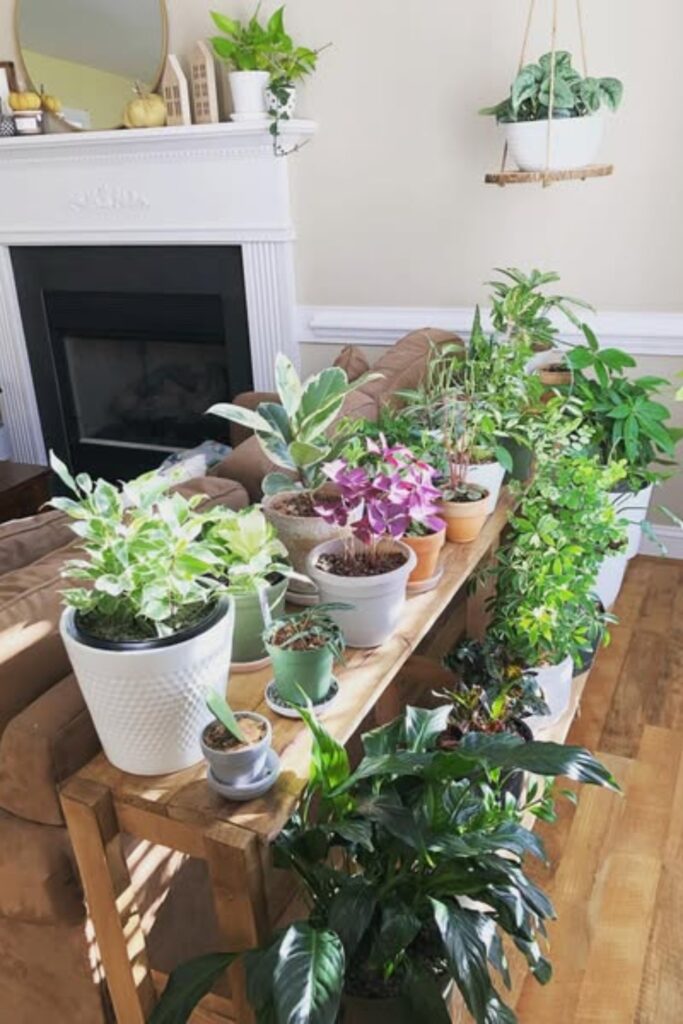
A long bench is one of the easiest ways to make a large plant collection look more organized.
Instead of having ten separate pots scattered across the floor, the bench visually connects them into one display.
You can build a simple version from a strong wood plank and sturdy legs.
Keep the larger plants toward the ends or back and mix smaller pots between them so the arrangement does not feel like one solid wall of leaves.
The empty space underneath can also be useful for baskets, watering supplies, or a few larger floor plants.
If you already have a suitable timber top, pre-made metal furniture legs can make the project much quicker.
You can see metal bench legs on Amazon.
Just make sure the finished bench is strong enough for the combined weight of all those pots.
5. Try a Slim Metal Plant Stand
Not every plant stand needs shelves.
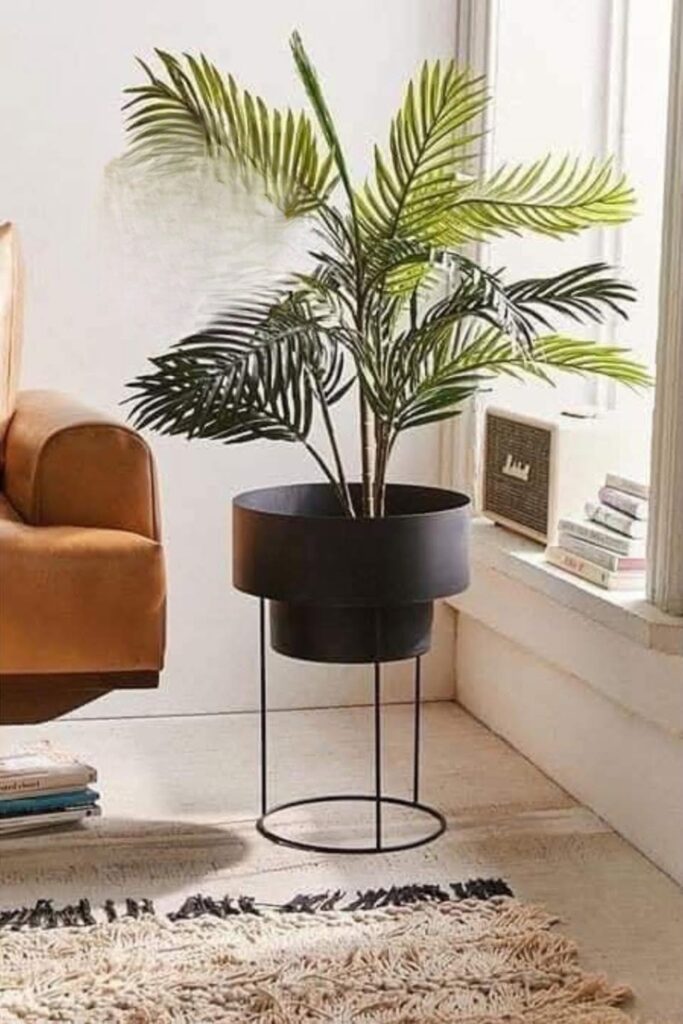
A slim metal frame can hold one beautiful pot while taking up very little visual or physical space.
That makes this style ideal beside an armchair, next to a window, or in a narrow corner where a chunky wooden stand would feel too heavy.
The open base keeps the room feeling spacious and puts more attention on the plant itself.
If you can weld or have access to someone who can, a basic round support and simple metal legs can create a very clean modern stand.
Otherwise, the idea is still useful inspiration for choosing or adapting an existing frame.
6. Add a Plant Stand Behind the Sofa
The narrow space behind a sofa is often wasted.
A long, slim console-style stand can turn that unused area into a beautiful indoor plant display.
The key is keeping the stand shallow enough that it does not push the sofa too far into the room.
Use a simple timber top with strong legs, then arrange the plants so taller varieties sit where they will not block too much light from the smaller ones.
This works especially well when the sofa sits in front of a bright window.
From the room, you get a soft line of greenery above the back of the sofa without sacrificing more floor space.
7. Make a Playful Log Plant Stand
A plant stand does not have to look perfectly polished.
Natural branches and wood slices can create something much more playful.
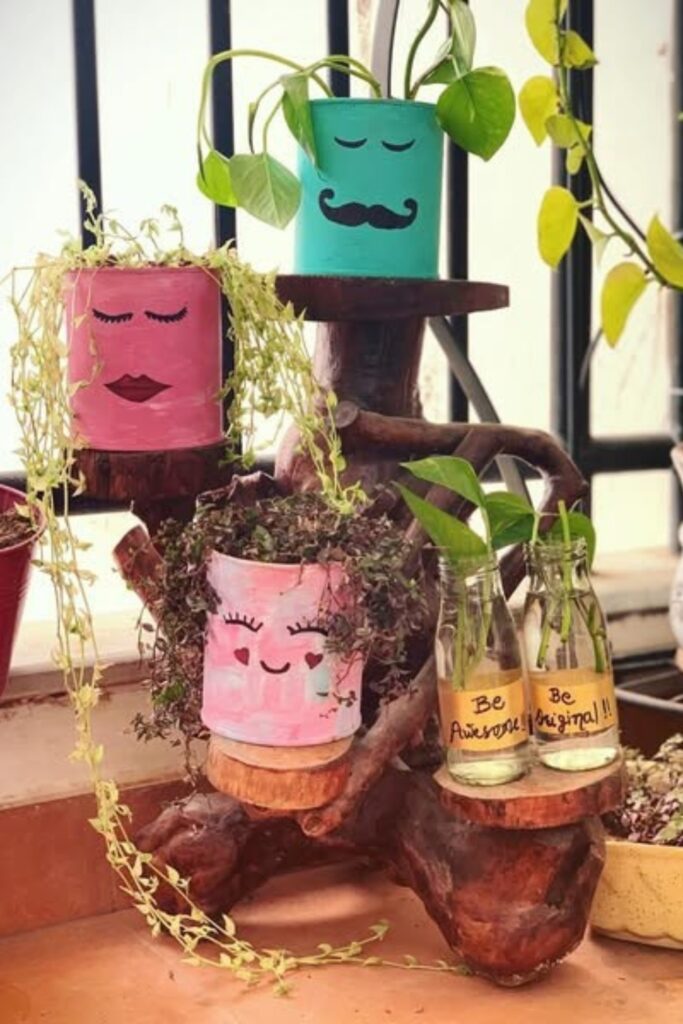
A thick branch or small log can form the central support, while flat wood slices become little platforms for small pots.
This type of stand works best with lightweight plants rather than large, heavy ceramic planters.
It is especially cute for succulents, small herbs, or decorative pots.
You could even paint simple faces or patterns onto recycled tins and use them as lightweight planters.
The result feels handmade in the best possible way.
8. Create a Wicker Planter Stand
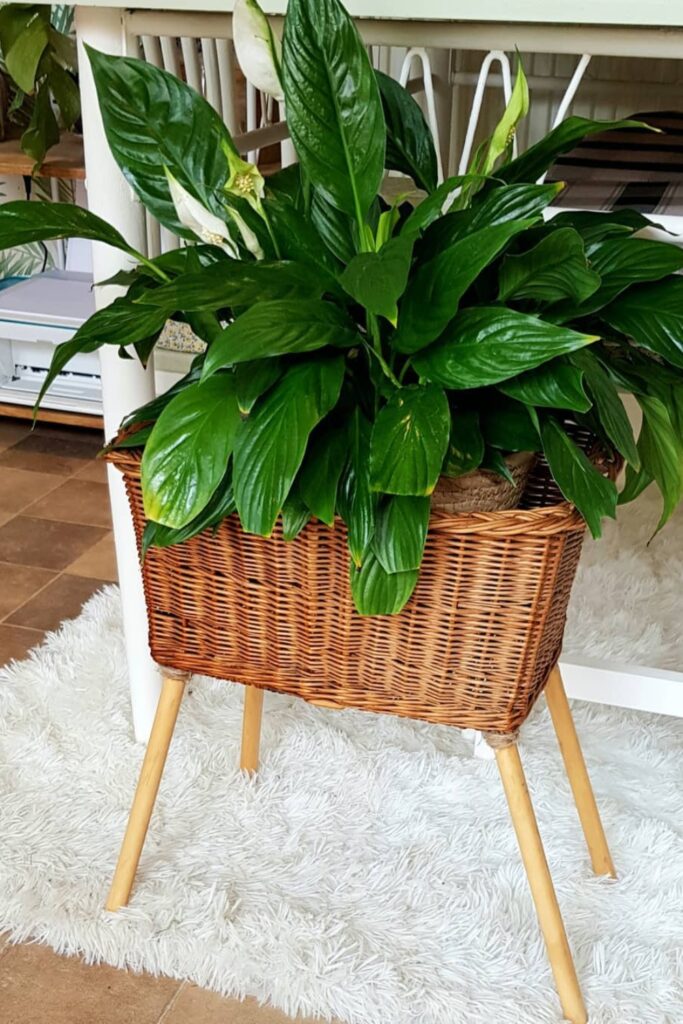
If you want something softer than a traditional timber stand, combine a woven basket with wooden legs.
The basket hides the basic nursery pot while adding warmth and texture to the room.
This works beautifully in bedrooms, living rooms, and relaxed neutral interiors.
Choose a basket that properly supports the pot rather than allowing all the weight to pull against the woven material.
You will also want some protection inside the basket so watering does not damage it or the floor underneath.
Tapered wooden legs can make even a simple basket look much more like a finished piece of furniture.
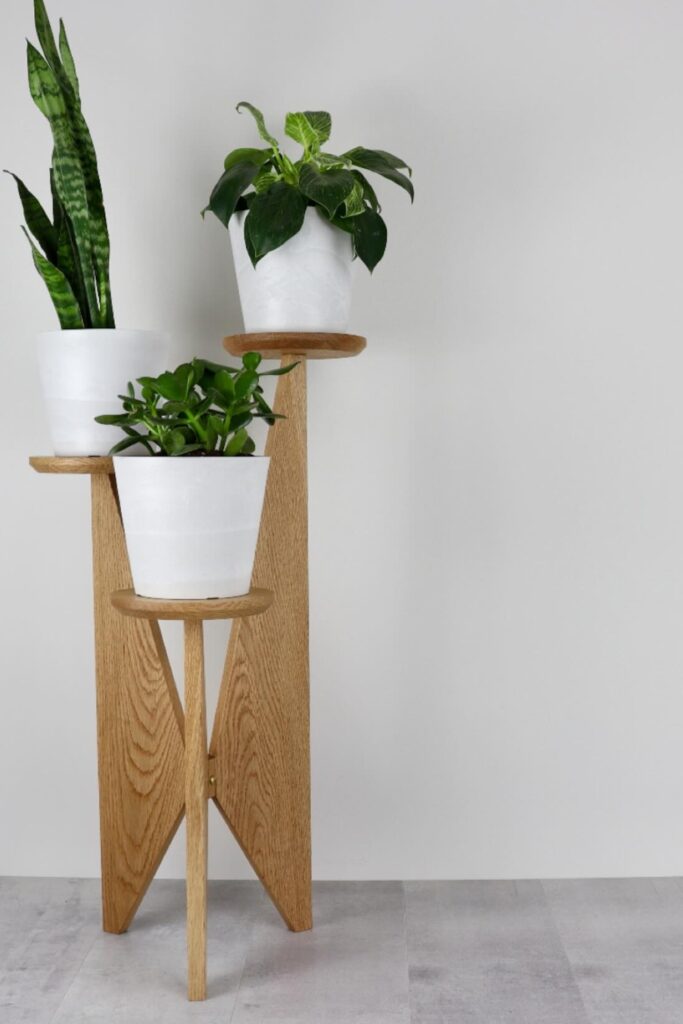
9. Build a Modern Tiered Plant Stand
A tiered plant stand gives you several display surfaces without requiring a wide footprint.
That makes it especially useful in smaller homes.
One modern approach is to attach circular or rounded shelves at different heights along a central wooden support.
The staggered levels stop the plants from hiding one another and let trailing leaves fall naturally between the shelves.
Before deciding where each shelf goes, place the empty pots roughly where you want them.
That makes it much easier to judge spacing and avoid discovering later that one beautiful plant has nowhere to grow.
10. Stack Hexagon Plant Shelves
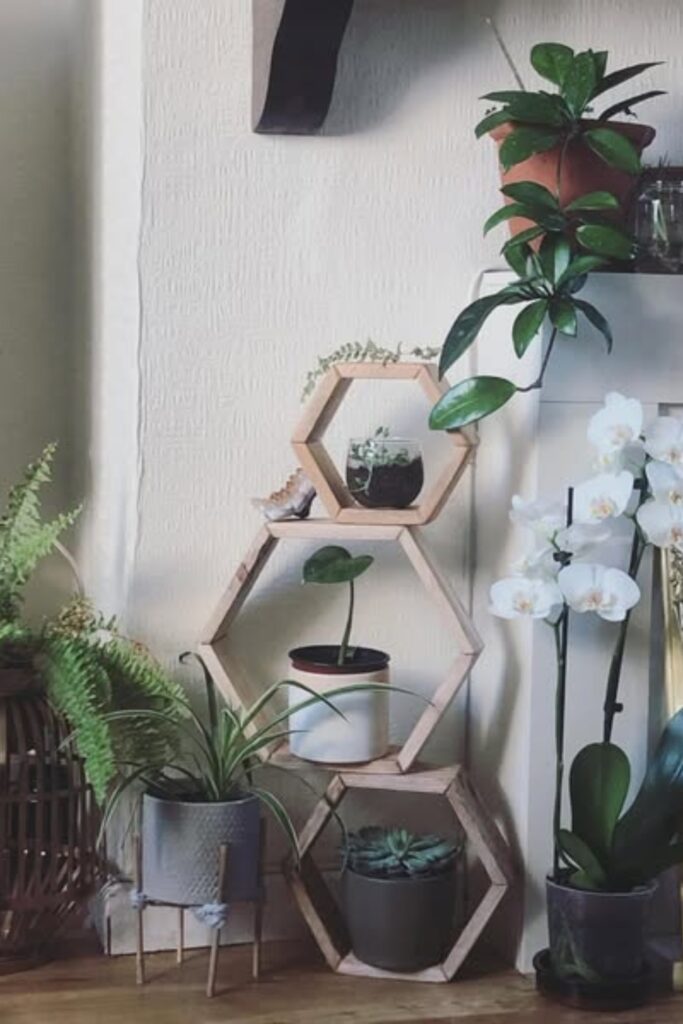
If you want your plant stand to become part of the wall decor, geometric shelving can do both jobs.
Wooden hexagon frames can be stacked together to create a sculptural display for smaller pots.
You do not need every opening to contain a plant.
Leaving some sections empty gives the arrangement breathing room and makes the whole feature feel more intentional.
Use smaller, lighter planters here, especially if the structure is mounted or positioned near a busy walkway.
The plants add softness to the geometric shape while the wood keeps the display warm.
11. Make a Spiral Staircase Plant Stand
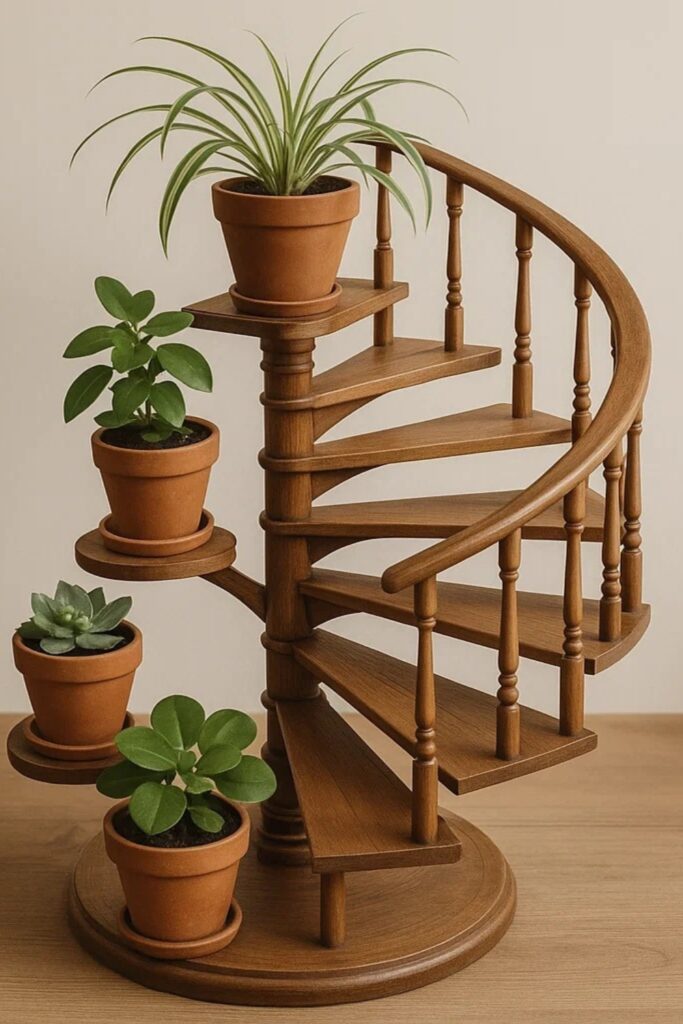
This one is for anyone who wants the stand itself to be a conversation piece.
A miniature spiral staircase creates a separate platform for each small pot, gradually lifting the plants around a central frame.
It is more detailed than a basic bench or shelf, but visually it has a lot of personality.
This design suits small plants better than large ones because oversized pots can hide the staircase shape.
It can look especially beautiful near a bright window where the leaves catch the light at different heights.
If you enjoy woodworking projects that are a little unusual, this could be a fun one to experiment with.
12. Use Lightweight Metal Plant Stands
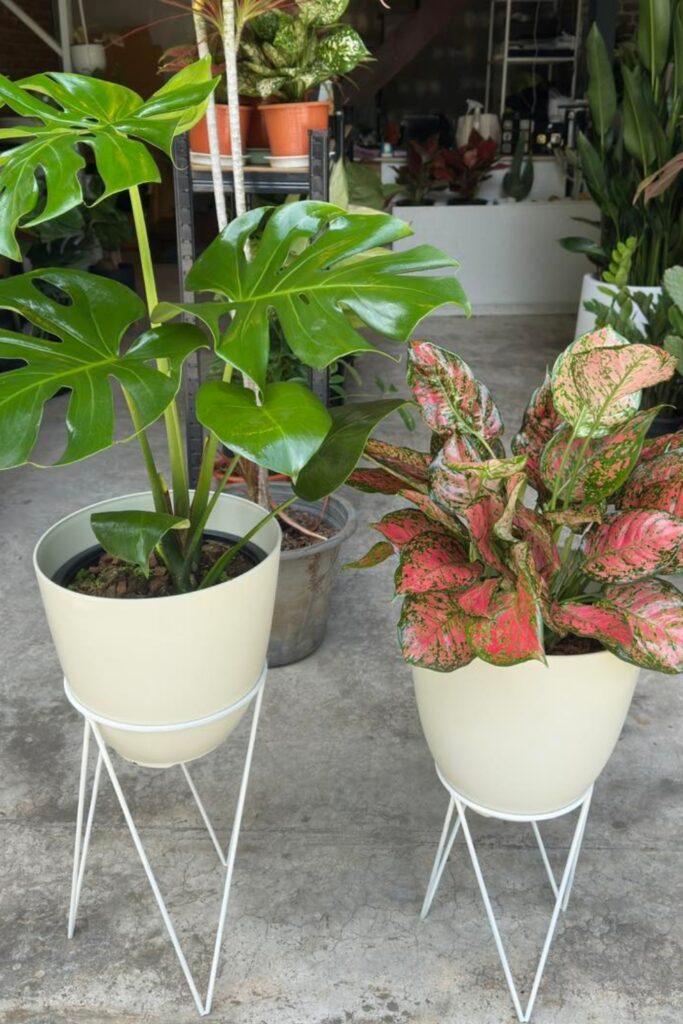
Thin metal plant stands are useful when you want height without making the room feel crowded.
A simple tripod-style frame can lift a pot while keeping almost all of the floor underneath visible.
That light visual footprint works well in entryways, patios, and smaller rooms.
If you are making one yourself, stability matters more than making the frame extremely thin.
The base should be wide and strong enough that the plant will not become top-heavy as it grows.
For outdoor use, choose a finish that protects the metal from moisture and rust.
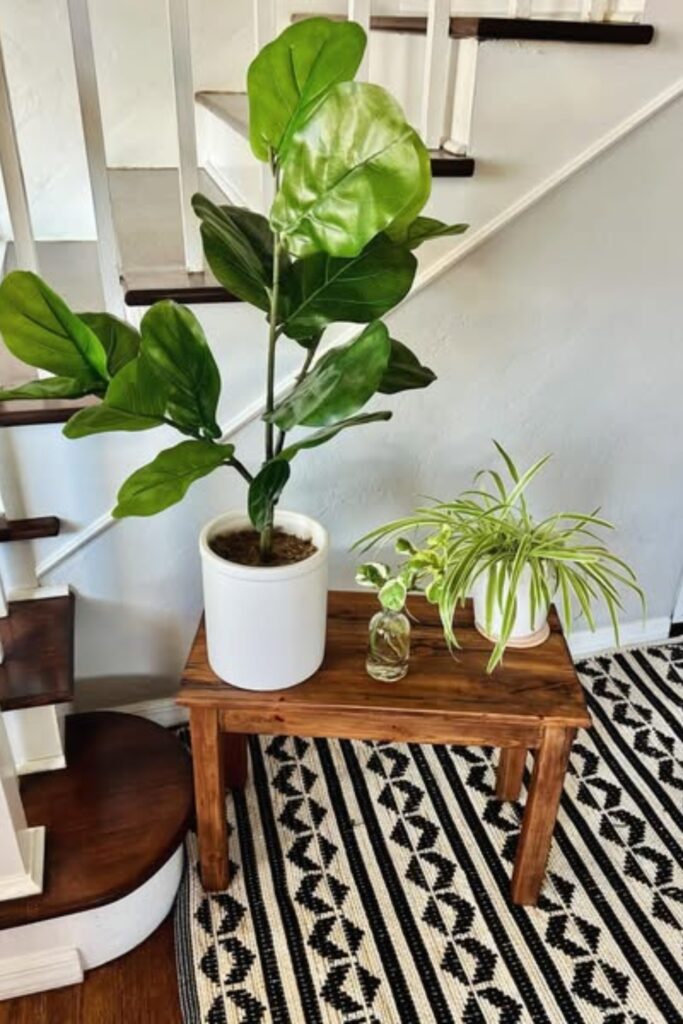
13. Repurpose a Small Wooden Table
One of the easiest DIY plant stand ideas may already be sitting somewhere in your house.
A small wooden side table can become a plant stand with almost no construction at all.
Sand it, repaint or stain it if necessary, then use the top for a combination of plants at different heights.
A taller plant on one side and a smaller trailing plant on the other usually looks more natural than placing identical pots across the whole surface.
This is also a great project for an inexpensive thrifted table.
A tired piece of furniture can look completely different once it is surrounded by greenery.
14. Build a Garden Potting Table
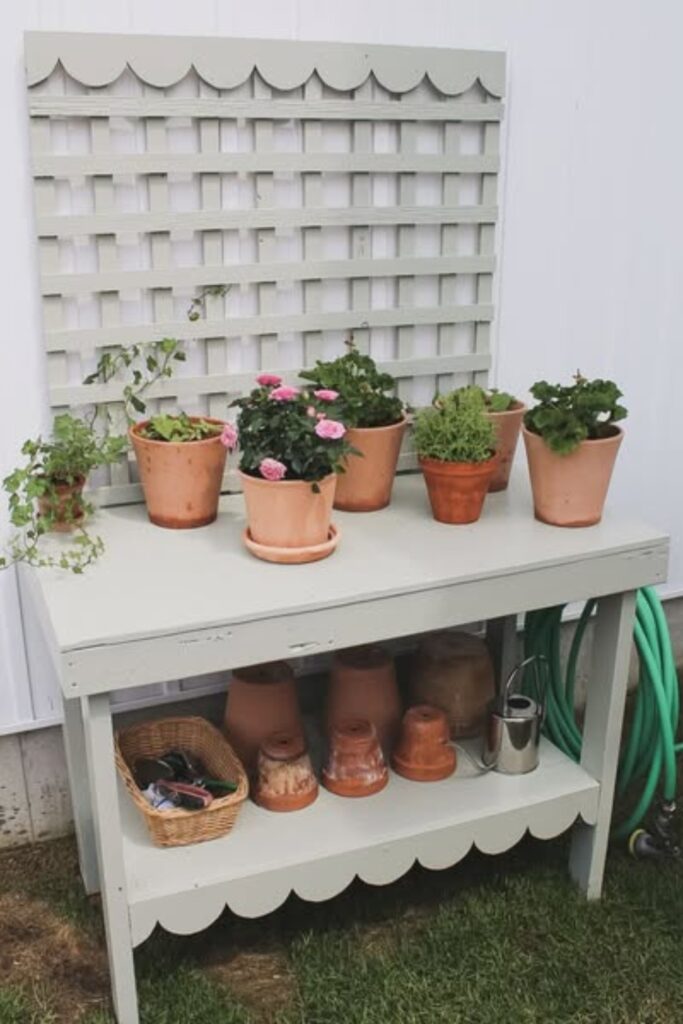
A potting table is part plant stand, part workspace, and part storage station.
That makes it one of the most practical options for anyone who spends a lot of time repotting plants outdoors.
A basic design can include a wide work surface, a lower shelf for soil and pots, and a back panel or lattice for hanging lightweight tools and trailing plants.
Keeping everything together means you are less likely to carry soil, gloves, pots, and tools back and forth every time something needs repotting.
Place a few finished plants across the top when you are not working and the table becomes part of the garden display too.
15. Add a Tall Porch Plant Stand
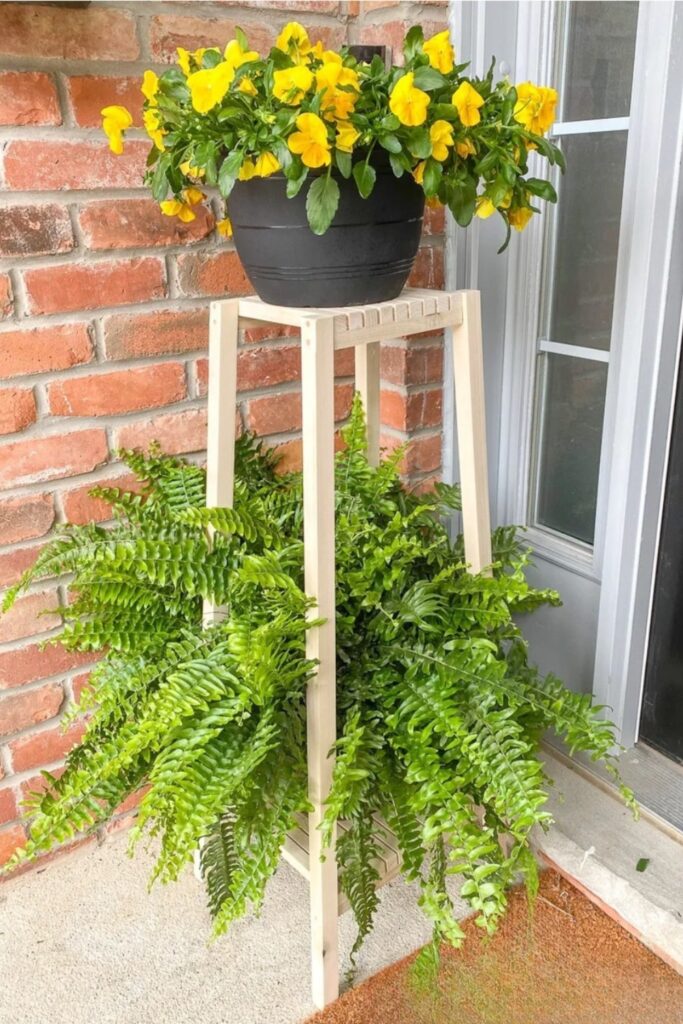
A taller stand is useful when everything on your porch feels too close to the ground.
By raising one planter toward eye level, you instantly create another layer in the display.
A basic version can be built from four long legs with a strong slatted platform at the top.
Then use the space underneath for a larger floor pot.
This gives you two heights without taking up much more floor area.
If the stand will remain outside, make sure the feet, joints, and finish can cope with moisture rather than using untreated indoor furniture outdoors.
16. Turn Bottles Into Colorful Planters
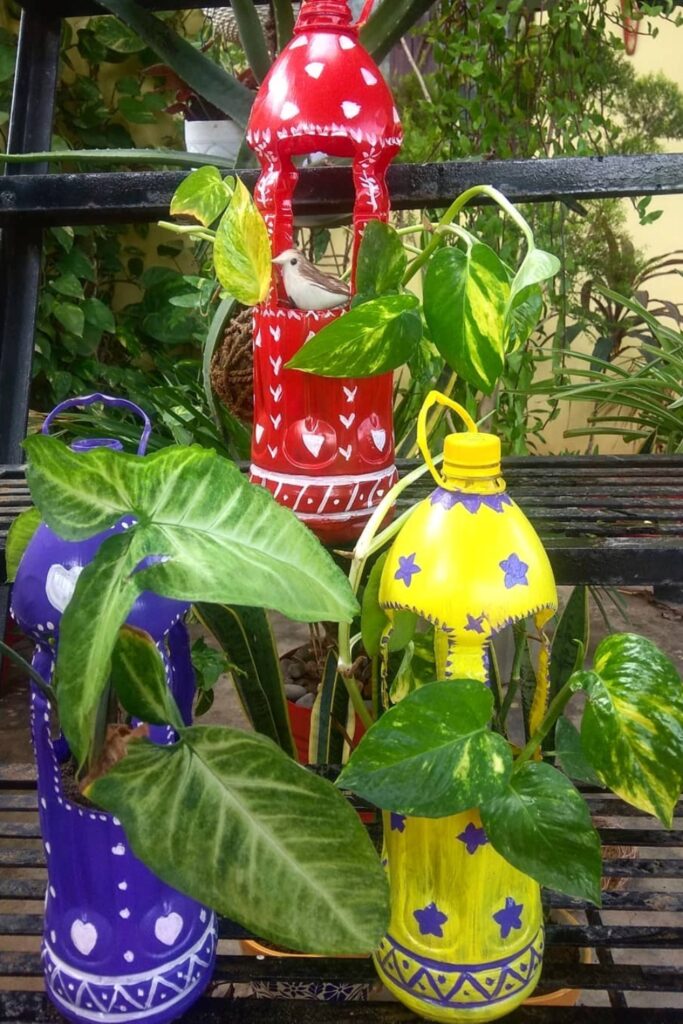
This idea is less about building a traditional stand and more about creating an inexpensive plant display from materials you already have.
Plastic bottles can be cut into small planters and painted in cheerful colors or patterns.
Add lightweight plants, then group the finished containers along a balcony shelf or simple frame.
This can be a fun project when you want something bright rather than perfectly styled.
Make drainage appropriate for the plants and smooth or cover any sharp cut edges before using the containers.
A row of colorful little planters can bring a lot of personality to a small outdoor area.
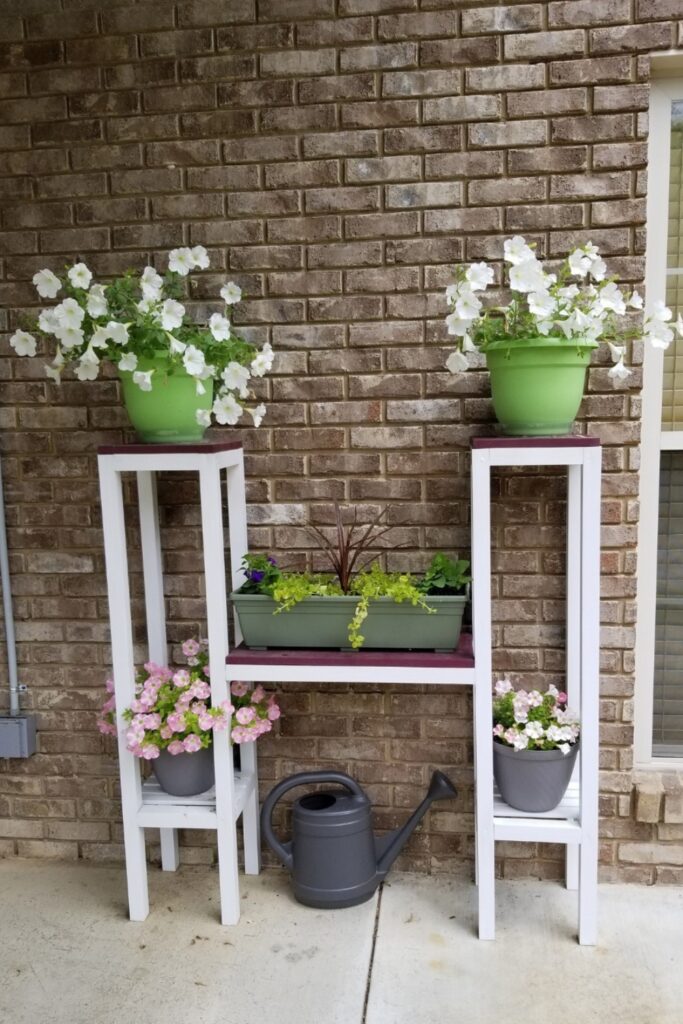
17. Build a Simple Tiered Outdoor Stand
A tiered wooden stand is a good middle ground between a small single-pot holder and a full garden station.
Several levels let you display more plants vertically while keeping the overall footprint manageable.
This works particularly well against a porch or patio wall.
Place larger pots lower down where the structure is strongest, then reserve the upper levels for smaller containers and trailing flowers.
You can stain the timber for a natural look or paint it to coordinate with the exterior of the house.
Just leave enough space between levels for the plants to grow.
18. Make a Hanging Shelf Plant Display
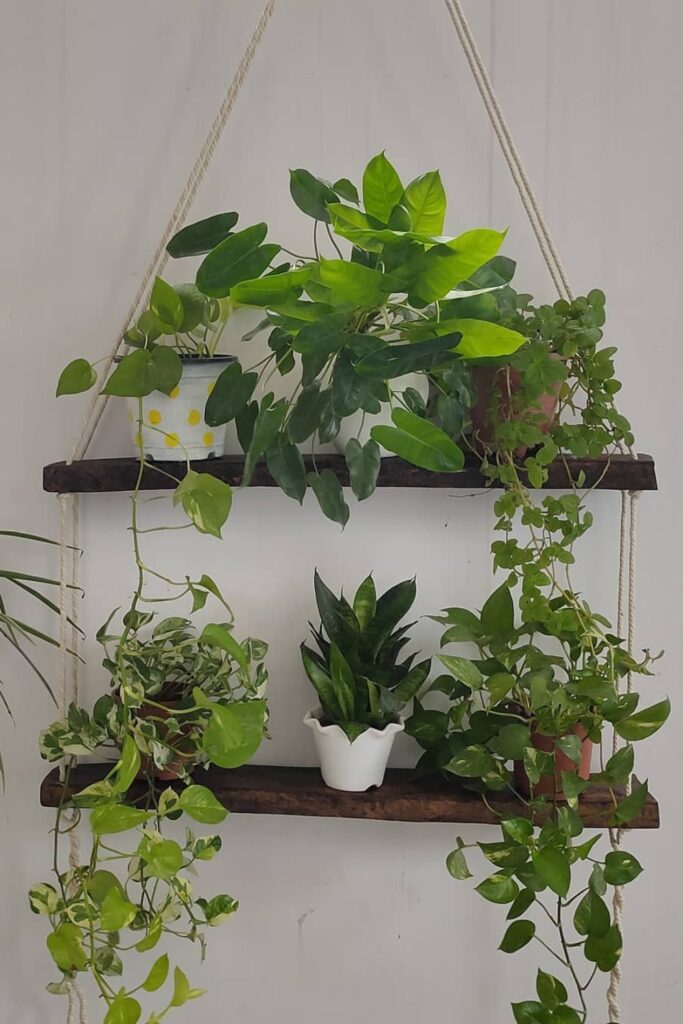
Hanging shelves give you the warmth of wood without taking up floor space.
Two boards suspended with sturdy rope can create a simple display for smaller pots and trailing plants.
Spacing matters here.
Leave enough vertical room between the shelves so the plants are not crushed as they grow.
The support matters even more.
Use mounting hardware appropriate for the ceiling or structure and make sure it can safely support the total weight of the shelves, pots, soil, and water.
If you are gathering the hardware, you can see heavy-duty ceiling hooks on Amazon.
This idea looks especially pretty beside a bright window where trailing leaves can fall over the edges of the boards.
19. Build a Simple Hanging Plant Frame
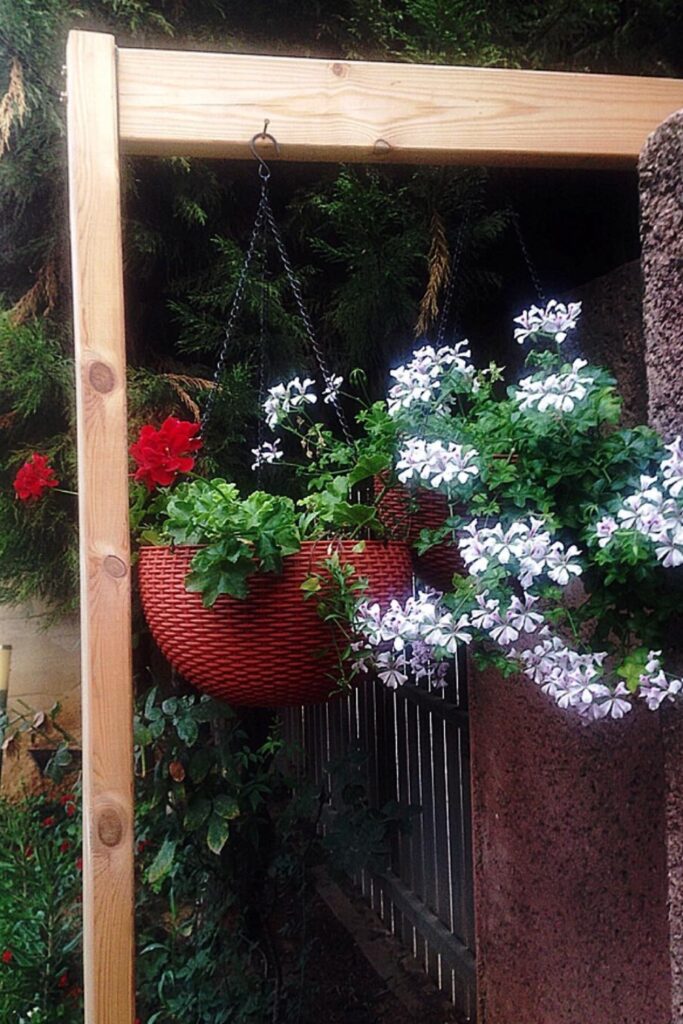
If you love hanging baskets but do not have a convenient tree or overhead beam, give them their own frame.
A tall wooden U-shaped structure can create a simple support for several hanging baskets.
This works particularly well in a garden or patio where you want the plants to feel more like a feature.
Keep the frame wide enough for the baskets to hang freely without constantly bumping into the posts.
And because hanging baskets become significantly heavier after watering, build the frame and hooks for the real loaded weight rather than the empty baskets.
A row of flowers or trailing greenery can turn a very plain part of the garden into something much more inviting.
20. Make a Vertical Crate Plant Wall
When you have a blank wall but very little floor area, build upward.
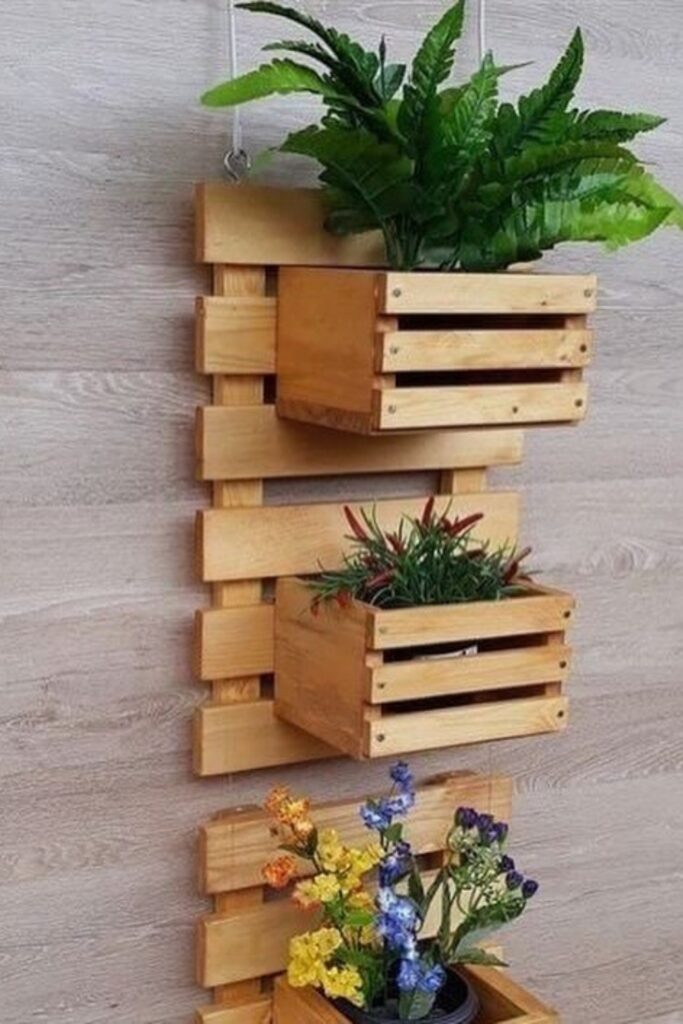
A vertical frame fitted with small crate-style boxes gives every plant its own little compartment.
The boxes can sit at slightly different heights so the wall looks less rigid.
This idea can work on patios, balconies, or even indoors if the structure is properly supported.
Before filling every crate, think about watering.
You want excess moisture to drain safely without constantly dripping onto the plants or surfaces below.
Use the lighter pots higher up and keep heavier plants closer to the base wherever possible.
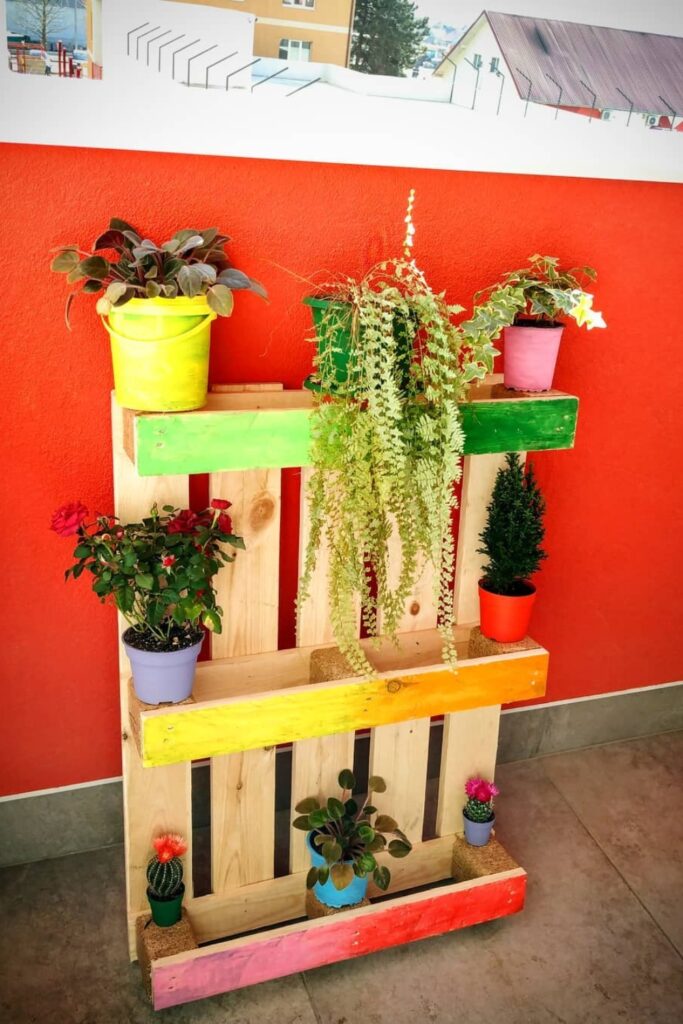
21. Turn a Pallet Into a Colorful Plant Stand
An old pallet can become a cheerful vertical plant display with a little preparation.
Sand rough areas, make sure the pallet is in suitable condition, then paint or stain it before adding pots or small planter supports between the slats.
You can use one color for a calmer look or several shades for something much more playful.
If the finished stand will stay outdoors, protecting the wood from moisture will help it last longer.
You can see outdoor wood sealers on Amazon if you need one for the project.
Finish the display with a trailing plant near the top so the leaves soften the straight pallet lines.
It is inexpensive, makes use of vertical space, and can completely brighten an empty patio wall.
How to Choose the Right DIY Plant Stand
The best design depends less on what looks impressive online and more on what problem you are trying to solve.
If the floor feels cluttered, look at the hanging corner, hanging shelves, crate wall, or tiered stands.
If you have one large plant that simply needs more presence, a simple wooden, wicker, or slim metal stand may be enough.
For a large collection, the long bench, garden station, or potting table will give you much more usable space.
And if your porch or balcony feels flat, try mixing different heights rather than buying several identical stands.
The plants should still be the star.
The stand is there to make them easier to enjoy.

Hi, I’m Jenny, the founder of Fizzy Flare, and together with my team, we create practical content to help make everyday life a little easier. I’ve been blogging since 2021 and have worked on several websites over the years. Today, our focus is Fizzy Flare, where we share helpful ideas for organization, DIY projects, printables, self-care, and simple everyday living.