20 DIY Coat Rack Ideas for 2026
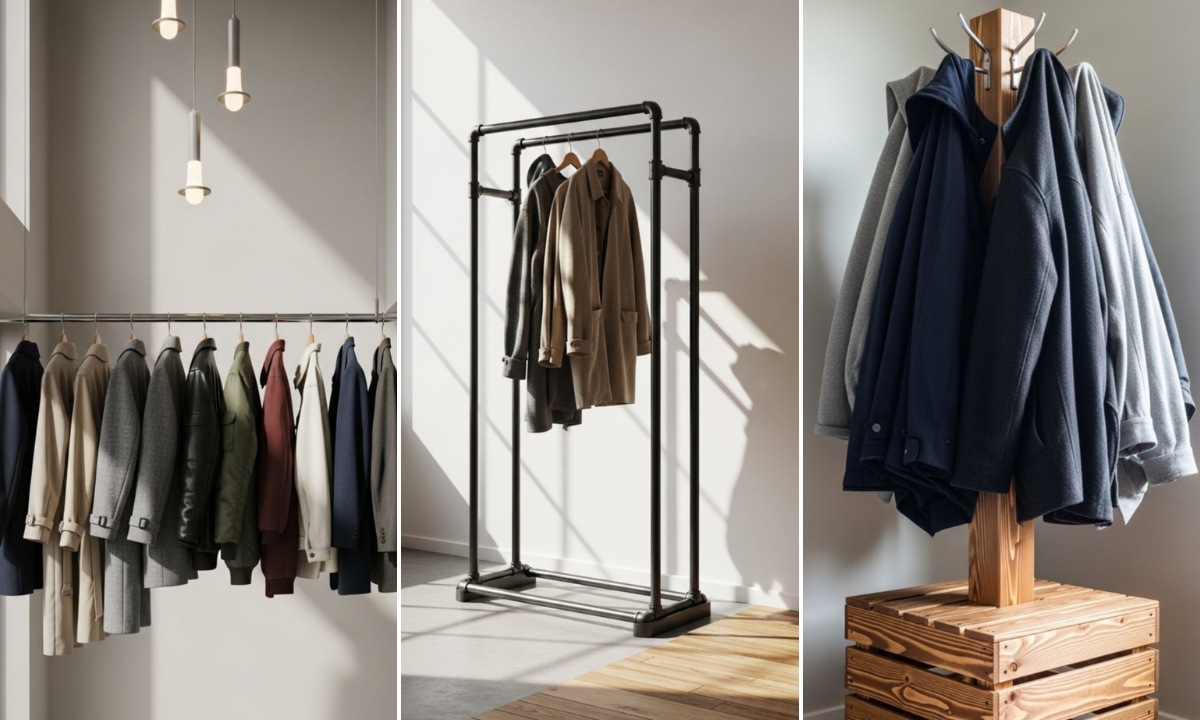
This post may contain affiliate links: full affiliate disclosure.
A DIY coat rack is a practical and creative way to organize your space and add a unique appearance to your home décor.
You may create a coat rack that suits your aesthetic, available space, and storage requirements with basic materials and equipment.
Helps keep coats, bags, and accessories neatly organized while showcasing your creativity, whether it is constructed as a freestanding piece or mounted on a wall.
In this article, you’ll find 20 DIY Coat Rack that work perfectly for 2026.
Contents
- 1 How to stabilize a freestanding coat rack?
- 1.1 Corner Weight Balance
- 1.2 Modular Wood Slats
- 1.3 Slim Vertical Hooks
- 1.4 Branch Shelf Hybrid
- 1.5 Wall Rail Hooks
- 1.6 Shelf Hook Combo
- 1.7 Weighted Ladder Stand
- 1.8 A-Frame Balance
- 1.9 Corner Ladder Rack
- 1.10 Heavy-Duty Rail
- 1.11 Floating Peg Rail
- 1.12 Sculptural Iron Stand
- 1.13 Fold-Out Panels
- 1.14 Peg Bar Lineup
- 1.15 Concrete Base Pole
- 1.16 Pipe Floor Rack
- 1.17 Wall-Braced Stand
- 1.18 Crate Stack Rack
- 1.19 Rolling Coat Stand
- 1.20 Ceiling Rod Drop
- 2 FAQs
How to stabilize a freestanding coat rack?
When the weight is too high and the foundation is too light or too narrow, a freestanding coat rack topples over. Start by concentrating on the bottom to correct this.
If the base is narrow, enlarge it so that the weight disperses rather than pushing the rack forward. To reduce the center of gravity if it is wide but still unstable, put weight at the base.
Instead of packing one side of the rack, keep bulky jackets and bags on the lower hooks and distribute them equally. Use rubber feet to prevent sliding on smooth floors.
Tighten all joints so that nothing flexes under pressure. The rack remains upright when the bottom is stronger than the top.
Save this article for later! 👇👇
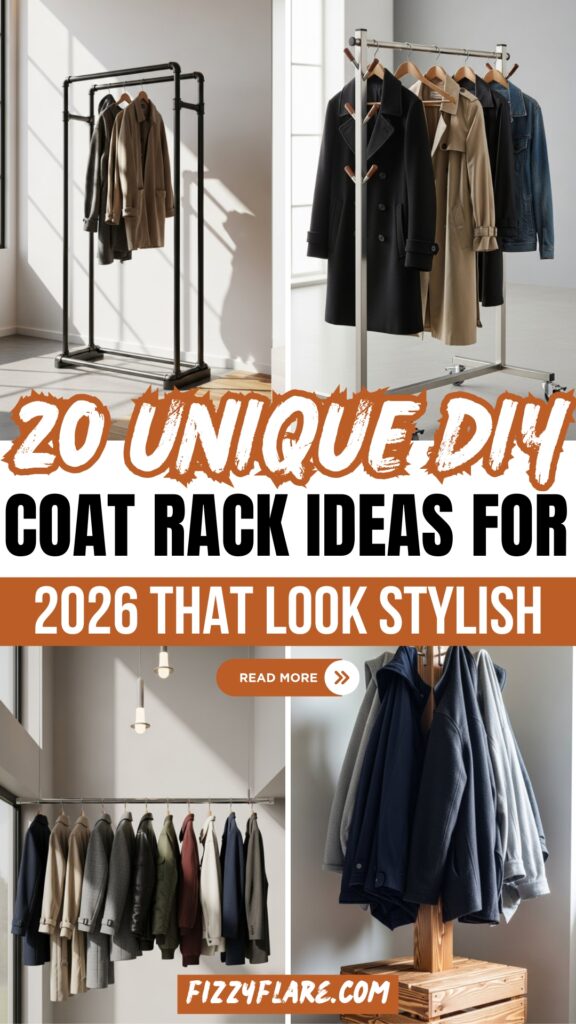
Corner Weight Balance
This arrangement works well in a corner where two walls naturally restrict movement if your area is small.
Choose a solid wood rack with curved feet to replicate it, and if necessary, add additional weight at the base.
The rack doesn’t feel heavy thanks to soft natural light and adjacent wall art, which also visually grounds the entryway.
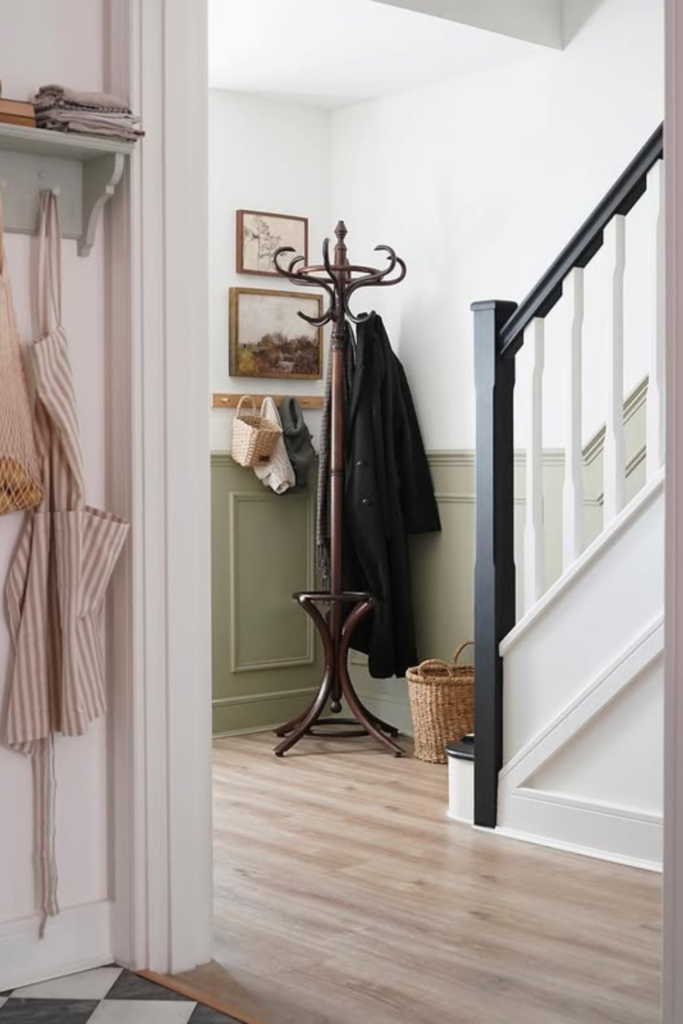
Modular Wood Slats
You want a clean design without sacrificing flexibility. Place staggered wooden slats or blocks on a backing board.
Ensuring each piece serves as a hook. Light coats, hats, and purses look great in bedrooms or hallways with it.
Make the wood texture stand out rather than blend in with the wall, add a gentle wall light or a nearby lamp.
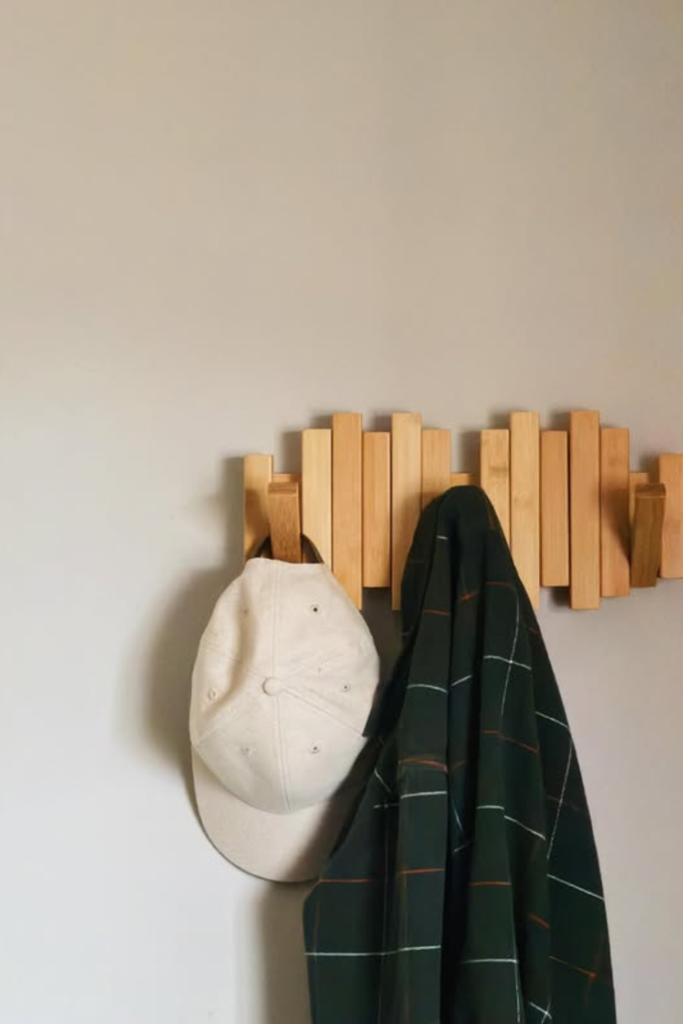
Slim Vertical Hooks
You need storage without taking up much floor space, attatch short peg-style hooks at various heights on a narrow vertical board.
Maintain equilibrium, keep heavier objects lower, uncluttered appearance, pair it with soft ambient lighting or reflected light from a nearby mirror.
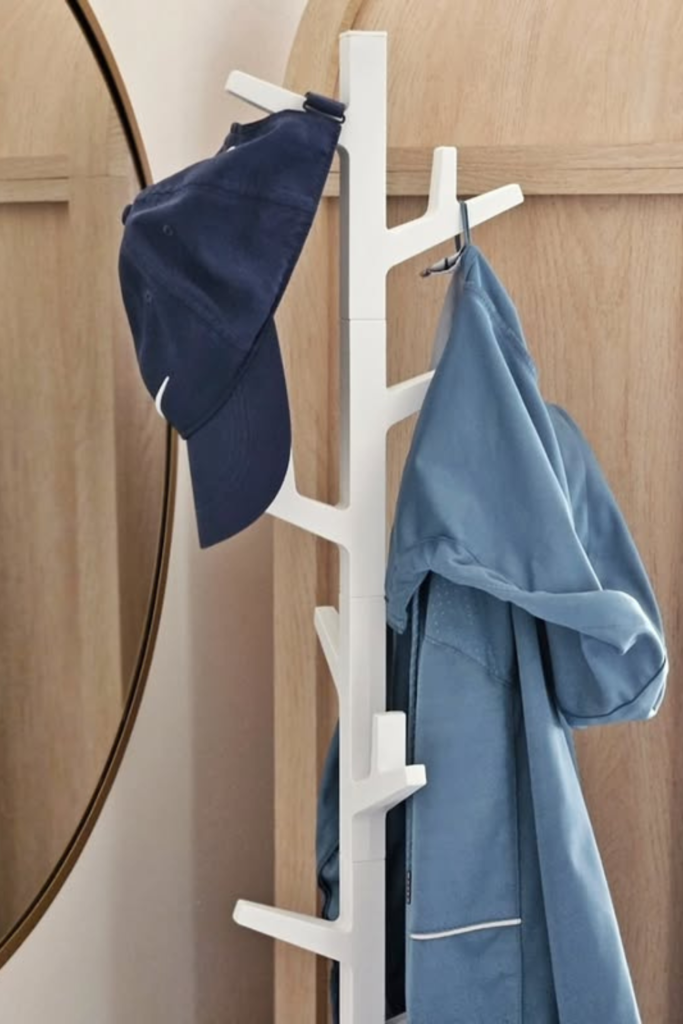
Branch Shelf Hybrid
You want both character and storage, this concept works well. Add floating wooden shelves for shoes.
Folded goods after using a thick natural branch as the vertical support. Hang lighter clothing from a branch extension.
The wood texture is highlighted by soft side lighting, which also prevents the setup from feeling heavy against the wall.
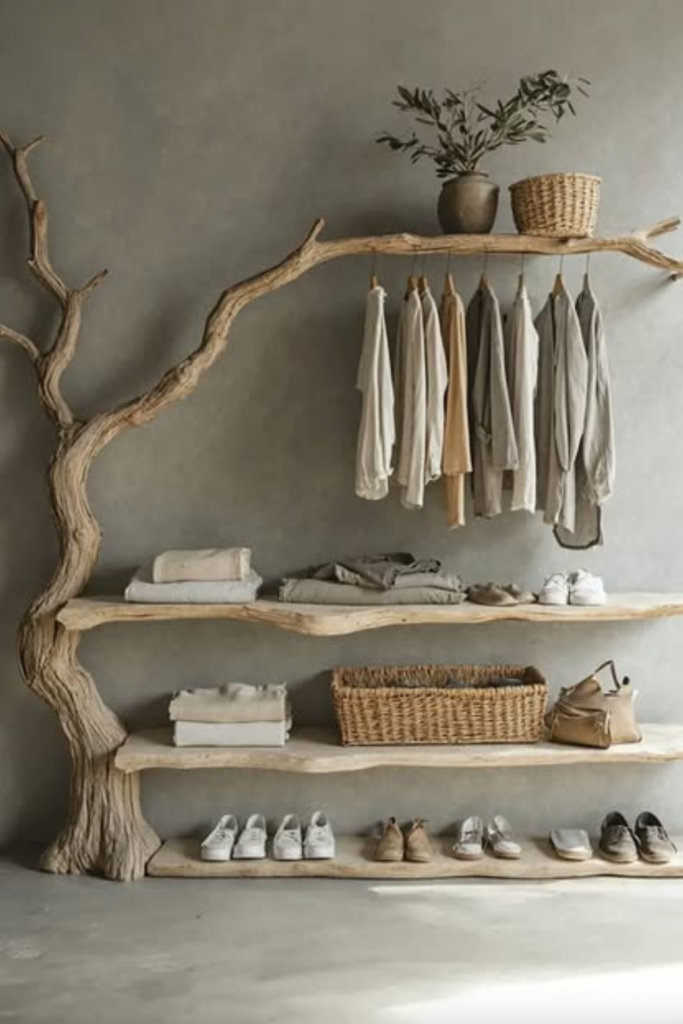
Wall Rail Hooks
Secure a strong wood rail to the wall studs and evenly space metal hooks to distribute the weight.
It doesn’t bend or come loose when handling coats and luggage, this arrangement is ideal for that.
Natural light is plenty, but a nearby wall or ceiling light prevents the wood grain from appearing flat.
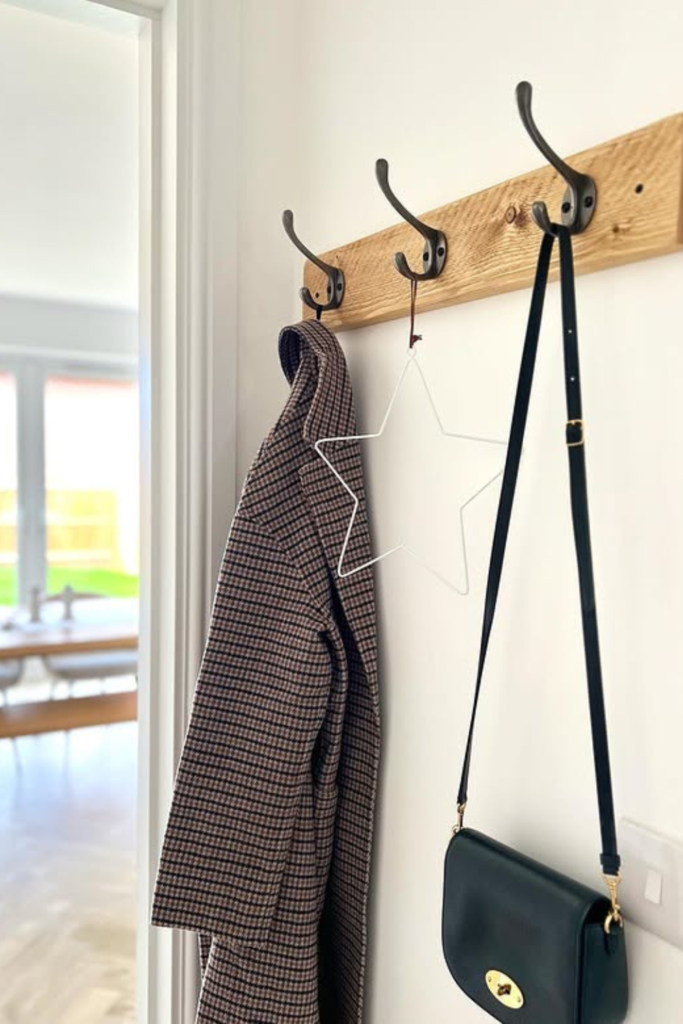
Shelf Hook Combo
Your entryway requires more than just hooks, works well in busy family households that addresses two issues at once.
Construct it by adding a shallow shelf for hats or everyday essentials on top of a strong wood rail with hooks.
Warm wood tones work well with overhead ambient lighting or gentle daylight to create an inviting, uncluttered area.
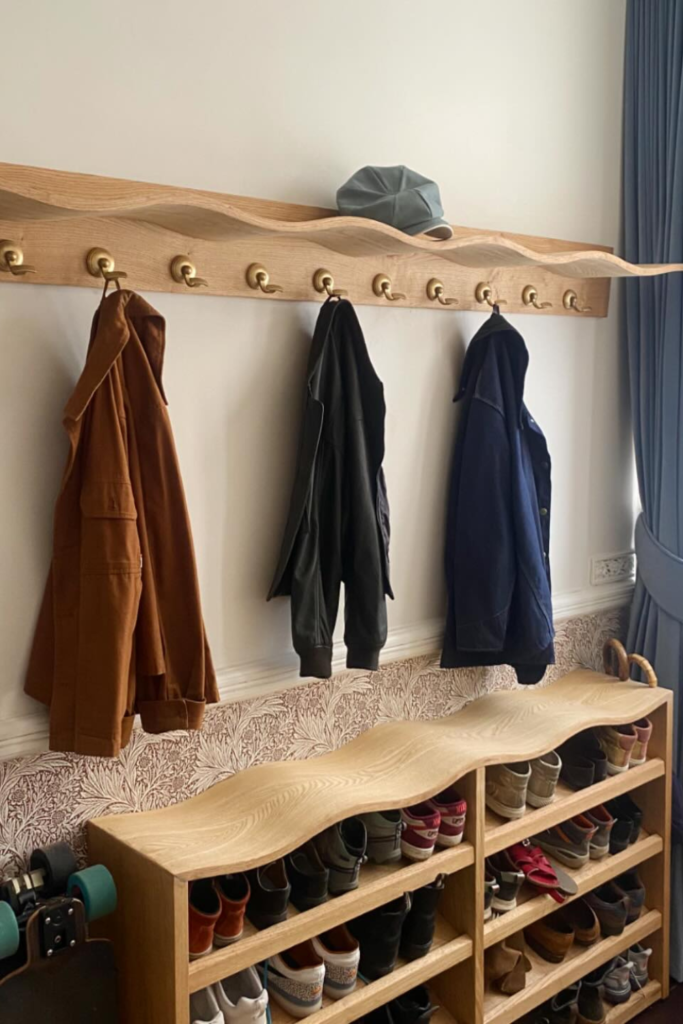
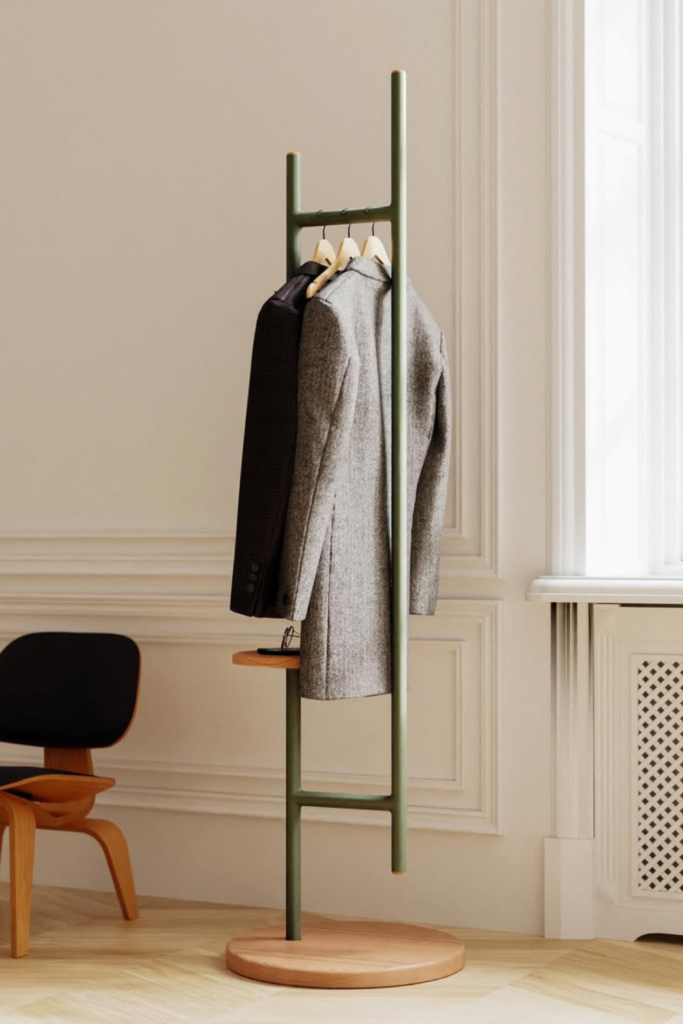
Weighted Ladder Stand
In living rooms or bedrooms where you want a coat rack to look like furniture, this style works well. prevent it from toppling.
Ladder-style frame mounted on a sturdy, spherical base, hang jackets from hangers rather than hooks.
The majority of the work is done by natural daylight, but at night, a nearby floor lamp provides warmth.
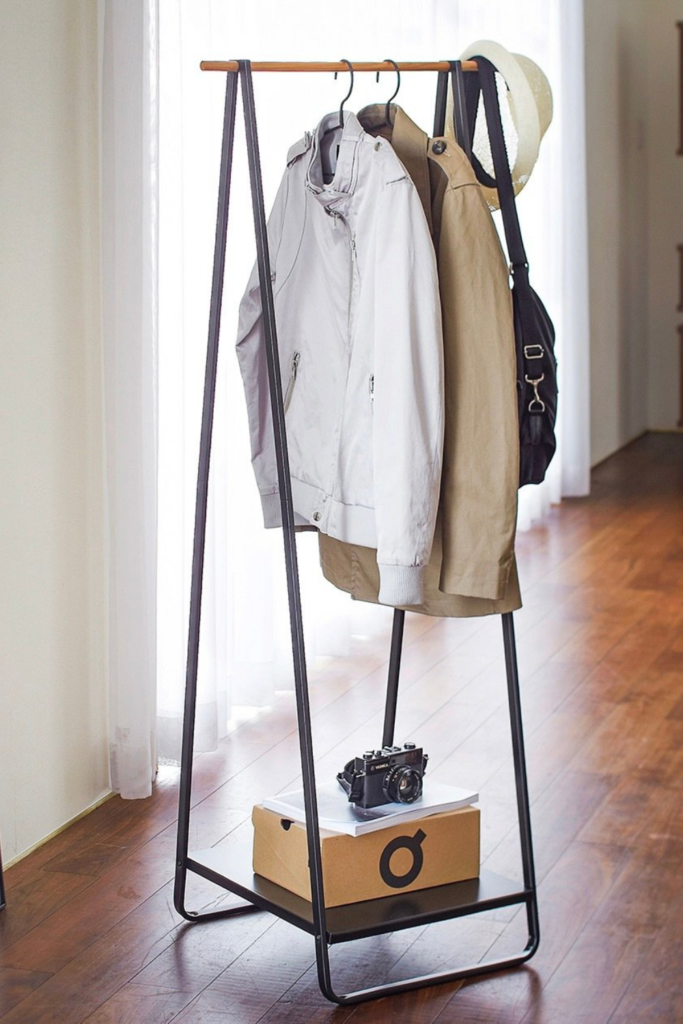
A-Frame Balance
In open spaces where the rack must stand alone without toppling over, this design works effectively.
Build an A-frame out of wood or metal and add a lower shelf to serve as built-in ballast to recreate it.
This is stable because the weight is kept at the bottom, open base prevents the setup from seeming heavy.
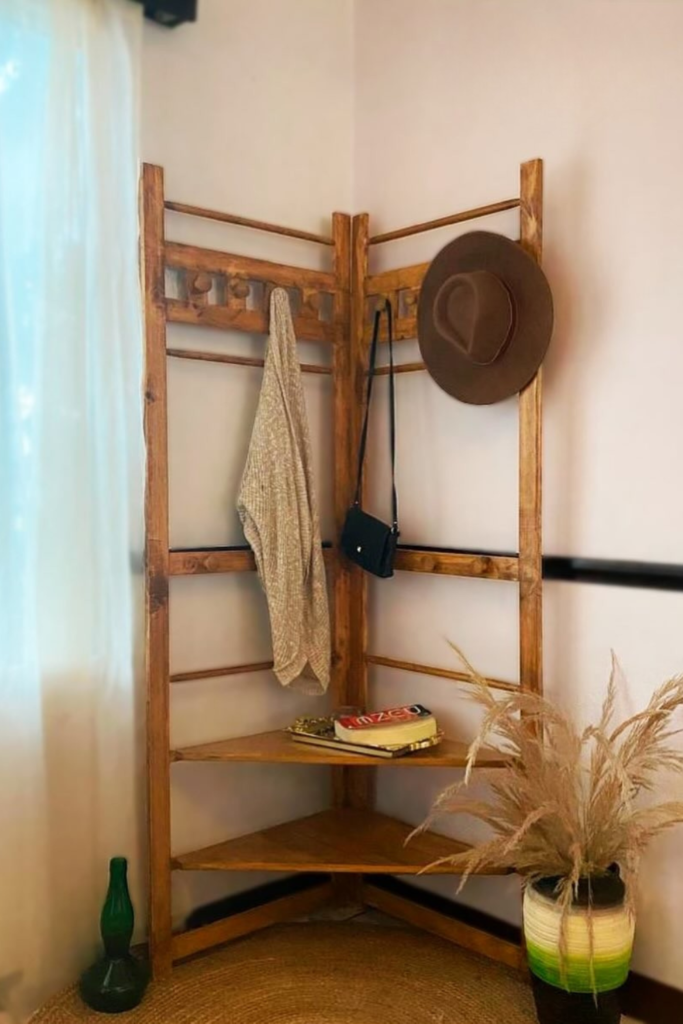
Corner Ladder Rack
This is most effective in unoccupied areas where a standard rack would be uncomfortable, lean two ladder-style frames.
Use shelves to secure them. Let the shelves add weight at the bottom, and use the upper rungs for light coats.
The rough wood feels purposeful rather than heavy, with soft window light and warm accent lighting.
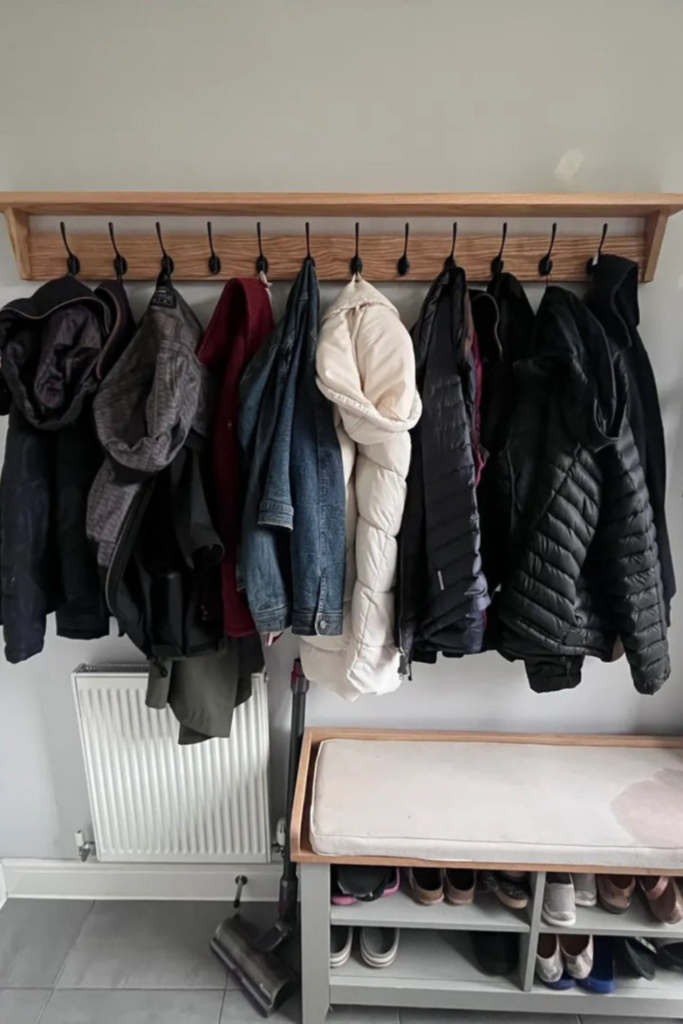
Heavy-Duty Rail
This works best for busy homes where the rack gets fully loaded every day. Build it using a thick wood board.
Fixed directly into wall studs, then space sturdy metal hooks evenly so the weight doesn’t concentrate in one spot.
Keep the rack slightly higher to clear furniture below. Overhead ambient light, prevents the area from feeling cramped.
Floating Peg Rail
You desire storage without visual noise, this concept is ideal, install a thin wooden rail with recessed hooks.
Concealed pegs so that coats hang neatly against the wall. It looks great in bedrooms, tiny apartments.
Keep heavy items far apart. The arrangement is kept serene and purposeful by soft daylight or a nearby wall bulb.

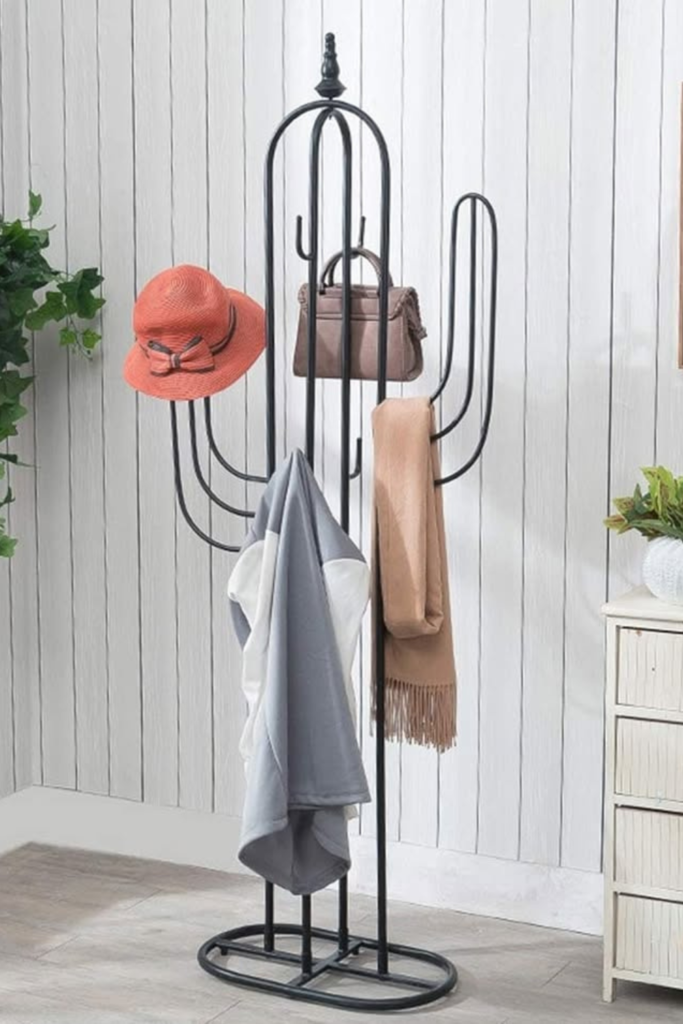
Sculptural Iron Stand
This is most effective when the coat rack serves as décor. To keep the weight low and steady, bent metal rods fastened into a heavy circular base.
Use the outer arms for scarfs, keep heavy coats in the inside hooks. Combined soft side and overhead, makes the shape shine.
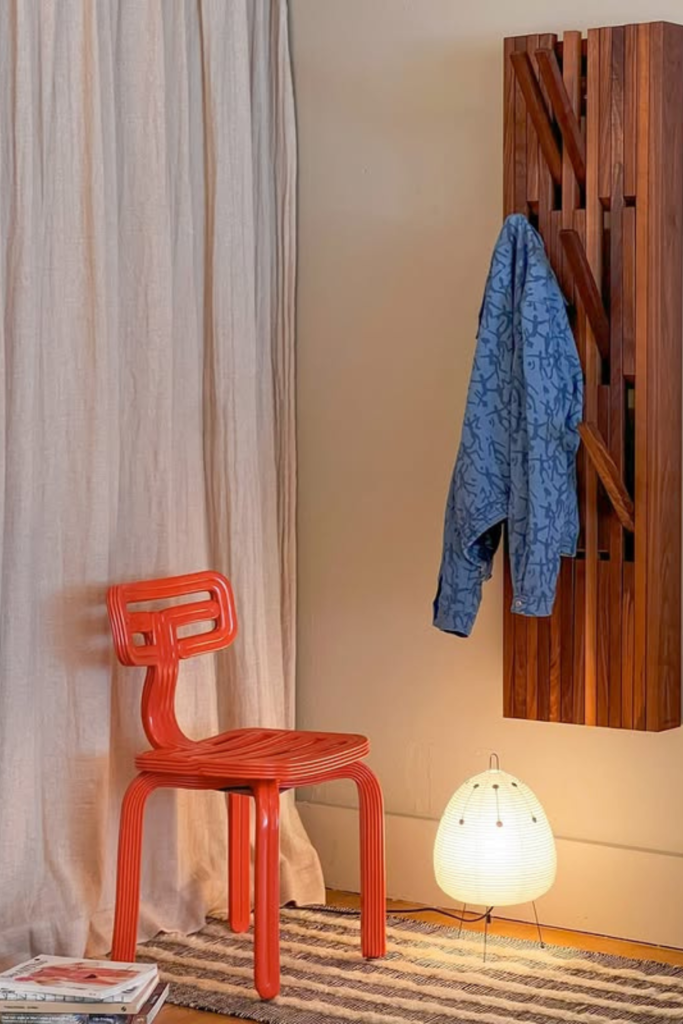
Fold-Out Panels
You desire storage that is visually invisible, strong wood panel with concealed fold-out pegs that remain flat when not in use.
It’s perfect for tiny flats or minimalist spaces where clutter quickly becomes apparent, use for light to medium coatings.
The wood texture can be highlighted without overpowering the room by placing a floor lamp or a subtle accent light nearby.
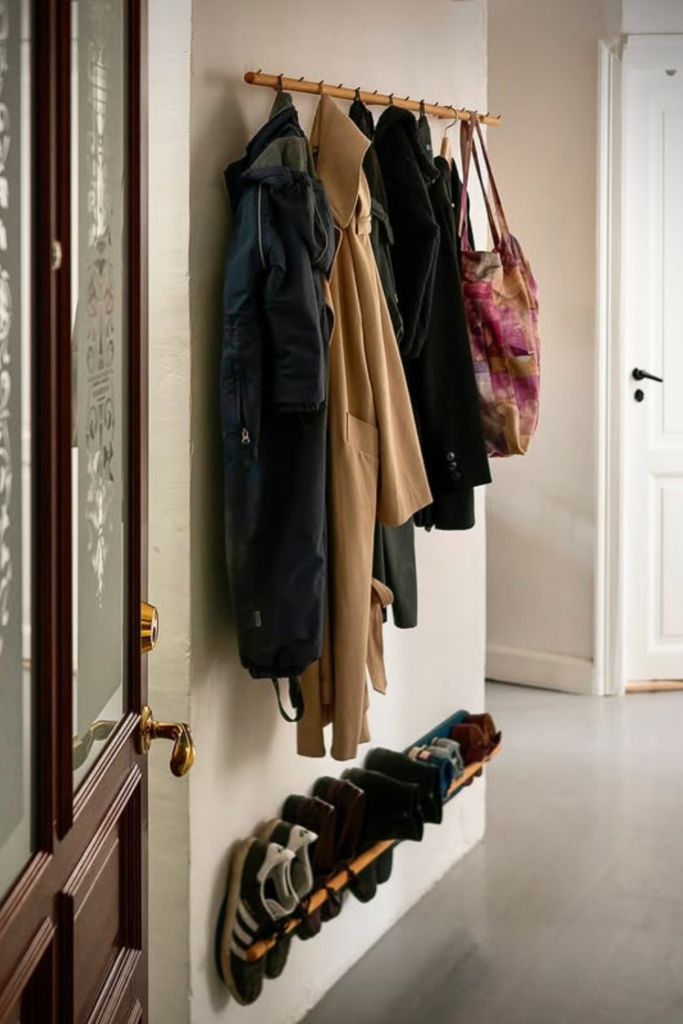
Peg Bar Lineup
Narrow halls with little floor area are ideal for this concept. Firmly install a basic wooden dowel or peg bar into studs, leaving adequate room between coats.
Pair it with a low shoe rail. Here, natural light from the corridor is plenty, but wall lighting also keeps the setup functional and user-friendly.
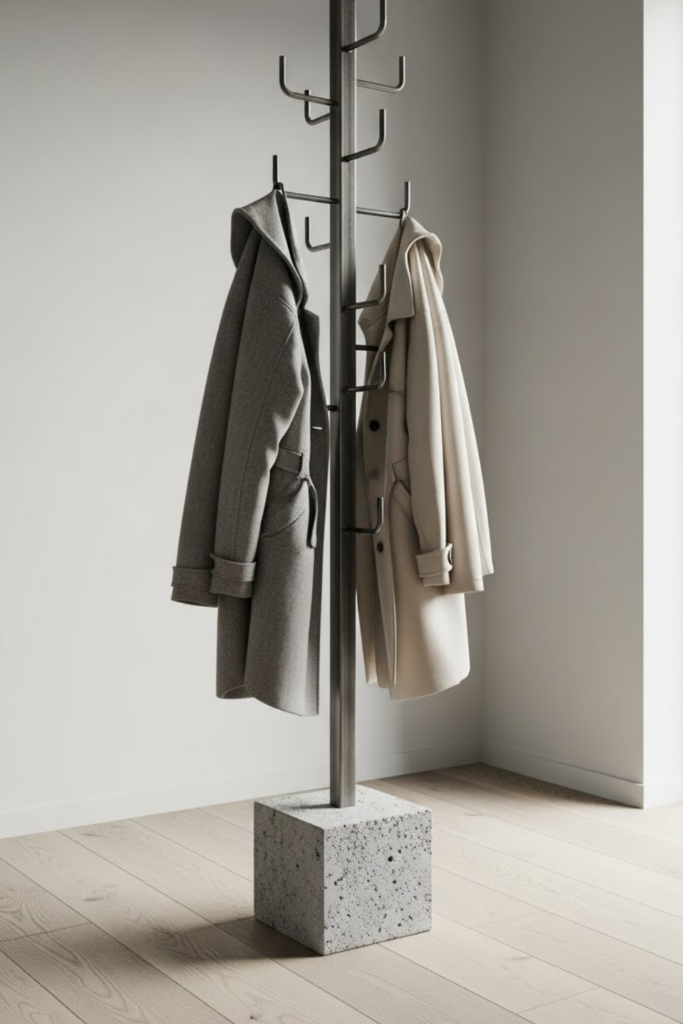
Concrete Base Pole
This concept addresses stability at its root when it is the primary issue, add significant weight at the bottom of a bucket.
Filled with concrete, insert a wooden or metal pole. When wall mounting isn’t an option, it functions best in entryways.
Near the top, keep hooks to a minimum. Ambient light from above counteracts the hefty, industrial appearance.
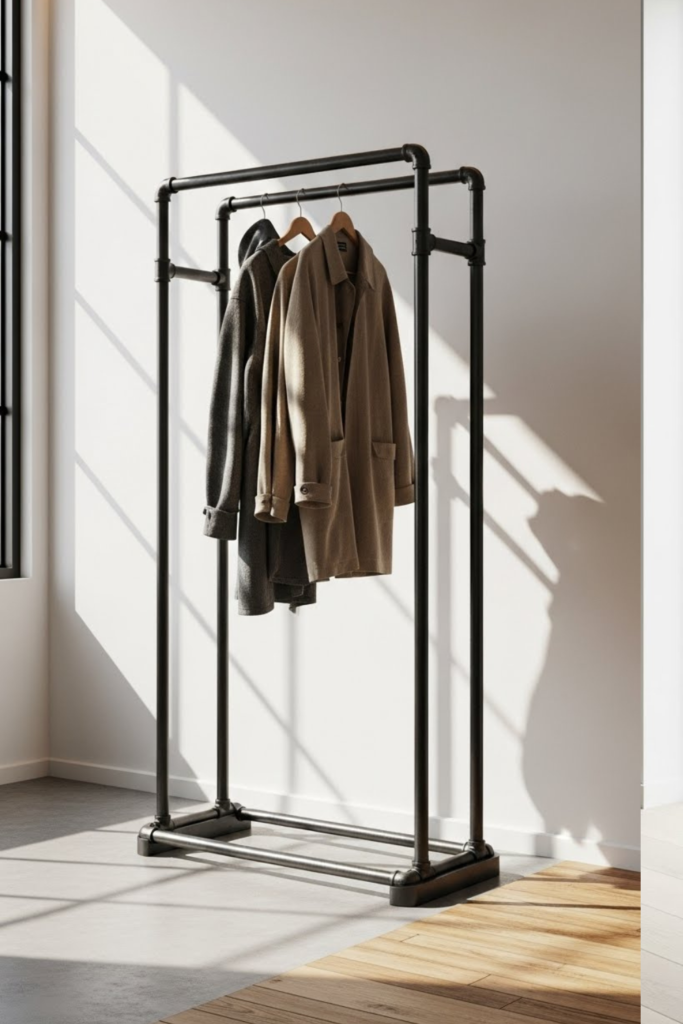
Pipe Floor Rack
This concept is effective when strength is more important. Using iron pipes, construct a rectangular base. Keep the weight low and wide.
Add a lower pipe shelf for shoes or purses. The industrial appearance is softened by natural light, and warm lighting provides coziness.
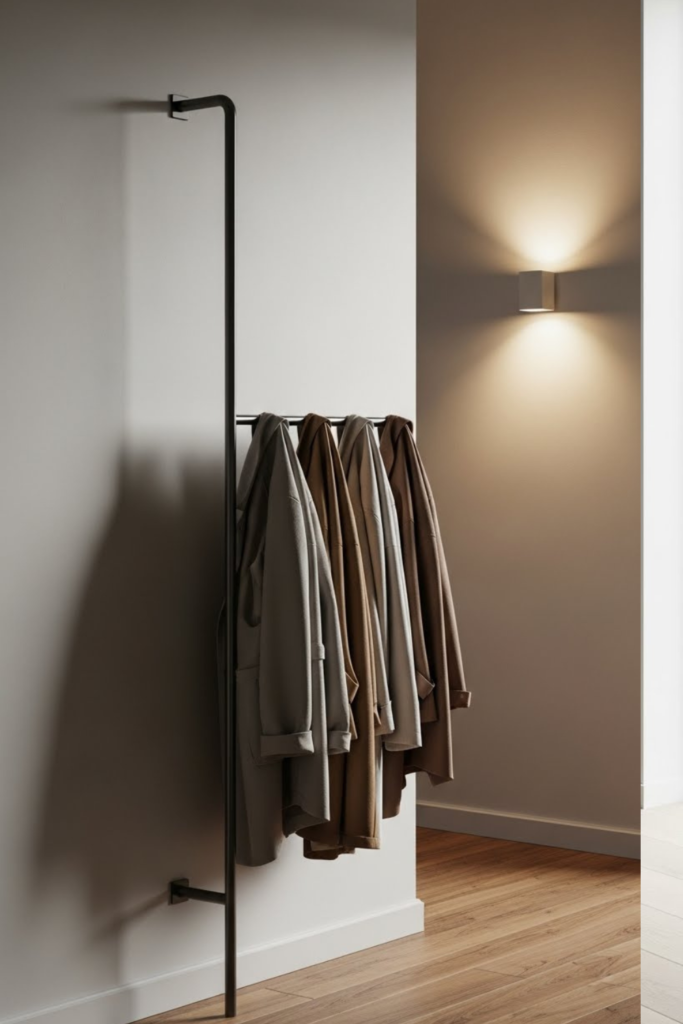
Wall-Braced Stand
Your freestanding rack sways but you don’t want full wall mounting, brace it halfway up. Add a small wall connector to stop side movement.
This works well in rentals with minimal drilling. Use light coats up top and heavier ones lower. Soft wall lighting keeps it discreet.
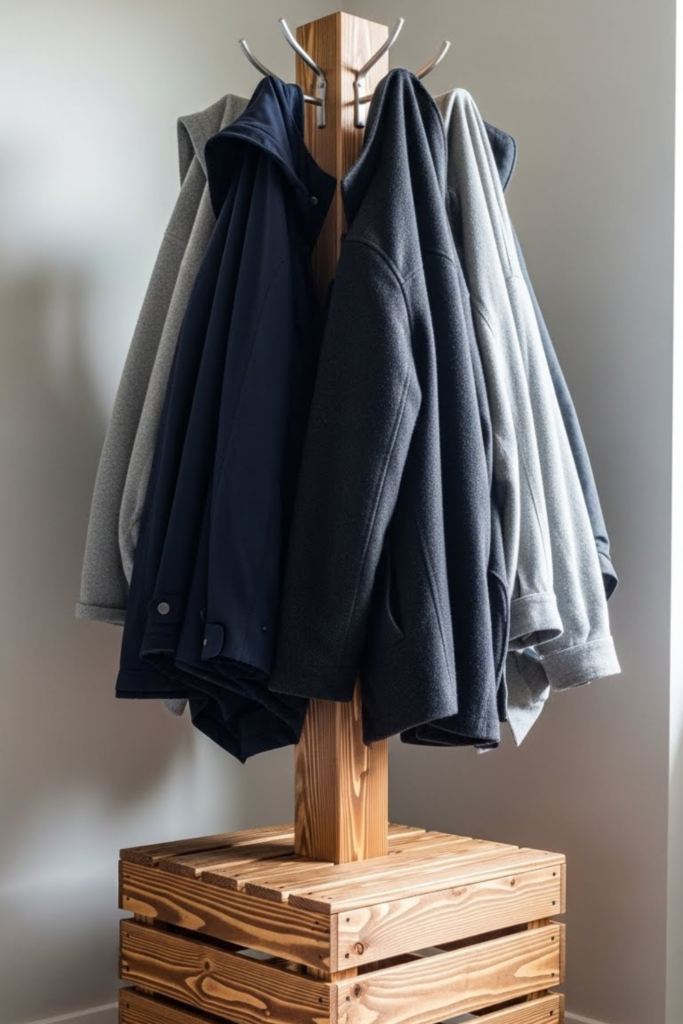
Crate Stack Rack
Stack stability and storage are lacking when both are lacking. A vertical post with hooks rising from the center.
It should be fixed after using wooden crates as a weighted base. Adding mass, the containers stop tipping.
This is most effective in mudrooms or informal entryways. The stacked appearance feels purposeful with natural sunshine.
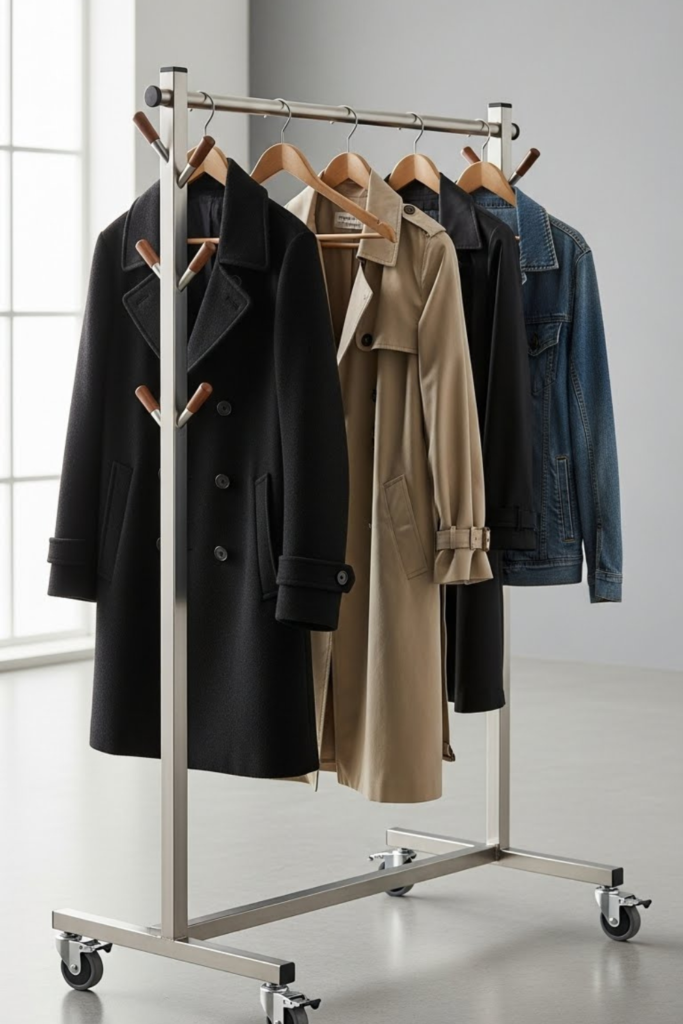
Rolling Coat Stand
This is effective when flexibility is important, but stability cannot be sacrificed. Ensure it remains in place when needed.
Construct a wide-base rack with locking casters. To avoid tipping, keep hooks low and evenly spaced.
Excellent for shared areas or studios. Because the rack moves, overhead ambient lighting is the most effective.
Ceiling Rod Drop
Eliminate the issue completely if floor space is a persistent source of tipping problems, ensure that weight pulls straight down.
Use a ceiling-mounted rod with hanging hooks, prevent congestion, maintain a wide gap. Coats are kept visible and accessible.

FAQs
What are some other uses for a coat rack?
There’s more to a coat rack than coats. To prevent closets from becoming overcrowded, use them to hang seasonal coats, hoodies, and jackets you wear every day.
It’s also a great way to arrange hats, scarves, and even clothing that you want to let air out rather than fold right away. A coat rack in the bedroom makes it convenient to grab.
Where is the best place to put a coat rack?
The best place for a coat rack is where you naturally reach for outerwear. Entryways and near front doors work best because coats go on and off there.
In small homes, placing a rack near a wall corner or beside a door keeps it out of the walking path. Bedrooms and mudrooms also work well if space near the door is limited.
You may like to read!
- 20 DIY Bicycle Rack Ideas
- 16 Goat Pen Ideas DIY
- 19 DIY Lamp Shade Ideas
- 20 DIY Solar Garden Lights Ideas

Fasial is the founder of the Fizzy Flare. He has been a passionate blogger since 2021. He ran three different websites in the past few years. Now he is focusing on Fizzy Flare to build an audience and help them organize their life.