21 DIY Cat House Ideas For 2026
This post may contain affiliate links: full affiliate disclosure.
Been there, done that. You collect boxes or a plastic bin, spend time building a cat house, and place it just so hoping your cat will use it. And then, your cat. Its just walks away, utterly uninterested.
No peeking, no investigating. Just a straightforward exit. That’s when you begin to wonder about the worth of those DIY cat shelters, or whether it’s even worth it.
The reality is, most cat houses fail for reasons that aren’t always obvious. In this article, I’m showing 21 amazing DIY Cat House ideas can try in 2026.
Contents
- 1 What Materials Do You Need for a DIY Cat House?
- 2 How to Make a Cat House Out of a Plastic Tote?
- 2.1 Cardboard Castle
- 2.2 Wooden Playground
- 2.3 Wall Cubes
- 2.4 Retro Cabinet
- 2.5 Box Stack
- 2.6 Tire Shelter
- 2.7 Painted Cubes
- 2.8 Tote Shelter
- 2.9 Playhouse Build
- 2.10 Grid Condo
- 2.11 Fabric Hideaway
- 2.12 Gingerbread House
- 2.13 Mini Villa
- 2.14 Ramp House
- 2.15 Suitcase Nook
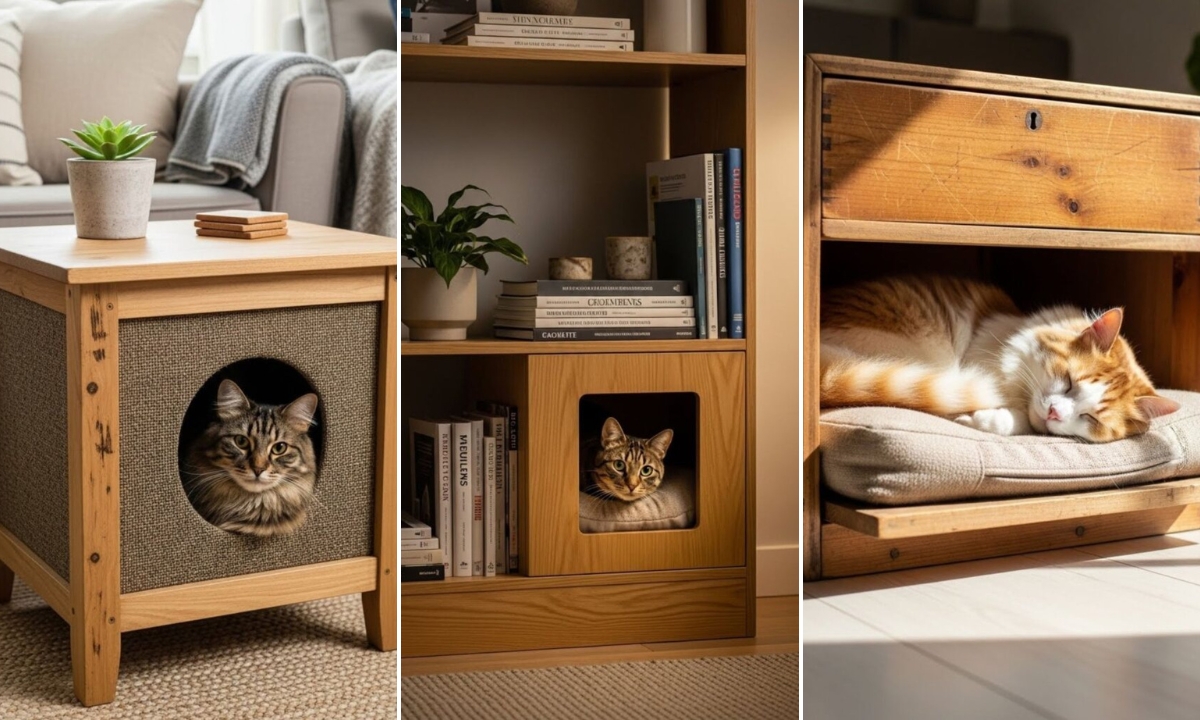
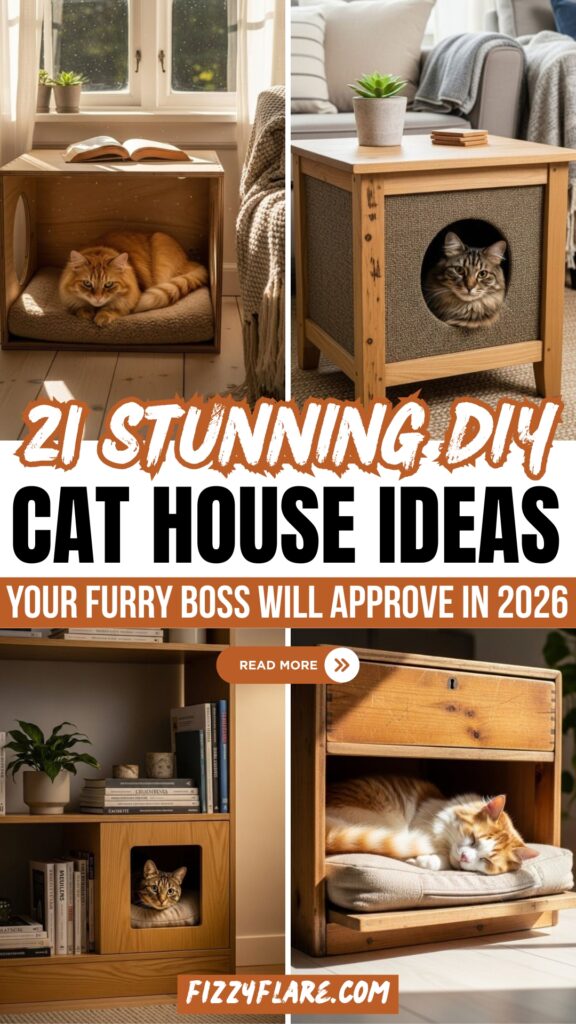
- 2.16 Bookshelf Den
- 2.17 Drawer Retreat
- 2.18 Window Lounge
- 2.19 Table Hideout
- 2.20 Laundry Cave
- 2.21 Closet Corner
- 3 FAQs
What Materials Do You Need for a DIY Cat House?
Choosing the right materials is the first step, and it’s more important than the design itself.
The wrong choices can lead to a house that doesn’t retain heat, falls apart, or is completely ignored by your cat.
For most DIY cat houses, you’ll need a solid foundation cardboard, a plastic tote, or wood will do along with insulation, waterproofing, and safe bedding.
Save this article for later! 👇👇
How to Make a Cat House Out of a Plastic Tote?
A plastic tote offers a simple solution for constructing a functional cat house. Begin with a clean tote, and then cut a small entryway on one side, avoiding the center.
Cats prefer smaller openings; they retain heat more effectively and provide a sense of security. Insulate the interior or then furnish it with straw and a thick mat for bedding.
Ensure everything remains dry and elevate the tote slightly above the ground.
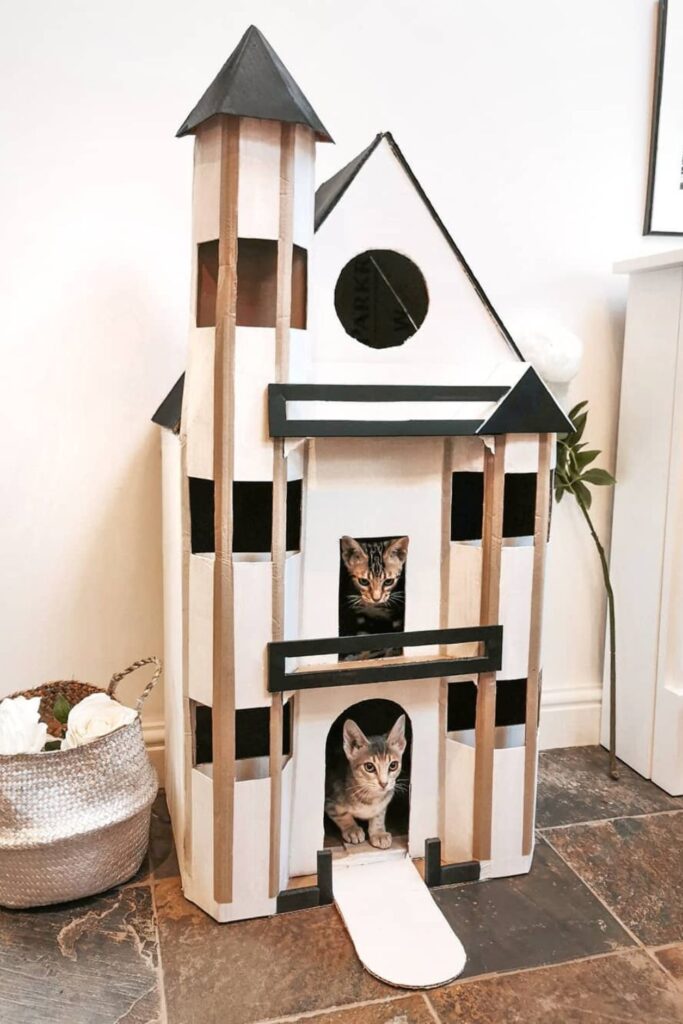
Cardboard Castle
Transform simple cardboard boxes into lively play and rest zone that captivates cats on multiple levels.
Begin by building sturdy towers from boxes or making sure each level has ample apertures. Then, link these levels together to the allow for straightforward vertical travel.
This arrangement is perfect for indoor spaces, especially for energetic cats that climbing, relish hiding and surveying their domain from above.
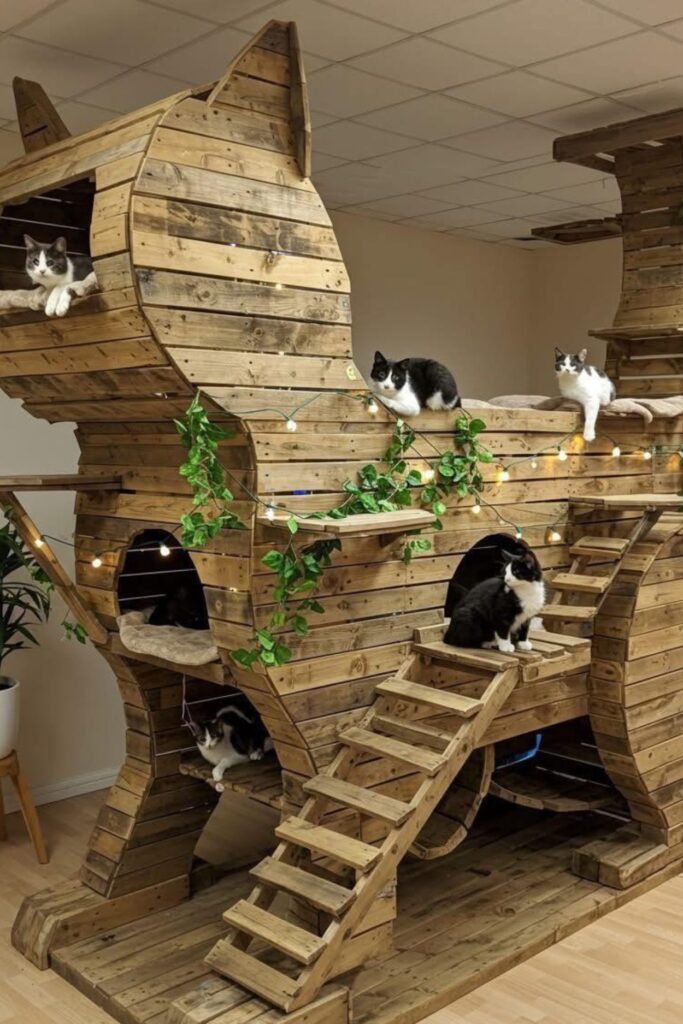
Wooden Playground
Serious climbers need more than a box on the floor. Pallet wood turns into a full cat zone with ramps, ledges.
And hideouts that keep multiple cats busy at once. Start with a sturdy foundation, then layer on the platforms gradually.
This design is perfect for indoor settings, offering cats a chance to play, and have their own area, think, while protecting your belongings.
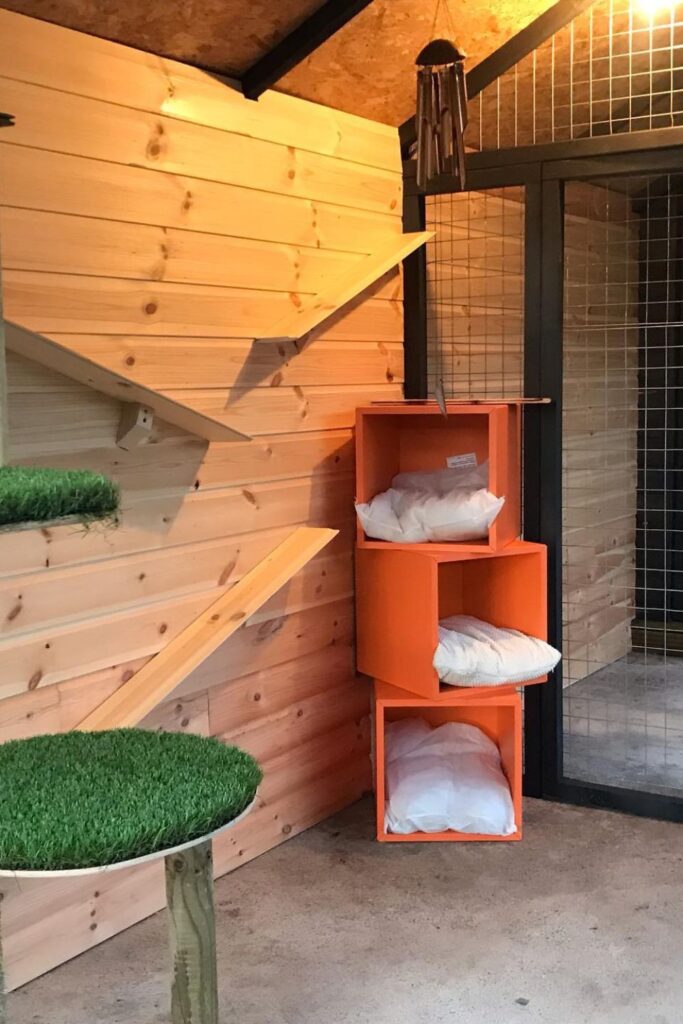
Wall Cubes
Vertical space offers a simple solution for a cluttered home. Think about arranging open wooden cubes vertically against a wall. This gives your secluded spots to sleep and cats sungs.
For easier upkeep, paint and seal the cubes, then furnish them with soft cushions.
This arrangement is ideal for indoor cat rooms or covered patios. Cats are drawn to vertical space, but they also sheltered place to relax and feel safe.
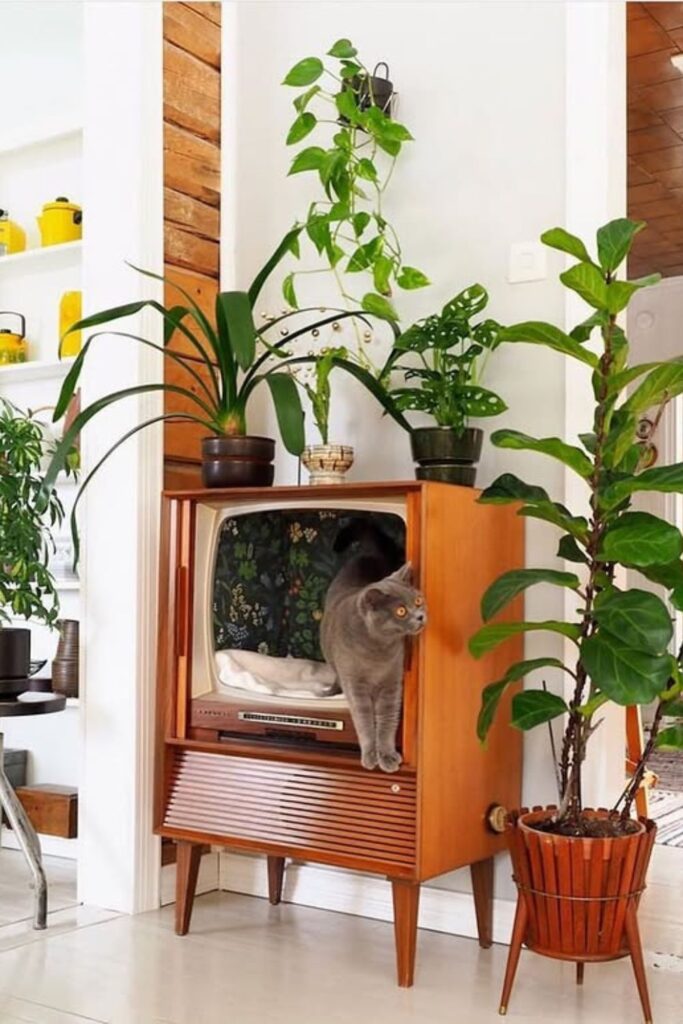
Retro Cabinet
Old furniture can solve the cat house problem without adding clutter. A vintage TV cabinet or side table already has the perfect enclosed shape cats love.
Take off the rear panel to improve airflow, and include a soft cushion. Ensure the front opening is spacious, making it simple for your cat to get inside.
This design is ideal for interior environments where aesthetics are important, and you prefer the cat house to complement your decor rather than draw attention.
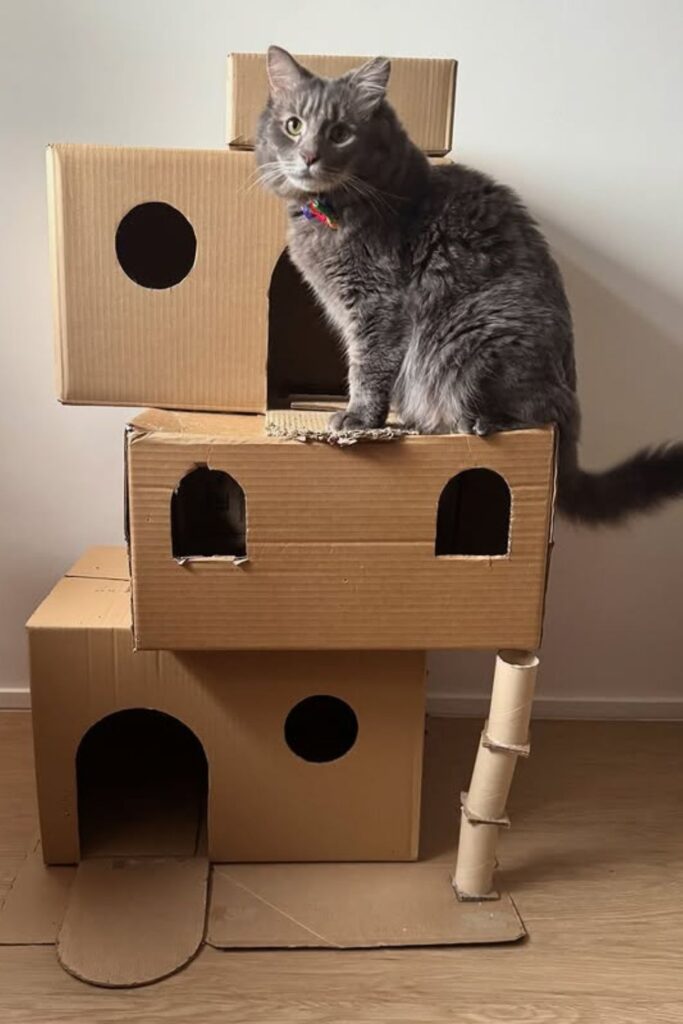
Box Stack
Stacked boxes solve boredom fast while keeping costs at zero. Use thick cardboard, stagger the boxes for balance, or cut different-sized openings.
Cats may roam freely, avoiding that trapped sensation. And a simple ramp or scratching post and can also make climbing a breeze.
Best for interior environments and where energetic cats adore or exploring levels but yet seek warm hideouts for the brief naps.
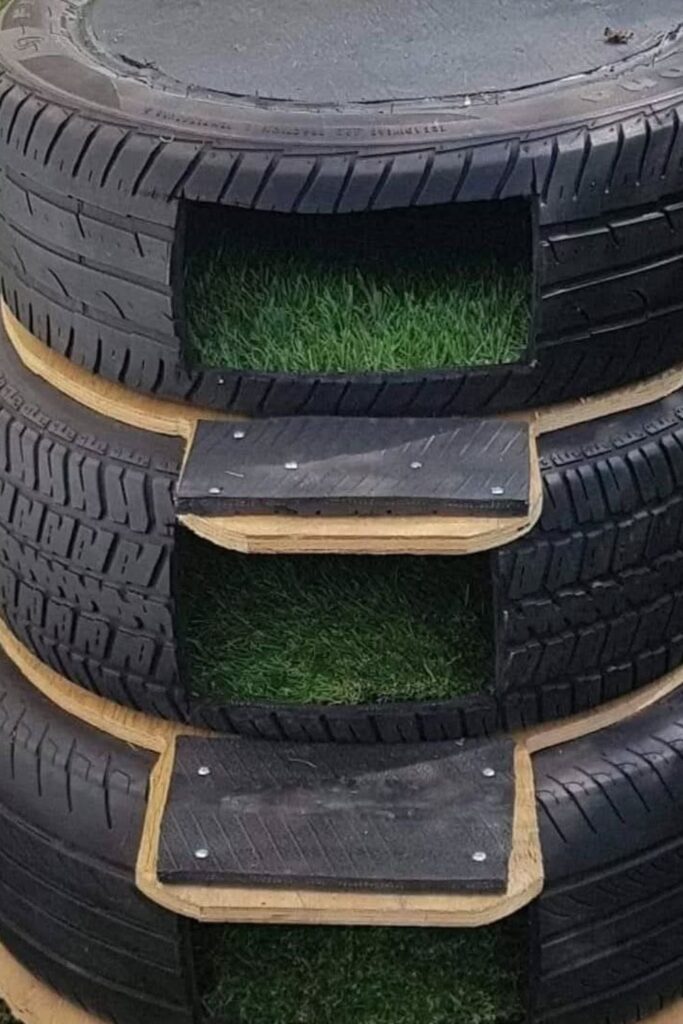
Tire Shelter
Old car tires handle rain, cold, and rough weather better than most DIY materials. Stack cleaned tires, cut a wide front opening.
Bolt wooden steps in place, allowing cats to navigate between different levels. Insulate the inside with straw or outdoor turf to keep it dry.
This arrangement is ideal for outdoor use, and providing the robust, warm or low-maintenance shelter for wild.
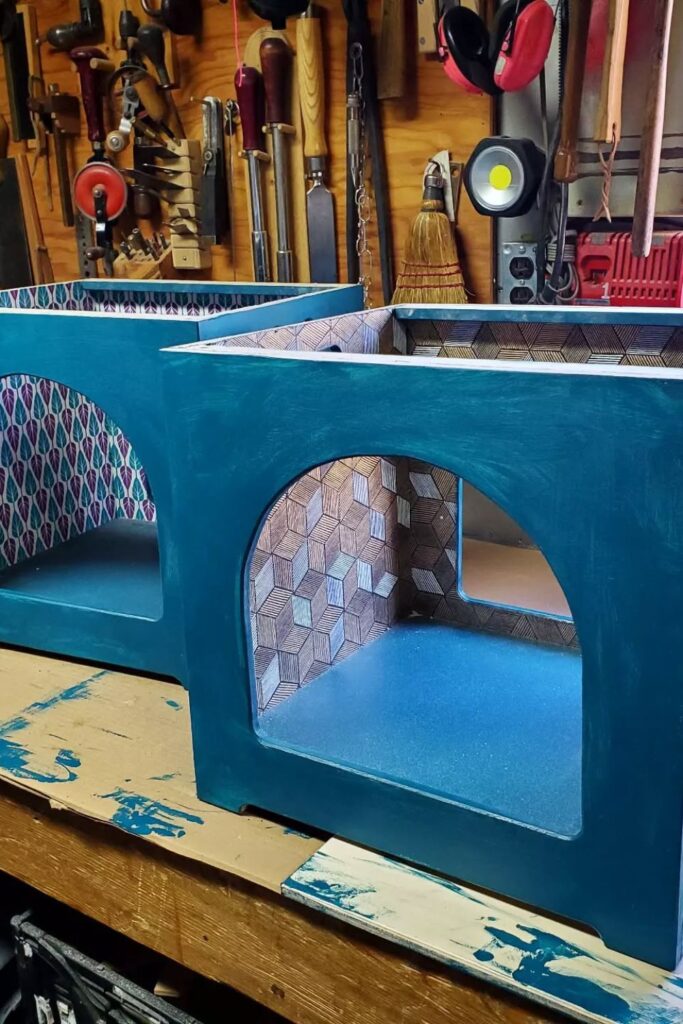
Painted Cubes
Bold Color transforms a basic plywood construction into furniture that feels right at home. Square openings and provide cats with easy access, while still maintaining a sense of enclosure.
Plywood or MDF are both solid options, especially if you carefully sand the edges. Seal or paint inside to simplify neat and cleaning, then incorporate removable pillows.
This design is ideal for indoor cats in any home. where aesthetics are just as important as comfort.
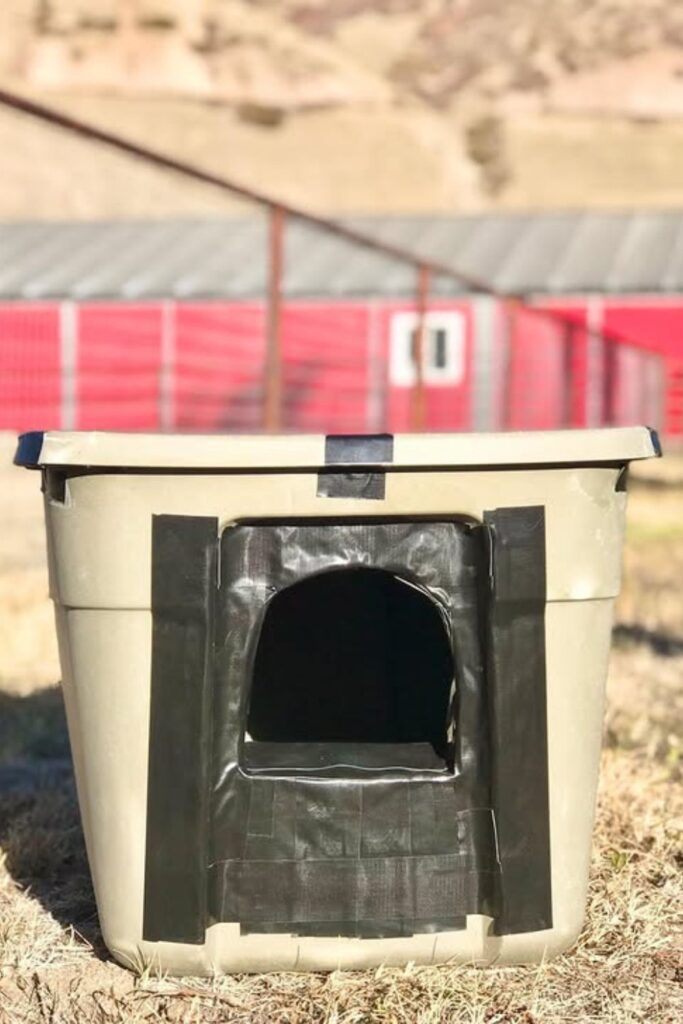
Tote Shelter
Cold nights demand a straightforward solution that retains heat. Plastic storage bins outperform cardboard in this regard, plus they won’t buckle under the weight of rain.
Create a small opening on the side, tape the edges to seal them, and then insulate the interior before filling it with straw.
Elevating the tote prevents moisture from seeping in. It’s an ideal shelter for outdoor or feral cats, providing protection without unnecessary complexity.
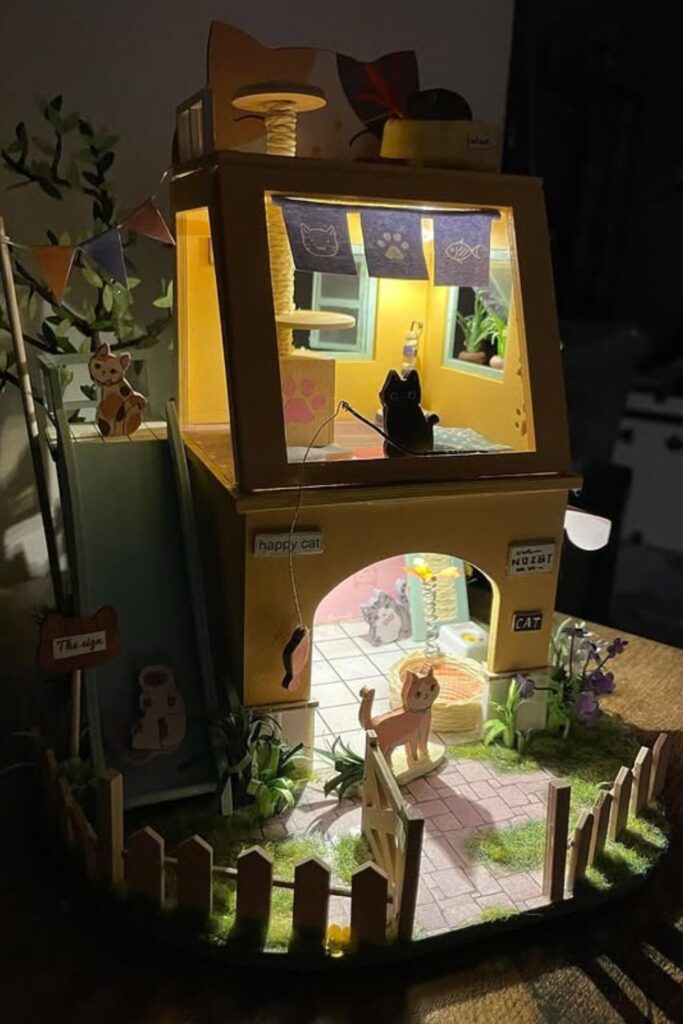
Playhouse Build
Imagination transforms cardboard into a source of delight for both felines and their human companions.
These dollhouse-style constructions are well suited for indoor play and where the aesthetics take precedence the whims of the weather are irrelevant.
Employ sturdy cardboard or foam board, and pay careful attention to the design of the entryways. and broad. Keep the lighting soft, it okay if it’s not always on.
Grid Condo
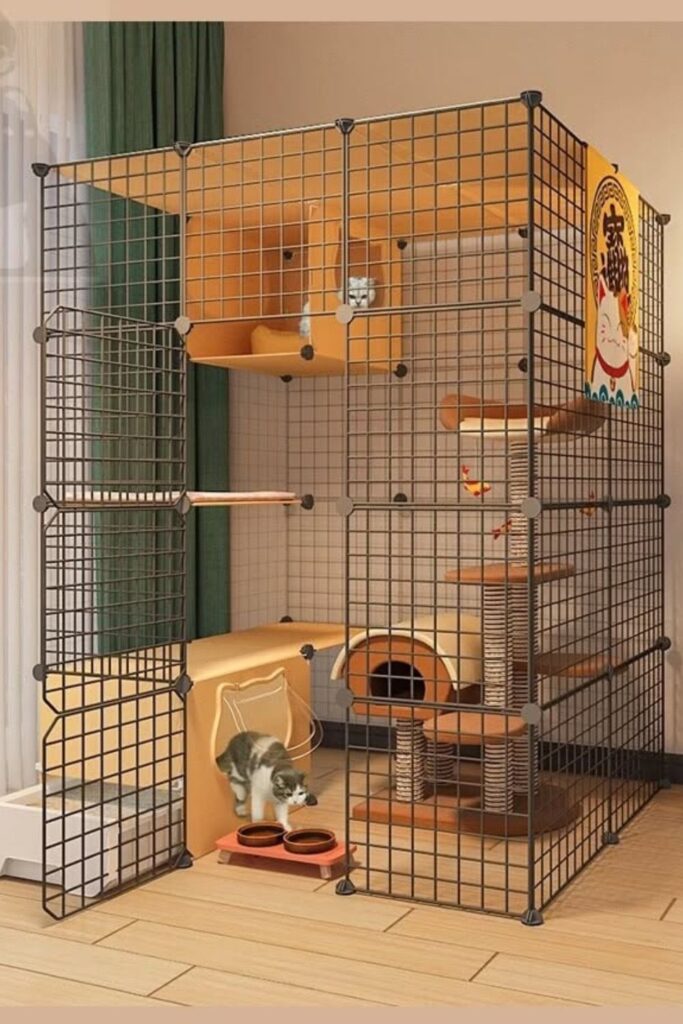
Limited floor space doesn’t mean boring cat housing. Wire storage panels snap together into a tall, flexible structure that fits corners and small rooms.
Incorporate wooden shelves, a snug box, and scratch posts at the spots where your cats want to linger. This arrangement is ideal for houses with several indoor cats.
It evolves with your feline family, allowing you to modify the setup as needed, rather of starting over again.
Fabric Hideaway
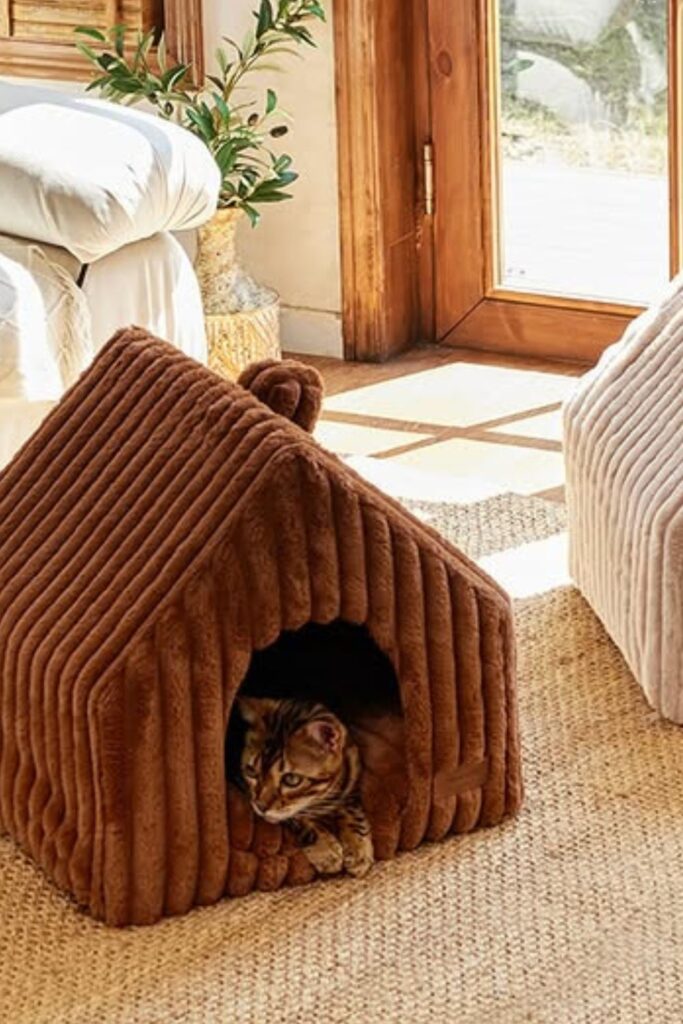
Soft walls provide the soothing environment for cats that feel uncomfortable on hard surface. And a Fabric-covered foam houses are good choice for indoor use.
To create a snug cat house, start by shaping foam and thick padding into a simple structure. Next, wrap the frame in a fabric that’s easy to maintain.
Make the entrance small and close to the ground, providing a sense of security for your feline friend, particularly in bedrooms or living spaces where they like to sleep.
Gingerbread House
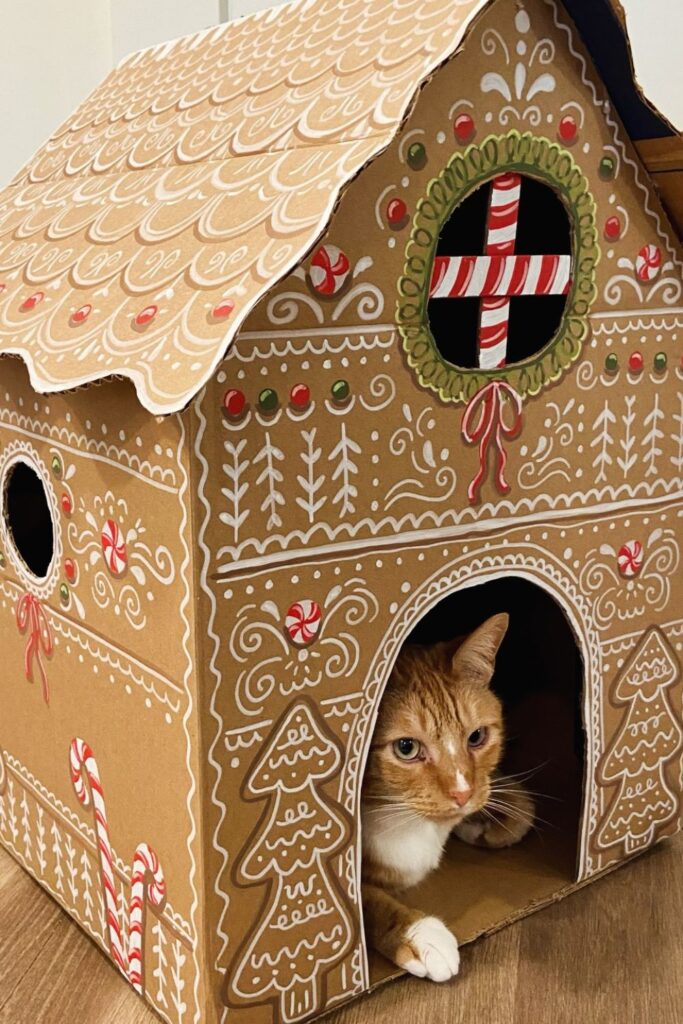
Holiday cardboard doesn’t have to end up in the trash. Painted boxes turn into a cozy seasonal hideout and feels fun without losing function.
Sturdy cardboard provides the necessary support, and the cut-out windows allow for heat escape. Ideally, this construction is suited for interior use when temperatures drop.
It’s a good choice if you’re after a temporary, seasonal decoration that’s simple to dismantle when the holidays are over.
Mini Villa
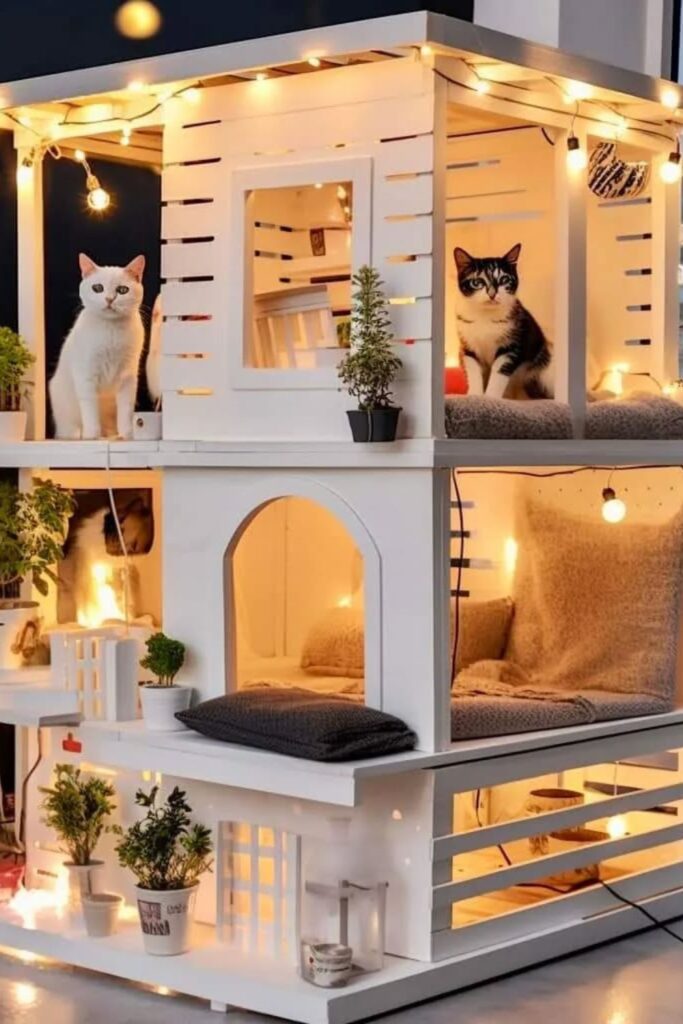
Luxury doesn’t have to mean complicated. Stacked wooden crates create separate rooms cats naturally claim as their own.
Open sides allow for a constant breeze, and the plush cushions transform each tier into a cozy resting spot.
This design is ideal for sheltered balconies or indoor nooks where cats appreciate a vantage point, a sense of security, and some peace and quiet.
Ramp House
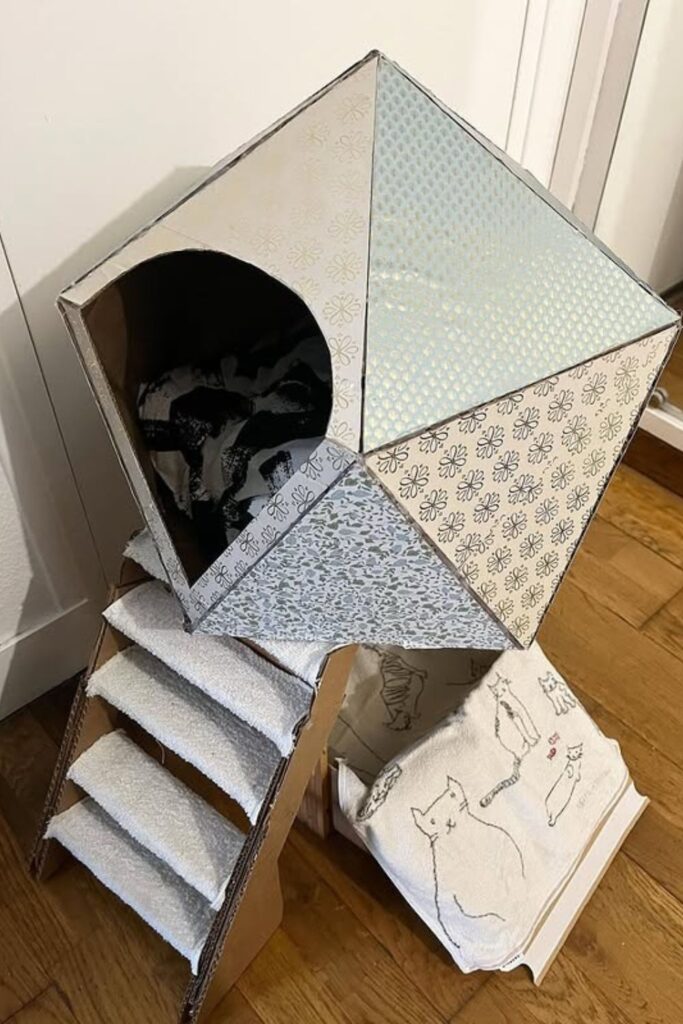
Climbing adds confidence fast. Angled cardboard walls paired with a soft ramp give shy cats an easy way up without jumping.
Employ sturdy cardboard, and secure the joints with adhesive. Then, wrap the ramp with fabric to provide traction.
This particular design is ideal for compact living spaces, such those found in small apartments. It caters to a cat’s natural desire for elevation, seclusion, and a peaceful spot to escape.
Suitcase Nook
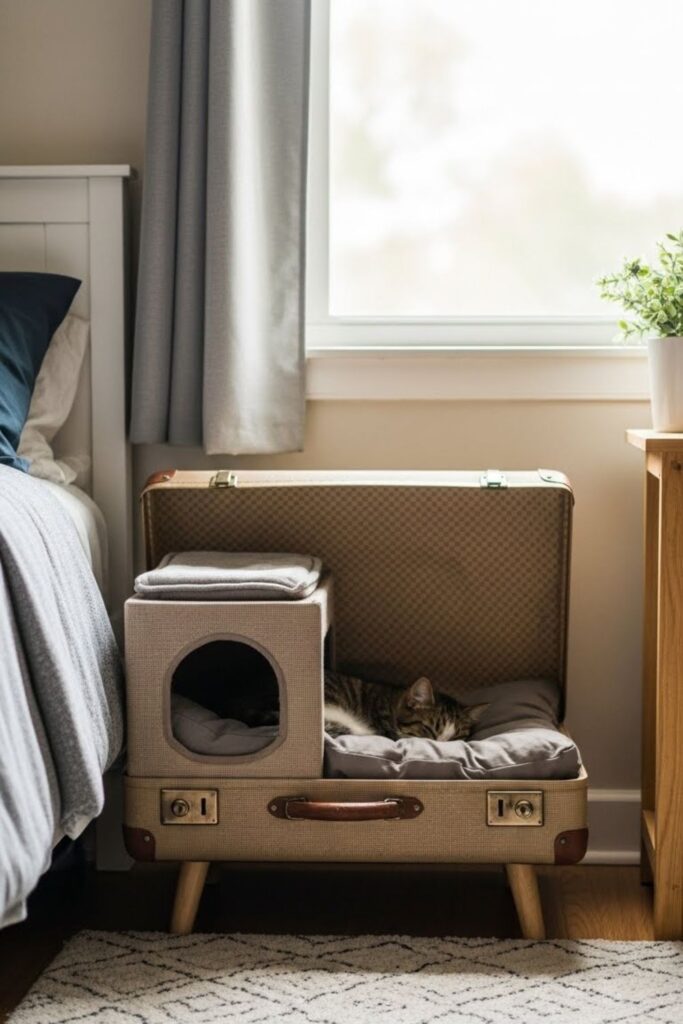
Forgotten suitcases already have the cozy, enclosed shape cats love. Lay one on its side, remove any sharp hardware, and add a cushion inside.
Hard-shell models are the way to go they and maintain their shape and keep out drafts. This arrangement is ideal for the bedrooms and those peaceful spots where cats love to snooze.
Raising the suitcase and a bit off the ground makes cats feel more secure and keeps things tidy, all without altering the overall look.
Bookshelf Den
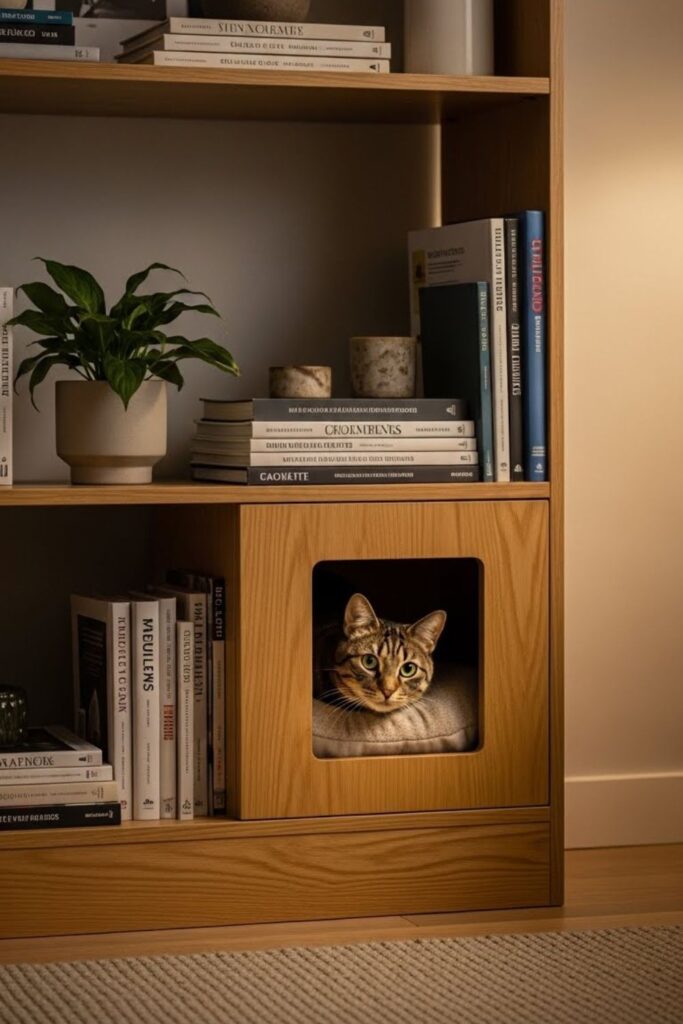
Empty shelves can do more than hold books. Sliding a box or wood frame into a lower bookshelf slot creates a hidden cat house that blends in.
Keep the front of the space open, but make sure the sides are snug, and then add some cozy bedding.
This approach is particularly effective in interior environments when space is at a premium and keeping things tidy is a priority.
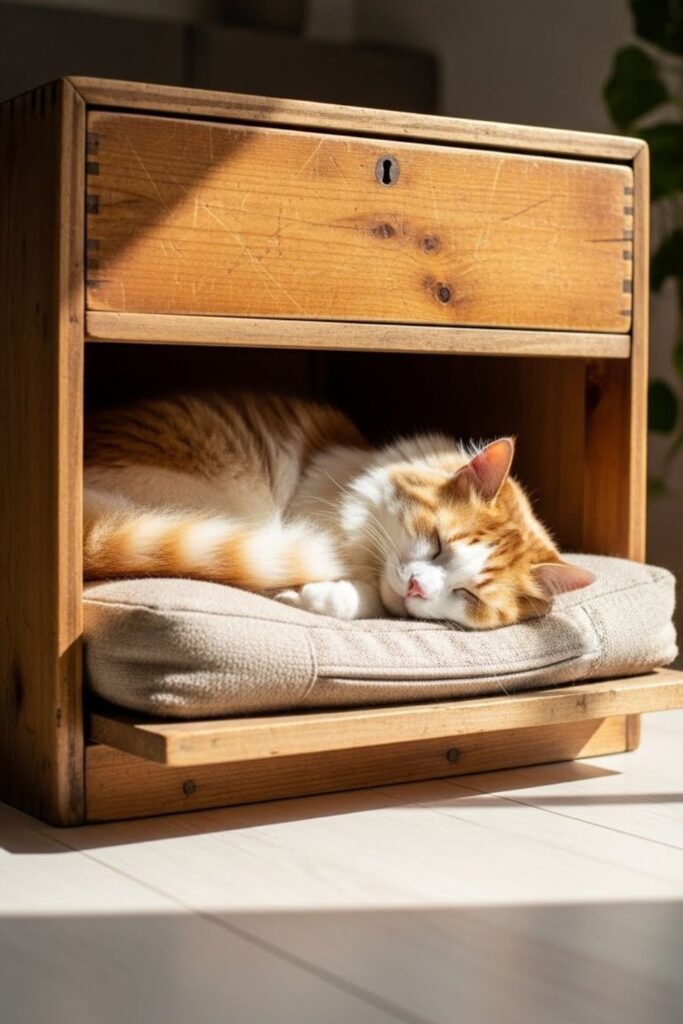
Drawer Retreat
Old dresser drawers solve two problems at once storage waste and cat comfort. Remove the drawer, flip it on its side, and secure the base so it doesn’t slide.
Add a cushion, and keep the opening generous, though low. This method is particularly effective in bedrooms and the living areas, where drawers naturally match the furniture’s height.
Stacking two drawers creates levels, and avoiding an area that feels overly tall or exposed.
Window Lounge
Sunlight works wonders for a cat. A basic wooden or cardboard box, strategically placed under a window, provides a kitty with a perfect combination: warmth, a vantage point, and a cozy hideaway.
For proper airflow, leave the back of the enclosure open. And create apertures on the sides to provide your cat easy access.
This setup works especially well indoors, and creating a perfect perch for cats to observe the outside world.
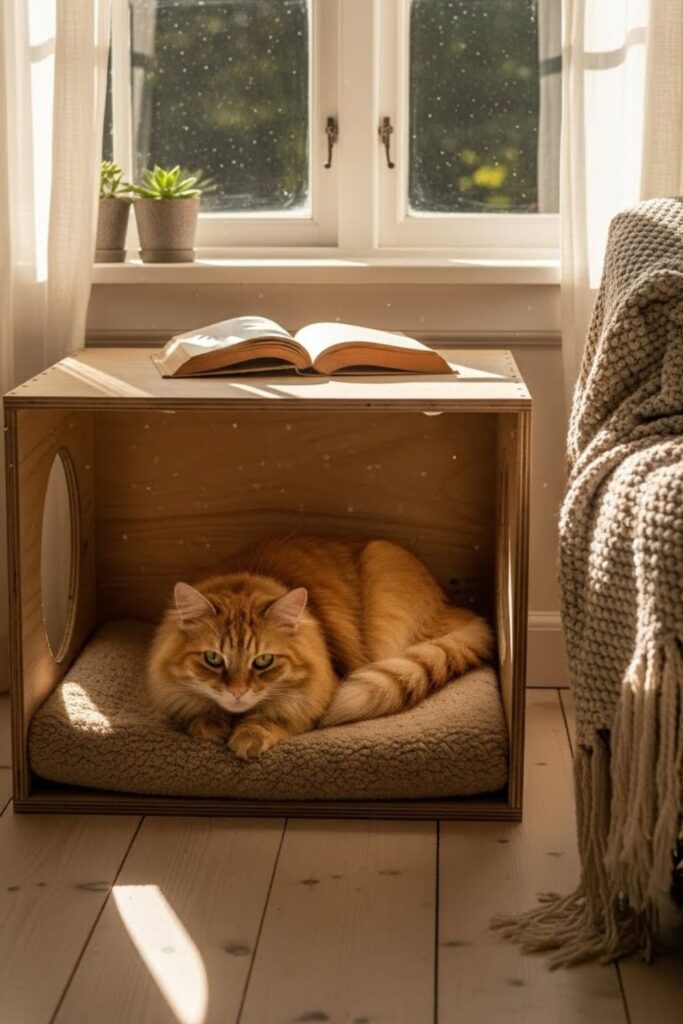
Table Hideout
Unused side tables can turn into secret cat houses with one simple change. Add fabric panels or wood boards around three sides, leaving one open for entry.
The tabletop transforms into the vantage point, leaving the area beneath shrouded in shadow and stillness.
This concept works particularly well in living rooms, as it cleverly conceals the cat home, even although it’s right there.

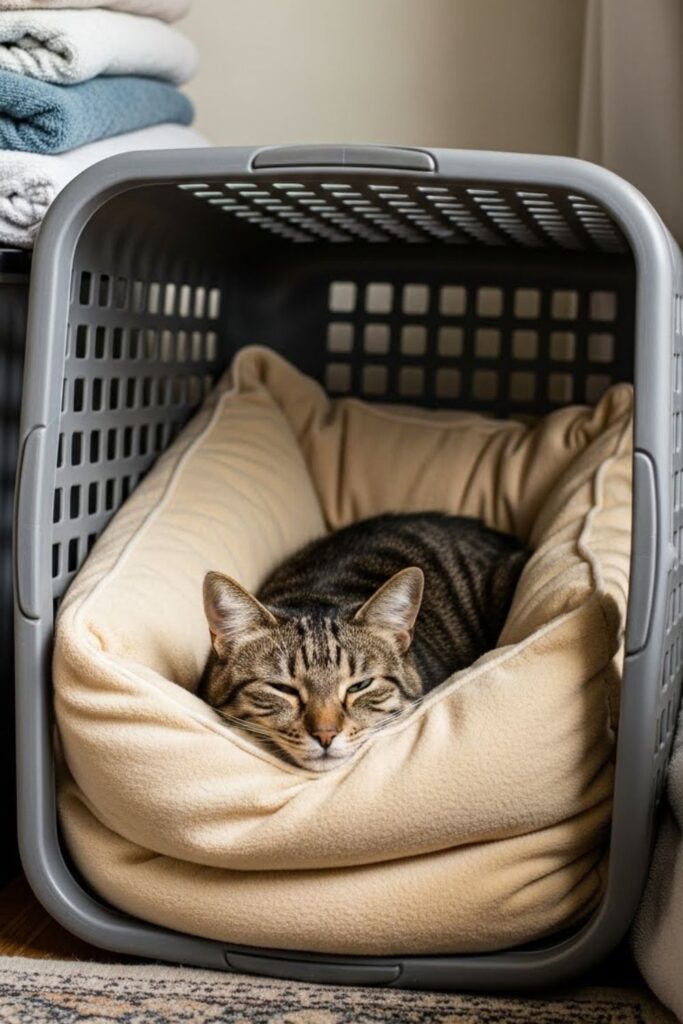
Laundry Cave
Laundry baskets already smell familiar, which helps cats settle faster. Flip a sturdy basket on its side, secure it so it won’t roll, and line the inside with thick fabric.
Plastic alternatives outperform wire when it comes to keeping things warm and safe. This particular arrangement is ideal for bedrooms or laundry rooms, spaces.
Where cats frequently shadow their humans. The utilization of familiar fragrances helps to alleviate stress, making this one of the simplest constructions that cats genuinely appreciate.
Closet Corner
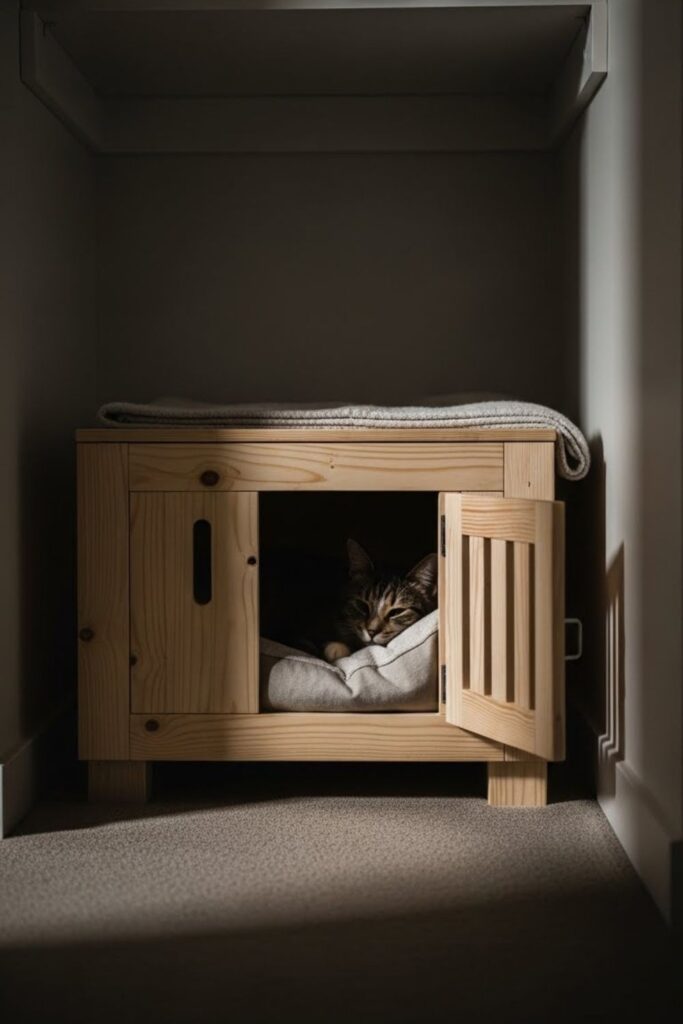
Closets often have unused space, and cats, as anyone with a feline knows, love quiet, enclosed places. A basic cat house, designed to fit on a closet floor, could be the solution.
Start with a wooden crate or a solid box. Elevating it a bit allows for better airflow and makes it easier to clean.
Maybe a bit older. those who prefer to avoid the noise and activity of a busy room, and who value a calm, low-traffic environment.
FAQs
Can a DIY cat house really work better than a store-bought one?
Exactly. You get to decide everything: the dimensions, the insulation, and where it goes. Many of the commercial cat shelters available simply fall short.
Creating your own and gives you the freedom to design a cozy environment, including textures your cat enjoys, and position it in a spot where your feline companion already feels at ease.
How do I know if my DIY cat house is the right size for my cat?
If your cat can spin around without a problem, and there’s no excess room, you’re on the right track.
Cats find comfort in snug quarters; the heat is retained, and any threats are kept at bay. What seems cramped to us often seems just right to a feline.
You may like to read!

Fasial is the founder of the Fizzy Flare. He has been a passionate blogger since 2021. He ran three different websites in the past few years. Now he is focusing on Fizzy Flare to build an audience and help them organize their life.