21 DIY Cat Bed Ideas For 2026
This post may contain affiliate links: full affiliate disclosure.
You purchase a cat bed. Your cat, however, pays it no mind. Instead, they find solace in a cardboard box, on your favorite hoodie, or, of course, right on your laptop. Sound about right?
It’s not that your cat is finicky or unappreciative. The problem is that most cat beds simply don’t align with how cats prefer to sleep.
If you’ve ever thrown money at a bed or attempted those DIY projects that seemed promising but ultimately failed, you’re in good company.
In this article, you’ll find 21 trendy DIY Cat Bed Ideas that work perfectly for 2026.
Contents
- 1 How to Make a Comfortable DIY Cat Bed at Home?
- 2 What Can I Use Instead of a Cat Bed?
- 2.1 Felted Cave
- 2.2 Basket Nook
- 2.3 Blanket Bolster
- 2.4 Knit Nest
- 2.5 Mini Bed
- 2.6 Cone Cave
- 2.7 Plush Dome
- 2.8 Bubble Lounger
- 2.9 Cushion Perch
- 2.10 Soft Shelter
- 2.11 Hooded Donut
- 2.12 Window Wave
- 2.13 Hidden Ring
- 2.14 Hammock Loft
- 2.15 Cube Cave
- 2.16 Drawer Den
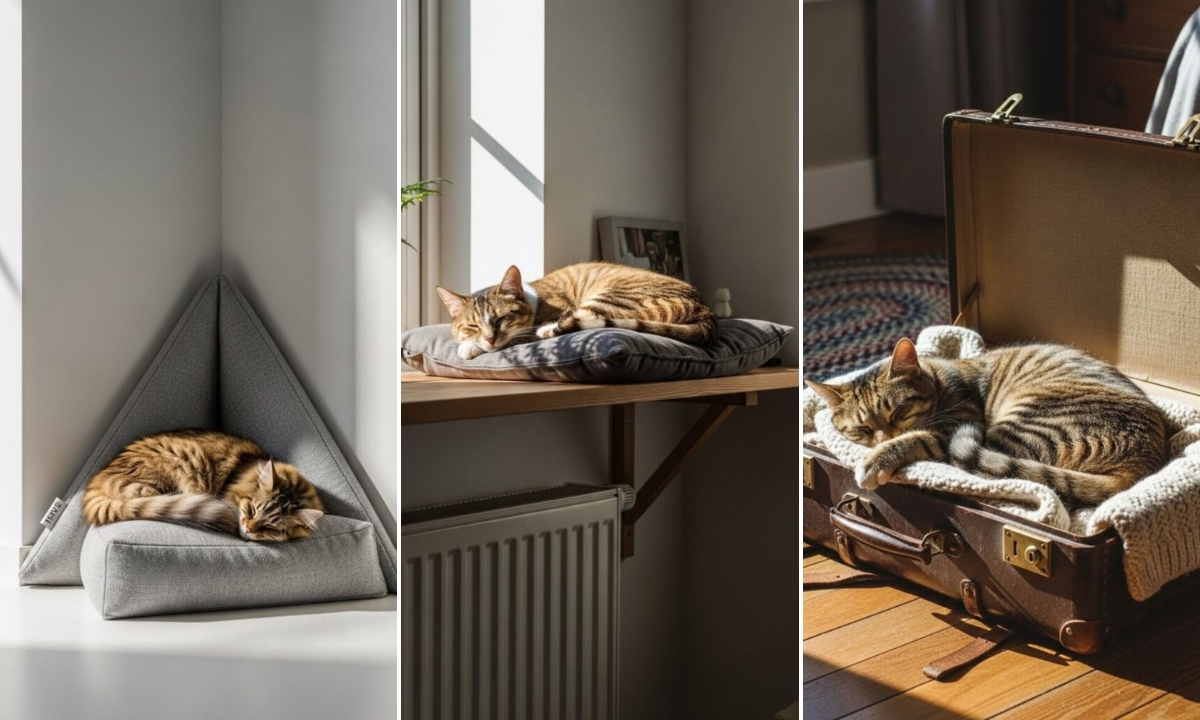
- 2.17 Radiator Shelf
- 2.18 Suitcase Bed
- 2.19 Shelf Pad
- 2.20 Laundry Nest
- 2.21 Corner Cushion
- 3 FAQs
How to Make a Comfortable DIY Cat Bed at Home?
If you’re hoping to get your cat to use a homemade bed, prioritize comfort over aesthetics. Begin with a soft foundation: an old blanket, a towel, or even a worn sweater.
Cats are drawn to familiar scents, which help them feel secure. Incorporate raised sides; this allows your cat to lean against them or curl up.
As cats generally enjoy a bit of pressure around their bodies. Keep the bed’s dimensions snug, not spacious, since confined spaces often feel more secure to them.
Save this article for later! 👇👇
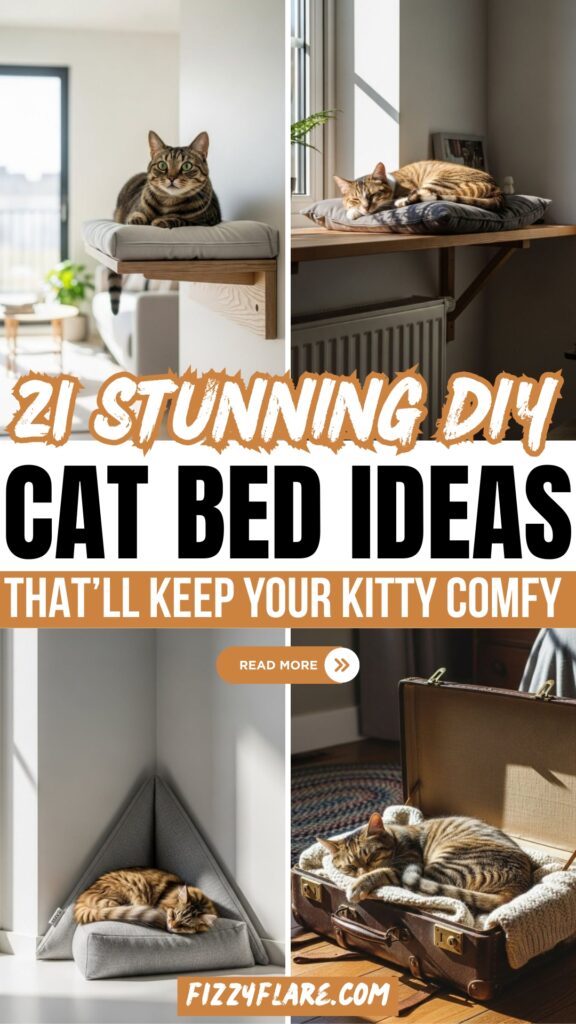
What Can I Use Instead of a Cat Bed?
A conventional bed might not even be necessary. Start with your cat’s favorite napping spot; it’s a good place to begin.
A cardboard box, especially one with a blanket inside, can be a solid choice.Boxes, it turns out, are remarkably effective at retaining heat, and they provide a sense of security.
An old sweater, casually thrown over a chair, provides a sense of ease and carries the aroma of you. A drawer, a basket, or even a shelf, coated with a towel, can easily become a nice resting spot.
If it’s cozy, known, and somewhat snug, your cat will gladly claim it as a bed.
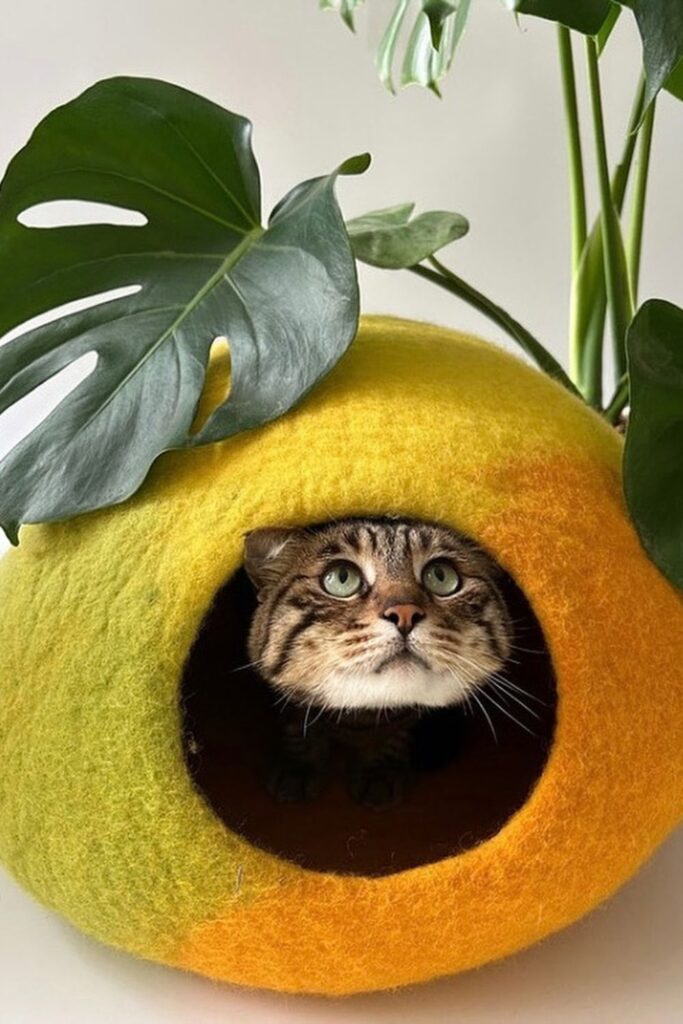
Felted Cave
Privacy changes how a cat relaxes, and a soft enclosed cave gives exactly that. Thick felt holds warmth and blocks distractions.
Which makes this style ideal for anxious or easily startled cats. It thrives when placed on the floor, close to a wall, or next to a sunlit window.
To make one, you can wet-felt wool over a rounded mold, or you can shape dense felt into a dome. Be sure to keep the entrance small; this helps your cat feel secure within.
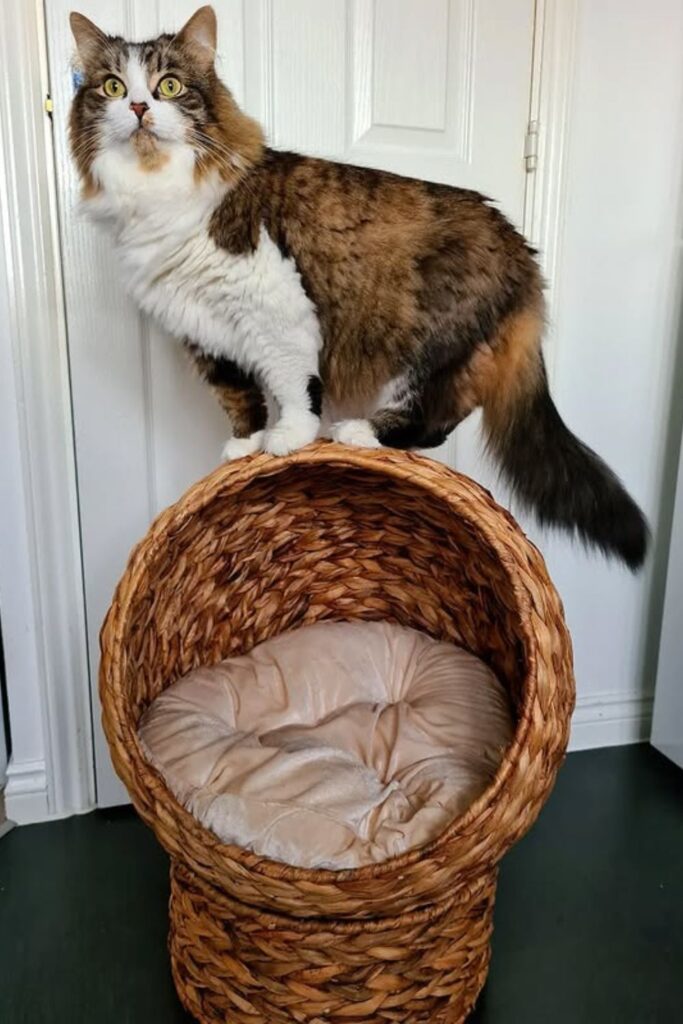
Basket Nook
Vertical space changes how cats feel about a bed, and this woven basket setup proves it. A raised spot gives your cat a sense of control.
The gentle curve of the sides provides a sense of security, a feeling of being tucked away. It’s a design that shines in kitchens, corridors, or anywhere your cat like keeping watch.
To replicate this, simply use a robust basket, and positioned on its side, and insert a thick cushion within.
Blanket Bolster
Pressure on both sides helps cats settle faster, especially ones that sprawl but still want boundaries.
Rolled blankets offer your cat a cozy, cushioned barrier to lean against, with the flat center providing support for their body.
This arrangement is particularly effective on hardwood floors or in proximity to heat sources, where added warmth is beneficial.

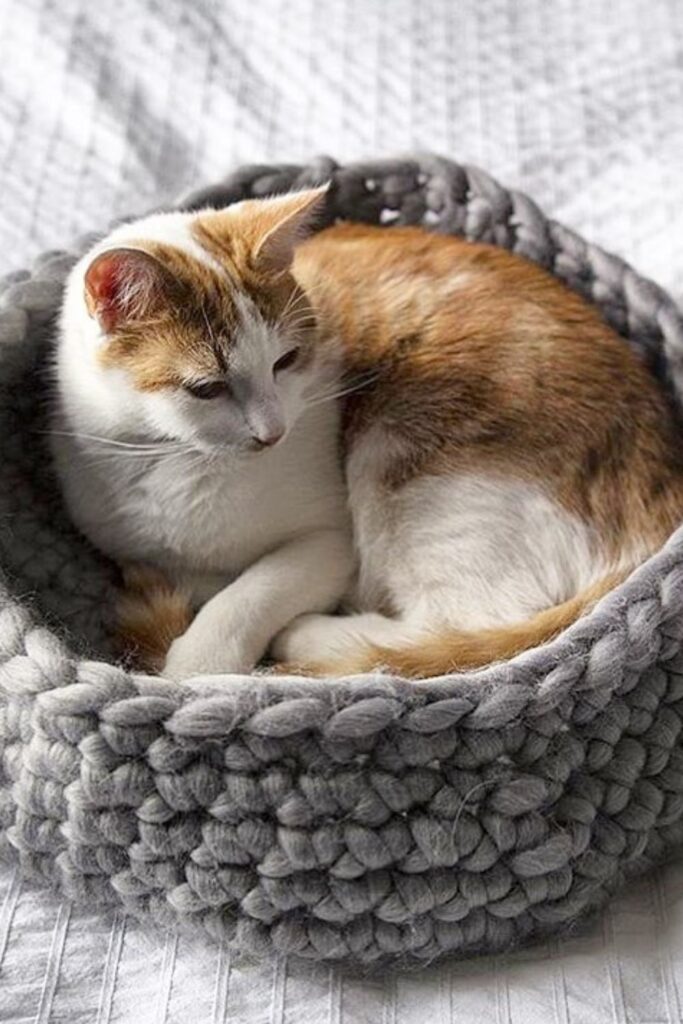
Knit Nest
The combination of warmth and weight is the quickest way to soothe a cat, and thick yarn provides both. Thick, textured stitches form a cozy barrier, and trapping warmth within.
Offering your pet a support. This method works particularly well in bedrooms and living rooms, areas where your cat likely already feels at ease.
You may also make it with arm knitting, or by crocheting with thick yarn into a wide circle. Just be sure the sides are tall enough to keep a cat snug and secure.
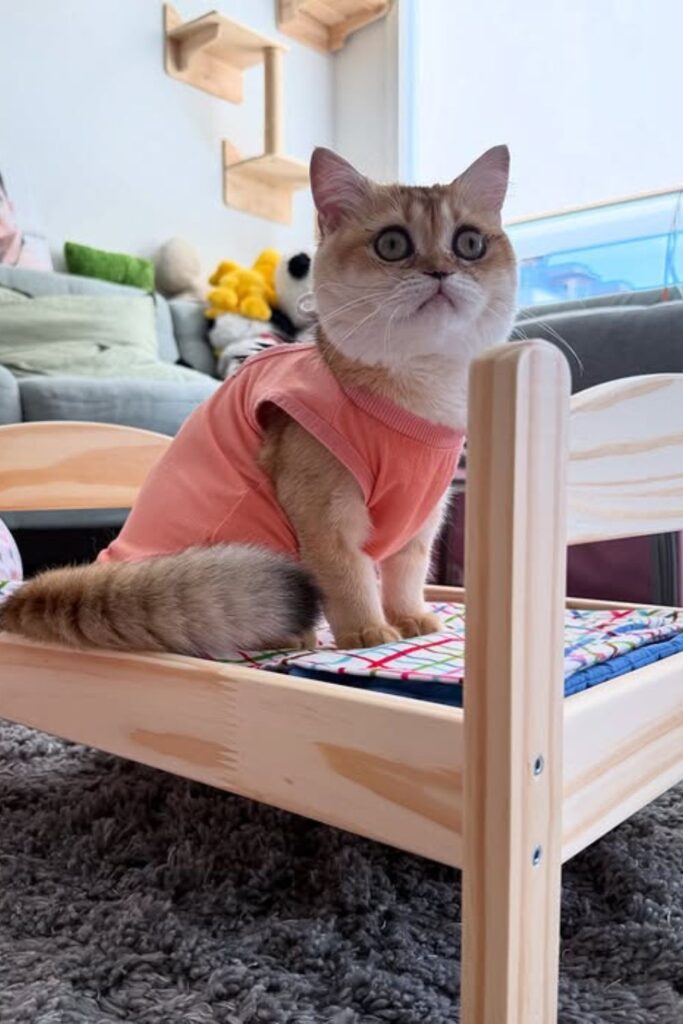
Mini Bed
Furniture scale matters more than people think, and a bed sized just for your cat makes sleeping feel intentional.
The raised structure effectively shuts out any pesky drafts, while the mattress itself offers unambiguous cues of comfort.
This arrangement works particularly well in living areas or bedrooms, a good choice if your cat likes to be close by.
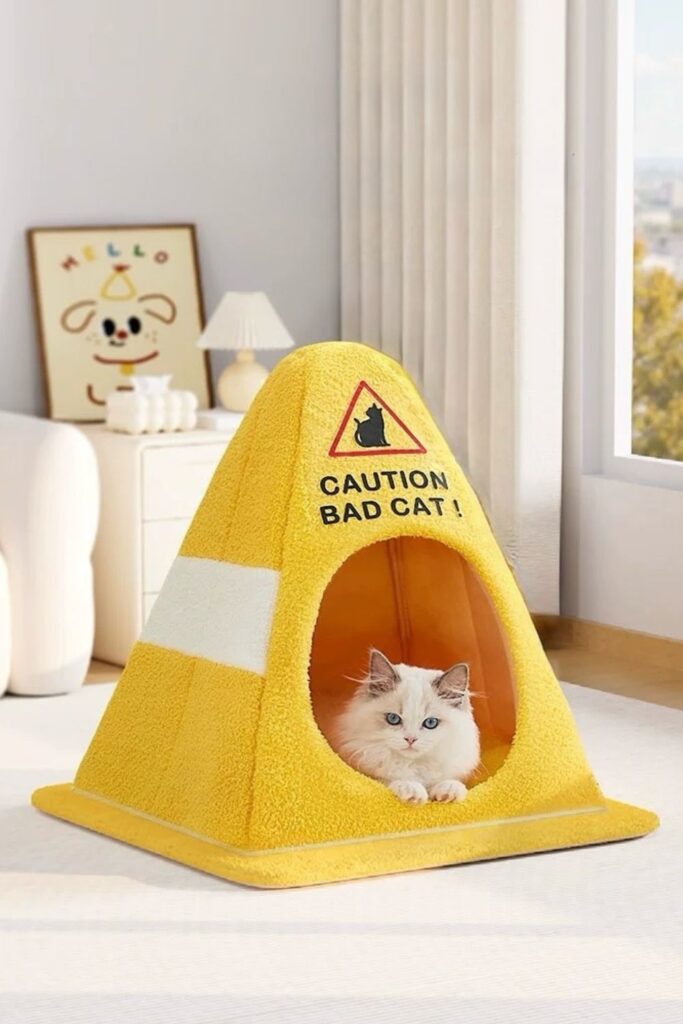
Cone Cave
Cone-shaped bed offers a sense of security by blocking out light, making it an ideal hiding area. The narrow entrance keeps the outer world at bay, or perhaps the tall walls.
Are what keep the warmth in. This setup is ideal for spots near windows and in well-lit spaces, offering your cat a private retreat without need for the extensive exploration.
To get started, cut a triangular form from foam, felt, or a sturdy fabric. Next, line the inside with cushioned pad; And this will help keep the floor from feeling uncomfortably cold.
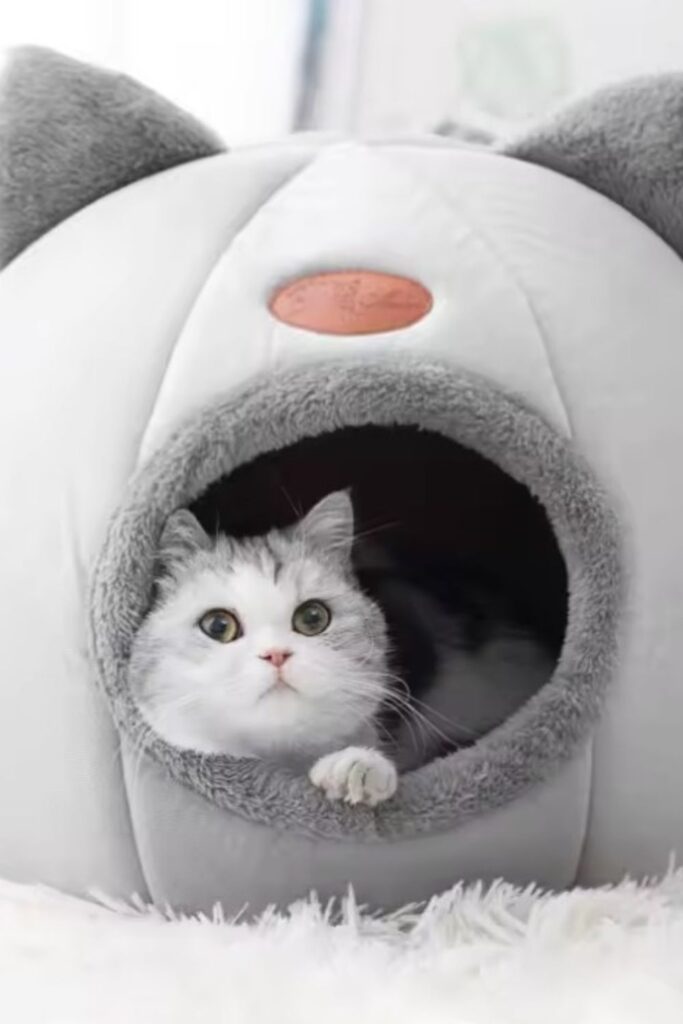
Plush Dome
Soft walls can make nervous cats relax faster than open beds ever will. A rounded dome cuts off visual noise while the padded entrance still lets your cat peek out.
This style is a good fit for bedrooms or those peaceful corners where your cat already enjoys a daytime snooze.
You could recreate it with foam panels or thick batting, wrapped in fleece. Then, put a bit of stuffing along the edges to maintain the shape, ensuring it doesn’t seem rigid.
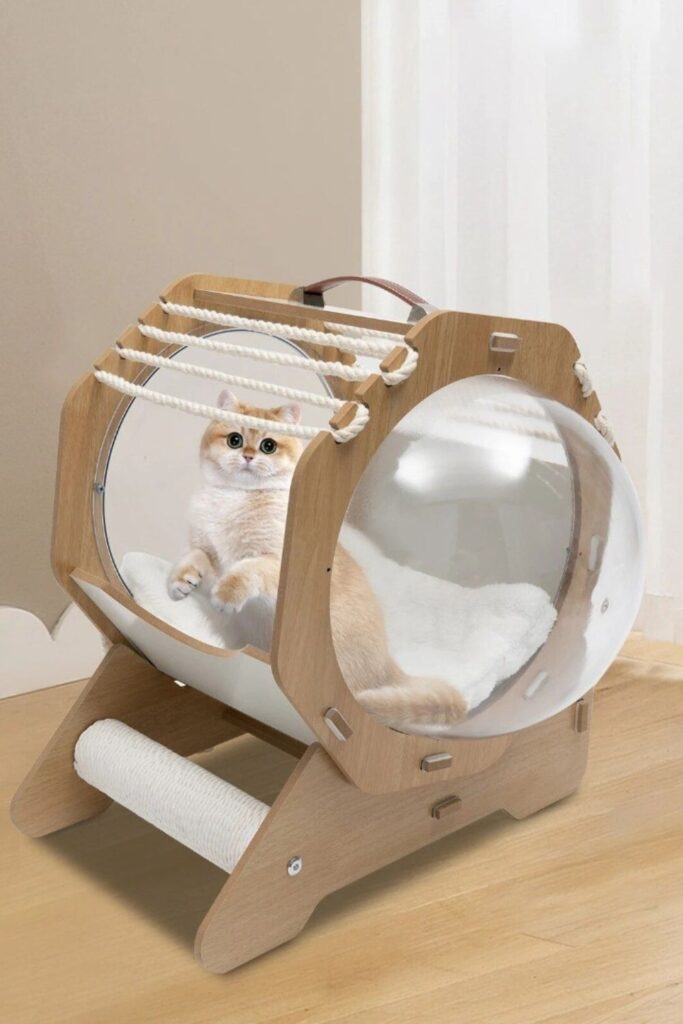
Bubble Lounger
Curiosity pushes cats toward locations where they can view without being touched, and a clear bubble bed nails that balance.
The raised framework provides support, while the curving shell affords both support and partial enclosure of the body.
This aesthetic really comes alive in spaces flooded with sunlight or in open areas where activity is the norm.
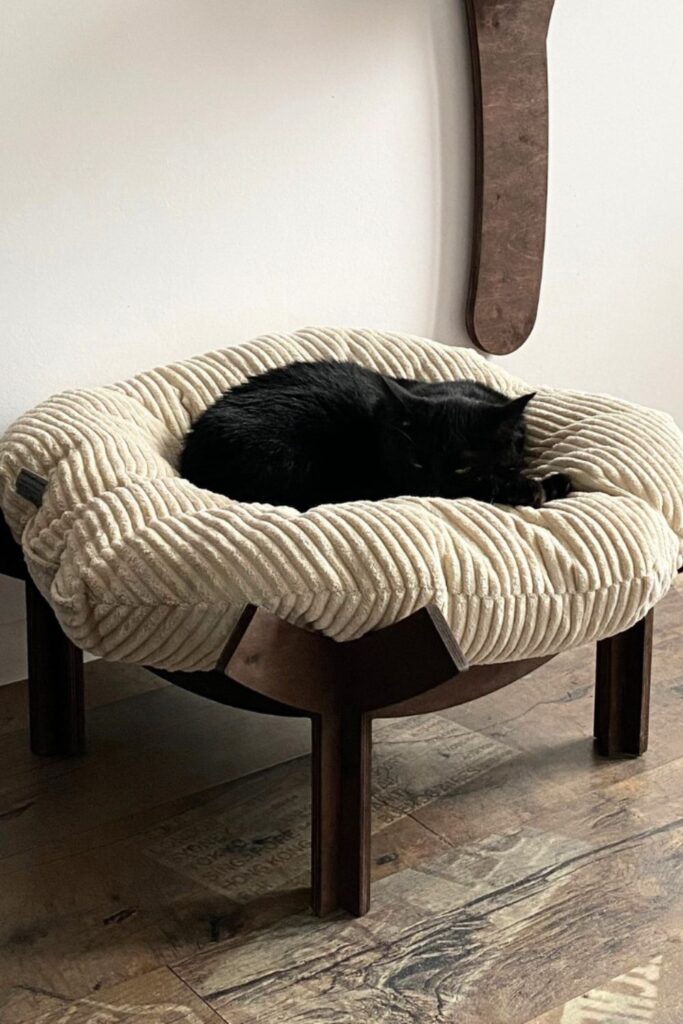
Cushion Perch
Elevation changes how secure a cat feels, especially in shared spaces. This cushioned perch offers your cat an unobstructed view, while also providing support around their entire body.
This arrangement is perfect for homes,and offers a litter retreat where your cat can stay close by, undisturbed.
To recreate this, just place a soft, donut-shaped cushion on a low stool or a custom-made wooden base.
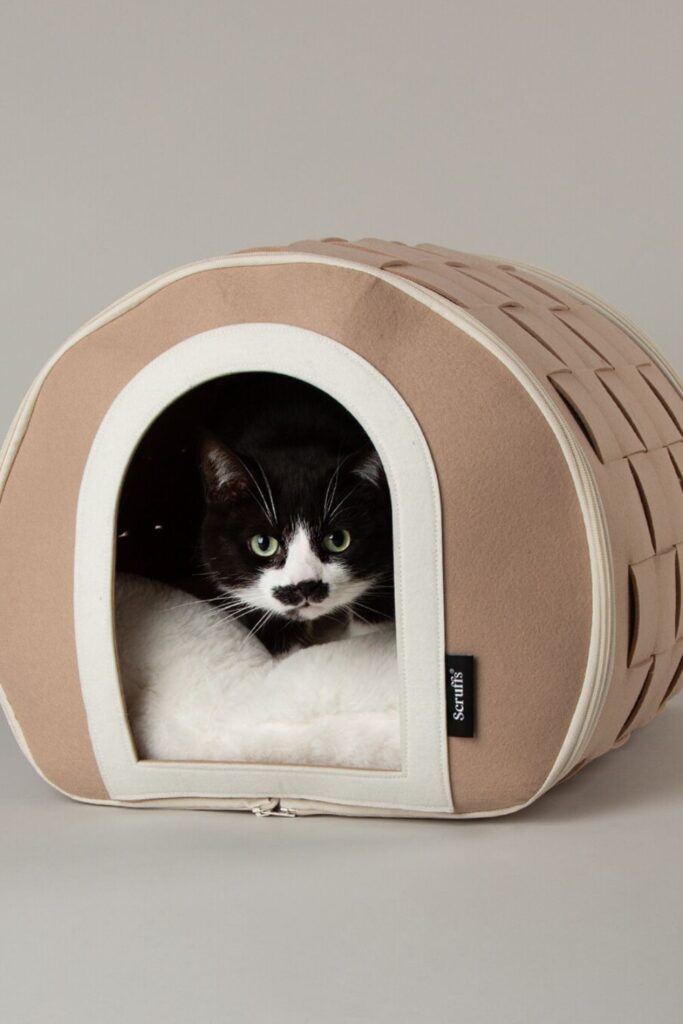
Soft Shelter
Zipped hideaways appeal to cats who want darkness without feeling trapped. The padded walls absorb sound, or arched opening lets your cat watch quietly from inside.
This design is ideal for bustling households, and providing your cat with a tranquil retreat. To replicate it, construct a dome using rigid felt or foam panels.
To ensure structural integrity, and consider a incorporating azipper. Alternatively, you could line the interior with a detachable, machine-washable soft pad.
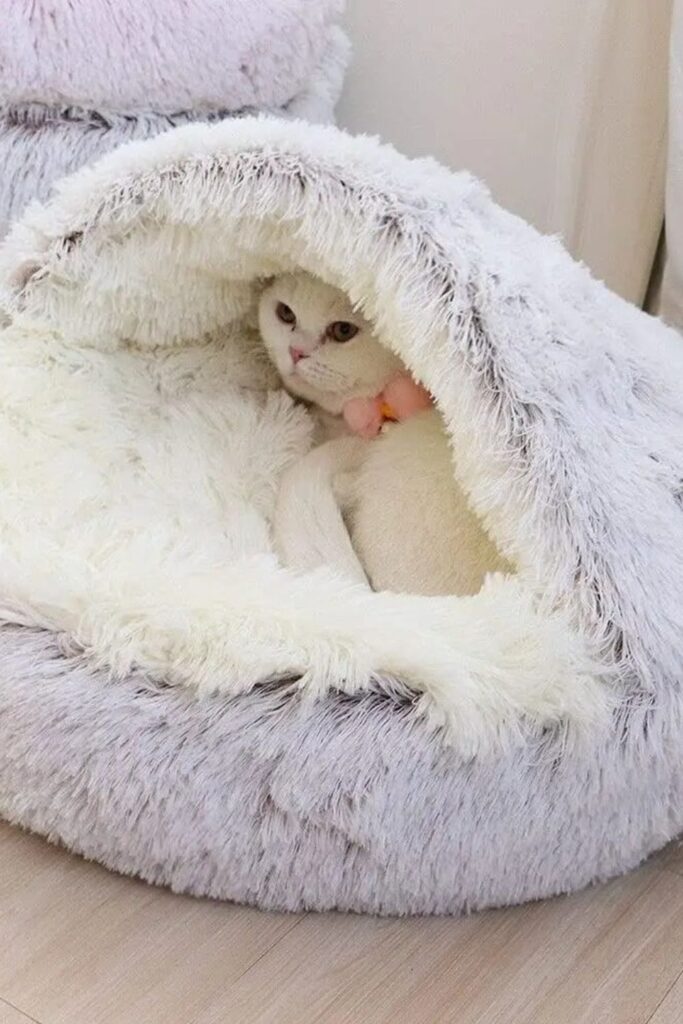
Hooded Donut
Deep softness plus a covered edge can make cats feel instantly settled. The raised hood blocks light while the circular base lets your cat curl tightly, which helps with warmth and security.
This arrangement thrives in cooler settings, or close to floors where chilly air tends to settle. To make your own, simply sew faux-fur fabric onto a substantial layer of batting.
Leave one side unbuttoned, allowing to cascade down, creating a welcoming opening that seems spacious.
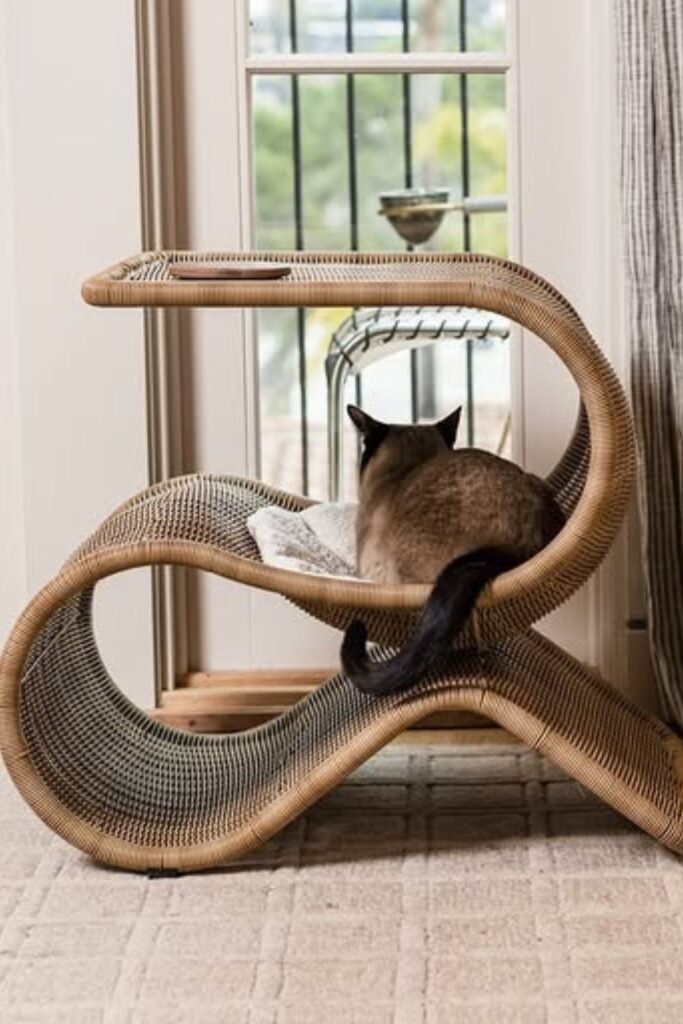
Window Wave
Sunlight beckons to cats, and a window-side, curved lounger transforms that attraction into a regular ritual.
The design’s soft, flowing lines and provide a range of comfortable postures. Your cat can sprawl, curl, and just watch the world go by, all without needing to move.
It’s perfect for spots near large windows or glass doors, where the daylight spills.
Hidden Ring
Cats seem to drift off more quickly when they’re nestled in something soft, even if they’re not completely hidden.
The substantial edge offers support for the both neck and back. Simultaneously, the lower center provides a snug environment, perfect for settling in.
This arrangement works well in open spaces, providing your cat with a bit of privacy. And start with a foam core, shaped like a sphere, and then build a robust outer ring around it.

Hammock Loft
Suspended fabric changes how a cat rests because it molds to their body instead of pushing back.
The slight incline eases strain on your cat’s joints, and the elevated perch keeps them out of the way of bustling feet.
It’s a great solution for those rooms where your feline still craves a prime viewing spot. To make your own, simply stretch a durable fabric across a wooden frame.
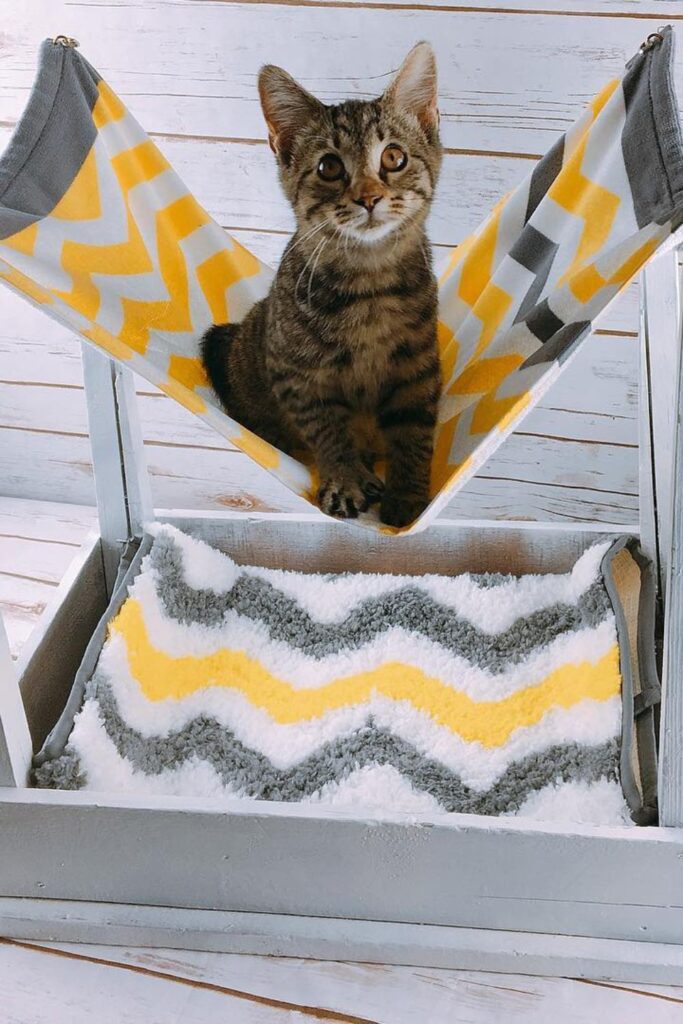
Cube Cave
Strong lines and solid framing can make a bed feel anchored, which helps cats relax more deeply.
The circular interior provides a sense of security, and the surrounding frame ensures the structure remains intact, and even in the high-traffic areas.
This design is particularly suited to contemporary living spaces, where aesthetics are still a priority.

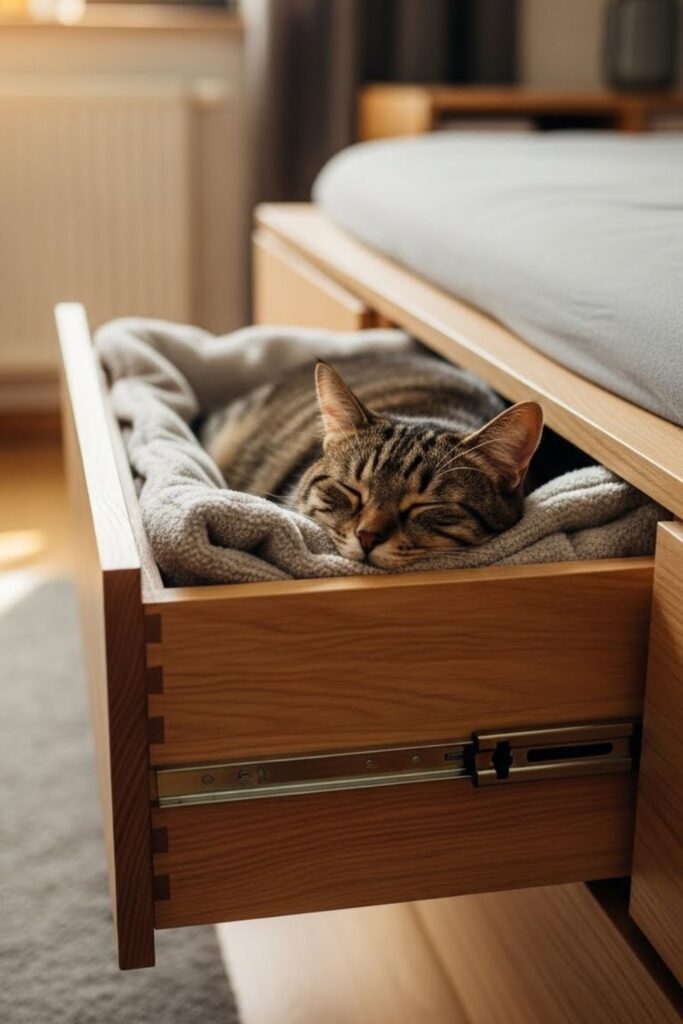
Drawer Den
Unused drawers already feel like hiding spots, which is why cats claim them so fast. Sliding one out, lining it with a folded towel.
And leaving a small gap turns it and into a quiet sleep zone. This setup is ideal for bedrooms or closets, where sound levels are typically lower.
To ensure stability when your cat hops in,or a place rubber cushions beneath the drawer if it slides too readily.
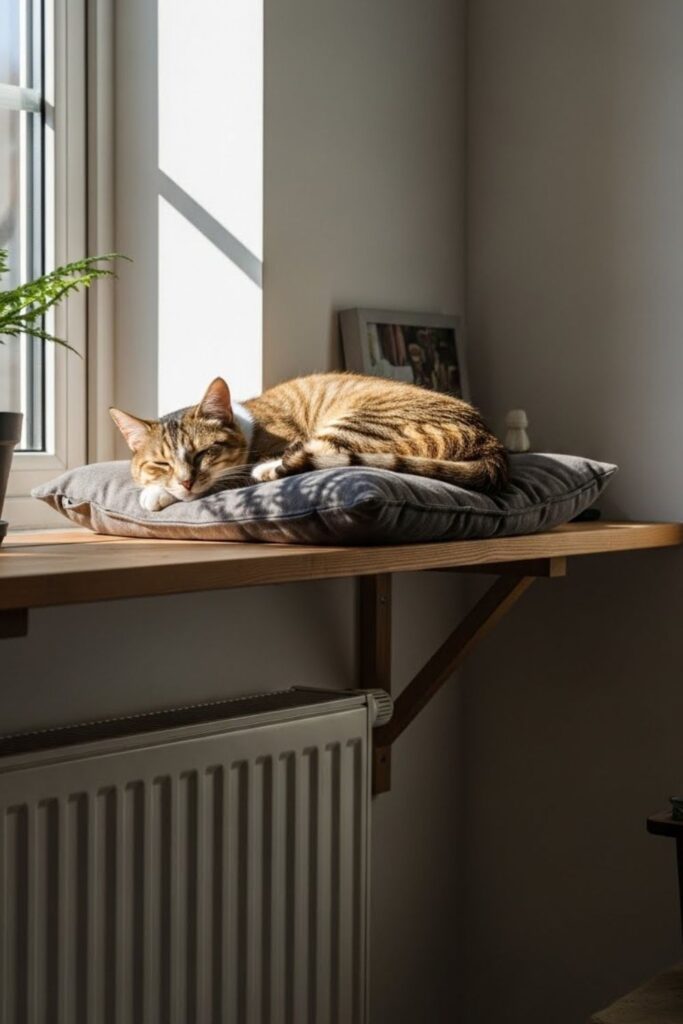
Radiator Shelf
Warm air changes everything for cats who chase heat all day. A simple wooden shelf mounted safely over a radiator creates a cozy resting place without taking floor space.
This arrangement is ideal during the colder months, and especially for the senior cats dealing with joint stiffness.
Include a thin cushion or fleece mat to ensure the heat is distributed evenly, preventing any discomfort.
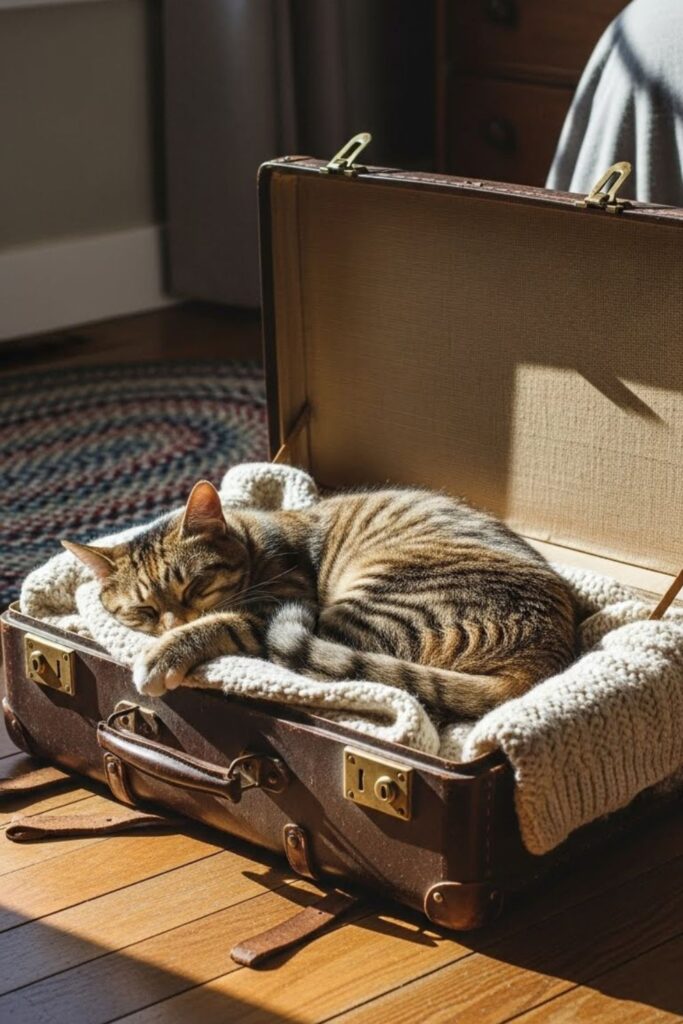
Suitcase Bed
Open suitcases trigger nesting behavior almost instantly. The raised edges feel protective, and the depth helps cats curl in tight.
This concept is ideal for stashing under beds or in guest rooms, places where luggage often reside.
To make it cat-friendly, line the interior with an old blanket, and be sure to remove any straps or other components that potentially stab your sleeping kitten.
Shelf Pad
High spots calm cats who like to observe without joining the action. A padded shelf gives them exactly that without needing full cat tree.
This setup shines in living rooms and offices and where there’s room to go up. Affix a non-slip mat and a slim cushion to a wall shelf you already have.
Giving your cat a cozy spot to snooze without the risk of a tumble or feeling vulnerable.

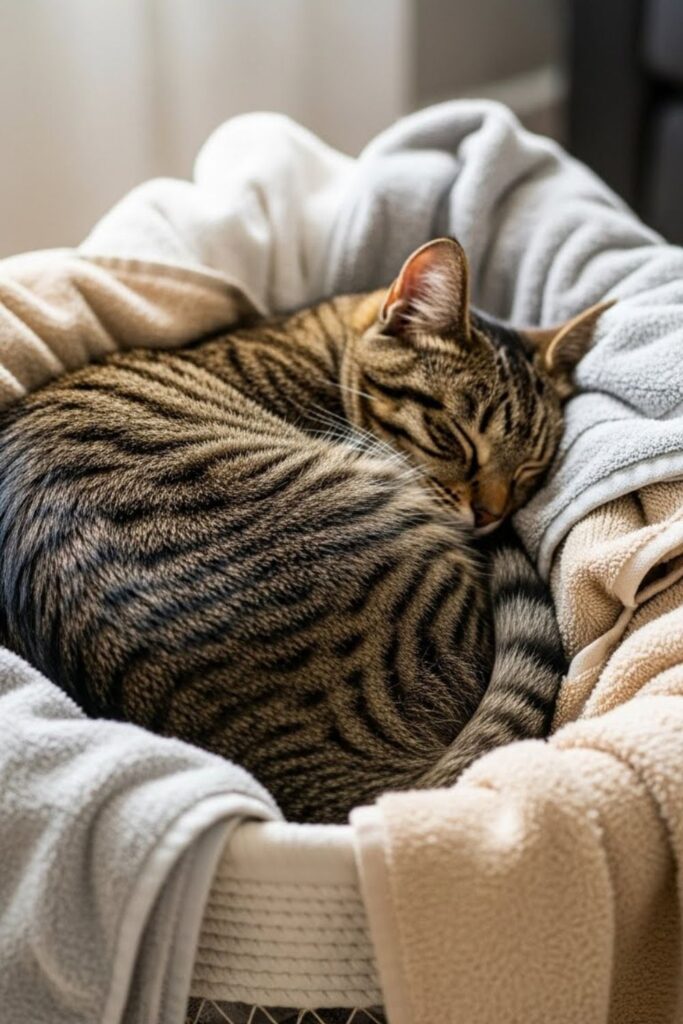
Laundry Nest
Fresh laundry attracts cats because it smells like you and holds warmth. Turning a laundry basket into a resting spot.
Makes that habit intentional instead of annoying. It’s a good fit for bedrooms and laundry rooms alike.
To keep the surface stable and prevent it from tipping as your cat moves, place a heavy towel at the base.
Corner Cushion
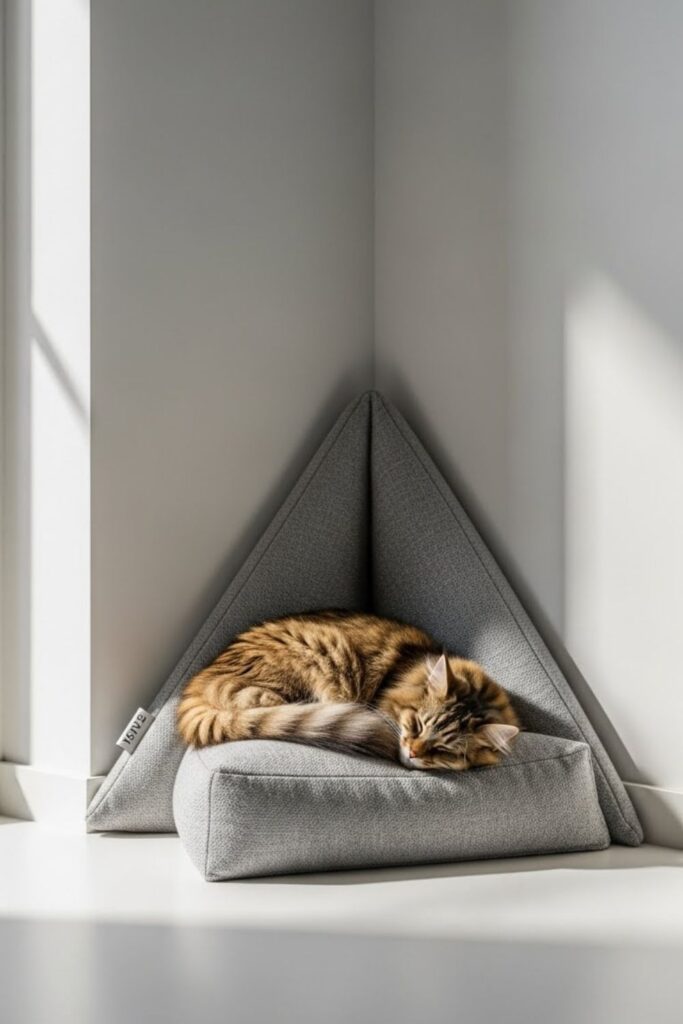
Corners already feel safer because nothing sneaks up from behind. Placing a triangular cushion where two walls meet creates a natural retreat.
This concept is perfect for those cramped apartments and where every inch counts. Construct it from foam, shaped into a wedge.
And then dress it in a fabric that complements your existing decor. The goal is to make it disappear, not add to visual noise.
FAQs
Can a DIY cat bed replace a store-bought one?
Indeed, and frequently, it’s better option. Cats, it seems, are all about the essentials: comfort, warmth, or familiar smells. They’re not swayed by brand names or how something looks.
If you’ve built a bed with cozy materials your cat already loves, and it’s placed where they like to hang out, chances are it’ll quickly become their favorite napping spot.
The key is to customize the bed to suit your cat’s tastes, instead than expecting them to adjust.
How do I know if my cat actually likes the bed I made?
Watch your cat while you’re not actively trying to get their attention. If they snuggle in and doze off, or if they knead the blanket and keep returning to the same place, then the bed is doing its job.
If they seem to avoid it, the fault usually resides in where it is, how big it is, or its smell, not in what you’ve done. Often, small tweaks are all that’s needed to fix these problems.
You may like to read!

Fasial is the founder of the Fizzy Flare. He has been a passionate blogger since 2021. He ran three different websites in the past few years. Now he is focusing on Fizzy Flare to build an audience and help them organize their life.