24 Goat Playground Ideas DIY For 2026
This post may contain affiliate links: full affiliate disclosure.
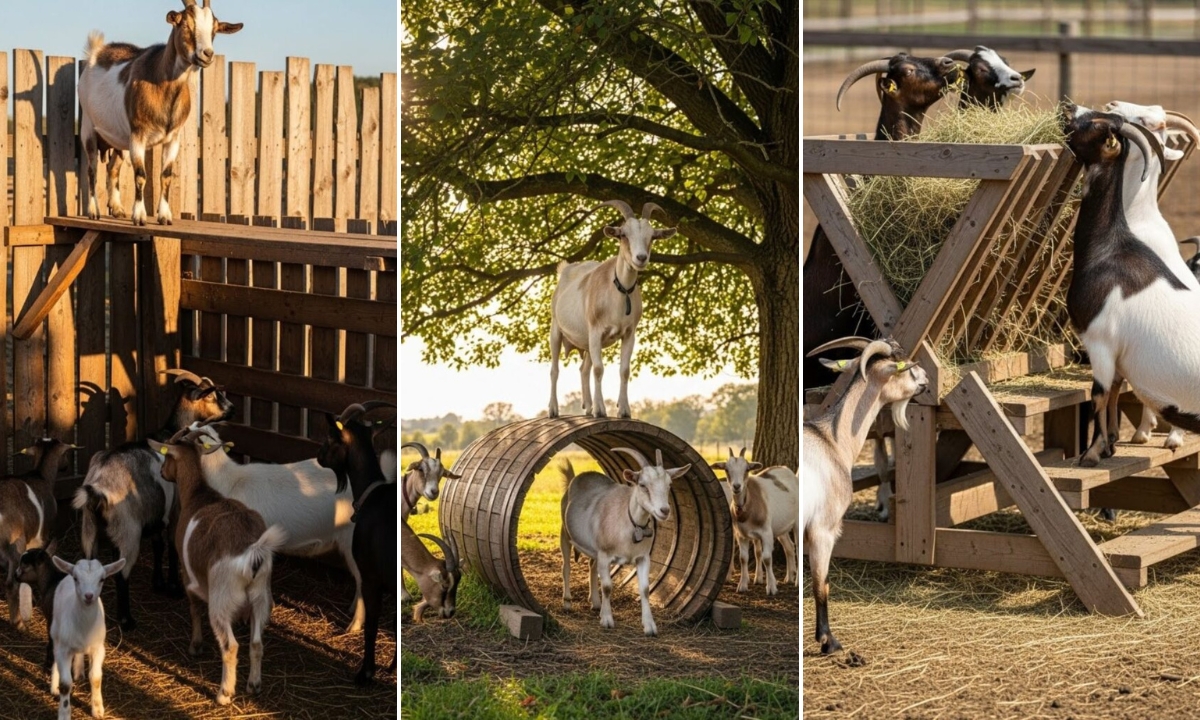
If your goats are always trying to escape, jumping on everything, or just causing a ruckus, the problem usually isn’t mischief. It’s often a simple lack of things to do.
Goats are natural climbers, a talent they rely on to maintain their balance and investigate their surroundings.
If you don’t rein them in, these urges will transform your writing tool into a chaotic mess.
You’re probably thinking about building something for them, but the options are a bit daunting. What’s safe? What’s affordable? And, most importantly, what’s going to work?
This article presents 24 fantastic DIY goat playground ideas, all ready for you to try out in 2026.
Let’s jump in!
Contents
- 1 What Materials Are Safe for Goat Playgrounds?
- 2 How to Place Play Structures in Your Goat Pen?
- 2.1 Pallet Platform
- 2.2 Spool Table
- 2.3 Ground Platform
- 2.4 Pallet Fortress
- 2.5 Fallen Logs
- 2.6 Tire Tunnel
- 2.7 Raised Deck
- 2.8 Picnic Beam
- 2.9 Modular Platforms
- 2.10 Ramp Tower
- 2.11 Lookout Levels
- 2.12 Pallet Bridge
- 2.13 Climbing Circuit
- 2.14 Spool Path
- 2.15 Spool Pods
- 2.16 Spool Network
- 2.17 Winter Stack
- 2.18 Playhouse Ramp
- 2.19 Hay Climber
- 2.20 Rock Steps
- 2.21 Brush Station
- 2.22 Sand Mound
- 2.23 Corner Ledge
- 2.24 Shade Tunnel
- 3 FAQs
What Materials Are Safe for Goat Playgrounds?
If goats can get to it, they’ll chew it, scale it, and use it as a scratching post. This is why the materials you choose are so important.
Solid, untreated wood is best, since goats will lick and gnaw on anything they can reach. Stay away from sharp metal edges, thin wire, and anything that can easily bend.
If you’re using pallets, make sure they’re heat-treated and avoid any with an unfamiliar chemical odor.
Tires, logs, and thick planks are all good options, provided they don’t wobble. If a structure shifts when you give it a push, it’s not safe for goats.
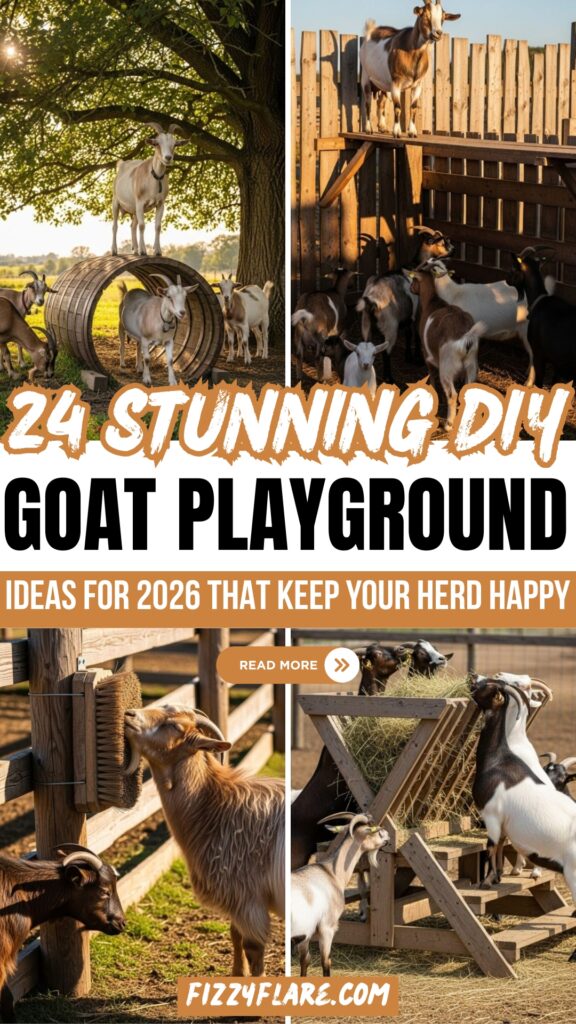
Save this article for later! 👇👇
How to Place Play Structures in Your Goat Pen?
The placement of a structure is as important as how it is built. Place the more substantial platforms close to fences or corners. This will help keep things steady and maintain your walking space.
Keep tall buildings away from gates, feeders, and water buckets. This helps prevent jumping accidents. Ensure goats have plenty of room to move, frolic, and settle down without risk.
If a new building makes cleaning more difficult, it’s probably in the wrong spot.
Pallet Platform
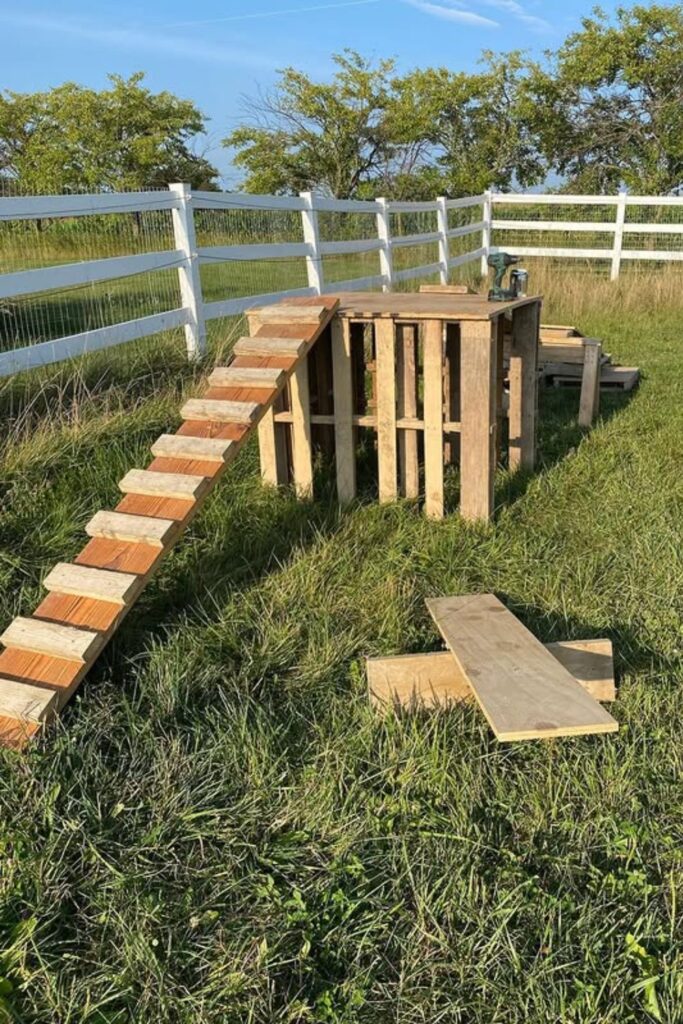
Get goats up to size before they begin their fence-climbing escapades. A stacked pallet platform, complete with a broad ramp, is ideally suited for open pens where space isn’t at a premium.
Ensure the top surface is spacious and enough to accommodate several goats simultaneously, preventing any unnecessary crowding.
To minimize the chances of a fall, particularly when the weather’s wet, think about installing grip boards on the ramp.
Spool Table
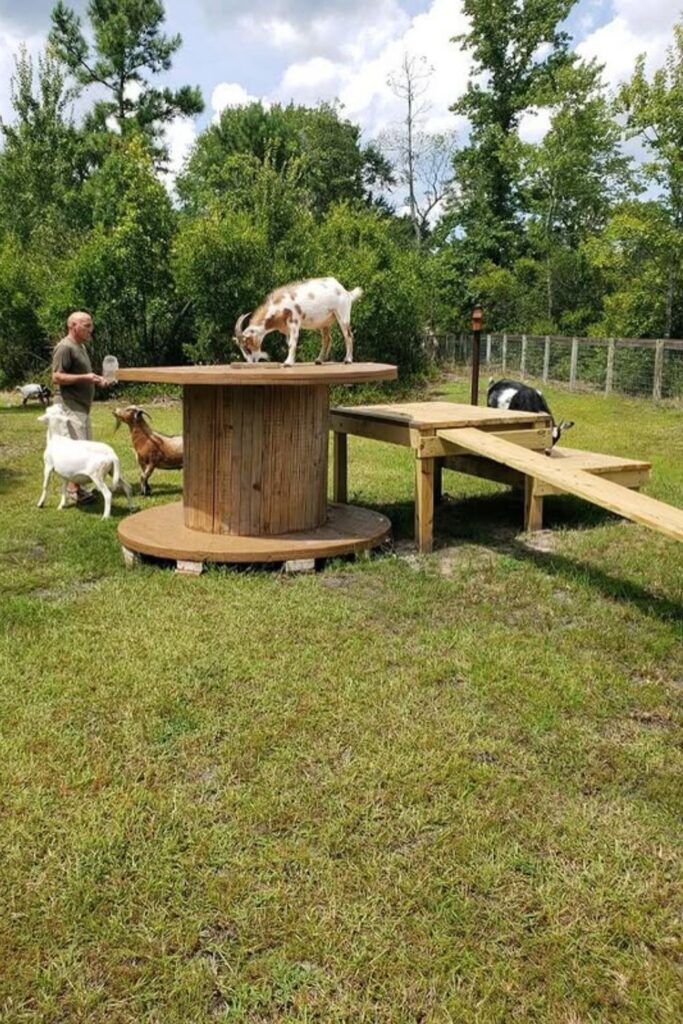
Height changes goat behavior fast. A large wooden spool works best in wide pens where goats need a solid lookout spot.
Ensure the top surface is smooth, though not overly so, and that the base is level to prevent any wobbling when weight is applied.
Adding a simple side ramp changes the space from being a place for a single goat into a shared area.
Ground Platform
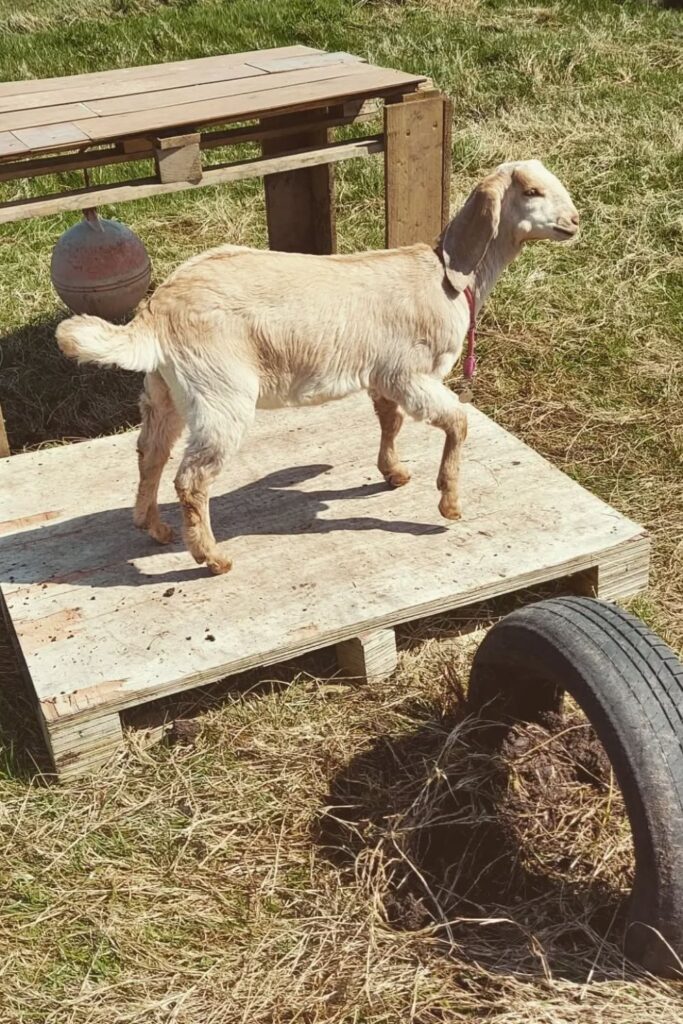
Flat terrain doesn’t necessarily spell dullness for goats. A modest pallet platform is a good choice for pens housing younger or more timid goats, giving them a boost of confidence.
A broad, low surface is key; it just feels right when you walk on it. A tire, half-submerged, offers a unique way to practice balance, eliminating the fear of a tumble.
Ensure every board is firmly attached; goats have a reputation for their edge-testing tendencies. This setup works perfectly for the small cages and the groups of animals, regardless of the age.
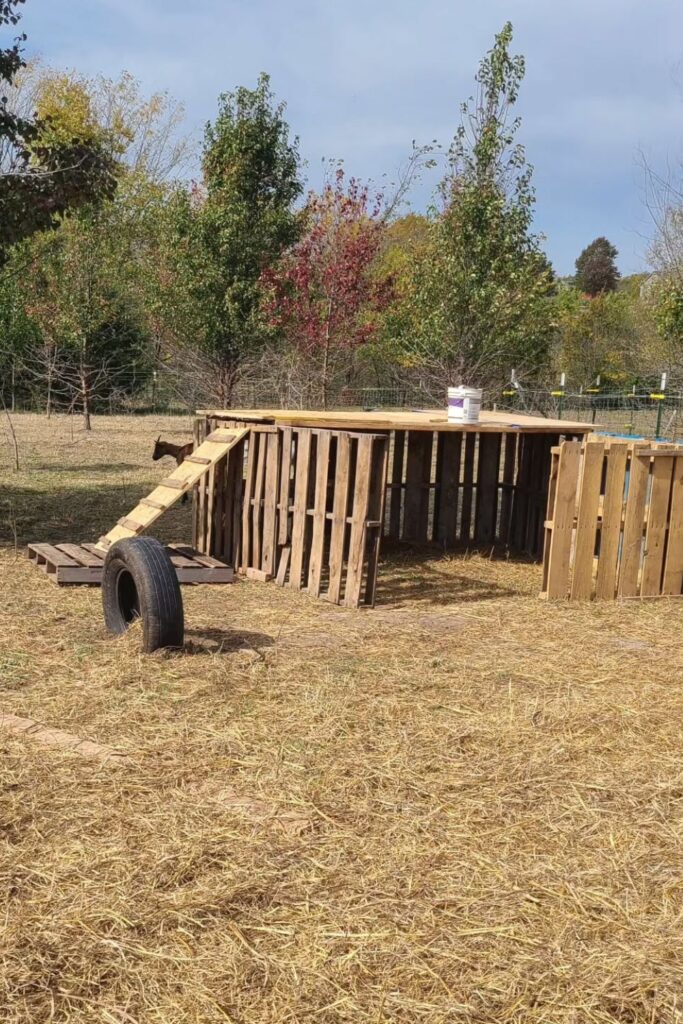
Pallet Fortress
Bored goats look for corners to climb, so give them one on purpose. A box-style pallet build creates shade, height, and a clear hangout zone all in one spot.
The open design encourages a pleasant breeze, and the spacious top provides plenty space to relax.
A straightforward ramp and tire step make getting in or out a breeze, eliminating the need for the awkward leaps.
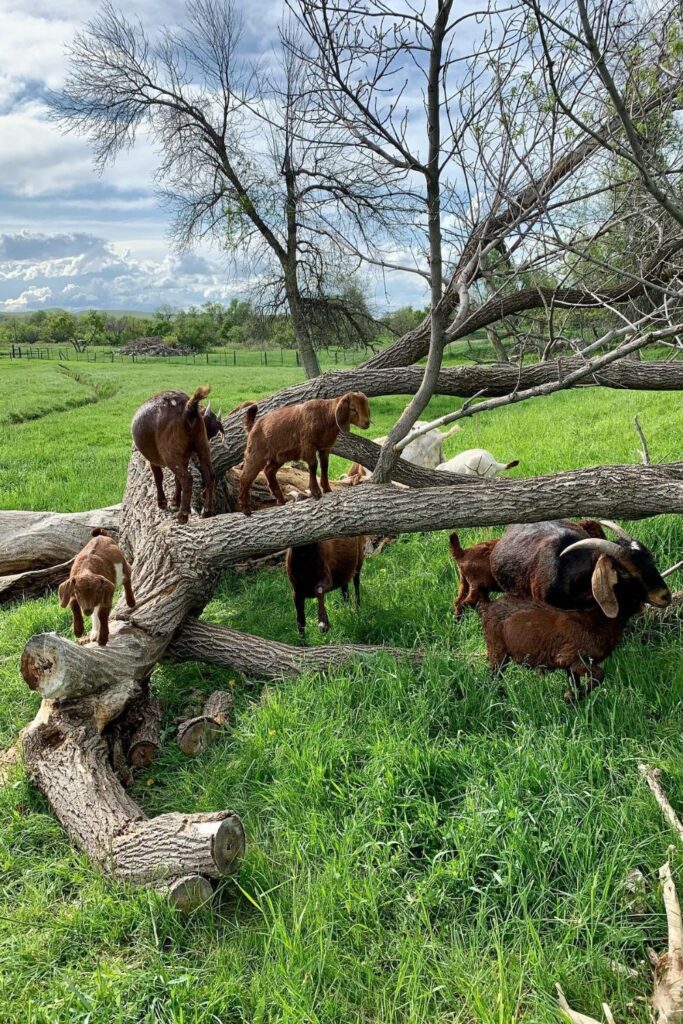
Fallen Logs
Simplicity wins out over complexity, hands down. Downed trees become immediate climbing routes, no chainsaws or building required.
Keep the trunks low and solid. This will help the goats’ hooves grip the bark, preventing them from slipping.
Providing several branches provides the goats choices, thats prompts them to explore instead of the huddling together.
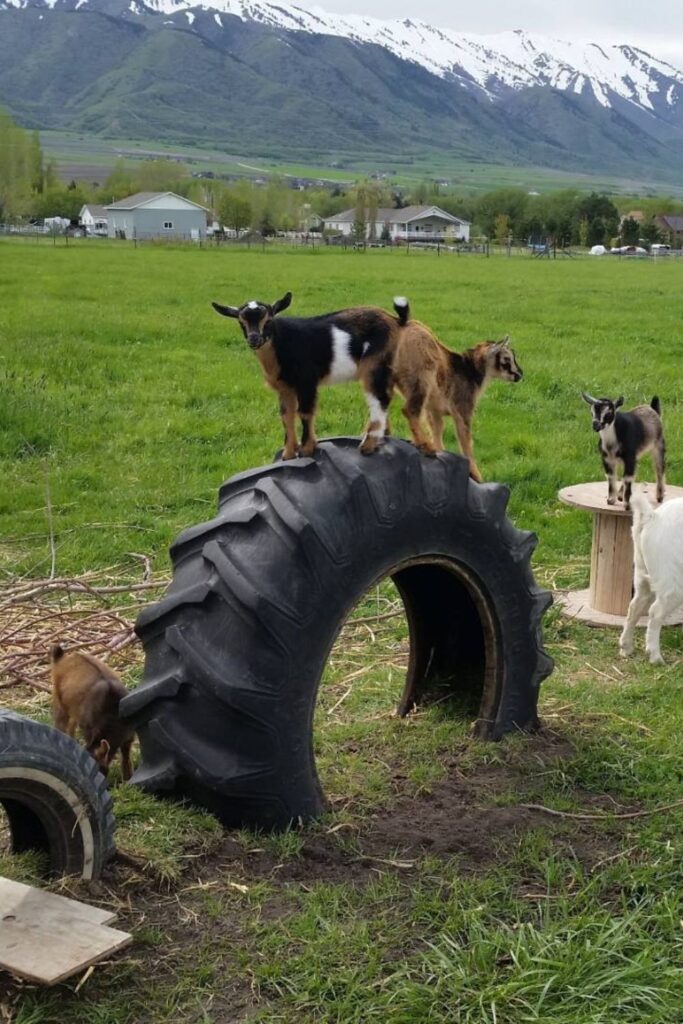
Tire Tunnel
Balance challenges keep goats busy longer than flat platforms. A half-buried tractor tire creates a curved path that tests footing without adding height.
Dig a hole deep enough so it doesn’t roll away when the goats jump on it. By placing it near lower platforms, movement is encouraged, which leads to goats moving around.
This arrangement is ideal for the expansive spaces, the goal is to distribute the goats’ activity rather than concentrate it.
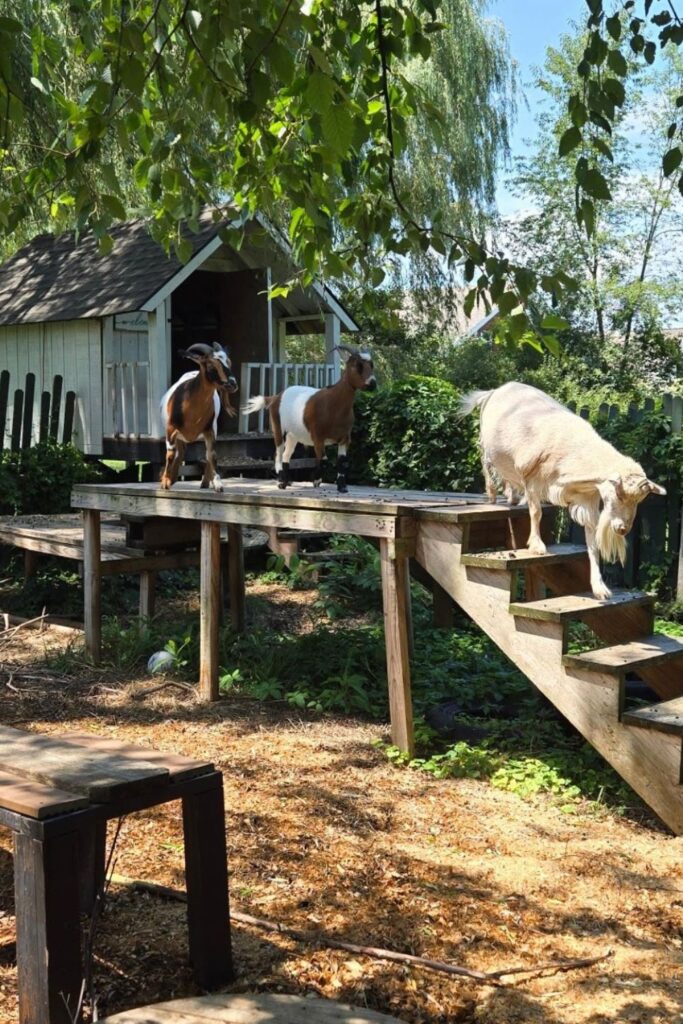
Raised Deck
Vertical space keeps goats busy without crowding the ground. A raised wooden deck connected to steps and works best near shelters or sheds where goats already gather.
Wide steps are a good idea; they minimize the risk of fall and encourage a more measured pace.
Keep the edges low, without railings, give the goats a sense of security when they step down.
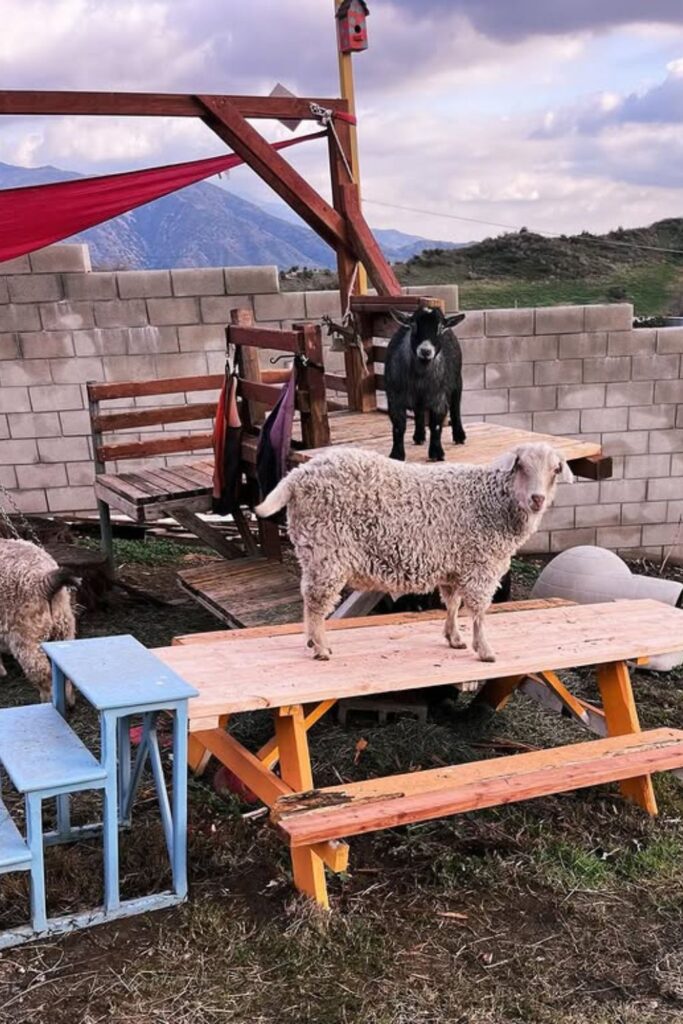
Picnic Beam
Goats don’t necessarily require lofty heights to stay occupied; often, a simple challenge will do. And a repurposed picnic table, when kept low and stable.
And canfunction as an extended balance beam. The walking surface needs to feel secure beneath their hooves narrow or wobbly won’t cut it. Solid support underneath is key.
This arrangement works well in pens that are longer than they are wide, promoting consistent movement rather than a goat pile-up.
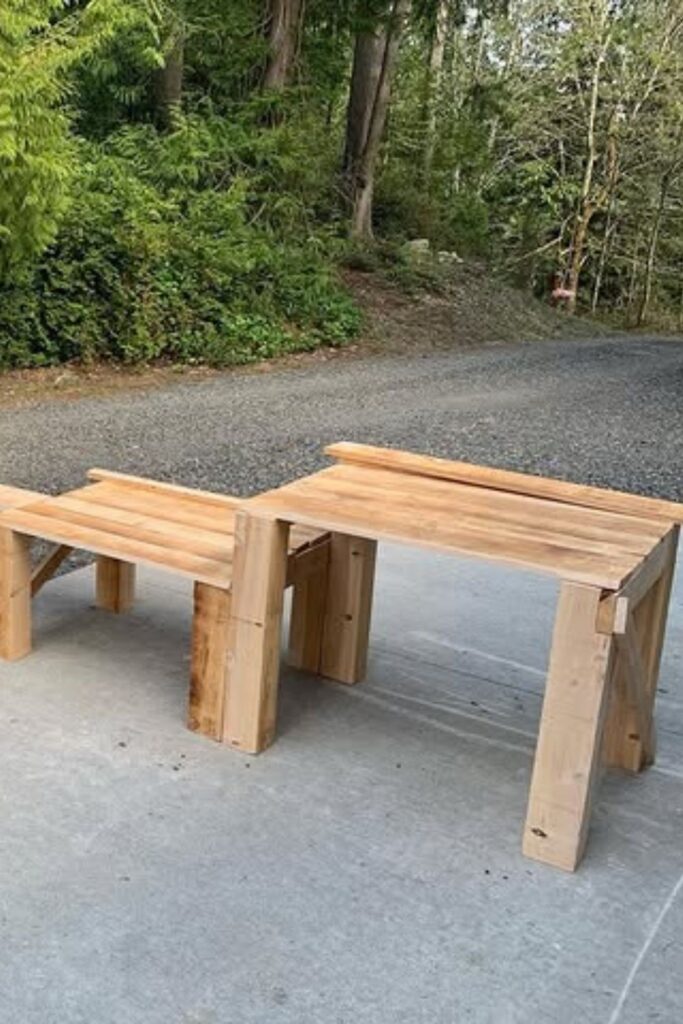
Modular Platforms
Separate pieces keep goats moving instead of camping in one spot. Individual wooden platforms let you spread activity across the pen and adjust layouts as behavior changes.
Vary the heights to encourage goats to navigate the terrain with steps, rather than leaping.
Incorporating a short ramp on one section allows younger or larger goats to participate without difficulty.
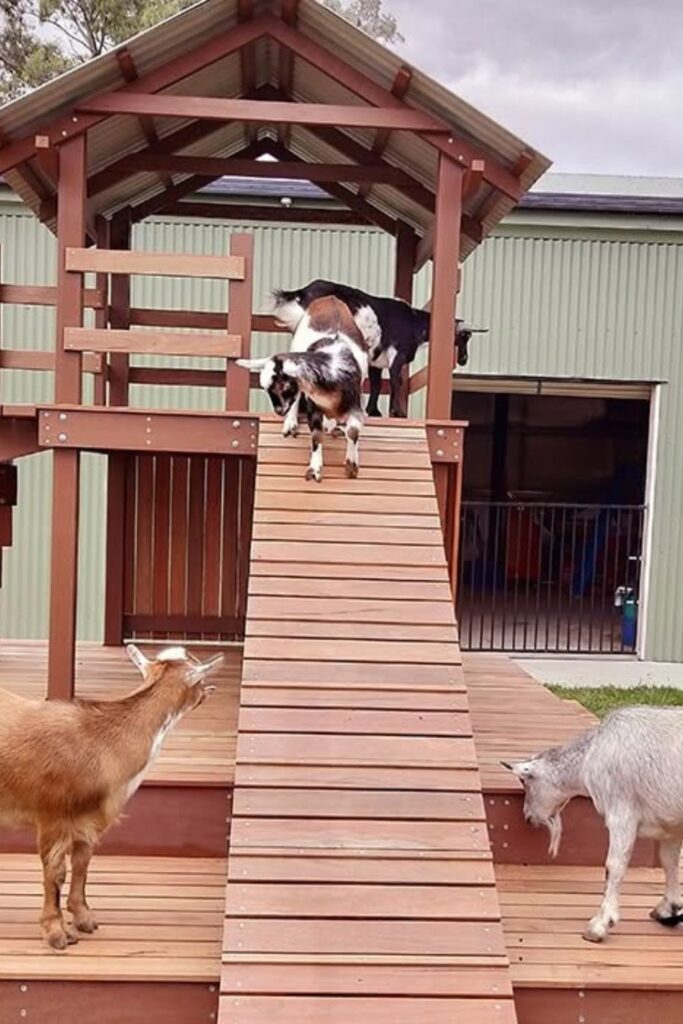
Ramp Tower
Offer goats a purpose for climbing and descending, rather than just leaping from ledges. A wide ramp, leading up to a raised platform, is perfect for goats, whether they’re nimble.
A modest slope is helpful because it helps the goats maintain upright as they walk down. Side rails provide a comforting sense of security, keeping you from snagging on something unexpected.
This design is ideal for expansive pens, providing goats with a defined area to move about, rather than a haphazard space for erratic jumps.
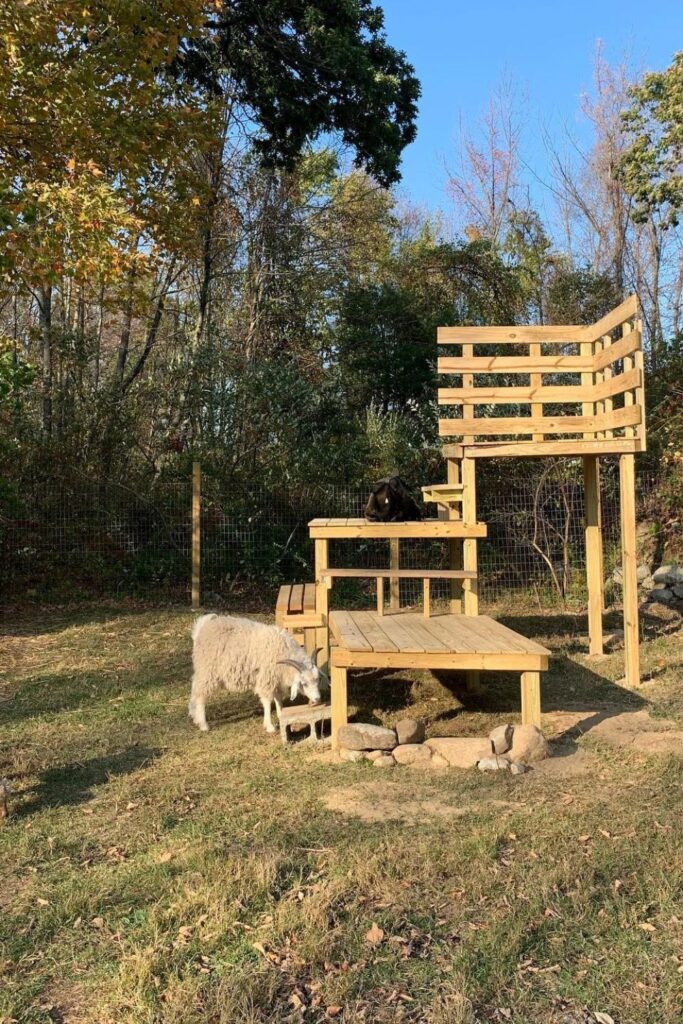
Lookout Levels
Goats employ changes in their environment, such as variations in elevation and the effects of their surroundings.
A multi-tiered platform, offering an elevated vantage point, is ideal for tranquil enclosures. Goats, it seems, like a good view before they get comfortable.
Make sure the lower levels are spacious. This way, even the most timid goats can feel at ease and participate, without feeling cornered.
Pallet Bridge
In chaotic settings, the flow of traffic is more crucial than how tall things are. The pallet bridge, complete with ramps at either end, provides a safe passage for goats.
Maintain a wide, flat main region. This structure choice helps to prevent the more dominant goats from stepping over.
This design is ideal for herds that are always on the move, providing a framework to direct their energy, rather than allowing them to congregate and cause a bottleneck.
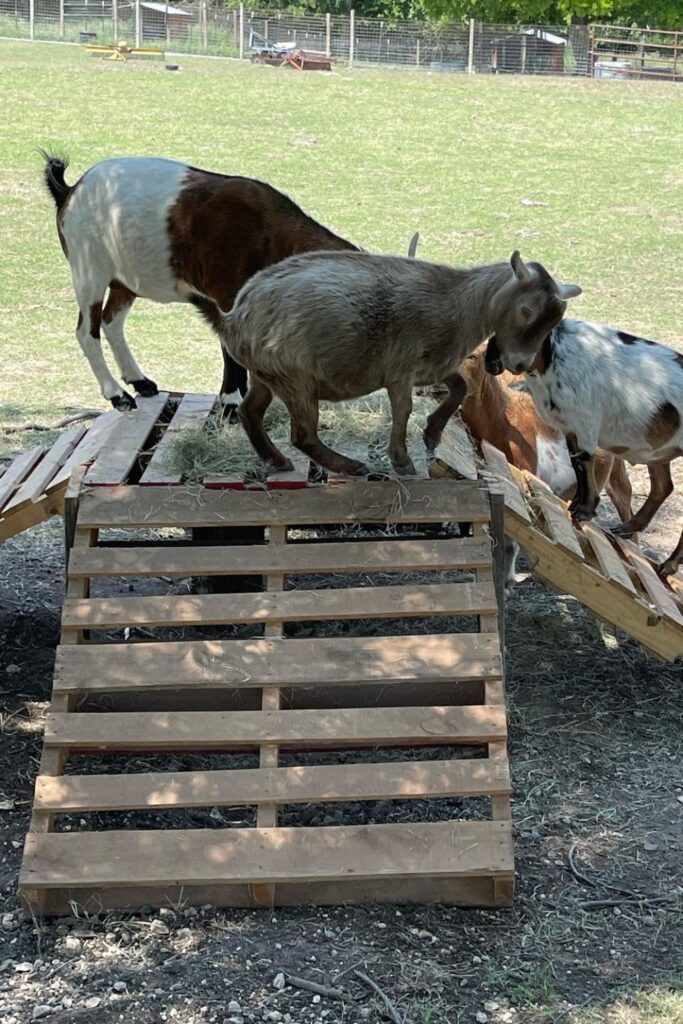
Climbing Circuit
Compared to being elevated, goats show less anxiety when they may walk about freely. A network of interconnected ramps, platforms, short spans converts unpredictable jumps into a clear path.
Ample landings help ease congestion, and several exits are a good way to discourage the sort of bullying that can happen when people are packed in tight.
This layout excels in large pens, where the purpose is to enable the herd’s own movement, rather than creating a specific, or specifically prized area that may cause to conflicts and disagreements.
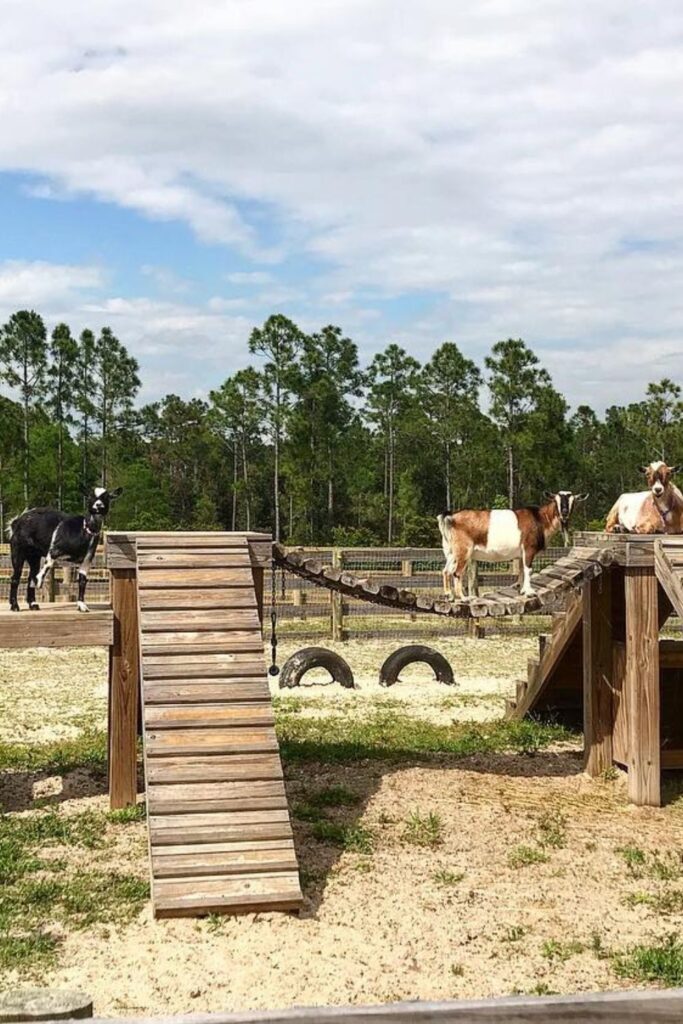
Spool Path
Curves prompt goats to pause and reflect. A series of wooden spools, linked by narrow planks, turns a simple stroll into a balancing act.
Keep the connectors short. This way, goats can step, pause, or shift their position, rather than simply and racing the through.
The broad tops of the spools offer secure places to land between the bridges. This design works best in open pens.
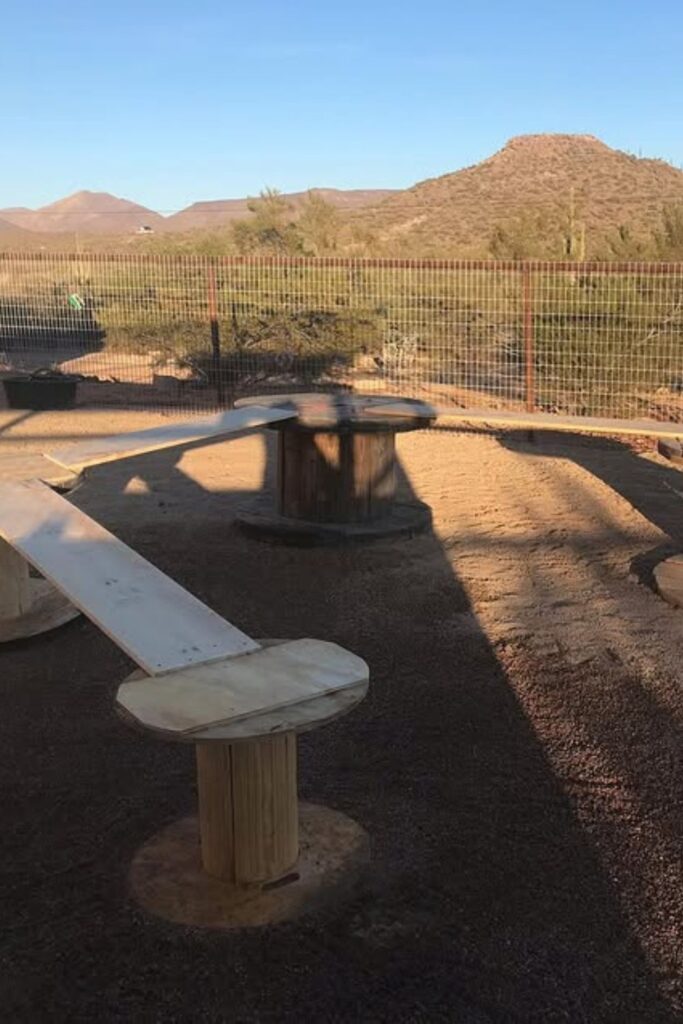
Spool Pods
Little leaps foster assurance, minus the pandemonium. When individual spool tops are placed a short distance apart, the hopping motion becomes regulated, rather than erratic.
Widen the tops; this provides a clean landing for the goats and a brief pause for evaluation. The elevation matters. If it’s excessive, the more timid goats will likely hold back.
This setup works perfectly in open, grassy areas. Goats, after all, like the freedom to move swiftly without needing a full-on climbing the structure.
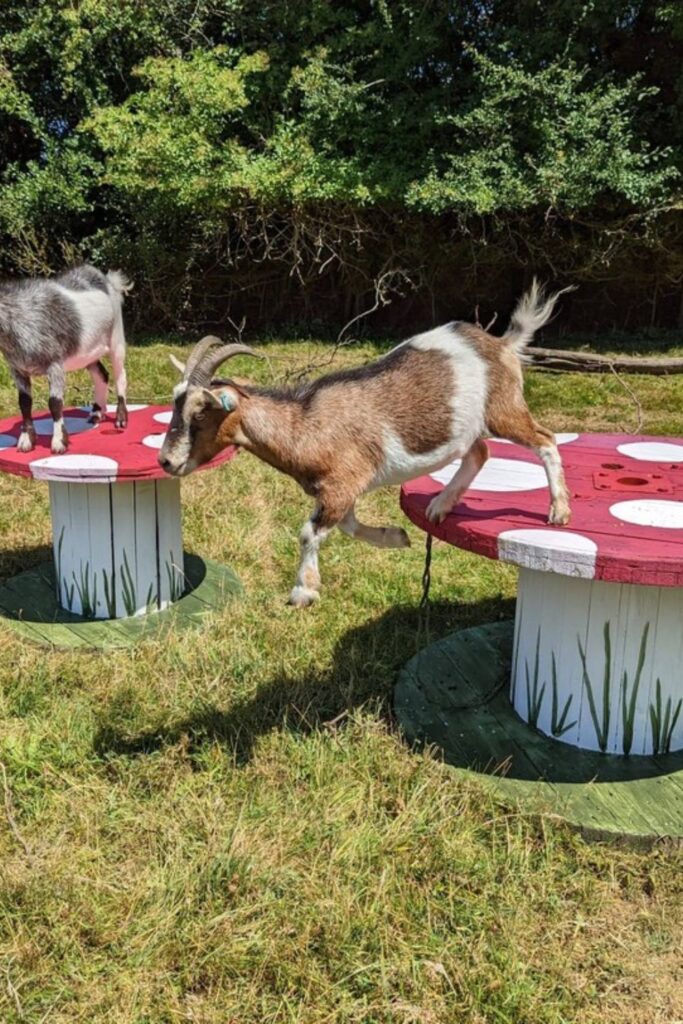
Spool Network
The herd’s anxiety evaporates almost immediately once the distributed platforms are brought in.
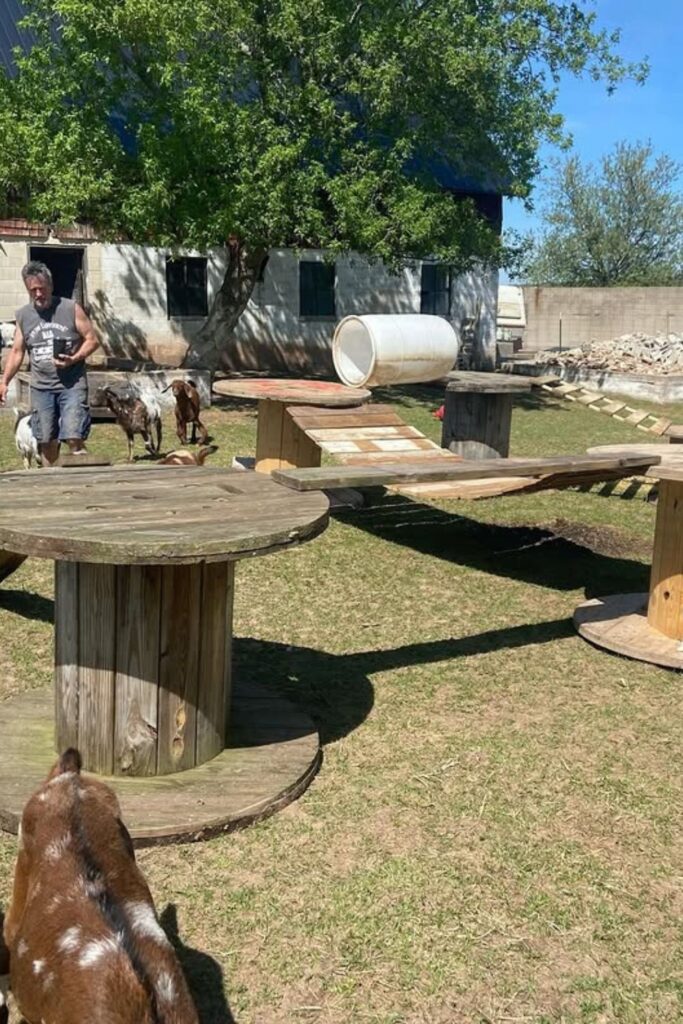
A collection of wooden spools, linked by planks and small ramps, offers a different kind of challenge, or perhaps just a simple game.
The paths need to be sufficiently broad to allow goats to pass one another without any jostling.
Winter Stack
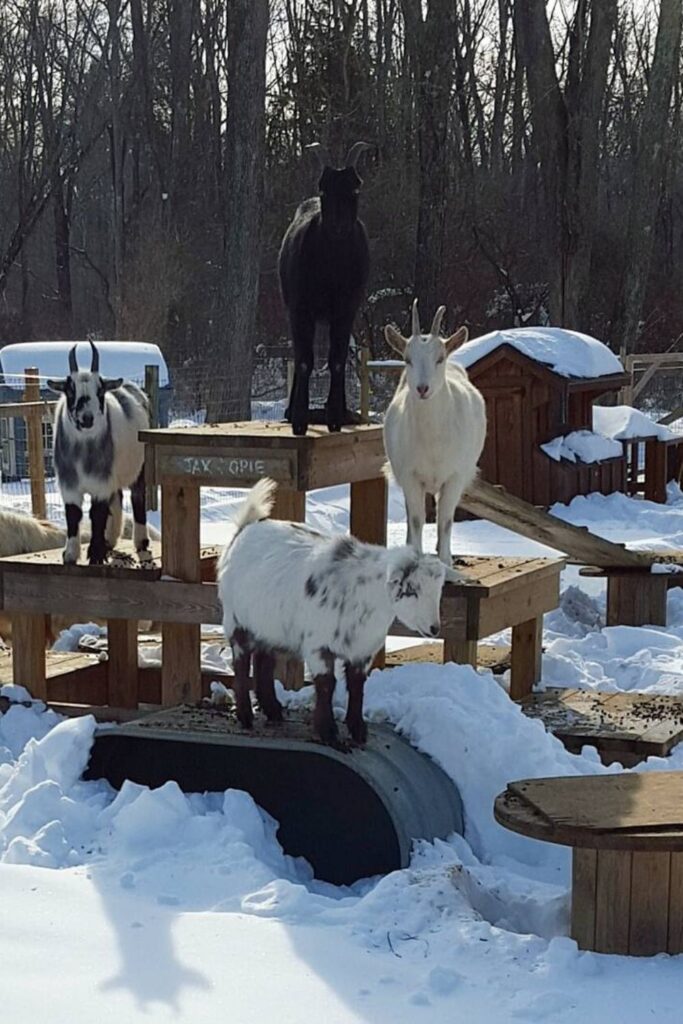
Goats don’t let a little chill in the air keep them from scaling heights; they simply adapt their approach.
Tiered wooden platforms, arranged in close proximity, offer goats a stepping surface rather than a jumping one, which is especially helpful when snow complicates things.
Keep the heights within reason to guarantee a safe landing on surfaces that are slick with ice. A short tunnel or a neighboring spool provides a little cover.
Playhouse Ramp
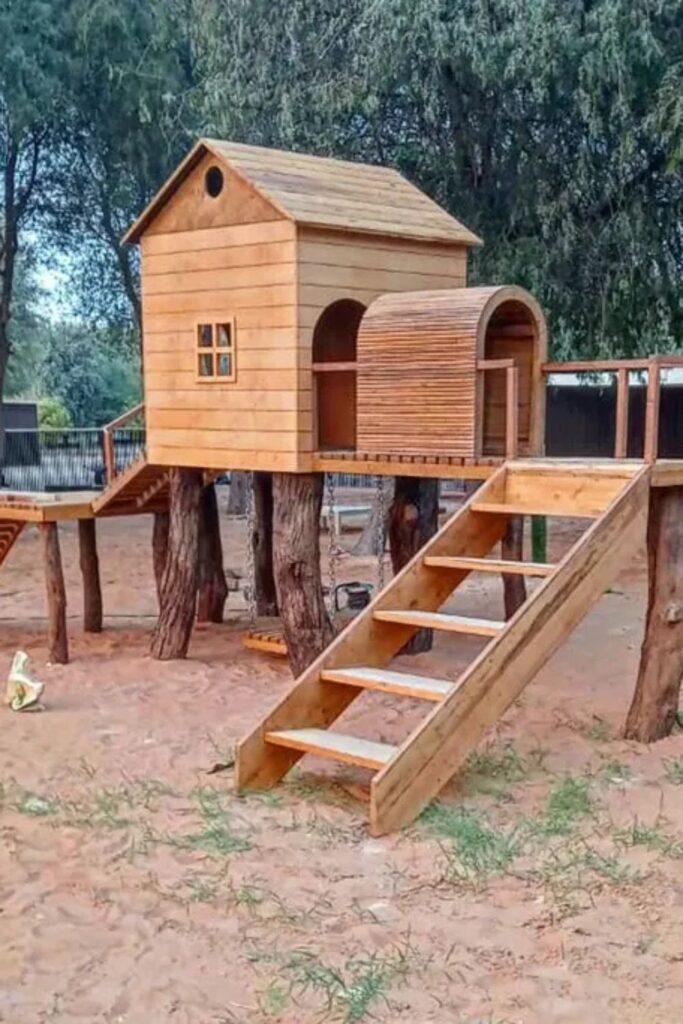
Shelter and play work better together than separate builds. An elevated playhouse with wide ramps gives goats height, movement and shade in one spot.
Keep the steps deep; this way, the goats’ hooves will fall flat, avoiding the risk of them slipping off the edges.
Log posts positioned beneath the structure serve to absorb any movement, ensuring the whole thing remains stable for years
Hay Climber
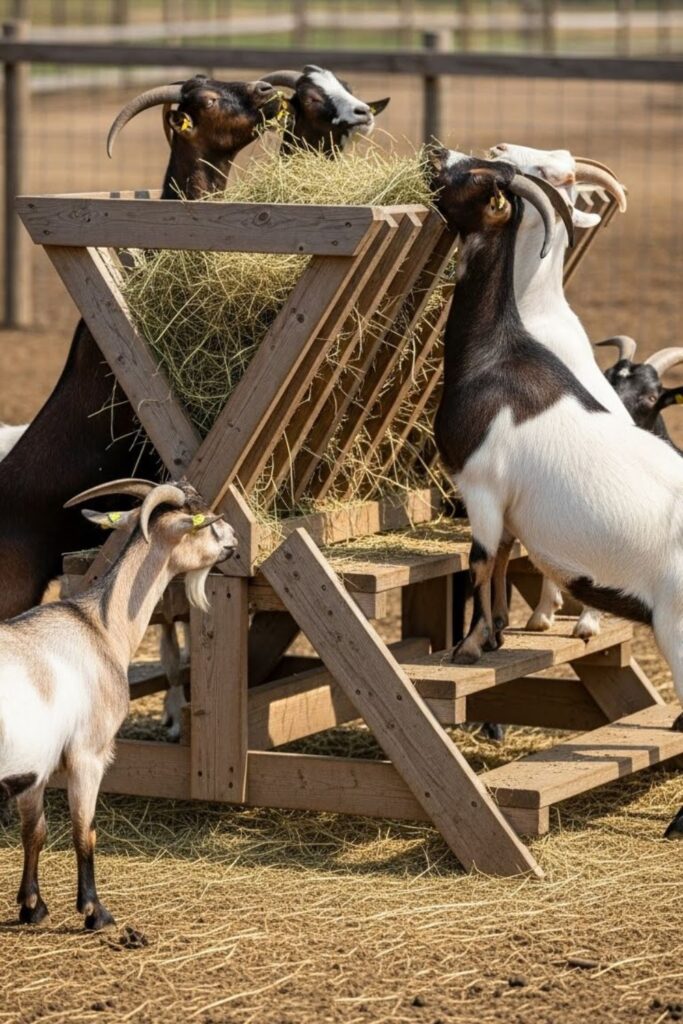
Feeding time turns into enrichment with the right setup. A raised hay feeder paired with a sturdy step and low platform encourages goats to climb while they eat.
Position hay just above the goats’ heads; this encourages and they should strive to elevate themselves, not pull themselves down.
A solid foundation under the feeder prevents any unwanted jostling. This method is especially useful in compact spaces, where room is limited and daily duties need to be done efficiently.
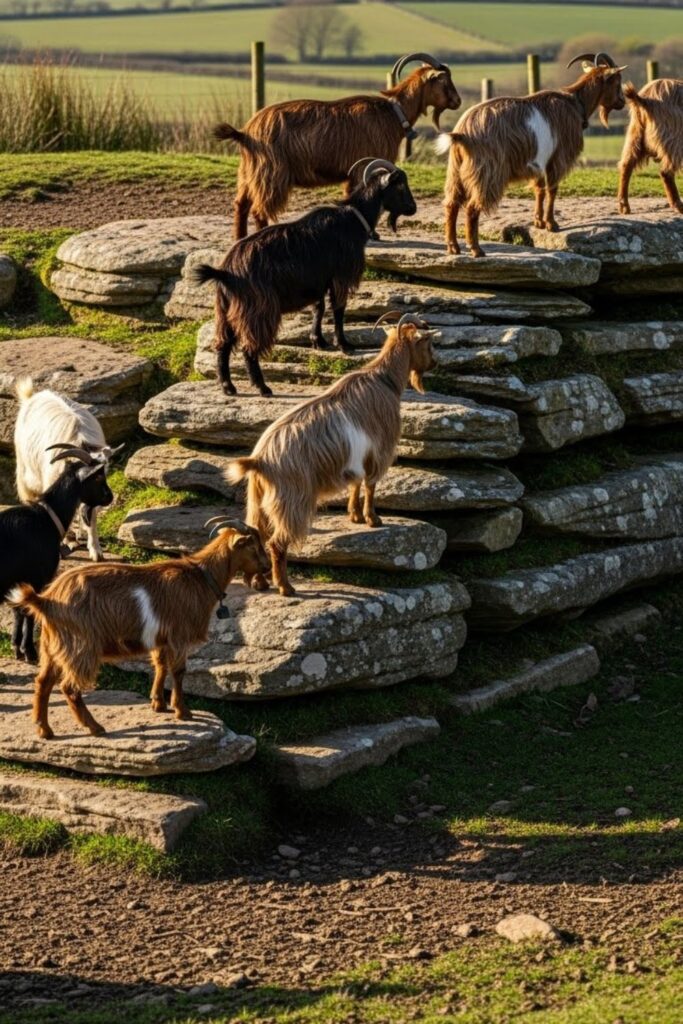
Rock Steps
Uneven terrain cultivates a more resilient equilibrium than a perfectly level surface ever could. A series of sizable arranged in a staircase-like the rock formation provides a natural climbing venue.
Keep each step broad and low, so the hooves make contact with the ground flat. To keep the bottom stones from moving, they must be buried.
This configuration works well for pasture pens especially in dry areas, where wood breaks down quickly. Goats frequently like surfaces that have some texture.
Brush Station
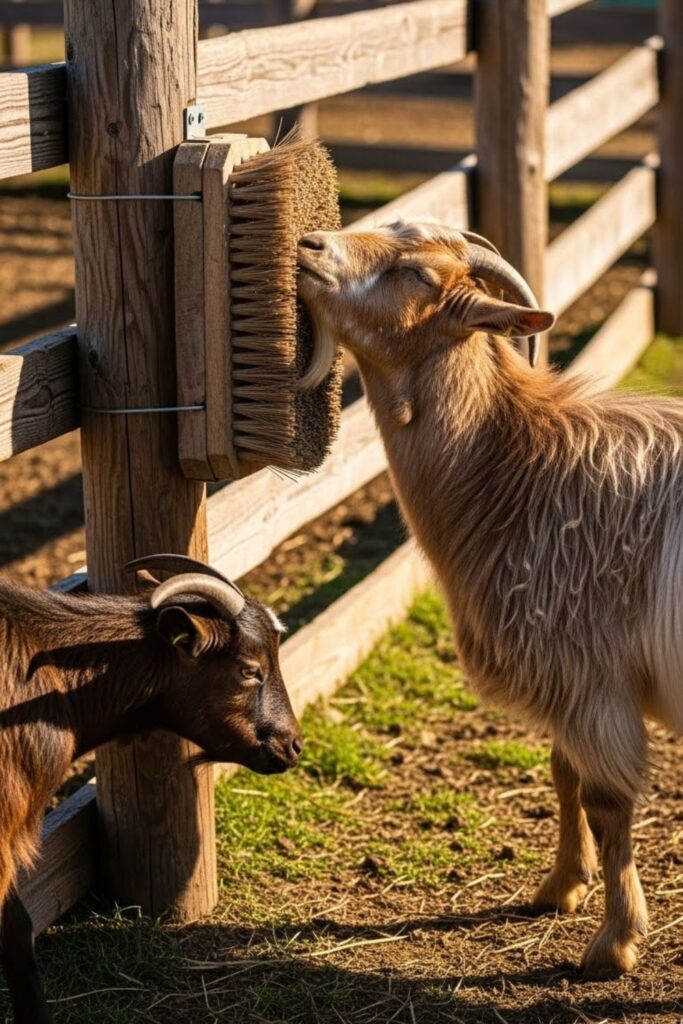
A good rubdown is better than a climb. A stationary brush, affixed to a post or wall, provides goats with a designated scratching area.
Sparing them, then, to shield them from their destructive inclinations. Position it at shoulder level. This ensures a comfortable pressure, eliminating any awkwardness.
A well positioned, low step transforms the act of ascending into something almost effortless. This approach is effective best in regions when cattle are now often found.
Sand Mound
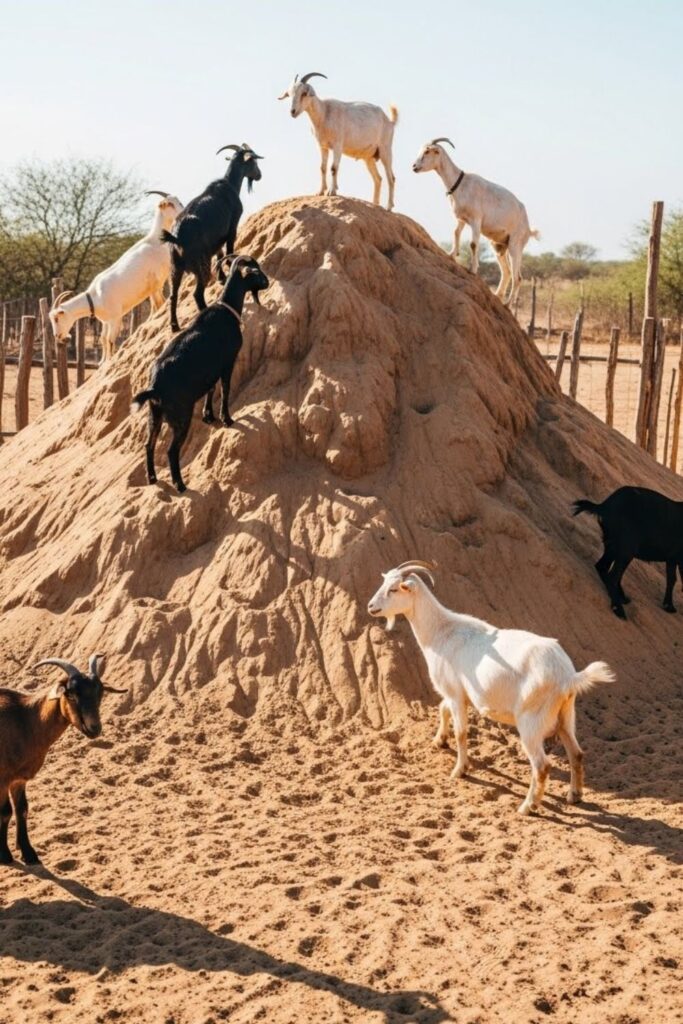
Excavation shifts happen fast. A mound of tightly packed sand or mud provides goats with less strenuous climb, different tactile experience than what they get from the wood.
Gentle slopes are better than steep climbs; this design enhances traction. Regular updates keep the audience interested.
This approach thrives in warm, arid environments. It’s ideal for areas where hooves naturally wear down, and where goats relish the opportunity to dig and climb.
Corner Ledge
Fence corners attracts climbers people are often pulled toward a location, even if they haven’t mapped out a particular itinerary.
A narrow ledge, expertly built around a bend, offers goats a perfectly good place to settle down. Keep the height manageable and the length brief to avoid a messy look.
In this situation, functioning is more important than other aspects. Strong brackets are essential.

Shade Tunnel
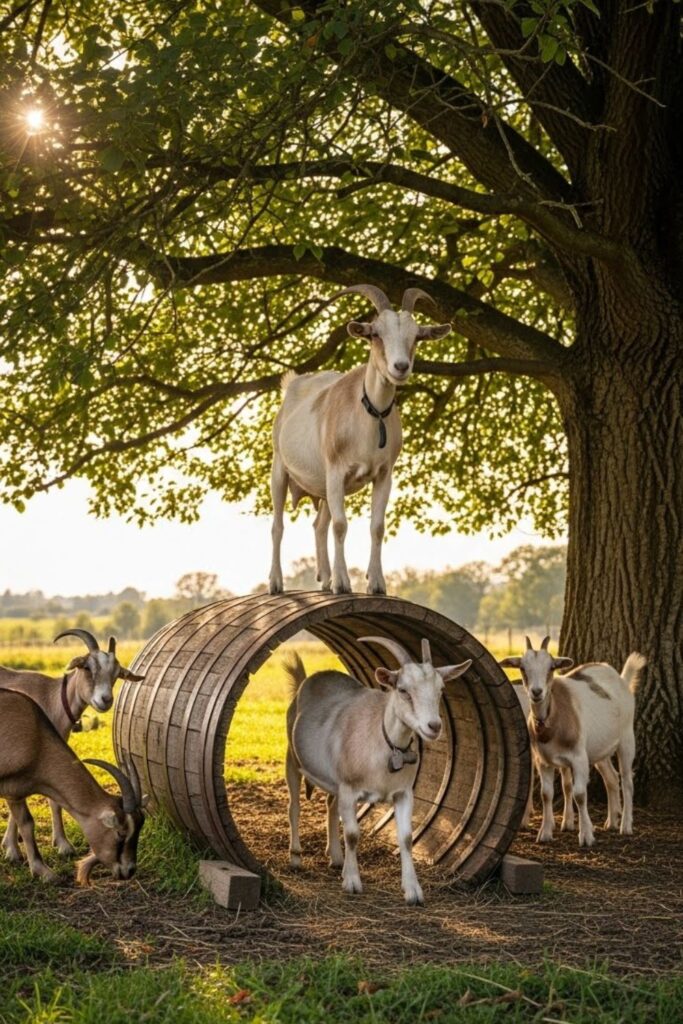
Heat kills activity quicker than boredom. A low, wide tunnel placed under shade invites goats to the walk through, stand on top.
Keep the entrances clear and easy to navigate; we don’t want anyone getting hung up. Adding rough surfaces up above allows for some climbing without the need for elevation.
This setup is ideal for warmer climates, offering goats a way to roam around without constant exposure to direct sunlight.
FAQs
Can goats get hurt using DIY playgrounds?
Absolutely. If the arrangement is unstable, teetering on a slope, or forcing the goats to jump down from distance, you’re just begging for disaster.
Goats are, without a doubt. However, they aren’t fans of a shaky descent. Keep platforms low, ramps wide, and surfaces sturdy.
Anything that shifts when you give it a nudge can cause goats to slip or lose their nerve, making them less likely to use it safely.
How often should you change or rearrange goat playgrounds?
Regular, little adjustments every several months can keep goats interested. A simple change, like moving a slope, spinning a platform, or adding just one additional element.
Goats are good at noticing changes, and a new pen plan helps reduce fights over preferred locations. This encourages more peaceful and even movement around the pen.
You may like to read!

Fasial is the founder of the Fizzy Flare. He has been a passionate blogger since 2021. He ran three different websites in the past few years. Now he is focusing on Fizzy Flare to build an audience and help them organize their life.