16 DIY Cat Tower Ideas For 2026
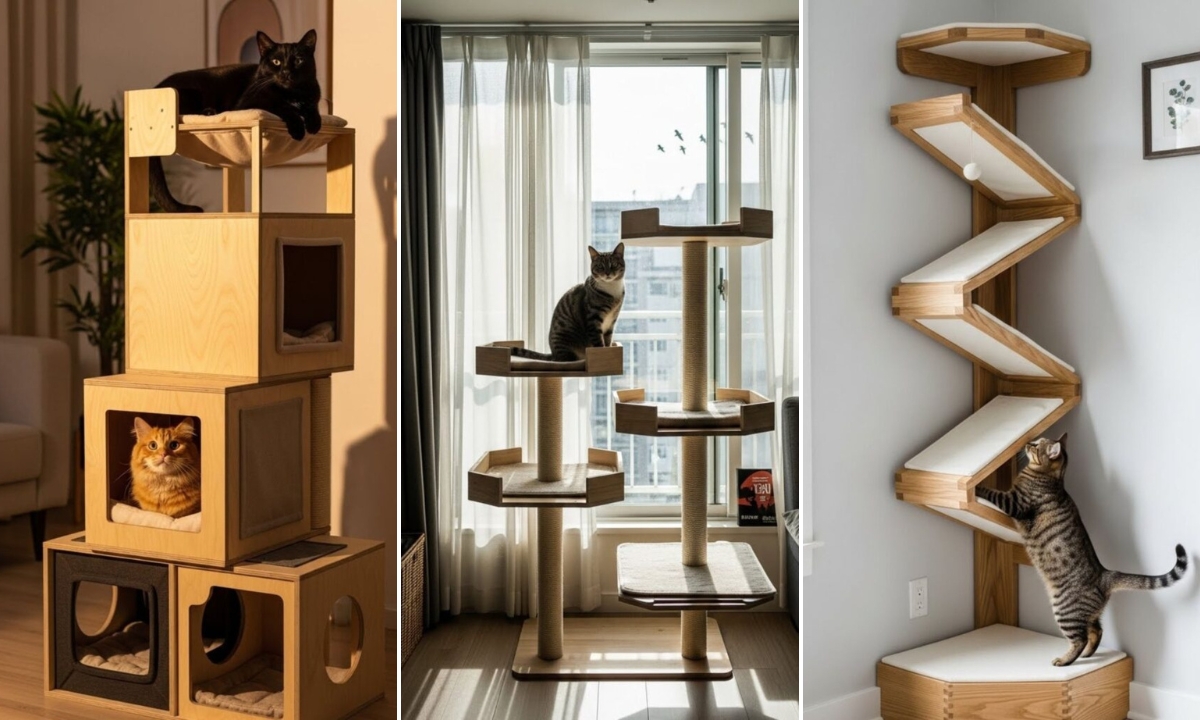
This post may contain affiliate links: full affiliate disclosure.
You’ve likely gazed at cat towers and had the same reaction as many: they’re either a financial burden, poorly constructed, or simply too large for your living area.
And if you’ve ever purchased a budget-friendly option, you’re already aware of how quickly they become unstable or are disregarded.
Constructing your own seems appealing until you start thinking about tools, safety concerns, and the possibility of failure.
In this article, I’ll share 16 popular DIY Cat Tower ideas you can switch to in 2026.
What Materials Do You Need for a DIY Cat Tower?
Building a cat tower doesn’t require a fortune or specialized equipment. Choosing the appropriate materials is crucial; the wrong ones will sink your project. Start strong.
Plywood is a good choice since it resists warping. The vertical supports can be constructed using either substantial hardwood beams or PVC pipes, as long as they can handle the load.
Wrap the scratching posts with sisal rope. Twine won’t cut it; your tower will be a shambles in no time. For the platforms, repurpose old carpet, rugs, or fabric your cat already enjoys.
Save this article for later! 👇👇
Can cats sleep in a cat tower?
Absolutely, cats do sleep in cat towers, and a good number of them actually favor them over the floor or a traditional pet bed.
Cats are drawn to elevation; it gives them a sense of security and dominion over their surroundings.
If your cat already finds comfort in napping on shelves, the couch, or the back of a chair, a cat tower provides a comparable feeling.
For a good night’s sleep, the platform needs to be wide, strong, and soft. If the space feels cramped or unstable, your cat won’t stay put, no matter how tall it is.
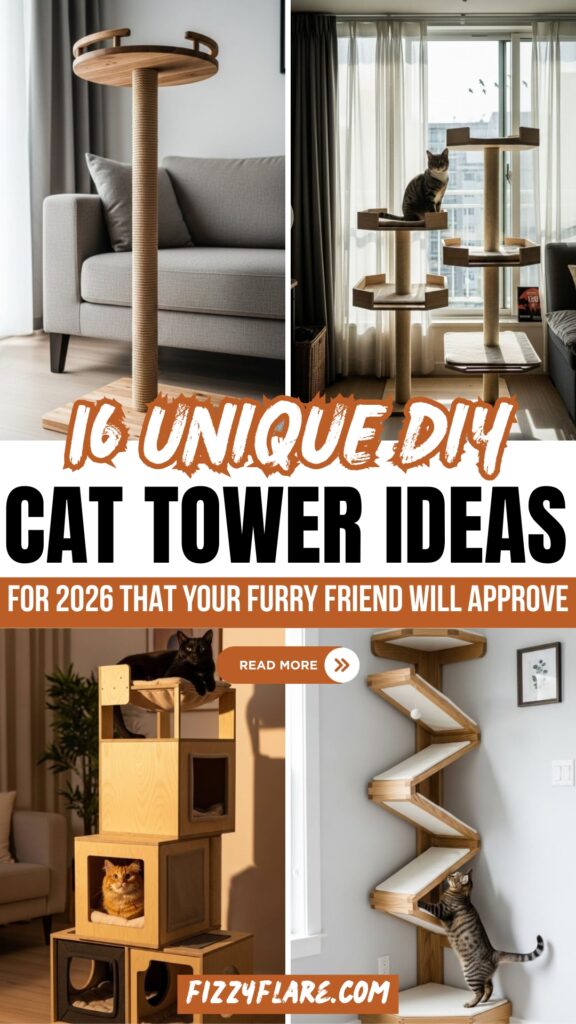
Vertical Playground
Height is the key factor in this situation. For cramped spaces, a floor-to-ceiling arrangement is ideal. It maximizes vertical space, giving your cat plenty of area to leap, perch and explore.
Sturdy pillars instill confidence, the staggered arrangement of platforms adds visual interest, breaking up the uniformity of a single, straight pole.
To construct a comparable setup, begin by securing tension poles from the floor to the ceiling. Then, place the platforms at reasonable distances for jumping.
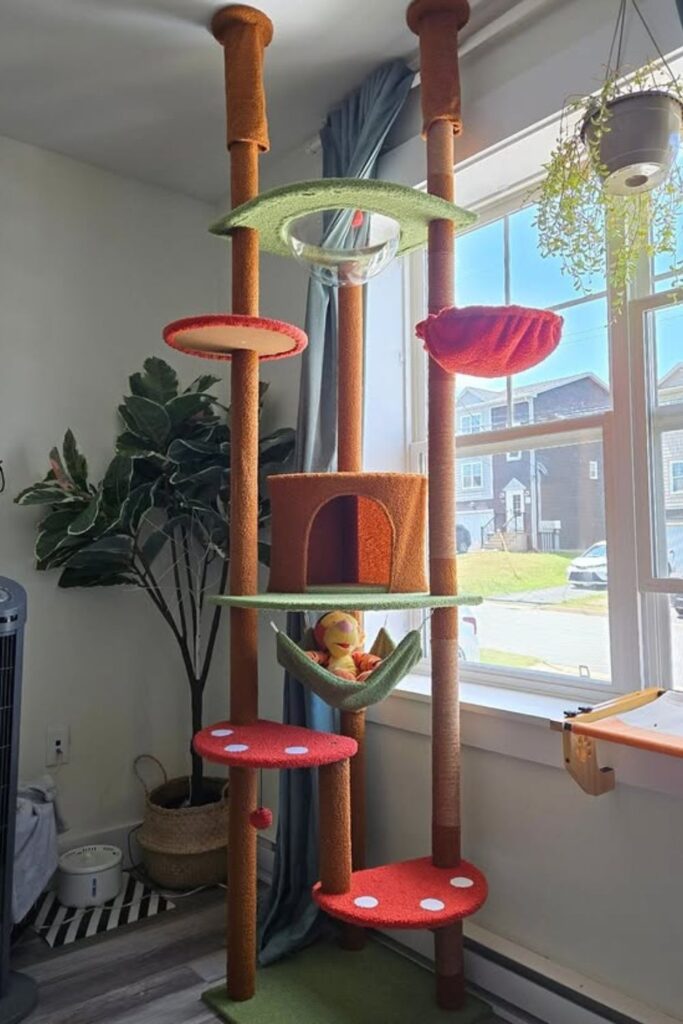
Staggered Steps
Cats don’t always want to climb straight up they prefer short jumps with pauses in between.
A staggered design is ideal for households with multiple felines, or for senior cats who appreciate a vantage point but require more frequent rest periods.
Generously sized platforms offer ample space for lounging or dozing without the pressure of a quick exit.
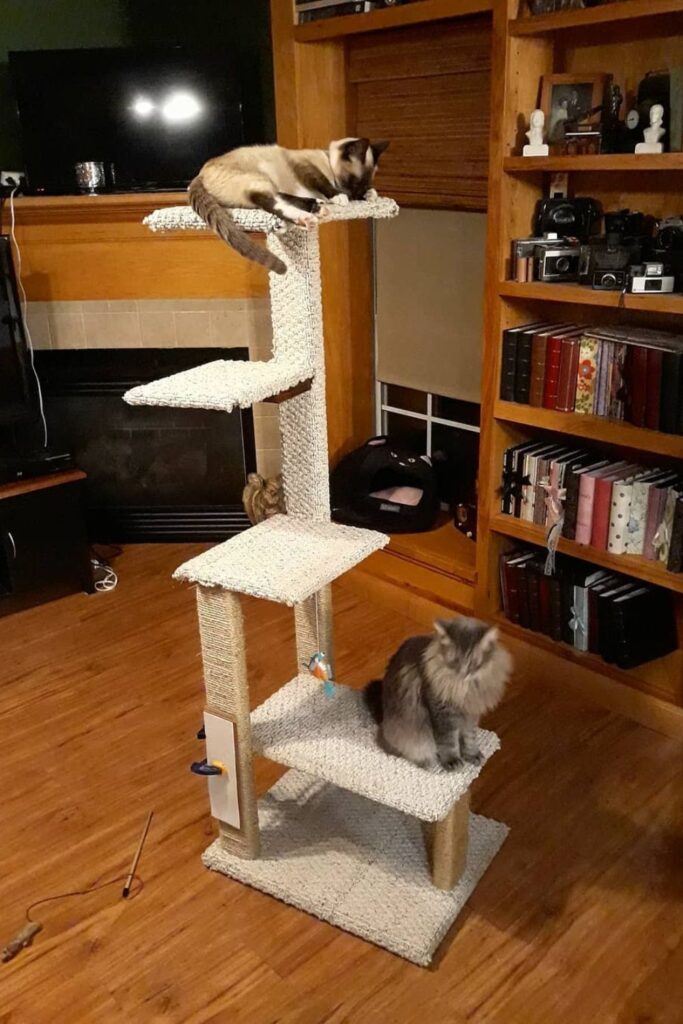
Modern Column
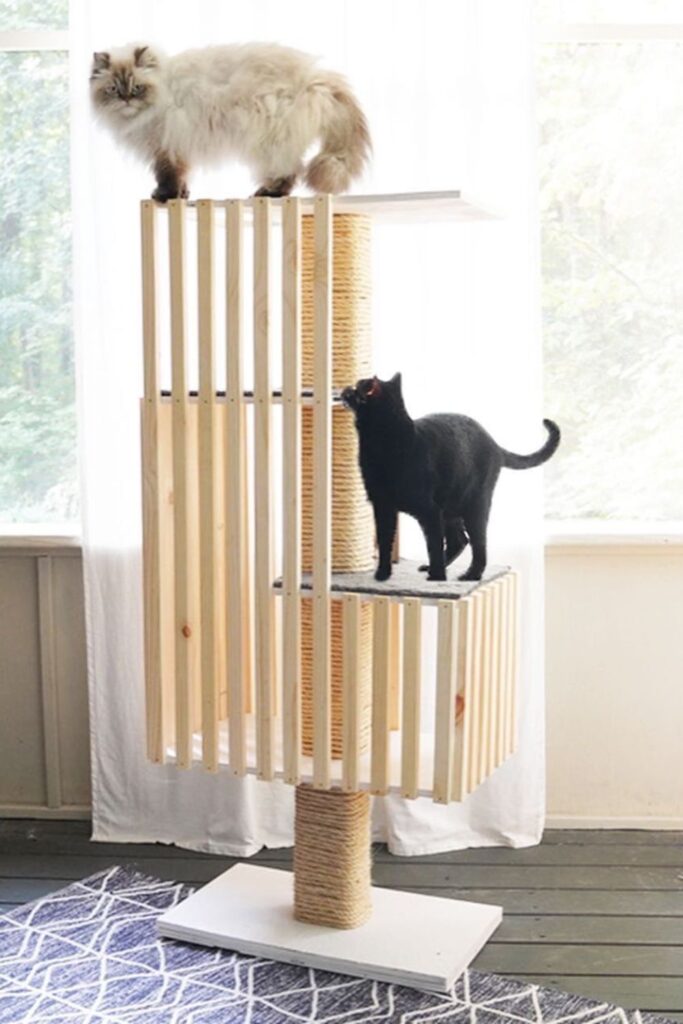
Clean lines can still work hard for your cat. A vertical column like this fits best in homes where the design matters just as much as function.
The open slat design creates a feeling of space, and the wrapped center pillar is a smart touch. It protects against scratches, preserving the overall appearance.
To make this work, you need a delicate balance: a sturdy, single perch, expertly built, and enough of room for a cat’s leaps and bounds.
Basket Tower
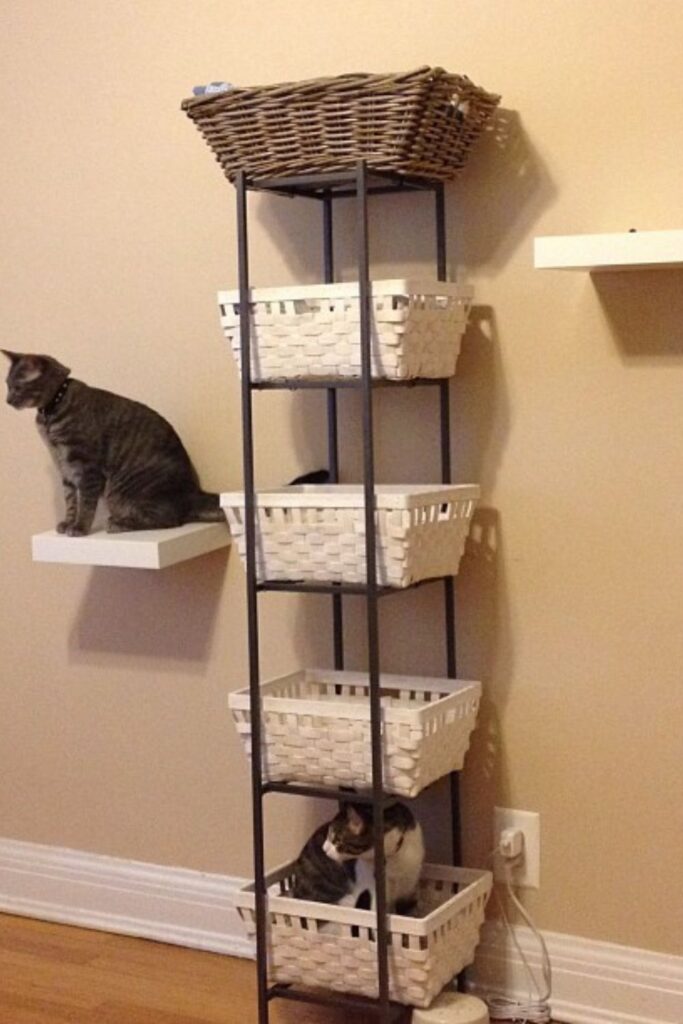
Cleverly arranged storage furniture can serve the a dual purpose: a cat tower. This kind of basket arrangement is ideal for the smaller spaces, especially when you’re short on floor area.
Each basket becomes a cozy haven, and a welcome change from the exposed spots cats often choose for their naps.
For this setup, secure a sturdy shelving unit to the wall, arranging the baskets so they’re within easy reach.
Design Statement
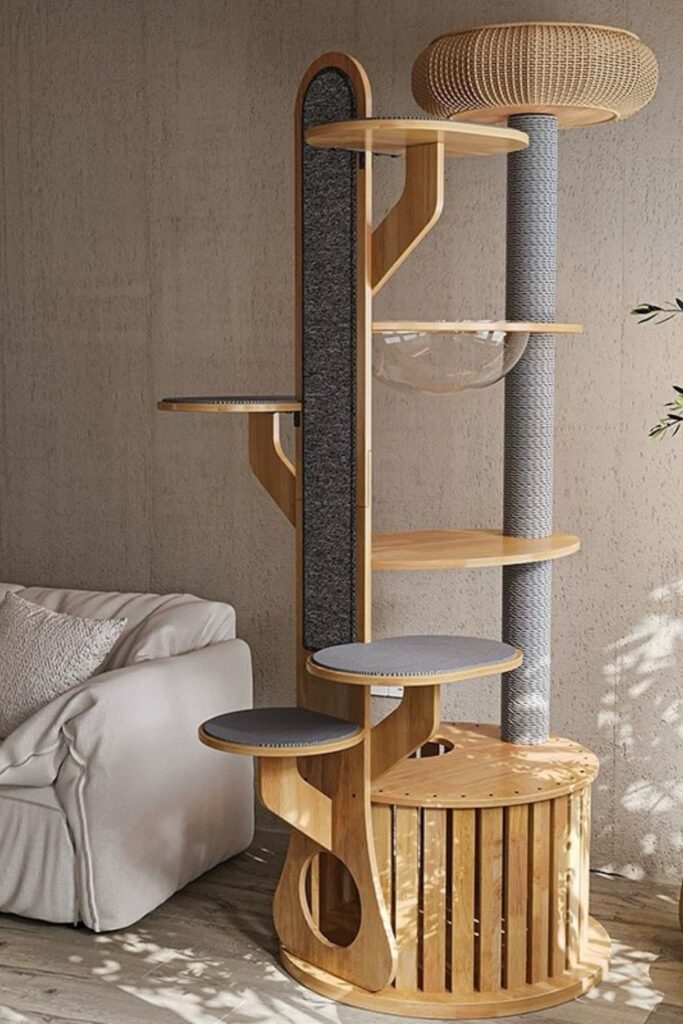
Furniture-grade builds like this are perfect for living areas where you want pet stuff to blend in, not draw attention.
Curved wood, a blend of textures, A cushioned platform can transform a cat tower from a mere object into a design element.
Constructing something of this nature demands a tiered strategy: a robust foundation, complemented by platforms placed where a cat would instinctively jump.
Comfort Stack
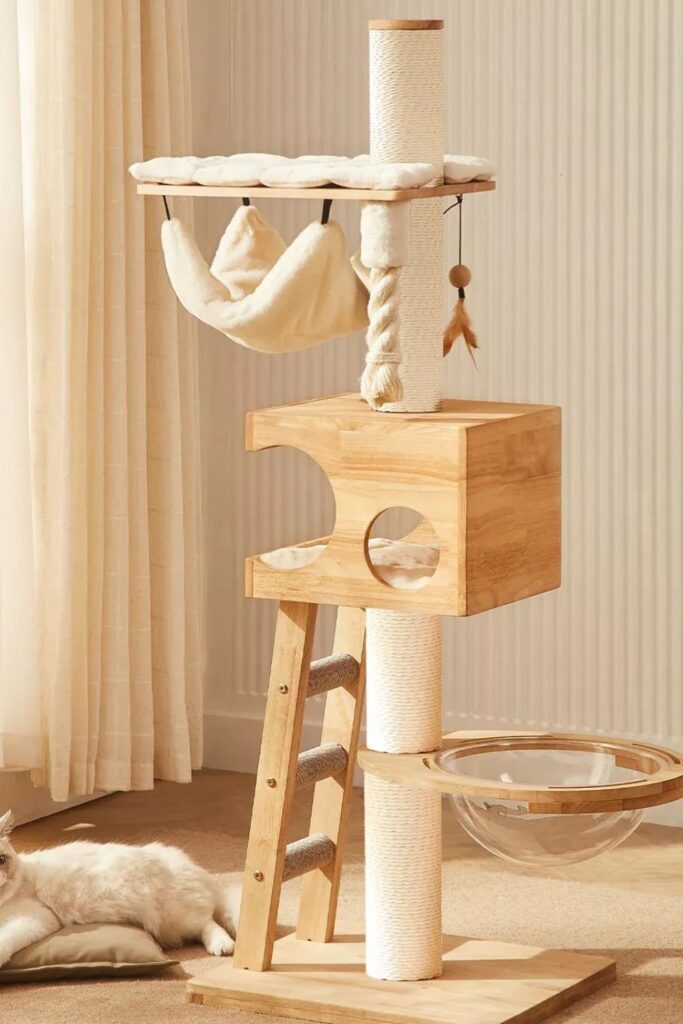
Cats, those creatures of discerning taste, aren’t content with a single resting place. That’s exactly why this arrangement is so attractive.
A combination of cozy hideaways and open spaces or suspended hammock allows your cat to adjust their lounging style, and all while remaining elevated.
Begin with a strong base, like a sturdy structure. Next, include a hidden compartment, a soft fabric sling for relaxation, and a clear bowl to observe the surroundings.
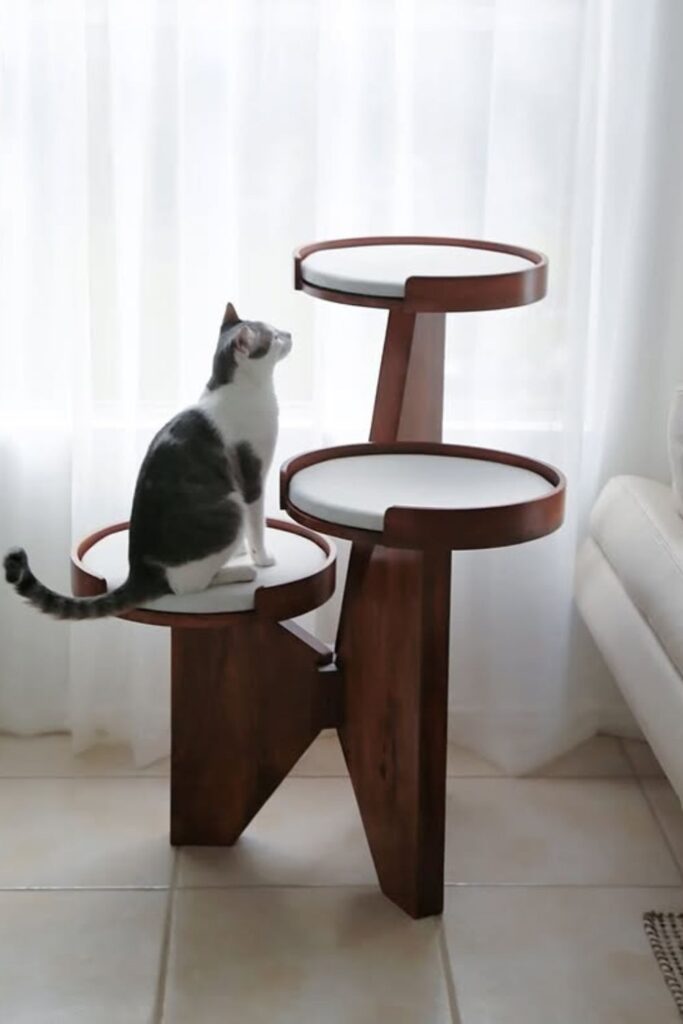
Sculpted Steps
The design incorporates spherical platforms, each positioned at a distinct height. This structure allows for a gradual increase, And therefore avoid the needs for sudden changes.
It’s a perfect fit for tranquil settings, when a light touch is essential.
The devil, as the saying goes, lurks in the minutiae. Think about clothes that offers a bit of room to move and pants designed to last or seams that don’t irritate.
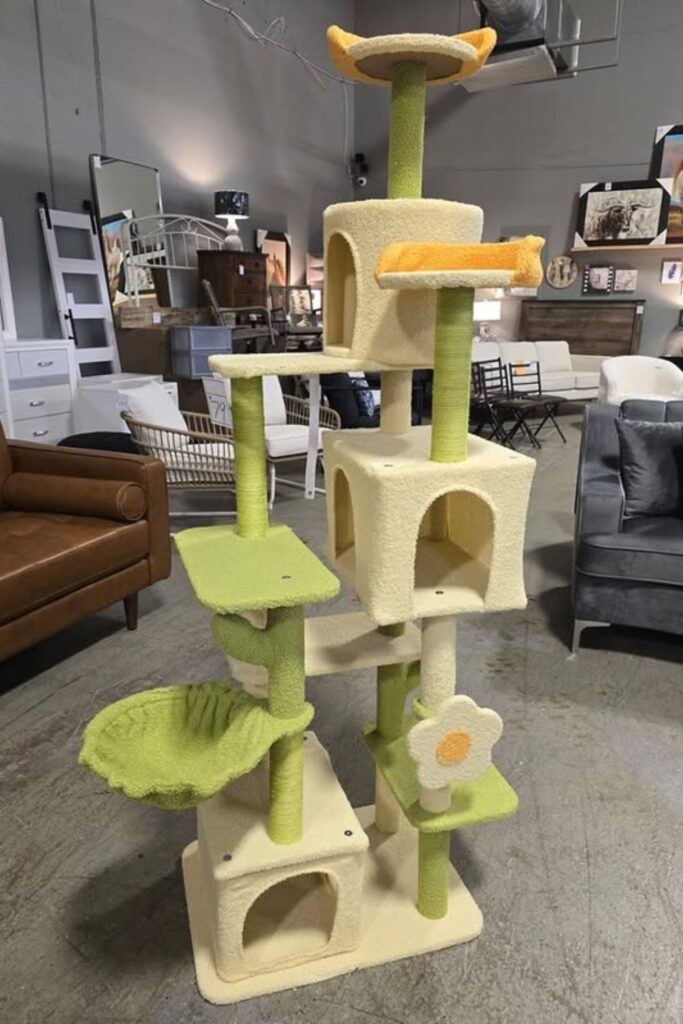
Play Zones
Play Zones Cats, especially those with a lot of energy, require more than simply a cozy spot to rest. A tower transforms into a daily challenge, complete with multiple levels, compartments.
This setup its especially beneficial for younger cats or households with multiple feline residents, since playtime can help diffuse any potential friction.
A more nuanced approach is needed to achieve this. It’s more than just piling things up; it’s about bringing together a multitude of elements. Imagine a hidden space, A viewpoint, and last location.
Branch Climber
A cat’s experience of a tower is altered by the presence of natural wood. Branches that aren’t all the same improve your hold, offer different angles, and make climbing feel more natural.
This type of construction is perfect for patios, sunrooms, or any property that embraces a rustic look.
The undertaking starts with sturdy, desiccated branches, anchored securely on a wooden platform. These platforms are then included, offering a place for the paws to rest.

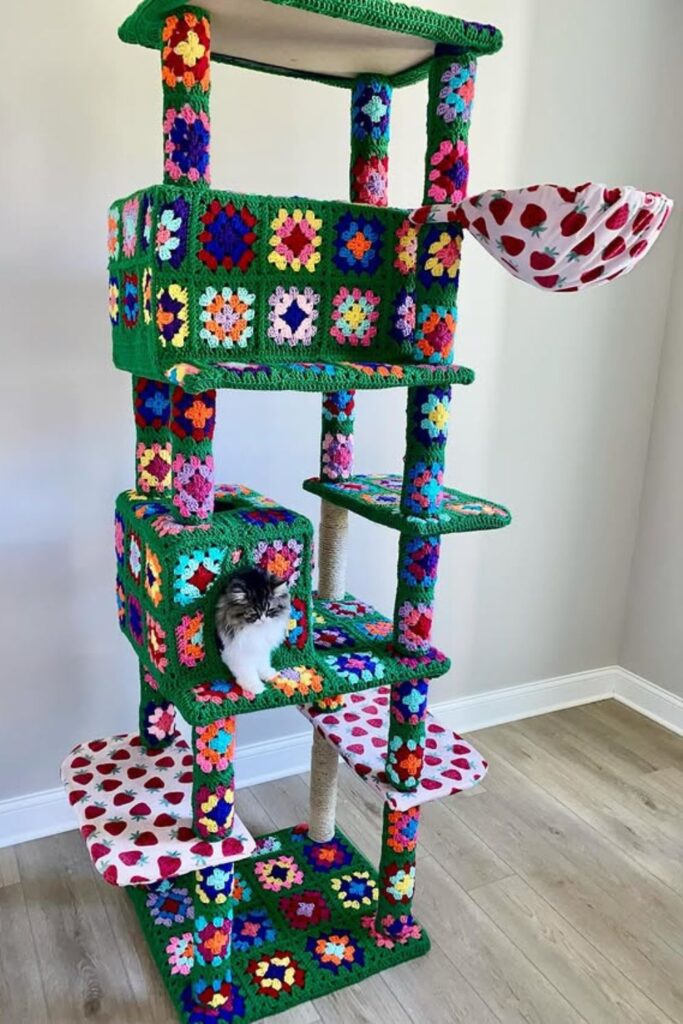
Cozy Crochet
Soft textures impact a cat’s behavior on a tower. Platforms wrapped in yarn and cushioned edges encourage long lounging, more than just quick leaps.
This design is ideal for indoor cats that value softness and warmth additional than the abrasive surfaces of typical scratching posts.
To replicate this, and begin with a sturdy wooden frame, then cover areas frequently used by the cat with closely stitched panels or thick fabric.
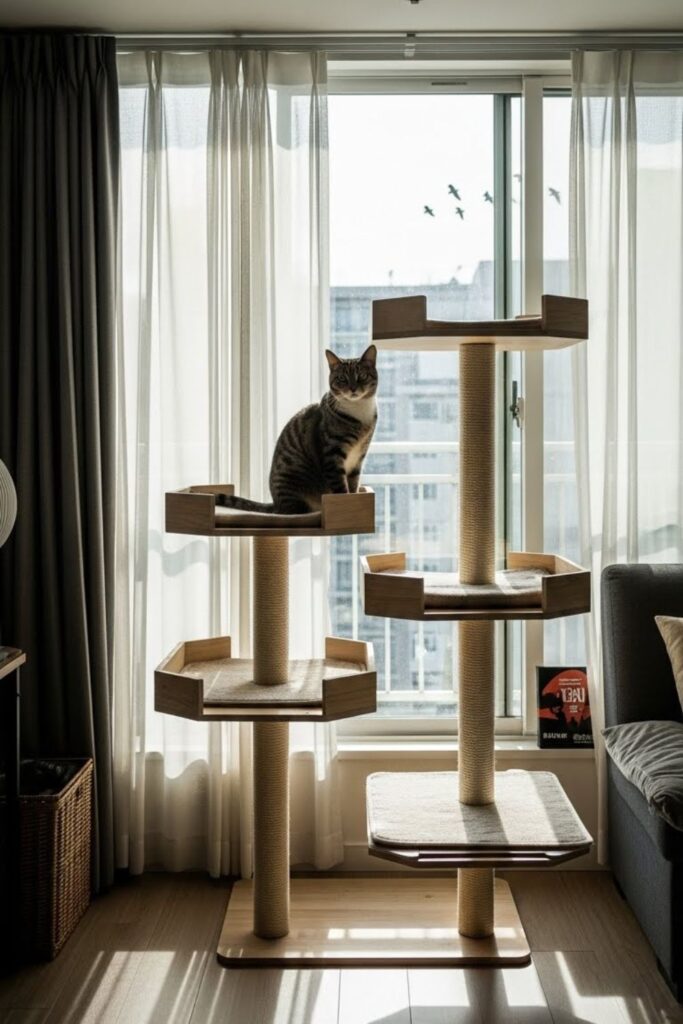
Window Watch
The frequency with which a cat uses a tower is influenced by sunlight. A structure situated right in front of window transforms the peaceful moments into a source of amusement.
Wide platforms give cats a wonderful spot to see the world unfold. They can spy on birds, or simply enjoy the show of people going about their day.
For a similar effect, a tower of modest to medium height, firmly anchored near the window, would be perfect.
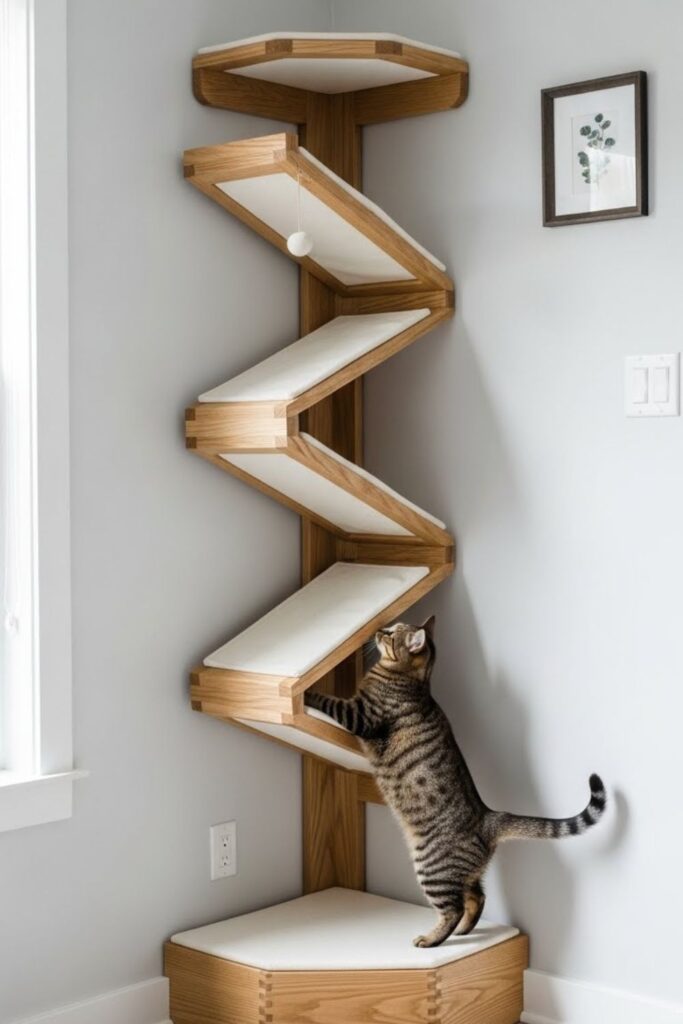
Corner Climb
Corners often end up as dead zones, although cats are natural climbers. A tower designed for corners is perfect for those awkward areas.
Especially where other furniture just won’t work, making it a smart solution for smaller homes.
Angled platforms offer a way for cats to climb without needing to jump great distances.
To create your own, start with a triangle base that fits snugly into a corner, and then position shelves in a zigzag pattern.
Ladder Route
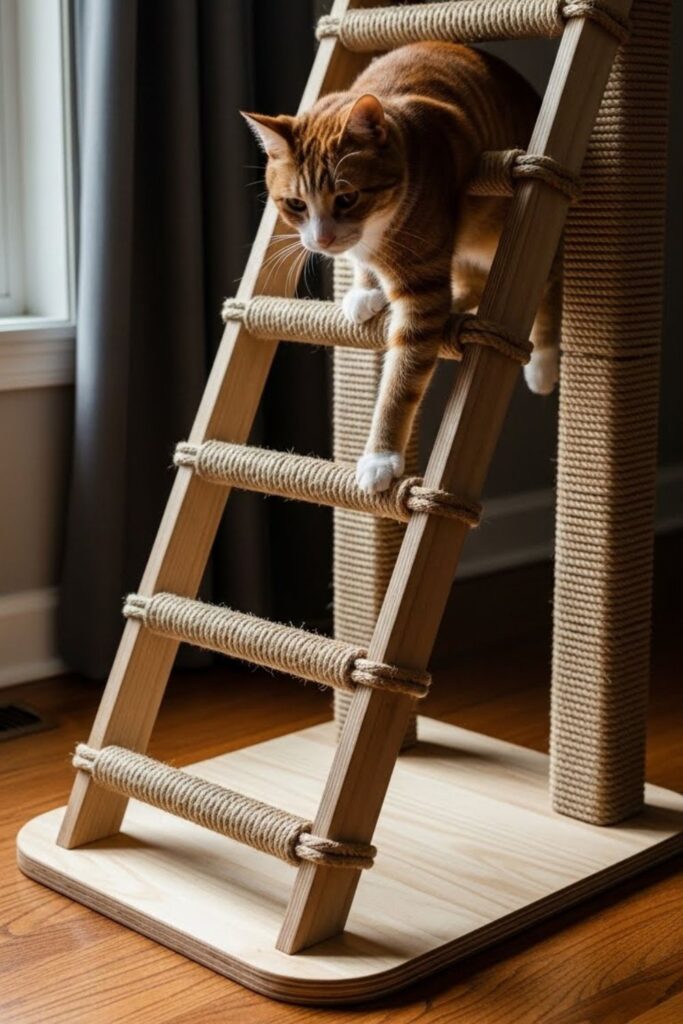
Some cats appear to prefer climbing to jumping. A ladder setup works well for senior cats or those who aren’t as spry and prefer a gentler ascent.
Inclined steps offer a gentler approach to climbing, reducing stress on the body’s joints as they provide a lift.
To build this, you will need to connect large wooden rungs to a strong framework or walls. And each step should be provided with a grip cloth or rope to reduce the risk of slipping.
Hidden Den
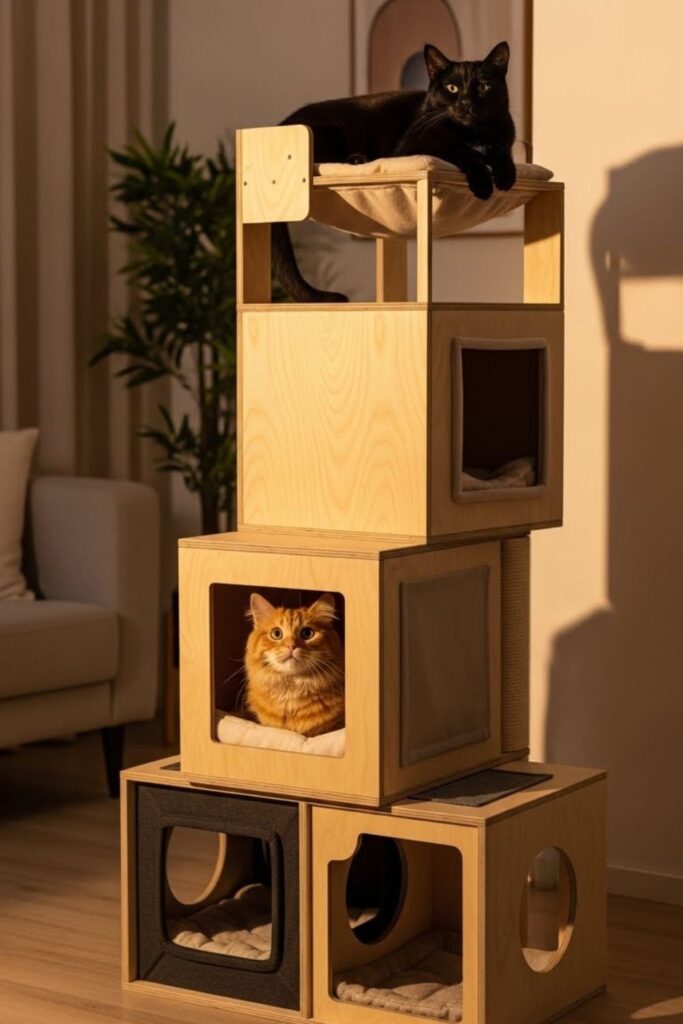
Sometimes, a cat’s idea of a good time is to be completely invisible. A tower, with its enclosed spaces, offers a measure of control over privacy.
Box-style portions work wonders in houses where life is a constant whirl. To do this, build a structure using cube-shaped compartments.
Incorporate open platforms both above and below the compartments, enabling cats to traverse between their hiding spots and vantage points without exiting the building.
Minimal Pole
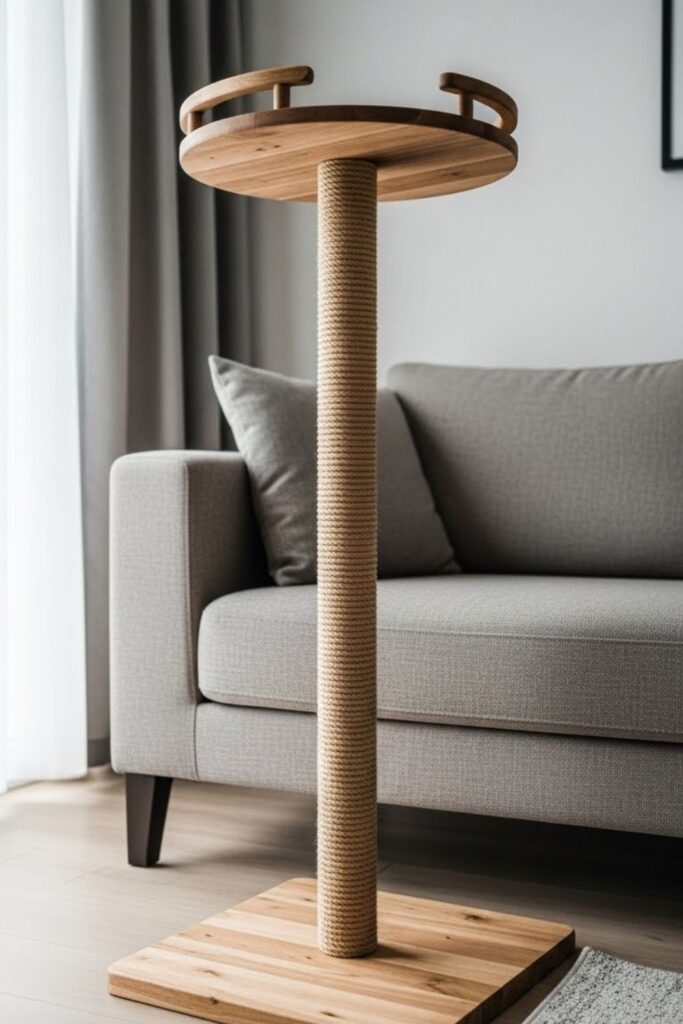
Not every home needs a sprawling playset. A single-post tower is perfect for cats and that want to scratch and watch the world go by from above, but still want to keep things close to home.
This arrangement fits seamlessly with both sofas and workstations, staying out of the way. Construct it with a sturdy post, a substantial foundation, and a well-padded seat.
When the scratching surface hits that sweet spot, your cat will abandon your stuff in favor of it.
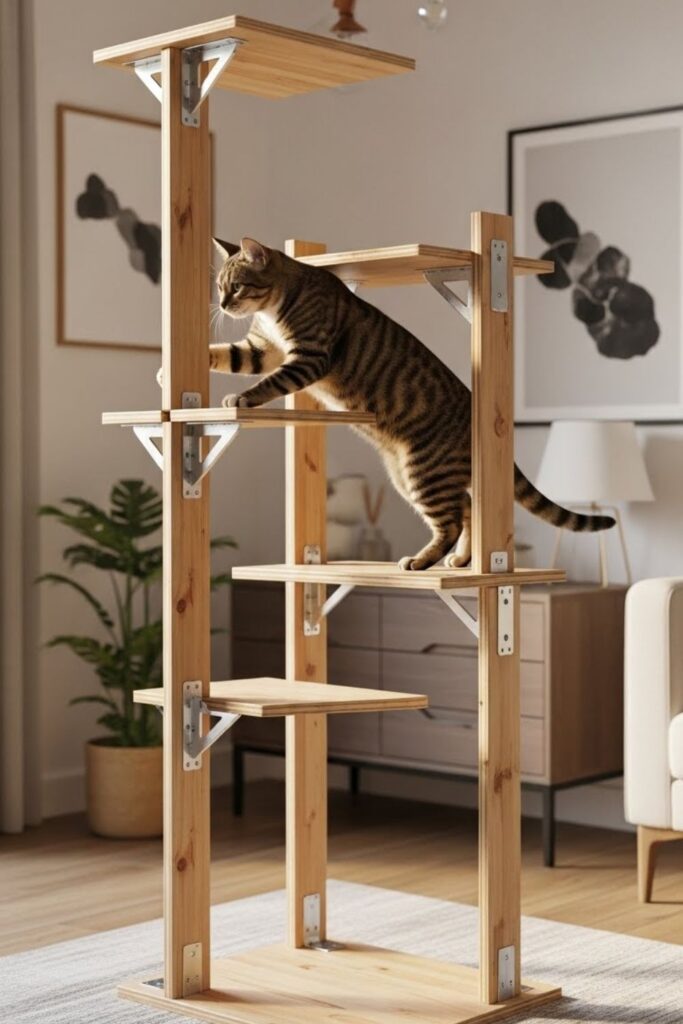
Modular Build
Adaptability is crucial when dealing with changing spatial and operational needs. Modular towers offer the flexibility to adjust their height as needed.
This method works particularly well for young kittens, or for homes where the furniture gets moved around a lot.
The technique requires developing several platforms, each secured with brackets, rather of reliance on fixed attachments. Begin with a simple design, and then slowly boost its sophistication.
FAQs
Is a DIY cat tower safe for large or heavy cats?
Absolutely, but the design must account for the weight. Big cats require broader platforms and sturdier posts; otherwise, the whole thing will be unstable.
A substantial base is far more critical than how tall the tower is. If the bottom is solid, the rest will remain steady.
Avoiding lightweight materials and securing the tower to a wall significantly enhances safety.
How tall should a DIY cat tower actually be?
Taller isn’t always the way to go. Most cats seem to prefer a tower that stands somewhere between four and six feet, provided they can ascend gradually.
It’s the shorter platforms, spread out properly, that really make a difference, rather than a towering height.
If your cat can climb without having to leap great distances, they’ll really use the tower, rather than giving it a wide berth.
You may like to read!

Fasial is the founder of the Fizzy Flare. He has been a passionate blogger since 2021. He ran three different websites in the past few years. Now he is focusing on Fizzy Flare to build an audience and help them organize their life.