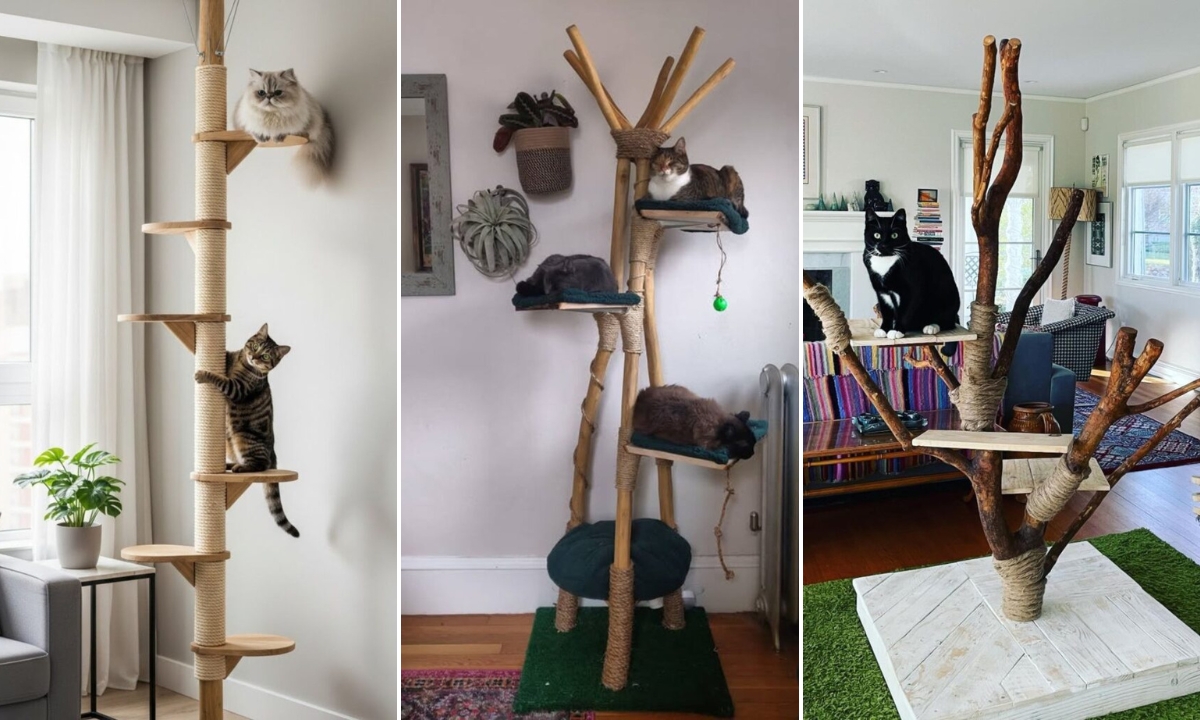
27 DIY Cat Tree Ideas For 2026
This post may contain affiliate links: full affiliate disclosure.
Every person who has a cat runs into the same problem. You want a cat tree, but your space is small, the nice ones are too expensive, and the cheap ones look bad and still wobble.
Your cat jumps on shelves because they want to be high up, not because they are “bad.” You know a cat tree will help, but you don’t know how to make one that fits in your environment.
In this article, I’ll walk you through 27 DIY Cat Tree Ideas you can try in 2026.
Contents
- 1 How Can You Build a Cat Tree in a Small Space?
- 2 What Materials Are Used To Make a Cat Tree?
- 2.1 Plush Fantasy
- 2.2 Natural Branches
- 2.3 Corner Tower
- 2.4 Vertical Habitat
- 2.5 Modular Stacking
- 2.6 Twin Perches
- 2.7 Compact Condo
- 2.8 Wall Ladder
- 2.9 Multi-Level Play
- 2.10 Window Bench
- 2.11 Sculpted Wood
- 2.12 Sculptural Stack
- 2.13 Basket Towers
- 2.14 Play Cabinet
- 2.15 Wall Trunk
- 2.16 Climbing Ramp
- 2.17 Lean Ladder
- 2.18 Floating Path
- 2.19 Wall Panel
- 2.20 Cube Loft
- 2.21 Cozy Basket
- 2.22 Ceiling Pole
- 2.23 Bookshelf Hybrid
- 2.24 Staircase Side
- 2.25 Radiator Lounge
- 2.26 Closet Climber
- 2.27 Sliding Panels
- 3 FAQs
How Can You Build a Cat Tree in a Small Space?
If your house is little, it’s wrong to strive to make it wider instead of taller. Cats don’t require room on the floor; they need room in the air.
Choose one corner or wall to start with and build up in stages. Use platforms that are spaced so your cat may climb without having to jump too far.
Make the foundation hefty yet narrow so it doesn’t tip over. If you don’t have a lot of floor space, choose wall-mounted shelves instead of a whole tower.
Building up instead of out gives your cat additional space to roam without taking away from your own space.
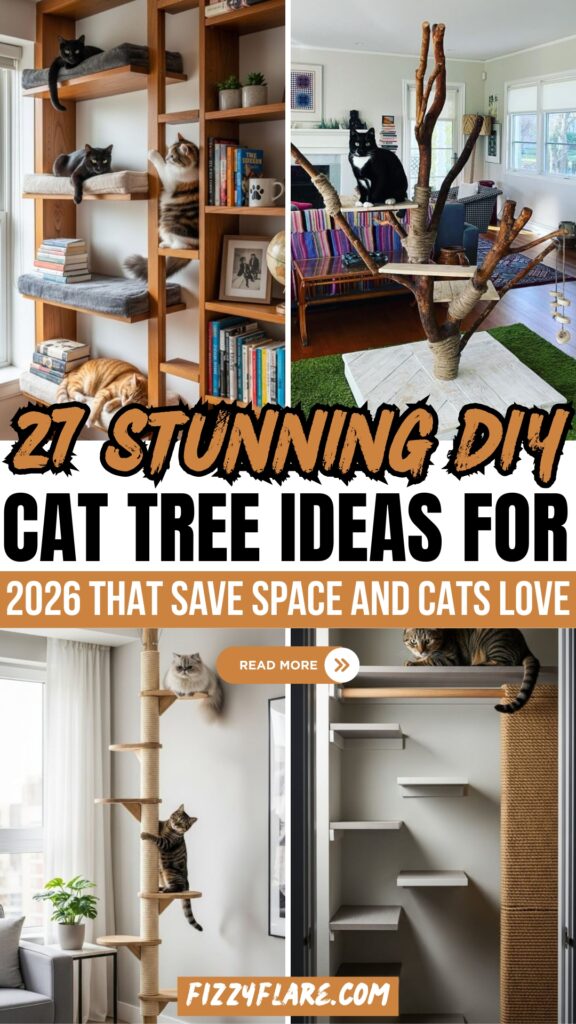
Save this article for later! 👇👇
What Materials Are Used To Make a Cat Tree?
You don’t need expensive materials to make a strong cat tree. Use wood or plywood for the base and platforms because they can hold a lot of weight.
For the vertical supports, use thick cardboard tubes or wooden poles. Tightly wrap the posts with sisal rope so your cat can scratch them without ruining your furnishings.
Put carpet scraps or fabric on the platforms to make them more comfortable. Don’t use something that feels flimsy in your hands since it will break when your cat jumps on it.
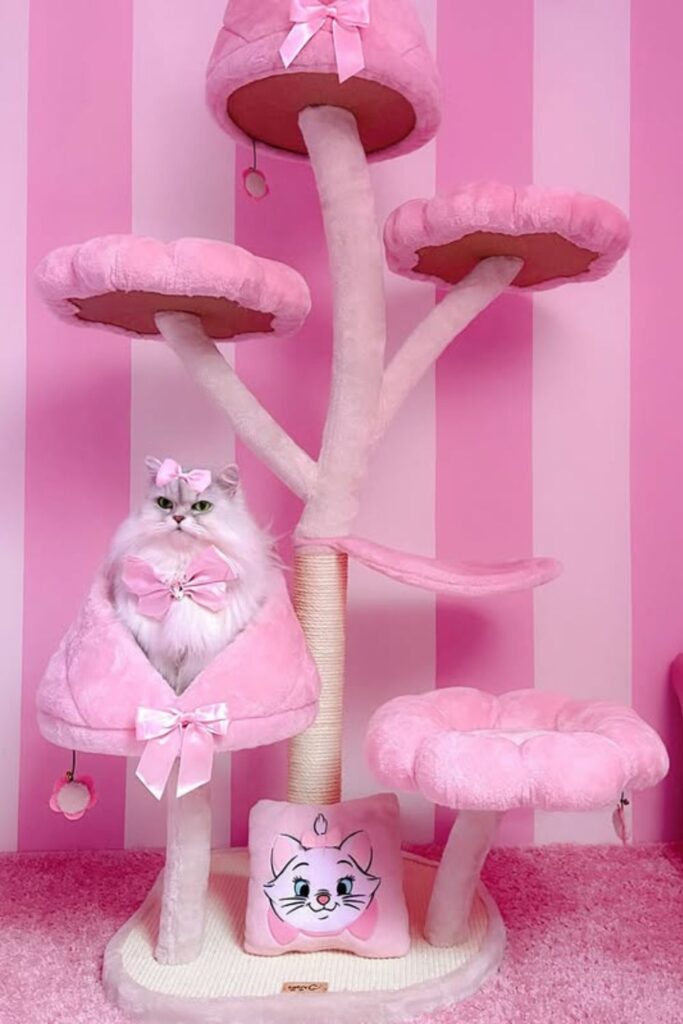
Plush Fantasy
Style-driven spaces benefit from cat furniture that blends in instead of standing out. Soft textures and playful shapes turn a basic climbing setup into décor.
To make this again, start by making a strong wooden structure. Then, add foam to the platforms and cover everything with fabric.
To keep scratching posts working, cover them with soft covers that hide the sisal. Best for bedrooms or studios where the cat tree can be seen.
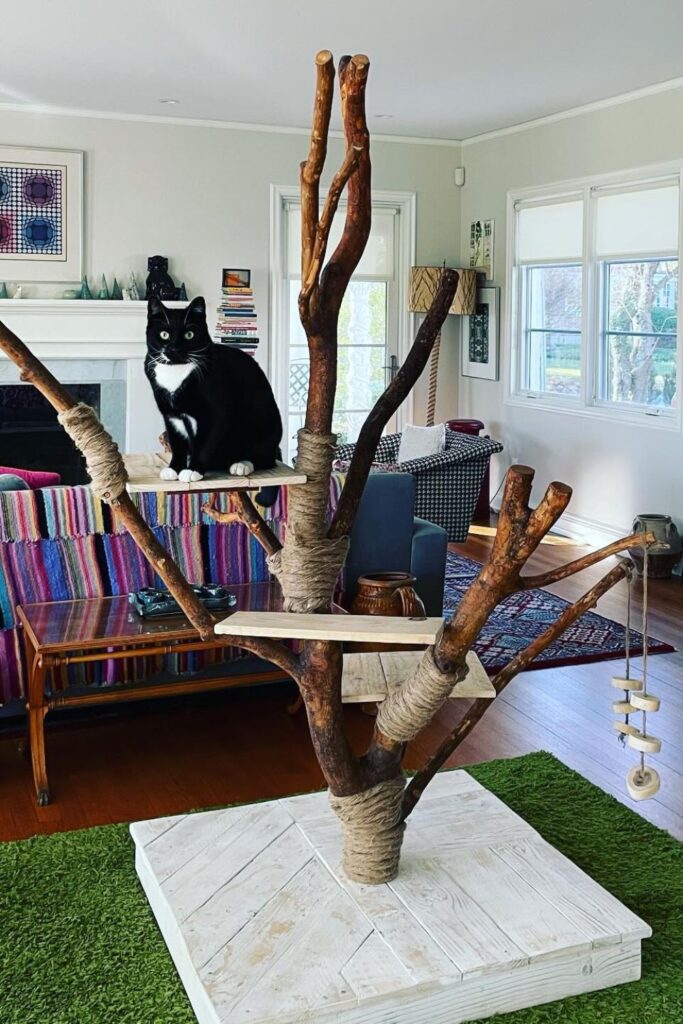
Natural Branches
Organic builds work best in living rooms where you want the cat tree to feel intentional, not added later.
The wood itself gives support to the building since the branches of the tree fall down.
Before putting everything together, dry and sand each branch, and then attach everything to a solid wooden platform.
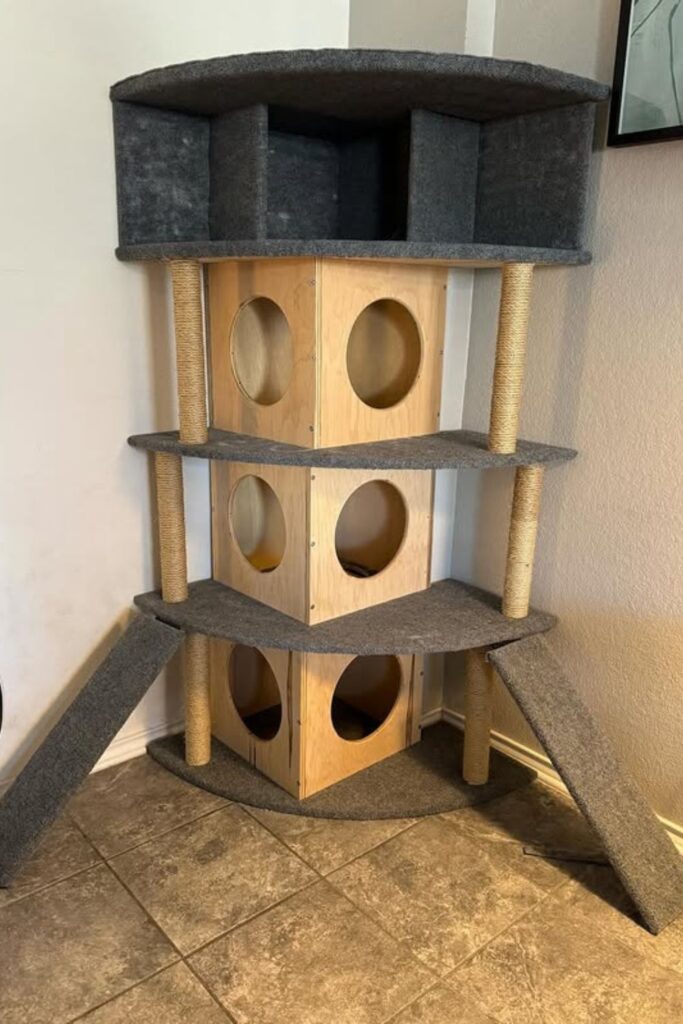
Corner Tower
Corners usually get ignored, which makes them perfect for vertical builds. Stacking box-style condos lets cats climb, hide, and rest without spreading across the room.
Make this again using plywood cubes with cut-out doors, and then connect them with stout scratching posts for support.
Ramps with carpet make it easy for cats to get from one level to another. Best for flats with limited floor area but plenty of height.
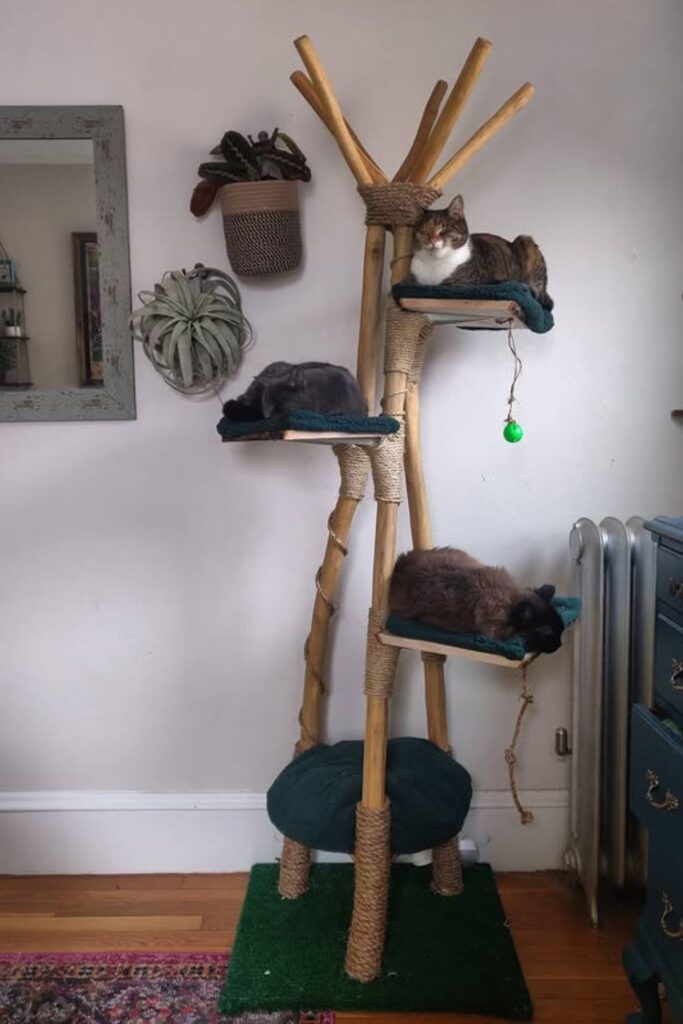
Vertical Habitat
Cats that compete for space need height more than width. Slim branch-style builds stack resting spots upward so multiple cats can claim levels without conflict.
To do this again, put natural wooden poles into a weighted base and then attach staggered platforms at varied heights.
Parts wrapped in rope also work as scratch areas. Works best in small places when there isn’t much floor space but there is a lot of vertical space.
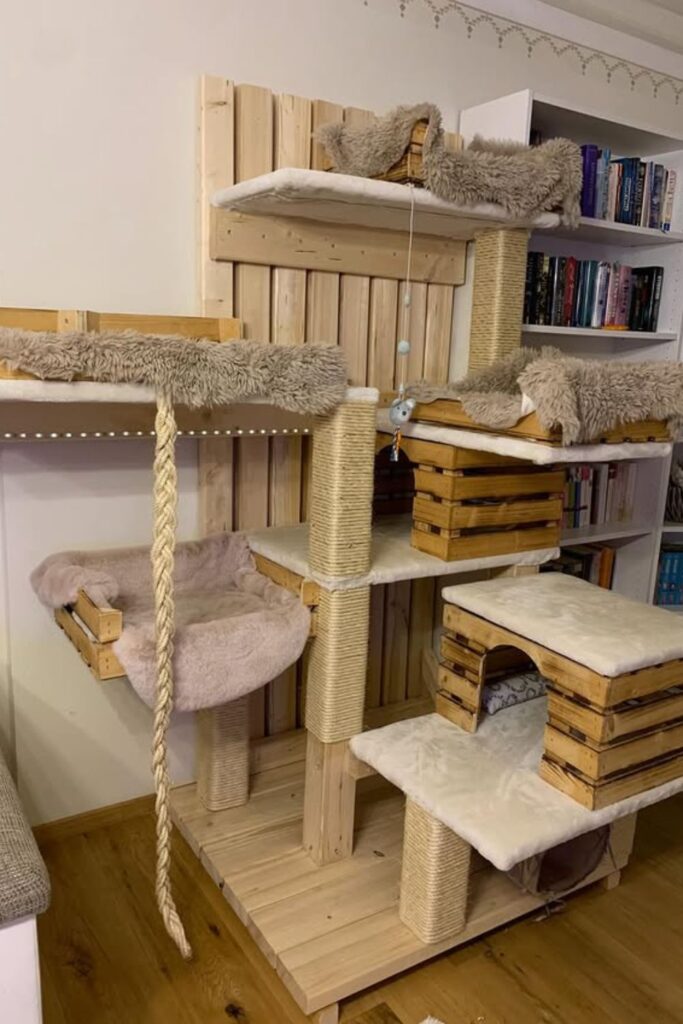
Modular Stacking
When cats are in different moods and have distinct routines, being flexible is important. In one build, wooden crates placed at different heights make places to sleep, hide, and walk.
Use stakes wrapped in rope to tie the boxes together and keep them on a strong basis to do this again. Soft cushions make platforms look nicer.
Best for homes with more than one person and the cats that need their own space without having to move things about.
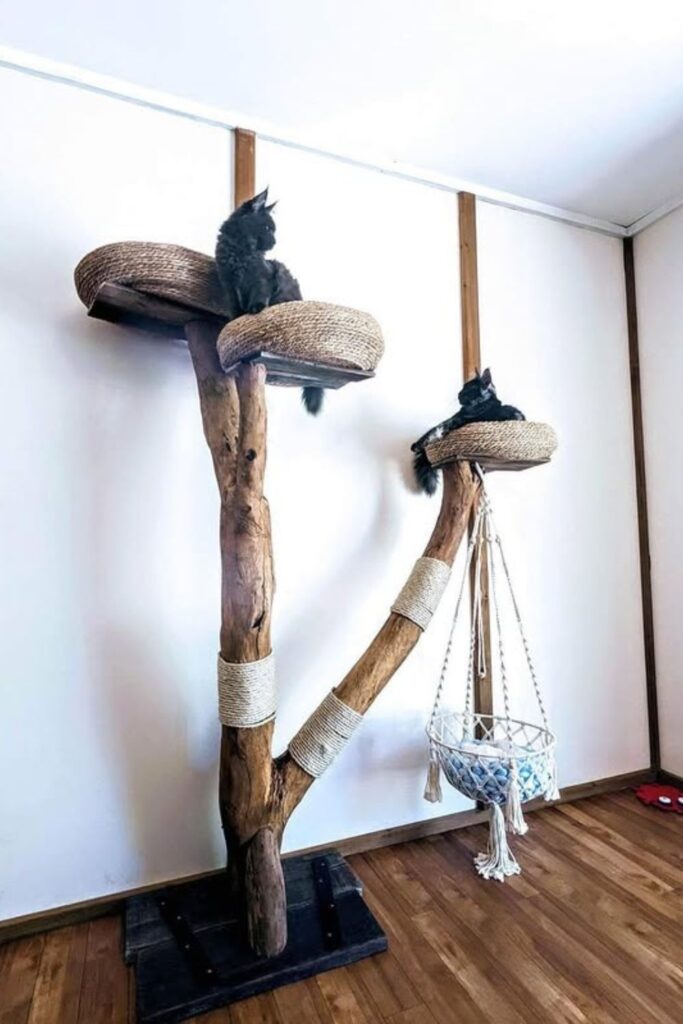
Twin Perches
Vertical builds solve one problem fast: cats want height without sharing. Split platforms give each cat a lookout while keeping the footprint small.
Use large, natural logs that are secured to a heavy base to make this again. Then add wide, round perches at varied heights.
Parts wrapped with rope take care of the need to itch. Works well in rooms with empty corners where cats can see everything from above.
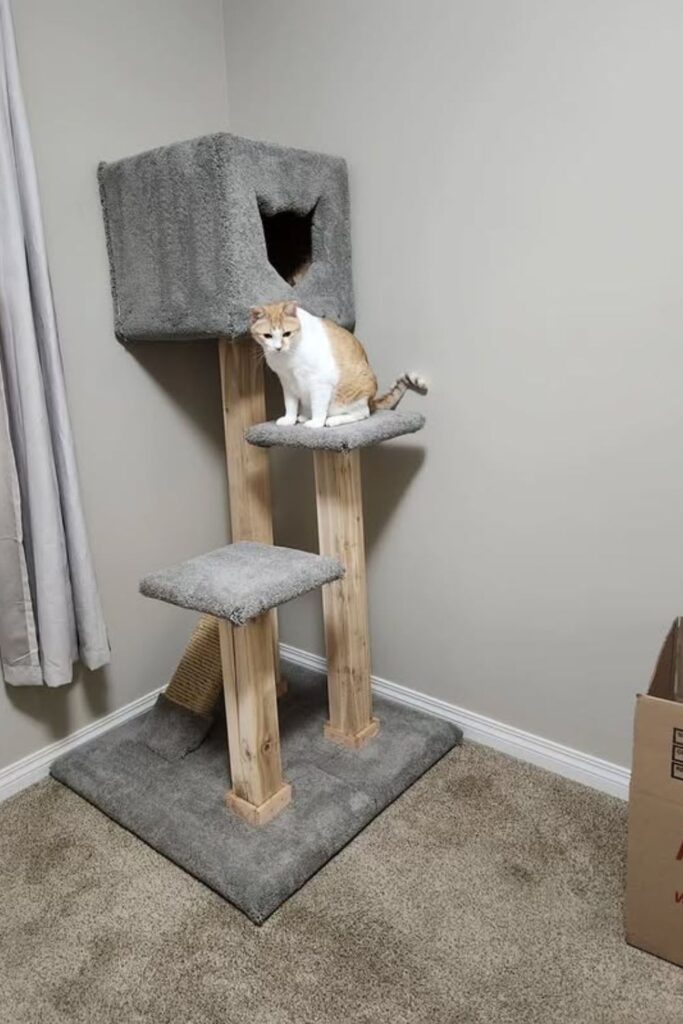
Compact Condo
Limited rooms still need vertical comfort. A slim frame with stacked platforms gives cats climbing space without taking over the floor.
Use square wooden poles that are fixed into a hefty base to make this. Then, for safety, add a closed box at the top.
Steps with carpet on them make it easy to get about. Great for bedrooms or rentals where one corner has to do all the work.
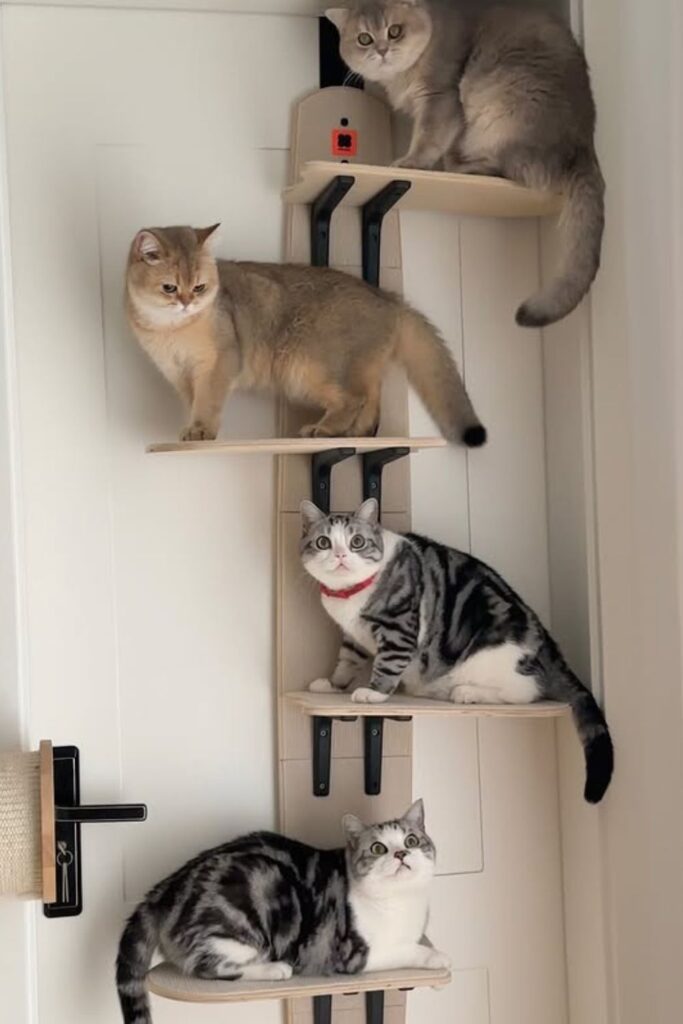
Wall Ladder
Vertical wall paths fix overcrowding fast. Staggered shelves let multiple cats climb, observe and pause without touching the floor.
To make this, attach sturdy brackets to the studs and then space wooden platforms like stairs. Make sure the gaps are not too big so that the climbing feels natural.
Great for rentals or small areas where bringing furniture to the floor might make things feel cramped and dirty.
Multi-Level Play
Vertical wall routes quickly fix too many people. With staggered shelves, more than one cat can climb, watch, or stop without hitting the floor.
Put strong brackets on the studs and the space wooden platforms like stairs to produce this. Make sure the gaps are not too big so that the climbing feels natural.
Great for rentals or small areas where bringing furniture to the floor might make things feel cramped and dirty.
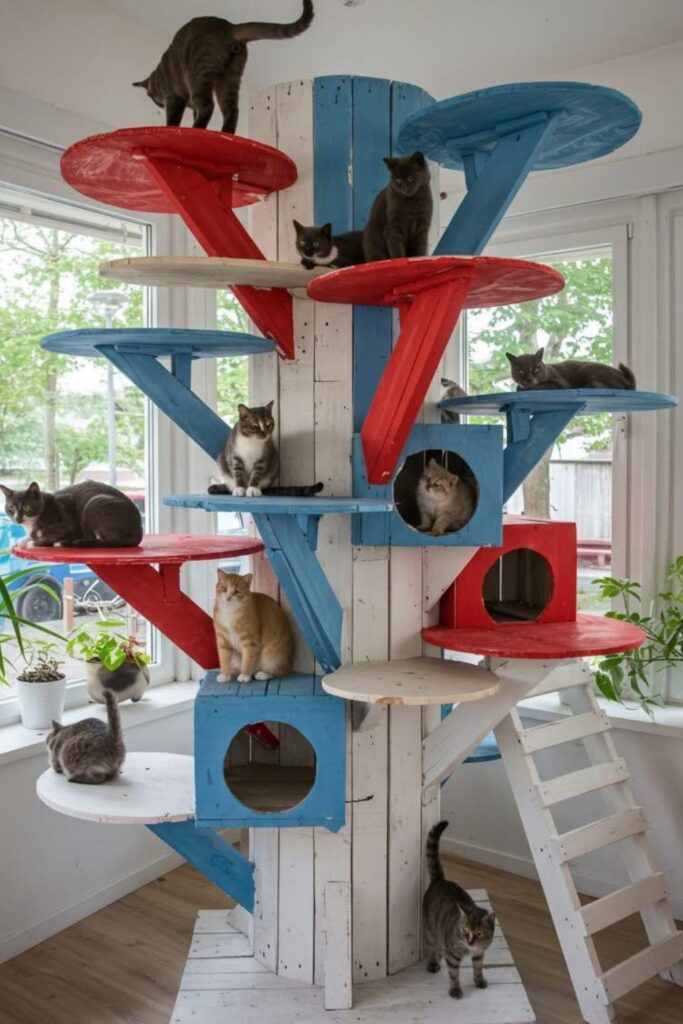
Window Bench
Sunlit spots quickly become favorite territory. A low-profile build placed under a window gives cats warmth, views, and play space without blocking the room.
You may make this again by stacking wooden boxes or using a bench-style frame. Then, add padded tops and a vertical scratch strip on the side.
Open cubbies can also be used as places to hide. Best for bedrooms or living spaces where cats can play for hours in the natural light.
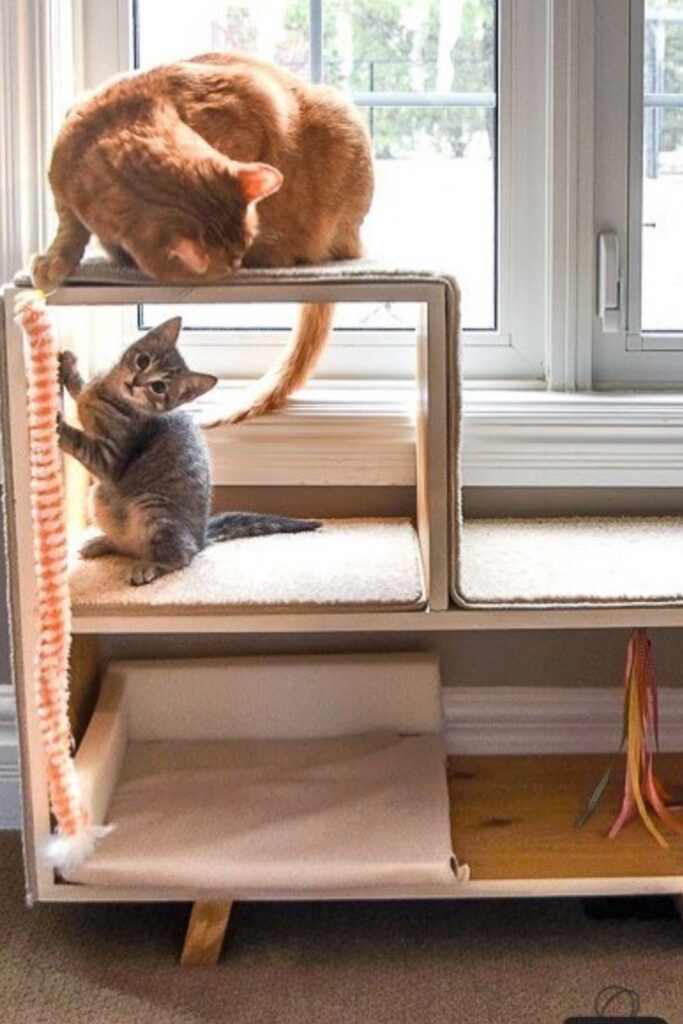
Sculpted Wood
When the cat tree is in a shared living room, it makes sensible to build it out of furniture-grade materials. Curved hardwood supports make it stronger while keeping the footprint modest.
To build this again, use thick hardwood planks and curve the edges so they flow instead of cutting them straight.
Instead of huge jumps, stack platforms at low, stable heights. Works effectively in homes with few things where cat furniture needs to fit in.
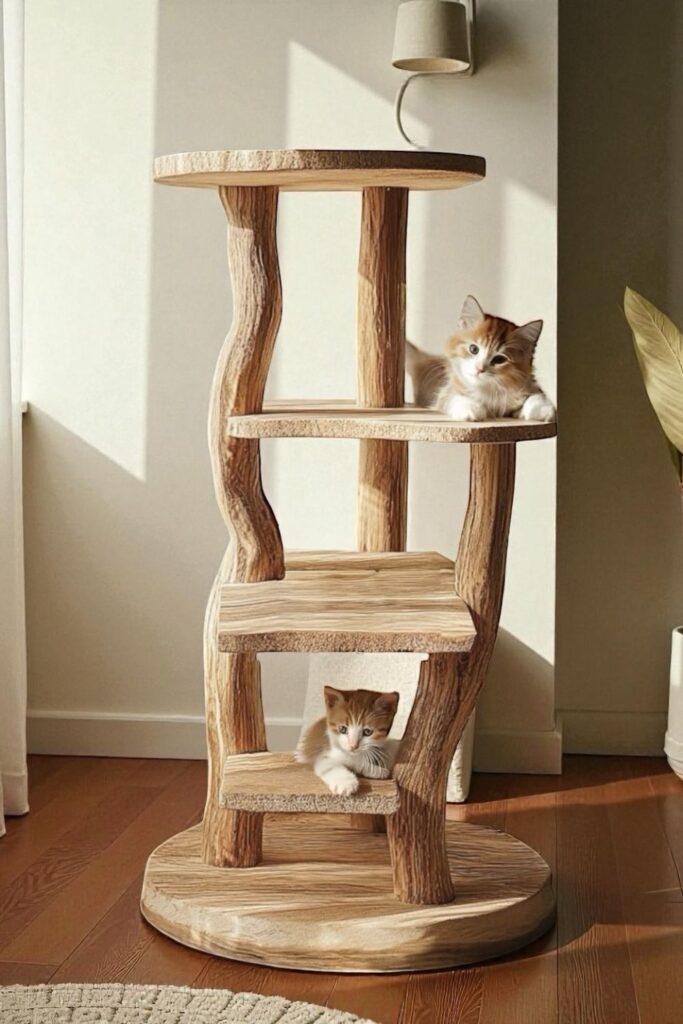
Sculptural Stack
Statement pieces work when cat furniture doubles as art. Stacked geometric forms create climbing steps while keeping the footprint narrow.
Use molded wood, concrete, or dense foam shapes that are held in place from the inside to make this again.
Cats can go up without having to jump very high because of the height difference. Best for homes that are modern and where the cat tree is part of the room’s design as well function.
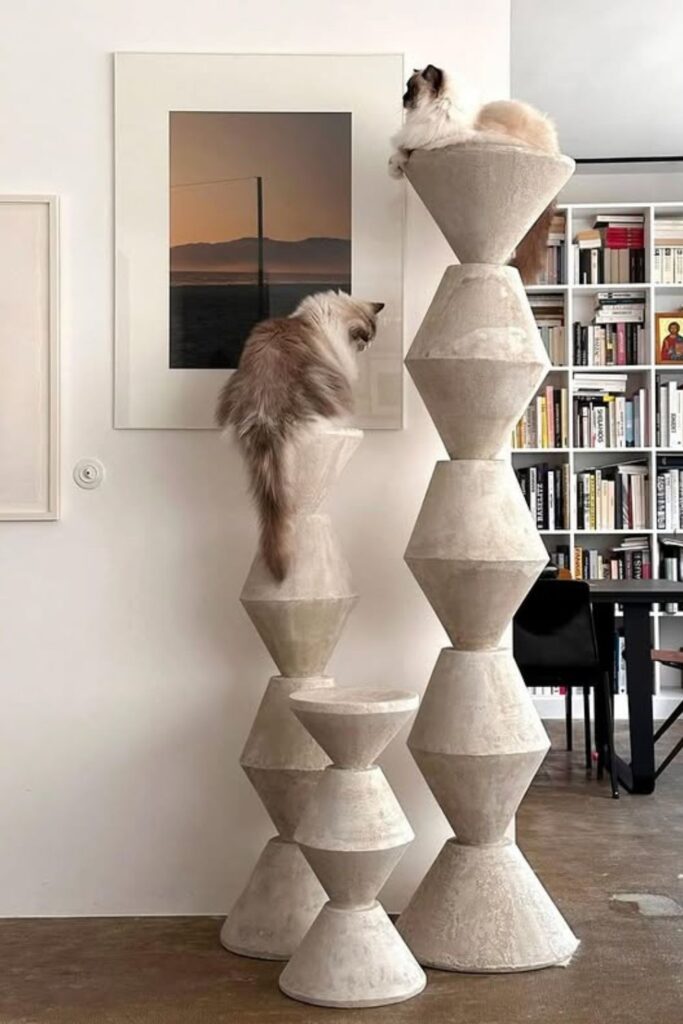
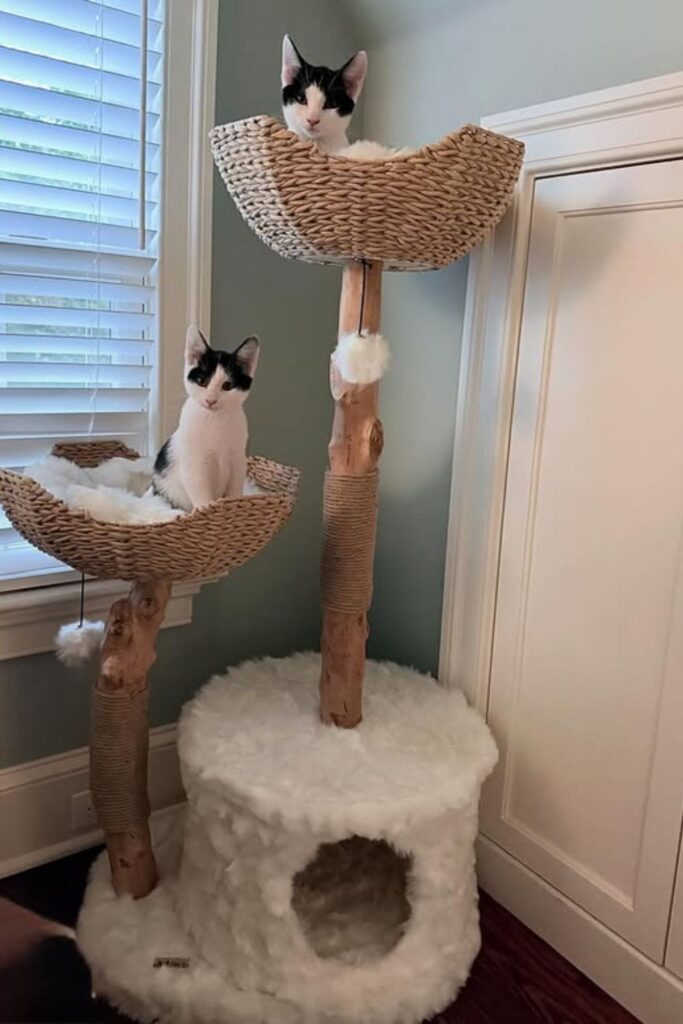
Basket Towers
Raised sleeping spots calm cats who prefer watching from above. Woven baskets create soft perches while keeping the build lightweight and vertical.
Put robust baskets on thick wooden pillars and then join everything to a padded base to make this again.
You can scratch sections covered in rope without making the mess. Best for quiet areas near windows where cats like to watch, lay and stay off the floor without being seen.
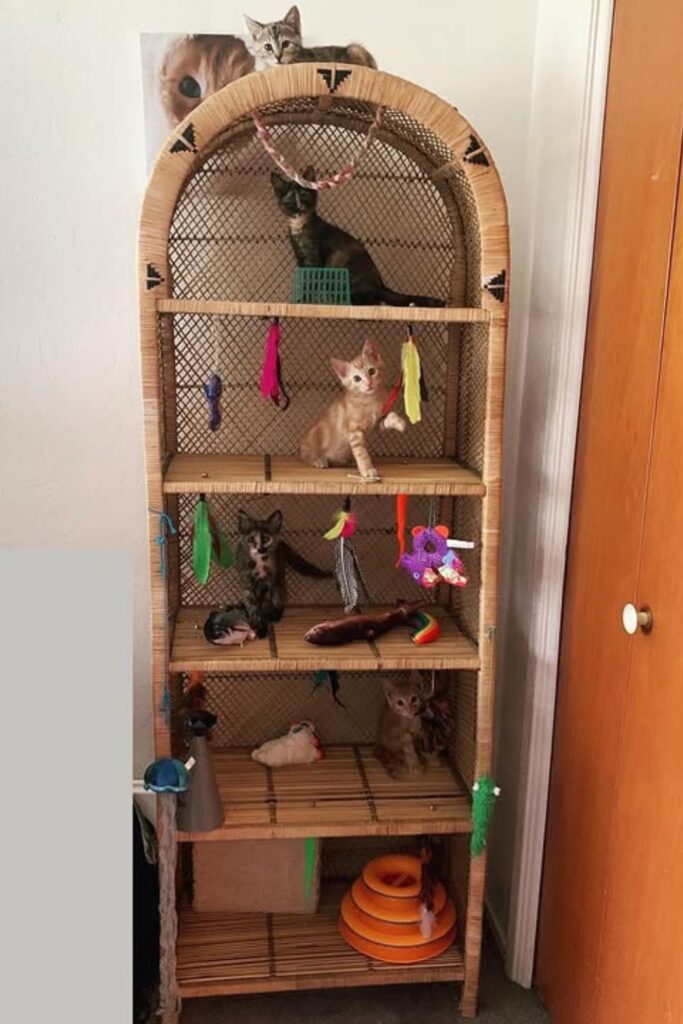
Play Cabinet
High-energy cats need structure, not chaos. Tall cabinet-style builds turn vertical storage into climbing, hiding, and play zones without spreading toys everywhere.
To make this again, take an old shelving unit and add mesh backing for safety. Then, put wooden platforms inside at different heights.
Toys that hang from the frame keep movement in check. Best for small passageways or empty nooks where cats can play without taking over the whole room.
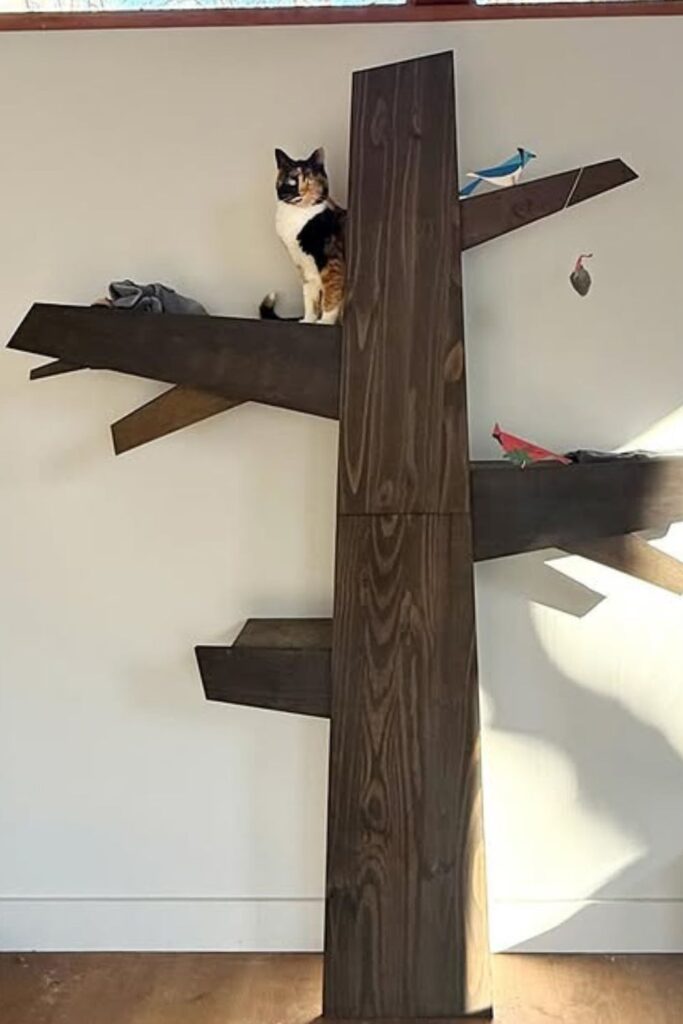
Wall Trunk
When climbing routes are used as decoration, dead wall space comes in handy. A single vertical beam with ledges at different heights gives cats height, balance, and space without touch the floor.
To do this again, nail a heavy wooden board to the studs and then add platforms that are off-center, like branches. Short ledges make it easier to move around in a controlled way.
Works well in modern homes where the furniture on the floor feels cluttered but the area above it isn’t used.
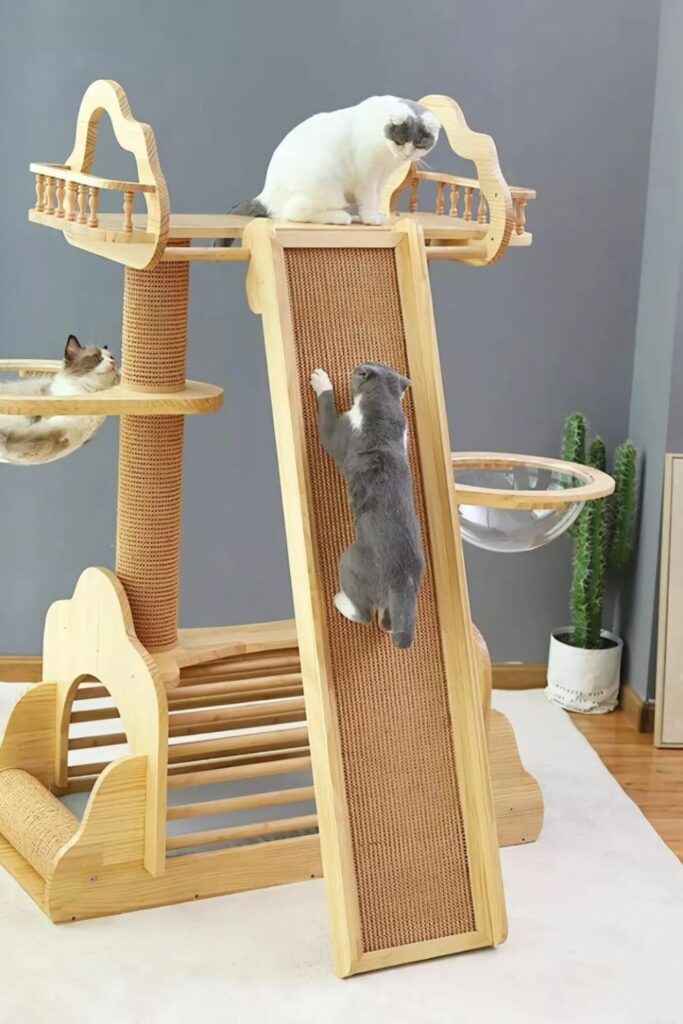
Climbing Ramp
Energy-heavy cats burn it off faster when climbing replaces jumping. A wide scratch ramp gives controlled movement while protecting joints.
To do this again, set a long wooden panel at an angle and cover it with sisal or corrugated scratch material.
There are platforms at the top and sides that make it possible to rest without making the area too congested.
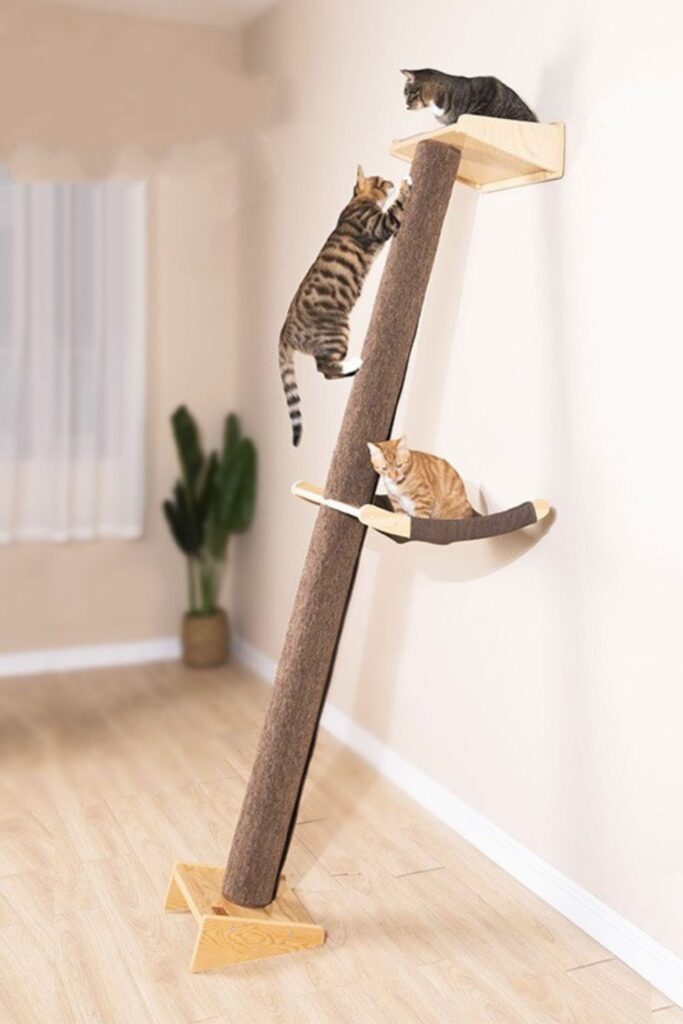
Lean Ladder
Climbing solves space problems without adding bulk. An angled scratch ramp lets cats move up naturally and keeping the floor clear.
Put a padded board between a weighted base and the wall, then add little shelves along the side for resting.
Short climbs are easier for your joints. Best for small rooms where it’s more important to get to the walls than to have wide platforms.
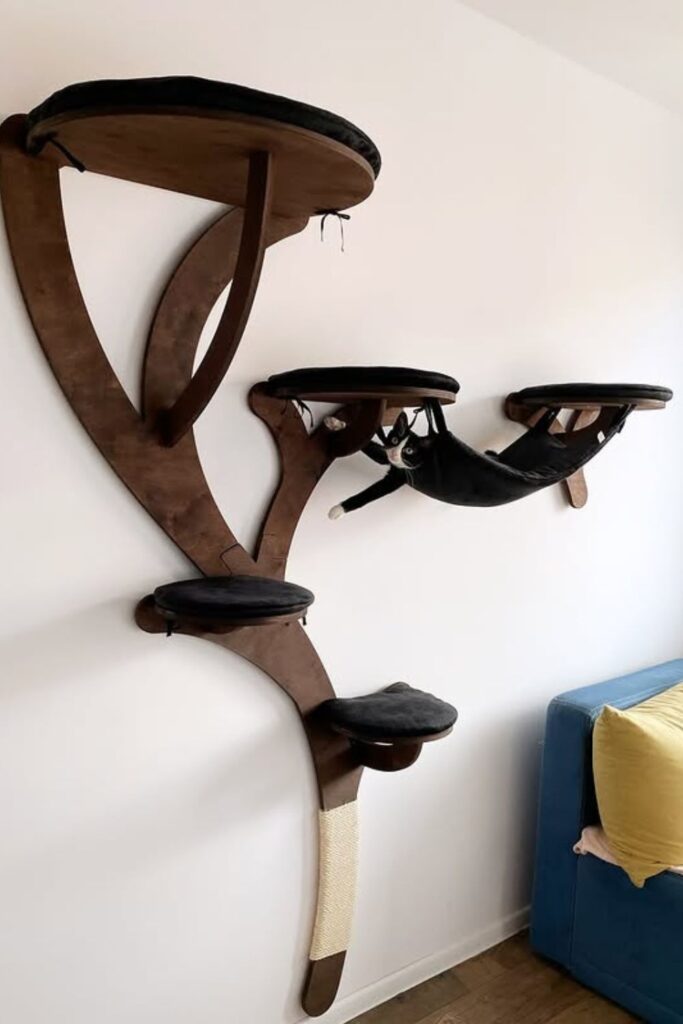
Floating Path
When movement goes sideways instead of up, wall space becomes territory. Cats may follow a clear path with curved mounts, hammocks can be used as places to stop without blocking room.
To make this again, attach carved wooden supports to the studs and then add platforms and canvas slings that are close enough to walk to.
It’s easier to hold your balance when transitions are clear. Best for spaces where cats like to wander around without getting in the way of things on the floor.
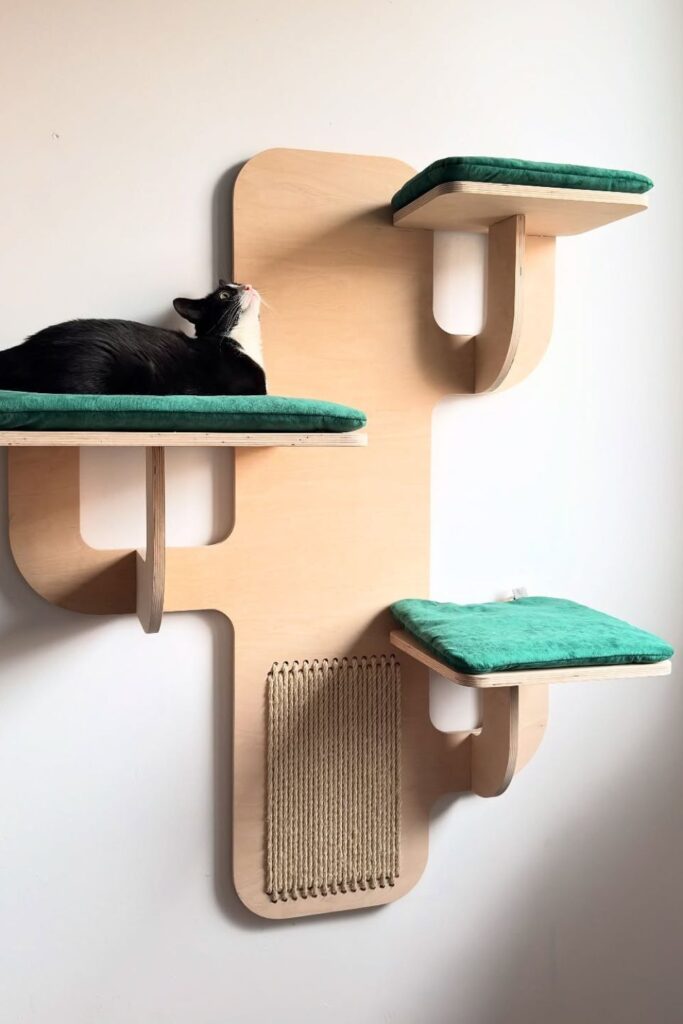
Wall Panel
Clean layouts benefit from cat furniture that feels built-in, not added later. A single mounted panel supports multiple shelves while keeping the wall organized.
To make this again, cut a wide piece of plywood for the back, attach it to the studs, and then add padded platforms at varying heights.
For everyday use, add a vertical scratch strip down the middle. Perfect for compact houses where every inch needs to have a purpose and the way things look is important.
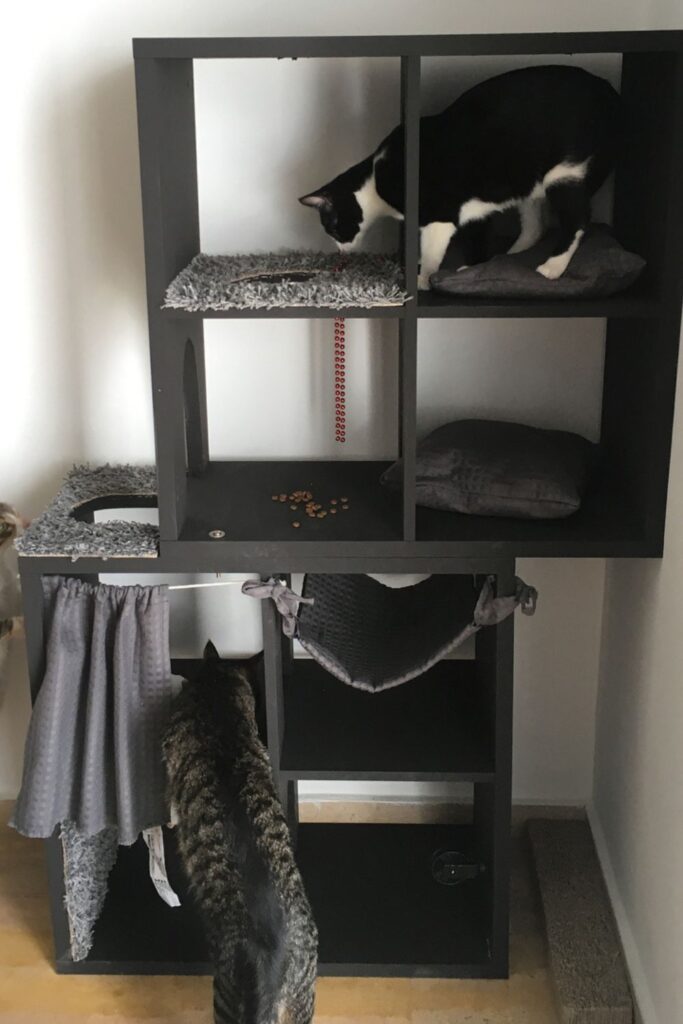
Cube Loft
Cats like to choose between hiding and watching without venturing too far. In one vertical structure, stacked cube shelves make it easy to tell where to relax, play, and be silent.
To make this again, strengthen a cube shelving unit, add padded inserts, and cut side apertures for flow.
Curtains or cloth panels can help keep others from seeing in. Works best in tiny households when cats need to be separate but still share space.
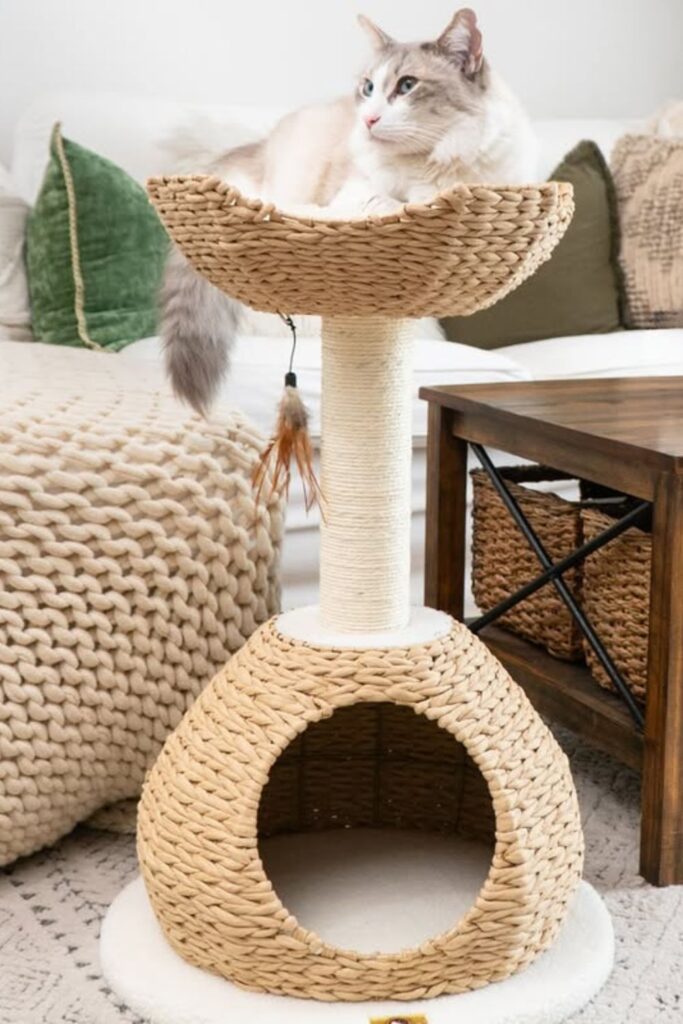
Cozy Basket
Quiet corners feel safer once comfort sits above the floor. A woven bowl gives cats a snug perch while a lower hideout adds retreat space.
To do this again, attach a strong basket to a post that is wrapped in rope and tie it down to a heavy base.
To make it easy to get to, keep the entrance low and wide. Works best in living spaces where cats want to be near people but not get in the way.
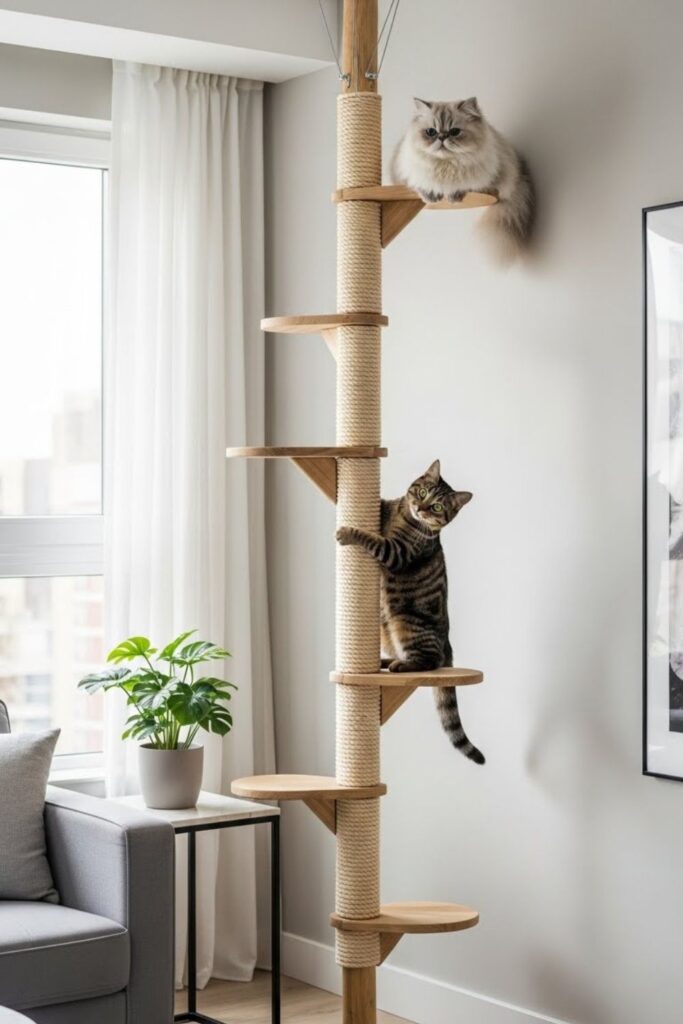
Ceiling Pole
Cats adore paths that go from floor to ceiling because they seem to go on forever. A tension pole build is renter-friendly because it doesn’t require drilling.
Put a strong wooden post between the floor and the ceiling, then add steps that go around or little platforms to make it again.
Small footprint, big height. Best for apartments where you can’t drill into the walls but need to use space vertically.
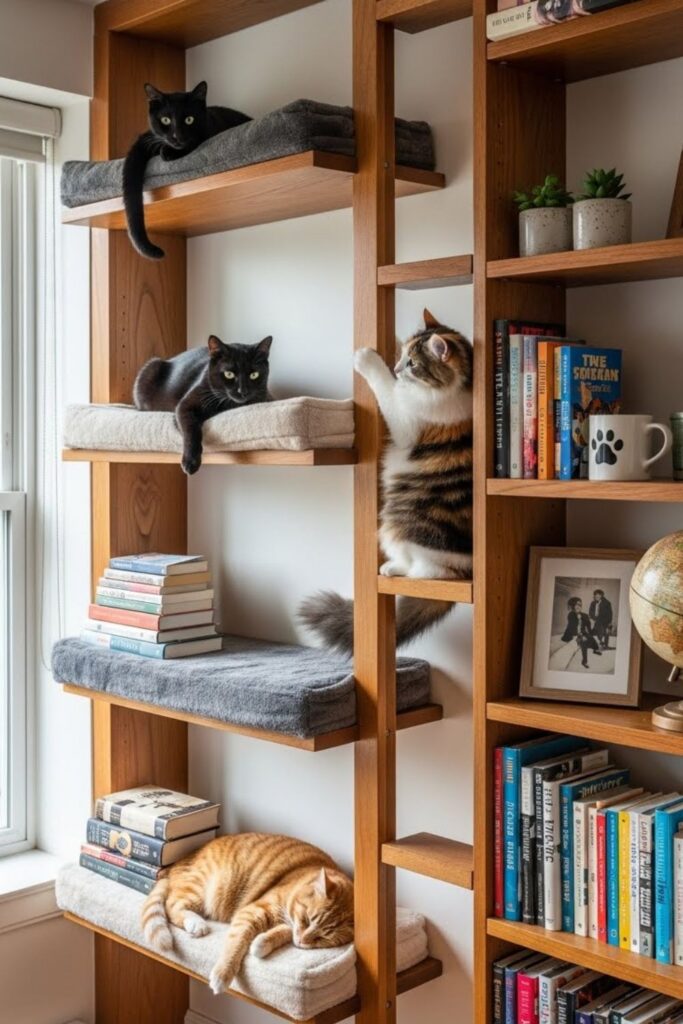
Bookshelf Hybrid
Existing furniture becomes useful once cats join the plan. A reinforced bookshelf can double as a climbing.
And resting zone without adding anything new to the room. Make the shelves stronger, add grip mats, and provide spaces for climbing trails.
Best for small homes when it seems impossible to install another building yet there is already storage.
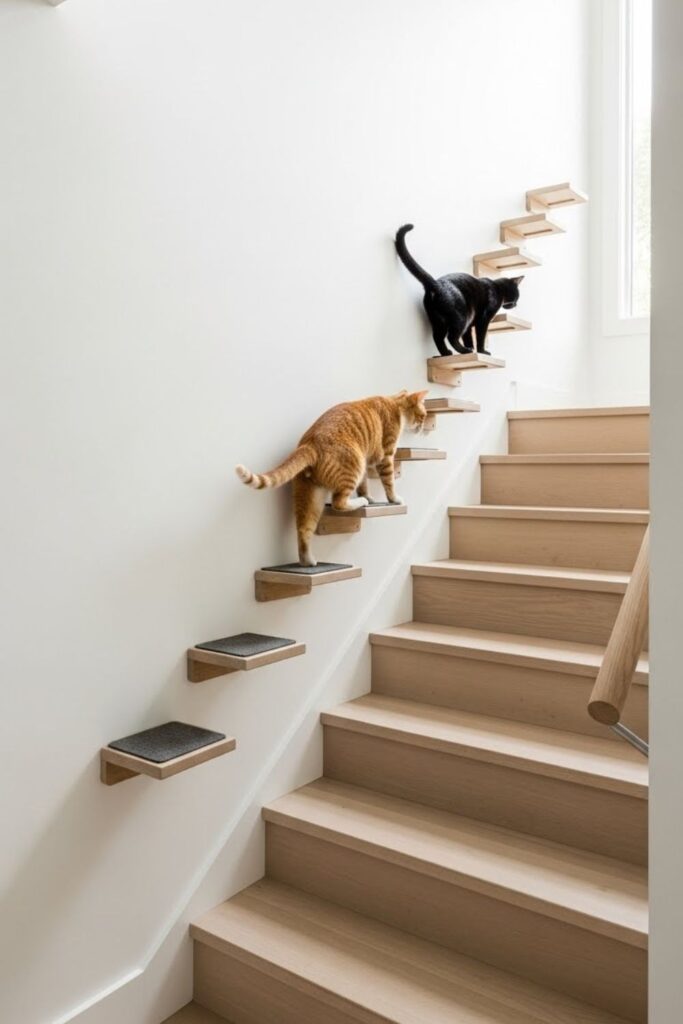
Staircase Side
Stairways waste vertical potential every day. Side-mounted platforms along the stair wall give cats a climbing route that follows natural movement.
To make this again, use studs to hold thin stairs in place, making sure the spacing is tight and the heights are gradual.
Great for homes with more than one level where cats already hang out on stairs and landings.
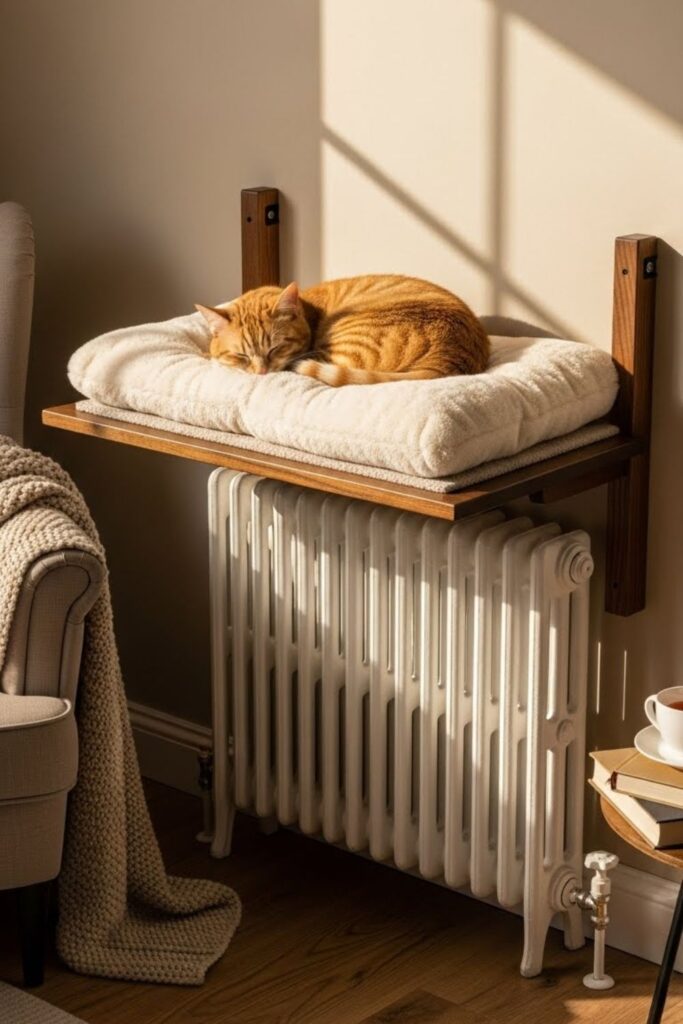
Radiator Lounge
Warm spots attract cats instantly. A heat-safe shelf mounted above a radiator creates a favorite nap zone without using floor space.
Put a detachable cushion on a metal or wooden frame with holes for air to flow through.
Best for places where it gets chilly a lot and cats are always looking for warmth and end up on dangerous surfaces.
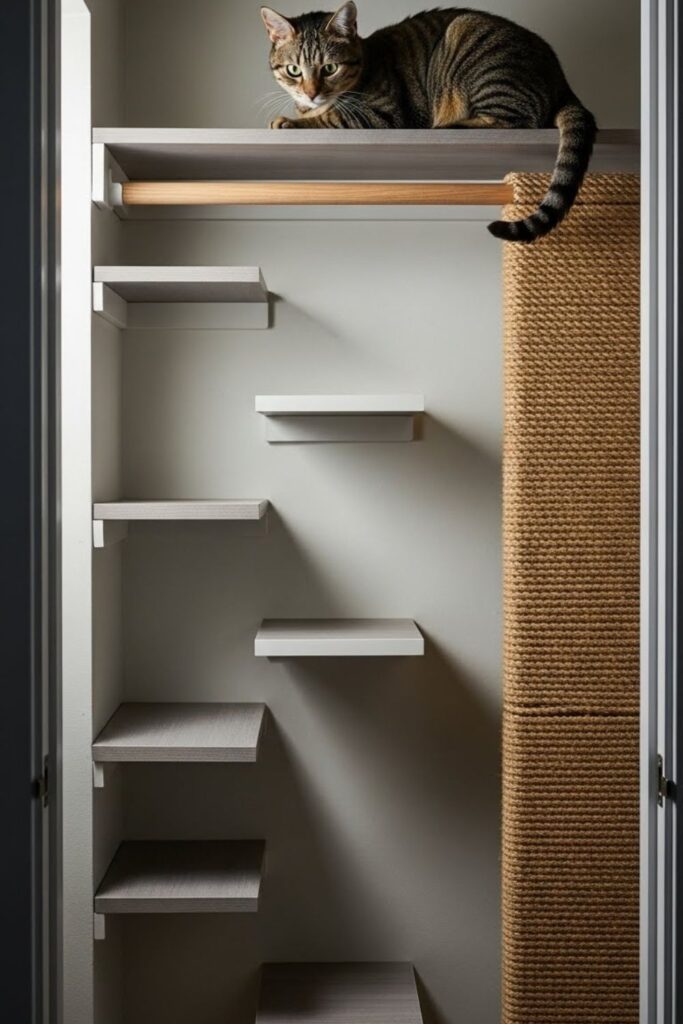
Closet Climber
Closets hide unused vertical space. A slim climbing frame installed along the inside wall gives cats.
A private retreat while keeping rooms clean. Use thin shelves and a vertical scratch panel to make this again.
Great for the cats who are shy and wish to be high up without noise and the traffic.
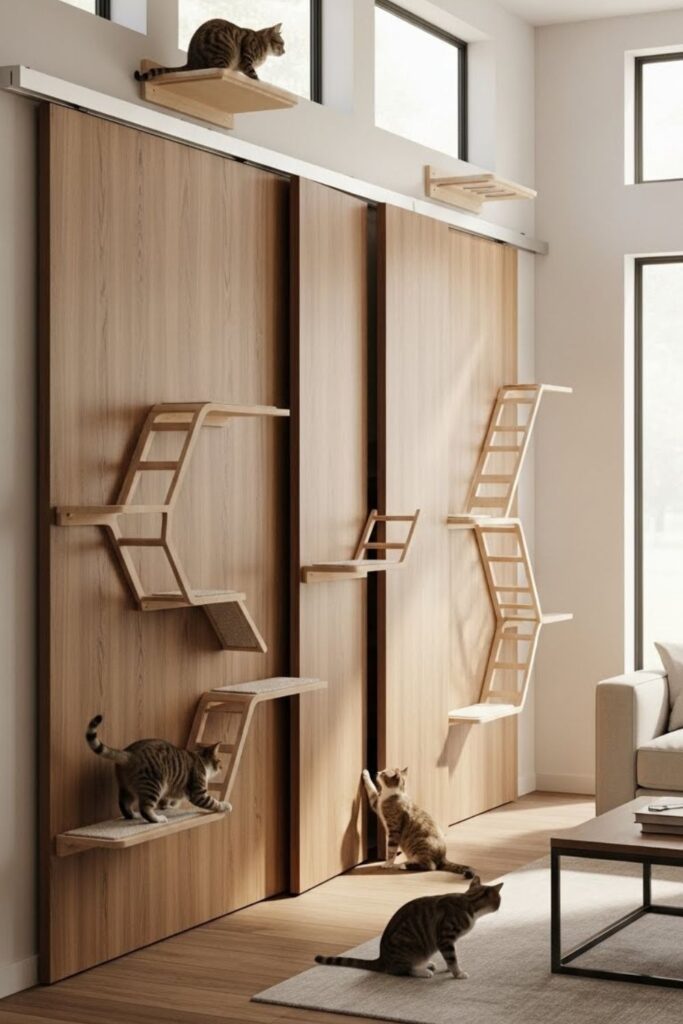
Sliding Panels
Flexibility matters in shared spaces. Movable wall panels with attached you can alter routes on platforms without having to rebuild everything.
Securely mount the tracks, then add shelves that are light and can slide or come off.
Works well in homes that are creative and have a lot of different layouts. Permanent buildings could feel limiting.
FAQs
Can a DIY cat tree really replace a store-bought one?
Yes, if you build it for a reason. Trees that you buy at the store are made to fit everyone, not your space or your cat. You can choose the height, stability, and layout of a DIY structure.
A DIY cat tree frequently lasts longer and is utilized more when the foundation is heavy and the platforms are in the right spot.
How tall should a cat tree be in a small home?
Your cat should be able to feel over the room, but it shouldn’t be so tall that it wobbles. In compact places, height is more important than width.
Even a build that is at eye level or a little higher than furniture can satisfy climbing instincts if the steps are spread out well and the building feels strong.
You may like to read!

Fasial is the founder of the Fizzy Flare. He has been a passionate blogger since 2021. He ran three different websites in the past few years. Now he is focusing on Fizzy Flare to build an audience and help them organize their life.