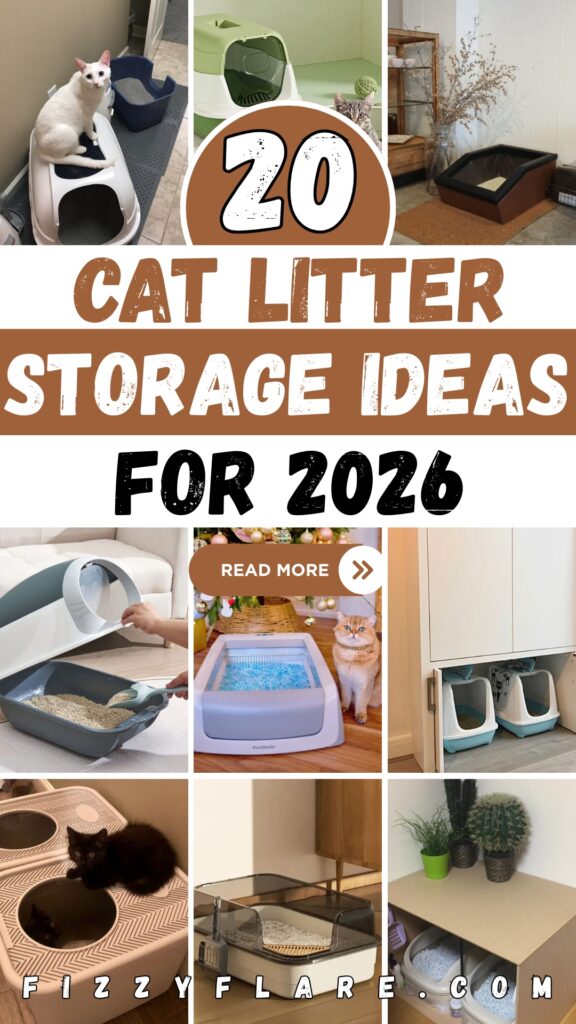
20 Cat Litter Storage Ideas for 2026
This post may contain affiliate links: full affiliate disclosure.
You already know what the problem is if you have a bag of kitty litter in the corner of your room. It looks bad, doesn’t go with your decor.
And the scent will eventually permeate throughout the house. Many cat owners have the same problem: you want your home to be clean and elegant.
But storing cat litter may easily spoil the whole aspect of the room. You don’t have to pick between a clean house and a happy cat, which is fantastic news.
You may hide your litter storage in a way that fits in with your decor if you set it up appropriately. Most guests won’t even know it’s there.
This article brings you 20 modern Cat Litter storage ideas to keep your home organized. Simple solutions for everyday clutter.
Let’s jump in!
Contents
- 1 How Do You Hide Cat Litter Storage Without Affecting Your Home Décor?
- 1.1 Covered Litter
- 1.2 Open Design
- 1.3 Cabinet Hideout
- 1.4 Corner Station
- 1.5 Low Profile
- 1.6 Top Entry
- 1.7 Mat Zone
- 1.8 Decor Blend
- 1.9 Dual Setup
- 1.10 High Walls
- 1.11 Box Hack
- 1.12 Smart Cleaner
- 1.13 Drawer Design
- 1.14 Bin System
- 1.15 Nook Spot
- 1.16 Multi Station
- 1.17 Plant Disguise
- 1.18 Cabinet Box
- 1.19 Color Match
- 1.20 Twin Boxes
- 2 FAQs
How Do You Hide Cat Litter Storage Without Affecting Your Home Décor?
Even a clean room can look dirty with cat litter bags in the corner. People usually notice them right away when they walk in because they don’t match your furniture.
The key is to hide the storage in a way that doesn’t feel out of place in your environment. Put your litter in containers that match your decor, like weaved baskets.
Storage benches, or cupboards. When the container matches your furniture, it ceases seeming like pet supplies and starts looking like regular storage.
You can also put litter in a closet shelf, laundry cabinet, or decorative bin. This makes it easy to get to everything while keeping your home looking neat and tidy.
Save this article for later! 👇👇
Covered Litter
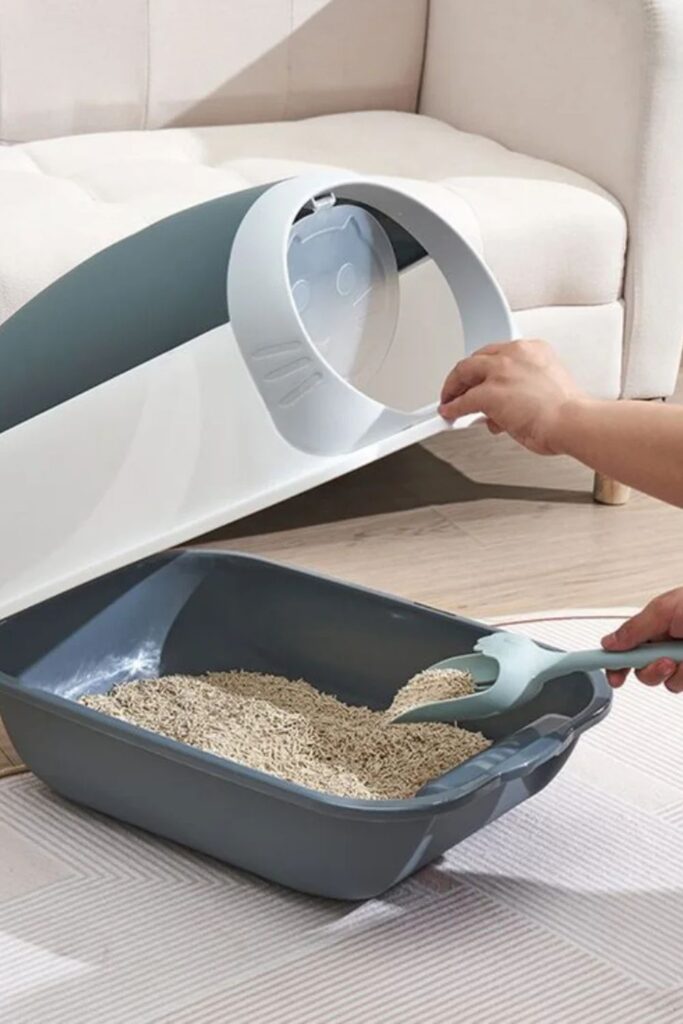
Open litter boxes scatter dust and smell faster than most people realize. Covered designs like this instantly make the setup look cleaner while helping contain odor and loose litter.
A curving hood keeps everything within which keeps the floor around it cleaner and makes guests notice the room instead of the litter box.
It fits beautifully next to a sofa, against a wall, or in a peaceful corner of the living room where a big litter box would look out of place.
Cleaning is very easy. In just a few seconds, you can lift the top shell, scoop out the litter, and close it again.
Putting a little litter mat underneath it avoids errant grains from spreading across the floor and makes the whole thing look planned instead of chaotic.
Open Design
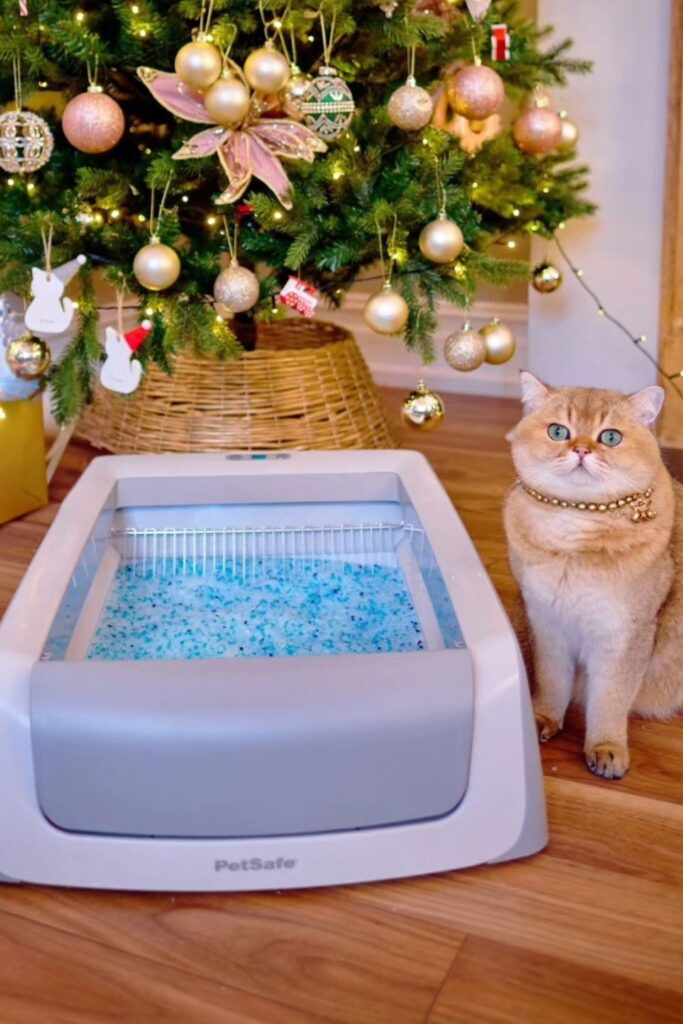
Busy living rooms often leave very few quiet spots for a litter area, yet cats still need a place that feels easy and comfortable to use.
Open-top litter boxes tackle that problem by offering cats a clear, calm place and making it easy to keep the setup clean.
Wide frames like these work best on tile or hardwood floors since they are easy to clean. Putting the box next to a wall or piece of furniture.
Helps it blend in with the room without drawing too much attention to itself. A low entry also makes it easier for older cats or bigger breeds that don’t like climbing into covered boxes.
Clear litter crystals help keep the space cleaner between cleanings by controlling odors and lowering moisture levels.
Cabinet Hideout
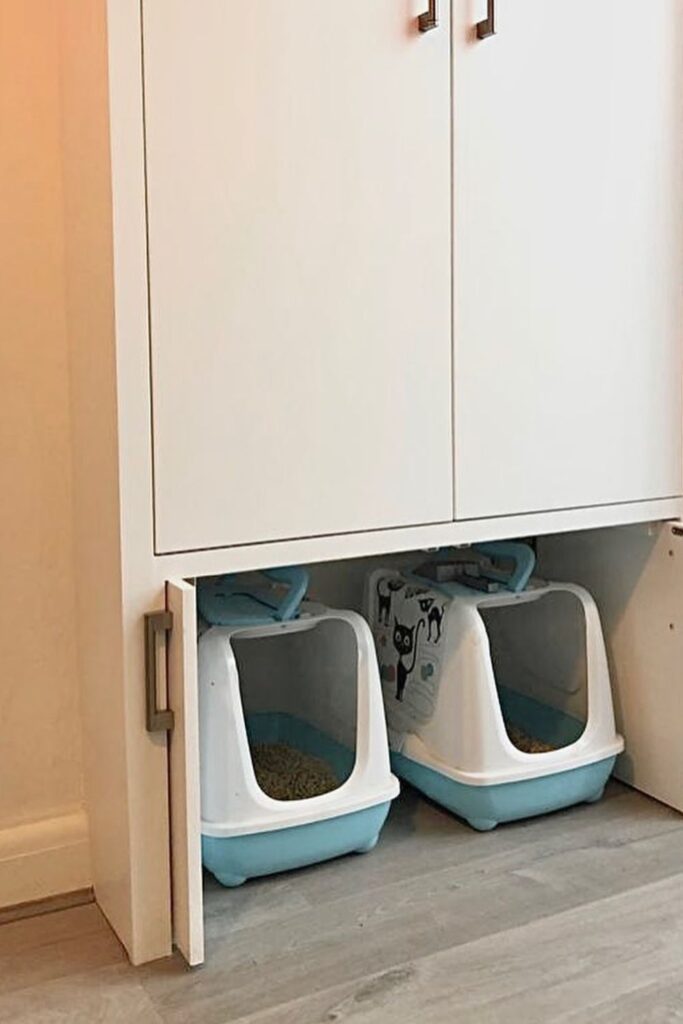
Floor corners filled with litter boxes often make a room feel cluttered. Built-in cabinets solve that instantly by turning unused furniture space into a hidden litter station.
Putting the boxes inside a lower cabinet keeps everything out of sight but makes it easier for cats to get in.
This kind of cabinet design works best in hallways, laundry rooms, or next to storage units that already have extra furniture.
If you take off the bottom door panel or leave a small gap, cats may easily walk in while the remainder of the cabinet hides the filth.
Regularly opening windows and quickly picking up the litter every day keeps smells from building up inside.
Corner Station
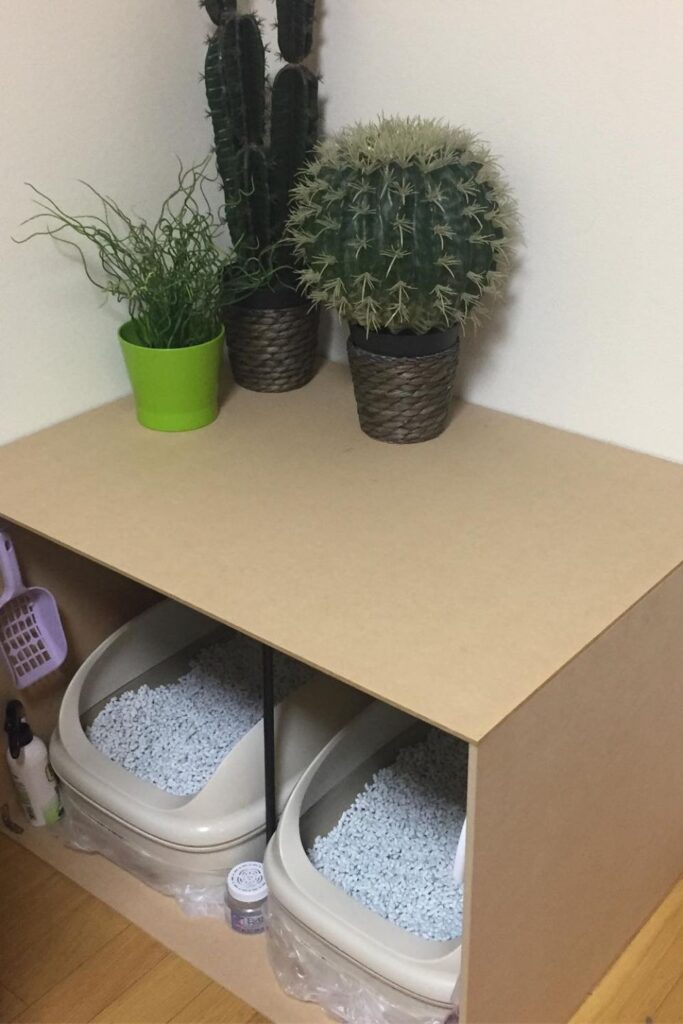
Dead corners often turn into wasted space, yet that same spot can quietly solve litter storage problems.
This basic corner cabinet hides two litter boxes and has a flat top that may be used to hold plants or small decorations.
You don’t need to be a master carpenter to set things up again. A simple plywood box or small bespoke cabinet that fits snugly into a corner works great.
If you have more than one cat, leave the front open so they can easily walk in. Then, if you have more than one cat, put a vertical panel in the middle to separate them.
By putting a hook on the inside of the cabinet wall, you can keep the scoop in its own position and off the floor.
Low Profile
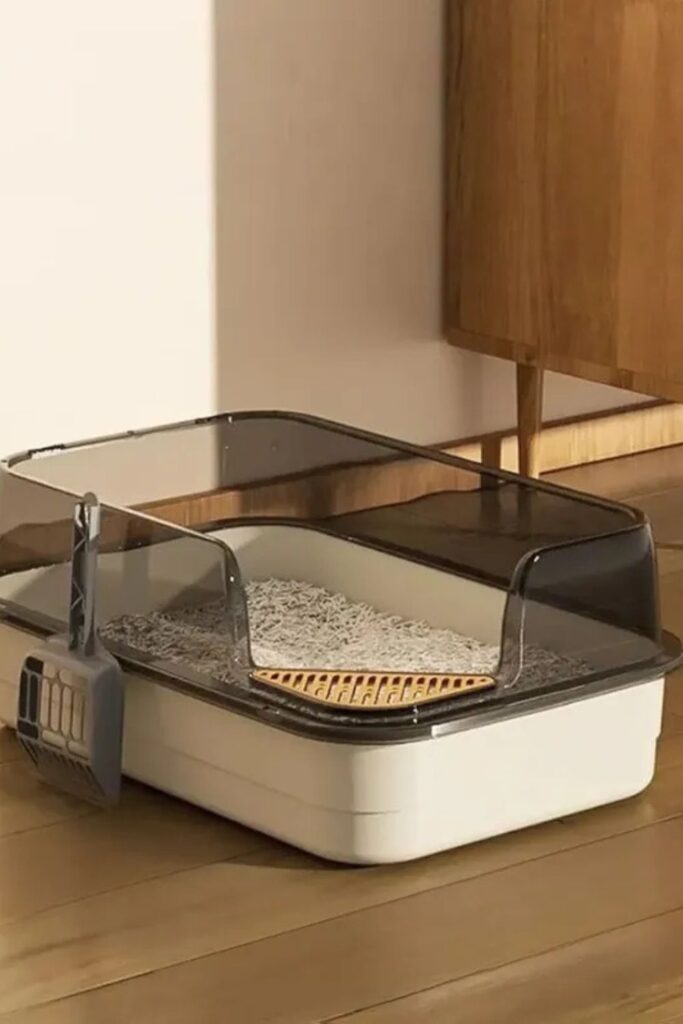
Clunky litter boxes tend to grab attention the moment someone walks into the room. Sleek low-profile designs solve that problem by blending quietly with modern furniture.
The box looks more like a basic house addition than a pet setup because the corners are clean and the colors are neutral.
The best place to put it is against a wall or next to low furniture like a console table or media cabinet.
The clear top barrier protects the litter from spreading out while still allowing cats a lot of room to walk about.
A lot of cats like this style better because it doesn’t feel as closed off as regular covered boxes. A built-in scoop container on the side keeps cleaning tools neat and easy to reach.
Top Entry
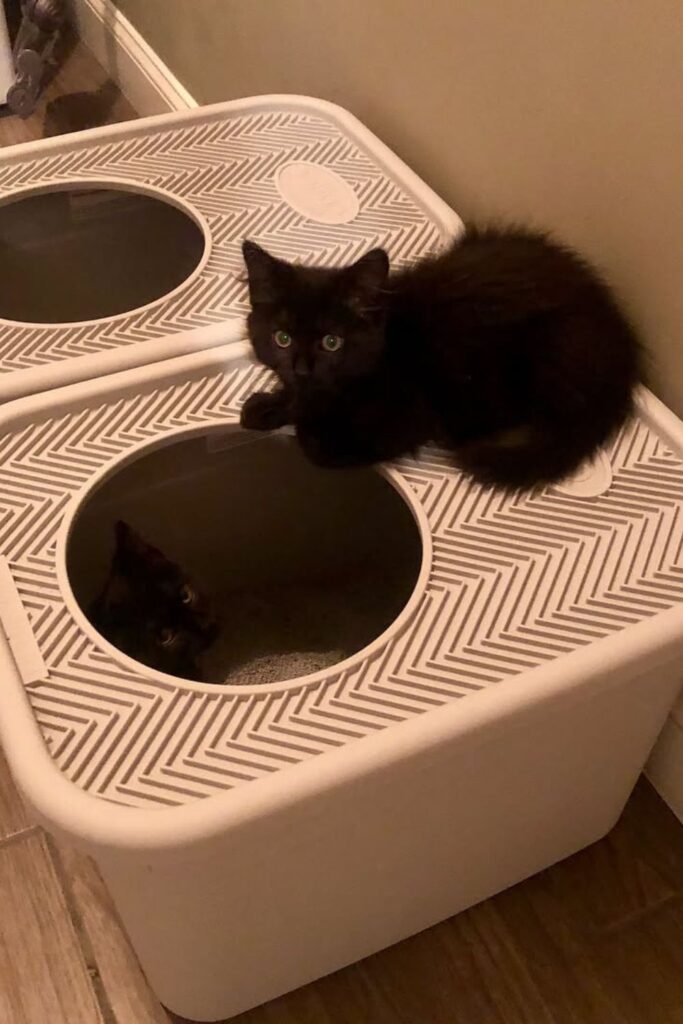
Messy paw prints around the litter box often come from cats jumping straight out of open trays.
Top-entry litter boxes solve that problem by making cats step onto the lid before leaving.
Which helps get litter back into the box instead than onto the floor. These tall bins are great for places that feel cramped, such small hallways, laundry rooms, or bathroom corners.
The raised edges keep the litter inside, and the textured lid gathers any stray grains that your cat’s paws leave behind.
Putting two units next to each other is a simple way to solve the problem of having multiple cats without taking up too much more space.
Adding a little mat under the setup gives it even more protection and keeps the floors around it considerably cleaner all day.
Mat Zone
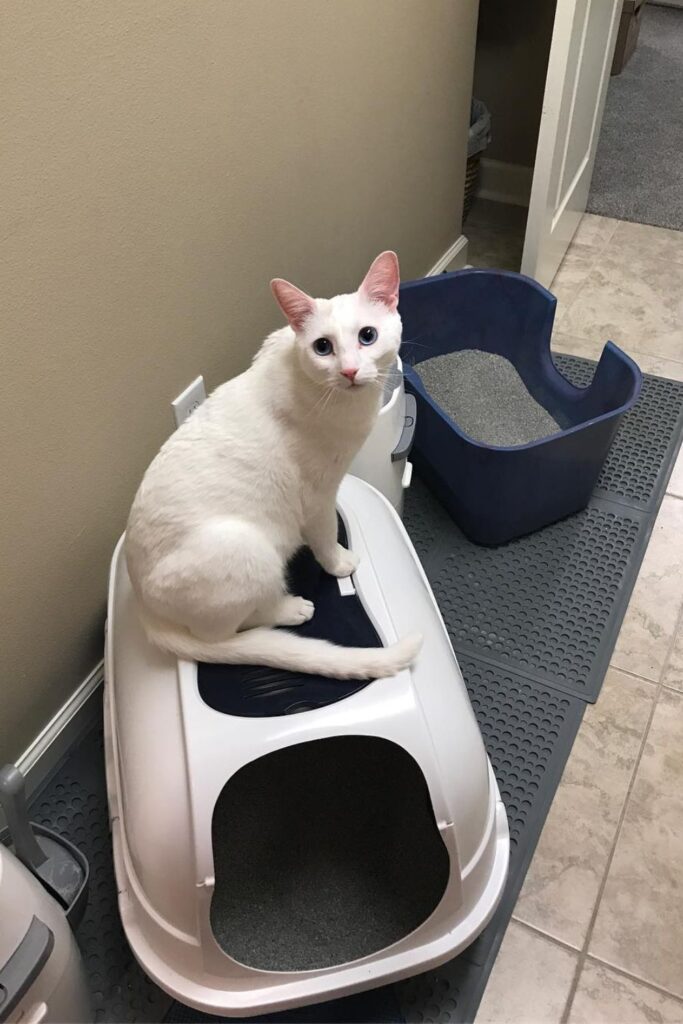
Loose litter spreading across the floor usually comes from cats stepping out of the box with dusty paws.
A separate mat zone like this keeps the trash from spreading to the rest of the room. When cats walk on textured rubber mats.
The litter gets stuck in the grooves, so most of the grains fall back onto the mat instead of going through the house.
This technique works best in hallways, laundry rooms, or bathroom corners since the mat may cover the whole area where the litter is.
Putting both a covered box and an open tray on the mat gives cats choices while yet keeping the mess under control.
Decor Blend
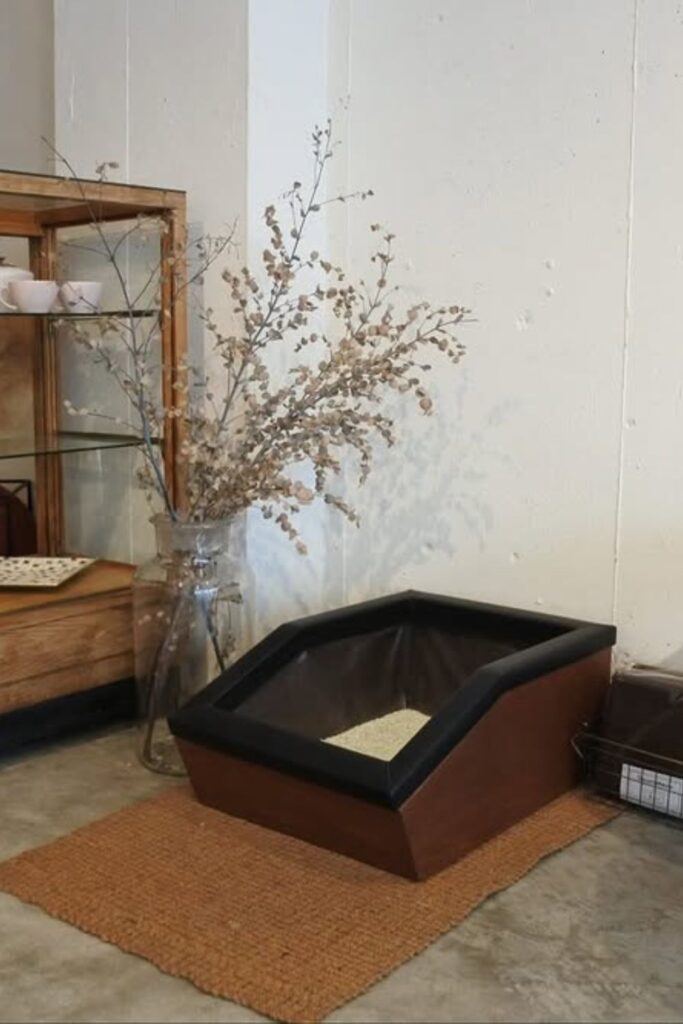
Pet setups don’t have to clash with the rest of your room. A litter box placed within a styled corner can quietly blend into the décor.
Instead of looking like a random piece of plastic on the floor. The box feels more like a piece of furniture than a pet accessory because it has neutral colors and wood-style finishes.
Corners next to bookcases, plant displays, or little tables are good since the decor around them makes the litter area look softer.
Adding a braided rug underneath also helps to define the space and capture any litter that your cat leaves behind.
You can keep scoops, additional litter bags, or deodorizer in storage baskets or small wire boxes nearby without making a mess.
Dual Setup
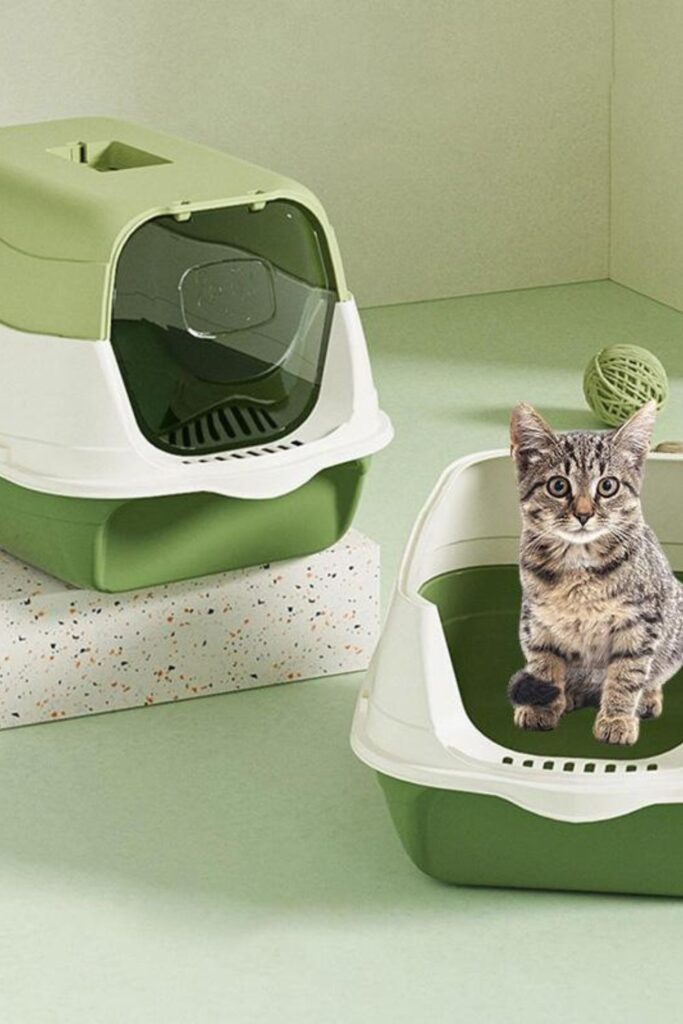
Different cats prefer different litter styles, and forcing them into one type often leads to accidents outside the box.
This kind of dual solution tackles that problem by giving cats choices: an open tray and a covered box in the same place.
This setup is best for houses with more than one cat because it cuts down on rivalry for a single litter box.
Putting both boxes next to each other in a quiet nook or laundry room keeps the litter station neat and gives each cat a choice.
It also makes cleaning easier. One box can hold conventional clumping litter, and the other can hold crystal or pellet litter, depending on what your cats like.
High Walls
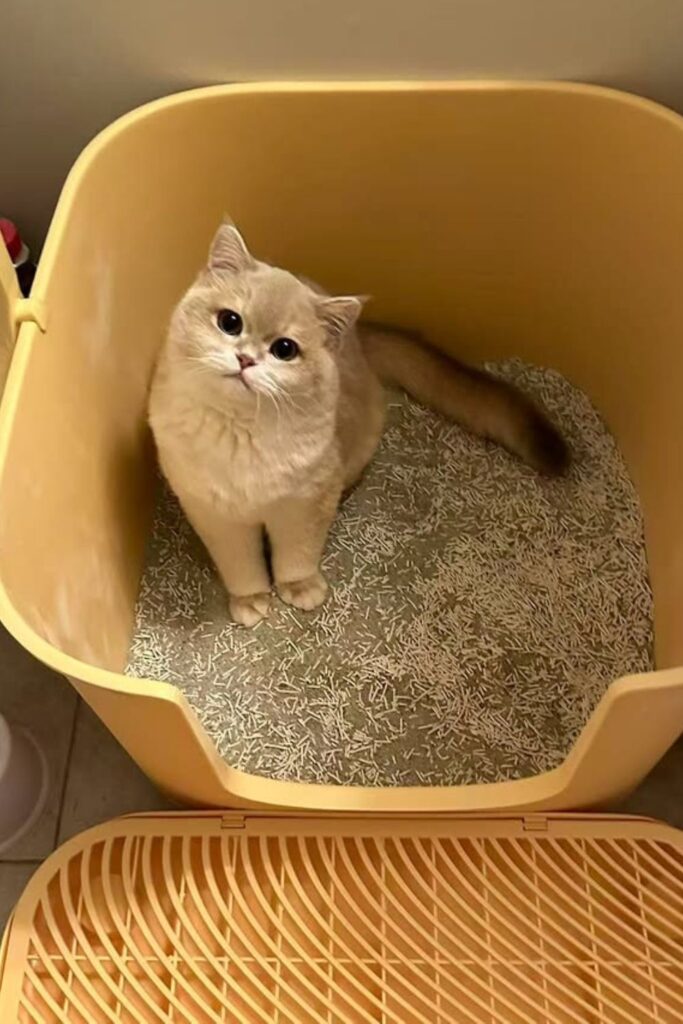
Energetic cats love digging, and shallow litter boxes rarely keep the mess inside. High-wall designs solve that problem by surrounding the litter area with tall sides.
They keep grains from flying all over the floor. This kind of deep box works nicely in bathrooms, laundry rooms, or utility nooks where people can’t see you as easily.
The taller walls provide cats a lot of freedom to dig without spilling litter outside the box. A cut-out in the front makes it easier to get in.
Which is especially helpful for smaller or elderly cats who might have trouble with towering edges.
It is also easy to clean. Larger interiors can hold more litter, which means that you don’t have to replace it as often over the week.
Box Hack
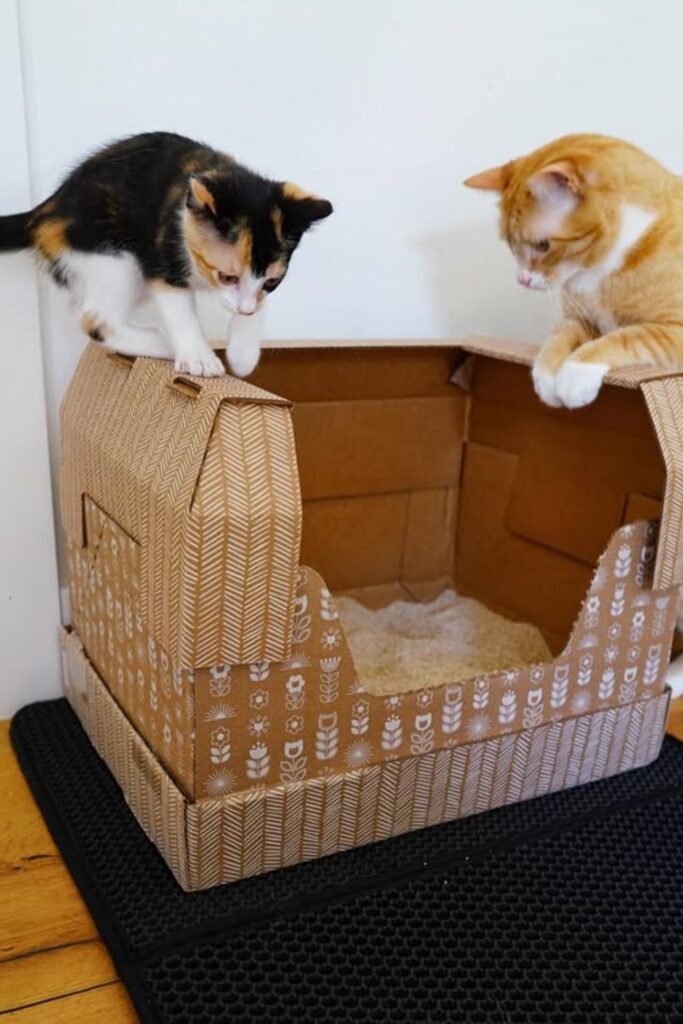
Empty delivery boxes usually end up in the trash, yet one sturdy box can quickly turn into a temporary litter station.
The cardboard sides make a simple barrier that keeps the trash in one place and gives the cats a safe, familiar habitat.
Making a small aperture on one side makes it easier for cats of all sizes to get in. Putting a plastic tray or thick liner on the interior,
Protects the cardboard from moisture and makes it last longer. Putting the setup on a rubber litter mat helps keep the floor clean by trapping errant grains.
This kind of setup works excellent for short trips, moving days, or when you bring a new cat home. It’s easy to clean up after your cat when you use lightweight cardboard.
Smart Cleaner
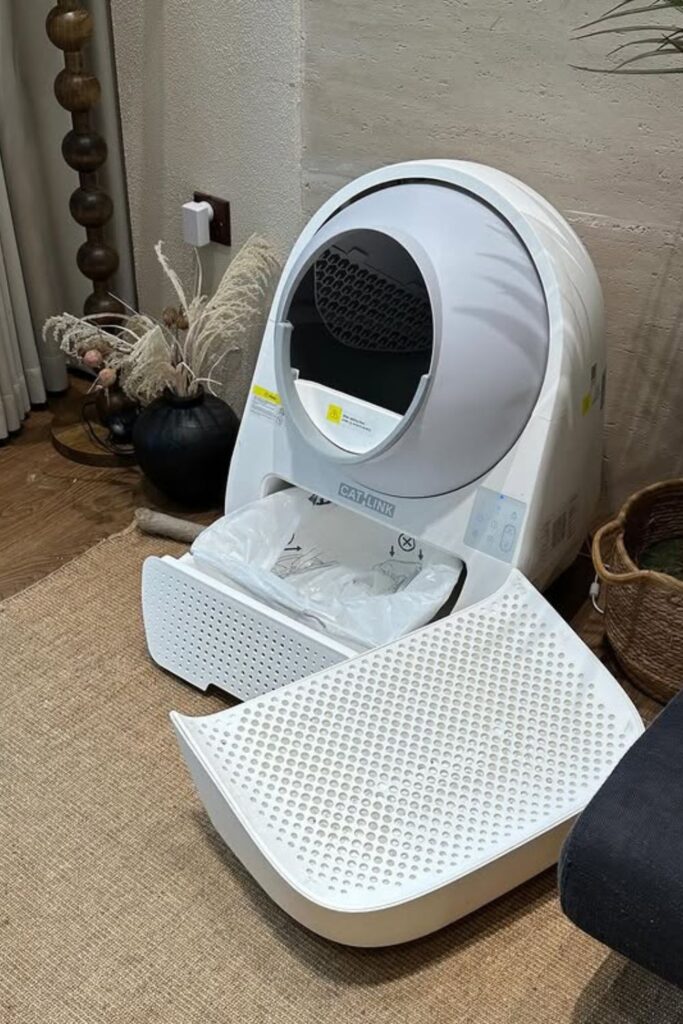
Daily scooping becomes exhausting in busy homes, especially when multiple cats share the same litter space.
Automated litter systems do most of the work for you by cleaning the box after each usage. The sensors know when a cat leaves,
And then the machine rotates or sifts the litter to move the waste into a sealed bag compartment.
Placement works best in a quiet part of the living room, laundry room, or against a wall where the unit may be plugged in without getting in the way of people walking by.
The ramp that comes with the unit also works as a litter catcher, which helps keep grains from spreading all over the floor.
Drawer Design
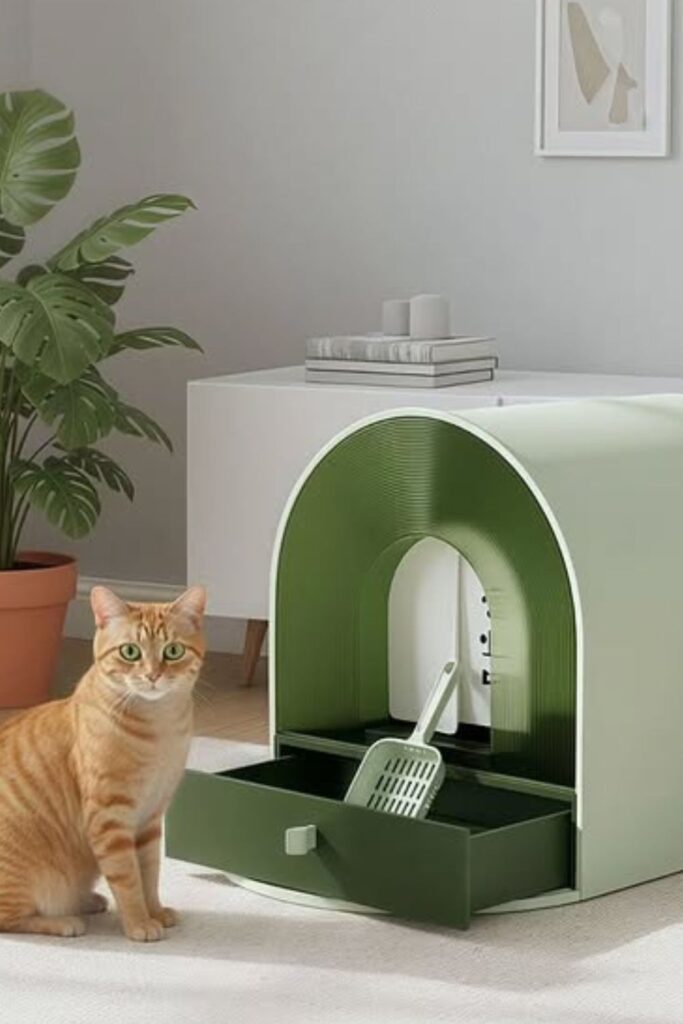
Hidden litter storage becomes much easier when the box includes a pull-out drawer for cleaning.
The drawer swings out easily, so you don’t have to lift heavy trays or take off lids. You can scoop up garbage and put it back in seconds.
Placement works nicely next to sofas, workstations, or bedroom walls where big litter boxes would look out of place.
The curved arch shape makes the box look more like a piece of furniture than a regular litter box.
You can store extra litter bags and deodorizer on a small shelf or cupboard below the unit. This keeps everything you need to clean in one place.
Bin System
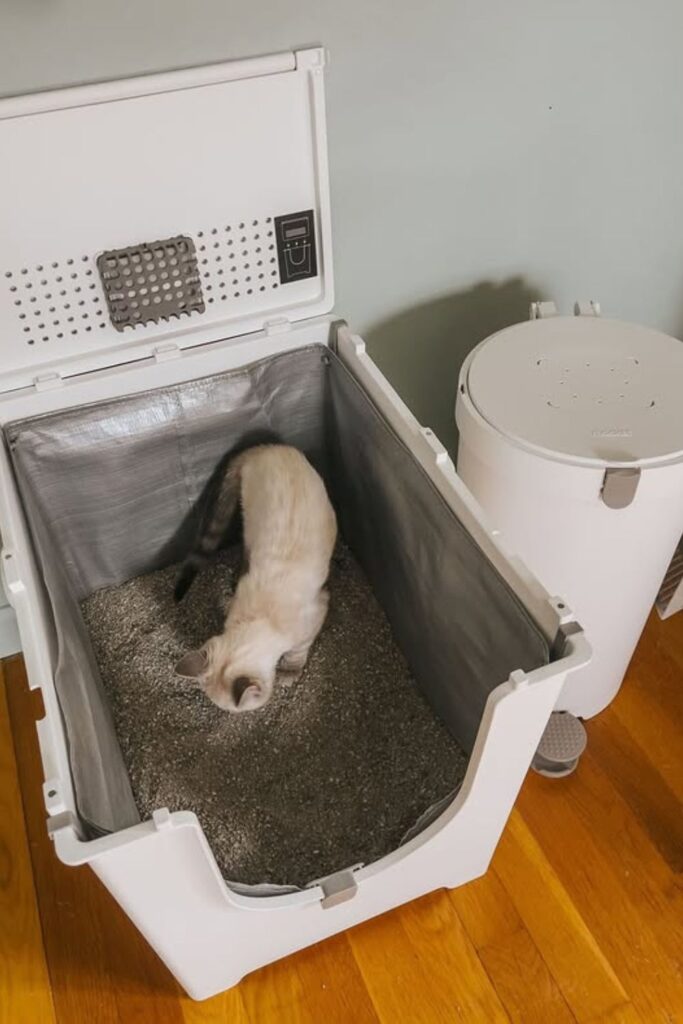
Bulk litter bags scattered around the house quickly turn into clutter. Large storage bins like this create a dedicated litter station.
Where everything is easy to find and keep track of. Because deep containers can hold a lot of litter, you won’t have to replenish them as often during the week.
This kind of setup works well in utility rooms, laundry rooms, or quiet areas of hallways. The towering sides keep litter from pouring onto the floor.
And the broad opening lets cats wander around easily. It’s also much easier to clean when the liners can be taken out.
Because the whole inside can be hauled out and cleaned easily. Putting a sealed trash can next to the bin keeps the scooping tools and trash in the same place.
Nook Spot
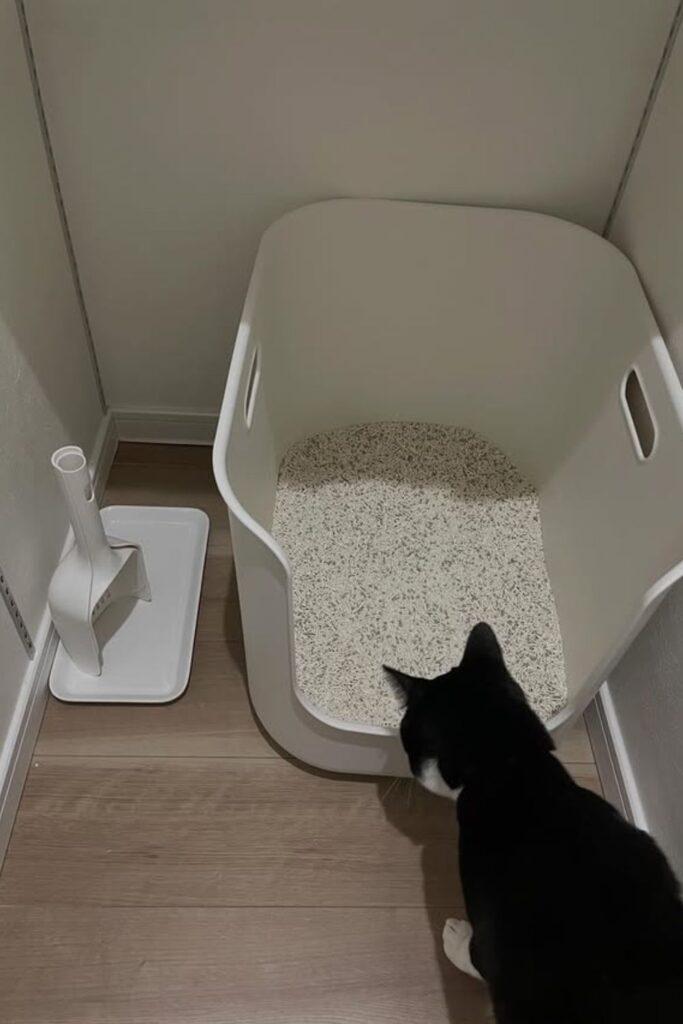
Unused wall gaps often become the perfect hiding place for a litter station. Narrow spaces like this naturally keep the box out of busy walkways.
Tall-sided litter boxes are great for these small corners since the higher walls keep the litter from spilling out of the box.
Putting the tray against two walls makes a tiny enclave that cats feel safer in and keeps the arrangement out of sight.
Also, having a scoop and holder next to the box makes cleaning up every day easy without making the space look messy.
People typically don’t use small corners like these in their homes, but they are a quiet way to handle the dilemma of where to put a litter box without making the rest of the room messy.
Multi Station
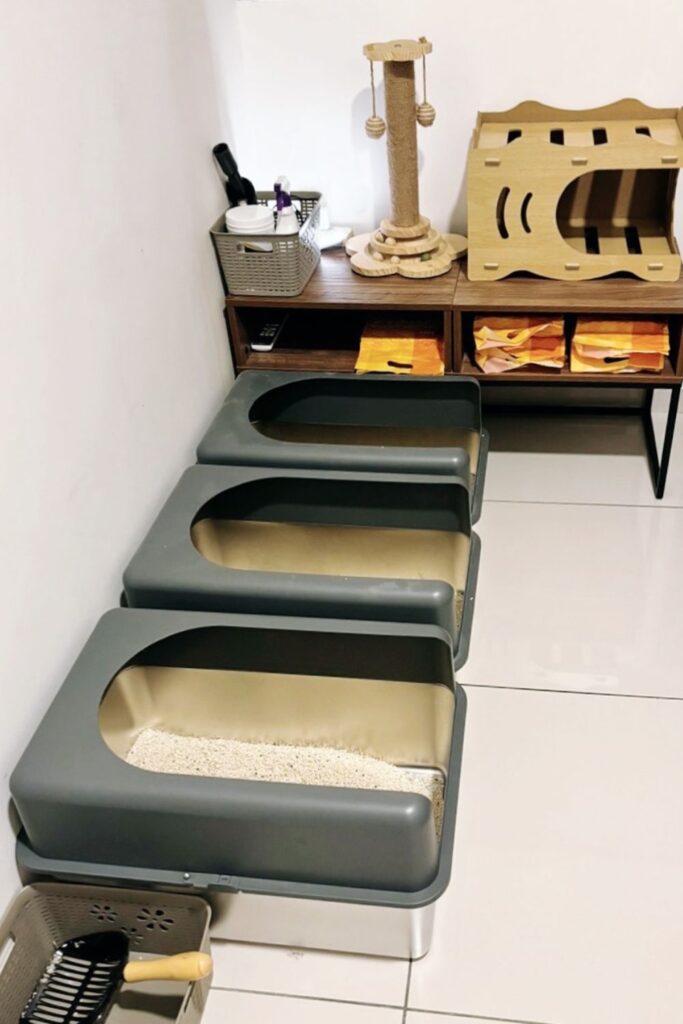
Sharing one litter box rarely works well in homes with several cats. Separate stations like this give each cat its own space, which helps reduce stress.
And stops territorial behavior near the litter box. Instead of putting trays all over the house, putting the boxes neatly along one wall keeps the room tidy.
This setup works great in laundry rooms, extra corners, or small utility locations where cats can get to the boxes without a lot of people walking by.
Putting scoops, cleaning spray, and extra liners on the shelf above makes the space a full litter station. It’s much easier to clean every day when all the tools are close by.
Matching box designs also make the setting look more planned and neat, instead of like random trays scattered over the space.
Plant Disguise
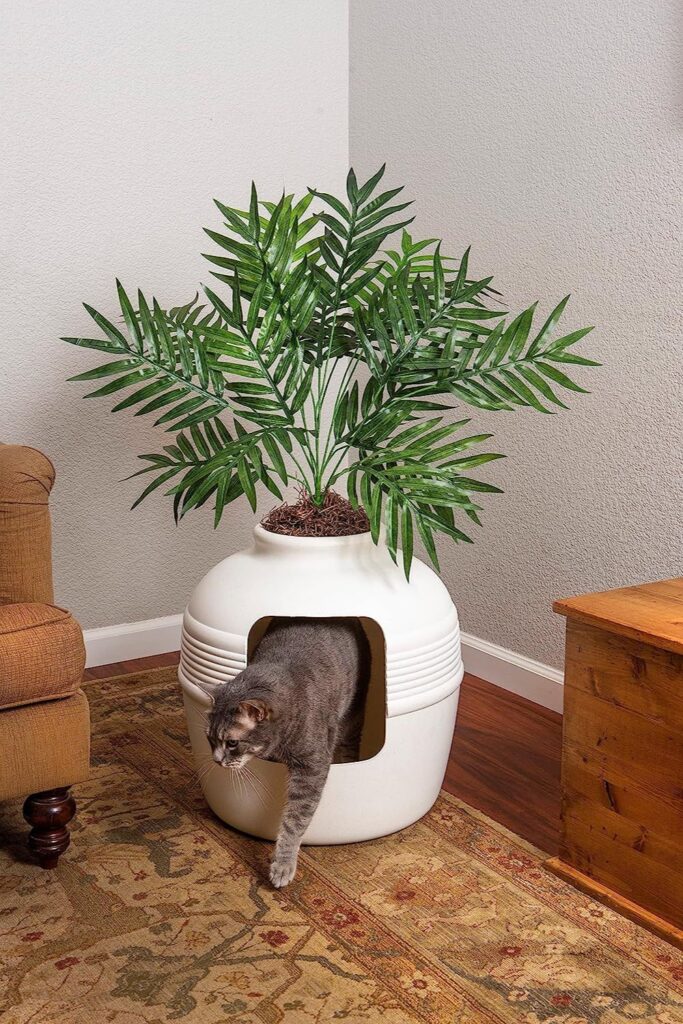
Guests rarely notice a litter box when it looks like a decorative plant. Planter-style litter houses hide the entire tray inside a rounded container.
This type of design works great in corners next to sofas, side tables, or reading seats because it seems like a normal floor plant.
Cats may get in through the secret entrance, and the towering design keeps the litter within.
It’s easy to get this appearance again: either use a planter-style litter box or change a big decorative pot with a side opening and put a fake plant on top.
Artificial plants perform better because watering actual plants could make the space surrounding the litter box too wet.
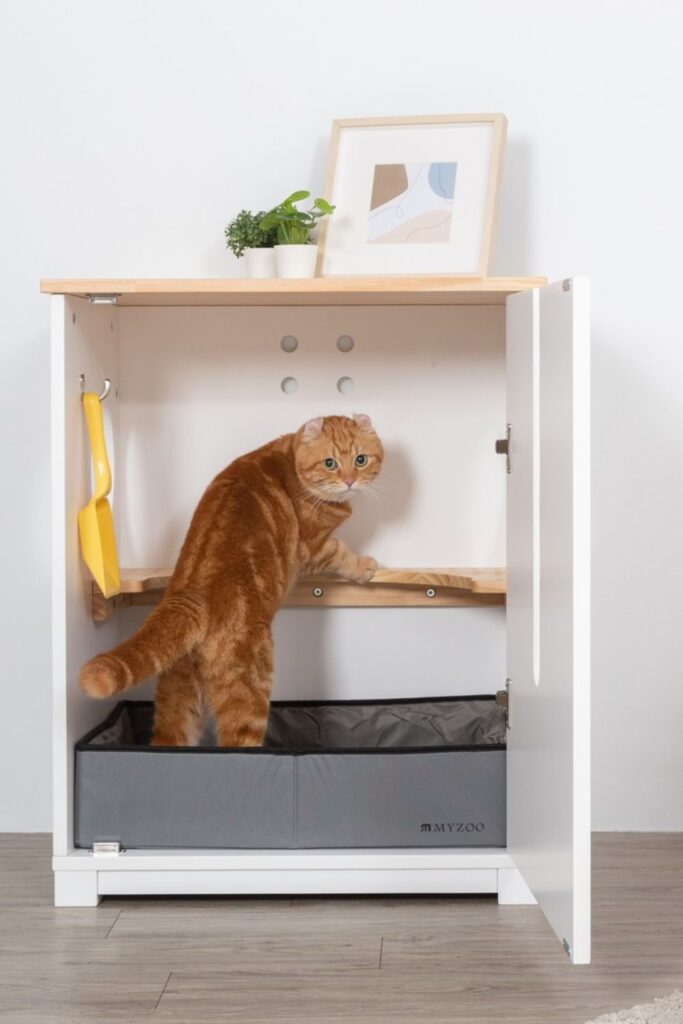
Cabinet Box
Living rooms rarely feel welcoming when a litter tray sits out in the open. A cabinet-style litter house fixes that by hiding the entire setup inside a piece of furniture.
It seems like a little storage cabinet from the outside, but it actually stores the litter box, scoop, and cleaning equipment.
It fits beautifully next to a sofa, on a hallway wall, or in the corner of a bedroom where small cabinets usually go. Vent holes in the back panel assist.
Keep the area smelling fresh while yet being comfy for your cat. The inner shelf also serves as a step, which helps keep litter from getting on the floor.
Changing a little storage cabinet can be all it takes to put things up again. Make a hole in the side for the entrance, put the litter box on the bottom.
Color Match
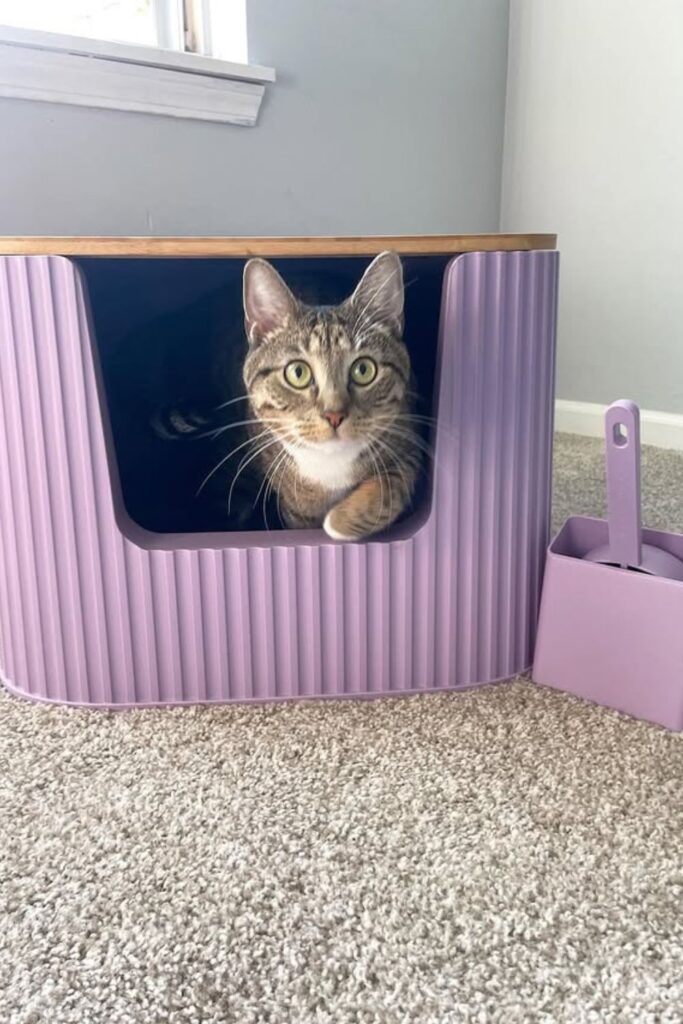
Plain plastic litter boxes often stand out against home décor, but color-matched designs can quietly blend into the room instead.
Pastel purple and other soft colors make the litter box look more like an accessory than a pet item.
This style of setup works best in bedrooms, home offices, or carpeted corners because the box doesn’t clash with the furniture or the floor.
By matching the scoop holder to the box, you can keep the cleaning equipment tidy and still keep the same look.
To get the same look, either pick a litter box that goes with the colors in the room or paint a simple enclosure in a soft, neutral color.
Twin Boxes
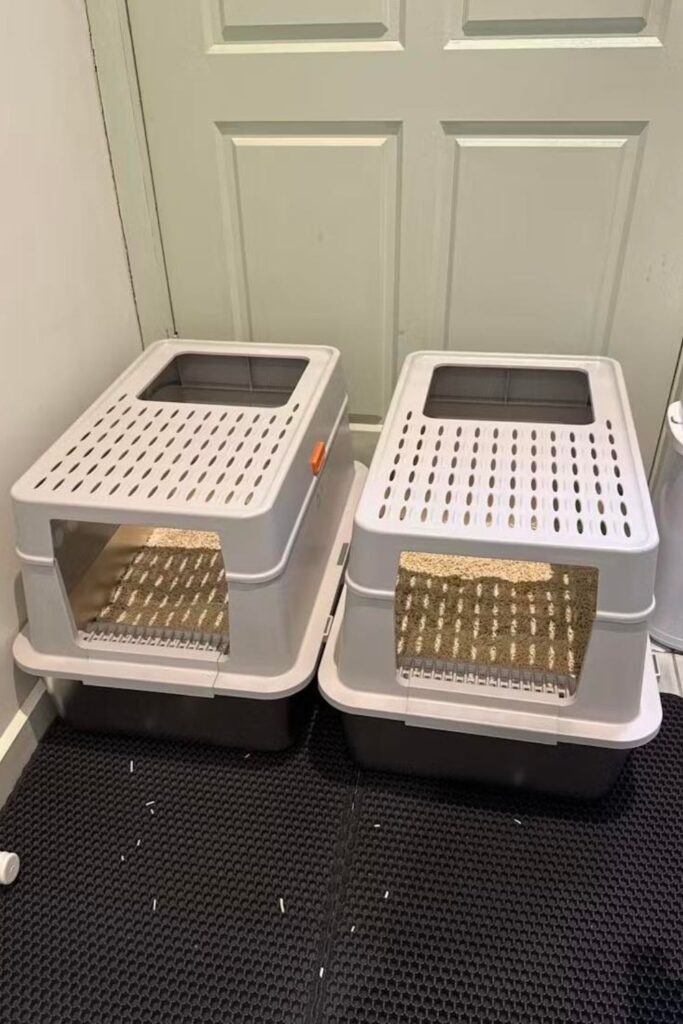
Homes with more than one cat often run into the same issue one litter box simply isn’t enough. A twin-box setup like this keeps things calm by giving each cat its own space.
Putting the boxes next to each other against a wall makes a separate area for litter that is easy to clean.
Putting them on a big, textured mat helps capture loose litter when cats step out, which keeps grains from spreading to surrounding floors.
To make this layout again, you only need enough floor space for two trays and a big mat underneath.
Putting them all in one place instead of all over the house helps cleaning up every day faster and makes the whole litter area look more planned.
FAQs
Where is the best place to hide a cat litter box in a small home?
Most of the time, quiet nooks work best. Keep the litter box in places like laundry rooms, hallway ends, behind cupboards, or next to furniture.
So that your cat can reach it but not have to walk through busy areas. Don’t put it near food bowls or loud appliances because cats like quiet places.
You can also make the litter setup fit in better with your home by adding a cabinet enclosure, a fancy planter box, or a small piece of furniture.
How can you control odor when the litter box is inside a living space?
Regular cleaning and the appropriate setup are the first steps to controlling odors. Depending on the type of litter, you should scoop it up every day.
And change it completely every week or two. Using covered boxes, litter mats, and sealed trash cans can help keep scents in check.
You may also keep the room smelling fresh by putting the litter box near a window or using natural odor absorbers like baking soda or charcoal.
You may like to read!
- 22 Above Fridge Storage
- 22 Spice Jar Storage Ideas
- 22 Kitchen Wall Storage
- 20 Suitcase Storage Ideas

Fasial is the founder of the Fizzy Flare. He has been a passionate blogger since 2021. He ran three different websites in the past few years. Now he is focusing on Fizzy Flare to build an audience and help them organize their life.