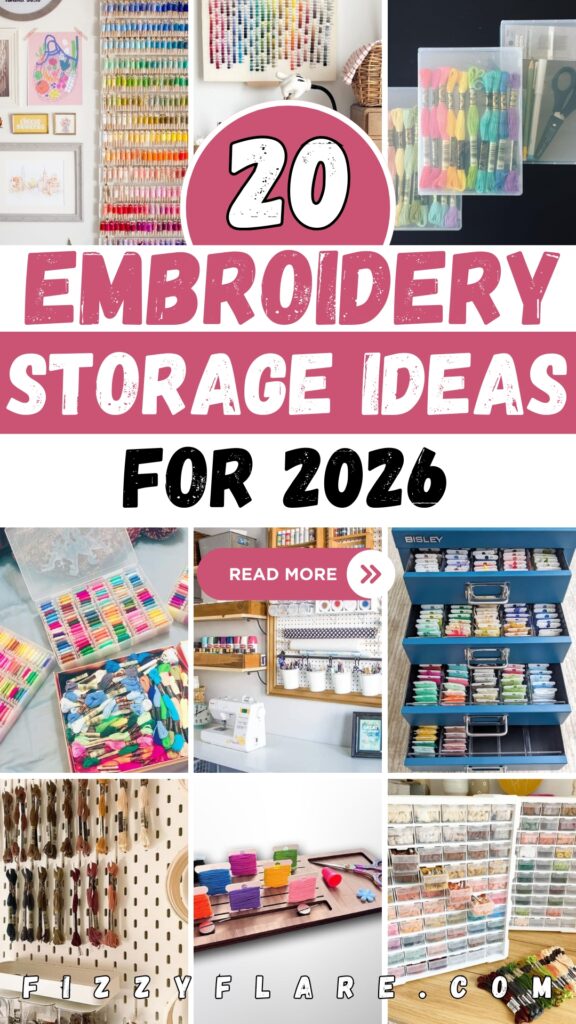
20 Embroidery Storage Ideas for 2026
This post may contain affiliate links: full affiliate disclosure.
You’re not the only one who has opened their embroidery box and find a bunch of twisted thread. Your floss appears nice and colorful one minute.
And the next it’s all knotted up and takes forever to fix. A lot of stitchers have to deal with this annoyance, especially when threads are kept loosely or mixed together.
The good news is that thread that is twisted up is usually a problem with how it is stored, not with how you are stitching it.
You can keep all of your threads clean, easy to reach, and ready for your next project if you learn a few simple techniques to organize them.
In this article, you’ll find 20 brilliant embroidery storage ideas for every home. These tips are perfect for organizing your space.
Let’s jump in!
Contents
- 1 How Can You Store Embroidery Floss Without Tangling?
- 1.1 Bobbin Boxes
- 1.2 Pegboard Wall
- 1.3 Drawer Cabinet
- 1.4 Stitch Board
- 1.5 Drawer Grid
- 1.6 Floss Display
- 1.7 Clothespin Rack
- 1.8 Project Cases
- 1.9 Color Wall
- 1.10 Acrylic Drawers
- 1.11 Travel Kit
- 1.12 Thread Tray
- 1.13 Spool Board
- 1.14 Cubby Organizer
- 1.15 Spool Stand
- 1.16 Color Cases
- 1.17 Craft Station
- 1.18 Label Drawers
- 1.19 Thread Chest
- 1.20 Floss Cabinet
- 2 FAQs
How Can You Store Embroidery Floss Without Tangling?
When loose strands of embroidery thread rub against each other and twist within a box or bag, they get tangled. So the goal is simple: keep every thread separate, controlled, and easy to pull.
One of the quickest methods to do this is to wrap each color around a floss bobbin or card. It can’t twist around other strands if the thread stays wrapped.
You can also keep floss in small zip bags or thread organizers so that each color has its own area.
Use ring organizers or labeled pockets to protect skeins from being mixed up if you want to keep them whole. When you give each thread its own spot, tangling practically goes away.
Save this article for later! 👇👇
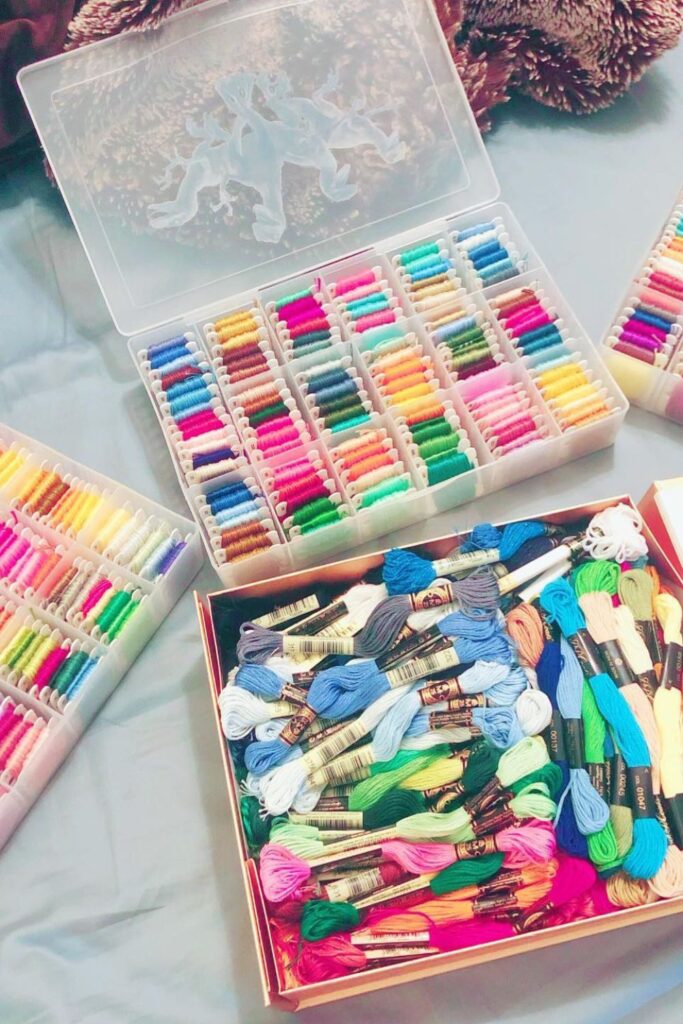
Bobbin Boxes
Color chaos disappears the moment every thread gets its own small slot. Plastic bobbin boxes create that control by keeping each floss wrapped tightly and separated from the rest.
Put each skein on a bobbin, insert it into the split compartments, and arrange the colors in rows so that you can easily select the right shade.
Clear lids on organizers let you look over the full collection in seconds without having to open a lot of boxes.
This configuration is best for craft drawers, shelves, or portable craft carts since the boxes stack nicely and are easy to move.
When you put all of your threads of the same color in one box, it’s much easier to keep track of them.
Pegboard Wall
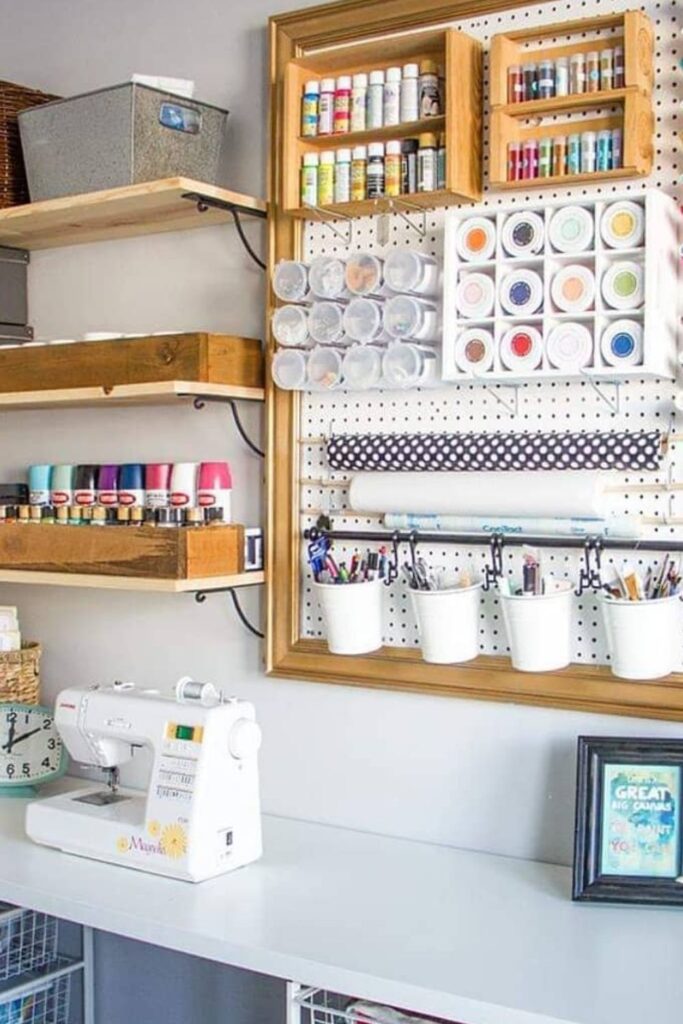
Empty wall space can quietly turn into the most useful embroidery storage area in the room. Pegboards make that possible by turning a plain wall into a flexible organizing system.
Where you can see where each tool goes. You can hang spools, thread cones, ribbons, scissors, and tiny containers on hooks or put them in pegboard baskets.
Which makes it easy to get to them while you work. The board has small shelves on it that can hold paint bottles, craft supplies, or additional thread collections.
A wooden frame around the pegboard makes the craft room look more polished and keeps everything in one place.
This configuration is best for work tables since it keeps tools right above the workplace, which saves time and keeps the desk from getting too messy.
Drawer Cabinet
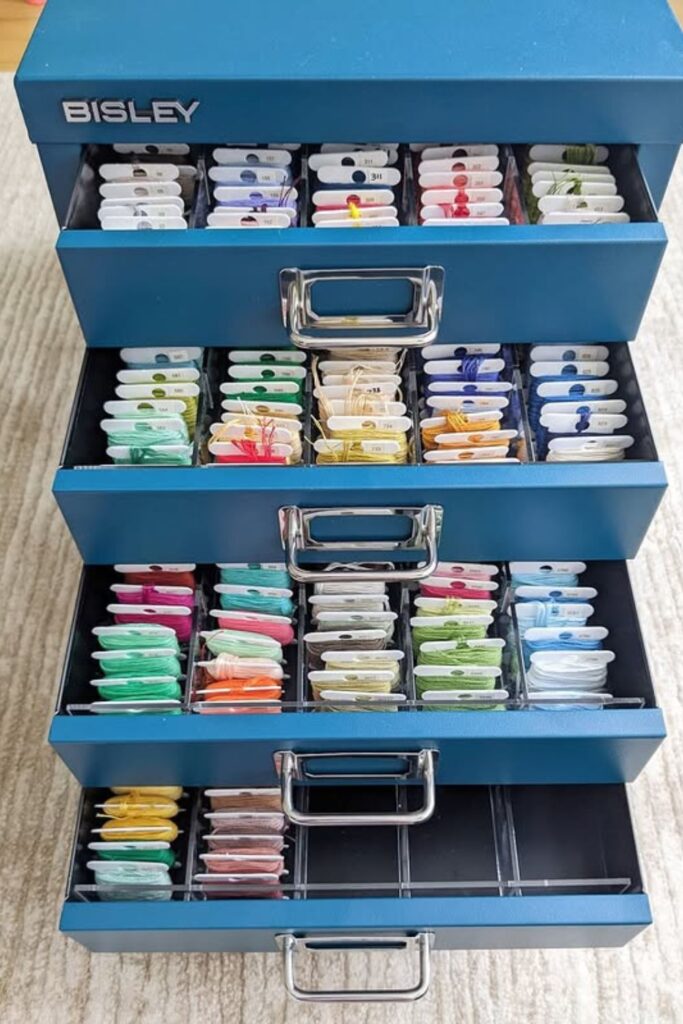
Color hunting becomes much easier once threads live inside labeled drawers instead of scattered boxes.
A compact cabinet with multiple drawers keeps embroidery floss nicely organized while still housing a surprisingly substantial collection.
Put each color on a bobbin, group like colors together, and slide them into drawer dividers so they don’t move about.
Metal or wooden craft cabinets are great because the shallow drawers keep threads from getting tangled or stacked.
A lot of stitchers sort their drawers by color family or DMC number. This makes it easy to find or replace a shade while working on a project.
Stitch Board
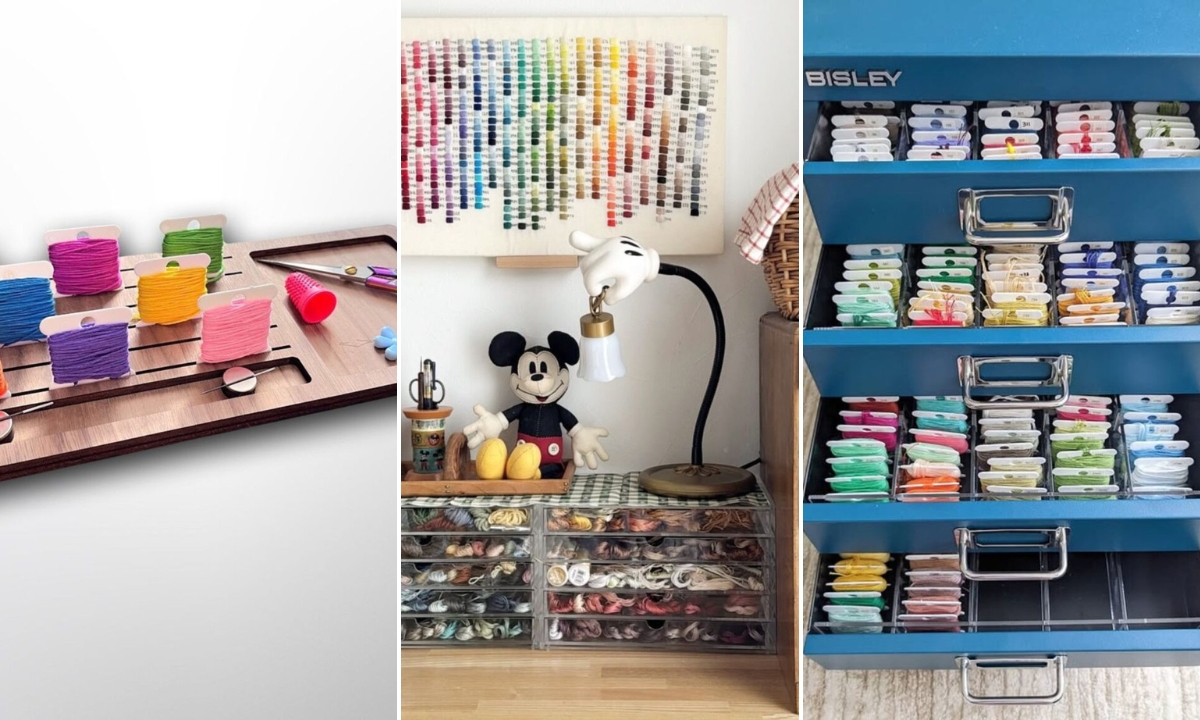
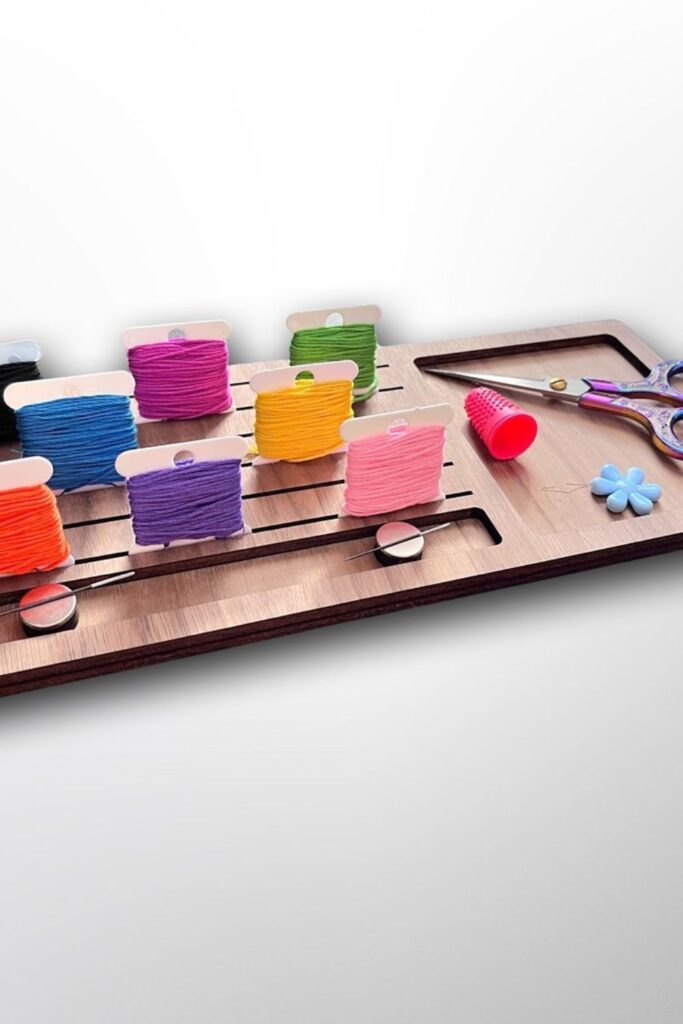
A dedicated stitching board keeps everything for the current project in one calm, organized spot. Wooden thread boards like this hold bobbins upright in slim slots.
So the floss stays wrapped and ready to pull without getting twisted. There are grooves for scissors, needles.
And a thimble that keep tools from moving around on the table while you work. This kind of compact setup works best next to a couch, a small workstation, or an embroidery stand.
When space is restricted but easy access is still important. You only need a wooden organizer with slots or a tiny craft tray with grooves for tools and bobbins to recreate the idea.
When each thread and tool has its own spot, changing colors goes faster, and tangling almost goes away during stitching sessions.
Drawer Grid
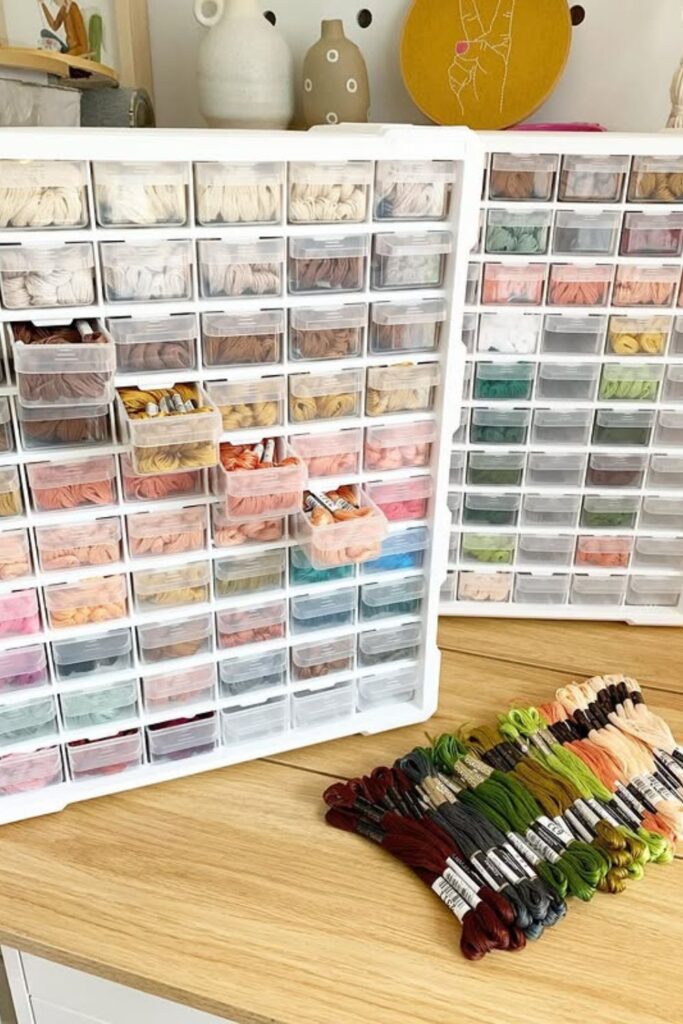
Large thread collections become far easier to manage once every color lives inside its own small drawer.
This kind of multi-compartment craft organizer makes it easy to keep floss separate so it doesn’t become twisted up in big piles.
Sorting threads by color families makes the setup even more useful because finding the exact shade only takes a quick glance across the drawers.
Small plastic drawers keep skeins safe and let you view what’s within without having to open everything.
This design is best for craft rooms, sewing studios, and embroidery workstations since it stores hundreds of skeins and keeps the surface uncluttered.
Floss Display
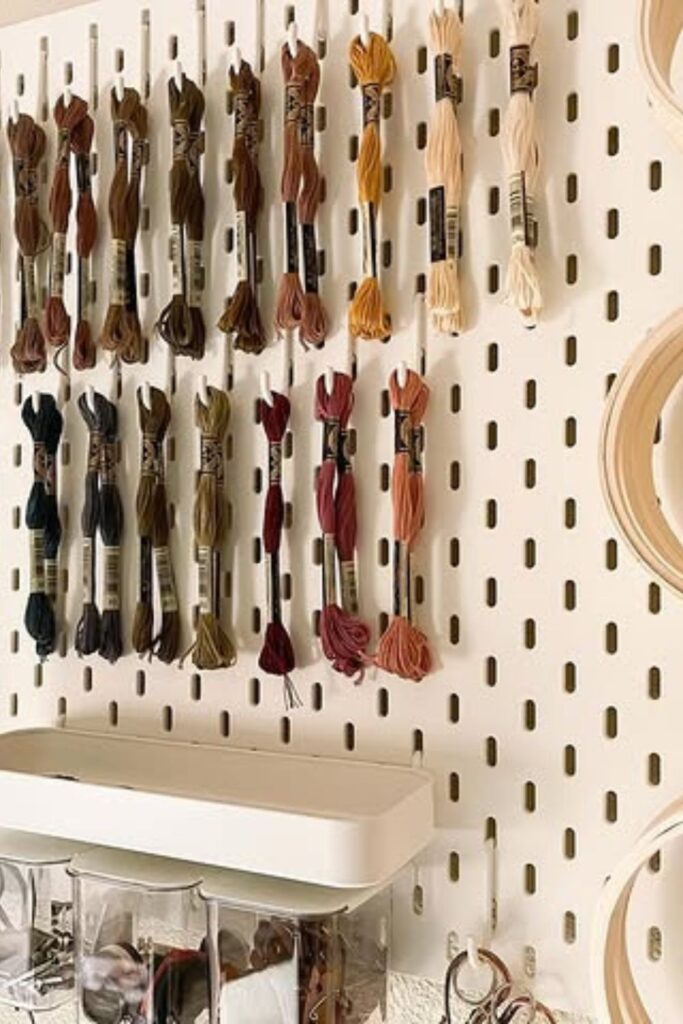
Walls can hold far more embroidery supplies than most people expect. Hanging skeins directly on pegboard hooks keeps every color visible.
This means you can discover the right thread in seconds instead of having to rummage through boxes. Natural skeins hang straight without twisting.
Which keeps the thread label in good shape and makes it easy to tell the colors apart. Pegboard systems also include hooks nearby that can hold embroidery hoops.
Tny tool boxes, and scissors. This solution works well in craft areas and sewing rooms since it converts the wall into a full embroidery station.
All you need to make it again is a pegboard panel, some simple metal hooks, and a few baskets.
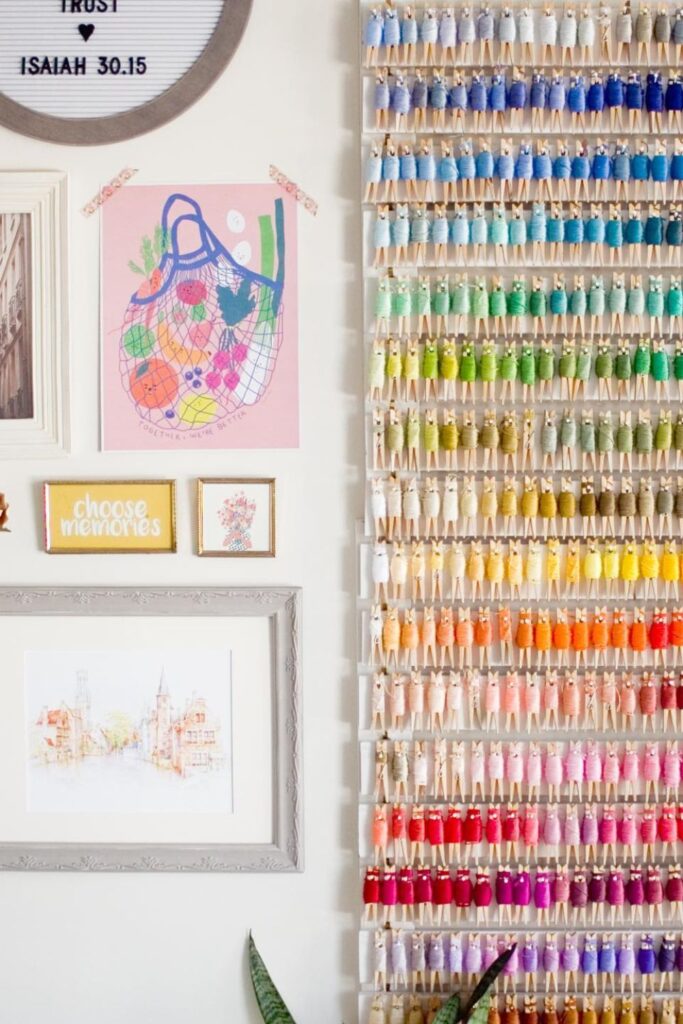
Clothespin Rack
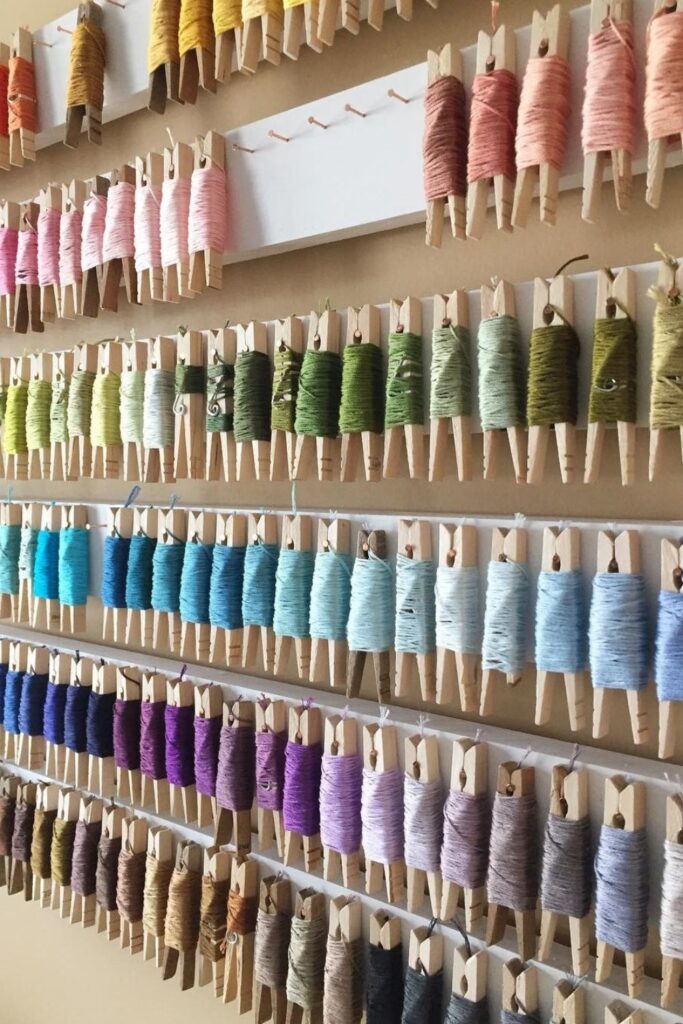
Color gradients deserve to be seen, not hidden inside boxes. A clothespin rack turns embroidery floss into an organized wall display.
While still making it easy to catch every thread. Wooden clothespins are simple holders that keep floss wrapped around the middle and keep it from slipping.
Long wooden boards or thin wall strips with little hooks are the best way to hang each pin in neat rows.
Putting colors from light to dark together makes a natural color map that makes it easier to choose threads when sewing.
This layout is great for craft areas, embroidery studios, or even little desk corners because the wall can be used for both storage and inspiration.
Project Cases
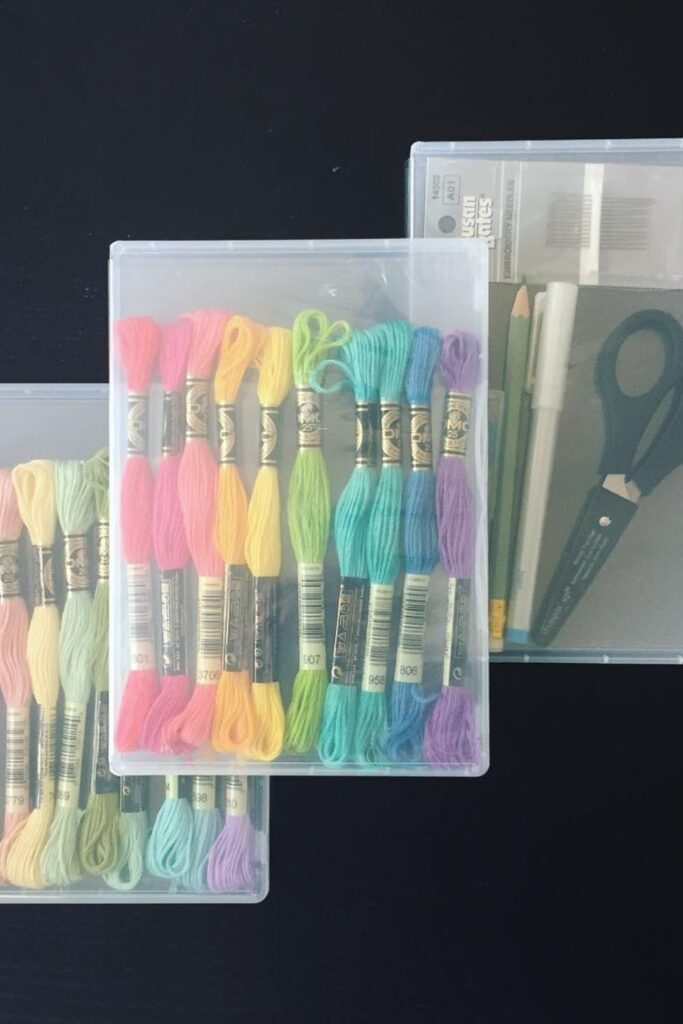
Portable organization makes stitching outside the craft room much easier. Slim plastic cases keep embroidery floss flat and protected.
But you can still see all the colors through the clear top. Skeins don’t become tangled because each bundle is straight instead of being squished in a sack.
The extra space within the case can hold small tools, scissors, needles, or threaders, making it an embroidery kit that is ready to use.
This configuration is best for travel sewing, sofa projects, or embroidery workshops because everything stays in one small box.
Once each project has its own case, the threads stay neat, the tools are easy to find, and carrying materials is a breeze.
Color Wall
Rainbow rows of embroidery floss can turn an ordinary wall into the most inspiring corner of a craft room.
Long display boards with little pegs or clips keep thread cards in place, making it easy to see and collect any shade.
You can make a visual map by putting colors in gradients, like from blues to greens, then yellows and reds.
This will help you discover the right tone faster when you are stitching. This system is best for people who have a lot of thread.
Since it keeps hundreds of colors sorted without taking up space in drawers or boxes. You may simply make this system again with wooden strips, small nails, or peg rails.
Acrylic Drawers
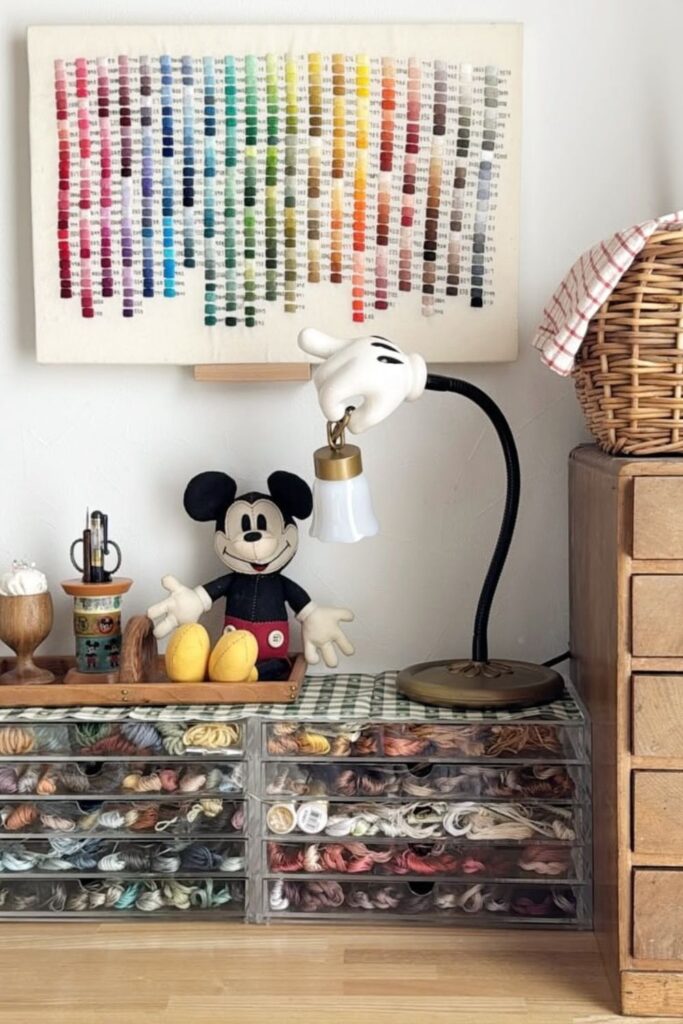
Hundreds of embroidery threads can stay perfectly sorted when shallow acrylic drawers take over the storage job.
You can see every color in clear plastic drawers, so finding the perfect one is as easy as a fast look instead of a protracted search through boxes.
Each compartment has enough space for the skeins to fit without being squeezed, which keeps them from twisting and tangling.
A lot of stitchers categorize their threads by color or brand number, which makes the system even easier to keep up with.
This setup is best for craft desks, sewing corners, and embroidery tables because the drawers open right away when you need them.
Travel Kit
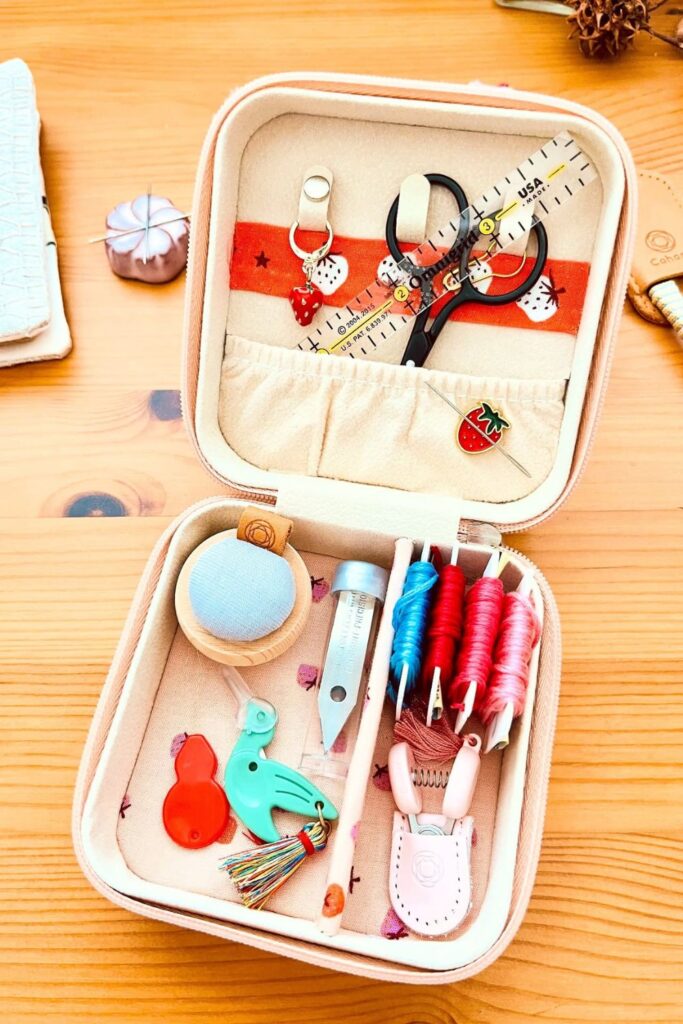
Stitching time doesn’t always happen at a craft desk. A compact embroidery travel kit keeps the essentials together so projects can move from couch to café without losing tools or threads.
Soft zip cases with pockets built in are great since they keep scissors, needles, rulers, and threaders from moving around.
The lower compartments are just the right size for small floss spools or pre-cut thread bundles. This keeps the colors distinct and ready to use.
This kind of lightweight organizer is great for needlework lessons, road trips, or peaceful times away from home when you want to stitch.
Having your tools in order means you won’t have to look for them as much and can sew wherever you get the idea.
Thread Tray
Small project threads stay far easier to manage when each color sits upright instead of piling together.
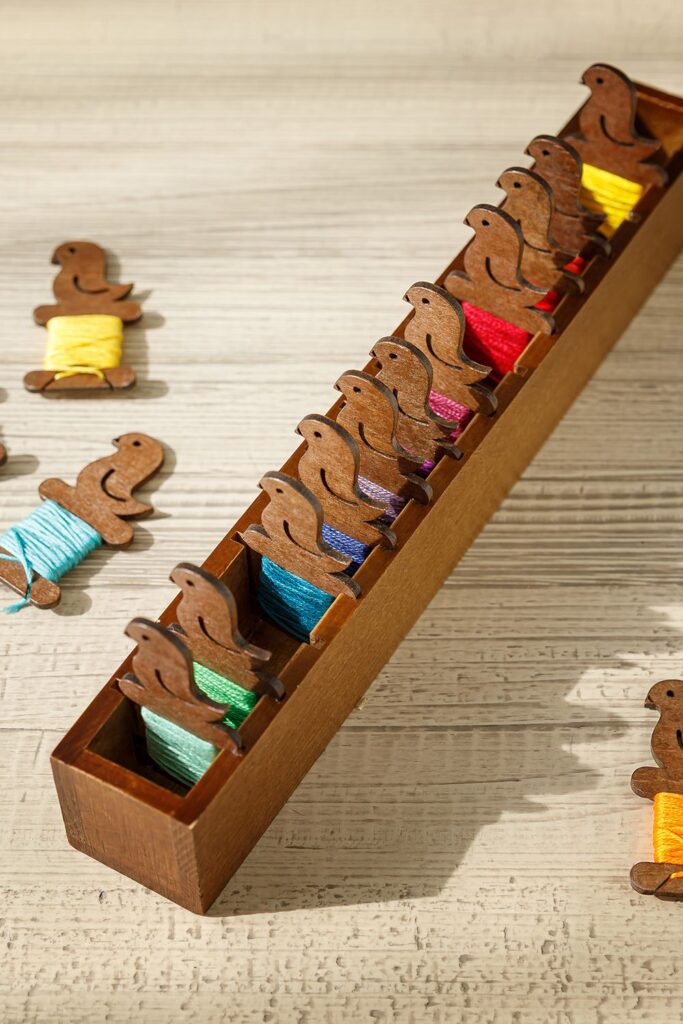
Wooden thread trays keep things in order by putting bobbins in different slots, which lets each color stand out.
Slim compartments protect the floss from moving around, which keeps the strands silky and ready to pull.
These decorative wooden bobbins, which look like holders, make the organizer feel more like part of the craft space than just a place to store things.
This approach works well for tabletop settings because the tray is next to the embroidery hoop and keeps the colors of the project within easy reach.
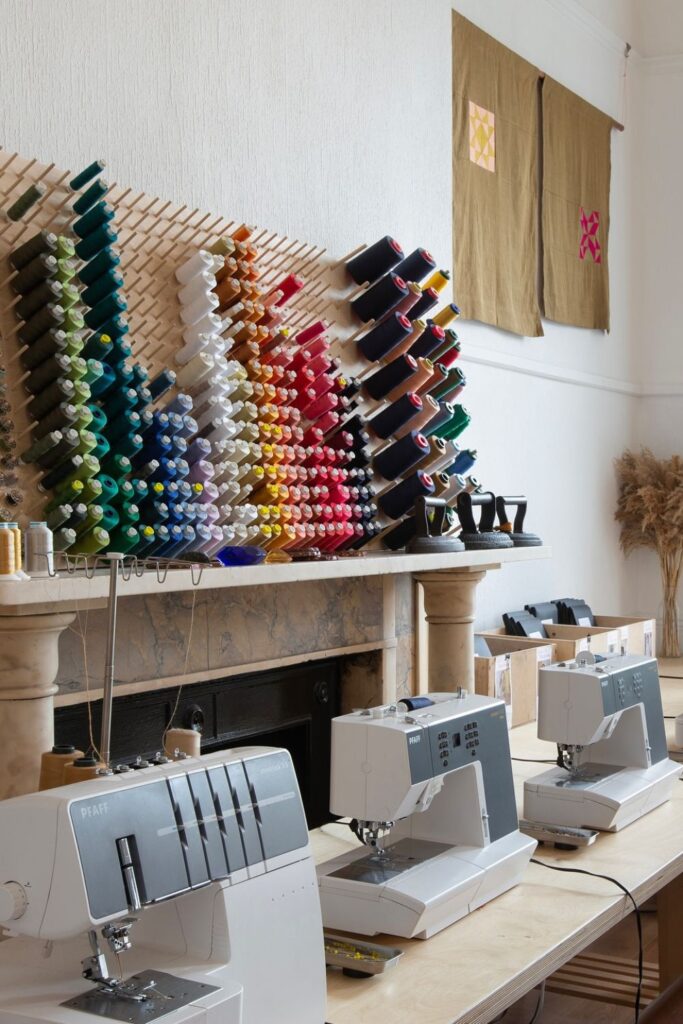
Spool Board
Massive thread collections need a system that keeps every spool visible and easy to reach. Large peg spool boards solve that problem.
By changing a plain panel into a thread wall that is color-coded. Each spool is held horizontally by wooden pegs, which keeps the threads from rolling around in drawers or getting mixed up.
This configuration is best for sewing studios, embroidery classrooms, and big craft rooms since it lets hundreds of spools dwell in one little wall space.
To recreate the idea, all you need is a strong board and wooden dowels that are uniformly spaced.
When the threads are lined up across the panel, the storage is both useful and inspiring to look at while you work on your sewing.
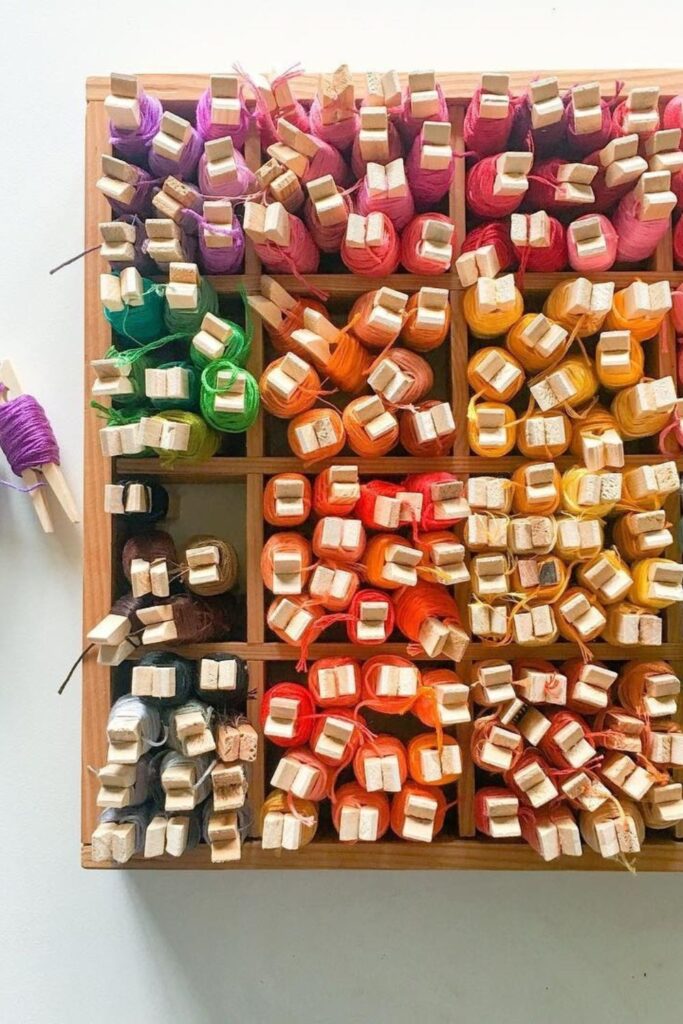
Cubby Organizer
Tiny compartments bring instant order to a large pile of embroidery floss. Wooden cubby organizers keep thread bundles separated so colors never mix or knot together.
Each square slot may store a few wrapped threads or micro bobbins. This makes it easy to group colors like reds, oranges, greens, or blues.
When you sort colors like this, it saves time when you sew because the exact color is in a predictable spot instead of being hidden in a messy pile.
This design works well with craft workstations and embroidery tables since the organizer stays open and easy to reach as you sew.
Small wooden divider trays, drawer inserts, or even spice organizers can easily reproduce this arrangement and give each bundle of floss a neat place to sit.
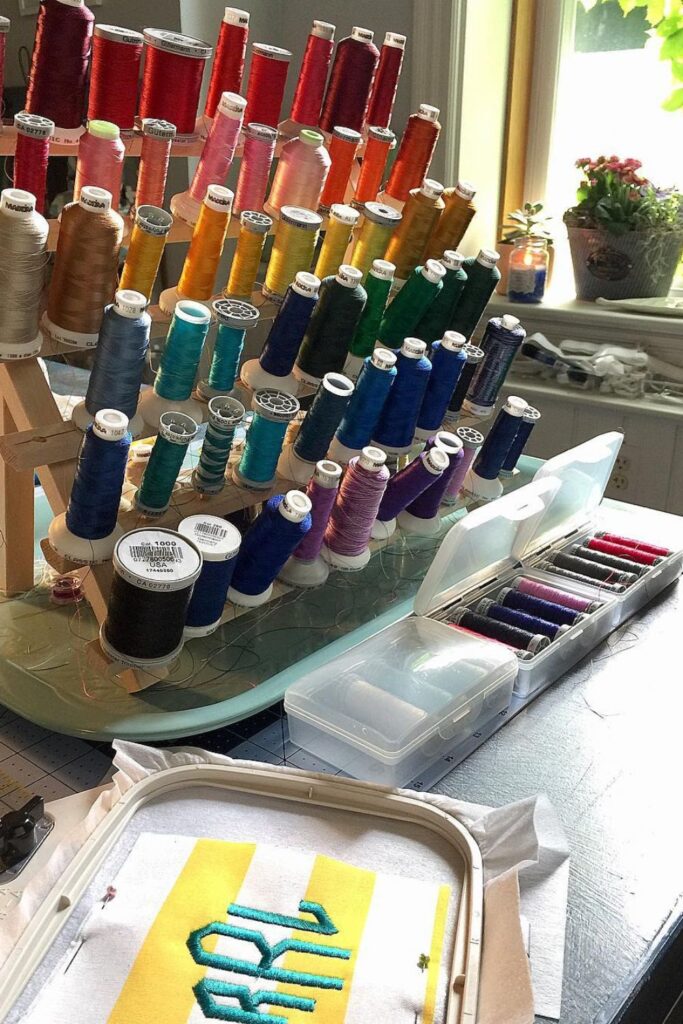
Spool Stand
Bright thread colors deserve a spot where they stay visible and easy to grab. Tiered spool stands solve that by lifting each thread cone onto its own peg.
Making a layered presentation that keeps each spool independent. When you switch threads when sewing or embroidering, angled rows make it simpler to see color groups.
Wooden dowels keep large spools balanced, so they don’t slide off the table or get lost in drawers.
This design is best for workstations near sewing machines since it keeps threads within reach while sewing.
Once the spools are in the right place on the stand, it’s easy to choose the right thread, and the workspace stays much more orderly.
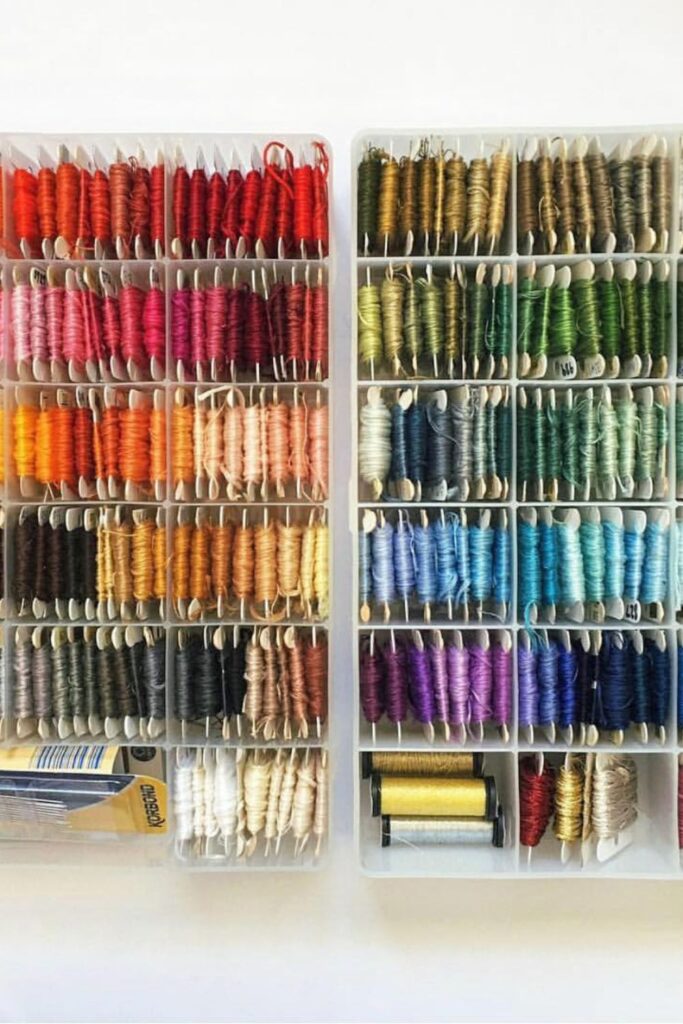
Color Cases
Sorting embroidery floss by color families makes thread storage far easier to manage. Clear compartment cases create a simple system.
Each bobbin has its own slot, which keeps the strands coiled up and separate from the others. You may grasp the proper thread without having to look.
Through piles of it by looking at the visual color map that shows rows of similar colors, such reds, yellows, greens, and blues.
Plastic divider boxes help keep bobbins from moving, which stops wayward strands from getting caught and tangled.
This design works nicely with craft drawers, embroidery carts, or sewing tables since the cases stack neatly and are easy to move.
Craft Station
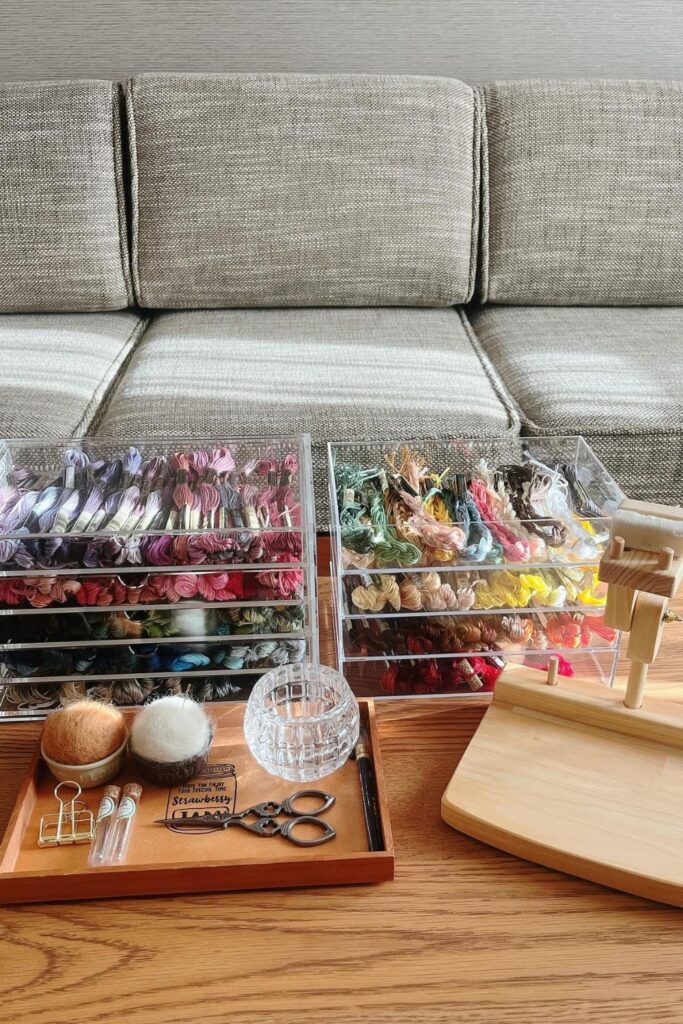
Embroidery becomes far more enjoyable when threads, tools, and active projects stay organized in one small workspace.
The clear sides of the drawer organizers let you see all the colors of floss while keeping them organized by color.
Shallow compartments keep skeins from building up, which helps keep threads from twisting and tangling.
A tray nearby for tiny tools, scissors, needles, and clips keeps the area where you are stitching peaceful and clear of clutter.
This kind of setup works well next to a couch or coffee table, where people normally relax and sew.
Label Drawers
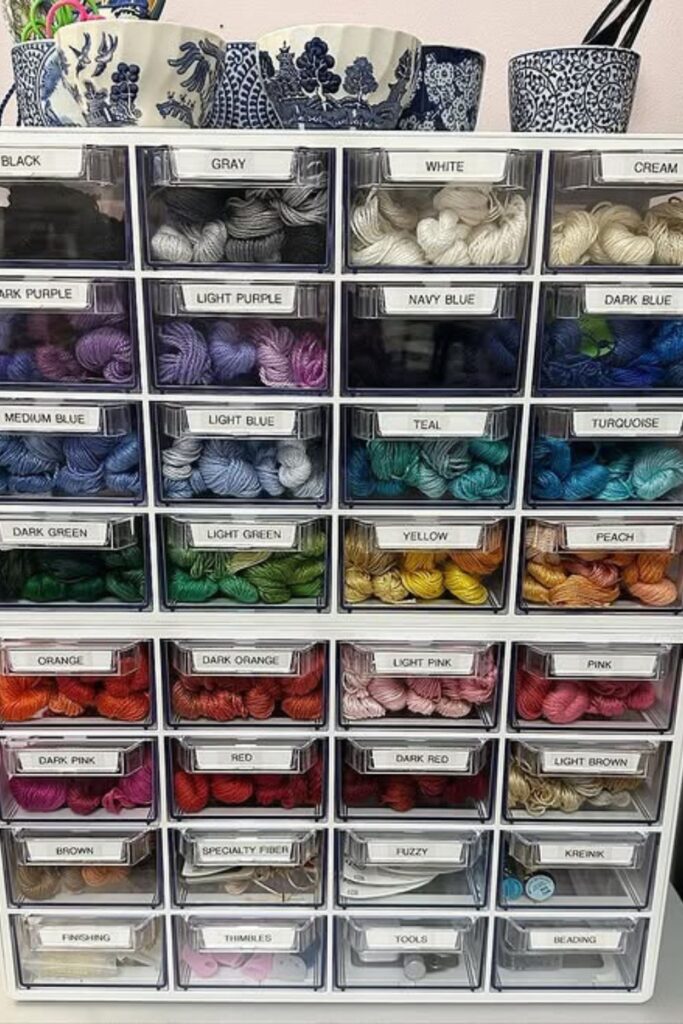
Searching through mixed threads slows down every embroidery project. Labeled drawer systems solve that instantly by assigning each color family its own dedicated space.
You can see the skeins well in the little drawers, and the labels will take you immediately to the proper shade without having to sift through piles.
You can keep dark blues, light greens, reds, and neutrals in distinct compartments. This makes it much easier to keep the system up over time.
This configuration is best for craft rooms and embroidery studios since it keeps big collections of thread tidy in a small cabinet.
All you need to recreate the idea is a multi-drawer organizer and some simple labels for each color group.
It’s easy and quick to find the right thread once each drawer has a clear category.
Thread Chest
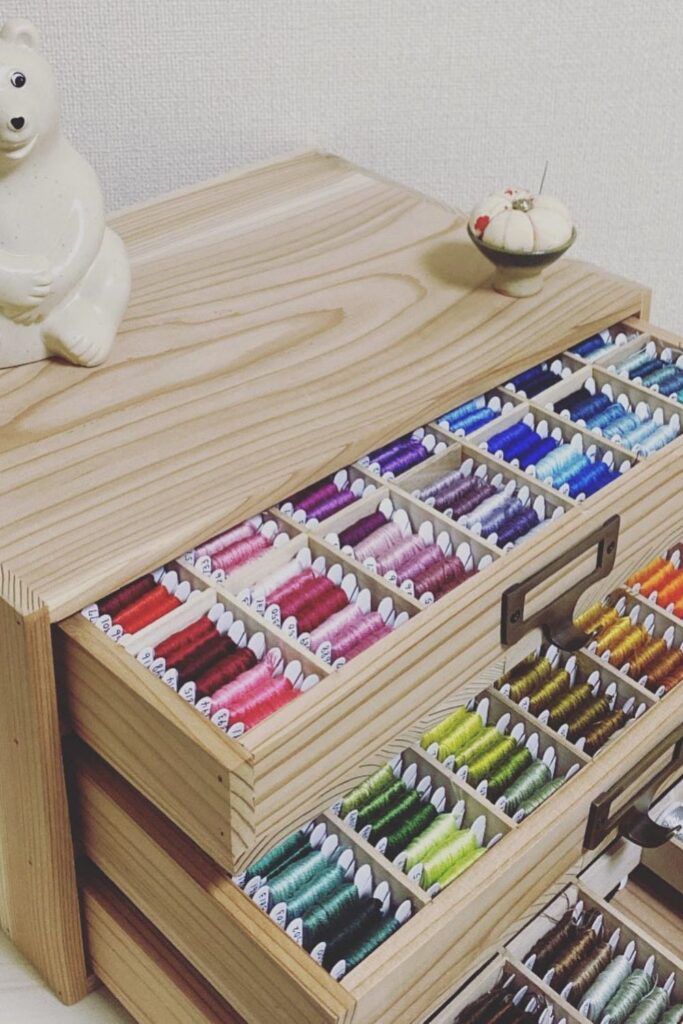
Hidden storage can still keep embroidery floss perfectly organized. A wooden thread chest uses shallow drawers and small dividers to give every bobbin its own space.
Which keeps strands neatly coiled and easy to find. Color rows inside each drawer make it easy to find the proper thread without having to dig through piles.
The shades go from dark to light, so you can easily find the right one. Wooden cabinets also keep dust and sunshine off the floss, which helps keep the color quality over time.
This system is best for craft tables and embroidery studios since it keeps hundreds of threads neatly organized and the surface clean.
A compact drawer cabinet with movable dividers makes it easy to recreate the idea. This keeps each thread distinct and tangle-free.
Floss Cabinet
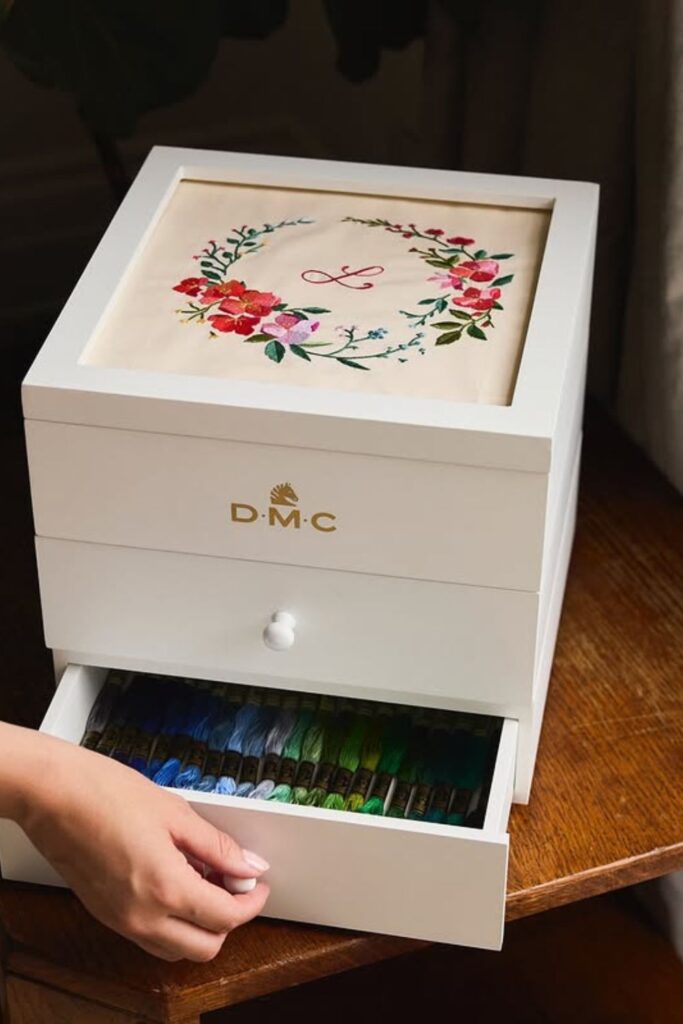
Beautiful storage can also be practical when embroidery supplies live inside a dedicated floss cabinet.
Small thread cabinets with shallow drawers keep skeins organized and safe from dust and sunshine.
Color rows in each drawer make it easy to swiftly look through shades, especially when threads are organized by color families.
The decorative embroidery on the lid makes the organizer a part of the craft room instead of just another storage box.
This configuration works best for little sewing corners and embroidery tables because the cabinet carries a lot of items without taking up too much space.
FAQs
Is it better to store embroidery floss on bobbins or keep it in skeins?
Both techniques work, but which one is ideal for you depends on how you want to organize your threads. Bobbins keep floss neat and easy to discover in storage boxes or drawers.
This helps protect it from getting tangled and makes it easier to select the right color. If you like hanging systems or zip bags.
Keeping floss in skeins works well because the thread stays in its natural shape. Bobbins are helpful for big collections, but smaller or more often used threads can stay in skeins.
How do you organize embroidery floss by color efficiently?
Put reds, blues, greens, and neutrals together to start. After you make the primary groupings, sort the threads by color family from light to dark.
This approach works well with storage boxes, labeled drawers, or wall displays since you can see all the colors at once.
Color-based organizing saves time on tasks because it’s easier to find the proper shade immediately.
You may like to read!

Fasial is the founder of the Fizzy Flare. He has been a passionate blogger since 2021. He ran three different websites in the past few years. Now he is focusing on Fizzy Flare to build an audience and help them organize their life.