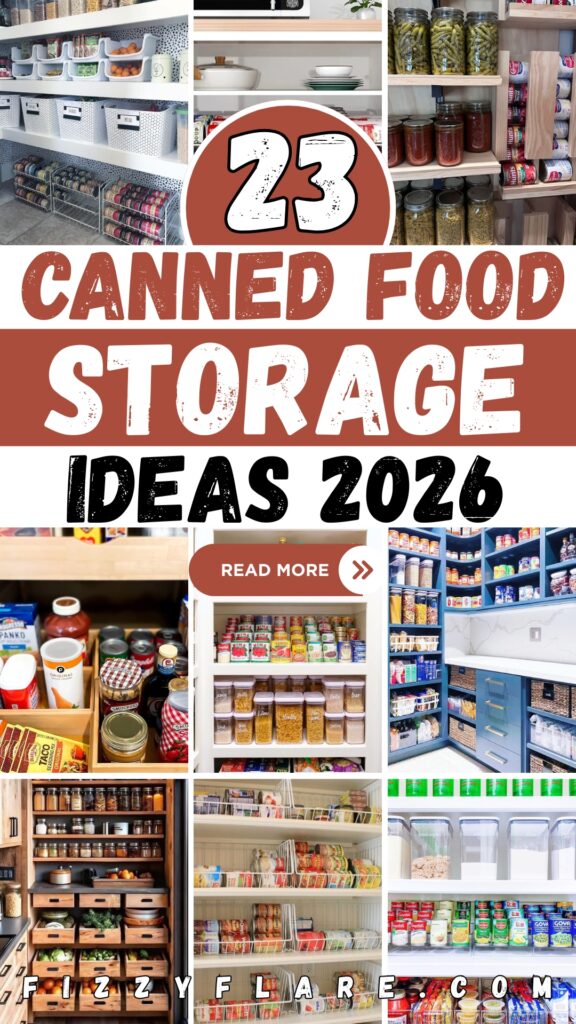
23 Canned Food Storage Ideas for 2026
This post may contain affiliate links: full affiliate disclosure.
You probably know how quickly things get messy if you’ve ever tried to organize canned goods. A few cans turn into a crowded shelf, the ones at the back disappear.
And somehow you still find up buying another can of beans since you forgot you already had three. It’s a little problem that steadily makes your pantry a mess.
The good news is that you don’t need a big pantry or pricey organizers to remedy it. You can see, grab, and organize all of your cans easily with a simple storage system.
In this article, I will show you 23 clever canned food storage ideas that help you organize canned food neatly and make everything easier to find.
Let’s jump in!
Contents
- 1 How Can You Build a Simple Canned Food Storage System at Home?
- 1.1 Gravity Feed
- 1.2 Tiered Racks
- 1.3 Floor Racks
- 1.4 Corner Pantry
- 1.5 Can Zones
- 1.6 Drawer Dividers
- 1.7 Clear Bins
- 1.8 Shelf Glides
- 1.9 Pantry Wall
- 1.10 U-Pantry
- 1.11 Door Shelves
- 1.12 Lazy Turntable
- 1.13 Jar Wall
- 1.14 Pull Cabinets
- 1.15 Pantry Lighting
- 1.16 Can Drawer
- 1.17 Sliding Baskets
- 1.18 Slat Shelves
- 1.19 Pantry Display
- 1.20 Shelf Risers
- 1.21 Category Shelves
- 1.22 Stack Towers
- 1.23 Cubby Storage
- 2 FAQs
How Can You Build a Simple Canned Food Storage System at Home?
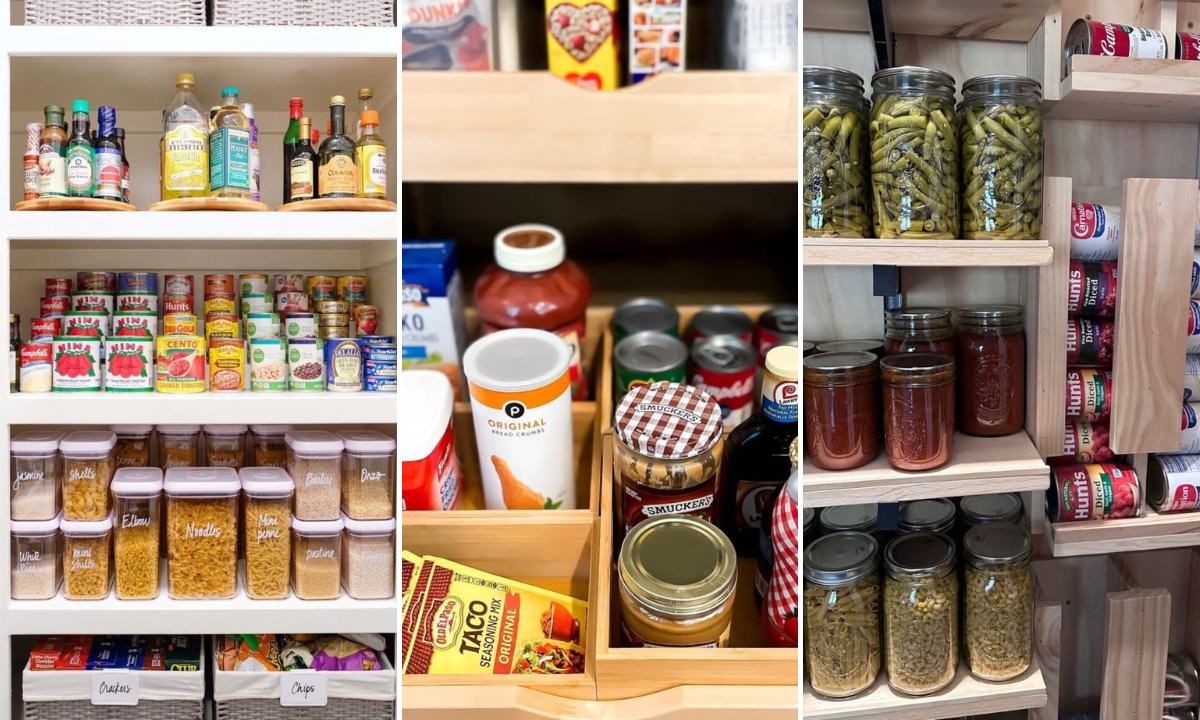
Choose a place for all of your canned food to live first. It could be a shelf in the pantry, a cabinet, or simply a little rack in the corner.
The goal is simple: store everything in one location so you always know what you have. Next, put cans that are alike in groups.
Save this article for later! 👇👇
Put beans or sauces in their own compartment, soups in another, and veggies in another. It’s lot easier to find what you need when you put cans together.
Then use space that is vertical. A simple tiered shelf or stackable rack lets you see all of your cans instead of hiding them behind each other.
Gravity Feed
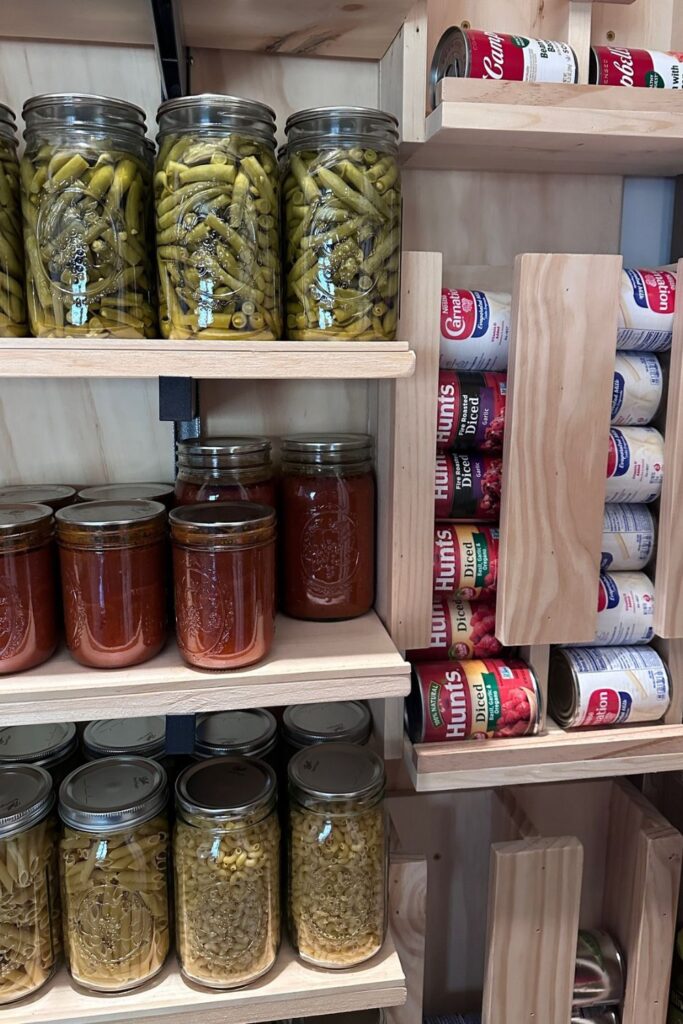
Clutter disappears fast once cans start moving on their own. A simple gravity-feed rack like this keeps newer cans loading from the top.
while the older ones roll down to the bottom. The next can automatically glides into place every time one is used.
You only need a tiny wooden frame and two angled rails that are big enough to hold regular cans to make one at home.
Put it on a shelf in your pantry or in a cupboard where you don’t regularly use vertical space.
This design is best for kitchen corners since it keeps a lot of cans in a small space while yet making sure that every label is easy to see and grab.
Tiered Racks
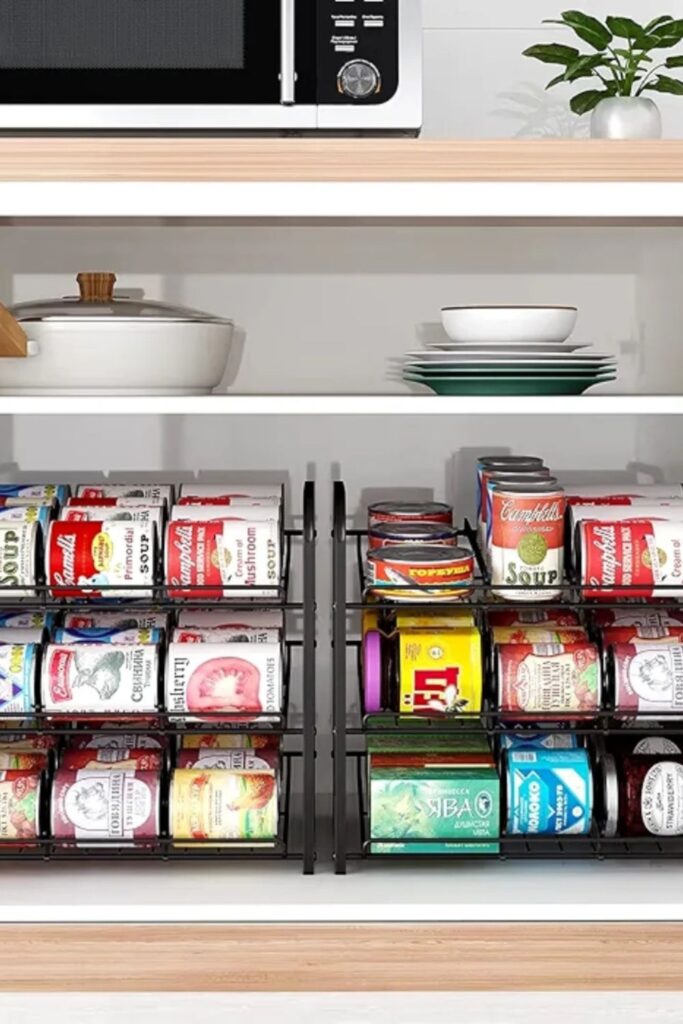
Hidden cans turn a cabinet into a guessing game. Tiered racks solve that problem by lifting every row slightly higher than the one in front.
Labels stay clear, so it only takes a few seconds to retrieve soup, beans, or sauces instead of having to rummage through stacks.
These small metal racks are great for bottom cabinets where there isn’t much vertical room. Put the heavier cans on the bottom row and the lighter ones on the top row.
To keep everything stable. If you have deep cupboards in your kitchen, stepped rows are the best way to keep cans from getting lost in the back.
This kind of small organizer may quickly turn a messy shelf into a clear, easy-to-scan pantry system.
Floor Racks
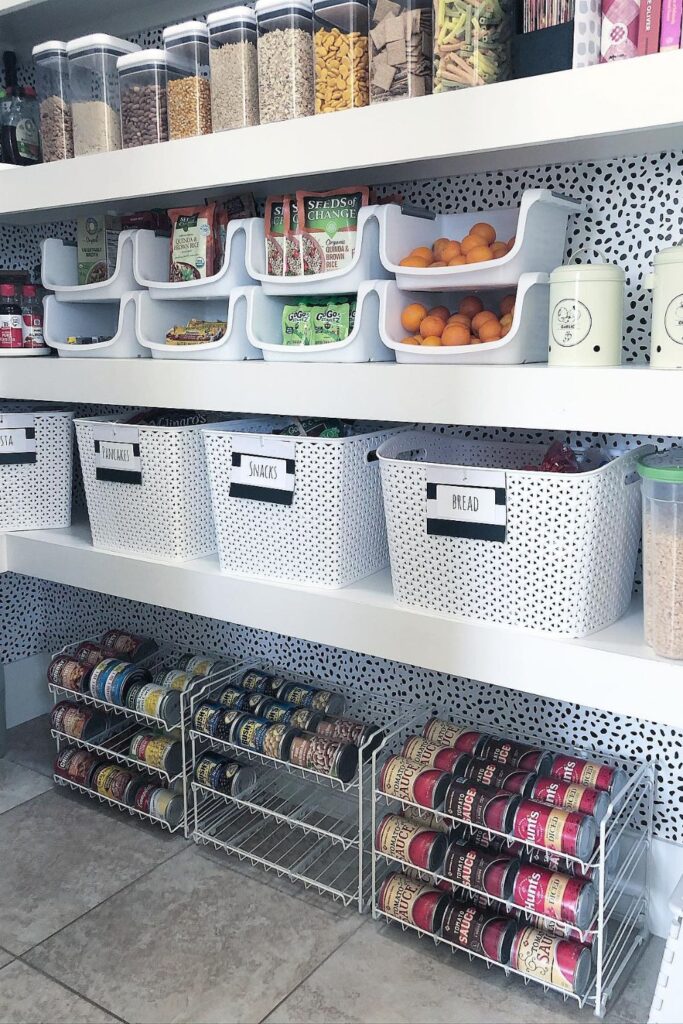
Unused floor space inside a pantry can quietly hold a surprising amount of canned food. Low wire racks turn that empty area into an organized can zone.
Where rows stay tidy and easy to get to. Angled shelves let cans roll forward when you take one out, so the next one is always ready at the front.
These narrow racks fit well under wall shelves without getting in the way of people strolling. Soups, tomatoes, and sauces are examples of heavy products.
That function well on lower levels. The rack keeps them steady while still letting you see them. Pantry rooms with broad open walls are the best.
Because stacking multiple racks next to each other makes a neat, store-like structure that keeps bulk cans in check.
Corner Pantry
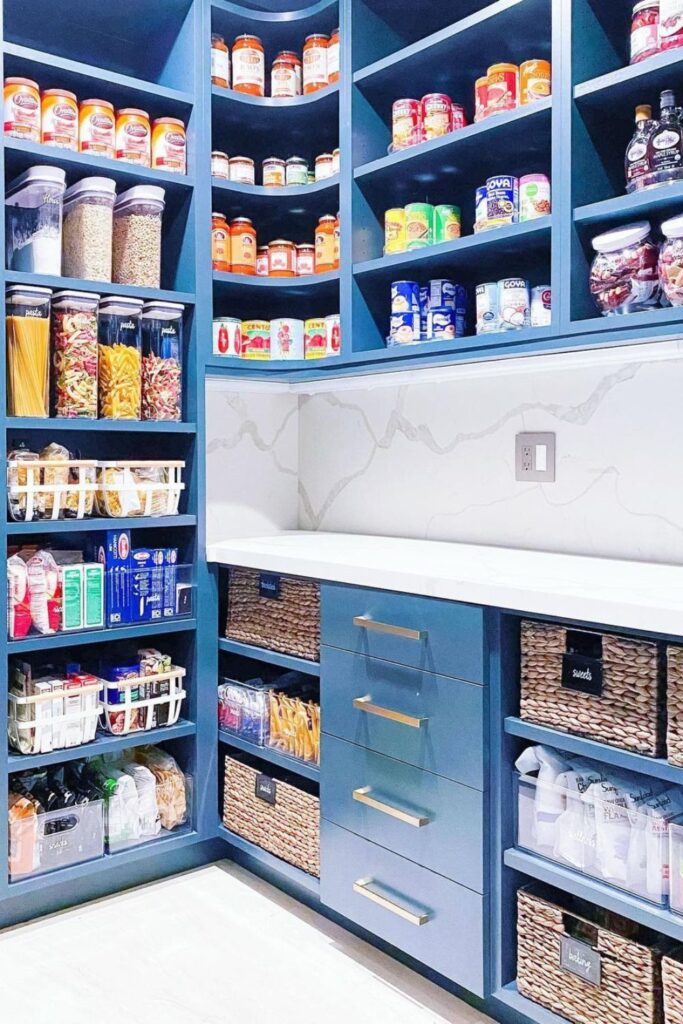
Dead corners often waste some of the most valuable pantry space. Curved corner shelves turn that awkward area into a smooth storage flow.
Where cans can be seen from all sides. Rounded shelves are great for canned soups, sauces, and vegetables since the rows naturally follow the curve.
Instead than getting pushed into a dark corner. To make this layout work, you normally have to add bespoke corner shelves or curved inserts to an already-existing cabinet.
Pantry rooms benefit the most because corner walls may accommodate numerous levels without getting in the way of mobility.
Organized rows along the curve also make it easy to resupply, since newer cans can slide to the rear and older ones can stay within reach at the front.
Can Zones
Mixed cans quickly turn pantry shelves into clutter. Creating clear “can zones” keeps everything easy to find and restock.
Put all of your canned items on one shelf and sort them by kind. For example, put all of the tomatoes together, all of the beans in a different row.
And all of the soups in their own section. Putting similar cans in little rows also makes it easy to keep track of how many you have left until grocery day.
This system works best with deep pantry shelves since they can hold more than one row without looking cluttered.
Leave some room behind each group so that new cans can move to the back and older ones can stay in front.
Drawer Dividers
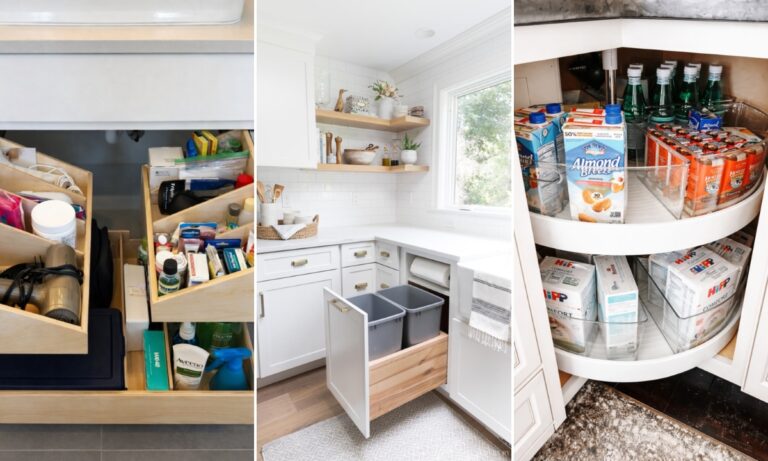
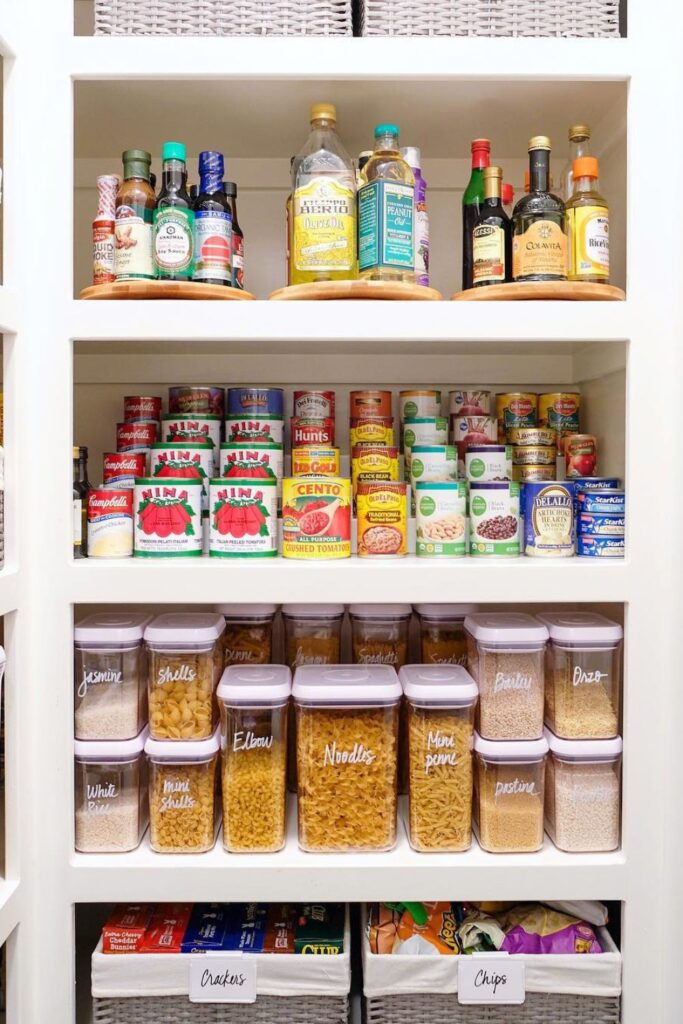
Deep kitchen drawers often become a dumping spot where cans roll around and disappear behind other items.
Wooden dividers turn that mess into neat sections that keep everything standing up and easy to get to.
Put things in different compartments by type: put canned soups in one, sauces in another, and smaller tins in a third.
Pulling the drawer out right away shows you everything, so you don’t have to search among shelves that are stacked on top of each other.
This layout works great with wide lower cabinets since the drawers swing all the way out, allowing you full access to everything.
Clear Bins
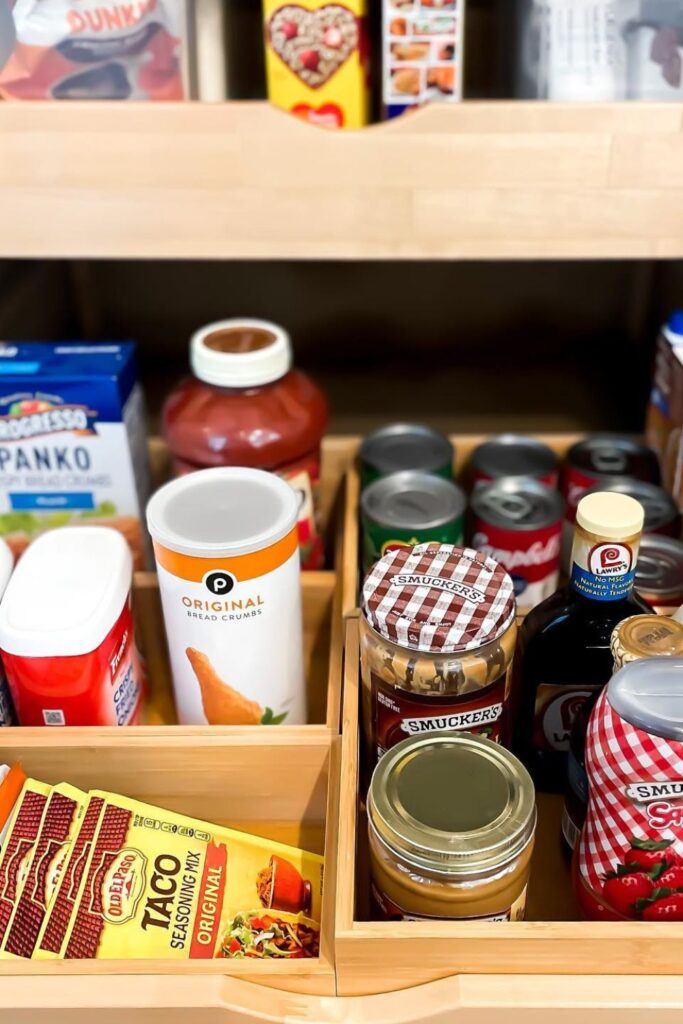
Cans disappear fast on deep pantry shelves. Clear storage bins solve that by keeping everything in visible rows while still containing the clutter.
You can put soups in one bin, vegetables in another, beans or fruit in the next, and so on. If you slide the bin forward.
All the labels will show up right away without knocking over any stacks. Acrylic containers are great since you can see what’s inside them at a glance and they stop cans from rolling around.
Long pantry shelves are the best since they let you put a lot of bins next to each other to make ordered areas.
It’s also easy to restock because fresh cans go at the rear of the bin and older ones stay at the front, ready to be used.
Shelf Glides
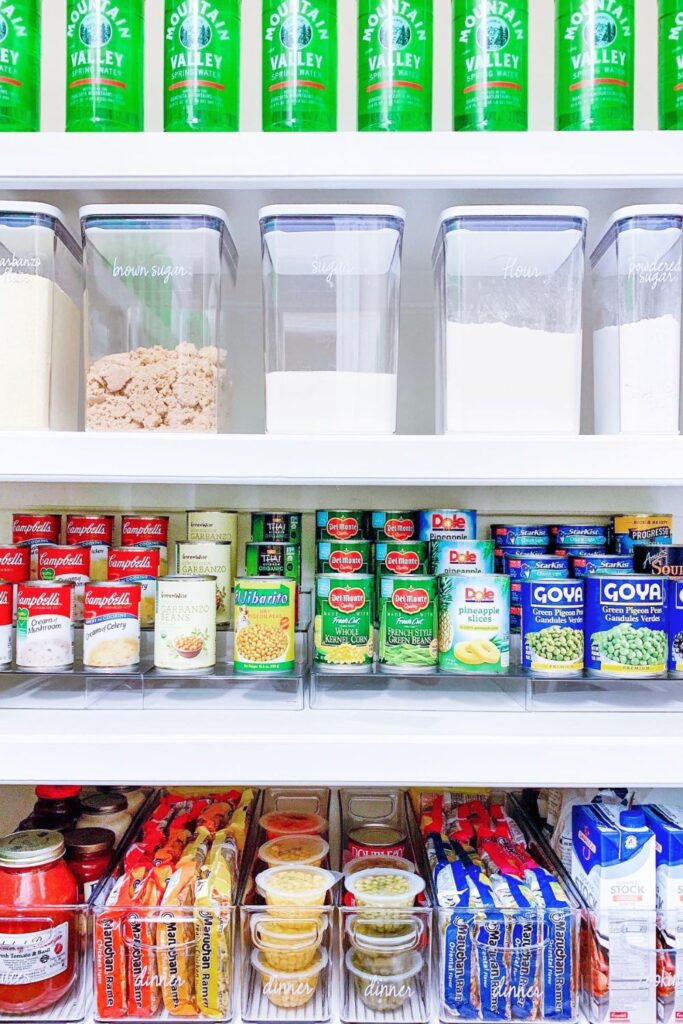
Rolling cans across a shelf creates more mess than storage. Wire shelf glides fix that by guiding each row into its own lane.
Instead of spreading out across the shelf, the cans stay in a line, which makes it much easier to see what’s there.
Put some glide dividers on a regular pantry shelf and use each lane for a different type of food, like beans, soups, veggies, or sauces.
Wider pantry shelves are better for this arrangement since they let more than one lane sit next to each other without wasting space.
It’s also easy to resupply the grocery store. Newer cans move to the back, while older ones stay at the front, where they get used first.
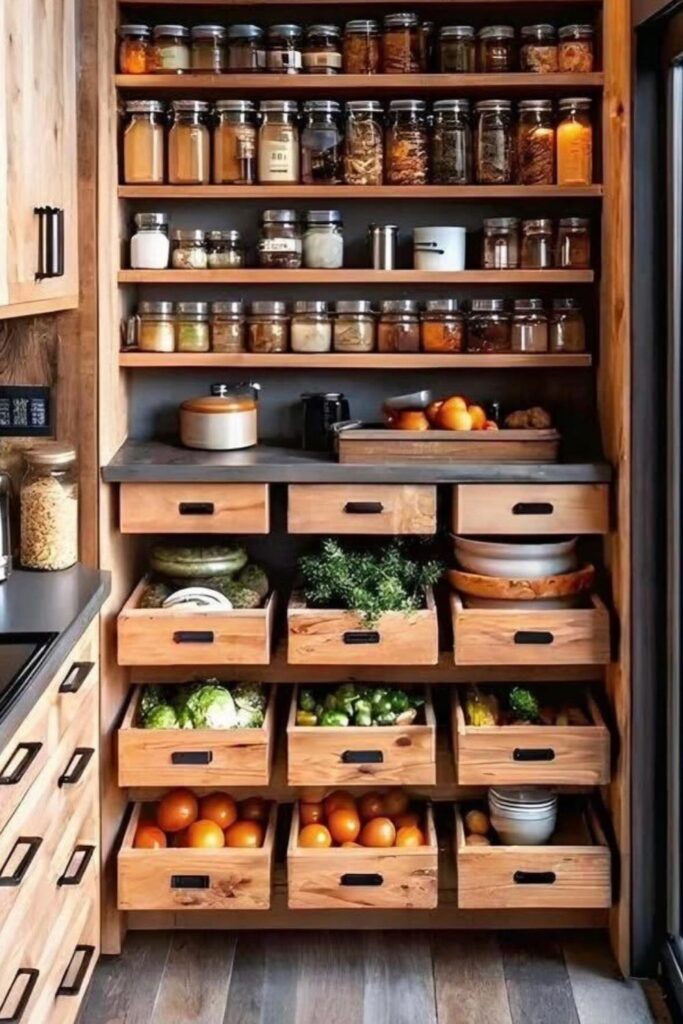
Pantry Wall
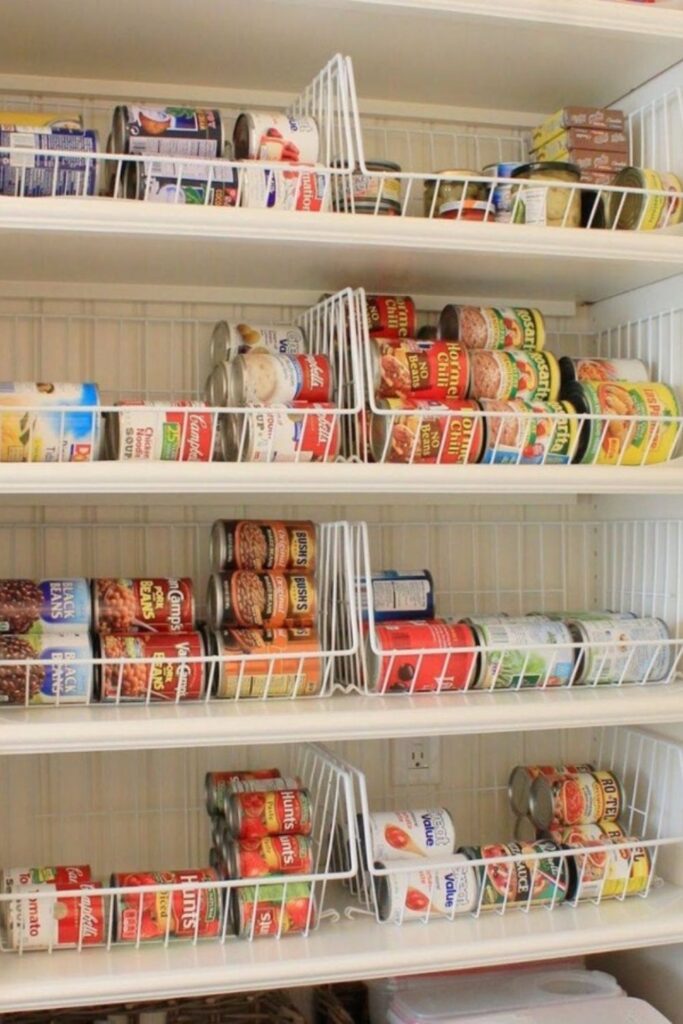
Empty wall space beside the kitchen often becomes wasted storage potential. Turning that wall into a full pantry station.
Makes space for jars, canned goods, and ordinary culinary things right away. Open hardwood shelves make it easy to see everything.
And lower pull-out drawers are great for heavier pantry mainstays like fruits, vegetables, and bulk items.
Rows of mason jars look good on upper shelves since it’s simple to see what’s inside and what the labels say.
This solution works best in narrow kitchen corners or on walls that aren’t being used because vertical shelving makes a full pantry without needing more cabinets.
U-Pantry
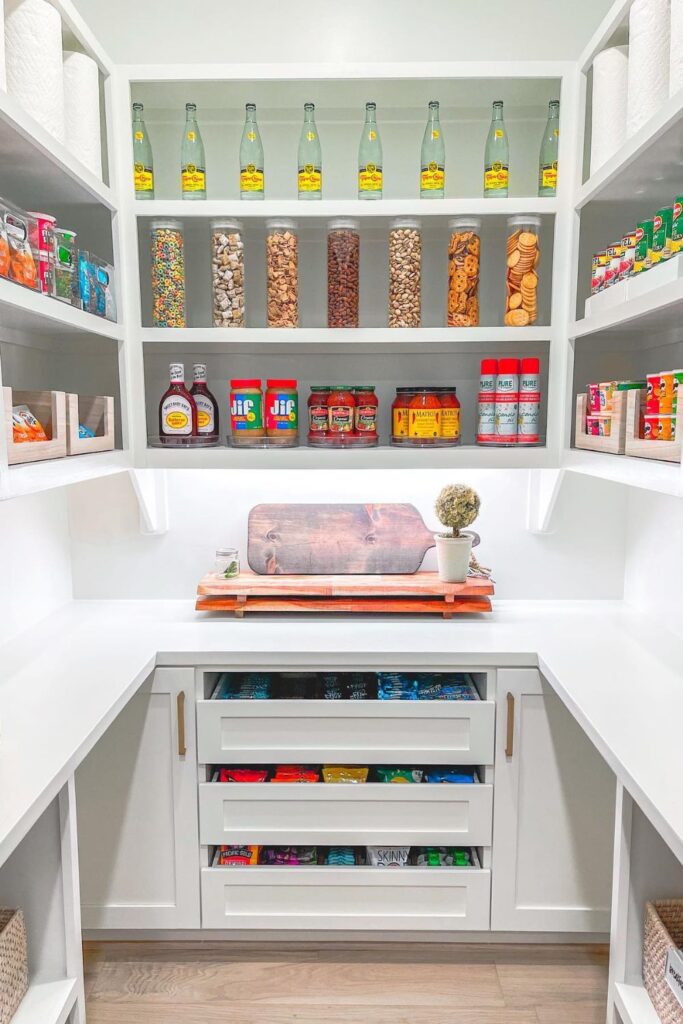
Pantry space becomes far more useful once shelves wrap around the room instead of sitting on one wall.
A U-shaped pantry plan makes it easy to organize by category because it keeps canned food within reach from all sides.
One wall can keep canned veggies, another can hold soups and sauces, and the drawers in the middle can hold snacks or smaller pantry goods.
Continuous shelving also keeps cans from stacking too high, which makes it simple to see and scan the labels.
This configuration is best for small walk-in pantries because it makes the most of wall space without making the floor too crowded.
Door Shelves
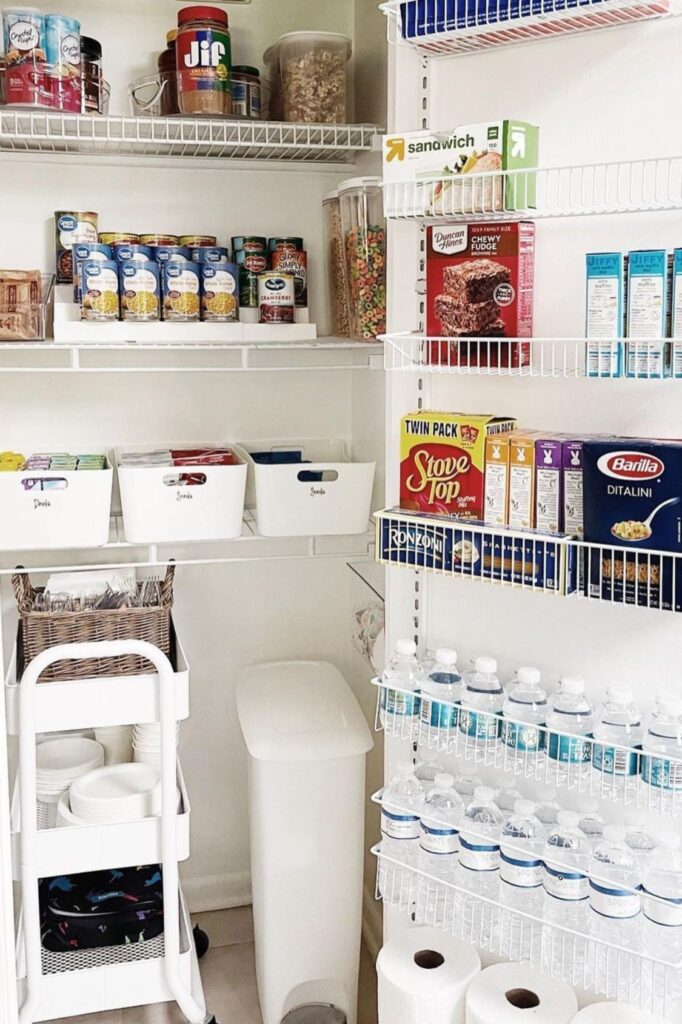
Pantry doors often hide one of the best storage opportunities in the kitchen. Mounting wire shelves on the inside of the door.
Adds extra layers for light pantry items without taking up shelf space. These narrow racks are great for holding boxed meals, seasoning packets, small jars, and even slim cans.
As soon as the door opens, it’s simple to view every tier, which makes it much faster to retrieve quick ingredients.
Door shelving is very helpful for small pantries since it adds vertical storage where there isn’t enough cabinet space.
Installation usually only needs a simple rack that goes over the door or a basket system that screws into the wall.
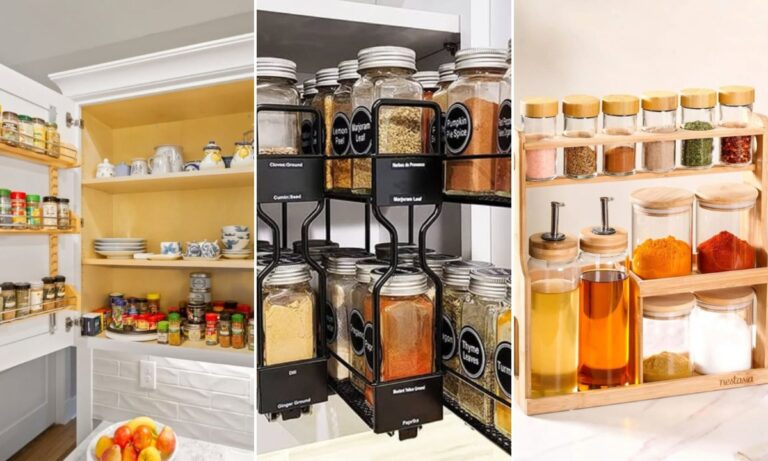
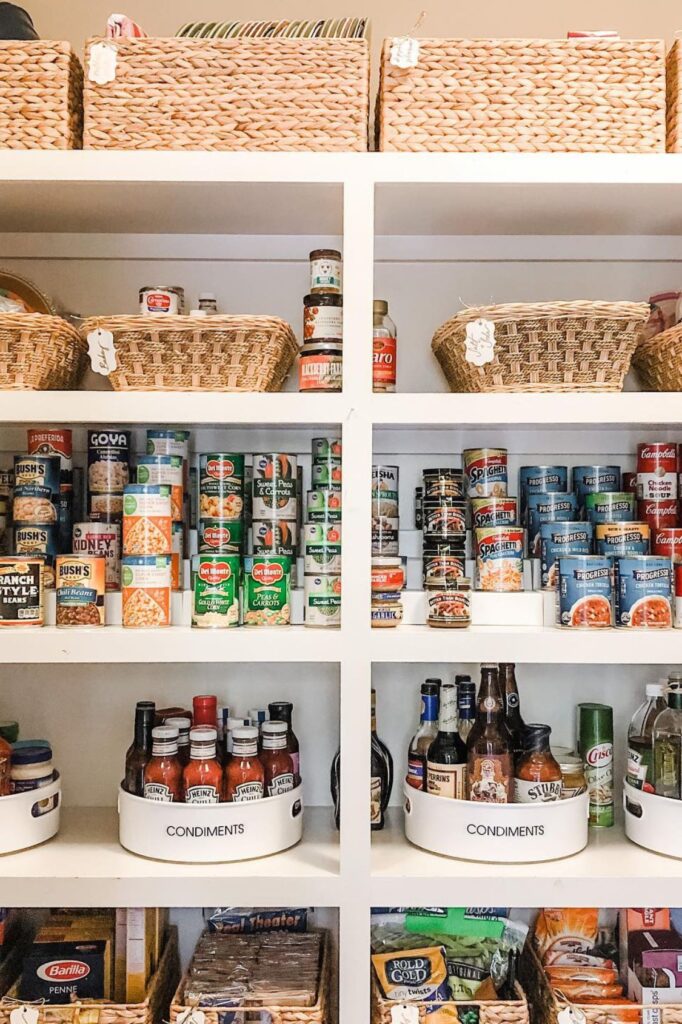
Lazy Turntable
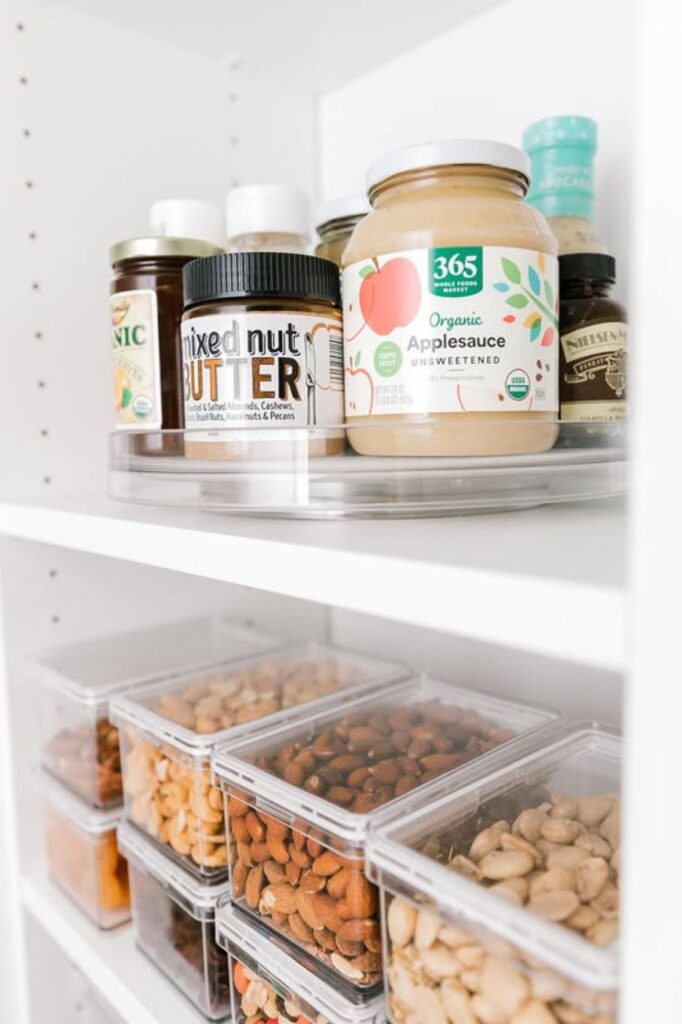
Corner shelves often hide jars behind each other until half the items get forgotten. A rotating turntable fixes that instantly by bringing everything forward with a simple spin.
Put sauces, nut butters, canned spreads, or tiny jars on the tray so that nothing gets trapped in the back of the shelf.
A fast spin shows all the labels without having to move anything else. Compact cabinets get the most out of a turntable since it uses constrained shelf space well.
And keeps things easy to reach. Acrylic or plastic organizers are the ideal choice because they are light and easy to clean.
Adding a little spinning tray can turn a shelf that is too full into a place where you can easily grab and go ordinary pantry products.
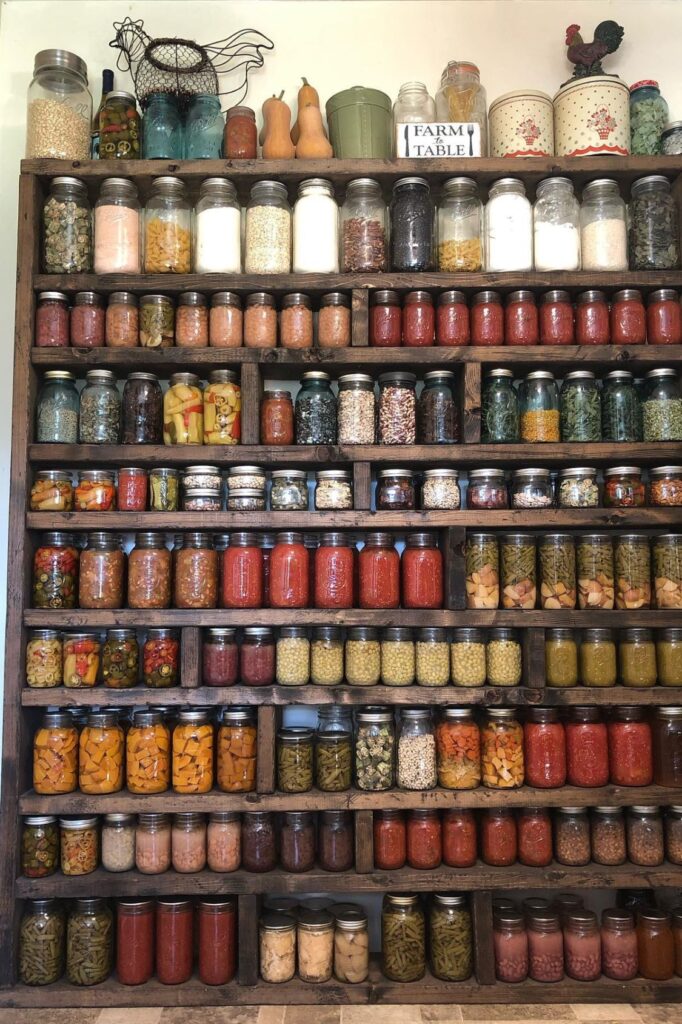
Jar Wall
A wall filled with mason jars turns food storage into a working pantry display. Long wooden shelves allow dozens of jars to sit in clear rows.
Such that each ingredient is easy to find. Each type of food dry goods, canned veggies, sauces, and preserved foods gets its own row.
Which makes the whole system easy to keep up with. Strong hardwood shelves are excellent for this because jars that are full get heavier with time.
This solution works best in kitchens with a vacant wall or a big pantry area because vertical space can contain a lot more food than regular cabinets.
It’s also easy to resupply when things are in neat rows: new jars slip to the back and older ones stay in front, ready to use.
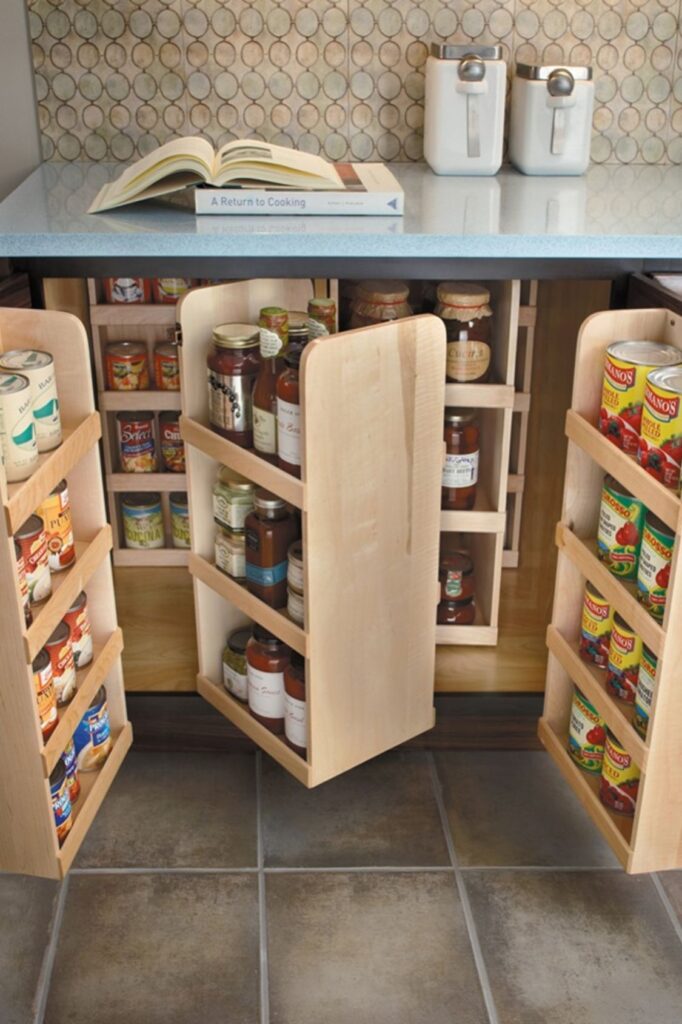
Pull Cabinets
Cabinet space often hides more storage potential than it seems. Pull-out pantry cabinets unlock that space by sliding forward and revealing multiple narrow shelves at once.
The central area can house jars, sauces, or condiments, and each side panel can hold rows of canned items.
Sliding racks are great for deep base cabinets where things tend to get lost in the back. The smooth glides let the whole unit go ahead.
So you can get to every can without having to bend down or dig. If your kitchen doesn’t have a lot of pantry space.
A single cabinet may hold dozens of products while still keeping everything orderly and easy to see.
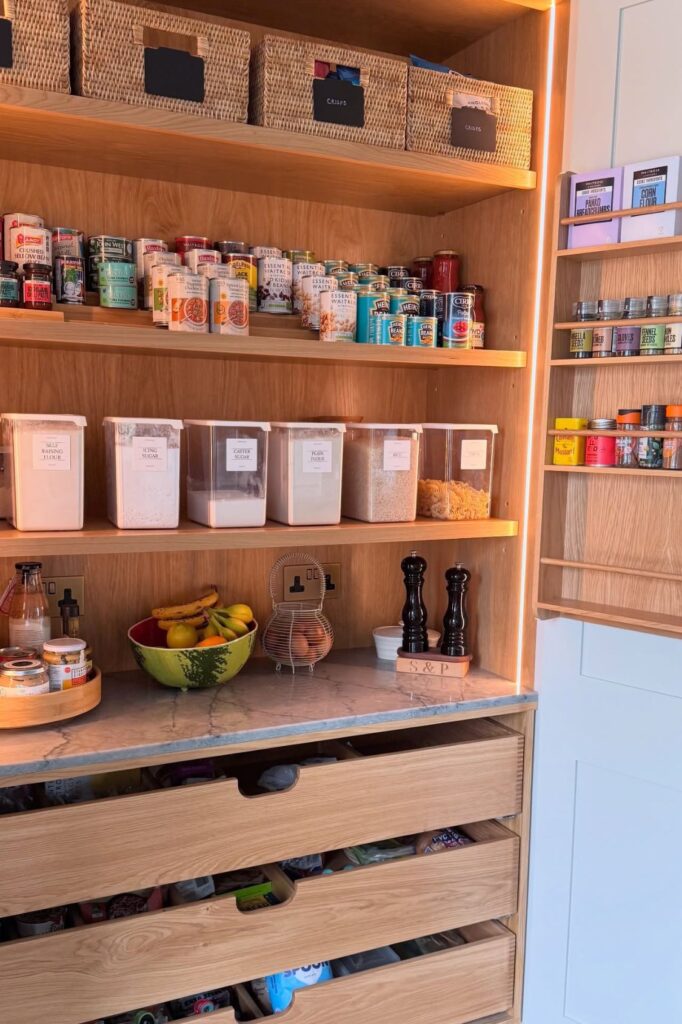
Pantry Lighting
Good lighting can change how a pantry works. Shelves filled with canned food become much easier to manage once every label is clearly visible.
Soft LED strip lights along the sides of the shelves make the whole room brighter and make it easy to look across rows of cans without having to drag everything forward.
Wooden shelves in the pantry work best with this configuration since the light bounces off of each level in a soft way.
Tall pantry cabinets are the best because deeper shelves typically hide things in the back.
Adding narrow LED strips or motion lights gives off a clean glow that makes it easier to find ingredients quickly whether cooking or refilling groceries.
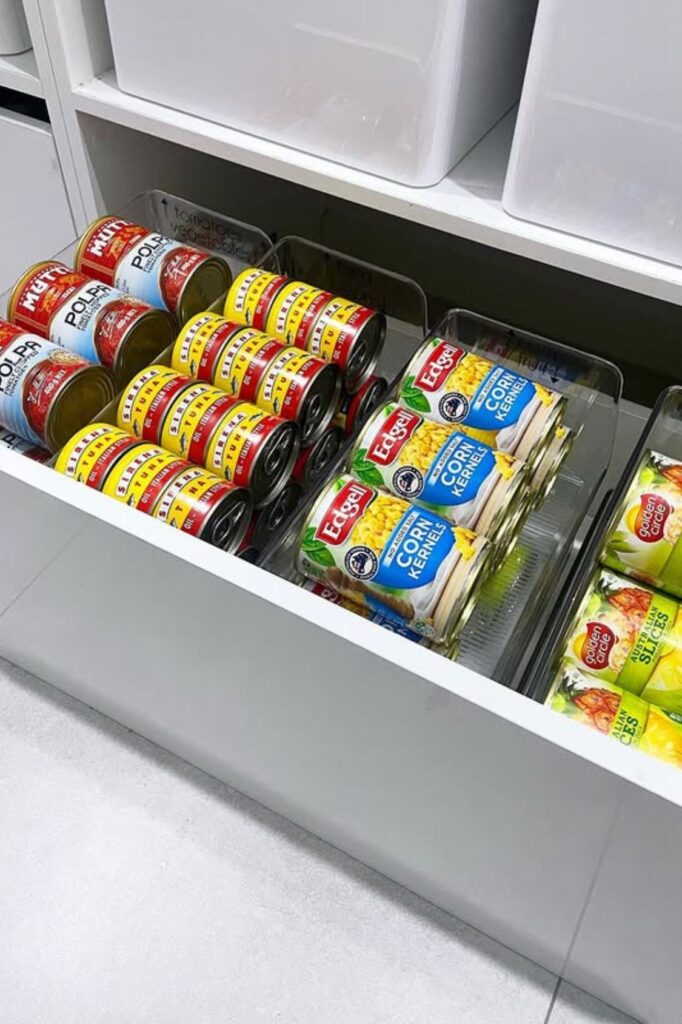
Can Drawer
Hidden cans quickly pile up when stored at the back of cabinets. A deep pull-out drawer changes that by laying cans flat in neat rows.
Where every label is easy to see. You can see all of the supplies at once when you slide the drawer open, which makes it much faster to retrieve items when cooking.
The clear organizers in the drawer keep everything in their respective sections. For example, tomatoes go in one section, maize or beans go in another.
And little cartons go in their own lane. This technique works best with lower kitchen cabinets because the drawers open all the way and move everything to the front.
At home, you can use simple acrylic trays or adjustable dividers to set up the same system. This keeps canned goods stable and makes it easy to restock them.
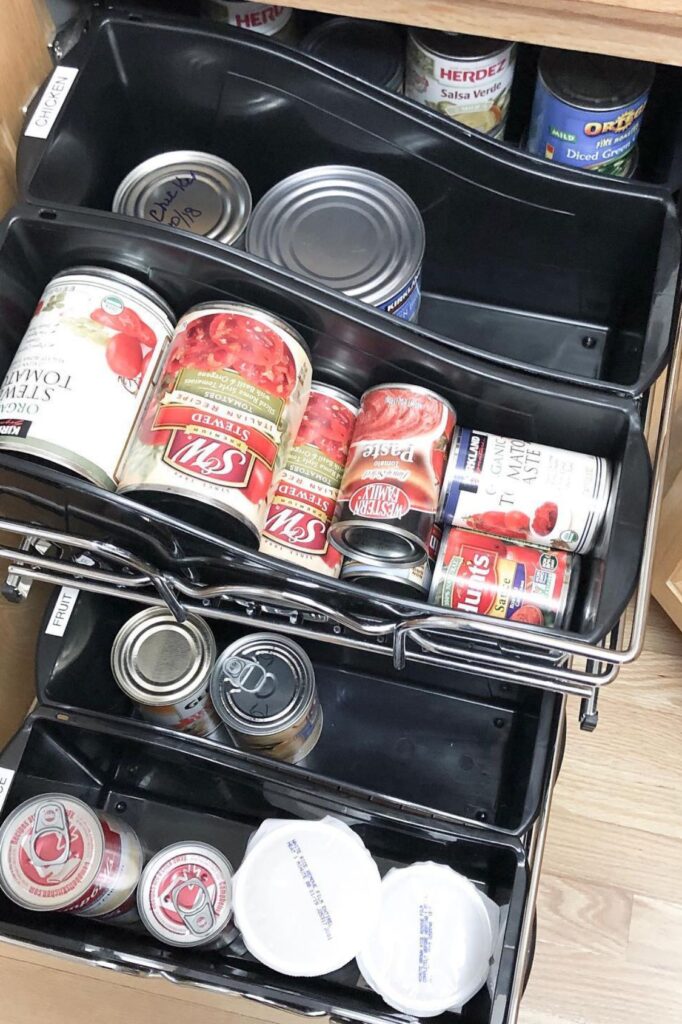
Sliding Baskets
Deep cabinets hide food faster than you think. Sliding wire baskets bring everything forward so canned goods stop getting lost in the back.
You can pull out the whole area and see every can at once because each basket works like its own drawer.
The technique works even better when you sort things into groups, such putting tomatoes in one basket, soups in another, and fruit or beans in their own row.
Metal gliding racks are great for keeping things organized in bottom cabinets, where shelves tend to get messy.
Pull-out basket kits that attach to cabinet rails make installation easy. Once it’s set up, it’s easy to get to every can without having to bend or dig through piles.
Slat Shelves
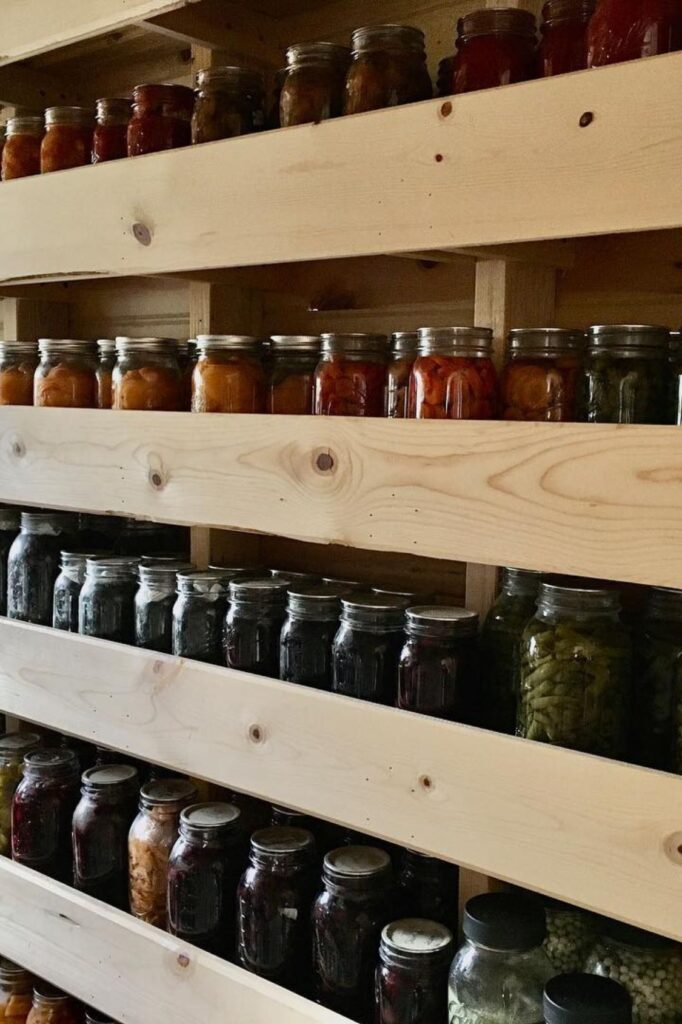
Home canning quickly fills cabinets, and standard shelves rarely keep up. Wide wooden slat shelves create long rows.
Where jars can sit safely without slipping forward. Each board works like a little wall that keeps jars in a line while still letting you see the labels.
This design works best in garages, basements, or big pantry rooms where you need to store a lot of things.
Strong wood is needed since glass jars get heavier over time. Putting many horizontal slats across a wall right away.
Makes a strong storage wall that can store hundreds of jars and makes it easy to check on and rotate the jars as fresh ones are added.
Pantry Display
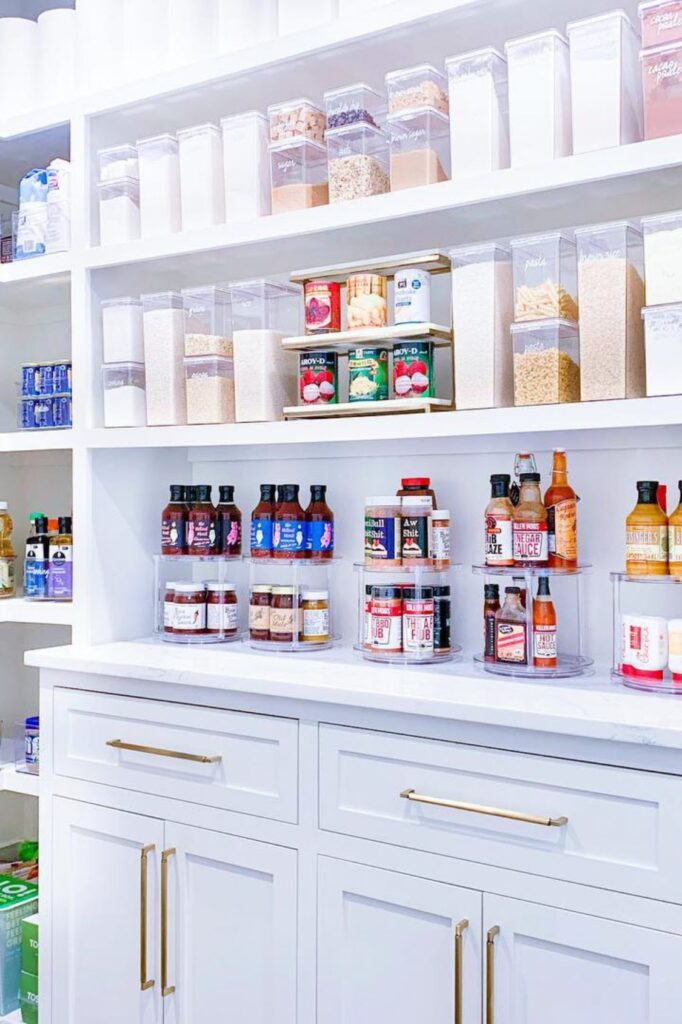
Open shelving makes pantry organization much easier when every item stays visible. Rows of canned foods placed along eye-level shelves allow quick scanning.
While cooking or getting more food. Putting sauces in one row and veggies in another keeps the shelves from becoming a jumbled mess.
Clear containers above and next to the cans also assist keep things in order by keeping dry goods separate from canned goods.
This style works best for walk-in pantries since the wide shelves give you a lot of freedom to spread things out instead of stacking them.
Labels are easy to see when there is enough space between rows. This makes it easier to find items and maintains the cupboard appearing neat and clean.
Shelf Risers
Crowded cabinets become much easier to manage once shelves gain a second level. Wooden risers lift the back row of cans so labels stay visible.
Instead of cowering behind the first line. Two levels automatically double the amount of room you can use without adding more shelves.
The top shelf is great for smaller canned goods, sauces, or condensed milk, while the bottom tier is perfect for bigger jars.
Stacked risers are best for narrow pantry cabinets because they keep things orderly without spreading them out over several shelves.
You can put simple wooden or acrylic risers right on top of an existing shelf to make a clear layered pattern where every can is easy to see and reach.
Category Shelves
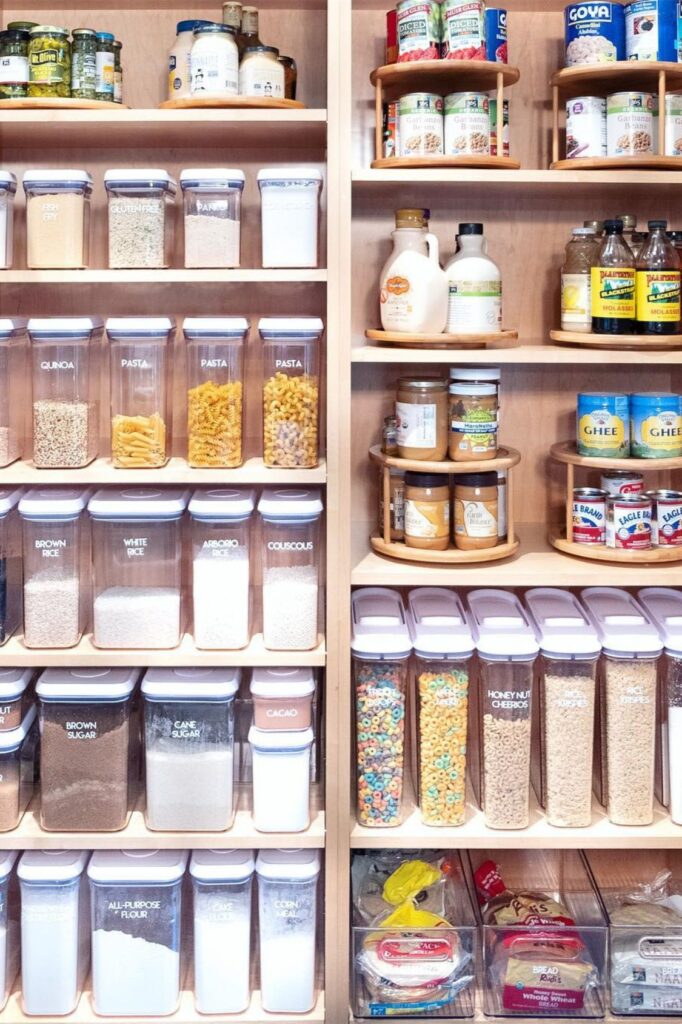
Searching for one can in a mixed pantry wastes time every single day. Category shelves fix that problem by giving each food type its own section.
You can put beans in one row, soups in another, and veggies in a third, so nothing gets lost in a pile.
When you group comparable cans together, it’s easier to organize your food shopping because you can easily see what’s going short.
This technique works best with pantry cubbies or large shelves because they naturally divide goods into sections.
After you set up the categories, it’s easy to restock: put new cans in the rear and leave older ones in the front so they’re ready to use.
Stack Towers
Limited shelf space can still hold a surprising number of cans when vertical stacking is used wisely.
With little can towers, you can stack multiple things on top of each other in the space of one can, making everything easy to grab and keeping it all together.
Put the taller cans at the bottom and the lighter or smaller cans at the top to keep the stack sturdy.
This method works best on strong shelves in cabinets where there is enough height but not enough width.
The best kitchen cupboards are those with extra headroom because stacking keeps cans from spreading out over the whole shelf.
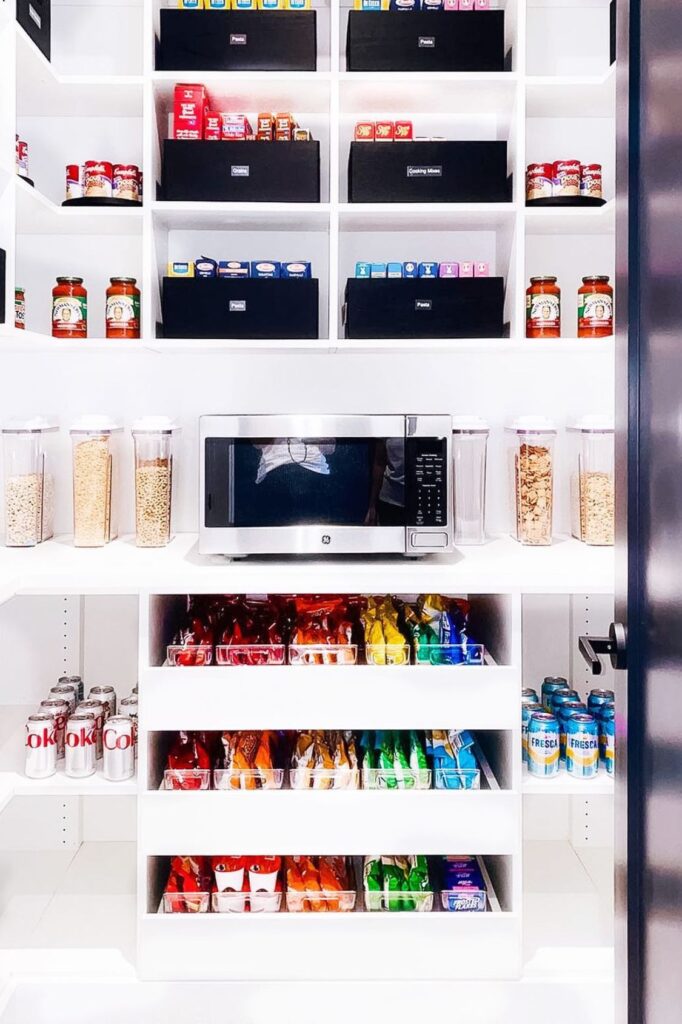
Cubby Storage
Large pantry walls become much easier to manage when divided into small cubbies. Each compartment naturally creates its own storage zone.
This stops canned items from taking over the whole shelf. Put soups in one cubby, veggies in another, and sauces in a third so that everything has a defined place.
Small bins inside the cubbies keep similar cans together and stop them from sliding forward. This style works best for tall pantry cabinets.
Because stacked cubbies provide you more storage space without making shelves too deep.
Once the categories are selected, it’s easy to restock: just slide new cans to the back of the cubby and leave the older ones at the front, ready to use.
FAQs
How do you organize canned food so nothing expires in the back?
Every time you replenish, put the older cans in front and the newer cans in back. This easy way to rotate food helps you use it up before it goes bad.
You may also keep all the labels visible by using tiered shelves, pull-out drawers, or can dispensers.
This makes it much easier to see what you currently have. Putting cans into groups, like soups, beans, veggies, or sauces, also stops duplicates and makes preparing meals easier.
What is the best place to store canned food in a kitchen?
The ideal place to store canned goods is on a shelf in a cold, dry pantry. Heat can affect the shelf life of cans, so don’t put them near ovens, dishwashers, or direct sunlight.
Canned foods stay fresh in cabinets, pantry shelves, or pull-out drawers that stay between 50°F and 70°F.
It’s also crucial to be able to see clearly, so utilize bins, racks, or organizers that make labels easy to see.
You may like to read!
- 21 Boot Storage Ideas
- 20 Pencil Storage Ideas
- 22 Kitchen Wall Storage
- 20 Sock Storage Ideas
- 22 Umbrella Storage Ideas

Fasial is the founder of the Fizzy Flare. He has been a passionate blogger since 2021. He ran three different websites in the past few years. Now he is focusing on Fizzy Flare to build an audience and help them organize their life.