16 Homework Station Organization Ideas for 2026
This post may contain affiliate links: full affiliate disclosure.
Homework time usually starts with good intentions and ends in frustration. Your child keeps getting up, supplies go missing, and you’re constantly reminding them to focus.
You might even have a desk set up already, but it still doesn’t work the way you hoped. That’s because the problem often isn’t the desk or the storage.
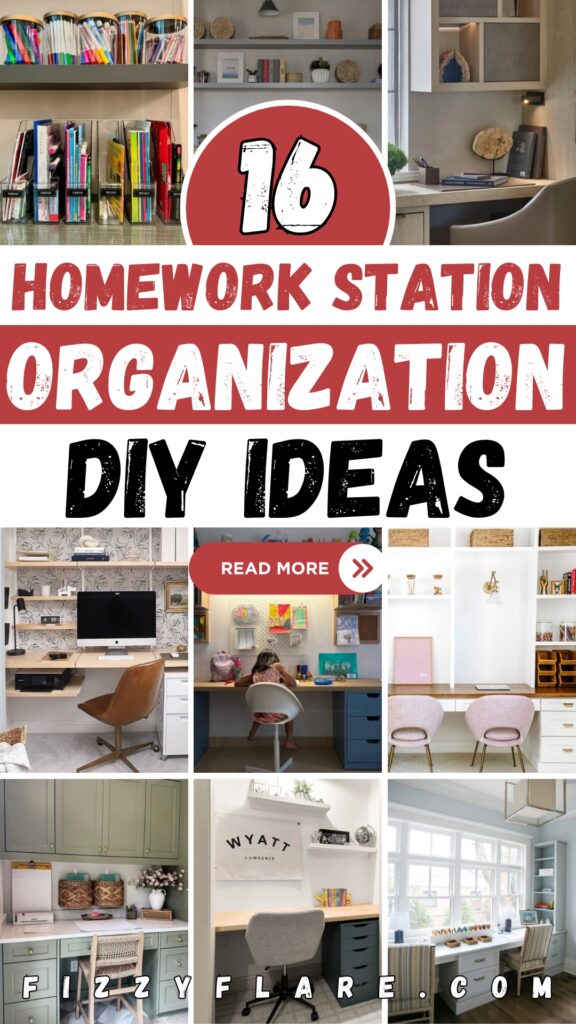
In this article, you’ll learn how to choose a spot in your home that actually supports homework and 16 Organization ideas.
Let’s jump in!
Contents
- 1 What is the Best Location in the House for a Homework Station?
- 1.1 Floating Shelf Focus
- 1.2 Color-Sorted Supplies
- 1.3 Built-In Calm
- 1.4 Shared Study Zones
- 1.5 Pegboard Control Center
- 1.6 Closet Study Nook
- 1.7 Window-Lit Workspace
- 1.8 Personalized Study Nook
- 1.9 Cabinet-Closed Station
- 1.10 Under-Stair Nook
- 1.11 Minimal Wall Setup
- 1.12 Dual-Desk Balance
- 1.13 Symmetry Keeps Order
- 1.14 Resettable Kitchen Desk
- 1.15 Vertical Shelf Flow
- 1.16 Defined Work Zones
- 2 FAQs
What is the Best Location in the House for a Homework Station?
The best location for a homework station is the one that fits how your household actually works, not how it looks in photos.
You place it too far from daily activity, kids feel isolated and lose motivation. If you place it in a high-traffic area without a plan.
Most families do best with a spot that allows light supervision, easy access to supplies, and minimal noise.
That’s why kitchens, dining areas, and shared family spaces often work better than bedrooms. The goal isn’t silence or perfection.
When homework happens in the same place every day, your child spends less energy deciding where to work.
Save this article for later! 👇👇
Floating Shelf Focus
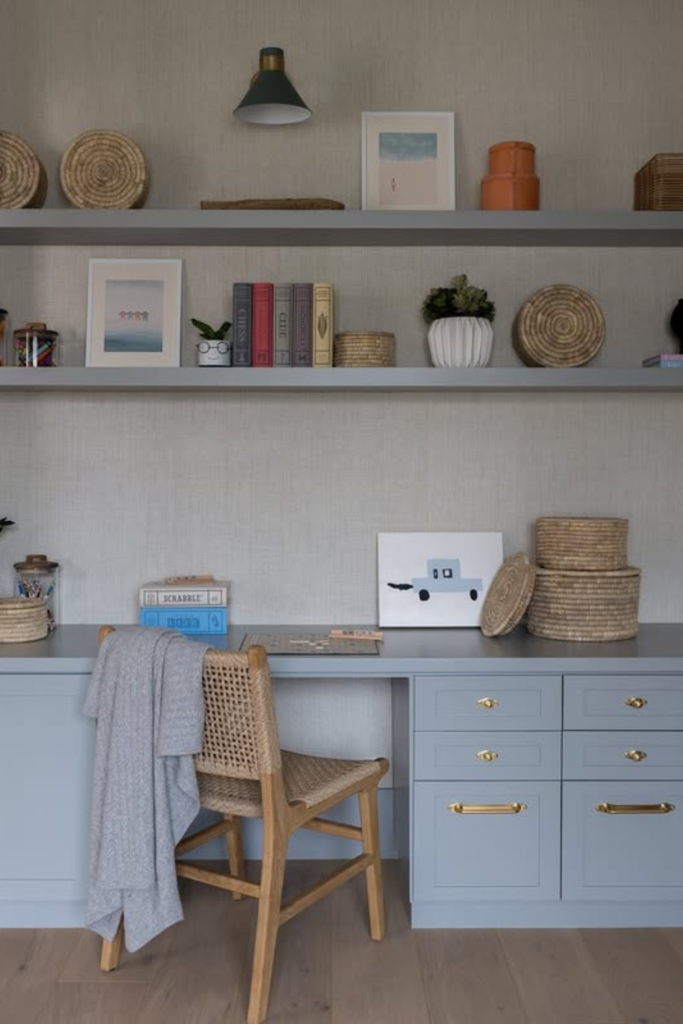
Vertical storage keeps the work surface calm while still holding everything homework needs, works best in dining rooms.
Floor space is limited, recreate it with deep floating shelves for books and baskets, then reserve the desk for daily tasks only.
Soft wall sconces paired with soft ambient room light keep the area usable without harsh glare or visual noise.
Color-Sorted Supplies
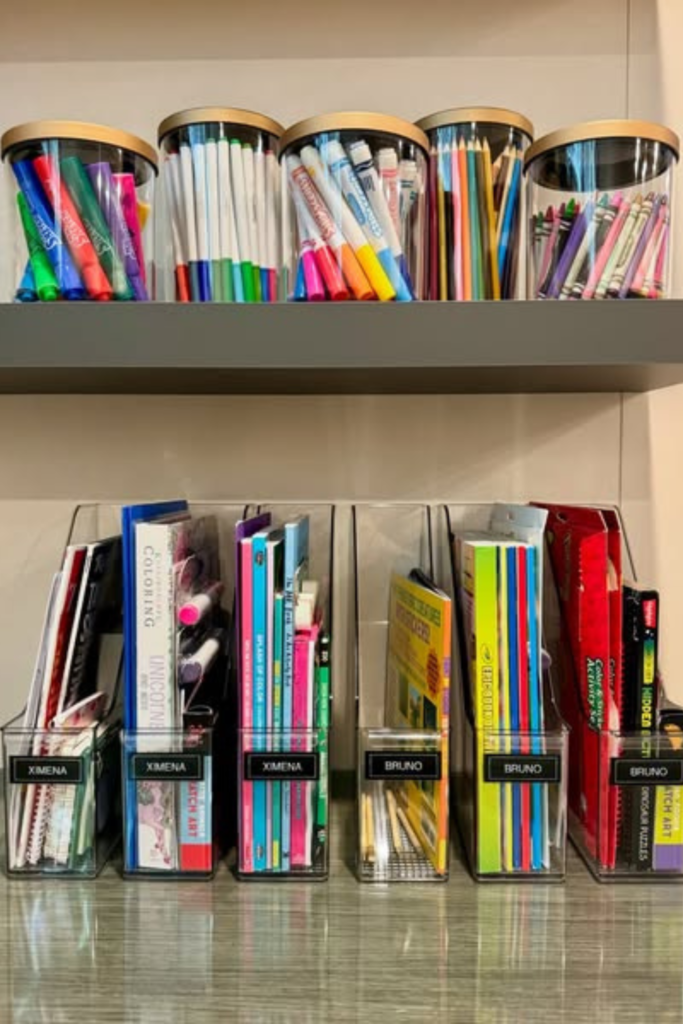
Visual order cuts down decision time and keeps homework moving. Group pens, markers, and pencils by type.
Use clear jars, then line up books vertically in labeled bins by child or subject. This system works best on open shelves.
Overhead ambient lighting does most of the work, with shelf lighting adding clarity inside cabinets near a shared homework area.
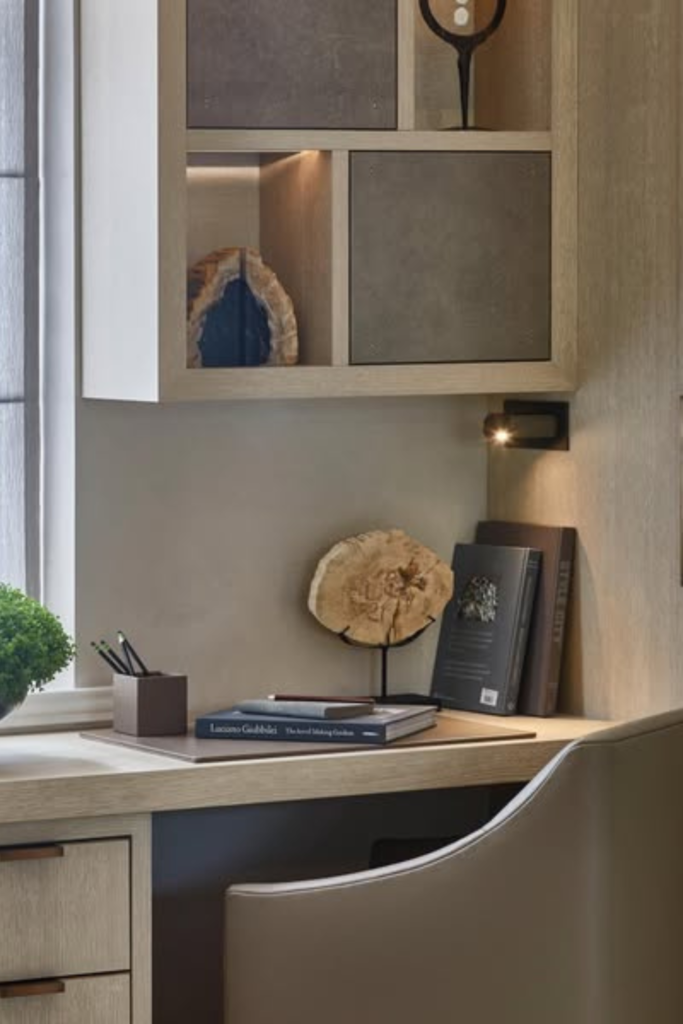
Built-In Calm
Distraction stays low when the workspace feels contained and intentional. Closed cabinetry above, and minimal desktop tools.
This idea fits perfectly in bedrooms or quiet corners where focus matters more than storage volume for for work.
Integrated under-cabinet lighting paired with a focused task lamp keeps the surface bright without spilling light.
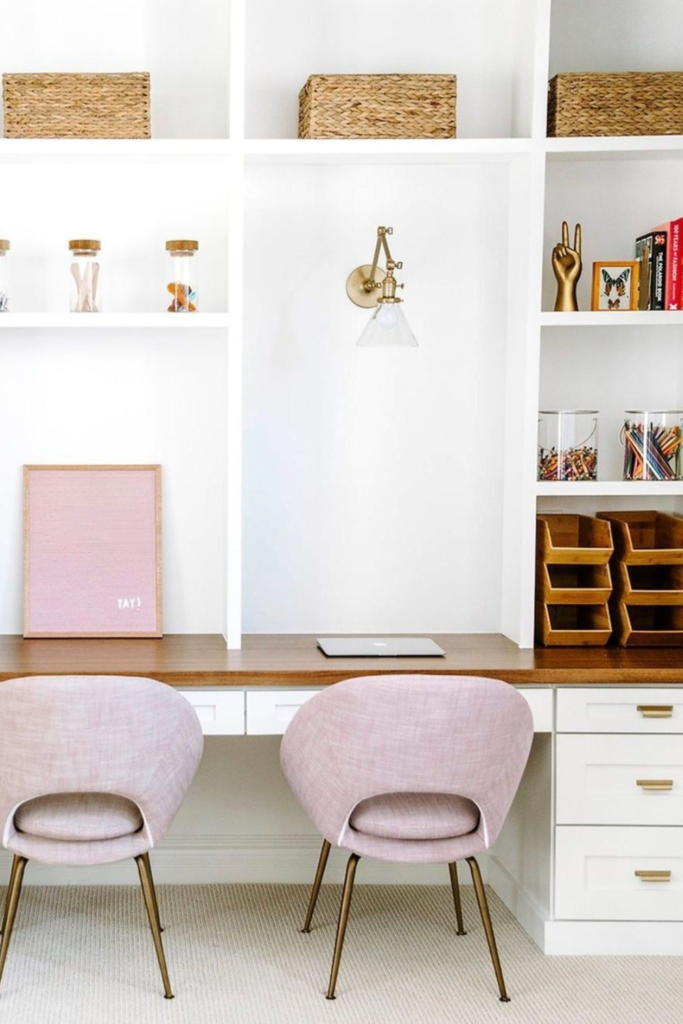
Side-by-side seating solves sibling chaos without doubling clutter,works best in bonus rooms or long hallway walls.
Width matters more than depth, recreate it with a continuous desk surface, divided storage above, and personal bins on each side.
Wall sconces provide focused task lighting, soft ambient room light keeps the setup comfortable for longer homework sessions.
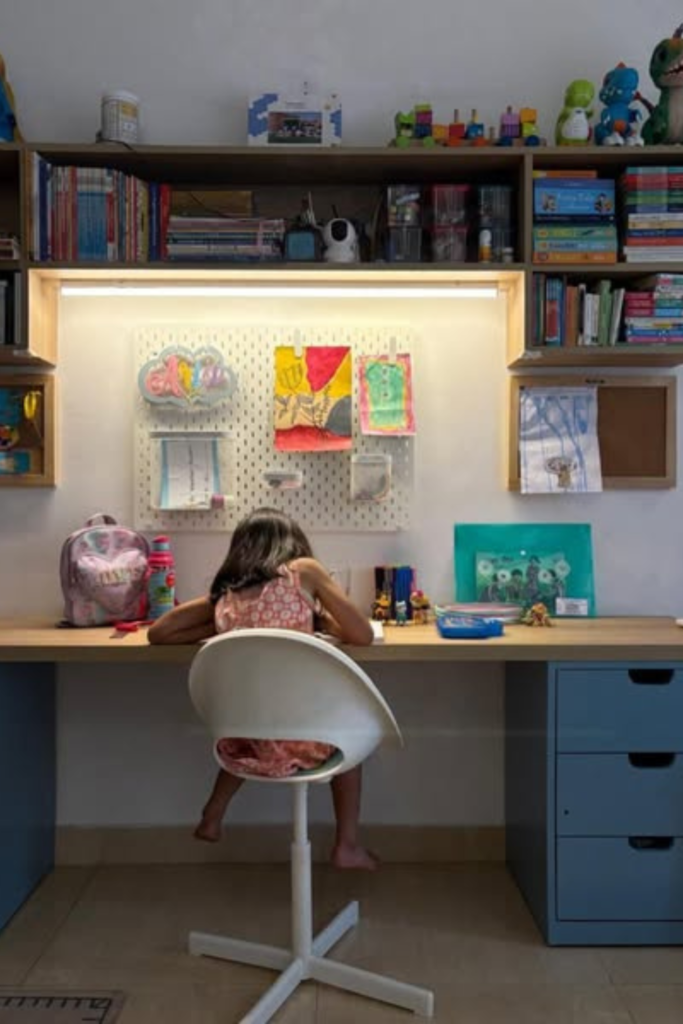
Pegboard Control Center
Hands stay busy without searching when tools are in plain sight. This setup shines in kids’ bedrooms or playroom corners.
Build it using a pegboard backed by closed cabinets for overflow storage, hang cups, clips, and mini shelves for daily supplies.
Integrated under-cabinet lighting does the heavy lifting here, backed by soft ambient room light to avoid harsh shadows.
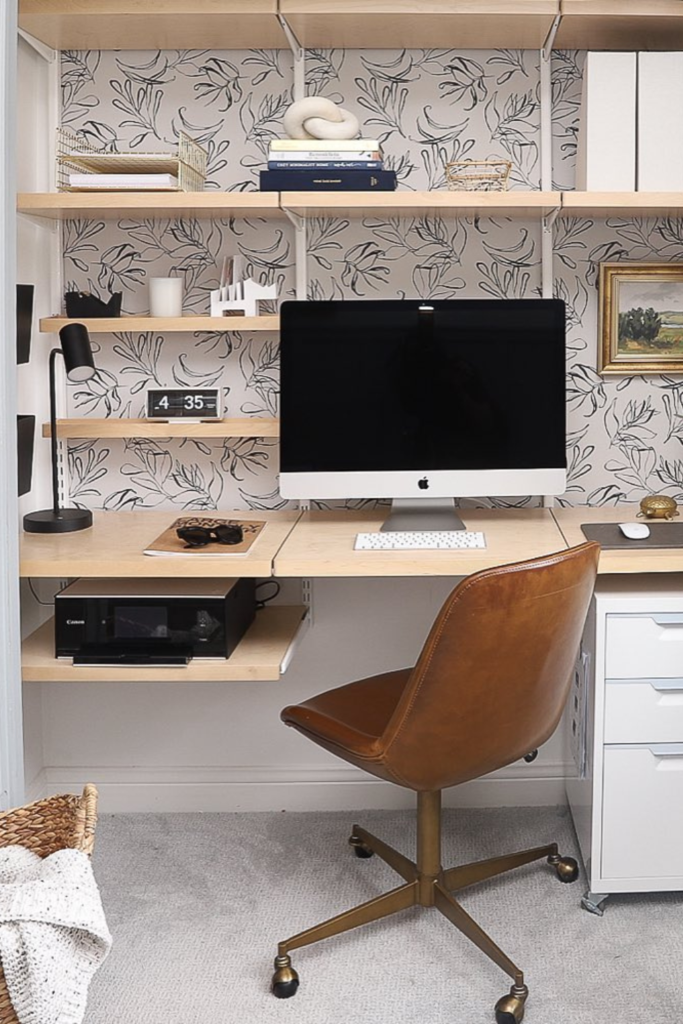
Closet Study Nook
Unused closets turn into focus zones when distractions stay outside the door. This idea works best in bedrooms or apartments.
Space feels tight. Build it with adjustable shelving, a compact desk surface, and rolling drawer units for supplies.
Task lamp handles close work, while soft overhead lighting keeps the nook bright without spilling light into the room.
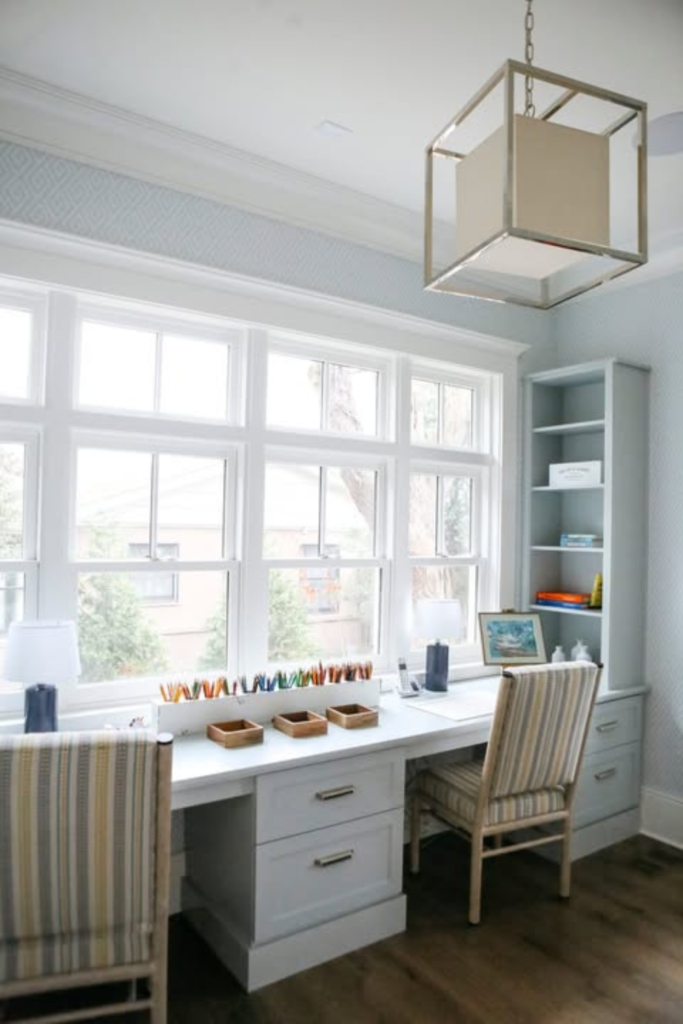
Window-Lit Workspace
Natural light does half the work of focusing for you. This setup fits best along wide windows in dining rooms or bonus rooms.
Recreate it with a long built-in desk, shallow drawers for supplies, and simple tabletop organizers to keep clutter to a minimum.
Daylight acts as the main light source here, supported by a soft overhead fixture for cloudy days and evening homework sessions.
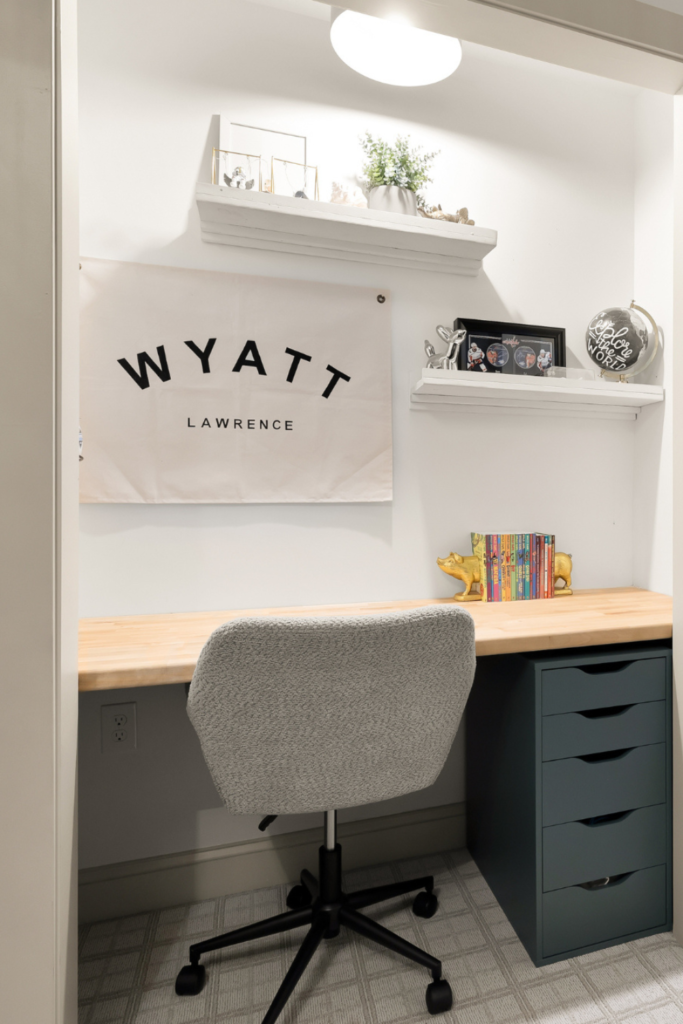
Personalized Study Nook
Ownership increases follow-through, especially for kids who avoid homework. This setup fits well in closets or recessed wall spaces.
Keeping distractions out of sight. Butcher-block-style desktop, a slim drawer unit, and personal display shelves for books.
Overhead lighting provides even brightness, shelf-level accents add warmth without pulling attention away from the work surface.
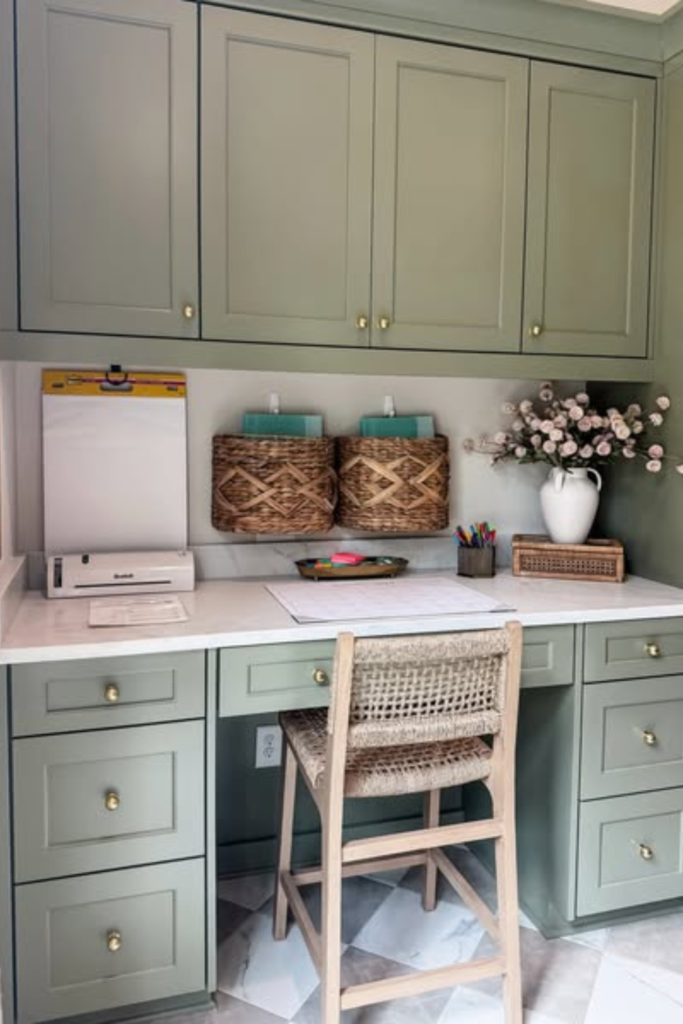
Cabinet-Closed Station
Visual clutter disappears when everything shuts away fast. This setup works best in kitchens or multipurpose rooms.
Homework shares space with daily life. Use shallow drawers for supplies, and woven baskets for quick sorting.
Under-cabinet lighting handles focused tasks, while ceiling lighting keeps the area bright enough for shared use throughout the day.
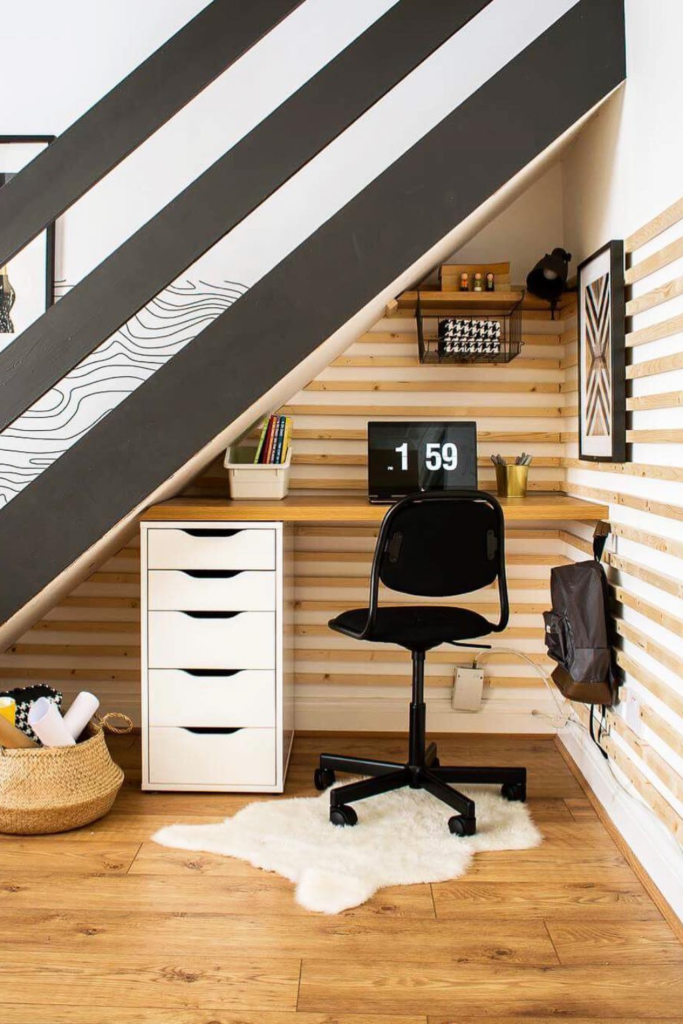
Under-Stair Nook
Awkward angles become usable when you work with them. Use slim desk, vertical drawer unit, and wall-mounted shelves.
Ambient room lighting handles overall brightness, while a focused desk lamp handles close-up homework tasks without shadows.
Minimal Wall Setup
Less visual noise makes starting homework feel easier, recreate it with a compact desk, floating shelves for daily essentials only.
Closed storage nearby for extras, works best in bedrooms or small apartments where space needs to stay light and flexible.
Focused desk lamp handles task lighting, while natural daylight or soft ambient room light keeps the space from feeling boxed in.
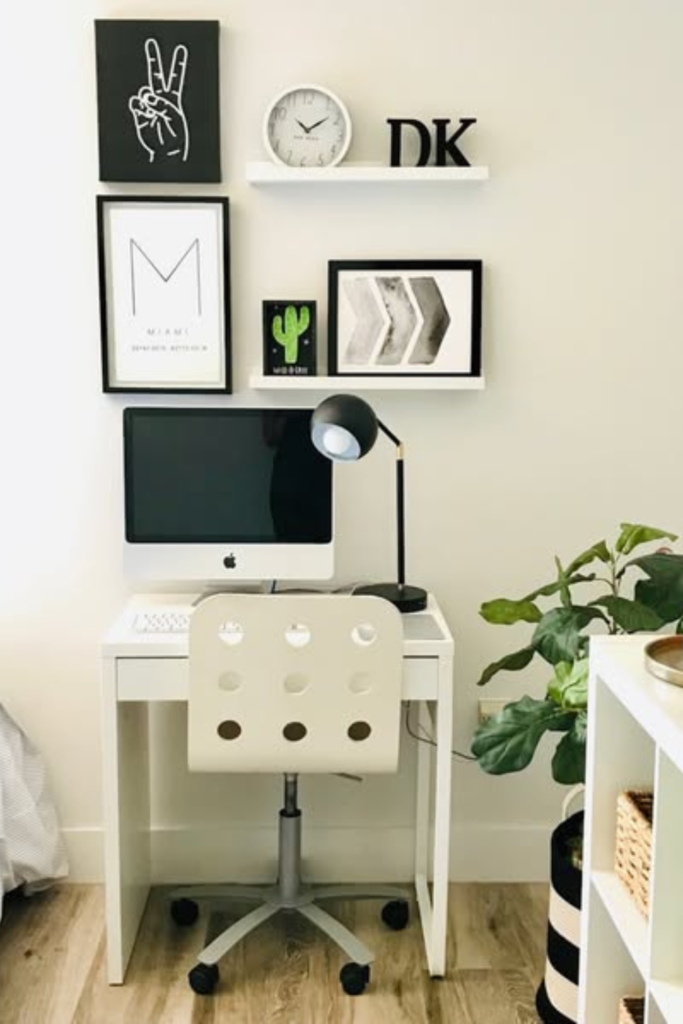
Dual-Desk Balance
Shared rooms feel calmer when each person gets a defined zone. This idea works well in living rooms or long family spaces.
Create it with matching desks, vertical shelving above each station, and a strong visual divider, such as a fireplace or paneling.
Recessed ceiling lights provide overall brightness, desk-level task lamps keep each workspace focused and independent.
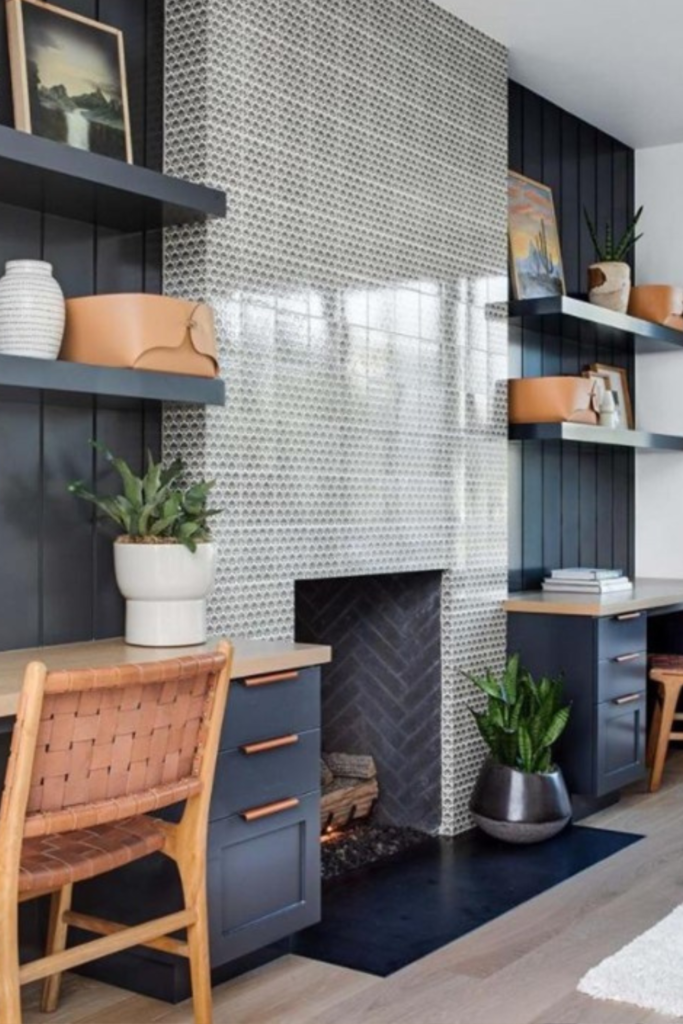
Symmetry Keeps Order
Balanced storage reduces visual stress and makes cleanup predictable, recreate it with matching cabinets on both sides.
Centered desk, and shallow drawers for daily supplies. This setup works best in spare rooms or wide hallway offices.
Wall-mounted sconces provide focused lighting, soft ceiling light evenly illuminates the space for longer homework sessions.
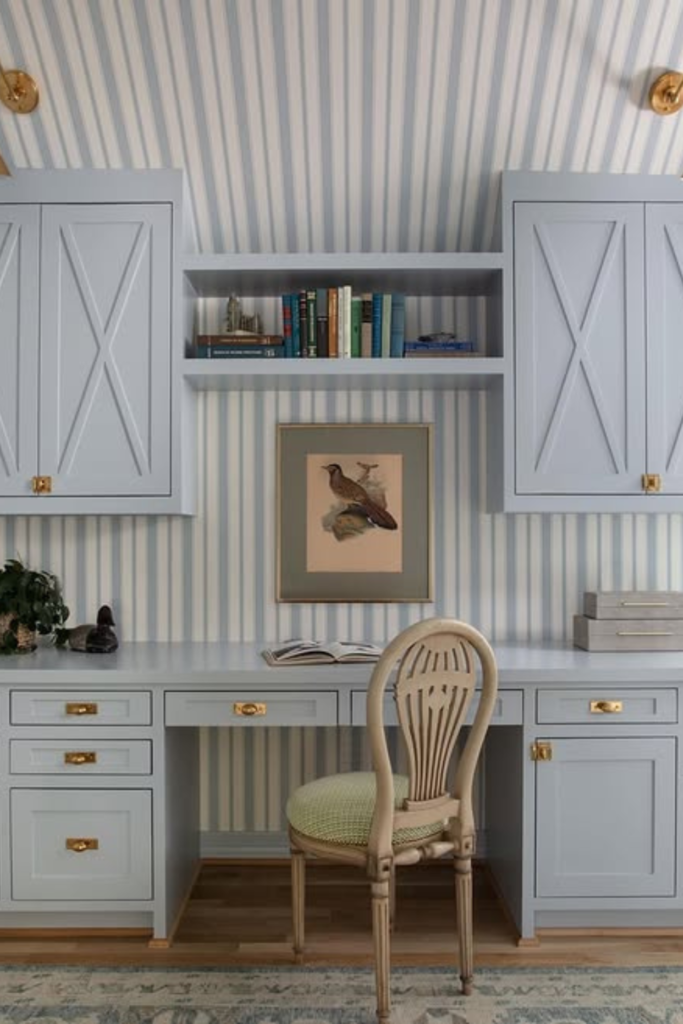
Resettable Kitchen Desk
Busy counters turn chaotic fast. This idea works best in kitchens where homework shares space with daily paperwork and devices.
Recreate it by limiting desktop items to one caddy, one paper tray, and a small catch-all bin, with the rest stored below.
Overhead kitchen lighting provides general brightness, while under-cabinet lighting keeps work visible without adding glare.
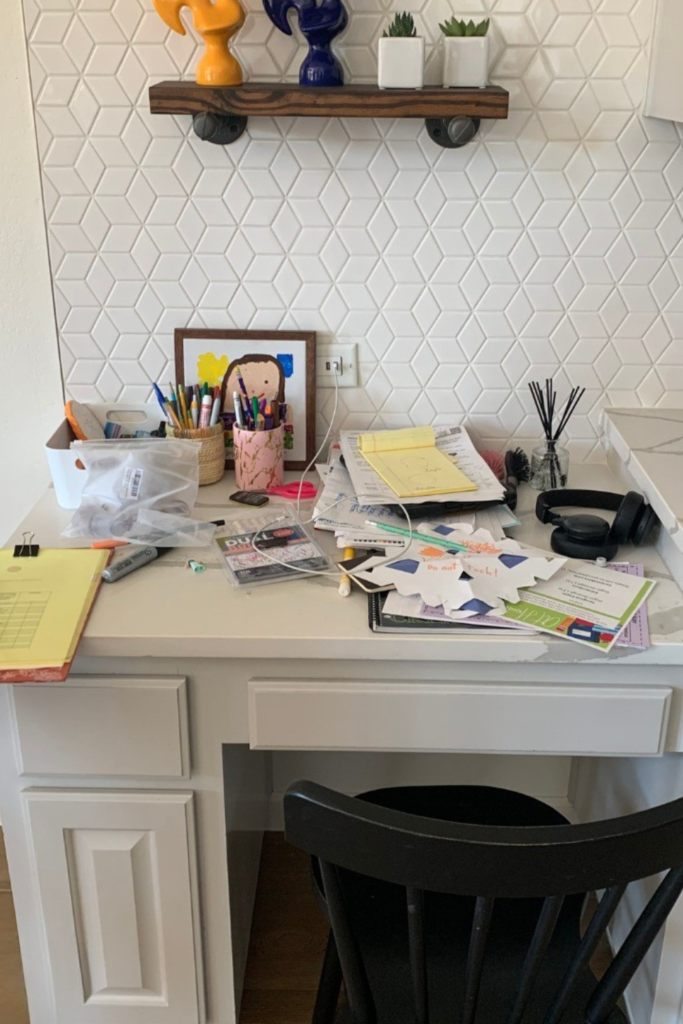
Vertical Shelf Flow
Wall height does the organizing when floor space stays tight. This idea works well in bedrooms or home offices.
Long desk needs support, recreate it with floating shelves stacked above eye level and keep only current books in reach.
Natural window light leads the setup, supported by soft ambient ceiling lighting for evening work without harsh contrast.
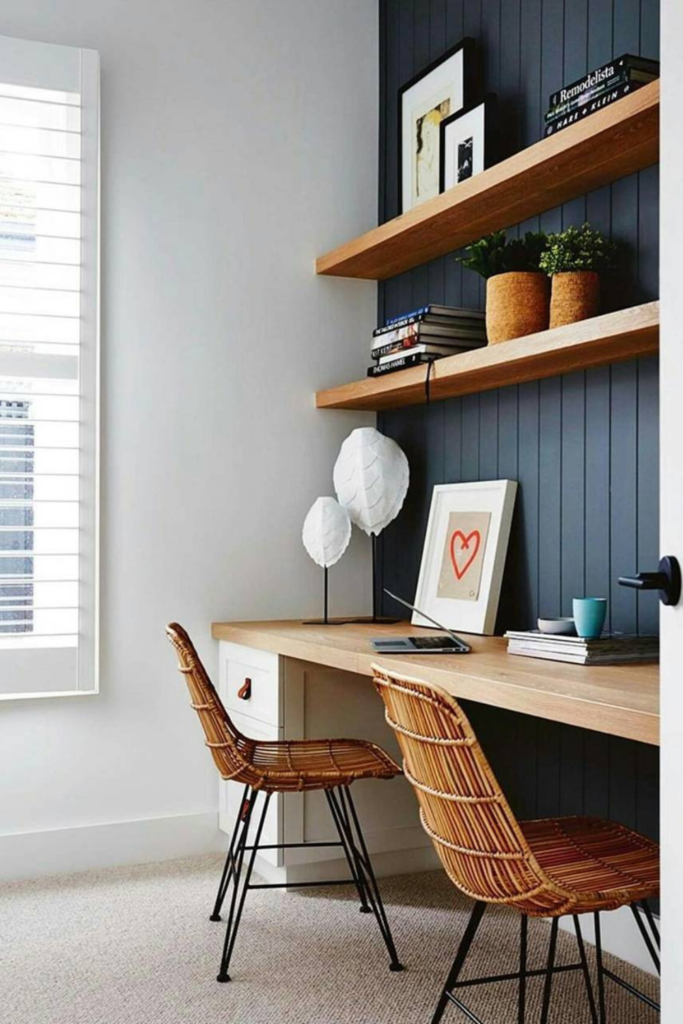
Defined Work Zones
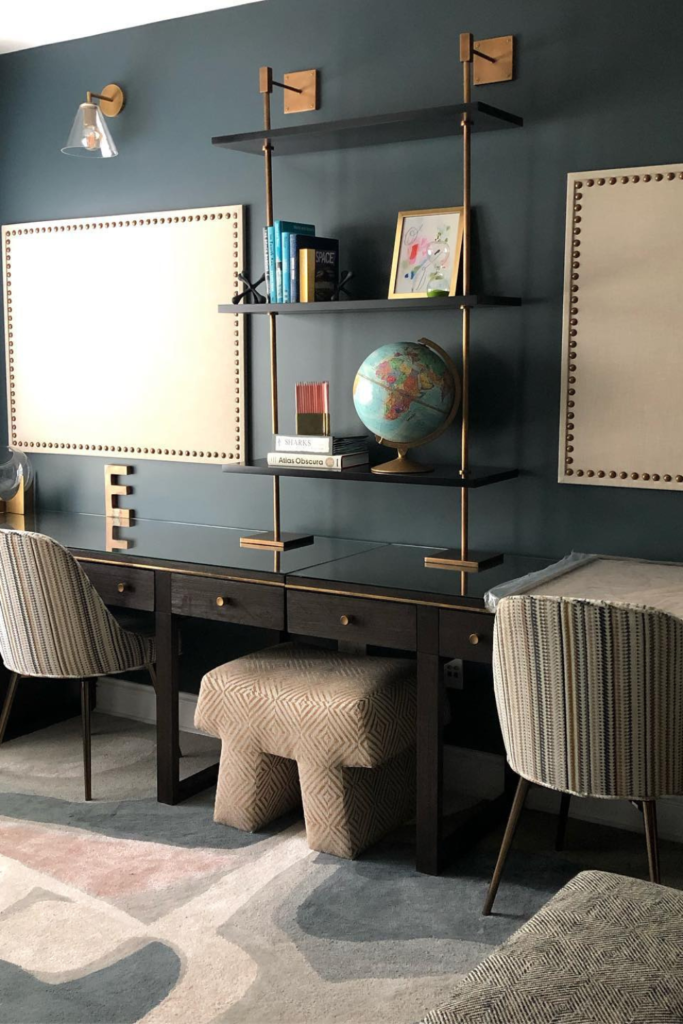
Clear boundaries prevent overlap when multiple kids share a room, works best in dedicated homework rooms.
Recreate it with individual desks, separate pinboards for each child, and shared shelving placed between stations.
Wall-mounted sconces provide task lighting at each desk, while recessed ceiling lights evenly illuminate the entire area.
FAQs
Should homework stations be in bedrooms?
Bedrooms sound quiet, but they come with distractions like toys, beds, and screens. Younger kids usually focus better.
In shared spaces where you can supervise without hovering. Older kids may prefer bedrooms if they manage time well.
Choose a bedroom only if you can control clutter, limit devices, and keep the desk separate from the sleep space.
How do I keep the homework station from getting messy again?
Daily reset habits matter more than storage. Keep only current supplies on the desk and store extras out of sight. Add one tray for active papers.
One bin for random items. Spend five minutes every evening clearing the surface. Consistency prevents clutter from building up again.
You may like to read!
- 26 Dresser Organization Ideas
- 26 Japanese Organization Ideas
- 22 Junk Drawer Organization
- 22 Junk Room Organization
- 17 Lunch Box Organization Ideas

Fasial is the founder of the Fizzy Flare. He has been a passionate blogger since 2021. He ran three different websites in the past few years. Now he is focusing on Fizzy Flare to build an audience and help them organize their life.