17 DIY Sensory Bin Ideas for 2026
This post may contain affiliate links: full affiliate disclosure.
If you’ve ever searched for easy DIY sensory activities, chances are your child was bored, restless, or glued to a screen, and you just needed something that actually works.
Without creating a huge mess or costing money. Most ideas online sound good, but fall apart the moment you try them at home.
In this article, you’ll learn what easy sensory activities really look like, and 17 DIY Sensory Bin ideas.
Let’s jump in!
Contents
- 1 What are Easy DIY Sensory Activities?
- 1.1 Dinosaur World Play
- 1.2 Land Water Sorting
- 1.3 Garden Plant Play
- 1.4 Ice Dig Rescue
- 1.5 Construction Letter Dig
- 1.6 Scoop And Pour
- 1.7 Carrot Patch Dig
- 1.8 Woodland Counting Play
- 1.9 Earth Sensory Map
- 1.10 Farm Sorting Station
- 1.11 Rainbow Texture Mix
- 1.12 Winter Snow Scene
- 1.13 Garden Pattern Rows
- 1.14 Pom Pom Transfer
- 1.15 Bug Garden Dig
- 1.16 Color Sorting Wheel
- 1.17 Carrot Wrap Station
- 2 FAQs
What are Easy DIY Sensory Activities?
Easy DIY sensory activities are simple, hands-on setups you can make at home to keep kids engaged through touch, movement, sight, and sound.
The keyword here is easy. If an activity needs special supplies, long prep time, or constant supervision, it usually doesn’t last.
A good sensory activity uses things you already have, like rice, water, paper, or kitchen tools, and gives kids a clear way to explore on their own.
When you set it up right, your child stays focused longer because their hands are busy and their brain is working at the same time.
These activities work best when they are open-ended. That freedom is what turns a simple bin or tray into something your child actually wants to come back to.
Save this article for later! 👇👇
Dinosaur World Play
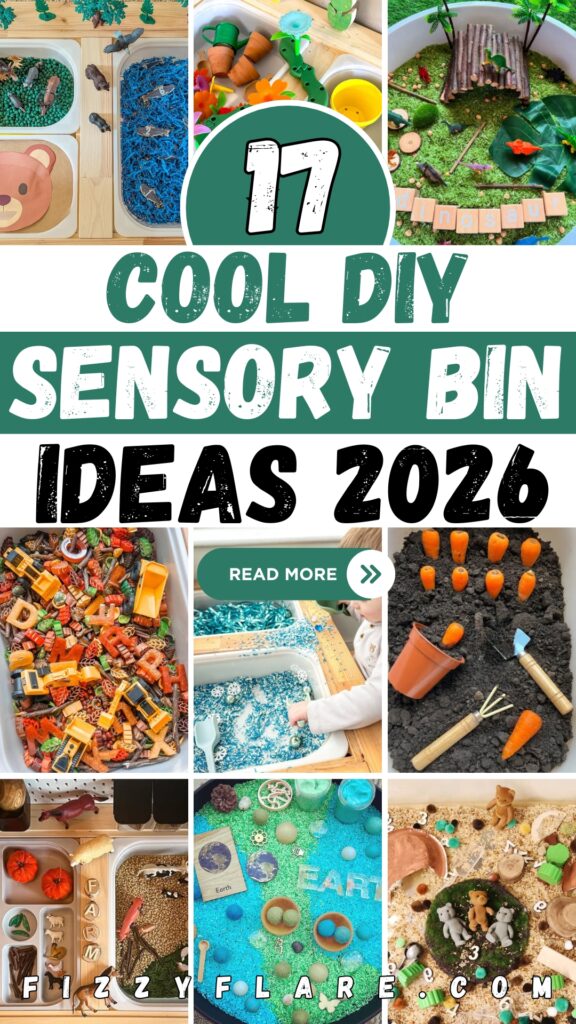
Jurassic-style sensory play works best for kids. Add dinosaur figures and loose parts, and hands stay busy as they move.
Green rice or dyed grains create a ground base, while sticks, leaves, and toy trees shape a simple habitat.
Texture, visual contrast, and pretend play combine here, making it ideal for independent play or quiet afternoon activity.
Land Water Sorting
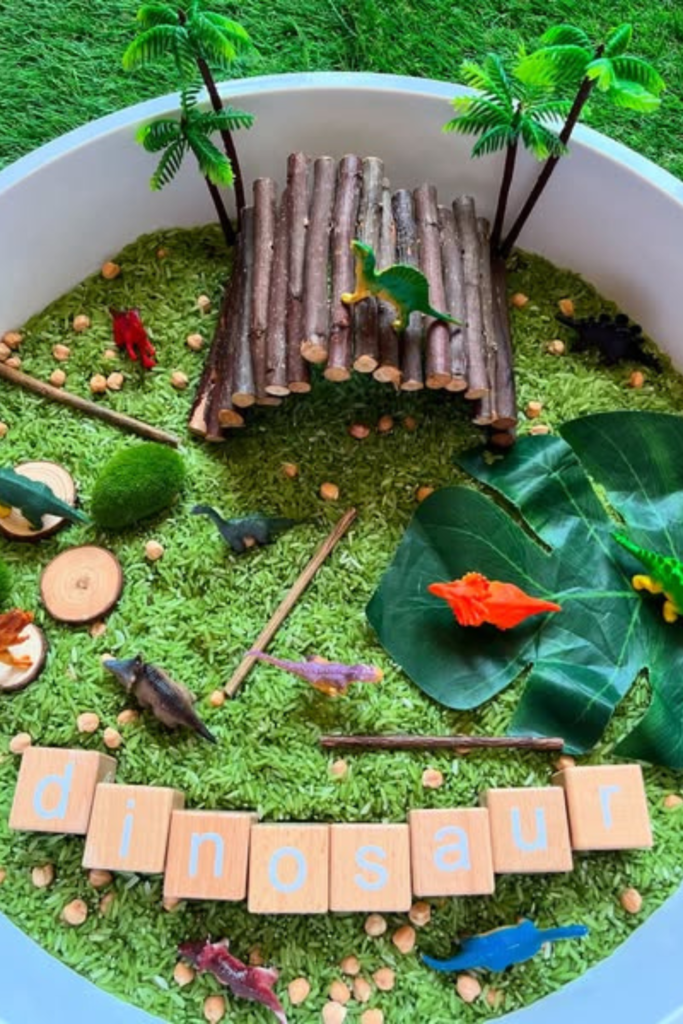
Animal sorting play fits well into learning time or calm indoor afternoons. Split two bins with different textures.
Use green pellets or peas for land, and blue paper shreds for water. Place mixed animal figures nearby.
Texture contrast, visual cues, and decision-making work together here to build focus and early classification skills.
Garden Plant Play
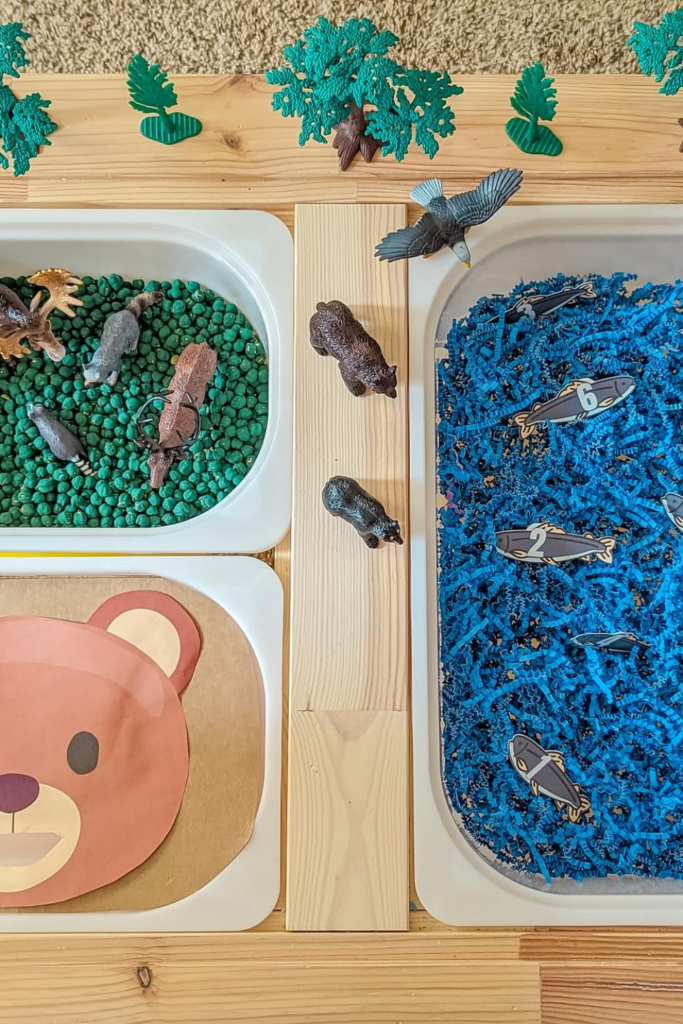
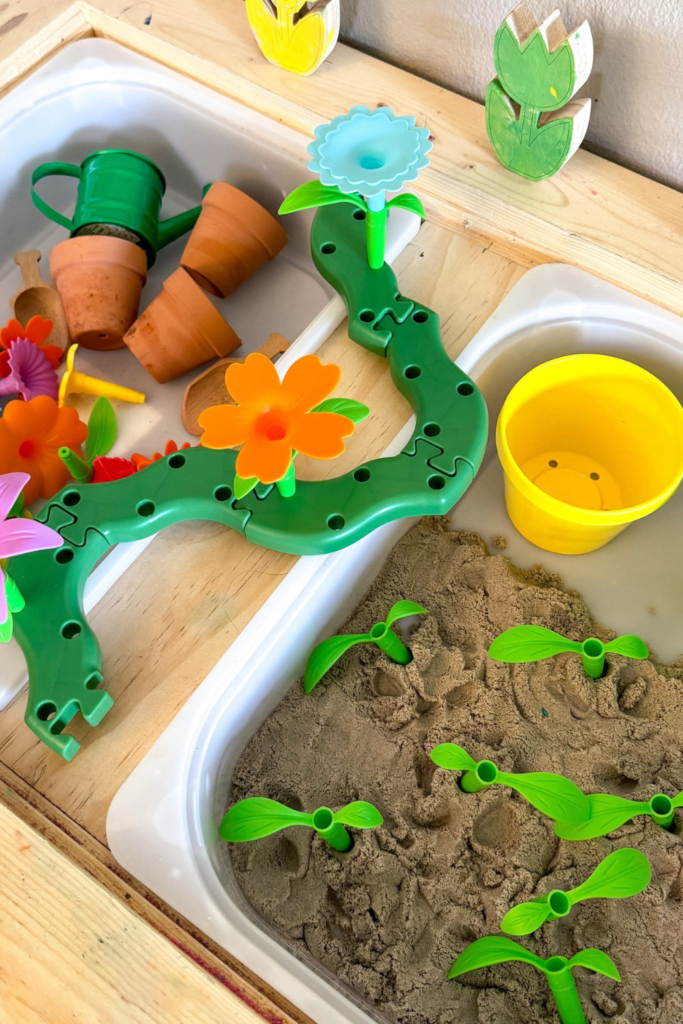
Little gardeners stay engaged longer when play feels real. Split the bin into soil and tools, using kinetic sand for digging.
Small pots for planting. Toy flowers, scoops, and watering pieces encourage filling, pressing, and rearranging.
Fine motor work, tactile input, and visual color pop layer together here, making it perfect for calm mornings.
Ice Dig Rescue
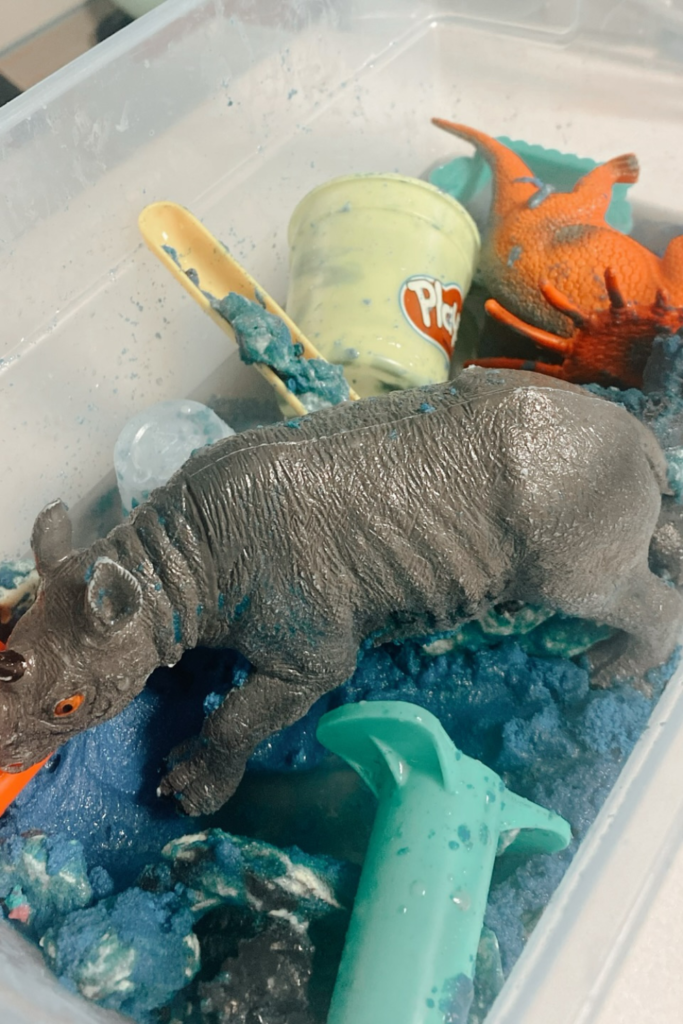
Cold textures instantly change how kids interact with sensory play. Frozen colored dough or ice chunks slow movements.
Invite scooping, scraping, and problem-solving. Animal figures trapped inside give a clear goal without turning it into a task.
Temperature contrast, resistance, and tool use layer together, making it ideal for hot days when high energy needs a reset.
Construction Letter Dig
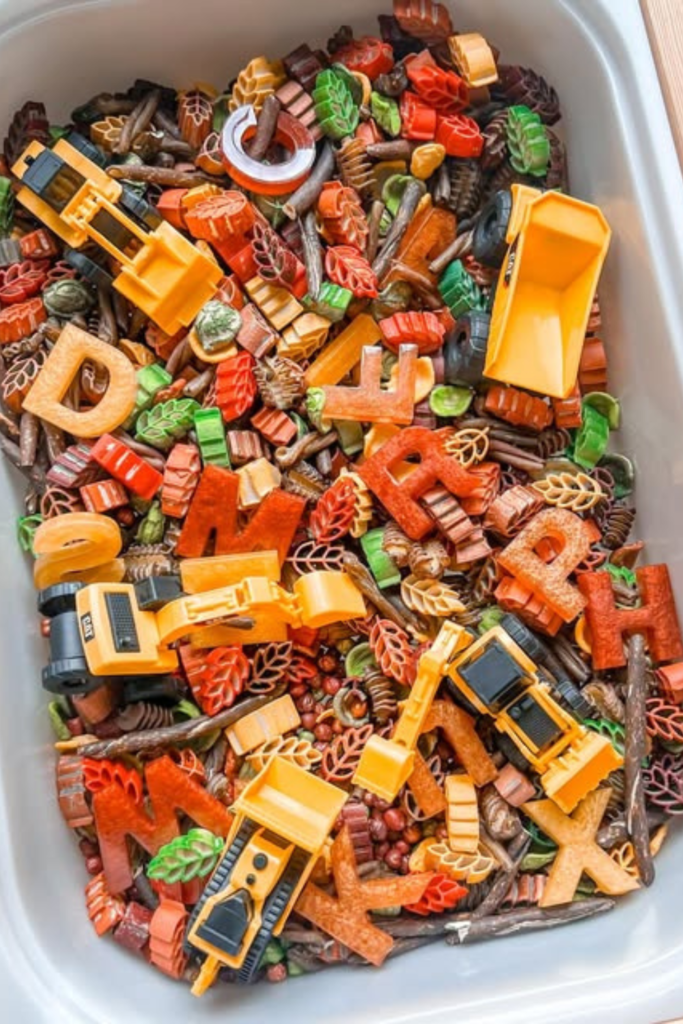
Dyed pasta or beans create a textured base, construction vehicles turn digging into a mission, best for heavy-duty play pulls.
Letter pieces mixed in encourage scooping, dumping, and casual letter recognition with weight, sound, and resistance.
Stack to create a rich sensory experience, making this setup great for high-energy play that still keeps hands focused and busy.
Scoop And Pour
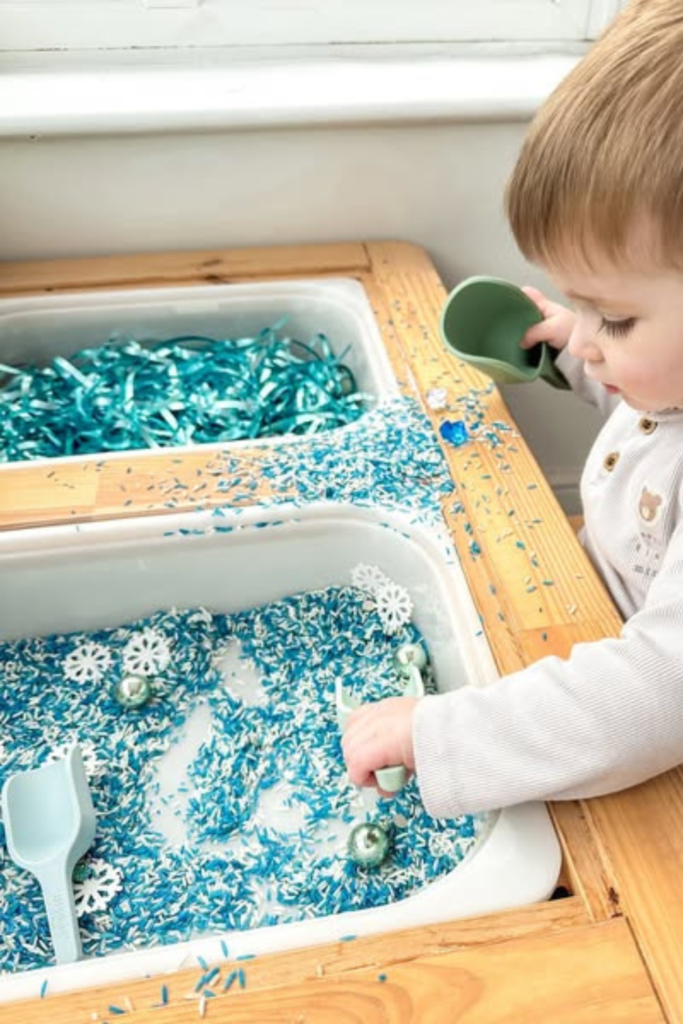
Blue rice or shredded paper creates soft resistance, cups and scoops invite filling, transferring, and spilling in a controlled space.
Repetitive motion, gentle sounds, and visual contrast layer together here, making this method ideal for toddlers.
Busy hands settle fast when pouring feels purposeful, crave movement but struggle to maintain attention during quiet play.
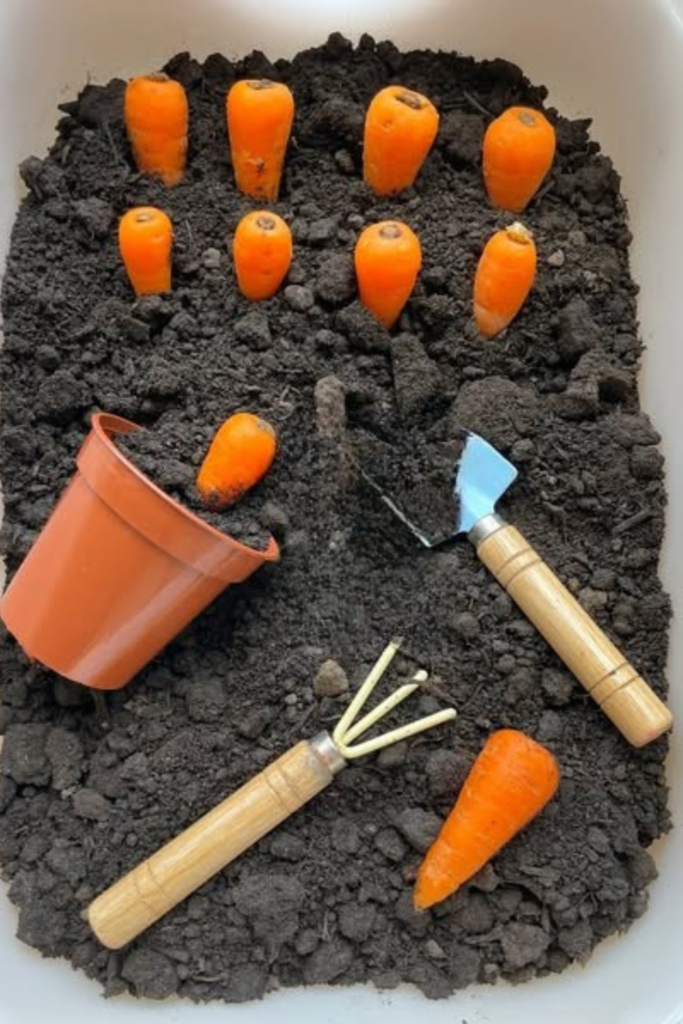
Carrot Patch Dig
Harvest-style play slows kids down in the best way. Dark kinetic sand or soil mix provides a strong texture contrast.
Small garden tools encourage gripping, pulling, and twisting. Resistance, pressure, and fine motor work layer naturally.
Making this setup perfect for focused play during calm indoor time. Play carrots make digging a clear goal.
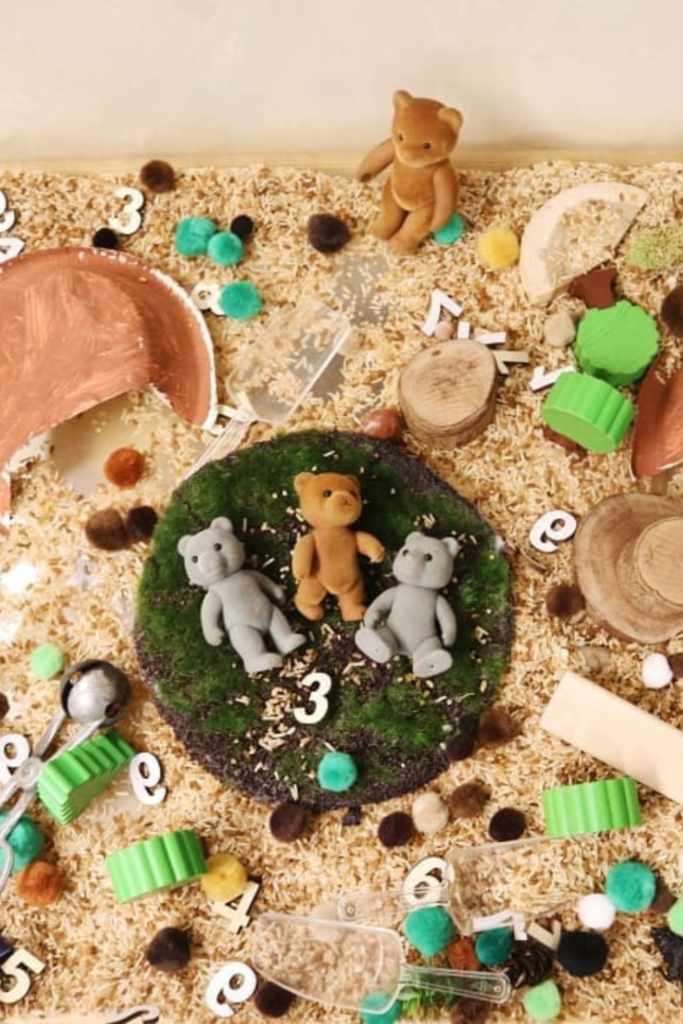
Woodland Counting Play
Shredded paper or sawdust builds a soft forest floor, while bears, loose parts, and scattered numbers invite counting through play.
Small bowls, scoops, and natural textures encourage sorting, grouping, and gentle movement. Story-style setups pull kids in.
Tactile input, visual variety, and early math blend naturally here, making it a strong choice for quiet table time or small-group learning.
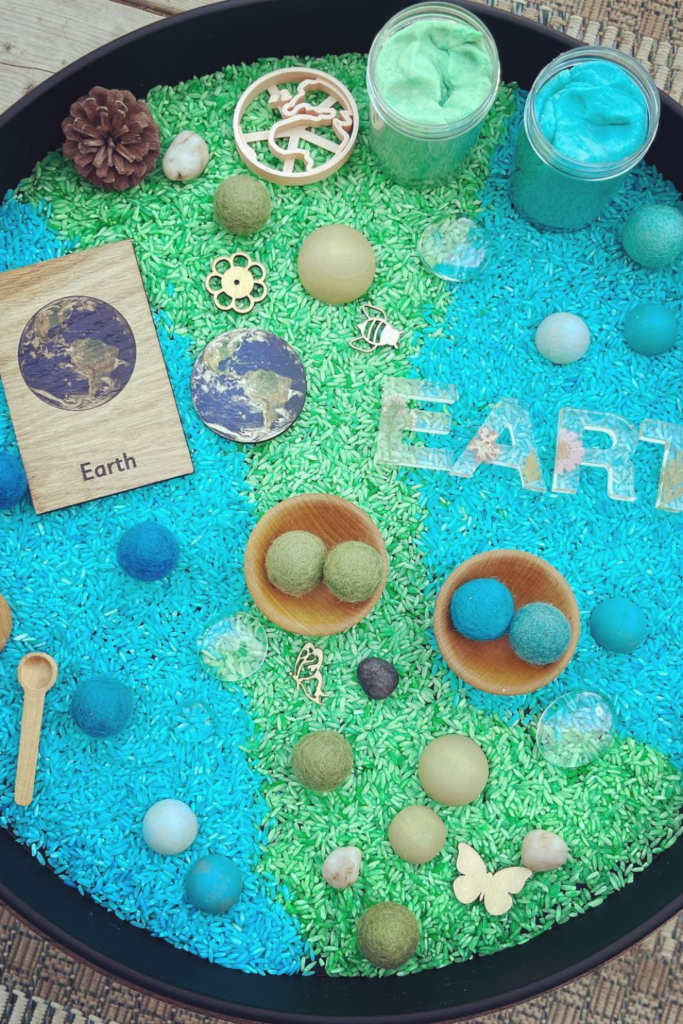
Earth Sensory Map
World-themed play adds calm focus without feeling academic. Blue and green rice create land-and-water contrast.
Wooden bowls, felt balls, and small loose parts invite sorting and gentle movement. Geography elements spark curiosity.
Visual balance, soft textures, and slow repetitive motion layer together here, making it ideal for quiet afternoons or mindful reset time.
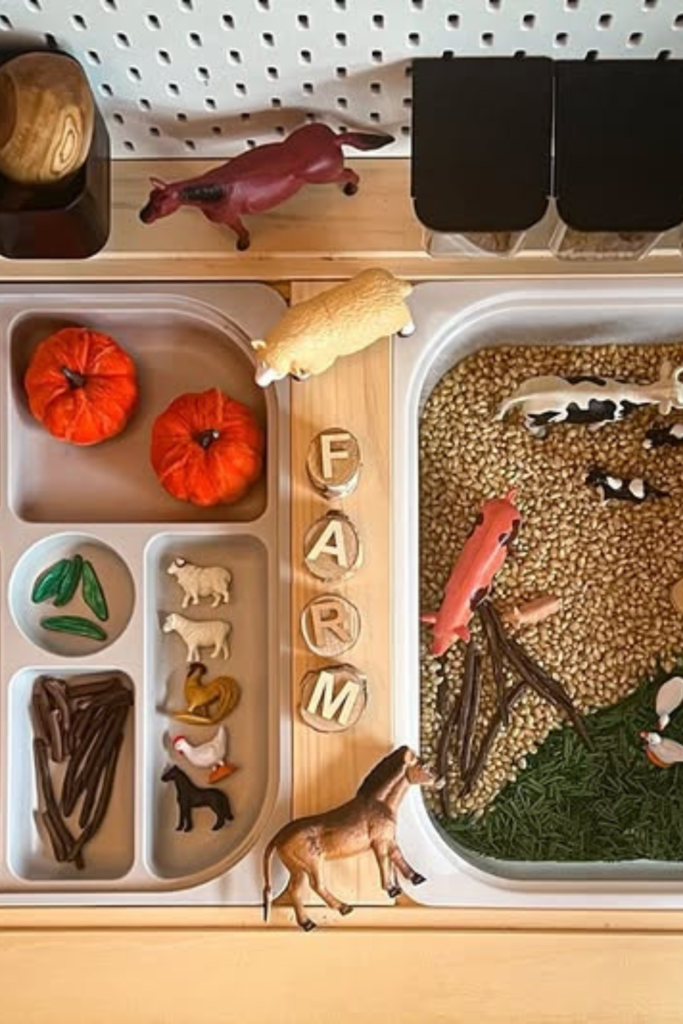
Farm Sorting Station
Real-life themes instantly ground sensory play. Split sections using grains, green rice, and small farm animals to create fields.
Loose parts like sticks, seeds, and wooden pieces invite sorting, matching, and moving with purpose, this setup works best.
Texture variety, visual order, and pretend play layer together here, ideal for tabletop play during focused learning blocks.
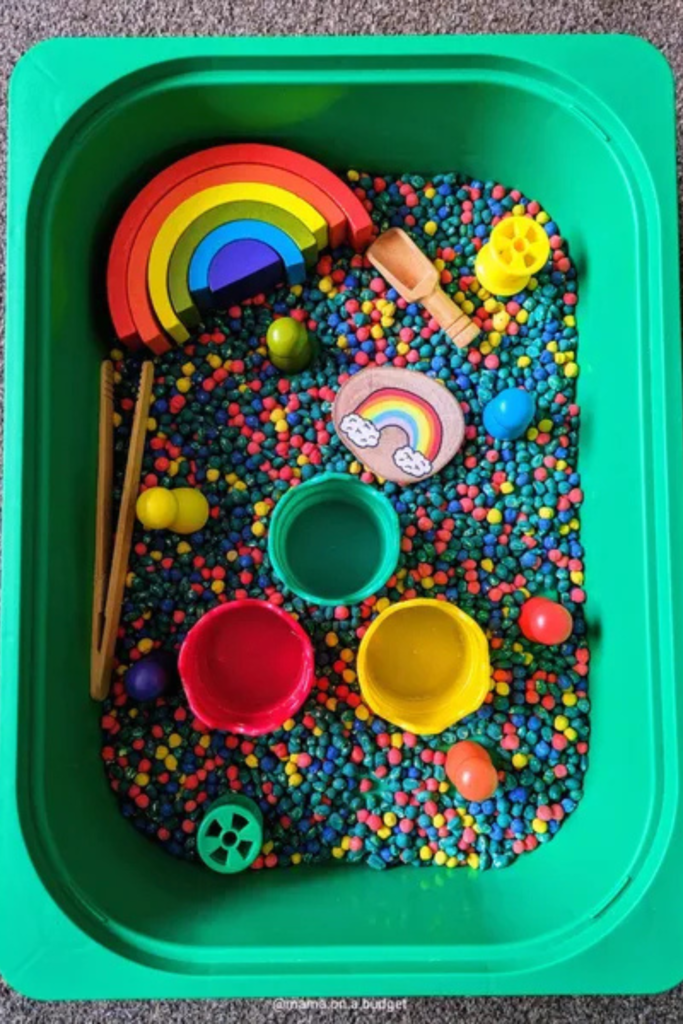
Rainbow Texture Mix
Multicolored sensory beads create a playful base, while cups, scoops, and simple toys encourage pouring, and sorting.
Bright colors instantly invite hands in. Color contrast, soft tapping sounds, and repetitive motion stack the sensory experience.
Making this setup work well for free play, color exploration, or moments when creativity needs a gentle push without structure.
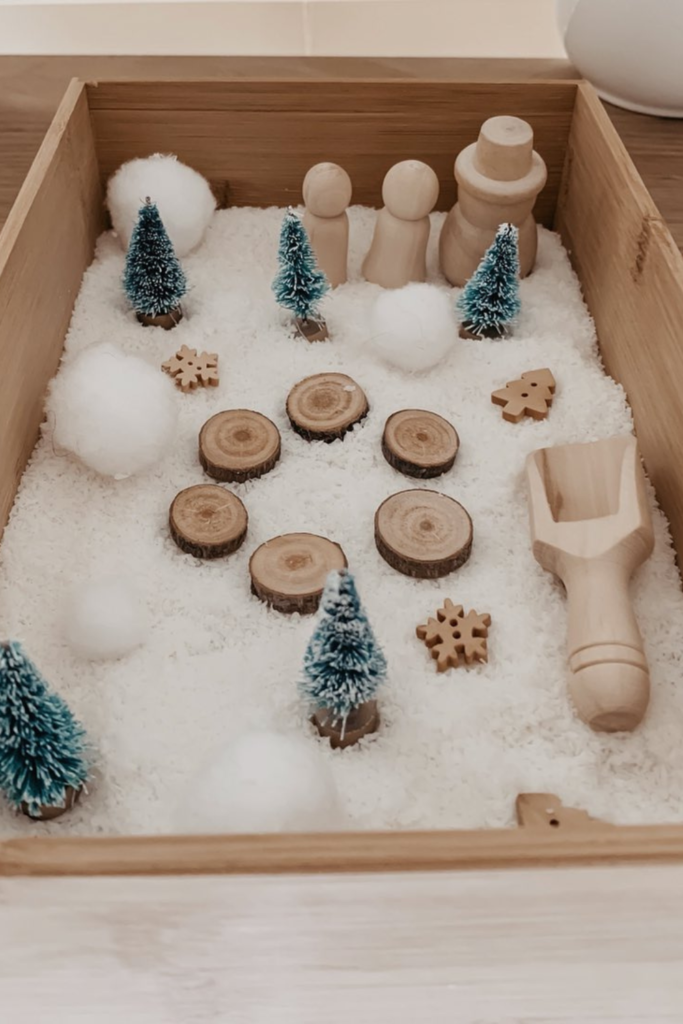
Winter Snow Scene
Faux snow or salt creates a quiet base, wooden figures, trees encourage gentle arranging and small-world storytelling.
Soft, neutral setups invite slower, more focused play. Light textures, muted colors, and simple movements layer together.
Making this setup especially useful for calming overstimulated kids during winter afternoons and quiet time routines.
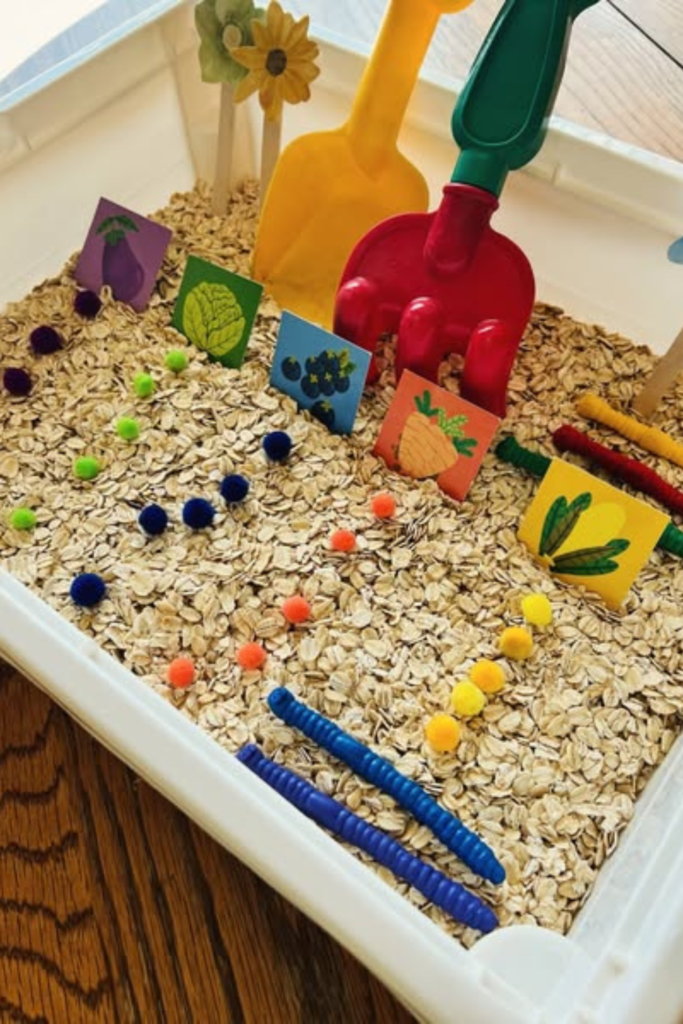
Garden Pattern Rows
Pattern play sneaks learning into hands-on digging. Rolled oats create a soft base, pom-poms and beads line up as pretend seeds.
Color cards guide simple planting rows without turning it into a lesson. Texture contrast, visual sequencing.
Tool use layer naturally here, making this setup great for table work, pre-math skills, or focused independent play.
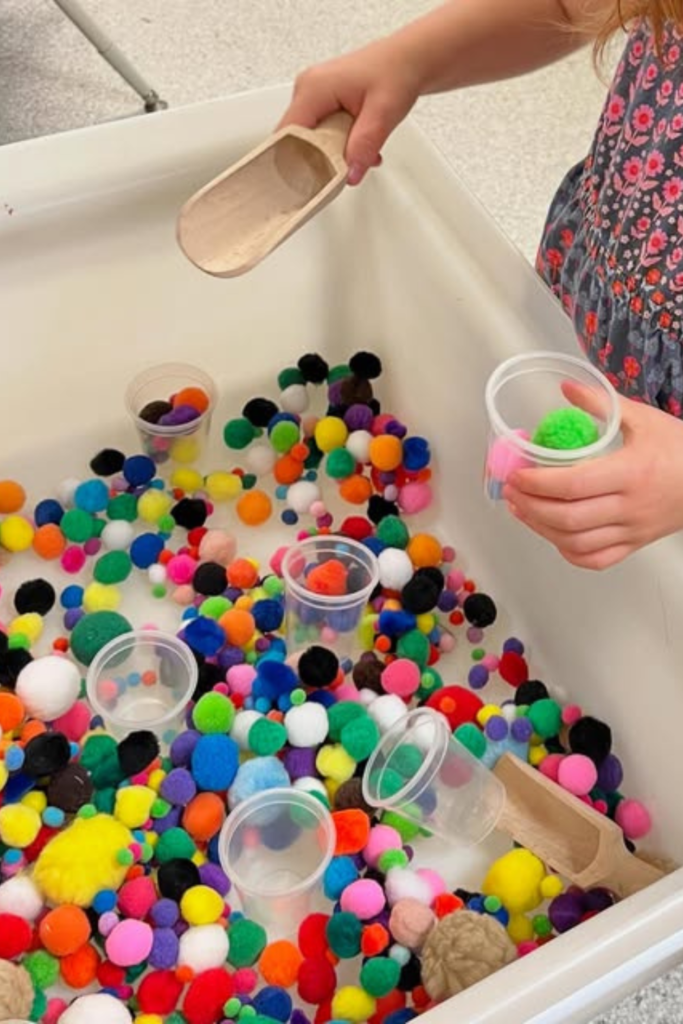
Pom Pom Transfer
Soft pom poms create a lightweight base, while scoops and small cups turn simple transferring into focused work.
Filling, dumping, and sorting by the size or color happen naturally. Loose parts shine when kids control the pace.
Soft touch, gentle sound, and repeated motion, making this setup perfect for building hand strength during calm play.
Bug Garden Dig
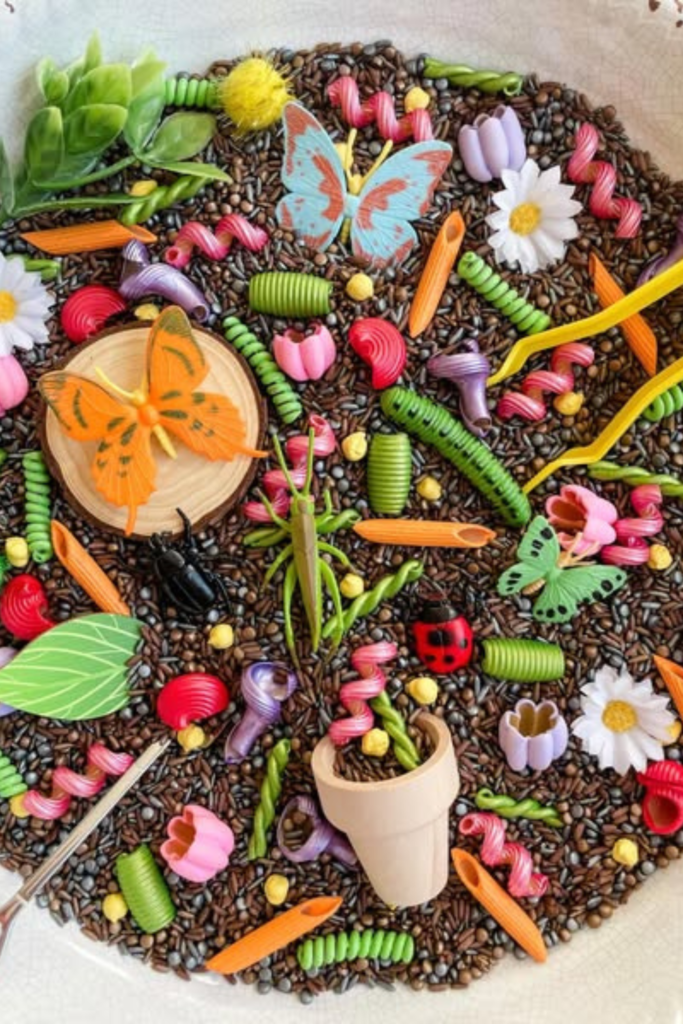
Dark beans or lentils form a rich base, insects, flowers, and textured pasta pieces invite searching, burying, and sorting.
Tweezers or small tools add challenge without pressure. Nature-inspired play works well for kids who love details.
Texture contrast, visual discovery, and fine motor control layer together here, making this setup great for focused play.
Color Sorting Wheel
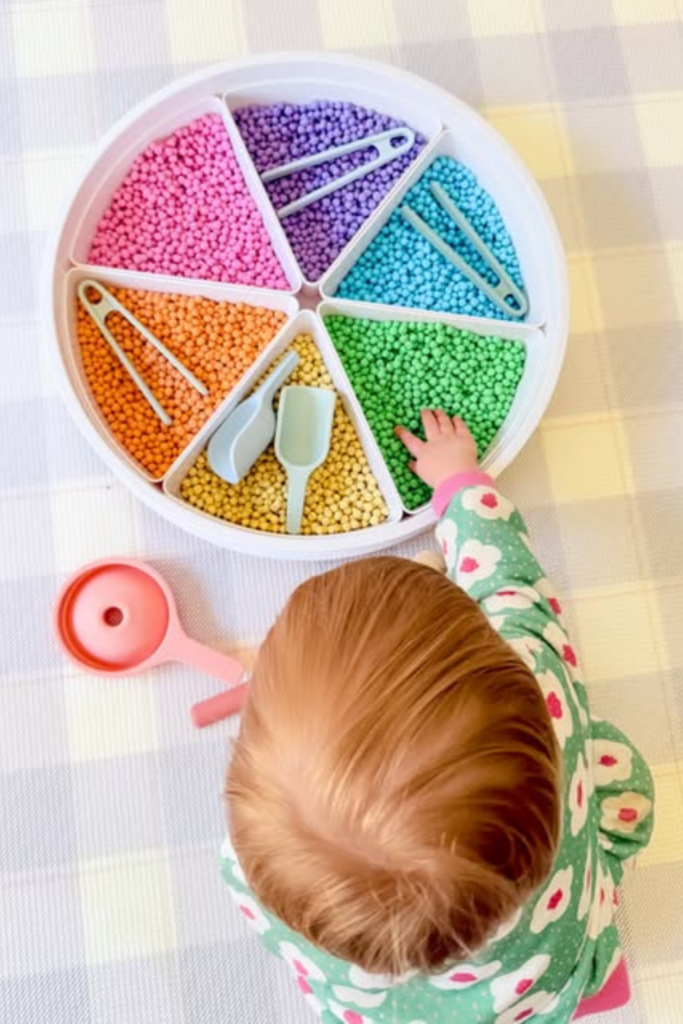
Clear boundaries help kids focus without reminders. Sectioned trays turn dyed peas or pellets into an instant sorting challenge.
Scoops support controlled transfers. Matching by color happens naturally as hands move from section to section.
Visual order, repetitive motion, and fine motor control layer together here, making this setup ideal for toddlers.
Carrot Wrap Station
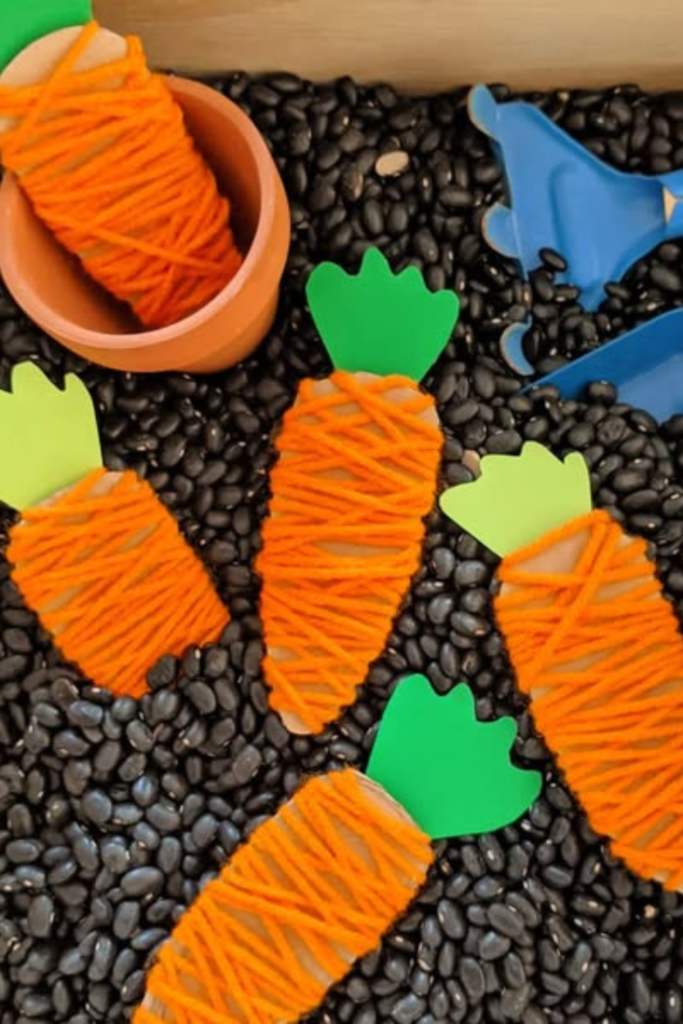
Wrapping play adds a slow, satisfying challenge. Fingers stay busy adjusting tension and direction, this works best.
Black beans create weight and contrast, while yarn-wrapped carrots invite twisting, winding, and unwrapping with intention.
Pressure feedback, hand coordination, and visual contrast layer, making this setup especially useful for building patience.
FAQs
How do I keep sensory play from turning into a mess?
Start with a wide tray or a shallow bin, then keep the filler level low. Add only two or three tools at first, because too many extras usually mean dumping.
Set the bin on a mat or towel, then show one simple rule, such as “scoop stays in the bin.” Tighter boundaries create calmer play.
Which sensory bin fillers work best for toddlers?
Taste-safe and larger-texture options usually work best for toddlers who still mouth items. Rolled oats, cooked pasta, water, soapy foam.
Give good sensory input. Skip small beads and anything that swells in water. Simpler fillers make supervision easier and allow play to last longer.
You may like to read!
Fasial is the founder of the Fizzy Flare. He has been a passionate blogger since 2021. He ran three different websites in the past few years. Now he is focusing on Fizzy Flare to build an audience and help them organize their life.