15 Patchwork Sweatshirt DIY Ideas for 2026
This post may contain affiliate links: full affiliate disclosure.
If you’ve ever embroidered a sweatshirt and thought everything looked fine until you took it out of the hoop, you know how annoying this can be.
The fabric stretches, the stitches sink in, or the design starts looking wavy and uneven. Sweatshirts are thicker and stretchier than they look.
In this article, I will break down which stabilizer to use for embroidery on sweatshirts, and 15 patchwork sweatshirt DIY ideas that work in 2026.
Let’s jump in!
Contents
- 1 What Stabilizer Should I Use to Embroider a Sweatshirt?
- 1.1 Appliqué Back Motif
- 1.2 Patchwork Character Panel
- 1.3 Quilted Heart Patch
- 1.4 Colorblock Statement Hoodie
- 1.5 Raw-Edge Heart
- 1.6 Wreath Patch Layout
- 1.7 Geometric Quilt Star
- 1.8 Patchwork Name Letters
- 1.9 Layered Star Patches
- 1.10 Phrase Patch Letters
- 1.11 Scrappy Heart Block
- 1.12 Mixed Logo Patch
- 1.13 Mixed Fabric Letters
- 1.14 Center Patch Panel
- 1.15 Patchwork Tree Shape
- 2 FAQs
What Stabilizer Should I Use to Embroider a Sweatshirt?
You should almost always use a cut-away stabilizer when embroidering a sweatshirt. Sweatshirt fabric stretches.
If the stabilizer doesn’t stay behind after stitching, your design will stretch with it. The tear-away stabilizer fails here because, once removed.
Nothing supports the stitches in the long term. If the sweatshirt is very stretchy or lightweight, add a temporary layer to prevent stitches from sinking into the fabric.
For thick fleece sweatshirts, one layer of medium- to heavy-cutaway usually works. If your design is dense or large, use a heavier cut-away or even two layers.
The rule is simple: if the fabric stretches, the stabilizer must stay. That’s what keeps your embroidery flat after washing and wearing.
Save this article for later! 👇👇
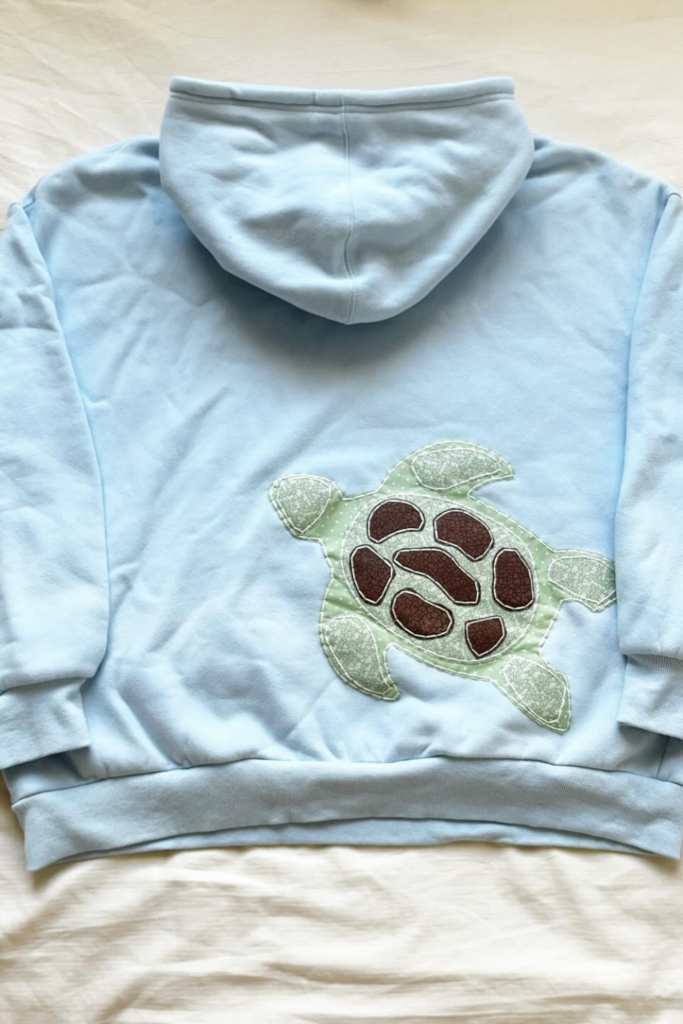
Appliqué Back Motif
A large back appliqué works best when the sweatshirt base stays simple and solid. Secure everything with fusible web.
Stitch around each section. Start by cutting the main shape from cotton fabric, then layer smaller fabric pieces on top for details.
Light embroidery stitching on the edges adds definition while keeping the fabric flexible and wearable for everyday use.
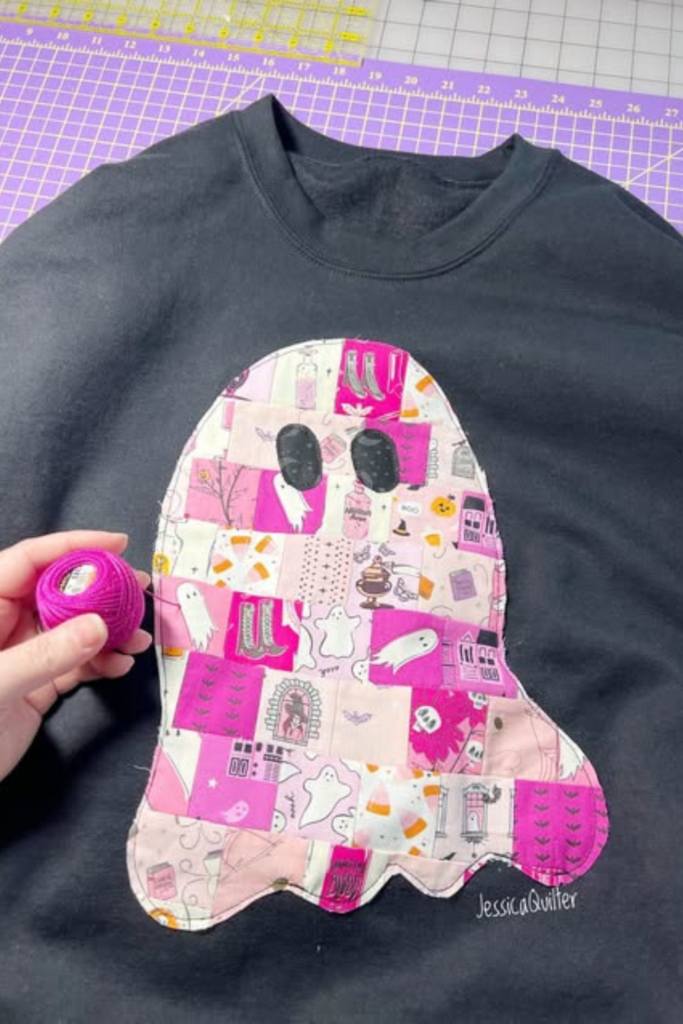
Patchwork Character Panel
Bold character shapes work best on the front of a plain sweatshirt. Build the design by joining small fabric scraps.
Cut the full shape once the patchwork feels balanced. Fuse the panel onto the sweatshirt and stitch around the edges for security.
The layered look comes from patchwork fabric layered over the base sweatshirt, finished with simple outline stitching.
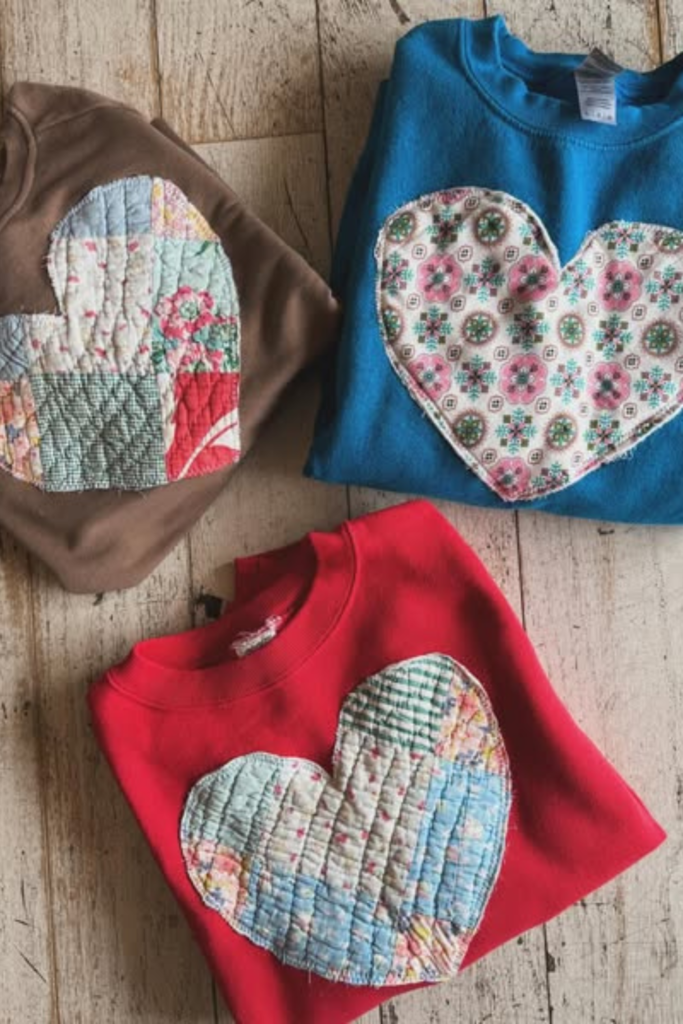
Quilted Heart Patch
Soft quilt blocks shine on the chest, where the fabric stays flat and visible. Piece small quilt scraps together first.
Add a thin batting layer underneath, quilt the panel before attaching it. Trim into a heart shape and secure it with tight edge stitching.
The layered effect comes from batting sandwiched between patchwork fabric and the sweatshirt base, this works well.
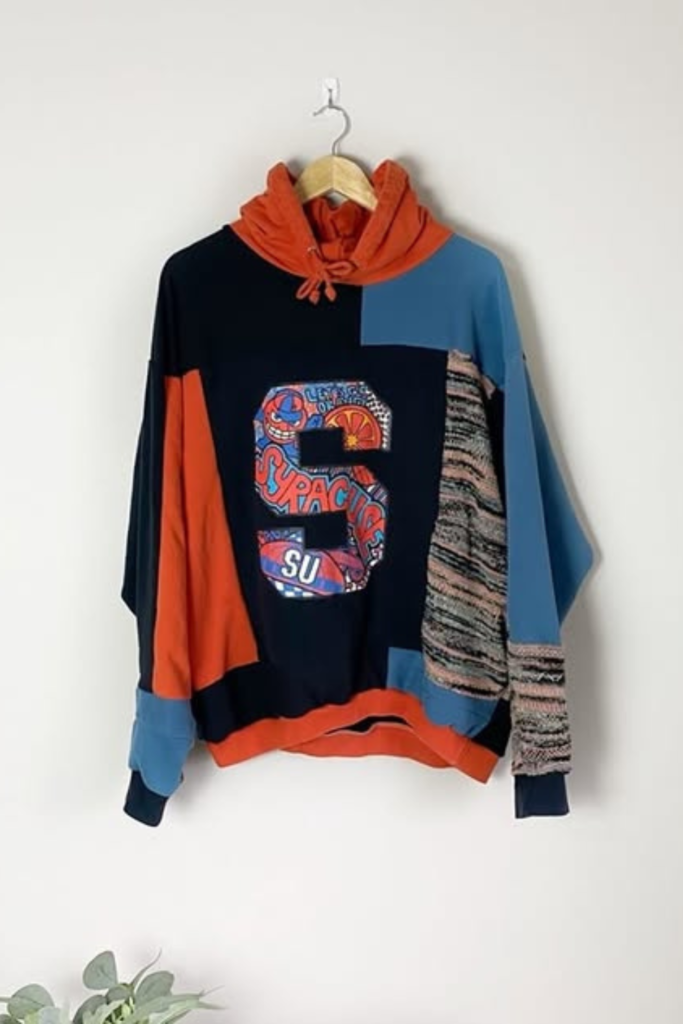
Colorblock Statement Hoodie
Strong colorblocking fits oversized hoodies where bold panels don’t fight the shape. Graphic appliqué works best.
Cut large fabric sections for sleeves and body first, then assemble the hoodie panels before adding details.
The layered look comes from stacked sweatshirt fabrics, contrast knits, and a stitched appliqué sitting cleanly on top.
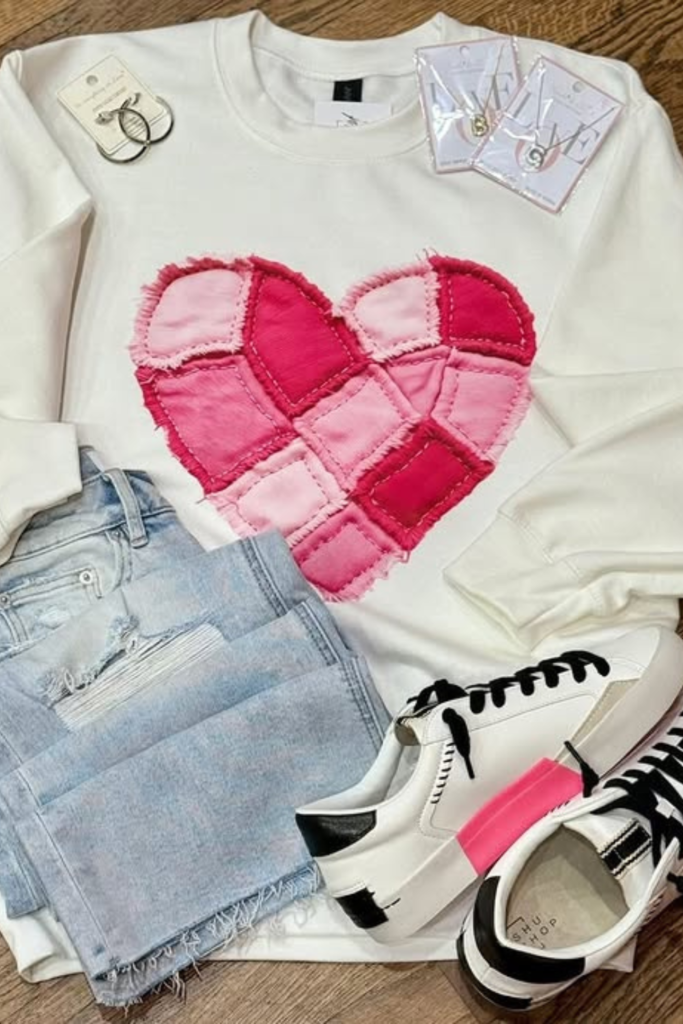
Raw-Edge Heart
Build the heart by joining small fabric squares, then cut the final shape and attach it directly to the sweatshirt.
Skip edge finishing so the seams soften over time. Frayed patchwork adds texture without heavy quilting, making it ideal.
The look layers patchwork fabric on a stable sweatshirt base, secured with dense stitching to control fraying.
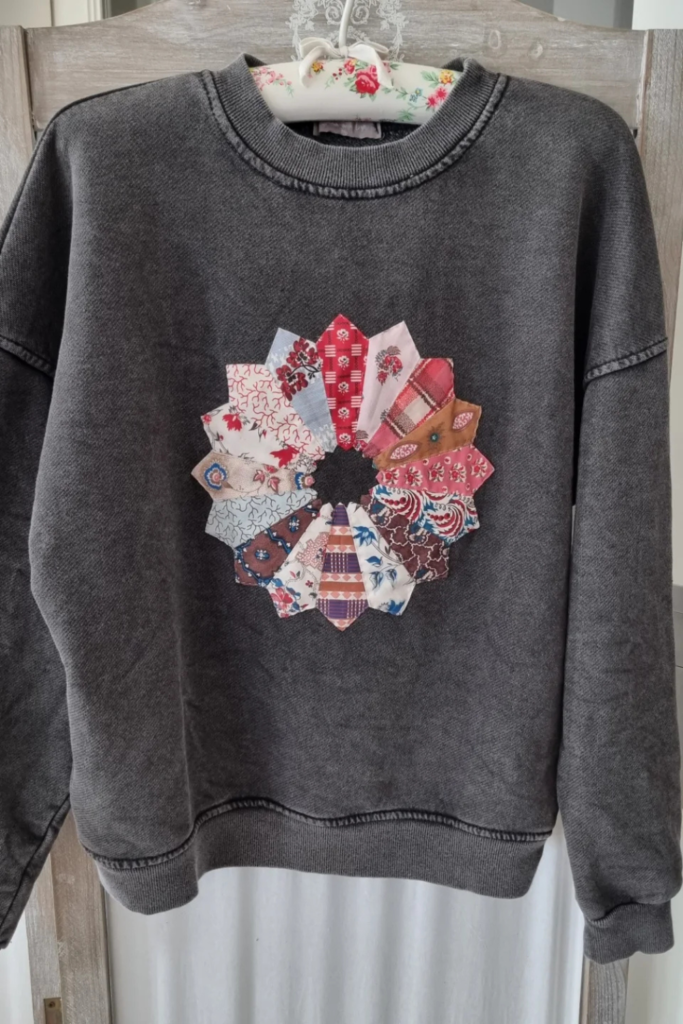
Wreath Patch Layout
Circular patch layouts work best on the center chest. Fuse the full circle in place, then stitch each piece down individually
Cut repeated wedge shapes from different fabrics, then arrange them into a ring before attaching anything.
Layered effect comes from patchwork cotton on a sweatshirt base, held flat with a cut-away stabilizer underneath.
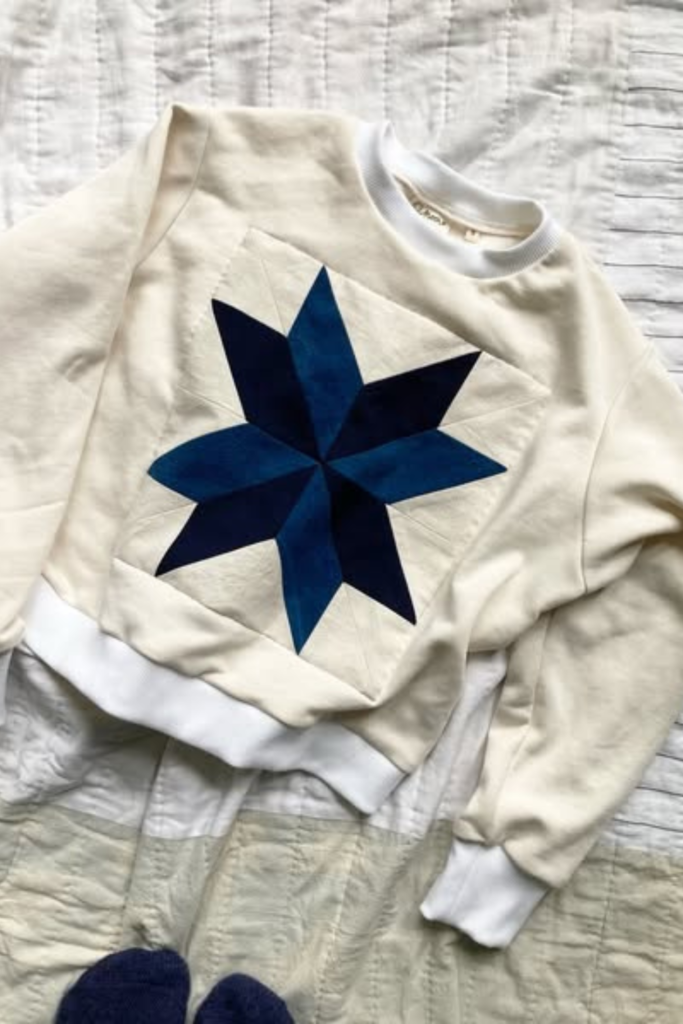
Geometric Quilt Star
Sharp geometric shapes work best when placed on the center front. Attach the finished block as one unit, stitch around the edges.
The sweatshirt stays flat. Piece the star on a separate fabric panel first so angles stay clean and accurate.
Layered look comes from quilt cotton on top of a stable sweatshirt base, backed with cut-away stabilizer to prevent distortion.
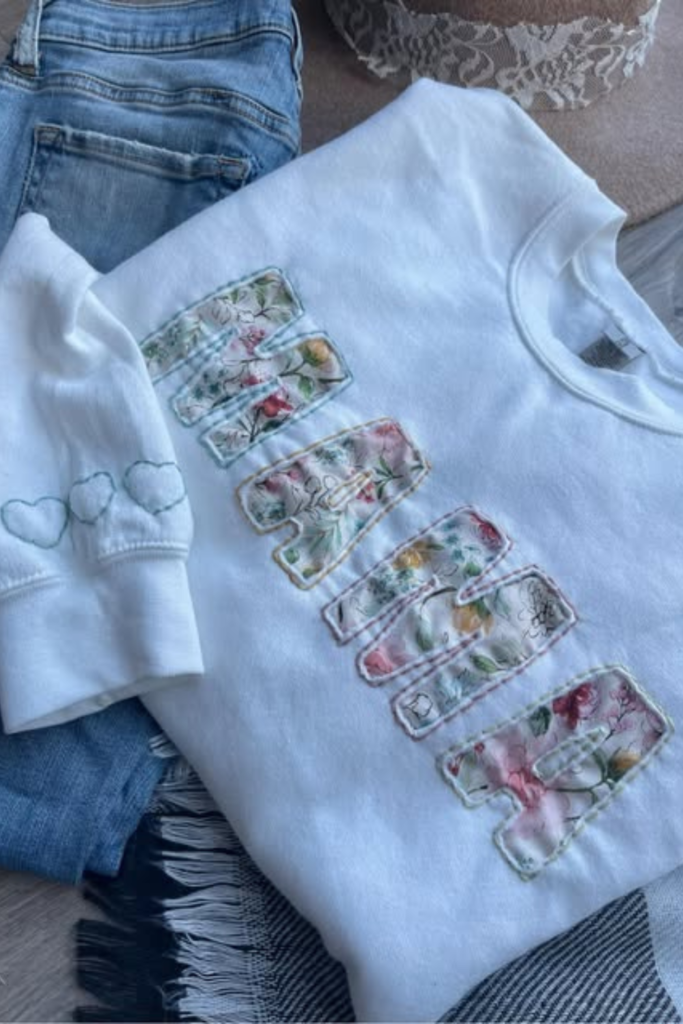
Patchwork Name Letters
Fabric letters stand out best across the front, where the sweatshirt stays smooth. Build each letter from scrap pieces first.
Cut clean letter shapes once the patchwork feels balanced. Fuse the letters in place before stitching to stop shifting.
The layered effect comes from patchwork cotton letters sitting on a stable sweatshirt base, outlined with tight stitching for definition.
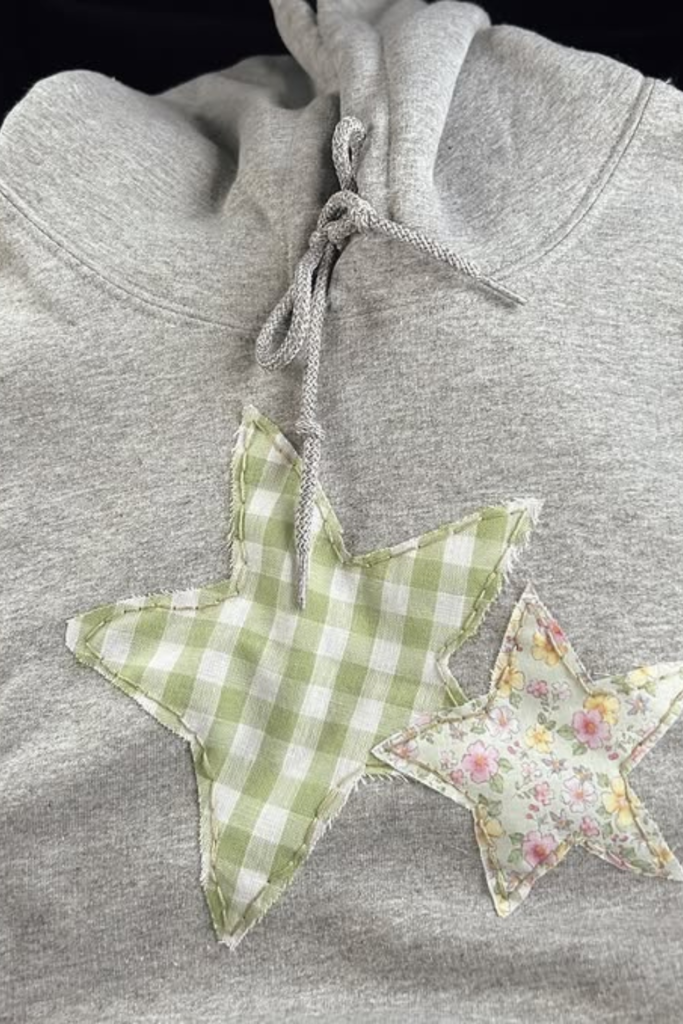
Layered Star Patches
Star patches work best near the neckline or upper chest, where they feel intentional rather than crowded.
Cut each star from contrasting scrap fabric, stack sizes to create depth. Layered look comes from multiple fabric stars.
Placed over the sweatshirt base, secured with edge stitching and backed by cut-away stabilizer for support.
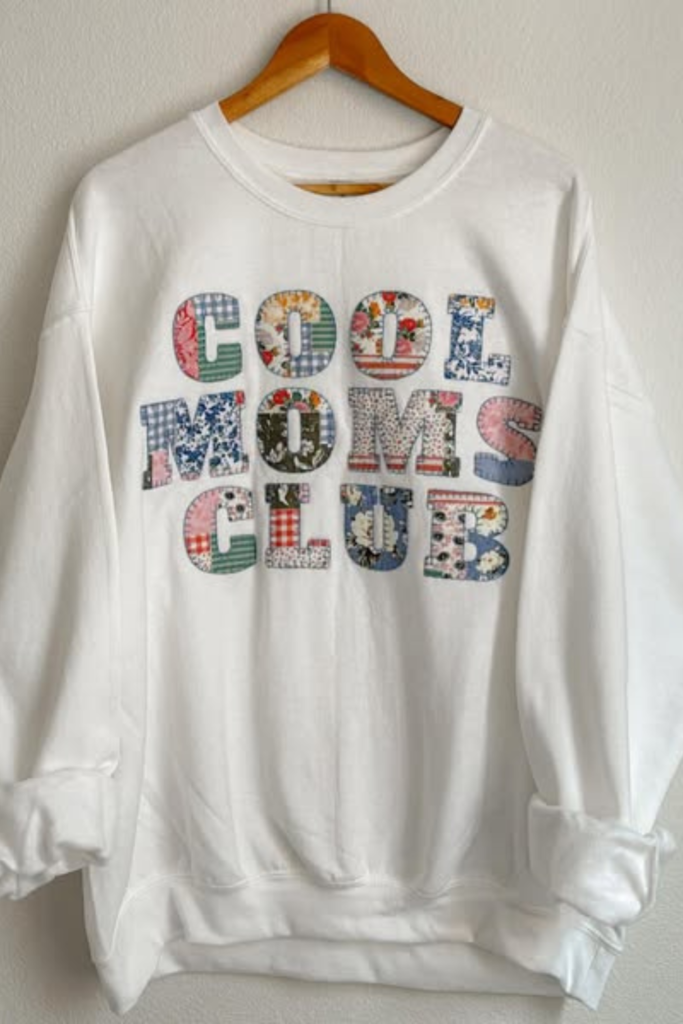
Phrase Patch Letters
Assemble fabric scraps into small panels first, then cut each letter clean so patterns don’t feel chaotic.
Fuse letters in place before stitching to lock alignment. Word-based patchwork works best across the chest.
Patchwork cotton letters sitting on a smooth sweatshirt base, finished with outline stitching for clarity and durability.
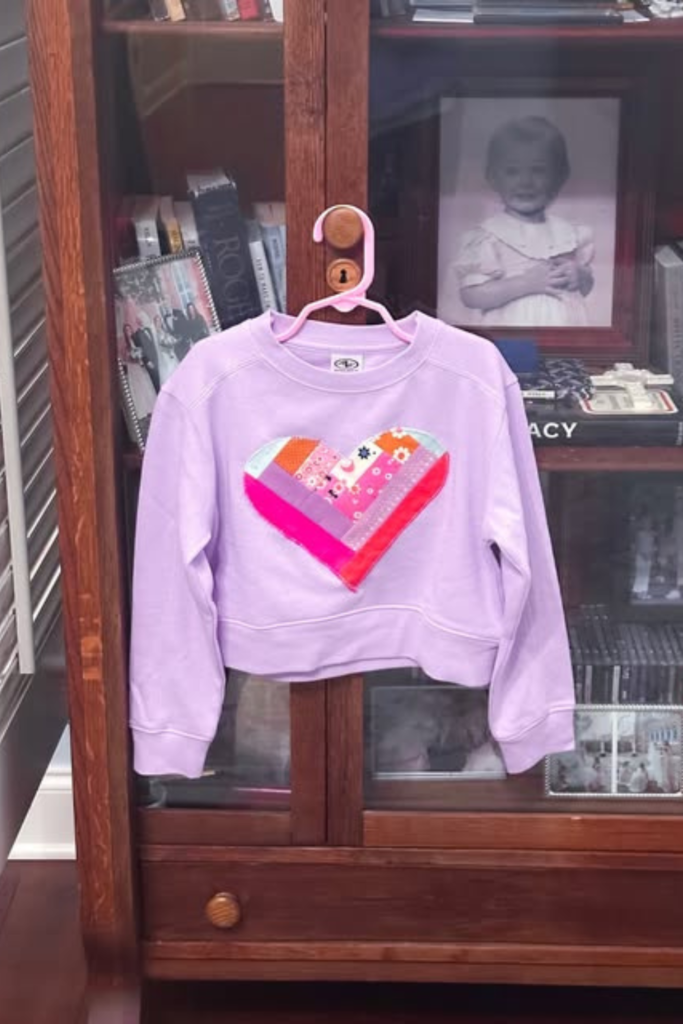
Scrappy Heart Block
Small scrap hearts work best on cropped or youth sweatshirts, where the design stays centered and playful.
Join narrow fabric strips into a mini block first, then cut the heart shape once the seams feel balanced.
Attach the finished piece as a single panel, stable patchwork fabric over sweatshirt base, stitched cleanly around the edges.
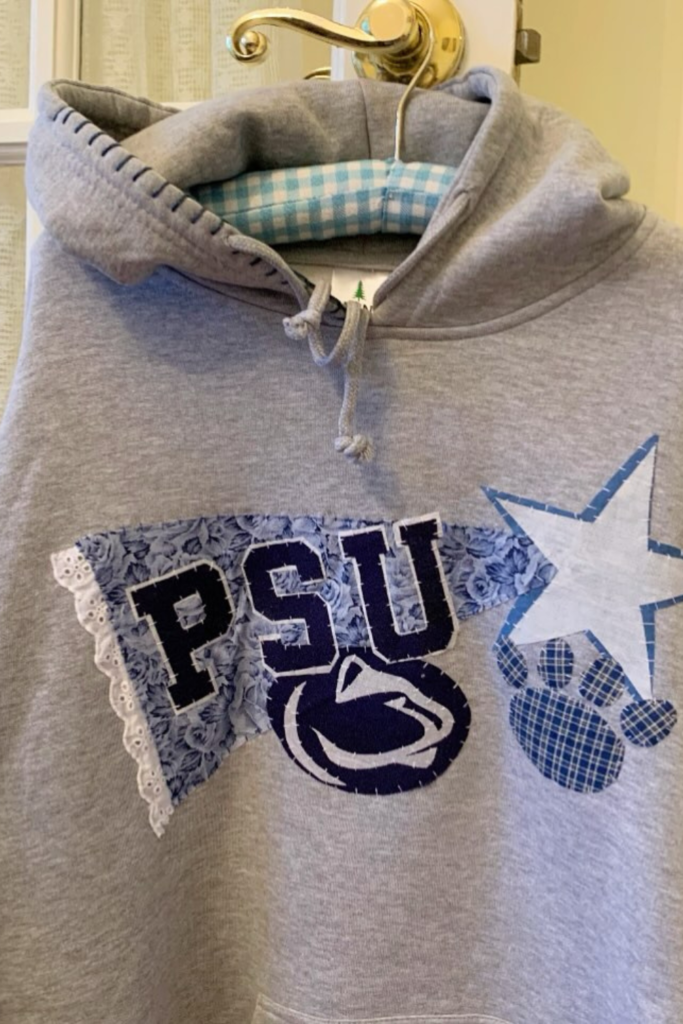
Mixed Logo Patch
Logo-based patchwork fits best on hoodies where the front panel stays visible and flat. Start with an existing graphic.
Frame it using scrap fabric shapes for contrast. Attach the background fabric, then layer the logo on top so it stays readable.
The layered look comes from printed fabric, patchwork accents, and dense stitching, anchored by a cut-away stabilizer underneath.
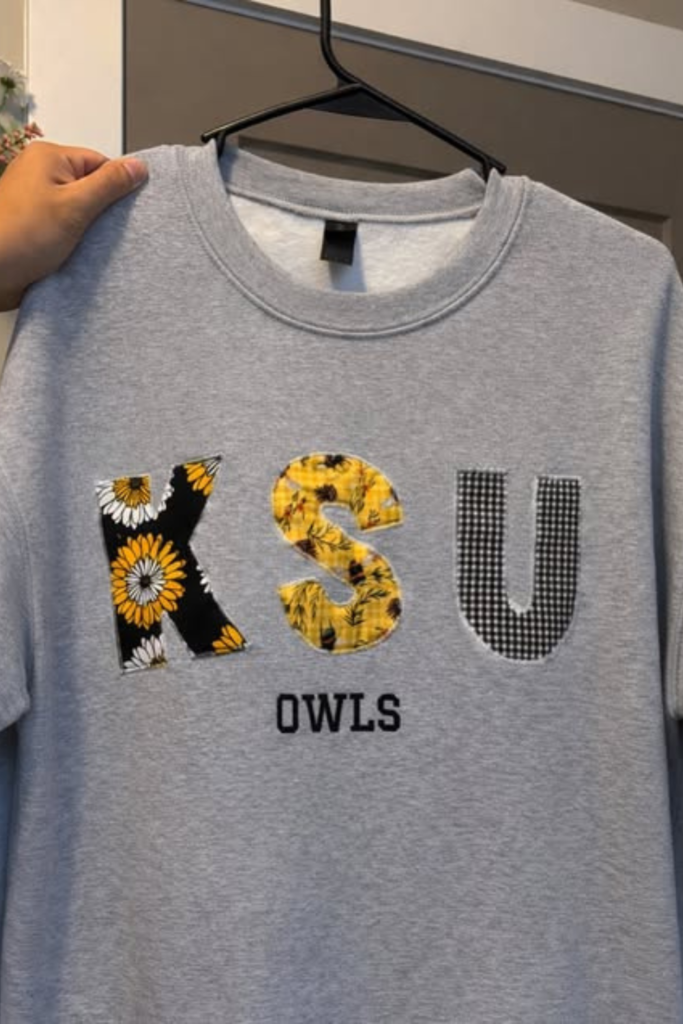
Mixed Fabric Letters
Letter patchwork works best on mid-weight sweatshirts where the front panel stays flat. Cut each letter from a different fabric.
Patterns don’t blend together. Fuse everything in place first to lock spacing, then stitch around each shape.
Layered look comes from individual fabric letters sitting on the sweatshirt base, finished with clean edge stitching for durability.
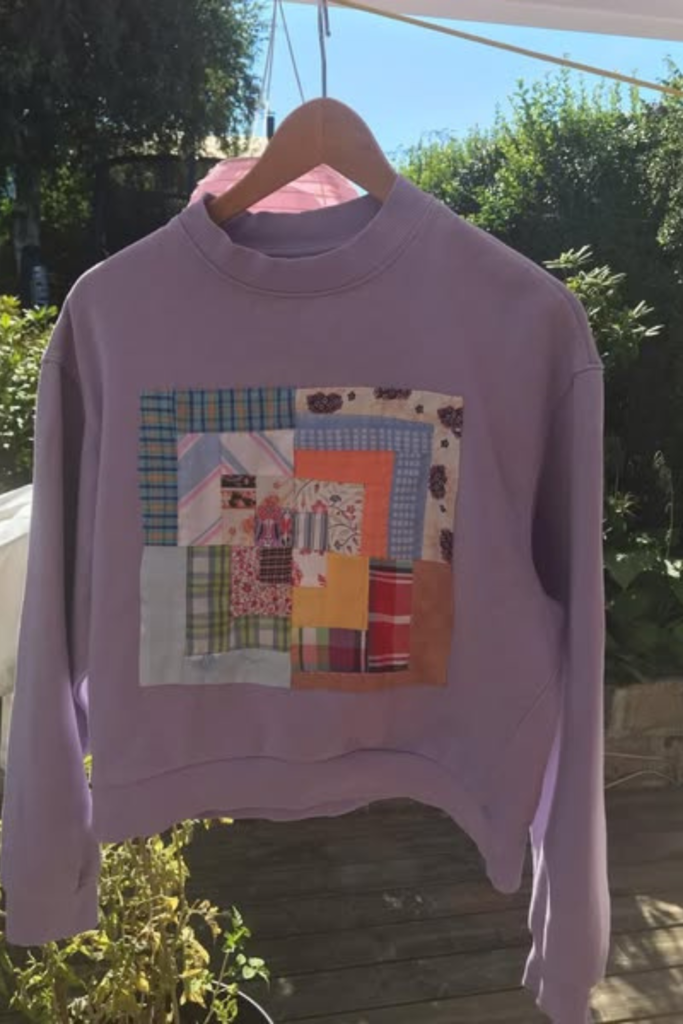
Center Patch Panel
Build the patchwork block off the garment by stacking fabric frames inward until the center feels balanced.
Square patch panels work best on cropped or boxy sweatshirts. Attach the finished panel as a single piece.
The layered look comes from multiple cotton fabrics stacked over a stable sweatshirt base and stitched down as a single unit.
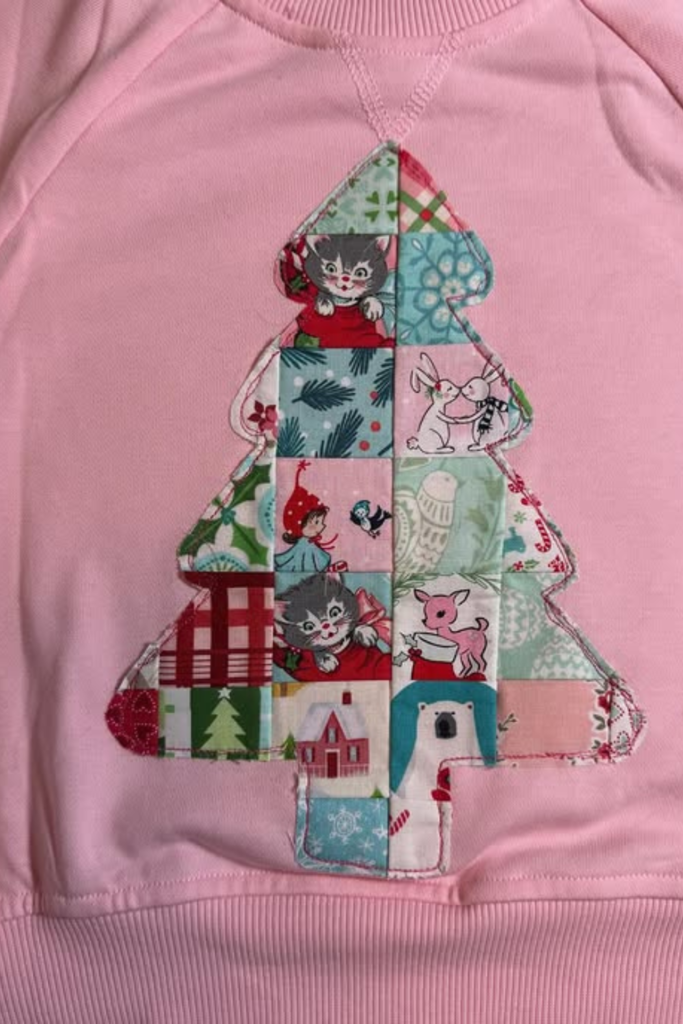
Patchwork Tree Shape
Attach the shape as a single panel rather than sewing each square directly onto the sweatshirt. Seasonal shapes work best.
Piece small fabric squares together first, then cut the full shape once the patchwork feels even, design stays balanced and visible.
Fabric patchwork over a stable sweatshirt base, secured with outline stitching and cut-away stabilizer underneath.
FAQs
Can I embroider a sweatshirt without stabilizer?
Skipping a stabilizer usually causes problems. Sweatshirt fabric stretches, and stitches need support to stay flat.
Even small embroidery benefits from at least one layer of cut-away stabilizer. If the fabric stretches, something must stay behind the stitches to control it.
Should I hoop the sweatshirt or float it?
Hooping works for stable, low-bulk sweatshirts. Thick or oversized styles handle better when floated. Secure the stabilizer in the hoop.
Attach the sweatshirt on top with adhesive or basting stitches. Floating prevents hoop marks and reduces fabric distortion during stitching.
You may like to read!
Fasial is the founder of the Fizzy Flare. He has been a passionate blogger since 2021. He ran three different websites in the past few years. Now he is focusing on Fizzy Flare to build an audience and help them organize their life.