23 Backpack Storage Ideas for 2026
This post may contain affiliate links: full affiliate disclosure.
If backpacks keep ending up on the floor, on chairs, or hanging off door handles, you’re not alone. Most homes don’t have a clear place for bags.
That’s how entryways get messy and mornings turn stressful. The problem isn’t the backpacks it’s the lack of a simple system that actually fits how people use them.
In this article, you’ll find 23 Backpack Storage ideas that work in 2026.
Let’s jump in!
Contents
- 1 What is the Best Way to Store Backpacks at Home?
- 1.1 Low Wall Hooks
- 1.2 Carry-All Storage Bag
- 1.3 Built-In Drop Zone
- 1.4 Open Cubby Wall
- 1.5 Lighted Bench Hooks
- 1.6 Structured Bag Organizers
- 1.7 Locker-Style Storage
- 1.8 Wood Panel Hooks
- 1.9 Pegboard Wall Setup
- 1.10 Gear Room Wall
- 1.11 Slim Wall Rail
- 1.12 Kids Cubby Station
- 1.13 Hanging Cubby Slots
- 1.14 Corner Hook Zone
- 1.15 Floating Peg Display
- 1.16 Freestanding Rack Unit
- 1.17 Closet Gear Station
- 1.18 Ladder Style Stand
- 1.19 Hallway Cubby Pair
- 1.20 Soft Hook Rail
- 1.21 Personal Locker Cubes
- 1.22 Compact Peg Rail
- 1.23 Single Hook Focus
- 2 FAQs
What is the Best Way to Store Backpacks at Home?
The best way to store backpacks at home is to give them a fixed, visible spot that matches how they’re used every day.
If a bag is easy to hang or drop in place the moment someone walks in, it won’t end up on the floor. Wall hooks, low-mounted racks.
Open cubbies work better than shelves or closets because you don’t have to open or move anything first. When storage is simple.
People actually use it. The goal isn’t to hide backpacks, but to control where they land so clutter doesn’t spread through the house.
Save this article for later! 👇👇

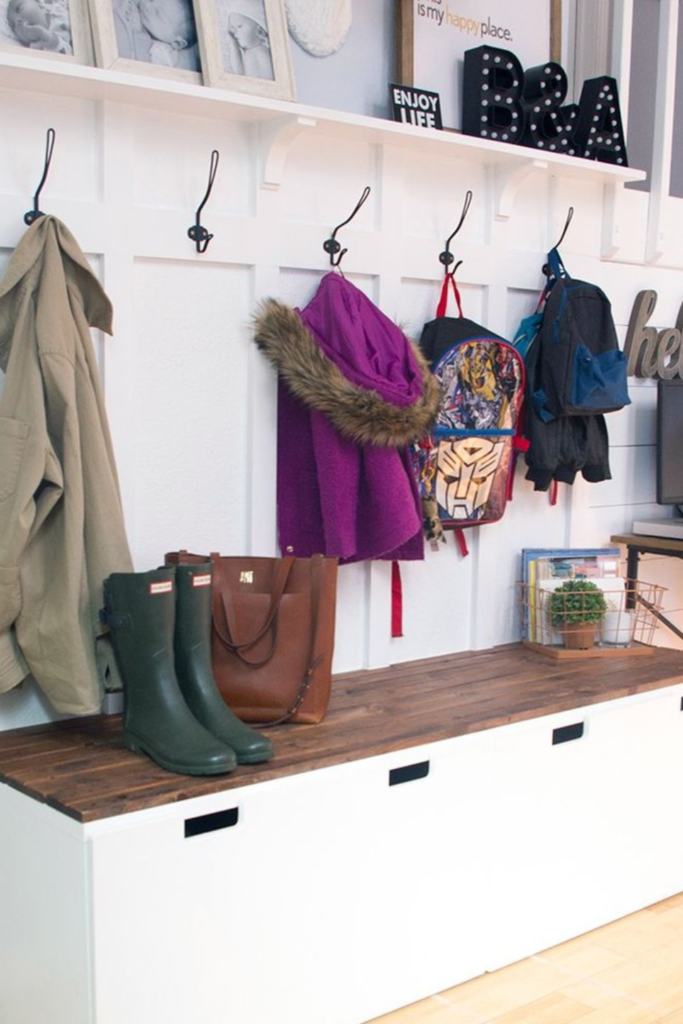
Low Wall Hooks
Floor clutter stops when backpacks get a dedicated landing spot right where people naturally pause.
Mount sturdy hooks at kid and adult height so everyone can hang bags. Pair them with a bench or closed storage.
Underneath for shoes. Soft ambient ceiling light plus natural daylight keep the area bright and practical.
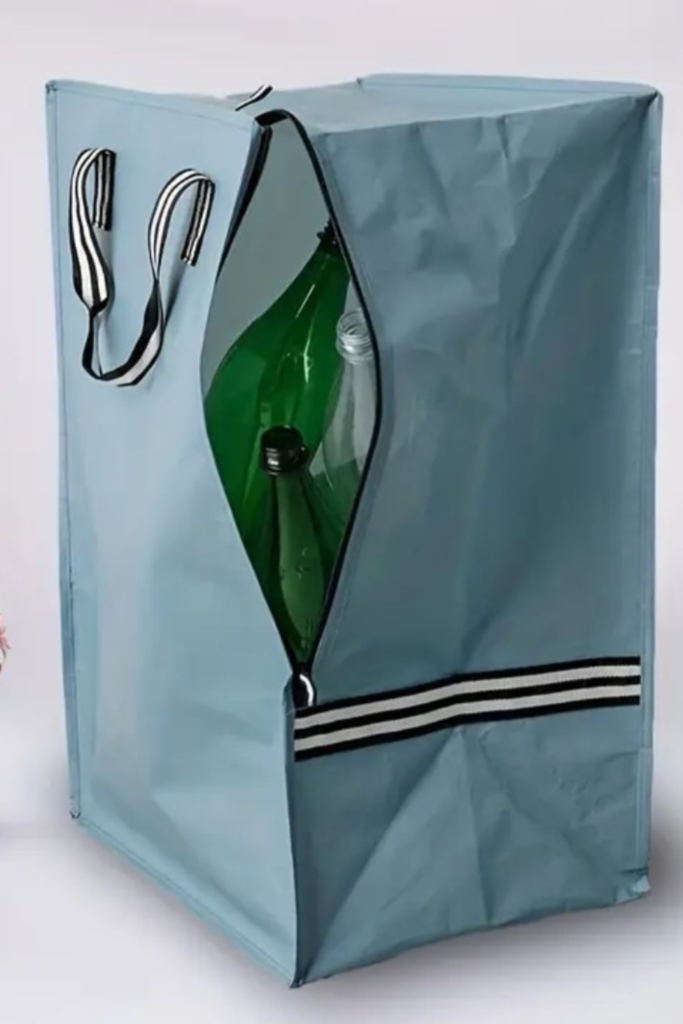
Carry-All Storage Bag
Seasonal clutter disappears when backpacks live inside one large storage bag instead of scattered closets.
Use a structured fabric storage tote to stack multiple backpacks upright without crushing them, works well.
Tuck it onto a shelf or corner. Even overhead ambient lighting is enough here since access is occasional, not daily.
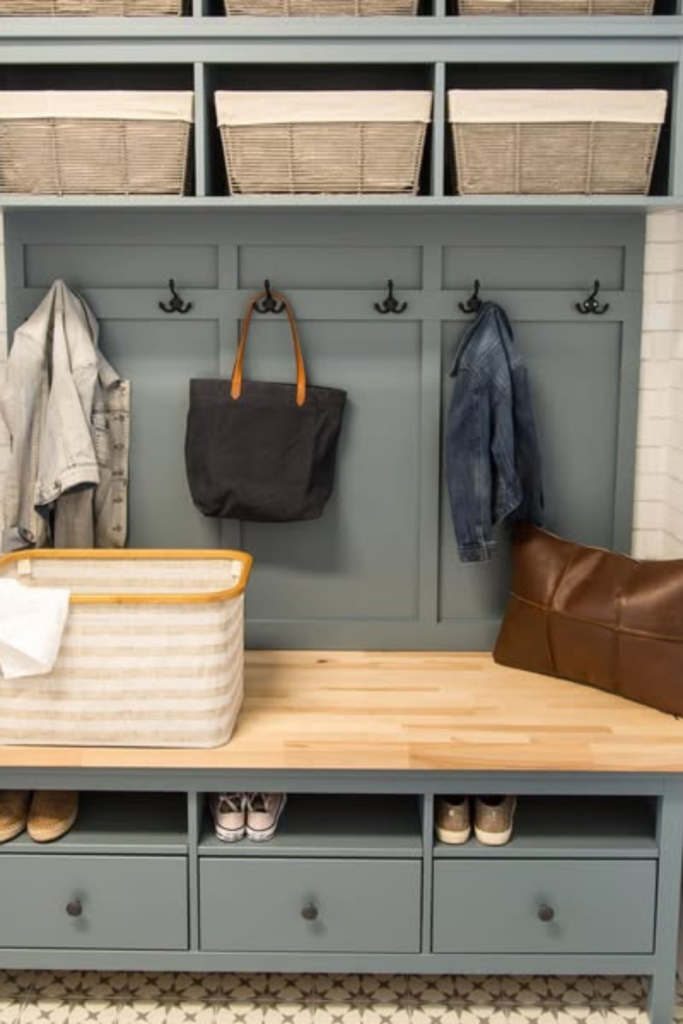
Built-In Drop Zone
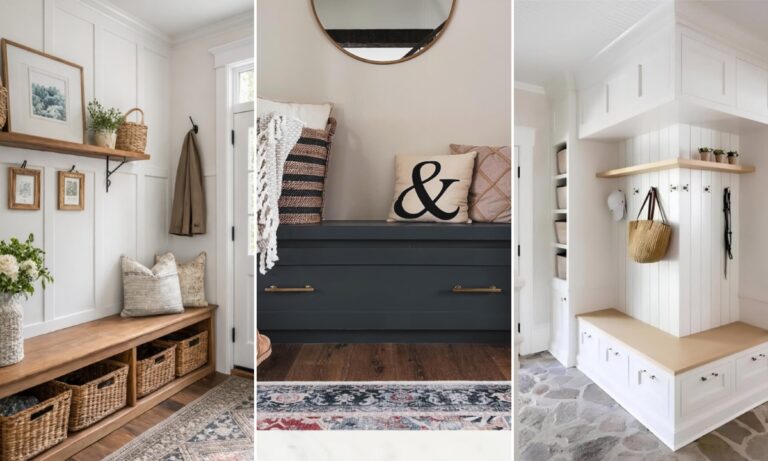
Daily chaos fades when backpacks share space with coats and shoes in one controlled zone, fits best in mudrooms.
Install hooks for bags, drawers for loose items, and cubbies below for shoes. Woven baskets handle overflow neatly.
Soft overhead lighting paired with light-colored surfaces keeps everything visible without the need for task lights.
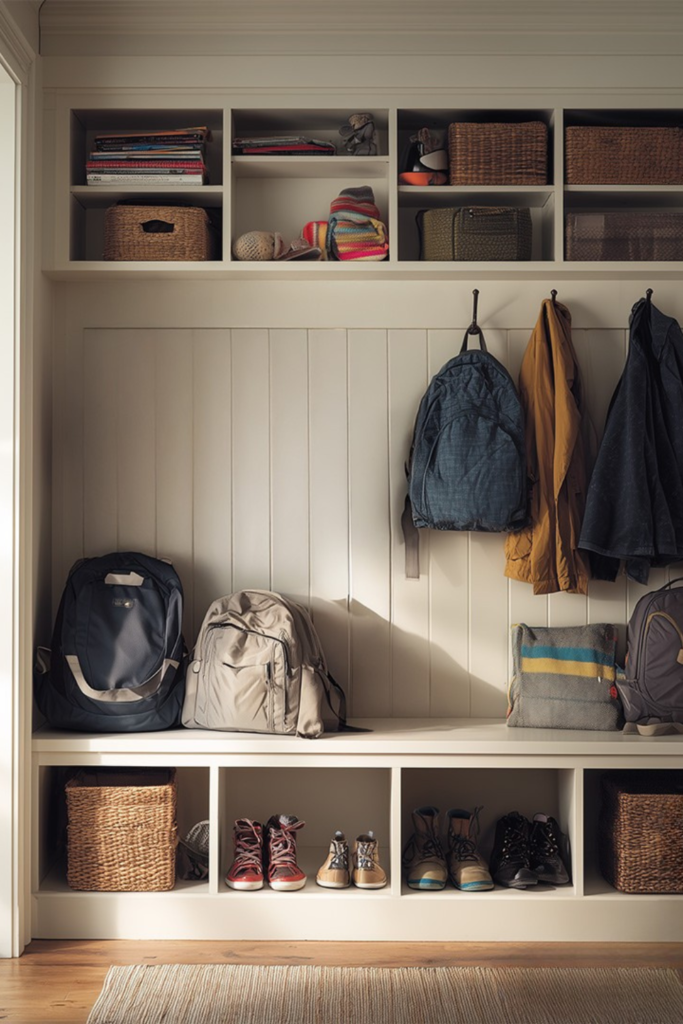
Open Cubby Wall
Visual order happens when backpacks stay in sight but off the floor. This idea works best in family entryways.
Use open cubbies at bag height so backpacks slide in without folding or forcing zippers. Hooks above handle jackets.
Baskets manage small extras. Natural light plus soft ceiling lighting keeps everything readable and welcoming throughout the day.
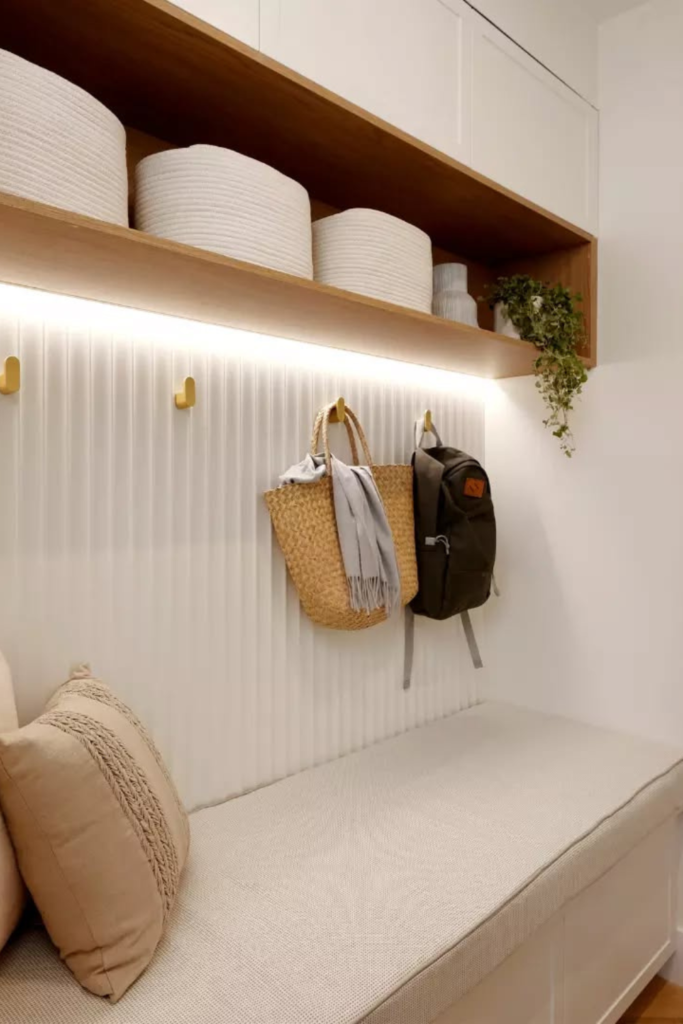
Lighted Bench Hooks
Daily routines feel easier when backpacks sit where shoes come off, works best in small entryways that need both seating and storage.
Add an LED strip under the shelf to brighten the wall and make bags easy to spot. Warm accent lighting layered with ceiling light keeps the space calm.
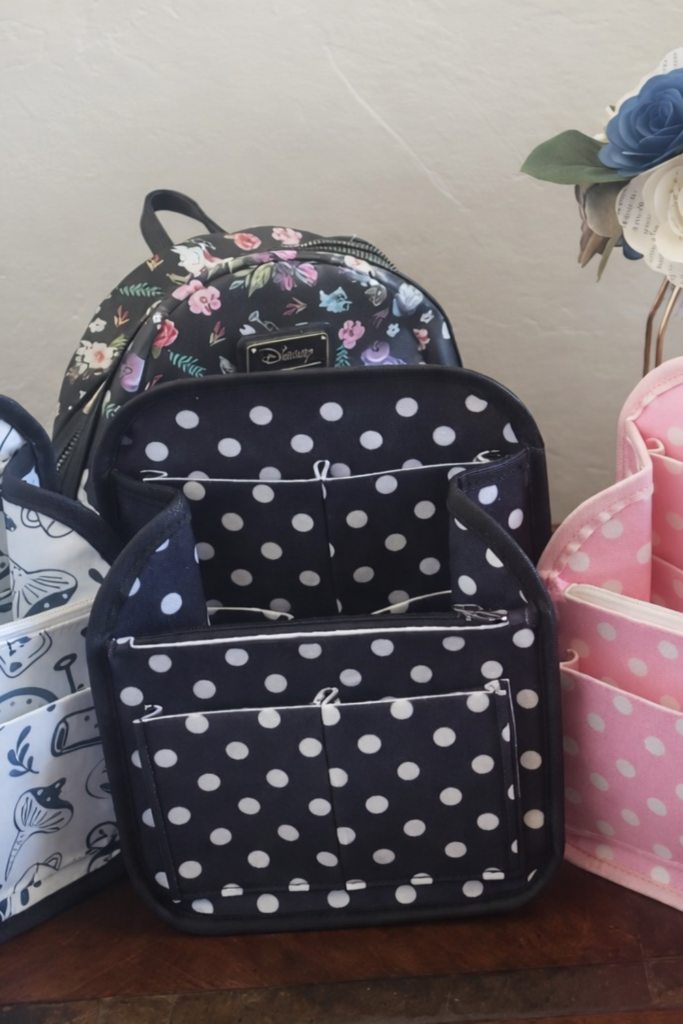
Structured Bag Organizers
Bag clutter shrinks when backpacks keep their shape even while stored. Use structured backpack organizers or inserts.
Each bag stands upright and stays open. Slide them side by side on a shelf for quick access, works for bedrooms, closets.
Bags tend to collapse into piles. Simple ambient room lighting works fine here since the goal is order, not display.
Locker-Style Storage
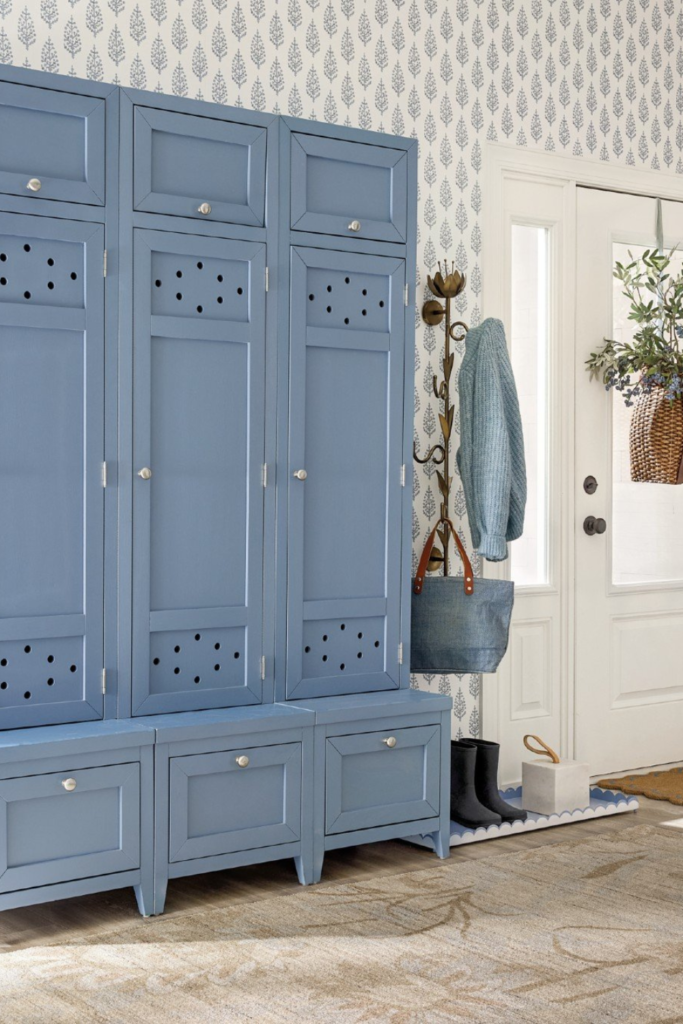
Backpacks stop roaming when each one gets its own closed home. This approach works best in busy entryways.
Use locker-style cabinets with ventilation holes so bags dry out. Assign one locker per person to avoid mix-ups.
Overhead ambient light handles visibility, while natural light from nearby doors keeps the space from feeling heavy.
Wood Panel Hooks
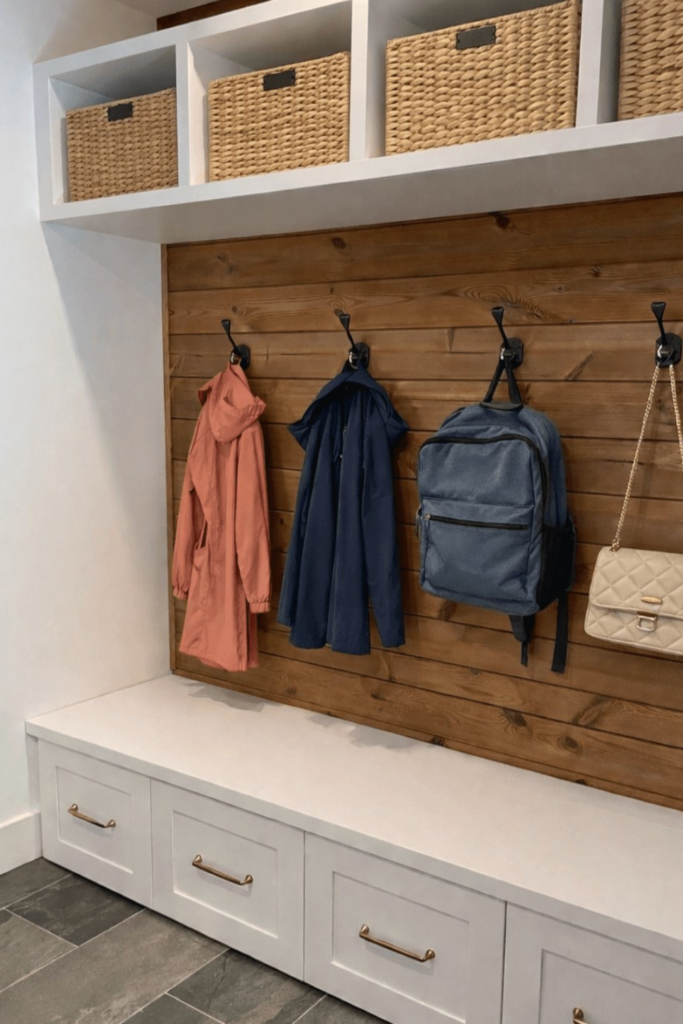
Backpack storage feels intentional when hooks are anchored to a solid backing rather than to plain drywall.
This setup works best in entryways that see daily traffic and heavier bags. Mount hooks onto a wood panel.
Add drawers below for extras. Warm wall tones paired with overhead ambient lighting keep the area grounded.
Pegboard Wall Setup
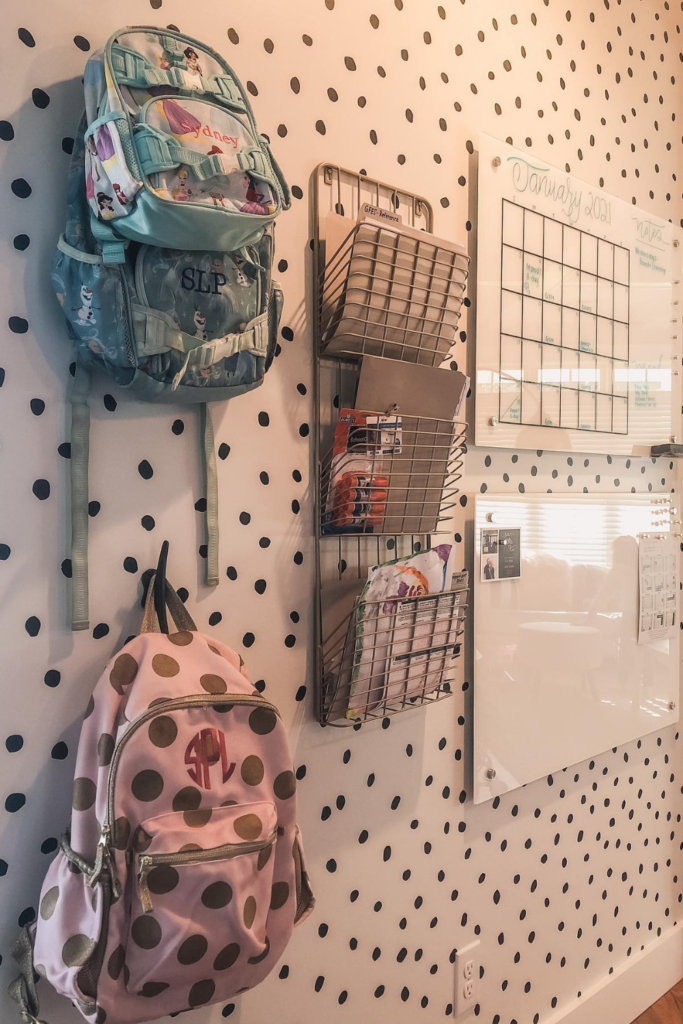
Daily grab-and-go gets easier when backpacks hang alongside school essentials, works best in homework corners.
Mount a pegboard so hooks and baskets can move as needs change. Hang backpacks low and use wire bins for papers.
Bright wall color plus natural window light keep everything visible, while basic overhead lighting fills in after dark.
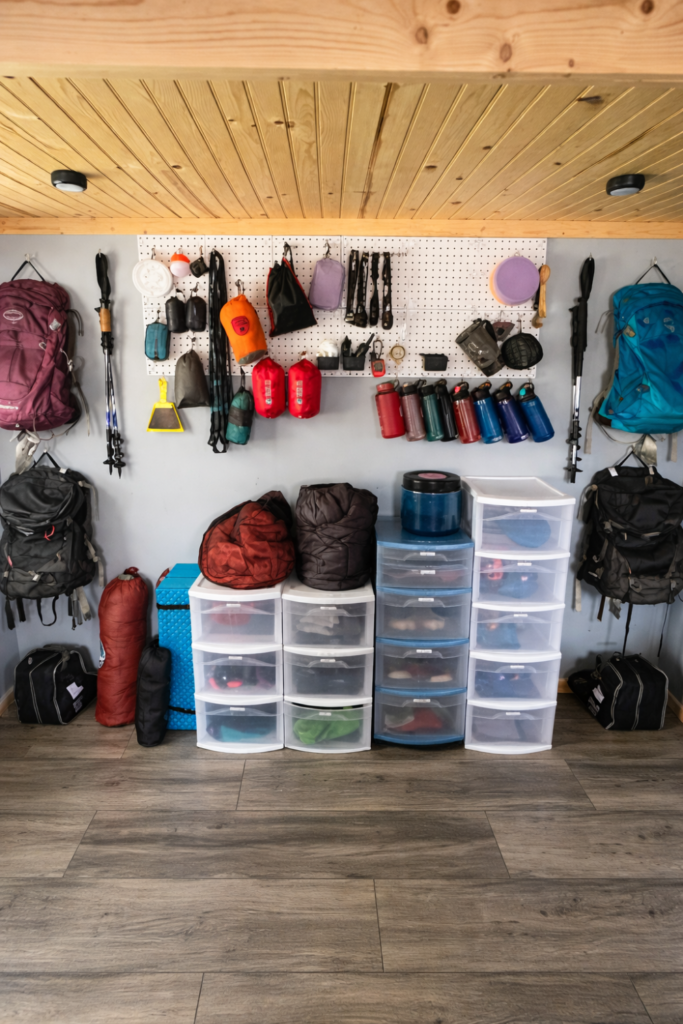
Gear Room Wall
Backpacks stay under control when they’re stored with the rest of the gear rather than floating around the house.
This setup works best in basements, or spare rooms used for outdoor equipment. Hang backpacks on wall hooks or pegboards.
Store related items below in clear drawers. Overhead ceiling lights handle the space, light-colored walls prevents closed in.
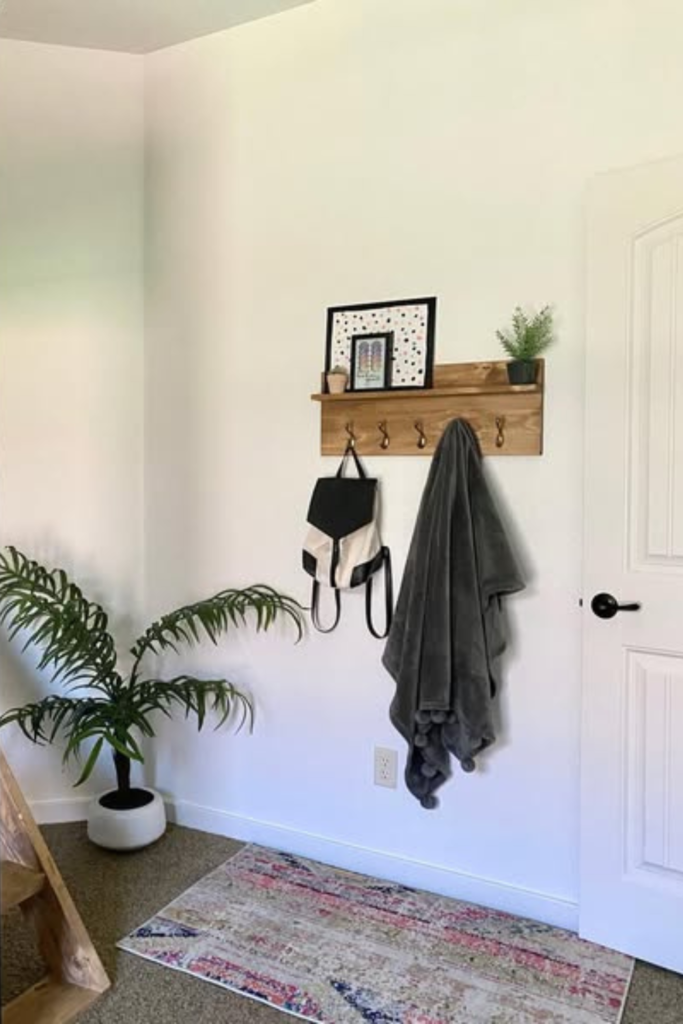
Slim Wall Rail
Tight spaces stay functional when storage stays shallow and intentional. Mount a narrow rail with evenly spaced hooks.
This idea works for bedrooms, stair landings, or apartment entryways. Keep the hook count low to avoid crowding.
Natural light does most of the work here, with soft ceiling light filling in at night without creating harsh shadows.
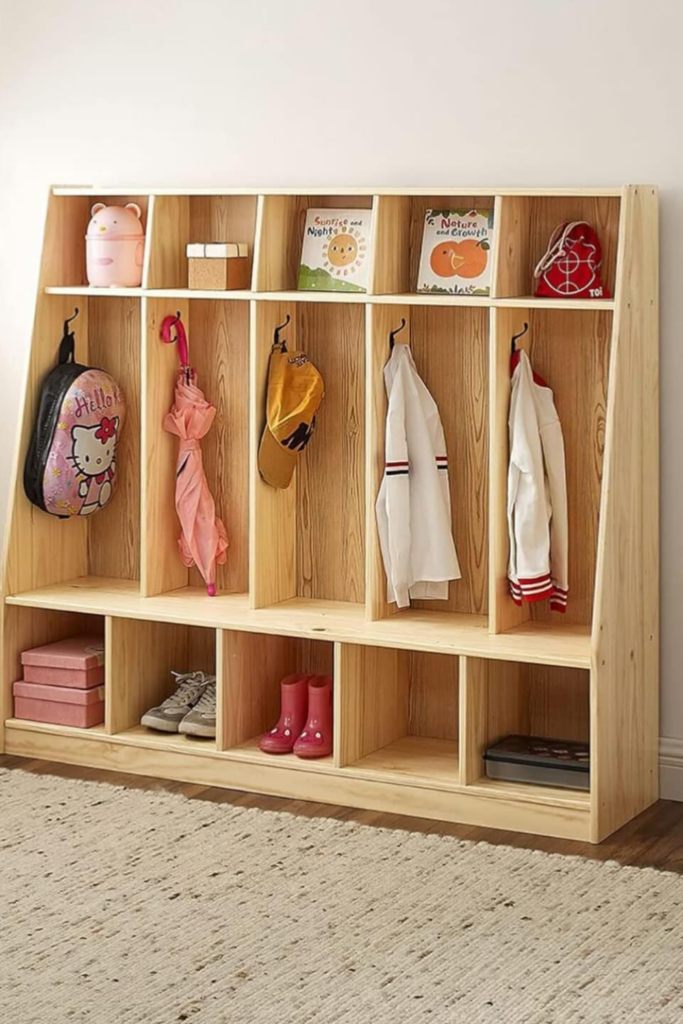
Kids Cubby Station
Morning battles shrink when every child owns a clearly marked space. Build open cubbies sized for backpacks.
Lower hooks make hanging easy. This setup works best in playrooms or near bedroom doors where kids already pass through.
Soft daylight from windows paired with general ceiling light keeps the area bright and kid-friendly all day.
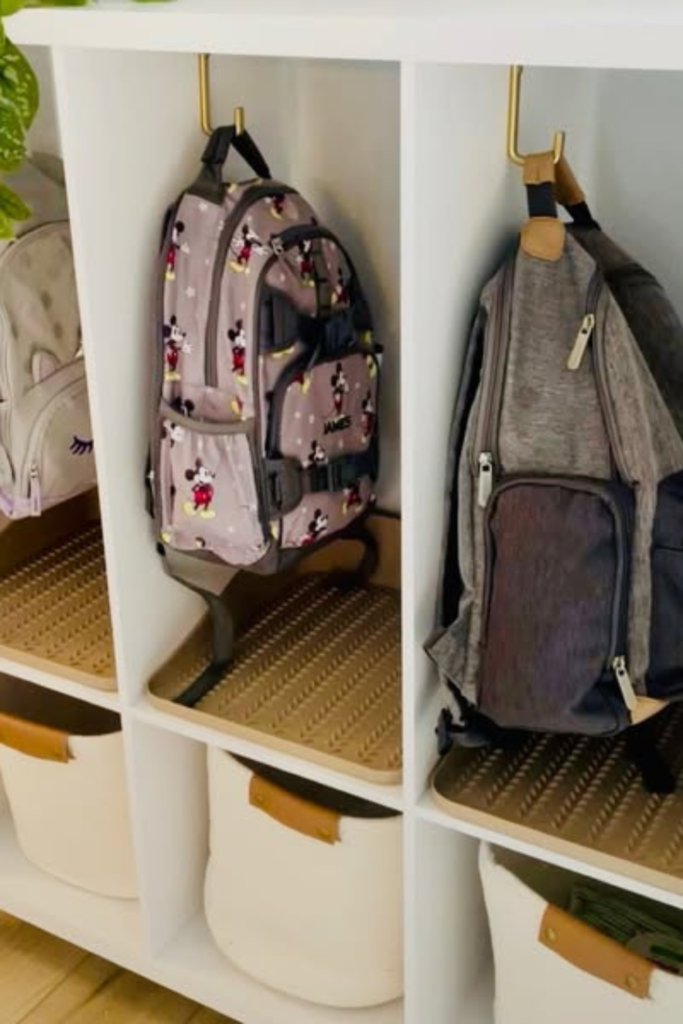
Hanging Cubby Slots
Daily clutter drops when backpacks hang inside cubbies instead of piling up. This setup works best in shared family spaces.
Bags need to be separated but remain visible. Add hooks inside each cubby, backpacks stay upright and don’t slump forward.
Bins below catch smaller items. Bright ambient lighting from the room is enough, since everything stays open and easy to see.
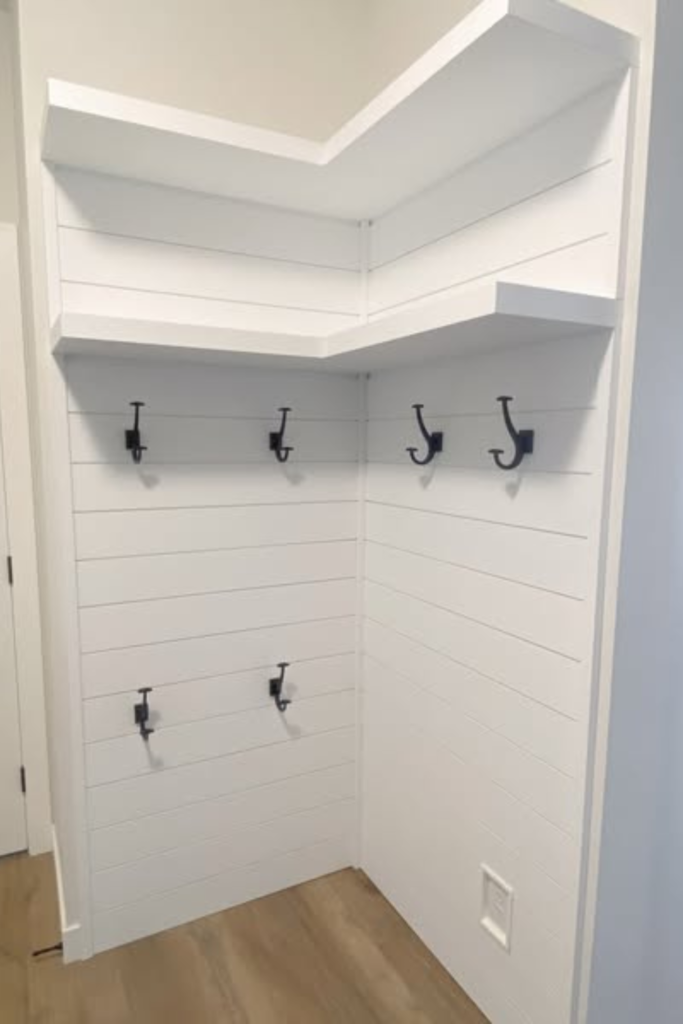
Corner Hook Zone
Awkward corners turn useful when hooks replace bulky furniture, fits best in narrow entryways or unused hall corners.
Install staggered hooks along both walls so backpacks don’t overlap. Upper ledges handle overflow or seasonal items.
Bright ceiling lighting washes the corner evenly, while white walls help reflect light and keep the area feeling open.
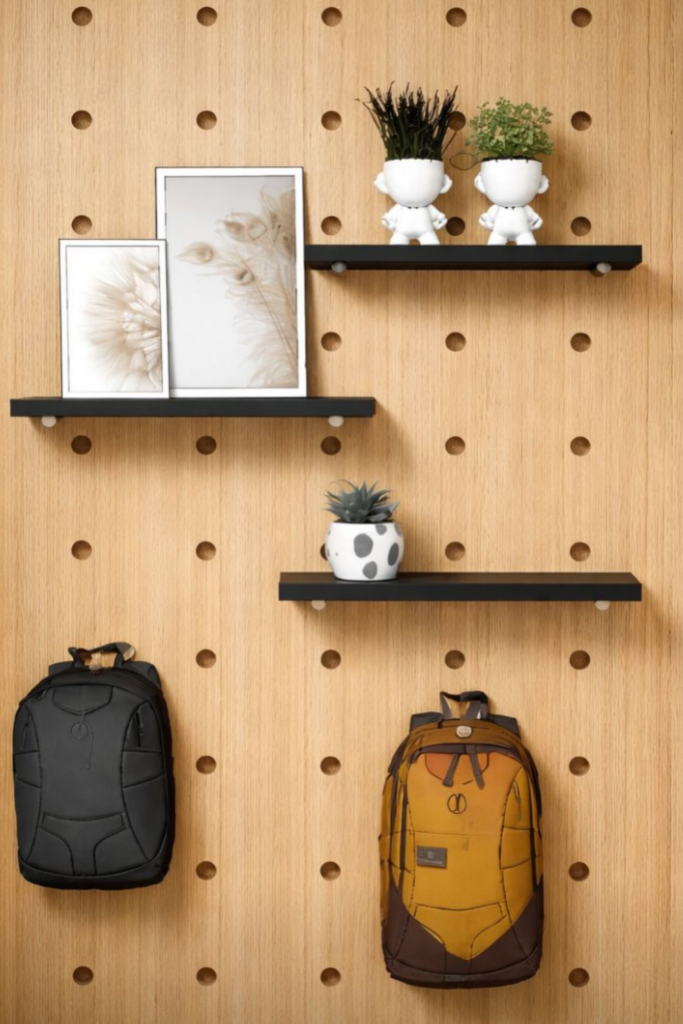
Floating Peg Display
Wall storage feels intentional when backpacks share space with decor, works best in home offices, teen rooms.
Use a pegboard with floating shelves so bags hang cleanly below while shelves handle plants or frames.
Spacing keeps bags from touching. Soft ambient lighting paired with natural light turns storage into part of the room.
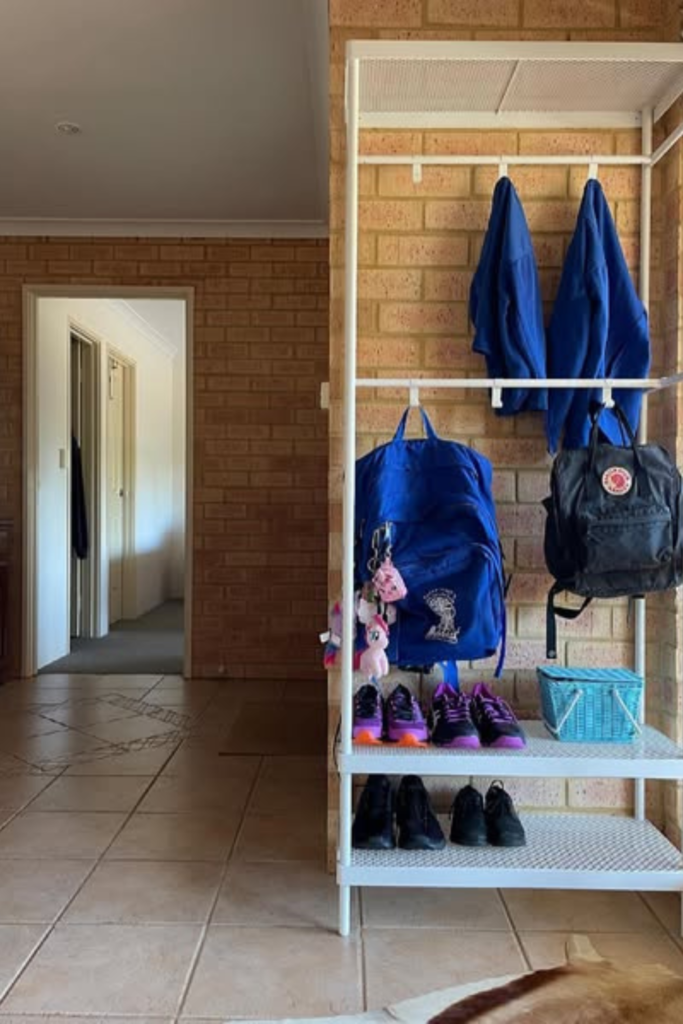
Freestanding Rack Unit
Backpacks behave better when storage doesn’t rely on walls at all. Use a freestanding rack with shelves so bags hang at the top and shoes live below.
Keep spacing generous to avoid tangling straps. Natural daylight provides most of the lighting, with overhead ambient light for evenings.
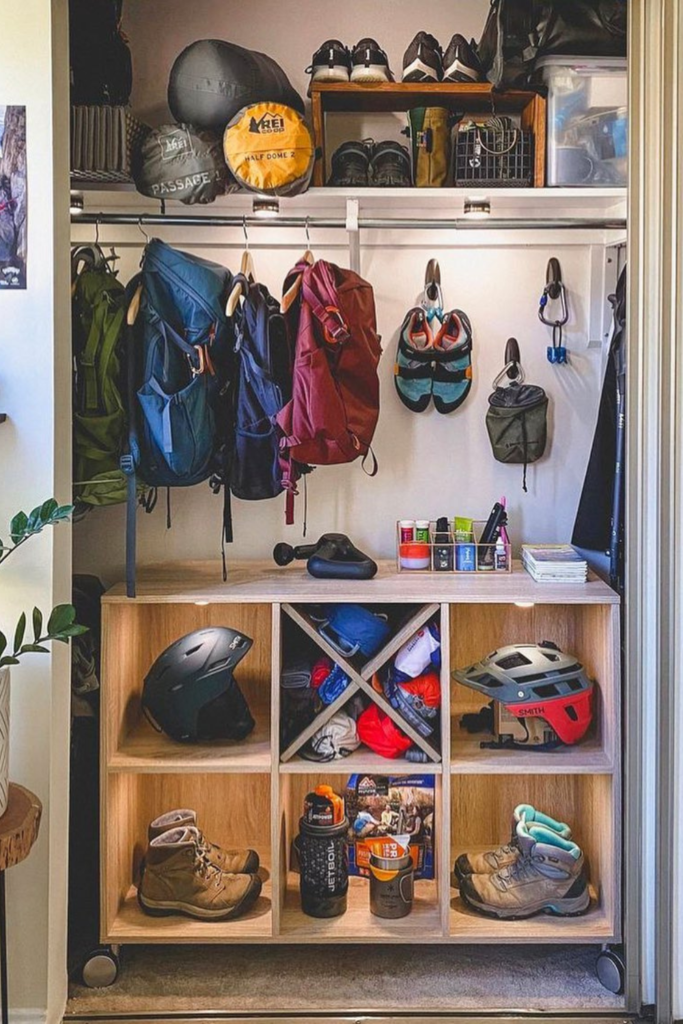
Closet Gear Station
Hidden storage works when backpacks stay visible the moment doors open. Add a hanging rod or rail for backpacks.
Use open cubbies below for helmets, shoes, or gear. Clear zones stop items from piling up, this works well.
Closet ceiling lighting handles visibility, while light wood finishes prevent the space from feeling dark or cramped.
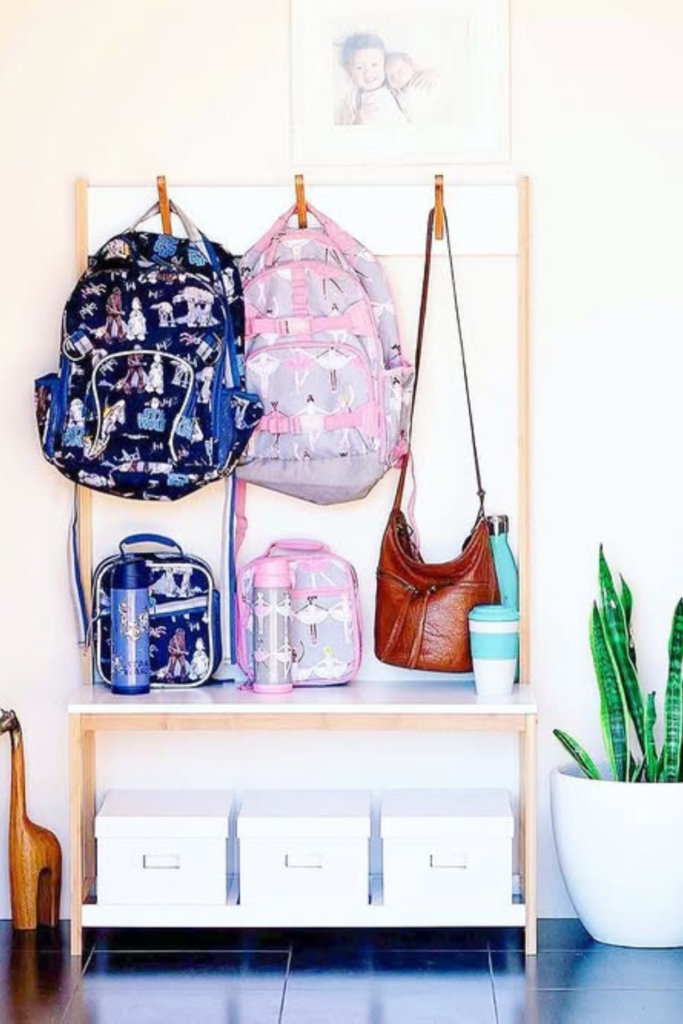
Ladder Style Stand
Backpacks feel organized when storage looks more like furniture than hardware. This idea works well in living areas.
Use a ladder-style stand so backpacks hang at different heights. Add a slim shelf below for lunchboxes or bins.
Natural daylight keeps it light and airy, while general ceiling lighting handles evenings without overpowering the space.
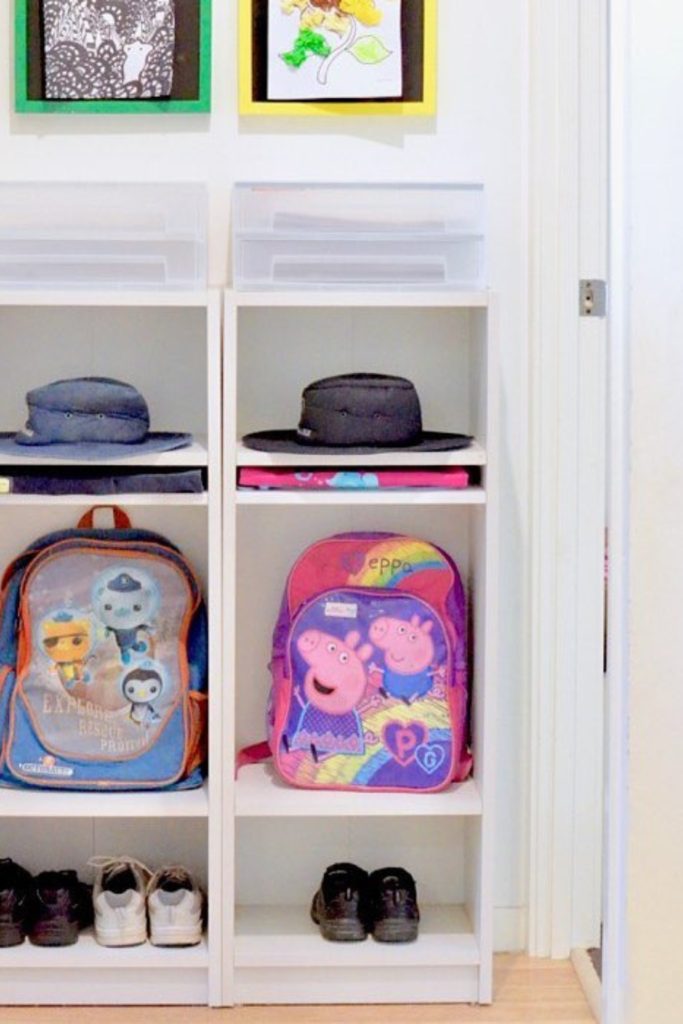
Hallway Cubby Pair
School clutter stays contained when backpacks get vertical storage rather than spreading out sideways.
Use tall, narrow cubbies so backpacks slide in upright. Top bins handle hats or paperwork, while shoes stay below.
Bright overhead lighting keeps the narrow space clear, while white finishes help bounce light rather than absorb it.
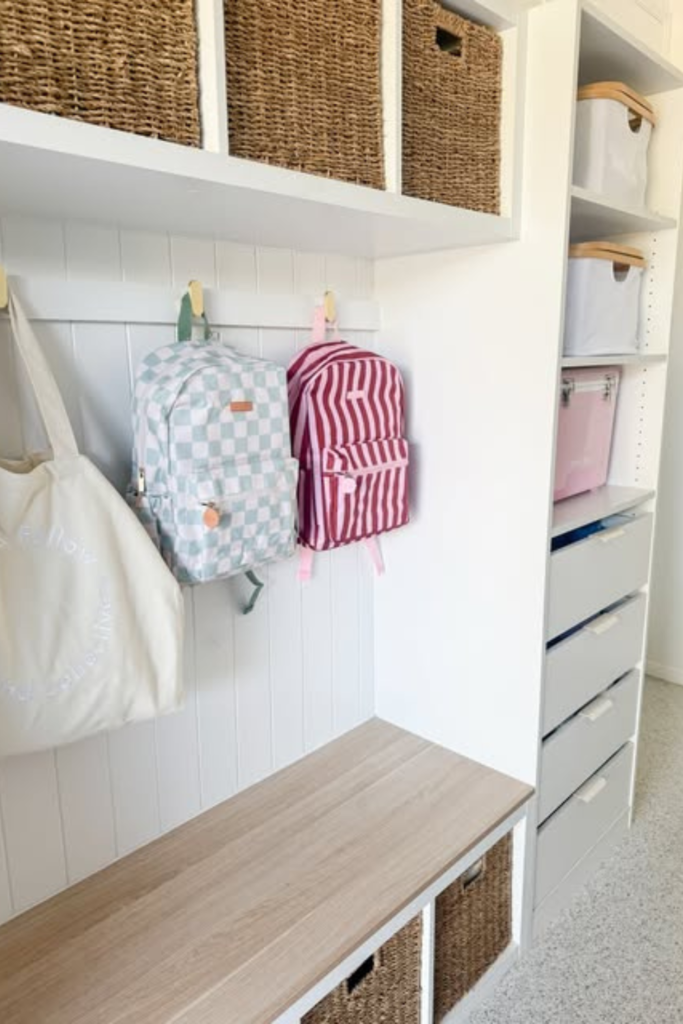
Soft Hook Rail
Backpacks stay neat when storage feels light. Install a simple rail with smooth hooks so bags hang flat and straps don’t snag.
Keep a bench below for quick drop-offs and baskets above for overflow, best in bright entryways where space needed.
Natural daylight does the heavy lifting here, with soft ceiling lighting filling gaps without casting shadows.
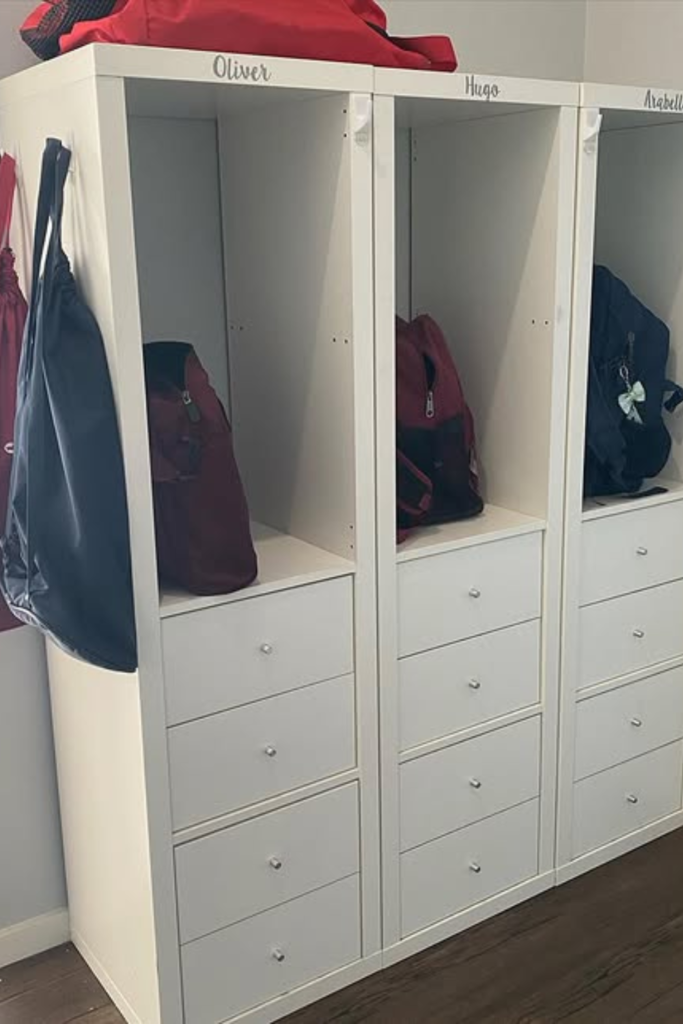
Personal Locker Cubes
Ownership fixes clutter faster than rules ever will, works best for families with multiple kids sharing one entry or hallway.
Give each person a tall cubby with drawers below, backpacks, sports bags, and daily extras never mix. Labels remove guesswork.
Even ceiling lighting covers the area well, while light finishes keep the wall from feeling heavy or crowded.
Compact Peg Rail
Backpacks stop sliding around when storage hugs the wall instead of sticking out. Use a slim peg rail, bags hang evenly.
Keep hooks spaced to prevent strap tangles, works best in narrow entryways or pass-through spaces near kitchens.
Daylight from nearby windows does most of the work, with soft overhead lighting supporting evenings without glare.
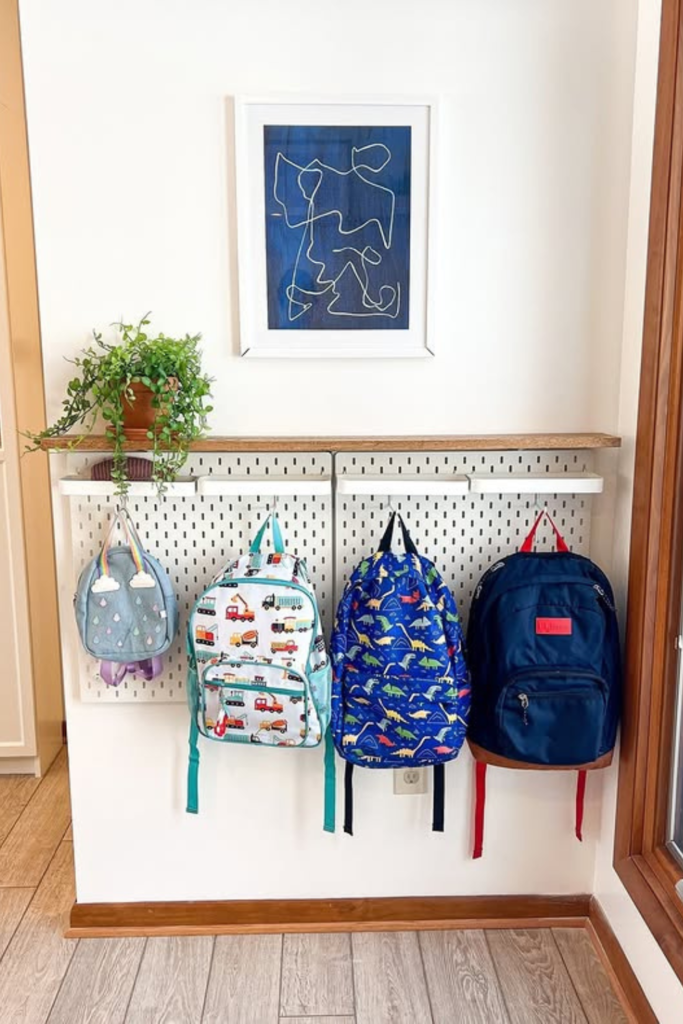
Single Hook Focus
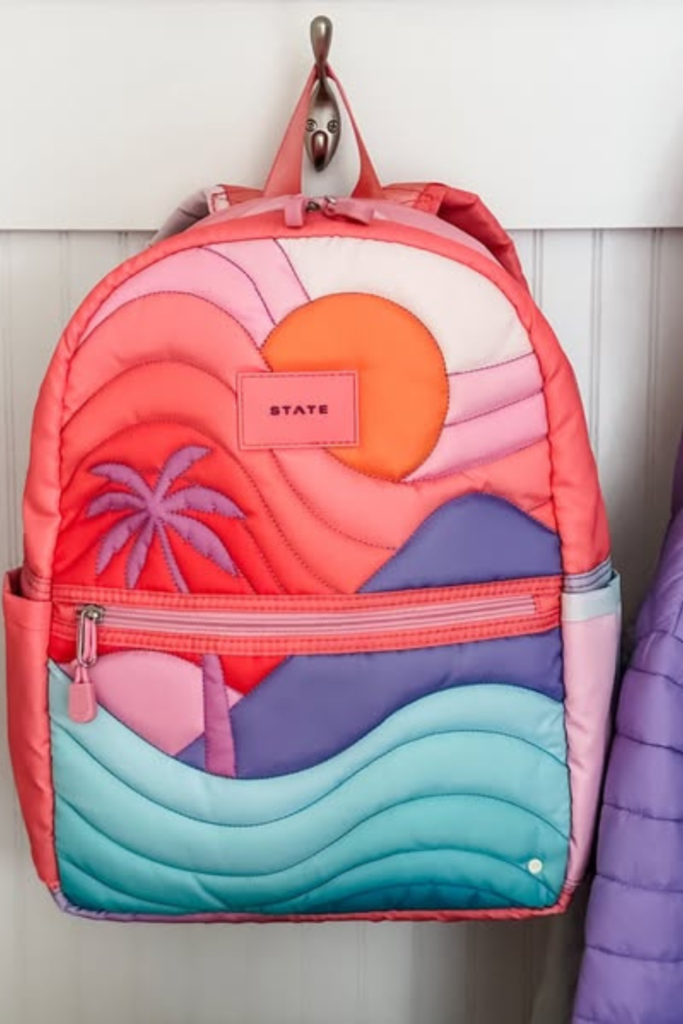
One bag stays in shape when it gets its own hook instead of sharing space. Use a rounded, sturdy hook so straps don’t crease or stretch over time.
Mount it at shoulder height to avoid dragging. Soft ambient room lighting is enough here, since the bag stays visible and easy to grab.
FAQs
How do you keep backpacks clean while in storage?
Backpacks stay cleaner when they are stored dry and empty. Shake out crumbs, wipe the inside, and let the bag air out before putting it away.
Store backpacks off the floor so dust and dirt don’t settle into the fabric. Breathable storage works better, since airflow prevents musty smells from forming over time.
Should backpacks be stored indoors or in a garage?
Indoor storage works better for backpacks you care about long-term. Garages are subject to temperature swings, humidity, and pests.
That can damage fabric and zippers. Indoor spaces keep materials stable and help backpacks hold their shape.
Garage storage only makes sense for rugged gear bags that can handle moisture and dirt without degrading.
You may like to read!

Fasial is the founder of the Fizzy Flare. He has been a passionate blogger since 2021. He ran three different websites in the past few years. Now he is focusing on Fizzy Flare to build an audience and help them organize their life.