20 Nail and Screw Organization Ideas for 2026
This post may contain affiliate links: full affiliate disclosure.
You open a drawer or toolbox looking for one screw, and suddenly, everything is mixed together. Nails, screws, and washers all in one mess.
You know you have the right size somewhere, but finding it wastes time and kills your momentum. Sometimes you even buy new ones.
Because digging through the pile feels worse than spending a few dollars. In this article, you’ll finding what you need takes seconds, not minutes.
In this article, you’ll find 20 Nail and Screw Organizations that work in 2026.
Let’s jump in!
Contents
- 1 How Do You Organize Nails and Screws at Home?
- 1.1 Compartment Tool Box
- 1.2 Drawer Zone Sorting
- 1.3 Deep Drawer Bins
- 1.4 Color-Coded Grid
- 1.5 Pocket Pill Storage
- 1.6 Wall Drawer Cabinet
- 1.7 Custom Drawer Grid
- 1.8 Box Shelf Storage
- 1.9 Cabinet Jar Rack
- 1.10 Bench-Top Organizer
- 1.11 Label-First Drawers
- 1.12 Job site Carry Case
- 1.13 Size-Sorted Inserts
- 1.14 Vertical Slot Rack
- 1.15 Zip Bag Sorting
- 1.16 Open Bin Wall
- 1.17 Stack able Case System
- 1.18 Mixed Fastener Tray
- 1.19 Clear Grid Layout
- 1.20 Adjustable Divider Case
- 2 FAQs
How Do You Organize Nails and Screws at Home?
You organize nails and screws at home by creating a system that makes them easy to see, separate, and put back after use.
If you dump everything into one box, you create confusion. If you break them down by type and size first, you eliminate that problem instantly.
Start by sorting what you already have, then store each group in its own clearly labeled container. Use clear bins or jars so you can spot what you need.
When each screw has a defined place, you stop losing time, stop rebuying duplicates, and projects move faster from start to finish.
Save this article for later! 👇👇

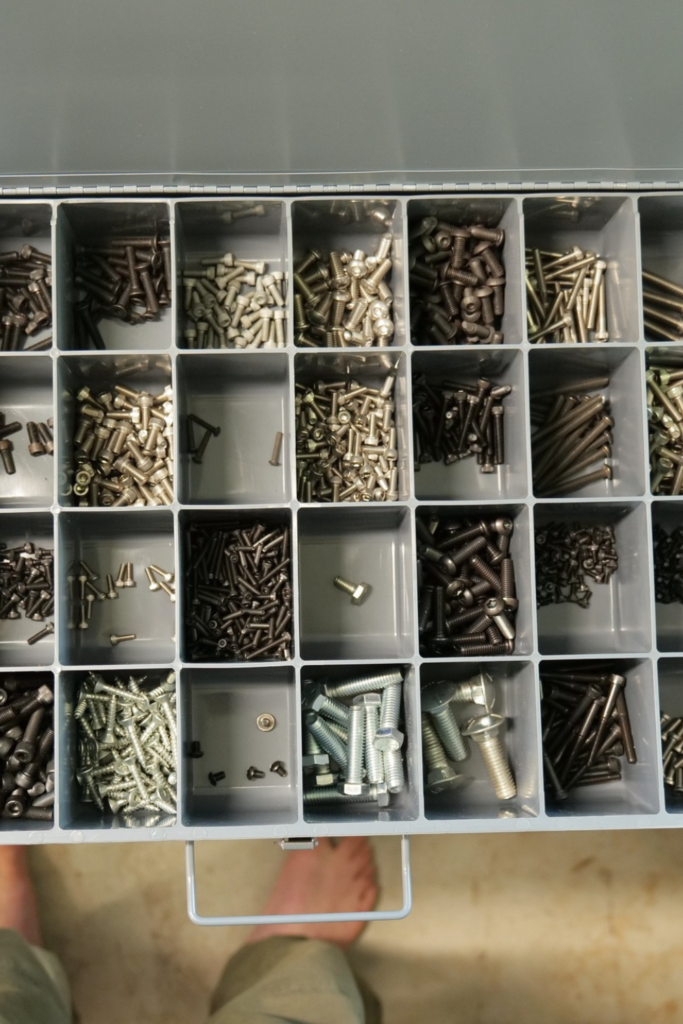
Compartment Tool Box
Opening a box and seeing every screw already separated saves more time, works best for garages, workshops.
Anyone who carries hardware between projects. Use a compartmented organizer with adjustable dividers.
Sort by size and by type. Clear lids add visibility, and tight sections prevent mixing when the box moves or tips.
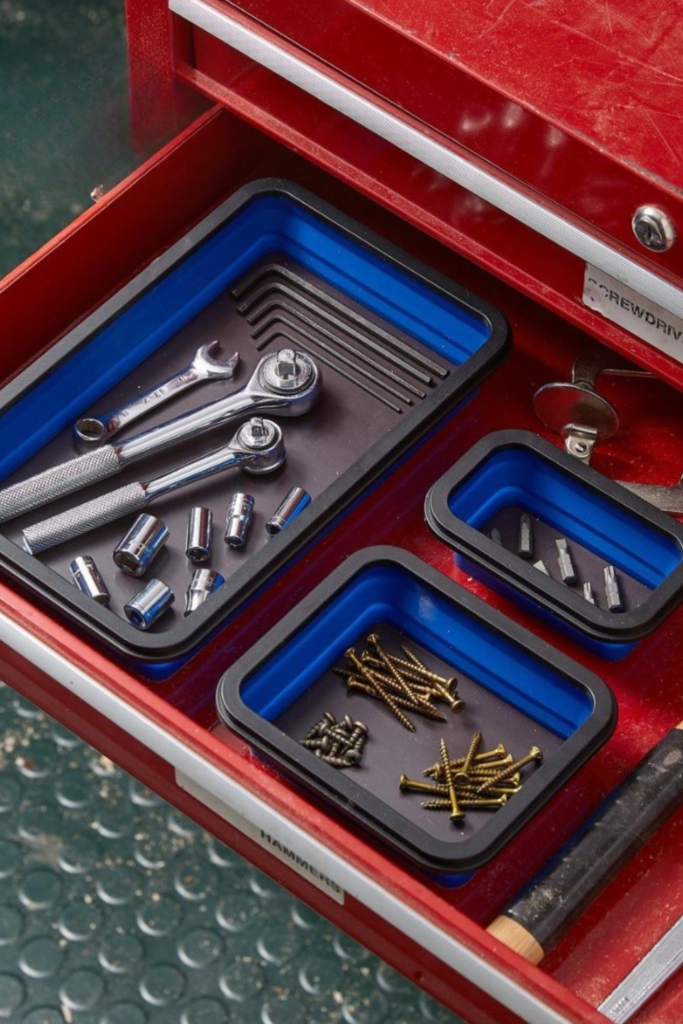
Drawer Zone Sorting
Pulling out a drawer and grabbing the right screw without standing up changes how fast projects move.
Add rubber or silicone trays to stop hardware from sliding, then group screws by task or size, this idea works best.
Keeping small fasteners near the tools that use them cuts back-and-forth trips and keeps everything working together.
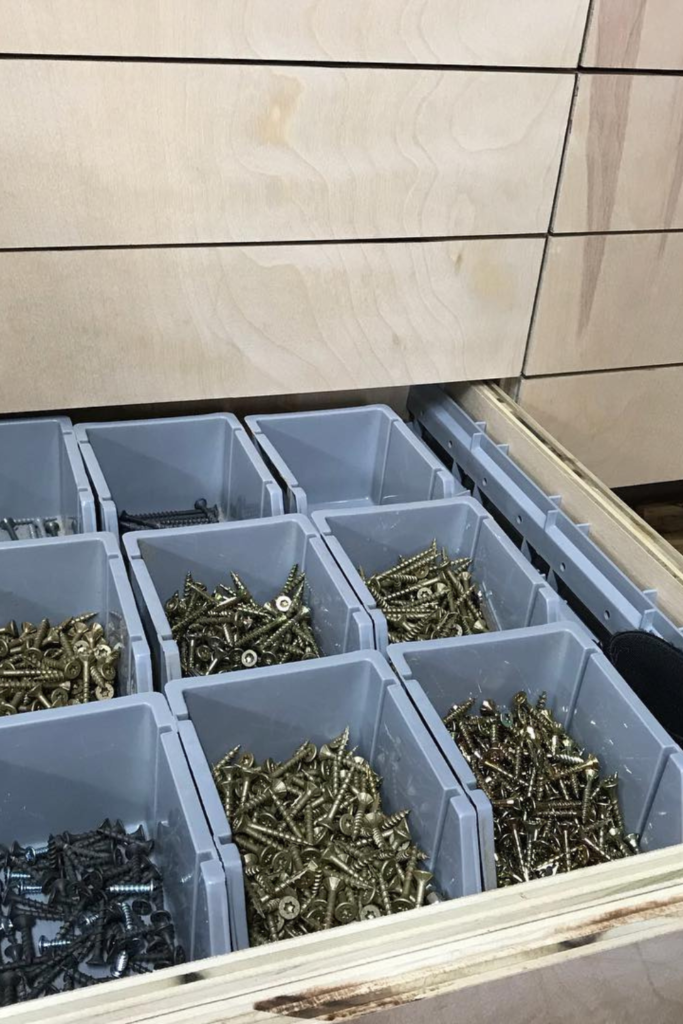
Deep Drawer Bins
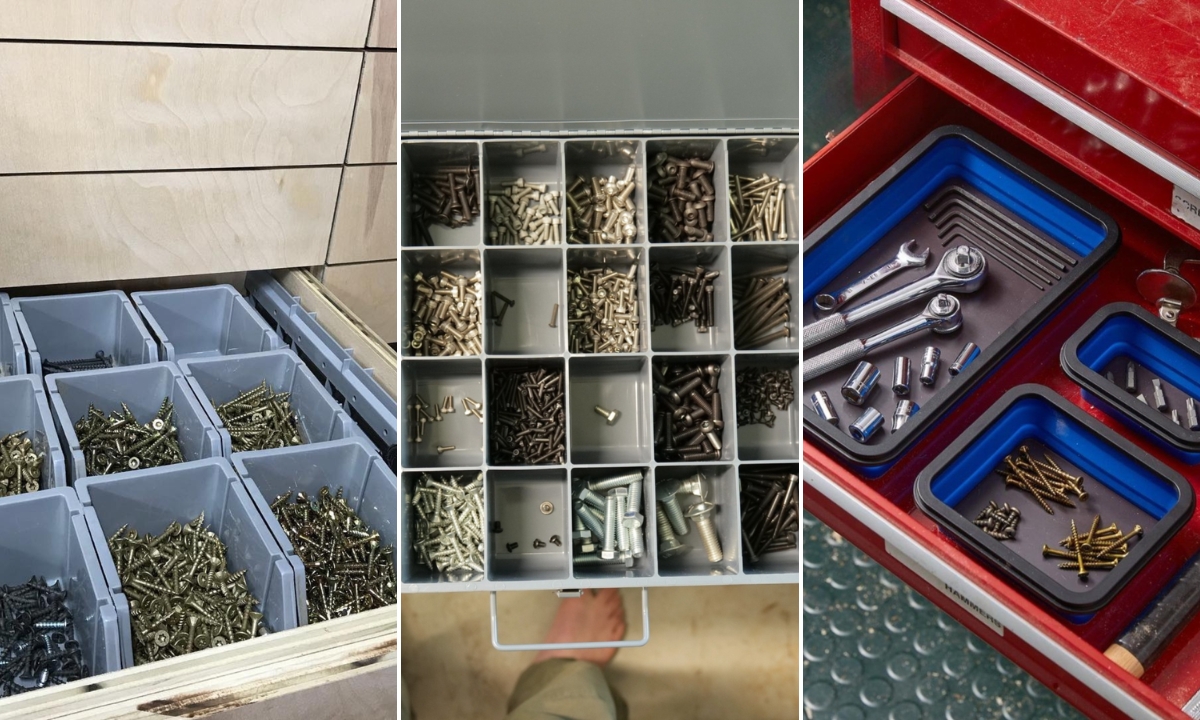
Turning a wide drawer into a hardware station works best in home workshops. Drop modular bins into a full-extension drawer.
Dedicate each bin to one size or type. Soft-close slides keep piles from shifting, and a slim LED strip along the drawer edge.
Improves its visibility without glare. Refilling and returning pieces become automatic once every bin has a clear job.
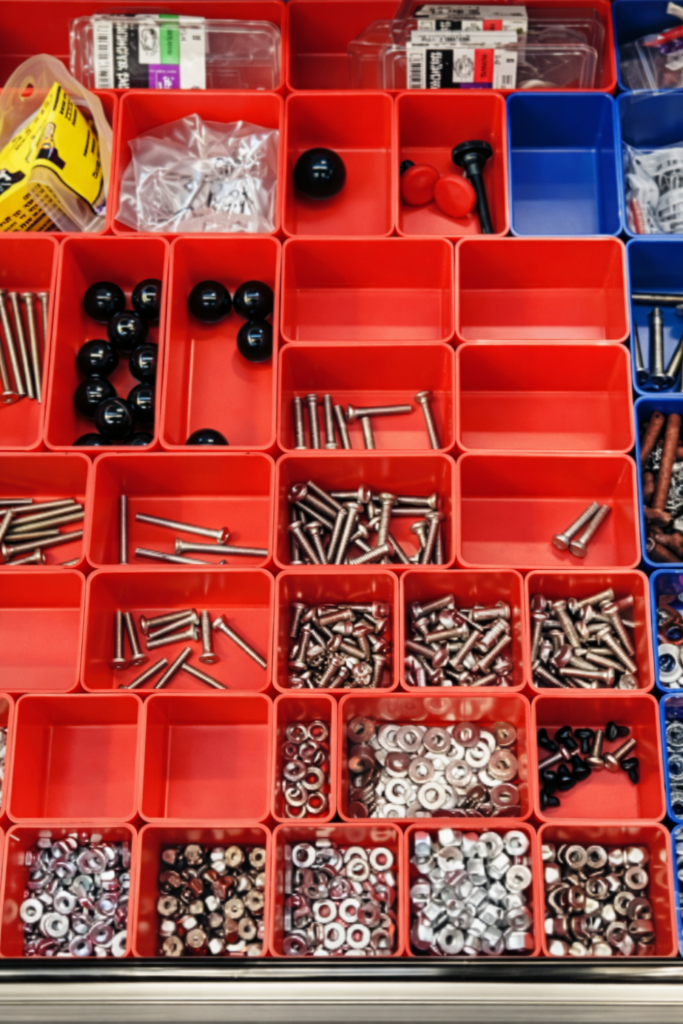
Color-Coded Grid
Color instantly tells your brain where to reach, which speeds things up. Assign one color to screws, another to bolts.
Third to washers or specialty parts, this setup fits best in full-width tool drawers or workshop cabinets.
Use modular grid bins to keep sections tight. Bright task lighting inside the drawer keeps small hardware easy to spot.
Pocket Pill Storage
Small screw sets disappear fast unless they stay sealed and portable. Clean empty pill bottles, drop in one screw size per bottle, label the lid clearly.
Desk lamps or under-shelf LEDs make identifying sizes quick during late-night fixes, this method shines for apartment tool kits.

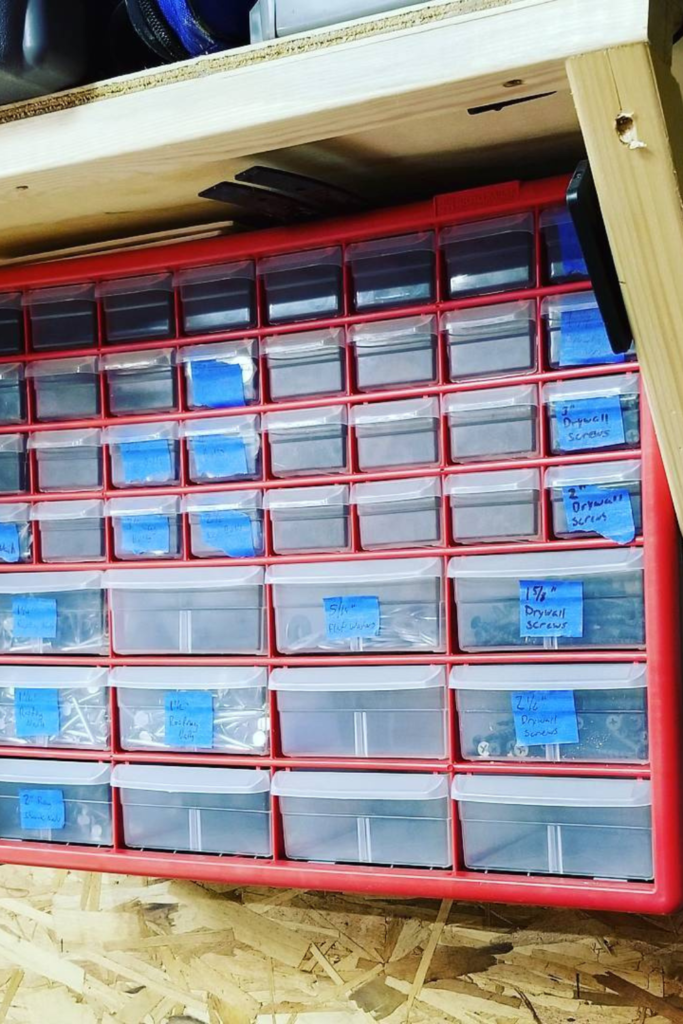
Wall Drawer Cabinet
Wall space solves hardware chaos when drawers and benches stay full. This setup works best in garages or sheds.
Mount a small-parts cabinet at eye level, dedicate each drawer to one size or type. Clear fronts show inventory instantly.
Handwritten labels keep it flexible. Overhead shop lights plus a side task light make tiny screws easy to read and grab.
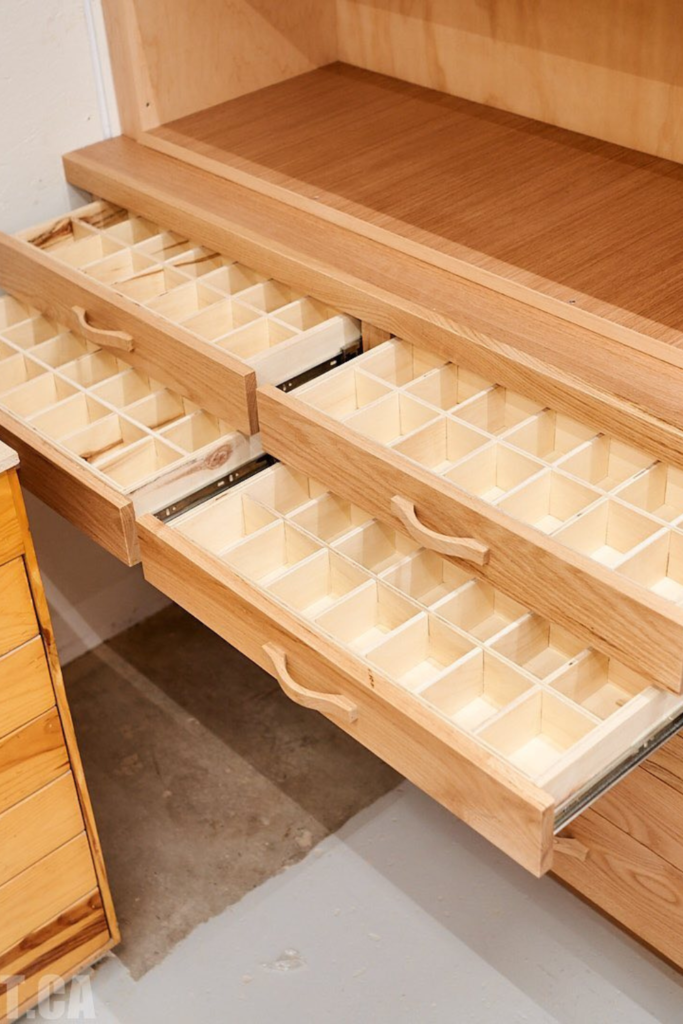
Custom Drawer Grid
Built-in storage turns loose hardware into a permanent system. This approach fits best in dedicated workshops or DIY benches.
Create shallow drawers with wooden dividers sized to your most-used screws and nails. Fixed compartments stop shifting.
Soft, even overhead lighting paired with drawer-mounted L keeps every section visible without harsh shadows.
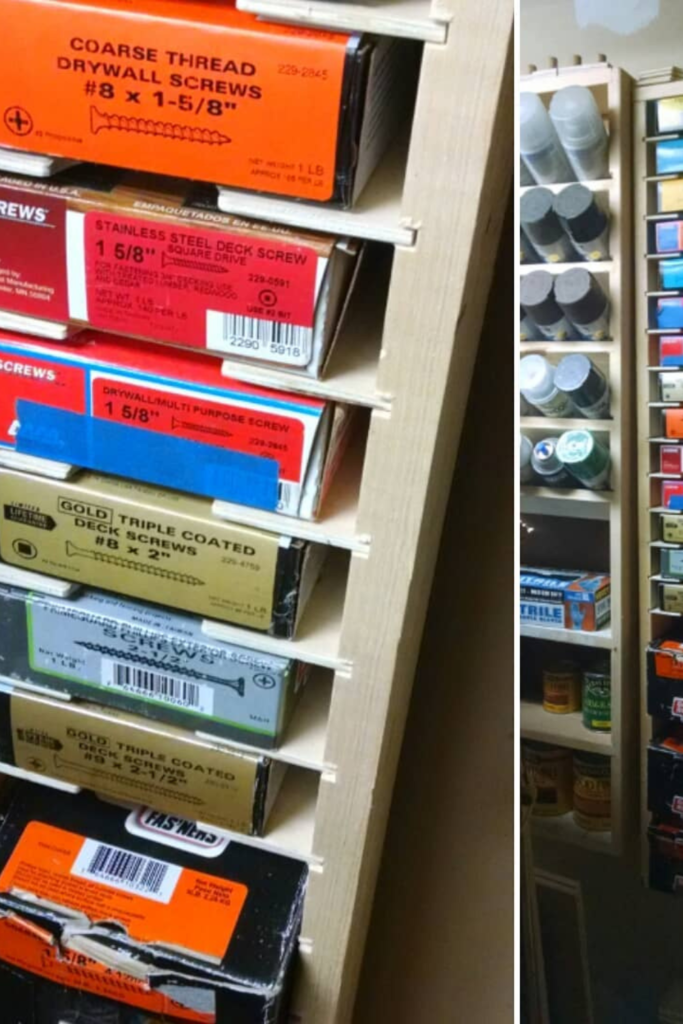
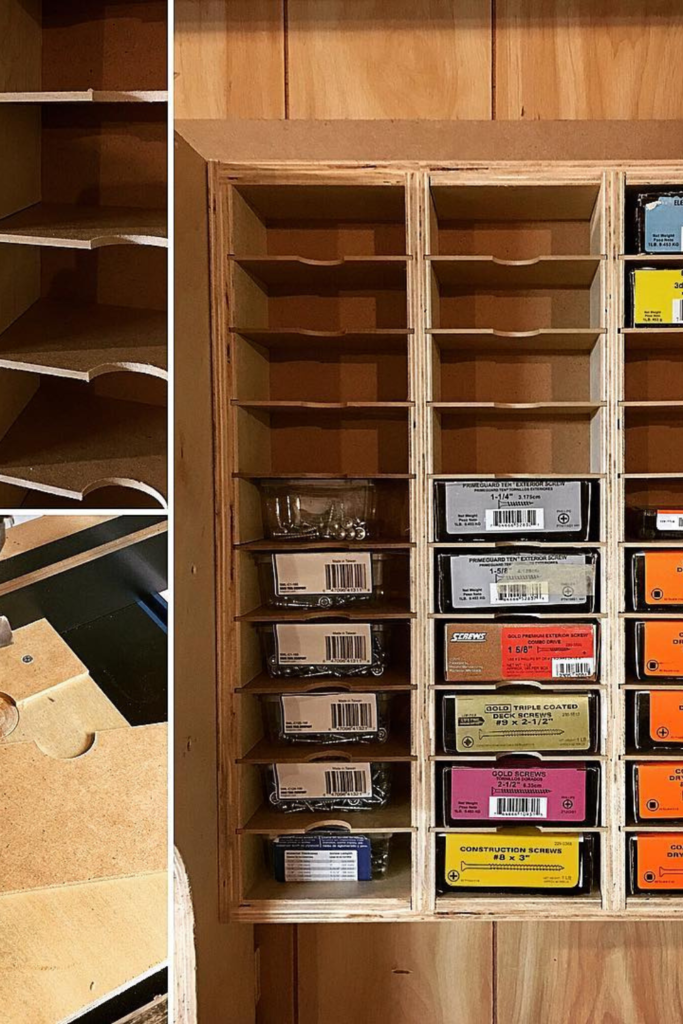
Box Shelf Storage
Factory boxes already tell you size, type, and count. Build slim shelves just deep enough for screw boxes to slide in and out.
Keep labels facing forward for instant reads. Bright overhead lighting or a vertical LED strip helps you scan options fast, this setup works best.
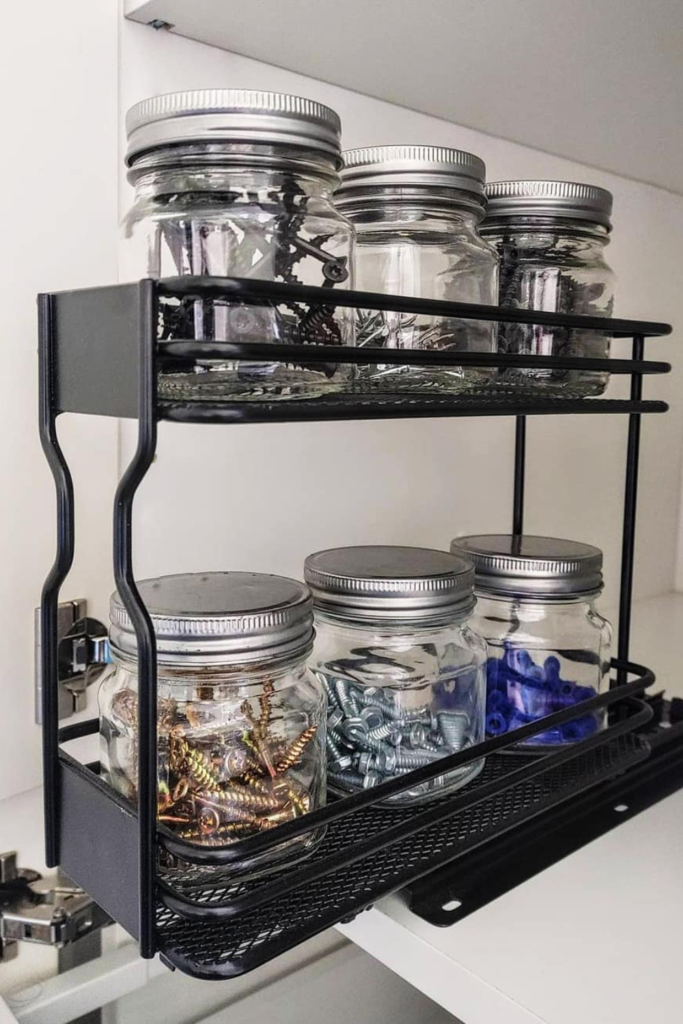
Cabinet Jar Rack
Hidden cabinets become powerful storage when jars stay visible and reachable. Mount a two-tier pull-out rack, use clear jars with metal lids for each screw type.
Vertical spacing keeps sizes separated. Soft cabinet LEDs or under-shelf lighting make identifying hardware quick, even in low-light spaces.
Bench-Top Organizer
Keeping screws within arm’s reach speeds up repetitive work. A clear lid protects everything from dust, works well.
Choose a low-profile organizer with fixed compartments, then arrange screws from shortest to longest.
Overhead shop lighting paired with a focused bench light helps you grab the right size without pausing mid-task.
Label-First Drawers
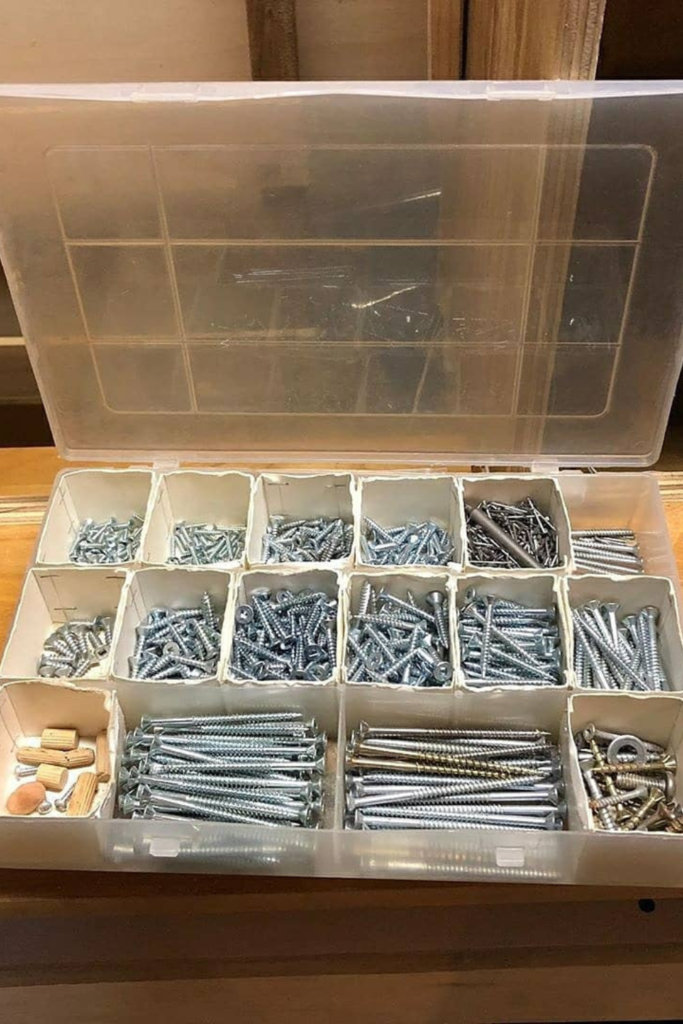
Knowing exactly where every screw lives removes hesitation completely. Use small drawer units with bold, readable labels.
Before filling anything, assign each drawer a single purpose and never overload it, works best on desks, or shelves.
Soft ambient room lighting combined with a focused desk lamp keeps labels readable without harsh glare.
Job site Carry Case
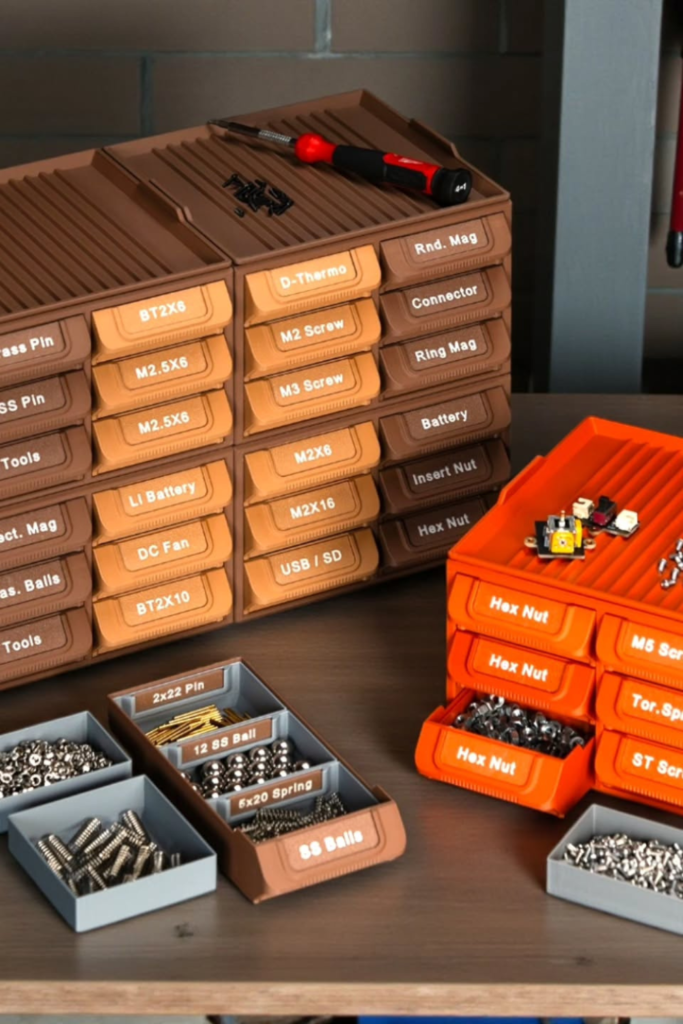
Moving between projects demands hardware that travels, works best for contractors, garage builds, or weekend projects.
Use a rugged case with deep compartments and locking lids to prevent mixing during transport. Sort screws by siz.
Bright ambient light and daylight from open spaces make identifying lengths quick, even on busy worksites.
Size-Sorted Inserts
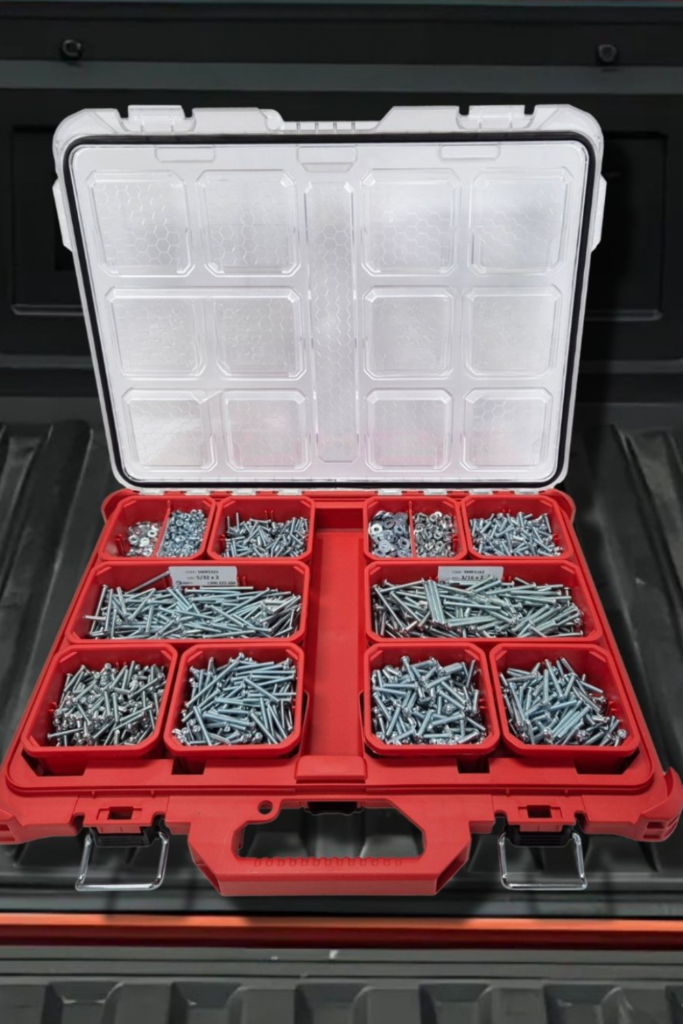
Grabbing the right length becomes automatic once sizes stay locked in place. Use modular inserts sized to your hardware range.
Label each pocket clearly by diameter and length. This setup fits best inside wide custom cabinets where precision matters.
Group finishes separately to avoid mix-ups. Even overhead lighting paired with drawer-edge LEDs keeps markings readable at a glance.
Vertical Slot Rack
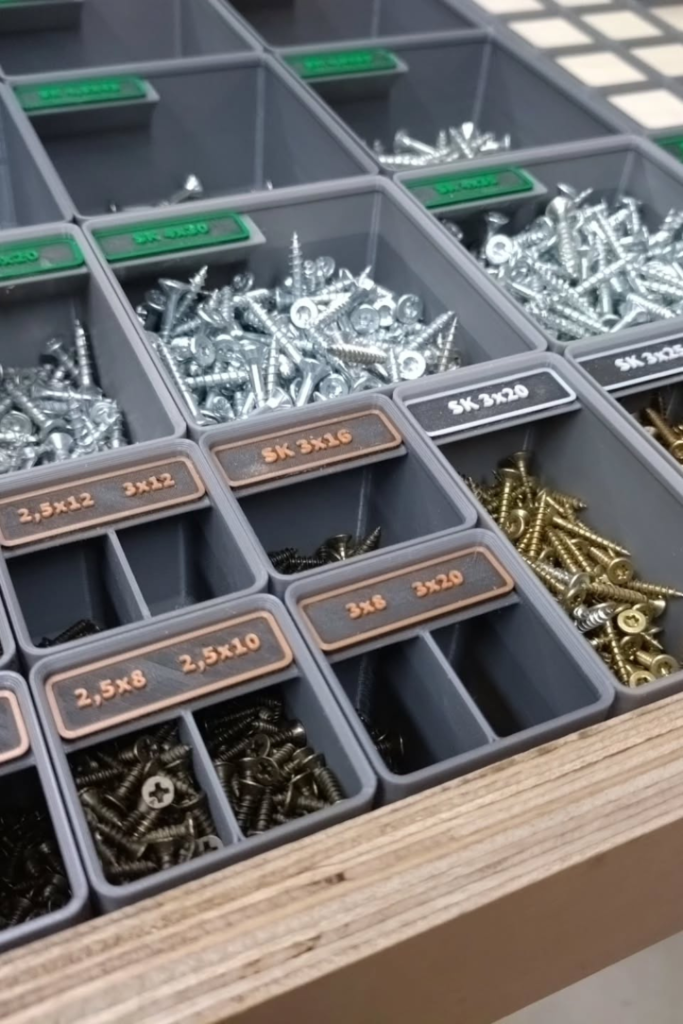
Floor-to-ceiling storage keeps bulk hardware visible without cluttering the workspace, works best in garages or sheds .
Build a narrow plywood rack with evenly spaced slots sized to the box height. Slide boxes in label-first so sizes read instantly.
Strong overhead lighting or a wall-mounted strip light helps scan options fast without pulling anything out.
Zip Bag Sorting
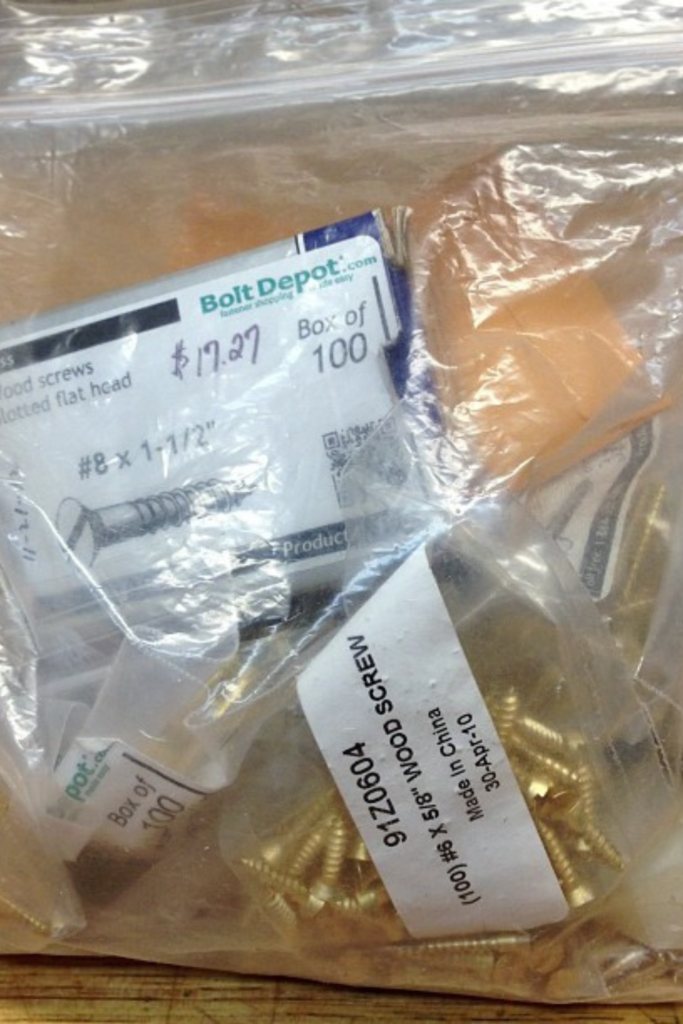
Fast sorting matters when storage needs to stay flexible. Use heavy-duty zip bags and keep original labels inside so size details never get lost.
Group bags by project or screw type, then store them upright in a bin. Overhead room lighting is enough since labels stay readable through clear plastic.
Open Bin Wall
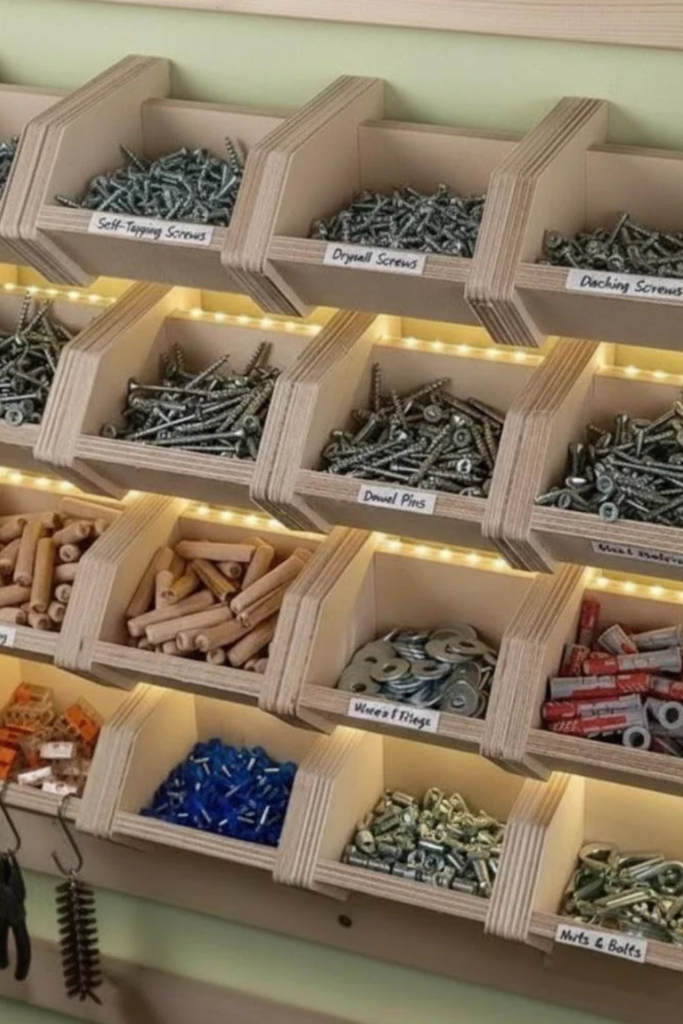
Seeing every fastener at once eliminates guesswork. This setup works best above workbenches or in workshops.
Build angled wooden bins so screws slide forward naturally. Label each pocket clearly and leave space to grab with one hand.
Warm LED strip lighting under each row keeps shadows to a minimum and makes small hardware easy to spot instantly.
Stack able Case System
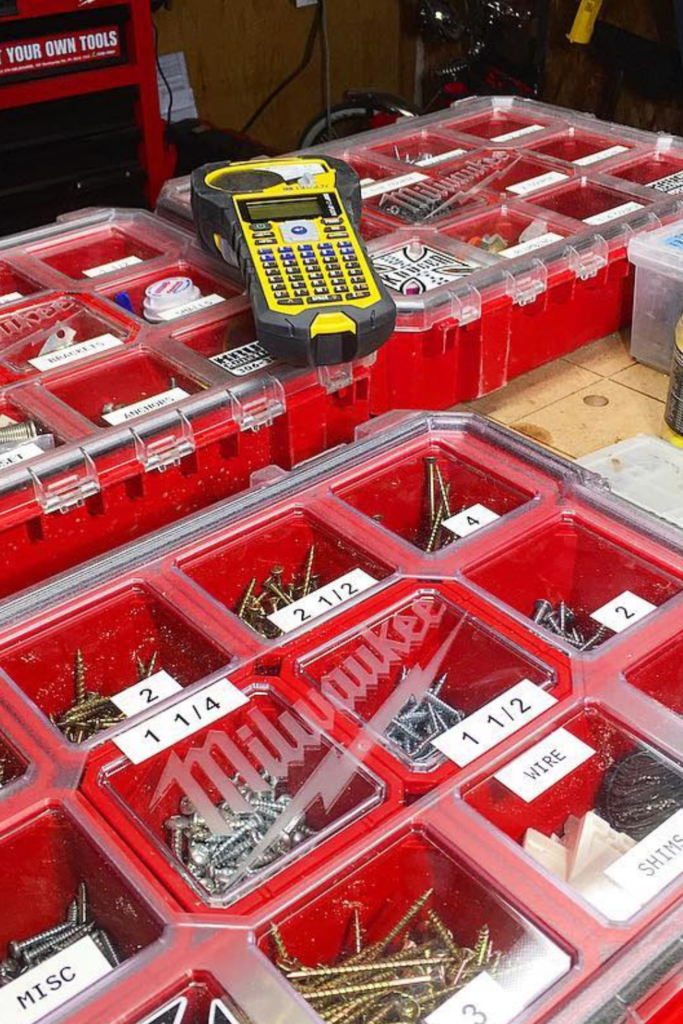
Growing collections need storage that expands without breaking order. This setup works best on benches or shelves.
Choose cases with identical footprints so labels line up when stacked. Sort screws by length in the most-used case.
Overflow to secondary cases. Bright overhead shop lighting keeps contents visible through clear lids during quick grabs.
Mixed Fastener Tray
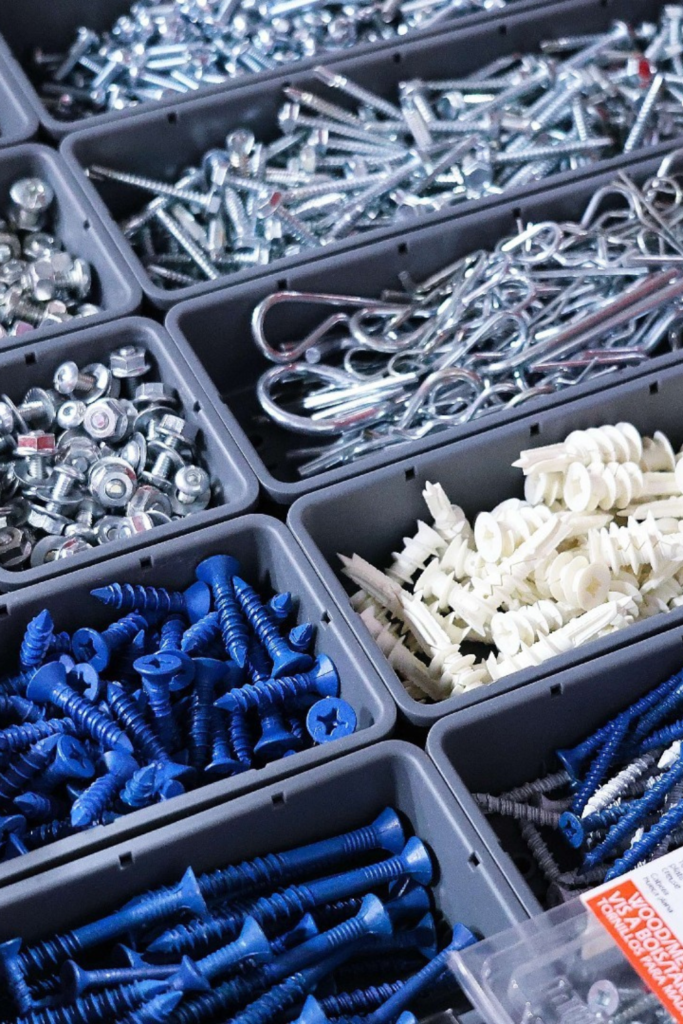
Projects run more smoothly when related hardware lives together. Shallow trays prevent stacking that hides pieces underneath.
Group anchors, hooks, bolts, and specialty screws in adjacent compartments so nothing feels scattered.
Neutral overhead lighting with a slight side angle reduces glare and makes different finishes easy to tell apart quickly.
Clear Grid Layout
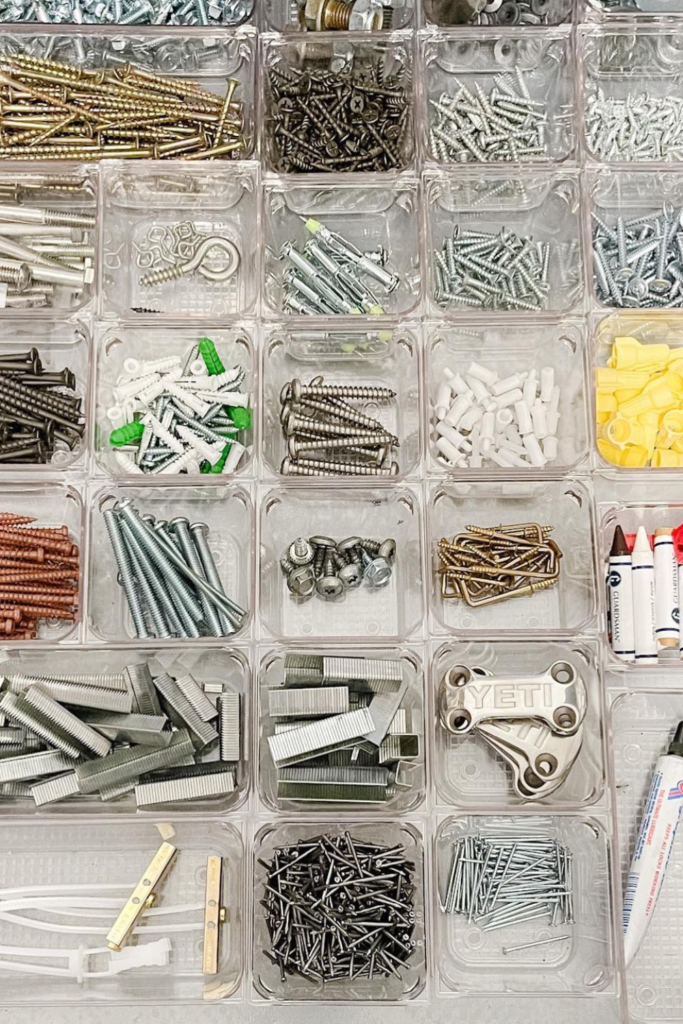
Instant visibility removes second-guessing completely. This setup works best in drawers or shallow cabinets.
Hardware needs to stay visible at all times. Use clear square containers and line them up tightly so nothing shifts.
Separate by type, or by size. Even diffused overhead lighting prevents glare on plastic and makes small details easy to spot.
Adjustable Divider Case
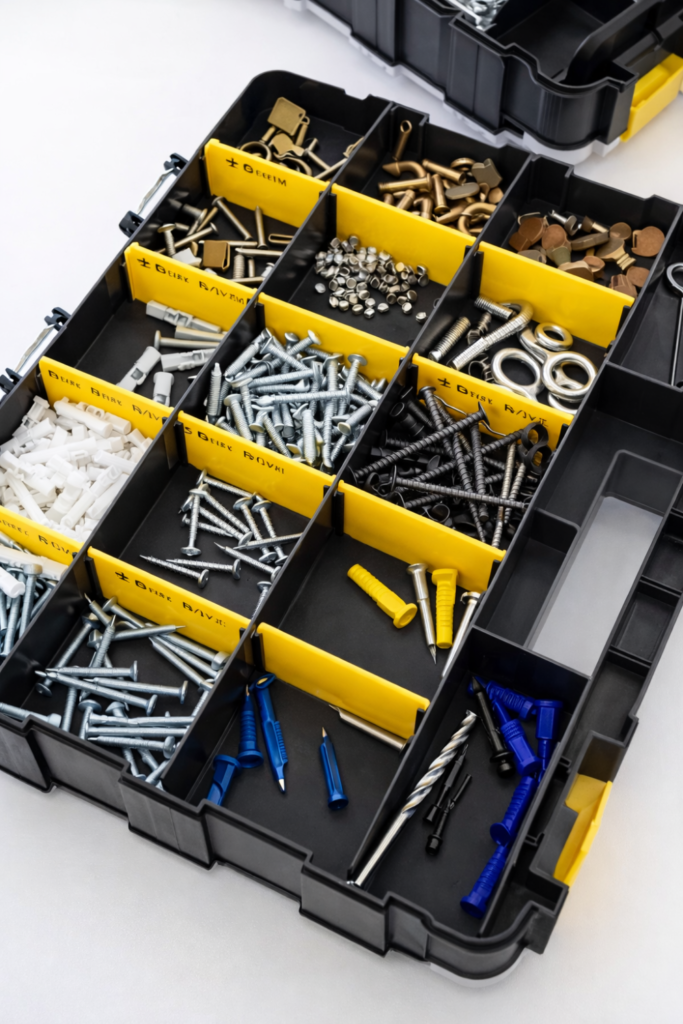
Flexibility matters when your screw collection keeps changing, works best for home tool kits or light job site use.
Choose a case with movable dividers. Keep frequently used screws in larger slots and rare ones in smaller ones.
Clear lids and neutral overhead lighting make quick sorting easy without opening every compartment.
FAQs
How many screws should you keep at home?
Keep what you actually use, not what looks impressive. For most homes, a small range of common wood screws, drywall screws, and wall anchors covers everyday repairs.
If certain projects come up often, stock extra in those sizes. Anything rarely used belongs in labeled overflow storage so it doesn’t crowd daily-use hardware.
Should nails and screws be stored together?
Storing them together only works if they stay clearly separated. Mixing nails and screws in the same container creates confusion and slows you down.
Use separate compartments or containers so each fastener type stays easy to identify. Clear labeling matters more than the storage style itself.
You may like to read!
- 26 Dresser Organization Ideas
- 24 Family Organization Wall
- 22 Junk Drawer Organization
- 26 Snack Organization Ideas
- 23 Tea Organization Ideas

Fasial is the founder of the Fizzy Flare. He has been a passionate blogger since 2021. He ran three different websites in the past few years. Now he is focusing on Fizzy Flare to build an audience and help them organize their life.