21 DIY Mirror Frame Ideas for 2026
This post may contain affiliate links: full affiliate disclosure.
If you’re here, it’s likely that you’re looking at a simple mirror that gives your room an unfinished appearance. It’s most likely adhered to the wall.
You want it to appear assembled and framed, but you don’t want to break the glass, damage the wall, or make a DIY mistake you’ll later regret.
This precisely resolves the issue. You don’t have to be an expert or take out the mirror. You can create a neat, sturdy, and purposeful DIY mirror frame if you follow the correct instructions.
In this article, you’ll explore 21 Diy Mirror Frame ideas that work in 2026.
Contents
- 1 How do you make a homemade mirror frame?
- 1.1 Coastal Shell Frame
- 1.2 Rustic Cross Frame
- 1.3 Clean Wood Edge
- 1.4 Floral Accent Frame
- 1.5 Color Pop Rings
- 1.6 Grid Metal Look
- 1.7 Ornate Gold Trim
- 1.8 Floral Vine Edge
- 1.9 Bold Black Frame
- 1.10 Mosaic Tile Frame
- 1.11 Double Line Trim
- 1.12 Soft Painted Frame
- 1.13 Vanity Floral Glow
- 1.14 Sculpted Wave Frame
- 1.15 Classic Wood Build
- 1.16 Rope Wrapped Edge
- 1.17 Leather Strap Detail
- 1.18 Thin Brass Border
- 1.19 Washi Tape Frame
- 1.20 Tile Edge Border
- 1.21 Painted Arch Accent
- 2 FAQs
How do you make a homemade mirror frame?
Instead of replacing the mirror, you build a frame that sits on top of it to create a DIY mirror frame. Ensure that there are no gaps in the frame; first, measure the mirror precisely.
You select a material that complements the mirror’s location, such as lightweight trim for fast installations or sealed wood for bathrooms.
You construct and complete the frame after cutting the parts, then attach it. This sequence is important. Errors appear right away if you attach raw or uneven parts first.
The frame appears deliberate rather than do-it-yourself when you take the time to prepare, paint, and dry everything before installation.
Save this article for later! 👇👇
Coastal Shell Frame
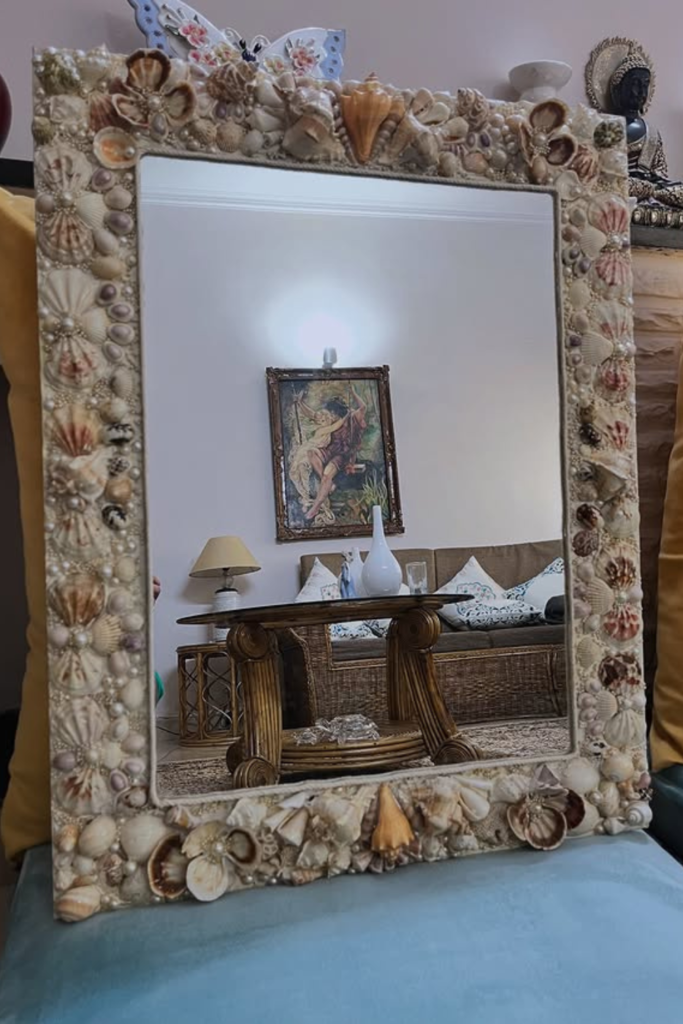
You want a mirror that feels collected rather than store-bought, ideal for beach homes and guest bathrooms.
Using sturdy craft adhesive, adhere actual shells to a simple wooden frame to avoid a flat appearance.
Make the texture cast shadows rather than feel crowded, and keep the wall lighting warm, cozy, and gentle.
Rustic Cross Frame
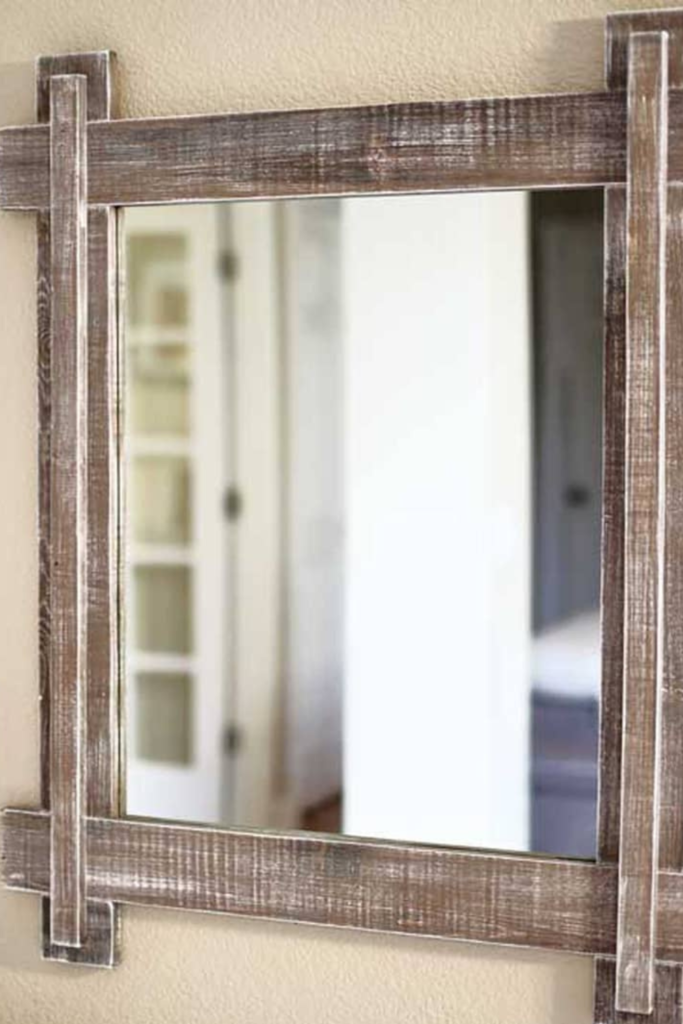
You want the mirror to feel substantial and purposeful, which works best in corridors and farmhouse-style bathrooms.
Replicate by placing flat wood planks on top of a basic inner frame, allowing the ends to protrude past the corners.
Lightly stain the wood to preserve the grain’s visibility, enhance the texture, and use soft lighting nearby.
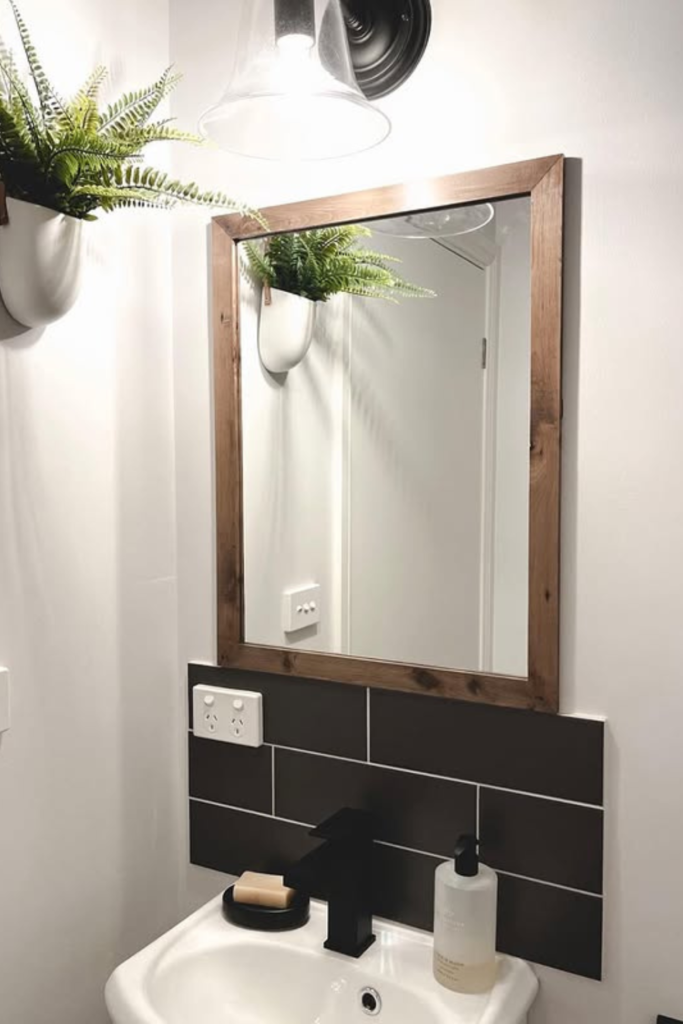
Clean Wood Edge
Make the frame seem crisp rather than heavy, use straight, thin wood boards, and tighten the corners.
Don’t overdo the finish; a basic stain will enough, keep the mirror bright, pair it with a single ceiling sconce or wall light.
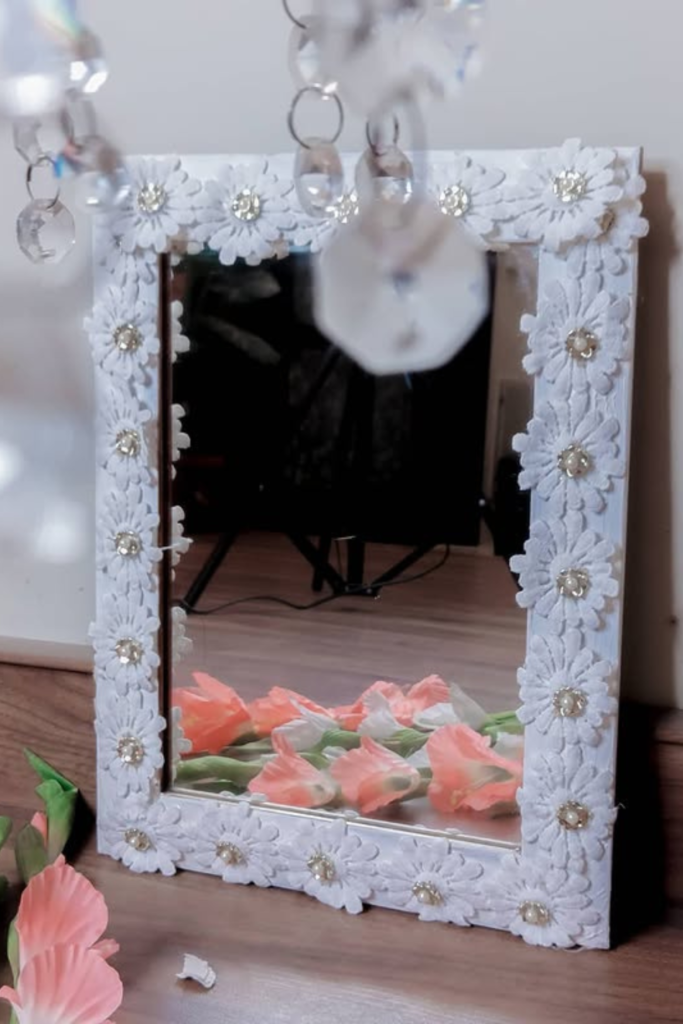
Floral Accent Frame
This concept works best in dressing rooms, vanity corners, and bedrooms if you want the mirror to feel ornamental.
Begin with a basic frame and then equally apply flower appliqués, bring everything together, paint it all the same color.
Soft ambient lighting or a nearby chandelier is ideal since it draws attention to the elevated elements.
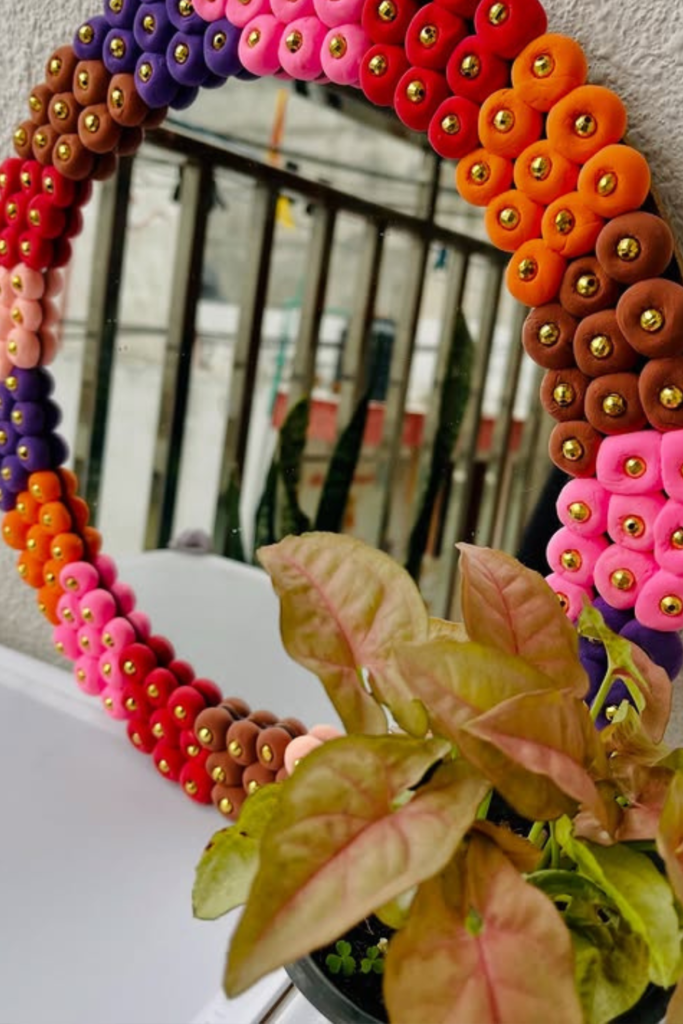
Color Pop Rings
This type of mirror is ideal for entryways, children’s rooms, or creative nooks if your area seems flat or dull.
Make the colors seem deliberate and especial, a basic spherical base, and add tiny, identical parts in tight rows.
Maintain neutral lighting around the wall, with colors that remain clear and do not clash; simple daylight lamps work best.
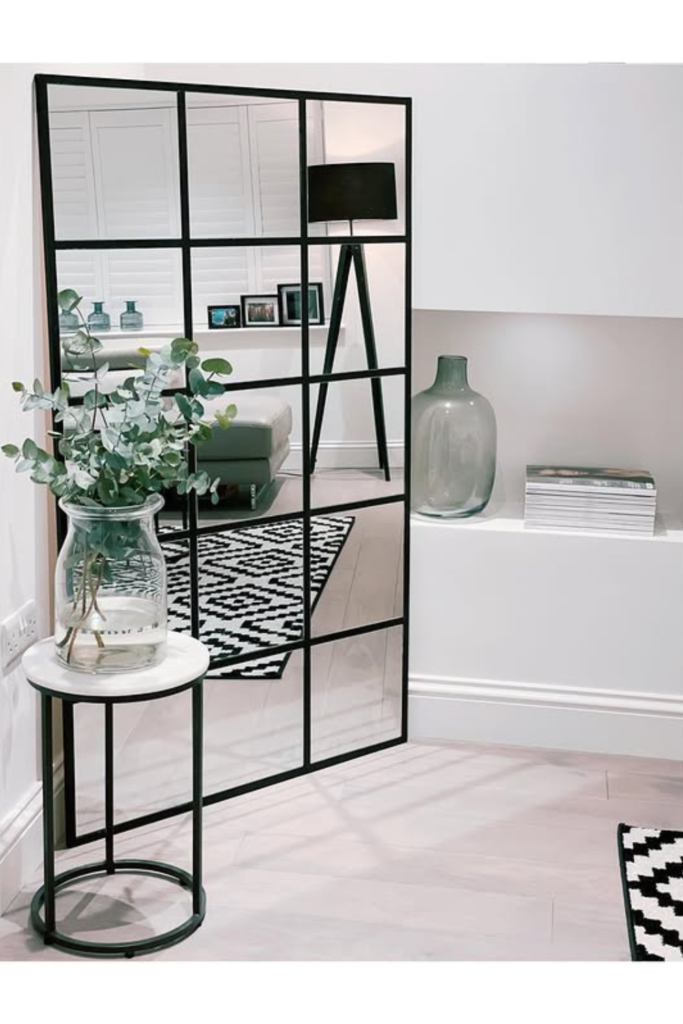
Grid Metal Look
You want a mirror that provides structure rather than decoration, covering a huge mirror with thin metal.
Use wood strips to produce neat grid lines, and paint everything matte black. Sharp lighting accentuates the lines.
Without making the frame feel weighty, natural sunshine, floor lamps or soft light work well in this situation.
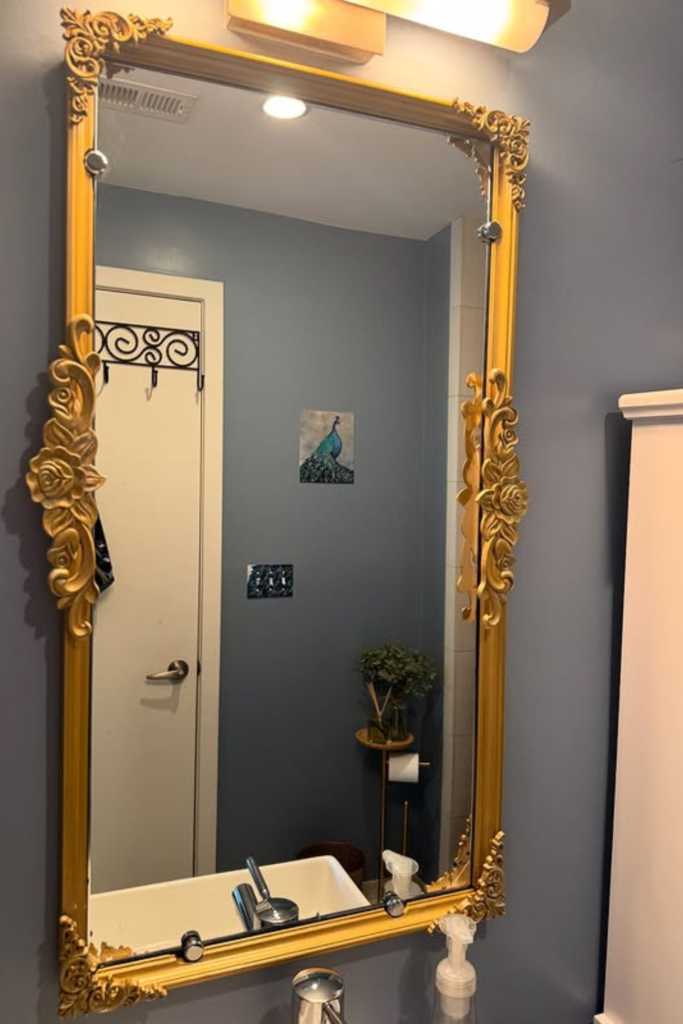
Ornate Gold Trim
This is most effective in bathrooms or dressing rooms when the mirror is intended to be a focal point.
Start with a simple mirror and trim the edges with resin or ornamental molding, paint everything gold.
With a single finish, prevent the gold from seeming harsh or glossy, place warm vanity lights above the mirror.
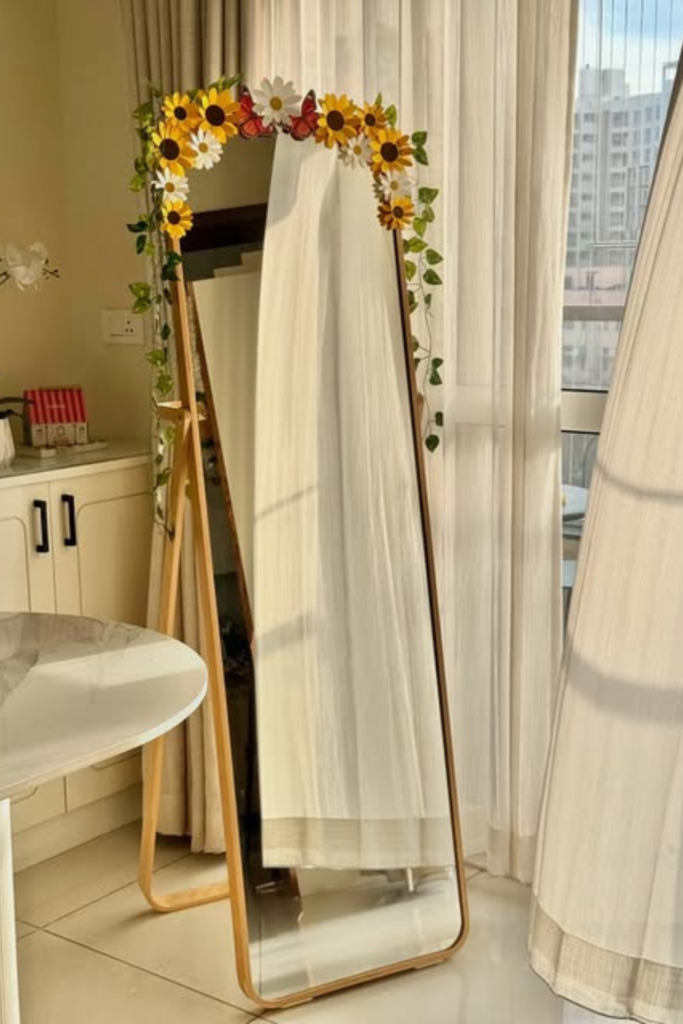
Floral Vine Edge
In bedrooms or comfortable nooks where the mirror already receives natural light, this concept is most effective.
Start with a basic standing mirror and add fake flowers and trailing vines only at the upper edge to make it appear airy.
You don’t need a lot of lighting; let the sun do the work, flowers are kept looking real rather than artificial by gentle daylight.
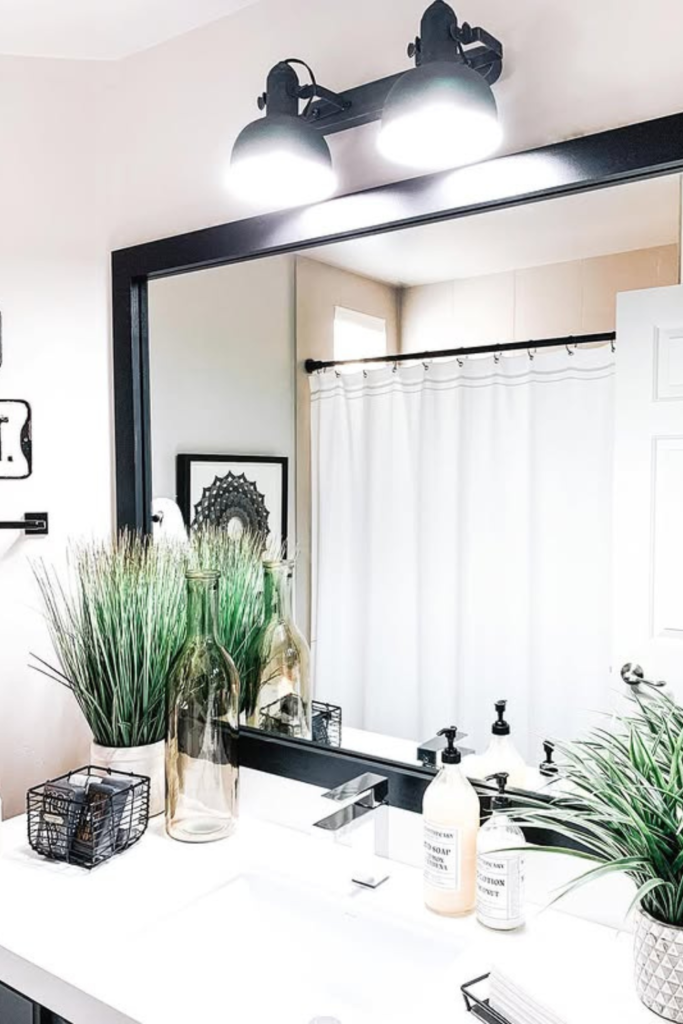
Bold Black Frame
In contemporary or industrial bathrooms where contrast is important, this design works well, framing the mirror with flat trim.
Bright vanity lights or overhead lighting are crucial, as black frames require strong light to prevent the room from feeling gloomy.
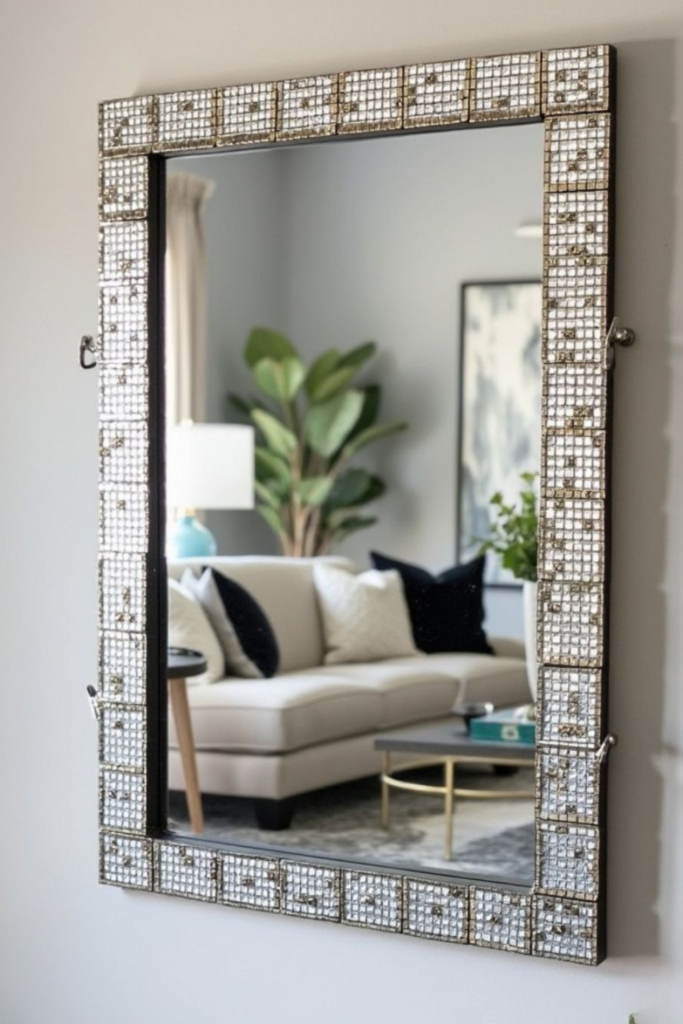
Mosaic Tile Frame
You want a slight sheen without going overboard. Place tiny metallic or mirrored tiles on a flat frame base, ensuring uniform, tight spacing.
Because they capture texture without causing glare, side lamps or soft, natural light perform best in this situation.
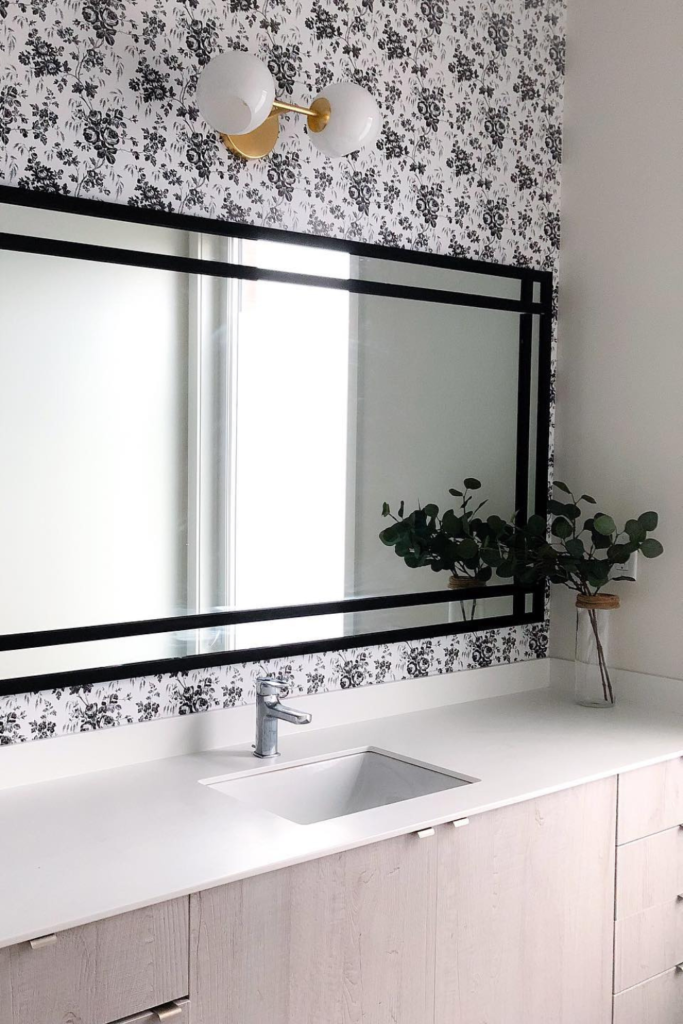
Double Line Trim
This method provides structure without bulk if your mirror seems too simple, yet you don’t want thick framing.
Because the lines help ground the room, it works best in contemporary bathrooms with patterned walls.
Apply dark bronze or black paint to them. To keep the lines deliberate and sharp, use balanced wall sconces.
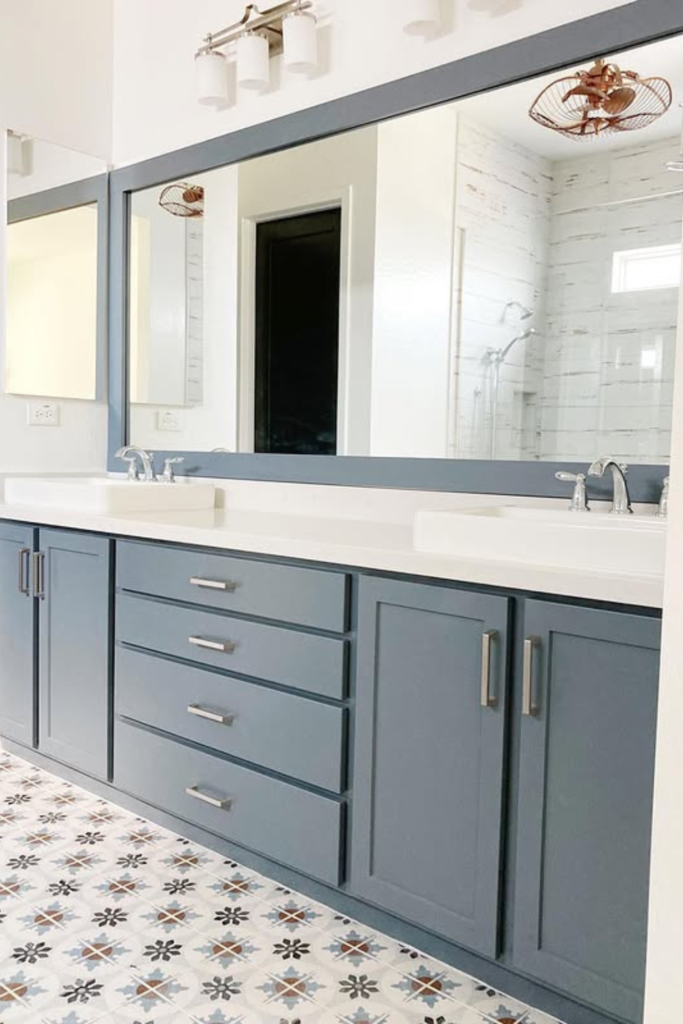
Soft Painted Frame
When you want the mirror to blend in with your vanity rather than stand out, this concept works well.
Replicate the mirror by painting it to match the cabinets, and frame it with a straightforward, flat trim.
Ensure the color doesn’t change or appear spotty, and use paired vanity lights or overhead illumination.
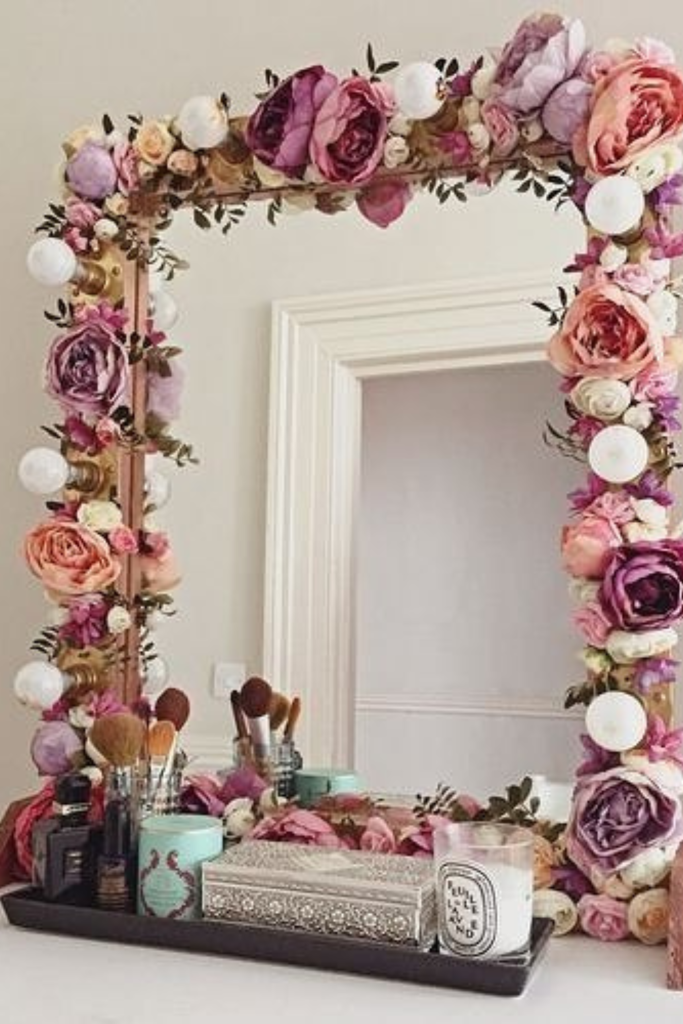
Vanity Floral Glow
This mirror is ideal for use on dressing tables or makeup vanities, where it must be gentle and attractive.
Putting the lights on top, wrapping artificial flowers around a basic frame, and weaving tiny spherical lights.
Keep the light temperature warm and cozy. This arrangement simultaneously adds lighting and décor.
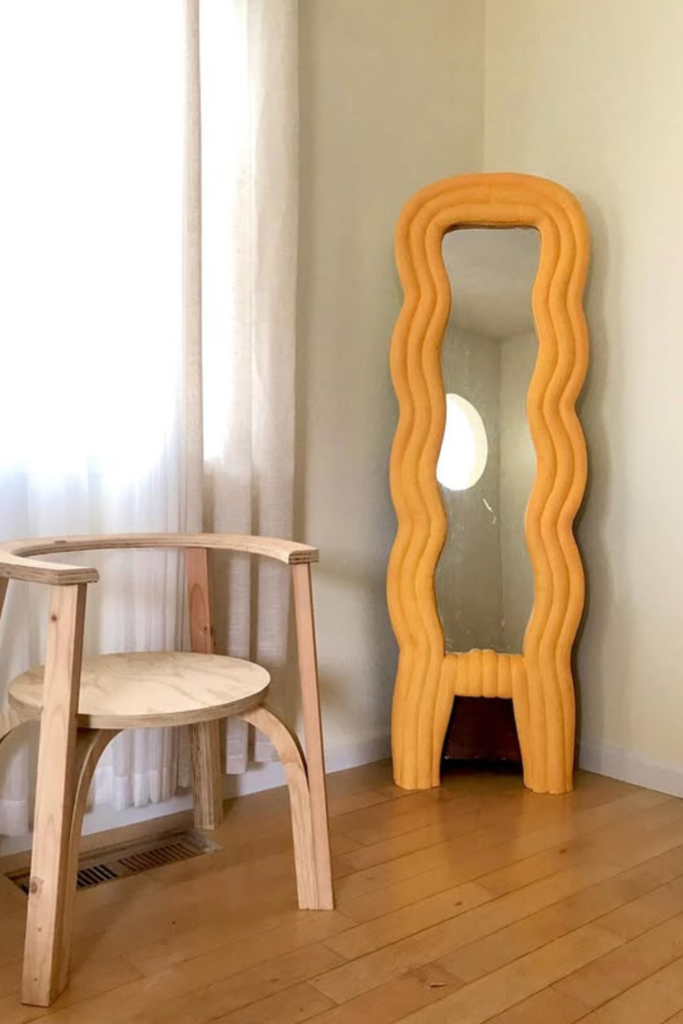
Sculpted Wave Frame
In bedrooms or other creative areas where the mirror doesn’t have to fit in, its design works best as a statement piece.
To replicate the curving, irregular shape, you build up the frame using foam, clay, or layered molding.
Paint everything a single, solid color, maintain indirect and soft lighting so that the curves cast soft shadows.
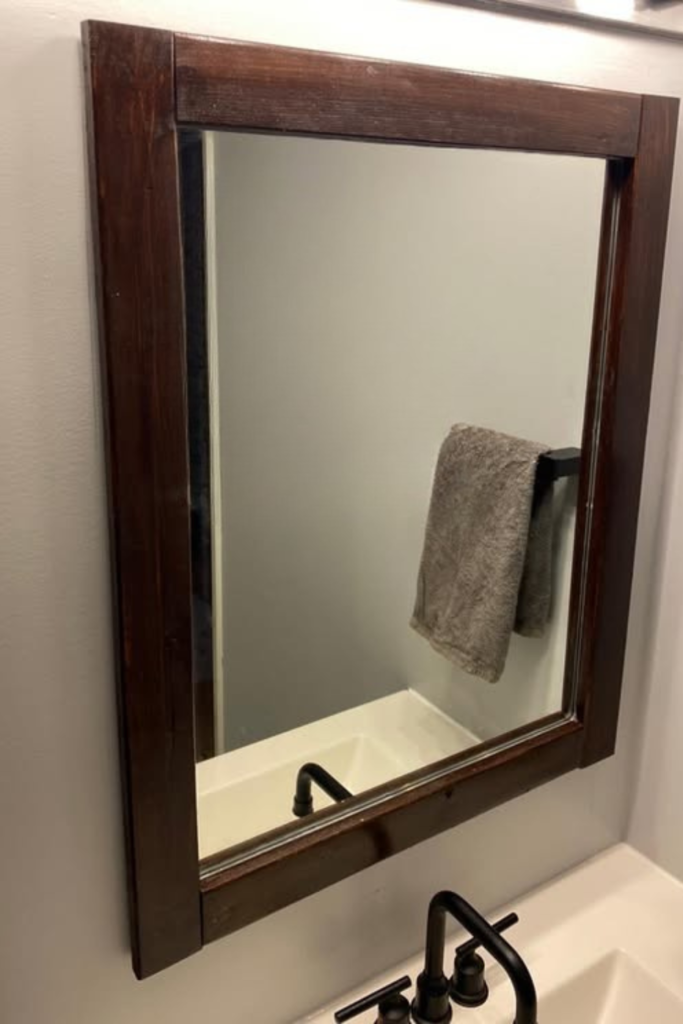
Classic Wood Build
You’re looking for a frame that can be used anywhere and doesn’t date easily, this is the safest choice.
Simple wood boards that have been trimmed to size, stained, or sealed before installation can be used to replicate it.
Keep the profile a little thick; the wood finish remains forgiving and neutral. Standard vanity lighting works well here.
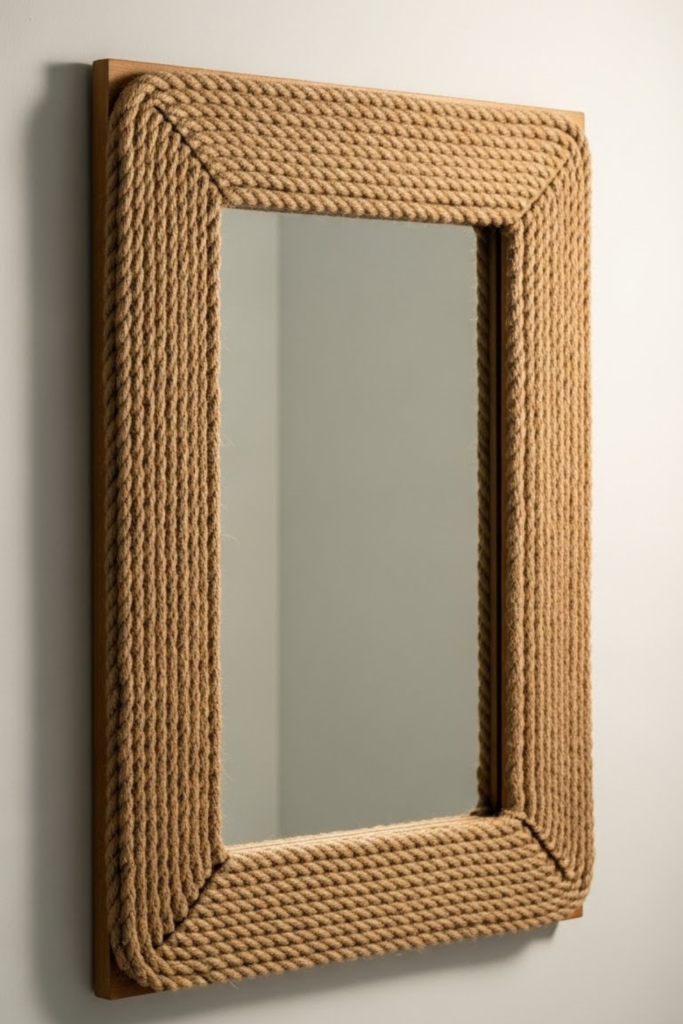
Rope Wrapped Edge
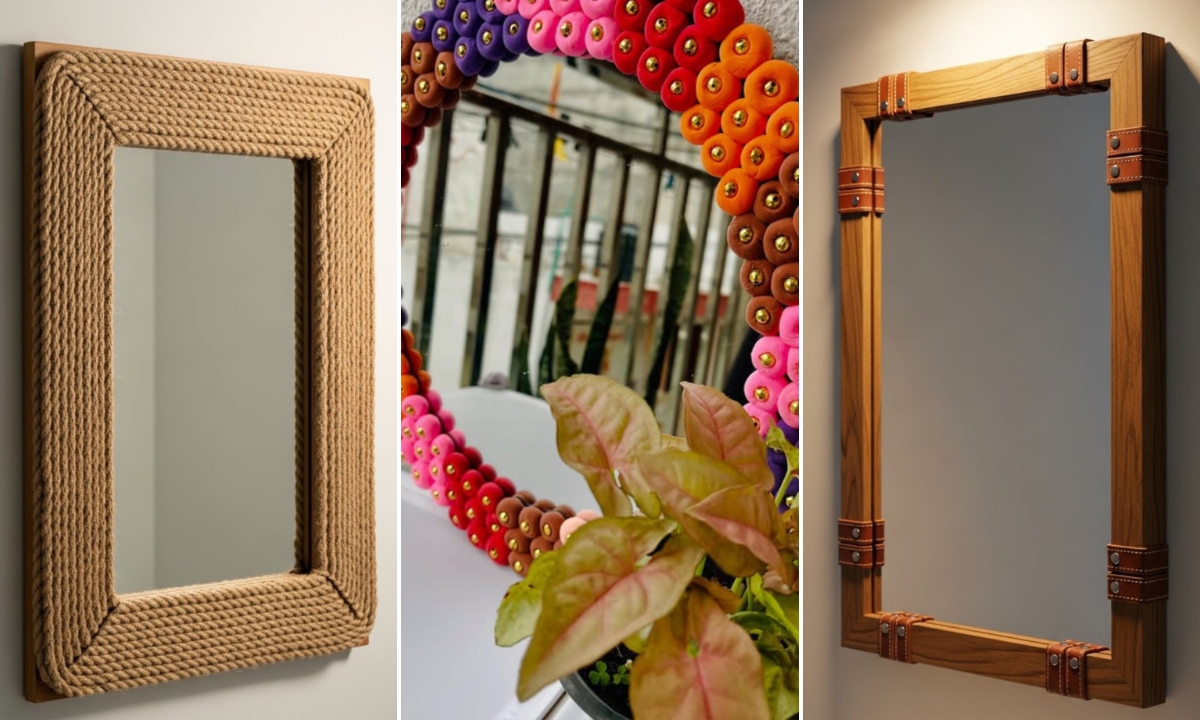
Prevent glue from showing; carefully wrap thick jute rope around a basic foundation frame and fasten it from the rear.
Natural-textured bathrooms are ideal for this. Use gentle, warm lighting so that the rope texture provides depth.
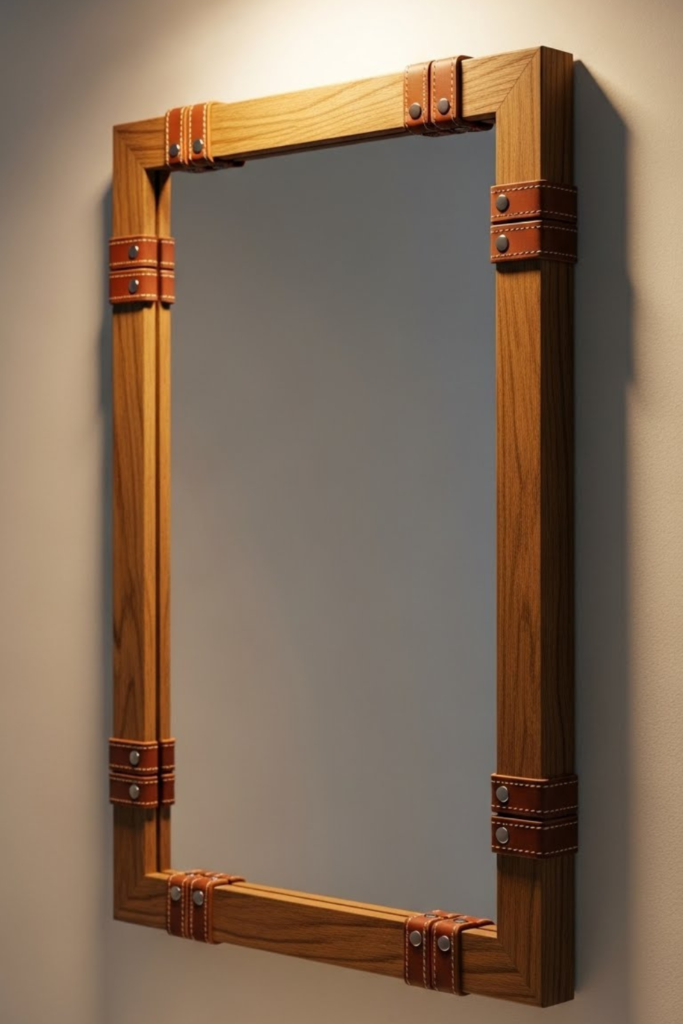
Leather Strap Detail
You want something modest but unique; this concept works. Add small leather straps along the corners or edges of the frame.
Keep the foundation frame simple; it looks well in contemporary offices, pair it with cozy, soft, warm ambient lighting.
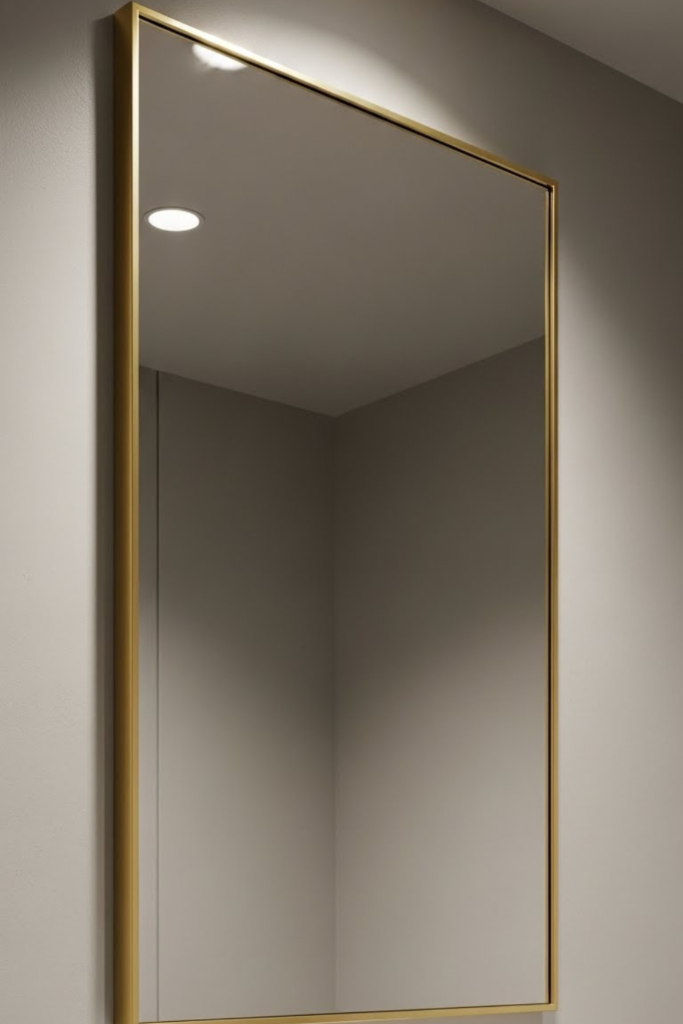
Thin Brass Border
You want a clean update without bloat, add thin strips of brass or gold metal around the edge of the mirror.
Maintain straight lines and tight spacing. This looks great in contemporary hallways or bathrooms, use neutral wall lighting.
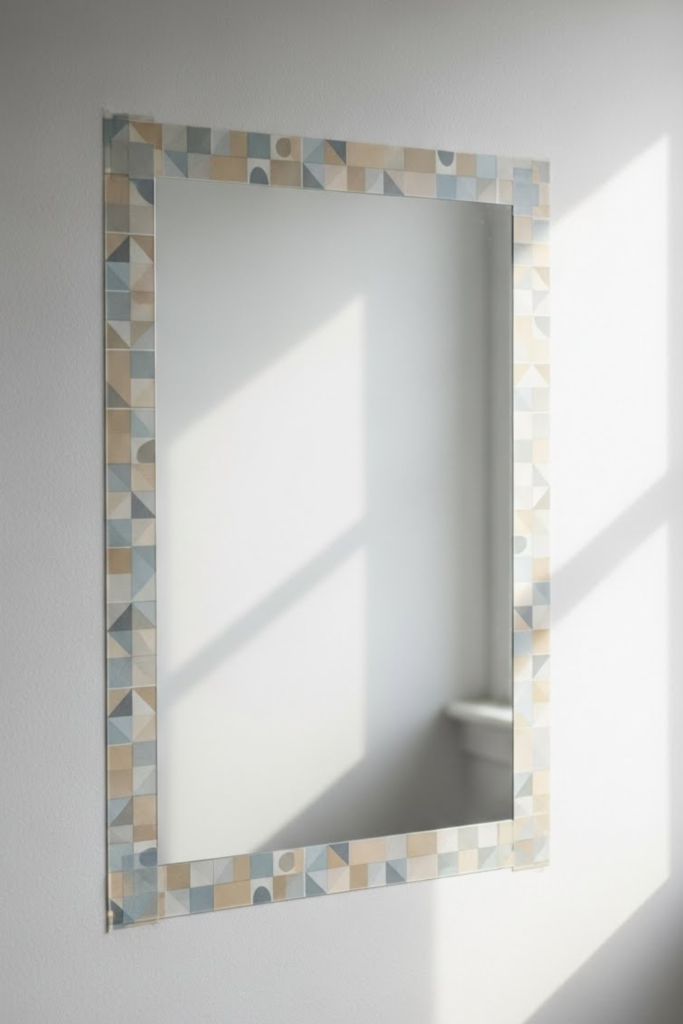
Washi Tape Frame
Use premium washi tape or detachable trim tape to create a frame effect around the mirror’s edge, ideal for short-term upgrades.
Decide on a single pattern and follow it; most effective in dorms or bedrooms. Keep the tape lines clear and deliberate.
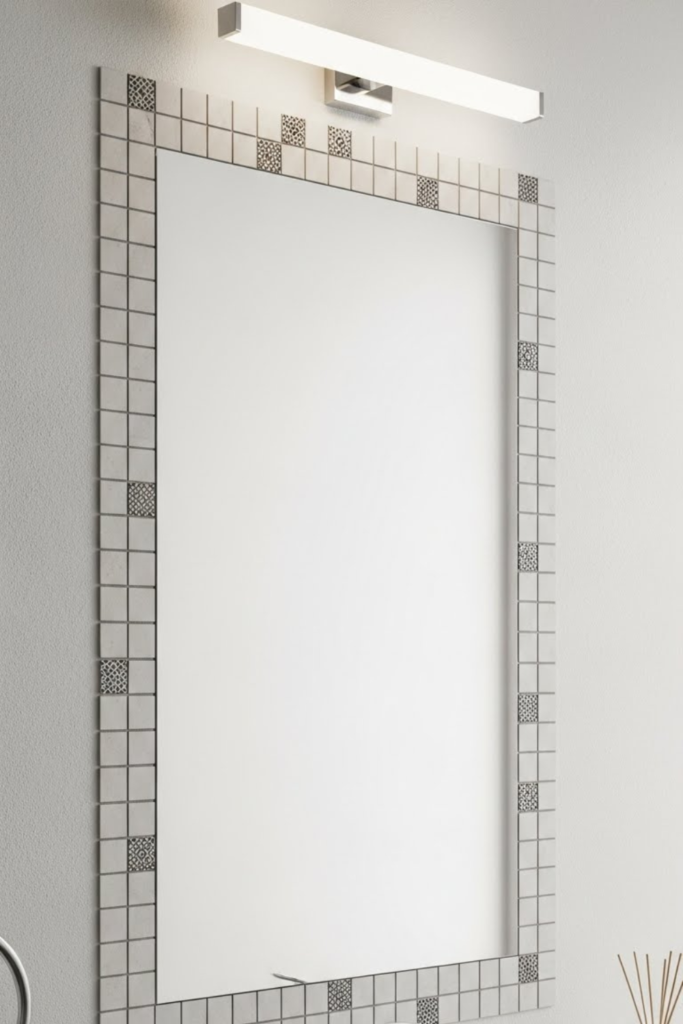
Tile Edge Border
Directly surround the mirror edge with a thin border of complementary or matching tiles. Maintain minimal and clean grout lines.
Bathrooms with enough ventilation are ideal for this. Keep the tile texture subdued and unobtrusive, and use overhead vanity lighting.
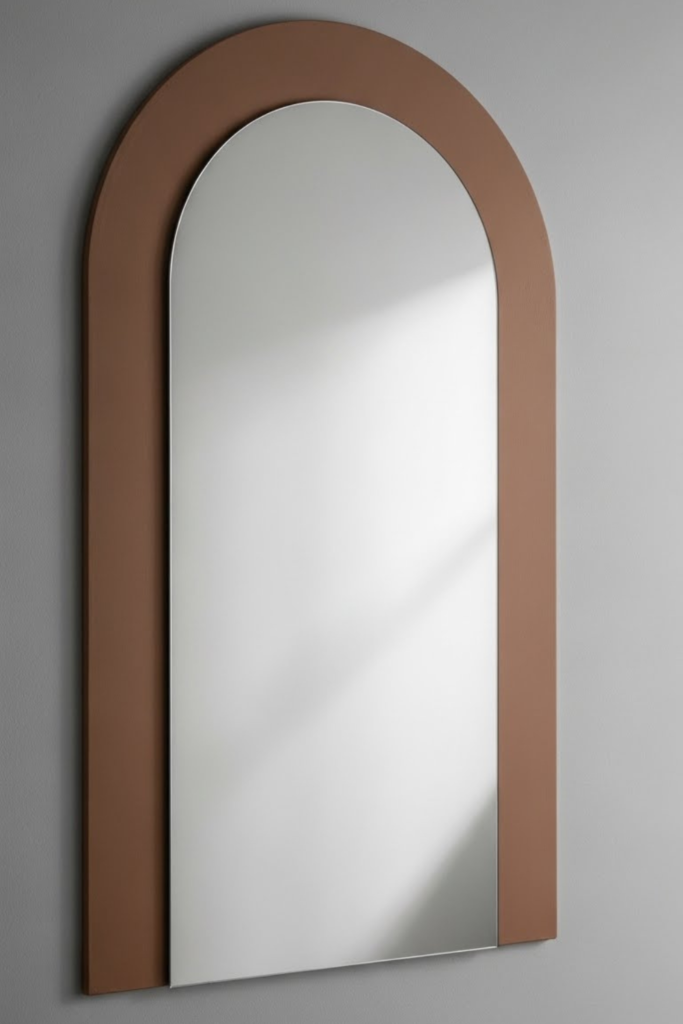
Painted Arch Accent
This concept gives the mirror more shape. Create a visual frame by painting an arch or gentle curve around the mirror.
Select a subdued hue to avoid overpowering the mirror. Daylight or soft wall sconces give the painted edge a deliberate feel.
FAQs
How to make a mirror frame more interesting?
Instead of adding many elements, you can make a mirror frame more intriguing by making a single, distinct design decision.
Use wood, rope, tile, or molding to alter the texture. Use metal trim or paint to create contrast. Extend edges, layer lines, or frame only a portion of the mirror to experiment with shape.
It usually indicates that everything is flat if the frame seems dull. It only takes one elevated feature, one color shift, or one texture to give it a deliberate impression.
What materials work best for DIY mirror frames?
The mirror’s location determines the ideal material. Sealed wood looks classic and fits nicely in most spaces. MDF requires sealing in bathrooms, but is OK in dry locations.
In areas with high humidity, tile and PVC are the best materials for managing moisture. For sculpted or ornamental shapes, foam, resin, or molding work well.
Lightweight trim or adhesive-friendly materials are the safest options if you desire simple installation.
You may like to read!
- 20 DIY Bicycle Rack Ideas
- 16 Goat Pen Ideas DIY
- 19 DIY Lamp Shade Ideas
- 21 DIY Pantry Shelving Ideas

Fasial is the founder of the Fizzy Flare. He has been a passionate blogger since 2021. He ran three different websites in the past few years. Now he is focusing on Fizzy Flare to build an audience and help them organize their life.