25 DIY Classroom Decorations Ideas for 2026
This post may contain affiliate links: full affiliate disclosure.
You’ve ever felt stuck while staring at your classroom walls. The majority of educators desire a welcoming and innovative classroom,
But they lack the resources, money, time, and energy to implement the concepts they see online. Because of this, decorating frequently feels more stressful than enjoyable.
It has to do with where you begin and how you think. This part will teach you how to inspire creativity and transform simple materials into functional classroom décor.
In this article, you’ll find 25 DIY Classroom Decorations that work perfectly for 2026.
Contents
- 1 How to create creativity for classroom decoration?
- 1.1 Patterned Color Grid
- 1.2 Flying Paper Butterflies
- 1.3 Student Work Spotlight
- 1.4 Cozy Reading Corner
- 1.5 Color-Coded Storage
- 1.6 Balanced Learning Zones
- 1.7 Colorful Reading Circle
- 1.8 Warm Welcome Wall
- 1.9 Soft Light Focus
- 1.10 Rainbow Window Draping
- 1.11 Interactive Math Corner
- 1.12 Seasonal Reading Nook
- 1.13 Writing Station Zone
- 1.14 Vertical Supply Tower
- 1.15 Open Play Zones
- 1.16 Natural Classroom Flow
- 1.17 Statement Wall Art
- 1.18 Calm Reading Bench
- 1.19 Colorful Learning Wall
- 1.20 Ceiling Learning Trails
- 1.21 Student Identity Wall
- 1.22 Rotating Quote Strip
- 1.23 Texture-Based Decor Wall
- 1.24 Floor-Level Visual Guides
- 1.25 Minimalist Theme Corners
- 2 FAQs
How to create creativity for classroom decoration?
When it comes to classroom decoration, creativity comes from how you approach the space you’re working with, not from possessing artistic abilities or purchasing pricey décor.
Ideas become simpler when you stop attempting to replicate flawless sets and instead concentrate on what your classroom truly needs.
You will inevitably start thinking more creatively if you view décor as a solution to minor issue, such as dull walls, ambiguous routines, and underutilized corners.
You can transform everyday materials into decorations that feel intimate, practical, and welcoming for your kids by starting small, sticking to basic boundaries, and using what you already have.
Save this article for later! 👇👇
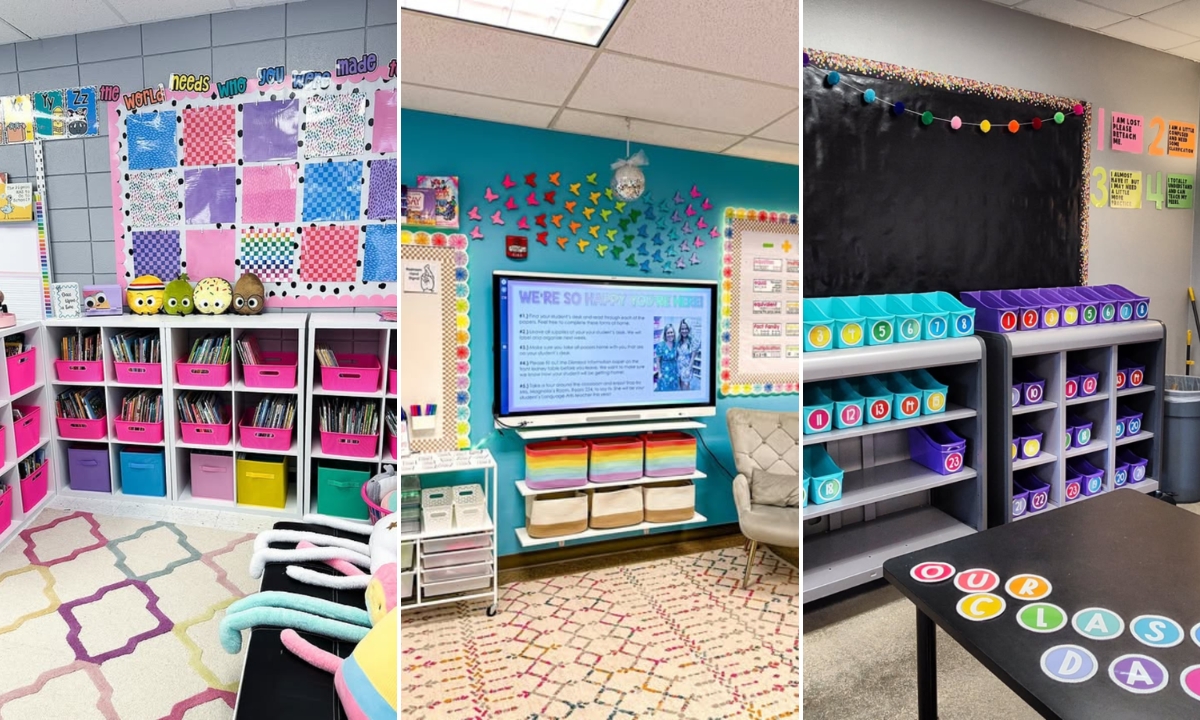
Patterned Color Grid
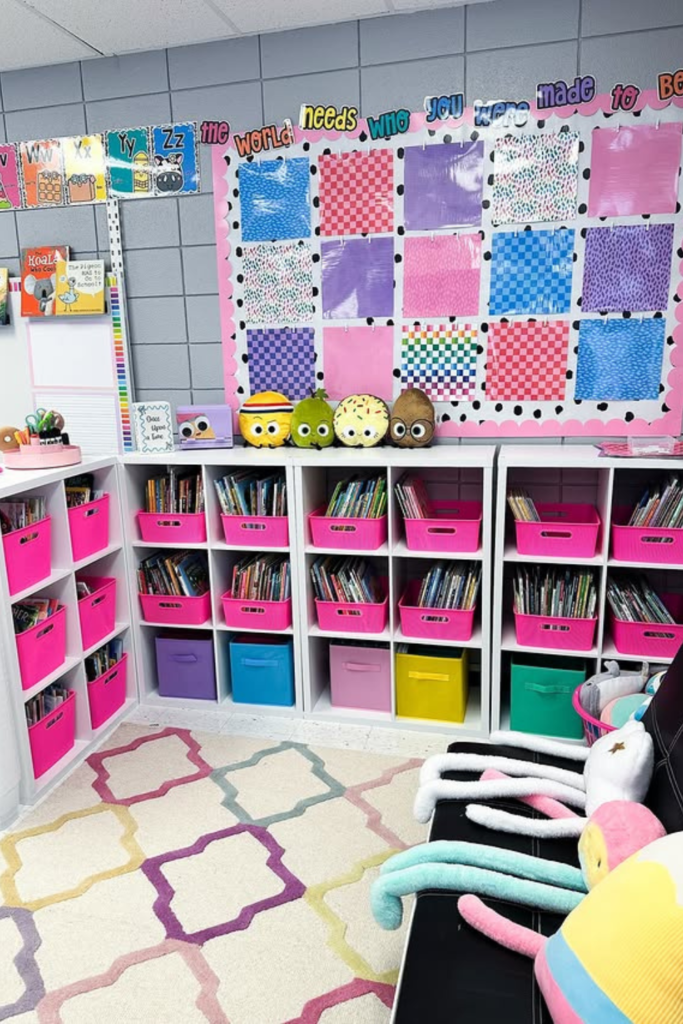
You want color without being distracted, this works best. Divide a single bulletin board into uniformly spaced squares.
After adding a gentle background, place patterned paper in the same color family inside each square.
Everything is kept in balance by the grid, and you may change the squares at any point to update the appearance.
Flying Paper Butterflies
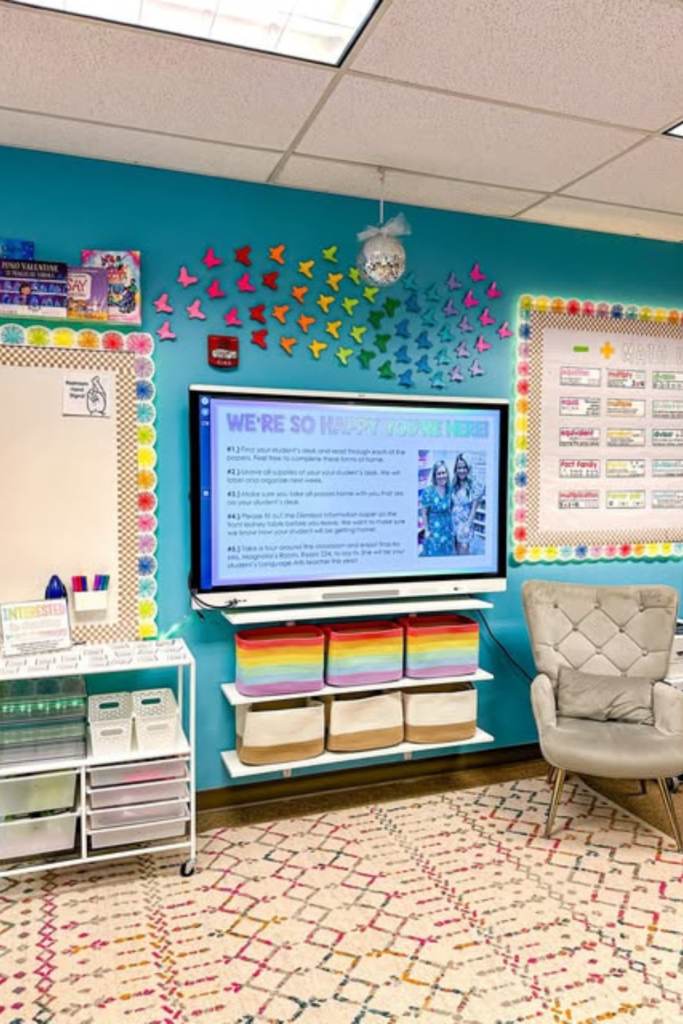
Students instinctively gaze up at the primary classroom wall, which is where this concept works best.
Make the butterflies stand out, start with a single solid wall color, cut out simple butterfly shapes from colorful paper.
Arrange them in a fluid, upward flow, feel light and moving, attach them straight to the wall, color gradient generates energy.
Student Work Spotlight
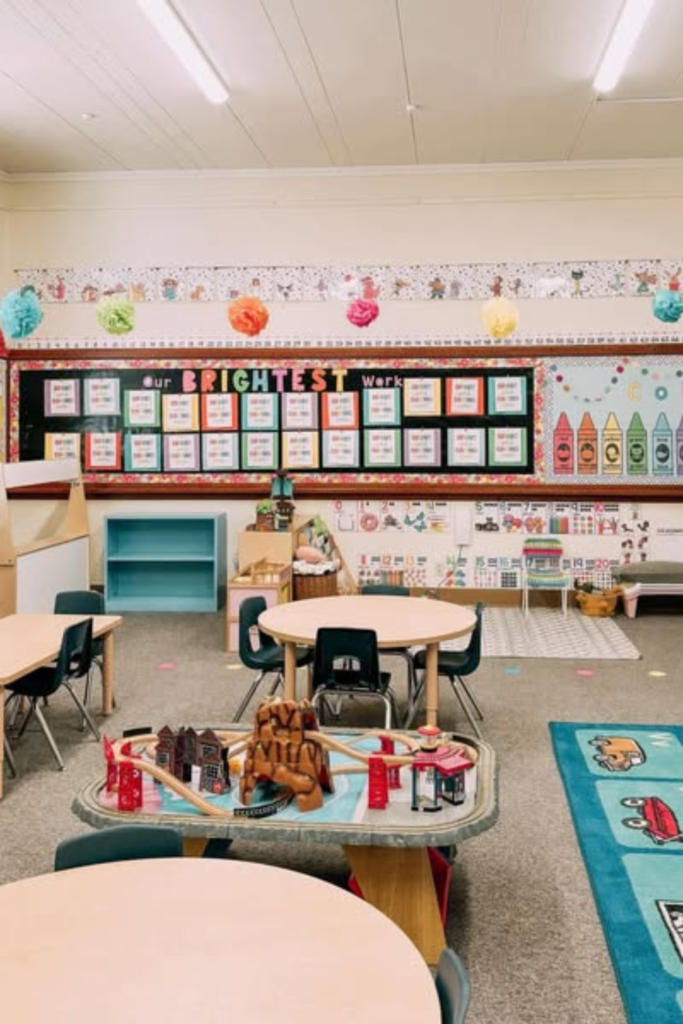
On a lengthy wall where learning is already taking place, this works best. Instead of decorating every wall.
Use a single clear board to showcase student work. To make the work stand out, keep the background minimal.
Add little details, such as borders at the top or paper fans. The space remains decorated, and the kids remain focus.
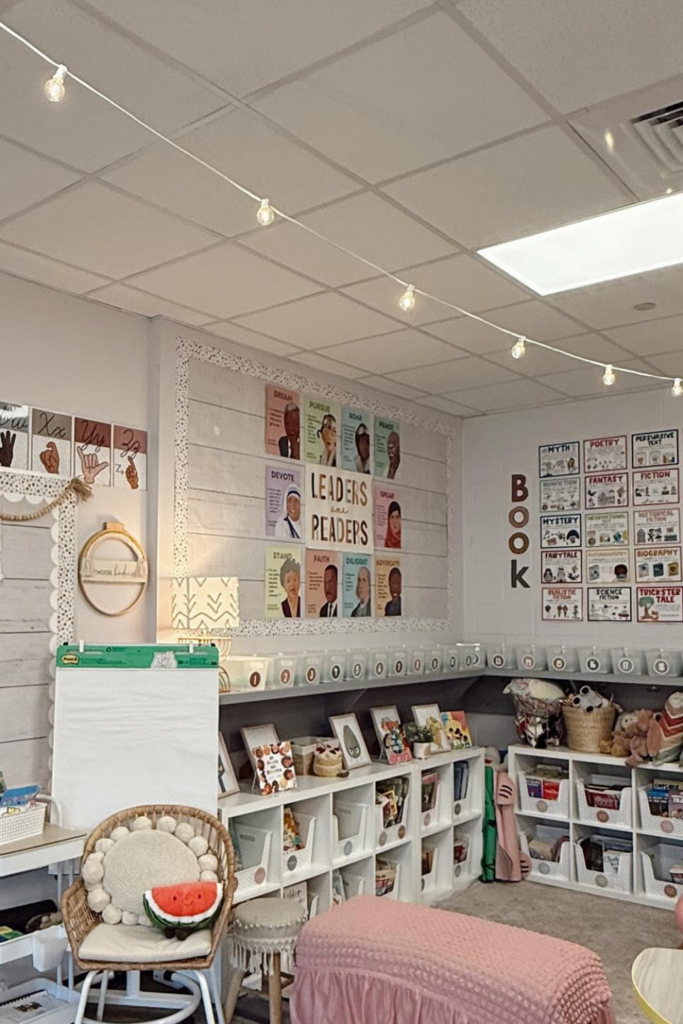
Cozy Reading Corner
When children need to slow down, this concept works best in a classroom library or quiet reading space.
Add baskets, comfortable chairs, and basic shelving to create layers of warmth. Place soft string lights along the ceiling.
The objective is to create an environment where children naturally want to sit and read longer, not to decorate.
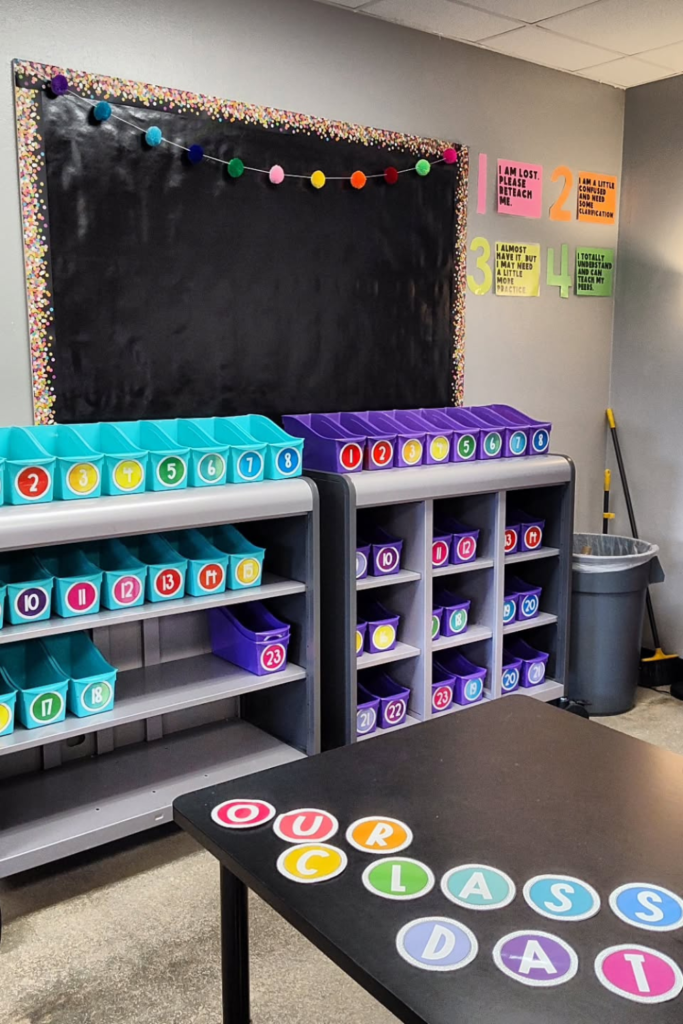
Color-Coded Storage
This concept works well in close proximity to your primary work or supply location, where routines are important.
Ensure that pupils know exactly where items go without having to ask, use matching containers and number them.
When storage appears this well-organized, it automatically becomes a part of your classroom’s design..
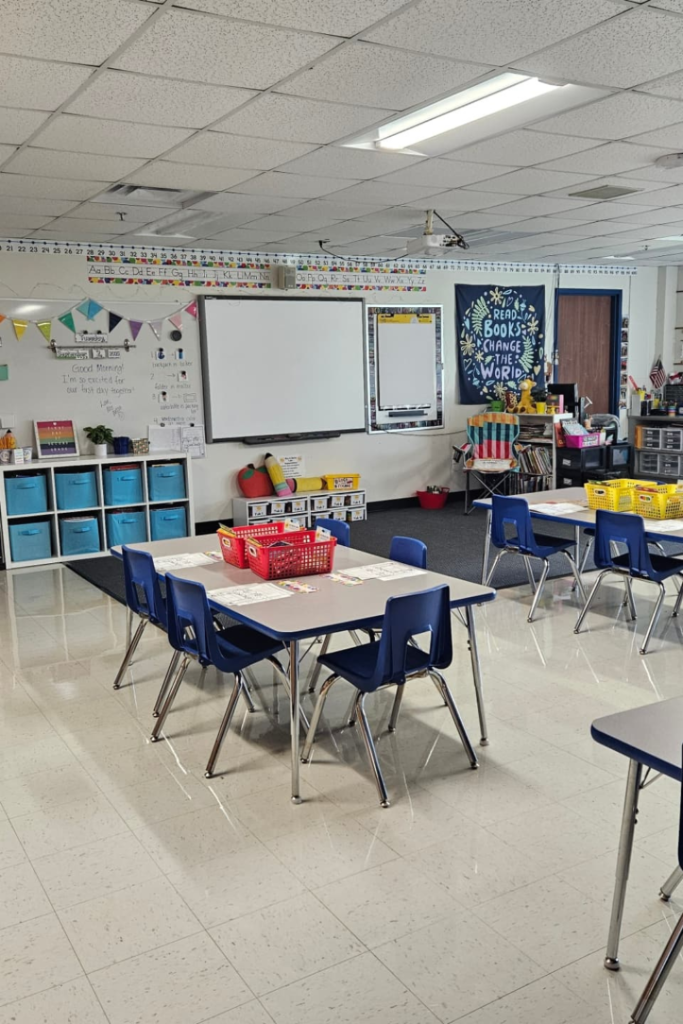
Balanced Learning Zones
This is most effective in classrooms that need structure. Arrangement of the furnishings do the work rather than painting every wall.
Organize boards, storage, and tables into distinct areas, each with a specific function, to tie it all together.
Add little details like color-matched bins. Space feels well-organized, and simple for pupils to move around when the zones are clear.
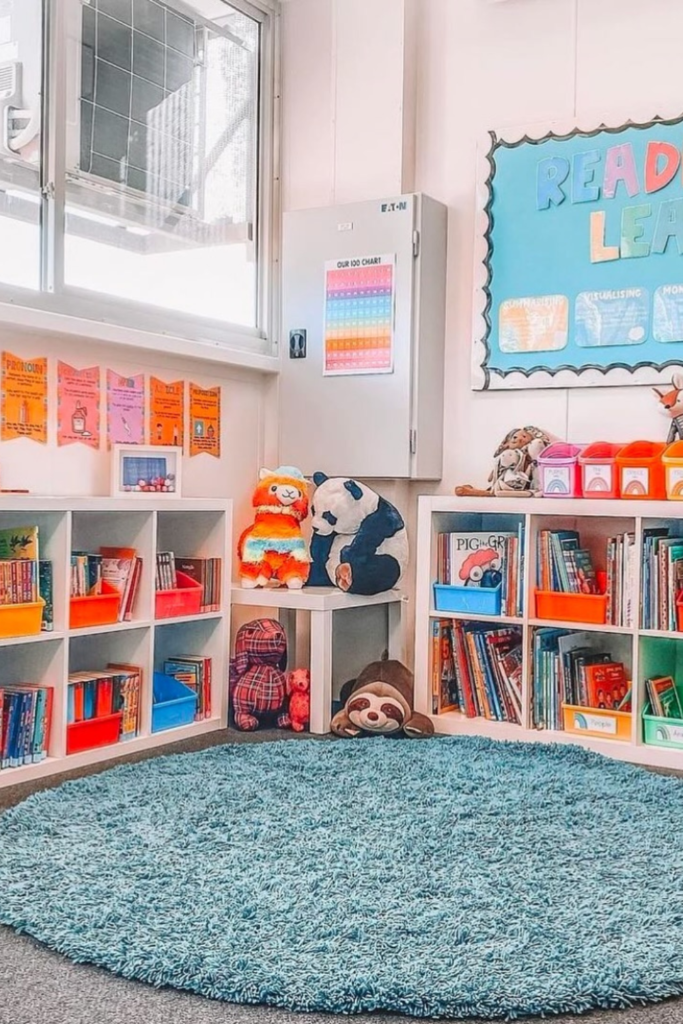
Colorful Reading Circle
This is most effective when kids congregate on the floor in a school library or small-group reading area.
Keep books within reach, start with a soft rug to anchor the area and then surround it with low shelving.
Use color-coded bins, the circle form makes the space feel comfortable and naturally draws students in.
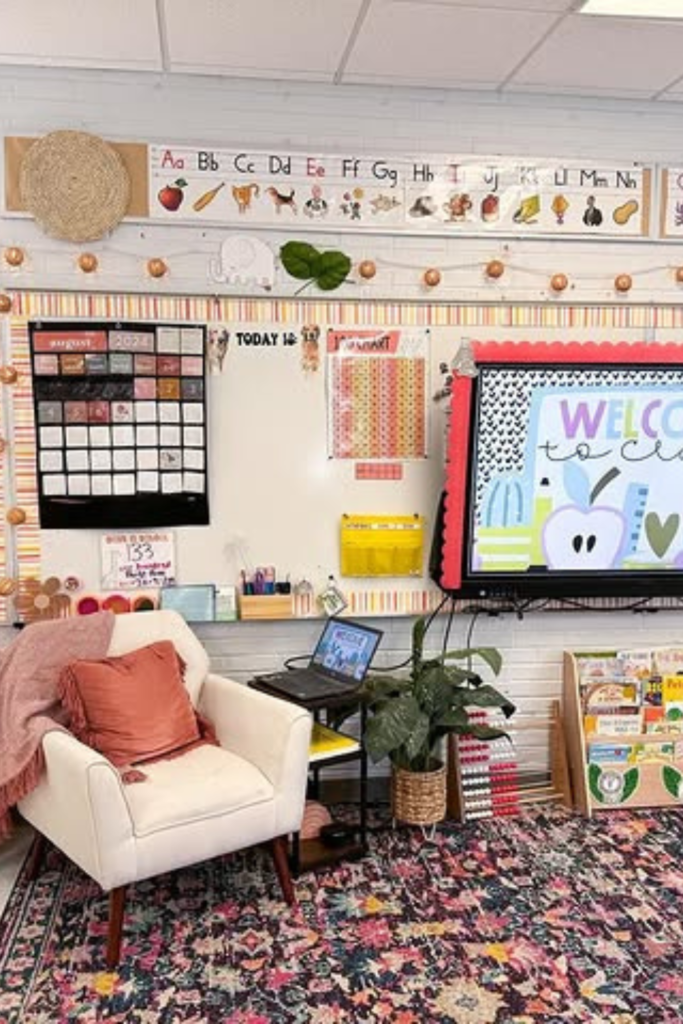
Warm Welcome Wall
The front teaching wall, where students gaze first every day, is where this works best. Use soft textures.
Such as a chair, rug, and basic plants, to provide warmth to a neutral base. Organize calendars, routines.
A welcome message together to create deliberate wall art. The aim is to make the place feel welcoming.
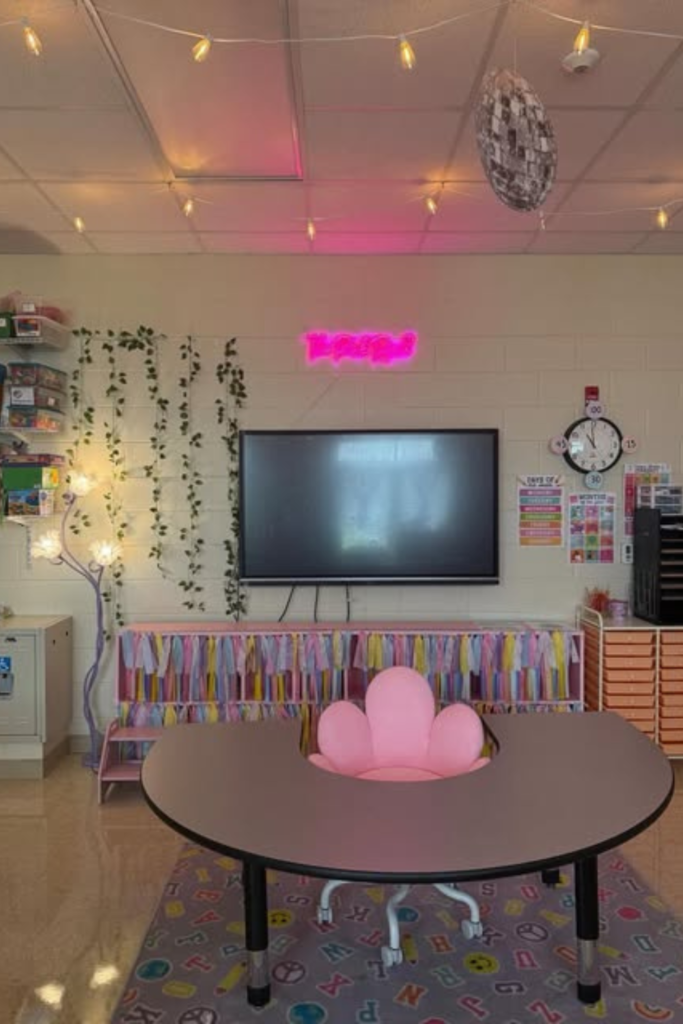
Soft Light Focus
You want pupils’ attention without intense lighting, this works best on the main teaching wall or in a calm-down area.
Keep it simple and start with just one main wall. One accent light should be placed close to the board.
Gentle string lights should be placed throughout the ceiling. Light should be layered behind decor rather than on top of it.
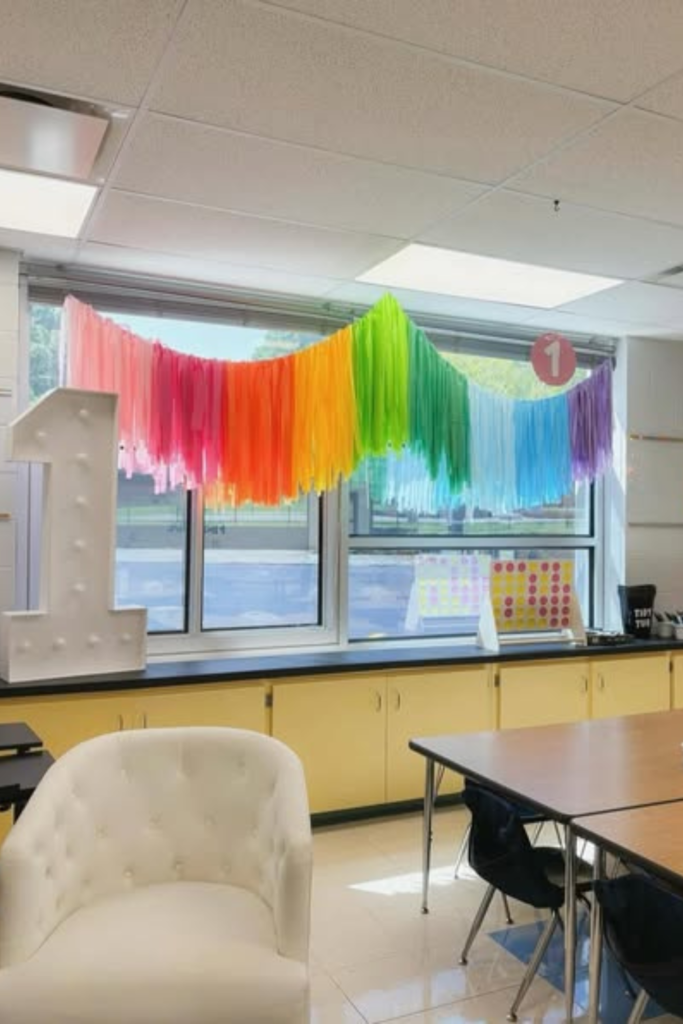
Rainbow Window Draping
When there is little wall space above windows, this concept works best. Frame the light rather than block it.
Use tissue paper or crepe streamers and attach them in a gentle curve. To keep it tidy, stick to a single color scheme.
No additional lighting is required to make things stand out, as natural daylight does most of the work here.
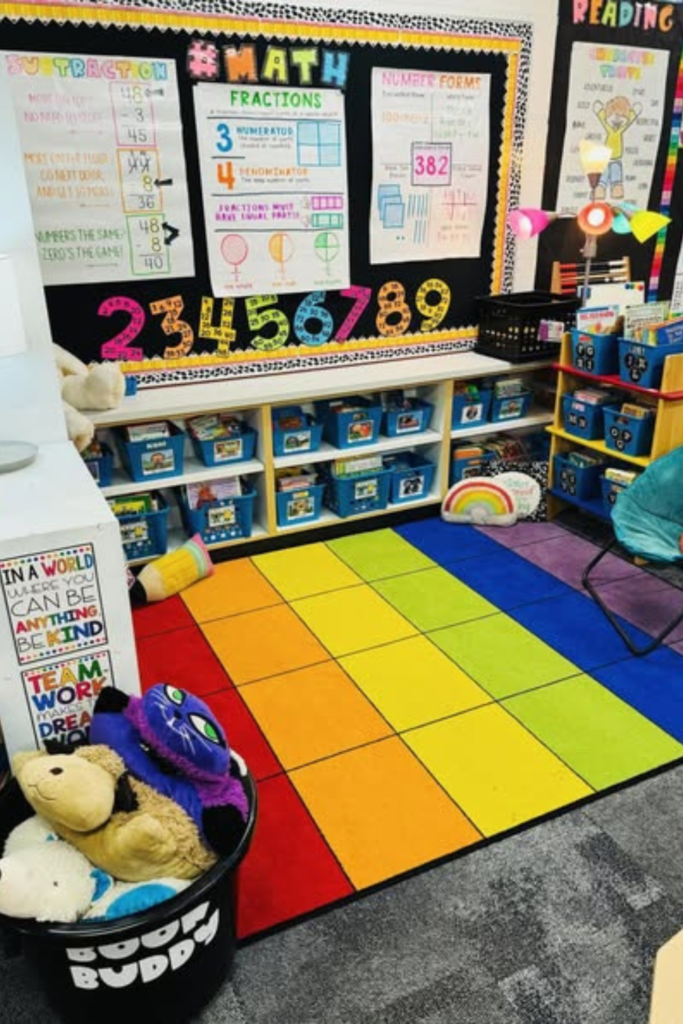
Interactive Math Corner
This is most effective when students practice alone or in groups in a small learning area, to identify the area.
Start with a bright floor mat. Next, keep math visualizations at eye level. Put basic posters for reference and bins.
The walls maintain their clarity and emphasis since the color remains on the floor and materials.
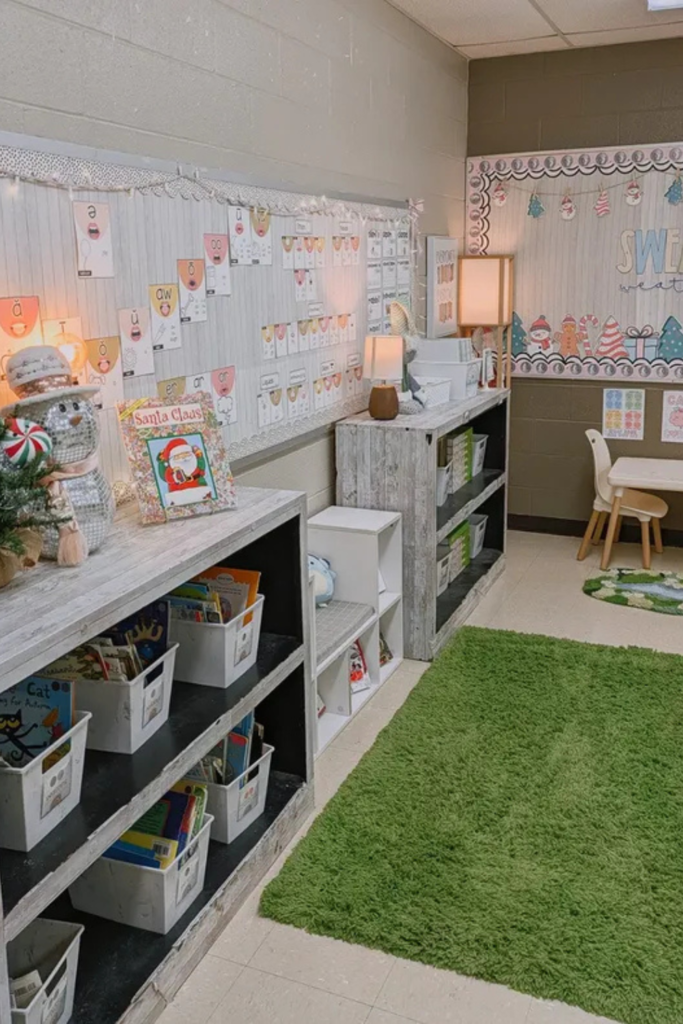
Seasonal Reading Nook
When you want a serene, rotating display, this works well along a side wall. Keep the shelves low and neutral.
Add some themed books, soft rugs, and paper décor to bring in the season, replace the overhead lighting.
One or two warm lamps. You just change the accents, not the entire setup, when the seasons change.
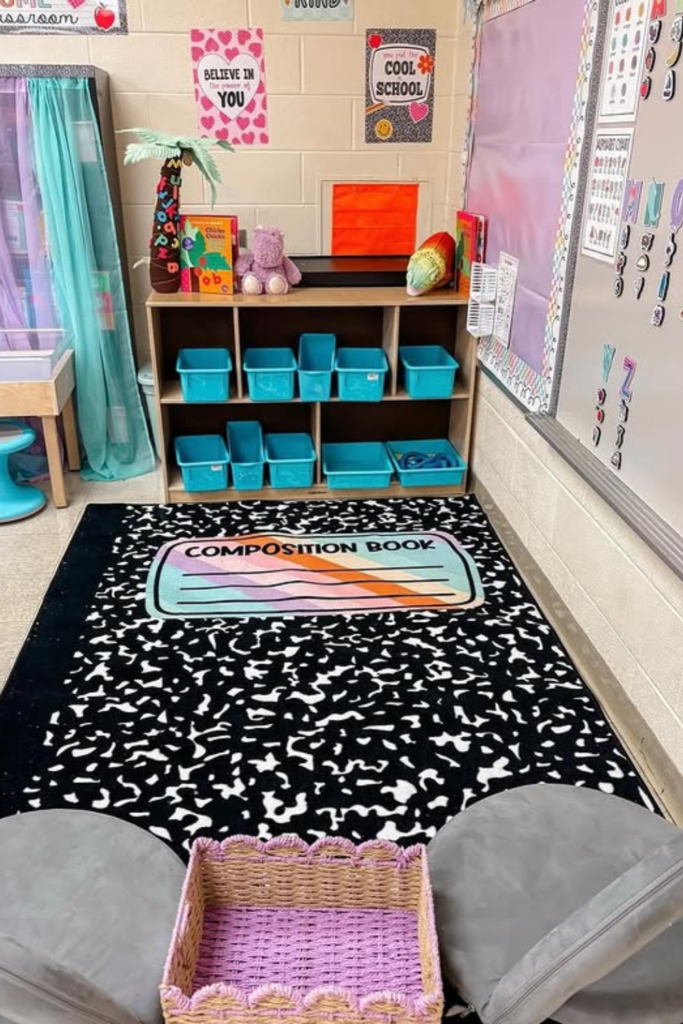
Writing Station Zone
When pupils need to concentrate, this works best in a quiet corner. Use a themed rug to anchor the area
Leave room on the wall for writing charts or student examples, and keep materials in similar boxes within easy reach.
Although the arrangement seems enjoyable, it all comes down to one task: writing without interruptions.
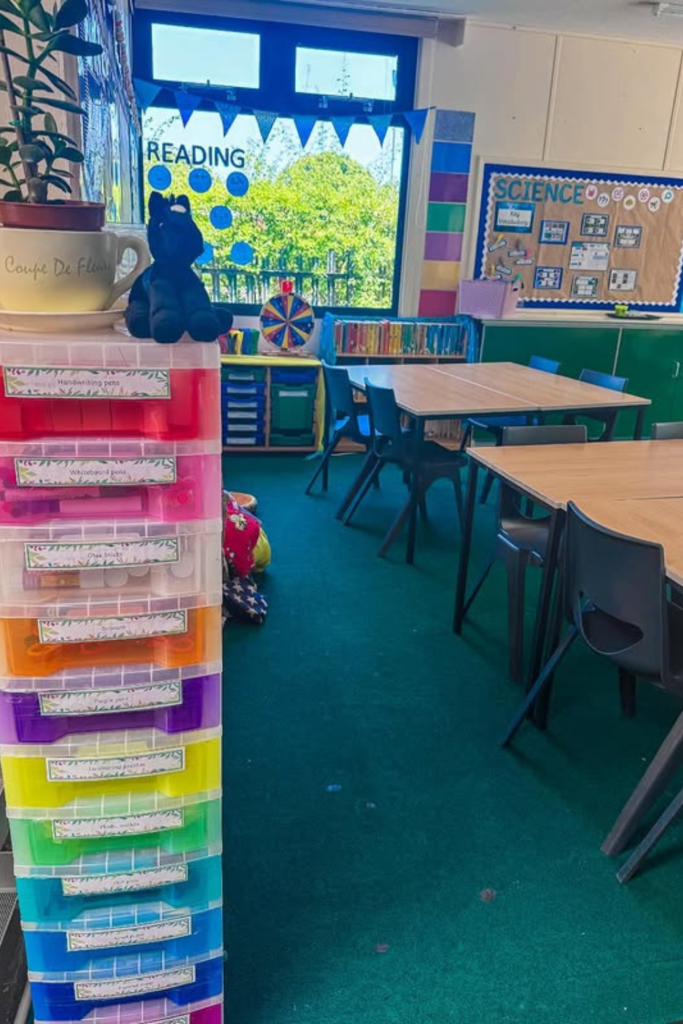
Vertical Supply Tower
This is most effective in close proximity to group tables where students frequently retrieve resources.
Conserve floor space and maintain visibility, stack clear drawers vertically. Help kids identify items without reading labels.
Use color-coding, a single plant or delicate accent to keep the top basic. It expedites and streamlines procedures.
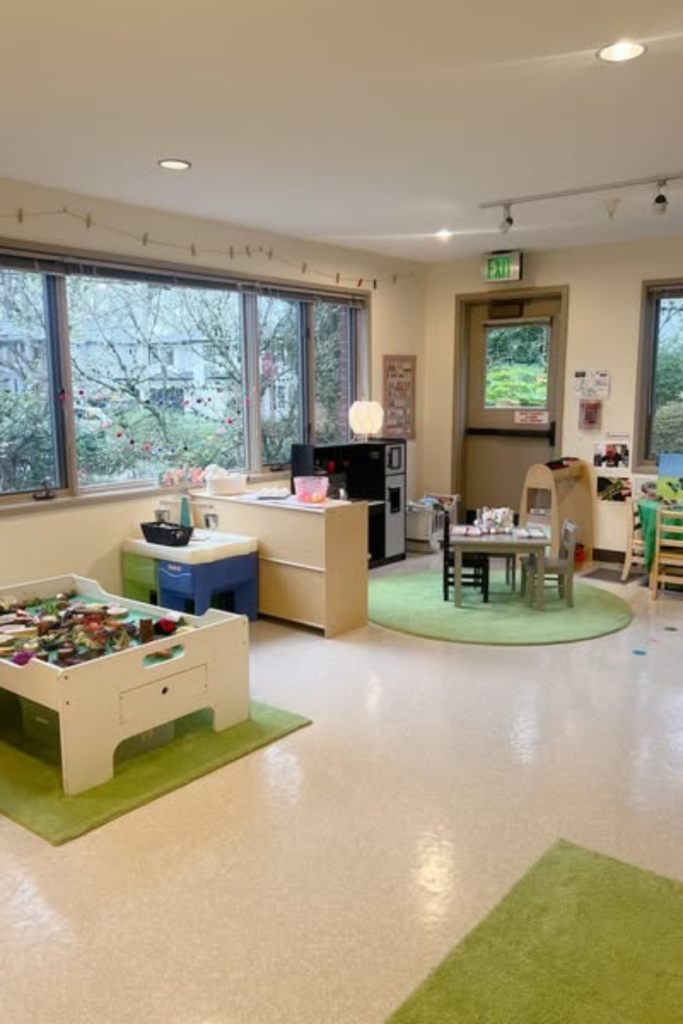
Open Play Zones
This is most effective next to group tables where students frequently retrieve resources, conserve floor space.
Maintain visibility, arrange transparent drawers vertically, helps to identify materials without reading labels.
Use a single plant or a delicate accent to keep the top basic. It speeds up and streamlines routines.
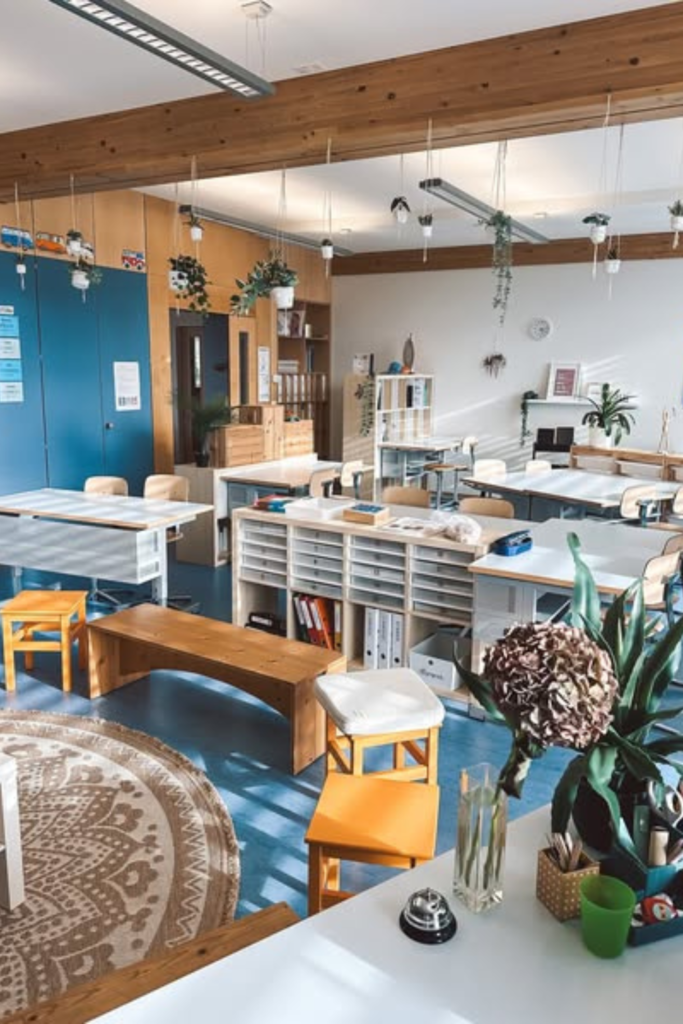
Natural Classroom Flow
The majority of the decorating can be done with natural materials, such as wood furniture, muted colors, and real plants.
Use hanging plants and keep walls plain. Here, natural light is crucial, so let the room breathe and avoid large window treatments.
Statement Wall Art
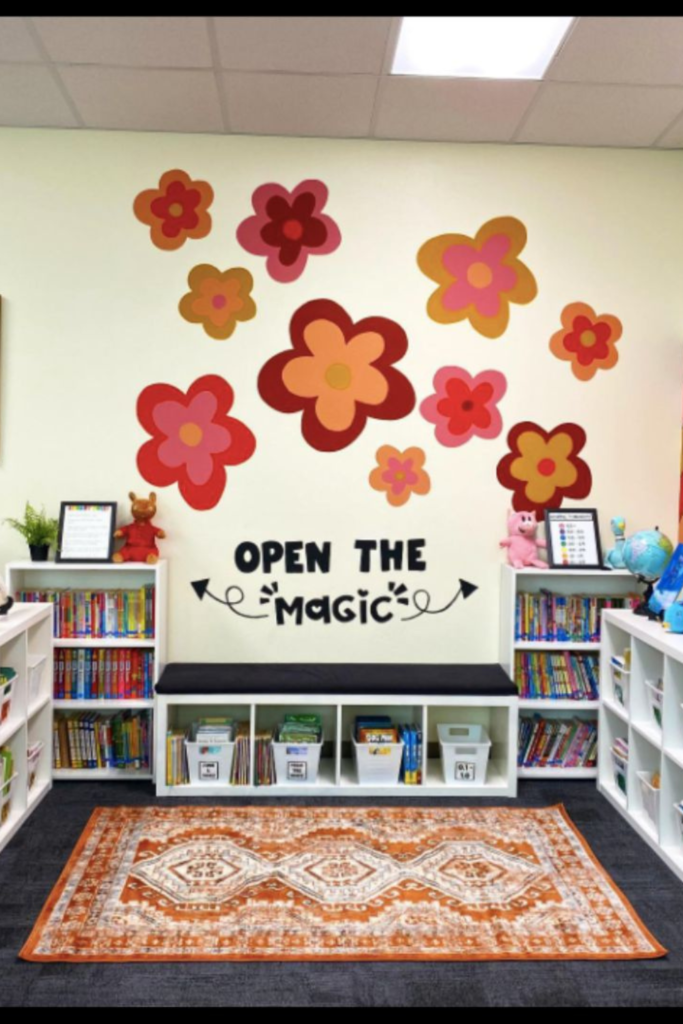
You want a single, powerful focus point, make the artwork stand out, pick one wall and keep furniture low.
To avoid making the wall feel crowded, cut huge paper shapes in a strict color scheme and space them loosely.
While the remainder of the room remains serene and practical, let the wall convey the individuality, this works well.
Calm Reading Bench
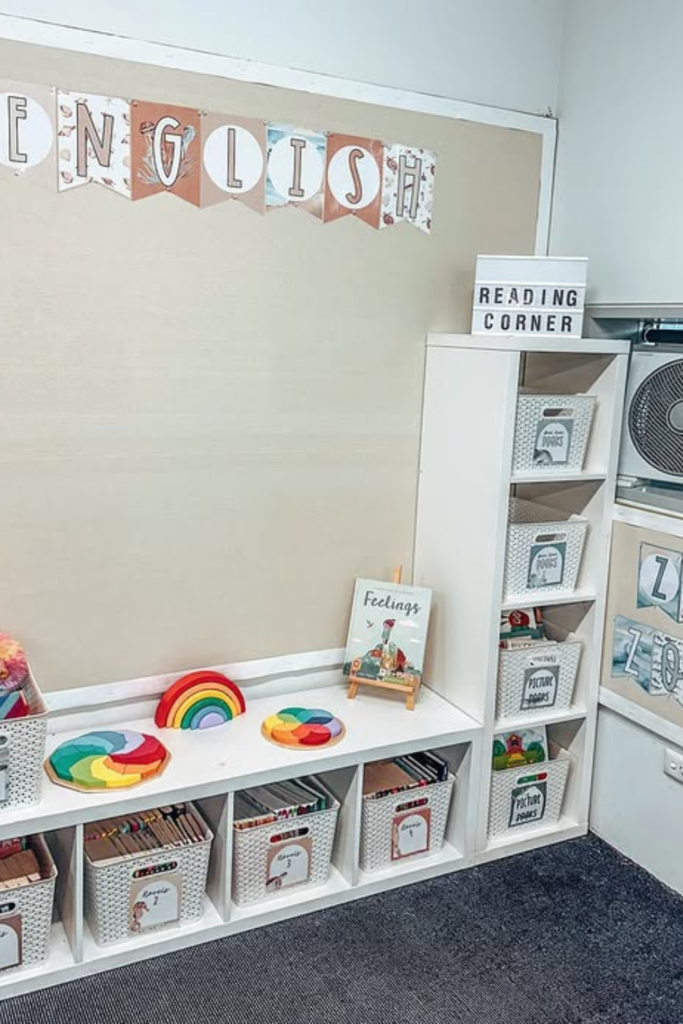
This is most effective in a small, quiet reading area. Combine comfort and organization, use a low bench with built-in storage.
Books and soft tools provide just the right amount of warmth, and neutral hues contribute to this place’s serene atmosphere.
Colorful Learning Wall
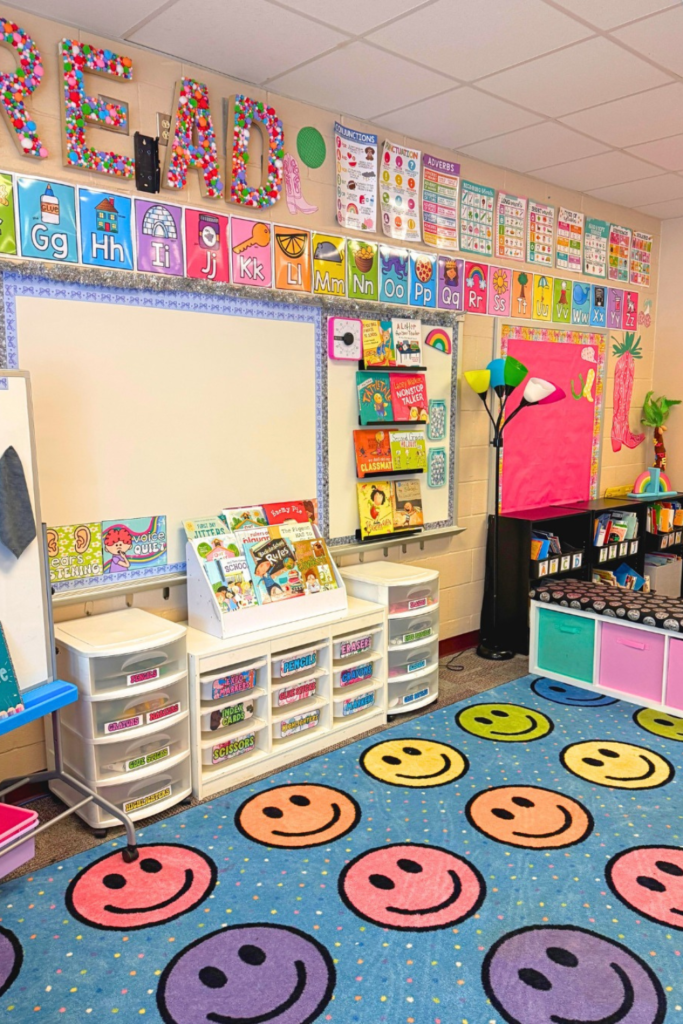
Teaching wall where classes are held every day, the décor should be done with learning charts and letter strips.
Provide vitality, anchor the area with a striking rug, ensure that the function remains the first priority, keep storage clear.
Labeled, well-organized, colorful learning aids provide a decorative effect without the need for additional décor.
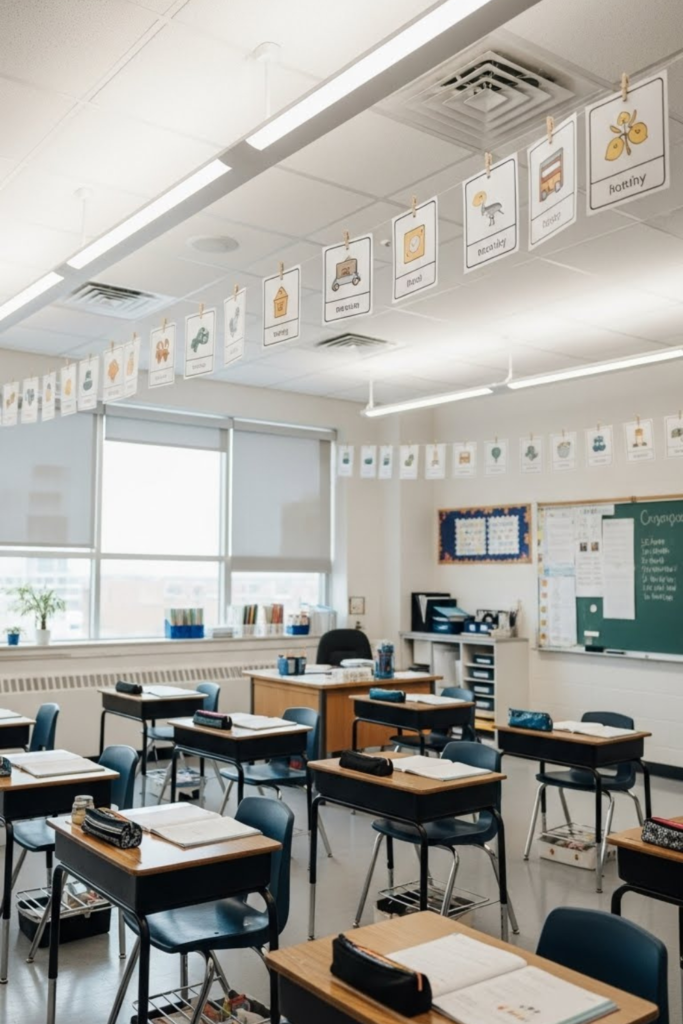
Ceiling Learning Trails
Your walls are already packed. To direct attention, use the ceiling. Arrange math facts, vocabulary cards.
This is most effective between zones or walkways. Limit the number of colors to make it seem deliberate.
Instead of being a waste of space, the ceiling becomes an integral element of education, this works best .
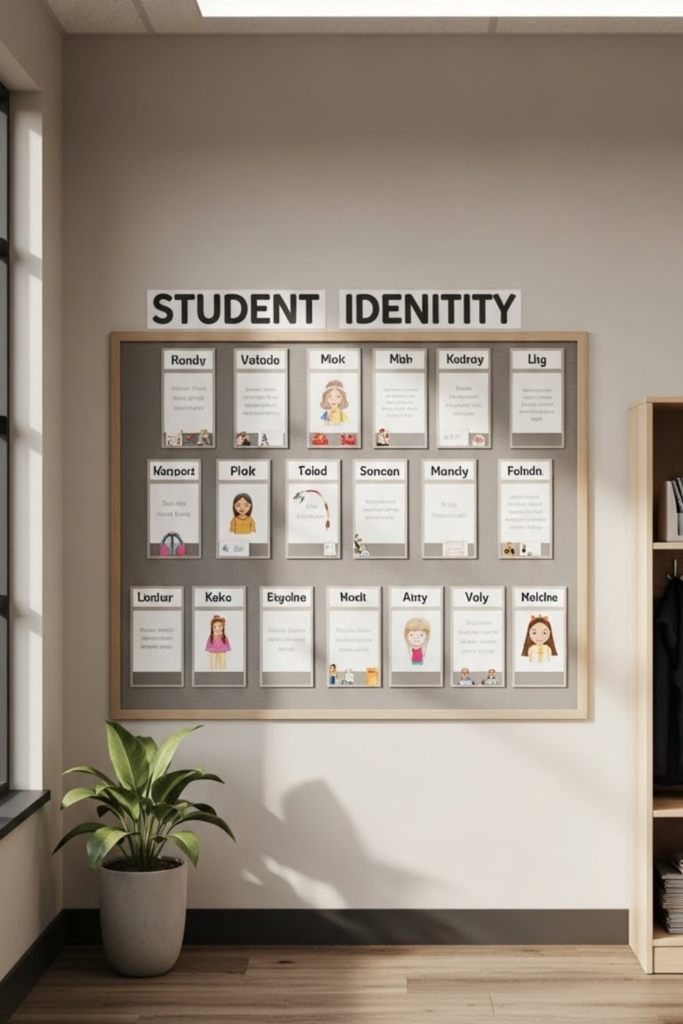
Student Identity Wall
Make a straightforward arrangement with a single, tiny place for each student’s name, picture, sketch, or interest card.
Keep things tidy, use the same template for everyone. Without the need for additional decoration, the space feels intimate
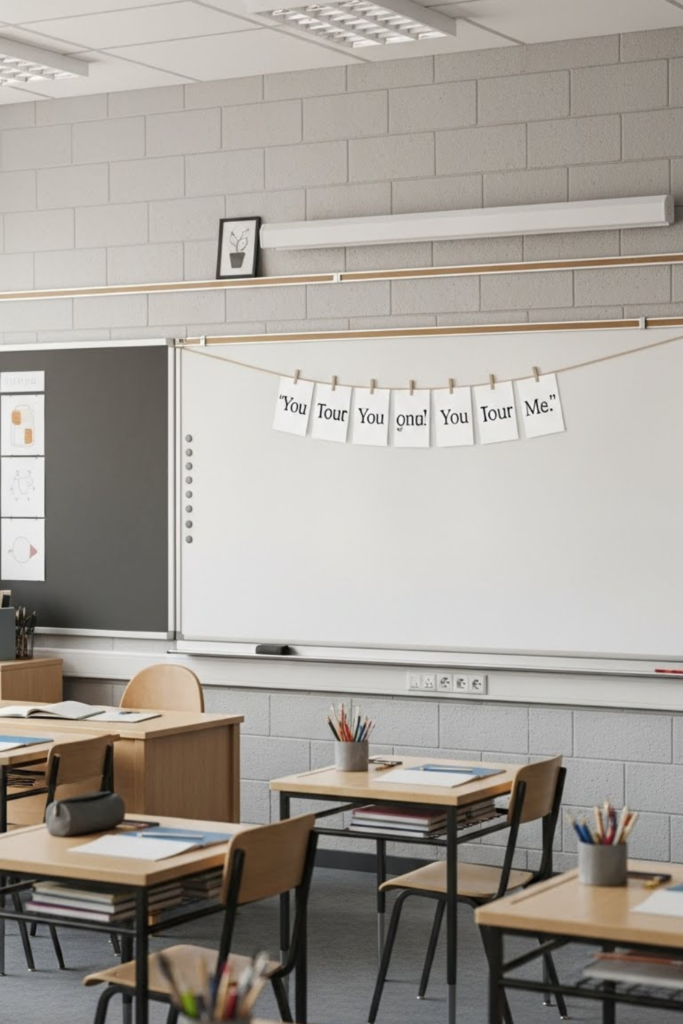
Rotating Quote Strip
Set aside a single, thin strip for quotes or affirmations rather than covering walls with permanent posters.
This works effectively along walls that face the hallway. One message at a time should be printed or written.
It always feels new without visual overload because only one thing changes. It requires little work but has a big impact.
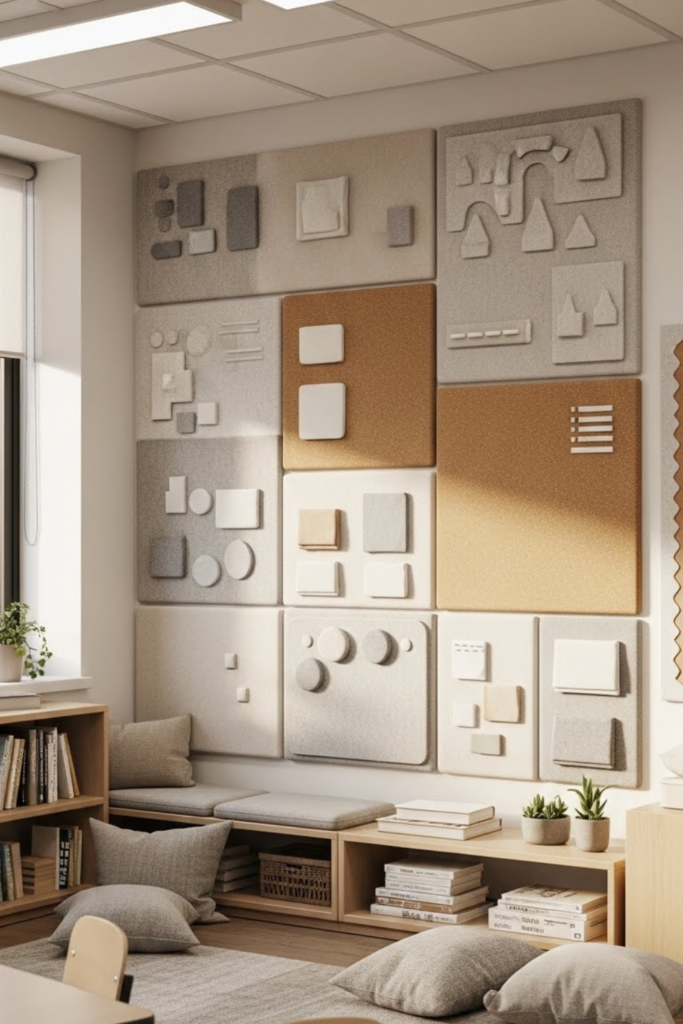
Texture-Based Decor Wall
Change to texture if your room is already dominated by color. Instead of using vivid prints, use cloth, felt, cork, or woven paper.
Ideal for calm spaces, keep your color scheme neutral and let texture add interest. It’s not noisy, but it seems cozy and imaginative.
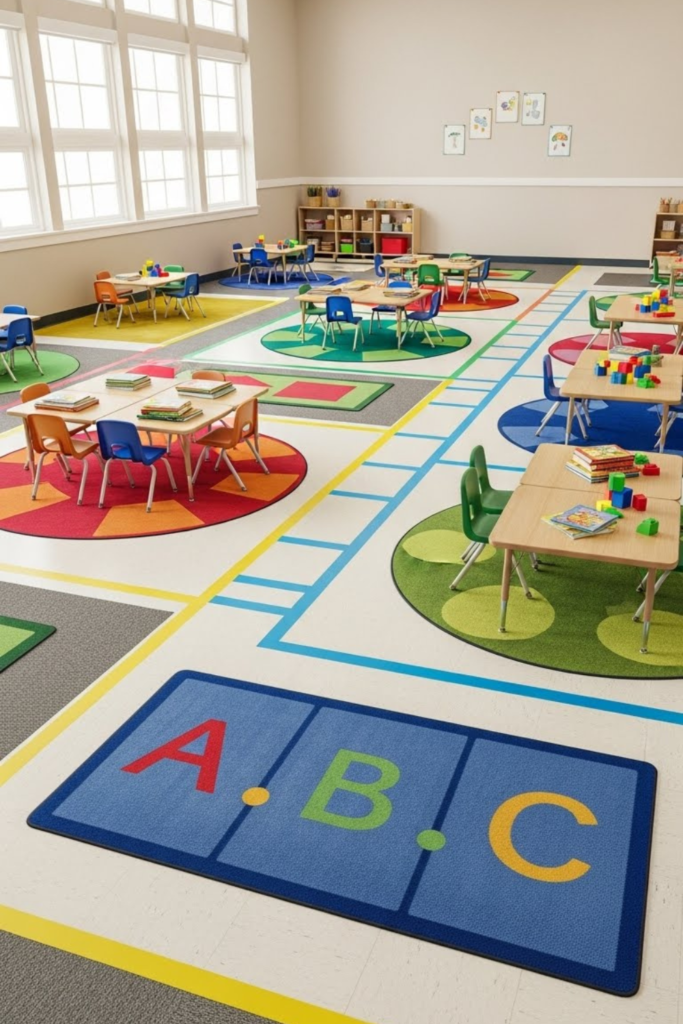
Floor-Level Visual Guides
The majority of classrooms are decorated at adult eye level. Mark lines, centers, or group areas with rugs, taped shapes, or floor decals.
It serves as both an adornment and aids in mobility and routines. The space feels intelligent and well-organized when the floor serves a purpose.
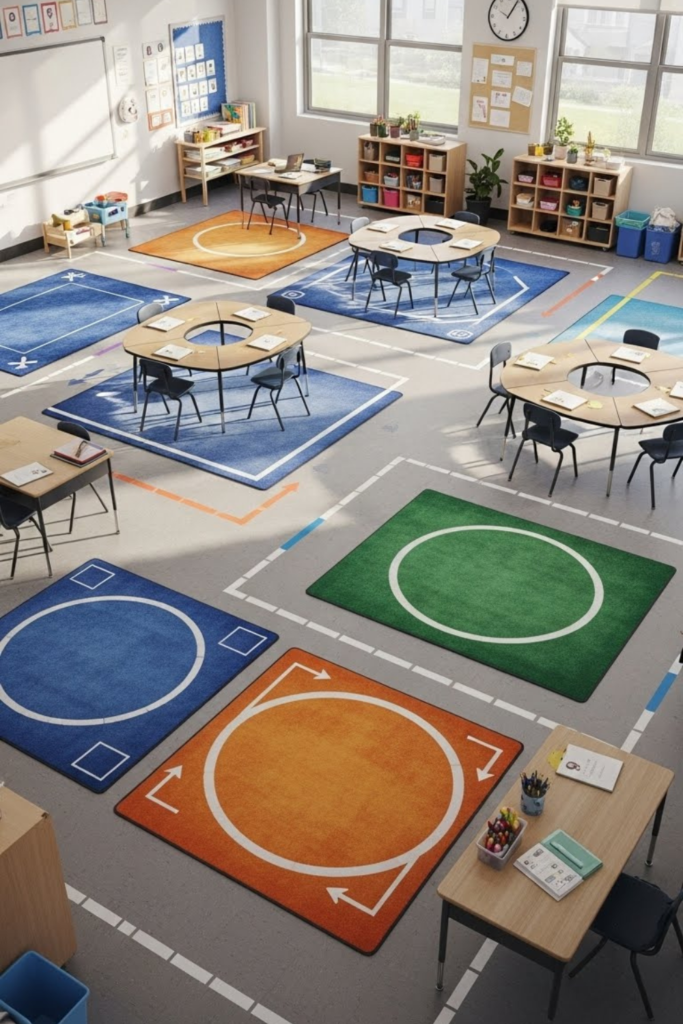
Minimalist Theme Corners
Use micro-themes in the classroom’s corners. There may be a tranquil, neutral corner, a math-focused corner.
A nature-inspired corner that engaged students. Each theme should have no more than two or three components.
This avoids visual overload without sacrificing creativity, making it ideal for shared classes or tiny areas.
FAQs
How can we make our classroom pretty?
A classroom can be made more aesthetically pleasing by being deliberate rather than by adding extra items.
Decorate one or two focal points first, such as a main wall or a reading nook. Instead of decorating every wall, use color sparingly with borders, bins, or rugs.
Organize the furniture and include student artwork in the design. The place naturally appears nicer when it is peaceful and functional.
What do teachers use to decorate their classrooms?
Most educators use inexpensive, basic supplies that can be reused throughout the year. This contains printable decor, storage bins, carpets, borders, posters, and bulletin board paper.
Additionally, many use everyday items such as fabric, paper, artificial or real plants, and string lights when permitted.
Keep the classroom both useful and aesthetically pleasing, the best decorations typically serve a purpose, such as organizing supplies or showcasing educational materials.
You may like to read!
- 12 DIY Acrylic Paint Storage Ideas
- 26 DIY Christmas Ornaments Ideas
- 19 DIY Lamp Shade Ideas
- 21 DIY Anniversary Gift For Him

Fasial is the founder of the Fizzy Flare. He has been a passionate blogger since 2021. He ran three different websites in the past few years. Now he is focusing on Fizzy Flare to build an audience and help them organize their life.