20 Wrapping Paper Organization Ideas for 2026
This post may contain affiliate links: full affiliate disclosure.
If your wrapping paper is wrinkled, torn, or scattered every time you need it, the problem isn’t the paper, it’s how it’s stored.
Rolls get bent, unroll in closets, and disappear behind boxes, which turns gift wrapping into a frustrating chore.
Once you store wrapping paper the right way, it stays smooth, takes up less space, and is always easy to grab.
In this article, you’ll explore 20 Wrapping Organization ideas that work in 2026.
Let’s jump in!
Contents
- 1 How to Organize Wrapping Paper?
- 1.1 Wall Rails
- 1.2 Rolling Station
- 1.3 Door Storage
- 1.4 Closet Station
- 1.5 Cabinet Storage
- 1.6 Vertical Bins
- 1.7 Full Door
- 1.8 Basket Display
- 1.9 Hidden Drawer
- 1.10 Color Sorting
- 1.11 Pegboard Wrap
- 1.12 Clear Bags
- 1.13 Tube Holders
- 1.14 Drawer Cubes
- 1.15 Tall Bin
- 1.16 Rod Cabinet
- 1.17 Fabric Caddy
- 1.18 Closet Zones
- 1.19 Shelf Guard
- 1.20 Slim Door
- 2 FAQs
How to Organize Wrapping Paper?
Organizing wrapping paper starts with fixing the problems that cause damage and clutter in the first place. If rolls are left loose, stacked wrong.
Stored without support, they will wrinkle, unroll, and take over your space. The goal is to keep each roll straight, secured, and easy to access.
Without digging through a mess. Once you choose the right storage position, stop rolls from unrolling, and keep all wrapping supplies in one place.
Everything becomes easier. When your system is simple and easy to maintain, your wrapping paper stays neat all year, not a seasonal headache.
Save this article for later! 👇👇
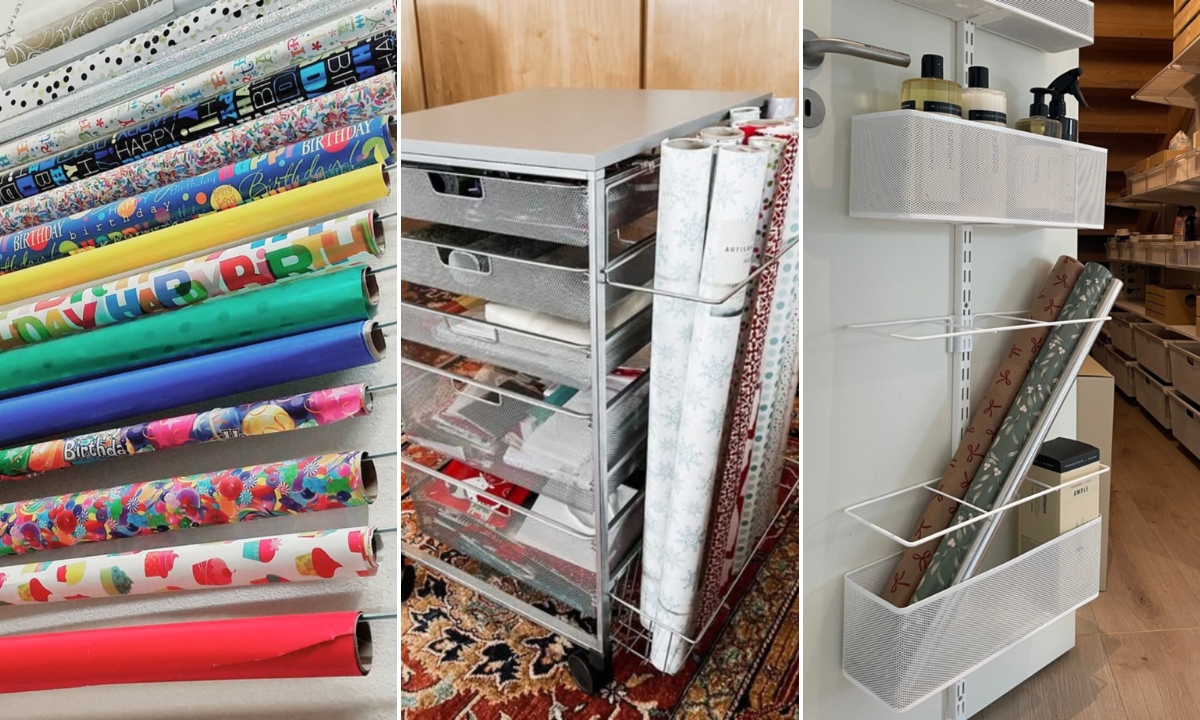
Wall Rails
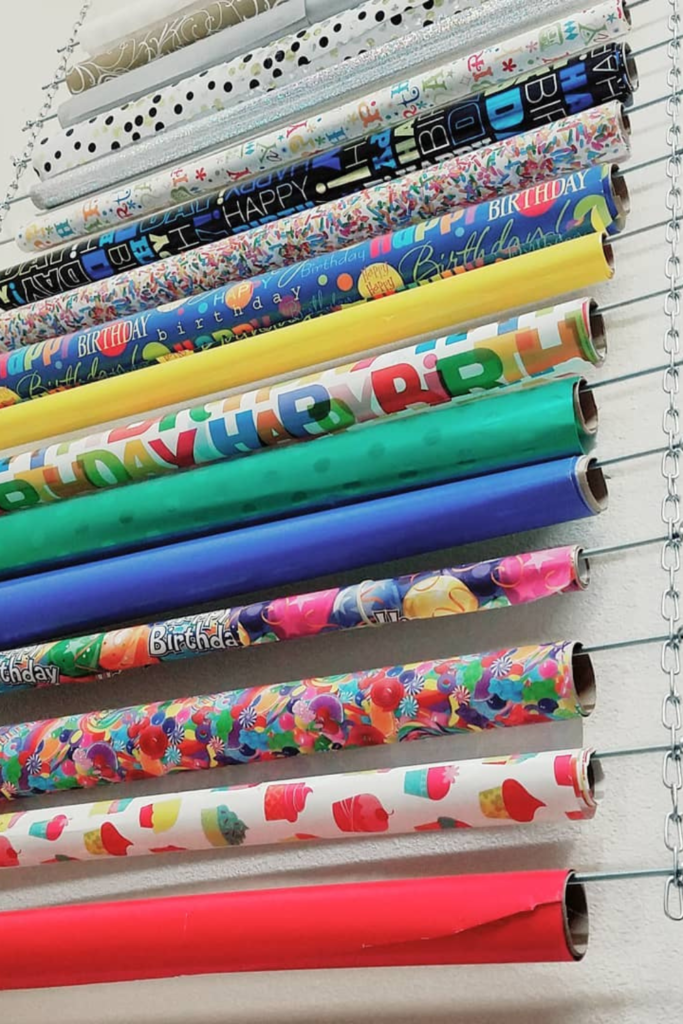
Wall space fixes the problem when floor and closet space are already gone. Horizontal rods keep each roll straight, visible.
Easy to grab without disturbing the rest. Mount this setup in a craft room, spare wall, or inside a large closet.
Spacing the rails evenly prevents bending, while open ends let you slide rolls in and out fast. Bright patterns stay visible.
Rolling Station
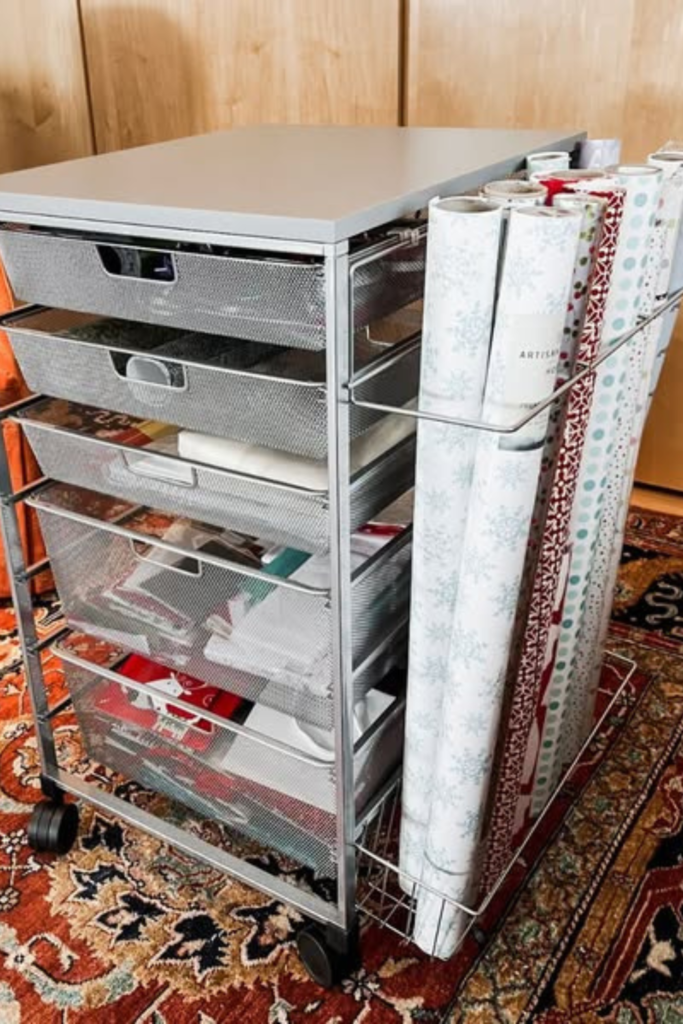
Mobility changes everything when wrapping happens in bursts. A rolling cart keeps paper upright on the side.
Drawers hold tape, ribbon, and tags in one stop. Parking this setup in a craft room or corner lets you pull it out only when needed.
Vertical slots protect rolls from bending, and layered drawers stop small supplies from disappearing between uses.
Door Storage
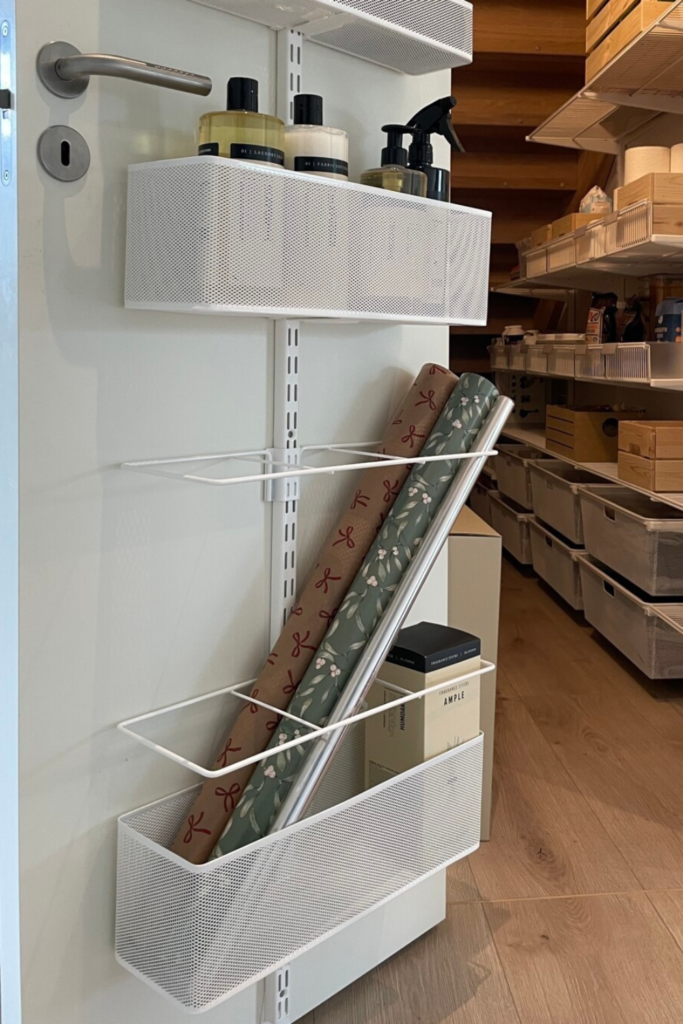
Hidden space becomes useful once the back of a door gets involved. Slim wire baskets hold rolls upright.
Closet doors and pantry-style storage rooms work best. Mount baskets with enough spacing so rolls slide out smoothly.
Open mesh keeps everything breathable while layered bins above and below handle tape, tags, and small tools.
Closet Station
Dedicated shelving turns wrapping into a grab-and-go task instead of a hunt. Horizontal rods keep rolls supported.
Drawers below handle tape, tags, and ribbon. Adjustable shelves let you adjust spacing as your collection grows.
Clear containers make it obvious which items need refilling before the next occasion. Work best in walk-in closets.
Cabinet Storage
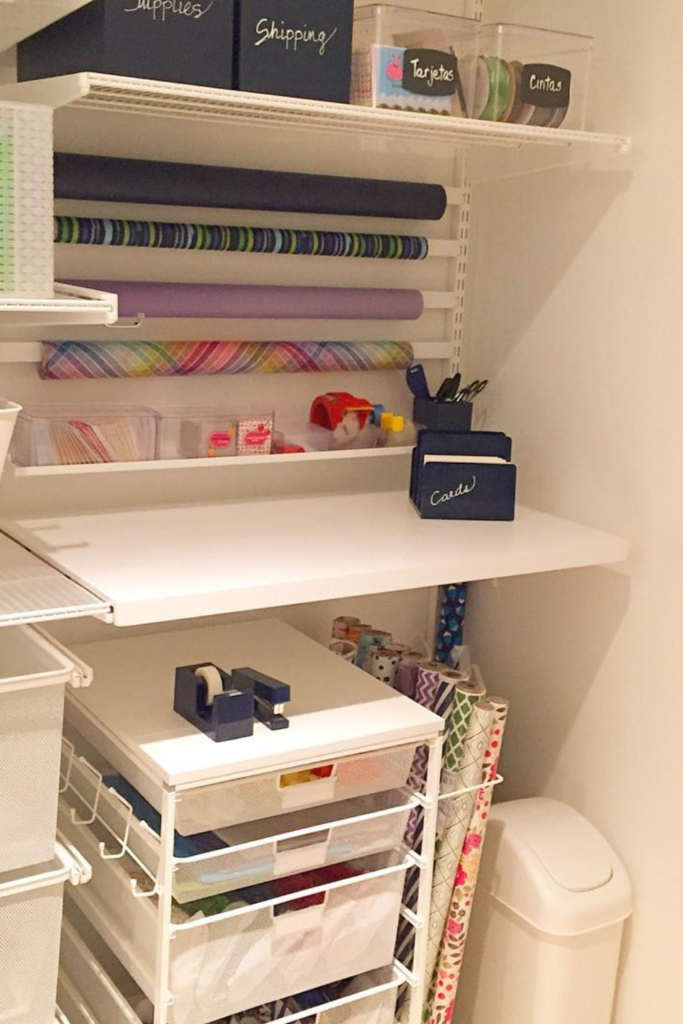
Built-in cabinets work best when wrapping supplies that need to disappear completely, tall lower compartments.
Keep rolls standing upright while drawers above handle ribbon, tags, and tools without mixing categories.
Deep bins protect paper from dust, and labeled drawers make it easy to find exactly what you need without having to pull everything out.
Vertical Bins
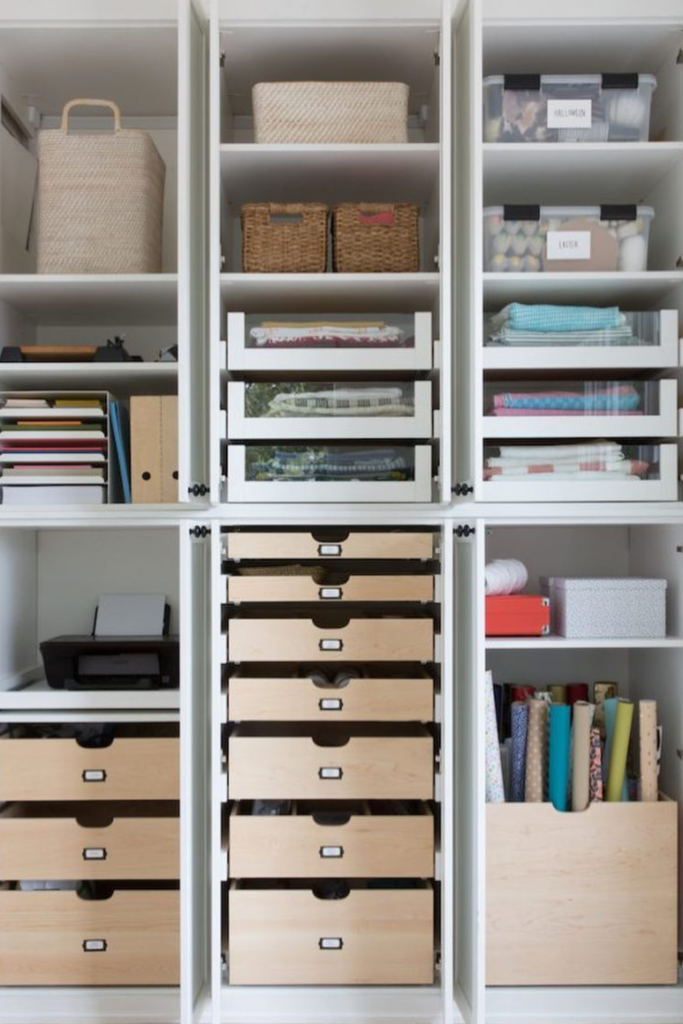
Standing rolls upright keeps paper crisp while using cabinet height efficiently. Deep bins at the base stop rolls from tipping.
Making this ideal for kitchen-style cabinets or craft storage walls. Sliding bins forward gives instant access.
Clear containers above handle cards, ribbon, and tags, creating a clean top-down system that’s easy to reset.
Full Door
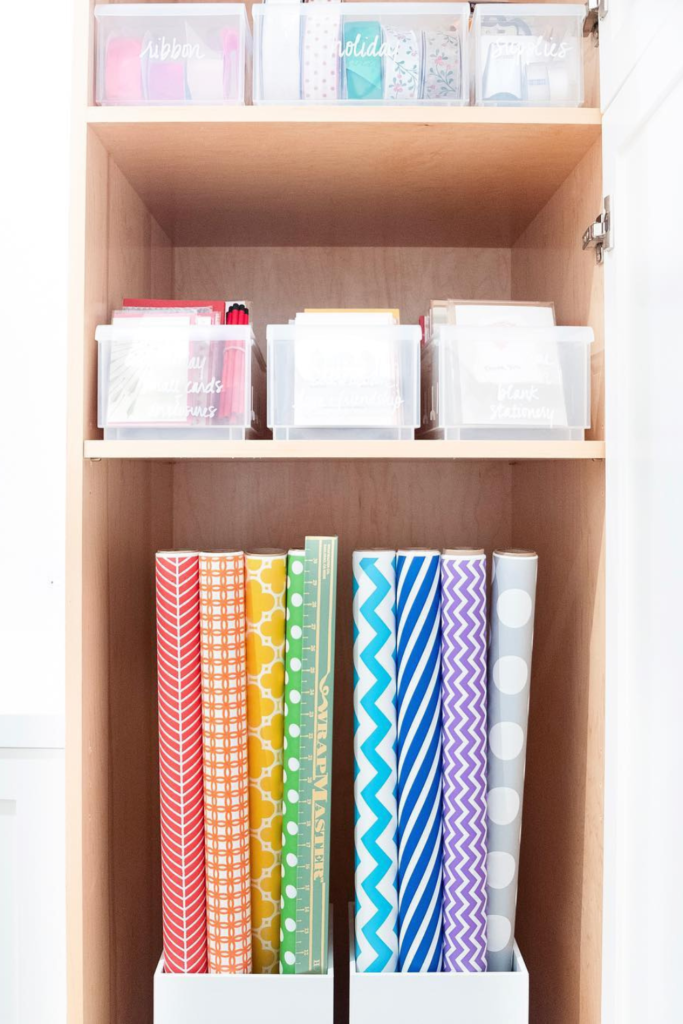
Using the entire door turns dead space into fast, easy to access, organized storage. Tall wire racks hold rolls upright.
Upper baskets catch gift bags, ribbon, and bows. This works best in closets where doors stay closed most of the time.
Spacing the racks keeps paper straight, and the vertical layout lets you see everything without stacking or digging.
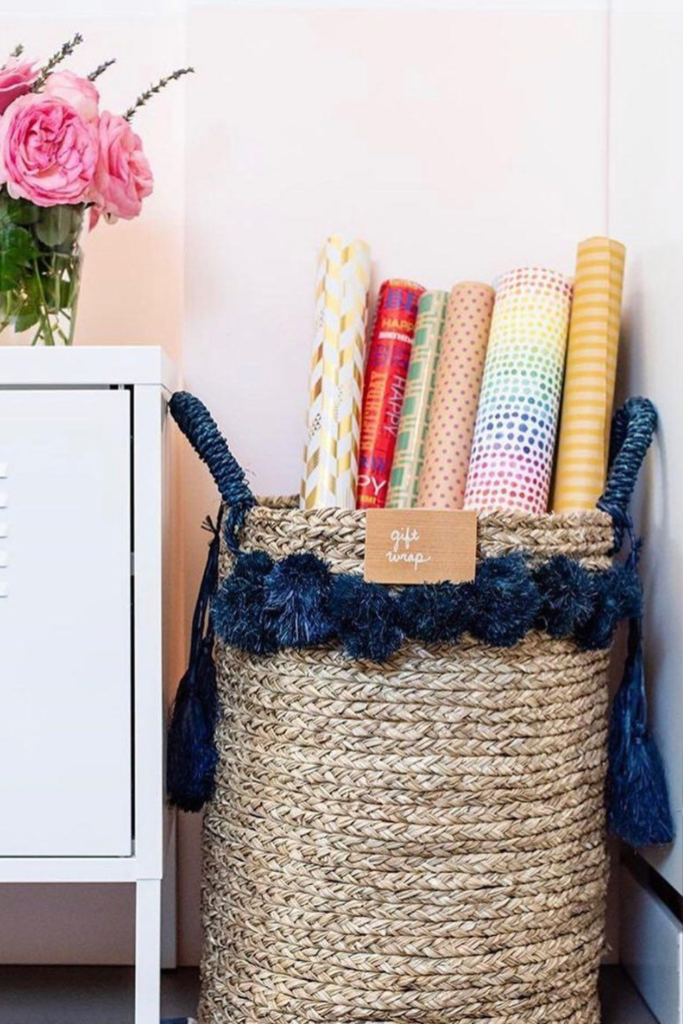
Basket Display
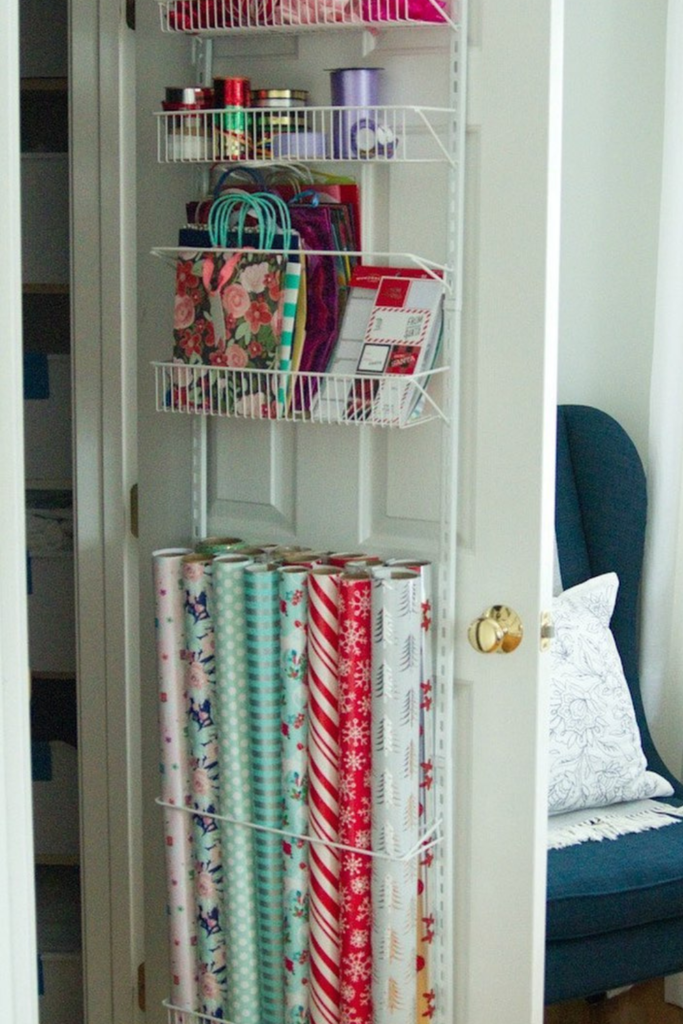
Hiding paper isn’t always necessary when storage can double as decor. A tall woven basket keeps rolls upright.
Blending into living rooms, positioning it against a wall prevents tipping, and the open top makes grabbing paper effortless.
Textured materials soften the look, while labels help keep everyday rolls separate from seasonal favorites.
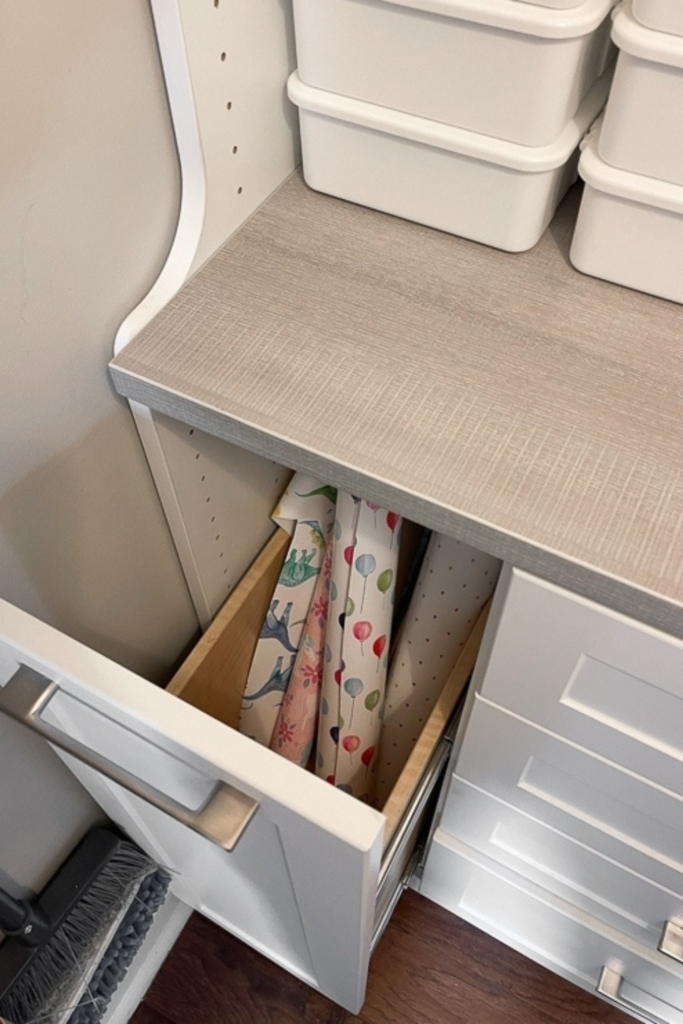
Hidden Drawer
Tucking wrapping paper into a deep drawer keeps it protected and completely out of sight, works best in laundry rooms, craft cabinets.
Adding a simple divider keeps rolls upright. Closed fronts protect paper from dust while keeping the entire setup looking clean and intentional.
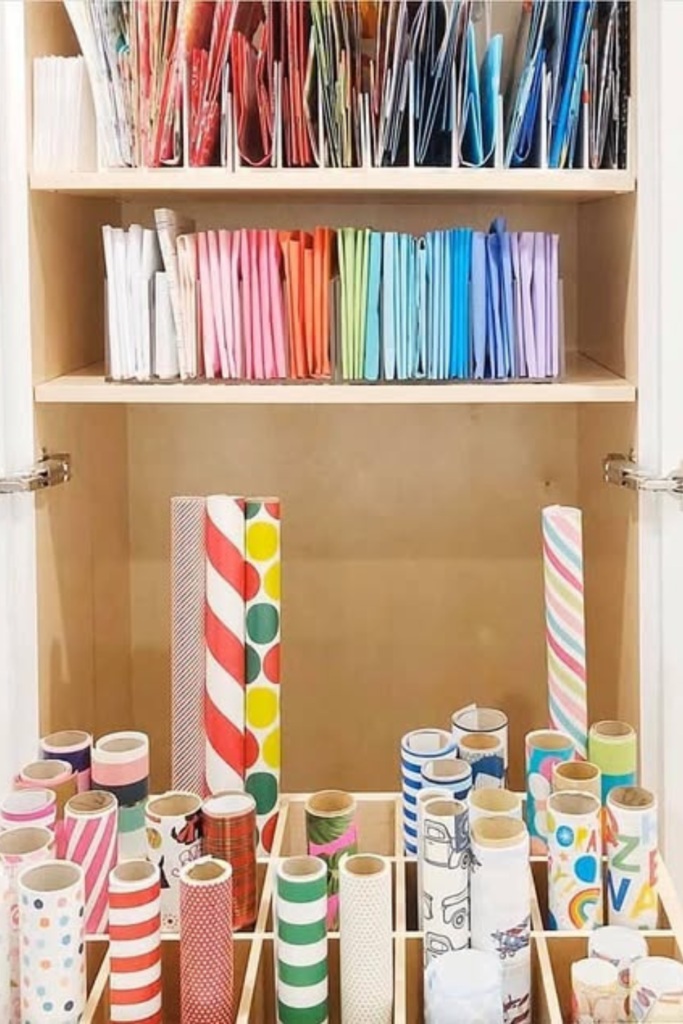
Color Sorting
Grouping paper by color makes choosing wraps fast and stops overbuying the same shades, upright dividers keep rolls separated.
Sorting by color also makes leftovers easier to spot, so short rolls get used instead of forgotten at the back, this works best in craft cabinets.
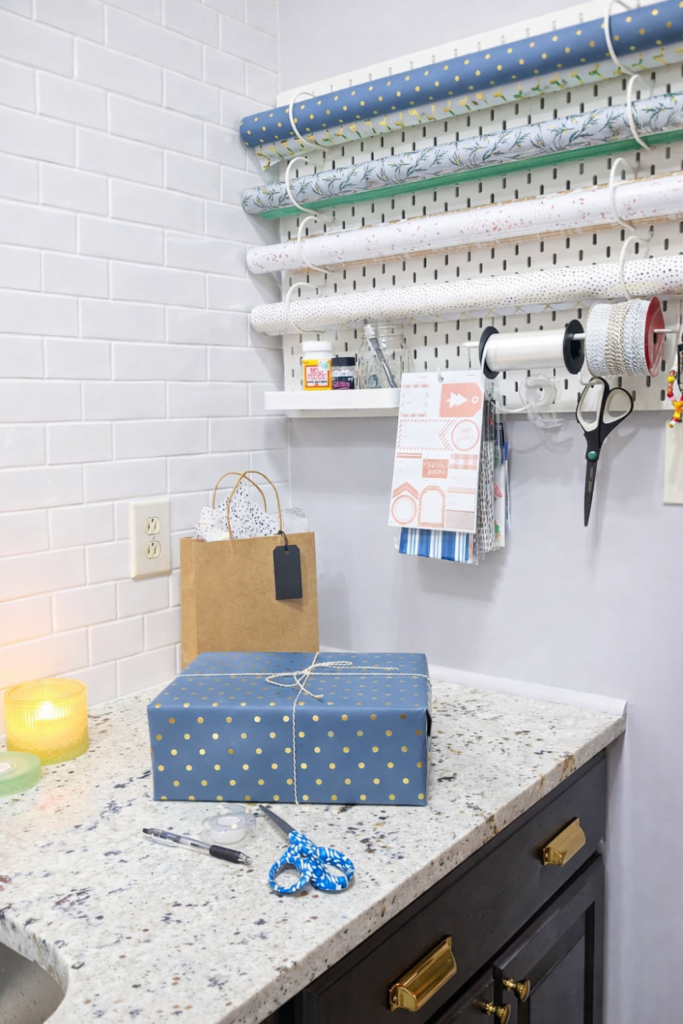
Pegboard Wrap
Turning a wall into a working surface keeps wrapping fast and mess-free. Pegboards hold rolls horizontally.
Paper stays straight, while hooks manage ribbon, scissors, and tape within arm’s reach, fits best in laundry rooms.
Spacing the rods evenly prevents sagging, and open storage makes restocking obvious before supplies run out.
Clear Bags
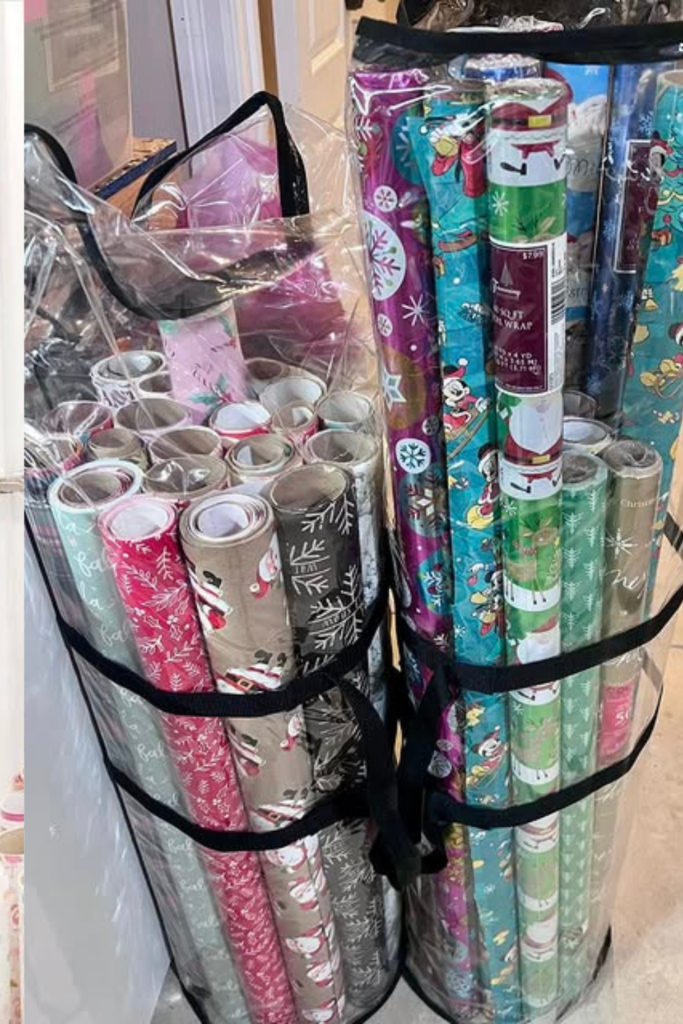
Seeing everything at once prevents wasted space and duplicate buys. Clear zippered bags keep rolls protected.
Showing patterns instantly, making them ideal for seasonal storage. Handles make pulling them out easy.
Structured sides keep rolls from bending. Grouping bags by occasion keeps holiday paper separate from everyday wraps.
Tube Holders
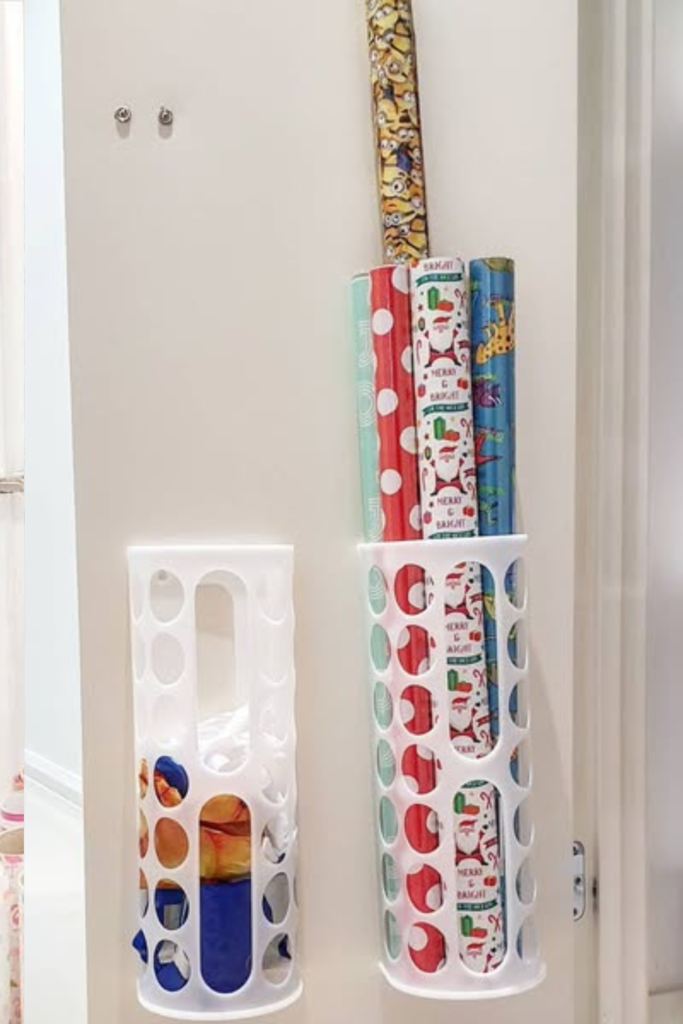
Narrow containers fill awkward gaps that regular bins can’t. Tall tube holders keep rolls standing straight. Open sides make it easy to spot patterns.
Lightweight plastic works well here because it won’t tip once rolls are loaded, and the vertical layout keeps paper from bending at the edges.
Drawer Cubes
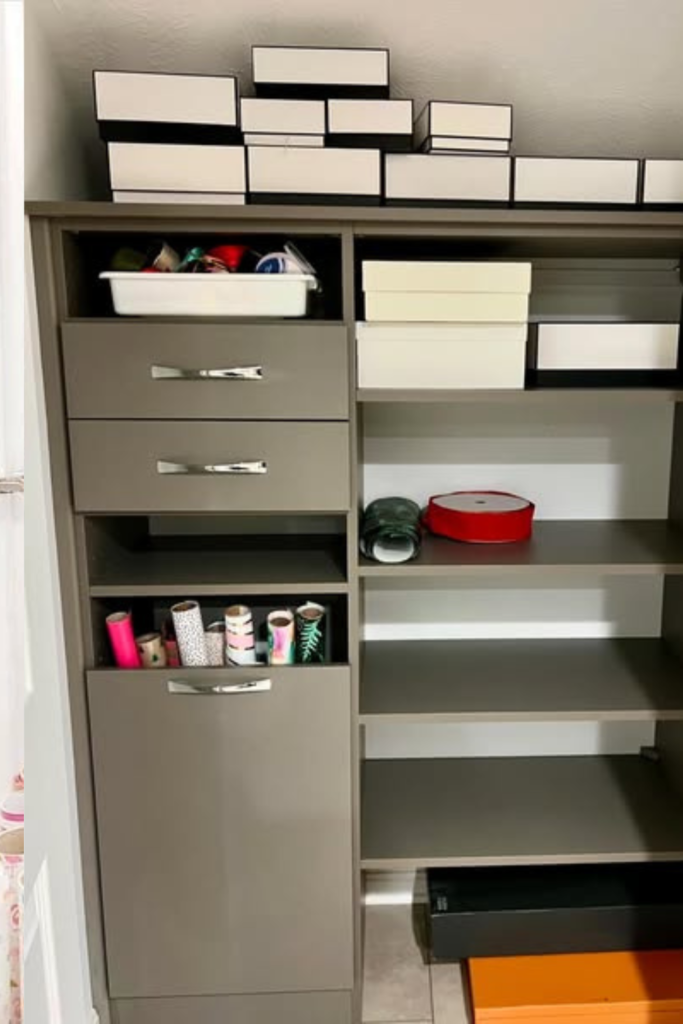
Deep drawers stop wrapping paper from sliding into chaos. Vertical cubbies keep short and half-used rolls standing.
Nothing gets crushed or lost, this setup works best in linen closets or utility cabinets with built-in drawers.
Pairing drawers with labeled boxes above separates paper from ribbon and bows, making restocking easy.
Tall Bin
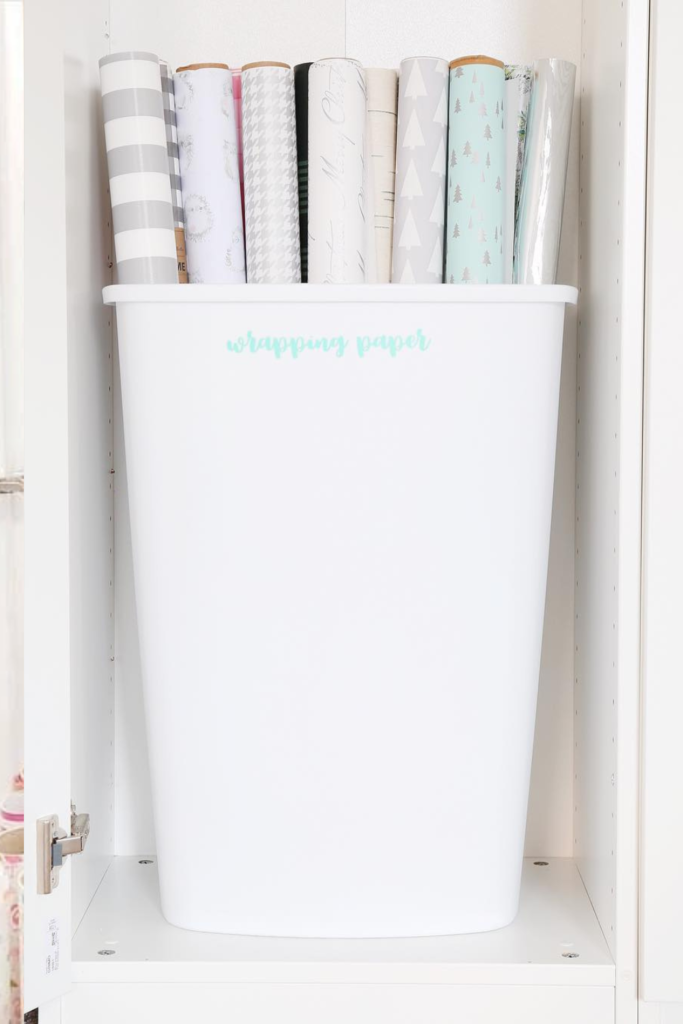
One deep bin keeps wrapping paper contained without overthinking storage. Standing rolls upright to prevent creases.
Making this ideal for narrow cabinets or closet shelves. Choosing a bin with a wide opening helps prevent paper.
From snagging when pulling rolls out. Labels keep everything obvious, while the closed sides protect paper from dust.
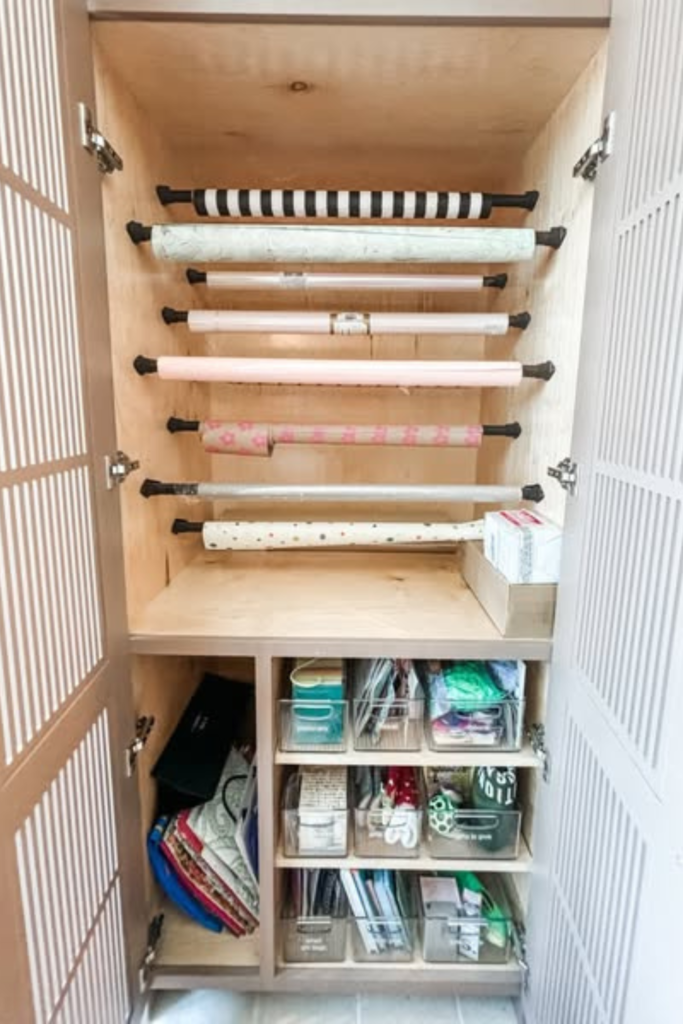
Rod Cabinet
Custom rods turn cabinet walls into clean, damage-free storage. Each roll stays suspended, preventing creases.
Making it effortless to grab one, works best in craft cabinets or repurposed wardrobes with enough width for full rolls.
Adjustable tension rods let spacing change as needed, while drawers below keep ribbon, tags, and tape sorted and ready.
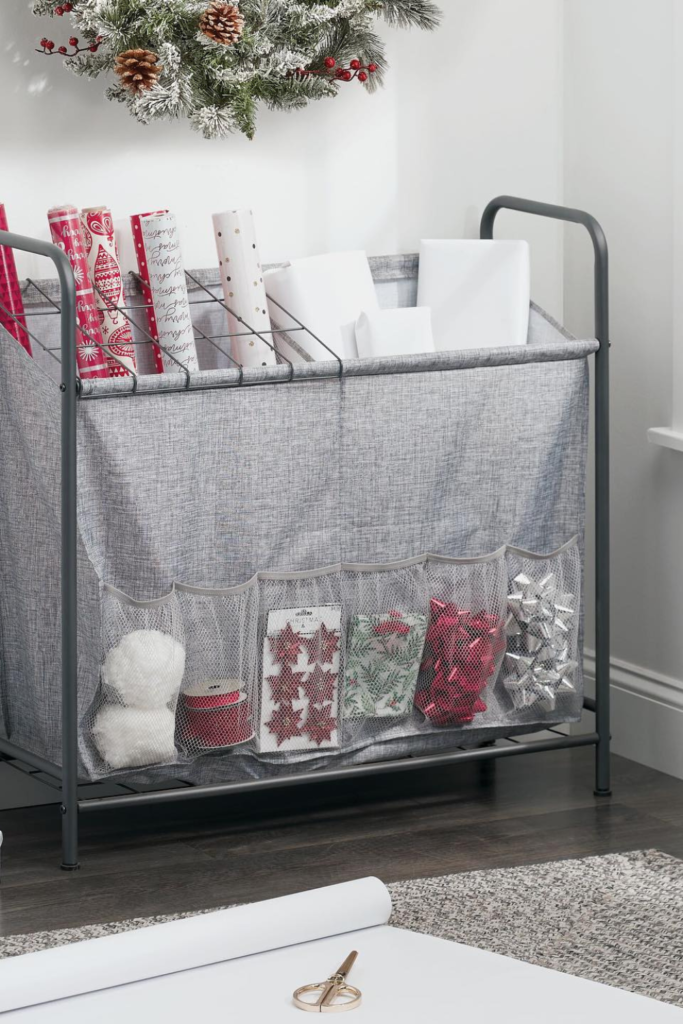
Fabric Caddy
A fabric caddy holds rolls upright while front pockets keep bows, ribbon, and tape visible and easy to grab. Soft-sided storage works well.
Divided sections stop rolls from tipping, and the lightweight frame makes moving everything simple when the wrapping season ends.
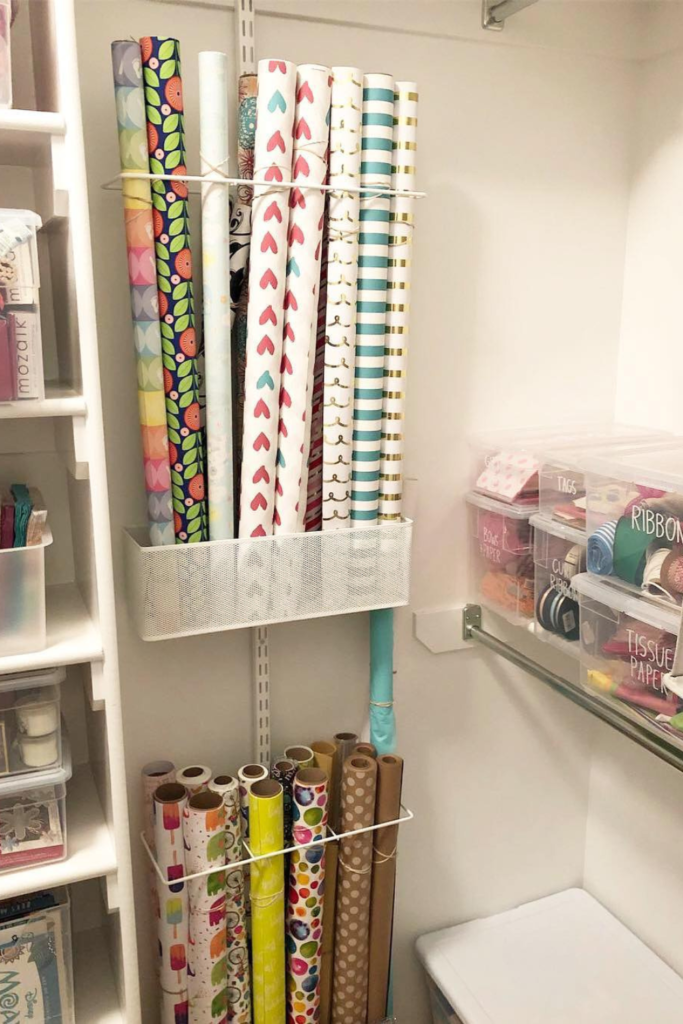
Closet Zones
Splitting wrapping supplies into vertical zones keeps everything from collapsing into one pile. Tall baskets handle full rolls up top.
While shorter rolls live below, where they’re easy to grab. This works best in linen closets or utility closets with adjustable rails.
Separating paper by height prevents bending, and clear side bins keep ribbon, tissue, and tags visible without mixing categories.
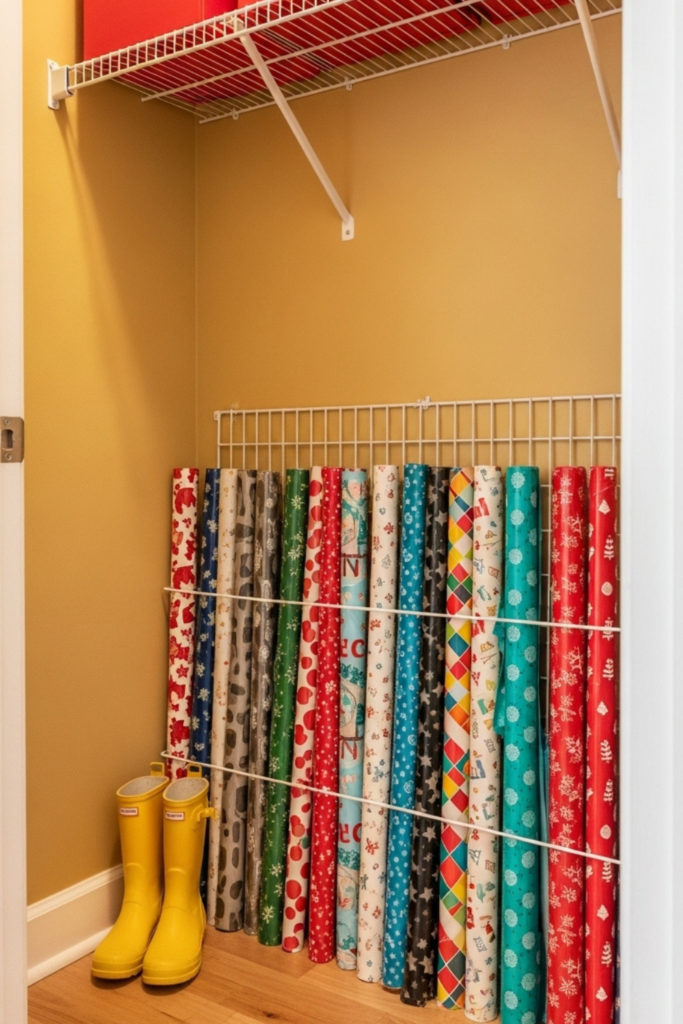
Shelf Guard
Lower shelves turn useful once rolls stop tipping over. A simple wire guard keeps wrapping paper standing upright.
Using floor-level space that is usually ignored. This setup works well in closets, mudrooms, or under-stair storage.
Placing the guard close to the wall prevents sliding, and grouping rolls by season keeps everyday paper easy to reach.
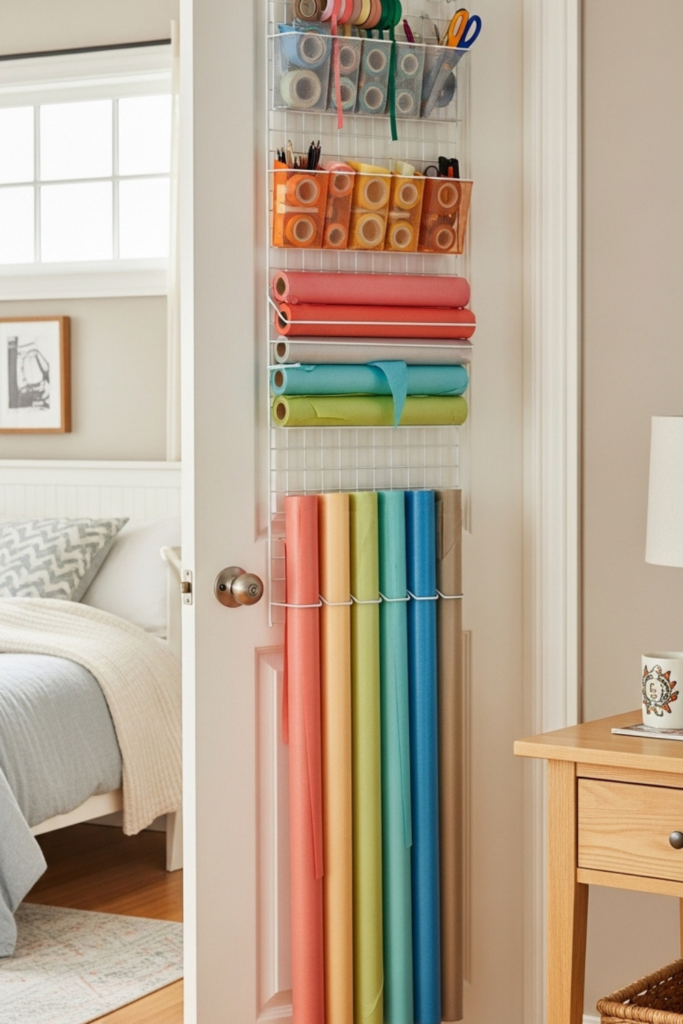
Slim Door
Narrow doors solve storage problems when cabinets feel too bulky. Tall wire pockets keep rolls upright while using almost no floor space.
Keeping paper vertical prevents creases, and pairing the lower rack with upper pockets makes room for ribbon, tape, and small tools.
FAQs
How do you store wrapping paper without ruining it?
Wrapping paper stays smooth when it’s stored straight and supported. Keep rolls upright in bins, drawers, or racks so they don’t bend or flatten.
Securing each roll with a band stops unrolling, which is what causes most tearing and wrinkles. Closed storage also protects paper from dust, and moisture.
What is the best way to organize wrapping paper in small spaces?
Vertical storage works best in tight spaces. Doors, narrow cabinets, and tall bins use height instead of floor space. Keeping rolls standing instead of stacked prevents damage.
Makes everything easier to grab. Pairing paper storage with small bins for tape and ribbon keeps the entire wrapping setup in one place.
You may like to read!
- 27 Pantry Organization Ideas
- 24 Family Organization Wall
- 22 Junk Drawer Organization
- 22 Cord Organization Ideas
- 23 Tupperware Organizing Ideas

Fasial is the founder of the Fizzy Flare. He has been a passionate blogger since 2021. He ran three different websites in the past few years. Now he is focusing on Fizzy Flare to build an audience and help them organize their life.