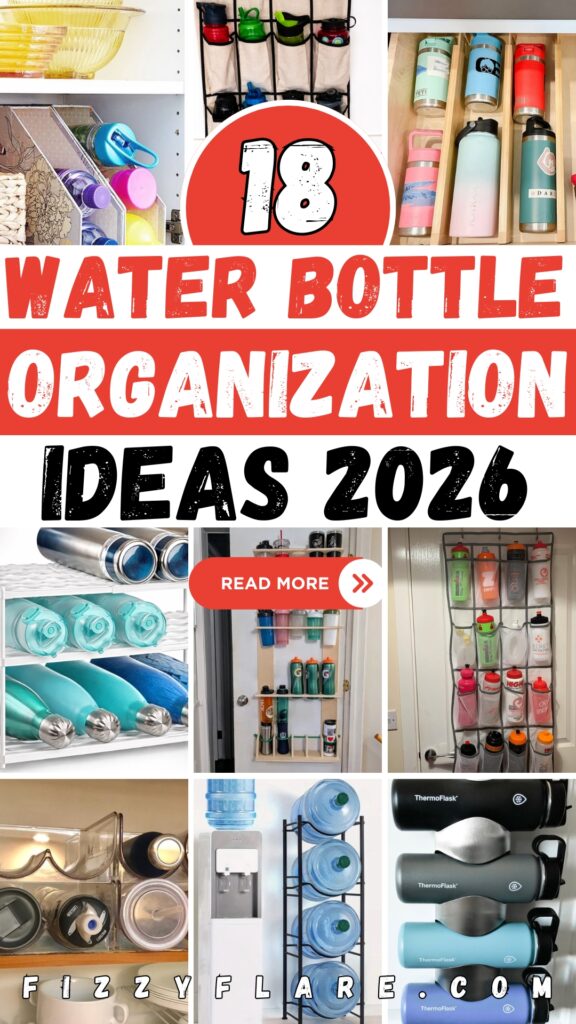
18 Water Bottle Organization Ideas for 2026
This post may contain affiliate links: full affiliate disclosure.
If you’ve ever opened your kitchen cabinet and had three water bottles tumble out at once, you know how annoying that gets. They look fine when you stack them.
Lids go missing. Big tumblers don’t fit. And somehow, you keep running out of space. The problem isn’t your kitchen; it’s how they’re stored.
In this article, you’ll learn the best way to store reusable water bottles in a small kitchen, and 18 water bottle organization ideas.
Let’s jump in!
Contents
- 1 Why Do My Water Bottles Always Fall Over in the Cabinet?
- 1.1 Vertical Dividers Win
- 1.2 Magazine Holder Hack
- 1.3 Door Pocket Storage
- 1.4 Sport Bottle Station
- 1.5 Custom Shelf Rack
- 1.6 Stackable Rack System
- 1.7 Vertical Jug Tower
- 1.8 Clear Bin Rows
- 1.9 Wall Mount Holders
- 1.10 Shelf Zoning Method
- 1.11 Countertop Turntable
- 1.12 Cubby Slot Storage
- 1.13 Drawer Compartment Grid
- 1.14 Tiered Lid Rows
- 1.15 Labeled Bin System
- 1.16 Mixed Shelf Layers
- 1.17 Category Shelf Split
- 1.18 Cabinet Turntable Zone
- 2 FAQs
Why Do My Water Bottles Always Fall Over in the Cabinet?
Water bottles fall over because cabinets weren’t designed to hold round, uneven shapes. Most shelves are flat and wide.
Works for plates and bowls but not for tall cylinders that roll and shift. Once you stack bottles on top of each other, balance disappears.
Different heights exacerbate the issue, especially when slim bottles are placed against bulky tumblers.
Deep cabinets add another problem: bottles in the back push the front ones out of place. Grab one, and the rest slide or tip forward.
Lightweight plastic bottles wobble easily, heavy stainless steel ones create a domino effect. Storing them without dividers.
Stable storage only occurs when each bottle has its own designated spot, rather than being loose in an open space.
Save this article for later! 👇👇
Vertical Dividers Win
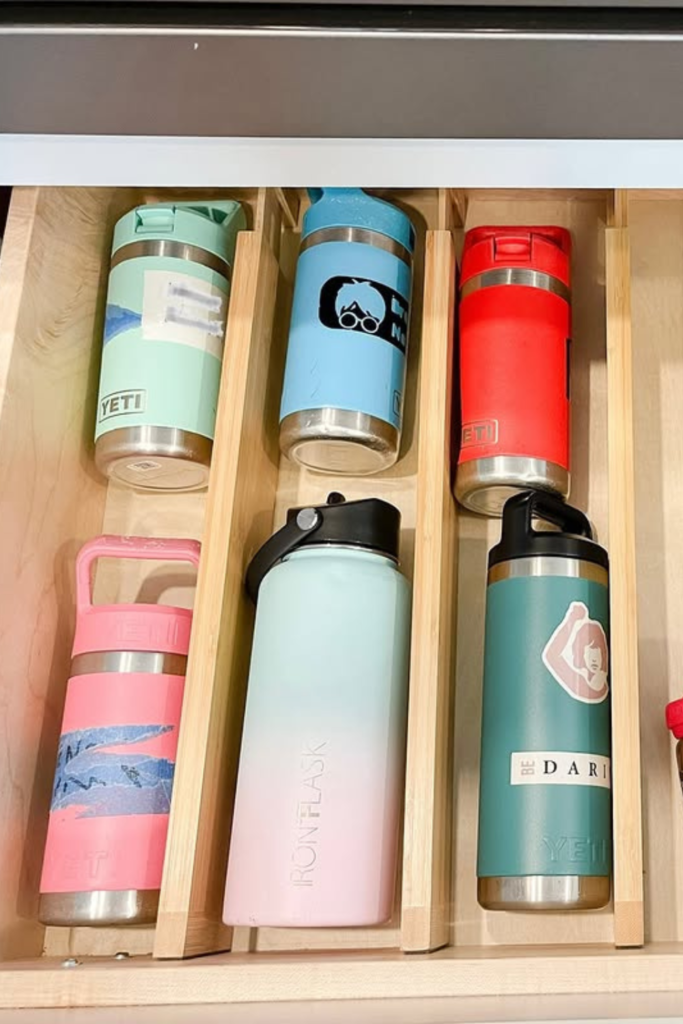
Cabinet chaos disappears the moment each bottle gets its own lane. Every bottle stands out, is easy to grab, and won’t topple.
Slim wooden dividers turn one wide drawer into separate slots, so nothing rolls or knocks into the next bottle.
Deep kitchen drawers work best for this setup because you can store bottles upright and still close everything smoothly.
Measure the height of your tallest tumbler first, then adjust divider spacing so wider bottles don’t get squeezed.
Wood keeps the look warm and clean, especially under soft overhead lighting that highlights the natural grain.
Magazine Holder Hack
Running out of cabinet space doesn’t always mean buying a fancy organizer. Cheap, easy, and renter-friendly.
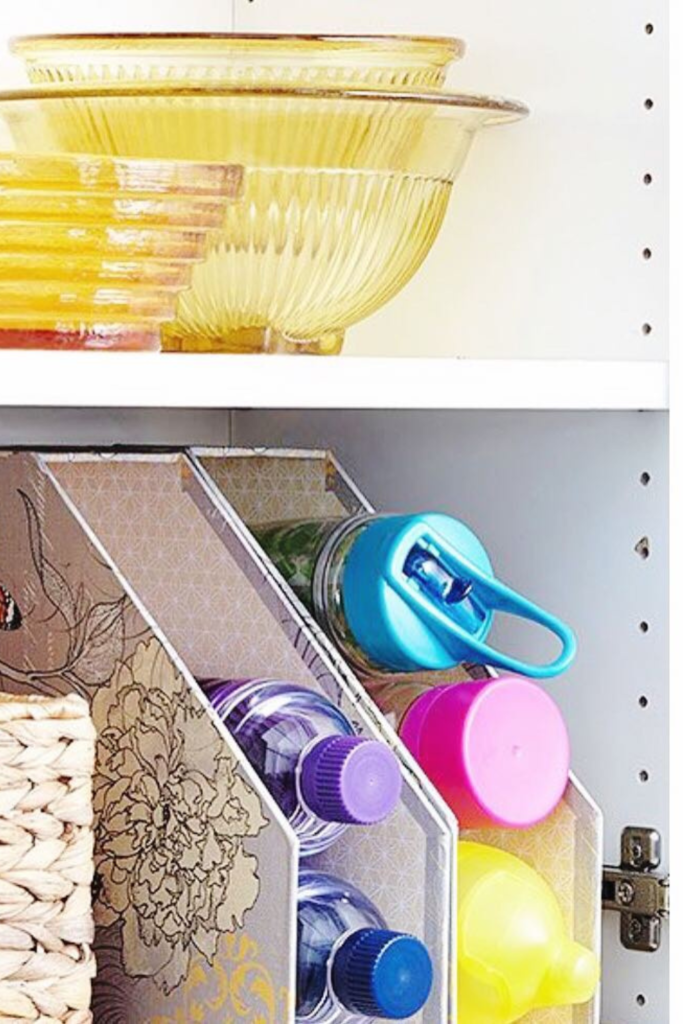
Simple magazine file holder can instantly turn a messy shelf into vertical bottle storage. Slide bottles in sideways.
They rest securely, not roll around. Short shelves and upper cabinets work well for this trick because it uses height.
Choose sturdy holders that won’t bend under weight. One holder stores daily-use bottles; the other stores extras.
Patterned or neutral designs blend easily with pantry decor, especially under soft cabinet lighting that keeps everything visible.
Door Pocket Storage
Empty door space can solve half your bottle problem. Pantry doors, laundry room doors, and even utility closets work perfectly for this setup.
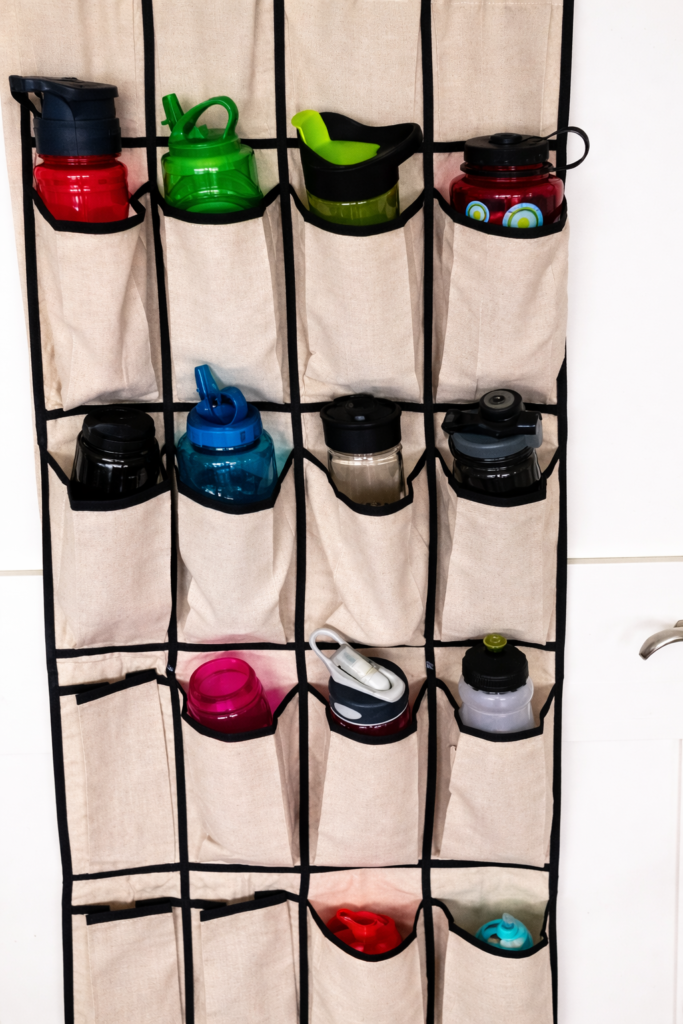
An over-the-door pocket organizer turns vertical space into instant storage, especially in small kitchens with zero extra shelves.
Slide lightweight bottles into each fabric slot, and keep heavier stainless steel bottles on the lower rows for balance.
Neutral fabric keeps the look calm, while bright bottle colors stay easy to spot under natural hallway light.
Daily-use bottles stay within reach, and your cabinets finally breathe. Zero drilling, zero clutter, maximum space reclaimed.
Sport Bottle Station
Busy households need grab-and-go access, not stacked chaos. Cabinet shelves stay free, and routines get smoother instantly.
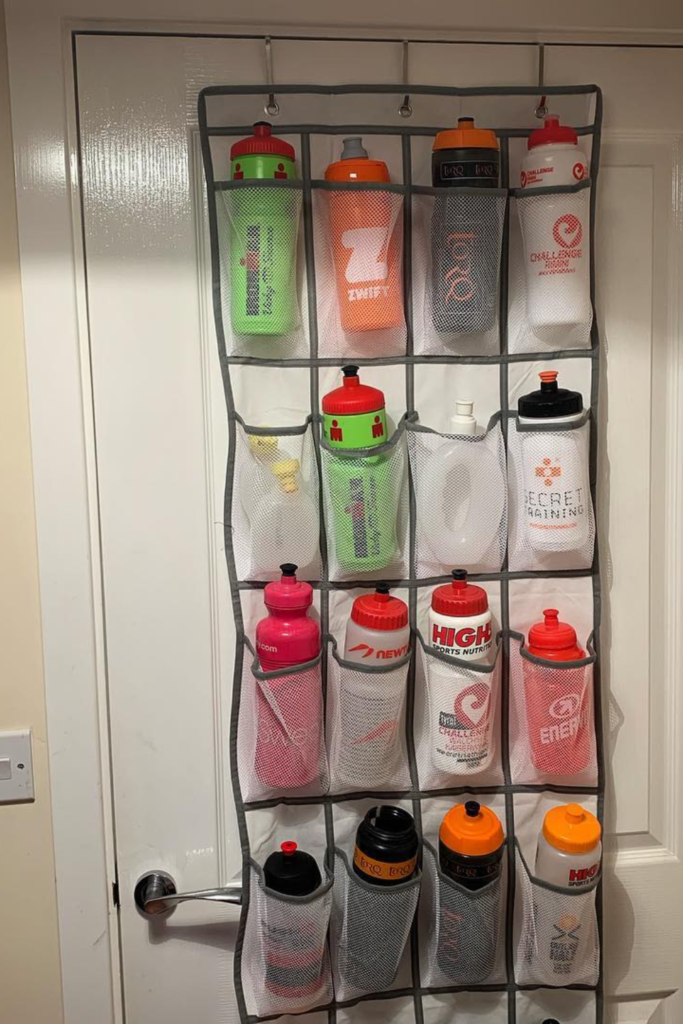
Turning a door into a full sports bottle station keeps every size visible and ready for practice, gym, or school.
Mesh pocket organizers work best because they stretch around wider bottles and allow airflow, preventing moisture buildup.
Hang it behind a pantry or utility door where traffic stays low, but access stays easy. Group bottles by family member or activity.
Neutral mesh paired with bright caps keeps everything easy to spot under standard hallway lighting.
Custom Shelf Rack
Nothing beats a solution built exactly for your space. Every bottle stays visible, separated, and ready without stacking a single one.
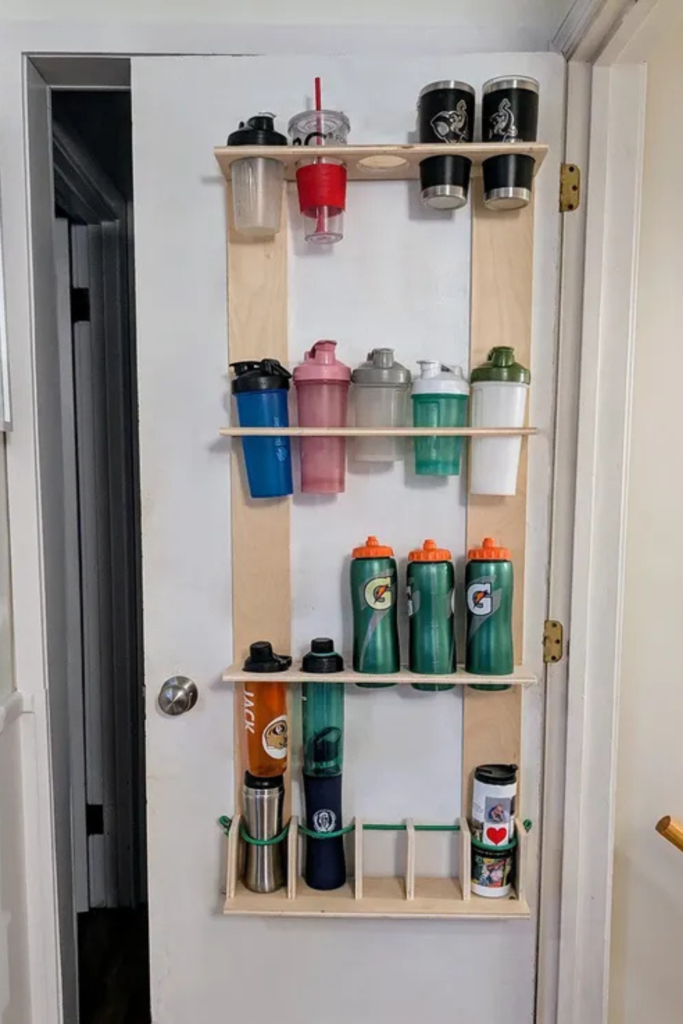
Slim wooden rack mounted behind the door turns wasted vertical area into structured bottle storage.
Fixed horizontal rails keep bottles upright, while lower slots securely hold tall tumblers. Perfect for narrow kitchens.
Measure door width and bottle height before building, so everything fits without blocking the closure.
Light natural wood keeps the setup clean and blends easily with white doors, especially under soft overhead lighting that highlights the grain.
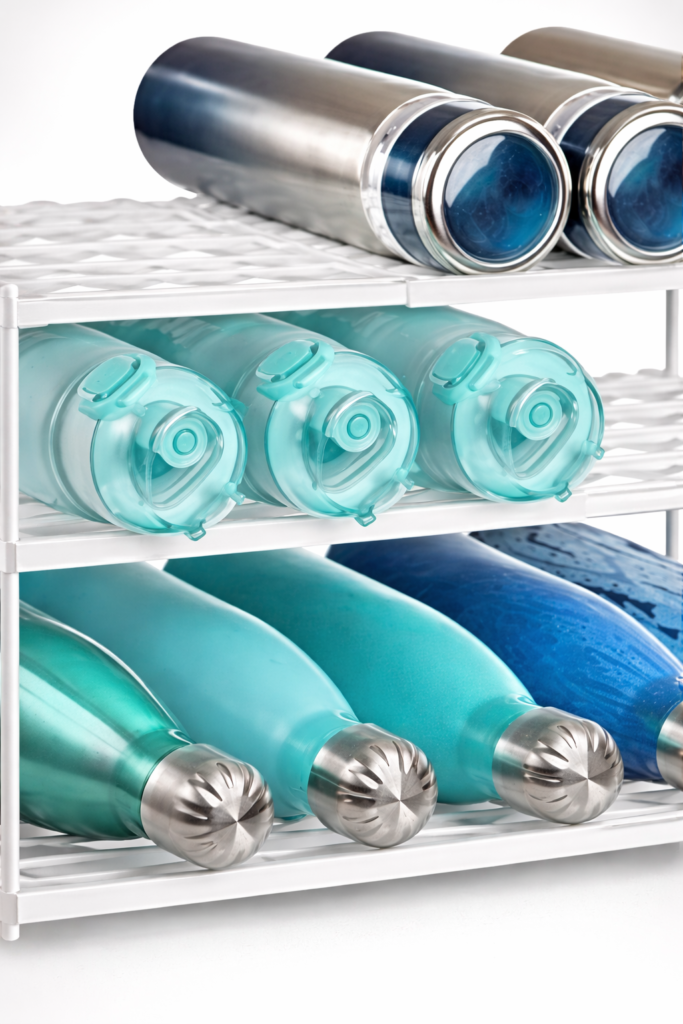
Stackable Rack System
Stacking bottles on top of each other always ends in a crash. Metal frames keep the structure sturdy.
Open sides make everything easy to grab. A tiered rack like this gives every bottle a horizontal cradle so nothing rolls or shifts.
Short cabinets and pantry shelves work perfectly for this setup because it uses depth effectively rather than piling vertically.
Bright kitchen lighting reflects off stainless steel bottles, maintaining visibility. Clean rows replace clutter instantly.
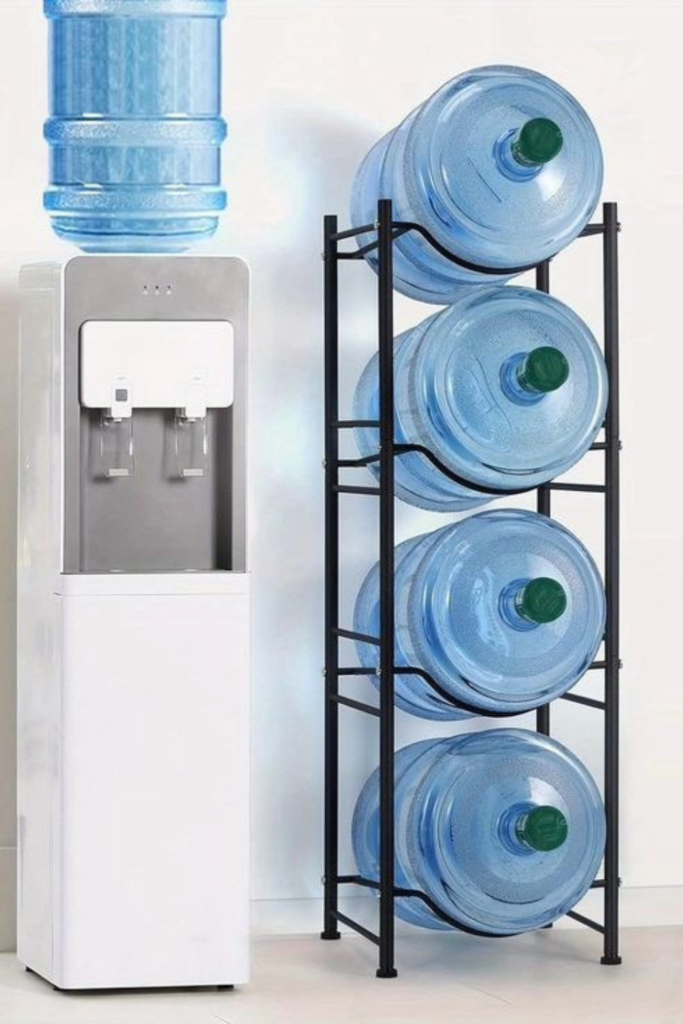
Vertical Jug Tower
Floor space matters, especially when large water jugs start taking over. Slide each jug horizontally into its own slot to prevent tipping.
Vertical metal rack keeps heavy bottles safely stacked. Corners near a water dispenser work best since refills stay within reach.
Strong steel framing holds the weight without bending, so always check the load capacity before buying.
Dark metal against white walls creates a clean contrast, while natural room light keeps the area from feeling bulky.
One narrow tower replaces a messy pile and instantly makes bulk storage look intentional instead of temporary.
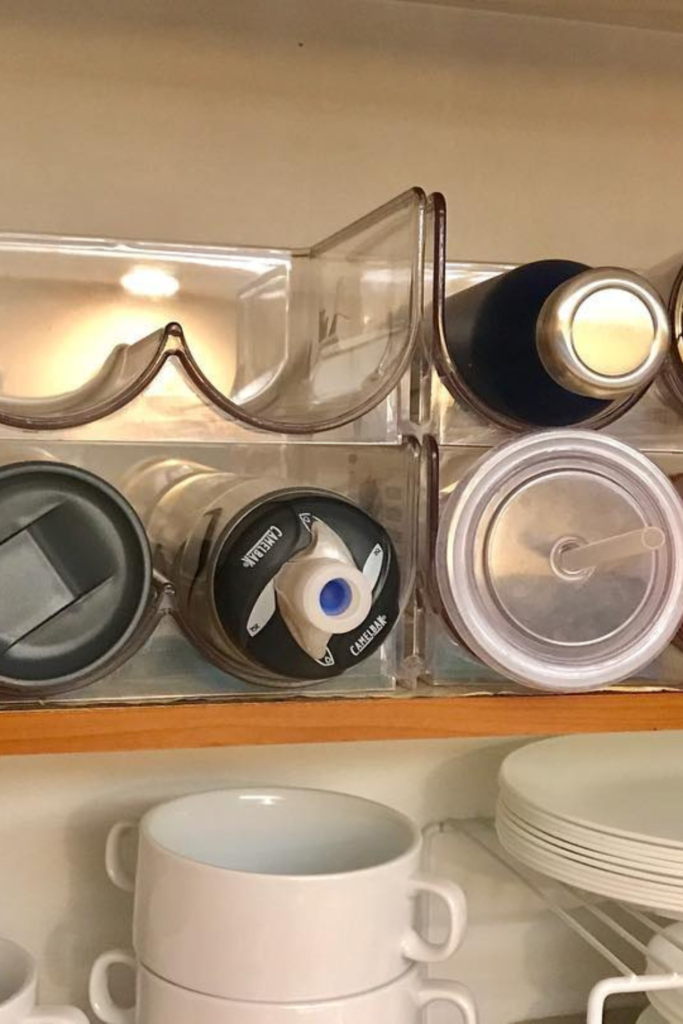
Clear Bin Rows
Deep shelves turn into black holes fast. Clear acrylic bins fix that by keeping bottles separated and fully visible from the front.
Slide bottles in sideways so the lids face outward, making it easy to grab the right one without pulling everything down.
Upper cabinets work best for this setup since bins prevent rolling and keep edges neat. Measure shelf depth first.
Bins don’t hang over. Transparent sides reflect under-cabinet lighting and make small kitchens feel less crowded.
Group similar sizes together to avoid wasted gaps. Clean lines, easy visibility, zero digging through clutter.
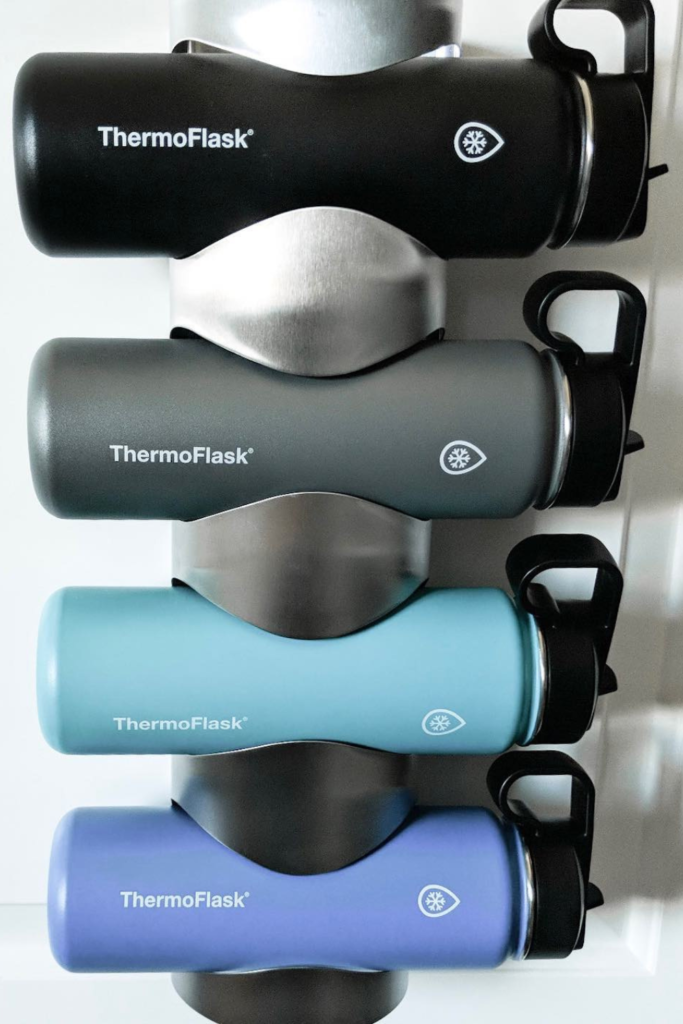
Wall Mount Holders
Move storage onto the wall. Individual metal holders cradle each bottle horizontally, keeping it secure.
Preventing it from rolling. Install them inside a pantry, along a utility wall, or even inside a deep cabinet door.
Space them based on bottle width so handles don’t clash. Strong brackets are key, since stainless steel bottles can be heavy.
Matte metal against painted walls creates a sleek, modern look, especially under focused wall lighting or nearby natural light.
Bottles become part of the design. Vertical stacking frees shelves instantly while keeping favorites within reach.
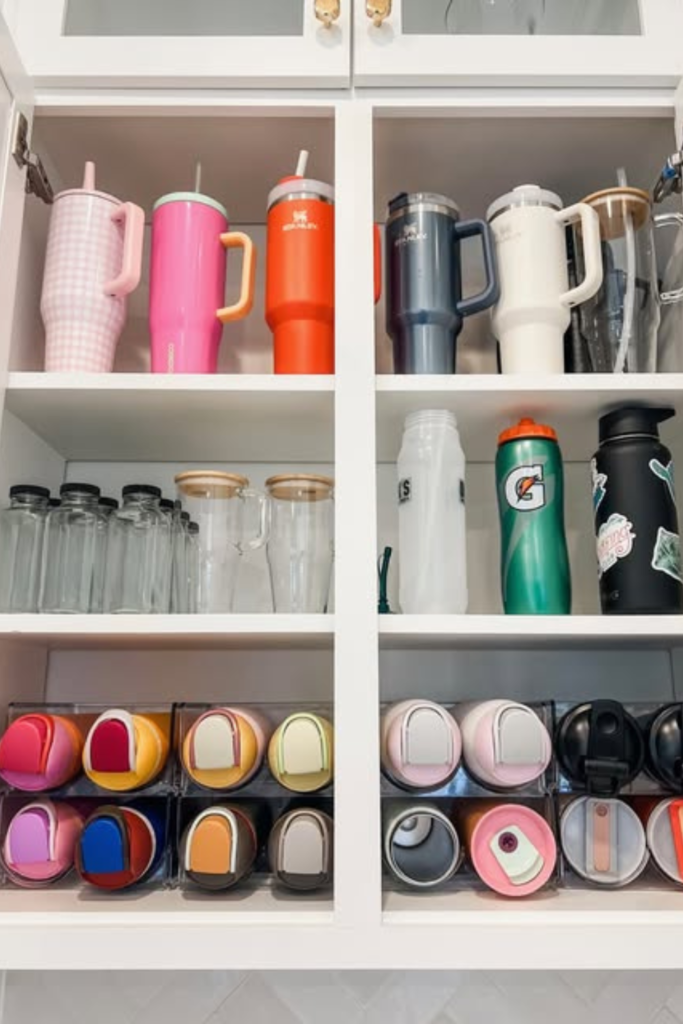
Shelf Zoning Method
Random placement creates random clutter. Defined zones stop overcrowding and make it obvious where each bottle belongs.
Tall tumblers stand upright on upper shelves where height isn’t restricted, while shorter bottles line up below by type.
Lids get their own lower row inside clear stackable bins, so matching stays simple. Glassware stays separate.
Preventing daily bottles from mixing with rarely used items. Adjustable shelving lets you customize spacing.
Avoiding awkward gaps where bottles don’t fit. Bright cabinet lighting and glass doors keep everything visible and polished.
Countertop Turntable
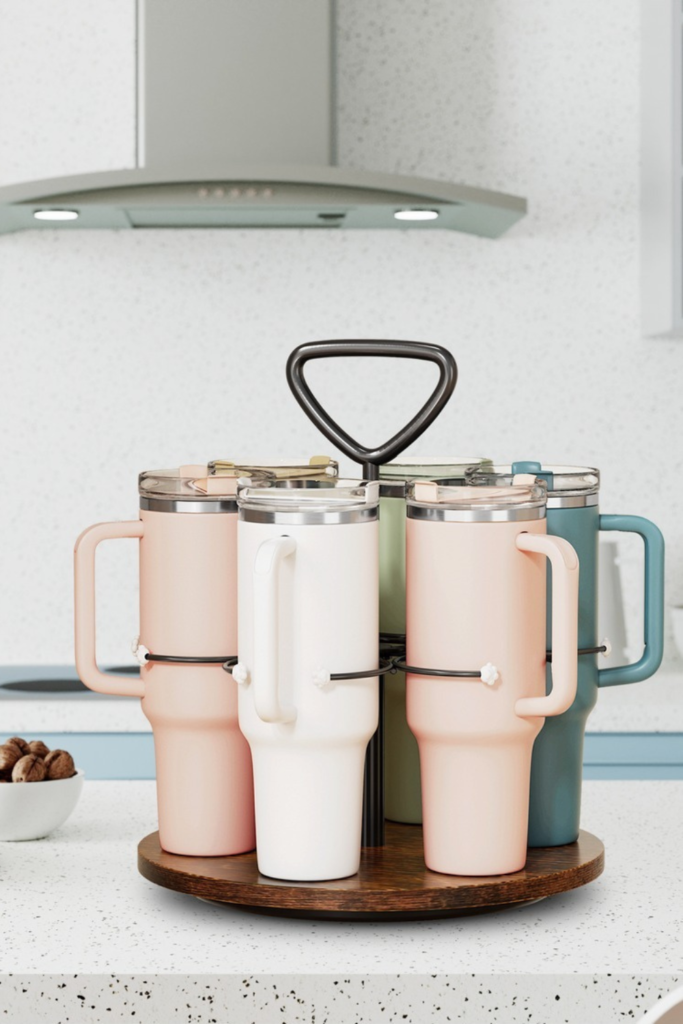
Morning routines move faster when bottles spin. Rotate the tray to grab what you need without shifting everything around.
Sturdy lazy Susan keeps large-handled tumblers grouped in a compact circle on the counter or inside a deep cabinet.
Wide kitchen islands and corner counters benefit most from this setup because circular trays use awkward spaces more effectively.
Choose a heavy wooden or non-slip base to prevent taller bottles from wobbling. Soft overhead lighting reflects off neutral colors.
Cubby Slot Storage
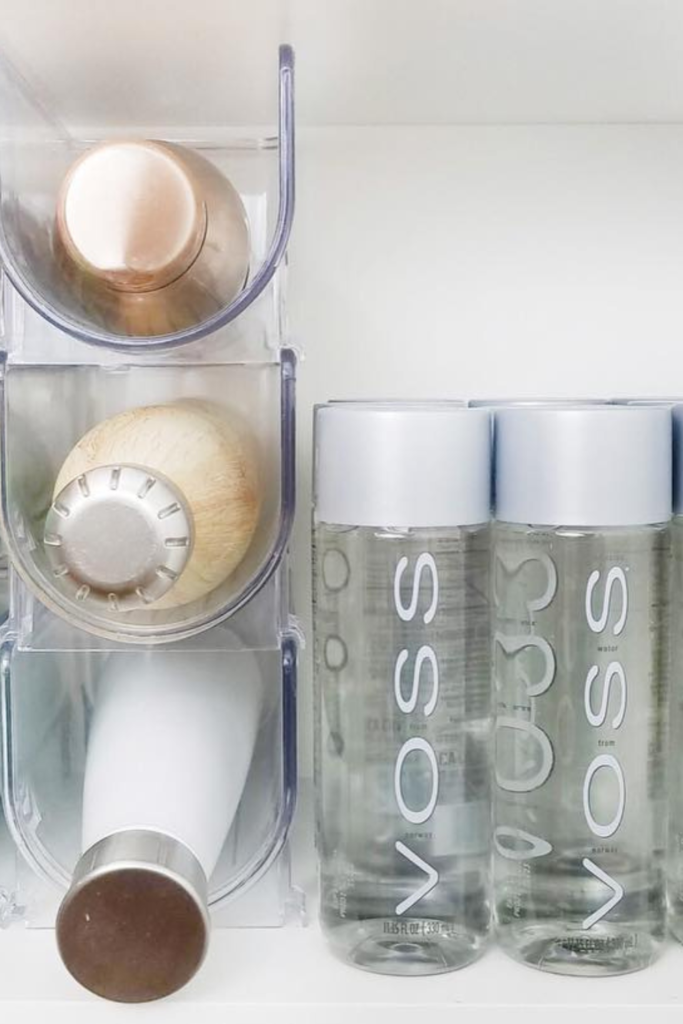
Rolling bottles waste more space than you think. Individual cubby-style slots fix that by giving each bottle a fixed horizontal cradle.
Stack clear modular units vertically inside cabinets to maximize height without stacking bottles directly on each other.
Clear acrylic keeps everything visible and reflects interior cabinet lighting, making the space feel open rather than packed.
Line similar sizes together to avoid uneven gaps. Structured rows create instant order and eliminate the daily bottle avalanche problem.
Drawer Compartment Grid
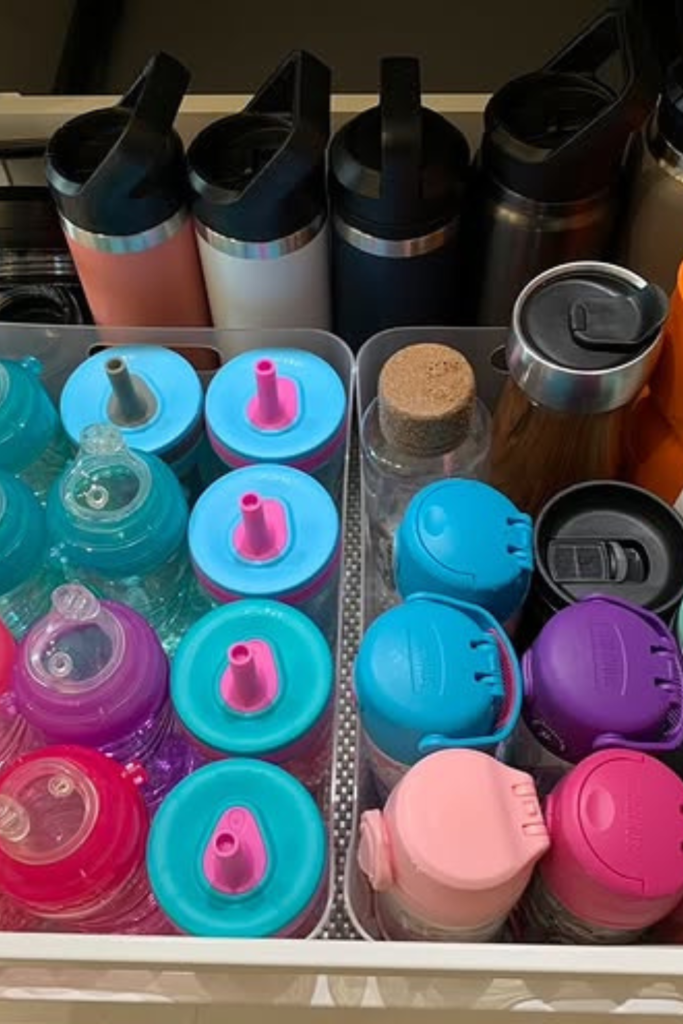
Opening a drawer shouldn’t feel like digging through a pile. Bright interior drawer lighting or natural overhead light keeps colors easy to spot.
Divided inserts turn one wide drawer into clear sections for kids’ bottles, shaker cups, and tall tumblers.
Deep kitchen drawers work best because bottles can stand upright. Keep frequently used bottles in front rows and backups toward the back.
Adjustable dividers let you customize each slot based on bottle width, so nothing tips over when the drawer slides open.
Structured compartments replace stacking completely and make cleanup simple after every wash cycle.
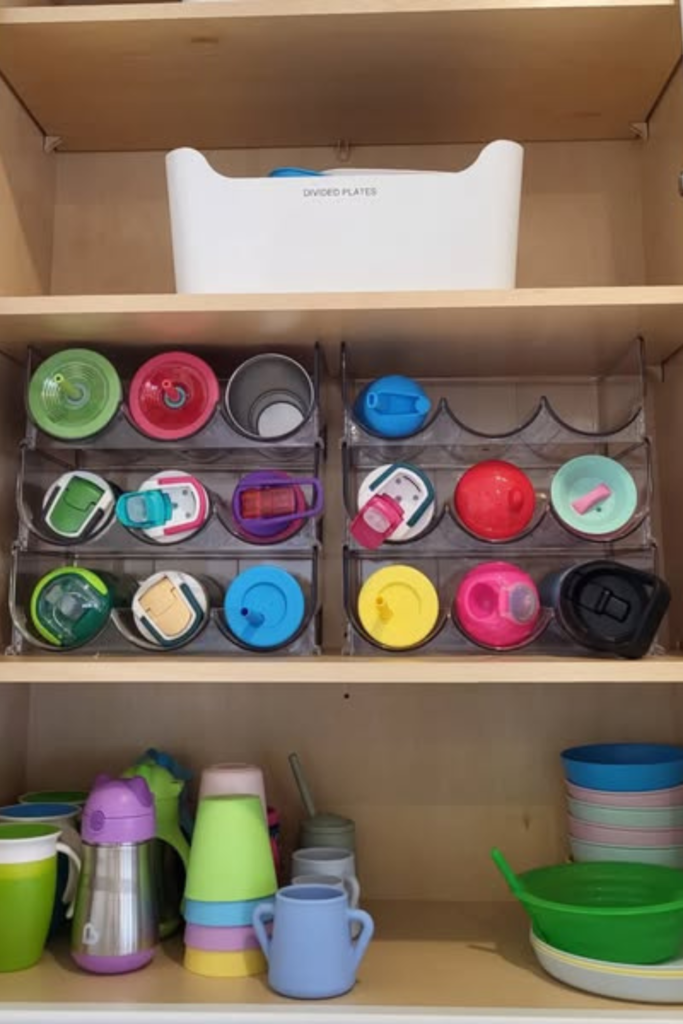
Tiered Lid Rows
Lids create more mess than bottles ever do. Group similar styles together: straw lids in one row, flip tops in another.
Tiered clear racks keep every lid visible and separated, so matching takes seconds instead of minutes.
Slide lids into the curved slots, facing forward, so shapes stay easy to recognize. Clear plastic reflects cabinet lighting.
Keeping the space feeling open. Mid-level cabinet shelves work best, since eye-level access makes it effortless to grab the right top.
Organized rows stop the lid pile from growing and finally bring order to the smallest but most frustrating part of bottle storage.
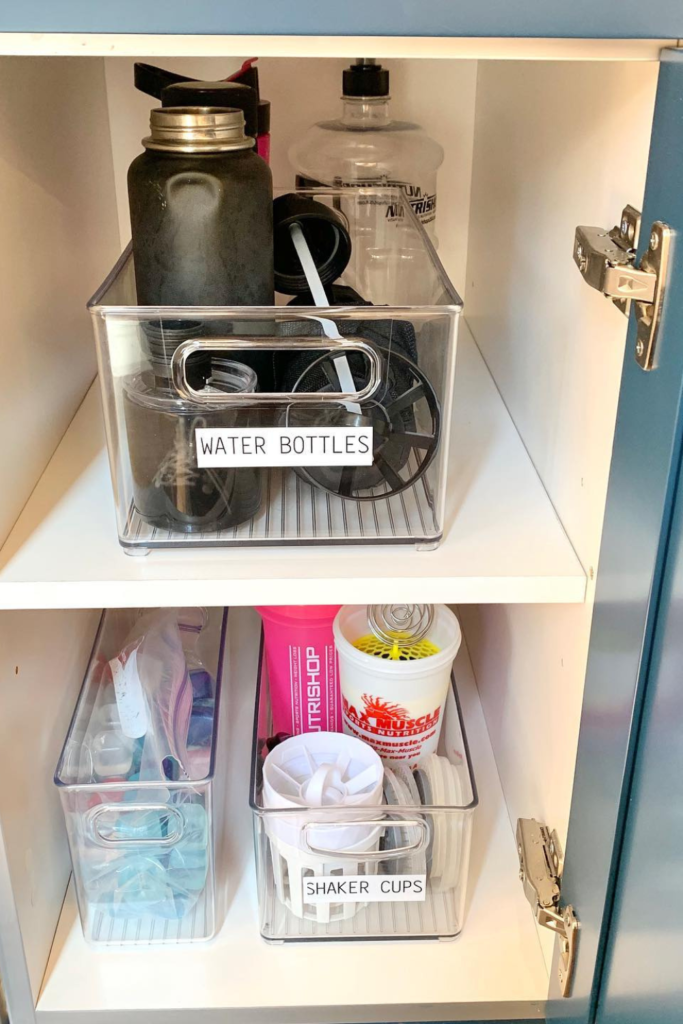
Labeled Bin System
Searching through mixed bottles wastes time every single morning. Pull-out friendly containers work best in narrow cabinets.
Dedicate one bin to everyday water bottles and another to shaker cups. Clear labeled bins fix that instantly.
Creating defined categories inside one cabinet. Slide bottles upright inside deeper bins and stack lighter lids toward the front for quick access.
Simple white labels keep everything easy to identify at a glance, especially under bright cabinet lighting.
Defined sections stop random stacking and make it obvious where each bottle belongs after washing.
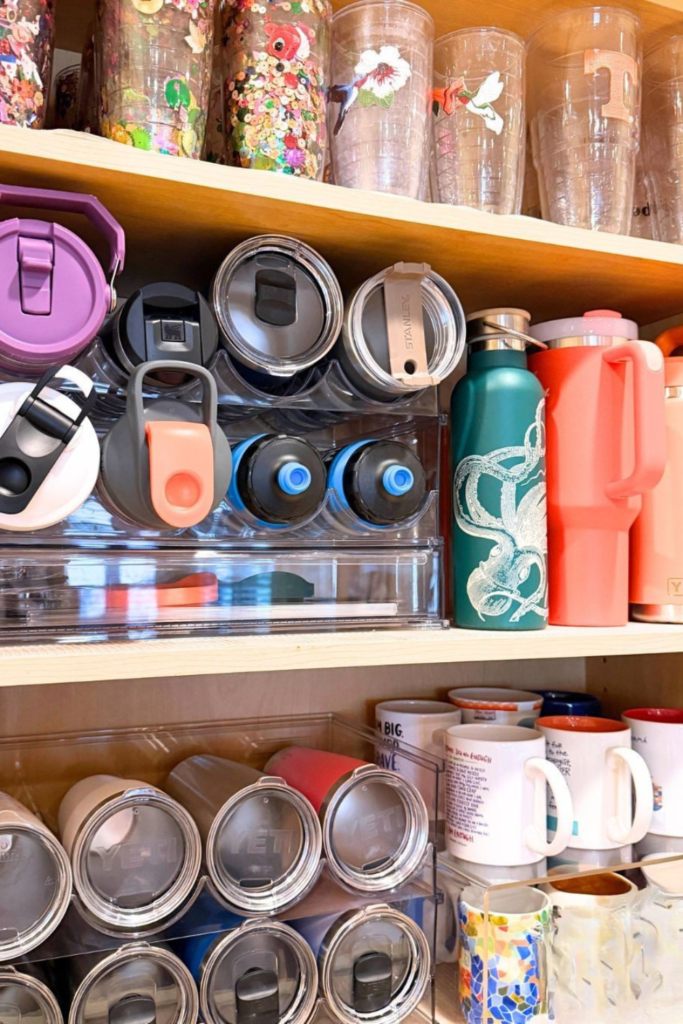
Mixed Shelf Layers
Crowded shelves don’t need fewer bottles; they need structure. Combining horizontal racks with upright storage.
Keeps tall tumblers and standard bottles from competing for space. Arrange by height so nothing hides behind another piece.
Clear stackable holders create front-facing rows for lids and shorter bottles, larger insulated tumblers stand upright along the side.
Upper pantry shelves work best with this layout because their depth allows layering without blocking visibility.
Warm wooden shelving paired with natural daylight keeps the setup feeling styled instead of packed.
Layered organization like this maximizes depth, keeps everything visible, and eliminates random stacking for good.
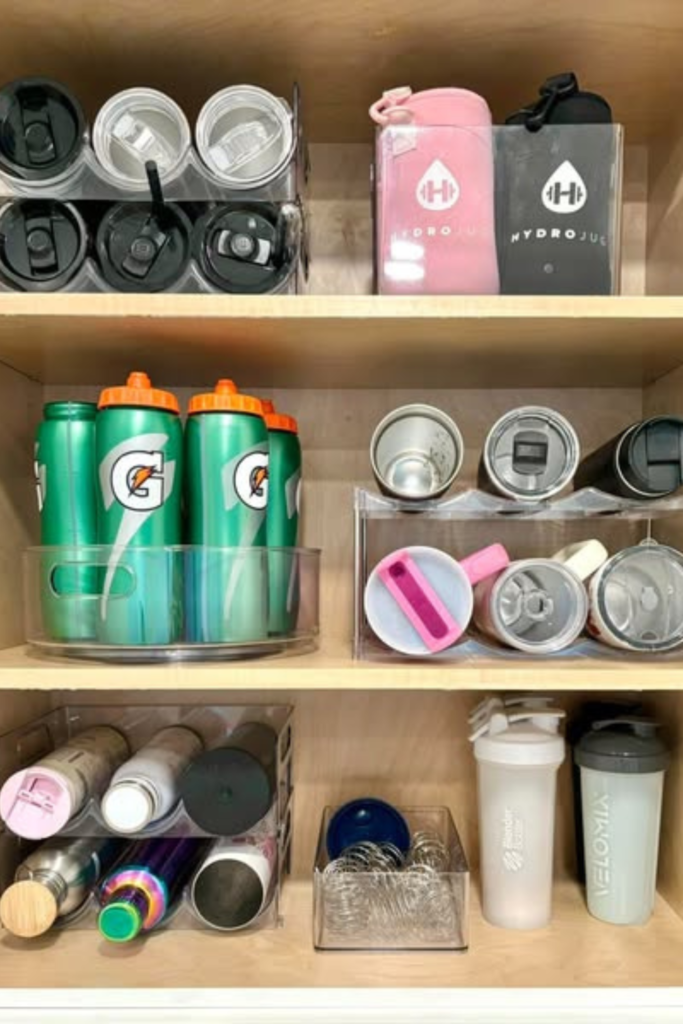
Category Shelf Split
Overcrowding usually happens because everything gets stored together. Splitting shelves by bottle type instantly creates order.
Sports bottles line up in one clear bin, everyday tumblers sit in another, and specialty shakers get their own row.
Mid-height shelves work best since heavier bottles are easy to lift. Clear containers prevent mixing and let you see quantities at a glance.
Keep similar heights together so stacking feels intentional, not forced. Warm cabinet lighting highlights each section.
Keeps the space from feeling cramped. Defined categories prevent random placement and automatically clean up after every use.
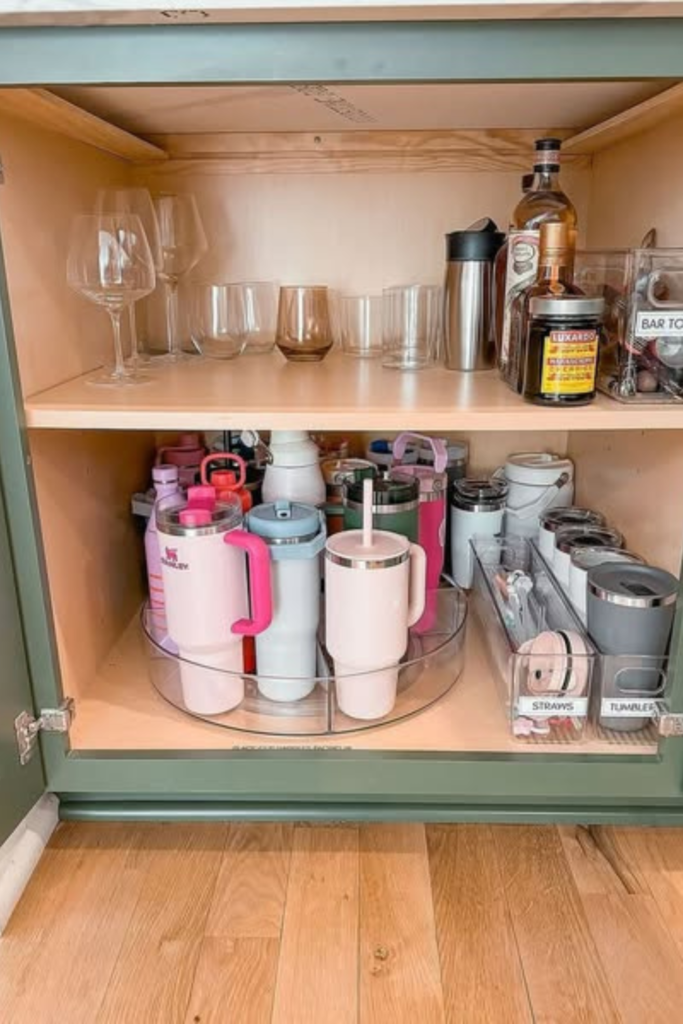
Cabinet Turntable Zone
Digging through the back of a cabinet wastes time and knocks bottles over. One smooth spin replaces constant rearranging.
Makes deep cabinets finally work properly. Large lazy Susan fixes that by keeping tall tumblers grouped and easy to rotate.
Place heavier bottles along the outer edge for balance, and keep matching lids nearby in small labeled bins.
Clear side organizers for straws and accessories prevent mixing with the glassware above. Warm under-cabinet lighting.
Keeps the lower shelf from feeling dark or crowded. Lower cabinets benefit most since bending down becomes easier.
FAQs
How many water bottles should you keep?
Clutter usually starts because no one sets a limit. Most small kitchens work best with two bottles per person, one for daily use and one backup.
Extra promotional bottles or random duplicates only eat shelf space. If a bottle hasn’t been used in weeks, it probably doesn’t deserve cabinet space.
Should you store bottles with lids on?
Loose lids create half the mess. Storing bottles with lids attached keeps sets together and saves time when you’re in a rush. Fully dry them first to prevent trapped moisture and odors.
If size makes stacking difficult, use a small bin just for lids and keep it right next to the bottles. Keeping parts together always reduces chaos.
You may like to read!
- 26 Dresser Organization Ideas
- 26 Japanese Organization Ideas
- 20 Coffee Station Organization
- 20 Watch Organization Ideas
- 15 Car Seat Organization Ideas

Fasial is the founder of the Fizzy Flare. He has been a passionate blogger since 2021. He ran three different websites in the past few years. Now he is focusing on Fizzy Flare to build an audience and help them organize their life.