21 Vinyl Record Storage Ideas for 2026
This post may contain affiliate links: full affiliate disclosure.
If you collect vinyl long enough, you’ll eventually face this problem: records that start to warp, sleeves that smell musty, or covers that slowly get ruined.
Even though you thought you were storing everything “the right way.” One site tells you to stack records, another says never do that.
Once you understand what actually causes damage. In this article, you’ll learn exactly how to store your records so they stay flat, clean, and playable for years.
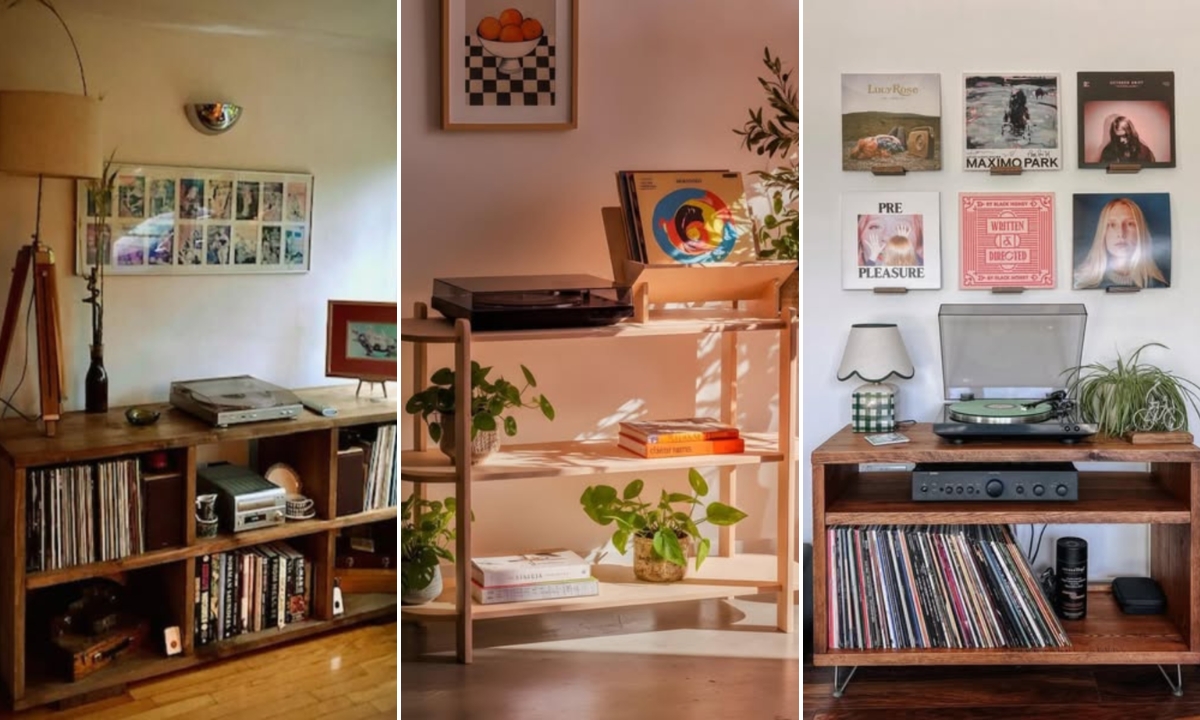
In this article, you’ll find 21 Vinyl Record Storage ideas that work in 2026.
Let’s jump in!
Contents
- 1 What is the Proper Way to Store Vinyl Records?
- 1.1 Cube Shelf System
- 1.2 Low Media Console
- 1.3 Mixed Storage Console
- 1.4 Vertical Display Cabinet
- 1.5 Modular Display Rack
- 1.6 Open Grid Shelving
- 1.7 Low Profile Credenza
- 1.8 Wall-Paired Console
- 1.9 Open Side Rack
- 1.10 Drawer Storage Wall
- 1.11 Flip-Front Showcase
- 1.12 Sunlit Listening Stand
- 1.13 Built-In Vinyl Wall
- 1.14 Compact Listening Console
- 1.15 Corner Vinyl Library
- 1.16 Framed Record Gallery
- 1.17 Alcove Cube Storage
- 1.18 Vertical Wall Shelves
- 1.19 Full-Wall Archive
- 1.20 Boxed Display Cubes
- 1.21 Window-Edge Console
- 2 FAQs
What is the Proper Way to Store Vinyl Records?
The proper way to store vinyl records is to reduce pressure, heat, and moisture over time. If you store records flat or let them lean too much.
Gravity slowly bends them, and that’s how warping starts. If you keep them in hot or damp places, the vinyl softens, and the sleeves grow mold.
To avoid all of that, records need to stand upright, remain supported on both sides, and be kept in a stable environment.
When you control how records sit, how much weight they carry, and the conditions around them, you stop damage before it starts, rather than trying to fix it later.
Save this article for later! 👇👇

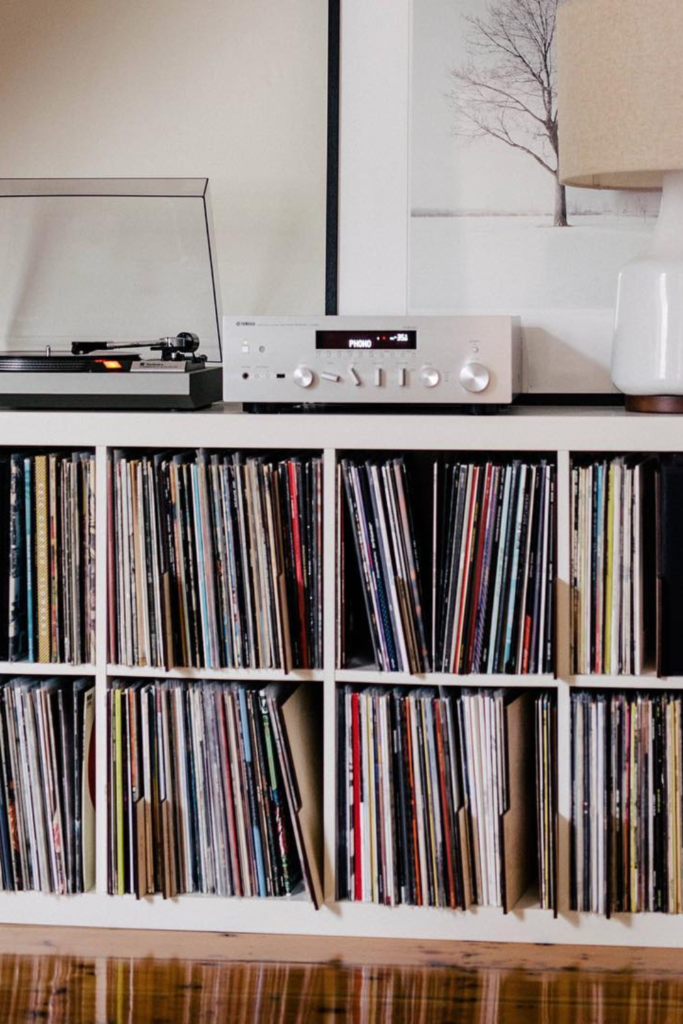
Cube Shelf System
Records stay safest when weight gets evenly distributed, and cube shelving solves that quietly. Use sturdy cube units.
Rated for vinyl weight, keeping each section loosely filled. Equipment works best on top with vibration pads underneath.
Soft ambient lamp lighting adds warmth without exposing sleeves to harsh light or heat, this works well in living rooms.
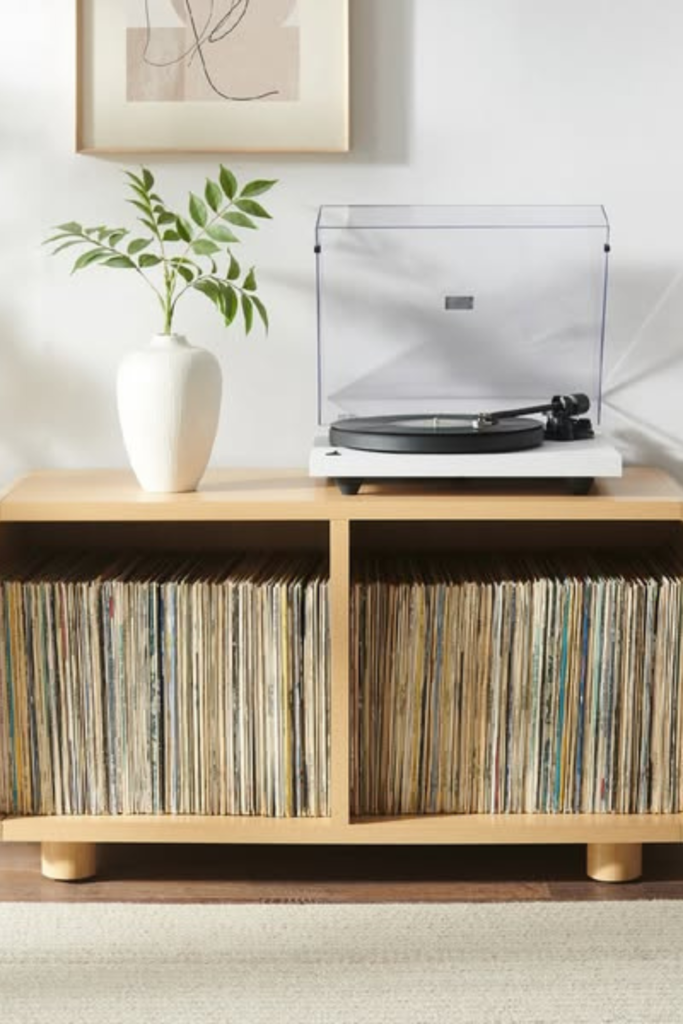
Low Media Console
Clean lines and a low height keep records easy to access. Apartments and open-plan living rooms benefit most from this.
It blends storage with daily use. Recreate it using a solid wood or reinforced media console sized for LP depth.
The turntable stays stable on top. Natural daylight works here, balanced by soft indirect lighting in the evening.
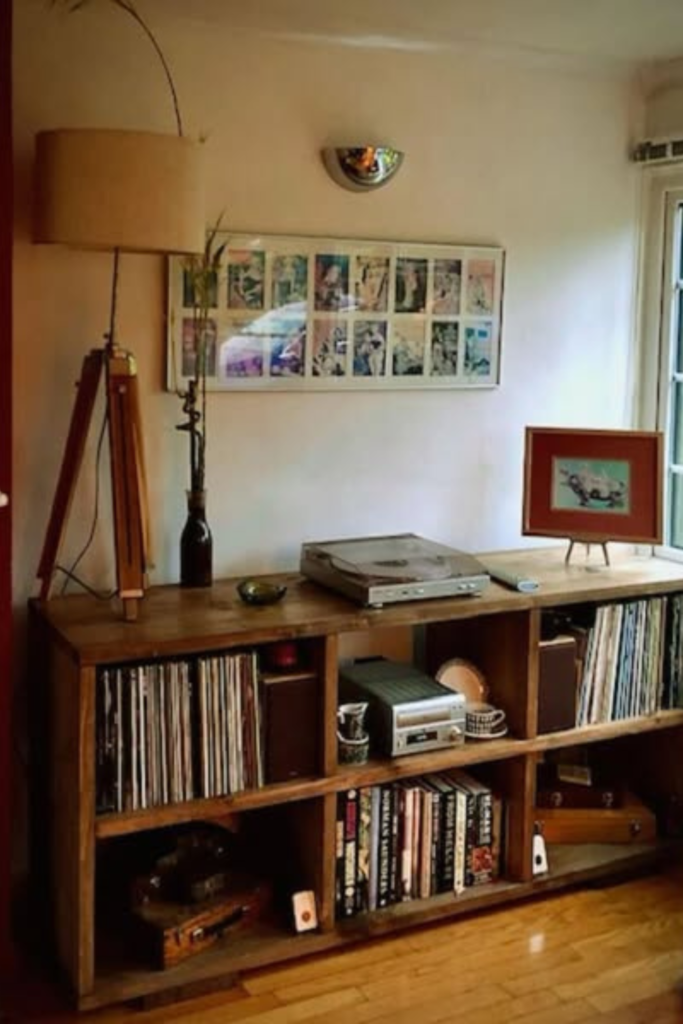
Mixed Storage Console
Blending vinyl with books and gear works best in lived-in spaces where storage has to earn its place.
Living rooms and home offices suit this idea because everything stays within reach without crowding one zone.
Build it using a deep wooden console with reinforced shelves, keeping records upright and lightly packed.
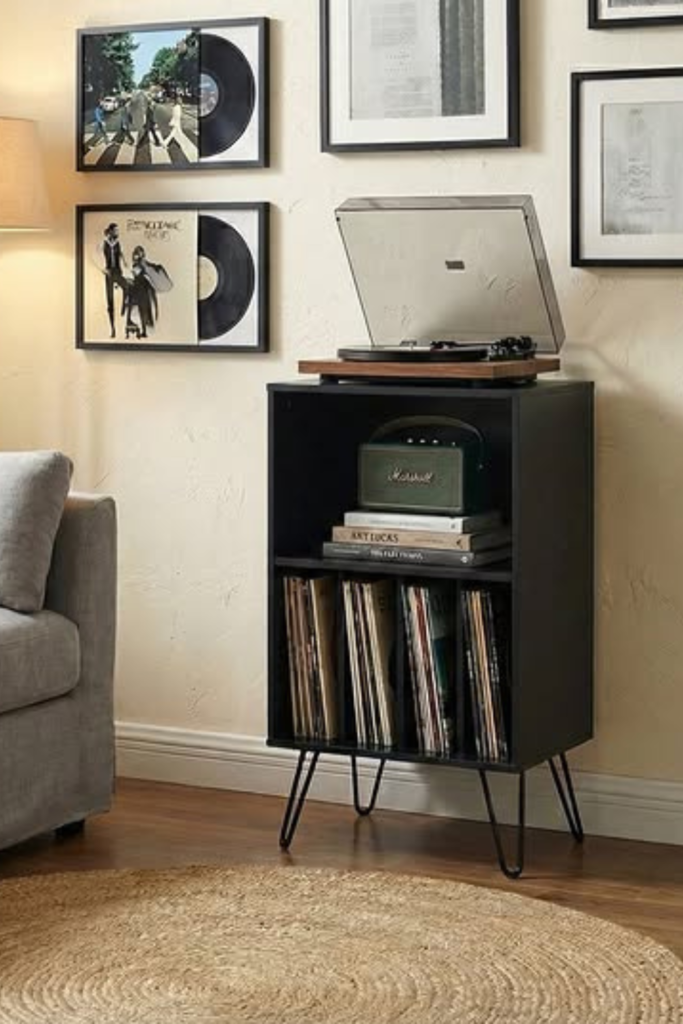
Vertical Display Cabinet
Limited floor space pushes creativity, and tall cabinets solve that. Small apartments and reading corners works.
Records stay upright while gear stacks safely above. Choose a narrow cabinet with solid legs and internal support.
Wall-mounted frames keep weight off shelves. Warm floor lamps or shaded sconces create layered light.
Modular Display Rack
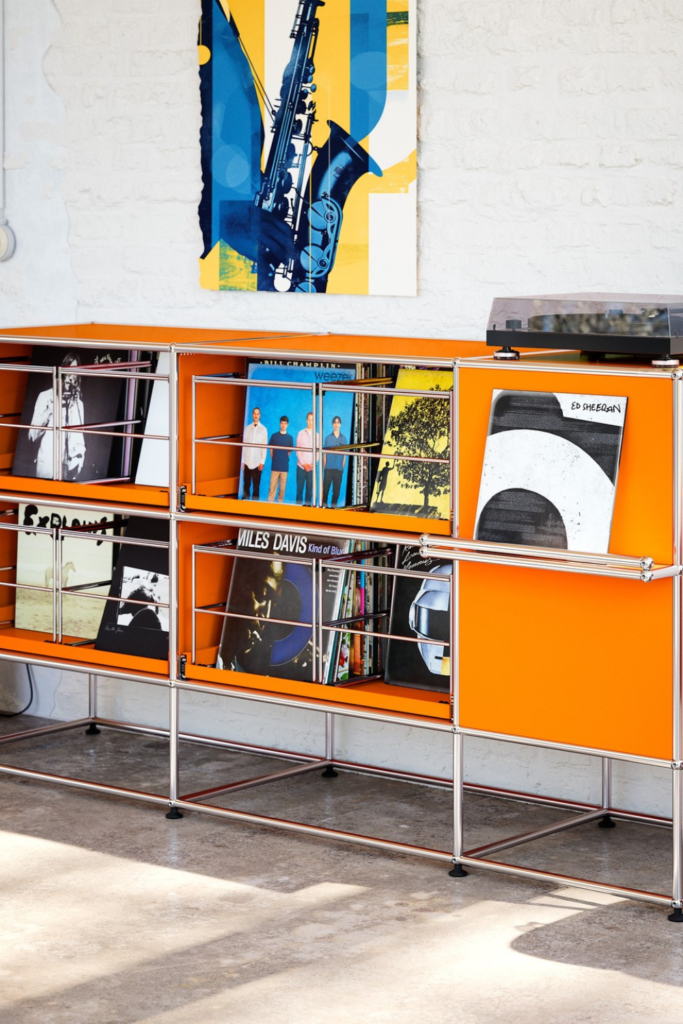
Color-forward storage works when access matters as much as protection, fits in creative studios and music rooms.
Build it using modular metal frames with side rails to prevent slipping, and space each slot loosely. Equipment sits clean.
Bright natural daylight highlights covers, while subtle overhead or track lighting keeps glare off playing surfaces.
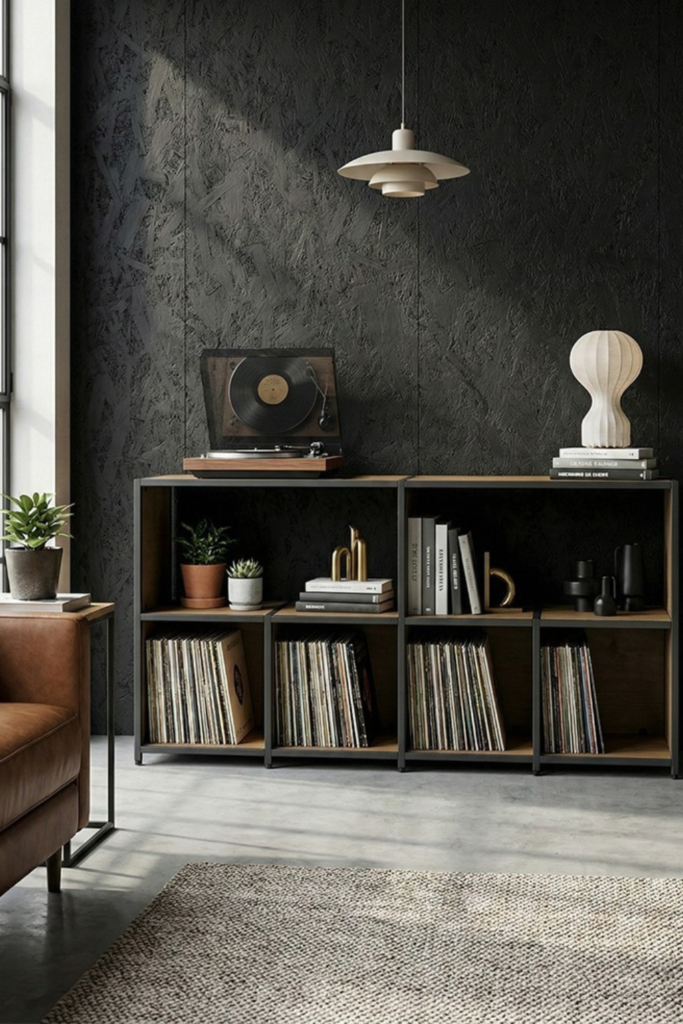
Open Grid Shelving
Dark walls push storage into the spotlight, and open grids keep records accessible without crowding the room.
Lofts and modern living spaces suit this setup because everything breathes visually, use metal or wood grid units.
Filtered window light adds contrast, while a single pendant or table lamp creates a calm evening balance.
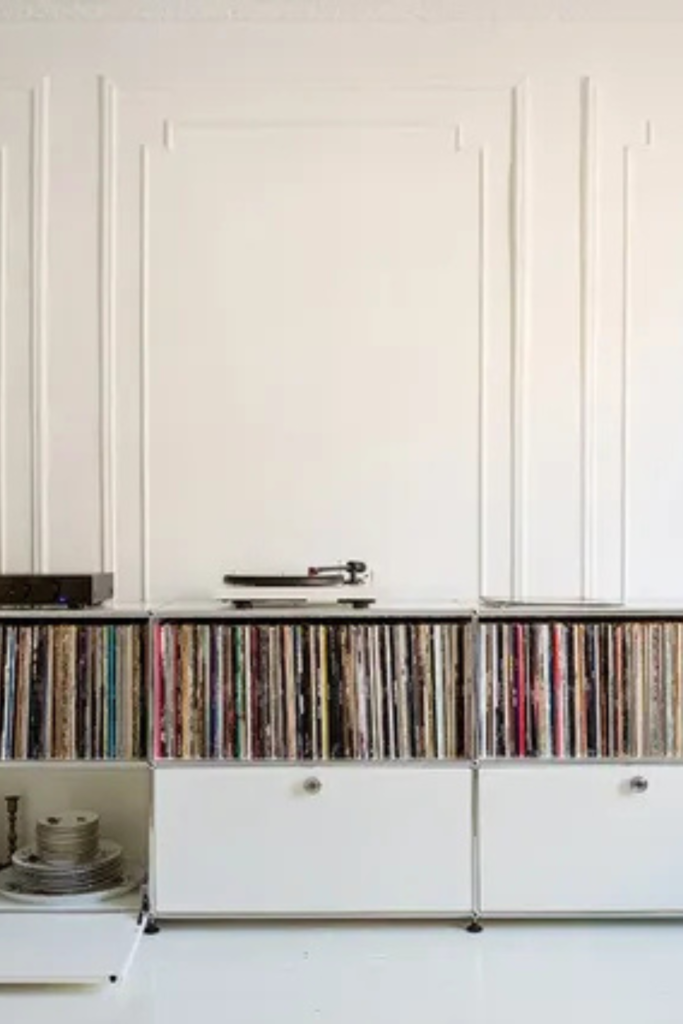
Low Profile Credenza
Long, horizontal storage keeps records evenly supported while visually stretching the room, best for wide living rooms.
Use a low credenza designed for vinyl depth, filling rows. Hidden compartments work for accessories and sleeves.
Soft diffused daylight suits the clean look, paired with gentle ambient lamps to avoid glare and heat.
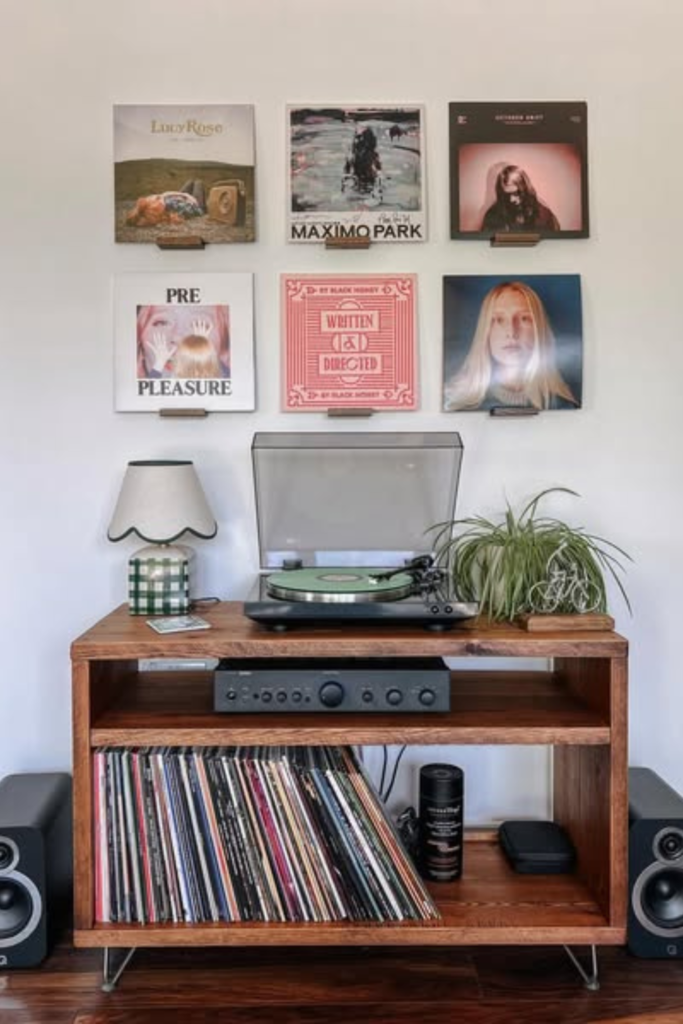
Wall-Paired Console
Artwork and records working together turn storage into part of the room’s identity. Music corners and bedrooms suit this idea.
Everything stays compact and intentional. Set it up with a solid-wood console, deep enough for LPs, keeping records slightly loose.
Wall-mounted album frames handle visual weight above. Soft table lamps and indirect ambient light keep covers visible.
Open Side Rack
Tight spaces call for lighter storage that doesn’t feel heavy or boxed in. Bedrooms and studio corners work well.
Open sides keep air moving around records, recreate it with a slim wooden rack, storing vinyl upright on the middle shelf.
Plants soften the setup. Warm natural sunlight paired with low evening lamps keeps the mood calm without heat buildup.
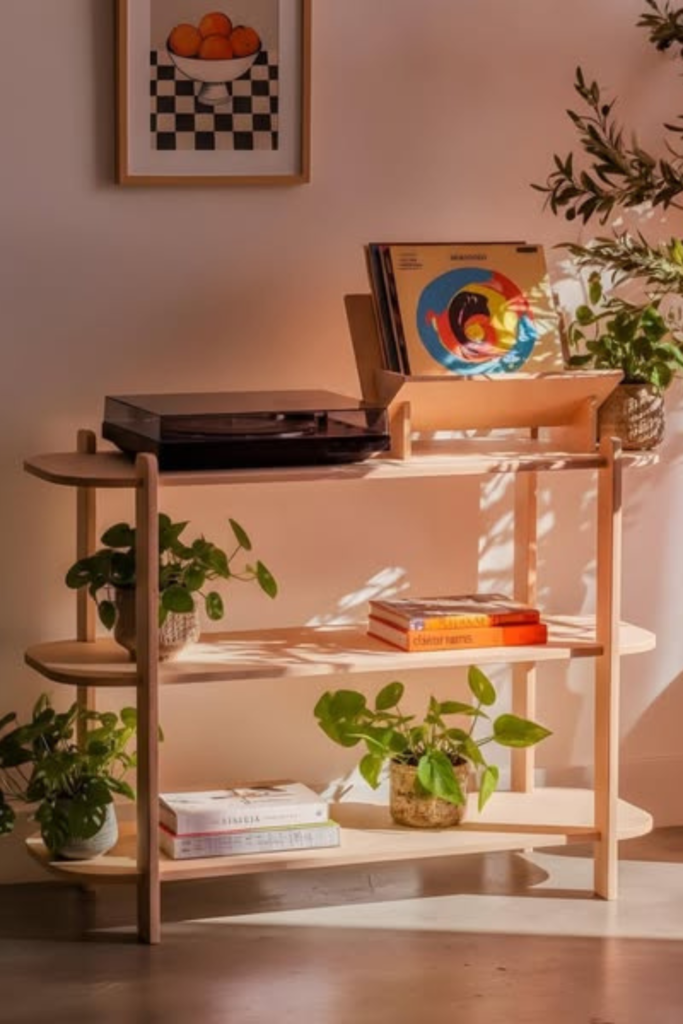
Drawer Storage Wall
Hidden storage shines when visual clutter needs to stay under control. Loft spaces and brick-walled rooms are ideal.
Set it up using a low cabinet, keeping records upright inside with dividers. Open shelving above handles décor.
Warm pendant lighting and small accent lamps create depth without exposing records to direct light.
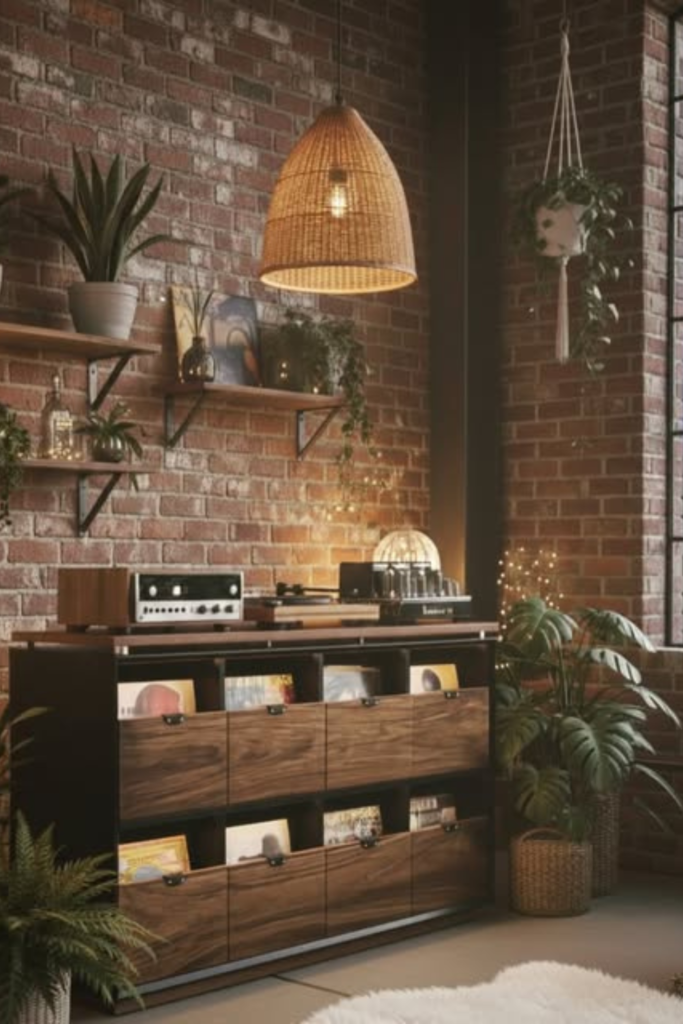
Flip-Front Showcase
Easy access matters when listening sessions happen often. Media rooms and casual living spaces benefit most.
Recreate it using a console with a front display rail, rotating a few albums while storing the rest vertically below.
Solid wood keeps the weight balanced. Soft ambient lamps highlight covers without exposing vinyl to harsh light.
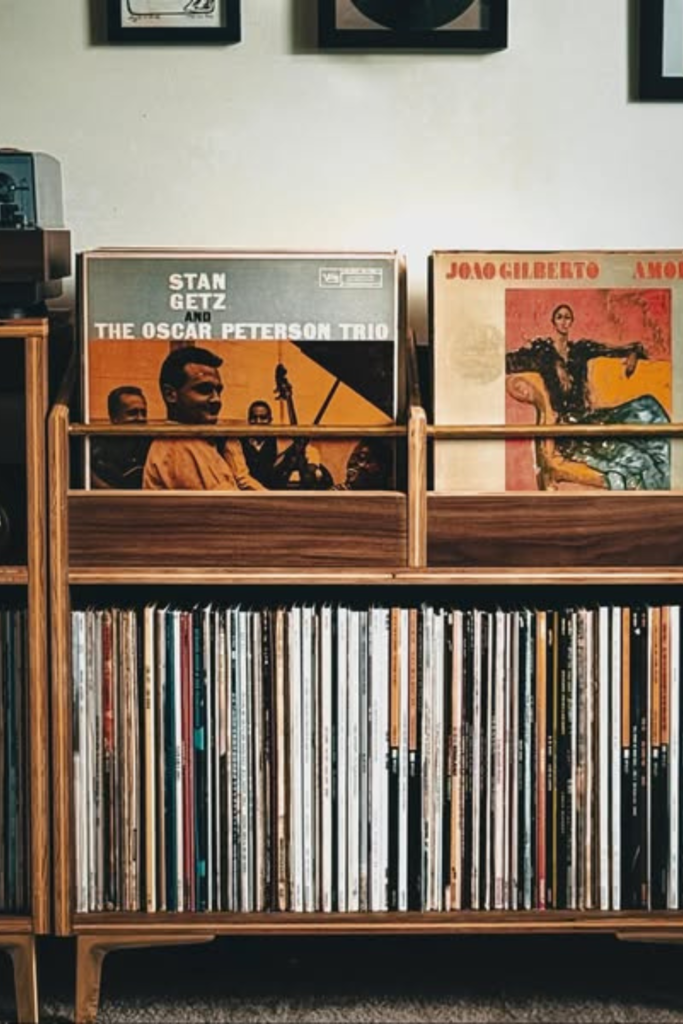
Sunlit Listening Stand
Natural light changes how a setup feels, but placement keeps records safe. Bright living rooms work best when storage stays out.
Recreate it with a slim console positioned beside, not in front of, windows, keeping vinyl upright below.
Few picks angled on top. UV-filtering glass helps. Daylight sets the tone, supported by soft evening lamps once the sun drops.
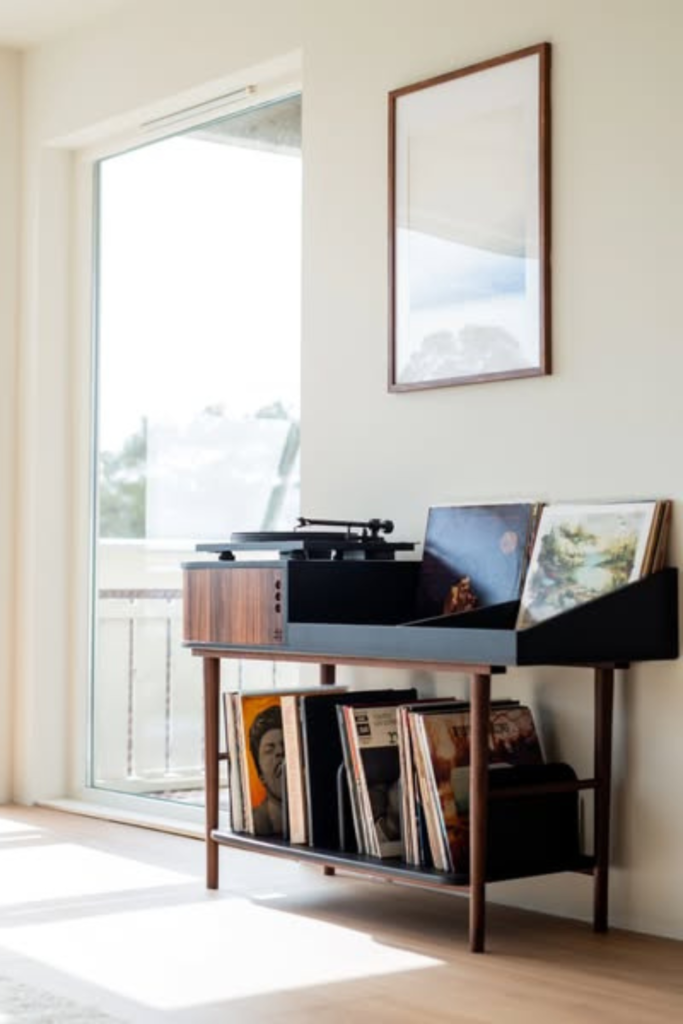
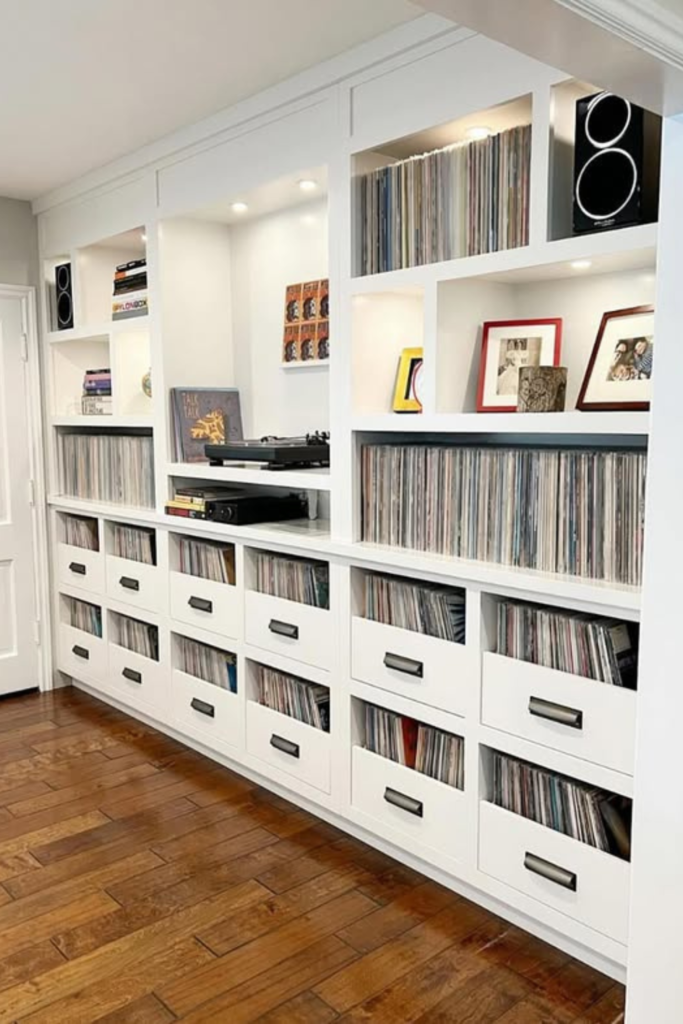
Built-In Vinyl Wall
Large collections need structure before they turn chaotic. Dedicated listening rooms and renovated living spaces.
This works because storage becomes part of the architecture, use drawers below for weight control and open shelves display.
Recessed ceiling lights handle visibility, while cabinet spot lighting adds warmth without heating the records.
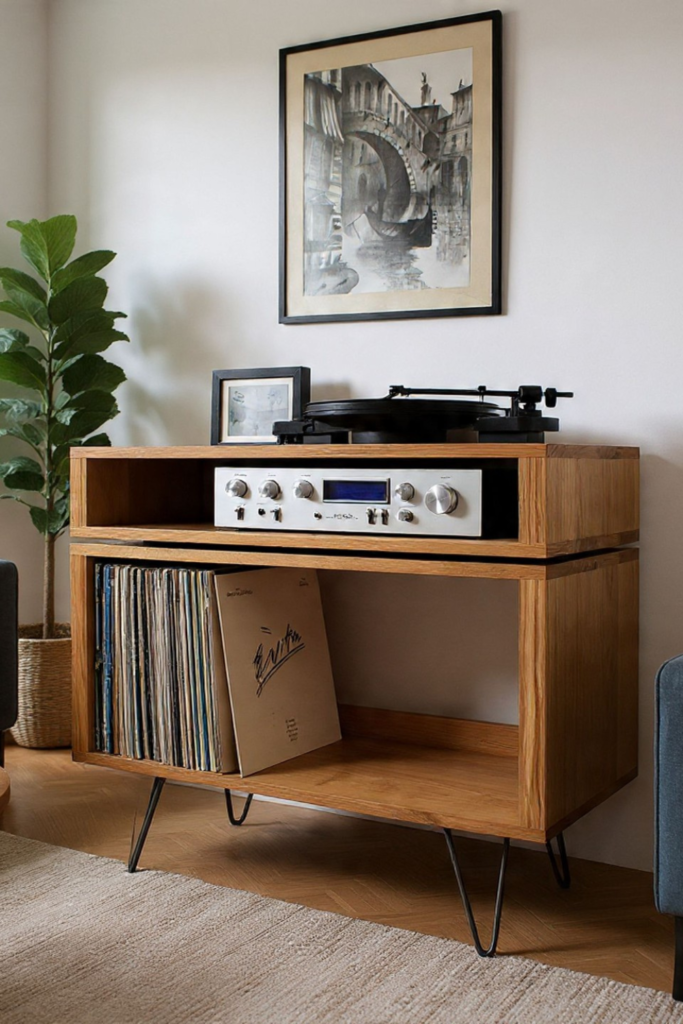
Compact Listening Console
Smaller collections shine when storage stays focused instead of oversized. Seating areas and quiet corners works best.
Records remain within arm’s reach without dominating the room. Use a compact wooden console with open shelving.
Keeping vinyl upright on the lower level. Elevated legs help airflow. Soft window light sets the daytime mood.
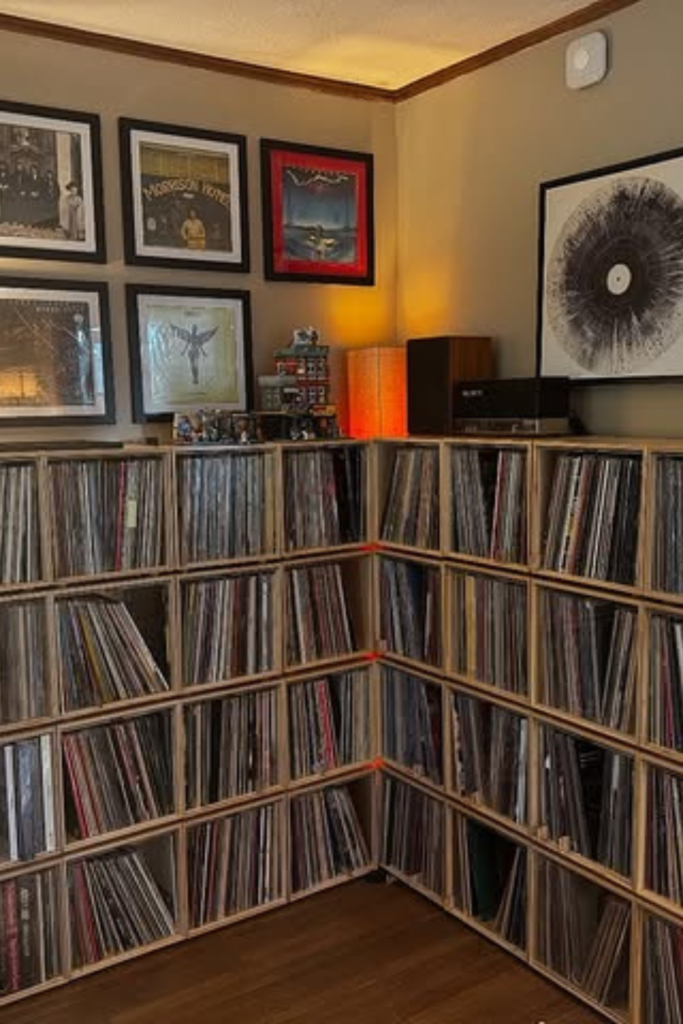
Corner Vinyl Library
Collections grow fast, and corners quietly solve the space problem. Dedicated music rooms and spare rooms best.
Running matching shelves along two walls, keeping records upright and evenly packed to avoid pressure points.
Consistent shelf height keeps weight balanced. Warm table lamps and framed wall art lighting create a cozy glow.
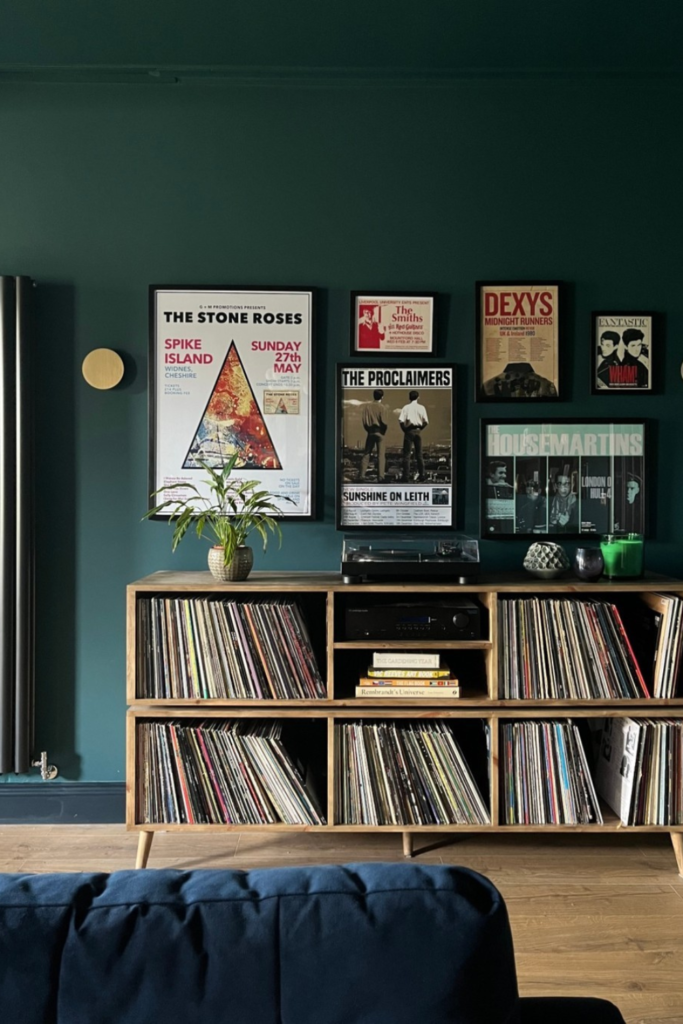
Framed Record Gallery
Personality-driven spaces benefit when storage and décor work together, a wide wooden console, spacing vinyl upright with slight breathing room.
Wall frames keep visual focus off shelves. Deep wall colors absorb light, balanced by warm table lamps and soft ambient glow.
Alcove Cube Storage
Unused alcoves turn into perfect vinyl zones. Living rooms with fireplaces or recessed walls benefit most, as records stay organized.
Turntables sit safely on top with isolation feet. Soft overhead lighting and nearby ambient lamps keep the area bright without direct exposure.
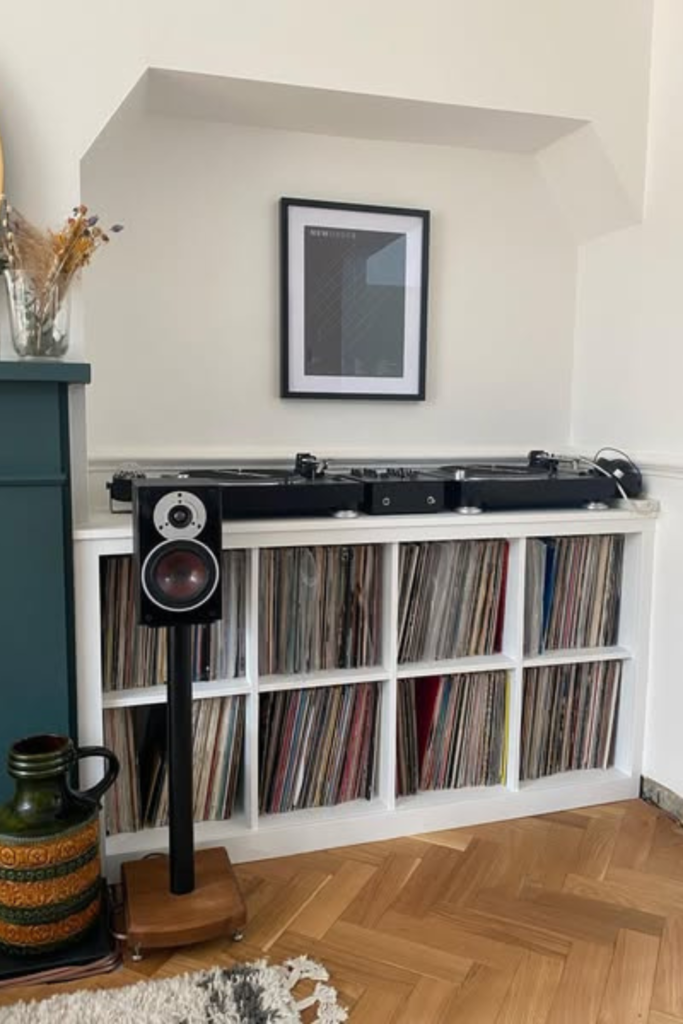
Vertical Wall Shelves
Tall shelving turns narrow walls into serious storage without crowding the floor. Spare rooms and listening corners.
Use reinforced wall-mounted or freestanding vertical shelves rated for vinyl weight, keeping rows evenly filled for balance.
Speakers sit mid-height for sound control. Natural side light works during the day, paired with a floor lamp to soften shadows at night.
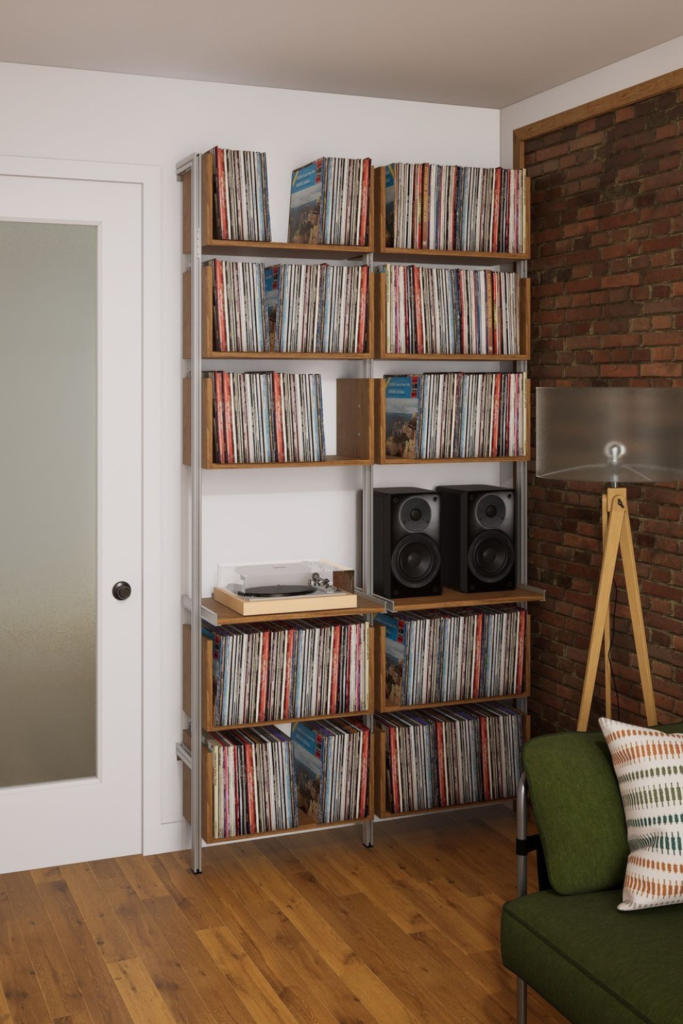
Full-Wall Archive
Serious collections need room to breathe, not stacks fighting gravity. Dedicated listening rooms work best.
Entire wall carries the weight evenly from end to end, keeping rows upright and evenly filled to prevent bowing.
Closed cabinets below handle gear and accessories. Even ceiling lighting sets visibility, while soft accent lamps add warmth.
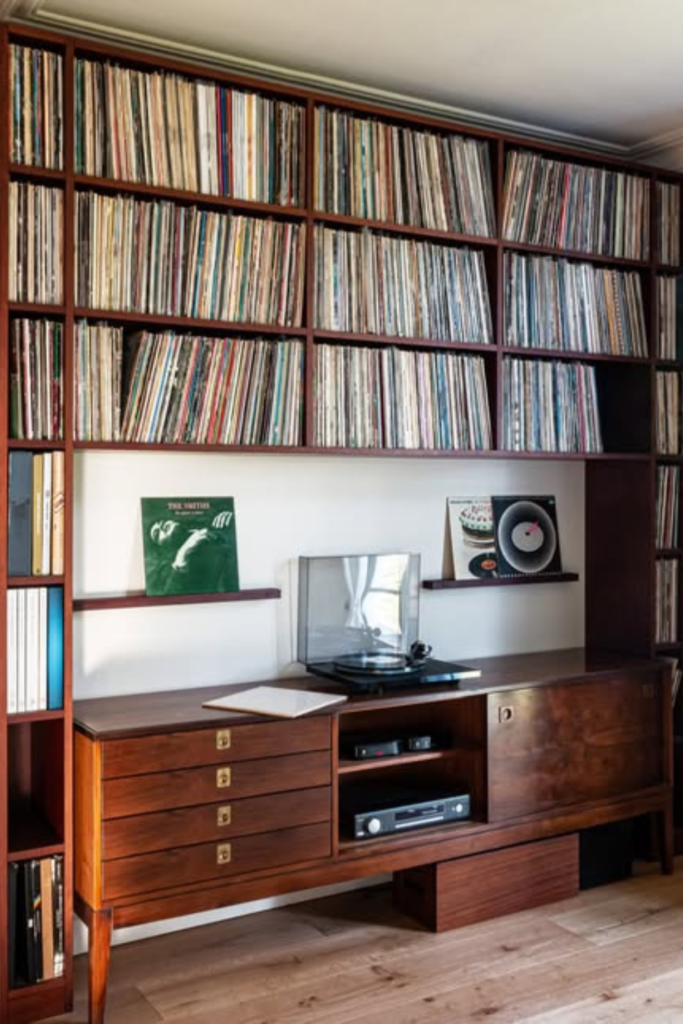
Boxed Display Cubes
Front-facing storage works when browsing matters as much as protection. Use box-style cubes with front rails.
Keeping vinyl upright and lightly supported. Rotate displayed records to avoid pressure marks, works best.
Indirect daylight keeps colors true, while small accent lamps add warmth without exposing sleeves to heat.
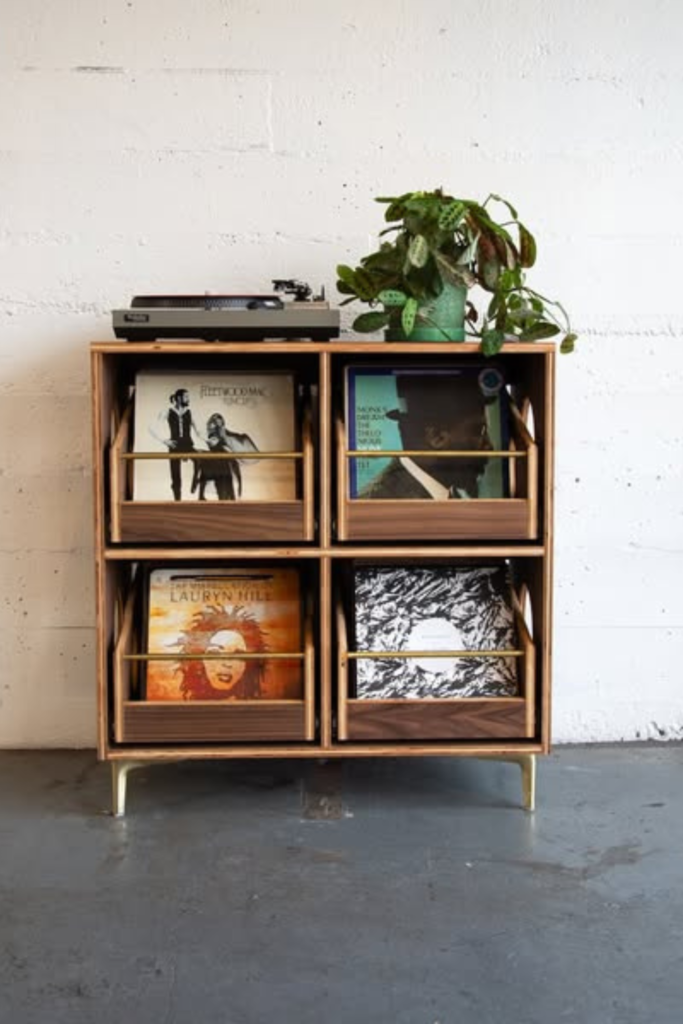
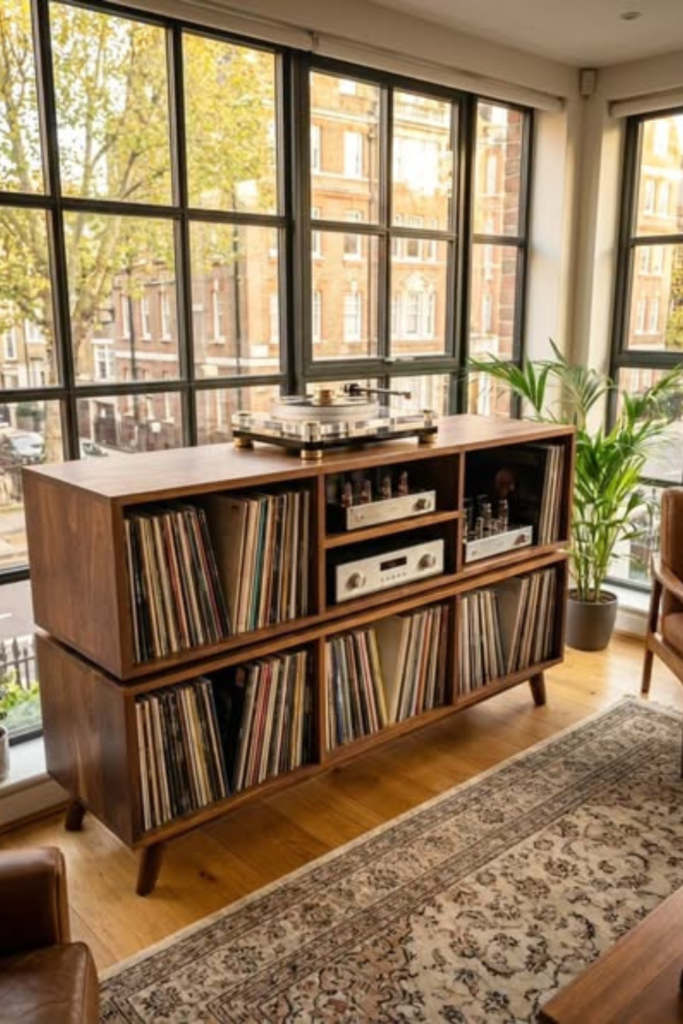
Window-Edge Console
Bright rooms feel inviting, but record placement decides whether light helps or harms. Living spaces with large windows.
Recreate this by positioning a solid wood console just inside the light line, keeping vinyl upright and evenly spaced.
Sheer curtains soften sunlight. Daylight handles most illumination, backed by warm ambient lamps after sunset.
FAQs
Can vinyl records be stored in boxes long-term?
Boxes work when shelves aren’t an option, but only if records stand upright and stay supported on both sides.
Tight packing causes pressure damage, while loose stacking leads to leaning and warping. Heavy-duty boxes made for vinyl handles weigh.
Better than generic storage bins. Climate matters more than the box itself, so cool, dry spaces protect records far better than garages or basements.
How much space should vinyl records have on a shelf?
Records need breathing room, not compression. Overfilling a shelf forces jackets to bend and stresses the vinyl over time. Leaving just enough space to flip through records.
Without resistance keeps spines straight and weight balanced. When a shelf starts feeling tight, it’s time to add another section rather than squeezing more in.
You may like to read!
- 20 Dress Up Storage Ideas
- 18 Blanket Storage Ideas
- 19 Fishing Rod Storage Ideas
- 24 Sunglasses Storage Ideas

Fasial is the founder of the Fizzy Flare. He has been a passionate blogger since 2021. He ran three different websites in the past few years. Now he is focusing on Fizzy Flare to build an audience and help them organize their life.