25 Utility Closet Organization Ideas for 2026
This post may contain affiliate links: full affiliate disclosure.
You’re not the only one who has opened their utility closet and had a broom fall out, a bottle roll across the floor, or a mound of cleaning supplies stare back at you.
Small utility closets grow untidy quickly since there isn’t a good way to store things. You won’t be able to find what you need soon, and half of the room will be wasted.
The good news is that the problem is usually not the size of the closet, but how it is used. You can fit more in.
Keep items easy to get to, and stop the clutter from taking over with a few sensible tweaks. Let’s go over how to organize a small utility closet so that you don’t waste any space.
In this article, I will share 25 effective utility closet organization ideas that work for any home.
Let’s jump in!
Contents
- 1 How Do You Organize a Small Utility Closet Without Wasting Space?
- 1.1 Zoned Shelving
- 1.2 Tall Sections
- 1.3 Door Storage
- 1.4 Clear Containers
- 1.5 Wire Shelves
- 1.6 Tool Hooks
- 1.7 Wall Rails
- 1.8 Pocket Organizer
- 1.9 Labeled Bins
- 1.10 Category Bins
- 1.11 Multi Storage
- 1.12 Labeled Baskets
- 1.13 Double Walls
- 1.14 Rolling Rack
- 1.15 Door Pegboard
- 1.16 Rail System
- 1.17 Divided Storage
- 1.18 Hanging Rod
- 1.19 Center Column
- 1.20 Clip Rack
- 1.21 Vertical Divide
- 1.22 Charging Station
- 1.23 Side Baskets
- 1.24 Cabinet Tower
- 1.25 Shelf Labels
- 2 FAQs
How Do You Organize a Small Utility Closet Without Wasting Space?
Take everything out of the closet first. This phase could make things look untidy for a moment, but it helps you see what you’re dealing with.
Next, put together things that are alike, like cleaning sprays, tools, paper goods, and anything else you store there. Once you know what needs to go back, use the space better.
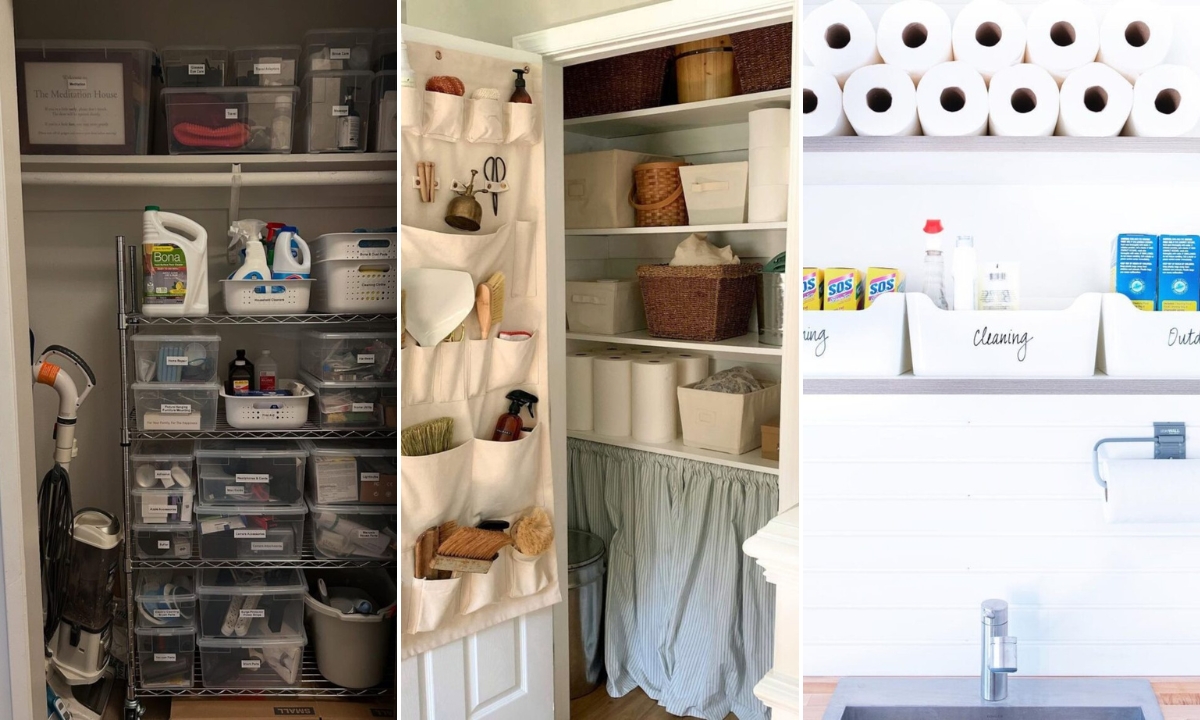
Put up shelves to use the vertical space, put brooms and mops on wall clips so they don’t fall over, and use bins to store smaller things together.
Put a basic organizer on the inside of your closet door to collect sprays or clothes. The closet seems bigger and stays organized longer when everything has a place.
Save this article for later! 👇👇

Zoned Shelving
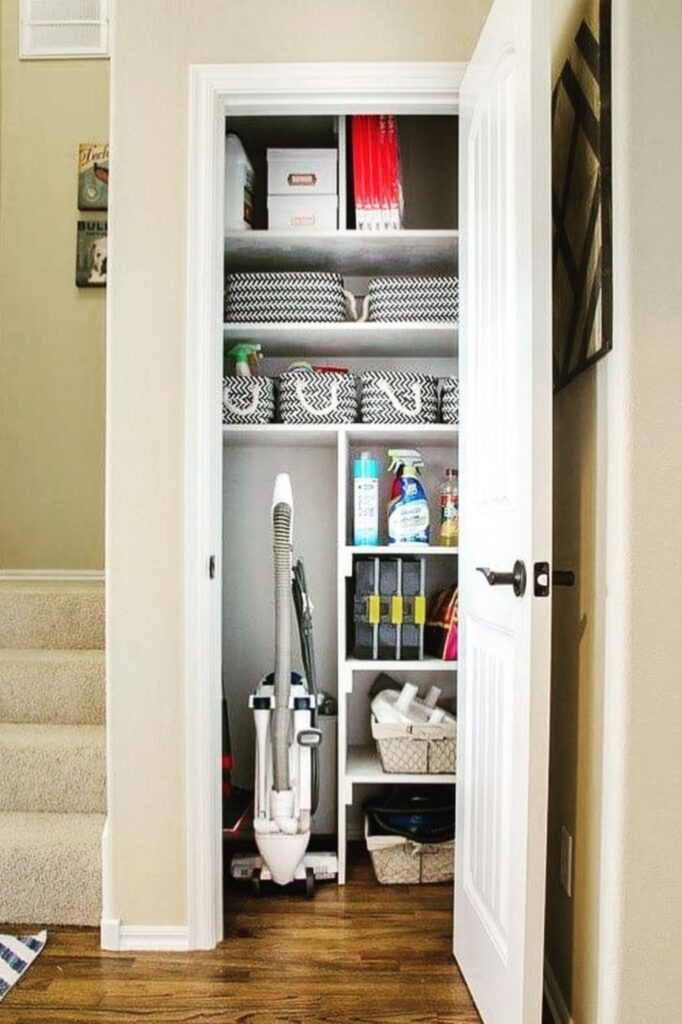
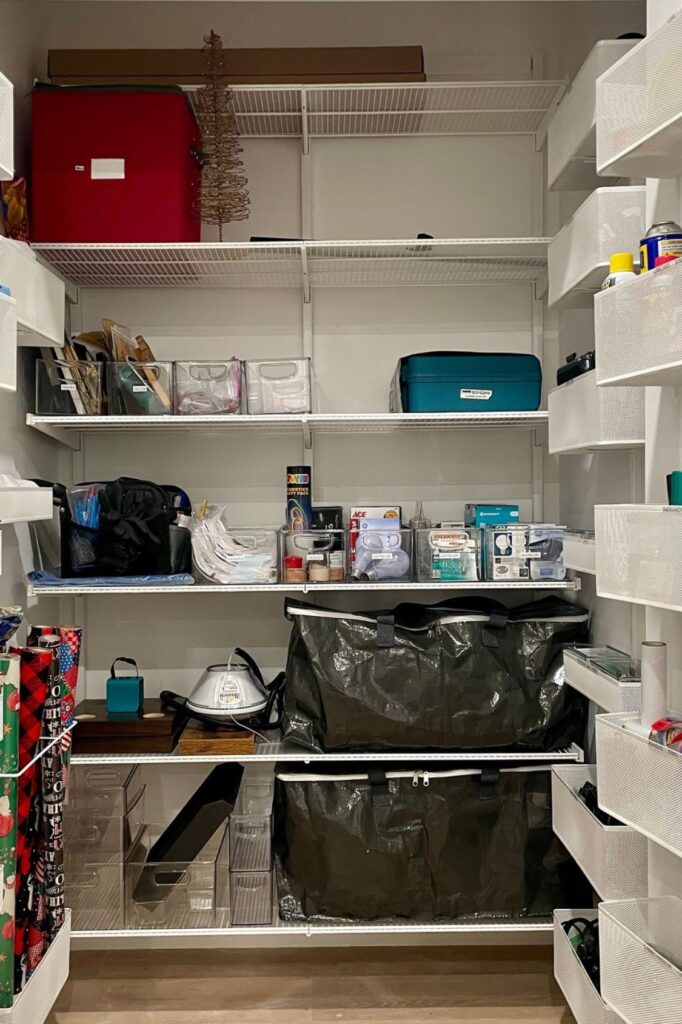
Order starts showing up once every shelf has a clear job. Upper shelves hold lighter or rarely used supplies like paper goods and backup cleaners.
The main shelves make it easy to get to things you use every day. Matching bins keep small tools, sponges, and rags from getting all over the shelf.
See how the tiny cubbies on the side make a distinct lane for bottles and smaller containers? This keeps the main shelves from getting too full.
When the door opens, nothing gets in the way of getting to the vacuum or other big things. This structure works best in tall closets.
To make it work, put up simple shelves from top to bottom, give each level a job, and use bins to keep the minor mess that generally makes the mess.
Tall Sections
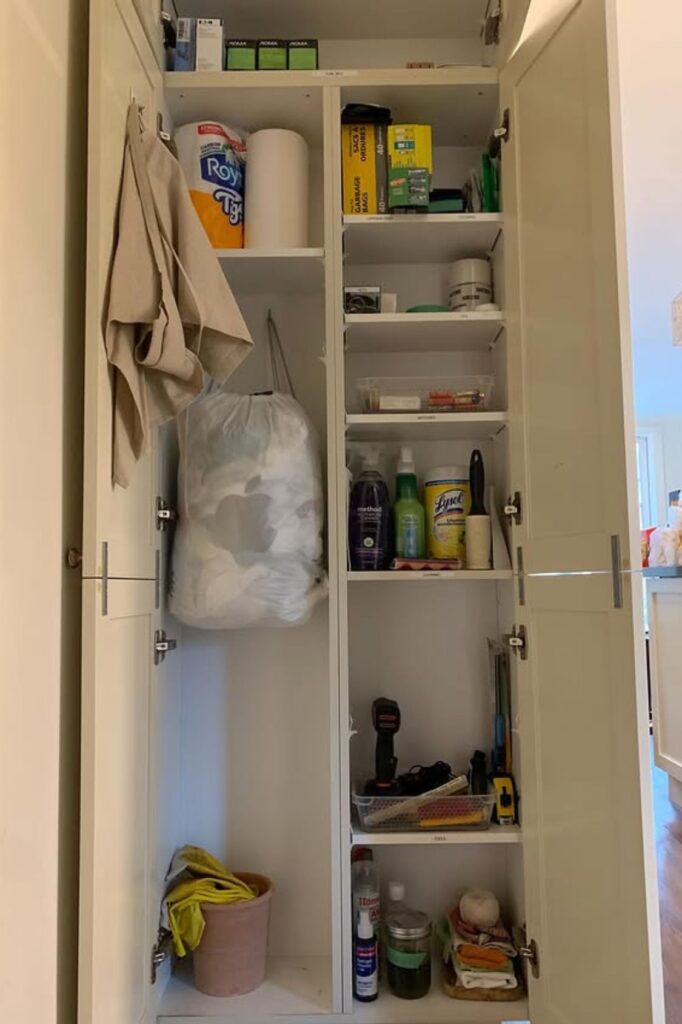
Clutter fades fast once tall items stop fighting for shelf space. A narrow vertical section like this creates a dedicated lane for long tools, hanging bags.
and big supplies that don’t fit anywhere else. You can hang aprons, garbage bags, or reusable sacks on simple hooks on the wall.
This keeps them out of the way but still noticeable. The shelves on the side hold smaller items like wipes, paper towels, and cleaning sprays, which keeps everything organized by size.
Instead of becoming a pile zone, the floor space stays useable for a bucket or storage bin. This layout works best in closets that aren’t very wide.
Build a slim tower of shelves on one side and leave one tall column open for bigger things that need room to breathe.
Door Storage
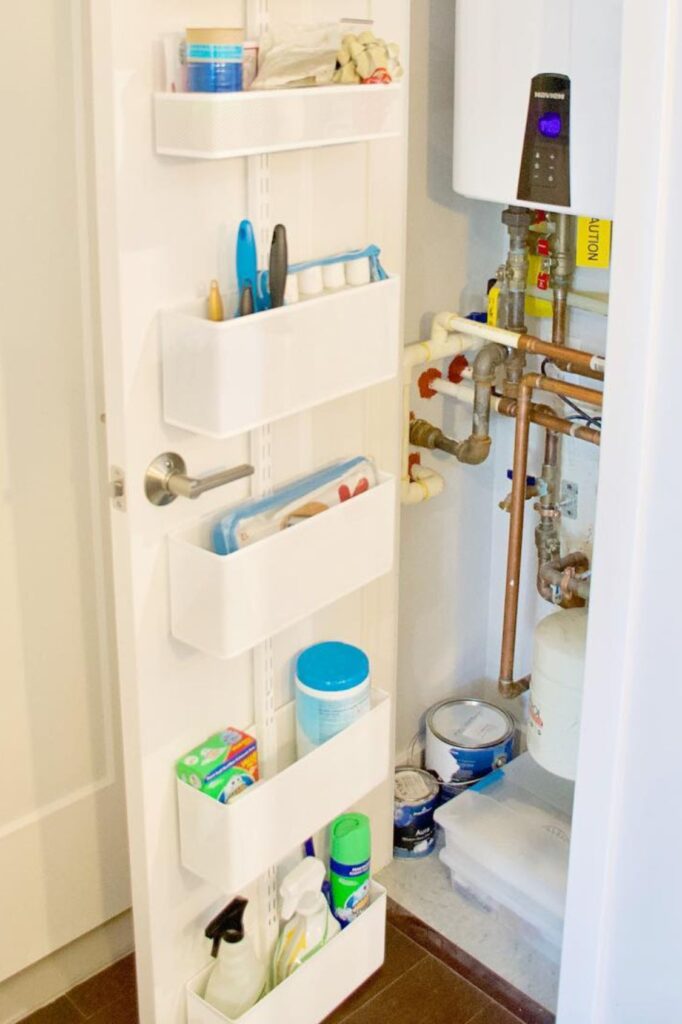
Hidden space lives on the back of the closet door, and turning it into storage instantly frees up shelves.
Slim baskets that hang on the door are great for holding spray bottles, wipes, gloves, and tiny items that tend to get lost in the closet.
Putting daily cleaners at eye level makes it easy to reach them without having to search through dumpsters.
Vertical rails make it easy to stack a lot of baskets without taking up floor space. This is quite helpful in small closets or utility rooms with heaters and pipes.
Installation is still easy: just put up a door rack system or hang organizers made for cabinet doors.
Clear Containers
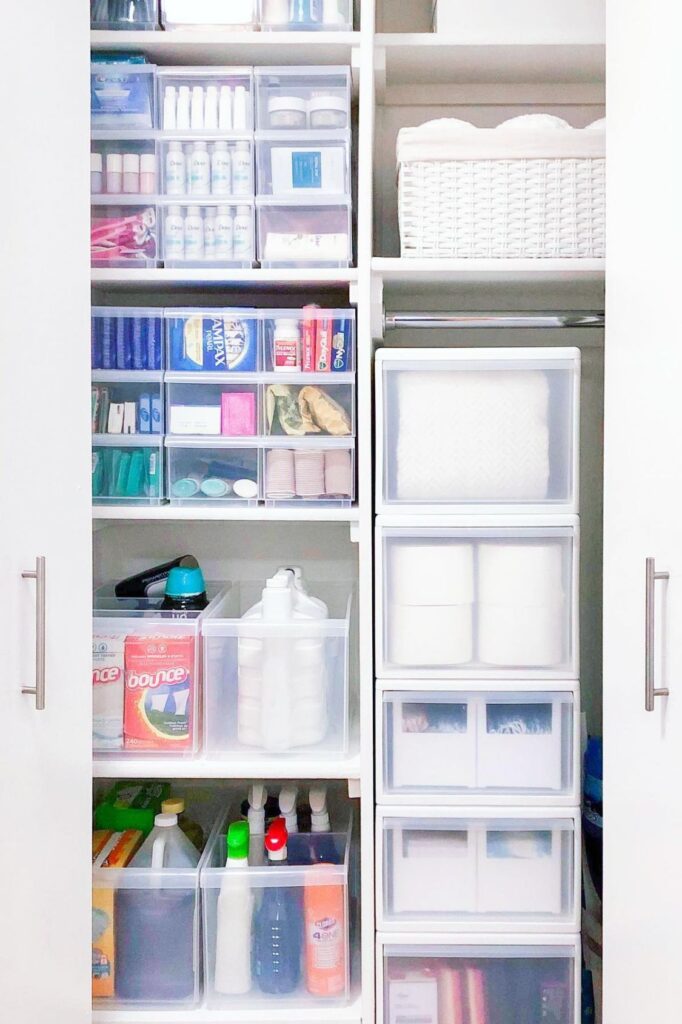
Finding small supplies becomes effortless once everything sits inside clear containers. Transparent bins let you see exactly.
You can see what’s within without taking things out or going through shelves. Put things that are alike in the same container.
For example, put cleaning sprays in one bin, laundry goods in another, and refills or cloths in different compartments.
On one side, drawer-style organizers make a nice tower for little items like sponges, wipes, or packages that tend to get lost in the back.
Taller bins can hold big bottles without letting them spill out. This setup works well for closets with a lot of tiny things.
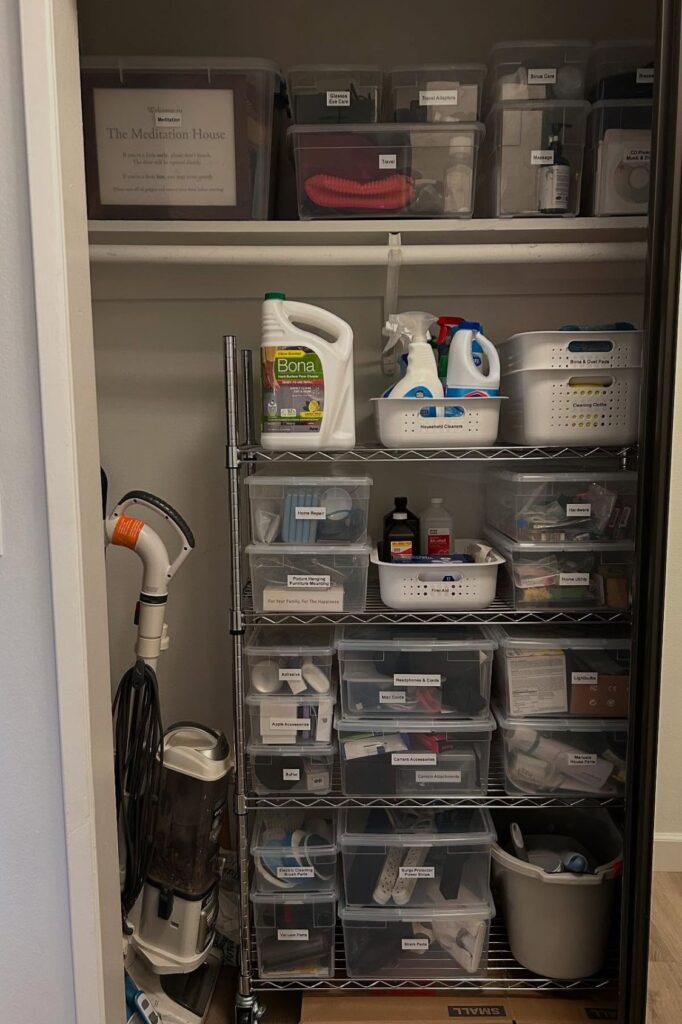
Wire Shelves
Extra storage appears quickly once freestanding wire shelves move into the closet. Metal rack systems create multiple levels without drilling or rebuilding the space.
It makes them great for people who rent or have closets with limited built-in shelves. Labeled bins that are clear fit perfectly on each layer.
Keeping supplies organized so nothing gets lost in the back. Daily cleaners are kept at eye level, but bulk refills and backup items are kept deeper down.
Where they feel more stable. Open wire shelves also let air flow, which is good in utility rooms that store chemicals or wet cloths.
It’s easy to set this up again: put a narrow wire rack in the closet, stack transparent bins by category, and leave one side open so that bigger tools like vacuums can still fit.
Tool Hooks
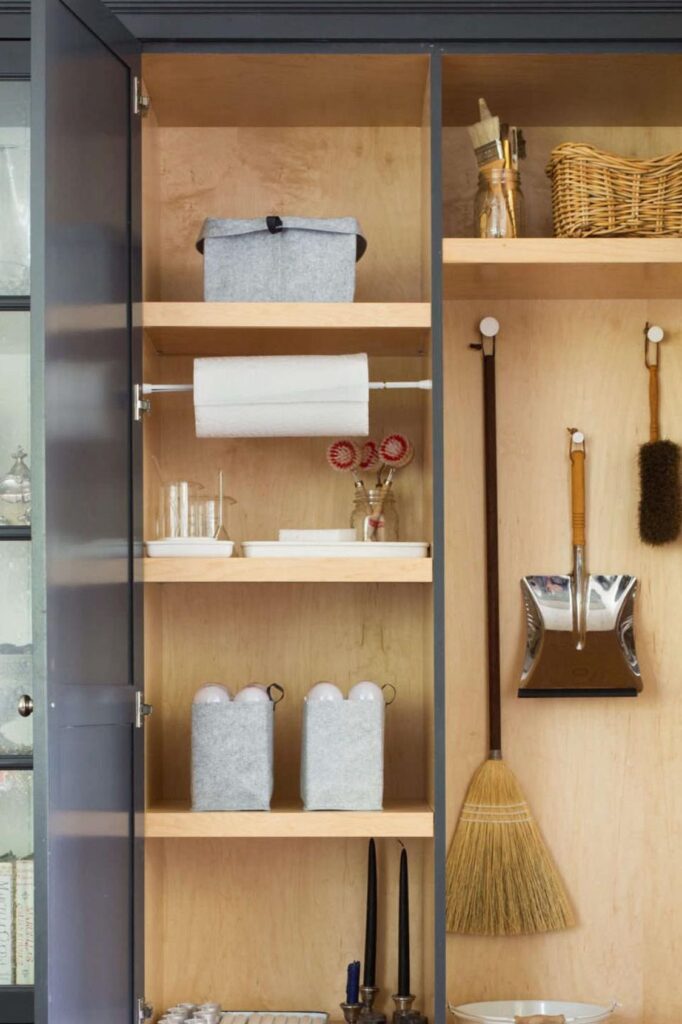
Floor clutter disappears once cleaning tools move onto wall hooks. Brooms, dustpans, and brushes hang neatly along the cabinet wall.
Stopping long handles from slipping or dropping every time the door opens. This kind of vertical storage leaves the bottom open so that buckets and other large items can still fit.
Shelves on the other side hold smaller things, while simple bins keep clothes, light bulbs, and other accessories organized.
A thin rod under one shelf can also carry paper towels so you can wipe up quickly. This system works best in small closets.
Put up strong wall hooks for long tools, set aside shelves for smaller supplies, and let each section handle a different type of item so that nothing ends up on the floor again.
Wall Rails
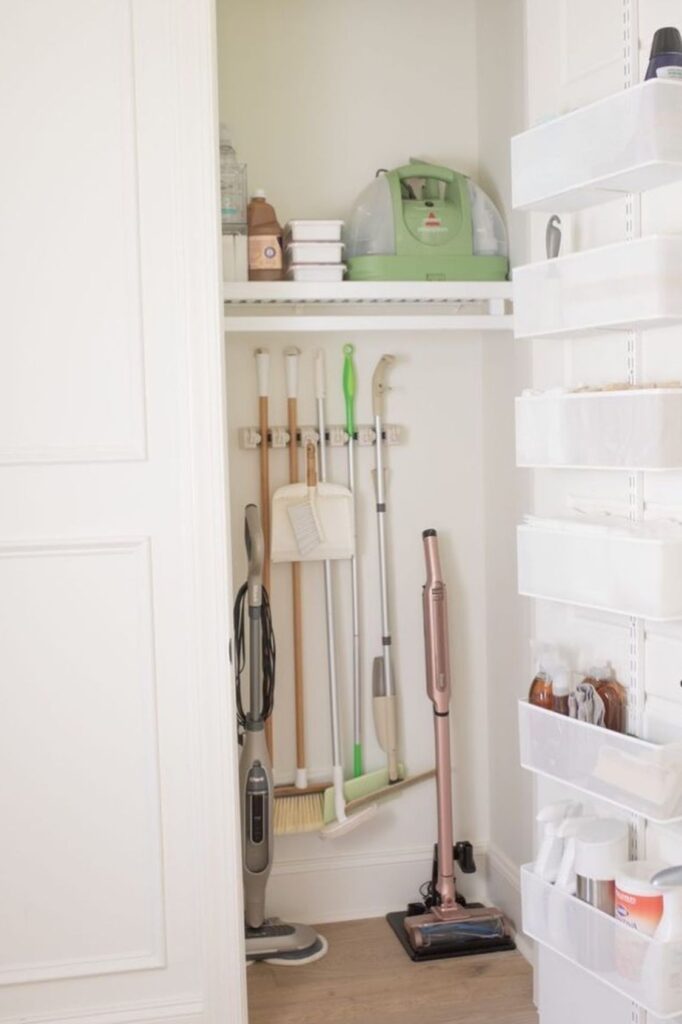
Long handles stop causing chaos once wall rails take control of the space. A simple rail system with grip clips holds brooms, mops.
And dusters in a straight line so nothing leans or slides about in the closet. All of the tools are simple to reach and stay upright.
Which also leaves the floor clear for vacuums or buckets. Door-mounted baskets on the side silently hold minor items like sprays, rags, and refills so that shelves don’t get too full.
One shelf above the others holds appliances or big things that don’t need to be used every day. This layout works well in closets that aren’t very wide.
Put a rail across the wall for tools, keep tiny things on the door, and leave the floor open for bigger cleaning supplies.
Pocket Organizer
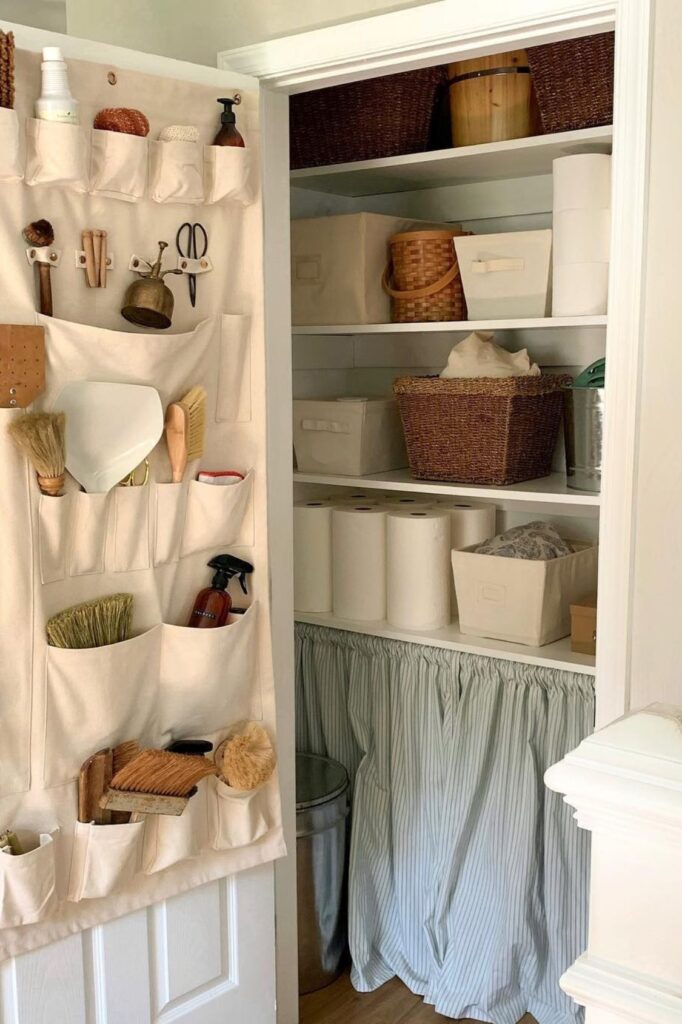
Extra storage appears instantly once the door starts holding the small stuff. Fabric pocket organizers create dozens of little spaces for brushes, sprays, scissors.
And cleaning items that often go missing in drawers or containers. You can see everything, therefore it only takes a few seconds to get a cleaning tool.
Instead of having to search through shelves. Baskets and bins keep bulk items like paper towels and refills together inside the closet.
Open shelving makes it easy to get to anything. A simple drape behind the bottom shelf covers bigger boxes or buckets and keeps the area appearing nice.
This tip works best in small closets. Hang a pocket organizer on the door and let the shelves hold bigger things instead of small ones.
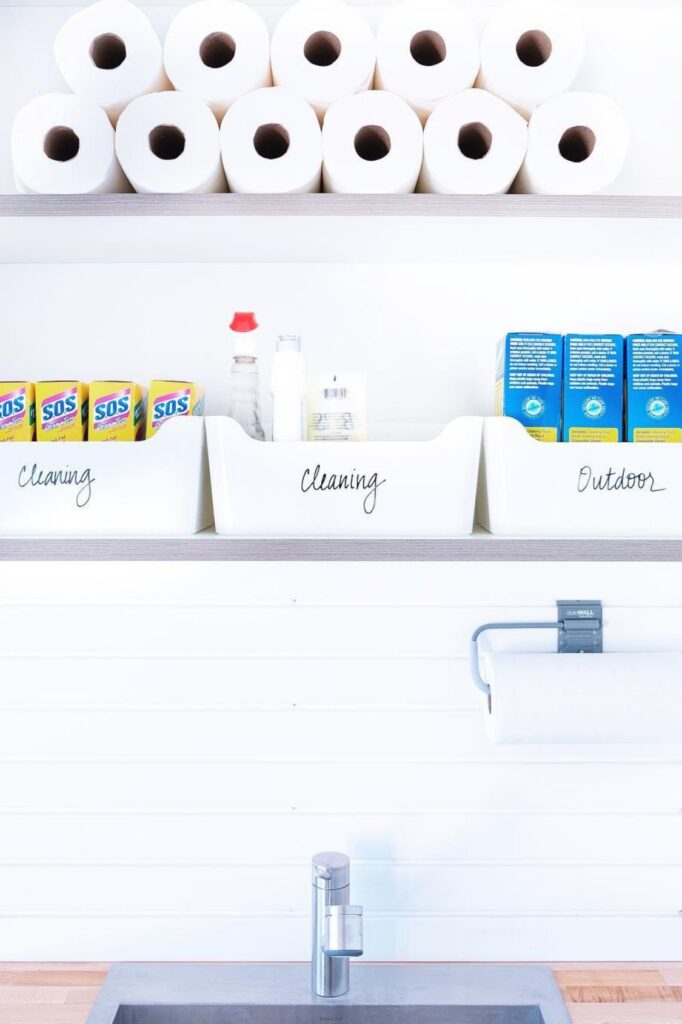
Labeled Bins
Confusion disappears quickly once every category has its own labeled bin. Cleaning pads, sprays, and refills stay grouped together.
Instead of covering the whole shelf. Labels let you know where things go, so putting things back is easy.
Paper towels and other bulk items are neatly stacked on the top shelf, ready to be used as needed.
A simple paper towel holder that hangs below the shelf makes it easy to get to without taking up room in the bins. This setup works well for closets that hold a lot of little items.
Choose strong containers, give each one a distinct category, and line them up on the shelf so you can easily find what you need.
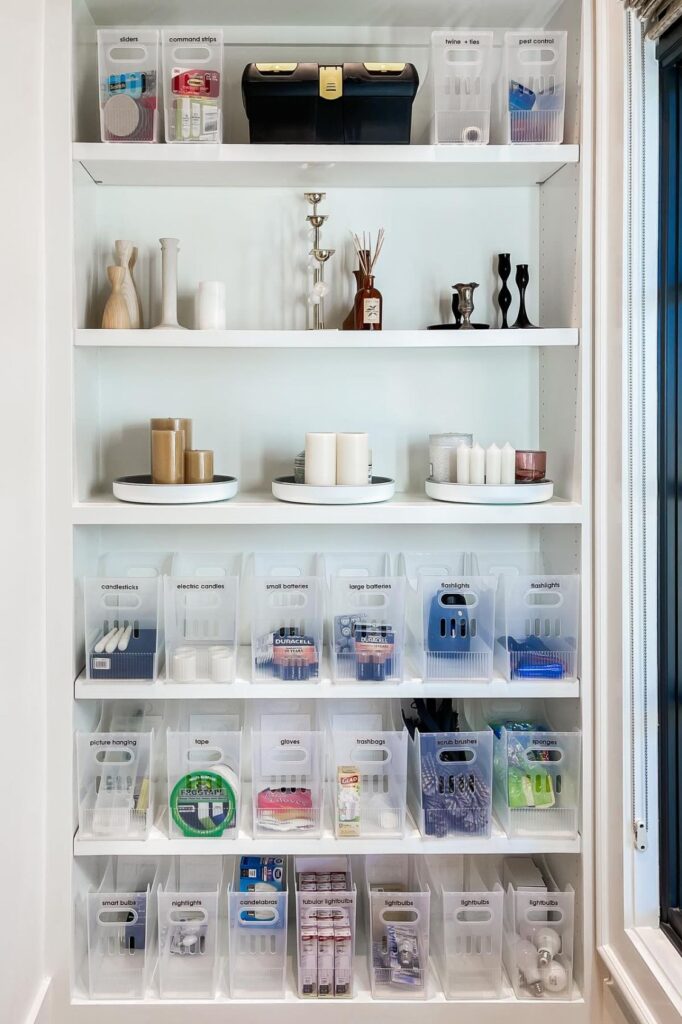
Category Bins
Small household items stop disappearing once every category gets its own bin. Batteries, hooks, lightbulbs, cords, and repair supplies stay sorted in separate containers.
So nothing gets mixed up. It’s easy to see what’s inside clear bins, and simple labels let everyone in the house put items back where they belong.
When you arrange things by function instead of spreading them out over the surface, shelves work much better.
objects that are used often can sit on the center shelves, where they are simple to reach. Decorative objects or extra stock can stay higher up.
Sort your supplies by kind, line the containers up on the shelf, and let each bin manage one specific group.
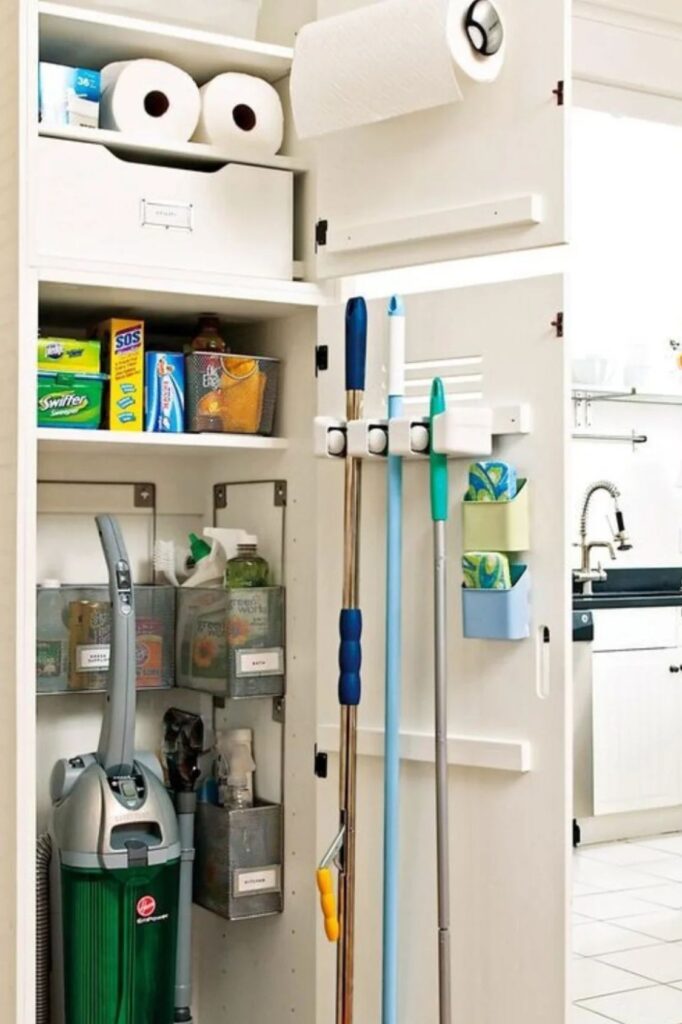
Multi Storage
Smart organization happens when every surface inside the closet starts working together. Long handles stay secure on wall-mounted clips so brooms.
And mops never slide or stack up on the floor. Door-mounted holders provide you more places to put towels or small cleaning items.
Making use of space that might otherwise be wasted. The shelves above keep things like cleaning supplies and paper towels close by without taking up too much space in the lower part.
There are clear bins on the side that hold sprays and other little things so that nothing gets lost behind the vacuum.
This tiered setup is best for closets with little room. You may use shelves, door storage, and tool clips to make sure that each area of the closet holds a different sort of supply.
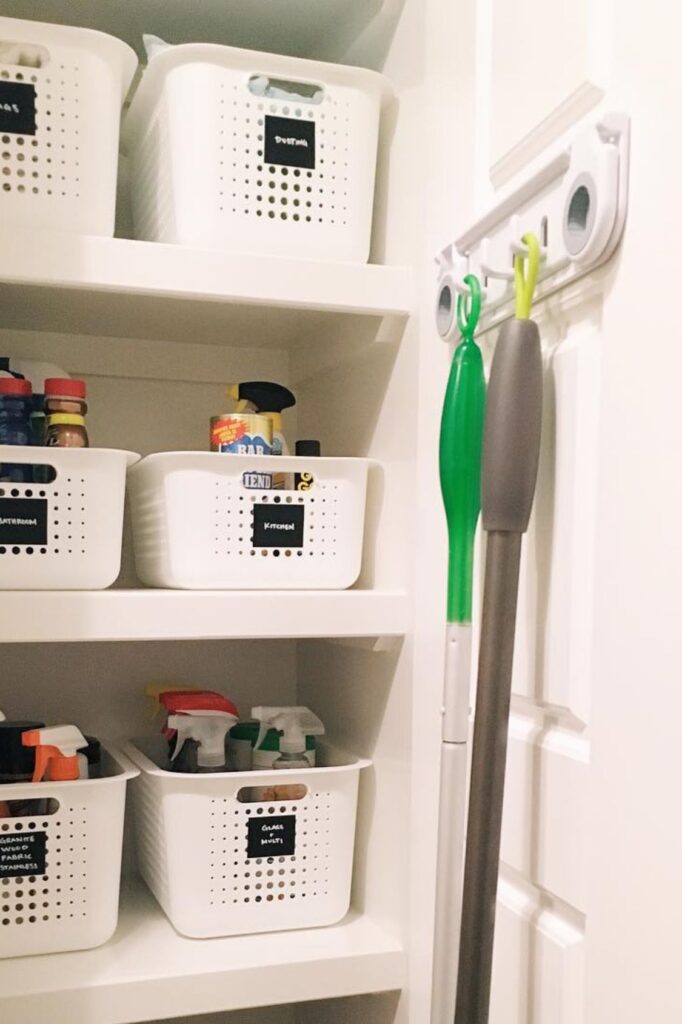
Labeled Baskets
Chaos disappears quickly once every type of cleaner has its own basket. Bathroom sprays, kitchen cleaners, dusting cloths, and multipurpose products stay separated.
So it only takes a few seconds to get the proper bottle instead of looking through a lot. Perforated baskets are great.
Because they keep things in place while still allowing you see what’s within. Small chalkboard-style labels help keep things in order.
So you know where everything goes after cleaning. Wall clips on the side keep long items like mops and dusters so they don’t fall over or touch the floor.
This approach works well for closets with a lot of different cleaners. Group supplies by room or task, put them in labeled baskets, and line them up neatly on the shelves.
Double Walls
Storage capacity grows dramatically once both closet walls start working for you. Deep wire baskets mounted along each side.
Make rows of storage that are easy to get to for tiny items like tape, cleaners, batteries, and tools.
Central shelves are open for bigger bins and heavy goods, while side baskets hold the little things that generally get in the way on the main shelves.
Clear containers help store everything in different groups so nothing gets lost in the back. There is still room on the floor for big storage bags or seasonal things.
That don’t need to be accessed every day. This structure works best in closets that are wide enough.
Rolling Rack
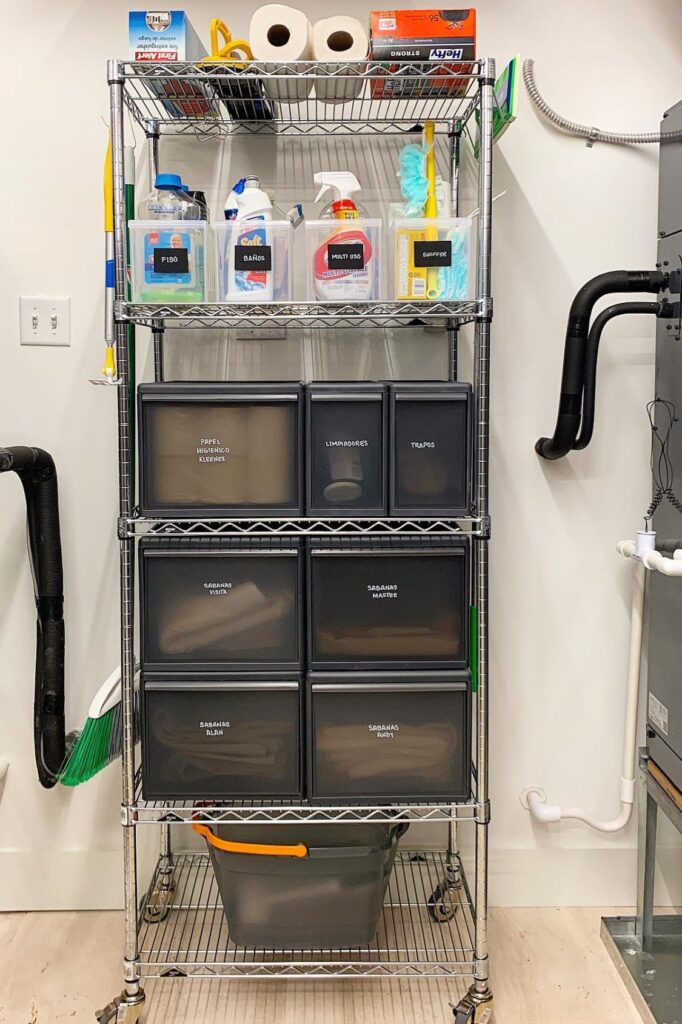
Tight utility spaces become far more usable once a rolling rack takes over the center. A tall metal shelf like this creates several storage levels.
Without cabinets that are already built in. Upper shelves carry paper towels and other cleaning supplies so you can easily reach them.
Clear bins keep sprays, brushes, and gloves together so that little items don’t get all over the place.
The drawer-style containers below are great for keeping rags, refill packs, or additional cleaning cloths out of sight but organized.
Wheels on the rack make a major difference in closets with water heaters or pipes since you can pull the whole thing out to clean it or get to it.
Door Pegboard
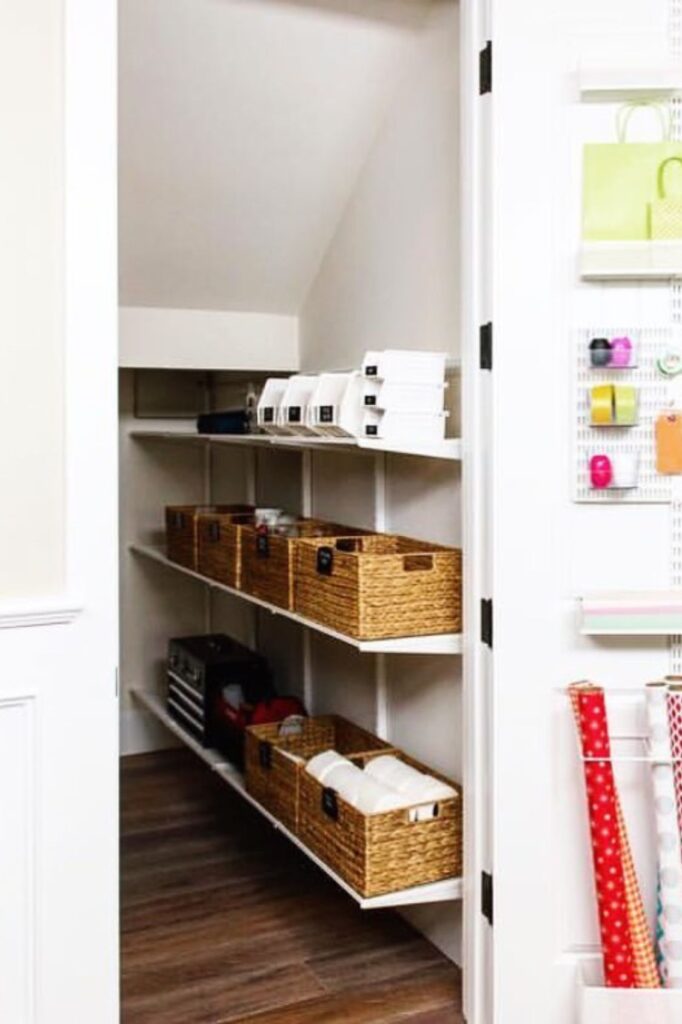
A blank door can quietly turn into one of the most useful storage spots in the closet. Pegboard panels make it easy to hold tape, ribbons, scissors.
And other little instruments that are generally strewn over the shelves. You can move items around whenever you need to because the hooks and tiny trays are adjustable.
Long shelves within the closet, on the other hand, can hold bigger baskets that keep supplies organized by type.
Bigger baskets are good for big things, whereas smaller containers are good for tools or other goods.
This layout works well in closets with weird corners or sloped ceilings since the door may organize small things while the main shelves are free for bigger things.
Rail System
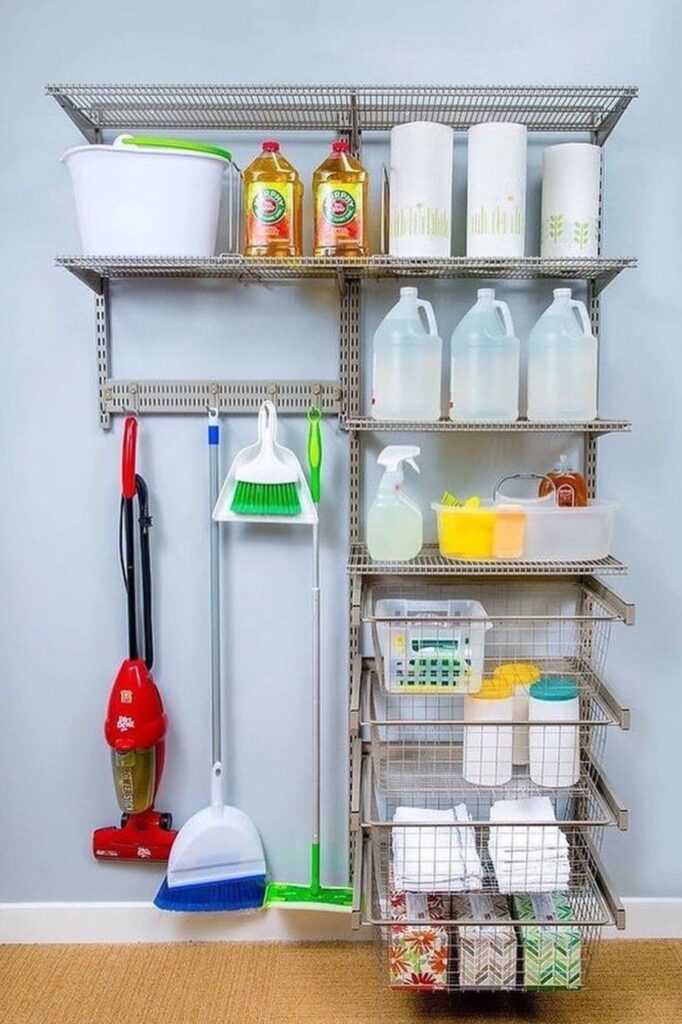
Empty wall space can quietly become the most useful part of the closet. A wall-mounted rail system holds brooms, dustpans, and small cleaning tools in one organized row.
So nothing tips over or leans. Tools like this that hang up right away clear the floor and make it easier to grab equipment during rapid cleanups.
Metal shelves that can be moved around can hold a lot of things, such paper towels, refill bottles, and bigger containers.
Pull-out wire baskets on the side are great for storing towels, sponges, and other small cleaning products that tend to get lost in deep shelves.
You can put up a rail for tools, add open shelves for bigger supplies, and utilize sliding baskets to make smaller things easy to get to.
Divided Storage
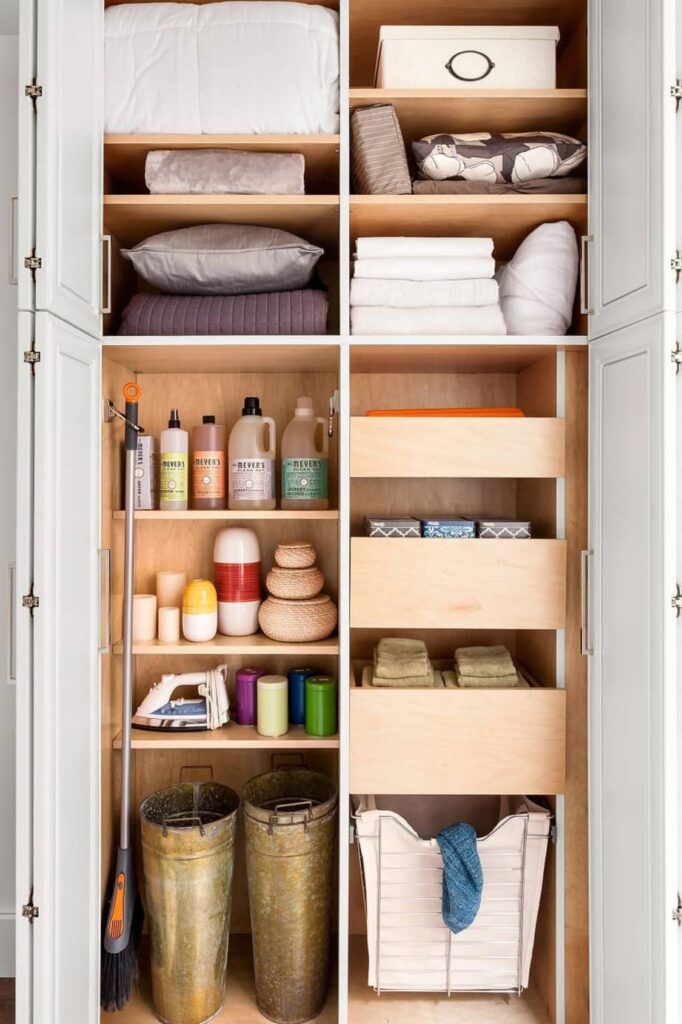
Order becomes much easier to maintain when a closet is split into clear sections. Separate compartments allow each type of item to live in its own zone linens on the top shelves.
Ordinary items in the middle and heavy tools or buckets at the bottom. On one side, there are deep drawer-style shelves.
That keep tiny things like cloths, cleaners, and accessories from sliding around when the door opens.
Open shelves on the other side make it easy to see and reach bottles and appliances. Vertical gaps between sections also make room for long items like brooms.
This method works best in closets that are tall enough. Divide the space into tall columns, and let each one hold a different type of storage.
Hanging Rod
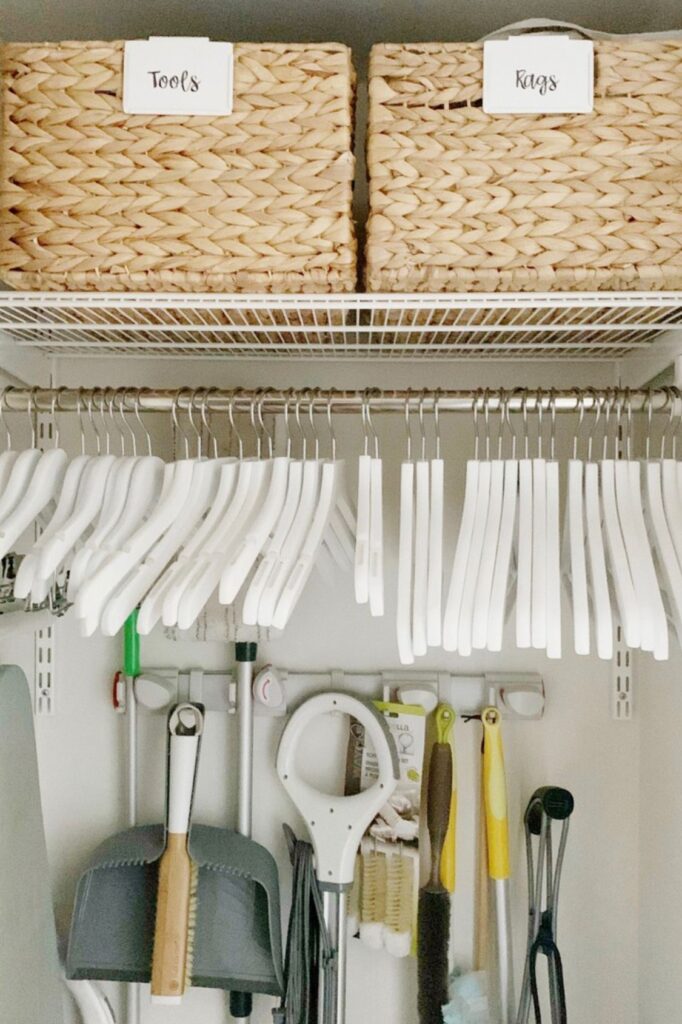
Unused vertical space often hides right in the middle of the closet. A simple hanging rod instantly creates a whole new storage layer for lightweight tools, cloth bags.
Or even aprons for cleaning. Hooks and other hanging items can hold tiny tools, dustpans, and brushes so they are easy to see instead of becoming lost in containers.
Upper wire shelves hold bigger things, such labeled baskets for rags and tools, so you don’t have to worry about them getting in the way.
Wall-mounted clamps below the rod keep long handles like mops and brooms from falling over. This solution works best on closets that already have a shelf above.
You can add a rod underneath and turn the empty space into useful storage without having to put in more cabinets.
Center Column
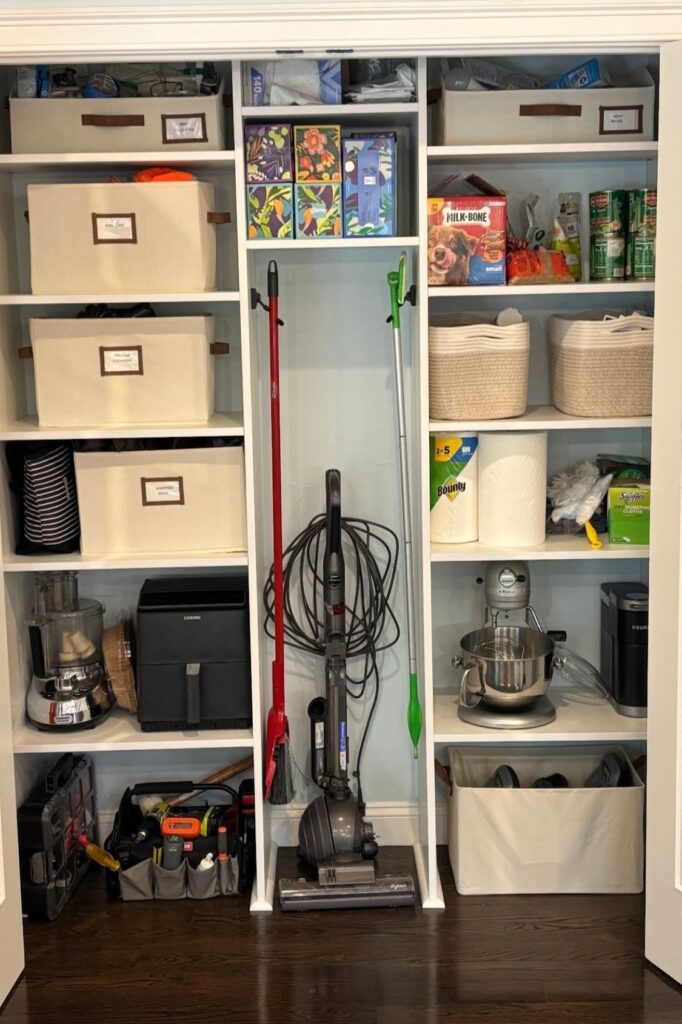
A dedicated center column can completely change how a busy utility closet functions. Long tools like vacuums, mops, and brooms.
Finally, they get their own vertical path instead of leaning against bookcases or blocking the entryway.
The shelves around the room take care of everything else. There are fabric bins for loose goods, baskets for paper towels, and open shelves for appliances or cleaning supplies.
Putting similar things in containers keeps the edges neat and the middle clear for tall equipment. This plan works well with closets.
That have broader openings since the middle column may hold big tools. Build shelves on both sides and leave the middle open. All of a sudden, everything has a place to live.
Clip Rack
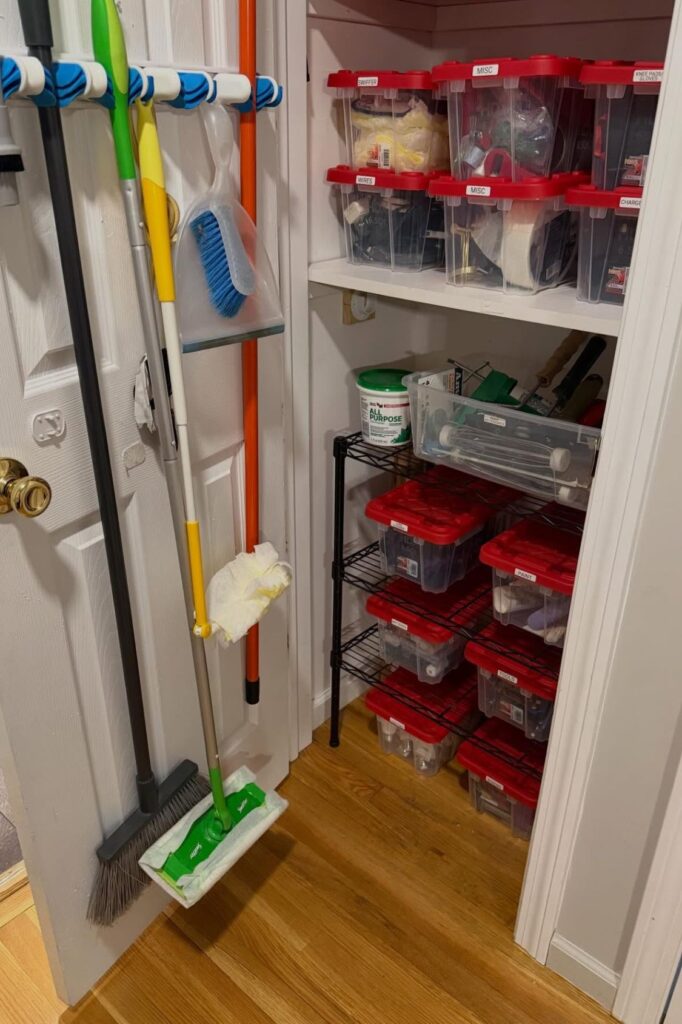
Long handles finally stay under control once a clip rack is mounted on the wall. Grip-style holders keep mops, brooms, and sweepers lined up neatly.
Instead of falling or resting against a wall every time the door opens. It’s easier to get to tools, and the floor stays clean for storage bins or a small rack.
On the other side, shelves hold the remainder of the supplies. Labeled containers sort screws, parts, and cleaning materials into easy-to-understand groups.
A thin wire rack below makes extra layers for stacked bins without taking up too much room. This system works best in small closets.
Mount tool clips on the wall or door, and then let shelves and bins hold the smaller goods so that everything is simple to get to.
Vertical Divide
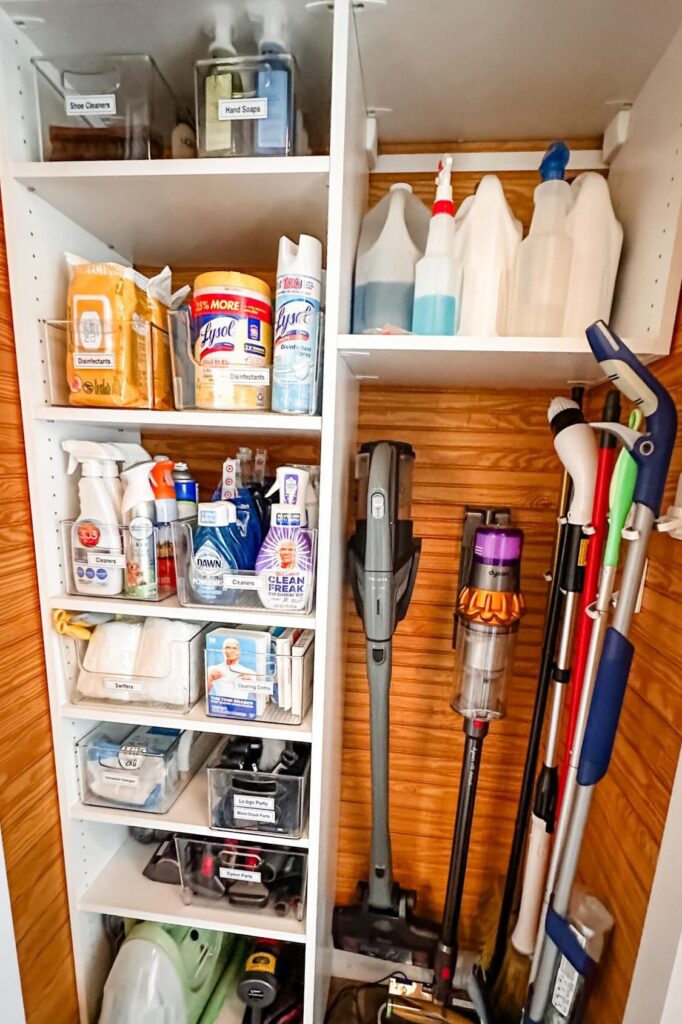
Crowded closets feel instantly calmer once tall tools get their own vertical lane. A narrow divider creates a dedicated section for vacuums, mops, and long handles.
That they don’t have to fight for space on the shelves. The cleaning bottles and disinfectants stay neatly lined up on one side.
And the minor supplies are kept in translucent containers that let you see everything. You can put bulk cleaners or backup bottles on the shelf.
Above without having to stack them too high.Keeping tools upright also keeps wires and handles from becoming tangled up.
This structure works well for closets that hold both cleaning supplies and tools. Split the area into two columns so that one side holds tools and the other keeps shelves neat.
Charging Station
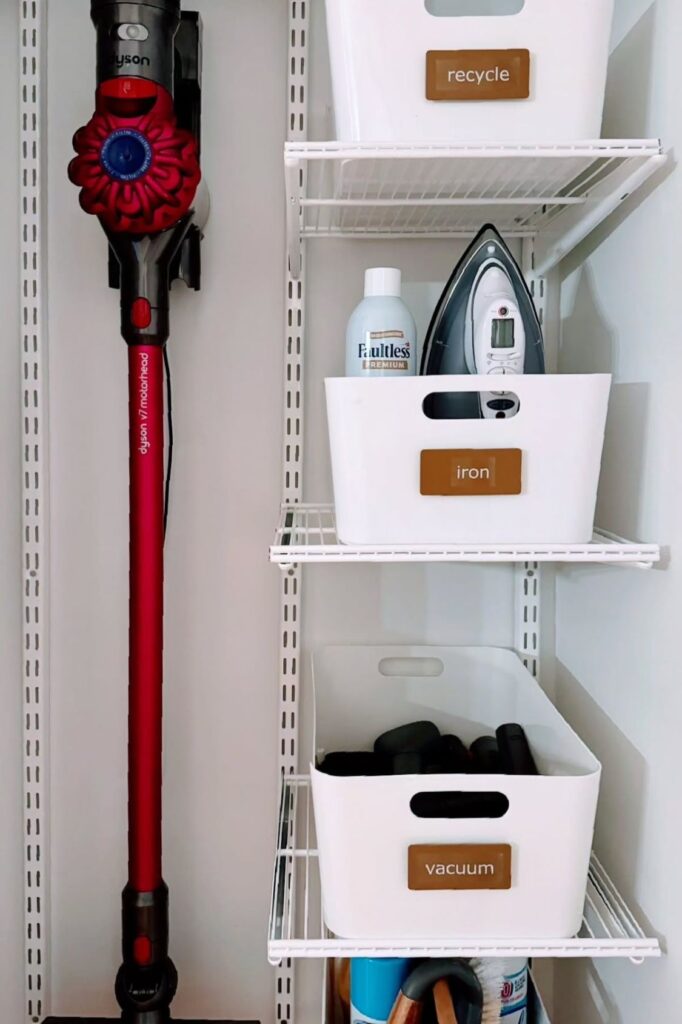
Cordless tools become far easier to manage once the closet includes a charging spot. Mounting the vacuum directly on the wall keeps it upright.
while the battery charges, this saves space on the floor and keeps the device available for rapid cleanups.
The remainder of the supplies are kept on nearby shelves. Bins labeled for ironing equipment, vacuum attachments, or other accessories keep everything together instead of spread out.
Adjustable wire shelves are great since they can move around as your storage needs vary. This system works best for closets that carry electric cleaning instruments.
Put a wall mount for the vacuum, set aside one shelf for attachments, and keep all the supplies in labeled bins so everything stays neat and easy to find.
Side Baskets
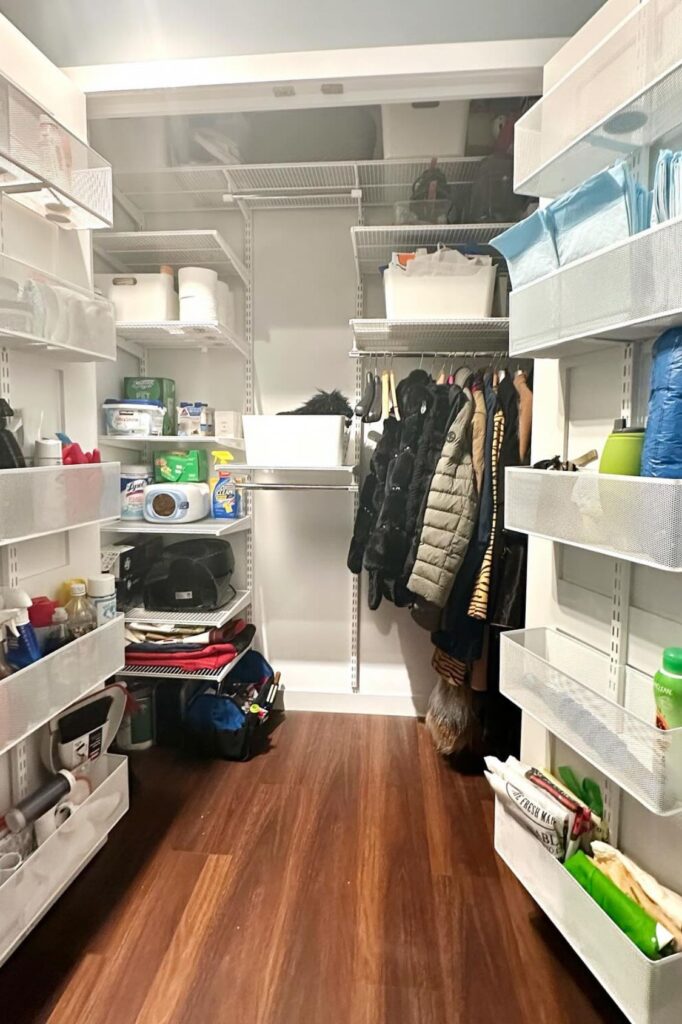
Walking into a closet becomes much easier when the walls start carrying the storage load. Slim side baskets mounted along both walls.
Make rows of accessible storage for sprays, bottles, and everyday items out of vertical space that isn’t being used.
Each basket keeps smaller objects separate so that nothing gets lost on deep shelves. Then, open shelf in the back can hold bulk supplies or bigger containers.
And a hanging rod can hold jackets or utility items. This configuration works best for wide closets since the main walkway stays free and the sides take care of the minor mess.
Put up vertical rails with baskets that can be stacked on top of each other, and let the walls handle most of the organizing.
Cabinet Tower
Slim cabinets can quietly solve one of the biggest utility closet problems—where to store tall cleaning tools.
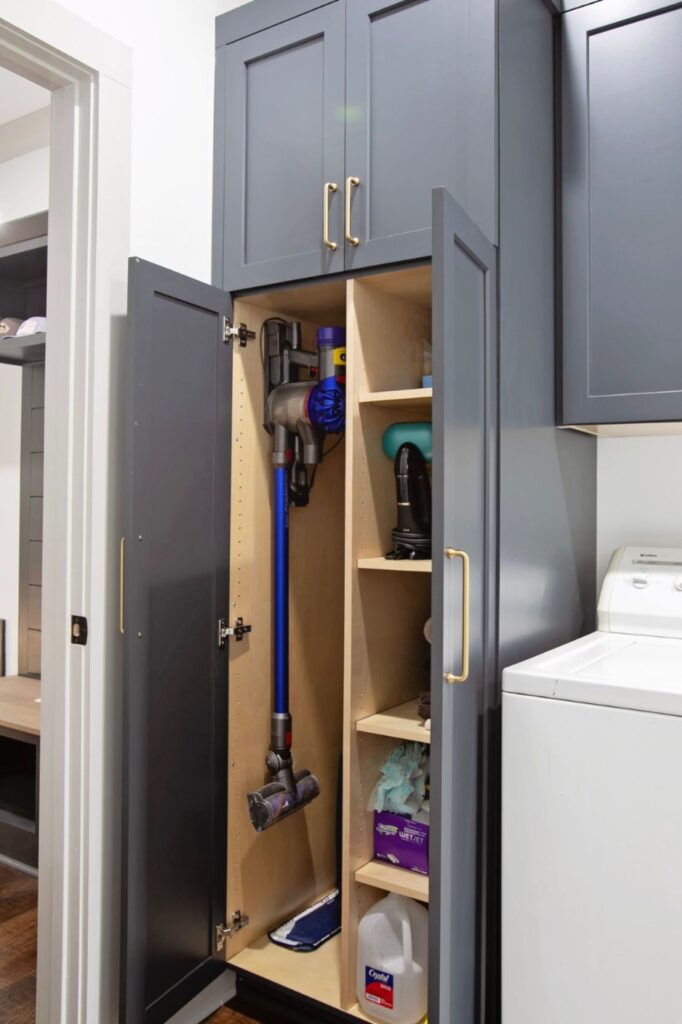
A thin cabinet tower gives vacuums, mops, or brooms a vertical place to keep upright instead of resting against walls.
The side shelves may be moved around to keep cleaning supplies, refills, and cloths neatly stored without getting in the way of the main compartment.
Upper cabinets are a great place to store backup supplies or things you don’t use every day. This layout works especially well in laundry rooms.
Putting up a tall cabinet with one open column for tools and shelving next to it turns a modest laundry nook into a clean and organized utility area.
Shelf Labels
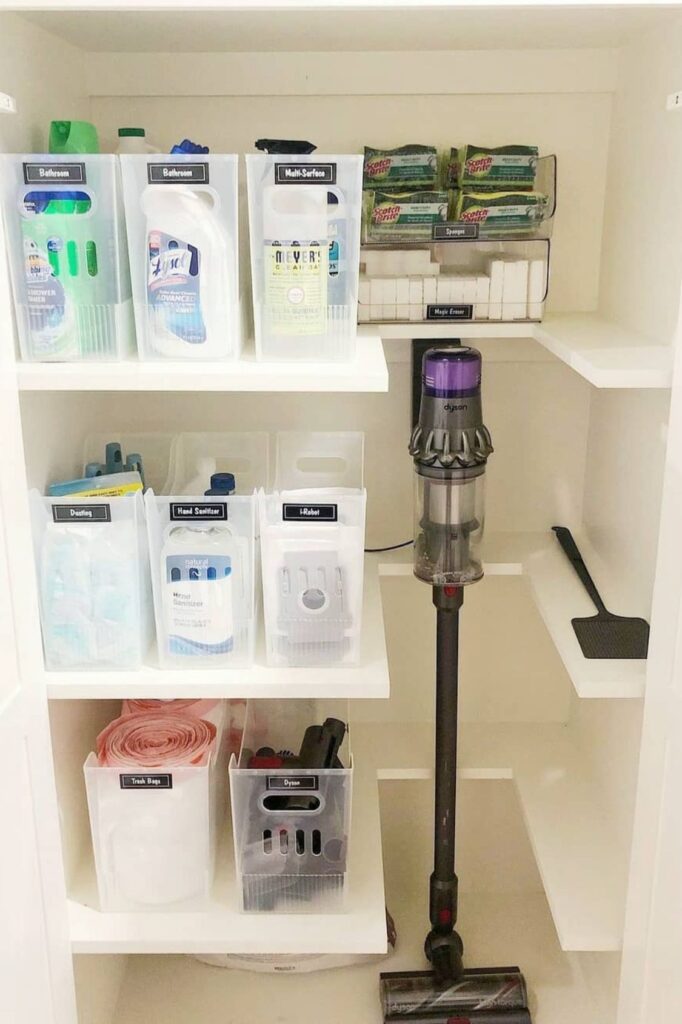
Searching for the right cleaner becomes much faster once shelves are organized by category. Clear bins labeled for bathroom, multi-surface, or dusting products.
Put bottles in groups so that nothing gets mixed up. The smaller wire trays above work great for sponges or cleaning pads because they keep them from moving around on the shelf.
The vacuum has its own parking area on the side, which keeps it from getting in the way of other supplies.
Backup supplies like garbage bags or refills that you don’t need every day can go on the lower shelf.
This method works best in closets that aren’t extremely wide. Put labeled containers on each shelf so that every cleaning product always goes back to the same location.
FAQs
What should you keep in a utility closet to keep it organized?
A utility closet that is well-organized should only have things for cleaning, fixing things, and home supplies.
Cleaning sprays, disinfectants, sponges, garbage bags, paper towels, mops, brooms, vacuums, and small tools for fixing things are all common goods.
Put things that are alike in labeled boxes or baskets so that you can always find what you need.
How often should you reorganize a utility closet?
A quick reset once a month is all most utility closets need. During this reset, look for empty bottles, put things back in their bins, and clean the shelves if they need it.
A quick check once a month stops clutter from building up again and lets you know when you’re running low on supplies.
When everything has a defined place, keeping the closet clean is just a habit instead of a large organizational project.
You may like to read!
- 26 Dresser Organization Ideas
- 18 Water Bottle Organization
- 20 Coffee Station Organization
- 22 Clothing Organization Ideas
- 26 Small House Organization

Fasial is the founder of the Fizzy Flare. He has been a passionate blogger since 2021. He ran three different websites in the past few years. Now he is focusing on Fizzy Flare to build an audience and help them organize their life.