21 Utensil Drawer Organization Ideas for 2026
This post may contain affiliate links: full affiliate disclosure.
If your utensil drawer looks organized for a day or two, only to turn into a mess again, you’re not alone. Forks pile up, tools slide around.
You end up digging every time you need something. The problem isn’t that you need more organizers.
It’s that you never set up the drawer correctly. This shows you how to organize your drawers so they actually stay organized and easy to use.
In this article, you’ll find 21 Utensil Drawer Organization ideas that work in 2026.
Let’s jump in!
Contents
- 1 How Do You Organize Your Drawers?
- 1.1 Tool-By-Tool Zones
- 1.2 Material-Based Sorting
- 1.3 Full-Drawer Zoning
- 1.4 Two-Level Storage
- 1.5 Vertical Tool Rows
- 1.6 Length-Based Sections
- 1.7 Gadget-Specific Lanes
- 1.8 Flatware First Layout
- 1.9 Neutral Tool Grouping
- 1.10 Mixed-Use Separation
- 1.11 Modular Grid Control
- 1.12 Vertical Pull-Out Storage
- 1.13 Entertaining-Ready Storage
- 1.14 Built-In Dividers
- 1.15 Upright Canister Storage
- 1.16 Daily-Use Front Row
- 1.17 Deep Drawer Decluttering
- 1.18 Adjustable Divider Flex
- 1.19 Non-Slip Base Layer
- 1.20 Backup Tool Zone
- 1.21 Category-Only Sections
- 2 FAQs
How Do You Organize Your Drawers?
You organize your drawers by creating a simple system before adding any organizers. You decide what actually belongs in the drawer.
Remove everything you don’t use. Then you group similar items together so each utensil has a clear place. You match the organizer to your drawer.
Size and depth and things stop sliding and stacking. If you place daily-use items at the front and occasional tools at the back.
You save time every day. The goal isn’t to make the drawer look perfect, but to make it easy to use and easy to keep organized.
Save this article for later! 👇👇
Tool-By-Tool Zones
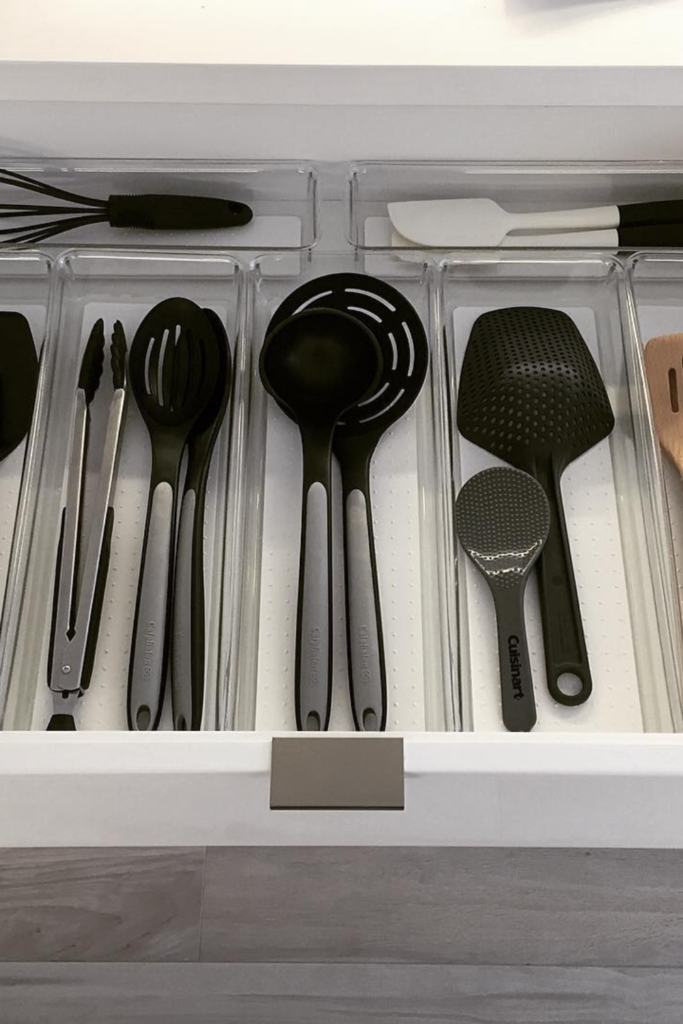
The order shows up when every utensil earns its own lane, this setup works best in standard-depth drawers.
Measure the drawer, then use clear modular bins sized to each utensil type, rather than mixing shapes.
Group tools by function, not size, so grabbing feels automatic. Clear trays plus a light drawer liner keep everything visible.
Material-Based Sorting
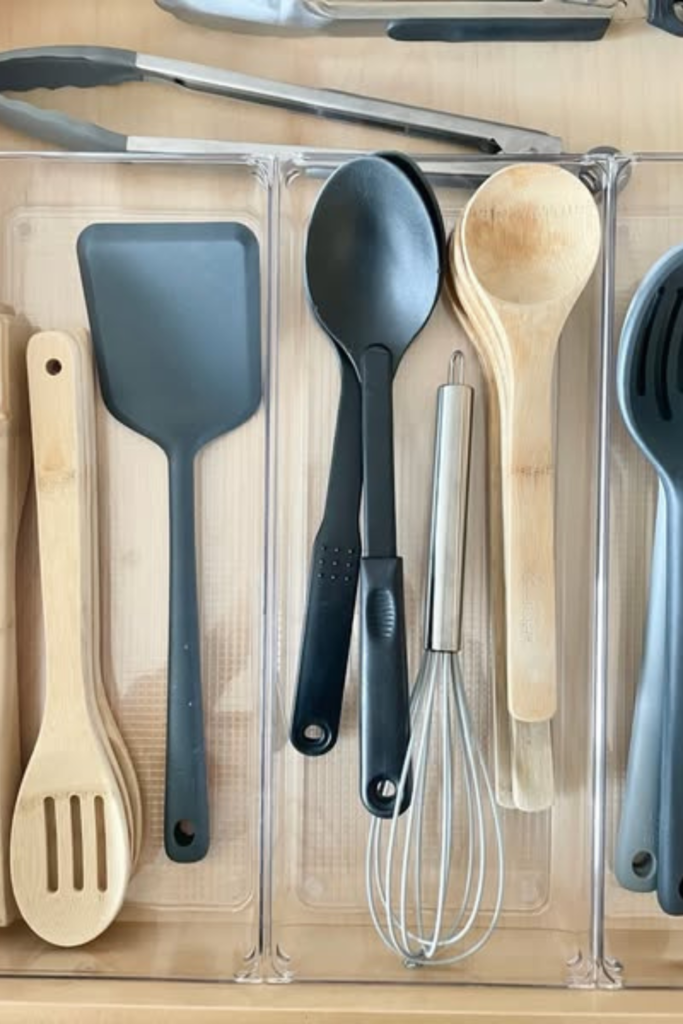
Mixing wood and silicone only works when each material gets its own space, fits drawers used daily for cooking tools.
Not serving pieces, separate utensils by material first, then slide narrow, clear trays side by side to lock them in place.
Wood stays cleaner, silicone stays flexible, and metal tools stop scratching others. A neutral liner underneath adds grip.
Full-Drawer Zoning
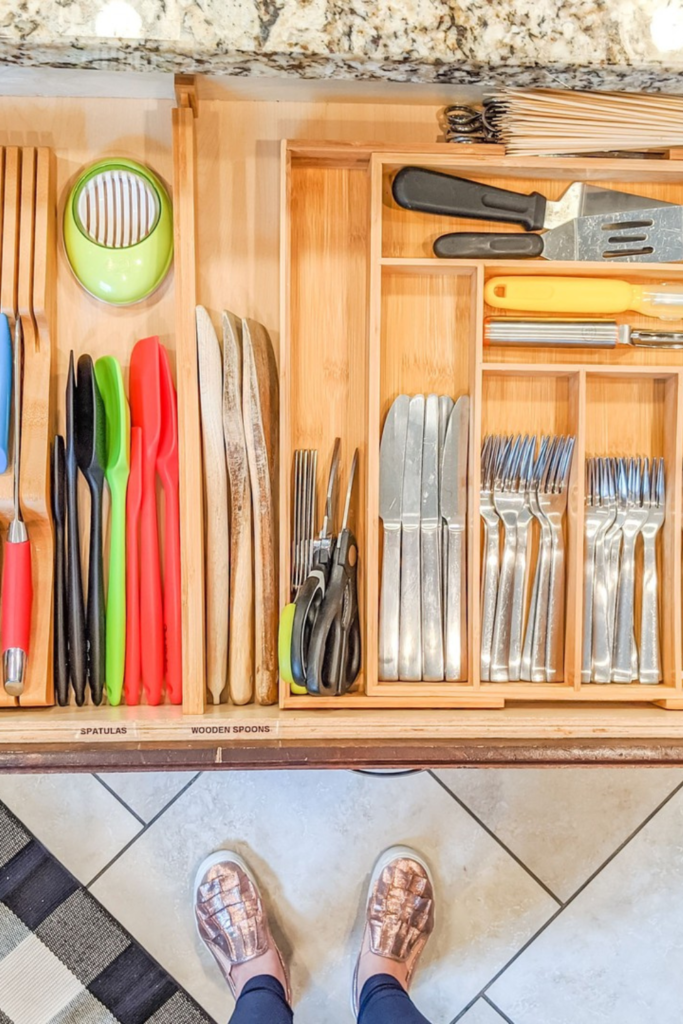
Chaos disappears once the entire drawer functions as a single system. Start by anchoring long bamboo trays on.
One side for spatulas and spoons, then lock smaller compartments beside them for cutlery and gadgets.
Hard dividers create boundaries, while layered wooden inserts add warmth and stop items from drifting out of place.
Two-Level Storage
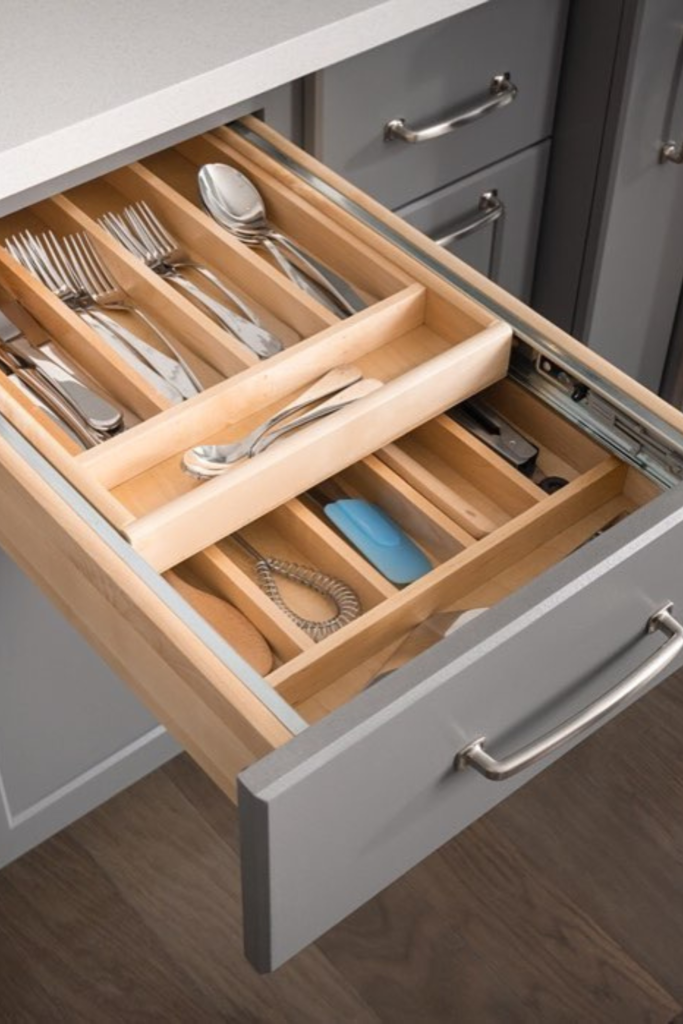
Hidden space becomes usable once you stop stacking flatware, works best in deep drawers that swallow utensils.
Add a sliding or lift-out tray on top for forks and spoons, then reserve the bottom layer for tools used less often.
Shallow upper trays keep daily items visible, while the lower section handles bulk without creating clutter or digging.
Vertical Tool Rows
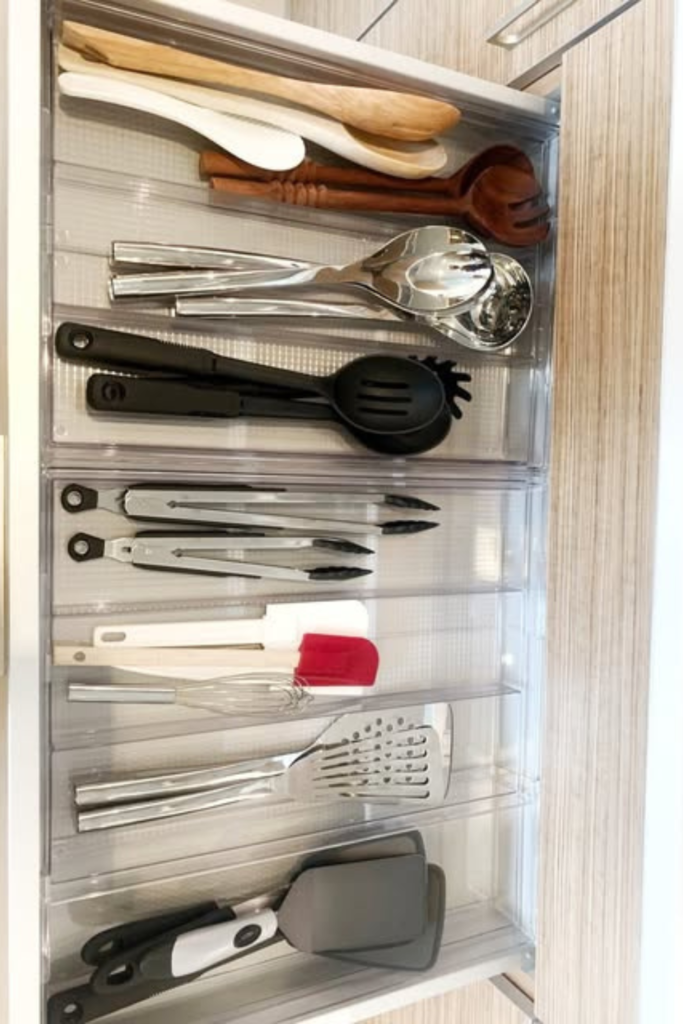
Flat layouts stop working once tools vary in length. Line up long utensils vertically using slim, clear bins.
Each handle stays within reach. Group similar lengths together to prevent shifting when opening the drawer.
Textured liners underneath add grip, while transparent trays keep the layout light and easy to reset after cooking.
Length-Based Sections
Long tools behave better when they stop competing for space. Sort tools by length first, then assign long bamboo channels to each group.
Short gadgets fit into square blocks on the side. Solid wood trays add weight, keeping everything from shifting during daily use.
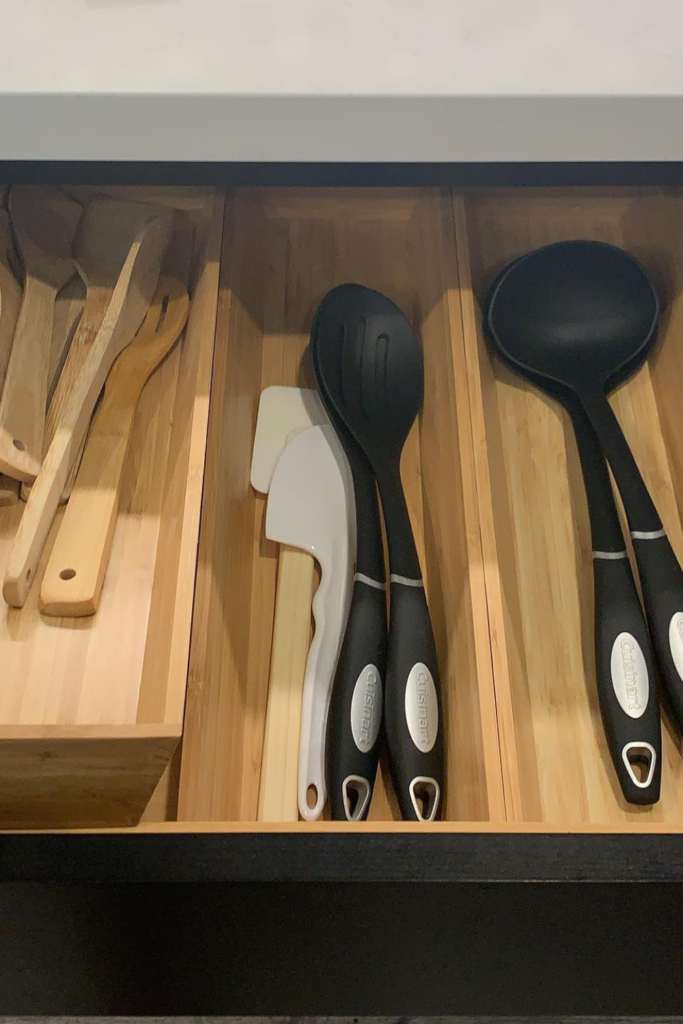
Gadget-Specific Lanes
Busy drawers fail when small tools float around. This setup shines in prep-heavy kitchens filled with gadgets.
Assign narrow wooden lanes to peelers, graters, and cutters so each tool stays visible. Keep bulky tools in wider channels to avoid overlap.
Solid dividers act as rails, while light wood tones brighten the drawer and make quick resets after cooking effortless.
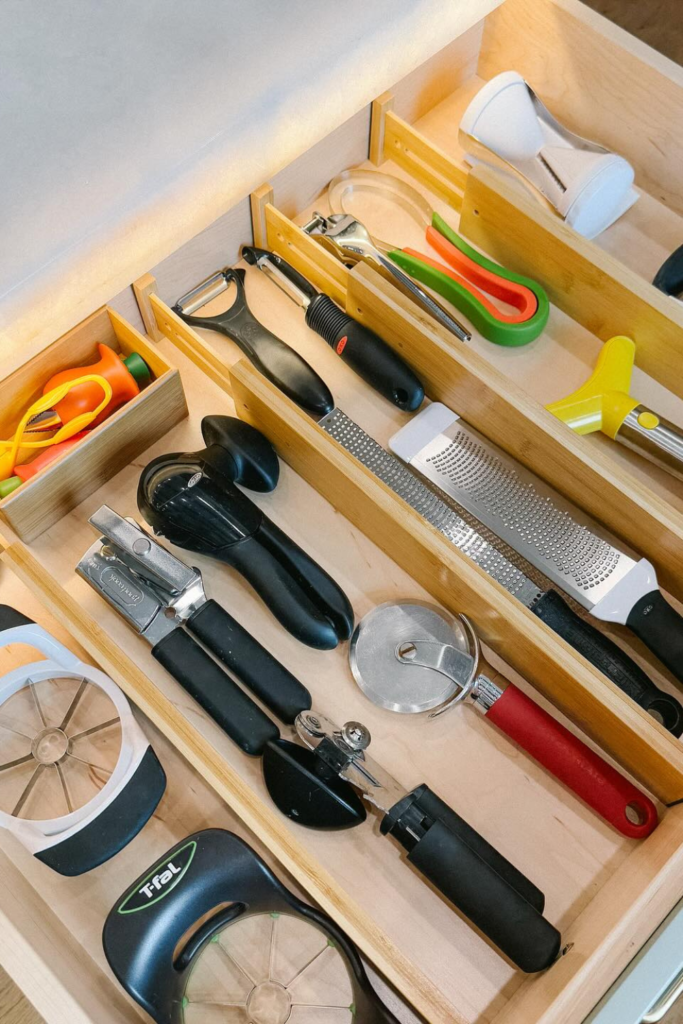
Flatware First Layout
Dinner service stays neat only when flatware gets priority space. Place forks, knives, and spoons in long, clear bins.
Pieces line up and don’t overlap. Reserve smaller trays around them for serving tools and extras, transparent organizers.
Keep counts visible, making resets quick after unloading the dishwasher, fits households that use matching sets daily.
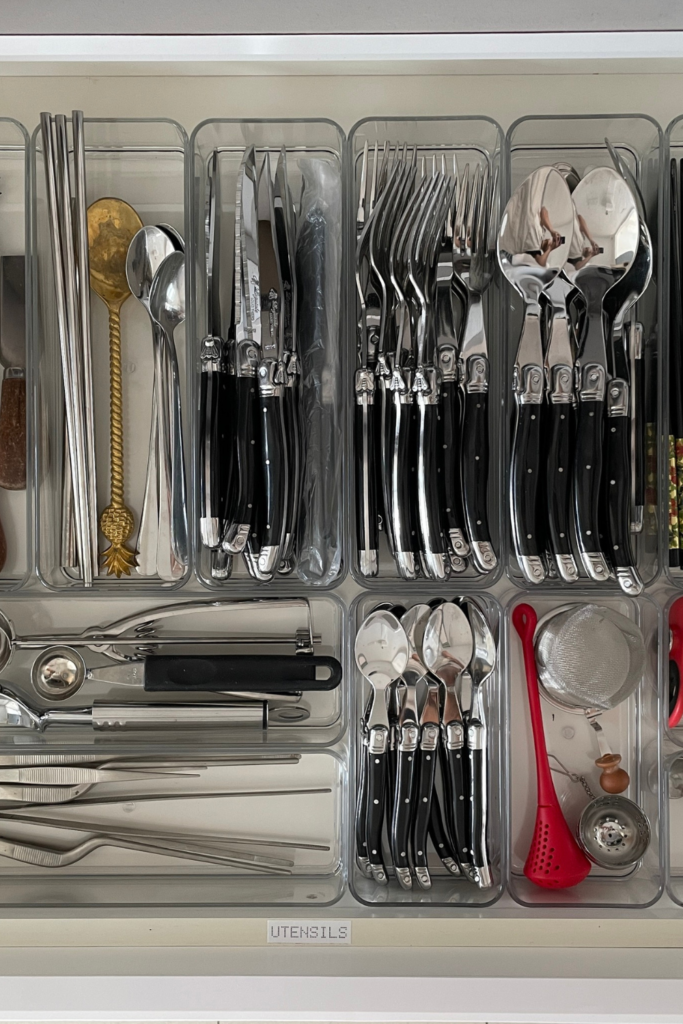
Neutral Tool Grouping
Calm drawers stay usable longer when the palette stays consistent, best in kitchens that favor a clean, minimal setup.
Group tools with similar tones and materials into bamboo compartments so nothing visually competes.
Longer tools sit along the edges. Natural wood trays add warmth, and open spacing makes it easy to return items.
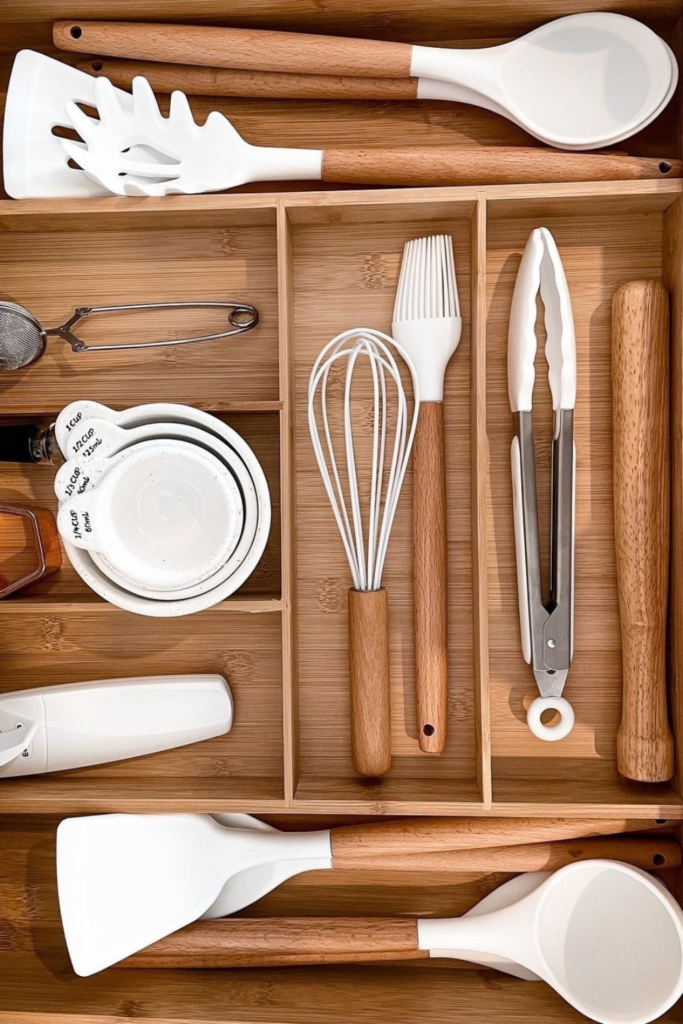
Mixed-Use Separation
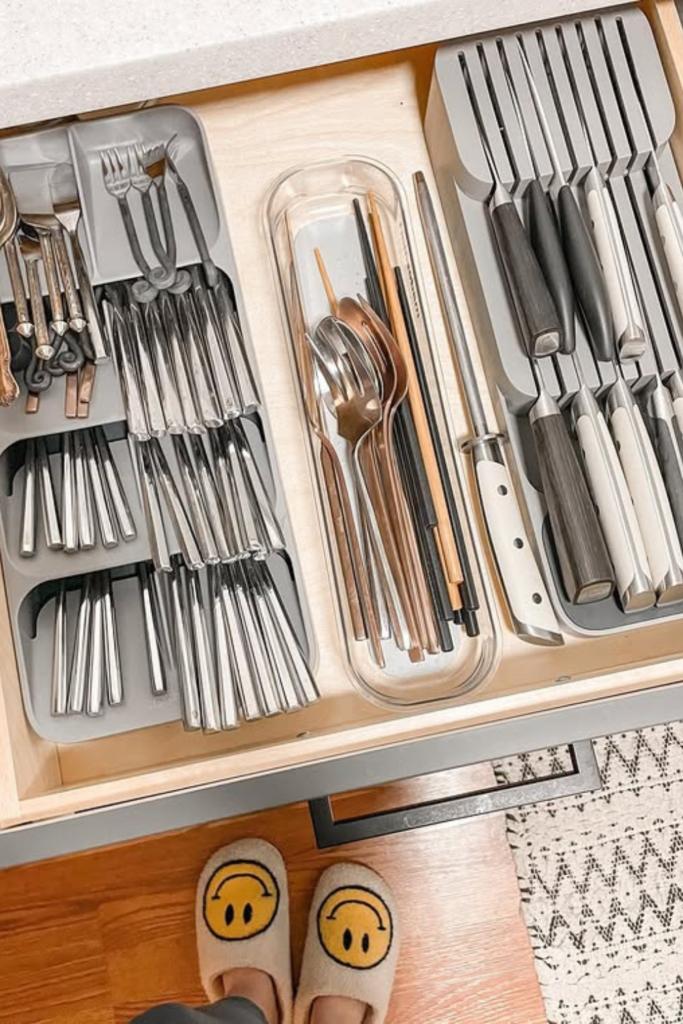
Crowded drawers calm down once flatware and tools stop sharing space, works in family kitchens where daily eating utensils mix with cooking tools.
Keep forks and spoons locked into fitted trays on one side, then assign a single long bin for chopsticks and serving pieces.
Modular Grid Control
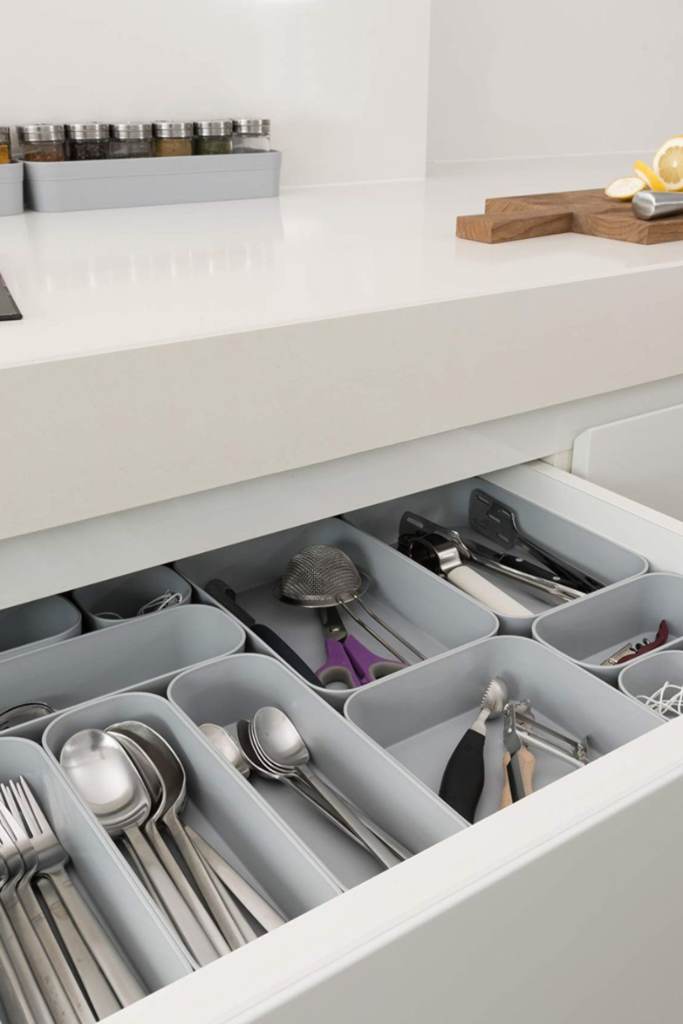
Small tools stop taking over once the drawer works like a grid, fits deep drawers packed with mixed utensils and gadgets.
Build the layout using identical modular bins so every section locks into place. Assign larger bins to flatware.
Smaller ones to prep tools and accessories. Soft-toned containers keep the drawer calm, straight edges make reorganizing fast.
Vertical Pull-Out Storage
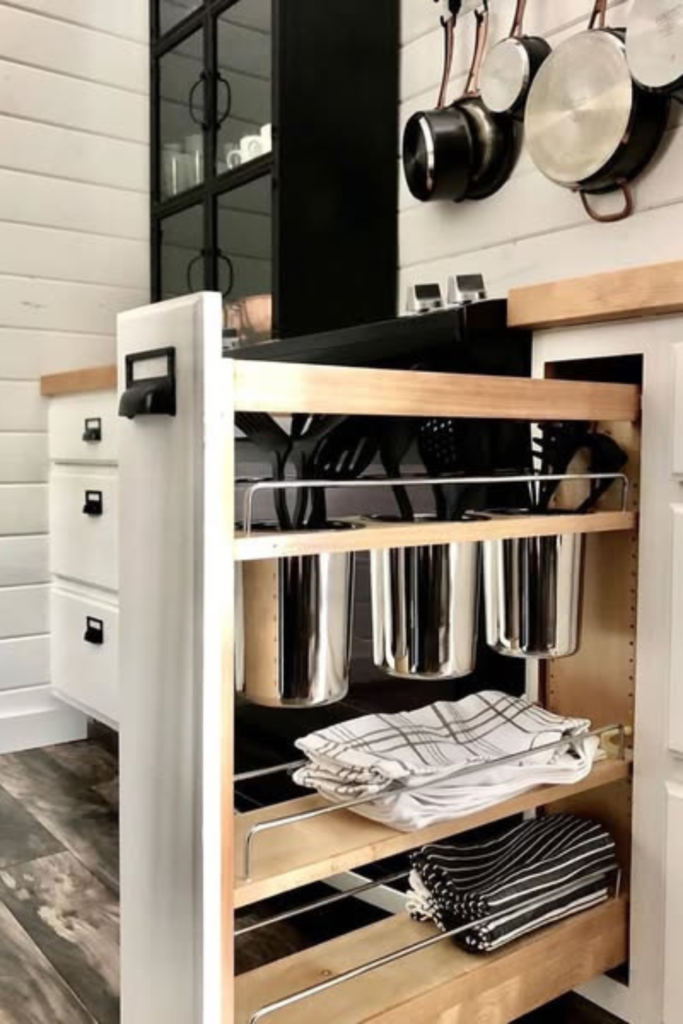
Overflow problems disappear when utensils are moved to the side rather than stacked flat, works best in narrow base cabinets.
Install a pull-out frame with hanging containers to store tall tools upright and separated. Heavier items stay balanced.
At the bottom, lighter tools up top. Open wire rails keep everything visible, while vertical spacing prevents clanking and crowding.
Entertaining-Ready Storage
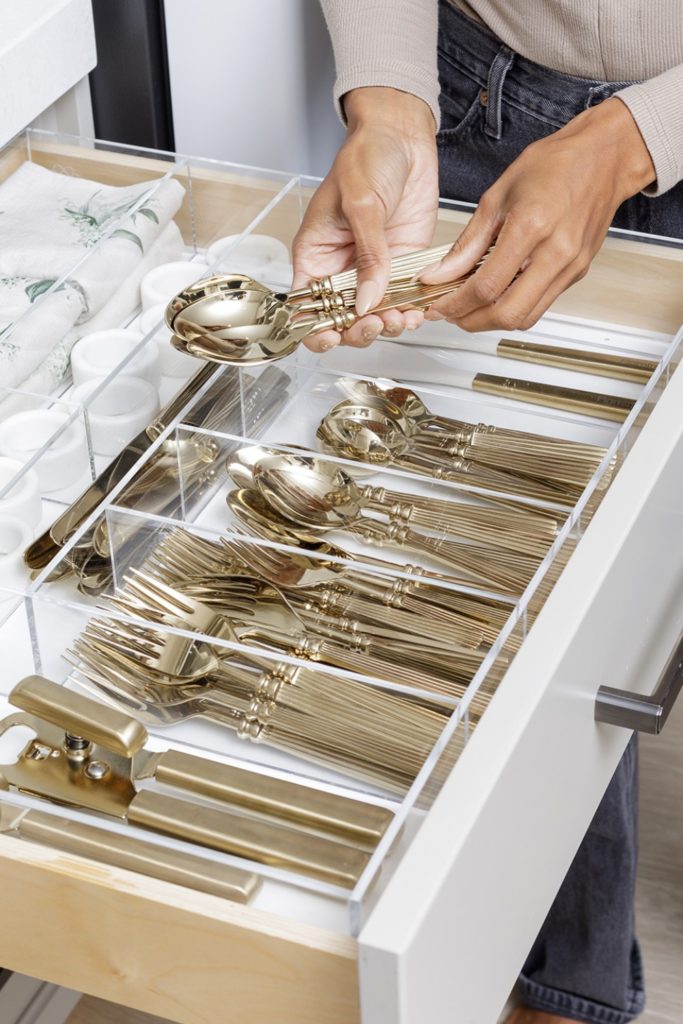
Special-occasion flatware needs protection, not daily shuffling. Assign slim, clear compartments so each piece lies flat.
Stays scratch-free. Keep matching sets grouped to avoid mixing finishes. Acrylic dividers add structure.
Soft ambiguous liners underneath reduce movement and preserve shine between uses, this method works well.
Built-In Dividers
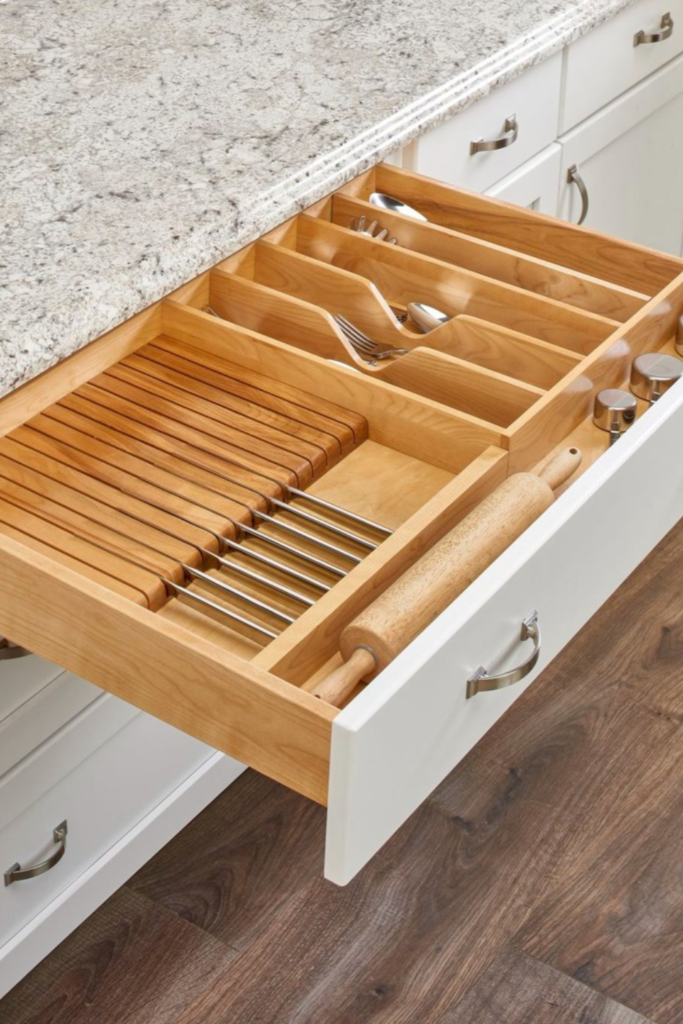
Custom flow beats loose organizers every time. Fixed wooden dividers create exact slots for flatware, boards.
Rolling tools so nothing shifts. Deep channels hold bulky items without overlap. Integrated rails add structure.
Natural wood keeps the drawer warm, sturdy, and easy to maintain through daily cooking, works best in kitchens.
Upright Canister Storage
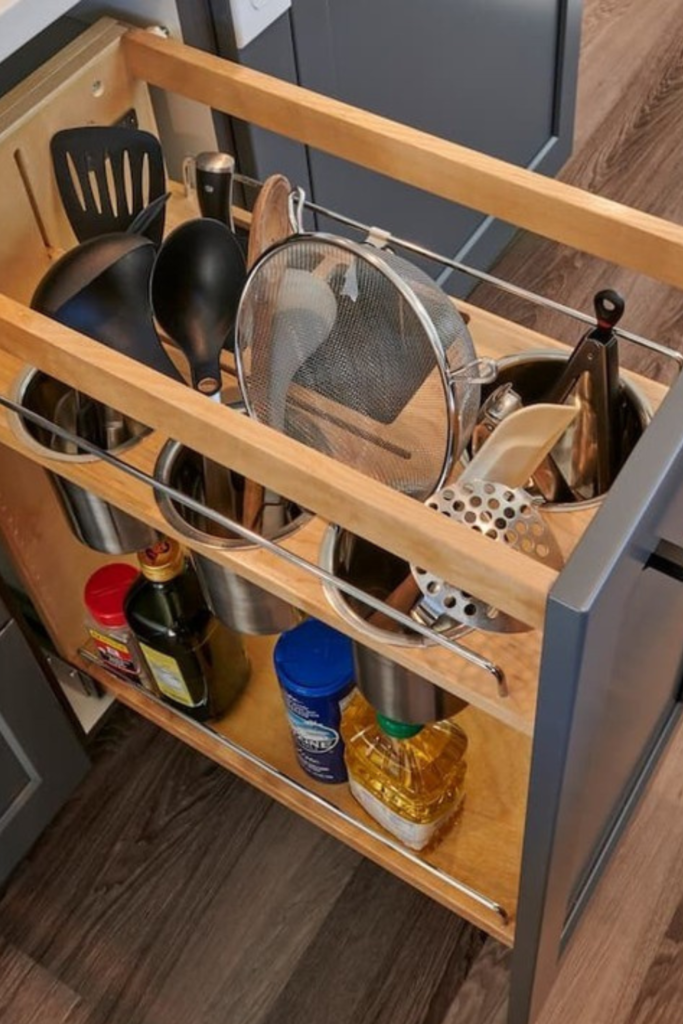
Bulky utensils stop fighting for space once they stand instead of lying flat, works best in deep pull-out drawers.
Base cabinets near the stove. Use metal or wood canisters to hold spatulas, ladles, and strainers upright by type.
Keep heavier tools toward the back for balance. Open frames add airflow and visibility, making grab-and-go cooking faster.
Daily-Use Front Row
Speed improves once the most-used tools live closest to your hand, fits drawers that are opened dozens of times a day.
Place spatulas, spoons, or flatware you grab daily at the front edge, then push backup tools behind them.
Shallow trays keep the front row clean, while less-used items stay accessible without interrupting your workflow.
Deep Drawer Decluttering
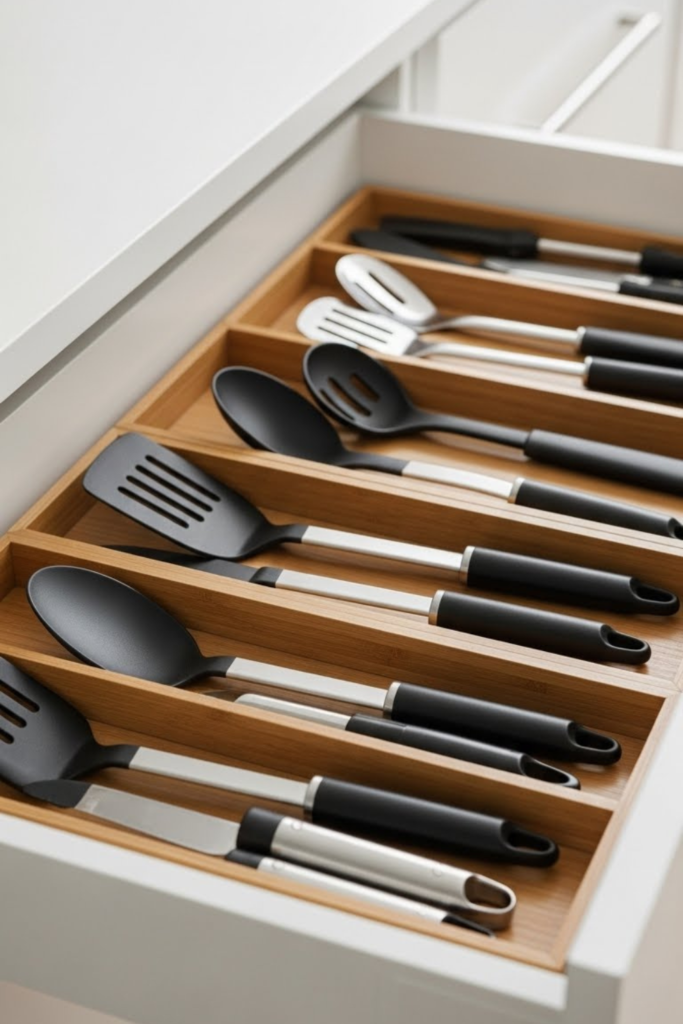
Overfilled drawers fail because everything tries to live together. Pull everything out, keep only the tools used weekly, relocate extras elsewhere.
Fewer items mean wider lanes and easier spacing. Once the drawer breathes, even simple dividers hold their shape and stay organized longer.
Adjustable Divider Flex
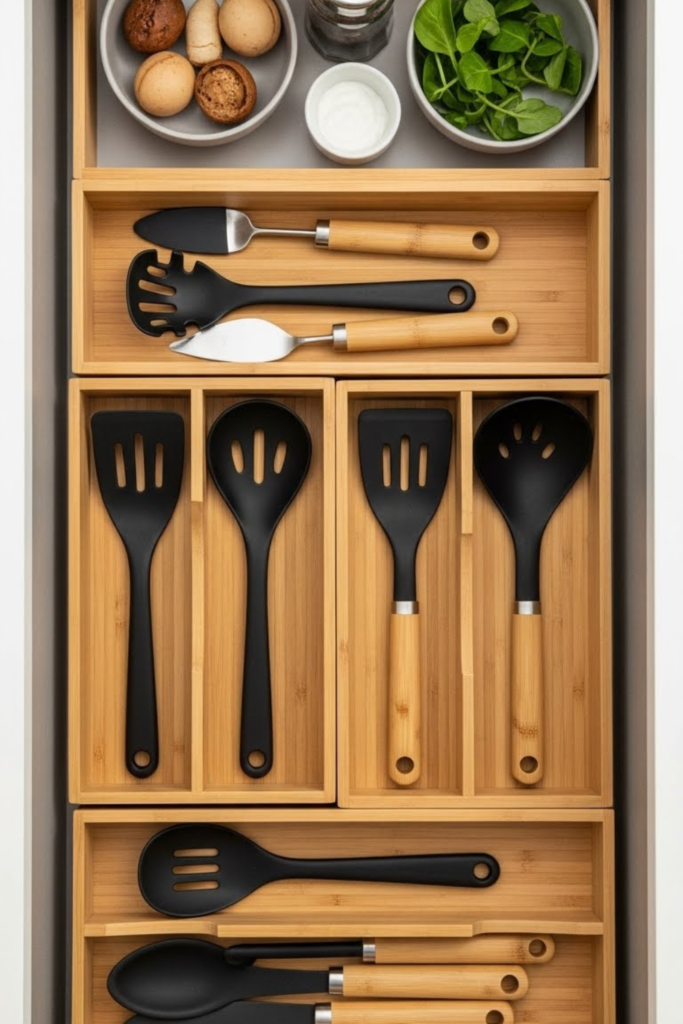
Fixed trays struggle in drawers that don’t follow standard sizes. Adjustable dividers solve that problem fast.
Install tension or expandable dividers to create custom-width sections for changing tool sets. This works well.
Rental kitchens or in households in transition. Flexibility keeps the drawer functional even when utensils change.
Non-Slip Base Layer
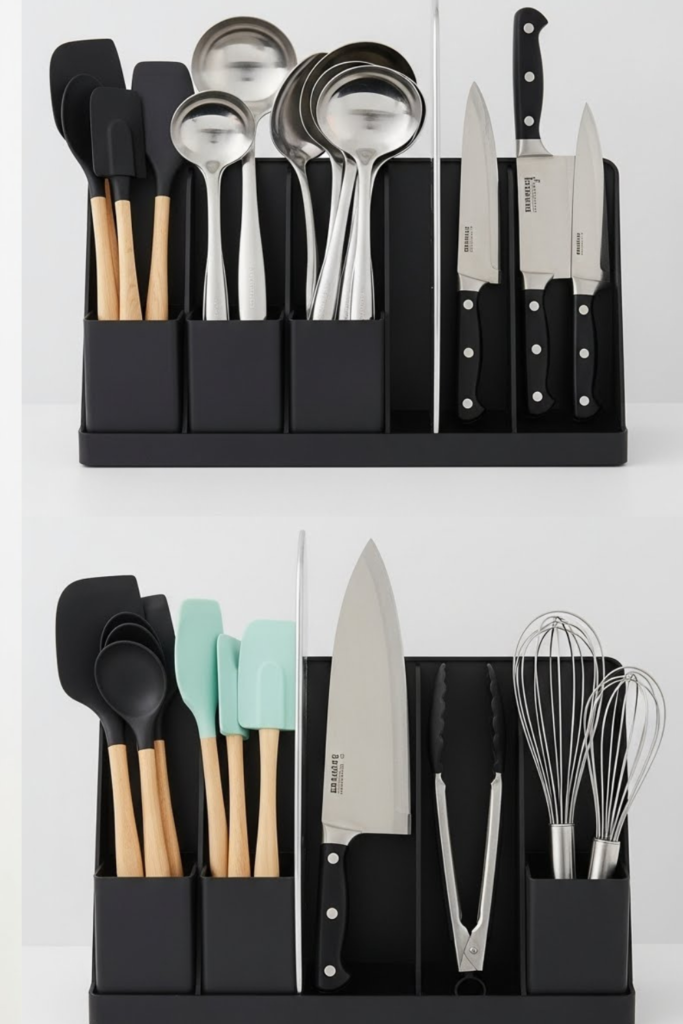
Sliding trays cause messes, no matter how neat the layout looks. Adding a non-slip liner fixes that instantly.
Cut the liner to drawer size, then place organizers on top. This idea works best for households with extras.
Movement stops, spacing stays intact, and resetting the drawer takes seconds instead of constant readjusting.
Backup Tool Zone
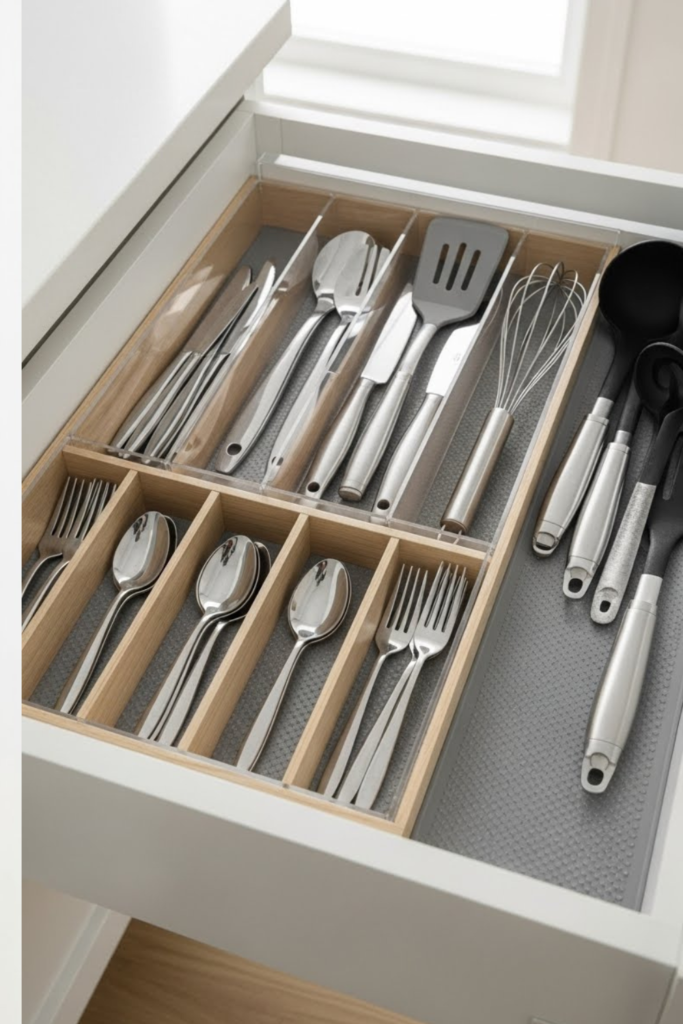
Duplicate utensils create clutter when mixed with daily tools. Create one small section for backup spoons, spatulas, or tongs.
Daily tools stay untouched, while backups remain easy to find. Separation keeps the main layout calm and predictable.
Category-Only Sections
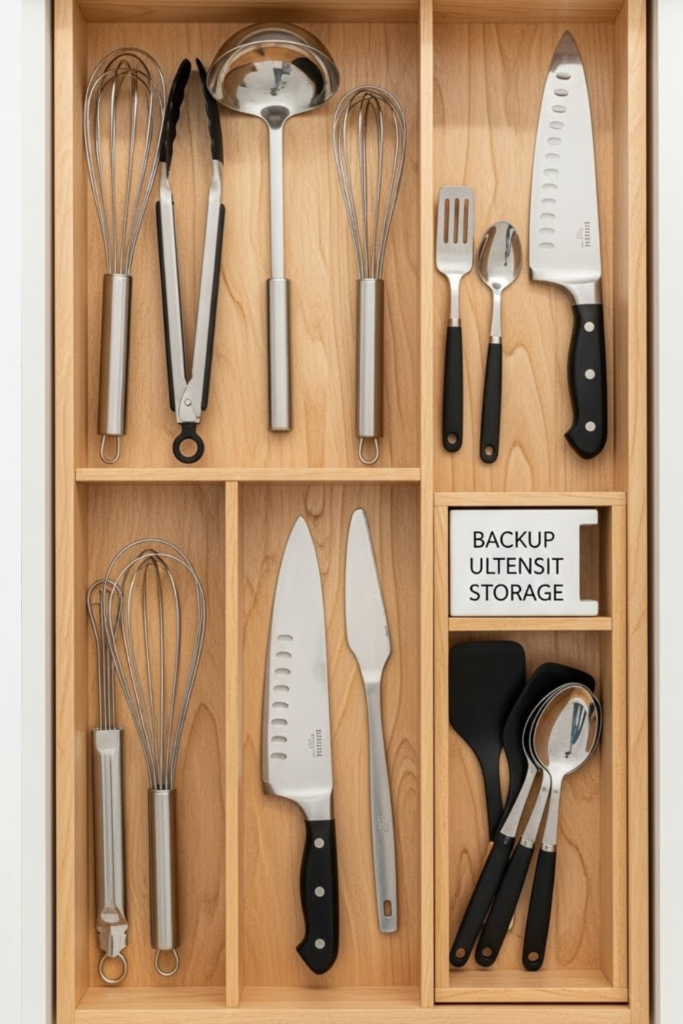
Random grouping causes visual and functional noise. This approach assigns each drawer section a single purpose.
One area handles stirring tools, another handles serving, and another handles measuring. Clear categories reduce hesitation.
When putting items back. Strong boundaries keep the drawer organized even during busy cooking sessions.
FAQs
What is the order of utensils in a drawer?
The best order starts with how often you use each utensil. Daily-use items go in the most accessible spots, usually at the front or center of the drawer.
Similar tools stay together. Longer utensils run along the sides or back to prevent overlap. Sharp or specialty tools sit in their own section to avoid mixing and clutter.
What is the correct arrangement of utensils?
The correct arrangement means that function comes before appearance. Group utensils by purpose, not just by size.
Cooking tools stay separate from eating utensils, and backups never mix with daily tools. Each utensil should lie flat.
Face the same direction, and return to its spot easily. If putting something back feels automatic, the arrangement will stay organized longer.
You may like to read!
- 27 Pantry Organization Ideas
- 24 Family Organization Wall
- 26 Kitchen Drawer Organization
- 20 Shelf Organization Ideas
- 23 Bathroom Cabinet Organization

Fasial is the founder of the Fizzy Flare. He has been a passionate blogger since 2021. He ran three different websites in the past few years. Now he is focusing on Fizzy Flare to build an audience and help them organize their life.