23 Tupperware Organizing Ideas for 2026
This post may contain affiliate links: full affiliate disclosure.
If opening your Tupperware cabinet feels annoying, you’re not alone. Lids are everywhere. Containers fall over. Nothing matches when you need it.
You waste time digging when you could just grab what you want. Most people don’t struggle because they have too many containers.
Once you set up a simple, realistic way to organize your Tupperware, the mess stops coming back, and your kitchen becomes easier to use.
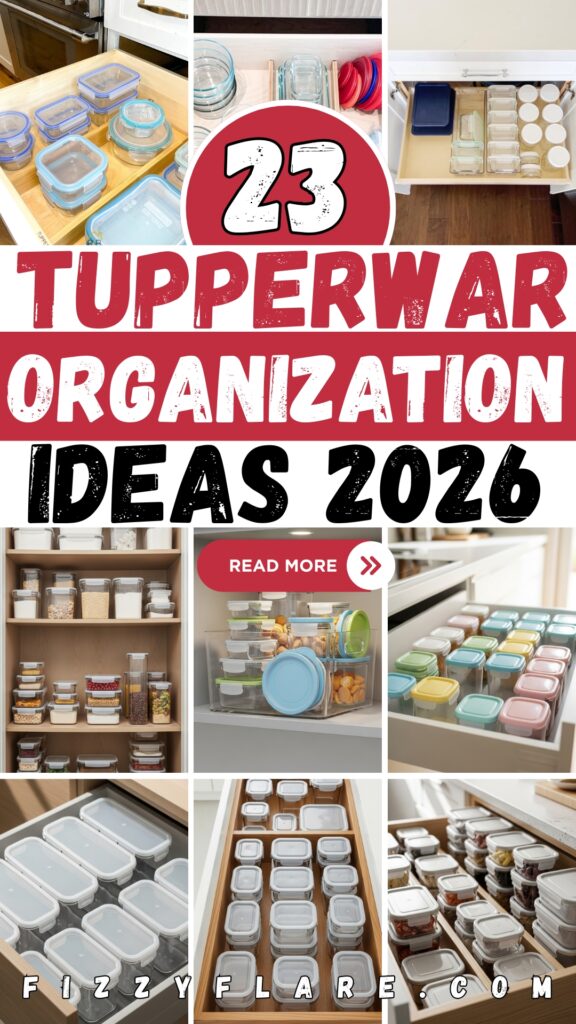
In this article, you’ll find 23 Tupperware Organizing ideas that are perfect in 2026.
Let’s jump in!
Contents
- 1 How Do People Organize Their Tupperware?
- 1.1 Drawer First Storage
- 1.2 Size-Based Stacking
- 1.3 Zoned Drawer Layout
- 1.4 Lids Stored Upright
- 1.5 Shape-Based Zones
- 1.6 Vertical Lid Filing
- 1.7 Pull-Out Shelving
- 1.8 Clear Bin Sorting
- 1.9 Shelf Level Grouping
- 1.10 Side-Wall Lid Slot
- 1.11 Mixed Material Zones
- 1.12 Color-Coded Grouping
- 1.13 Bin-by-Shelf System
- 1.14 Cabinet Lid Rack
- 1.15 Grid Drawer System
- 1.16 Size-Labeled Bins
- 1.17 Pull-Out Lid Dock
- 1.18 One-Size System
- 1.19 Lids-On Storage
- 1.20 Meal-Prep Zone
- 1.21 Kid-Friendly Access
- 1.22 Overflow Reset Bin
- 1.23 Daily-Use Rotation
- 2 FAQs
How Do People Organize Their Tupperware?
Most people organize their Tupperware by first getting rid of what they don’t use, then setting up a system that makes grabbing easy.
The most common approach is to separate lids from containers, stack or nest containers by size, and store lids upright.
You can see them at a glance. Some people keep everything in drawers with dividers, while others use bins inside cabinets.
Stop stacks from tipping over. The key isn’t the products, it’s choosing a setup that fits your space and is easy to put back together every day.
Save this article for later! 👇👇
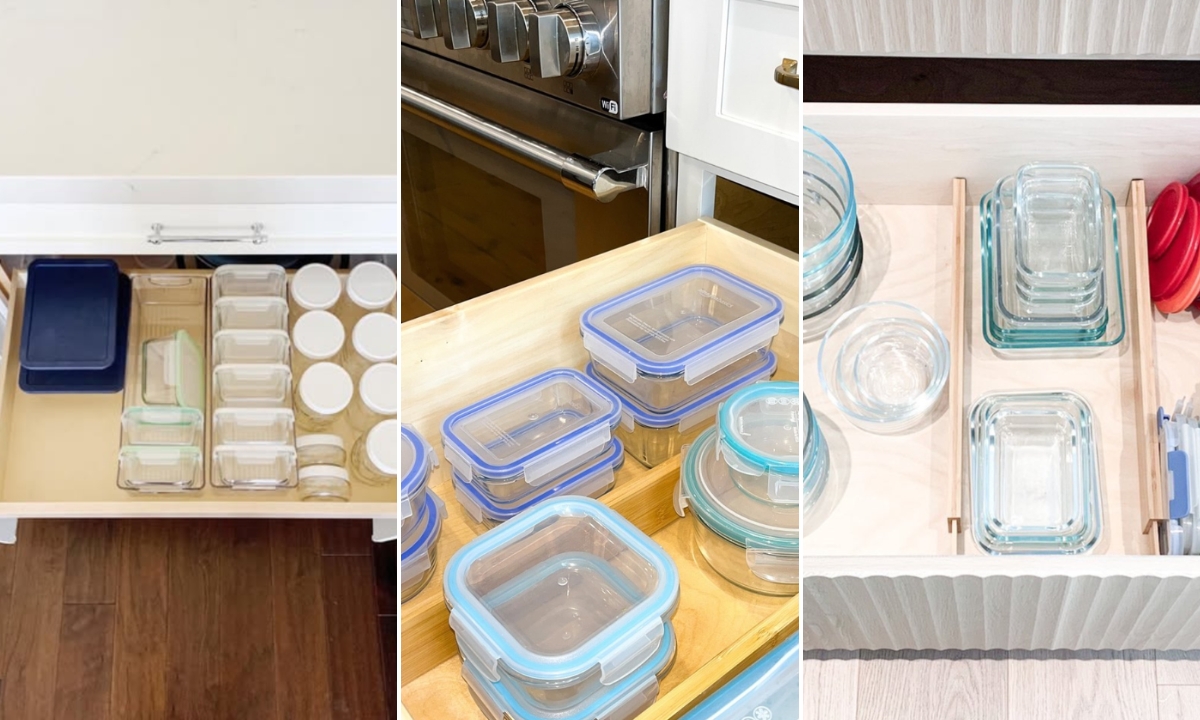
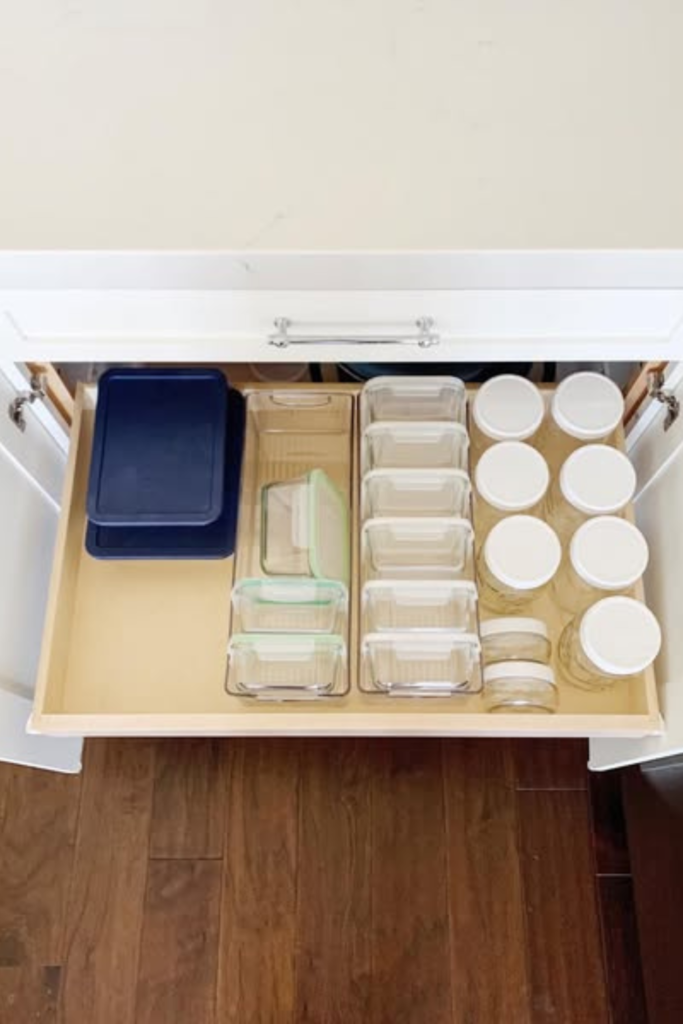
Drawer First Storage
Opening a drawer instead of a cabinet changes everything. Flat, nested containers sit side by side, so nothing collapses.
Matching shapes make spacing predictable and easy to reset after use. Deep drawers work best for this setup.
Stick to a few container sizes, keep lids on, and line items in rows so grabbing one never messes up the rest.
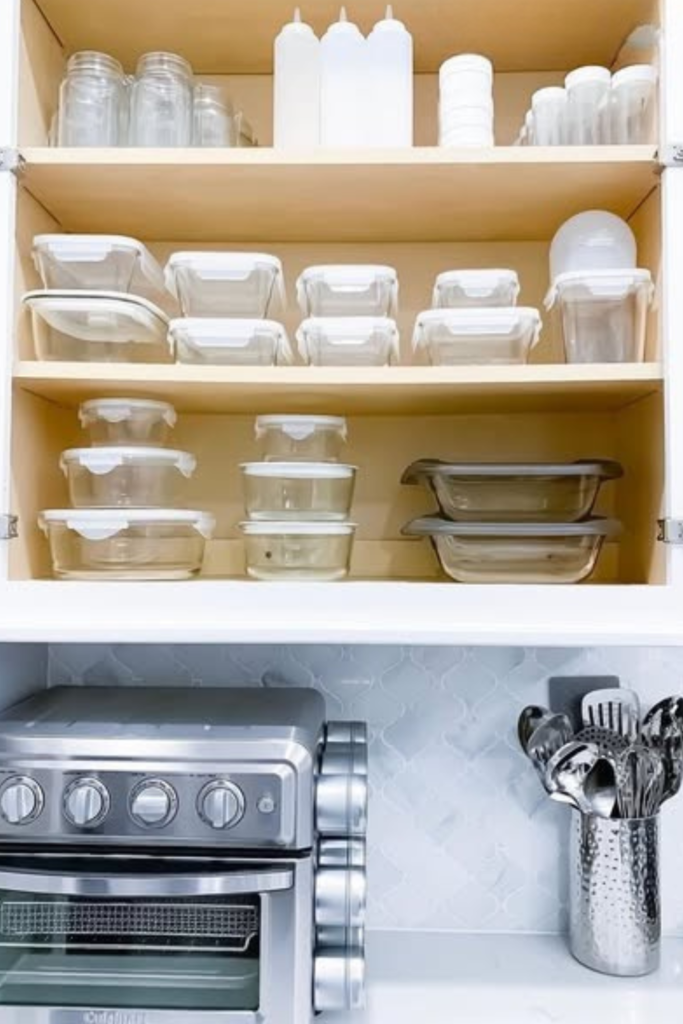
Size-Based Stacking
Grouping containers by size keeps shelves calm. Smaller pieces stack together, medium ones stay in their own zone.
Larger containers sit where height allows. Upper cabinets work well for this setup, especially with adjustable shelves.
Use the same container shape within each group, so stacks stay stable and easy to rebuild after unloading the dishwasher.
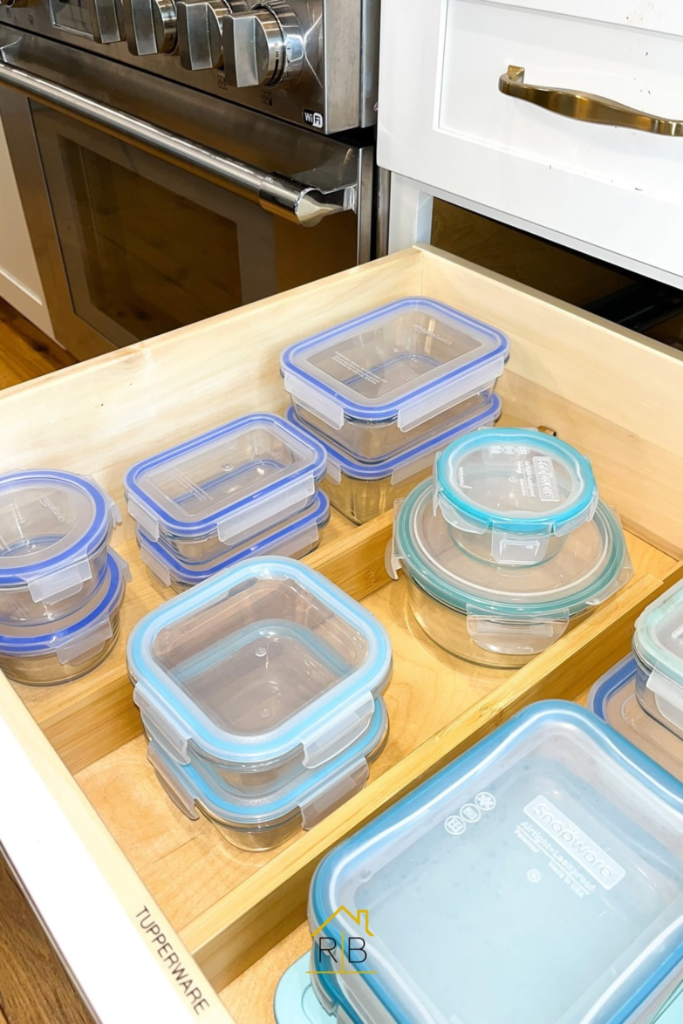
Zoned Drawer Layout
Dividing a drawer into clear sections keeps different container sizes from mixing and creating clutter.
This works best in wide, deep drawers near your main prep area. Use adjustable dividers to assign each size its own lane.
Keeping lids attached makes everything grab-and-go, the clean spacing and natural wood base help the setup look calm.
Lids Stored Upright
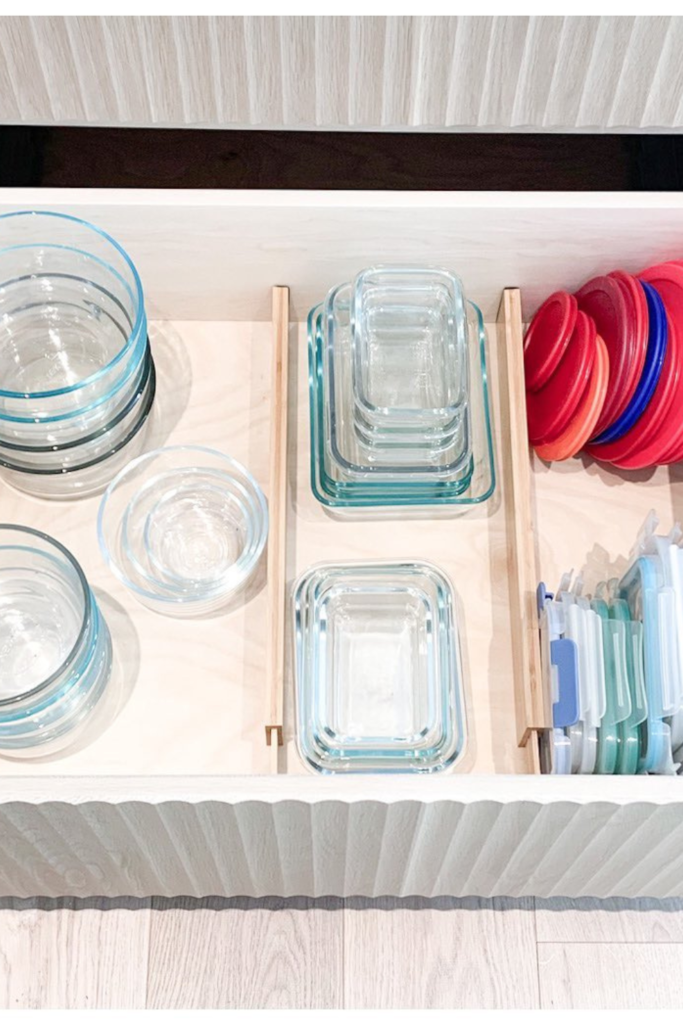
Standing lids on their edge fixes the biggest Tupperware problem fast. Drawers work best for this, especially wide ones.
Dividers can keep lids from sliding around. Sort lids by shape or size, not brand, so grabbing one stays easy.
Clear spacing and vertical lines keep the drawer looking light and organized, rather than packed and messy.
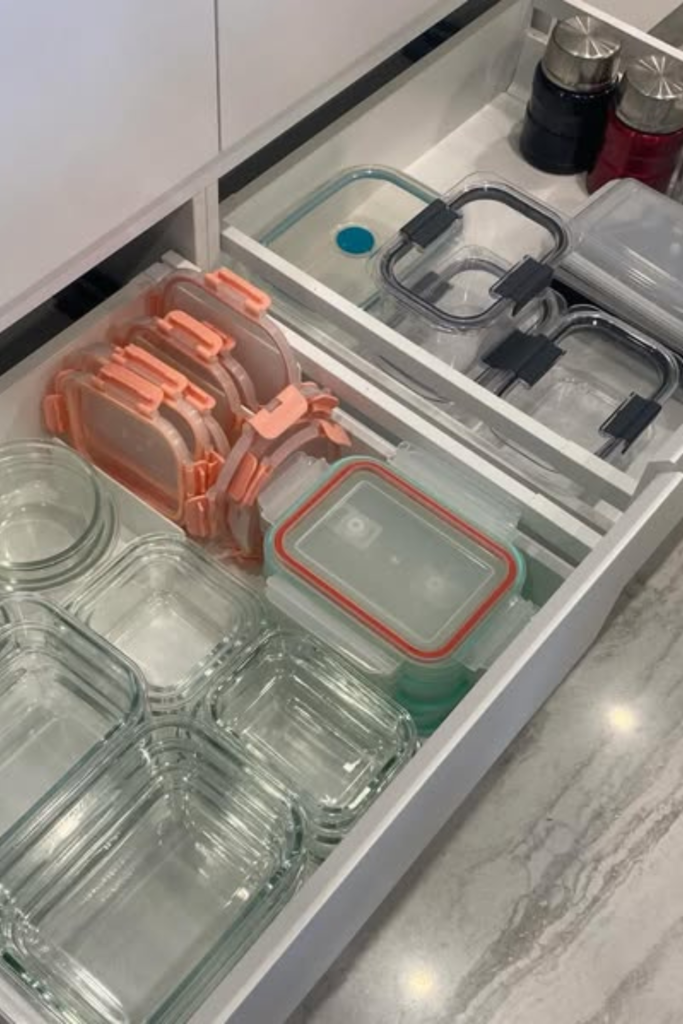
Shape-Based Zones
Mixing round and rectangular containers always creates wasted space. Splitting them into shape-based sections.
Keeps the drawers easy to manage. Rectangular pieces stack cleanly in straight lanes, round containers nest better.
Clear dividers keep shapes from drifting, and the open layout makes it obvious where each container belongs after washing.
Vertical Lid Filing
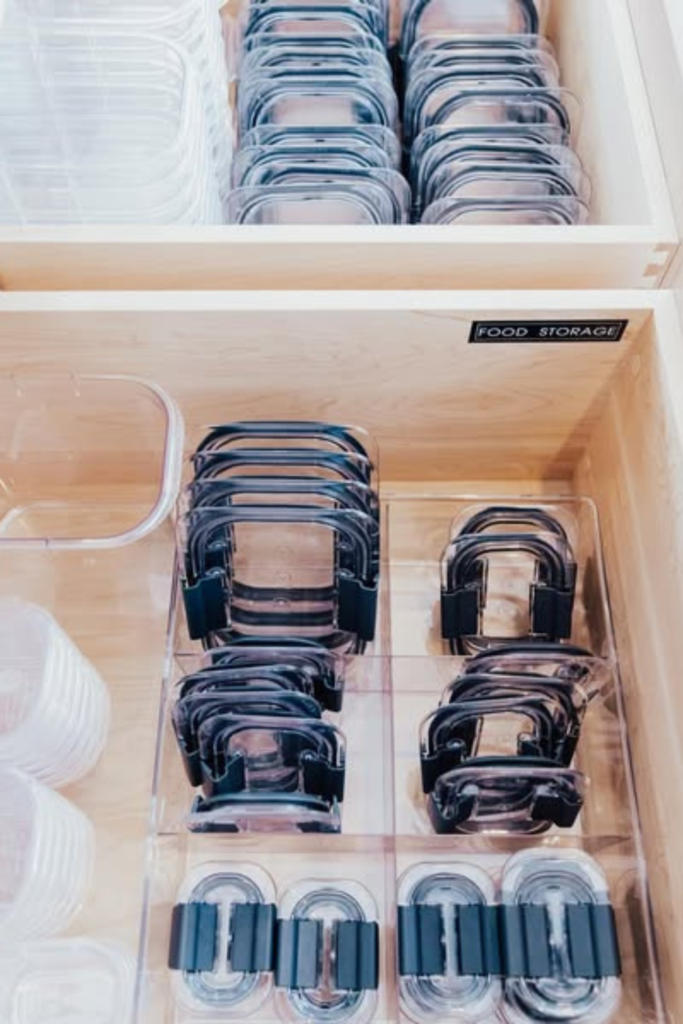
Sliding lids upright instead of stacking them saves space and time. Deep drawers or pull-out shelves work best.
Everything stays visible from above. Group lids by size so grabbing one doesn’t disturb the rest, clear bins keep rows straight.
While the vertical layout creates clean lines and airflow, which helps the drawer feel lighter and easier to maintain.
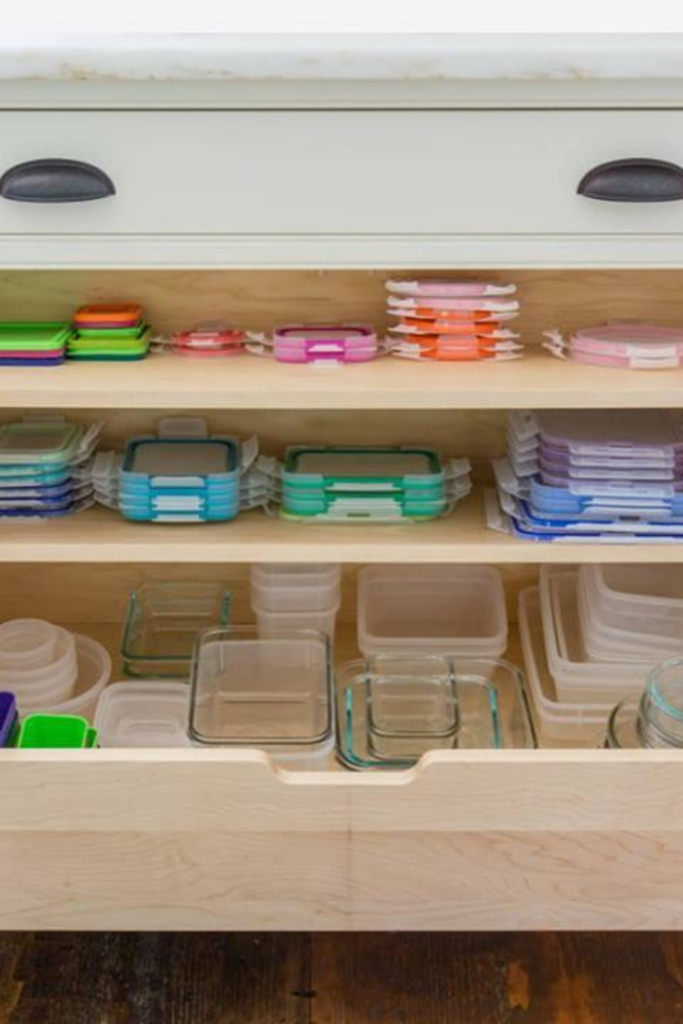
Pull-Out Shelving
Pull-out shelves turn deep cabinets into easy-access zones. Lids stay on upper tiers where they’re visible.
Containers live below without stacking chaos. This setup works best in lower cabinets that usually hide clutter.
Build it with sliding shelves. Layering shallow shelves on top keeps light flowing through, prevents the dark, overstuffed look.
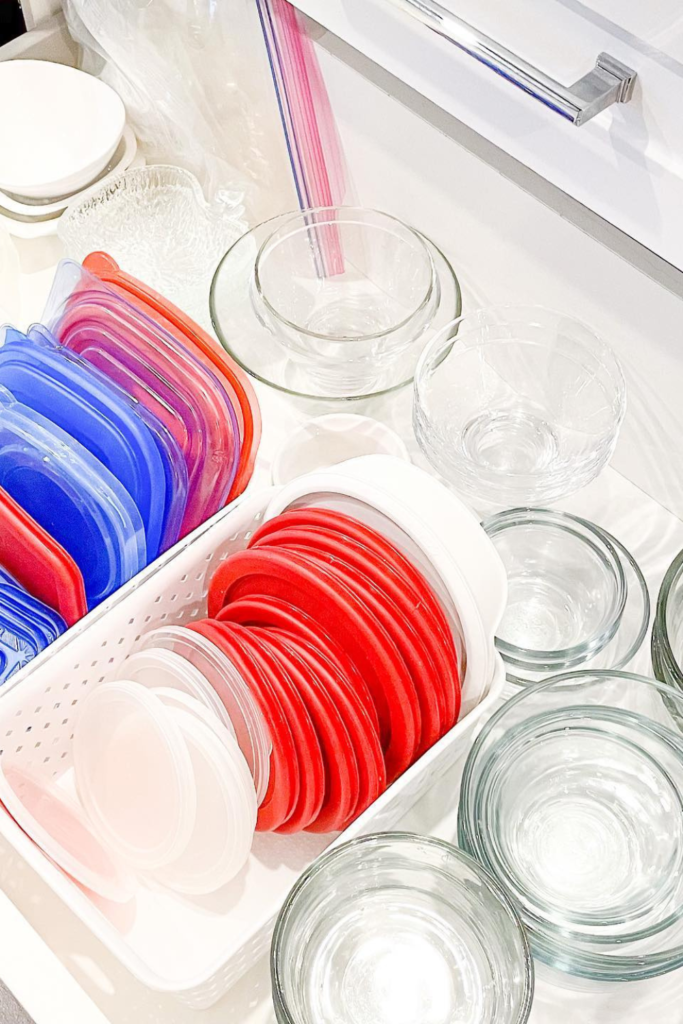
Clear Bin Sorting
Loose lids turn into instant clutter. Perforated bins give each lid group a clear home and stop pieces from sliding around.
Shallow drawers work best for this setup, especially in busy kitchens. Sort lids by shape or size, then stand them.
Upright for quick access. Bright drawer lighting and white bins keep everything visible and easy to reset after use.
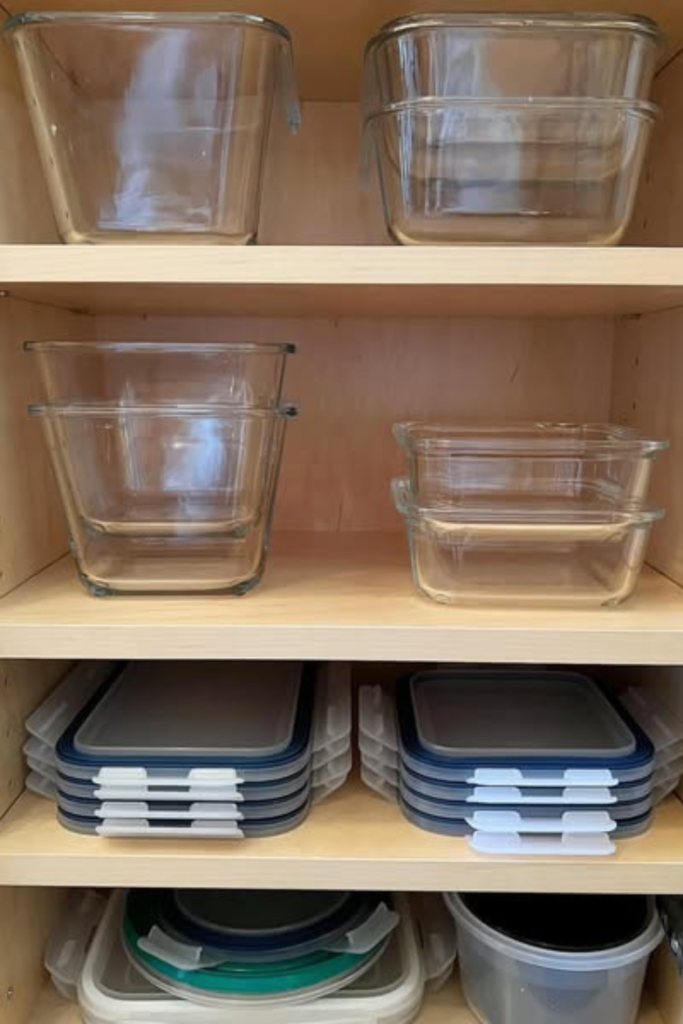
Shelf Level Grouping
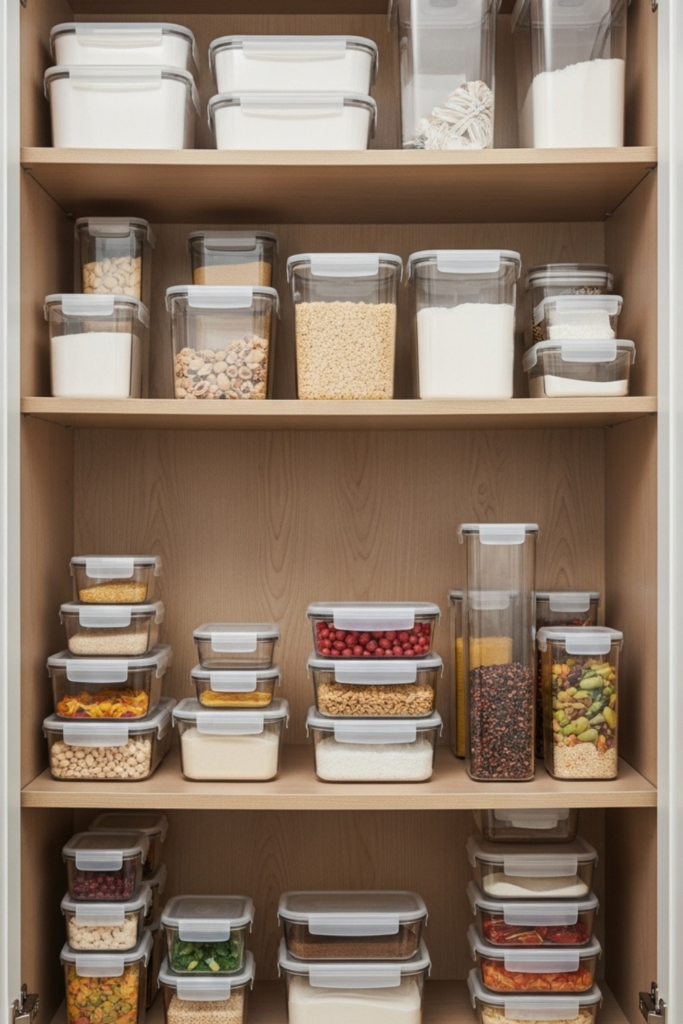
Giving each shelf a single job keeps cabinets from turning chaotic. Larger glass containers sit up top.
Lids are stacked on a lower shelf for easy grabbing. Tall cabinets work best. Adjustable shelves help fine-tune spacing.
Keeping similar items on each level makes the setup simple to maintain without constant rearranging.
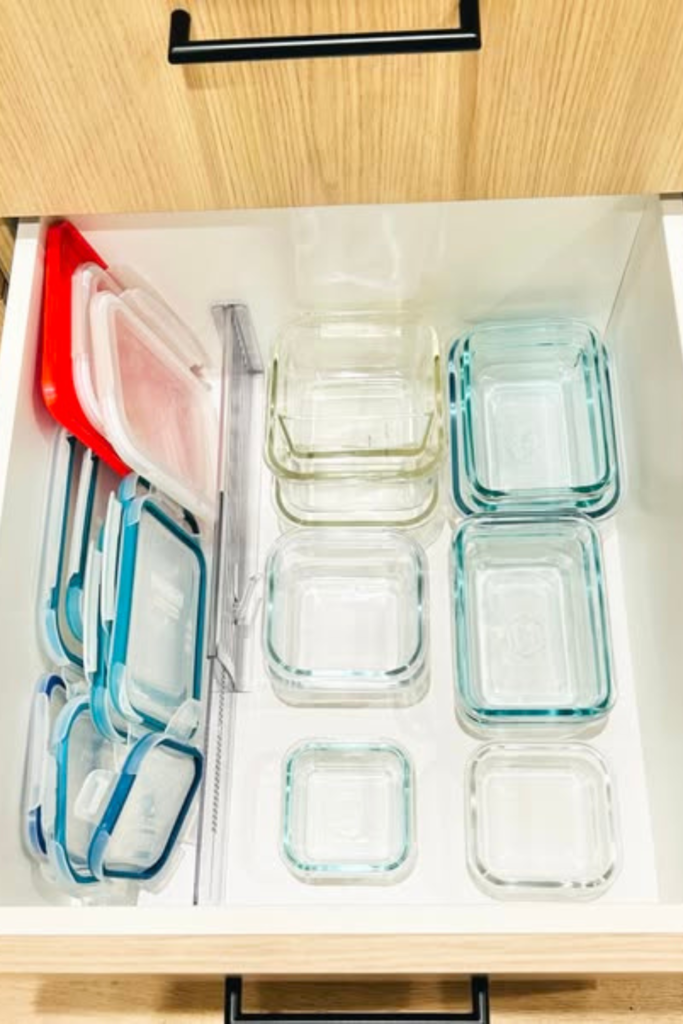
Side-Wall Lid Slot
Using the drawer’s side wall for lids frees up the main space fast. Slim dividers or tension rails keep lids standing upright.
This setup works best in medium- to deep-drawers where width matters. Containers stay stacked in the center.
Lids stay visible and easy to grab. Clean vertical lines and open space keep the drawer from feeling crowded.
Mixed Material Zones
Glass and plastic work better when separated. Glass containers stack neatly in open sections, while lighter plastic pieces.
Stay contained in bins. Wide drawers handle this setup best. Use clear dividers to keep lids upright and grouped by size.
The contrast between materials adds visual order, the defined zones make it obvious where everything goes after washing.
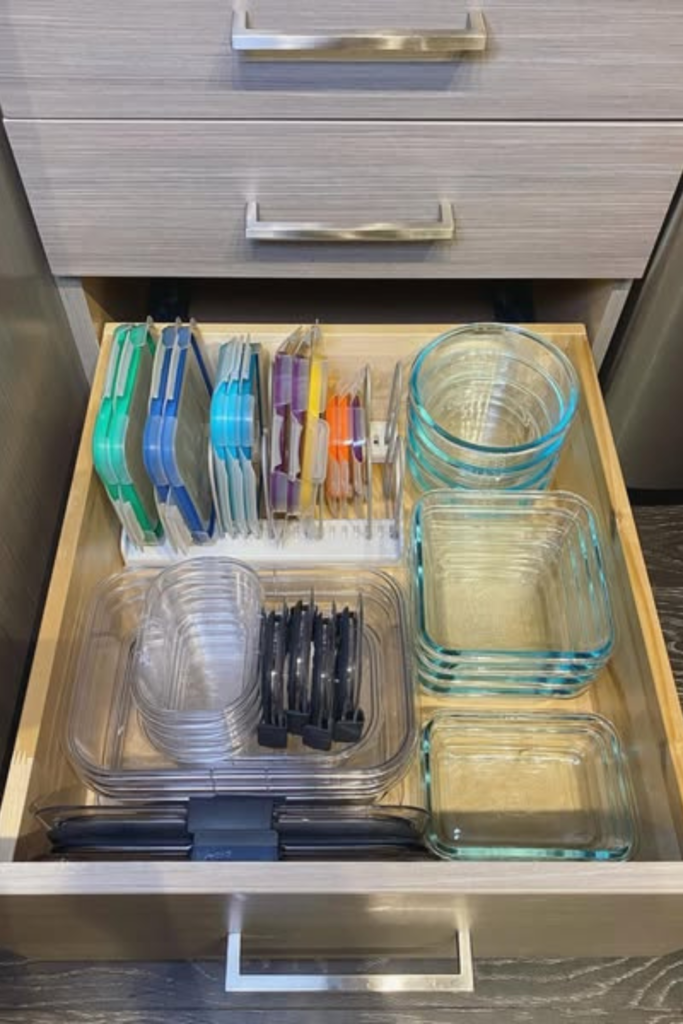
Color-Coded Grouping
Color naturally creates order, grouping lids by color makes matching fast and keeps drawers from looking chaotic, best in medium drawers.
Stack containers by size, then line lids beside them in color blocks. The visual separation helps your brain reset the drawer quickly.
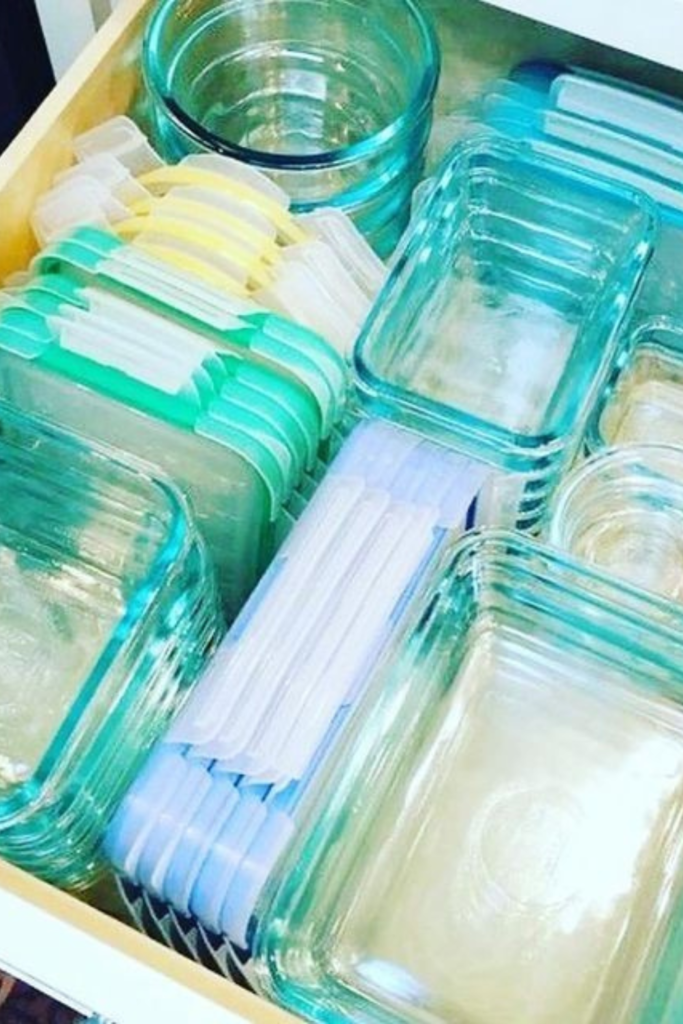
Bin-by-Shelf System
Giving each shelf its own bin stops everything from blending together. Lids stand upright in divided baskets.
Containers stay grouped right beside them. This setup works best in tall cabinets with adjustable shelves.
Slide a bin out, grab what you need. Open wire baskets let light pass through, keeping the cabinet from feeling heavy.
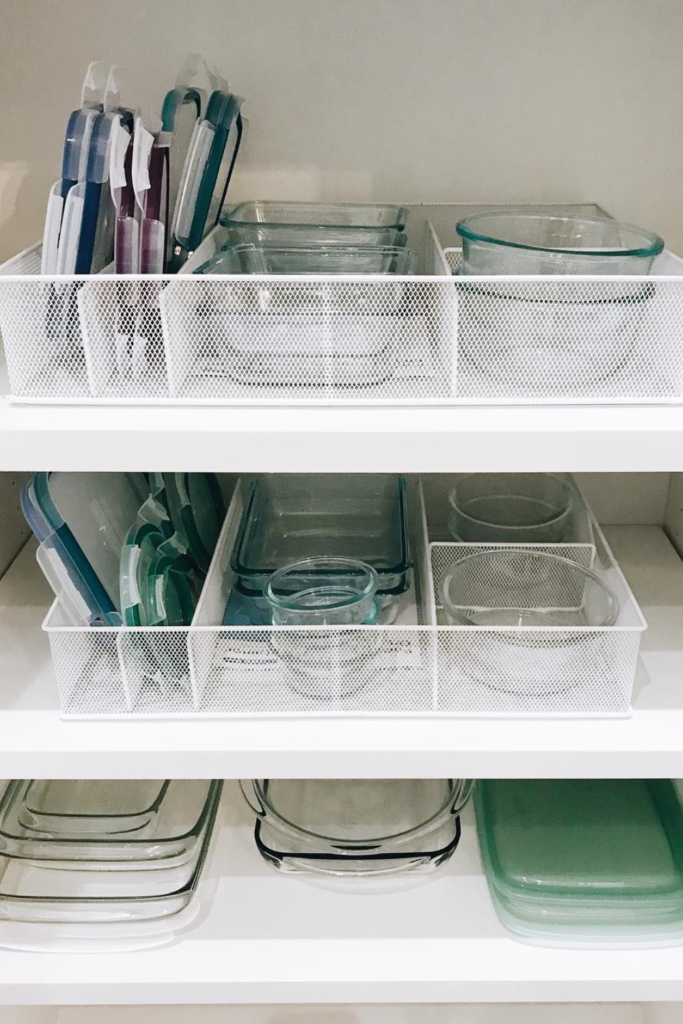
Cabinet Lid Rack
Cabinets work better once lids stop sliding into stacks. A simple rack keeps lids upright and visible, makes matching fast.
This setup fits best on a middle shelf where reach is easy to access. Nest containers by size on the shelf below.
Lids and bases stay close. The vertical rack adds structure and keeps the cabinet from feeling stuffed.
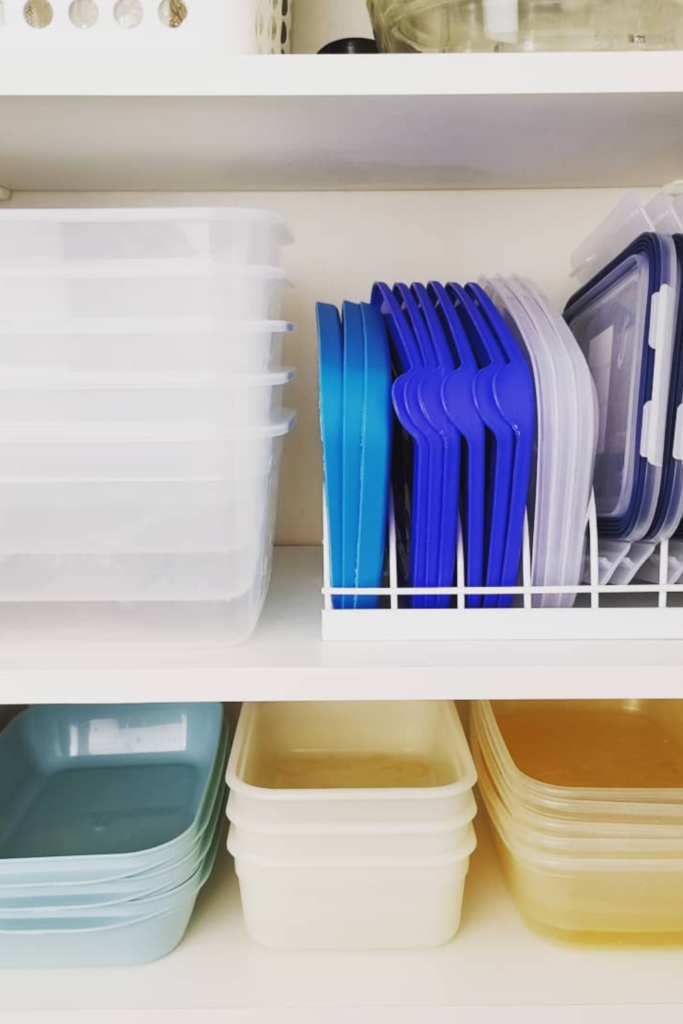
Grid Drawer System
Order comes from giving every piece a fixed slot. A grid-style drawer insert keeps containers locked into place.
Nothing shifts when you open or close the drawer. This works best in wide, flat drawers. Stack containers by size.
In the back and file lids in front. Clean lines and even spacing create a calm, and easy-to-reset layout.
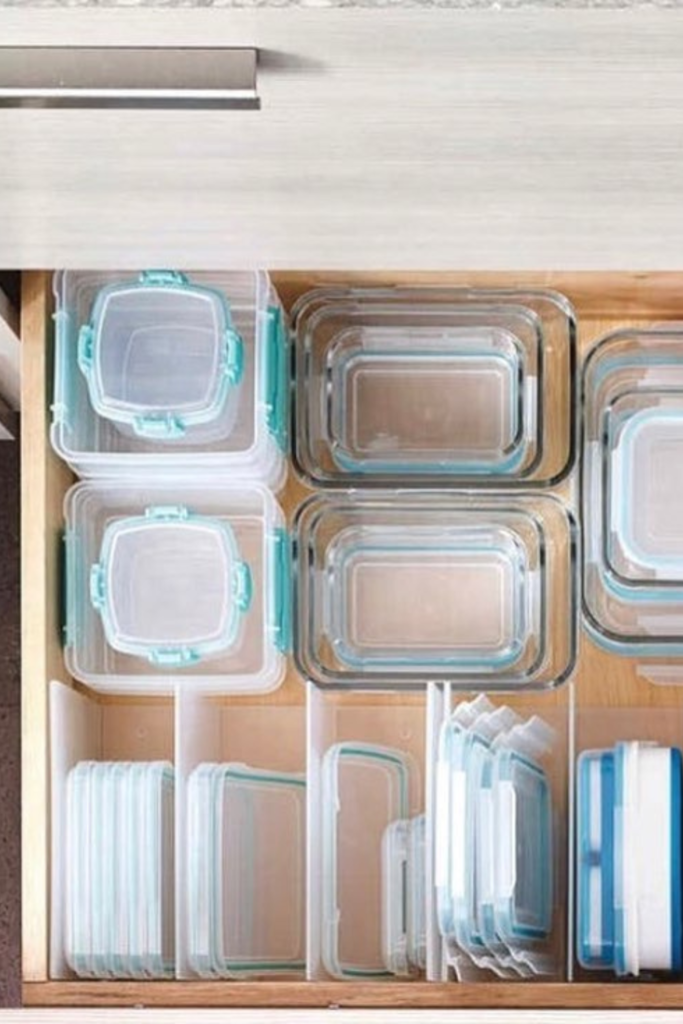
Size-Labeled Bins
Labeling bins by container size tells you exactly where things go, which makes putting dishes away faster.
Clarity beats guesswork every time. Nest containers inside each bin and keep lids standing along the side.
Clear labels and open bins reduce decision fatigue and help the system stick in the long term, this works in deep cabinet.
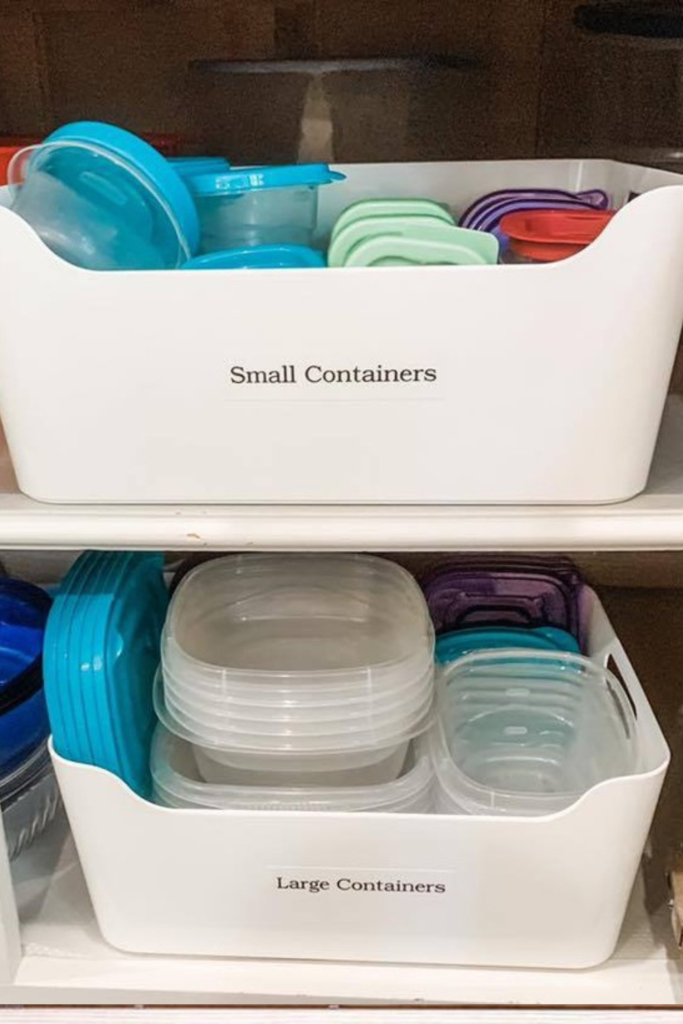
Pull-Out Lid Dock
Reaching into a deep cabinet stops being frustrating once the lids have their own dock. Keeps lids upright in the back.
Lower cabinets benefit most from this setup since everything slides forward into view. Use built-in rails.
Keep lids spaced evenly. The layered layout prevents clutter and keeps matching quick and effortless.
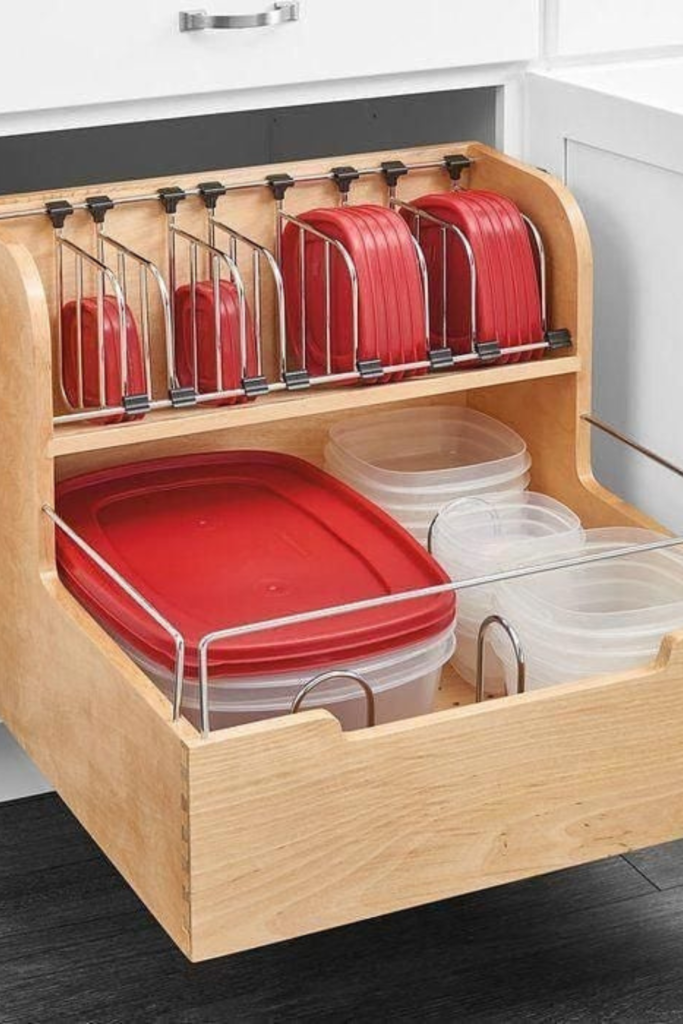
One-Size System
Too many shapes create chaos fast. Switching to a single main container shape makes stacking automatic and storage more predictable.
Keep two or three sizes from the same set. Uniform edges line up cleanly, reduce wasted space, and make cabinets easier to reset.
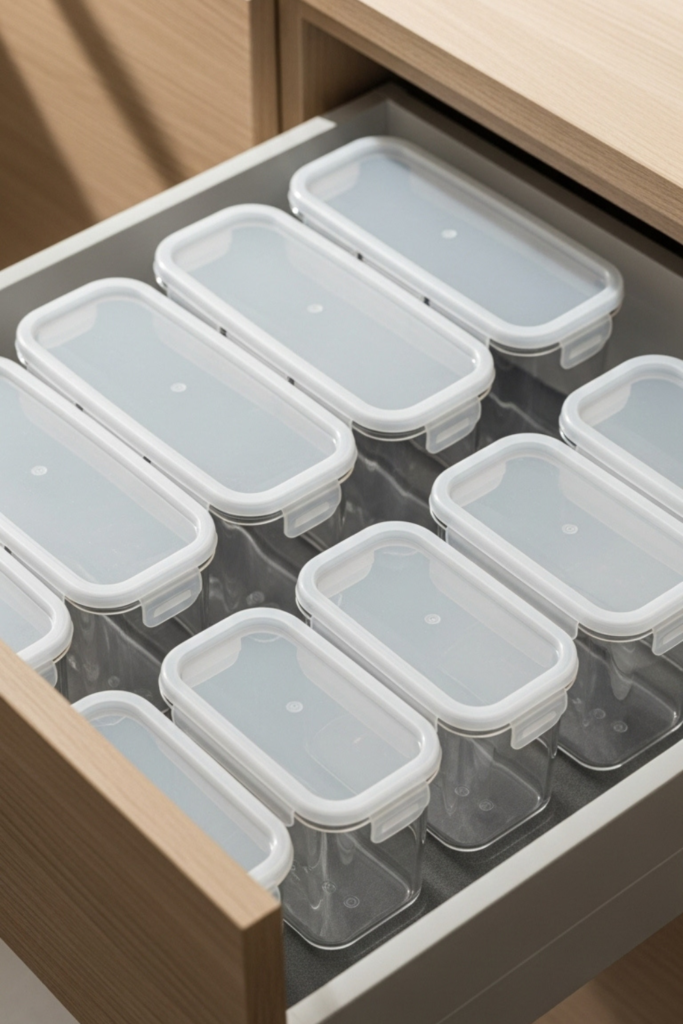
Lids-On Storage
Chasing lids wastes time every day. Keeping lids snapped onto containers turns storage into a grab-and-go system.
Deep drawers handle this best since flat stacks stay stable. Limit the number of containers you keep so stacks don’t get too tall.
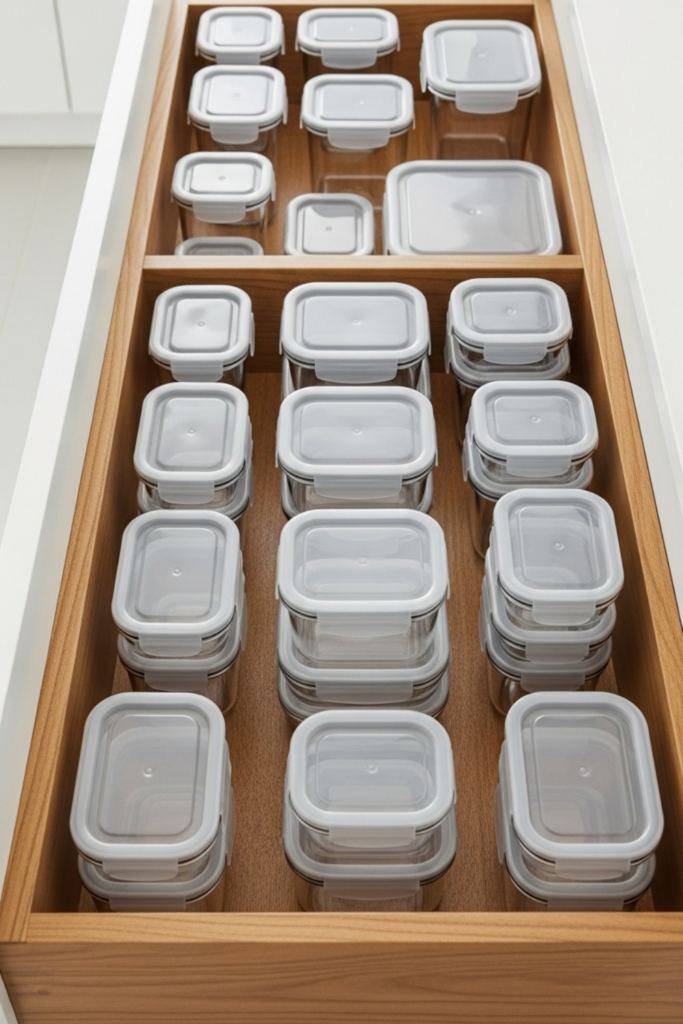
Meal-Prep Zone
Cooking gets faster when containers live near where food is made. Store frequently used sizes close to the prep area or fridge drawer.
Stack by size and keep lids attached for quick packing. A short reach distance keeps the system practical rather than decorative.
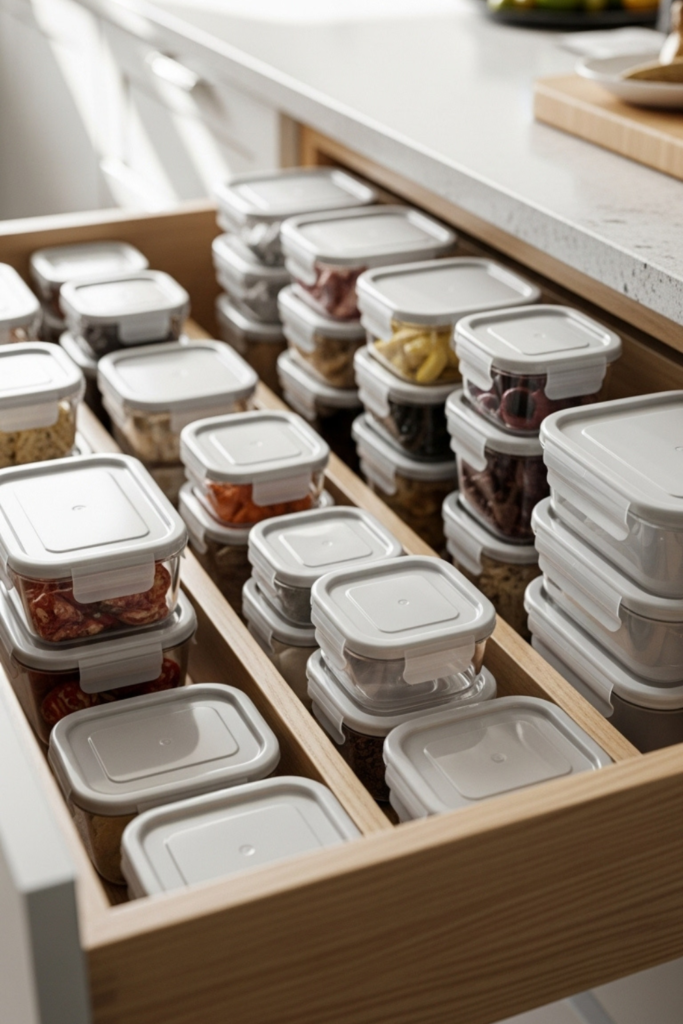
Kid-Friendly Access
Lunch routines improve when kids can help themselves. Dedicate a low drawer or shelf to small, lightweight containers.
Keep matching sets together so nothing needs to be searched for. Clear space and simple grouping.
Make cleanup easier. Bright colors and a reachable height turn organization into a habit rather than a chore.
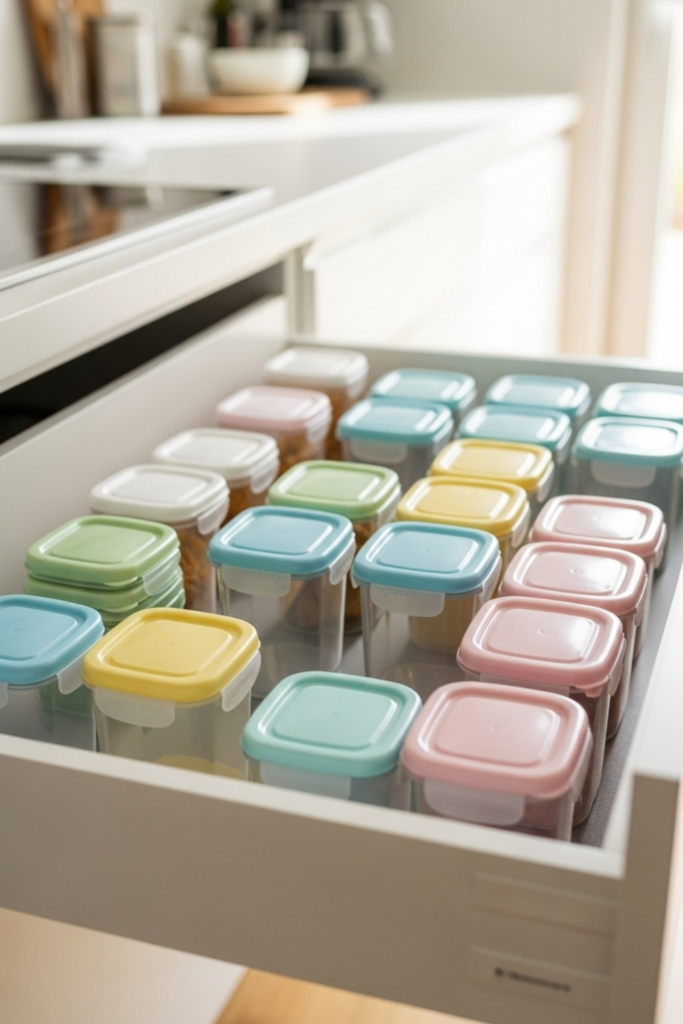
Overflow Reset Bin
Extra containers always sneak back in. A single overflow bin catches duplicates and random pieces. Store it on a high shelf or pantry corner.
Review it monthly and remove what isn’t used. One controlled mess prevents the entire cabinet from sliding back into chaos.
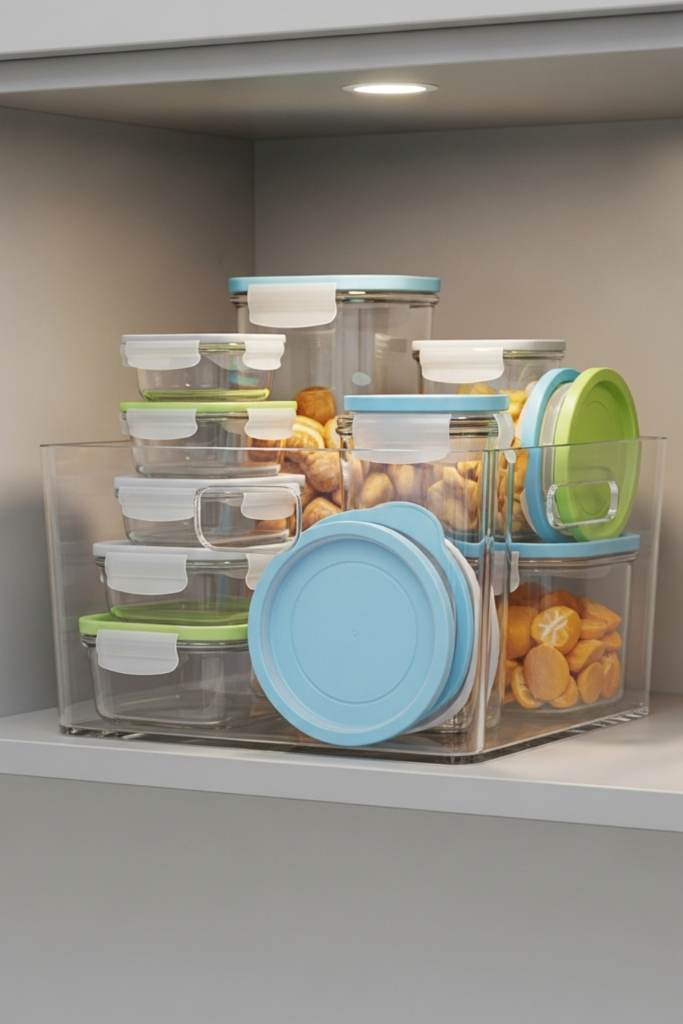
Daily-Use Rotation
Not every container needs equal access. Place everyday sizes front and center, while rarely used pieces stay higher or deeper.
Rotating access keeps clutter low and stops overhandling. The visual hierarchy keeps storage working even on busy days.
FAQs
Should lids be stored with containers or separately?
Both methods work, but the better choice depends on your space and habits. Storing lids on containers saves time.
Prevents lid hunting, especially in drawers. Separating lids makes sense in cabinets where stacking containers creates instability.
If lids keep getting lost, switch to lids-on storage. If stacks keep collapsing, separate them and store lids upright.
How many food containers should you actually keep?
Keep only what fits comfortably in your storage space while still allowing easy access. If containers stack too high, tip over.
Force you to rearrange everything just to grab one, you have too many. A practical rule is enough containers for daily meals.
Regular leftovers, and one extra set for meal prep. Anything that slows unloading, stacking, cleanup is no longer earning its place.
You may like to read!
- 27 Pantry Organization Ideas
- 24 Family Organization Wall
- 22 Junk Drawer Organization
- 22 Cord Organization Ideas
- 25 Rolling Cart Organization

Fasial is the founder of the Fizzy Flare. He has been a passionate blogger since 2021. He ran three different websites in the past few years. Now he is focusing on Fizzy Flare to build an audience and help them organize their life.