22 Spice Jar Storage Ideas for 2026
This post may contain affiliate links: full affiliate disclosure.
I used to believe that my kitchen was too small. Three jars would tumble over every time I opened the cabinet to get a spice.
The labels were on the wrong side, half of the spices were in the back, and for some reason I kept buying the same ones. Does this sound familiar.
The size of your kitchen is usually not the problem; it’s how you store the spices. When you put a lot of spice jars in a deep cabinet or on a packed shelf, they rapidly become clutter.
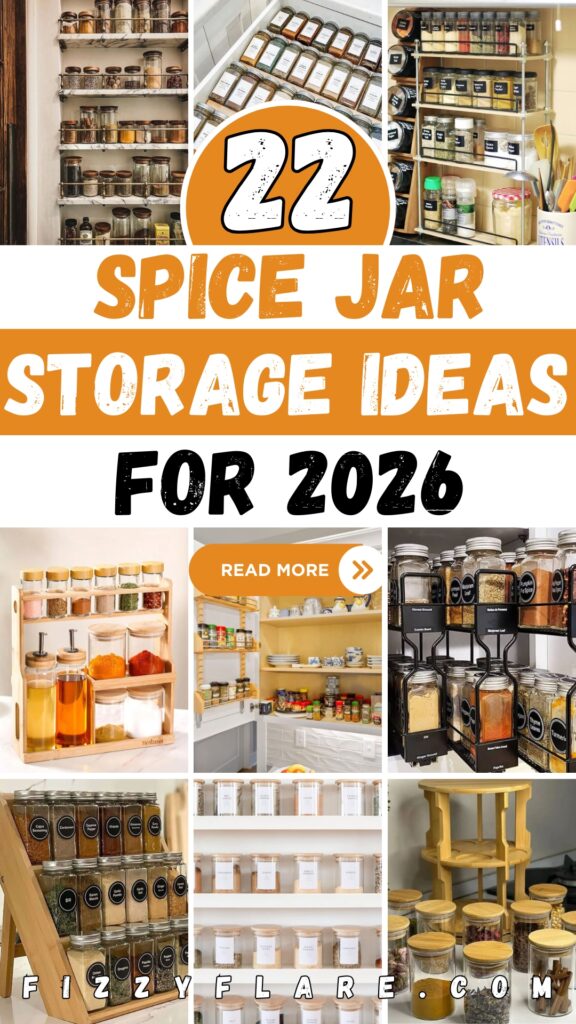
In this article, you’ll find 22 innovative spice jar storage ideas. Make your home more organized and neat.
Let’s jump in!
Contents
- 1 How Can You Organize Spice Jars to Save Kitchen Space?
- 1.1 Tiered Rack
- 1.2 Drawer Layout
- 1.3 Wall Shelves
- 1.4 Counter Rack
- 1.5 Door Storage
- 1.6 Pull System
- 1.7 Angled Stand
- 1.8 Open Shelves
- 1.9 Rotating Rack
- 1.10 Slide Cabinets
- 1.11 Clear Tiers
- 1.12 Tray Setup
- 1.13 Acrylic Wall
- 1.14 Magnetic Strip
- 1.15 Chalk Wall
- 1.16 Shelf Zoning
- 1.17 Vertical Rack
- 1.18 Angled Holder
- 1.19 Expand Drawer
- 1.20 Spice Carousel
- 1.21 Mini Shelves
- 1.22 Deep Drawer
- 2 FAQs
How Can You Organize Spice Jars to Save Kitchen Space?
It’s not usually how many spices you have that makes your spice cabinet feel crammed and messy; it’s how you store them.
When jars rest flat on deep shelves, the ones toward the back disappear, and things rapidly become a mess.
Organizing your spices so that you can see all of the jars at once is an easy remedy. To begin, get rid of any spices that are the same or have gone bad.
Then, put the ones you use most often together and keep them near where you cook. Instead of piling jars on top of each other.
Use tiered shelves, drawer organizers, or wall racks to make the most of vertical space. When spices are simple to see and reach, you save room and cook much faster.
Save this article for later! 👇👇
Tiered Rack
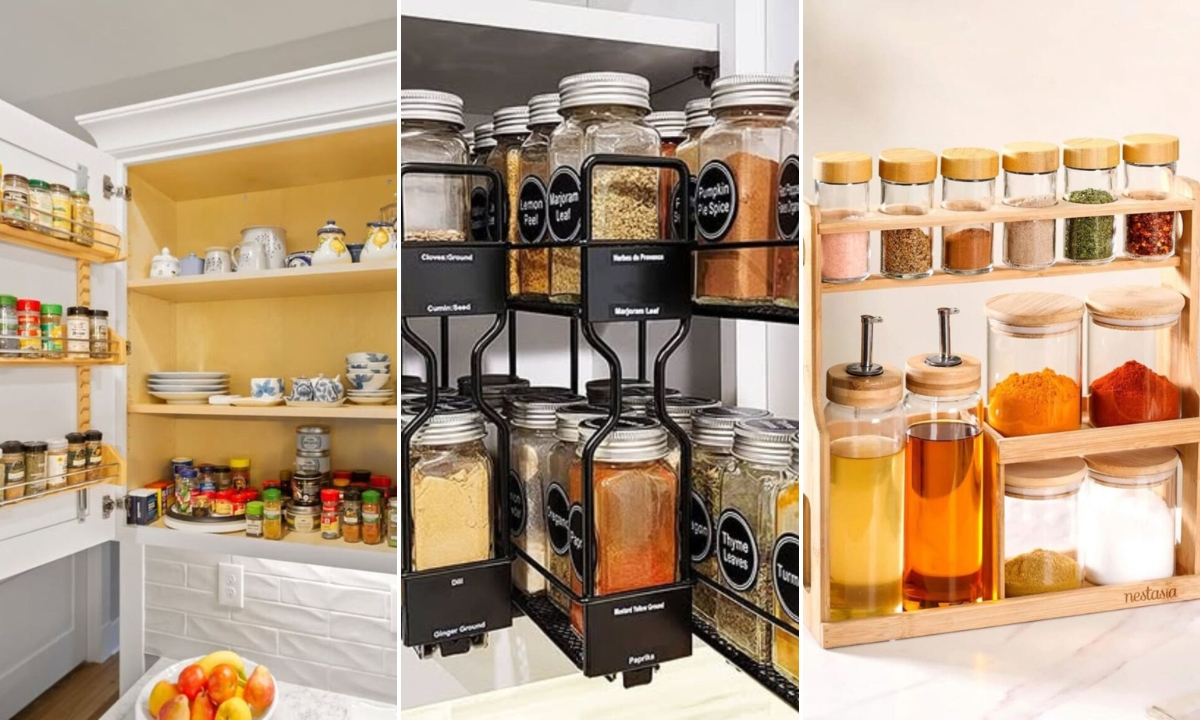
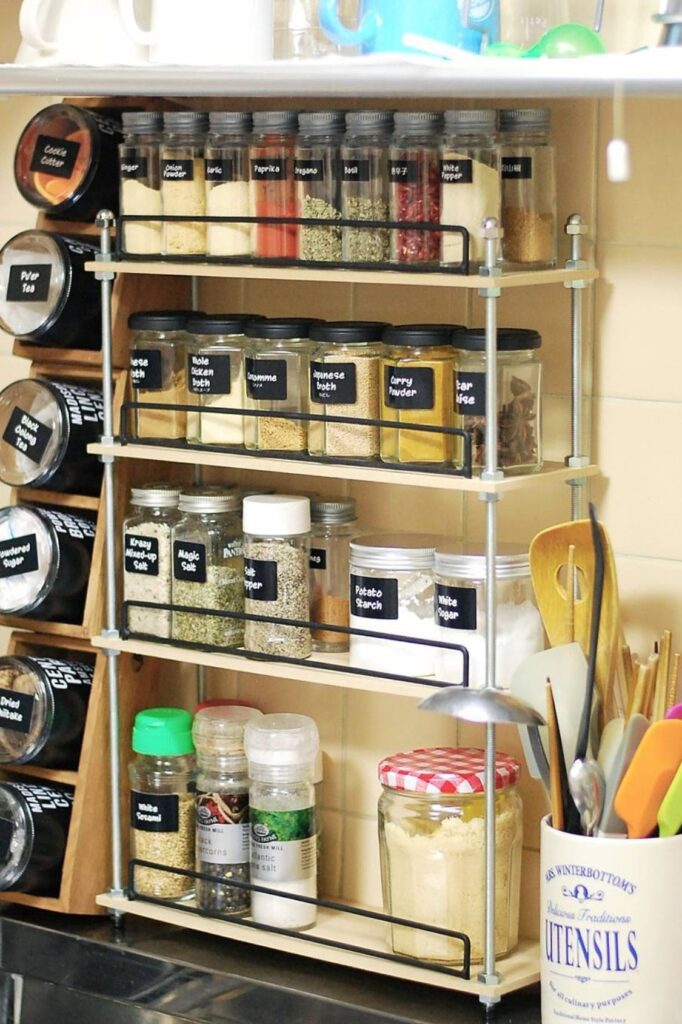
Clutter disappears the moment every jar gets its own visible spot. A multi-level rack like this turns a flat, crowded shelf.
Into a neat row where nothing is hidden behind anything else. The back row is raised just enough by each tier so that the labels are always visible.
This means you won’t have to search through jars or knock them over when cooking. It’s easy to set this up: just put a ready-made tiered rack in a cupboard or on the counter.
And arrange the spices by height or how often you use them. Notice how even bigger containers fit without impeding smaller ones.
This configuration works best in kitchens where the cabinets feel deep but aren’t used very often.
Drawer Layout
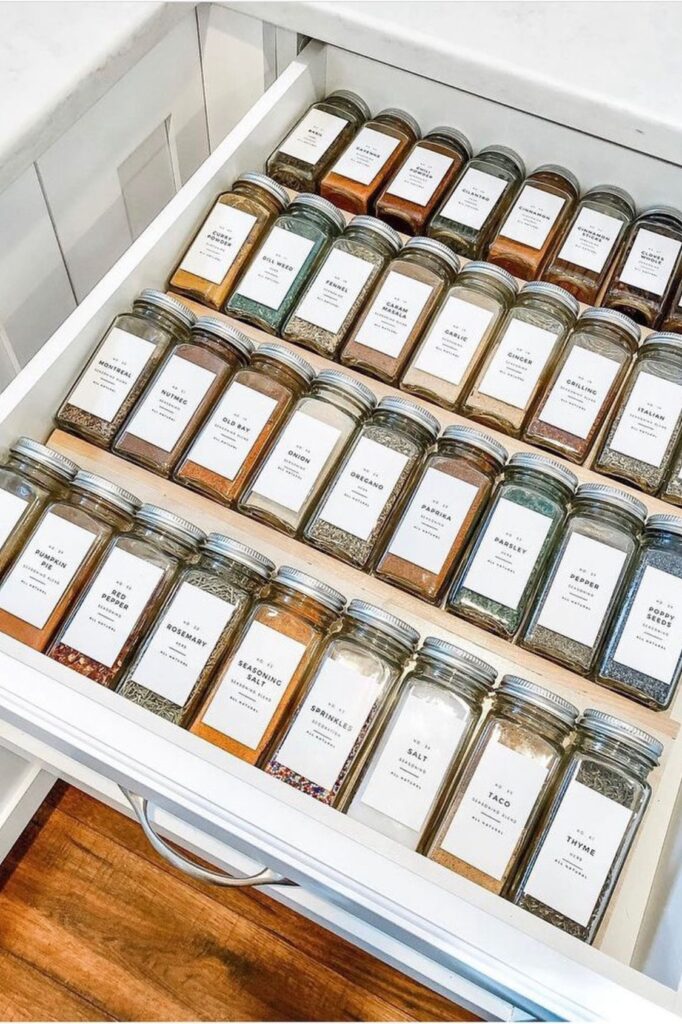
Opening a drawer and seeing every spice at once changes how you cook. Nothing gets lost, nothing stacks.
And you can see all the labels there in front of you. This method of laying jars flat works especially well when cupboards are too deep or full of stuff.
A simple wooden or acrylic insert keeps the rows clean so that the jars don’t move about when you open the drawer.
You can fit more without crowding when the jars are the same size since the layout is tighter and more space-efficient.
This setup works well in kitchens with an extra drawer near the stove, which makes it a spice zone.
Wall Shelves
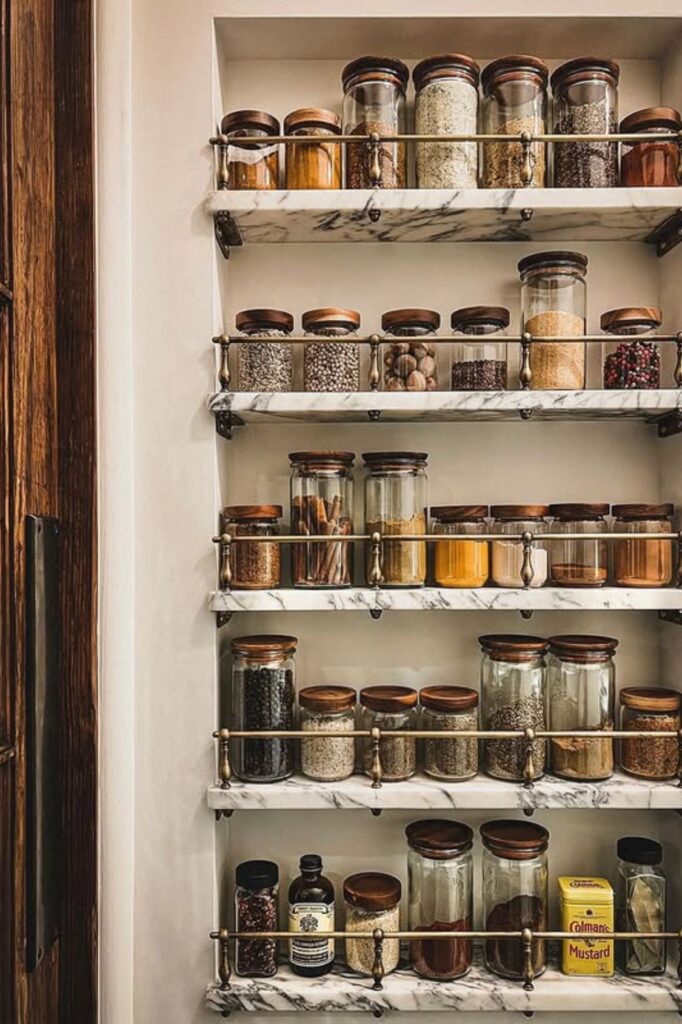
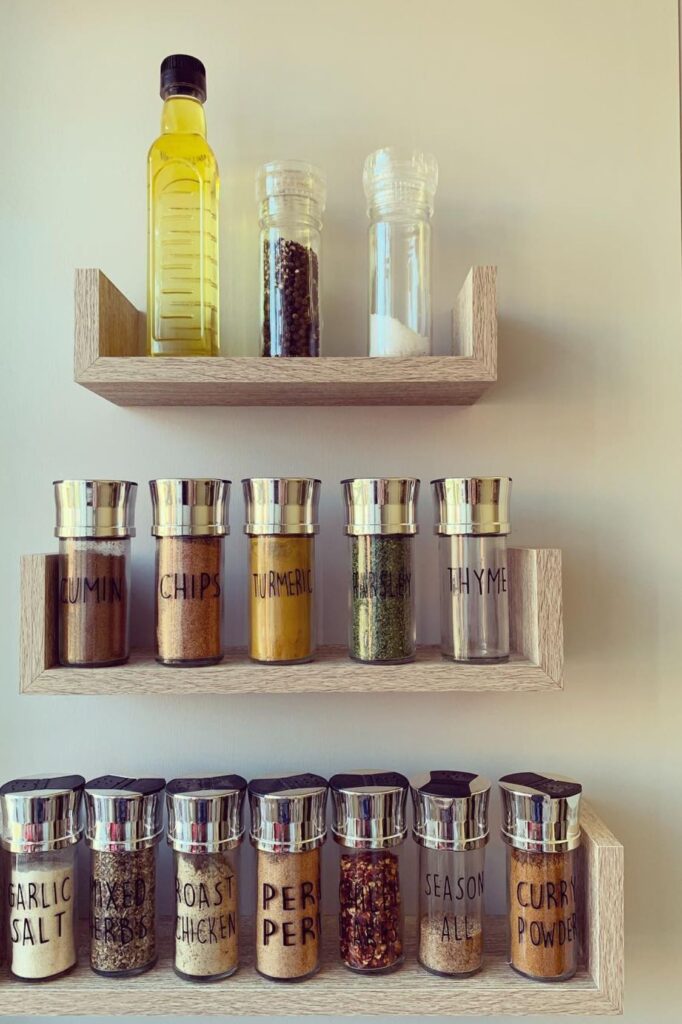
Empty wall space can quietly turn into your most useful storage spot. Floating shelves like these keep spices off crowded counters.
But still easy to get to. There is a distinct line of jars in each row, so nothing gets pushed to the back or forgotten.
Adding a little rail in front keeps jars safe without impeding your view. This design works best near prep areas where you need to be able to get to things quickly while cooking.
You don’t need to completely remodel it to make it look as it did before. Just put up some strong shelves.
And use jars of the same size to keep everything in line. Even with a lot of spices, the end dish feels clean, open, and surprisingly well-organized.
Counter Rack
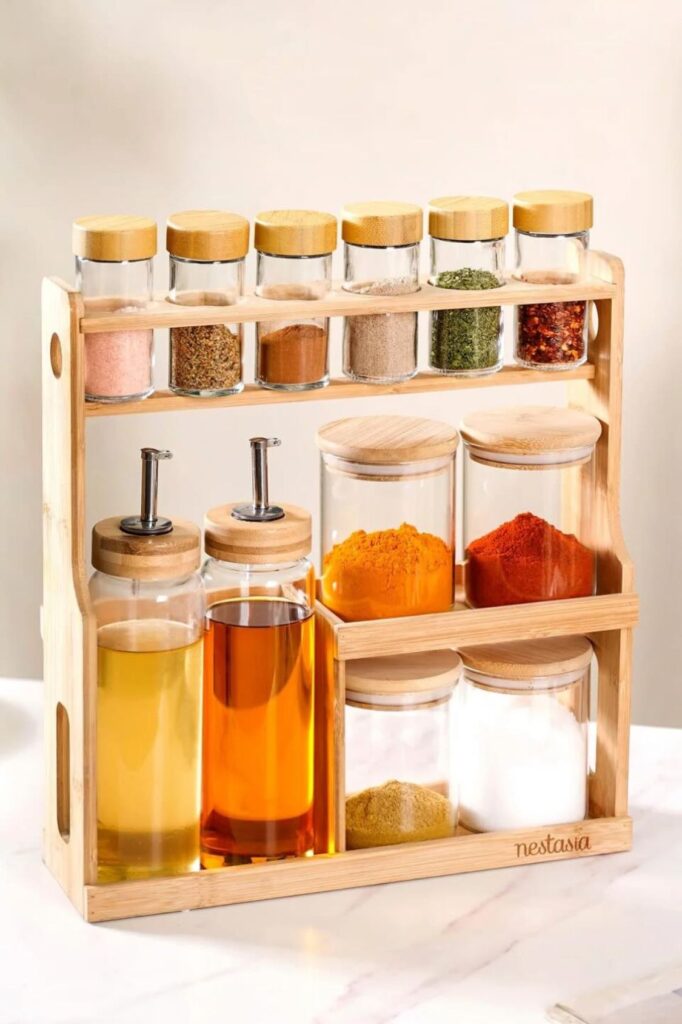
Cooking feels smoother when the essentials stay right in front of you. A compact countertop rack.
Like this keeps everyday spices, oils, and seasonings within arm’s reach. So you don’t have to keep opening cabinets.
The tiered design uses vertical space without making the counter look messy. Smaller jars go on top, and bigger jars and oils fit well below.
This approach is great for folks who cook every day and use the same seasonings. Make it again with a tiny wooden.
Or metal rack and only put your most used things on it. This keeps the counter from seeming packed and makes it easy to grab things.
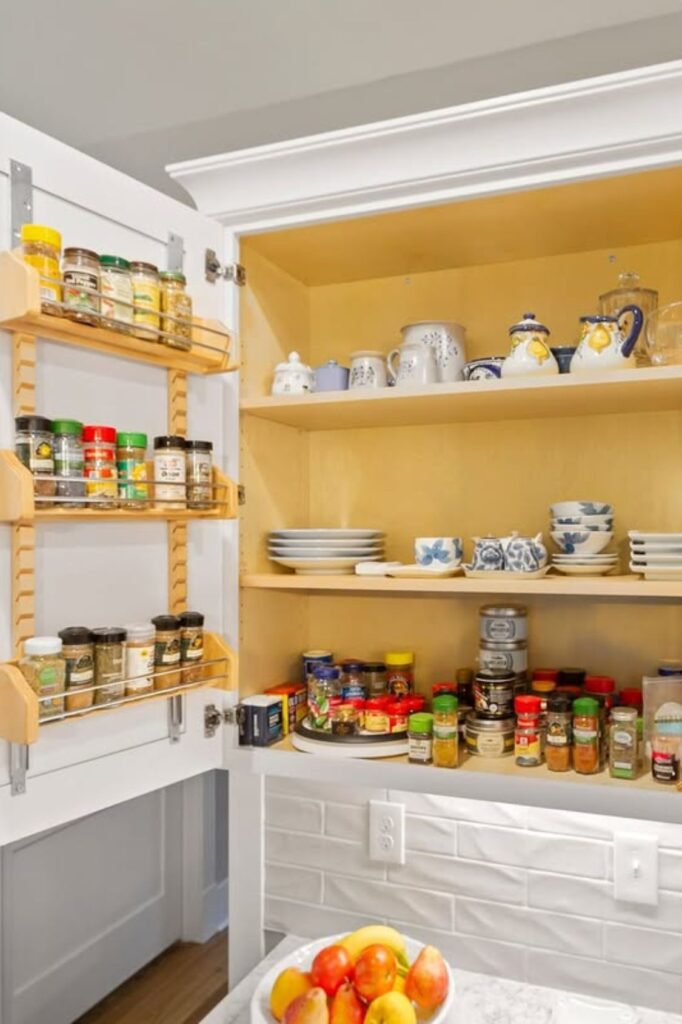
Door Storage
Hidden space inside cabinet doors can completely change how your kitchen feels. Instead of letting that area stay empty.
Adding narrow racks makes it a full spice zone without getting in the way of your major shelves.
The jars stay upright, are easy to reach, and never get lost behind other things. This method works well in cabinets where spices tend to pile up and make a mess.
It might be as easy as racks that screw into place or holders that can be changed to fit different jar sizes.
When you open the cabinet, everything is quickly visible, which makes it easier to cook without having to look around.
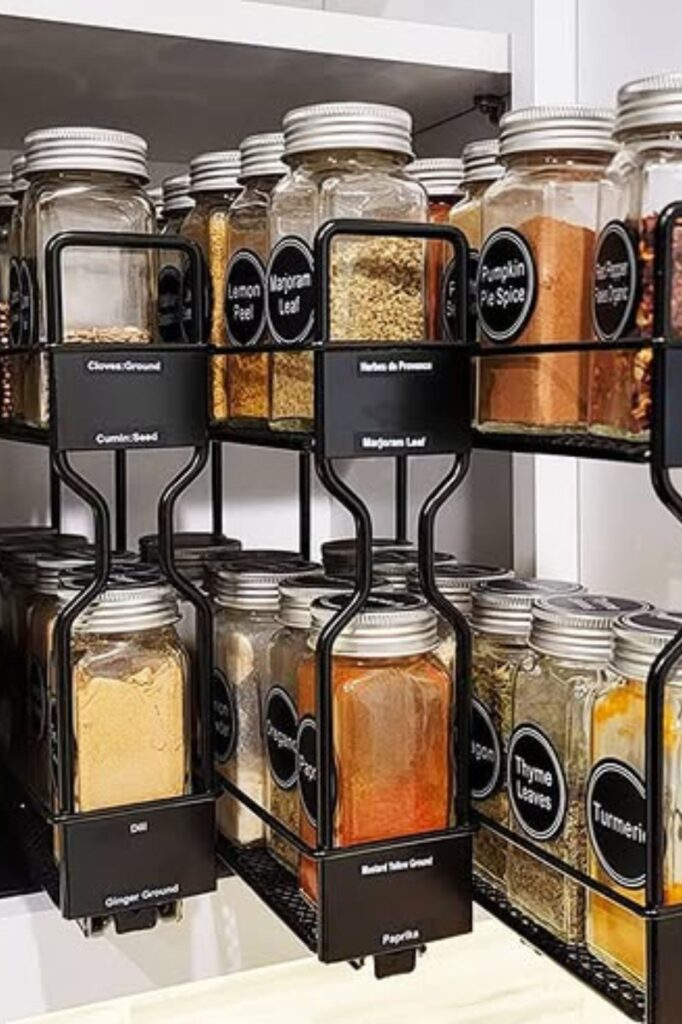
Pull System
Deep cabinets stop being a problem once everything slides out toward you. A pull-out rack like this brings.
This way, nothing stays hidden at the rear. Each jar has its own spot, which keeps everything stable.
And makes it easy to grasp without knocking over other jars. This setup works best in narrow or deep cabinets where regular shelves waste space.
Adding a slide-out frame or employing pre-made pull mechanisms can make the cabinet work better right away.
Labels are easy to see at eye level and even big collections look neat instead of crowded. You can cook faster because you can get to all the spices right away.
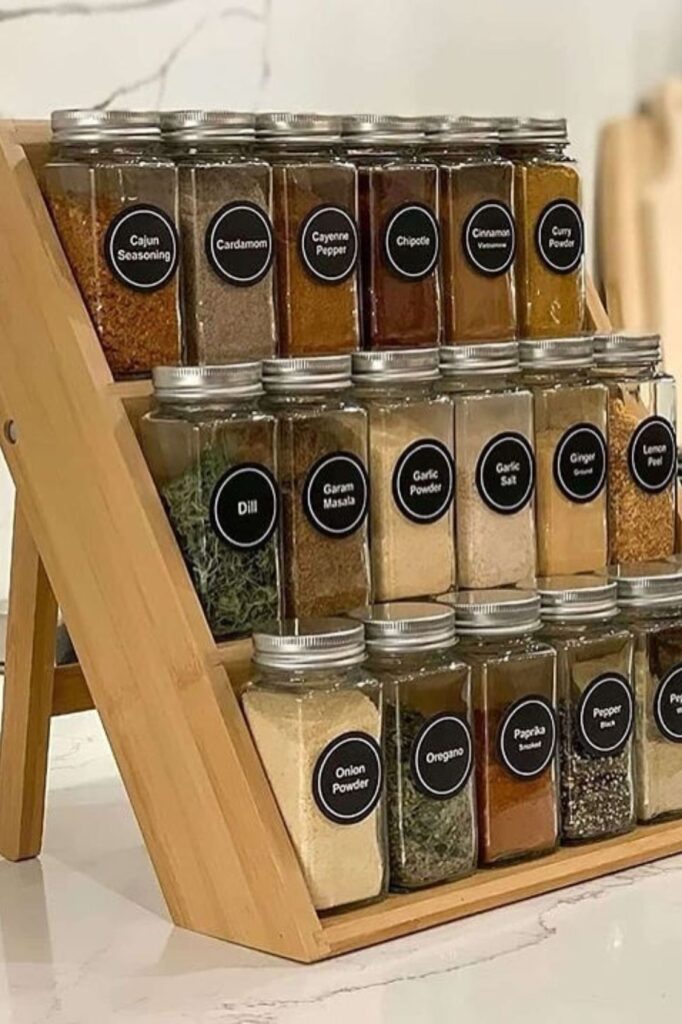
Angled Stand
Flat shelves hide half your spices, but a slight tilt changes everything. An angled stand like this keeps every label facing forward.
That way, nothing gets lost under another jar. The stepped form leverages vertical space without making the setup too big.
So it’s great for countertops or large cabinets. You can still see each row, and taking a jar doesn’t bother the others.
You may easily make this again with a wooden or metal angled rack and jars that fit perfectly. Keeping containers that are about the same size helps.
Keep the layout neat and tidy. When everything is in clear view, even a big spice collection is easy to keep track of.
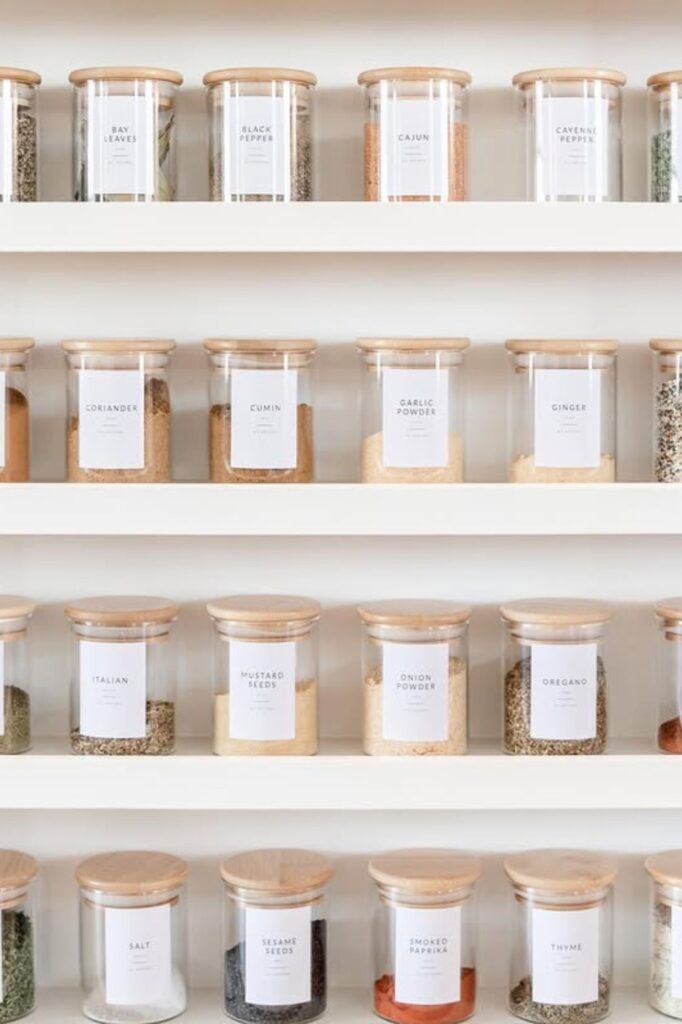
Open Shelves
Clean lines and open space make spices feel less like clutter and more like part of the kitchen design.
These wide shelves offer each jar space to breathe, so nothing seems cramped or buried. Even with a lot of stuff, matching containers make everything look neat right away.
This setup works well in kitchens that have clear wall space or a wall that is only for the pantry. Keeping the spacing the same makes the whole layout look peaceful and easy to read.
It’s easy to recreate: just put up strong floating shelves and switch to jars that all look the same and have clear labels.
When everything is in order, it only takes a few seconds to find a spice, and the whole area feels more organized without needing more storage space.
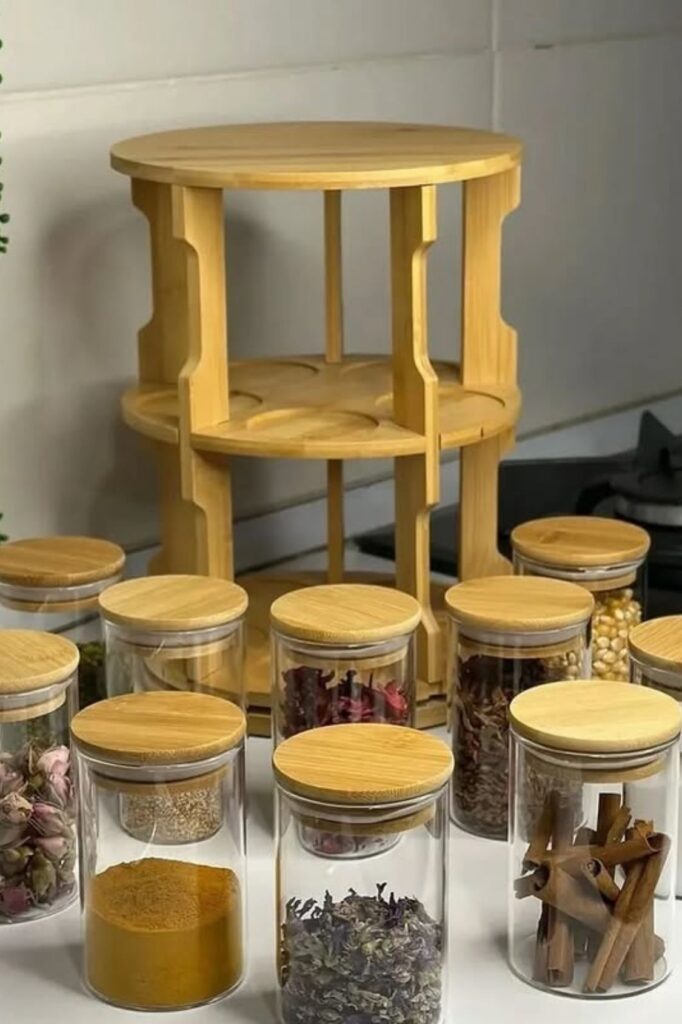
Rotating Rack
Reaching the back of a cabinet stops being a struggle once everything spins toward you. A rotating rack.
This keeps spices in a small circle and makes it easy to get to each jar. A fast rotation delivers just what you need to the front instead of stacking or digging.
This is especially useful in corners or other small spaces where straight shelves take up too much room.
It’s easy to set up: just put the rack on a counter or in a cabinet and categorize the spices by how you use them so you can get to them quickly.
Keeping the sizes of the jars the same helps everything stay in balance while it spins. Small space, great difference in how ordered your spices seem.
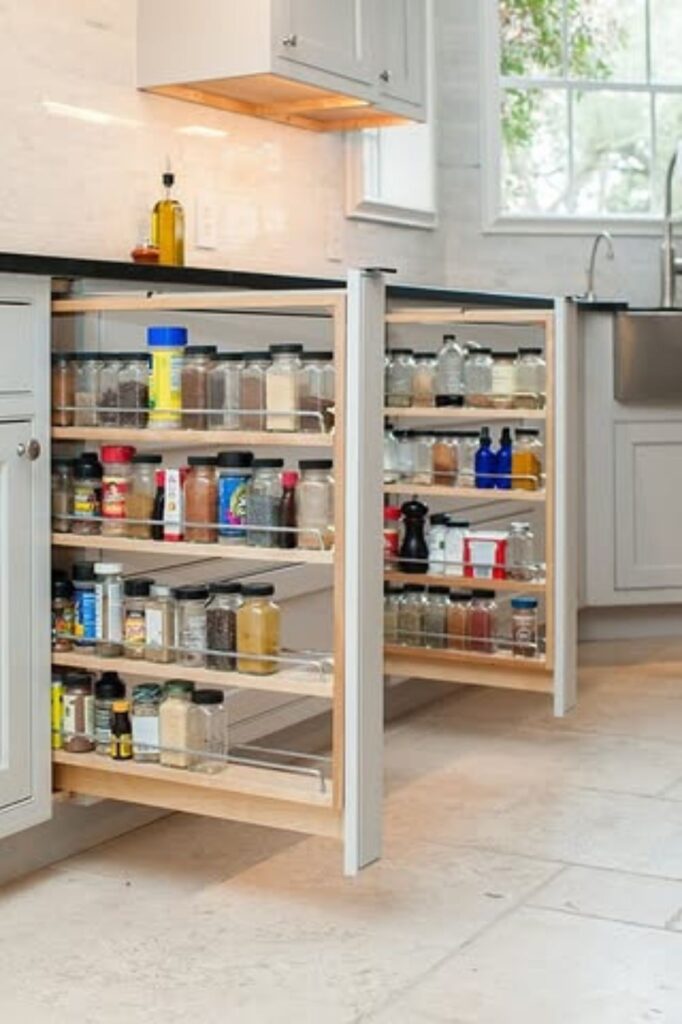
Slide Cabinets
Dead space between cabinets often goes unnoticed until you turn it into storage like this. Slim pull-out cabinets.
Use little spaces that are usually unoccupied to create a full-height spice section without taking over the major shelves.
Everything is in rows, and a quick pull brings the whole collection into view. No more digging through cabinets or forgetting what’s in the back.
This arrangement works best in kitchens where space is restricted and every inch counts. Adding a sliding unit or renovating a narrow cabinet.
Can quickly increase storage space. Even a lot of spices feel orderly and easy to get to when they’re in order.
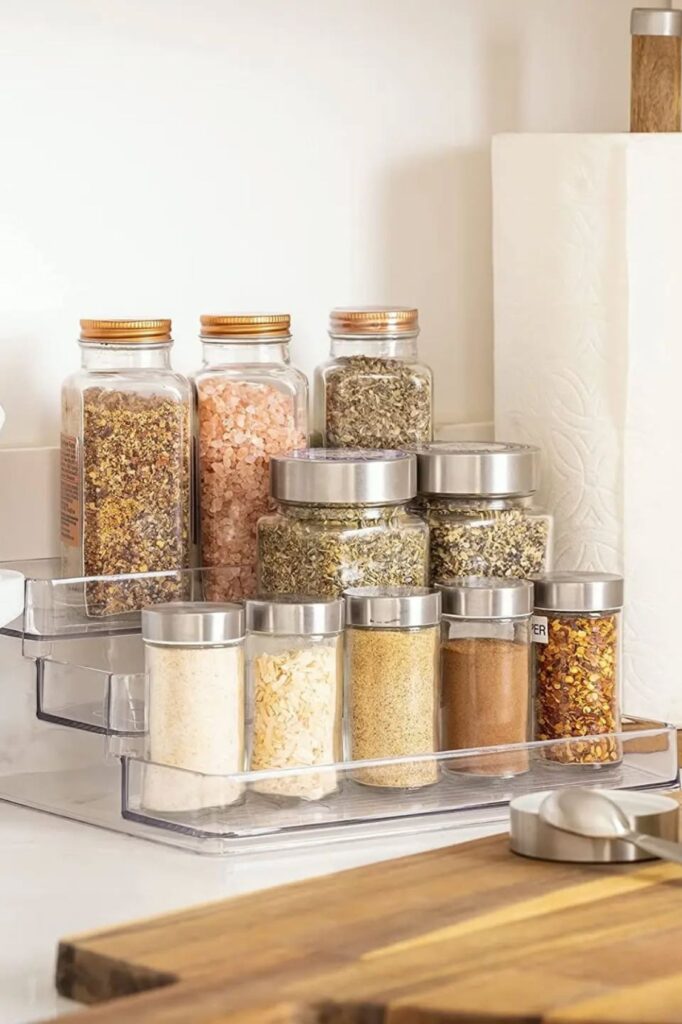
Clear Tiers
Visual clutter drops instantly when everything sits in clean, see-through layers. Clear tier organizers.
They are great for small worktops or within cabinets because they keep spices visible without taking up a lot of space.
Each step raises the jars a little bit, so the labels stay easy to see instead of getting obscured behind each other.
Acrylic designs that are light also make the room feel open instead of cluttered. It’s easy to set up just put the organizer where you want it and sort the jars by size or use.
This is especially useful for spices you use every day. Putting similar containers together makes the whole thing look nice and still useful for cooking every day.
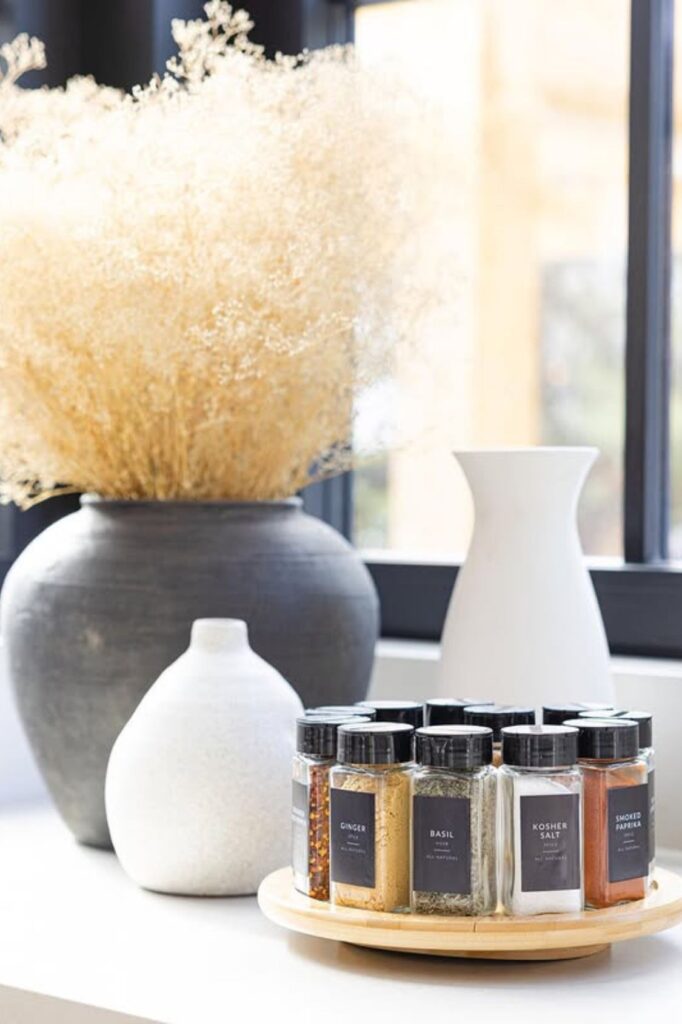
Tray Setup
Small clusters keep things under control better than spreading jars everywhere. A simple tray groups your most-used spices into one defined spot.
This way, the counter stays neat instead of messy. Everything moves together, so it’s easy to clean or move things around.
Round trays are great since you can turn them a little to get to what you need without moving other things.
This arrangement is excellent for a window or prep area where you use spices every day. To recreate it, just put a wooden or marble tray on top of the jars.
And limit it to the most important ones. Keeping the options short keeps things from getting messy and lets you get to them quickly while cooking.
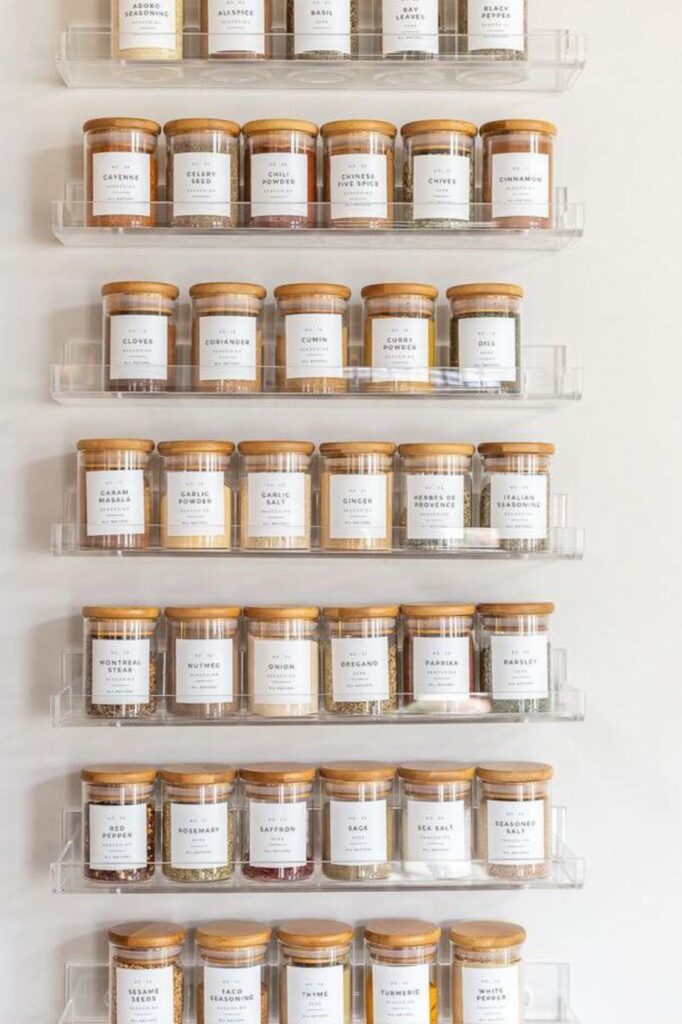
Acrylic Wall
Clear racks keep the focus on the spices, not the storage. Mounting slim acrylic shelves like these turns a blank wall into a full spice.
Show off without making the room feel weighty or full. The jars are all in a nice row, and the clear glass.
Makes it easy to see everything at once. If your kitchen needs more storage but can’t fit big racks or cabinets.
This design works great. It’s easy to install. Because the mounts are light, and having the jar sizes the same helps.
Keep the rows neat and even. Putting it next to where you cook makes it easy to get spices while keeping the counters clear.
Magnetic Strip
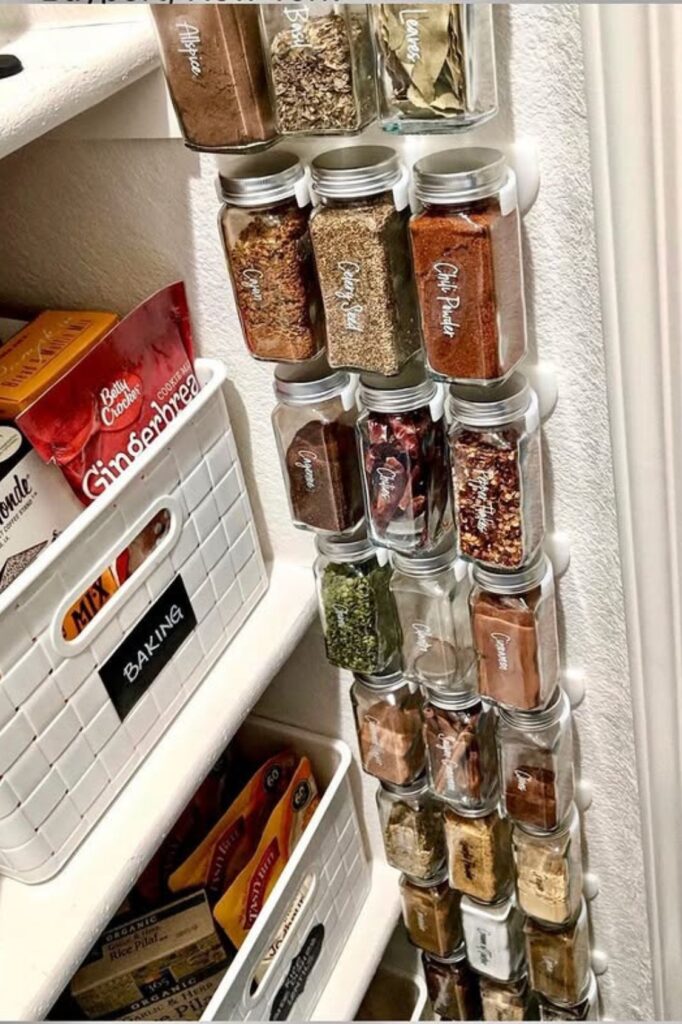
Narrow gaps can hold more than you think once magnets come into play. A vertical magnetic strip.
This turns a tight side wall or cabinet edge into a full spice column without taking up any shelf space. Jars click into position and stay there.
Which keeping everything neat and tidy even in small or hard-to-reach places. This works best in corners.
Around the borders of the pantry, or next to shelves where nothing else fits. You only need a strong magnetic foundation and metal-lid jars to set it up.
If you keep the labels facing out, you can quickly find each spice. A area that used to seem useless suddenly becomes one of the best places to store things in the kitchen.
Chalk Wall
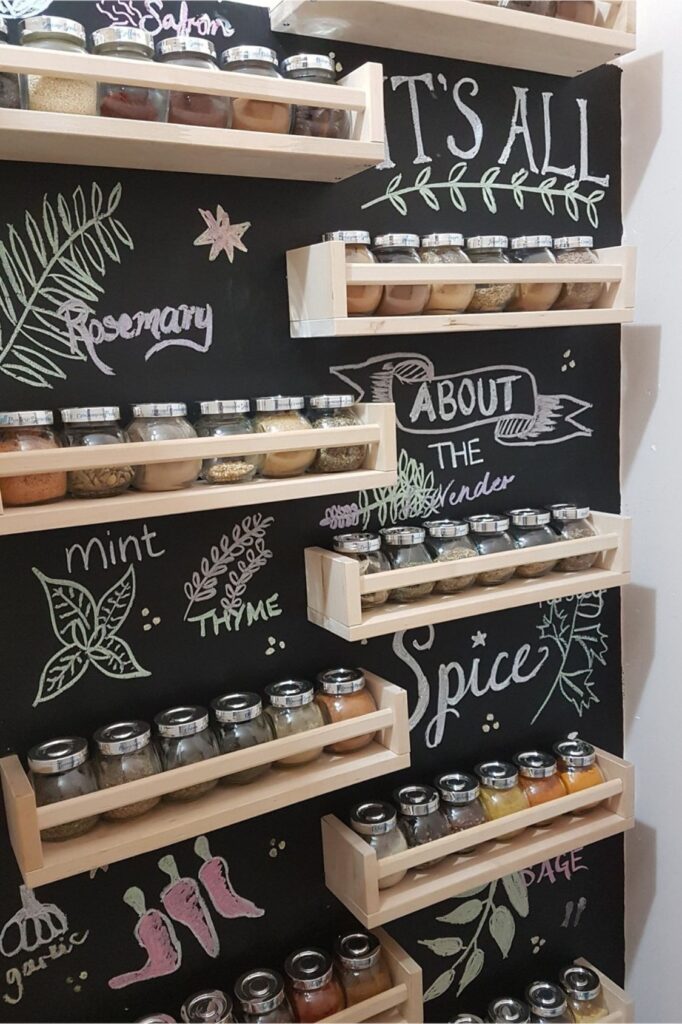
Blank walls don’t have to stay plain when they can double as storage and creativity. A chalkboard wall paired.
With slender wooden racks, organizing your spices becomes both useful and personal. The background.
Adds labels, sketches or quick notes that make the room feel alive, and the jars stay in line and are easy to grab.
This arrangement is perfect for kitchens where you want storage to fit in with the decor instead than hiding it.
The wall behind the jars adds character without taking up any extra space and keeping the jars in the same place keeps the layout neat.
Shelf Zoning
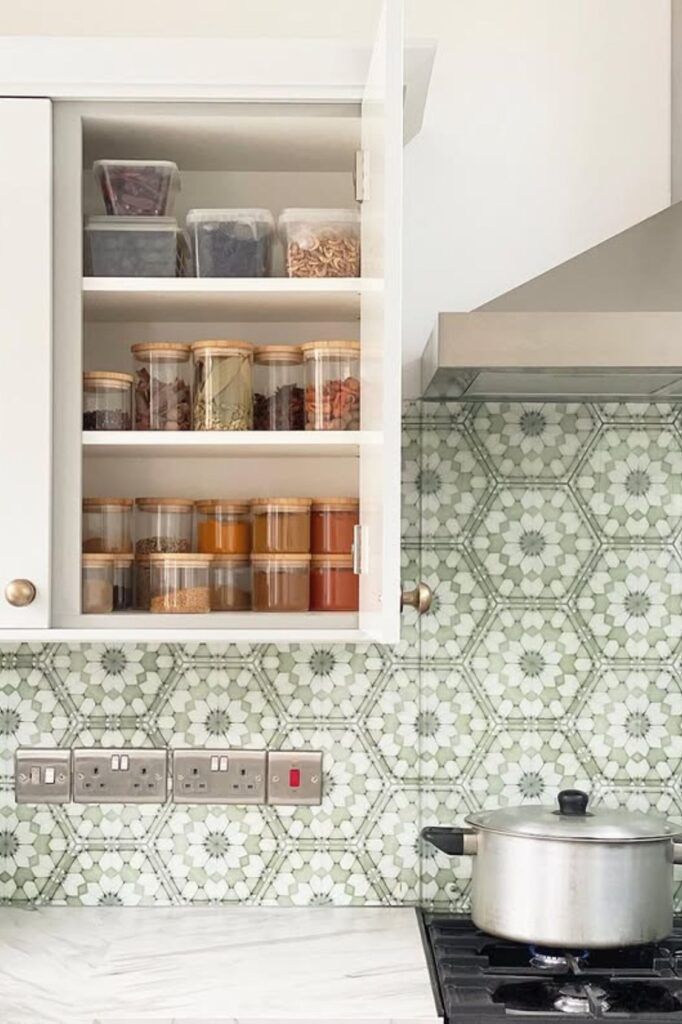
Mixing everything on one shelf quickly turns into chaos, even when there’s enough space. Dividing shelves into clear zones.
Keeps spices from being lost and spreading. Every row can hold a certain group, which makes it easier to find and keeps things predictable.
You can put taller jars on lower shelves and lighter or less-used things on higher levels without their getting in the way.
This configuration works well in regular cabinets that have room but aren’t using it well.
A few matching containers and some easy arrangement can make the cabinet feel very different.
The overall space stays organized without having to move things around all the time once each portion has a purpose.
Vertical Rack
Height becomes your biggest advantage once storage starts going upward instead of outward.
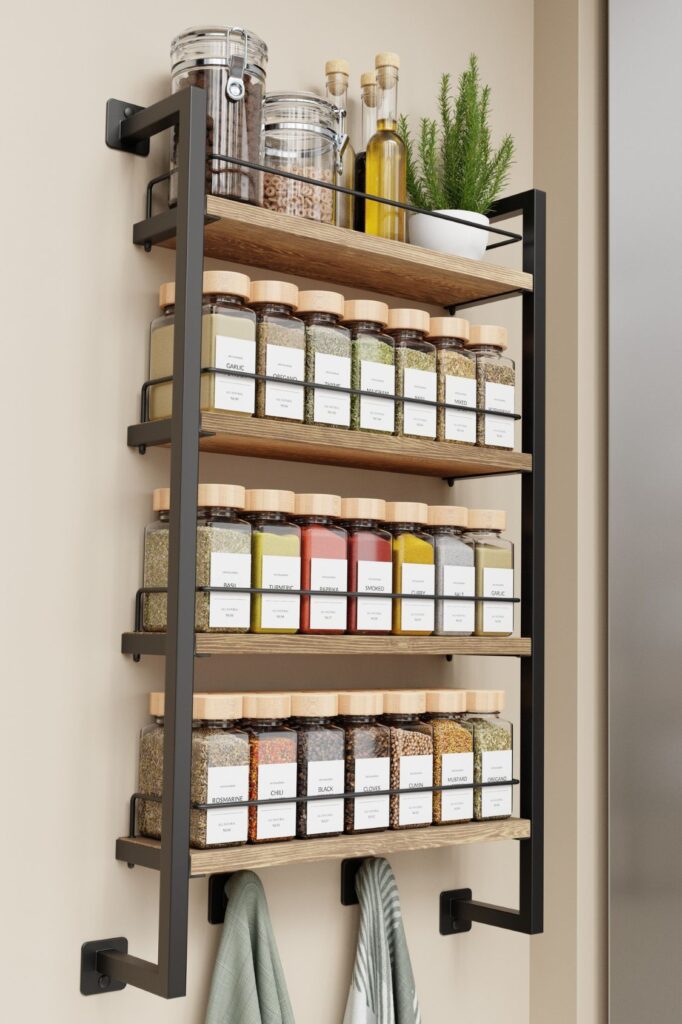
This tall vertical rack uses wall space that would otherwise be unoccupied to stack several rows of spices without taking up counter or cabinet space.
The frame keeps everything safe, and the shelves keep the jars in a straight line so you can easily see them.
This works really well in tight spaces, including next to cabinets, on narrow walls, or near prep areas. of you need to do to set it up is put up a strong rack.
And use jars that are of the same size to keep everything in line. The kitchen feels less cramped right away because it doesn’t add any bulk.
Angled Holder
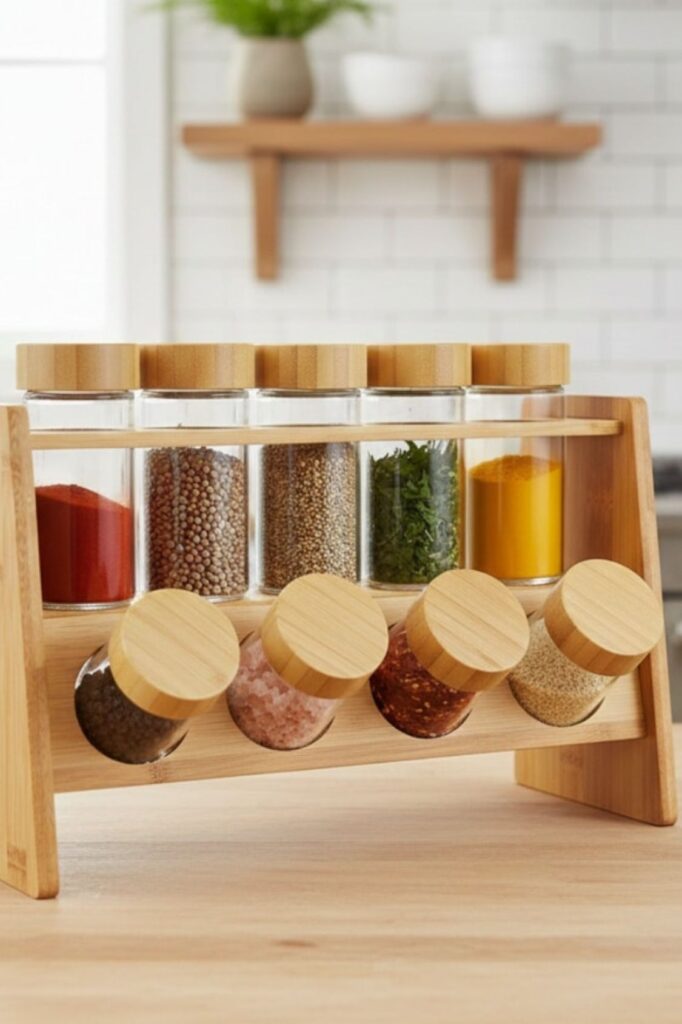
Straight rows aren’t the only way to keep spices visible. An angled holder like this tilts jars forward so labels.
Stay easy to read without having to lift each one. The lower row stores jars at a slight inclination, and the top row maintains extras upright, making better use of the same space.
This works nicely on countertops where there isn’t a lot of room yet you need to get to things quickly.
It’s easy to make again with a small stand that can hold it up straight or at an angle. Putting spices you use a lot in the front row makes it easier to access them.
And putting spices you don’t use as often in the back row keeps them neat. This modest setup can take the place of a messy area in a cabinet without taking up space on the counter.
Expand Drawer
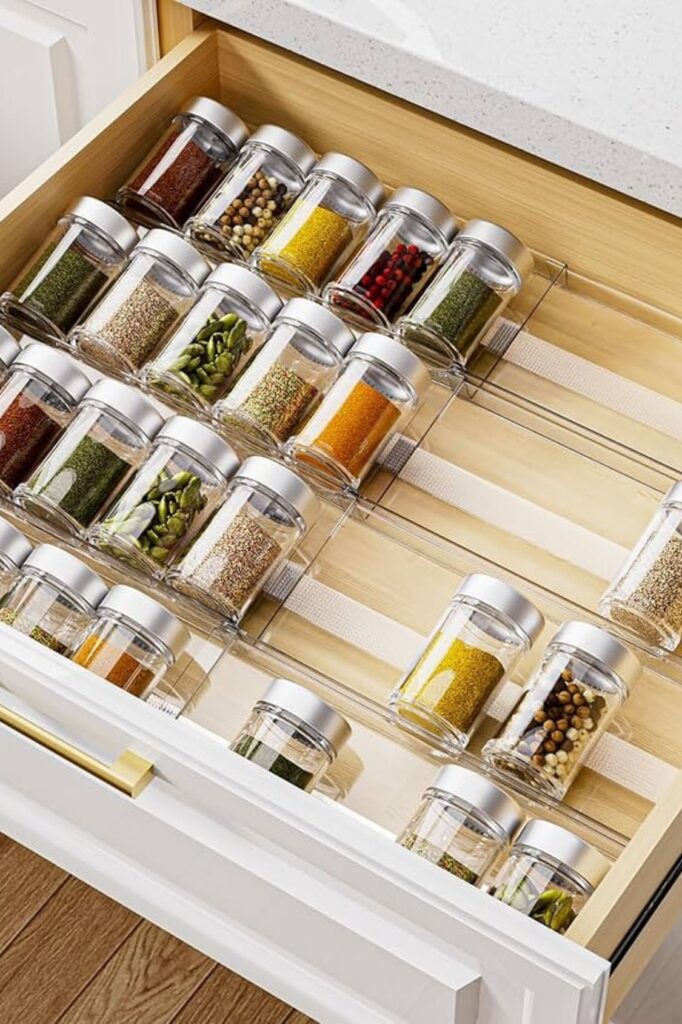
Unused drawer space becomes valuable once it adjusts to your collection. An expandable organizer.
This expands to match the width of the drawer, so there is no room wasted on the sides. When you open it, the jars won’t roll about since each angled slot retains them securely.
The layout makes it easy to see labels at a glance, which makes it quick and easy to find spices. .
This works best in medium to wide drawers where fixed organizers leave empty spaces. It’s easy to set up: just make the tray bigger so it fits snugly.
Then group the jars by type or how often you use them. You don’t need a whole new system to change the layout as your collection increases.
Spice Carousel
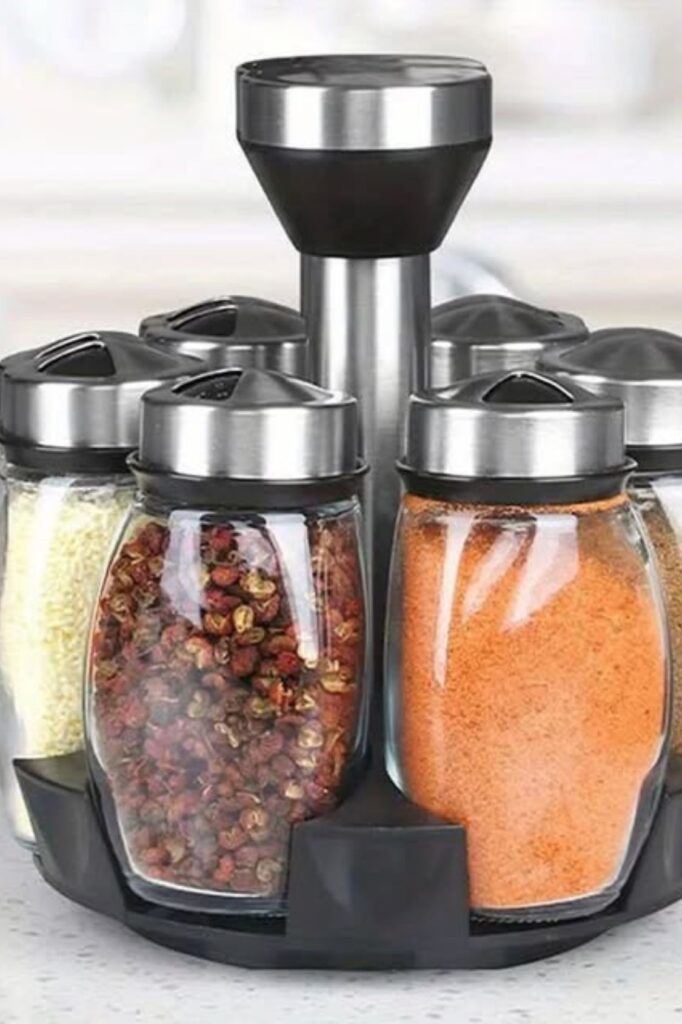
Fast access matters more than extra space when you’re cooking every day. A compact carousel like this.
puts all of your favorite spices in one little circle, where they can quickly spin into view. Nothing feels crowded or hard to get to because each jar stays upright and equally spaced.
This setup is great for countertops where you need to be able to access things quickly without having jars all over the place.
Putting it next to the stove or prep area makes it easy to season food while it cooks. Keeping only the spices that are used often here.
Keeps things from getting too full and makes the rotation go more smoothly.
This compact configuration can take the place of messy clusters and still have everything close at hand.
Mini Shelves
Small walls can hold more than expected when shelves stay compact and focused. Narrow wooden shelves like these.
Keep the spices in a row without taking up the whole wall. There are just enough jars in each row to keep things neat without feeling crowded.
This arrangement works effectively in small areas like corners, next to cabinets, or near switches where bigger racks wouldn’t fit.
It’s easy to find things when you keep the same jars in each row. It doesn’t take long to install with a few brackets.
And keeping the shelves regularly spaced maintains the arrangement balanced. This little space can replace messy cabinets and make it easy to get to your spices.
Deep Drawer
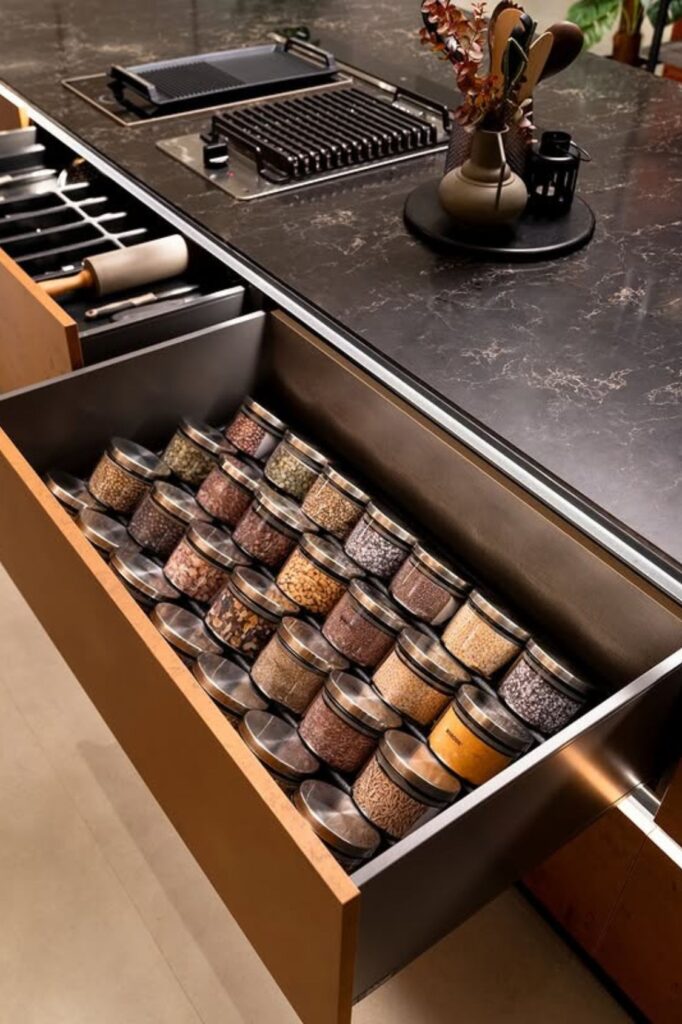
Hidden storage feels effortless when everything sits neatly in one layer. A deep drawer like this turns a bulky spice collection into a clean.
A arrangement that is easy to scan and doesn’t take up any wall or counter space. Jars stay flat and a little tilted.
So you can see the labels as soon as you open them. No stacking, no looking, and no empty space at the back.
This works best in kitchens with large drawers that don’t get utilized much or hold miscellaneous things.
A fitting insert or separator keeps everything in place. Even a lot of spices feel ordered once they’re in order, and closing the drawer hides all the mess right away.
FAQs
How many spice jars should you keep in your kitchen?
Having too many spices usually makes things more messy than useful. A decent rule of thumb is the just keep what you really use when you cook each week.
Most people only use 15 to 25 spices on a regular basis. The rest just sit there and take up room.
Taking out spices that you don’t use often or that have gone bad right away makes more room and makes everything easier to handle.
Is it better to store spices in drawers or cabinets?
Drawers are preferable for quick visibility because you can view all the labels at once without having to move anything.
Cabinets can still be useful, but only if you employ tiered racks or pull-out mechanisms to keep jars from piling up.
The greatest choice depends on how your kitchen is set up. Having an extra drawer near your kitchen area usually makes it easier to get to things.
You may like to read!

Fasial is the founder of the Fizzy Flare. He has been a passionate blogger since 2021. He ran three different websites in the past few years. Now he is focusing on Fizzy Flare to build an audience and help them organize their life.