22 Sewing Room Organization Ideas For 2026
This post may contain affiliate links: full affiliate disclosure.
If your sewing space always seems to be in disarray, despite your best efforts to corral everything, you’re in good company.
You settle in to sew, but before you can even begin, you’re searching for scissors, wrestling with tangled thread, shifting fabric, and somehow, the chaos multiplies.
The issue isn’t necessarily an overabundance of supplies; it’s that everything lacks a designated spot or function.
In this article, I’m sharing 22 Sewing Room Organization Ideas to help you create a clutter free home in 2026.
Let’s jump in!
Contents
- 1 How Do You Organize a Sewing Room From Scratch?
- 2 What Is the Smartest Way to Organize Sewing Supplies?
- 2.1 Center Island
- 2.2 Fabric Library
- 2.3 Mobile Cutting
- 2.4 Dual Zones
- 2.5 Vertical Command
- 2.6 Closet Studio
- 2.7 Tool Wall
- 2.8 Shelf Stacks
- 2.9 Wire Shelving
- 2.10 Upper Cabinets
- 2.11 Thread Ledge
- 2.12 Compact Desk
- 2.13 Color Blocks
- 2.14 Pegboard Hub
- 2.15 Cozy Corner
- 2.16 Storage Wall
- 2.17 Pattern Filing
- 2.18 WIP Parking
- 2.19 Scrap Control
- 2.20 Press Station
- 2.21 Measurement Zone
- 2.22 Reset Routine
- 3 FAQs
How Do You Organize a Sewing Room From Scratch?
Don’t make the mistake of jumping straight into buying storage; that’s a common pitfall. Begin by clearing the area, giving you a clear view of what you’re dealing with.
Otherwise, you’re just rearranging chaos. Then, sort everything by its function: sewing implements, cutting tools, fabric and ongoing projects.
This grouping will quickly reveal what needs to be readily accessible and what can be tucked away.
Organizing based on how you actually use things, rather than how they look, will prevent your sewing room from becoming a disaster zone every time you begin a new project.
Save this article for later! 👇👇
What Is the Smartest Way to Organize Sewing Supplies?
The most efficient approach is to sort your supplies by the task at hand, rather than their size.
If you consolidate all your sewing essentials in one spot and your cutting tools in another you will eliminate the need to dash around the room while you’re working.
Keep the items you use frequently with in easy reach and stow the rest away. Clear containers are a boon, allowing you to quickly locate what you need without rummaging.
When every item has a designated place returning things becomes second nature and not a tedious chore.
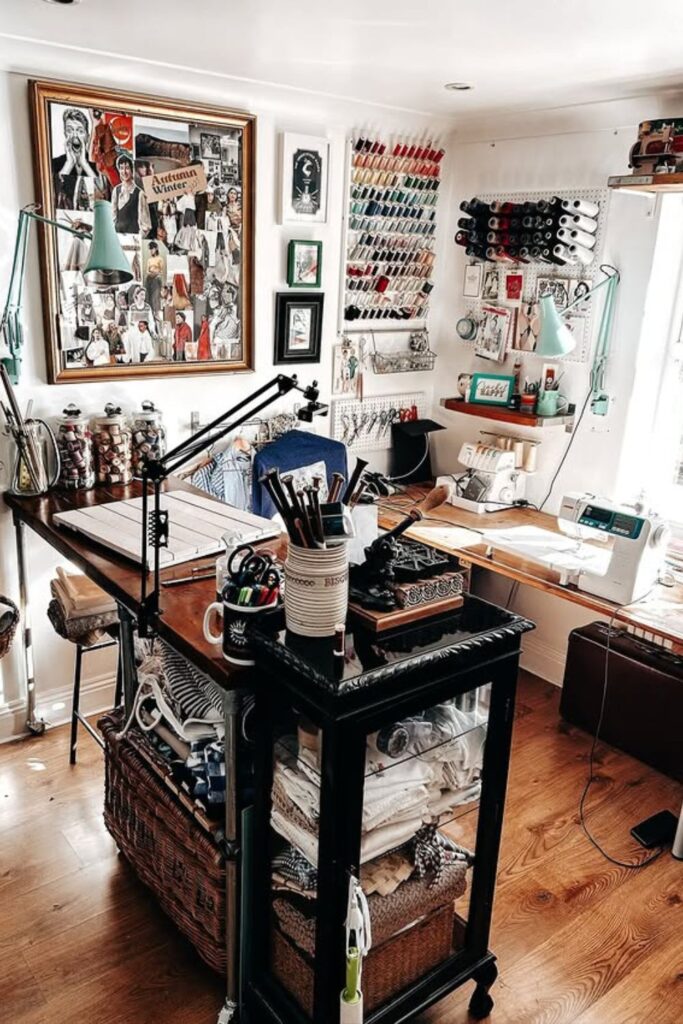
Center Island
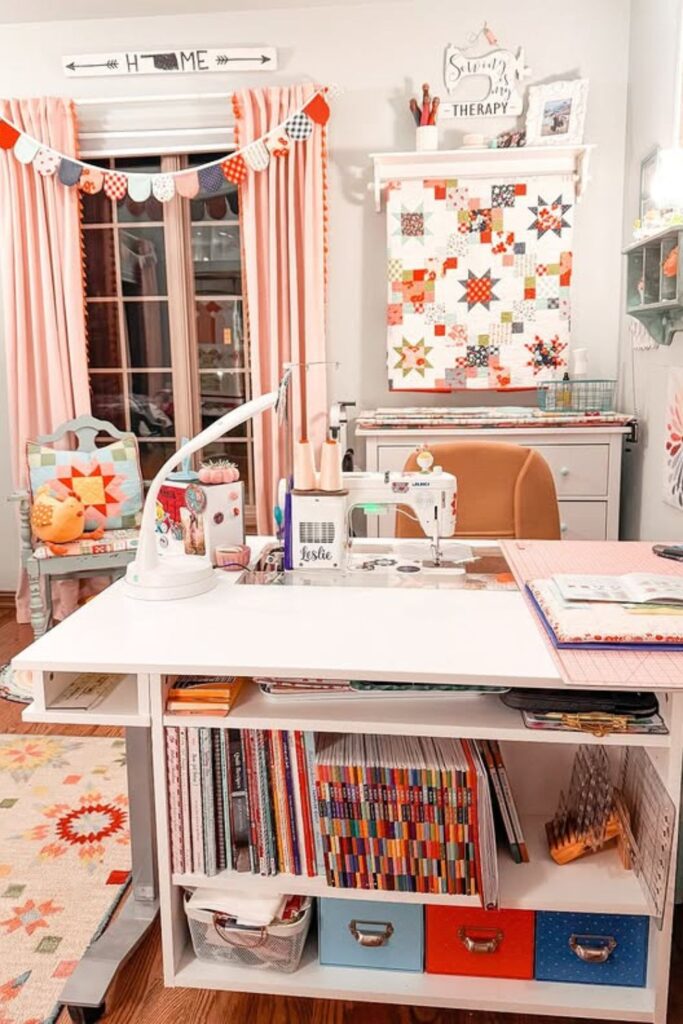
Central worktables change everything in a sewing room. A wide surface gives space to cut, sew and plan with out clearing it every five minutes.
Open cubbies underneath provide a tidy home for books, rulers and storage bins, keeping them accessible yet out of sight, which prevents the tabletop from becoming a dumping ground.
This arrangement is particularly effective in medium to large spaces, as ample width around the table allows for easy movement, preventing projects from stagnating.
Fabric Library
Open shelving turns fabric into a working library instead of hidden clutter. Clear bins and folded stacks and make it easy to see color and textures without digging.
Keeping completed blocks within sight helps keep current projects on track. This method is particularly useful for the quilters or fabric enthusiasts.
Who frequently change their materials and need to make rapid choices without having to dig through everything.
Mobile Cutting
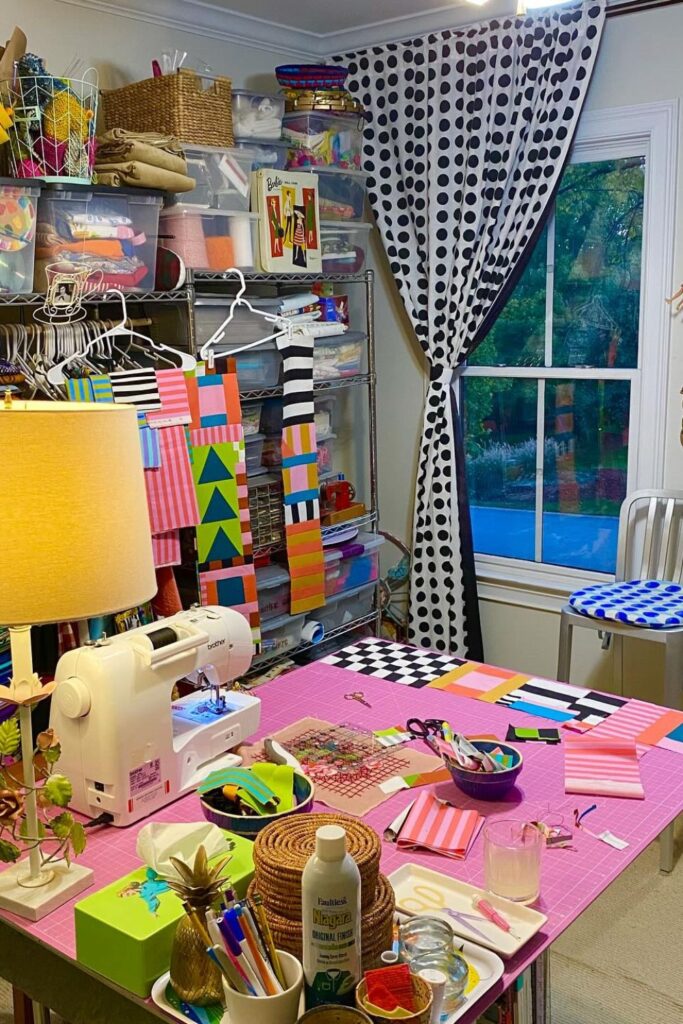
Wheels under a cutting table solve more problems than extra storage ever will. Rolling the surface into open floor space makes cutting large pieces easier.
Then, folding it all away keeps the passageways clean. Fabric placed underneath remains organized and easy to see.
Which means grabbing yardage does not become a frustrating search. This arrangement is particularly useful in public spaces, where adaptability is key.
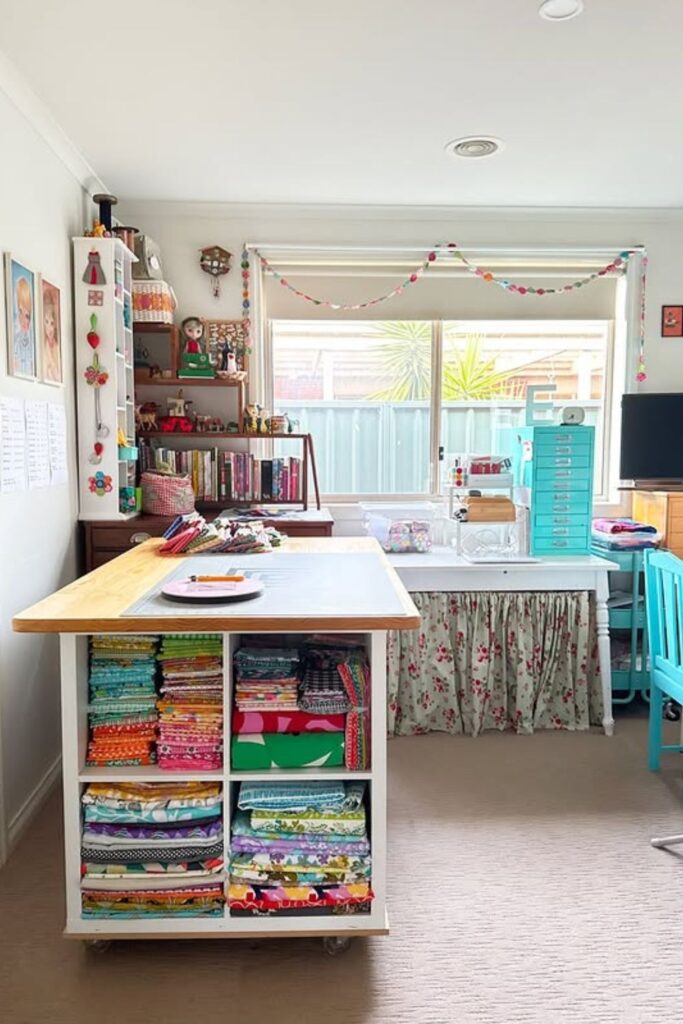
Dual Zones
Separate tables prevent tasks from becoming mixed up. One surface is solely for cutting while the other is reserved for sewing or pressing, eliminating the need to clear things away in middle task.
Keeping fabric placed right beneath the desk ensures that supplies stay put, rather than scattering throughout the room.
This arrangement is particularly effective in the spacious areas or dedicated sewing spaces where numerous tasks are performed each day.
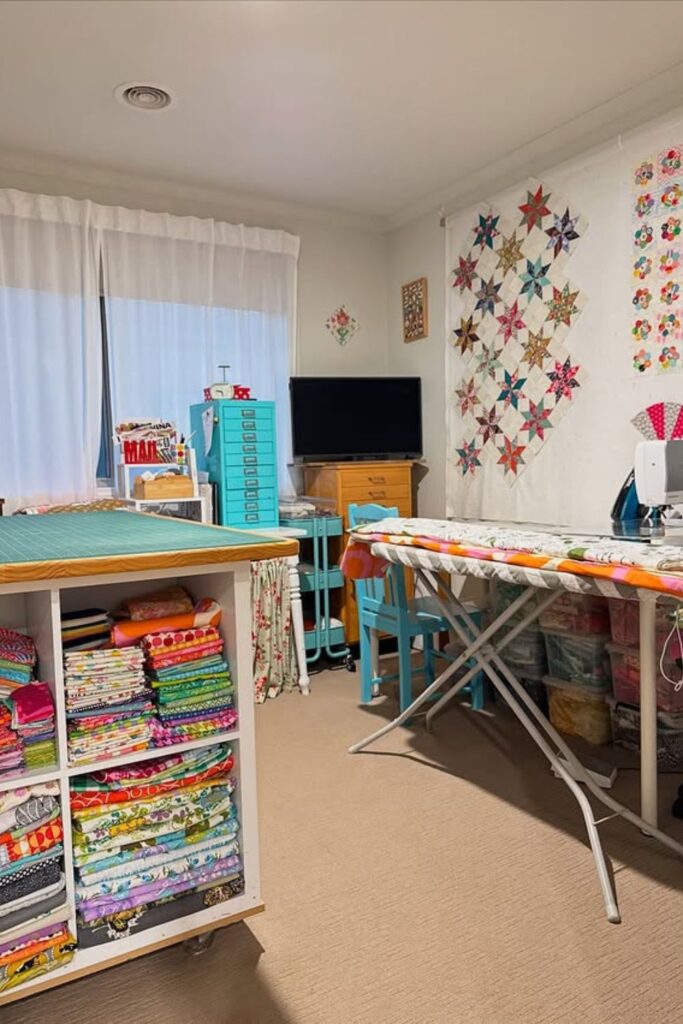
Vertical Command
Vertical storage frees floor space without sacrificing access. A pegboard keeps scissors, thread and small tools visible.
A slender cabinet conceals bulk items, keeping them out of sight. Everyday essentials are readily accessible while extra stock is neatly stored.
This arrangement is ideal for compact rooms or rental properties when wall space is at a premium and everything needs a designated, easily identifiable spot.
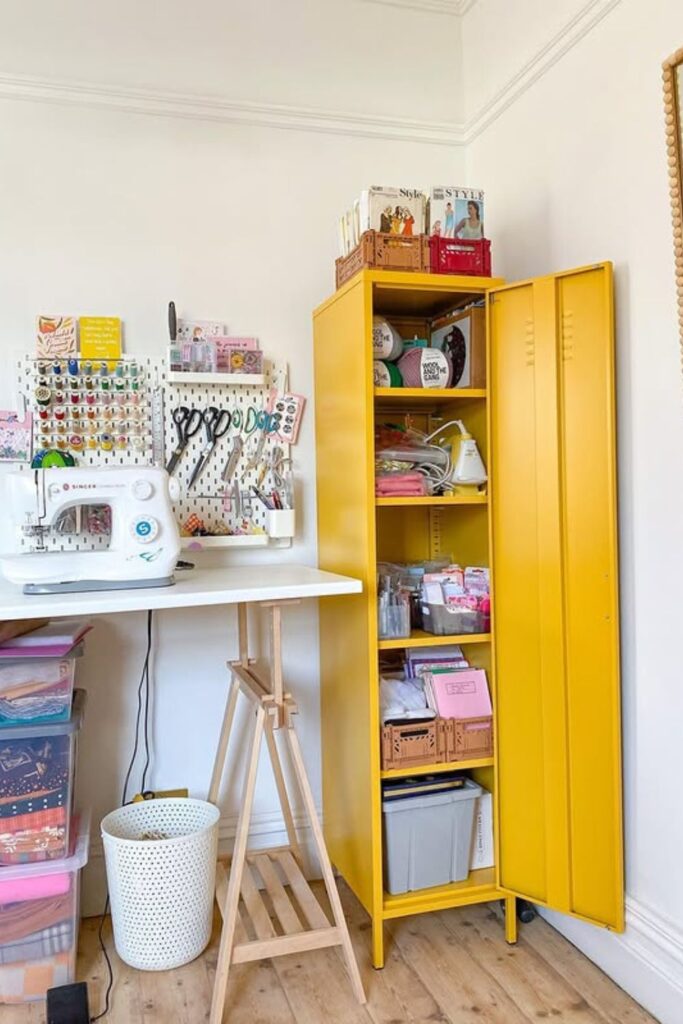
Closet Studio
Doors that open wide can hide an the entire sewing setup in plain sight. Cabinets like this keep tools, vinyl, paper and machines sorted without spreading across the room.
Keeping everything visible when open and out of sight when closed helps maintain a sense of order in public areas.
This approach is particularly effective in locations like spare rooms, basements, or those awkward spots where dedicated sewing room isn’t feasible, yet a tidy setup is still a priority.
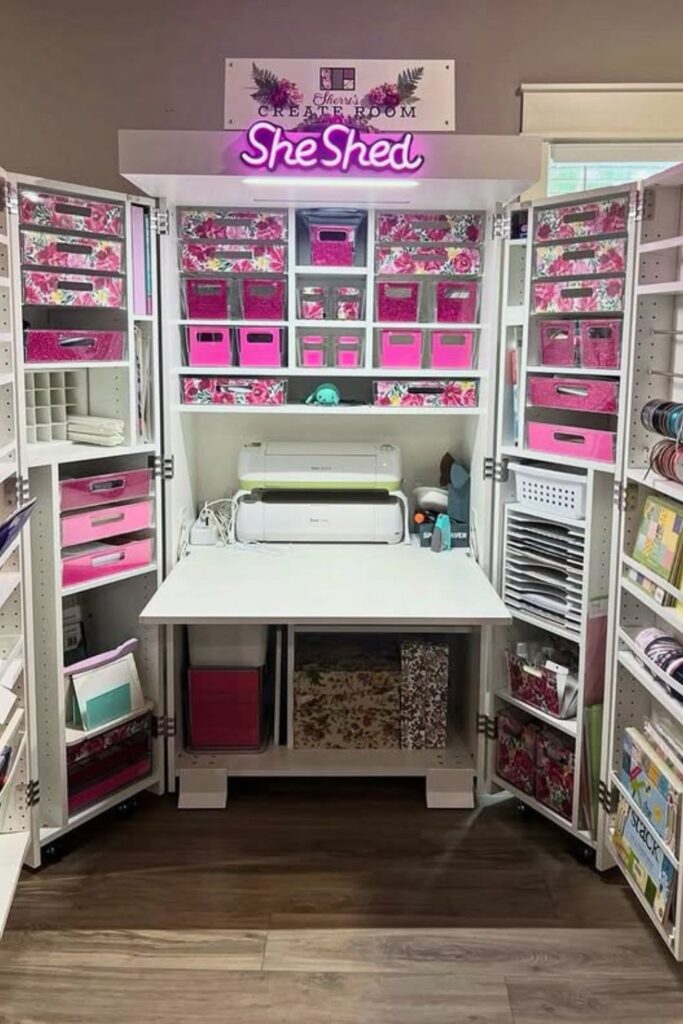
Tool Wall
Walls can work harder than furniture ever will. Mounting thread, rulers, and small tools keeps the work surface clear and decisions fast.
Keeping everything in sight minimizes duplicates and saves the hassle of looking. This arrangement is ideal for a smaller rooms with the limited desk space.
Especially when hands-on instruments are used regularly, rather than being put away for future use.
Shelf Stacks
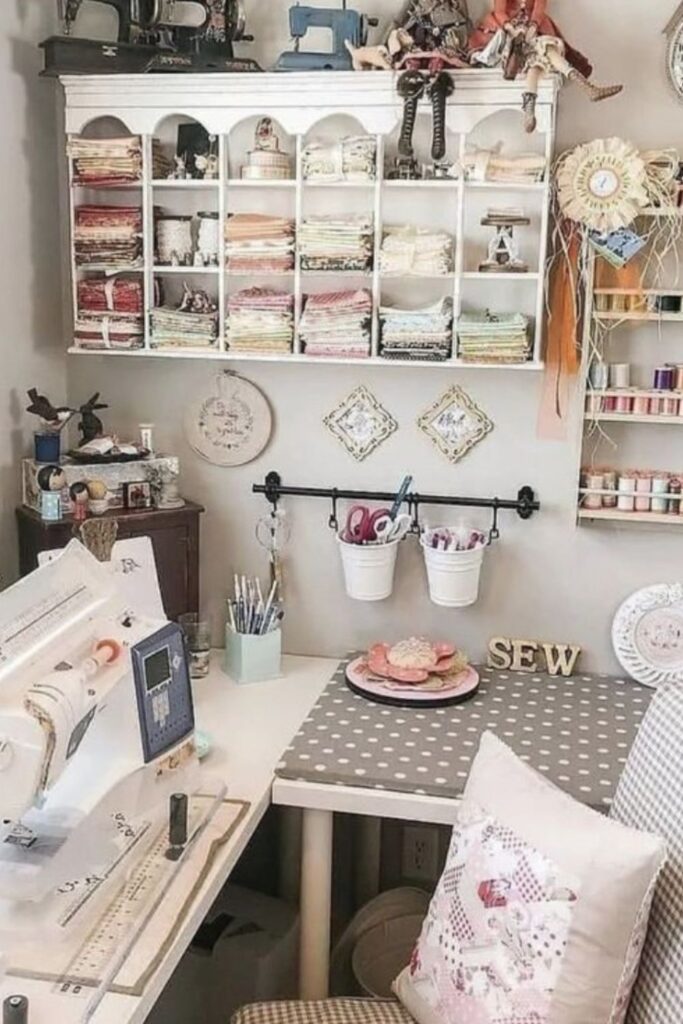
Folded fabric stored at eye level makes choosing materials quick and mess-free. Shallow shelves prevent piles from toppling while keeping prints visible.
Thread racks, conveniently located and keep the colors tidy freeing up the table. This arrangement is ideal for smaller spaces.
Where walls take the place of large furniture, and every inch of the area is needed for sewing, not for storing supplies.
Wire Shelving
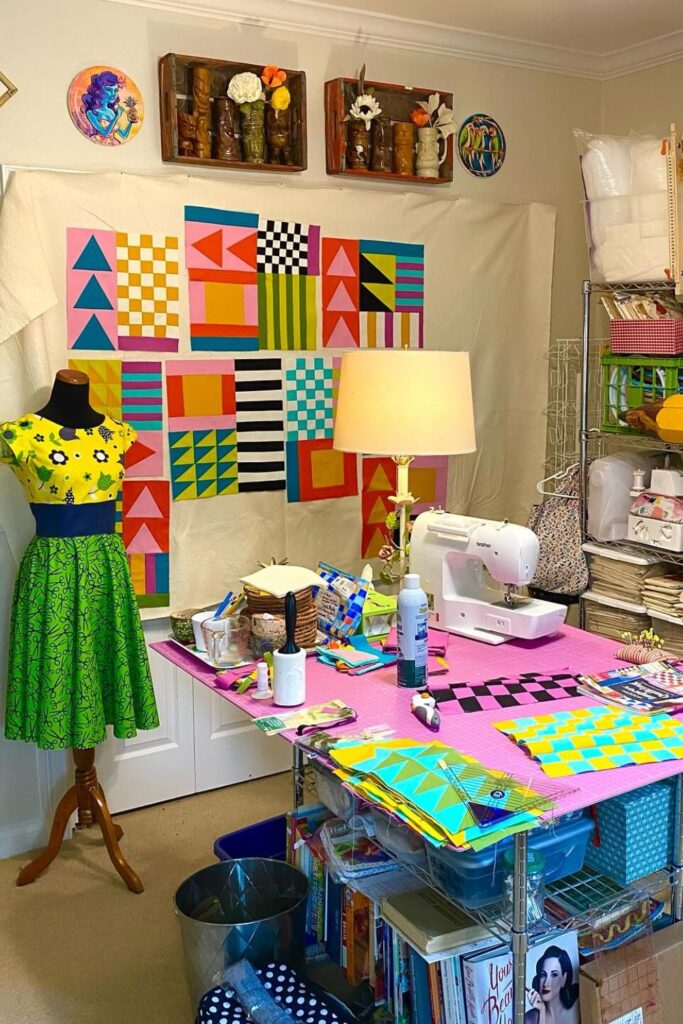
Open metal racks turn large fabric collections into something manageable instead of overwhelming.
Adjustable shelves allow you to expand or contract your storage as your projects evolve. Clear bins prevent smaller items from vanishing into the ether.
Sorting fabric by color speeds up the process of finding what you need and keeps leftover pieces readily accessible.
Upper Cabinets
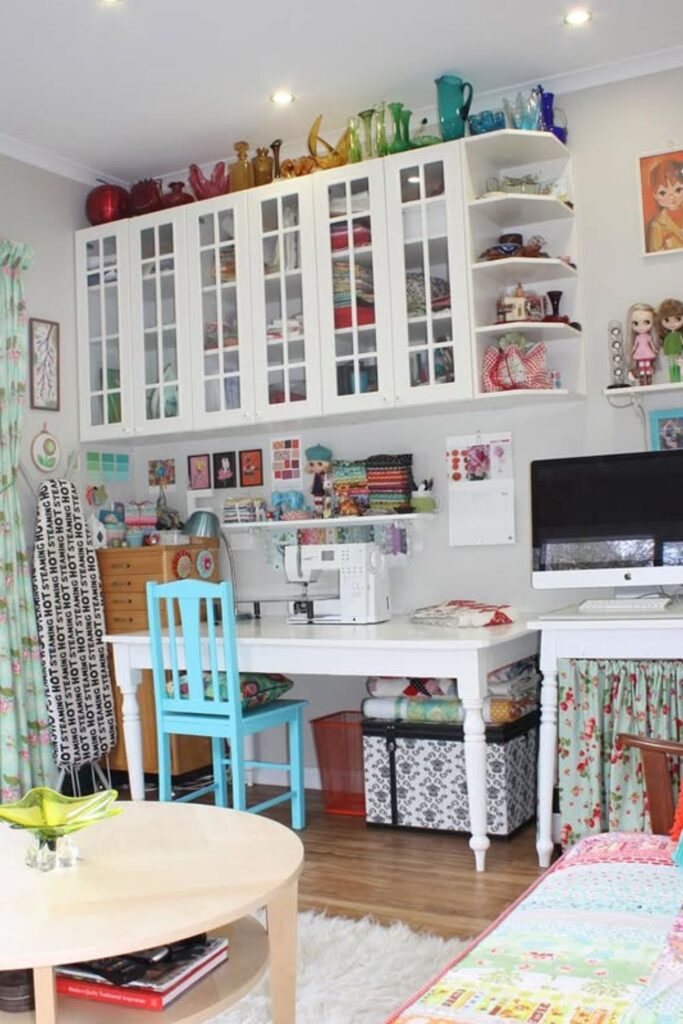
Storing fabric and supplies above the workspace keeps the room feeling open while still holding a lot.
Glass-front cabinets offer a quick view of contents, eliminating the need to rummage through piles.
Reserve the upper shelves for heavier or infrequently used goods, keeping everyday equipment within easy reach on the desk.
Thread Ledge
Color runs across the wall make thread easy to grab without opening drawers or digging through boxes.
A slender shelf keeps spools organized, easy to see and off the work surface, which speeds up setup at the machine.
This approach shines in tight spaces, where horizontal storage is preferable to cumbersome cabinets and thread is used regularly, rather than being stashed away for occasional usage.
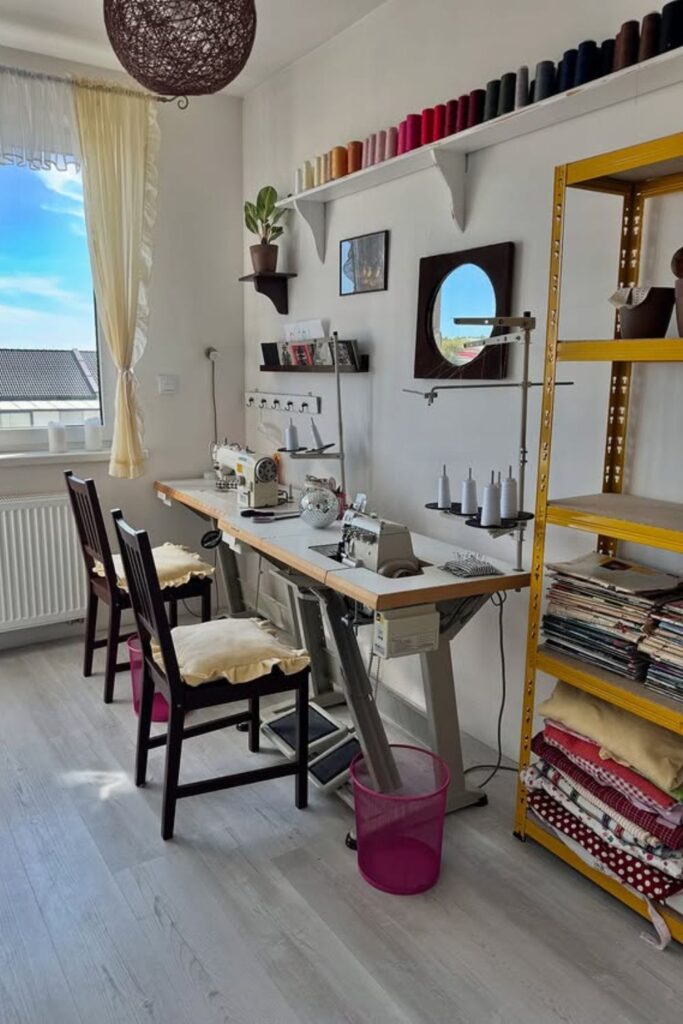
Compact Desk
Long, narrow tables keep sewing setups simple with out eating the room. Supplies stored underneath stay close but off the surface.
This approach streamlines both project initiation and post project tidying. Wall-mounted organizers keep tools and thread off the desk freeing up space for the actual sewing.
It’s an ideal solution for attic rooms those awkward spare nooks, or any area where breadth is at a premium yet everyday sewing is a must.
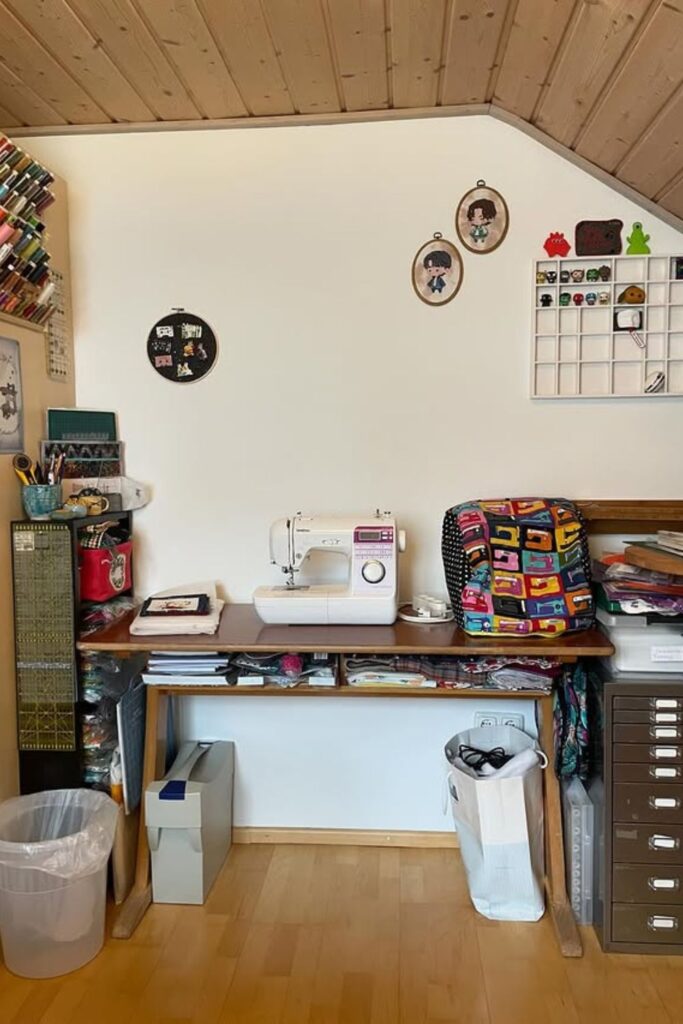
Color Blocks
Arranging fabric by color turns storage into a decision-making tool. Pulling the right shade becomes instant, and leftover cuts stop getting lost in random piles.
Open shelving offers a clear view of your supplies, which can help curb excess purchases and streamline the planning process.
This approach is particularly well suited for quilters and garment makers who thrive on visual design and prefer their inspiration readily accessible.
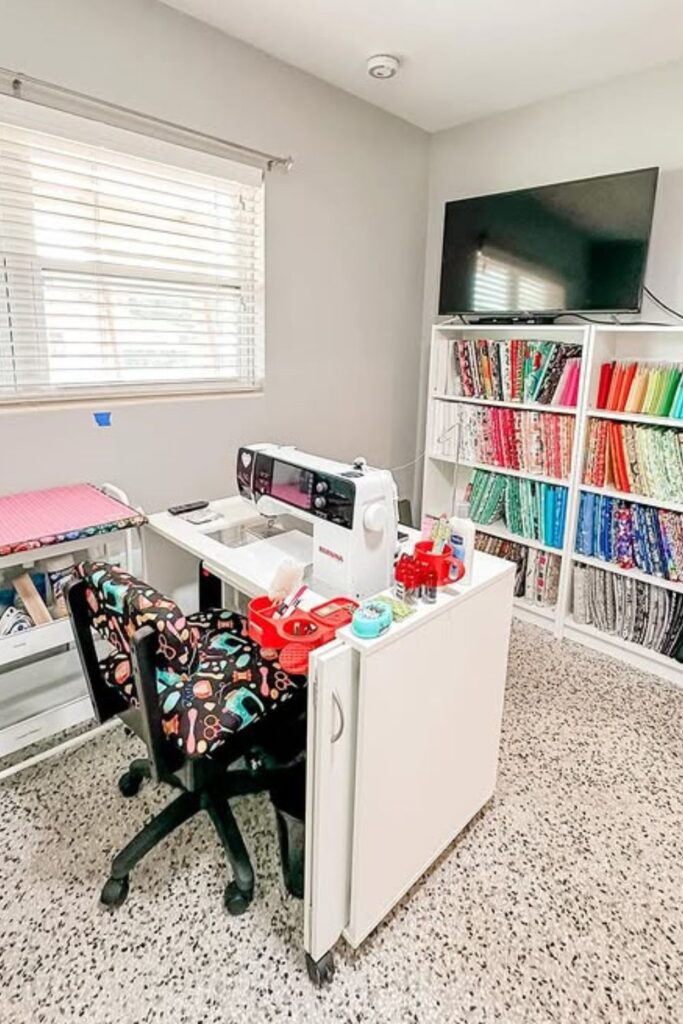
Pegboard Hub
Everything earns a visible place here, which stops tools from piling up on the table. Hanging scissors, thread, and small supplies keeps hands moving.
Instead of rummaging about, storage cubes manage larger objects without disrupting the workflow.
Where projects frequently shift and quick access to materials is prioritized over concealing supplies behind closed doors.
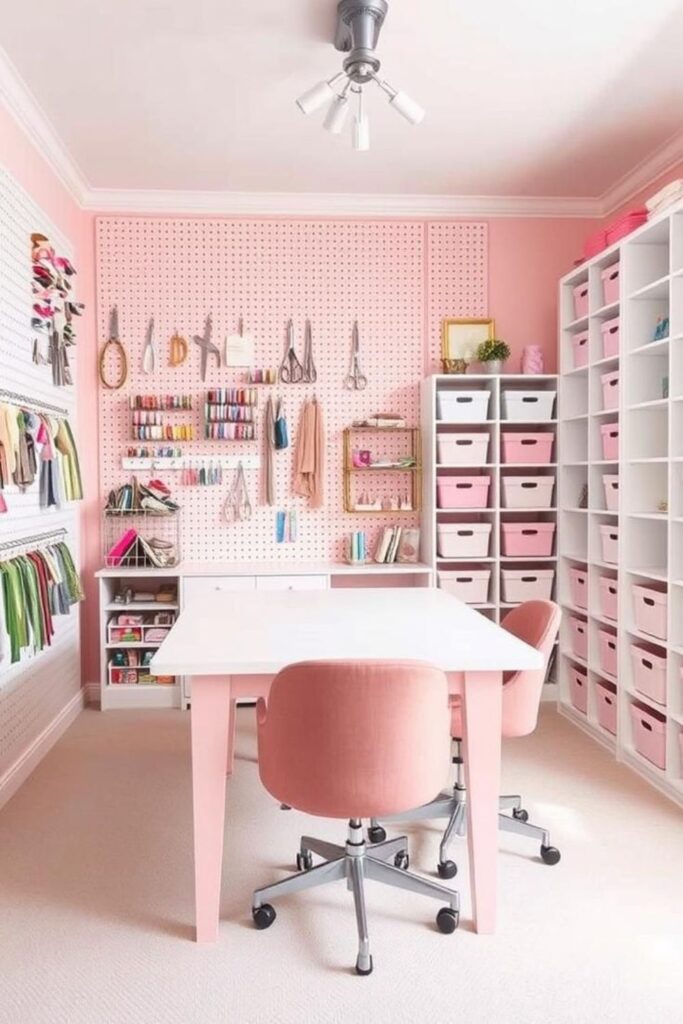
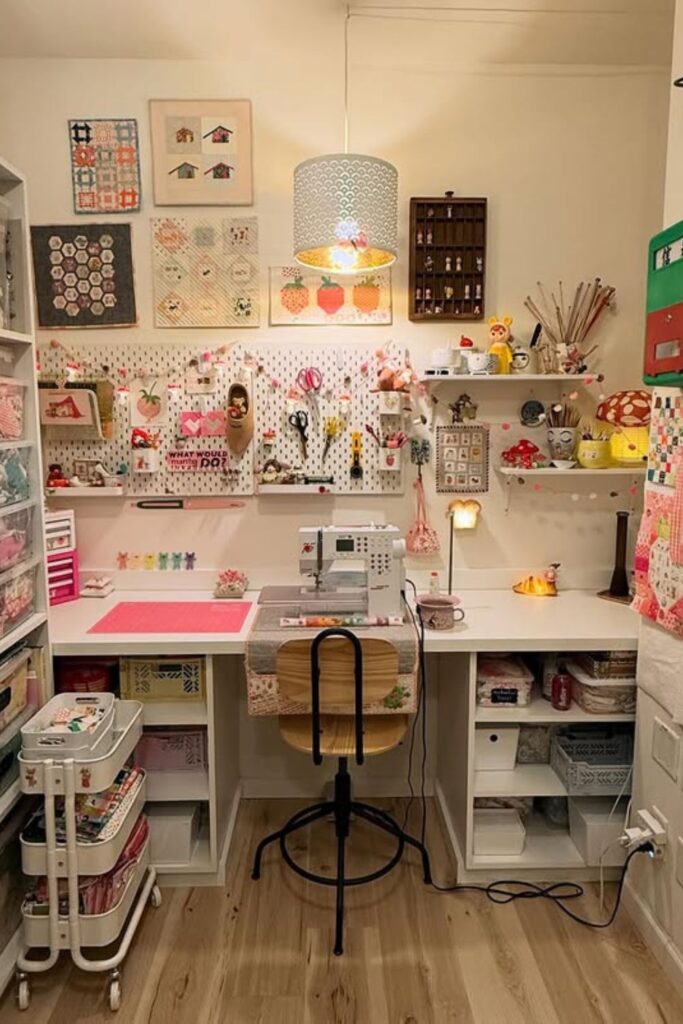
Cozy Corner
Tight rooms still work when storage wraps around the workspace. Pegboards and shallow shelves keep tools off the desk.
Rolling carts manage the supplies that shift from one project to another. Beneath the table, compartments are integrated to hold bins and machines.
Keeping them out of the way of feet. This arrangement is ideal for compact spaces, where every inch of wall must be utilized and clutter is unwelcome.
Storage Wall
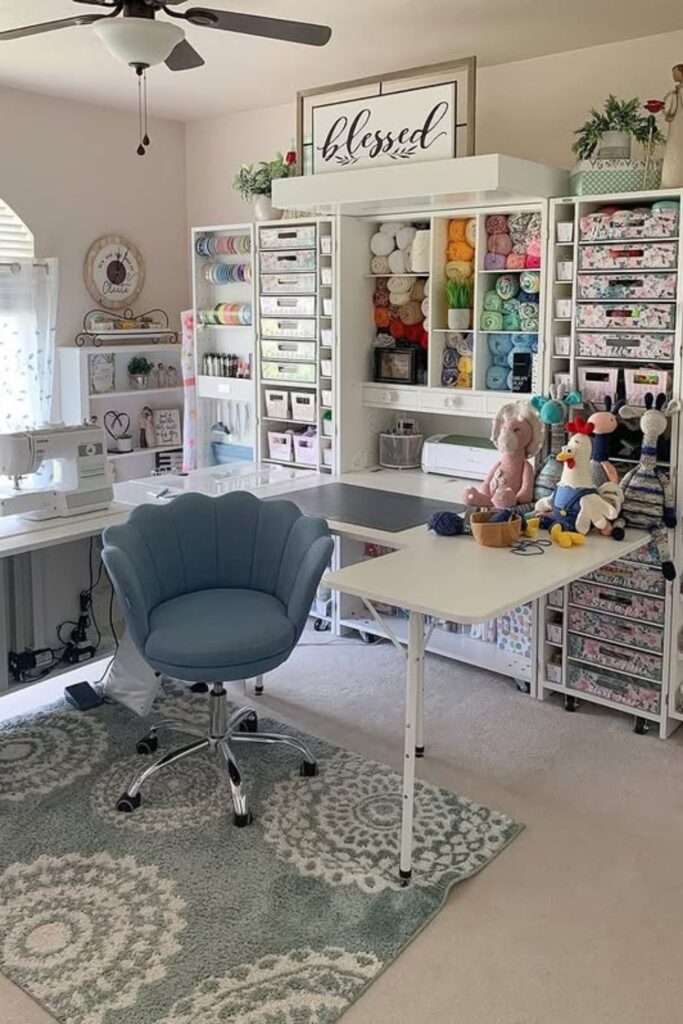
One wall doing all the heavy lifting keeps the rest of the room calm. Tall cabinets and drawer towers sort yarn, fabric and small supplies into clear categories.
A table, positioned just so, creates a pathway to storage, keeping workflow uninterrupted.
This setup shines in spaces designed for long-term projects and extensive collections, offering a permanent, easily accessible solution.
Pattern Filing
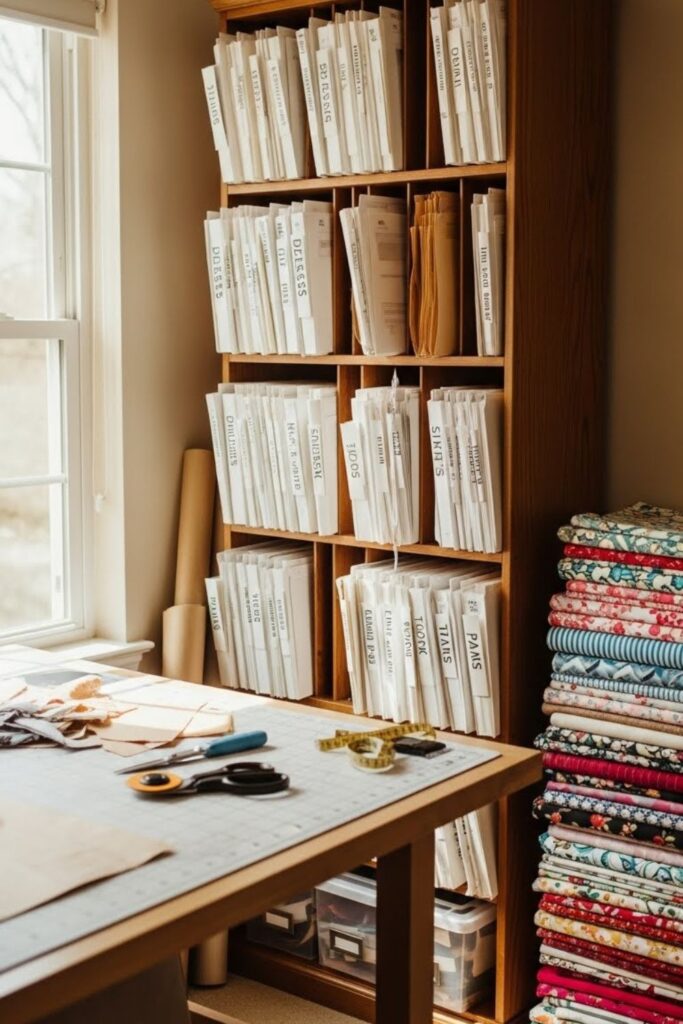
Paper patterns cause chaos when they live in piles. A vertical file system lets patterns stand upright like folders.
Flipping through alternatives is a matter of seconds now a far cry from the old days of paper everywhere. Label by garment type or size range, not by brand.
This system shines when it’s close to the cutting area where the real design decisions are made before the fabric even gets near the table.
WIP Parking
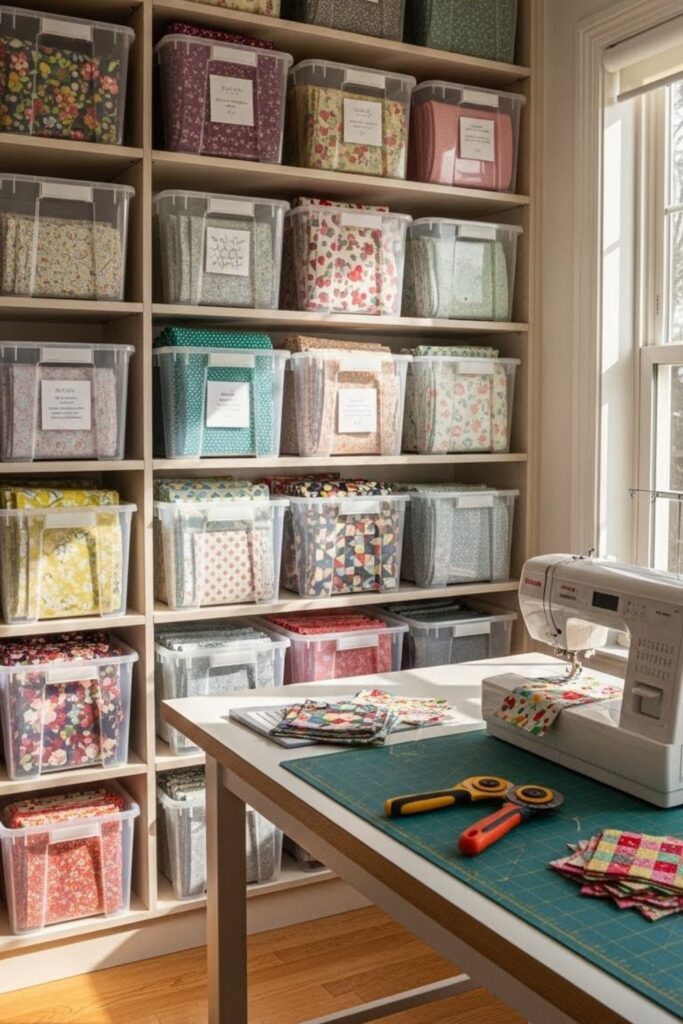
Half-finished projects do not belong on your main table. A dedicated parking spot one bin per project stops works-in-progress from taking over the room.
Keeping fabric, instructions, and notes all in one place makes it simple to pick up where you left off, rather than feeling daunted.
This approach is particularly helpful for sewists doing several projects simultaneously, since it prevents the loss of momentum that sometimes occurs when things get disorganized.
Scrap Control
Scraps grow faster than any fabric stash if they’re not managed early. Sorting scraps by size instead of fabric type keeps them usable.
Small items find their way into one bin larger ones into another, and anything too small just gets tossed.
This setup works well right beside the cutting area, where waste is generated and choices have to be made fast.
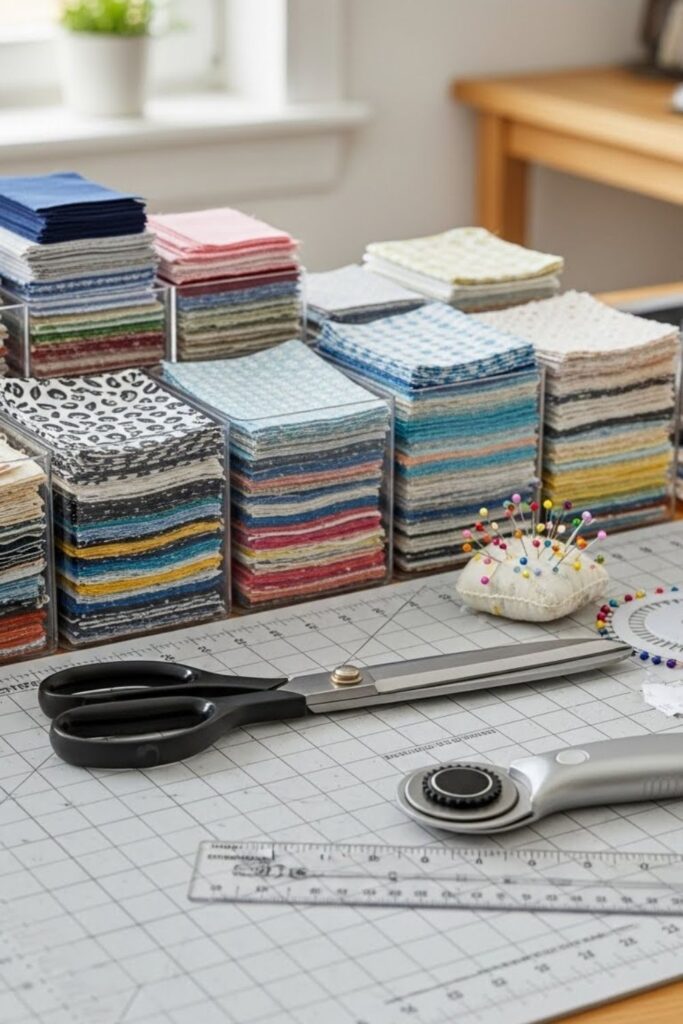
Press Station
Ironing becomes smoother when it has its own permanent home. A narrow press station with heat-safe storage underneath.
Keeps those ironing boards from becoming a tripping hazard. Stow your pressing equipment directly underneath, ensuring you are always ready to go.
This design shines in spaces where sewing and cutting are already happening, but ironing keeps throwing a wrench in the works.
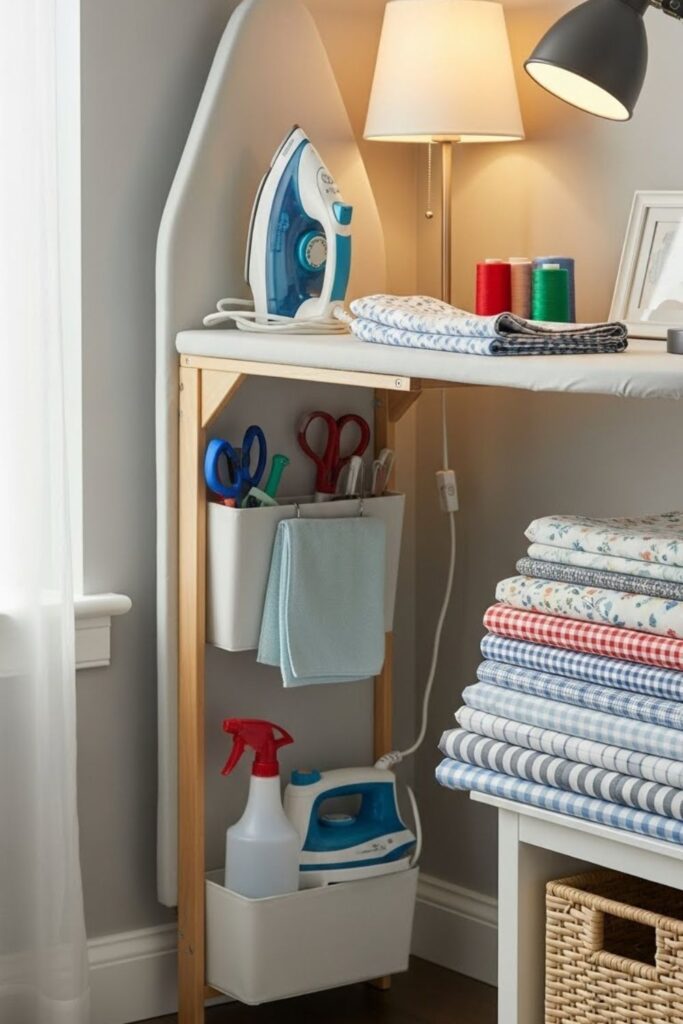
Measurement Zone
Rulers scattered across tables slow everything down. A single measurement zone wall-mounted rulers, hanging tapes.
Keeping sizing decisions quick and precise is a real benefit of marking tools. Positioning them close to the cutting area minimizes the need to retrace steps and helps prevent errors.
This arrangement is particular effective in spaces where accuracy is paramount, and tools are in constant use.
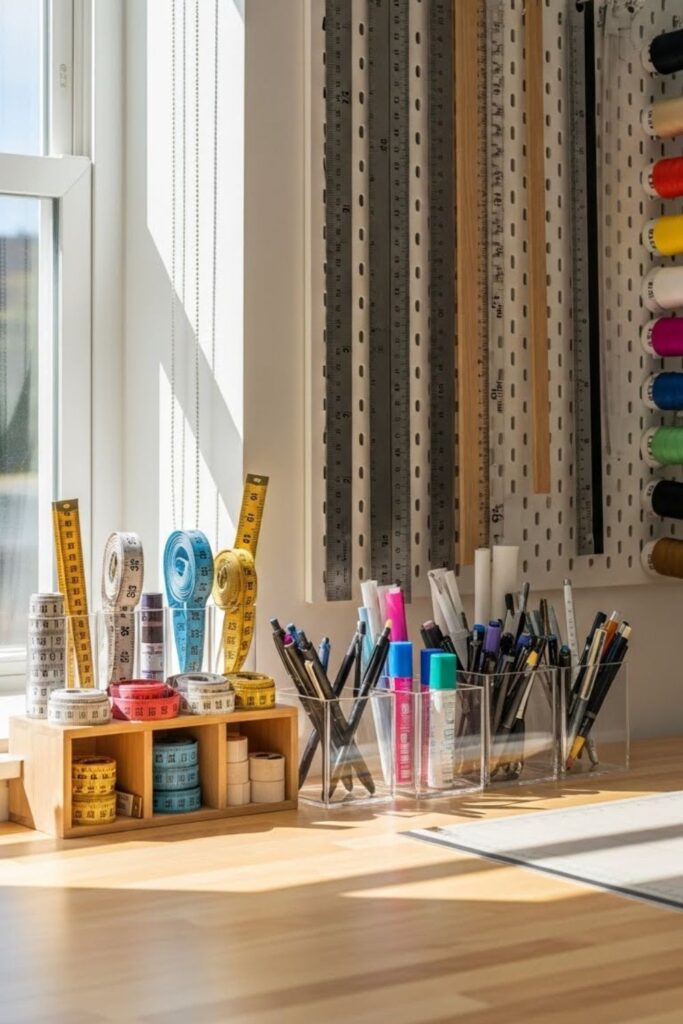
Reset Routine
Organization fails without a reset habit. A five minute end of session routine prevents mess from turning permanent.
Return tools, clean off surfaces and empty scrap bins before you leave. It’s a simple concept, really and it does not need any fancy equipment, just a commitment to doing it.
This approach is effective in any sewing environment, but it’s particularly beneficial in shared areas.
FAQs
How do I keep my sewing room organized once it’s finally clean?
Organization only sticks when tidying up is a breeze. Assign each tool a specific place and avoid temporary relocations.
Conclude every sewing session with a swift reset clear the workspace, put everything back and store unfinished projects where they belong.
Should I organize my sewing room for looks or for how I sew?
Always arrange your space with your sewing process in mind. A perfectly arranged room that hinders your work will quickly become disorganized.
Keep the tools you use most often close at hand, and keep everything else further away.
You may like to read!
- 27 Pantry Organization Ideas
- 24 Family Organization Wall Ideas
- 20 Pegboard Organization Ideas
- 20 Shelf Organization Ideas
- 21 Shower Organization Ideas

Fasial is the founder of the Fizzy Flare. He has been a passionate blogger since 2021. He ran three different websites in the past few years. Now he is focusing on Fizzy Flare to build an audience and help them organize their life.