22 School Organization Ideas for 2026
This post may contain affiliate links: full affiliate disclosure.
School gets messy faster than you would anticipate. One week your backpack is spotless, and the next week it’s full of crumpled papers, missing schoolwork.
And notes you don’t even remember getting. Then there’s a test, and all of a sudden you’re searching through folders to find that worksheet your teacher gave you a few days ago.
You’re not the only one who has to deal with this if it sounds similar. Most pupils don’t have trouble with school because the work is too hard; they have trouble because things get messy.
In this article, you will find 22 practical school organization ideas worth trying. They are simple changes that can make a big difference in your daily routine.
Let’s jump in!
Contents
- 1 What Simple Organization Habits Help Students Stay on Track?
- 1.1 Monthly Bins
- 1.2 Shelf System
- 1.3 Theme Boxes
- 1.4 Wall Planner
- 1.5 Drawer Dividers
- 1.6 Color Drawers
- 1.7 Color Sorting
- 1.8 Number Cubbies
- 1.9 Headphone Pockets
- 1.10 Entry Cubbies
- 1.11 Supply Cart
- 1.12 Paper Stations
- 1.13 Memory Files
- 1.14 Paint Organizer
- 1.15 Book Bins
- 1.16 Station Cubes
- 1.17 Activity Kits
- 1.18 Weekly Files
- 1.19 Clear Containers
- 1.20 Supply Categories
- 1.21 Group Files
- 1.22 Supply Zones
- 1.23 Rolling Drawers
- 2 FAQs
What Simple Organization Habits Help Students Stay on Track?
Having a clean desk or buying fancy school materials won’t help you stay organized. Making a few easy behaviors that you do every day is what actually helps.
School becomes much easier to handle when you make tiny procedures for your homework, papers, and study time.
You can concentrate on your task more and spend less time looking for things. Write down your homework as soon as the teacher assigns it to you, store each subject in its own folder.
And check your planner at the end of the day. You won’t have to worry about missing assignments or notes at the last minute if you do these things every day.
Save this article for later! 👇👇
Monthly Bins
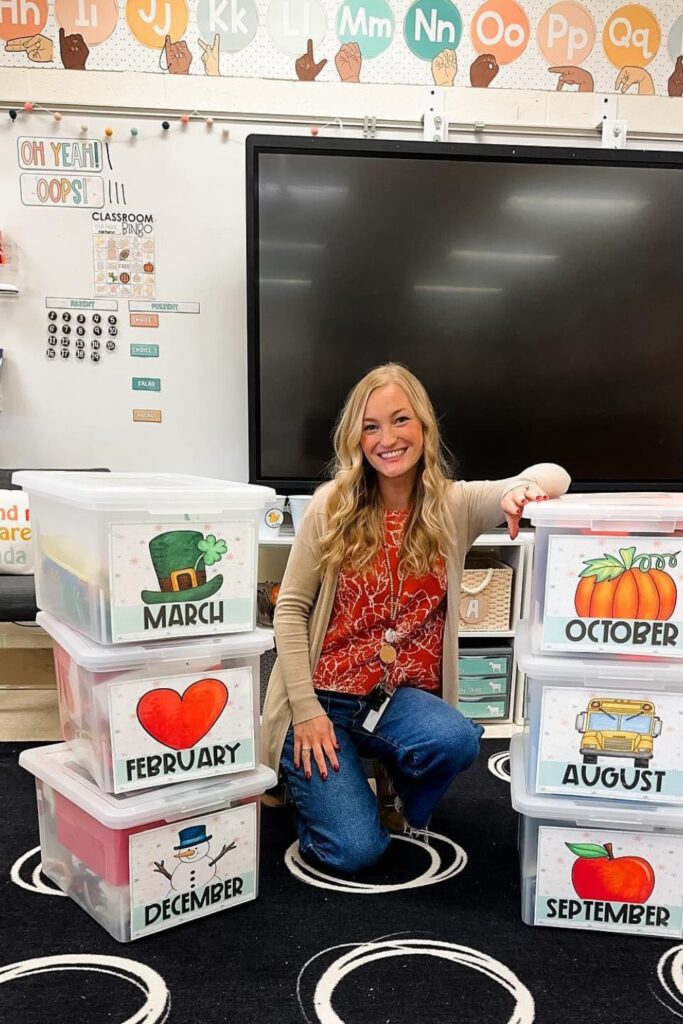
School papers pile up quickly when every worksheet goes into the same drawer. Sorting materials by month creates a simple timeline that keeps everything easy to find later.
For classrooms, homeschooling settings or even a study corner at home, big plastic containers with month labels work well.
As the year goes on, teachers can put finished assignments, activity sheets, or art projects in the right month.
Parents can use the same method to keep important school documents without letting them pile up all around the house.
Clear containers make the method even better because you can view what’s inside without having to open every box.
Shelf System
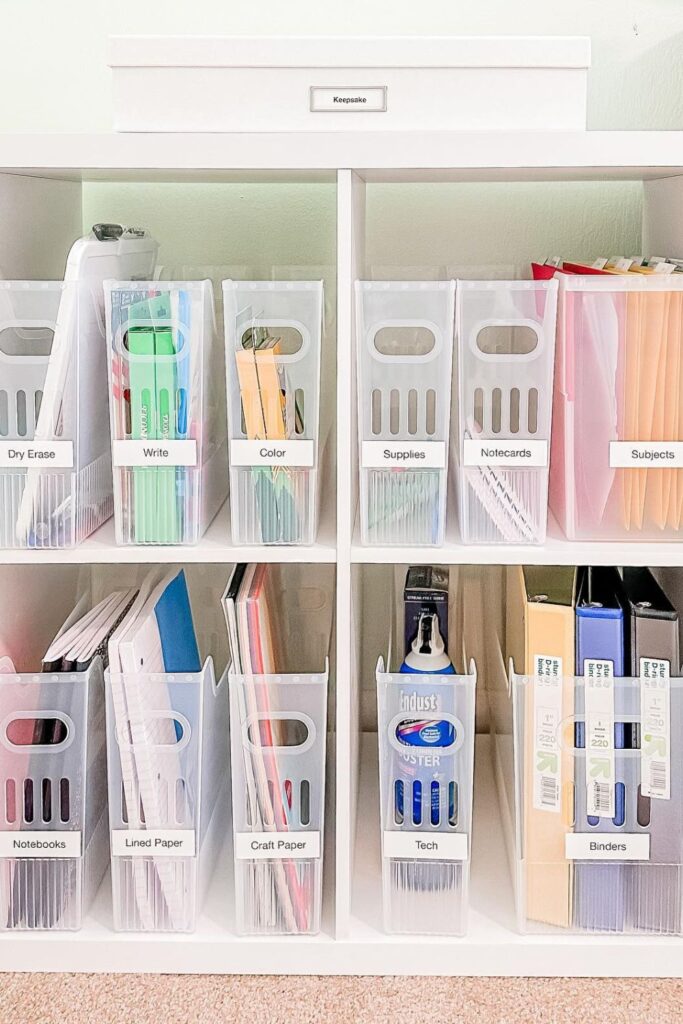
Clutter disappears quickly once every supply has its own labeled spot. Clear bins inside a shelf unit make it easy to separate items like notebooks, markers, lined paper.
And folders for subjects. Labels make it easy to collect and return things, so supplies never go lost in the room.
This layout is best for homework rooms, homeschool zones, or communal study spaces because everything is simple to see and access.
You can make the same idea work by utilizing a cube shelf with plastic organizers that slide in and out. Put related products together and put the ones you use the most at eye level.
This kind of organized shelving cuts down on desk clutter and makes studying easier because it only takes a few seconds to get what you need.
Theme Boxes
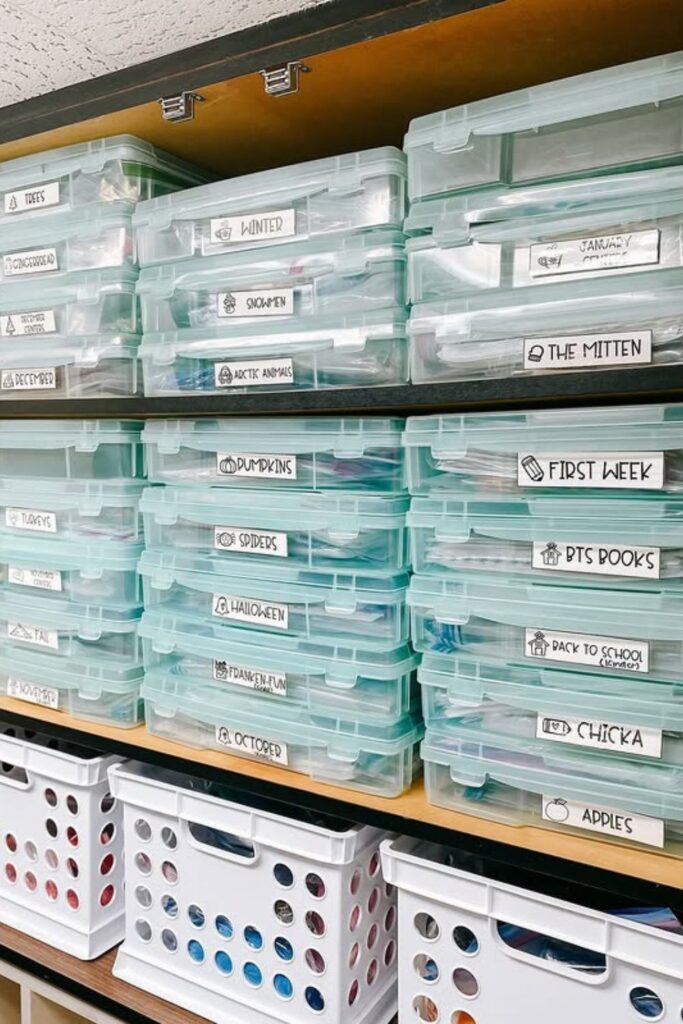
Seasonal lessons and classroom activities become much easier to manage once materials are grouped by theme.
You may put worksheets, craft items, and activity cards all in one place in strong clear boxes with labels like “winter,” “pumpkins,” “spiders,” or “back to school.”
When the relevant resources are already arranged instead of spread out across several drawers, planning time goes faster.
This technique is best for classroom teachers because many actions happen again and again. You may put up plastic storage boxes with simple printed labels on any shelf.
Instead of going through heaps of old materials, organized theme boxes make lesson prep a quick and easy task.
Wall Planner
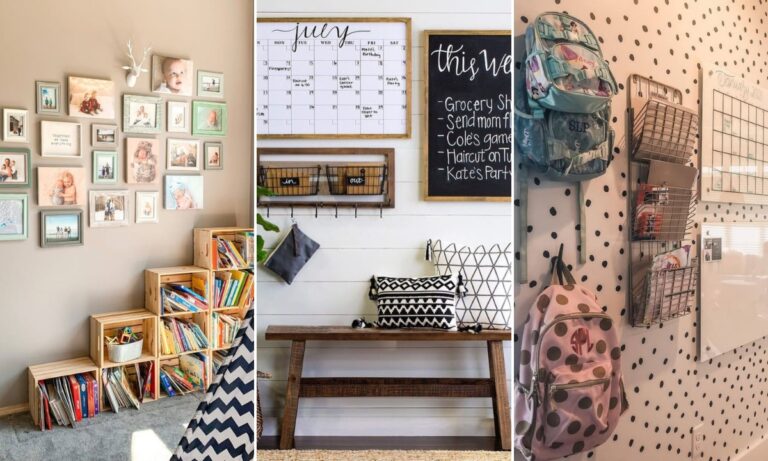
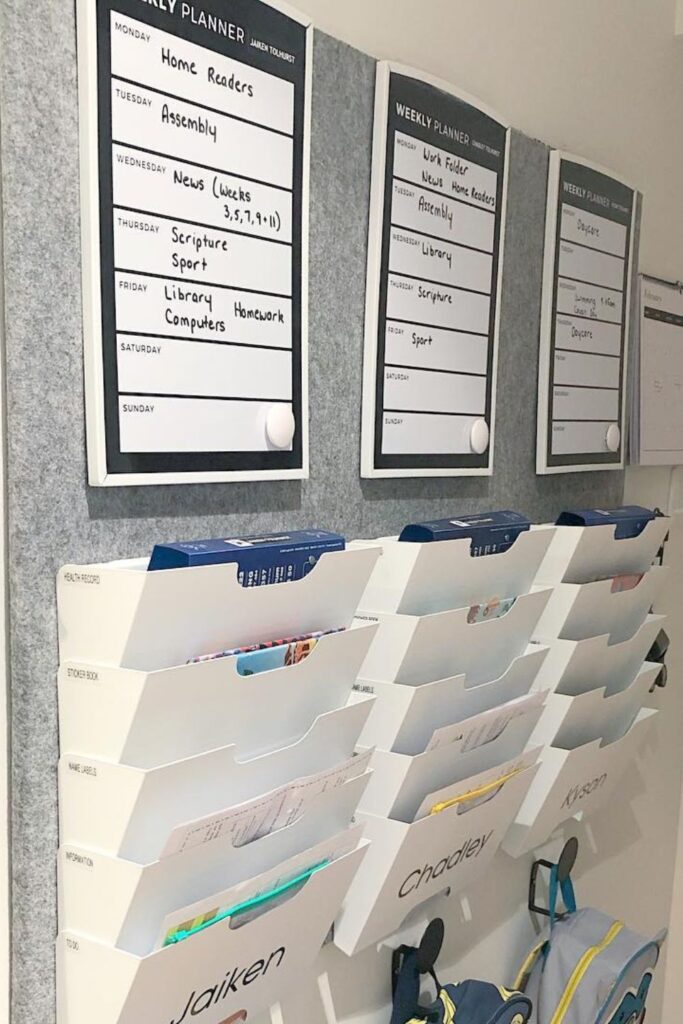
Busy school weeks become easier to manage when the schedule stays visible all the time. A weekly planner board on the wall.
It keeps school events, schoolwork, reading time, and daily activities all in one easy-to-find area. Students don’t have to inquire.
What’s going to happen next; they can just look at the board to see the plan for the whole week. Put wall file holders under the planner to help you organize things.
Like assignment folders, permission slips, and reading logs. This layout is best for family study nooks and homeschool settings because everyone can keep track of their work.
You may simply reproduce the same idea using printable weekly calendars or dry-erase boards. A visible timetable helps pupils get ready for the week ahead of time and establishes routine.
Drawer Dividers
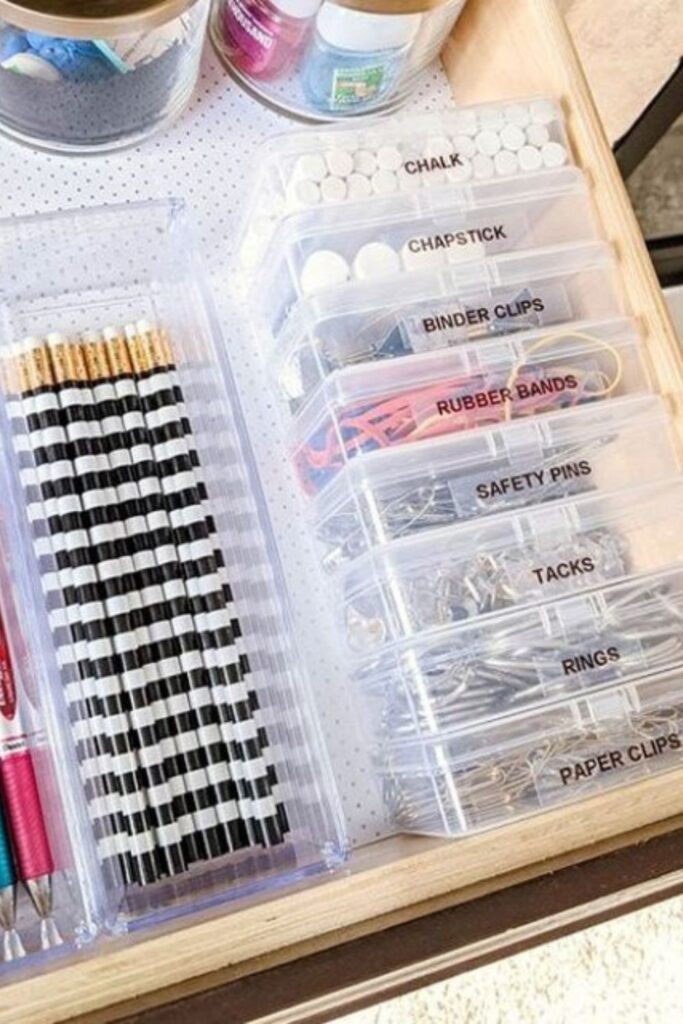
Small school supplies disappear quickly when everything sits in one messy drawer. Clear divider trays solve that problem by giving each item its own tiny section.
Pens keep together, pencils stay in a straight line, and it’s easy to get smaller things like paper clips, rubber bands, or binder clips without having to search through a lot of stuff.
This kind of design works best in desk drawers, homework stations, or supply cabinets in the classroom.
Use plastic organizer trays or stackable craft bins that fit inside the drawer to make the system again. Labeling each part offers another level of order.
Drawers like this assist keep study environments immaculate without having to clean them all the time. They also make it easy to retrieve regular school supplies.
Color Drawers
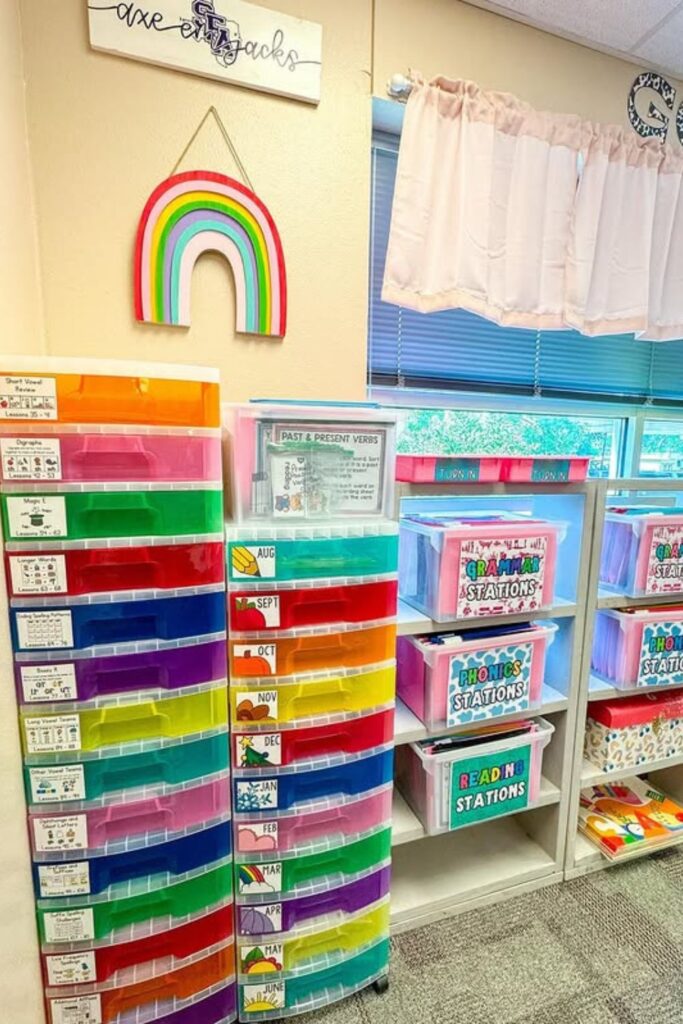
Paper chaos fades quickly once every lesson or activity has its own drawer. Colorful stacking drawers make it easy to sort worksheets, reading packets.
And practice pages that don’t mix anything up. Teachers sometimes put materials for the following lesson in each drawer so they are always ready.
Bright colors also assist youngsters figure out where items go without having to ask. Set up the same way again.
Using plastic towers with multiple drawers and simple labels for months or topics. Put the organizer close to the teaching desk or learning stations.
So that documents may be grabbed quickly during sessions. These kinds of organized cabinets help keep classroom supplies moving and stop piles of worksheets from taking over the room.
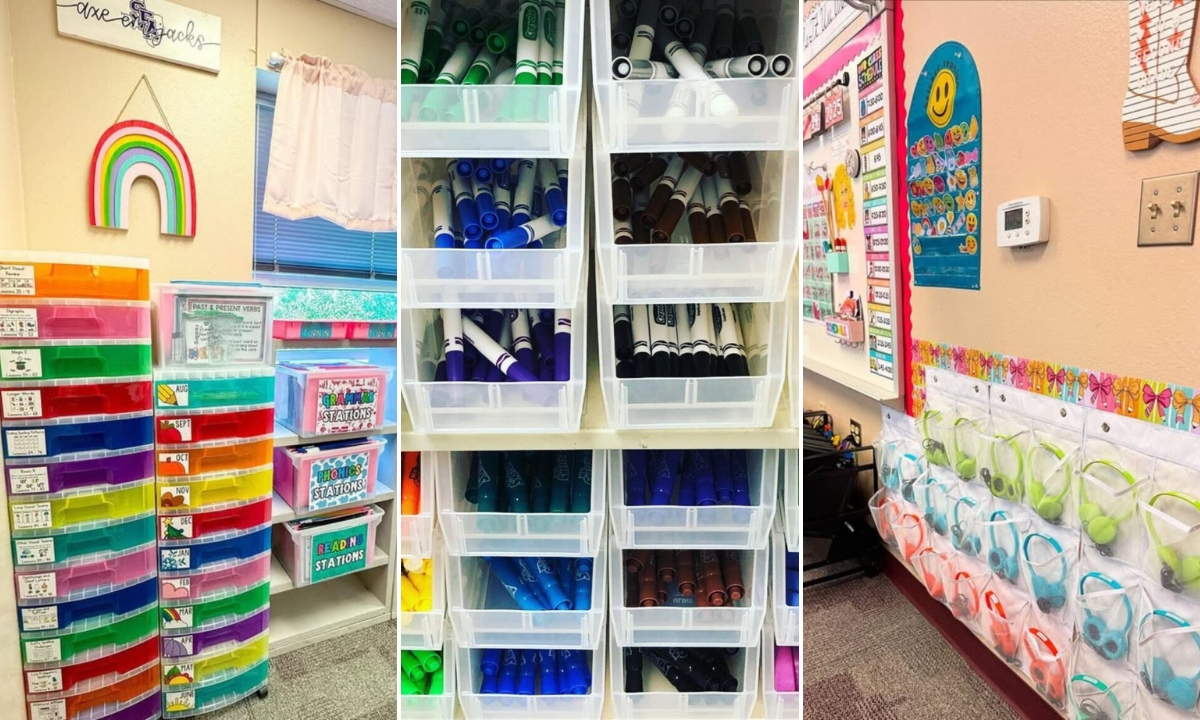
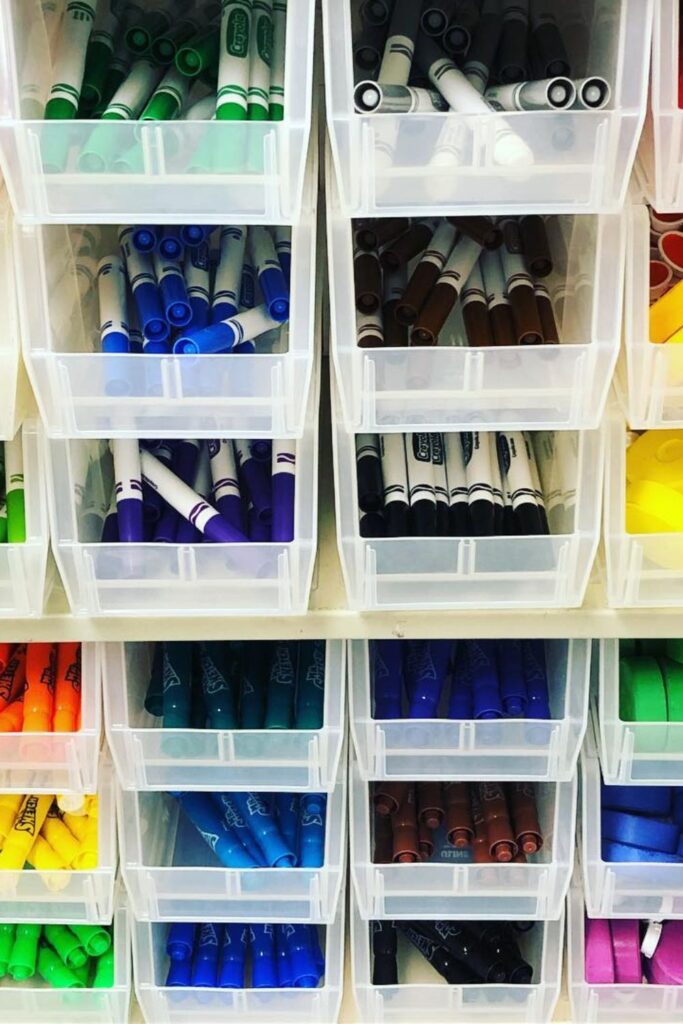
Color Sorting
Searching for the right marker wastes time when every color sits in the same container. Separating supplies by color turns a messy art drawer into a quick grab system.
Small pull-out bins are great for crayons, markers, tape, and other school items that come in a range of colors.
Art nooks and supply stations in the classroom are the most helpful since pupils can easily find the right color without having to sift through piles.
You may easily set up the same thing at home or at school with stackable plastic drawers. Put colors that are related together and keep the labels basic.
So that everyone can comprehend the scheme. Color bins that are organized keep art supplies ready for projects and stop the mess that builds up during art time.
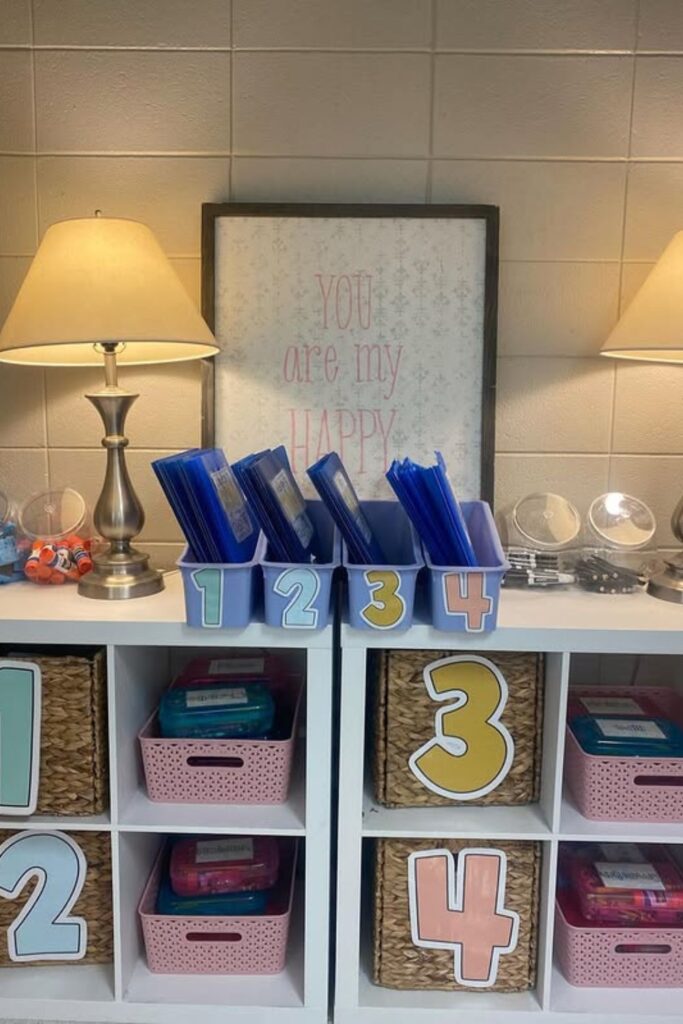
Number Cubbies
Shared classrooms run smoother when every student has a personal drop zone. Numbered cubbies give each child a clear place for folders, notebooks, and daily work.
Without putting different papers together. Teachers sometimes give each student a number, which makes it much easier to organize materials during hectic lessons.
The blue folders in the top bins make it easy to turn in or take home items, and the baskets below keep personal items or activity boxes.
Use cube shelves and basic number labels to make the notion again so that students can simply find their spot.
Once every kid understands where their things go, morning routines, collecting homework, and packing up at the end of the day are all much easier.
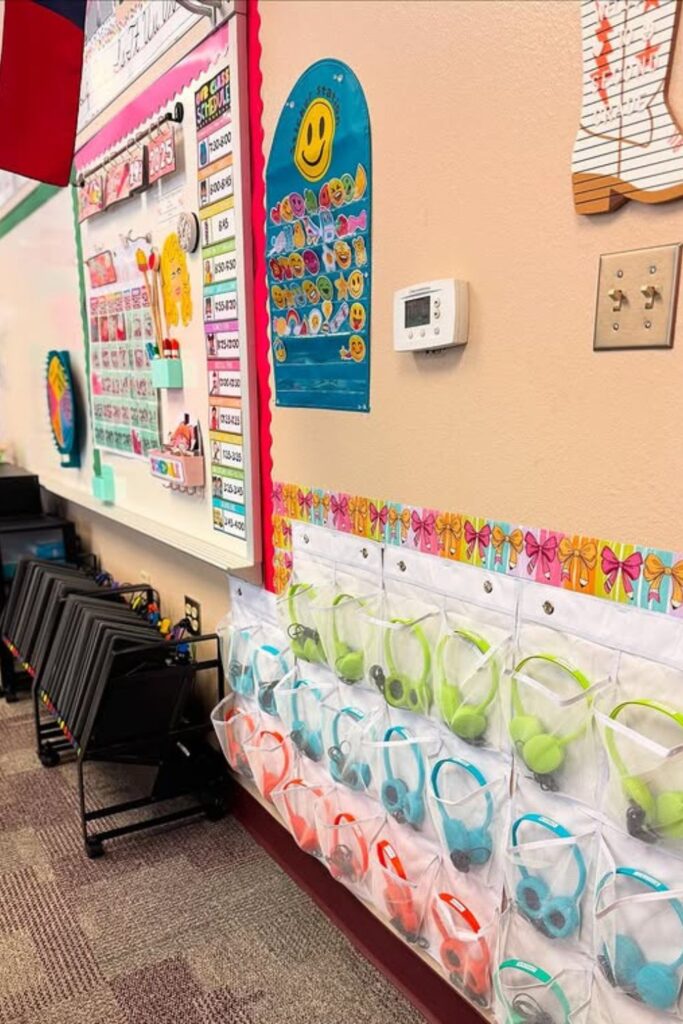
Headphone Pockets
Classroom headphones turn into a tangled mess when they all sit in one basket. Individual wall pockets solve the problem by giving every headset its own slot.
Students can simply grab one for reading, computer work, or listening activities without having to sift through a bunch of cords.
Clear hanging organizers are great since teachers can tell right away if slots are unfilled or missing.
A basic shoe organizer that hangs over a door or a wall pocket chart can achieve the same thing without taking up floor space.
Put the organizer close to the technology station so that students can put their headphones back right away.
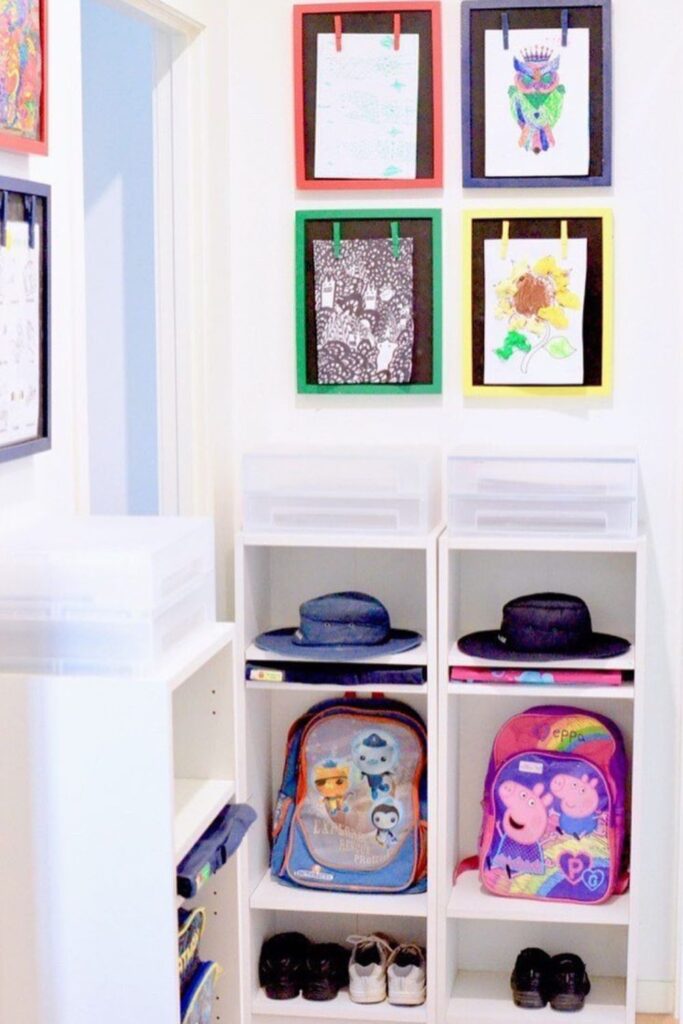
Entry Cubbies
School items stay organized when every child has a small personal station. Compact cubby shelves create a simple routine.
Where shoes, hats, and backpacks always go back to the same place after school. The top shelf is for lunch boxes or small accessories.
And the main area is for bags. Putting shoes on the bottom shelf keeps things from getting messy in the room.
This layout works best in entryways and hallway corners because that’s where students naturally drop their stuff as they walk in.
Kids learn how to take care of their own things and get their school supplies ready for the next day at personal stations like these.
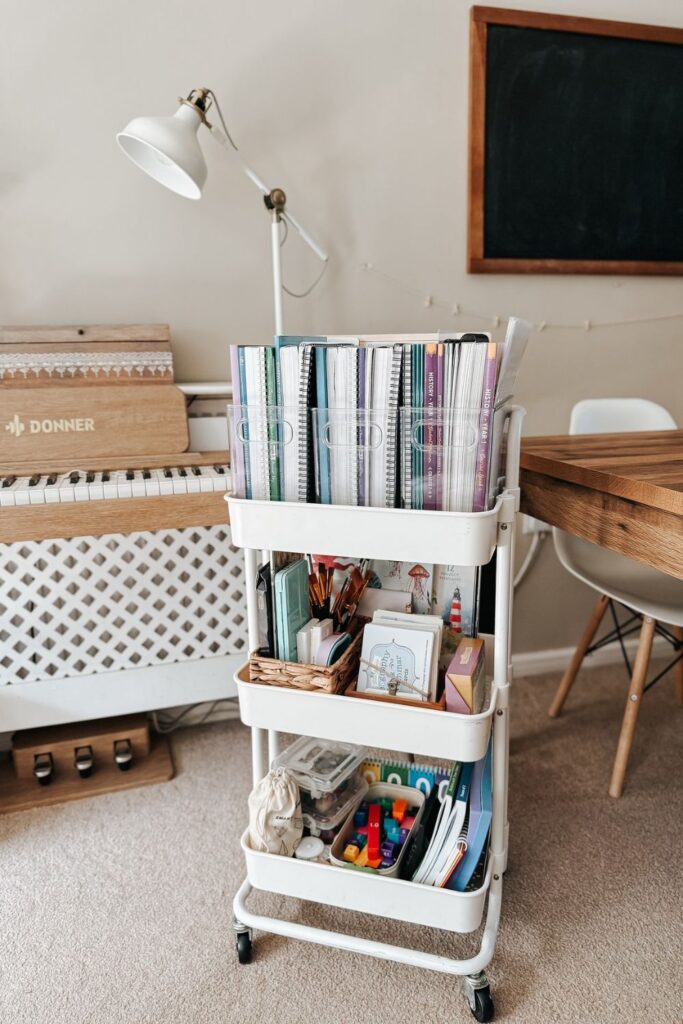
Supply Cart
Busy study spaces benefit from storage that moves wherever work happens. A rolling cart keeps notebooks, planners, markers, and small supplies grouped together.
Without taking over the desk. Tall compartments on the top level keep binders and workbooks standing erect so that the pages don’t bend inside a backpack.
Underneath, smaller baskets keep things like sticky notes, pencils, and art supplies in order. This method is great for homework corners, homeschool setups, or shared family.
Study rooms because it’s easy to move things from one room to another. Use a sleek mobile utility cart and some transparent containers to separate the categories to recreate the idea.
This kind of mobile storage maintains your study materials in order and lets you relocate your desk whenever you need to.
Paper Stations
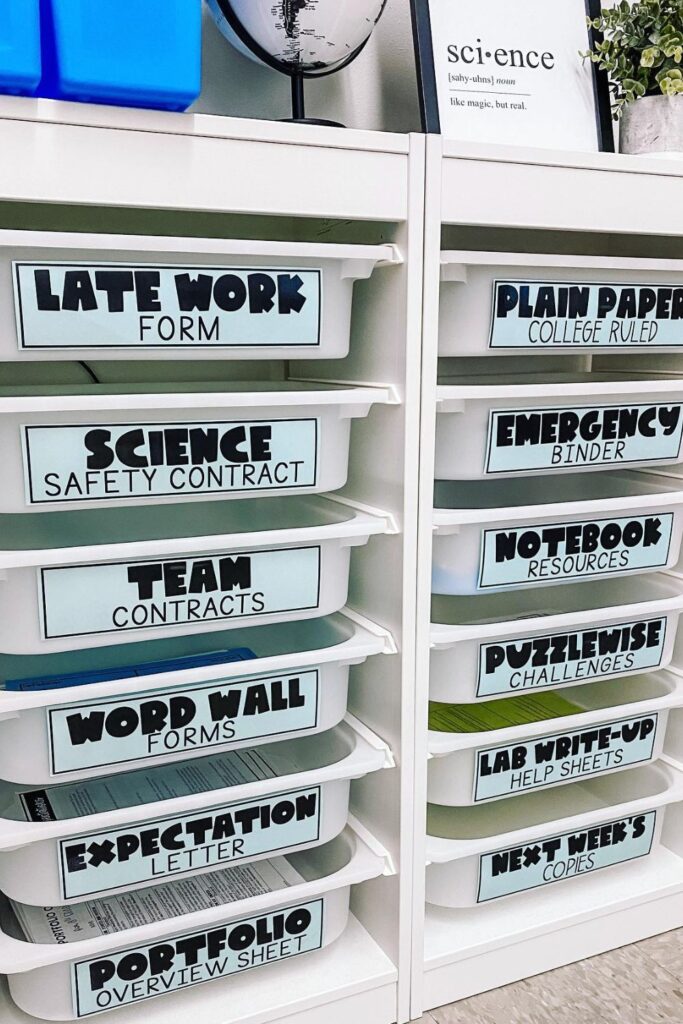
Stacks of worksheets become much easier to manage once every type of paper has its own tray.
With labeled pull-out containers, students may easily retrieve forms, additional paper, help handouts, or class contracts without having to ask the teacher.
This system is best for classroom supply areas since it teaches kids how to get what they need and return things on their own.
Use stackable paper trays or shallow storage bins inside a shelf unit to make the idea work again. It’s easy to understand the system at a glance thanks to clear labels.
Organized paper stations make it easier for the teacher to get things done in the classroom and save time during hectic lessons.
Memory Files
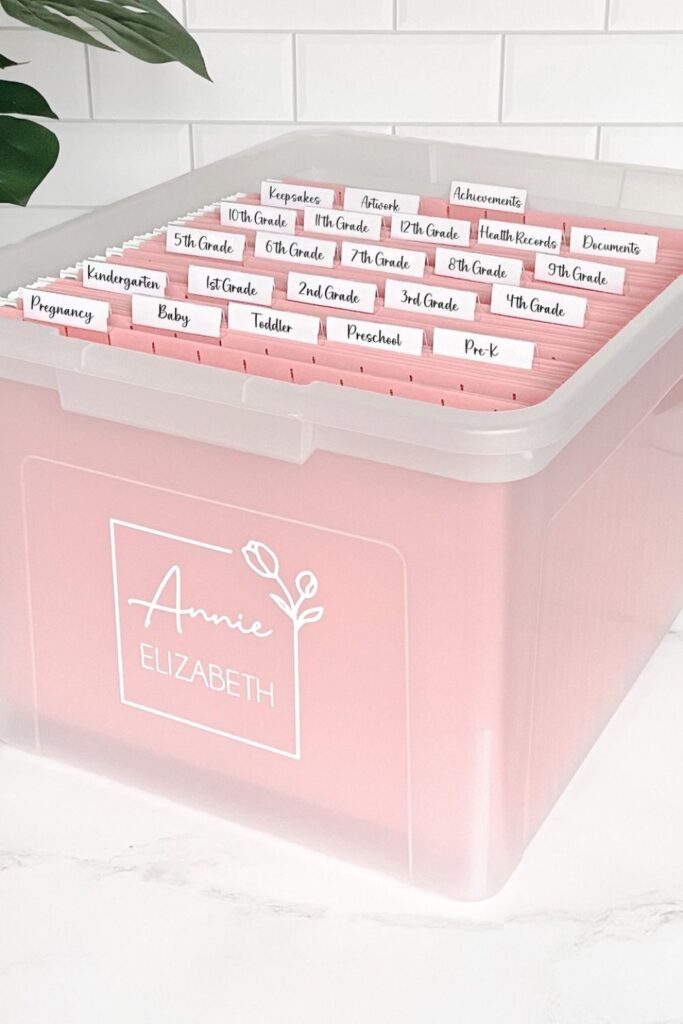
School memories disappear easily when artwork, certificates, and report cards get mixed with everyday papers.
A big file box with labeled compartments makes a timeline that keeps track of crucial events from every stage of childhood.
There are sections for preschool, kindergarten, and each grade, so you can keep drawings, accomplishments, and special projects without them taking over the house.
As the school year goes on, parents can just put additional keepsakes in the right folder. It only takes a few minutes to set up the same setup with plastic file boxes and hanging folders.
Put a label on each divider that says what grade level it is for, and add extra sections for health records or rewards.
Paint Organizer
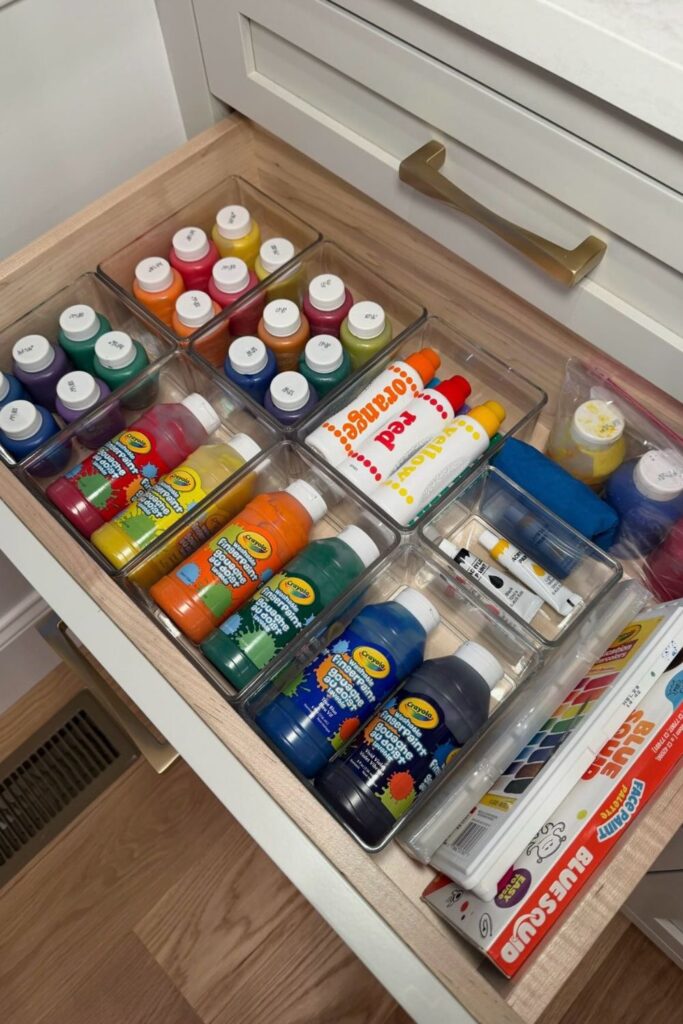
Art supplies stay usable longer when every bottle and tool has its own place. Clear drawer trays create neat sections for paint bottles, glue, brushes, and small craft items.
That nothing spills or rolls around. Bright colors make it easy to recognize when supplies are running low since they line up neatly.
This kind of design works best for craft drawers, art stations in the classroom, or cabinets full of homeschool supplies.
Put comparable things together and keep things you use a lot toward the front so you can get to them quickly.
Organized paint storage keeps creative tasks going smoothly and stops the messy drawer disarray that usually happens during art time.
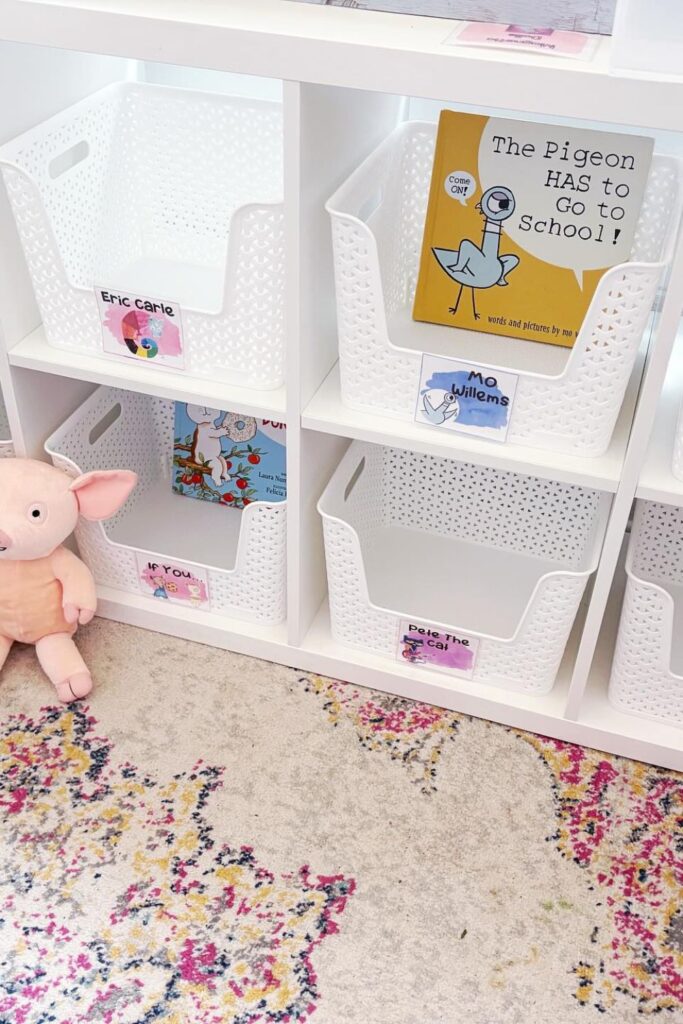
Book Bins
Reading corners stay tidy when books are sorted by author or series instead of stacked randomly on a shelf.
Open bins inside cube shelves make it easy for children to draw out one category at a time without making a mess.
Simple markings on the front make it easy for readers to find their favorite author or story collection.
This design is best for classroom libraries and kids’ reading areas since it makes sure that books go back to the right spot after they are used.
You can use lightweight plastic baskets to make the same idea work on almost any shelf unit. Younger readers can also find titles faster when the covers are facing forward.
Station Cubes
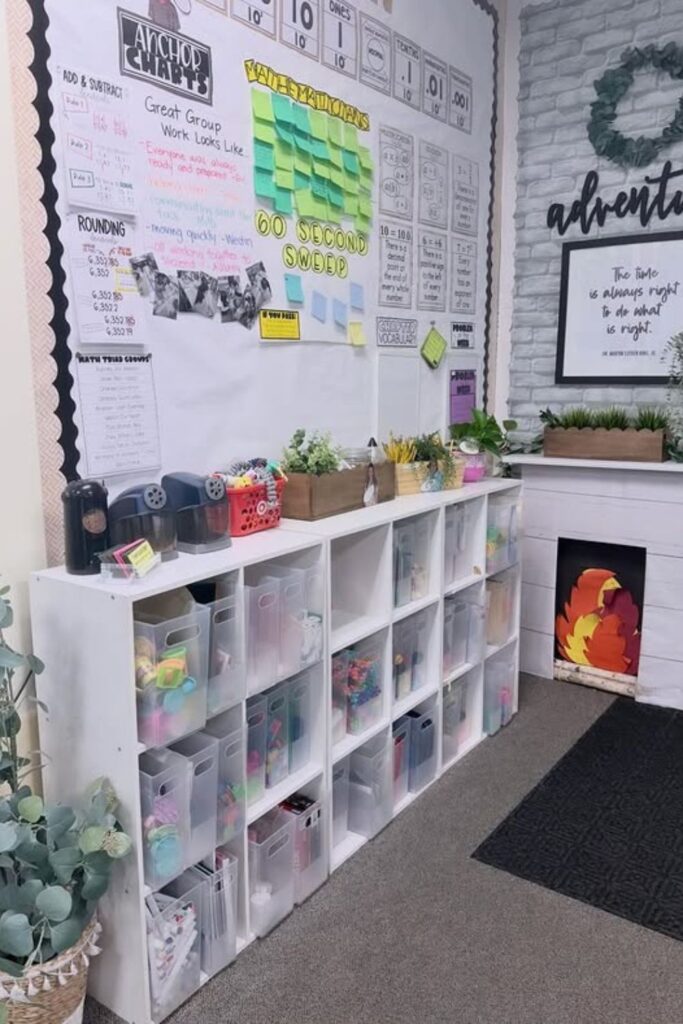
Learning centers stay organized when each activity has its own container instead of sharing one crowded shelf.
Cube shelves with clear compartments within keep math games, reading tasks, writing tools, and classroom manipulatives separate.
Teachers commonly utilize this approach for rotation centers since it keeps everything together and ready for the following group of students.
You can use cube organizers and inexpensive plastic bins to set up the same way in any classroom or home school.
Make labels short so that pupils can tell where things go. Organized station cubes speed up transitions and keep materials from getting mixed up between tasks.
Activity Kits
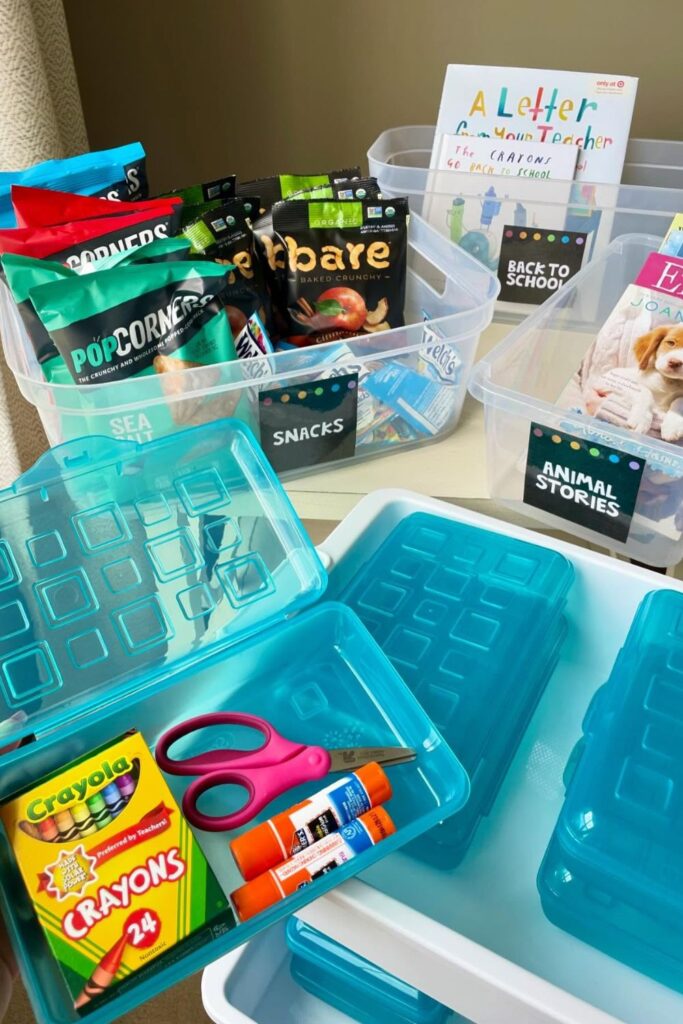
Busy classrooms run smoother when small supplies are already grouped into ready-to-use kits.
Small plastic boxes are great for keeping crayons, scissors, glue sticks, and other basic items that children use in class.
Each kit is a quick grab solution, so teachers don’t have to hand out things one at a time. Students can start working right away by opening the box.
This layout works best for homeschool desks and classroom group tables since it keeps things orderly between activities.
You may make the same idea with little storage boxes and only put the things you need inside.
Weekly Files
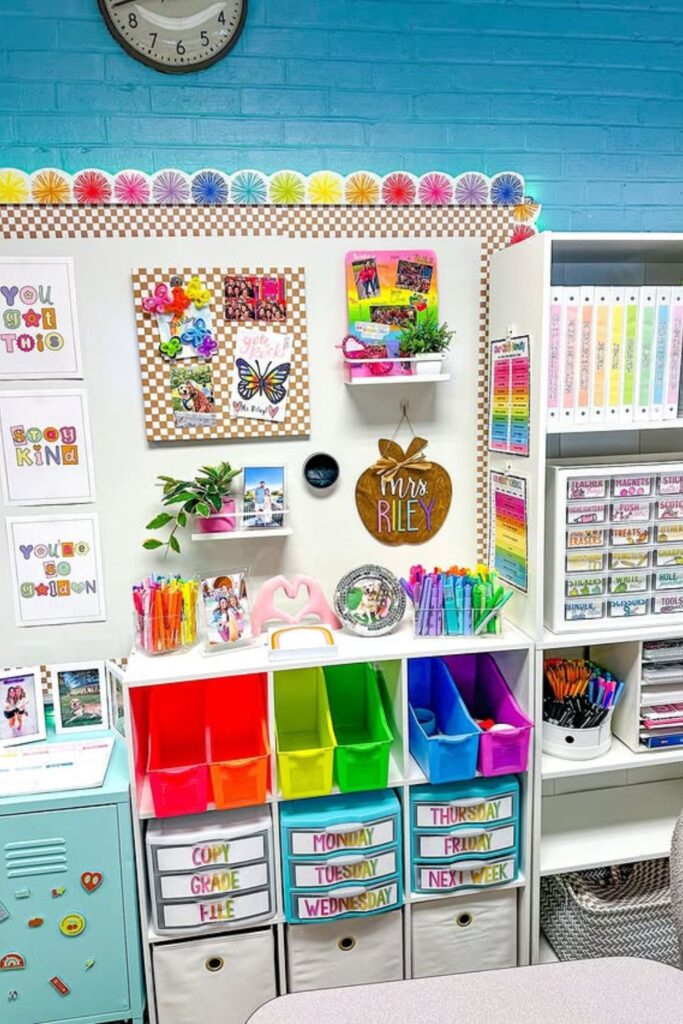
Daily classroom tasks stay organized when paperwork follows a simple weekly system. Bright folders labeled for each weekday.
Make a clear schedule where all of the assignments, worksheets, and handouts are ready ahead of time.
During planning time, teachers can put copies in the Monday, Tuesday, or Friday sections. This makes hectic school days go much more smoothly.
Students also gain because they don’t have to look for things at the last minute; they show up when they’re needed.
Above the drawers, there are open cubbies that accommodate extra supplies or color-coded bins for different subjects.
Clear Containers
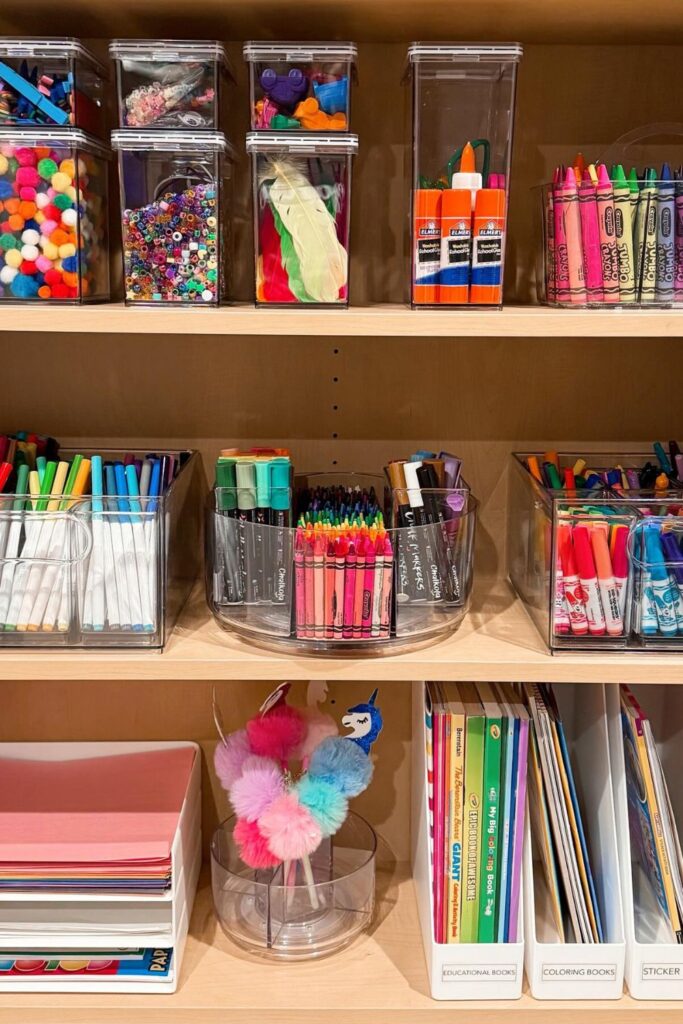
Craft supplies stay easy to manage when everything sits inside clear storage containers instead of random drawers.
You can see markers, glue sticks, beads, and pom-poms right away with clear boxes without having to open every container. ,
This approach of organizing shelves separates little things into clear groups, which makes it much easier to clean up after work.
Art stations, homework corners, and classroom supply closets are the most helpful since students can immediately find where things go.
You can set up the same way on practically any shelf using simple acrylic bins or plastic storage boxes.
Supply Categories
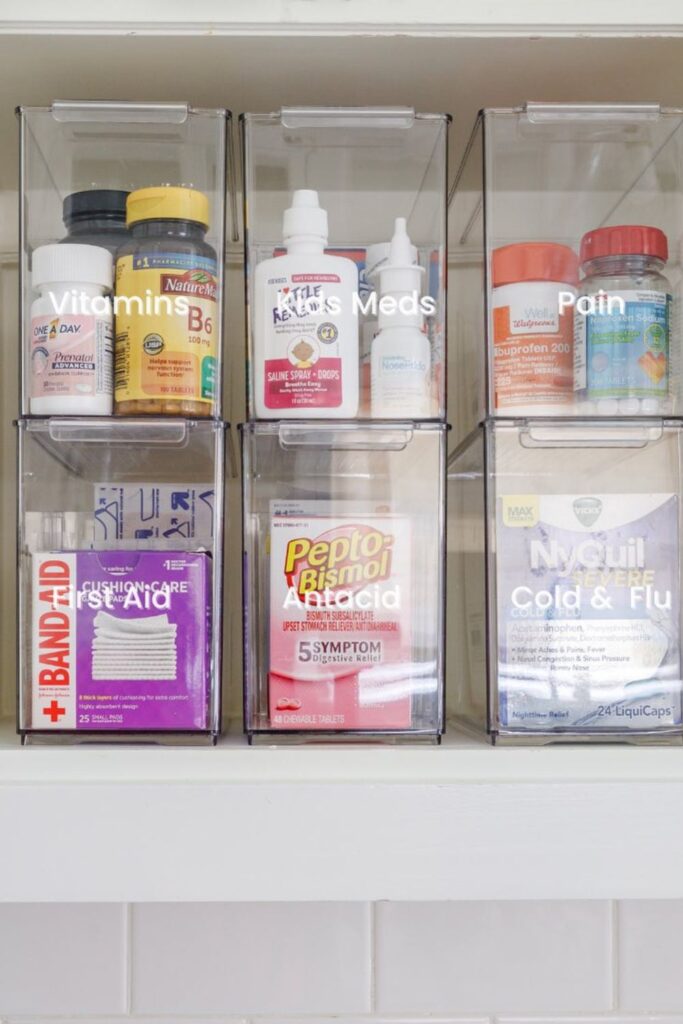
Small household supplies stay easy to manage when cabinets follow a clear category system.
Clear storage bins keep things like vitamins, medicine, bandages, and cold medicine separate so that nothing gets lost under other bottles.
The labels on the front make the shelf a rapid reference system that lets anyone find what they need in seconds.
This layout is best for those with busy schedules because it keeps health products organized instead of all over the place in drawers.
Clear acrylic containers can make practically every cabinet look the same. Put related goods together and put the ones you use most often in the front.
Group Files
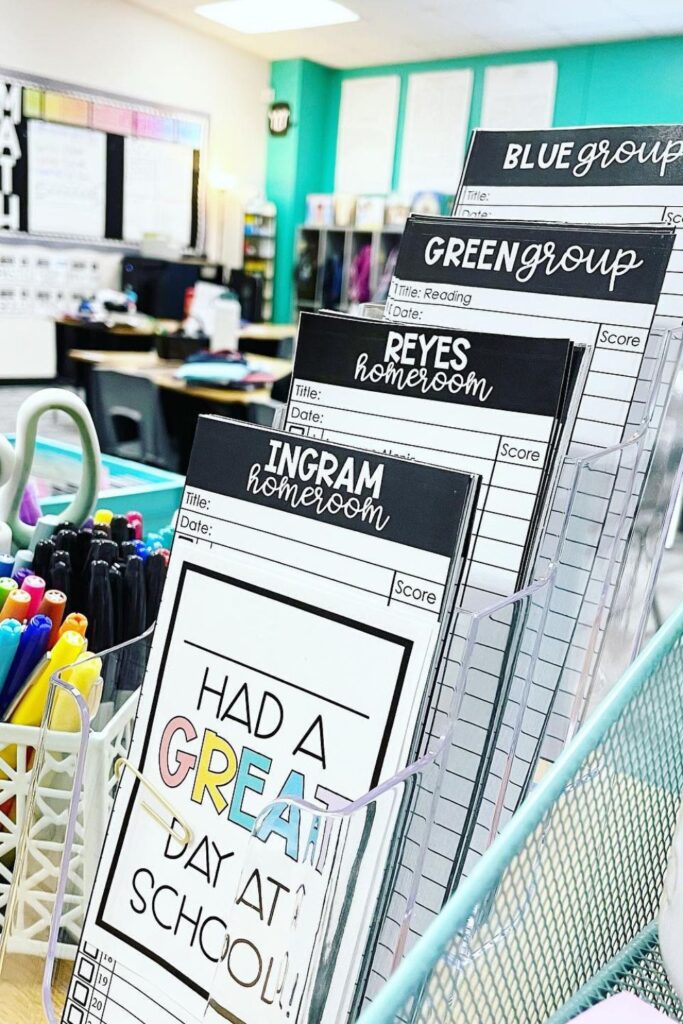
Classroom paperwork moves faster when every student group has its own file slot. Vertical organizers keep reading logs, behavior sheets.
Or progress forms that are split up by homeroom or learning group instead of being mixed together in one pile.
During small group work, teachers may rapidly get the right set of documents without having to rummage through mounds on their desks.
Clear standing file holders make the same system easy to set up again and keep papers upright so they don’t bend or get lost.
Organized group files make it easy to keep track of students’ progress throughout the day and manage the classroom.
Supply Zones
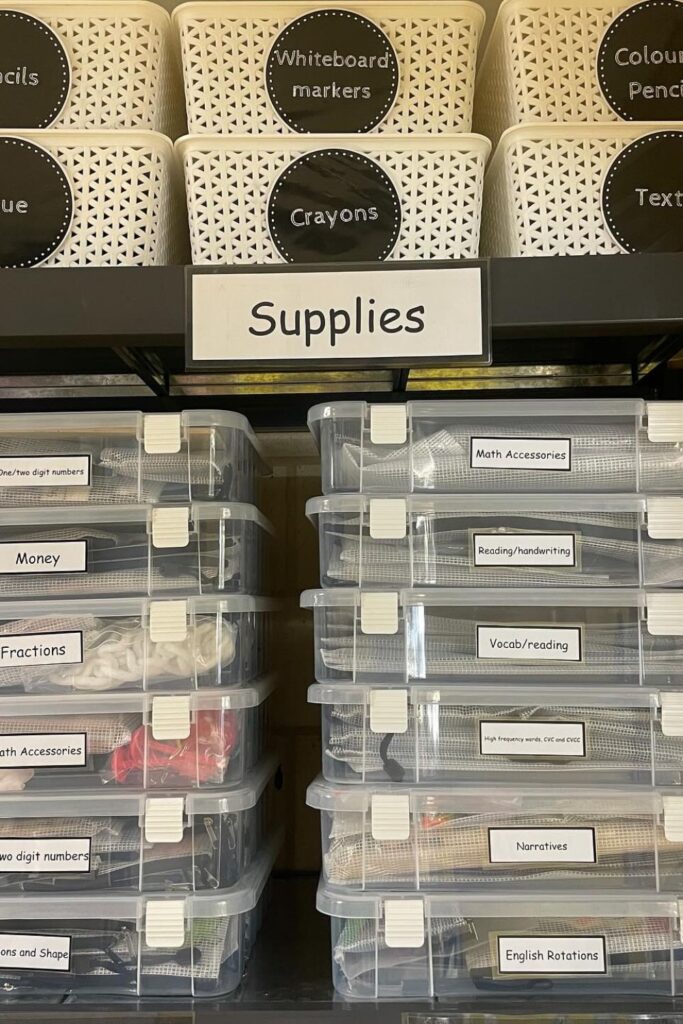
Busy classrooms stay organized when supplies follow a clear zone system instead of sitting in random drawers.
Baskets with labels on the top shelf keep everyday supplies like pencils, glue, markers, and crayons distinct so that children always know where to find them.
The bigger bins below hold lesson kits for arithmetic, reading, and writing, so that the learning resources are always ready for small group work.
Use stackable storage boxes and basic printed labels for each subject or resource to make the idea work again.
Put things that are same in groups and keep things you use every day at eye level.
Organized supply zones transform congested shelves into a simple method that saves time during lectures.
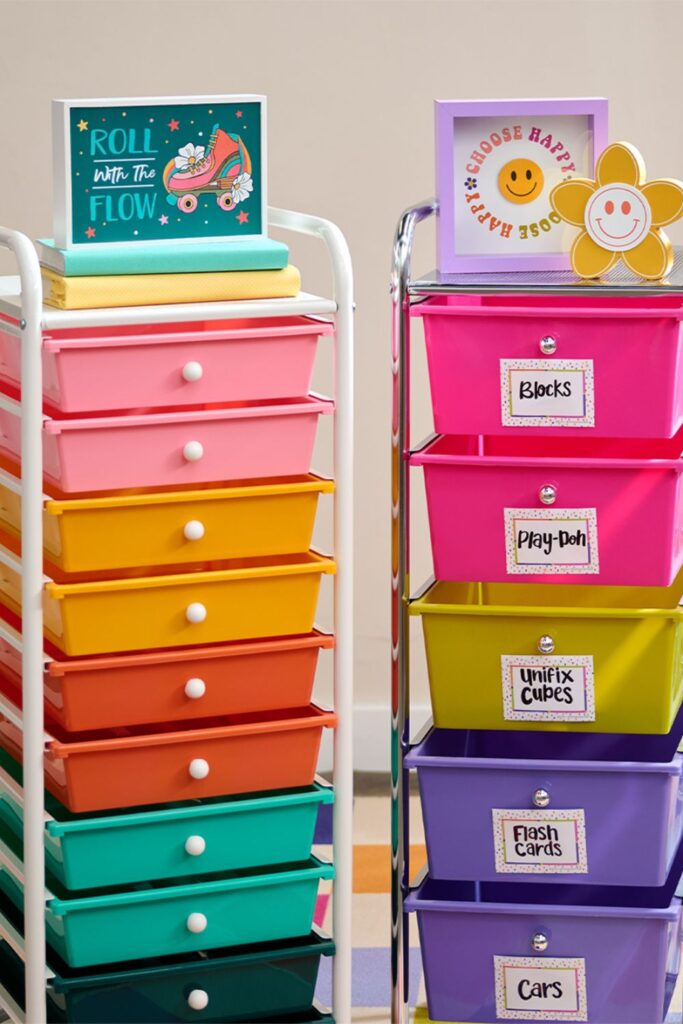
Rolling Drawers
Busy learning spaces become easier to manage when activity materials travel with you. Colorful rolling drawer carts.
Make a portable place to keep classroom supplies like blocks, flashcards, play-dough, or learning cubes.
Students can quickly grab what they need during centers or small group work because each drawer has a different activity in it.
Wheels make the cart even more beneficial because teachers may transport supplies from one table, station, or corner of the room to another without having to carry heavy containers.
Use a sleek multi-drawer cart and basic labels on each drawer to set it up again. If you only put one activity in each drawer, the supplies won’t get mixed up.
FAQs
What is the easiest way to keep school supplies organized throughout the year?
Rather than keeping all of your goods in one location, start by classifying them into basic categories.
Sort supplies into designated bins or drawers, including pencils, markers, glue, notebooks, and worksheets.
Returning goods after use is made considerably simpler once each category has a designated home.
How can students stay organized without buying expensive storage tools?
Simple routines are frequently more effective than pricey organizers. An efficient system can be made with inexpensive supplies such labeled baskets, tiny boxes, and simple folders.
Each subject should have its own folder, daily supplies should be kept in a tiny kit, and materials should be separated using shelves or bins.
Creating a system where everything has a place can help students focus more on their work and spend less time looking for things.
You may like to read!
- 26 Dresser Organization Ideas
- 21 Freezer Drawer Organization
- 22 Playroom Organization Ideas
- 23 Paper Organization Ideas
- 22 Nail Polish Organization Ideas

Fasial is the founder of the Fizzy Flare. He has been a passionate blogger since 2021. He ran three different websites in the past few years. Now he is focusing on Fizzy Flare to build an audience and help them organize their life.