25 Rolling Cart Organization Ideas for 2026
This post may contain affiliate links: full affiliate disclosure.
You buy a rolling cart because you think it will fix the mess. At first, it works. Everything looks fine for a day or two. Then slowly, items start piling up.
You toss things in without thinking. The top tray gets overcrowded, the bottom one becomes a black hole, and moving the cart feels risky because things might fall.
At that point, the cart stops being helpful and starts adding to the problem. That’s the moment most people realize the cart isn’t the issue, the setup is.
In this article, you’ll find 25 Rolling Cart Organization ideas that work in 2026.
Let’s jump in!
Contents
- 1 How Should a Rolling Cart Be Organized?
- 1.1 Purpose-Based Tiers
- 1.2 Vertical Supply Sorting
- 1.3 Yarn Ready Cart
- 1.4 Clear Kitchen Station
- 1.5 Color-Coded Crafting
- 1.6 Desk-Side Storage
- 1.7 Nursery Essentials Cart
- 1.8 Classroom Rotation Cart
- 1.9 Pantry Refill Cart
- 1.10 Lunch Prep Station
- 1.11 Marker Reset Zone
- 1.12 Home Gym Cart
- 1.13 Paint Supply Flow
- 1.14 Category Split Carts
- 1.15 Living Room Planner
- 1.16 Bathroom Care Cart
- 1.17 Kids Activity Cart
- 1.18 Device Charging Cart
- 1.19 Classroom Workflow Cart
- 1.20 Makeup Routine Cart
- 1.21 Laundry Supply Cart
- 1.22 Coffee Bar Cart
- 1.23 Cleaning Caddy Cart
- 1.24 Sewing Project Cart
- 1.25 Entryway Drop Cart
- 2 FAQs
How Should a Rolling Cart Be Organized?
A rolling cart should be organized with intention, not guesswork. If you place items randomly, the cart will quickly become cluttered.
Hard to use, start by deciding what the cart is meant to support, then organize everything around that purpose.
Items you use most should be easy to reach, while backup or rarely used items should be kept lower. Each tier needs a clear role.
Every item should earn its place. When the cart follows a simple logic, it stays useful, easy to maintain, and doesn’t fall apart after a few days of use.
Save this article for later! 👇👇
Purpose-Based Tiers
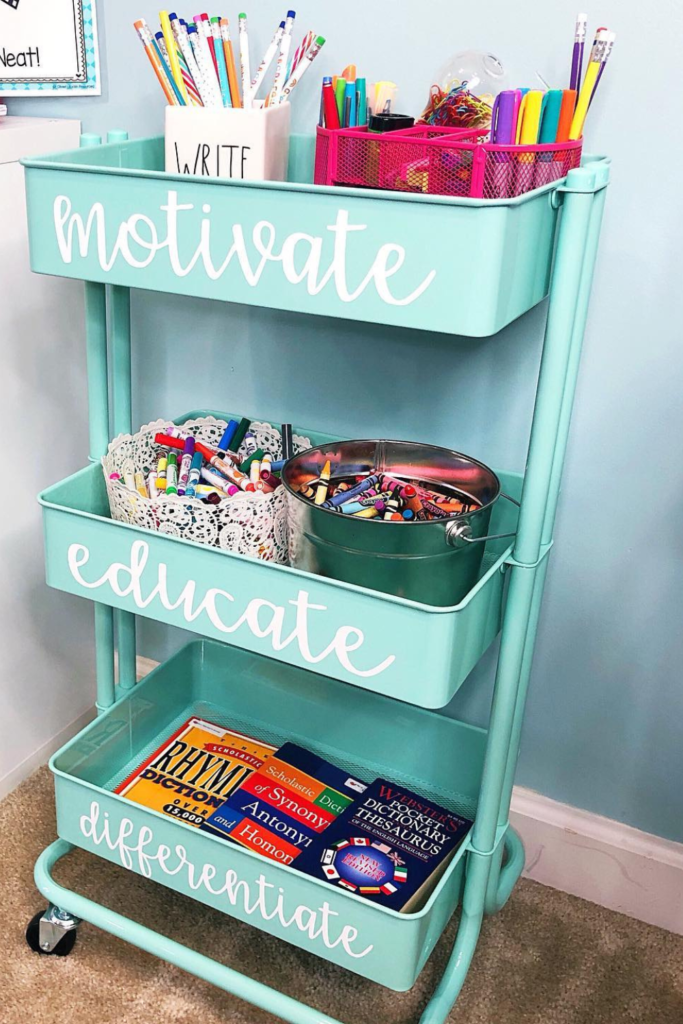
Labels turn a rolling cart into a working system, not just storage, works best in classrooms. Assign one clear role to each tier.
Stock only items that match that purpose. Writing tools stay together, creative supplies get their own space.
Books sit low for balance. Simple containers keep items visible, while soft colors and clean labels make the cart feel calm.
Vertical Supply Sorting
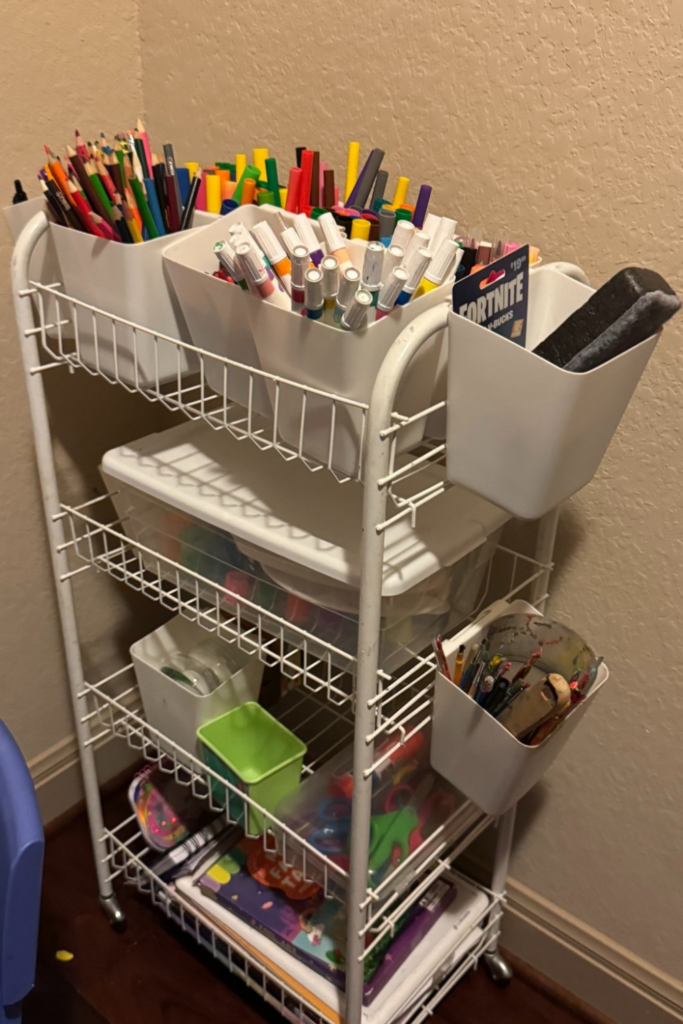
Group similar tools upright so hands can grab what they need. Clip-on side containers handle overflow like scissors or brushes.
Open wire shelves keep everything breathable, neutral white frame keeps the cart from feeling visually heavy, works well in small rooms.
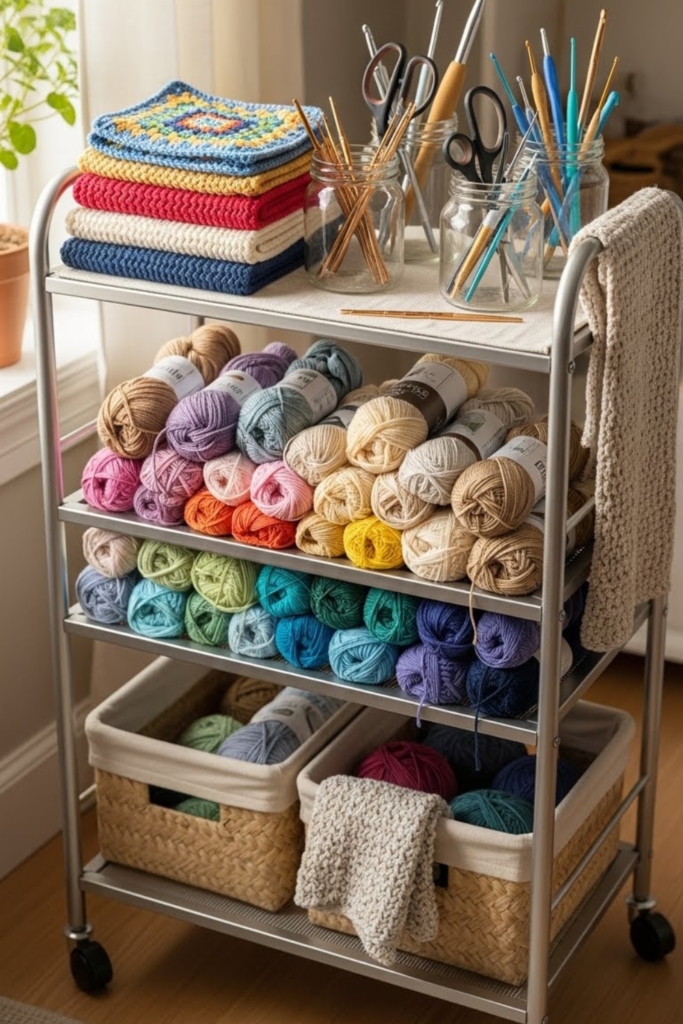
Yarn Ready Cart
Stacks of yarn belong where they stay visible and easy to pull, not buried in boxes, works best for craft rooms.
Finished squares sit on top for quick access, tools stay grouped in jars, and yarn fills the middle tier by color.
Open trays prevent tangling, while warm tones and soft textures keep the cart feeling cozy rather than cluttered.
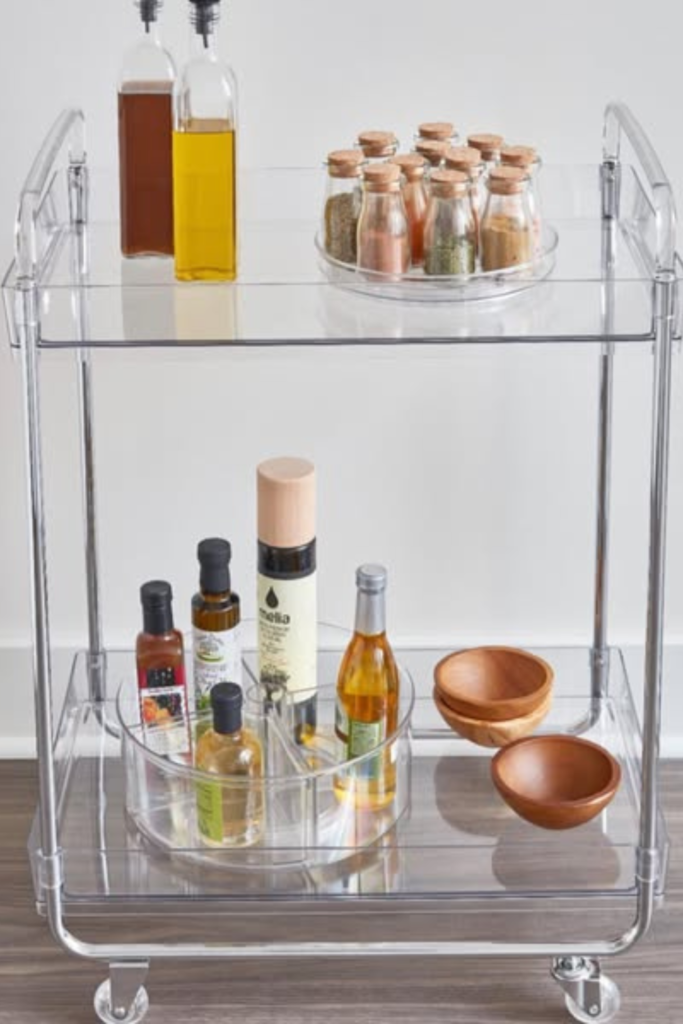
Clear Kitchen Station
Clear carts shine in kitchens where clutter builds fast, and spills happen often. Oils and spices stay grouped on turntables.
Nothing gets lost in the back. Daily-use bottles sit within arm’s reach, while extras stay below to keep counters clear.
Smooth acrylic keeps the look light and easy to clean, and simple wooden accents warm it up without making the cart feel busy.
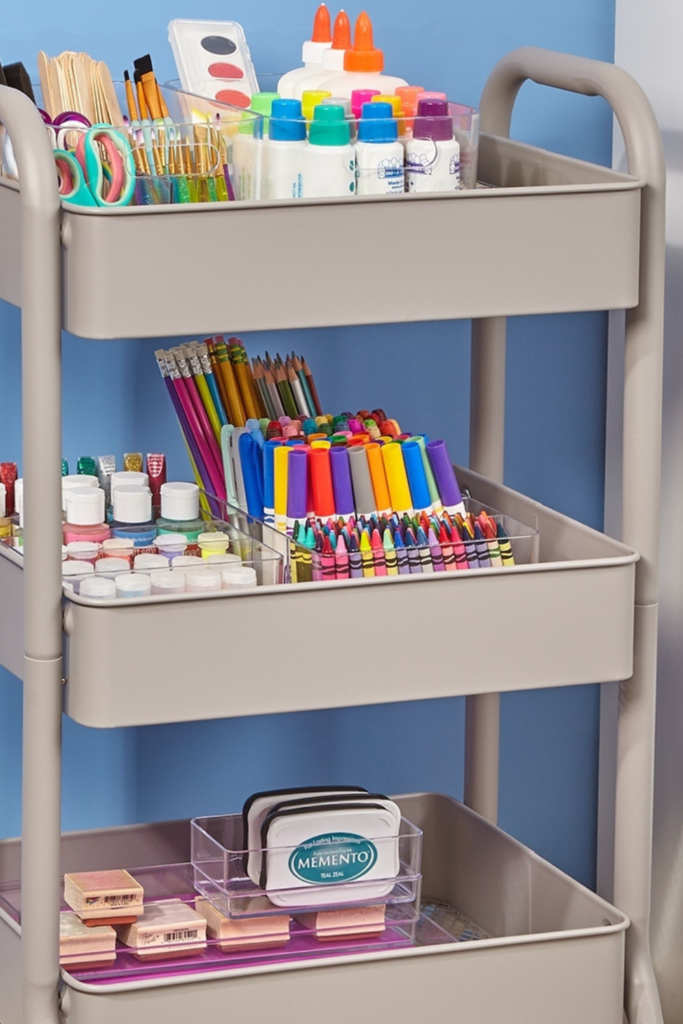
Color-Coded Crafting
Color takes control when supplies multiply fast. This layout fits classrooms, playrooms, or shared craft zones.
Markers, paints, and pencils stay sorted by type and shade using clear bins. Daily tools sit mid-level for easy reach.
Neutral cart tones calm the setup, while the bright supplies become the visual focus instead of clutter.
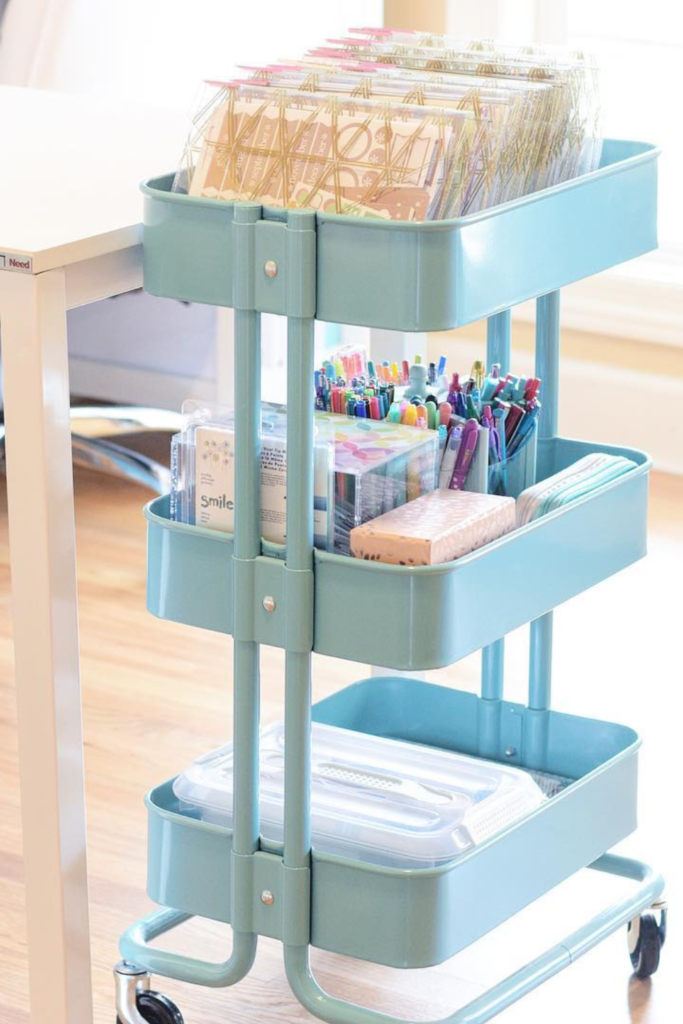
Desk-Side Storage
Rolling carts work best when they act like an extension of your workspace, fits home offices, study desks, or creative corners.
Frequently used pens and planners stay at eye level, while project materials sit lower to avoid crowding the desk.
Slim trays keep everything contained, and soft daylight with muted colors keep the area feeling open rather than busy.
Nursery Essentials Cart
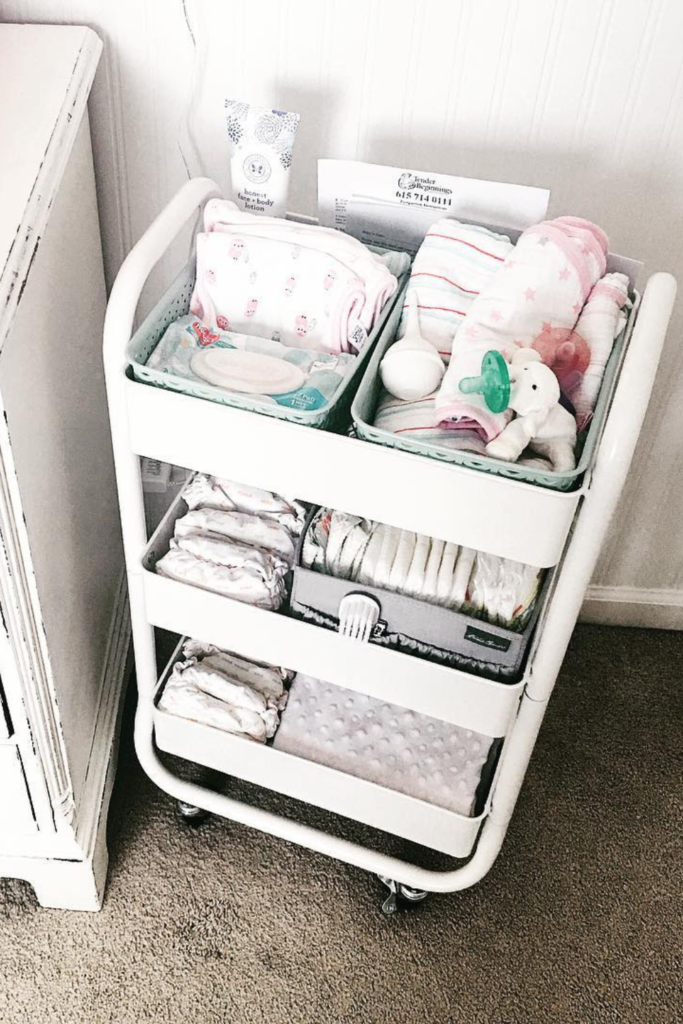
Late-night changes get easier when everything stays in one place. Diapers and wipes stay front and center.
Backup clothes sit folded below, and small bins separate daily care items. Soft baskets keep things quiet and gentle.
The clean white cart blends into the nursery without adding visual noise, works best beside a crib or changing table.
Classroom Rotation Cart
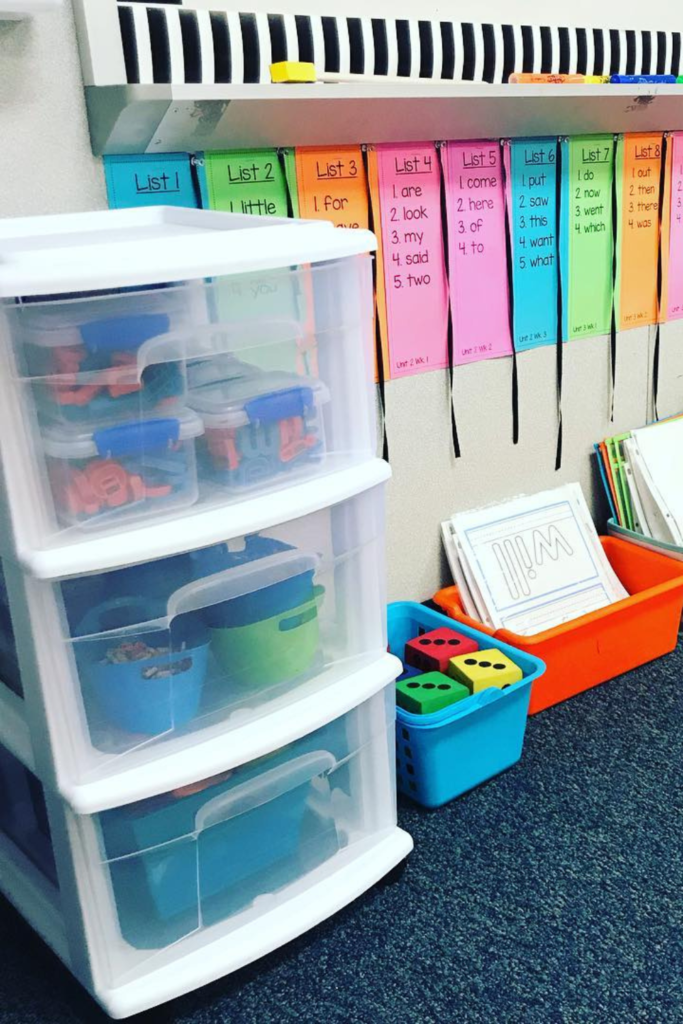
Learning centers stay organized when materials move instead of students. Each bin holds one focused task.
Nothing mixes or goes missing. Rolling the cart out keeps transitions smooth and reduces setup time.
Bright containers signal variety, while clear labeling helps students know exactly where items belong without having to ask.
Pantry Refill Cart
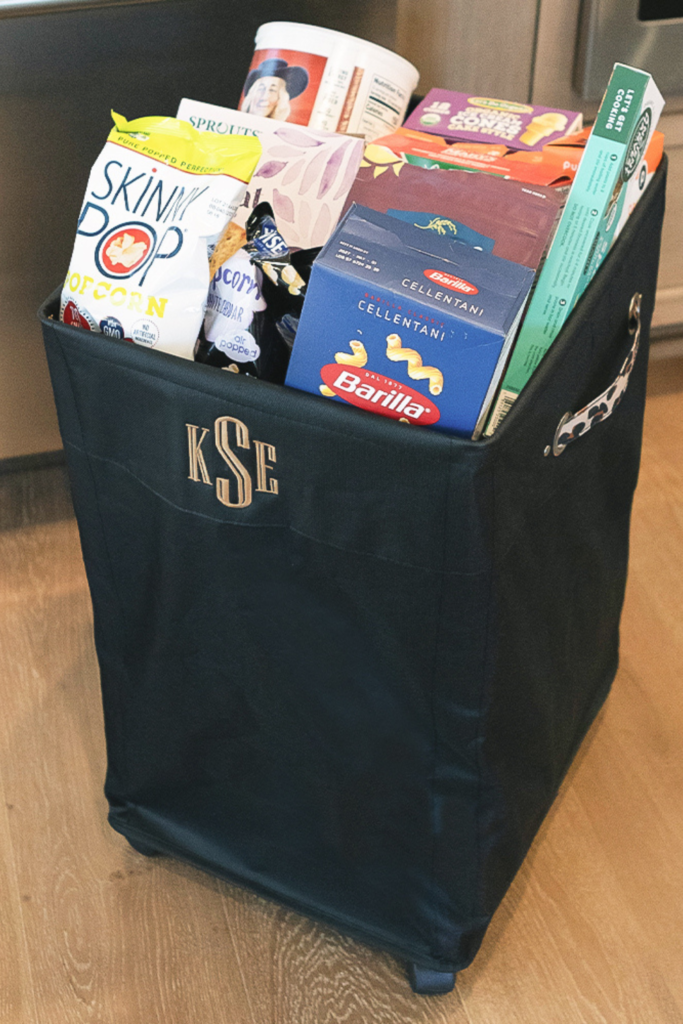
Bulk groceries get easier to manage when refills stay mobile, work well in kitchens with limited pantry space.
Use a tall fabric bin to hold boxed foods, snacks, and extras that don’t fit on shelves. Rolling it out during cooking saves.
Trips back and forth, and the soft-sided container keeps heavier items contained without scratching floors or cabinets.
Lunch Prep Station
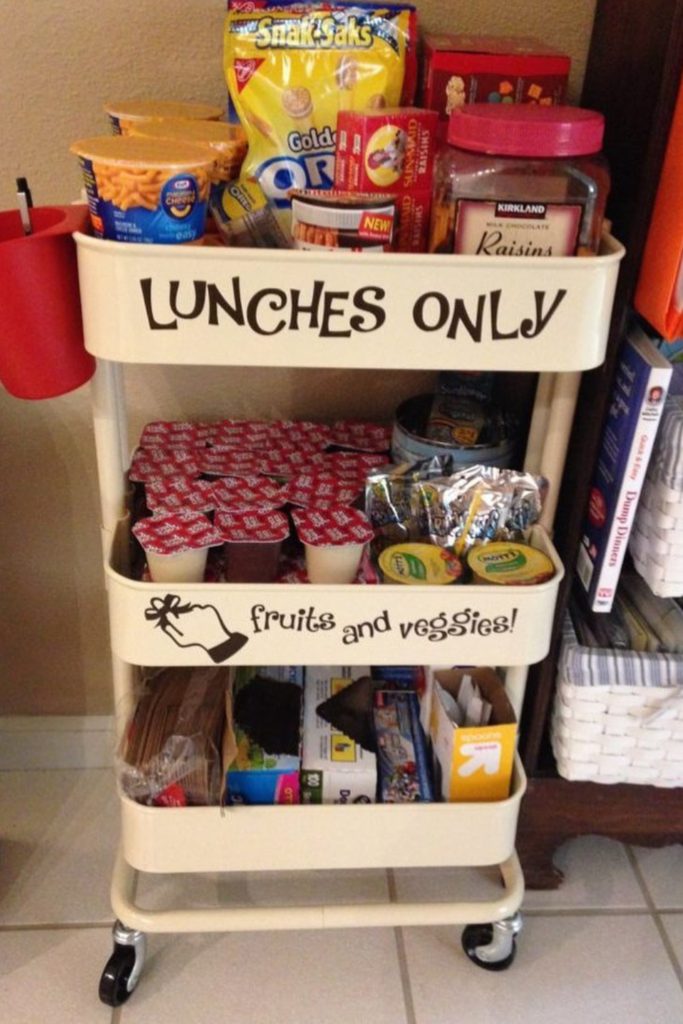
Mornings move faster when lunch items live in one spot. Top tiers hold grab-and-go snacks, this setup fits family kitchens.
Handwritten labels set boundaries. Rolling the cart out during prep keeps counters clear and makes restocking after grocery runs easier.
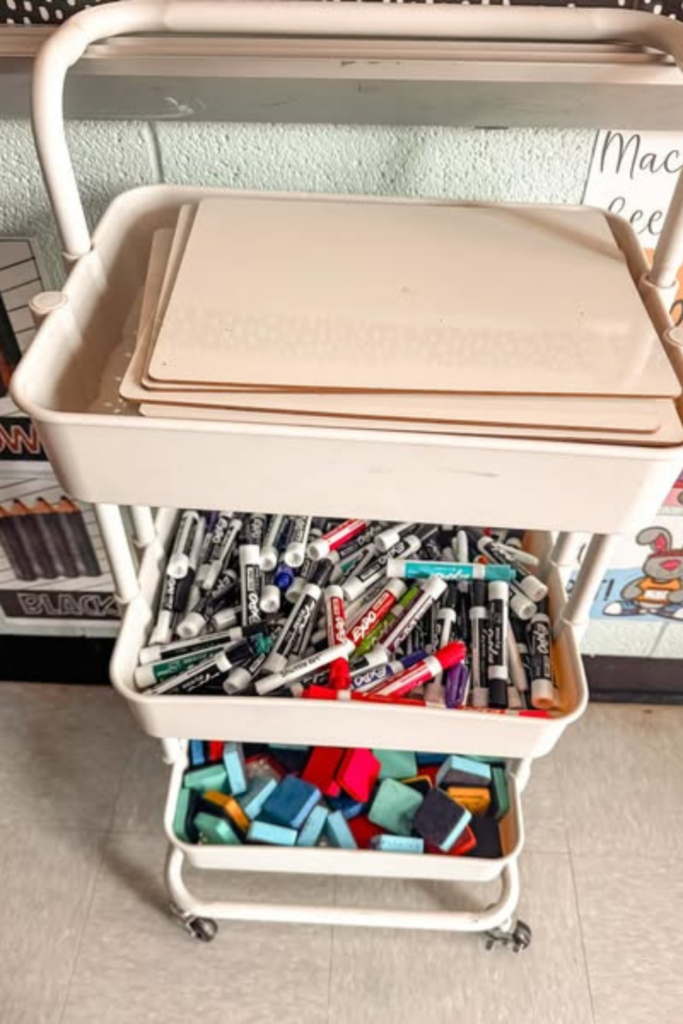
Marker Reset Zone
Whiteboard tools get messy fast without a reset system. This setup is suitable for classrooms or training rooms.
Clean boards stack on top, used markers drop into the middle tier, and erasers stay contained below.
Sorting by condition instead of color keeps supplies usable longer. Open trays speed up cleanup, and makes it predictable.
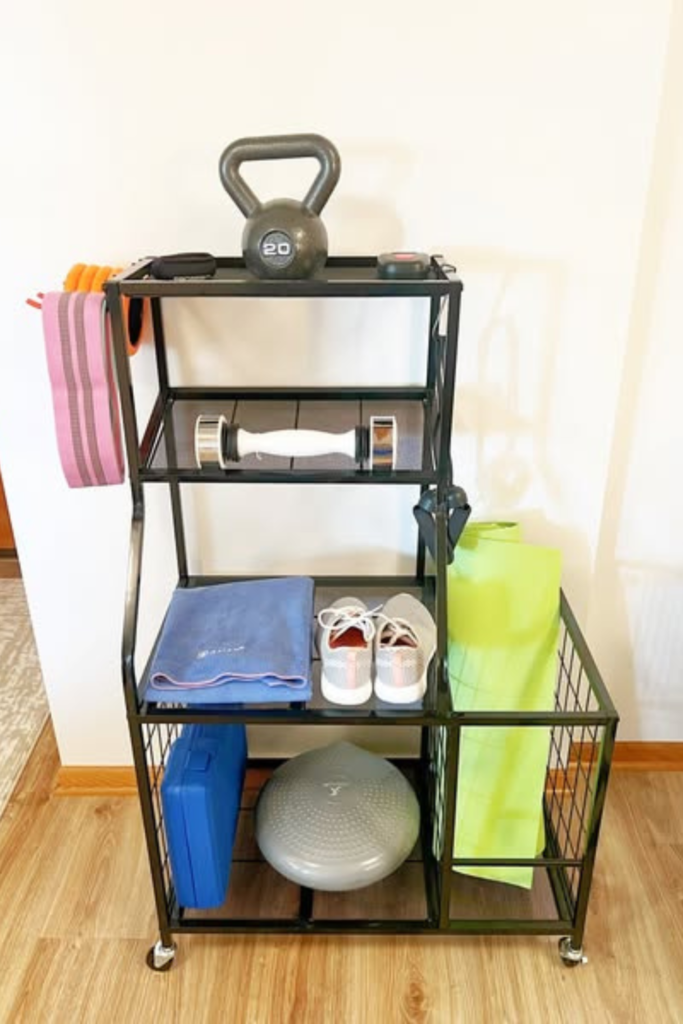
Home Gym Cart
Workout gear stays consistent when it lives in one mobile spot. Heavier items stay low for stability, works well in small home gyms.
Open shelving keeps everything visible, and the dark frame grounds the setup, making it feel structured, not scattered.
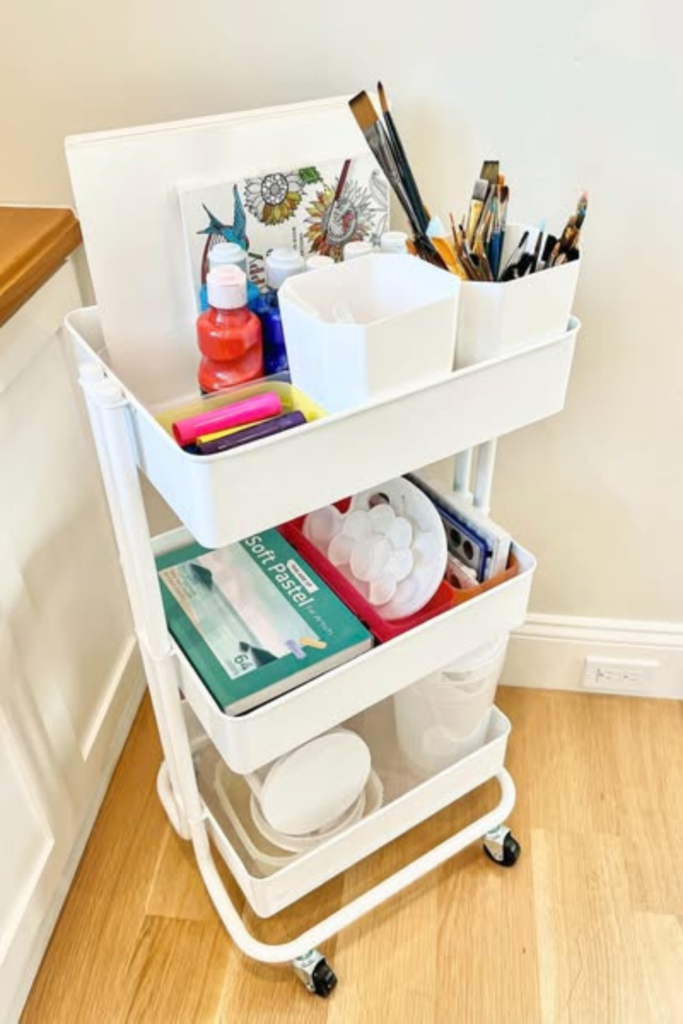
Paint Supply Flow
Painting stays enjoyable when supplies follow a clear order. Wet paints and brushes live up top for quick access.
Paper and guides stay protected in the middle, and refill bottles rest below, best for hobby artists or kids’ art corners.
Square containers prevent tipping, while the light palette keeps the cart feeling clean even when paint gets messy.
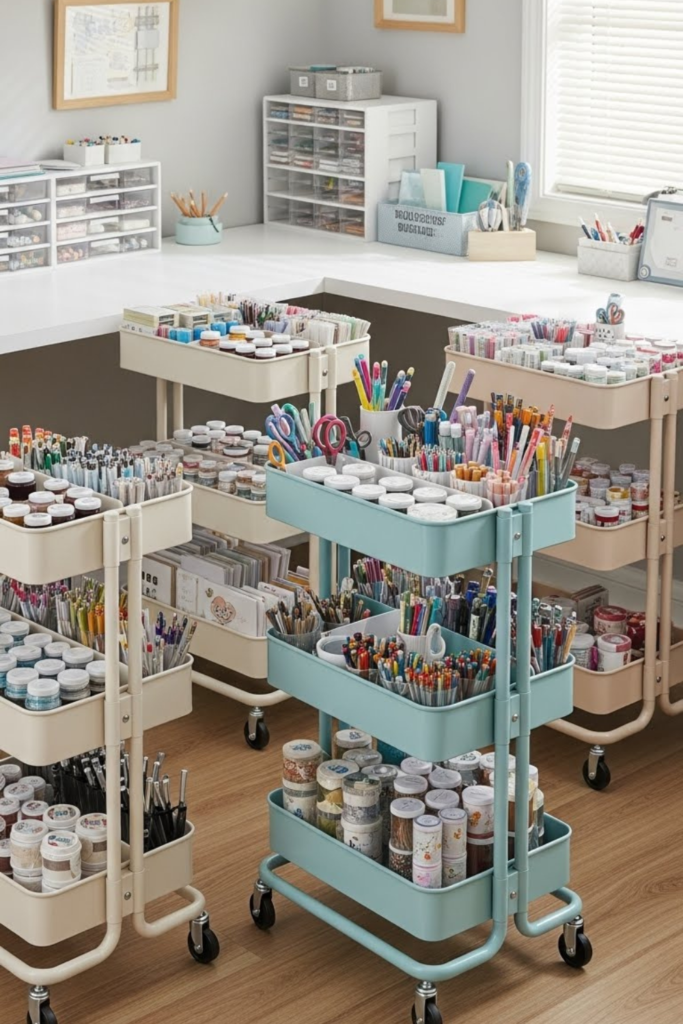
Category Split Carts
Overflow stops being stressful once supplies get divided by purpose. Each cart handles one category.
Nothing competes for space. Rolling them apart creates instant work zones, keeping everything visible speeds up projects.
Coordinated colors help the carts feel connected without forcing everything into a single overcrowded unit.
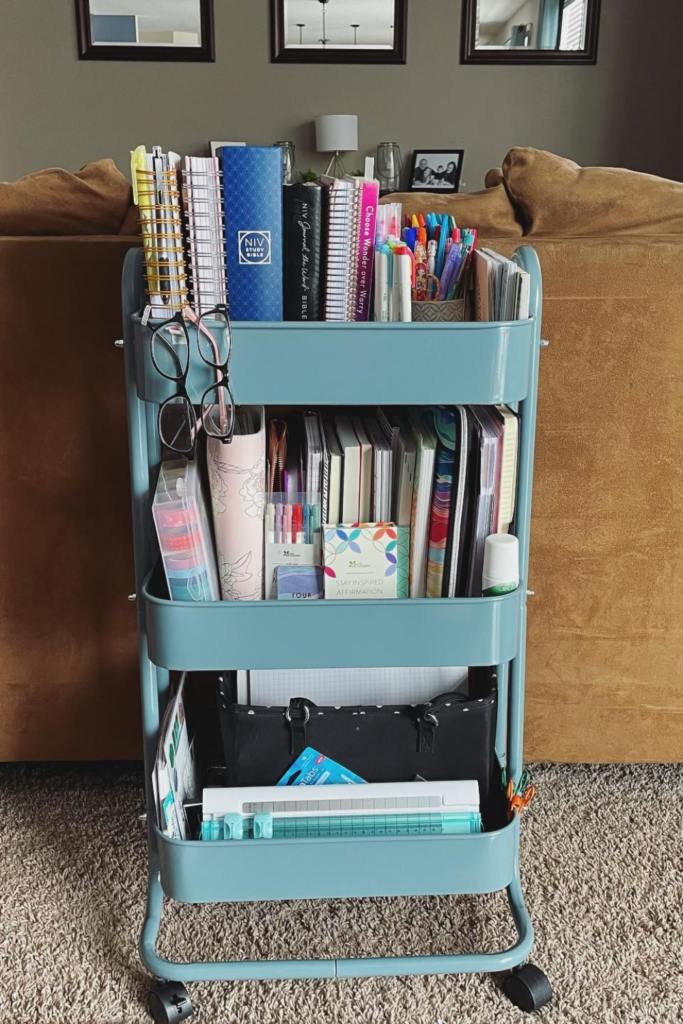
Living Room Planner
Paper clutter feels lighter when it stays mobile. Notebooks and planners stand upright for quick flipping.
Pens stay corralled in slim holders, and tools hang off the side for easy grabs. Heavier cutters and binders sit low for balance.
Muted tones help the cart blend in, making it feel intentional rather than office-like, this setup fits living rooms.
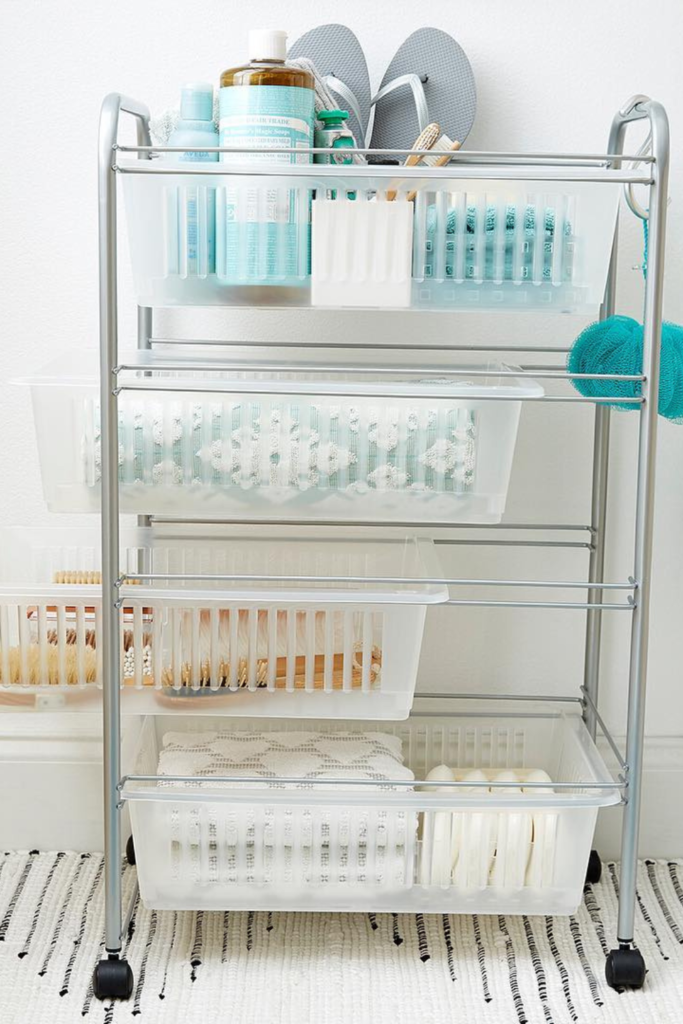
Bathroom Care Cart
Daily routines feel smoother when bathroom items stay sorted by use. Skincare and hair products sit up top for easy reach.
Grooming tools stay separated in baskets, and backups live on the bottom tier, works well in shared bathroom.
Clear bins handle moisture better than fabric, while light tones and open spacing keep the cart feeling fresh instead of crowded.
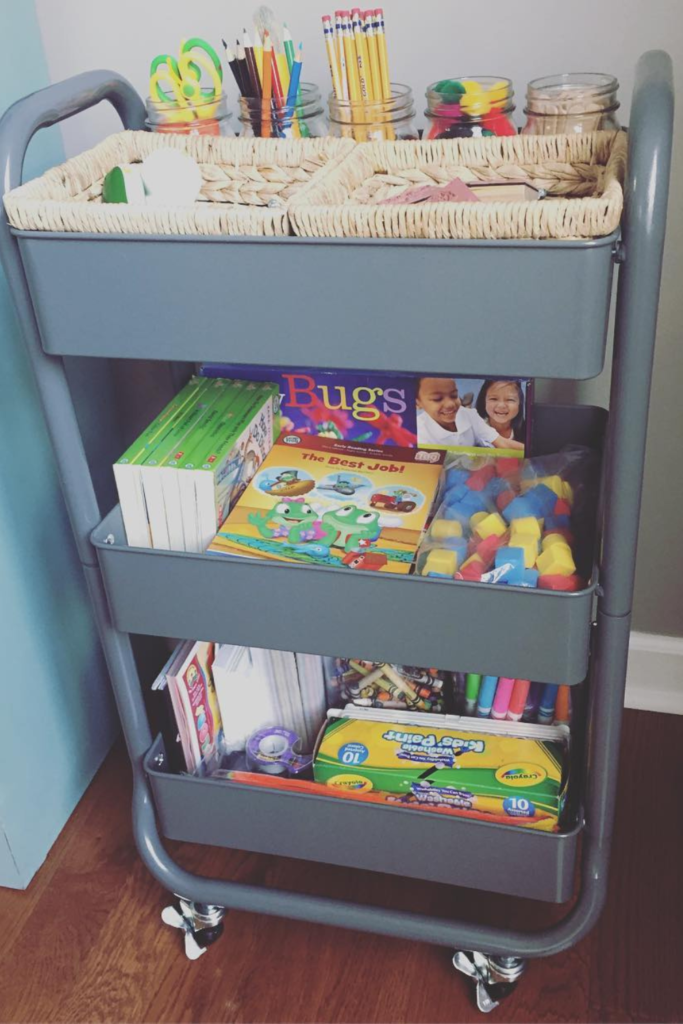
Kids Activity Cart
Free play stays manageable when supplies are within reach of kids. Art tools stay visible in jars on top.
Books and games fill the middle for easy choice, and bulk crayons or blocks sit low for weight balance.
Natural baskets soften the look, while open trays help kids clean up, works best in playrooms or daily learning corners.
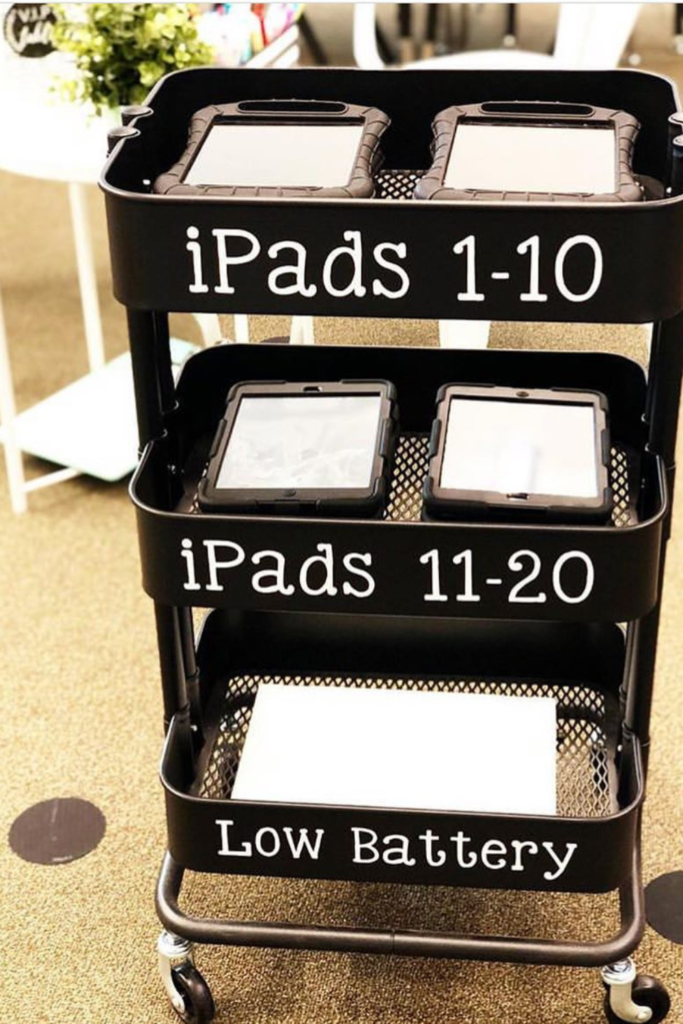
Device Charging Cart
Tech stays under control when devices follow a simple return system. Numbered tiers assign ownership.
The bottom tray catches low-battery devices that need charging next, best in classrooms or shared workspaces.
Open metal baskets allow airflow, and bold labels eliminate guesswork so devices always return to the right place.
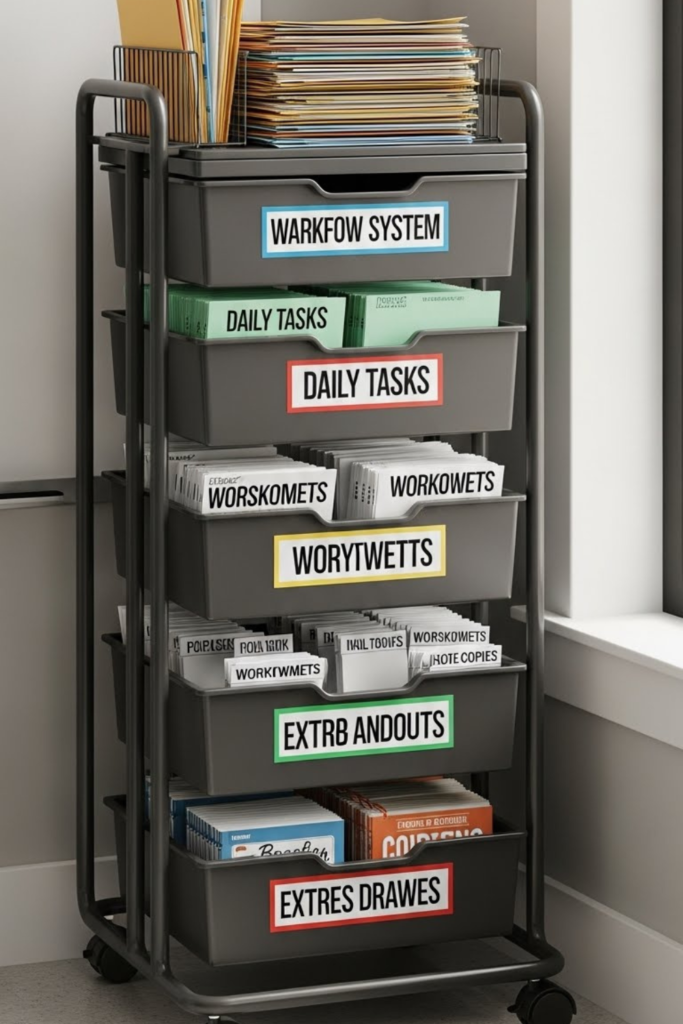
Classroom Workflow Cart
Paper chaos disappears when tasks follow a clear order, works best in busy classrooms where handouts move daily.
Each drawer handles one step, so nothing gets lost. Students and teachers both know where papers go next without asking.
Bright labels add structure, while the slim frame keeps the cart useful without taking up too much floor space.
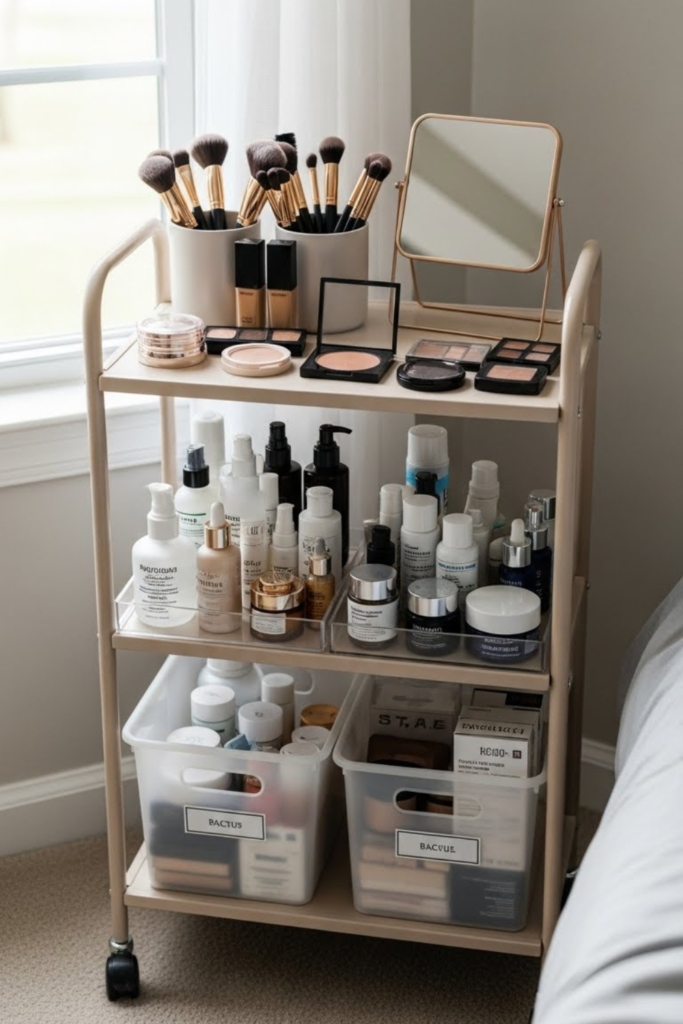
Makeup Routine Cart
Morning routines run smoother when products stay grouped by step. Daily makeup sits up top, skincare follows below.
Clear organizers prevent overbuying, while soft lighting and neutral trays keep everything calm instead of chaotic.
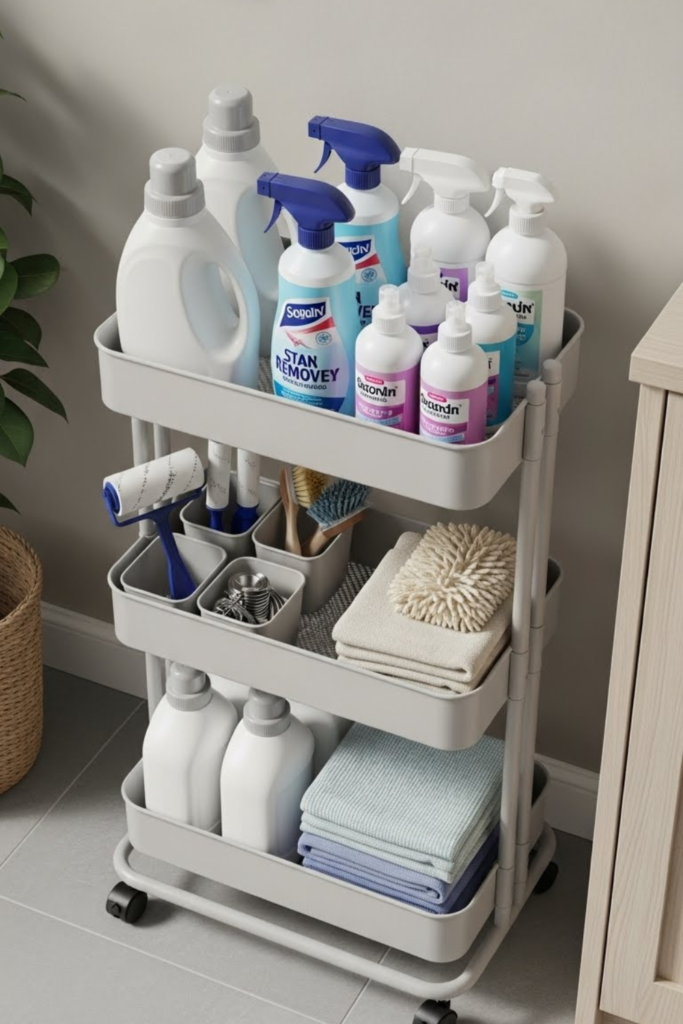
Laundry Supply Cart
Laundry stops feeling scattered once supplies move with you. Detergents and stain removers stay on top, tools like brushes.
Lint rollers sit mid-level, and refills live at the bottom. Using a slim cart keeps everything reachable without blocking walkways.
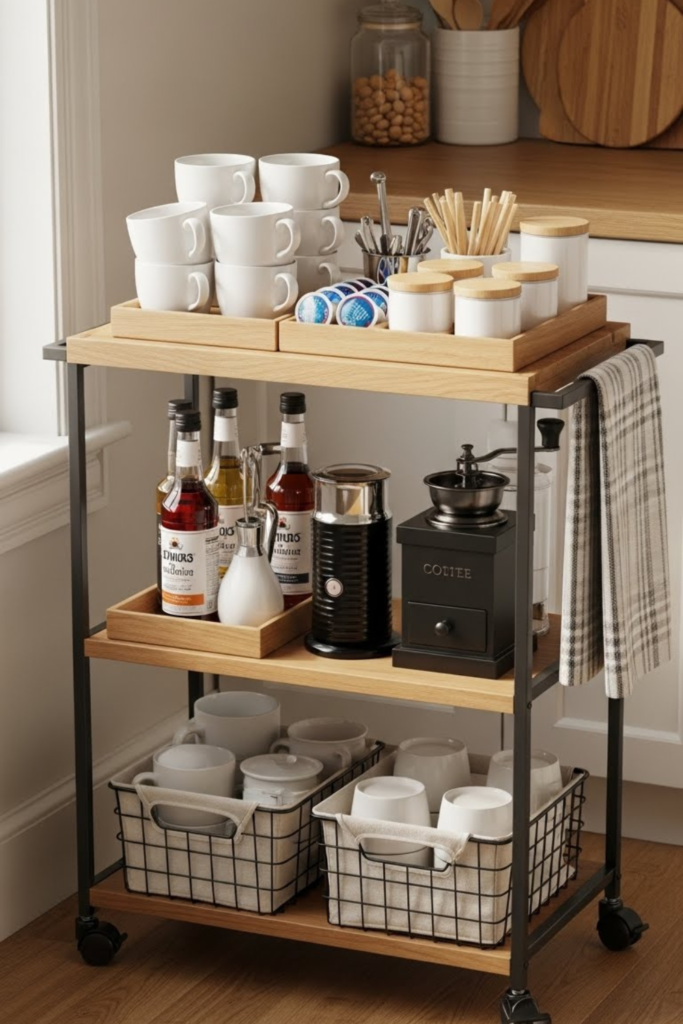
Coffee Bar Cart
Mornings feel faster when caffeine has a home, works best in kitchens or dining corners away from the main counter.
Mugs and pods stay up top, syrups and tools sit in the middle. Keeping everything vertical frees counter space and makes cleanup easier.
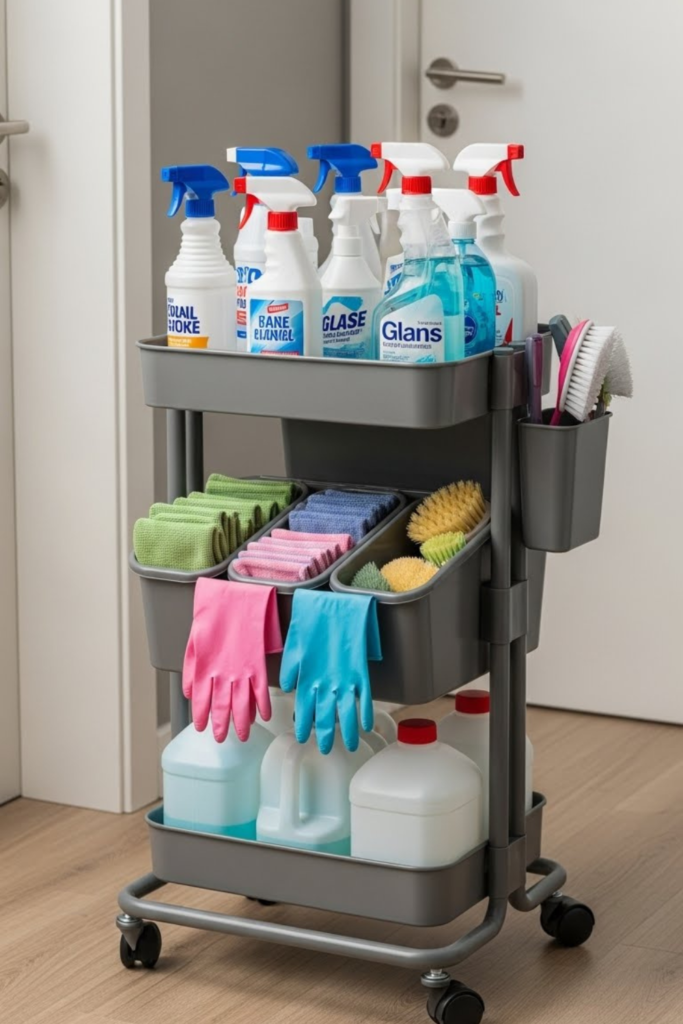
Cleaning Caddy Cart
Household cleaning gets simpler when supplies travel together. Daily sprays stay within reach, cloths and gloves get separated.
Refills sit low for balance. Rolling the cart from room to room saves time and prevents half-finished jobs, fits apartments or multi-level homes.
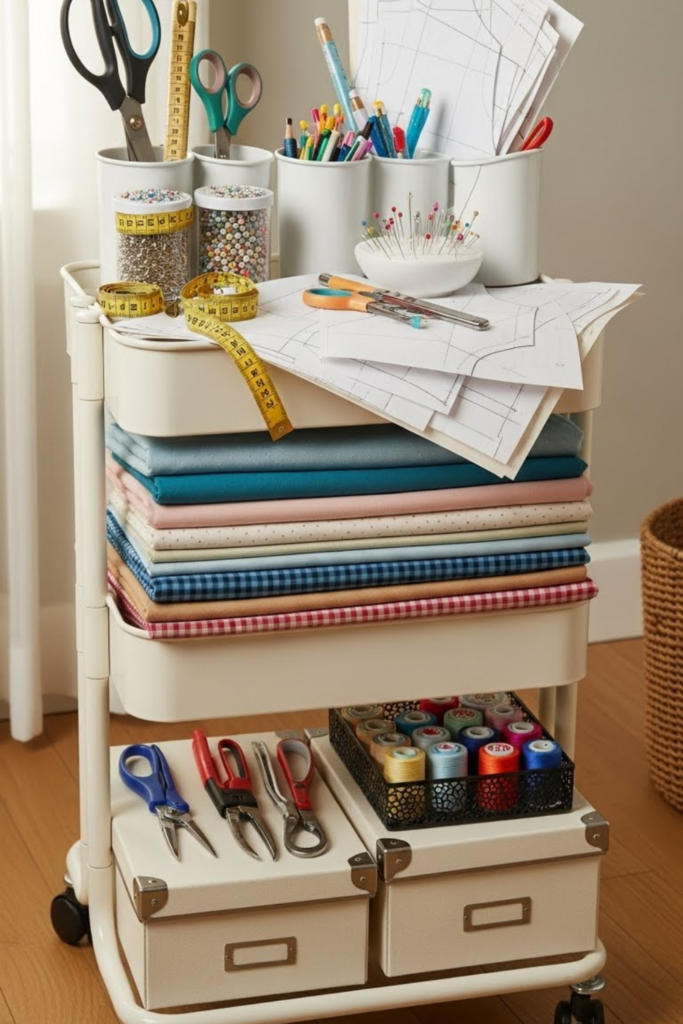
Sewing Project Cart
Fabric projects stay organized when active materials stay visible. Current tools and patterns live on top, fabrics sit rolled or folded mid-level.
Machines or boxes stay low. Open storage helps track progress without digging through drawers, works well for sewing rooms.
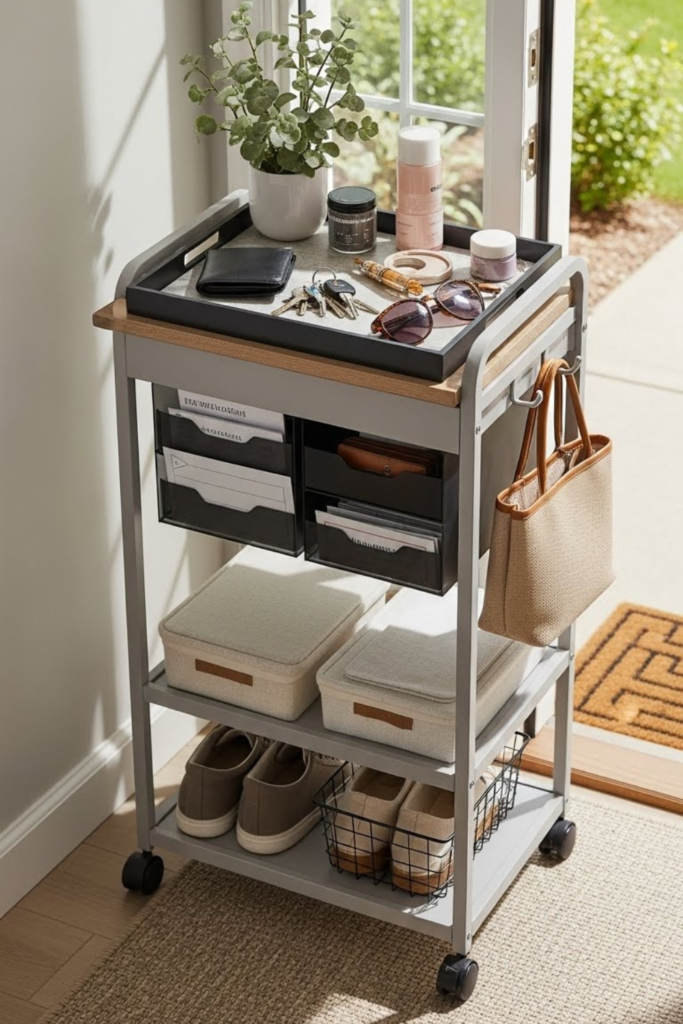
Entryway Drop Cart
Daily clutter needs a landing zone, not a pile, best for entryways or mudrooms where items are dropped quickly.
Keys and wallets stay up top, mail and bags sit in the middle, and shoes or extras live below. Rolling the cart aside keeps pathways clear.
FAQs
What can I store in a rolling cart?
A rolling cart can hold almost anything as long as the items serve one clear purpose. May include office supplies, craft tools.
Makeup, skincare, pantry items, cleaning products, kids’ activities, or workout gear all work well. The key is to store items you actually use, not random extras.
Group similar items together, keep daily-use items within reach, and move backups to the bottom so the cart stays useful rather than cluttered.
How do I stop a rolling cart from getting messy?
Mess builds up when items don’t have a fixed spot. Decide what belongs on each tier and don’t mix categories. Use small bins to keep loose items contained.
Avoid overfilling trays just because there’s space. A quick reset at the end of the day, putting things back where they belong, keeps the cart organized without extra effort.
You may like to read!
- 27 Pantry Organization Ideas
- 24 Family Organization Wall
- 26 Kitchen Drawer Organization
- 22 Cleaning Supplies Organization
- 21 Utensil Drawer Organization

Fasial is the founder of the Fizzy Flare. He has been a passionate blogger since 2021. He ran three different websites in the past few years. Now he is focusing on Fizzy Flare to build an audience and help them organize their life.