21 Renter Friendly Storage Ideas for 2026
This post may contain affiliate links: full affiliate disclosure.
If you rent, it can feel like you’re always fighting for space. The closets are small, the kitchen cabinets fill up quickly.
And before you know it, things are everywhere. Adding shelves or cabinets would be the easiest solution.
But then you recall the rules: no drilling, no permanent renovations, and definitely no endangering your security deposit.
In this article, we’ll explore 21 innovative renter friendly storage ideas for a clutter-free home. Simple tips to maximize your space.
Let’s jump in!
Contents
- 1 How Can Renters Add More Storage Without Making Permanent Changes?
- 1.1 Wall Rack
- 1.2 Pull-Out Pantry
- 1.3 Shoe Tower
- 1.4 Wall Library
- 1.5 Hidden Cabinet
- 1.6 Kitchen Station
- 1.7 Pegboard Wall
- 1.8 Entry Rack
- 1.9 Cube Shelves
- 1.10 Sink Organizers
- 1.11 Utility Board
- 1.12 Stair Storage
- 1.13 Mug Cabinet
- 1.14 Open Wardrobe
- 1.15 Tool Station
- 1.16 Storage Grid
- 1.17 Door Pantry
- 1.18 Mudroom Rack
- 1.19 Corner Tower
- 1.20 Supply Pantry
- 1.21 Shower Shelves
- 2 FAQs
How Can Renters Add More Storage Without Making Permanent Changes?
Adding storage to your rented property can be hard. You need additional room for your stuff, but you can’t start drilling holes or putting up shelves that will stay there forever.
The good news is that you don’t have to. There are several easy ways to get more storage without hurting the walls or breaking your lease.
Use what you already have in your residence to get started. Most people don’t know that vertical space, doors, and hidden locations such beneath the bed may hold a lot more than they think.
You may also quickly expand storage with freestanding shelves, rolling carts, and removable organizers.
You can maintain your home orderly and make sure everything can be taken out when it’s time to move out by using adaptable solutions like these.
Save this article for later! 👇👇
Wall Rack
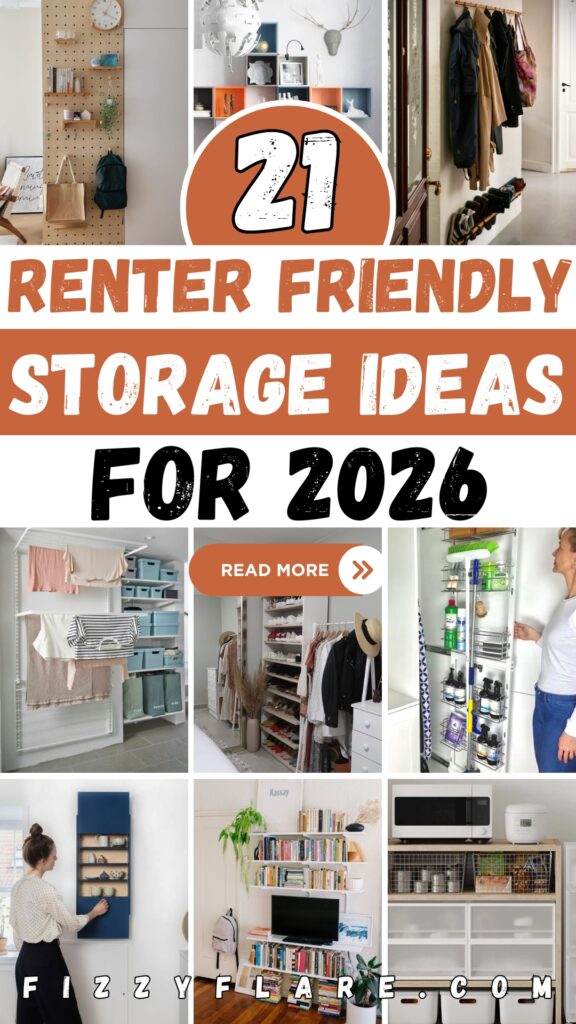
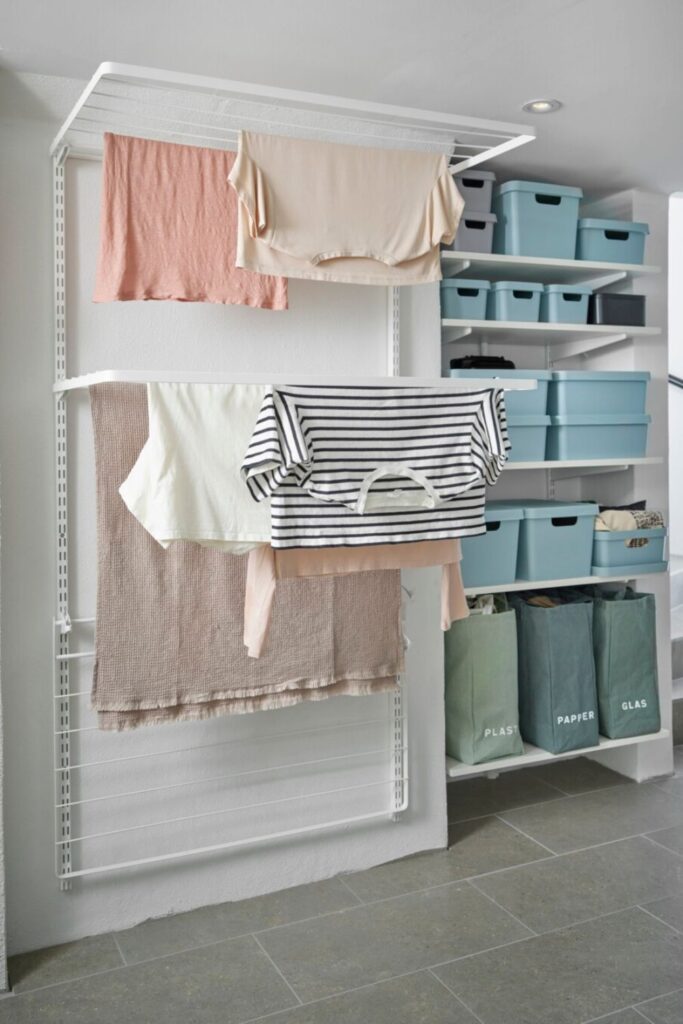
Laundry often ends up draped over chairs or doors when drying space runs out. A simple wall-mounted drying rack solves that problem while using vertical space most homes ignore.
Put a slim fold-out rack on an empty wall in a corridor, laundry room, or utility nook. Clothes can lie flat across the bars, which keeps delicate materials from straining while they dry.
When everything is dry, the rack folds back against the wall so the space stays clean and open. Put the rack next to shelves.
And storage containers for cleaning products, detergents, or anything you only need during certain times of the year.
This kind of design turns a basic wall into a useful laundry and storage space without taking up valuable floor space.
Pull-Out Pantry
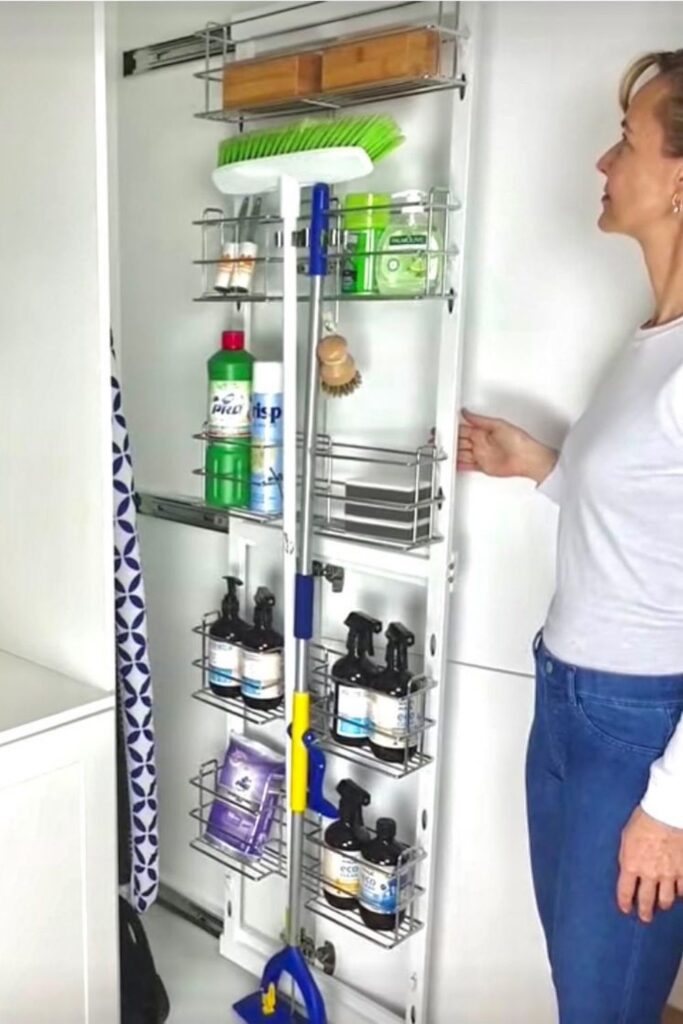
Narrow gaps between cabinets often sit empty while cleaning supplies pile up elsewhere. A slim pull-out organizer turns that unused space into a hidden storage zone that slides out.
When you need it. Tall wire shelves keep brushes, sponges, sprays, and bottles organized so that nothing gets lost in the rear.
It works best to put it next to a washer, in a utility closet, or between cupboards in the kitchen. Put in a rolling pull-out frame that works in compact areas.
And then put everything together by purpose: cleaning sprays on one shelf, scrub tools on another, and little baskets for cloths or refills.
Vertical compartments can also keep long items like mops and brooms without taking up too much space.
Shoe Tower
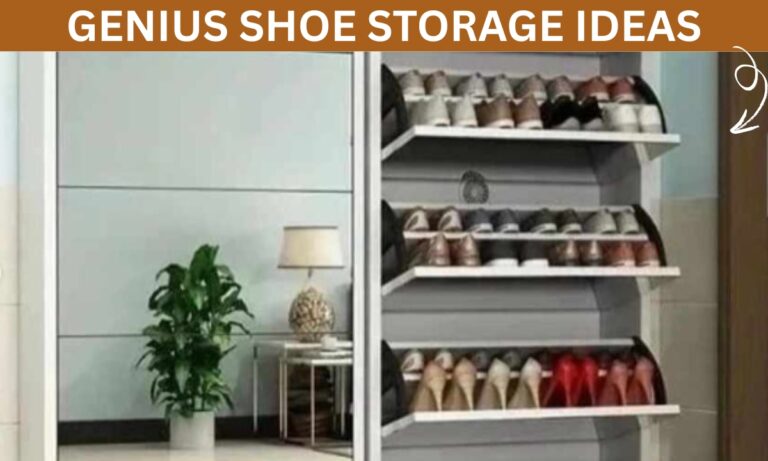
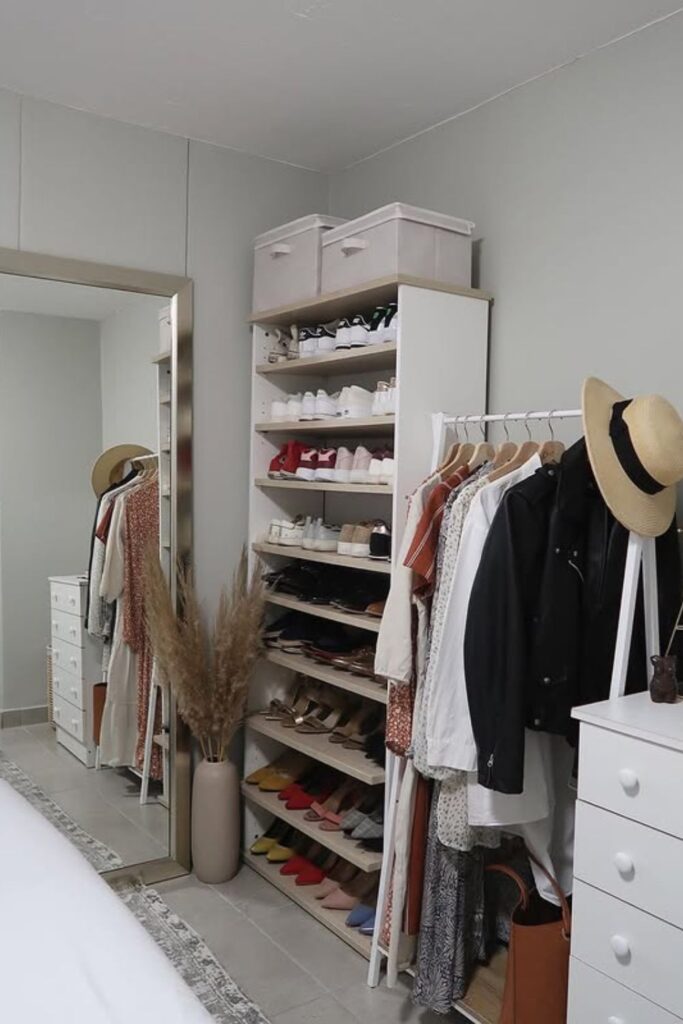
Floor space disappears quickly when shoes start stacking near the door or under the bed. A tall shoe tower fixes that problem by building storage upward instead of outward.
This kind of slim shelf fits wonderfully along a wall in a bedroom, in a closet corner, or next to a dresser where there is often empty vertical space.
Put together a few small shelves and use each one for a different style of shoe, like sneakers, flats, heels, or seasonal pairs.
There are lightweight bins on the top shelf that hold things like scarves and belts, so nothing goes to waste.
Putting a basic clothing rack next to the unit makes a little wardrobe area without the requirement for built-in closets.
Wall Library
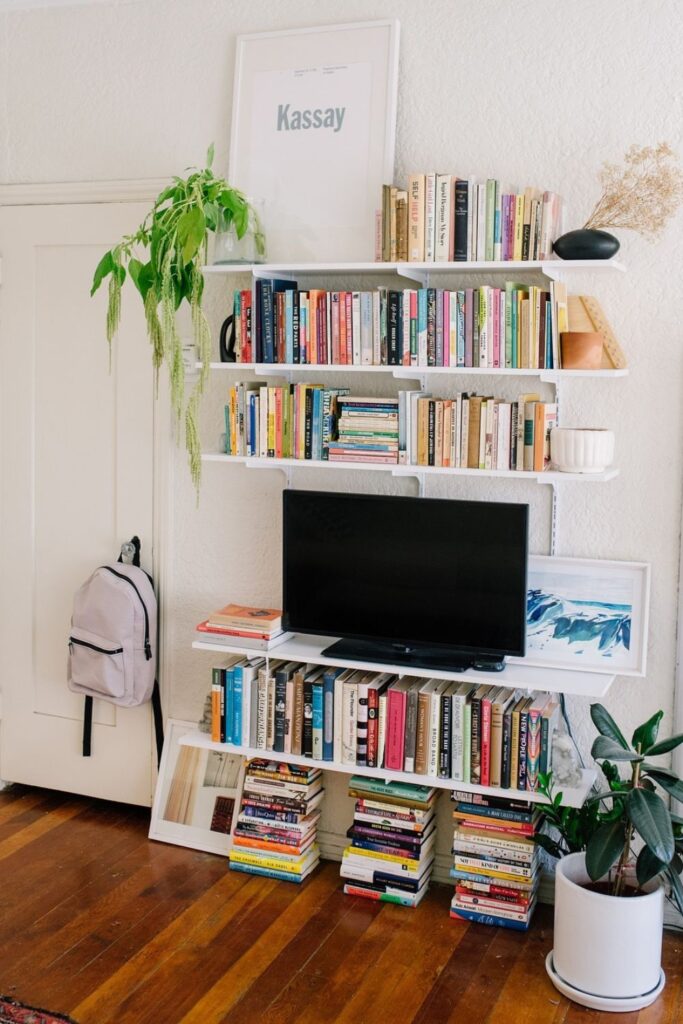
Blank wall space above furniture often goes unused, even though it can hold an entire home library.
If you put flexible wall shelves above a TV or workstation, you may rapidly add storage space without adding bulky furniture to the area.
Books stay orderly, attractive items get a home, and the whole wall starts working harder.
Put the heavier books on the bottom shelves and the lighter decor items, plants, or framed prints on the upper shelf.
This setup is best for living rooms and tiny flats since it keeps the floor clear and turns an ordinary wall into a useful storage space.
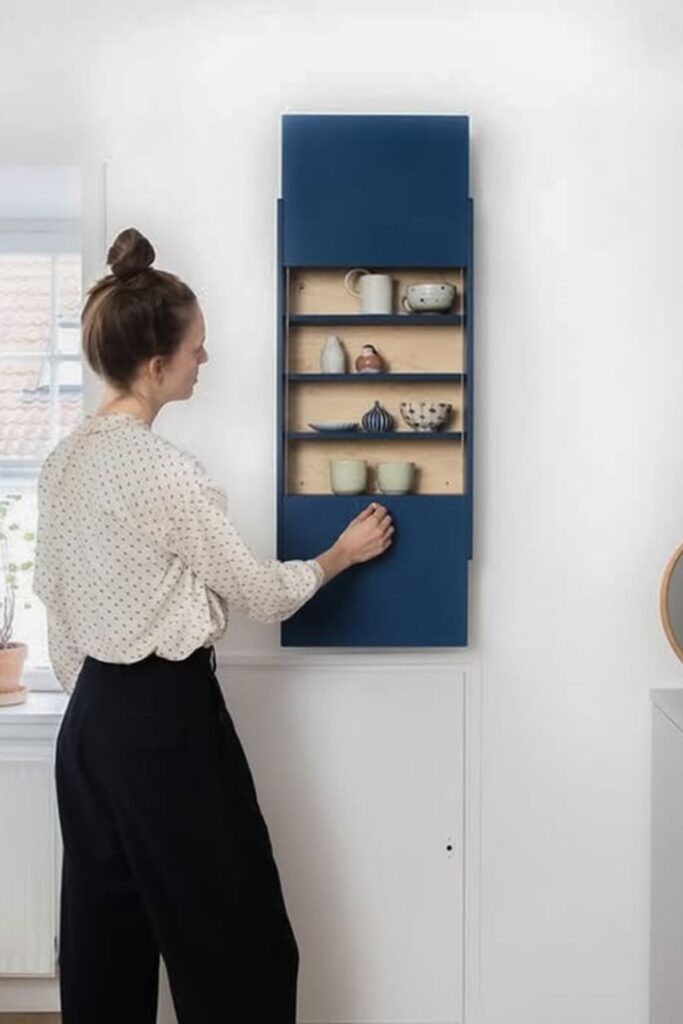
Hidden Cabinet
Small apartments rarely give you extra cabinet space, which makes everyday items start crowding counters and shelves.
This small wall cabinet silently fixes that problem and keeps the room appearing neat. When you open the doors.
You can see many small shelves that can hold cups, spices, or small kitchen items. Placement works best in kitchens, eating nooks, or even near a coffee machine.
Where cups and other tiny items need a place to go. Put a thin cabinet on an empty wall so that it doesn’t get in the way of walking.
These small vertical cabinets increase storage without taking up too much space, making them great for renters who want to stay organized without having to buy big furniture.
Kitchen Station
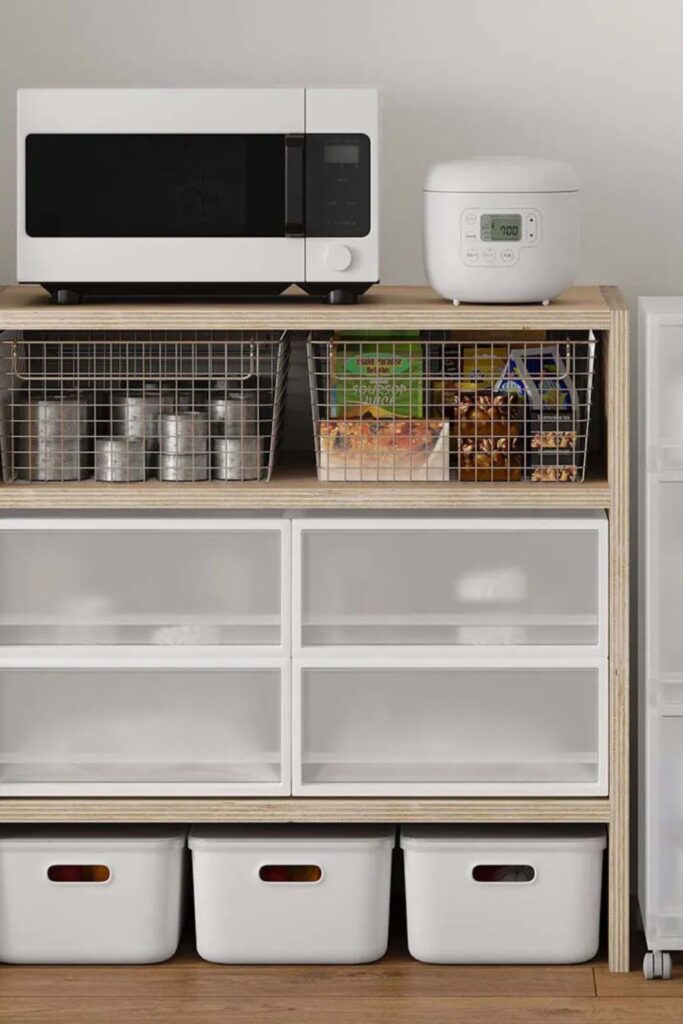
Countertops fill up quickly once appliances, snacks and pantry items start competing for space. A compact kitchen station like this gathers everything in one organized zone.
While making the rest of the kitchen free. The microwave and rice cooker are on top of a strong open shelf unit.
The inner shelves have baskets and drawers that carry dry products, so everything is easy to find.
Lower bins are great for storing extra goods, kitchen utensils that don’t fit in cabinets very often, or bulk things.
A narrow rolling drawer unit next to the shelf makes good use of small spaces between appliances and gives you more room to store utensils, wraps, or small pantry goods.
Pegboard Wall
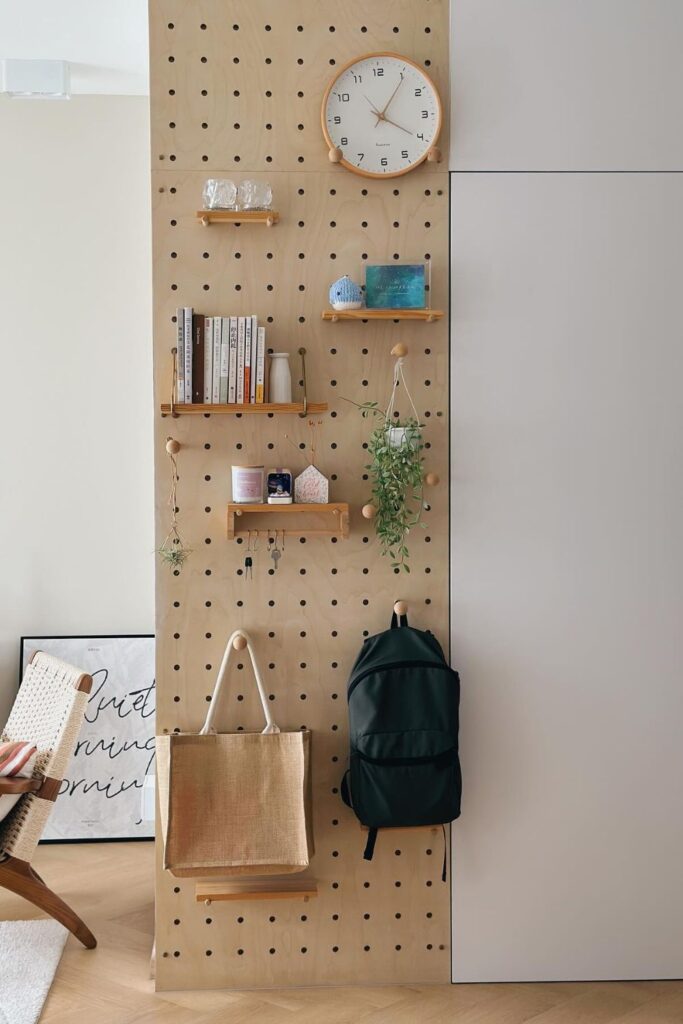
Empty wall sections can do much more than hold artwork. A pegboard turns that plain surface into flexible storage that adapts whenever your needs change.
You can store books, candles, or decorations on little shelves, and hooks make it easy to grab bags, keys, and other ordinary items on the way out.
Setup works best in entryways, living areas, or home offices where small things tend to get lost on tables.
Put up a big pegboard panel and put pegs, little shelves, and hooks on it in a way that makes sense for what you need to store.
Heavy-duty pegs can hold bags and backpacks, and lightweight baskets can keep small things together.
Entry Rack
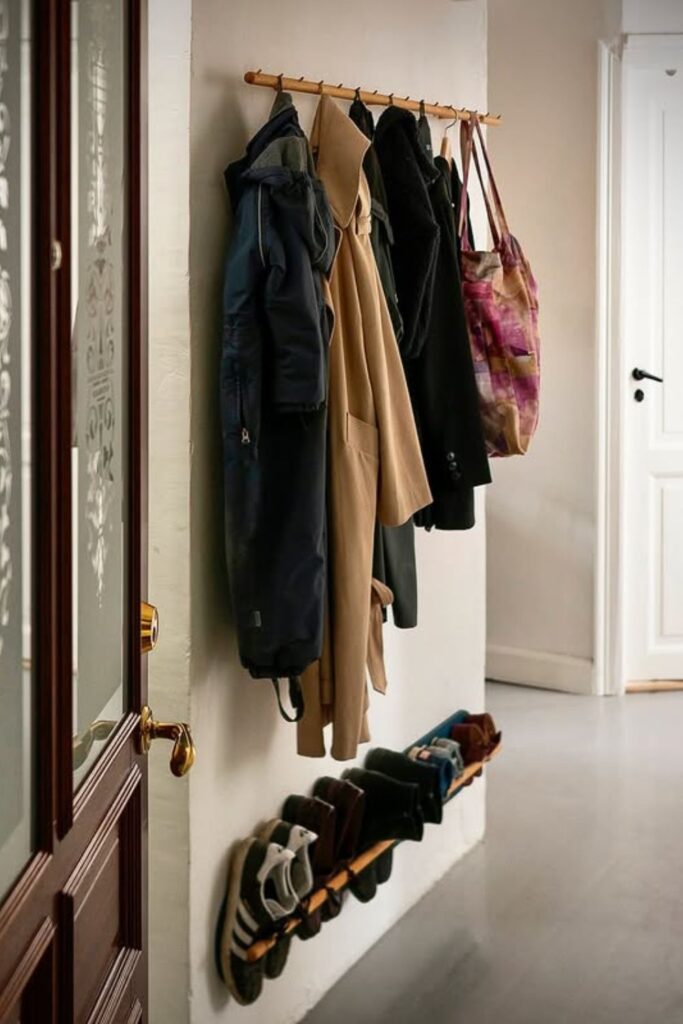
Front doors tend to collect jackets, bags and shoes within minutes of walking inside. A simple wall rack keeps that daily clutter under control.
Most entryways already have space. Put up a narrow wooden rail with hooks high enough for coats and tote bags so that everything stays off the floor.
A narrow shoe rack or mounted shoe holders fit neatly in the lower wall space. They make a neat place to put everyday shoes.
Putting both things on the same wall turns a boring corridor into a useful drop zone where things naturally go back to where they belong when you get home.
This layout works best in small flats since it keeps the entrance neat without taking up a lot of space with furniture or a complete closet.
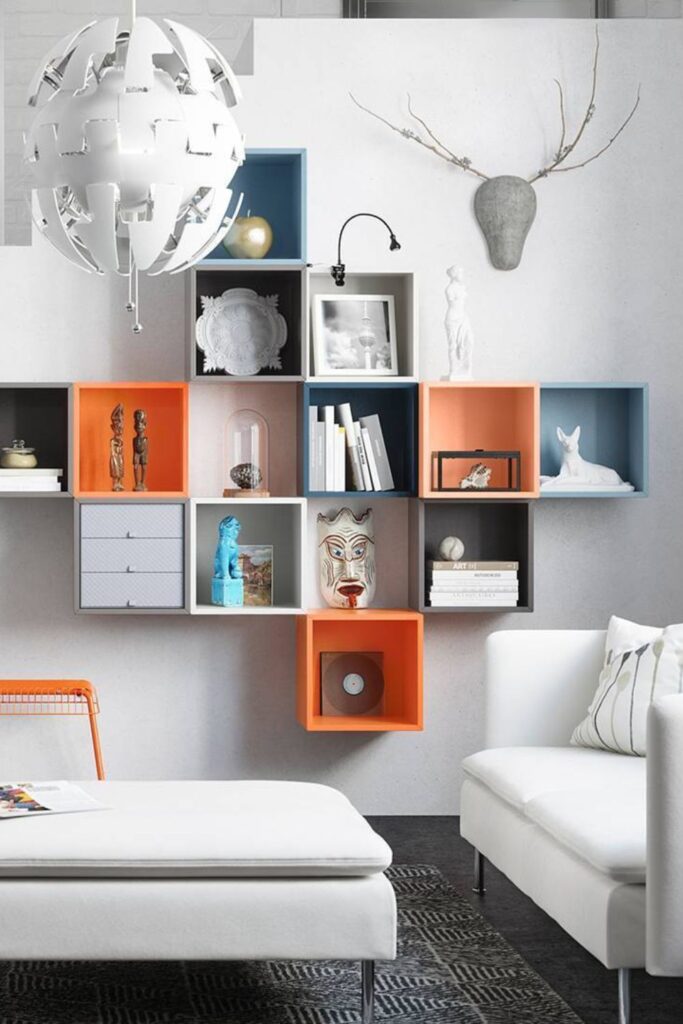
Cube Shelves
Living rooms often lack small storage spots for books, décor, and everyday items. A grid of cube shelves turns a plain wall into a functional display.
That keeps everything in place without taking up too much space.
Each cube works as a small compartment, so it’s easy to keep books, decorative items, and small storage boxes apart.
Put numerous cubes on the wall in a staggered pattern to make it look trendy while still feeling balanced.
You can put books or framed art in the bigger cubes, and trinkets and plants in the smaller ones.
Mixing locked drawers with open cubes saves the display from looking messy and adds useful storage space.
Sink Organizers
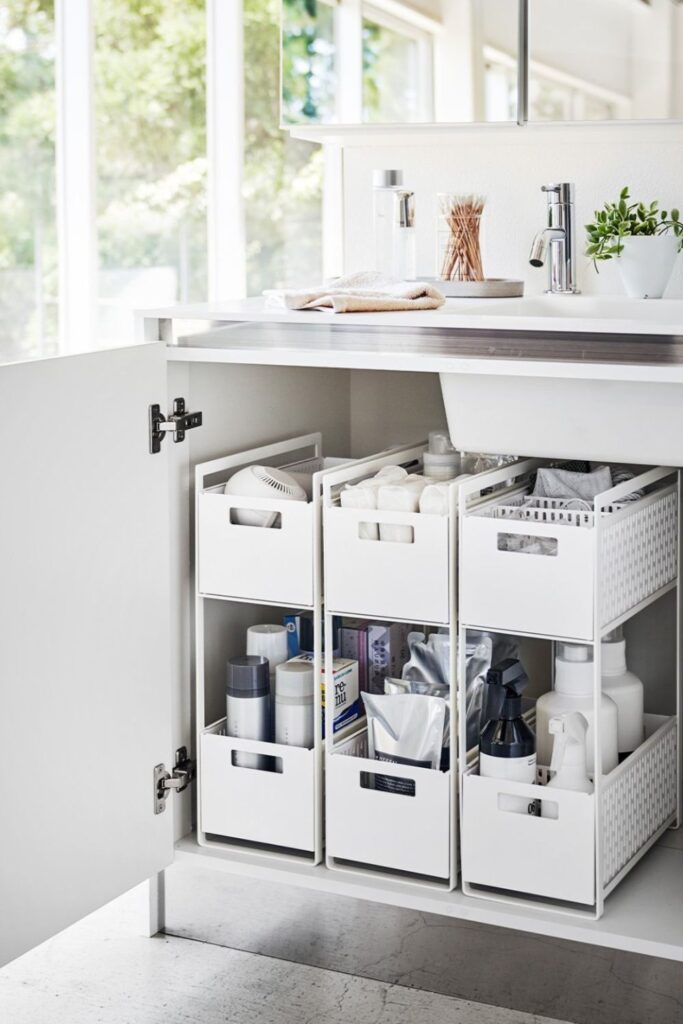
Cabinet space under the sink often turns into a clutter zone where bottles pile up and small items disappear in the back.
Pull-out organizers fix that by making the cabinet into layered storage that is easy to get to. You can see every bottle, cloth, or cleaning product.
Without having to search through everything when you use sliding baskets. Narrow frames fit snugly around plumbing, so they are great for cabinets under bathroom or kitchen sinks.
Put the taller cleaning sprays on the bottom level and the smaller things like sponges, wipes, and refills on the top baskets.
These little drawer-style organizers can change an untidy cabinet into a simple, organized storage solution that works better in small houses.
Utility Board
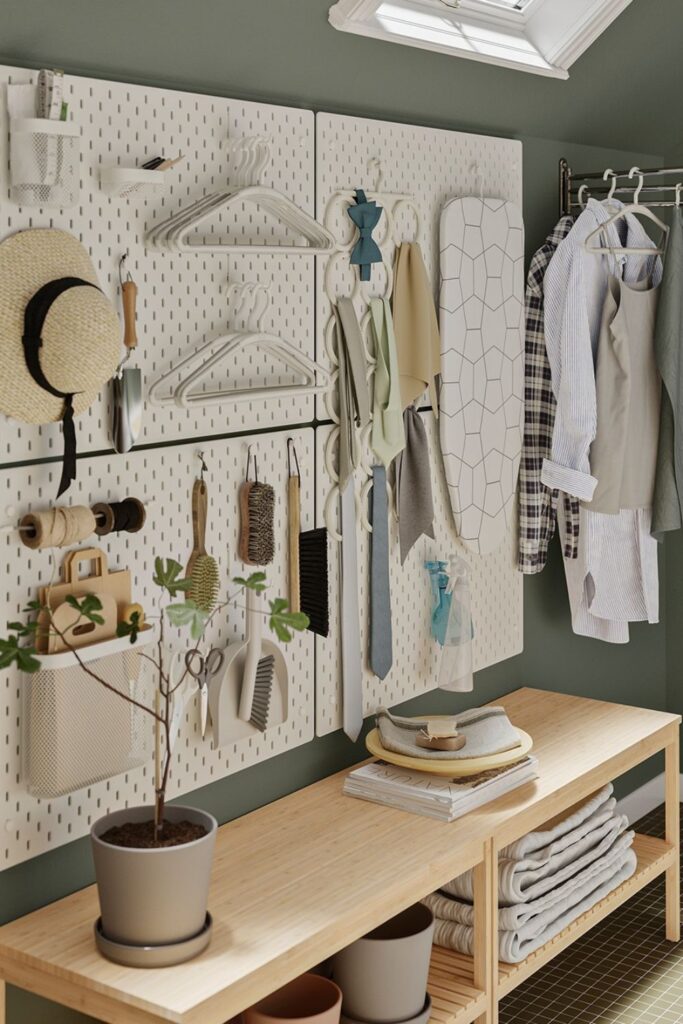
Closets and drawers fill up quickly once accessories, tools, and small items start piling up. A wall-mounted utility board keeps those everyday things visible and easy to grab.
While making room in the drawer. You can hang hats, ties, brushes, scissors, or cleaning equipment on hooks, baskets, or little containers that attach directly to the board.
Placement works nicely in a dressing area, laundry corner, or entryway where small items and accessories tend to go lost.
It only takes a few seconds to move the hooks around, so you can change the layout whenever you need to.
Putting the board next to a clothing rack or bench makes a simple prep station where clothes, accessories, and other daily needs are kept organized.
Stair Storage
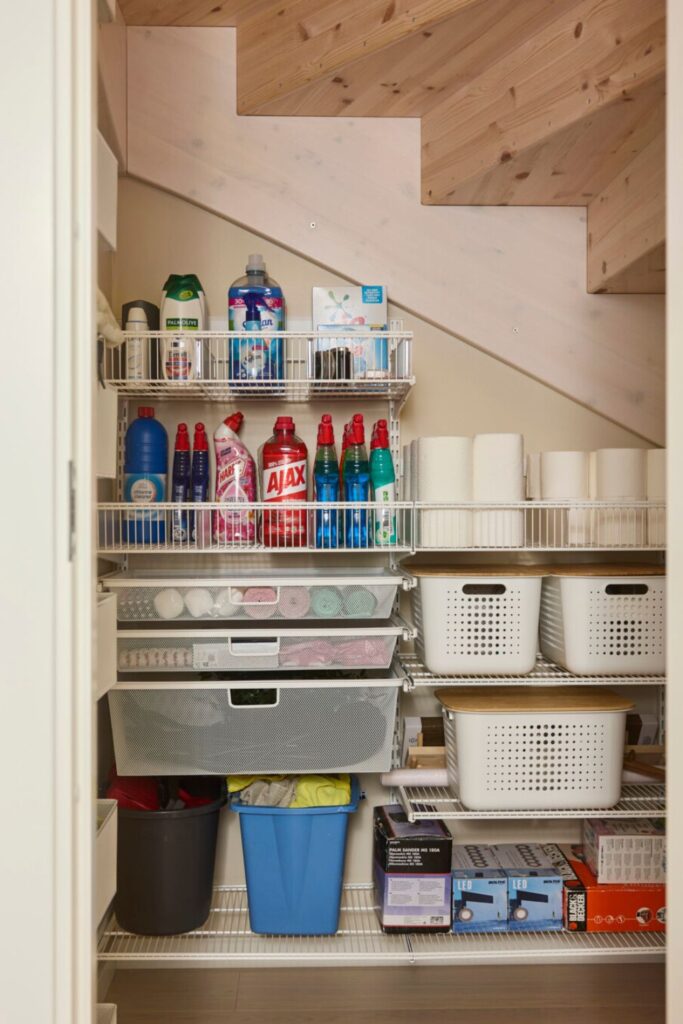
Sloped spaces under stairs often become forgotten corners where random boxes pile up. Turning that area into a shelving zone.
It makes a fairly big storage area right away without needing any extra rooms. Open wire shelves are great since they are easy to move around and let you see everything.
The higher levels are great for cleaning supplies, paper goods, and backups for the home. Smaller items like towels and sponges can be organized in pull-out baskets or boxes.
On the bottom shelf, bigger containers might house seasonal items or those bought in bulk. This kind of design turns an awkwardly inclined space into a useful place.
To store things around the house. Under-stair shelving is most useful for homes with small closets since it makes use of space that would otherwise go unused.
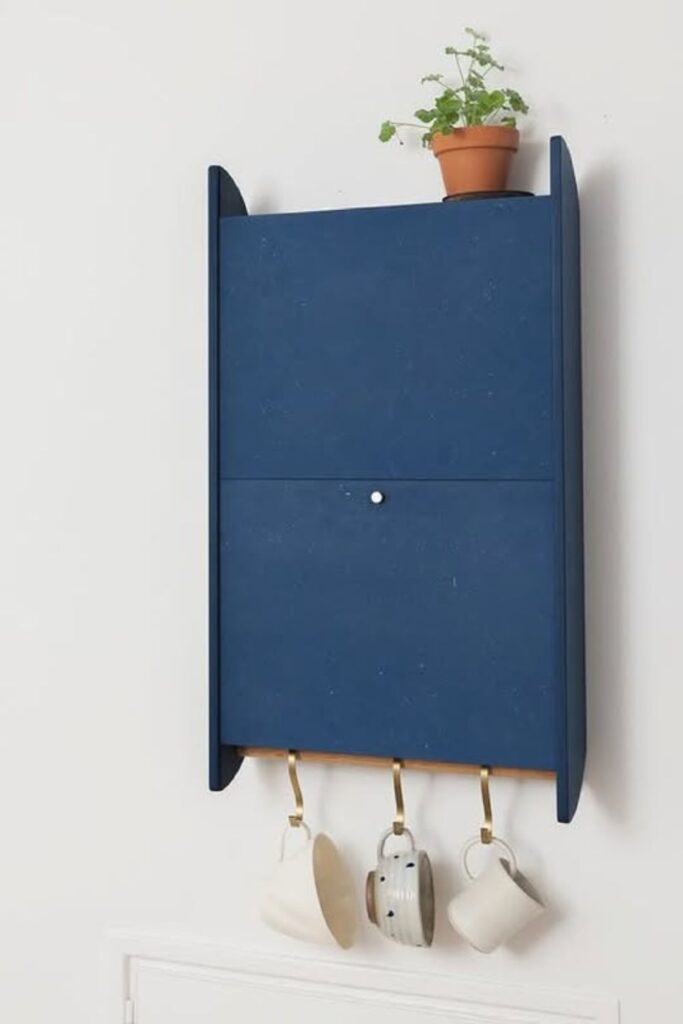
Mug Cabinet
Kitchen counters fill up fast once mugs, jars, and small items start competing for space. A slim wall cabinet with built-in hooks creates a compact coffee station.
it puts everything in order and doesn’t take up room on the counter. The cupboard above hides tea, sugar, or tiny kitchen supplies, while the mugs hang neatly below.
The best place to put it is near a coffee maker, breakfast nook, or dining wall where mugs are used every day. Put the cabinet up high enough that the hooks are easy to reach.
Then, for convenient access, put matching cups underneath. The top surface can also house a small plant or piece of decor.
Which makes the unit look less functional and more like it belongs in the room. This kind of vertical cabinet turns an empty wall into a neat place to store drinks.
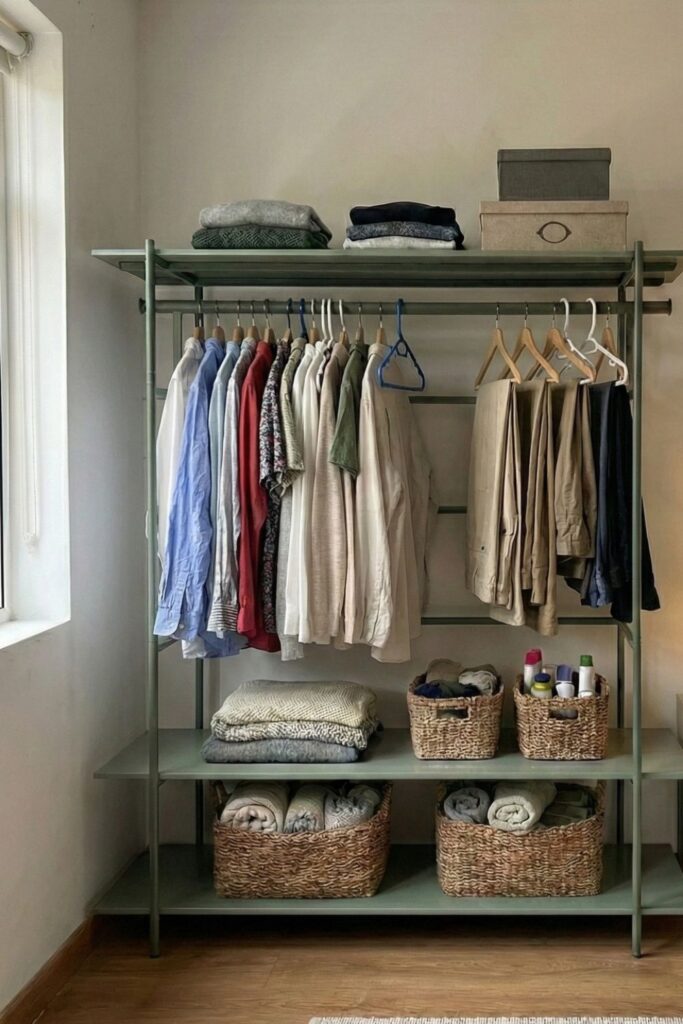
Open Wardrobe
Closets often run out of space long before the rest of the room does. An open wardrobe like this turns one empty wall into a complete clothing station without needing built-in storage.
The robust frame with a hanging rod keeps shirts, jackets, and pants in order, while the shelves below hold folded garments and other things you use every day.
Woven baskets on the bottom levels help keep things neat by separating smaller items like socks, accessories, or exercise clothing.
The top shelf is a good place to store things like folded sweaters, seasonal items, or storage boxes.
This setup is best for bedrooms that don’t have big closets because it has hanging space, shelves, and basket storage all in one little unit.
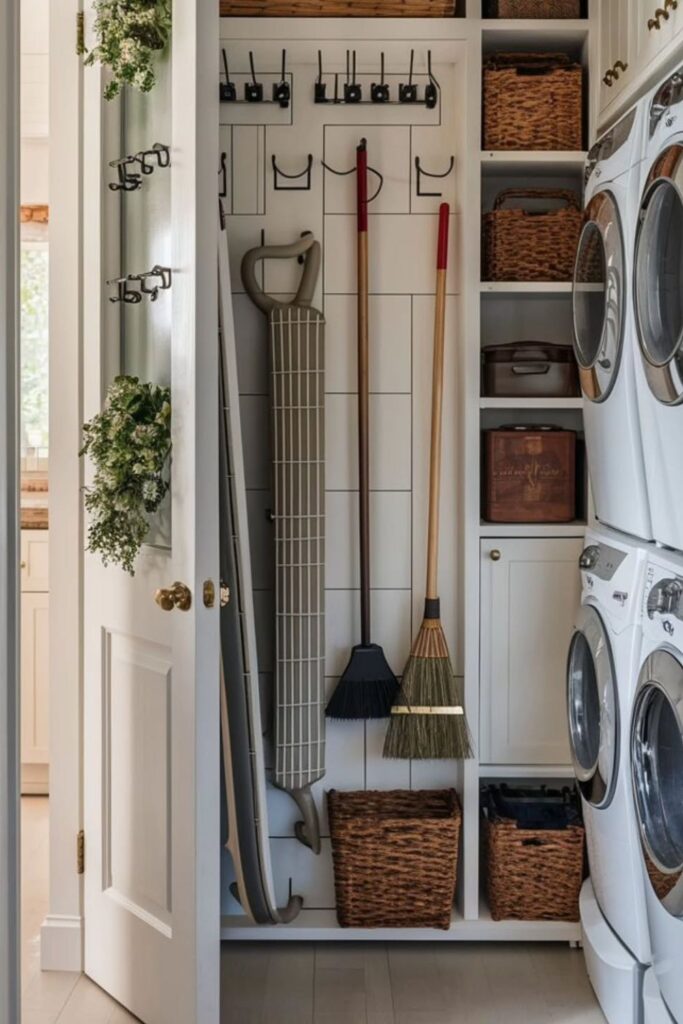
Tool Station
Cleaning tools usually lean in random corners or hide behind doors, making them hard to grab when you actually need them.
If you turn a small closet into a vertical tool station, everything will stay standing, be easy to find, and be in order. Wall hooks keep brooms, mops, and dustpans from sliding about on the floor.
Upper rails or hook strips make it easy to keep smaller equipment, and baskets on surrounding shelves hold cleaning cloths, sprays, or extra supplies.
Ironing boards and other tall things fit perfectly on the side wall without taking up too much space.
With a few hooks and strategic shelf arrangement, you can turn an inconvenient, narrow spot into a location where all of your lengthy, hard-to-store cleaning products can live.
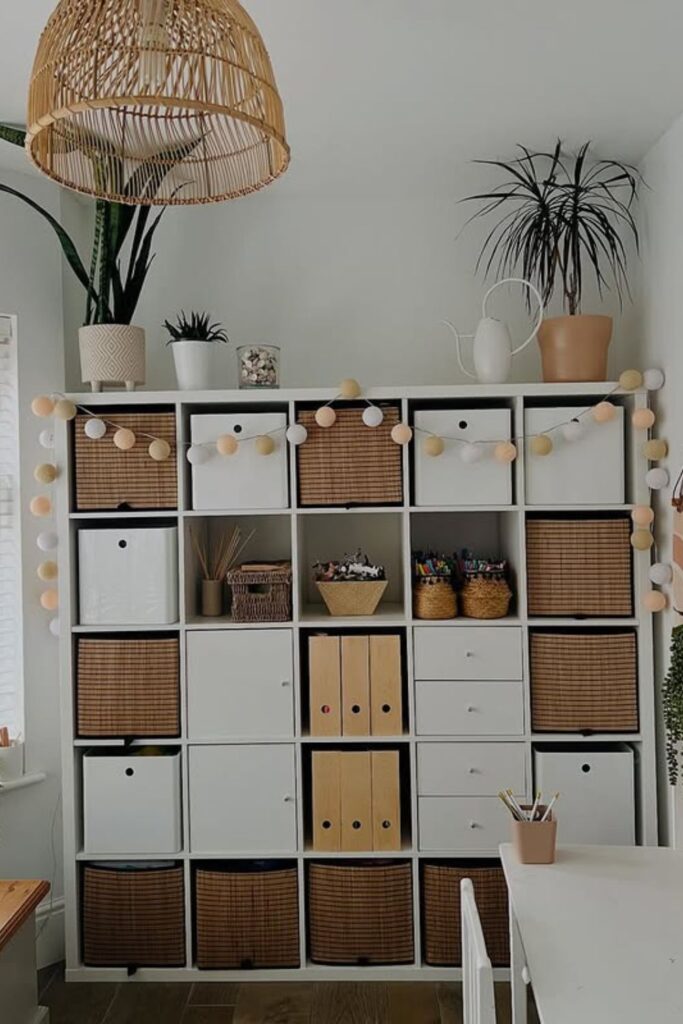
Storage Grid
Clutter disappears quickly once everything gets its own compartment. A large cube storage grid like this acts as a flexible wall organizer.
That keeps everything from workplace supplies to things around the house in one neat spot. Each square becomes a specific place for baskets, drawers, or folders.
Open cubes are great for showing off books, stationery, or ornamental items, while woven baskets are great for hiding loose things.
Putting storage boxes within certain cubes makes the whole structure look neater while still adding a lot of storage space.
This layout is best for rooms that are also workplaces, creative spaces, or dining areas since it keeps materials organized without spreading them out around the room.
Door Pantry
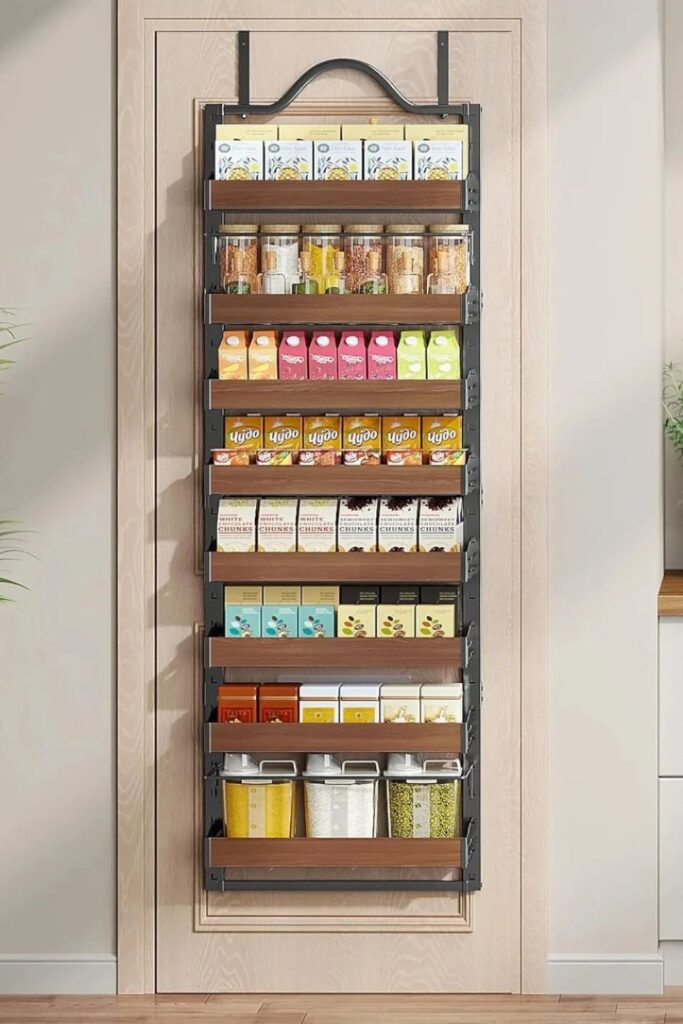
Pantry space disappears fast in small kitchens, especially when cabinets fill up with bulky items.
Adding a vertical pantry to the back of a door gives you more storage space without taking up any floor space.
You can either attach a multi-shelf organizer straight to the door or use a strong over-the-door rack made for pantry storage.
Put the heavier jars on the bottom shelves and the lighter packages on the upper shelf to keep things balanced.
Spices, tea boxes and little objects that frequently get buried in deep cupboards fit well in narrow compartments.
Mudroom Rack
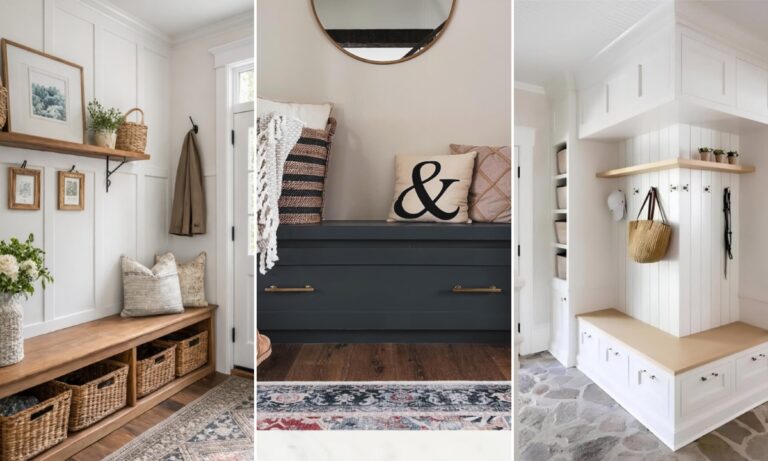
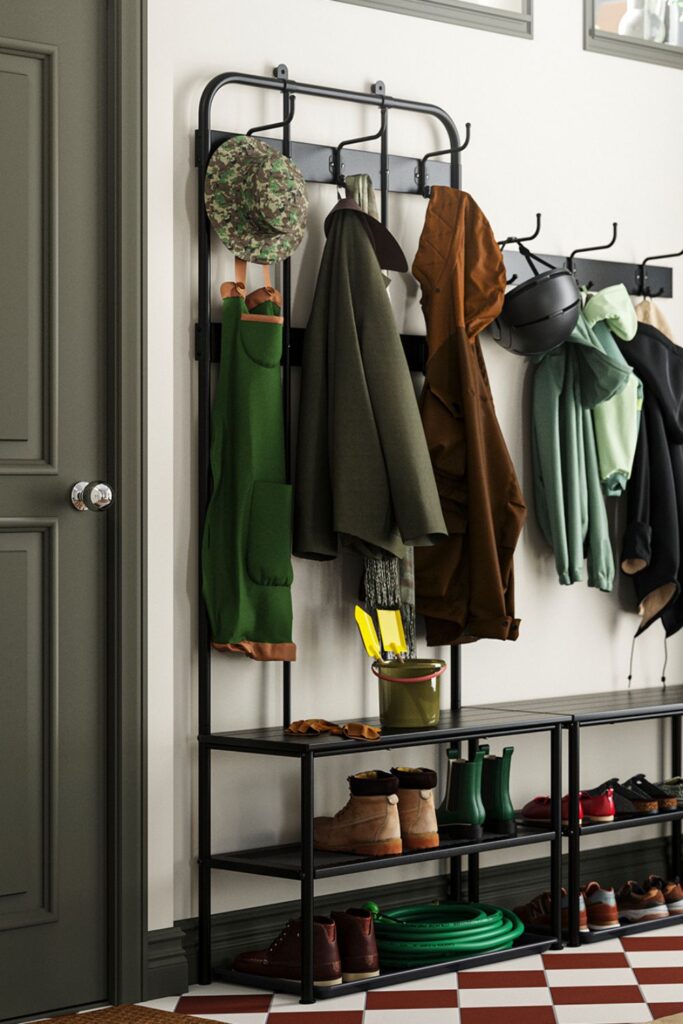
Daily gear piles up fast near the door jackets, hats, boots, bags until the entryway starts feeling messy.
A short shoe bench and a wall-mounted rack make a basic drop zone where everything has a place as soon as you come in.
There are open shelves underneath that house everyday shoes so they stay orderly instead of being all over the floor.
You can even put boots or outdoor gear in the taller sections. This setup works best in entryways, mudrooms, or hallway corners.
Since it keeps the things you use the most close at hand. Putting hooks and shelves together on one wall makes a useful landing spot that keeps the rest of the house much cleaner.
Corner Tower
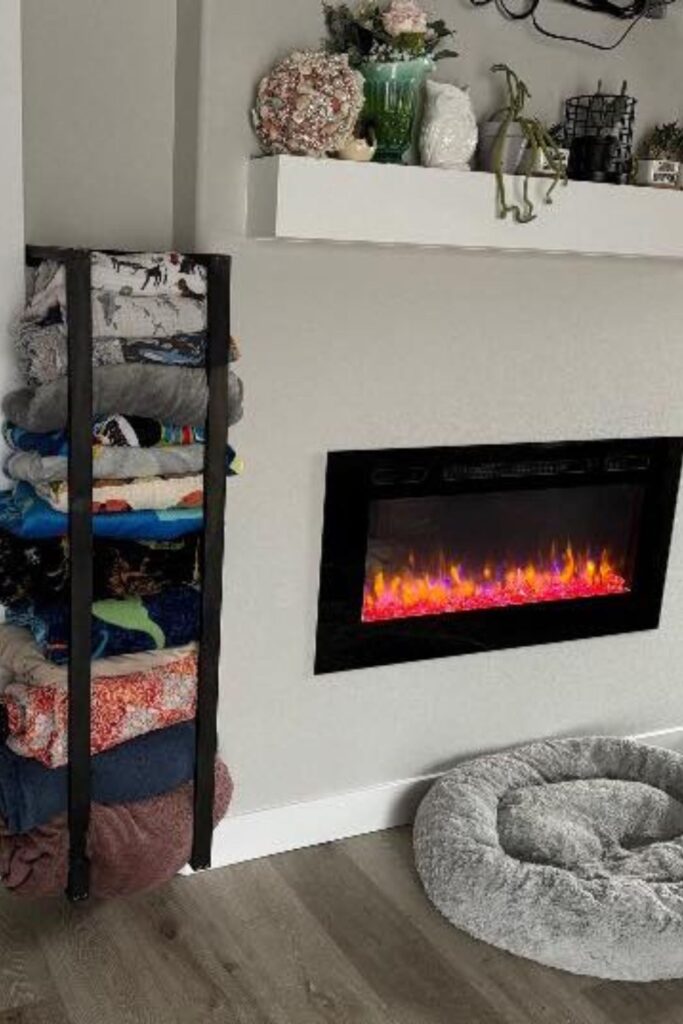
Unused corners often collect random piles of blankets, clothes, or laundry. A tall corner tower turns that forgotten space into vertical storage.
That keeps everything in a nice stack instead of splayed out all over the place. Narrow shelves are great for putting next to walls, fireplaces, or closets.
Where standard furniture would be too big. Put blankets, sweaters, or towels in piles by type so that they are easy to grab.
You can store laundry or spare linens in fabric baskets on lower shelves without making the space look messy.
This design works best in living rooms and bedrooms because the corners usually stay empty even when the rest of the space feels full.
Supply Pantry
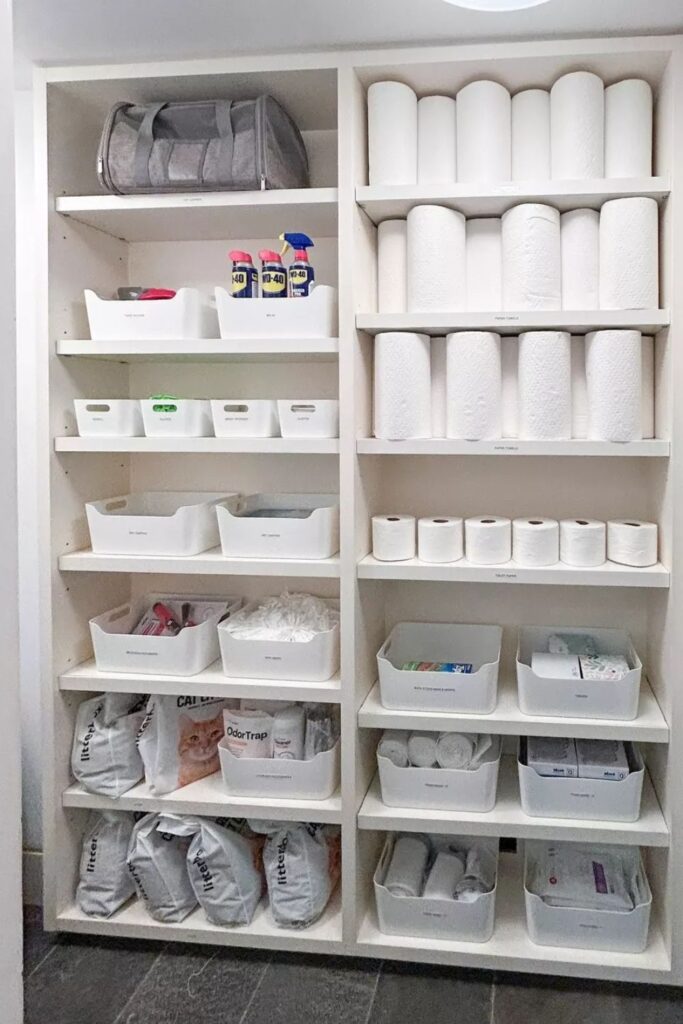
Household supplies quickly take over closets when everything gets stacked randomly. Open shelving paired with labeled bins turns that chaos into a simple supply pantry.
Where everything has a clear place to go. To keep things from getting lost behind bigger packages, paper towels, cleaning sprays, toiletries, and other household items stay together.
Wide shelves are great for storing a lot of things, including paper products. Smaller bins are better for keeping everyday items organized and simple to reach.
Putting labels on each container makes it easy to resupply because everyone knows where everything goes.
This layout works great in utility rooms, laundry rooms, or closets in the hall. Shelves like these make everyday storage into a system that helps you find things fast when you need to.
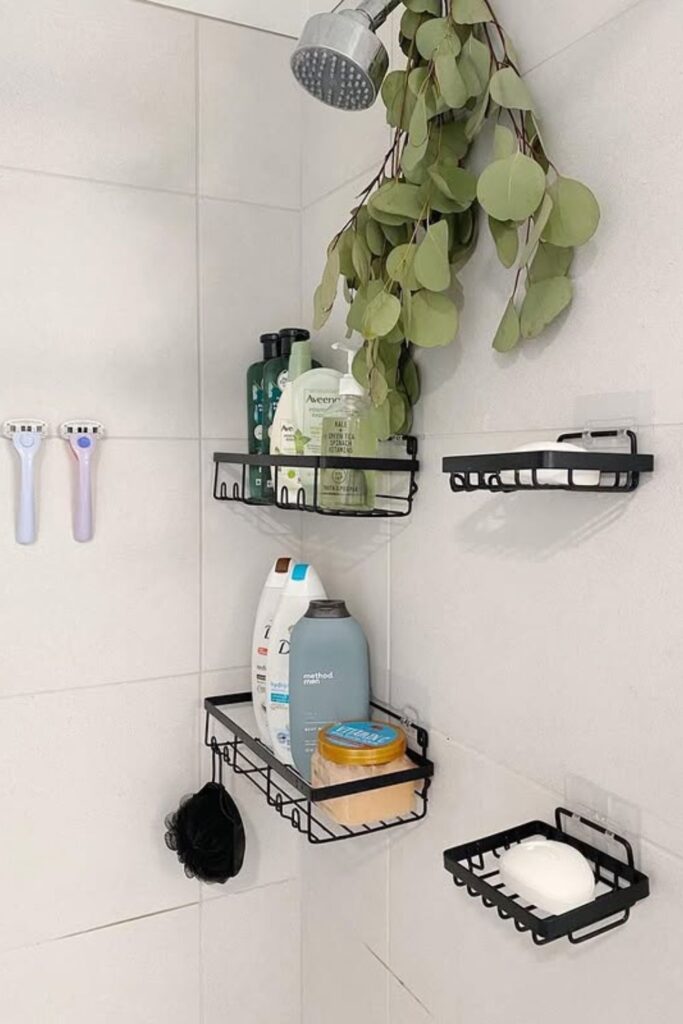
Shower Shelves
Shower bottles quickly take over the tub edge when there’s nowhere else to put them. Wall-mounted shower shelves solve that problem by stacking storage upward.
Instead than letting stuff pile up in the corners. A few small racks can carry shampoo, body wash, and skin care goods without getting in the way of the floor and ledges.
The best place to put it is in a corner where a few shelves can sit up and down without getting in the way of the shower.
Renters can add storage without drilling into tile by putting up little racks that stick to the wall or are held up by tension.
Bottles that are heavier fit better in the lower baskets, while smaller trays are perfect for keeping soap or razors close at hand.
FAQs
Can renters add storage without drilling into walls?
Yes, for sure. A lot of storage options don’t require drilling or making permanent alterations. You may add a lot of storage without damaging the walls.
By using freestanding shelves, over-the-door racks, tension rods, and adhesive hooks. These choices are great for apartments since they can be taken down simply.
What is the easiest way to add storage in a small apartment?
Use vertical and hidden spaces that are often empty to begin with. Extra storage can be found in walls, doors, corners, and under shelves.
Adding compact shelving systems, hanging organizers, or stackable bins lets you store more things without taking up too much space on the floor.
You may like to read!

Fasial is the founder of the Fizzy Flare. He has been a passionate blogger since 2021. He ran three different websites in the past few years. Now he is focusing on Fizzy Flare to build an audience and help them organize their life.