22 Nightstand Organization Ideas for 2026
This post may contain affiliate links: full affiliate disclosure.
If your nightstand always looks messy, no matter how often you clean it, you’re not alone. Phones, chargers, books, skincare, meds, glasses.
Everything ends up there, and suddenly, one small table feels overwhelming. The problem isn’t that you’re bad at organizing.
It’s that your nightstand is doing too many jobs at once with no clear system. Once you understand what actually belongs there and how to arrange it properly.
In this article , you’ll find 22 Nightstand Organization ideas that work in 2026.
Let’s jump in!
Contents
- 1 How to Arrange a Nightstand?
- 1.1 Drawer Zoning
- 1.2 Calm Surface
- 1.3 Open Layers
- 1.4 Balanced Storage
- 1.5 Vertical Substitute
- 1.6 Micro Sections
- 1.7 Daily Essentials
- 1.8 Mindful Drawer
- 1.9 Clear Categories
- 1.10 Full Control
- 1.11 Soft Luxury
- 1.12 Tray Control
- 1.13 Charging Drawer
- 1.14 Basket Stack
- 1.15 Medicine Grid
- 1.16 Smart Sorting
- 1.17 Hidden Charging
- 1.18 Light Balance
- 1.19 Labeled Zones
- 1.20 Surface Reset
- 1.21 Category First
- 1.22 Tech Order
- 2 FAQs
How to Arrange a Nightstand?
A well-arranged nightstand starts with intention, not containers. Before you move or buy anything, you need to decide what you actually use at night.
If an item doesn’t help you sleep, wake up, or relax in bed, it doesn’t belong there. When you try to store everything.
the nightstand fails its purpose and turns into clutter fast. Make every item easy to reach, easy to put back, and easy to see in low light.
Once you arrange your nightstand based on your real nighttime habits rather than random storage, keeping it organized becomes almost effortless.
Save this article for later! 👇👇
Drawer Zoning
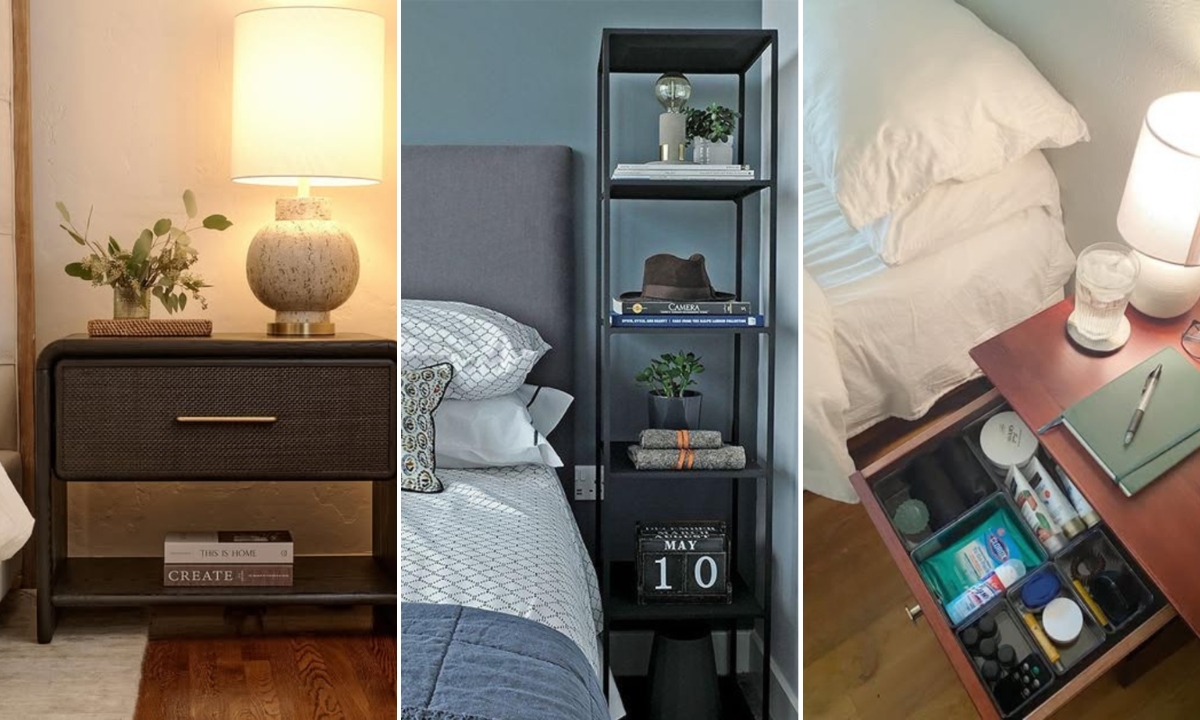
Messy drawers happen when everything competes for the same space. Split the drawer into clear zones so each item has a job.
Small baskets work best for meds, grooming items, tech, and extras you don’t use daily, fits nightstands with deep drawers.
Keep lighting simple on top of a warm table lamp so the drawer stays functional without cluttering the surface.
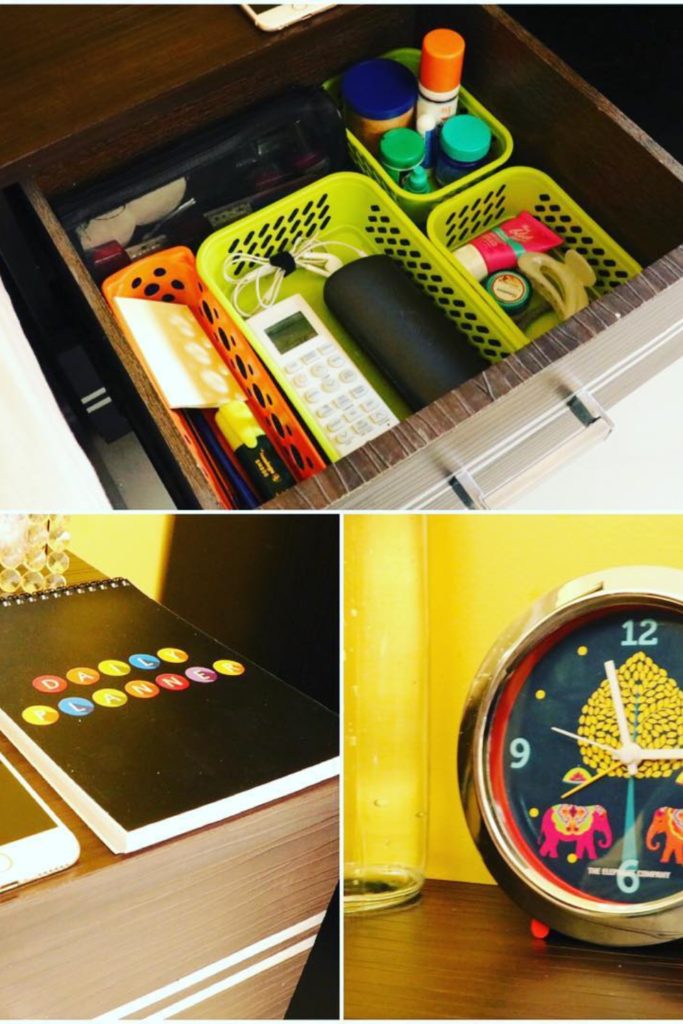
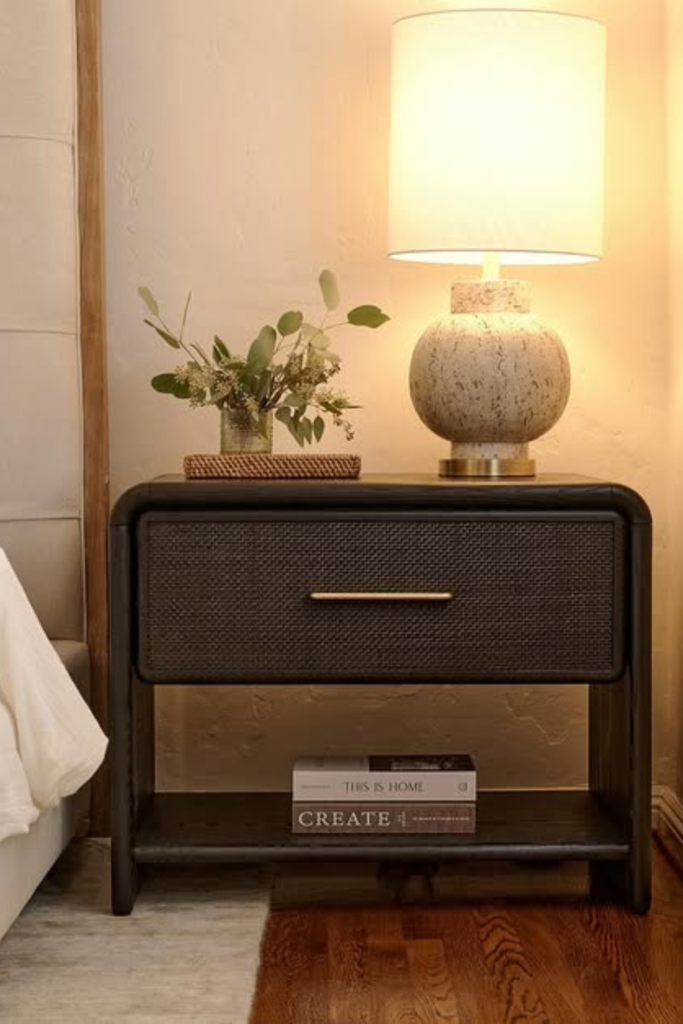
Calm Surface
Visual noise disappears when the top stays intentional, works best in bedrooms meant for winding down, not multitasking.
Limit the surface to a lamp and one grounding element, like greenery or a tray, pushing storage into the drawer.
Use a warm table lamp as the main light source to soften the space and avoid harsh overhead lighting at night.
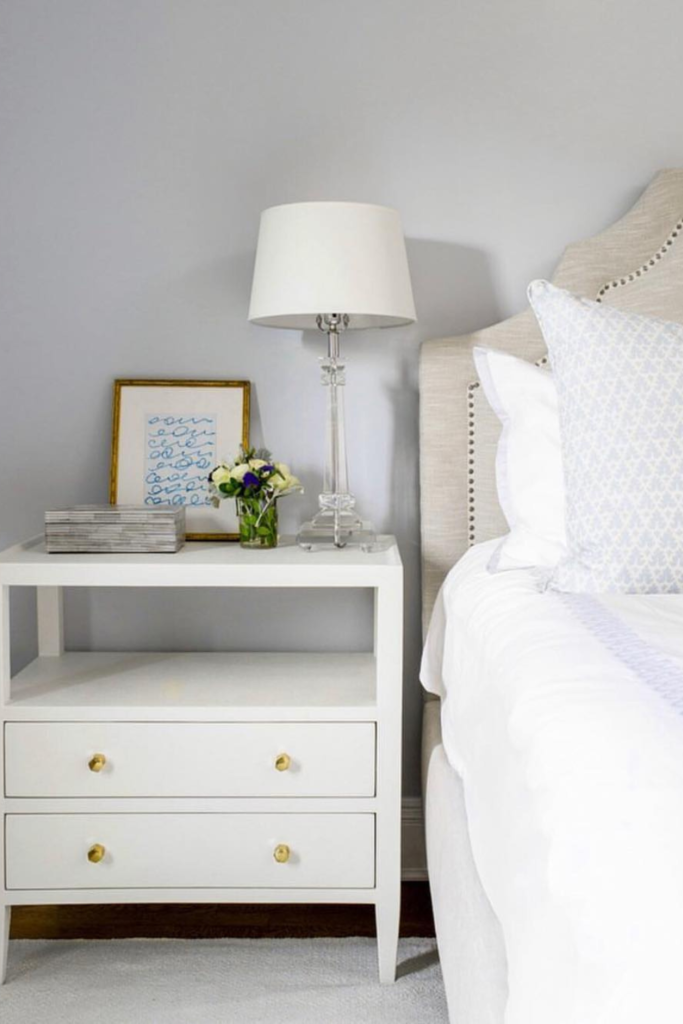
Open Layers
Hidden clutter feels manageable when storage is stacked vertically, this setup works well in small bedrooms.
Use drawers for private items, the open shelf for books or daily-use pieces, and keep the top light and breathable.
A clear or light-shade table lamp provides soft task lighting without visually weighing down the nightstand.
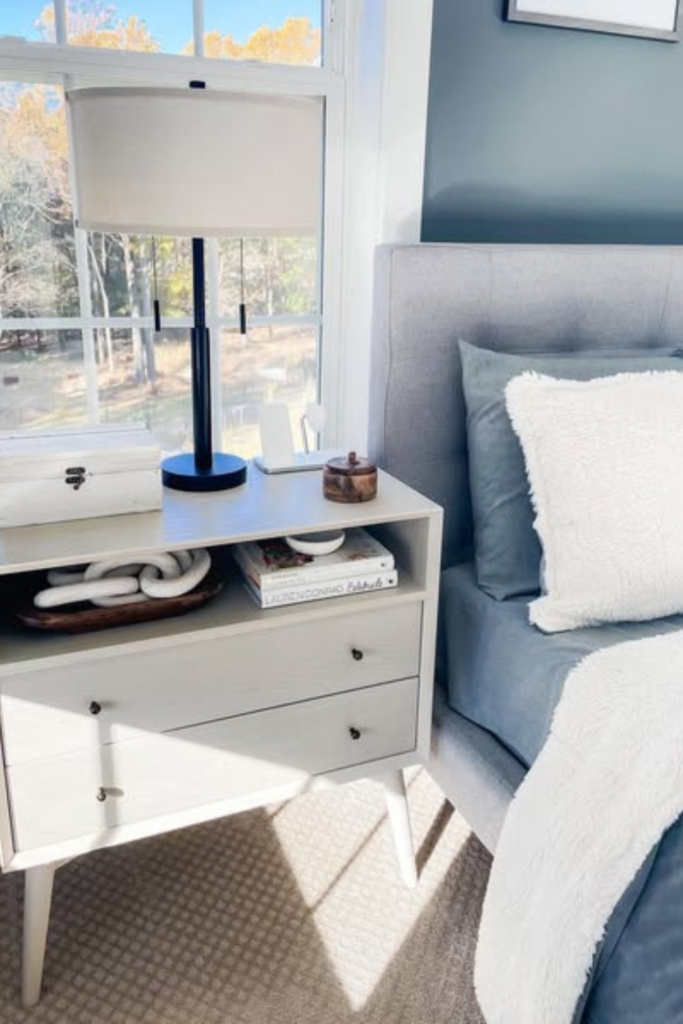
Balanced Storage
Morning light exposes clutter fast, so balance open and closed storage carefully. Use drawers for loose items.
Open shelf for neatly grouped pieces like baskets or folded accessories, and limit the top to a lamp and one small tray.
This setup suits bright bedrooms with windows nearby, table lamp handles night lighting, daylight naturally takes over during the day.
Vertical Substitute
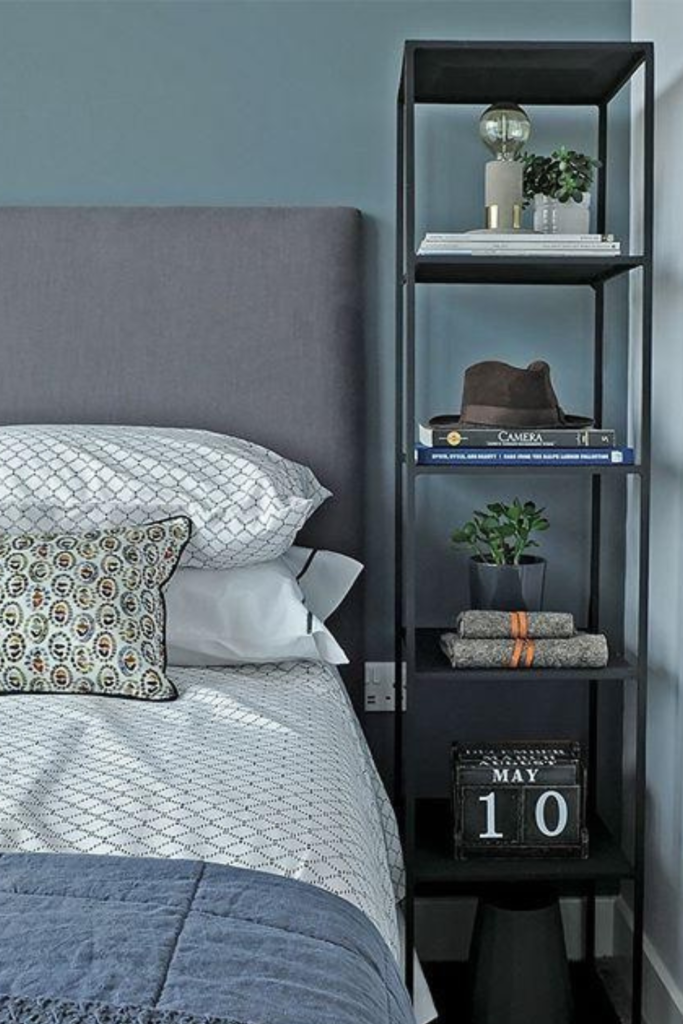
Floor space disappears fast in tight bedrooms, so going up solves the problem. A slim shelving unit works as a nightstand.
When drawers won’t fit, reserve the middle shelves for bedtime essentials and keep décor higher to avoid visual clutter.
Recreate this by limiting each shelf to one purpose. Add a wall sconce or clip lamp nearby to handle reading light.
Micro Sections
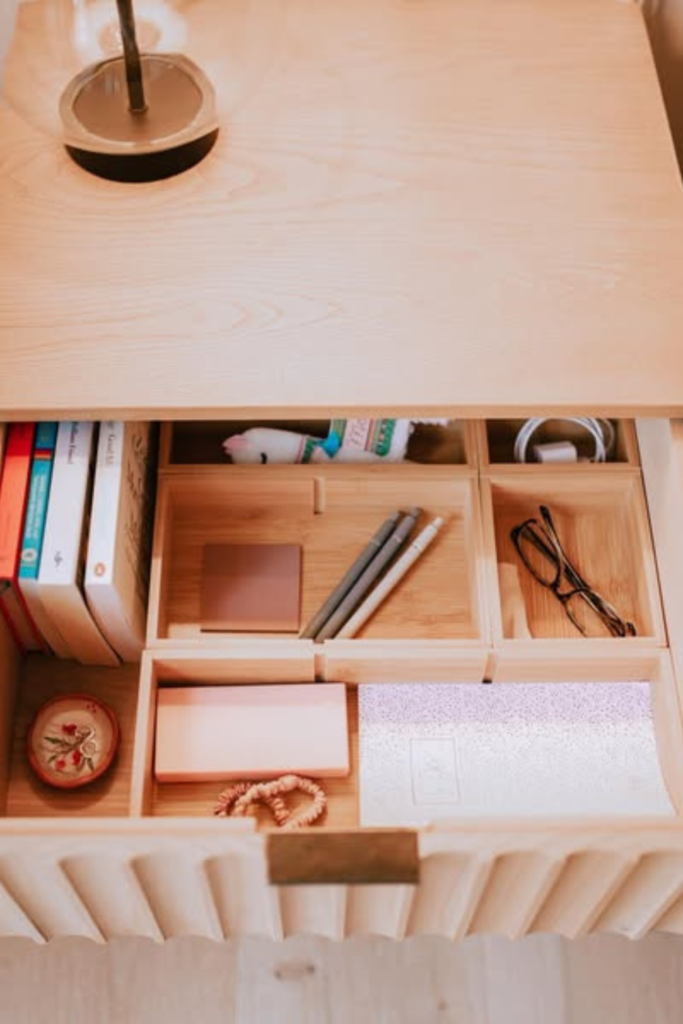
Tiny clutter stops being annoying once every item has a slot. Built-in dividers turn one drawer into multiple purpose zones, this approach works best.
Use custom trays sized to your drawer. A small task lamp on top provides focused light without overwhelming the clean setup.
Daily Essentials
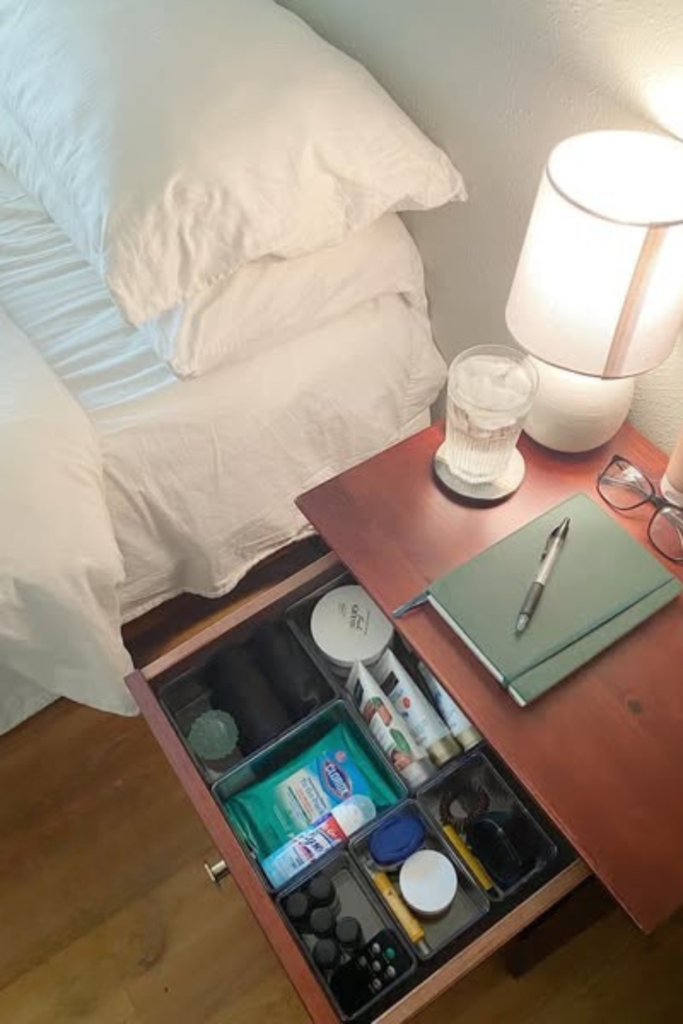
Bedside chaos fades when night-only items stay within arm’s reach. A divided drawer keeps skincare, meds.
Grooming tools easy to grab without mixing categories. This setup works best for busy routines and shared bedrooms.
Use deep bins for bottles and small trays for tiny items. A soft table lamp provides gentle ambient light without waking the room.
Mindful Drawer
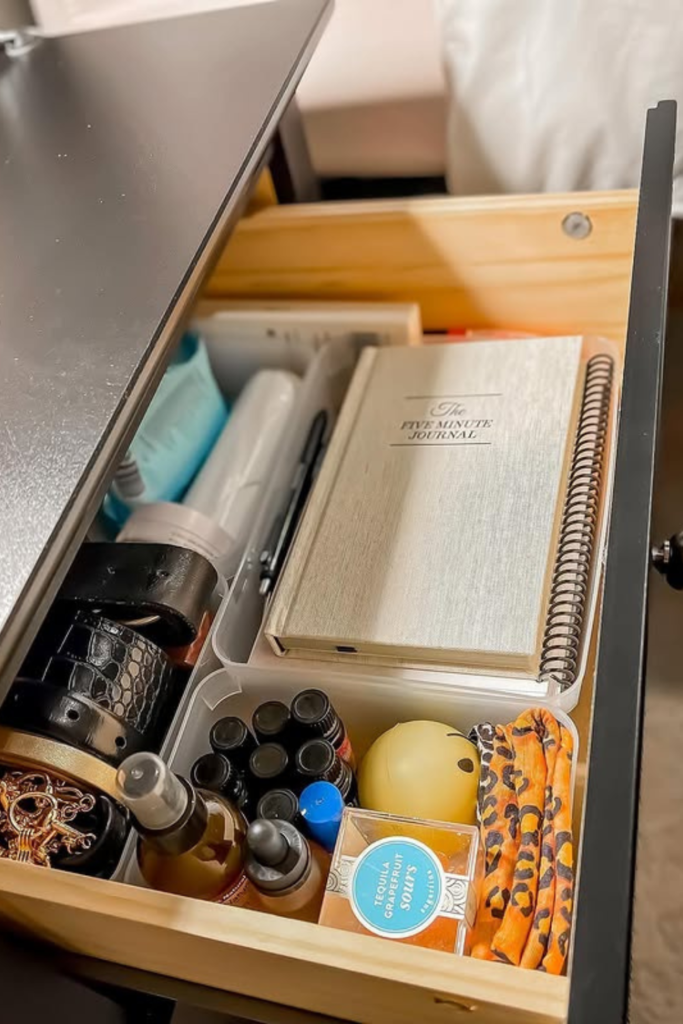
Calm nights start when reflection and care share the same space. A single drawer can hold journaling tools, oils.
This idea works best for people with a wind-down routine before sleep. Use shallow bins to separate writing.
Self-care, and accessories. A soft table lamp above keeps the mood relaxed while supporting quiet nighttime habits.
Clear Categories
Bedtime decisions get easier when everything is visible at a glance. Transparent organizers keep skincare, notes separated.
This setup works best for people who want to order without having to guess where things go, grouping items by use.
A soft bedside lamp provides ambient light while keeping drawers functional even during late-night routines.
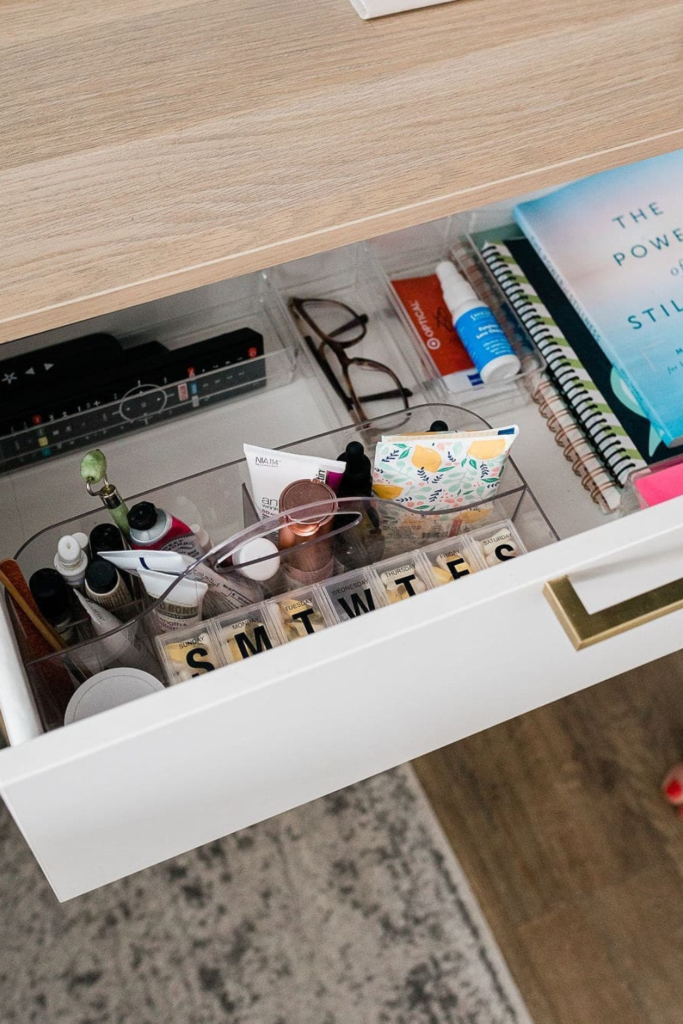
Full Control
Chaos disappears when every object earns a specific square. Deep drawers benefit from grid-style dividers that separate tech.
This method suits people who keep many bedside items but still want instant access, matching divider sizes to item volume.
Overhead or ambient lighting nearby works best here, since the drawer does the heavy lifting, not the surface.
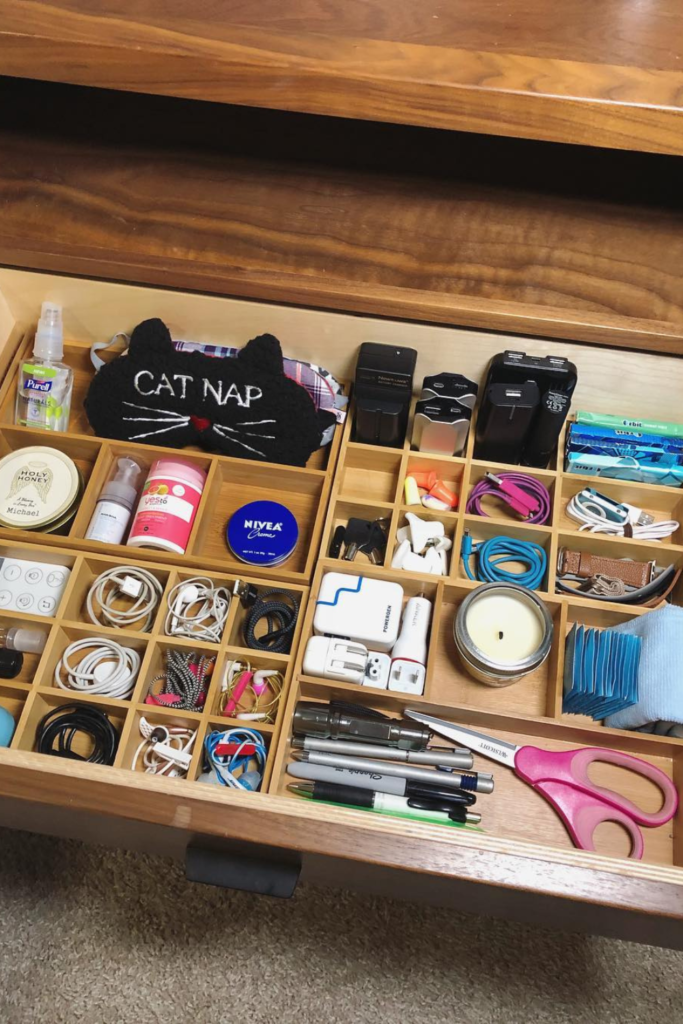
Soft Luxury
Polished organization feels easier when the drawer looks intentional. Clear dividers paired with a limited color palette keep essentials visible.
Edit it down to nightly basics and spacing out items. Layer lighting with a warm table lamp and a soft accent glow to keep the space calm.
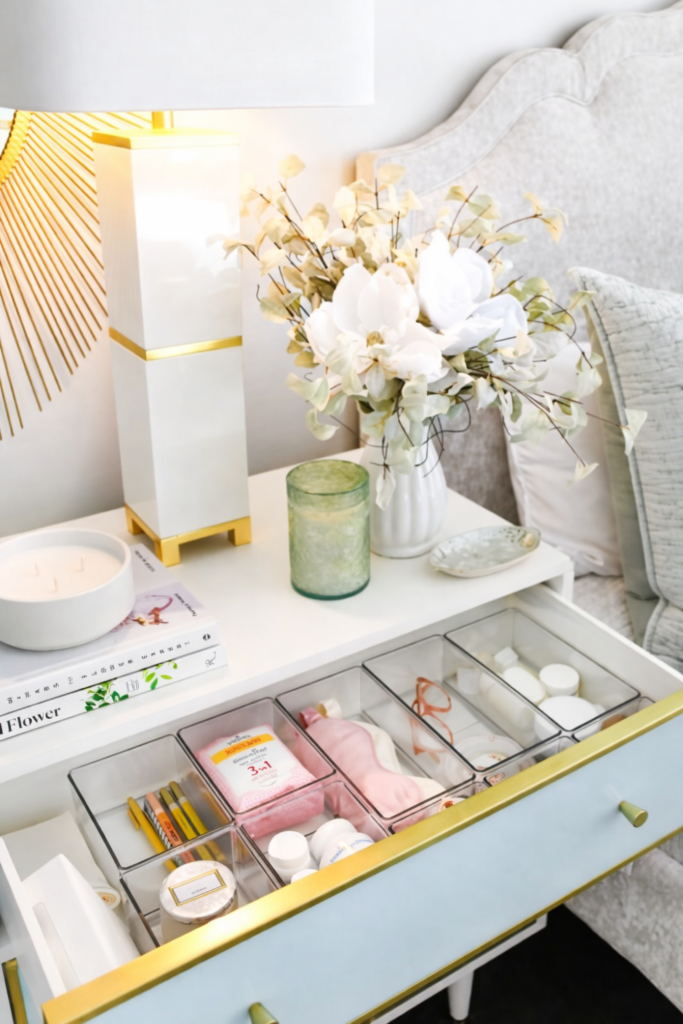
Tray Control
Small items stop spreading once they’re given boundaries. A compact tray keeps skincare, lip balm, and nightly essentials together.
This setup works best on small nightstands where clutter shows instantly, choose a tray that fits the lamp base footprint.
A single table lamp provides the main light, while the tray keeps everything reachable without visual overload.
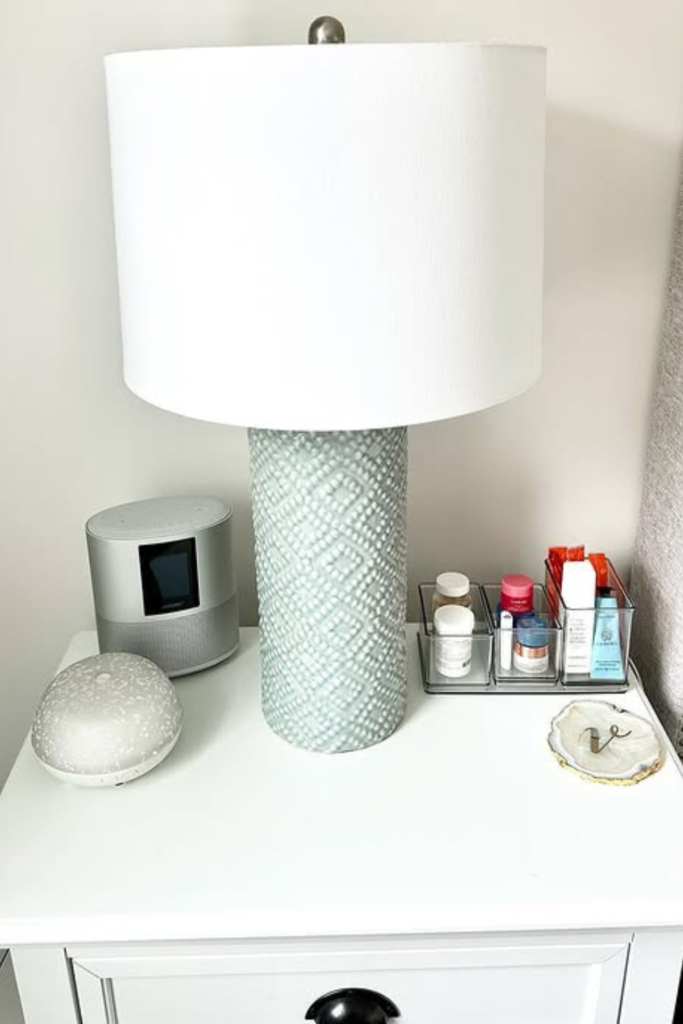
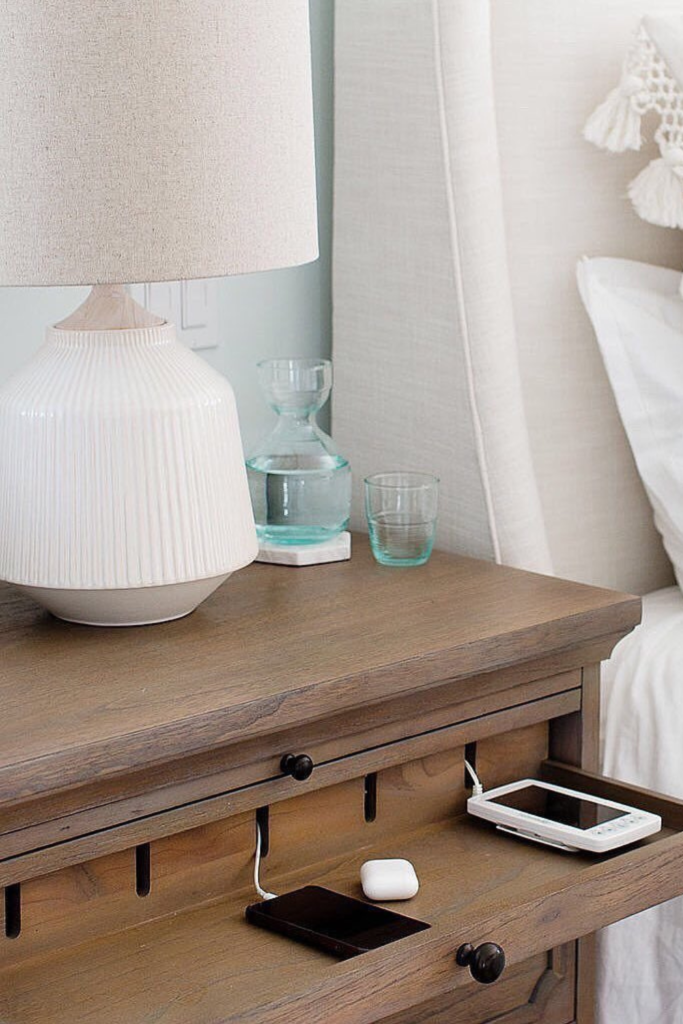
Charging Drawer
Nighttime clutter drops fast once charging moves out of sight. A shallow drawer with built-in cord access.
Keeps phones, earbuds, and power banks organized without stealing surface space, best for light sleepers.
Assigning one device per cord. A warm bedside lamp handles ambient light while tech stays hidden and quiet.
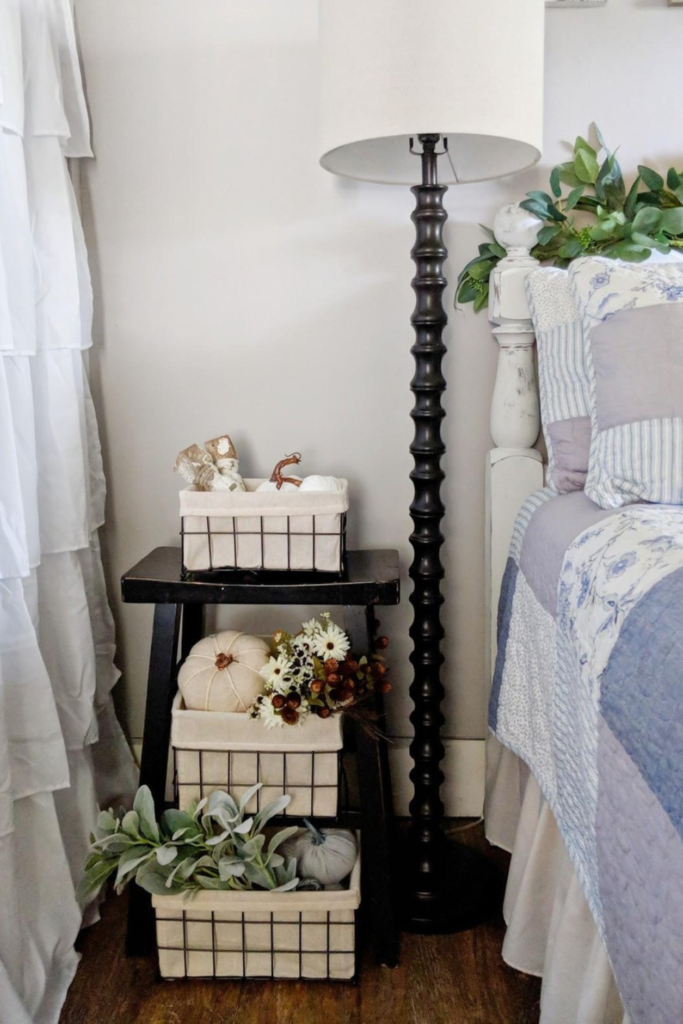
Basket Stack
Limited tabletop space stops being a problem once storage drops down. A small stool or tiered stand with baskets.
Keeps bedside essentials close without crowding the surface, works best in narrow bedrooms or next to tall beds.
Assigning one basket per category, floor lamp handles ambient lighting, keeps the top completely clear for breathing room.
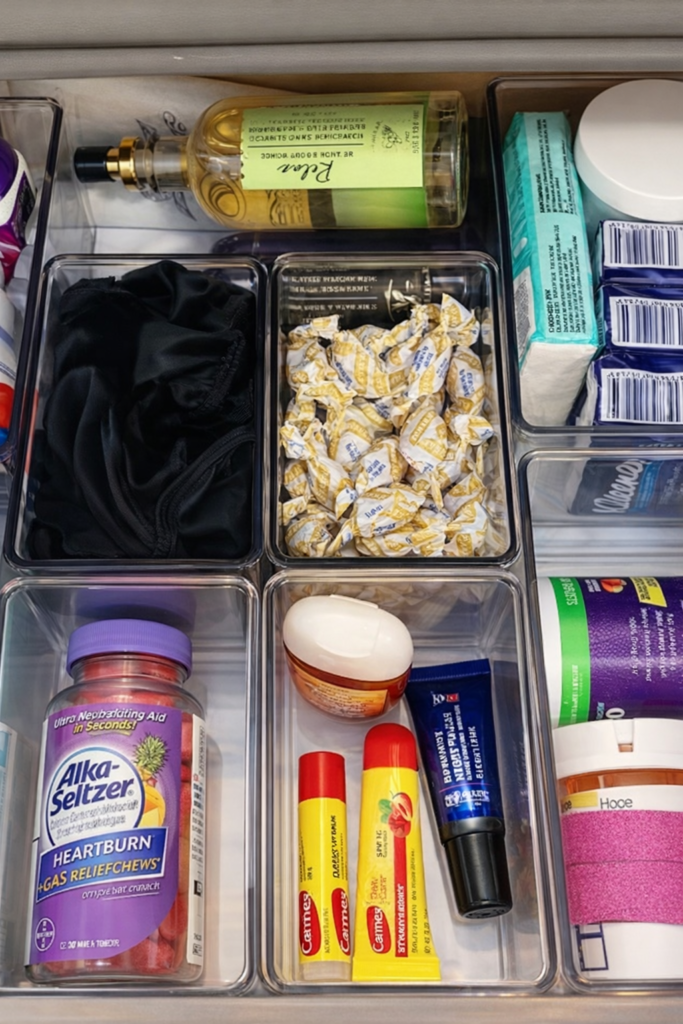
Medicine Grid
Late-night scrambling stops once health items follow a clear system. Separate daily meds, backups.
Quick-relief products into individual bins so nothing gets mixed or forgotten, best for people who rely on nighttime.
Keep lighting simple. A single soft lamp above is enough, since visibility comes from the layout, not brightness.
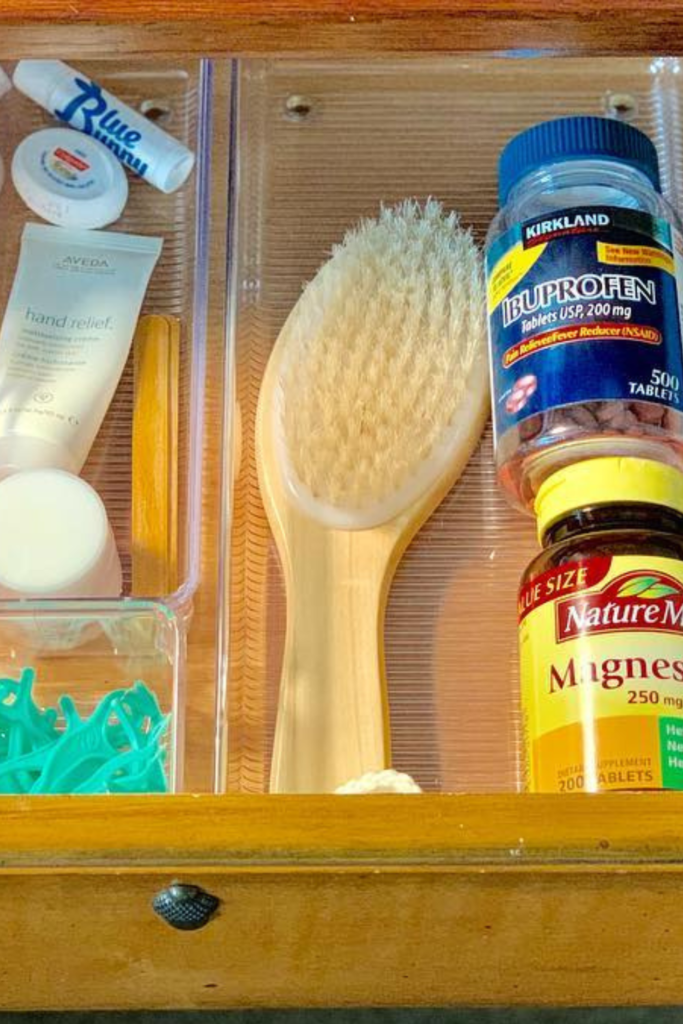
Smart Sorting
Clear compartments keep meds, remotes, personal care items, and small comforts separated, so hands move on autopilot.
Reaching for the wrong thing at night happens when unrelated items are stored together, works best for shared nightstands.
Group items by purpose, not category size. A simple bedside lamp gives enough light to grab what you need.
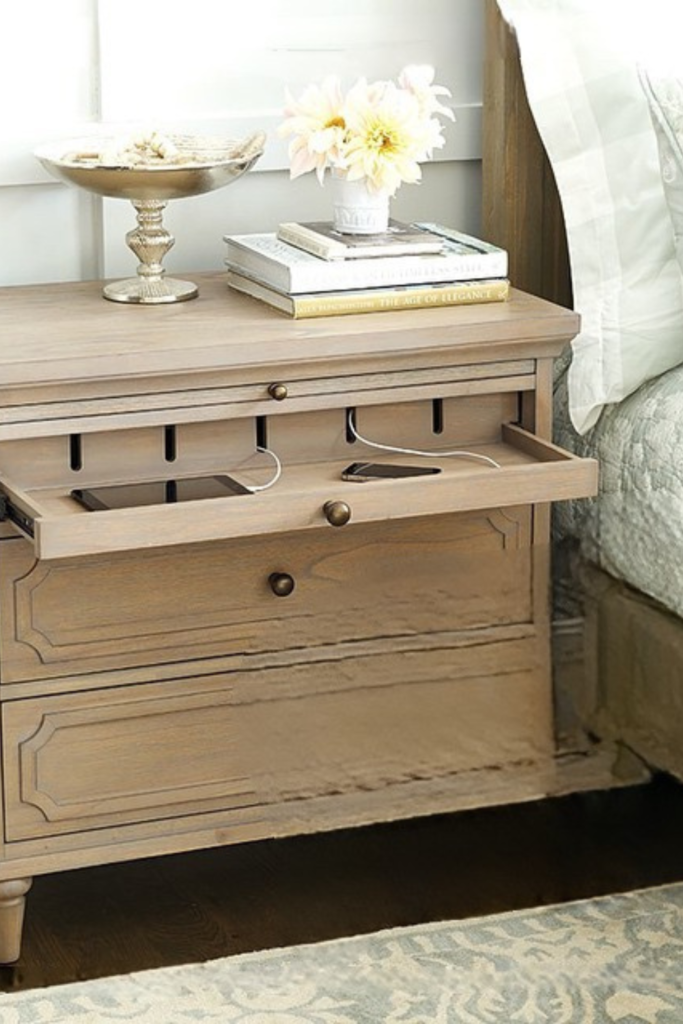
Hidden Charging
Surface clutter disappears fast when tech lives inside the furniture. A shallow pull-out drawer with cord cutouts.
Keeps phones charging while staying out of sight, works best for people who hate visible cables but still want devices close.
Routing the chargers through the back, assigning one slot per device, warm table lamp provides calm ambient light.
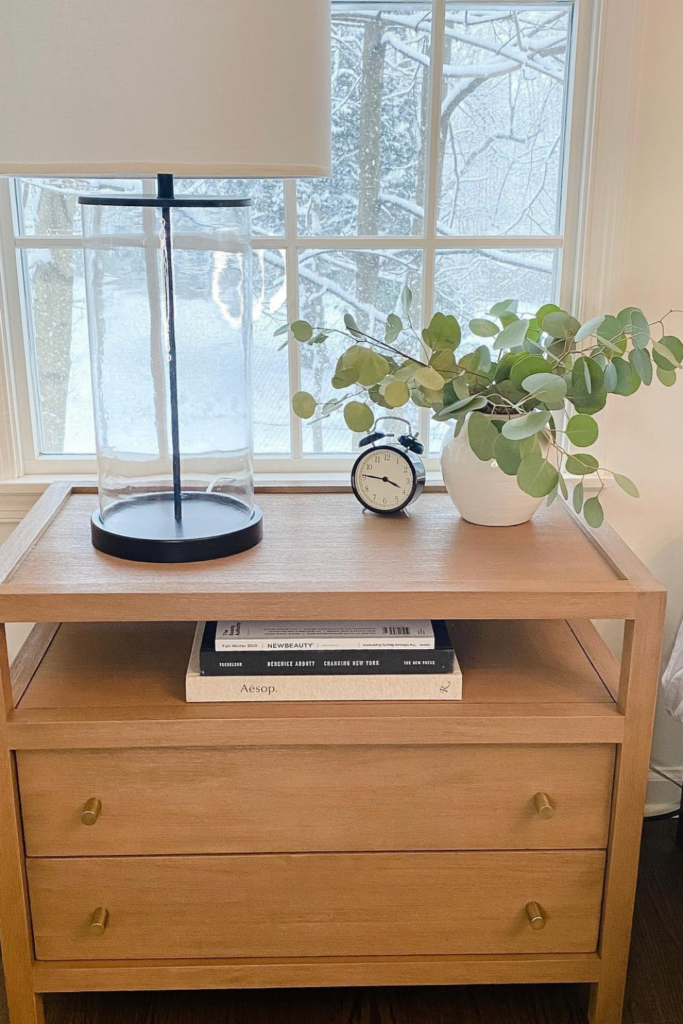
Light Balance
Calm starts when the surface breathes. Keep the top limited to a lamp, one plant, and a clock so nothing competes for attention.
This setup works best in bright rooms where daylight already does half the work. Recreate it by pushing books.
Into the open shelf and storing them in drawers. A clear or glass-based lamp layers soft ambient light without crowding.
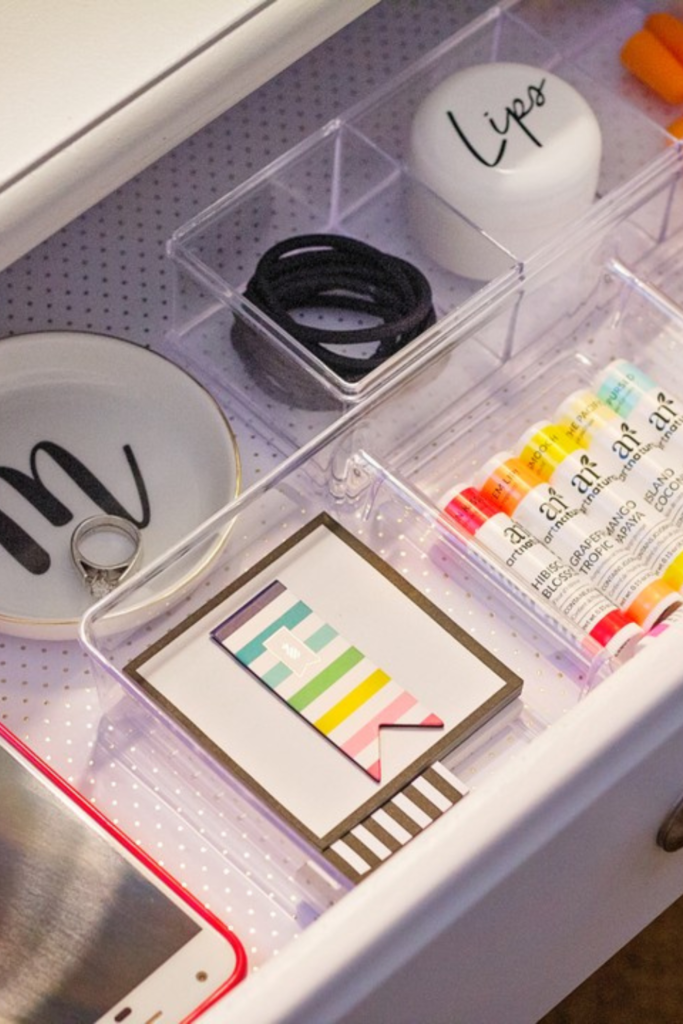
Labeled Zones
Decision fatigue drops when drawers tell you exactly where things belong. Labels and small, clear bins guide nightly habits.
This idea works best for shared nightstands or for busy routines where items tend to drift. Assigning one label per habit.
Not per object. Soft ambient lighting above keeps the drawer functional without making it the room’s visual focus.
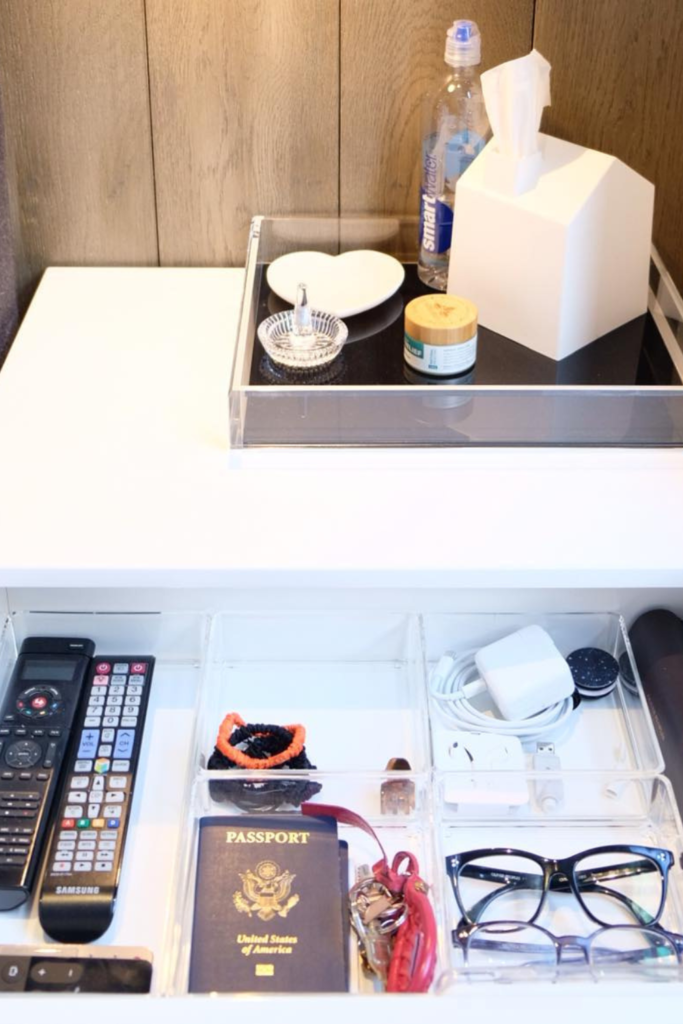
Surface Reset
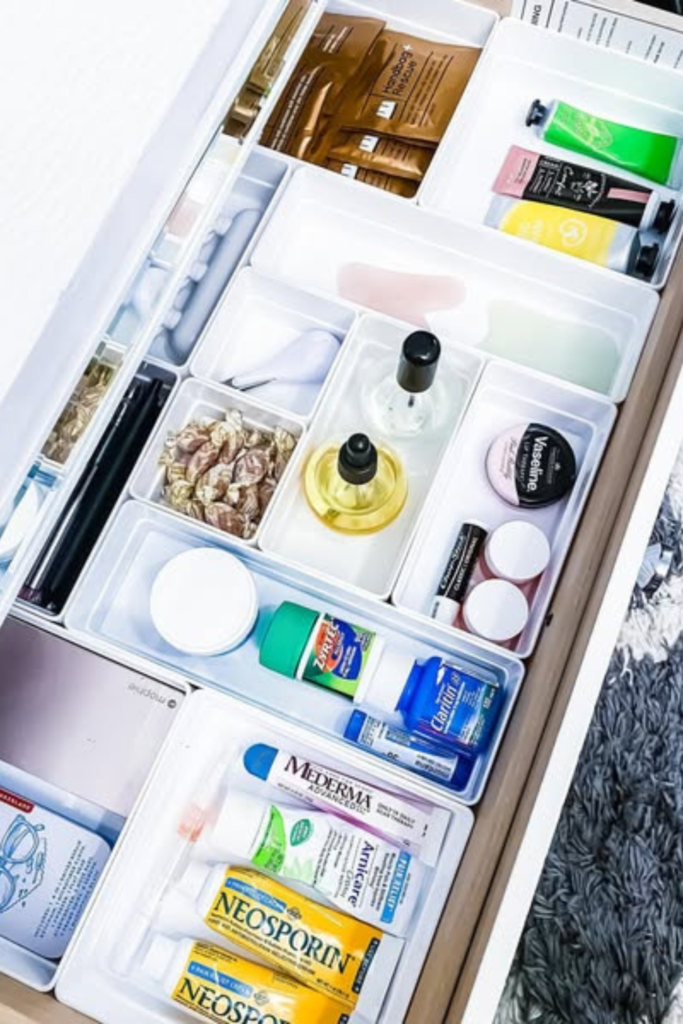
Clutter stays controlled when the top handles comfort. A single tray keeps water, tissues, and nightly care items contained.
While everything else drops below. This setup works best for people who want a clean look without losing convenience.
Recreate it by limiting the tray to daily-use items only. Soft ambient lamp lighting keeps the surface calm and distraction-free.
Category First
Order sticks by how you use them, not where they fit. Separate skincare, meds, first aid, backups into their own zones.
Each category lives in its own zone, recreate it by choosing bins that match category size, then stop filling once the bin is full.
Simple overhead or bedside lighting is enough since clarity comes from separation, not brightness, this setup works best.
Tech Order
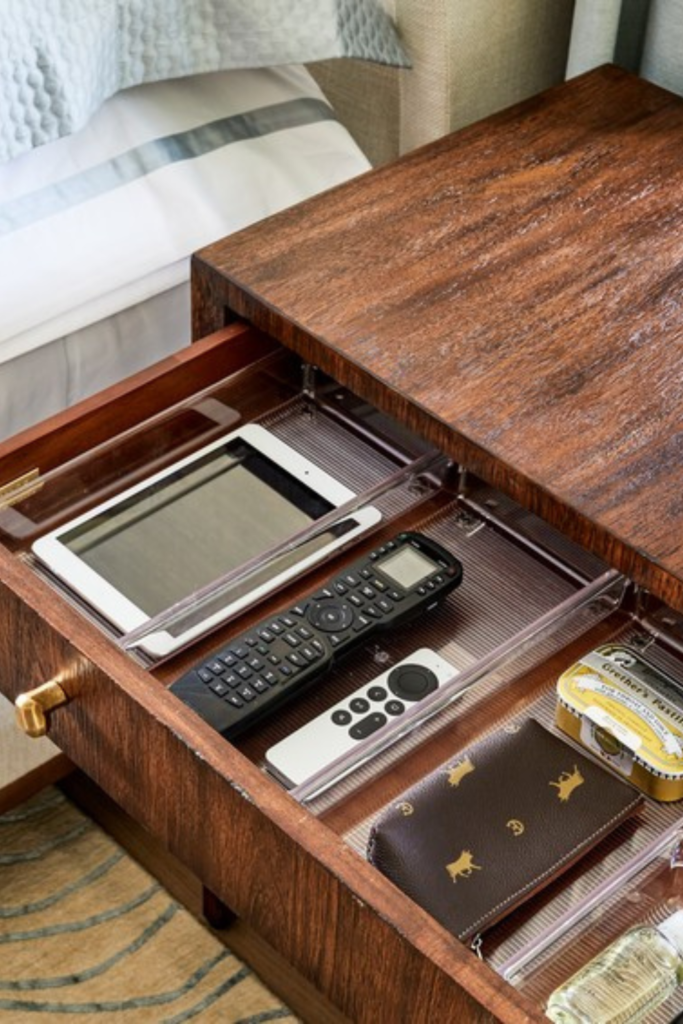
Distractions fade when electronics stop floating around. Slim dividers keep tablets, remotes, wallets, and chargers separated.
This setup works best for nightstands that double as media control zones. Recreate it by assigning one lane per device.
Keeping cords coiled tight. A sculptural table lamp adds ambient light while the drawer quietly handles all the tech work.
FAQs
How many items should stay on a nightstand?
Keep only what you actually use at night or first thing in the morning. A lamp, phone, water, and one comfort item are usually enough.
If adding something means stacking or searching, it doesn’t belong there. The fewer items you keep on top, the easier it becomes to stay organized.
Should nightstand drawers be fully packed?
No. A packed drawer turns into clutter fast. Leave breathing room so items are easy to grab and put back, even in the dark. If a drawer feels tight.
Remove duplicates or move backups to another location. An organization works best when there is space between items, not when every inch is filled.
You may like to read!
- 27 Pantry Organization Ideas
- 24 Family Organization Wall
- 22 Junk Drawer Organization
- 22 Cord Organization Ideas
- 20 Wrapping Paper Organization

Fasial is the founder of the Fizzy Flare. He has been a passionate blogger since 2021. He ran three different websites in the past few years. Now he is focusing on Fizzy Flare to build an audience and help them organize their life.