
22 Mudroom Storage Ideas for 2026
This post may contain affiliate links: full affiliate disclosure.
Your entryway probably looks messy no matter how often you clean it. Shoes pile up by the door, coats end up on chairs, and bags get dumped.
You walk in and out every day, and the chaos never really goes away. That’s not because you’re disorganized, it’s because you don’t have the right storage in place.
A mudroom only works when it holds the things you actually use daily. Once you know what belongs there, the mess finally starts to disappear.
In this article, you’ll find 22 Mudroom Storage ideas that work in 2026.
Let’s jump in!
Contents
- 1 What Do People Store in a Mudroom?
- 1.1 Vertical Drop Zone
- 1.2 Built-In Bench Lockers
- 1.3 Slim Wall Cubbies
- 1.4 Full-Height Cabinets
- 1.5 Locker-Style Wall
- 1.6 Cabinet-Framed Bench
- 1.7 Slatted Wall System
- 1.8 Glass-Front Storage
- 1.9 Vented Upper Cabinets
- 1.10 Framed Bench Niche
- 1.11 Basket Upper Cubbies
- 1.12 Layered Open Shelves
- 1.13 Arched Storage Nook
- 1.14 Utility Storage Tower
- 1.15 Mudroom-Pantry Combo
- 1.16 Window Seat Dropzone
- 1.17 Zoned Storage Wall
- 1.18 Mixed Material Zones
- 1.19 Corner Bench Storage
- 1.20 LED Bench Niche
- 1.21 Open Rail System
- 1.22 Drawer Bench Storage
- 2 FAQs
What Do People Store in a Mudroom?
People use a mudroom to store the things that create the most mess the moment they walk in or out of the house.
This includes shoes, coats, bags, backpacks, umbrellas, and everyday accessories like keys and hats. Many families also keep pet supplies, sports gear.
Seasonal items there because it stops dirt and clutter from spreading into the rest of the home. The goal isn’t to store everything you own.
To give each daily-use item a clear place to land. When these items stay in the mudroom, your main living spaces stay cleaner and easier to manage.
Save this article for later! 👇👇

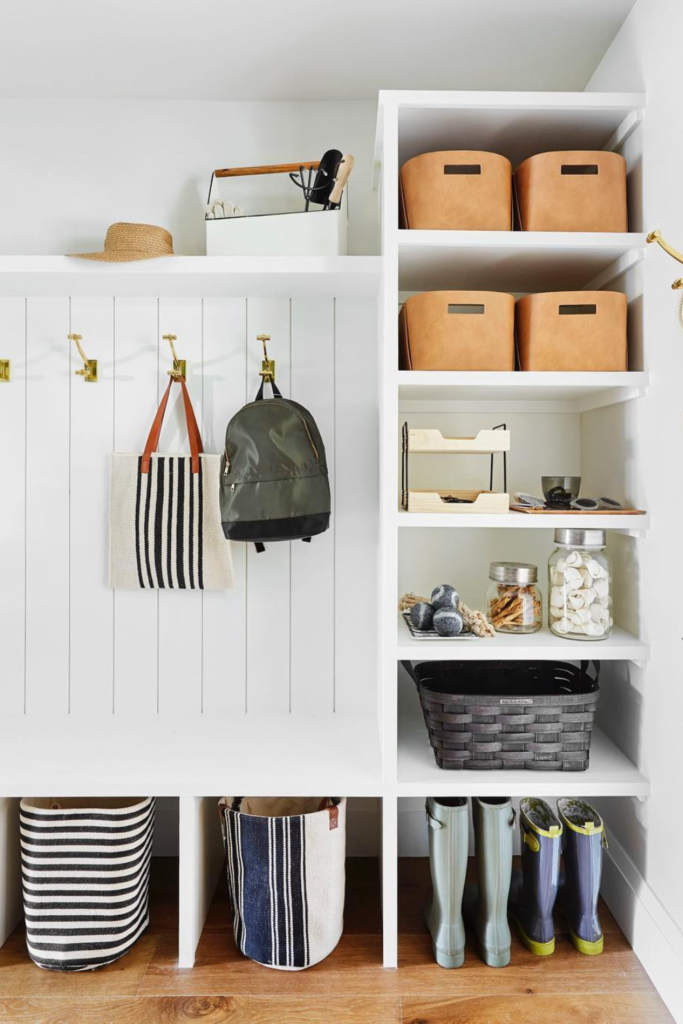
Vertical Drop Zone
Walk-in mudrooms and wide entry walls benefit most from this setup because everything stays visible and easy to grab.
Wall hooks hold bags and daily carry items, while open cubbies and baskets keep loose gear from getting lost.
Bright overhead lighting keeps the white surfaces clean-looking, with natural light doing most of the heavy lifting here.
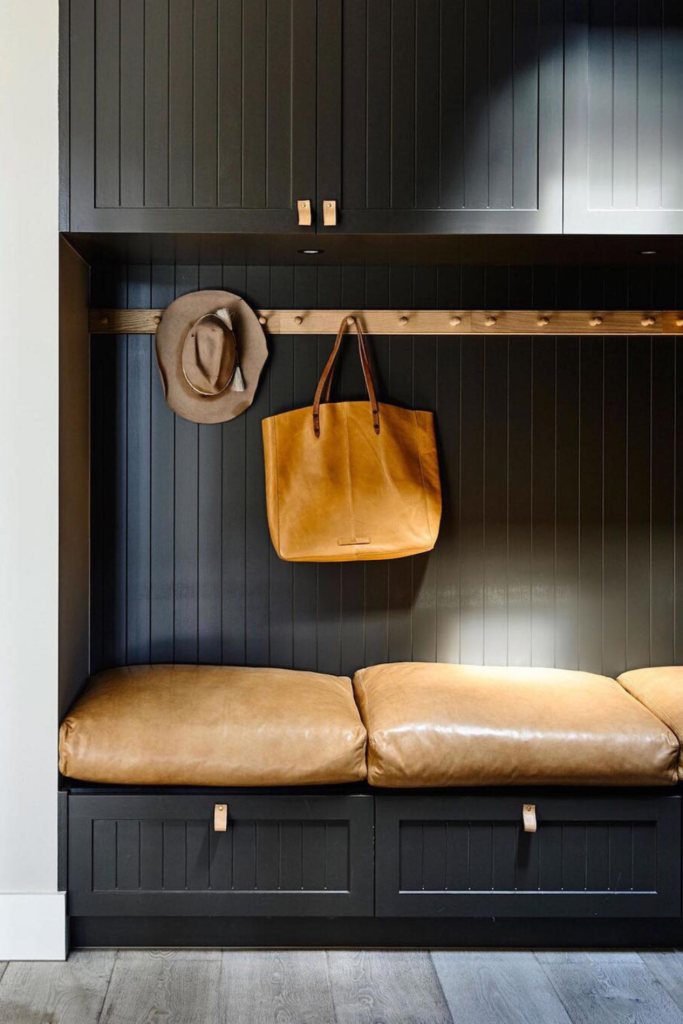
Built-In Bench Lockers
Dark, enclosed mudrooms shine with this layout because hidden storage keeps visual noise to a minimum.
Lift-up bench drawers swallow shoes and gear, while a single hook rail controls daily bags without crowding the wall.
Recessed puck lights under the upper cabinet handle task lighting, with soft ambient light spilling in from the hall.
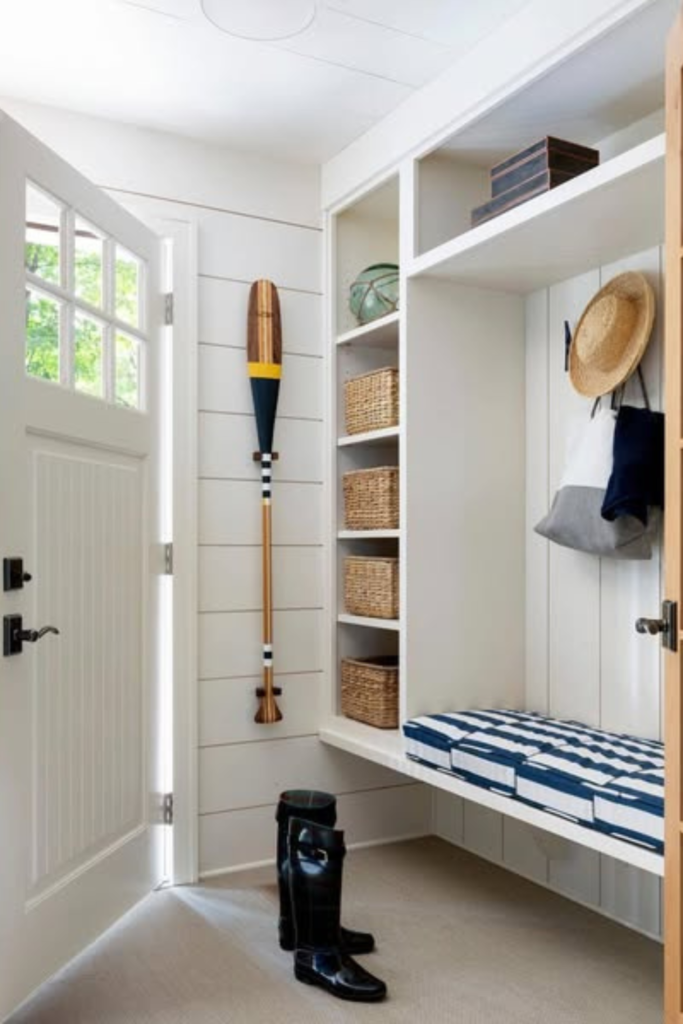
Slim Wall Cubbies
Tight entryways work better when storage runs vertically. Tall side shelves hold baskets and grab-and-go items.
Shallow bench provides a landing spot for shoes. Use open shelving framed into the wall and a simple built-in bench.
Natural daylight does most of the work here, with soft ceiling-mounted ambient lighting supporting it.
Full-Height Cabinets
Mess disappears quickly when storage reaches the ceiling. Tall cabinets work best in dedicated mudrooms.
Custom cabinetry or floor-to-ceiling IKEA units can easily recreate this look. Upper cabinets keep visual clutter off eye level.
Drawers and baskets handle daily items. Soft ceiling-mounted ambient lighting keeps the space calm and balanced.
Locker-Style Wall
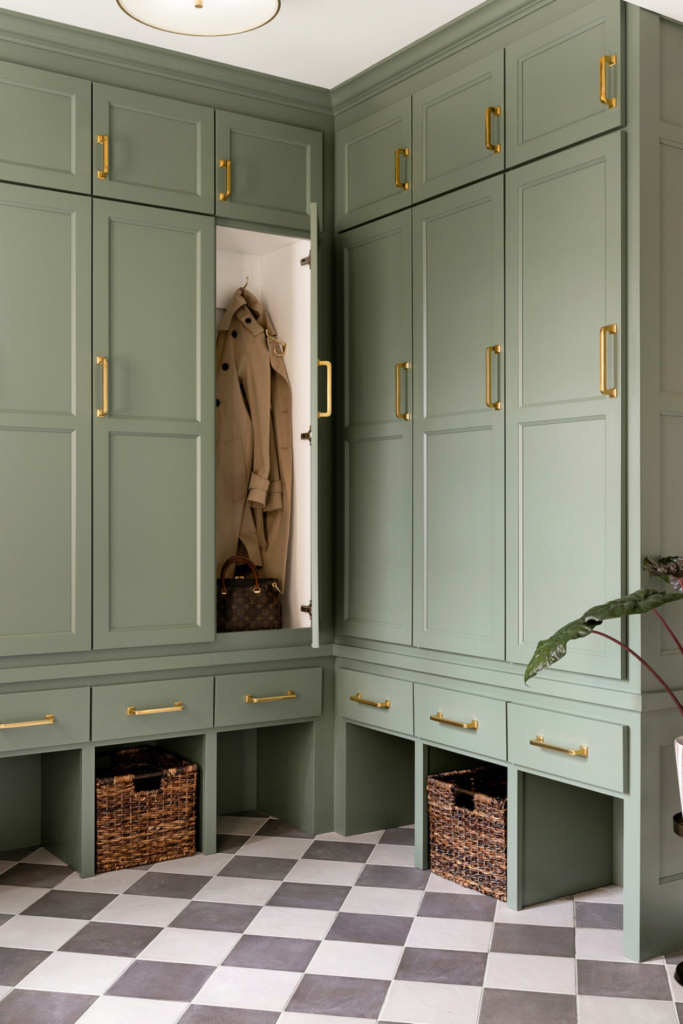
Tall lockers keep coats separated, upper cubbies catch overflow, and drawers below control shoes and gear.
Busy households benefit most from this layout because every person gets a defined zone. Built-ins or modular locker units.
Small puck lights in each bay provide task lighting, overall brightness comes from ceiling-mounted ambient fixtures.
Cabinet-Framed Bench
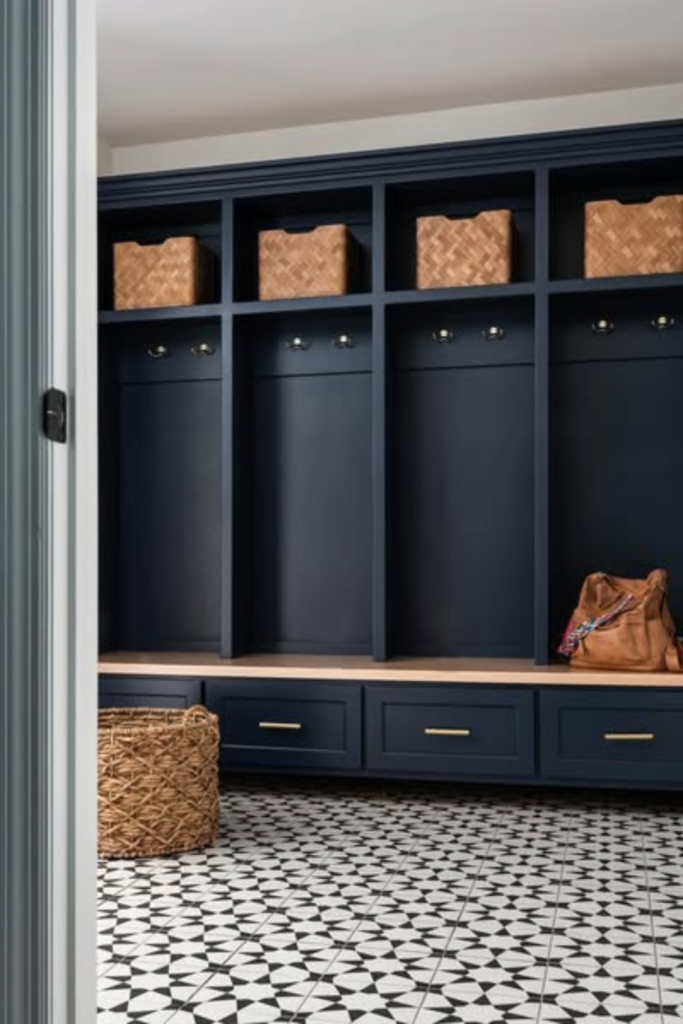
Walkways that open straight into living areas need storage that looks intentional. Tall side cabinets hide bulkier coats.
Drawers under the bench keep shoes from spilling out. Pantry-style cabinets flanking a fixed bench and beadboard backing.
Upper baskets handle overflow. Overhead ambient lighting keeps the unit balanced, with natural light softening the darker finish.
Slatted Wall System
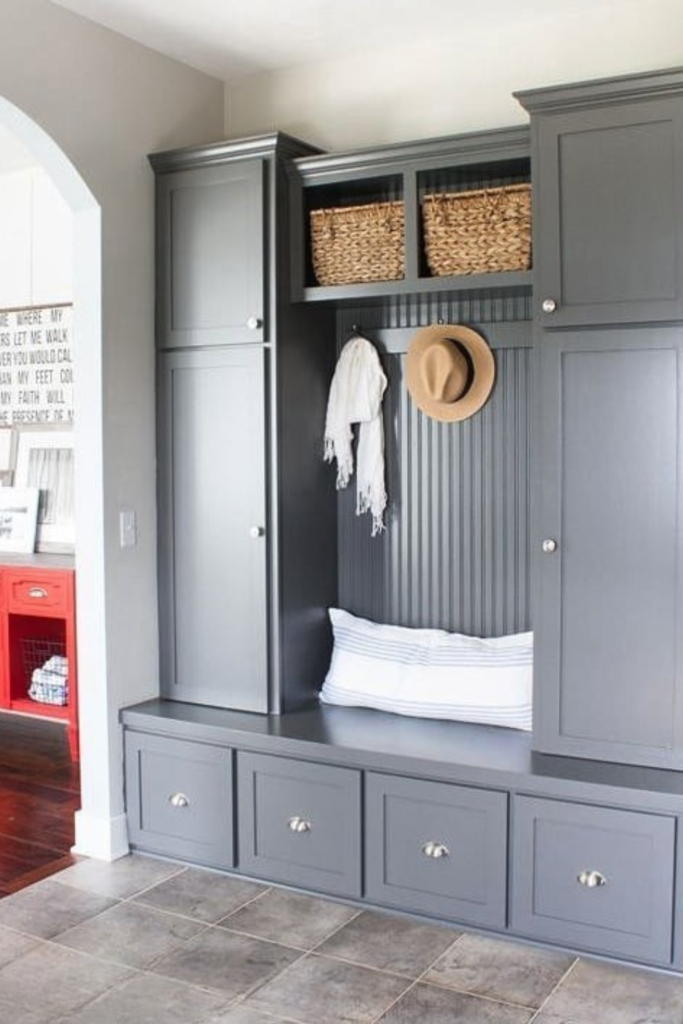
Modern homes benefit from this setup because it keeps storage flexible. Slatted panels let hooks move as needs change.
Bench below handles shoes and everyday bags. Recreate it with wood slat panels, a floating bench, and adjustable hooks.
Open shelves above catch light items. Soft ambient ceiling lighting pairs with natural light to keep the wood tones warm.
Glass-Front Storage
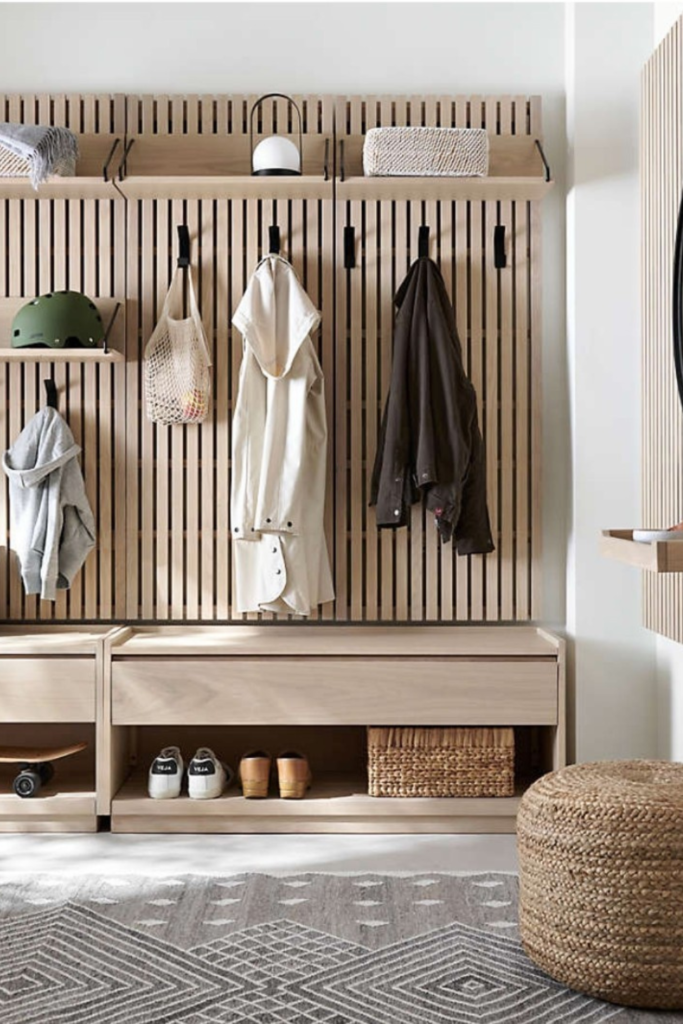
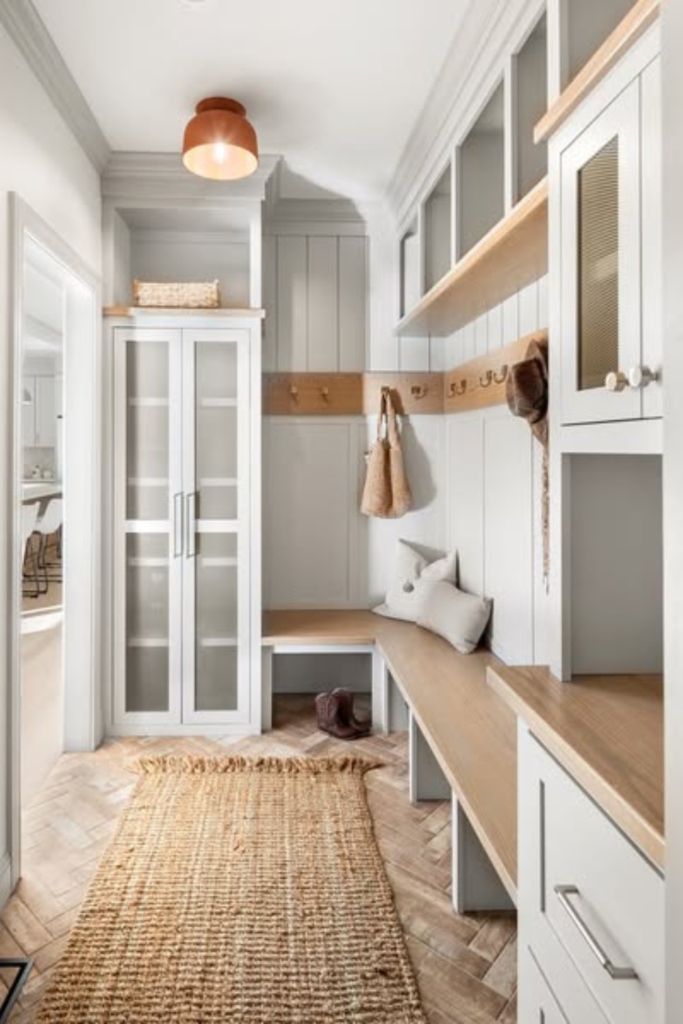
Long, narrow mudrooms feel lighter when upper cabinets don’t fully close off the space. Glass-front doors keep stored items visible.
The bench and hook rail handle daily traffic. Use shallow cabinets, wood accents, and a continuous bench run.
Warm pendant lighting adds focused ambient light, supported by natural light bouncing off pale finishes.
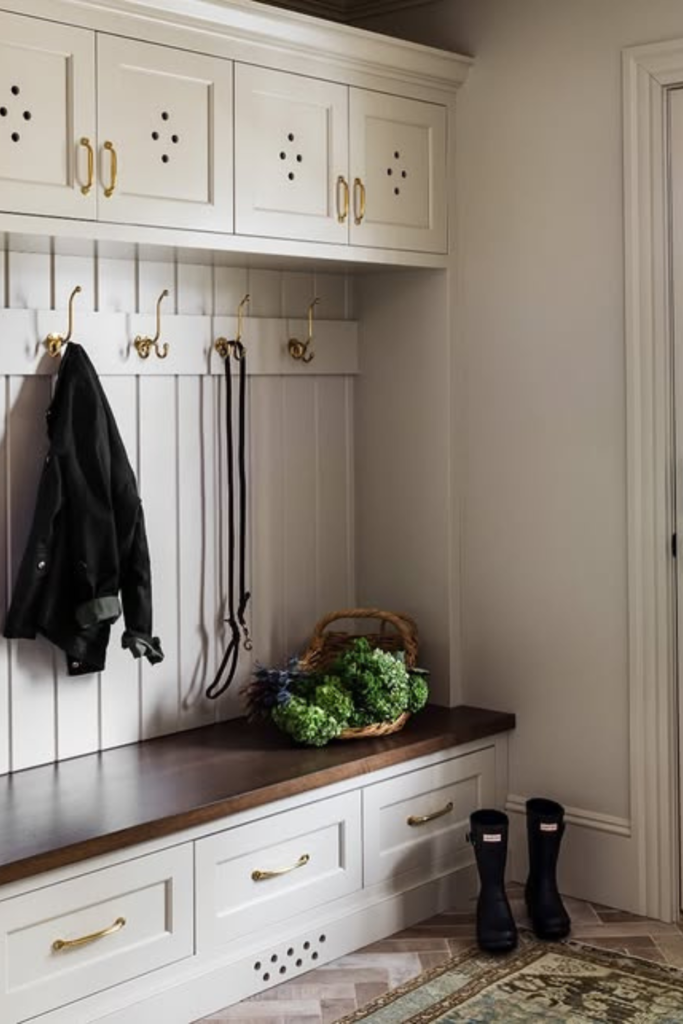
Vented Upper Cabinets
Wet coats and muddy gear need airflow, not sealed boxes. Perforated cabinet doors let moisture escape.
Keeping clutter out of sight. This setup works best near exterior doors where weather gear comes in daily.
Natural light from the door window handles daytime use, backed by soft ceiling-mounted ambient lighting.
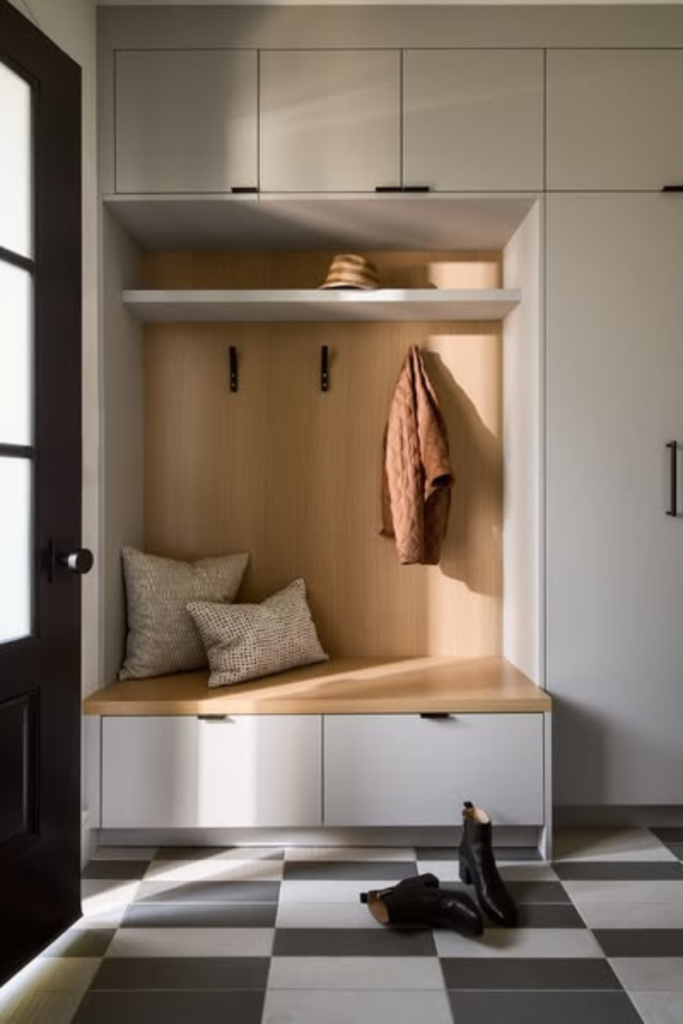
Framed Bench Niche
Small entryways work better when storage feels carved in, a recessed bench niche keeps the walkway clear.
Still giving coats and shoes a defined home. Boxing in a bench between tall cabinets and adding a wood back panel for warmth.
Upper cabinets hide overflow. Natural light from the door pairs with soft ambient ceiling lighting to keep the niche inviting.
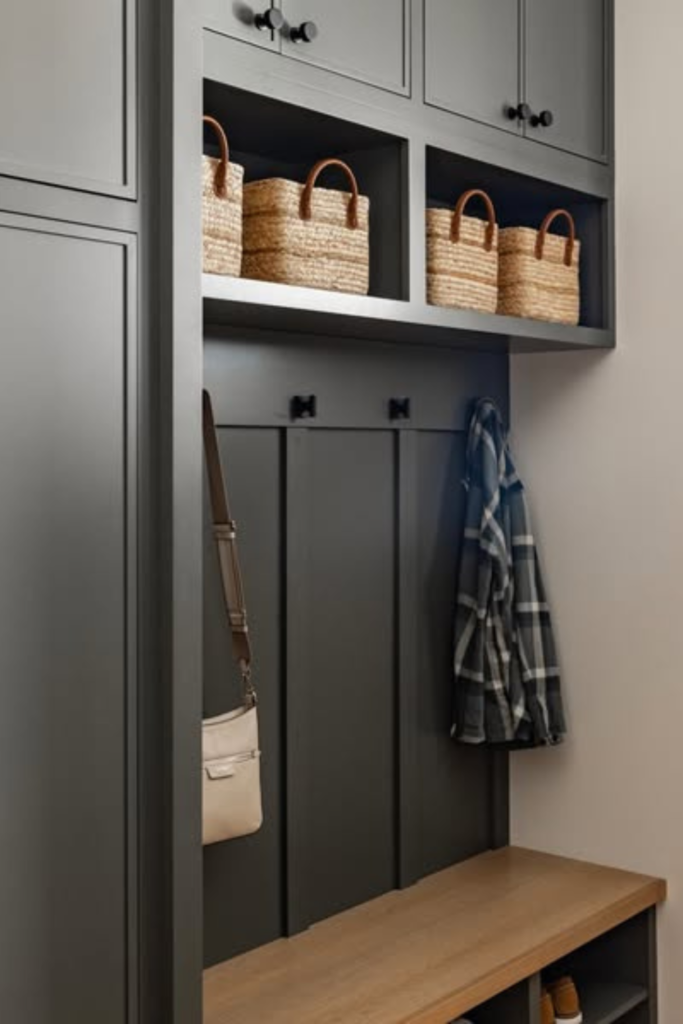
Basket Upper Cubbies
Daily clutter stays under control when small items get an assigned landing spot up high. Open upper cubbies work best.
Woven baskets hide gloves, scarves, and extras without losing access. Recreate this with shallow wall cabinets.
Open inserts above a simple bench. Soft ambient ceiling lighting keeps the darker finish from feeling closed in.
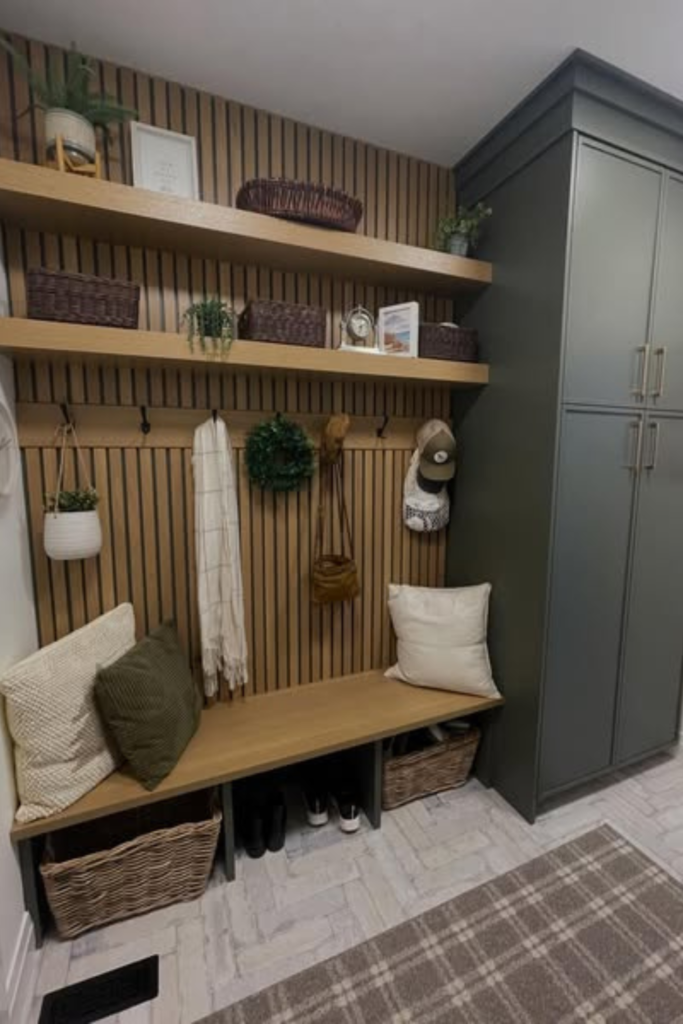
Layered Open Shelves
Homes that need flexible storage benefit from shelves that works. Open shelving above a bench keeps everyday items visible.
Baskets stop small clutter from spreading. Use wood shelves mounted over a slatted wall and add a tall cabinet for overflow.
Ambient ceiling lighting keeps the space evenly lit, while the light wood tones bounce warmth back into the room.
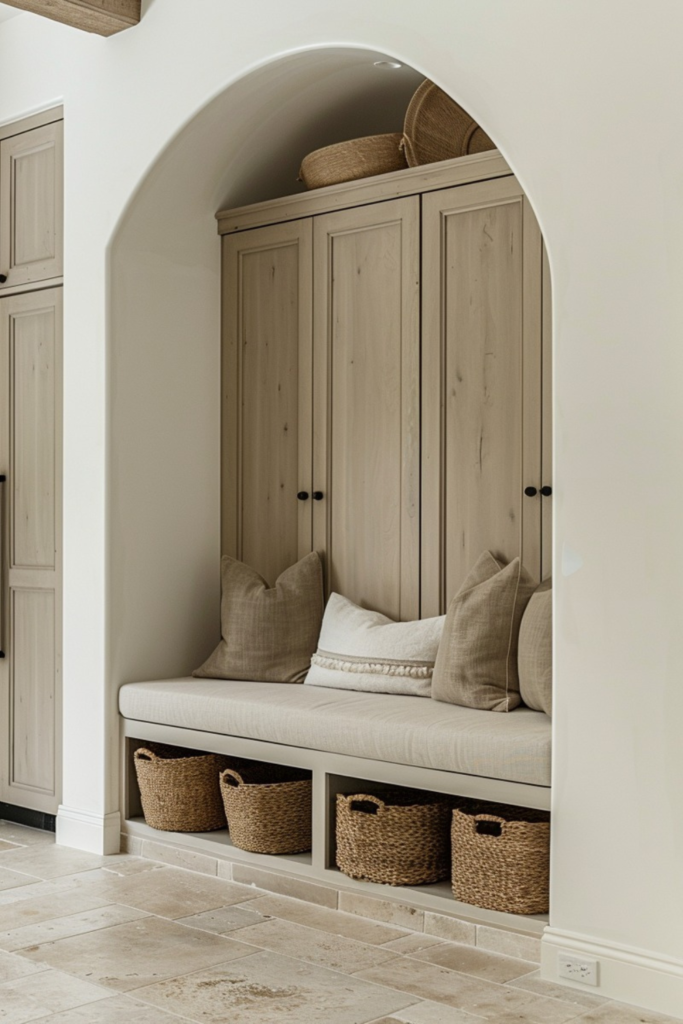
Arched Storage Nook
Architectural entryways shine when storage follows the space’s shape. An arched niche creates a natural drop zone.
Keeping the room soft and intentional. Framing a bench within an existing arch and adding closed coat cabinets above.
Woven baskets handle shoes below. Recessed ceiling lights tucked into the arch provide gentle ambient lighting.
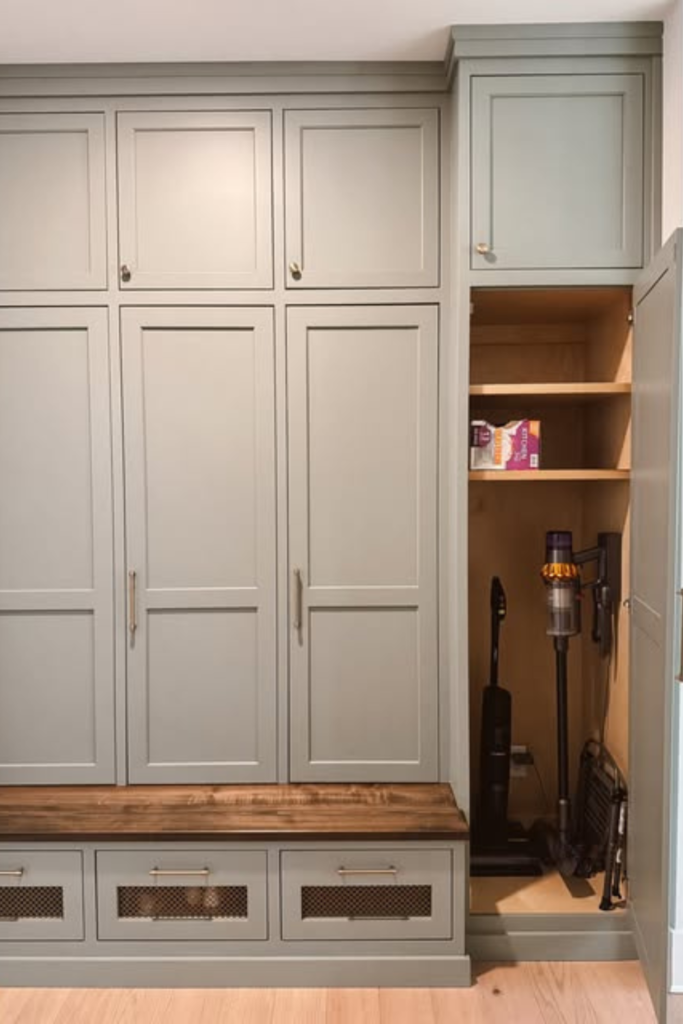
Utility Storage Tower
Tall utility cabinet keeps vacuums, supplies, and overflow hidden while the bench zone stays focused on daily use.
Recreate this by adding a full-height cabinet at one end of a bench run and fitting adjustable shelves inside.
Soft interior cabinet lighting pairs with ambient ceiling light to keep the space functional without feeling harsh.
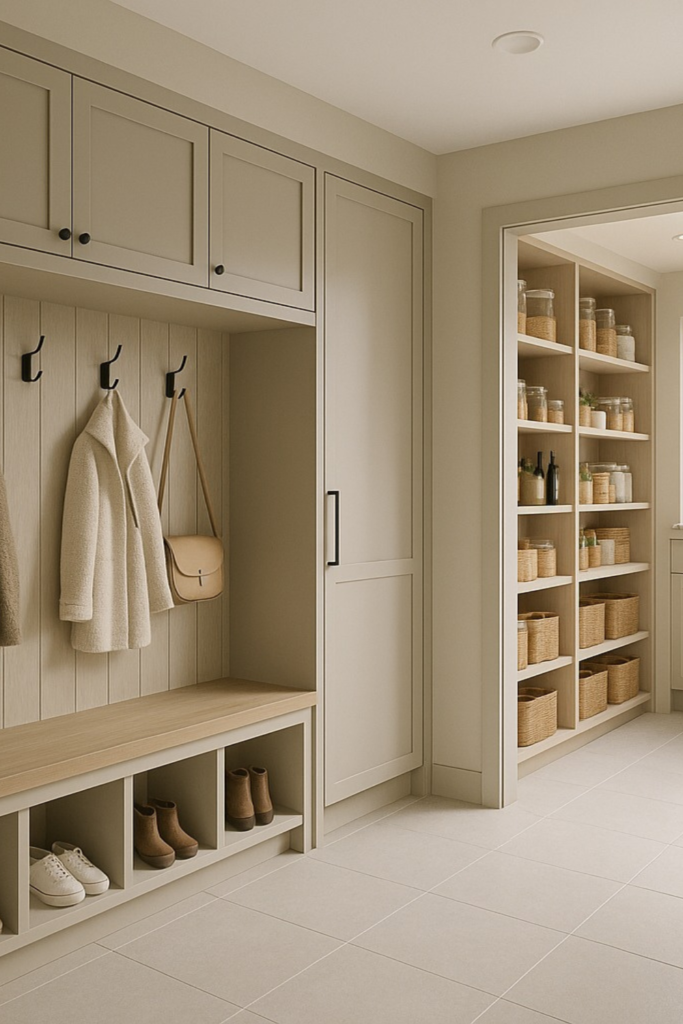
Mudroom-Pantry Combo
Busy homes benefit when storage zones connect. A mudroom that flows into a pantry lets daily coats and shoes live up front.
Bulk storage moves deeper into the house, lining one wall with a bench, hooks, and upper cabinets, then extending shelving into the adjacent room.
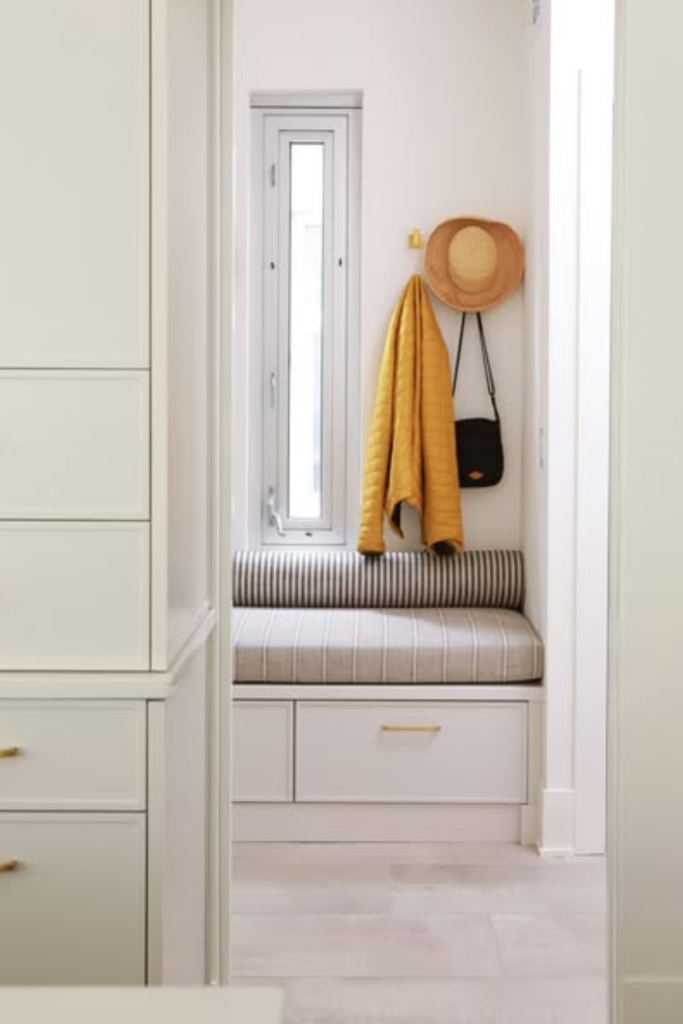
Window Seat Dropzone
Awkward wall gaps become useful when storage wraps around a window. Built-in window bench provides a place for shoes and bags.
Daylight keeps the area feeling open. Use low bench cabinet sized to the window width and a simple hook set above.
Drawer storage below handles shoes. Natural light does the heavy lifting, supported by soft ambient ceiling lighting nearby.
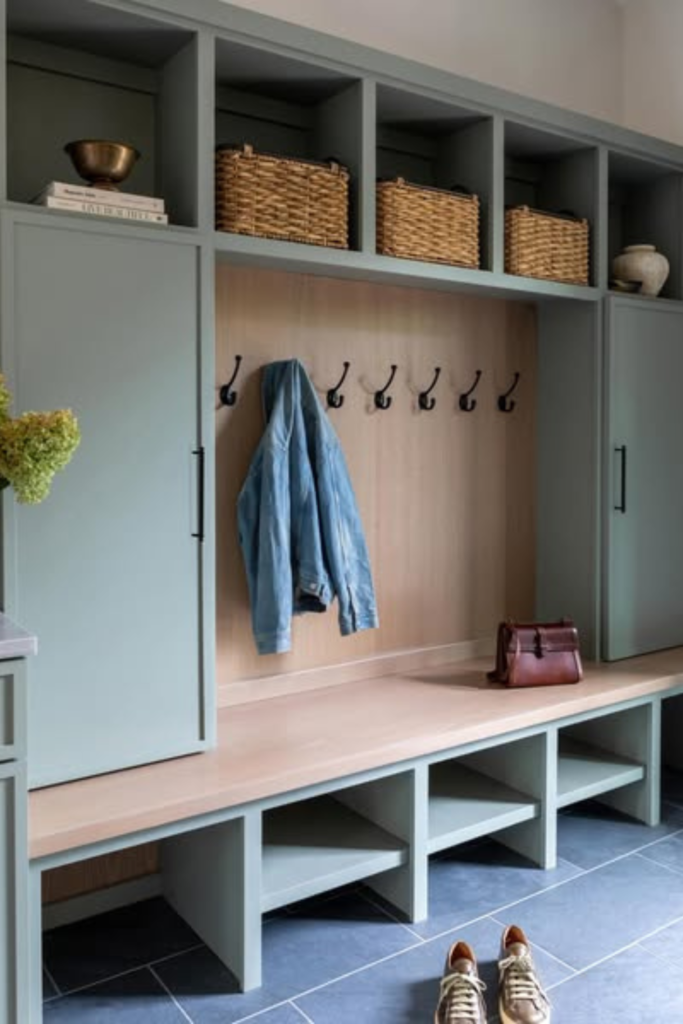
Zoned Storage Wall
Upper cubbies catch seasonal extras, the center hook rail handles daily coats, and open shoe bays keep footwear off the floor.
Dividing one wall into clear zones using cabinetry and open shelves. Built-in proportions keep it calm.
Even ambient ceiling lighting keeps every section usable. Shared mudrooms best when storage is split by function.
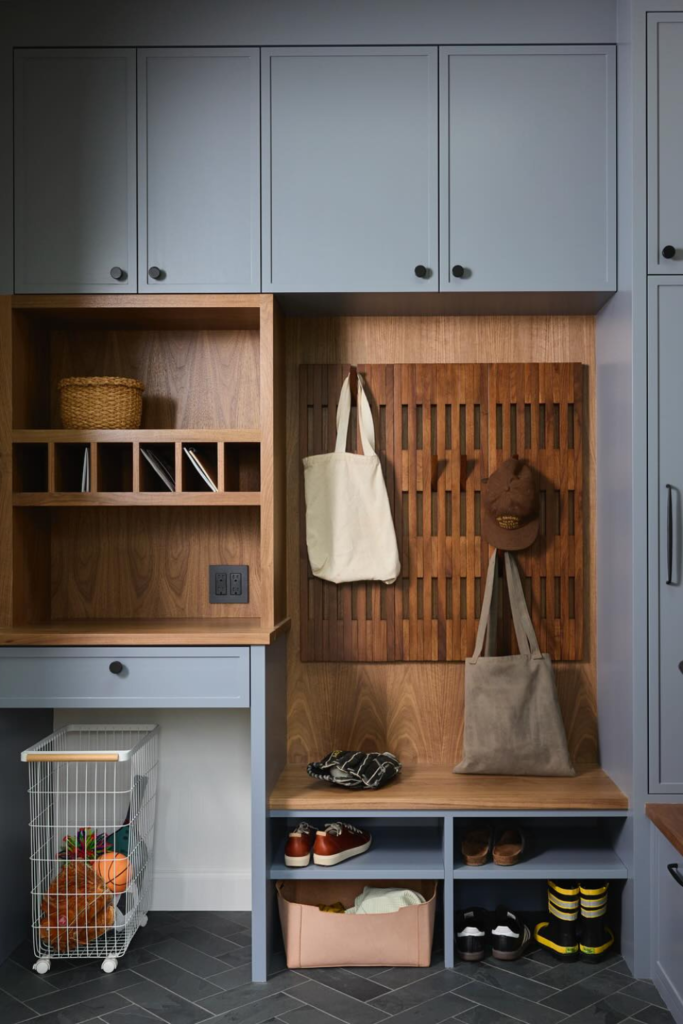
Mixed Material Zones
Contrast keeps a mudroom from feeling flat while still staying practical. Wood-backed hook panels create a warm drop zone.
Painted cabinets handle hidden storage above and below. This works best in modern homes that blend utility with design.
Recessed ceiling lighting sets the base layer, while task lighting inside open sections keeps everything usable.
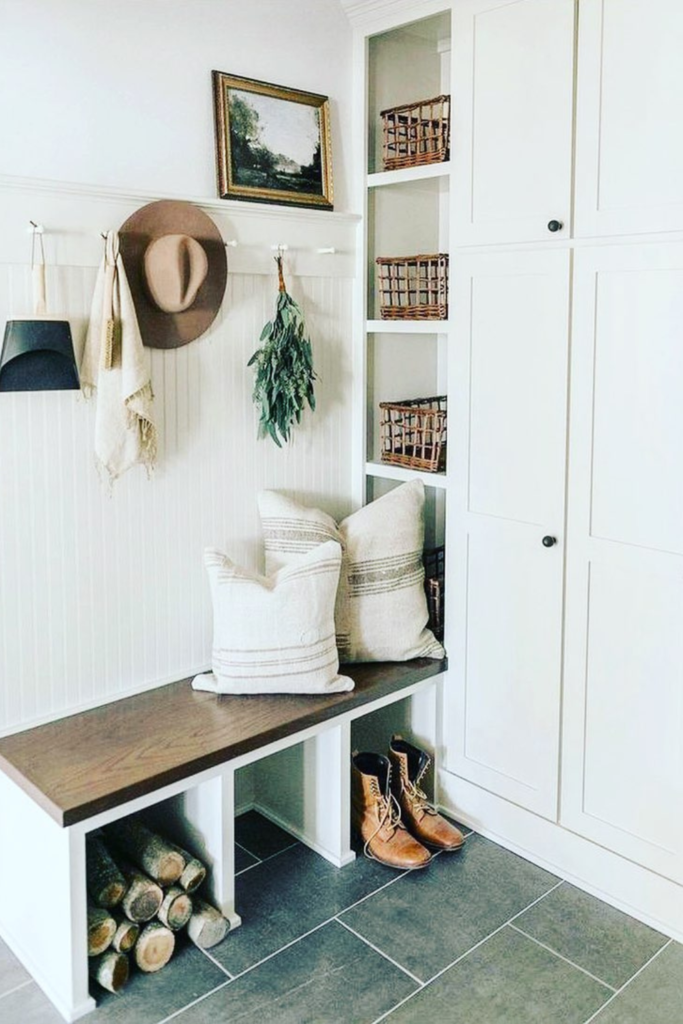
Corner Bench Storage
Corners stop going unused once seating and storage share the same footprint, slim bench creates a natural landing spot.
Vertical cubbies and tall cabinets keep everyday items organized. Firewood-style niches double as shoe or basket storage.
Build it with a simple bench frame. Soft natural light pairs with gentle ceiling lighting to keep the corner from feeling boxed in.
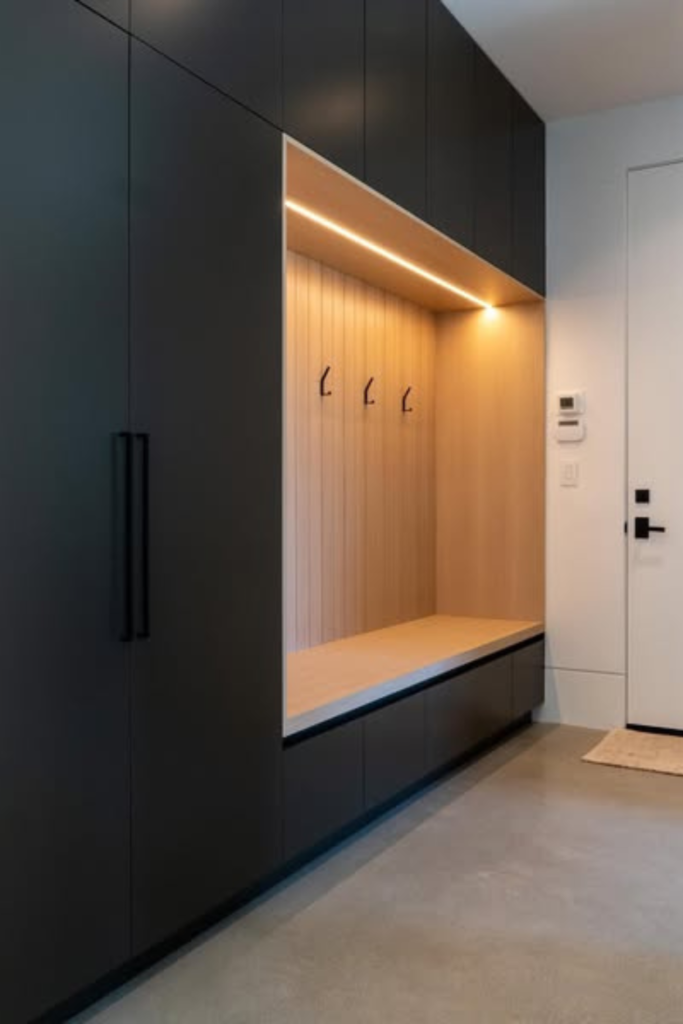
LED Bench Niche
Minimal homes stay clutter-free, a recessed bench niche with hidden cabinets keeps coats and shoes contained.
Recreate this by framing a niche between full-height cabinets and adding an integrated LED strip above the hooks.
LED provides focused task lighting, recessed ceiling lights handle overall ambient light, keep the space clean and modern.
Open Rail System
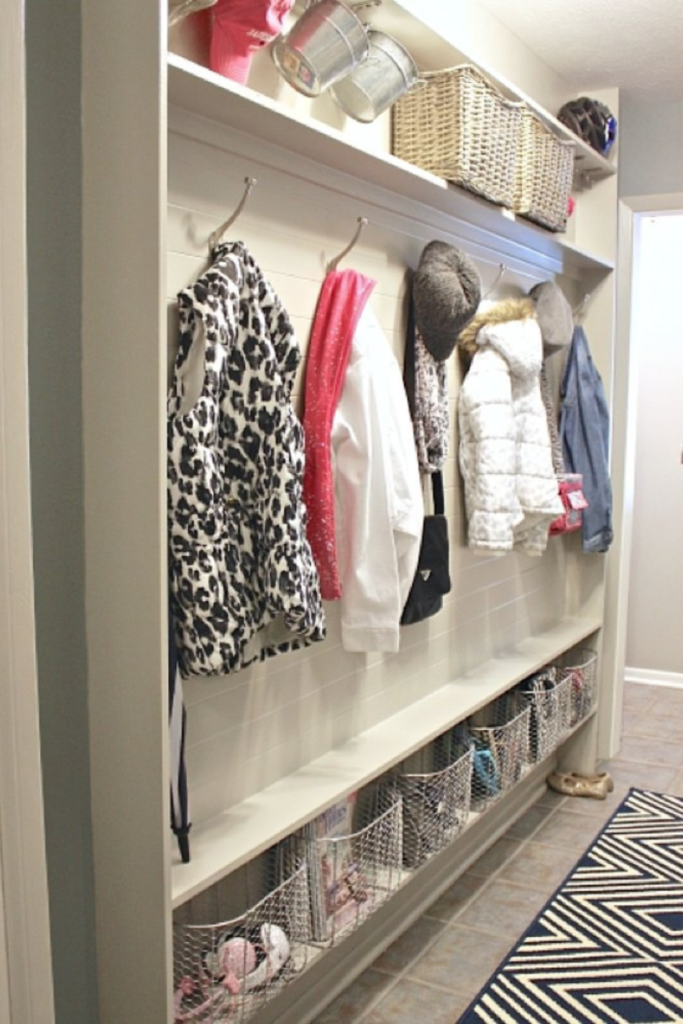
Long hook rail handles daily coats, while wire baskets below keep shoes, gloves, and kid gear contained.
Use shiplap, a continuous shelf up top, and metal baskets below the bench. High-traffic family mudrooms work best.
Everything stays visible and easy to grab, use bright ambient ceiling lighting keeps the whole run practical and shadow-free.
Drawer Bench Storage
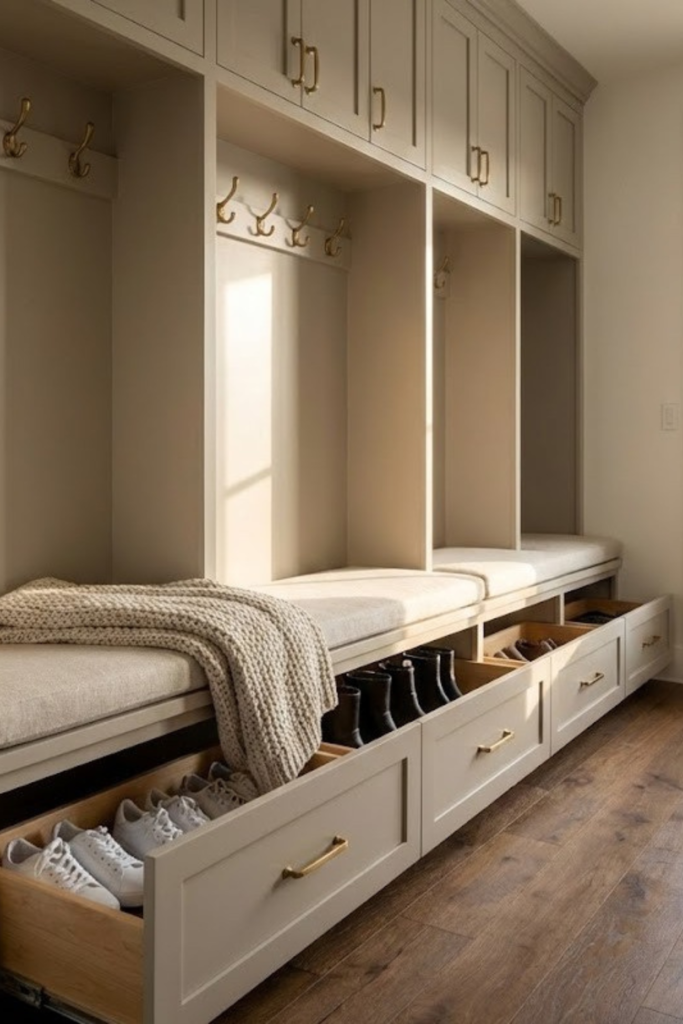
Homes with lots of shoes stay organized when storage pulls out. Deep bench drawers keep footwear sorted.
Easy to reach without bending or digging, works best in long mudrooms where multiple people need daily access.
Add hooks above for coats. Natural light handles daytime use, supported by warm ambient ceiling lighting.
FAQs
How much storage does a mudroom really need?
Storage should match daily habits, not square footage. If shoes, coats, and bags pile up by the door, storage is already at a premium.
Plan one hook and one shoe spot per person, then add extra space for guests and seasonal gear. When storage fits real use, clutter stops spreading into the house.
Should mudroom storage be open or closed?
Open storage works best for items used every day, it doesn’t slow you down. Closed cabinets make more sense for overflow, seasonal gear, or anything that looks messy.
Most functional mudrooms use both. Keep daily items visible and hide everything else to maintain order without constant cleaning.
You may like to read!
- 20 Dress Up Storage Ideas
- 18 Blanket Storage Ideas
- 23 Food Storage Ideas
- 24 Sunglasses Storage Ideas

Fasial is the founder of the Fizzy Flare. He has been a passionate blogger since 2021. He ran three different websites in the past few years. Now he is focusing on Fizzy Flare to build an audience and help them organize their life.