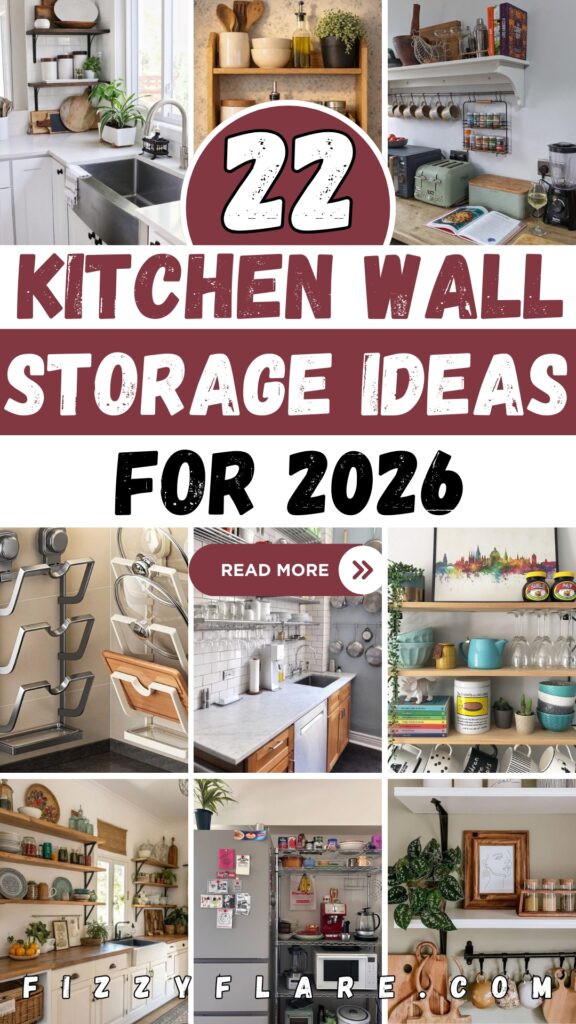
22 Kitchen Wall Storage Ideas for 2026
This post may contain affiliate links: full affiliate disclosure.
If you look in any kitchen cupboard, you’ll undoubtedly notice the same problem: too many bowls, too many spice jars, and not enough room for the stuff you use every day.
The walls around your kitchen, on the other hand, are absolutely vacant. That’s space that isn’t being used.
Floating shelves fix it. You can relocate common things to your walls instead of cramming them all into cabinets.
This makes them easier to reach and manage. A shelf in the right spot may accommodate spices, mugs, bowls, or even tiny plants without taking up space on your counters.
This article brings you 22 modern Kitchen wall storage ideas to keep your home organized. Simple solutions for everyday clutter.
Let’s jump in!
Contents
- 1 How Do Floating Shelves Improve Kitchen Wall Storage?
- 1.1 Lid Rack
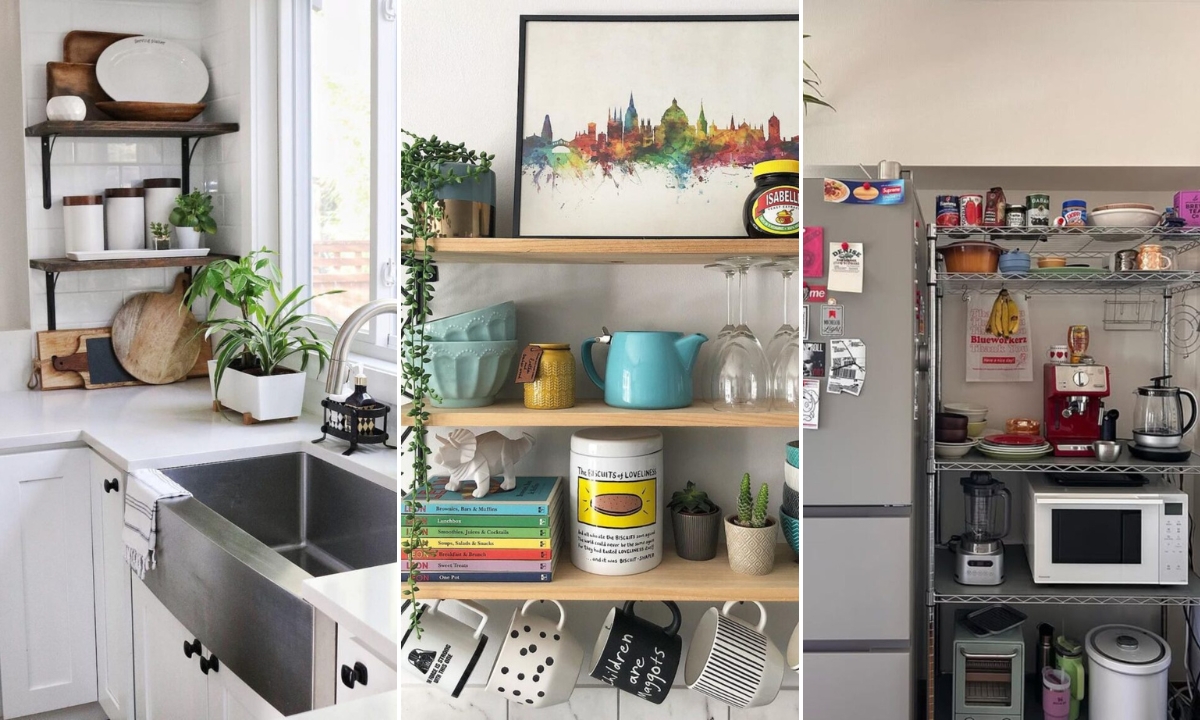
- 1.2 Rail Shelves
- 1.3 Shelf Hooks
- 1.4 Open Shelves
- 1.5 Rack Storage
- 1.6 Hook Rail
- 1.7 Mug Bar
- 1.8 Towel Shelf
- 1.9 Corner Shelves
- 1.10 Ladder Shelves
- 1.11 Steel Shelves
- 1.12 Pantry Wall
- 1.13 Tool Station
- 1.14 Basket Wall
- 1.15 Pot Display
- 1.16 Spice Rack
- 1.17 Slot Shelves
- 1.18 Pegboard Wall
- 1.19 Divider Storage
- 1.20 Wall System
- 1.21 Ledge Shelf
- 1.22 Rustic Shelves
- 2 FAQs
How Do Floating Shelves Improve Kitchen Wall Storage?
Floating shelves make empty walls in the kitchen usable for storage.
Adding a few shelves might immediately fix the problem if your cabinets are full and your counters seem cluttered.
You can place things like bowls, mugs, and spice jars that you use every day onto the wall where you can readily see and access them instead of putting them all in drawers.
This one small change makes your kitchen feel more open and orderly. Putting shelves over a counter or near your prep area keeps the goods you use most close at hand.
Your cabinets also have more area to breathe at the same time. In other words, floating shelves let you store more stuff without taking up floor space or adding cumbersome cabinets.
Save this article for later! 👇👇
Lid Rack
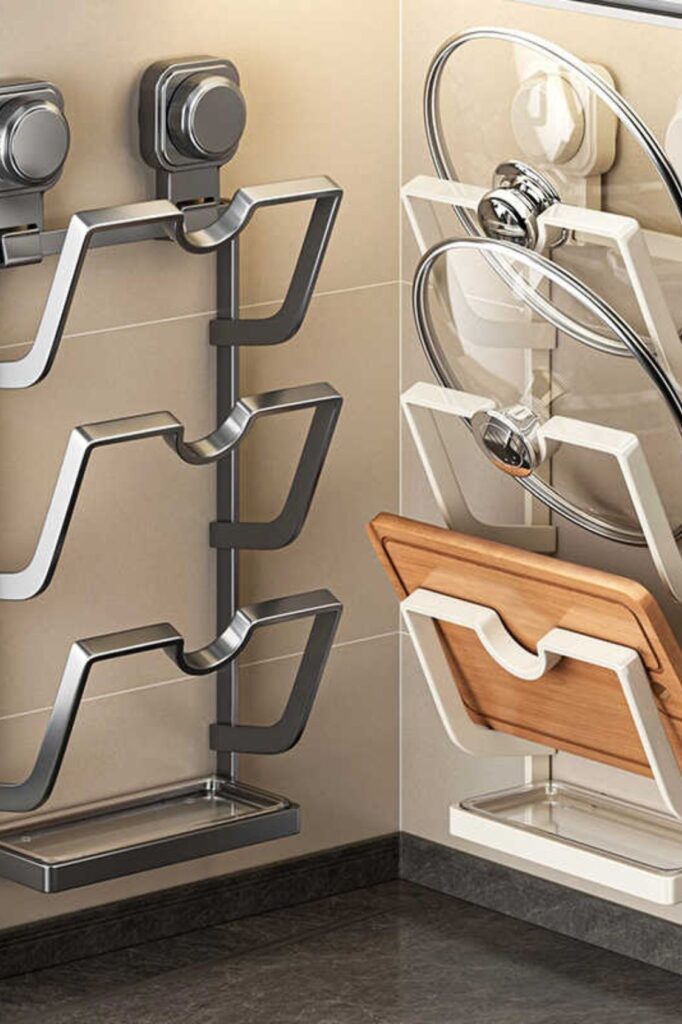
Crowded cabinets usually hide your pot lids where you can’t see or reach them easily. Mounting a slim wall rack like this near your cooking area solves that instantly.
Each slot has a cover that stands up, so you can easily take the proper one without having to sift through a pile.
Placement is important here. A small wall adjacent to the stove or a cupboard is excellent because it keeps lids within reach as you cook.
If you can’t drill, use a strong glue or a rack that sticks to the wall to mimic this setup. Before you install, make sure the wall is clean and smooth.
Adding one of these racks can give you more room in your cabinets and help you keep your kitchen organized every day.
Rail Shelves
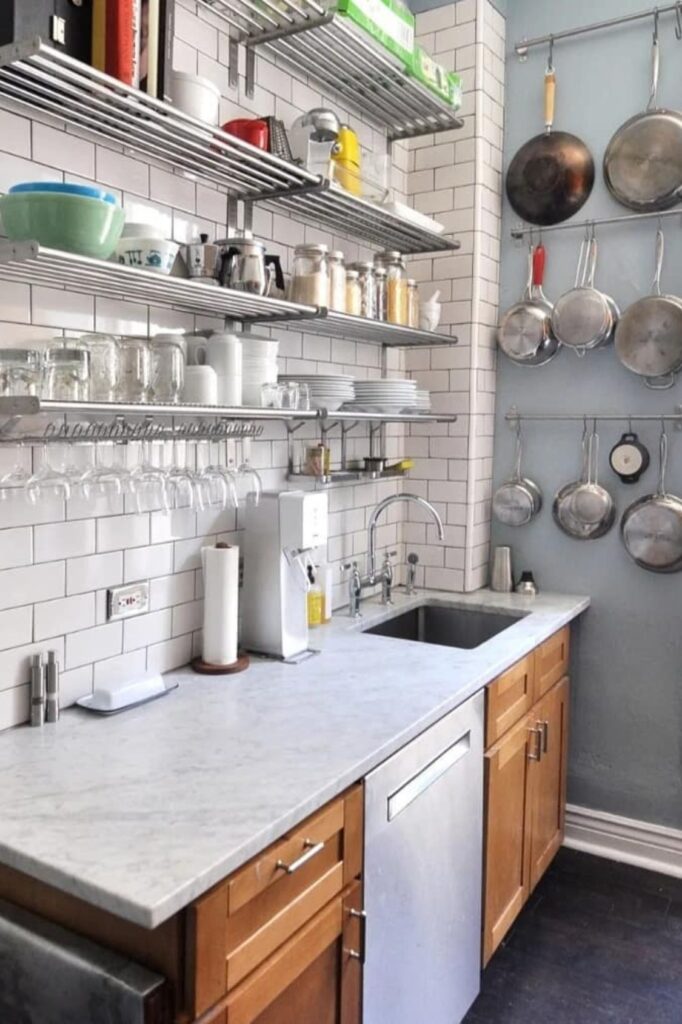
Blank walls above the sink can carry far more than you think. Long metal rail shelves like these turn that space into a full storage system without adding bulky cabinets.
Plates, jars, glasses, and even cookbooks are simple to see and reach, which saves time when cooking or cleaning.
Put the shelves up in layers, making sure there is enough room between each one so that higher things don’t seem crammed.
Adding a bottom rail with hooks is a good way to hang cups or cutlery and keep your counter uncluttered.
This way of keeping everything upright makes your cabinets look bigger and makes the whole kitchen feel lighter and more organized without taking up more space.
Shelf Hooks
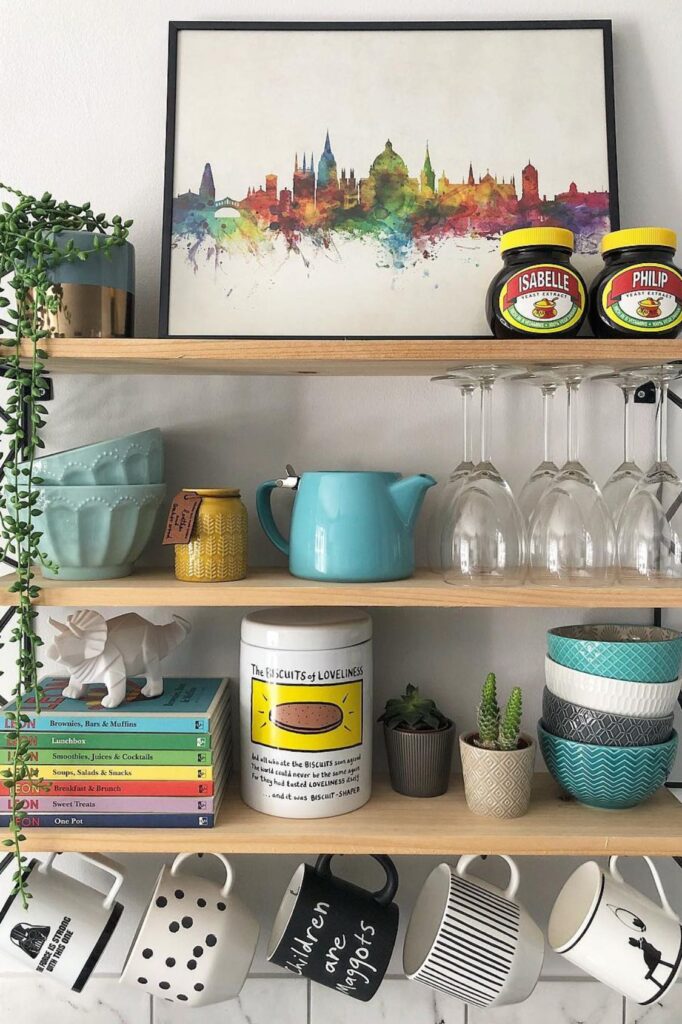
Mugs usually end up taking too much cabinet space, especially when you use them daily. Hanging them under a shelf keeps them within reach.
while making place for other important things. A simple row of hooks under a wooden shelf achieves the trick without making the wall feel too full.
The upper shelves can hold bowls, jars, and ornamental items, and the area below them can be used instead of wasted.
If you want to store heavier things like stacked bowls, use a strong shelf with metal side brackets.
Putting it above a backsplash or near your coffee corner makes it even more useful by turning one little wall into a whole storage space.
Open Shelves
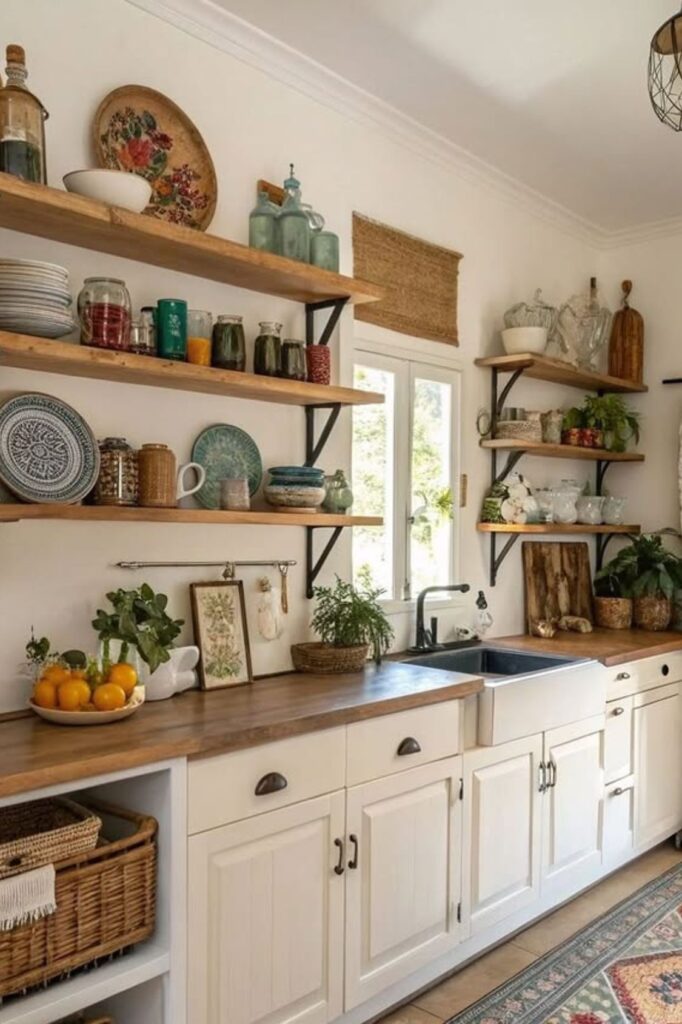
Empty walls above your countertop can handle far more than just decor. Long wooden shelves like these give you space to store plates, jars.
And ordinary kitchen products that aren’t hidden behind cabinet doors. You don’t have to waste time looking for what you need because everything is still visible.
The space between shelves makes a tremendous difference. Make sure there is adequate space for taller things like bottles and stacked plates.
So that the layout doesn’t feel tight. Adding a few ornamental items to your shelves along with useful storage keeps them from feeling cluttered.
Putting them along a complete wall works especially well in kitchens that don’t have a lot of higher cabinets. It’s crucial to have strong brackets here because dishes can be hefty.
Rack Storage
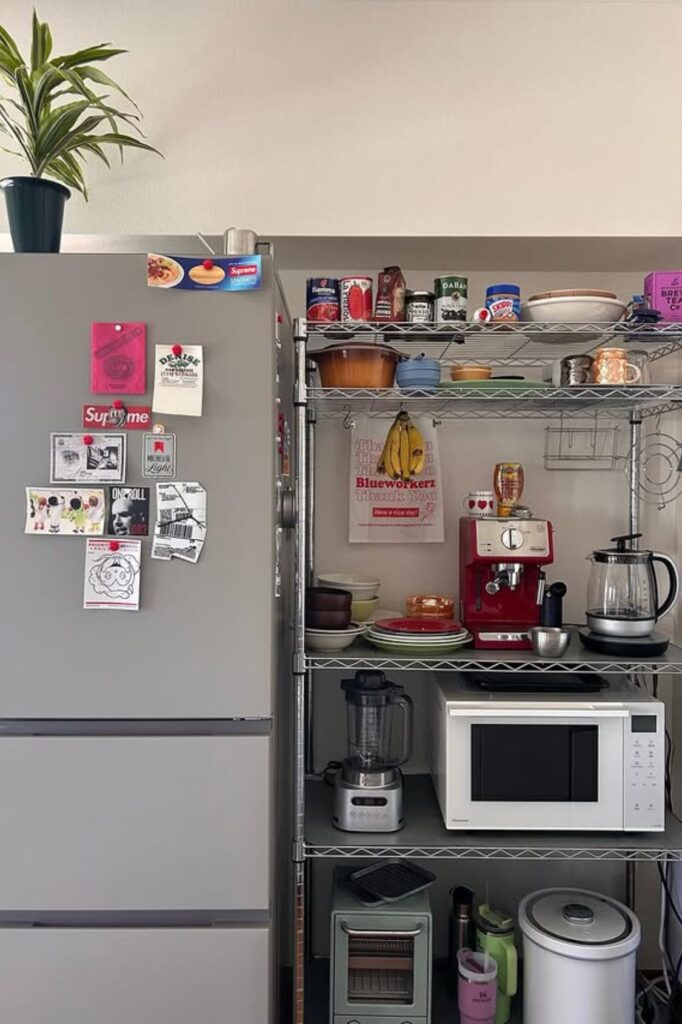
Kitchen corners or empty wall gaps next to appliances often go unused, even though they hold a lot of potential.
This tall metal rack makes that empty space a full storage area without getting in the way of your cabinets.
Each level has a specialized job, such storing dry goods, tiny tools, kitchenware, and appliances. Being tall helps you here.
Put heavier stuff like microwaves and blenders on lower shelves and lighter things like jars and bowls on higher levels. It’s easier to use things every day when they’re at eye level.
Putting one next to a fridge or on an empty wall rapidly increases storage space, which is great for compact kitchens where every inch counts.
Hook Rail
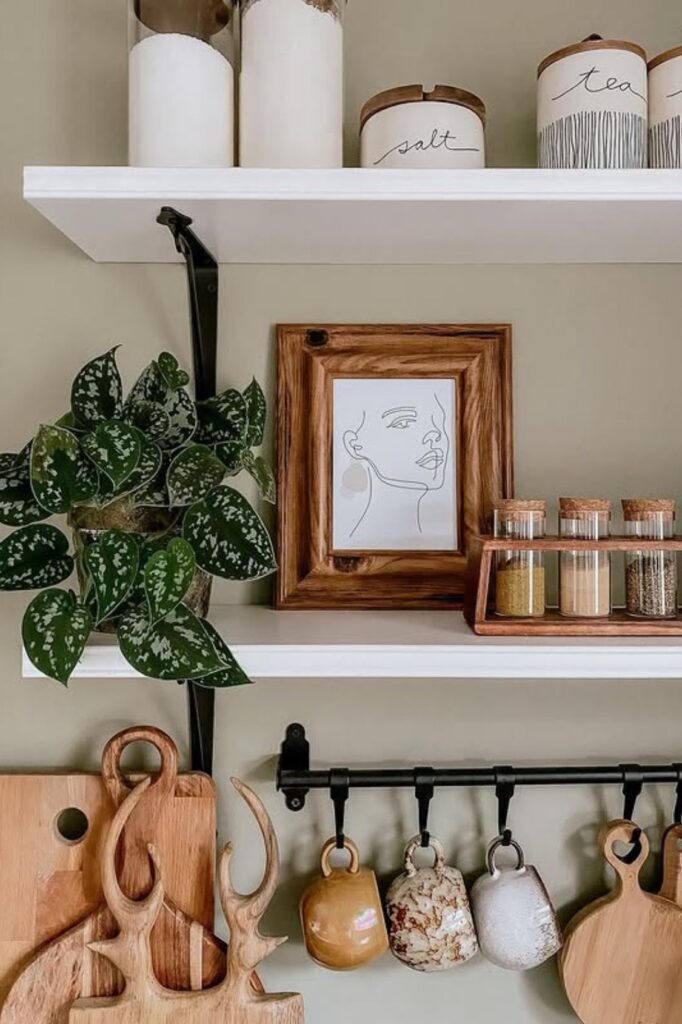
Morning routines run smoother when everyday items stay within reach instead of hidden in cabinets.
A simple wall rail with hooks makes it easy to get to the cups, cutting boards or small tools you use every day.
This way of hanging them keeps your counter uncluttered and makes your kitchen feel bigger. You have a whole configuration when you put the rail with floating shelves above it.
The upper shelves can keep jars, tea containers, or decorations, and the hooks can hold things you use a lot. This blend maintains everything in order without making one place too full.
A small part of wall near your prep area or coffee station is the greatest place for this, as it will become a really useful storage space.
Mug Bar
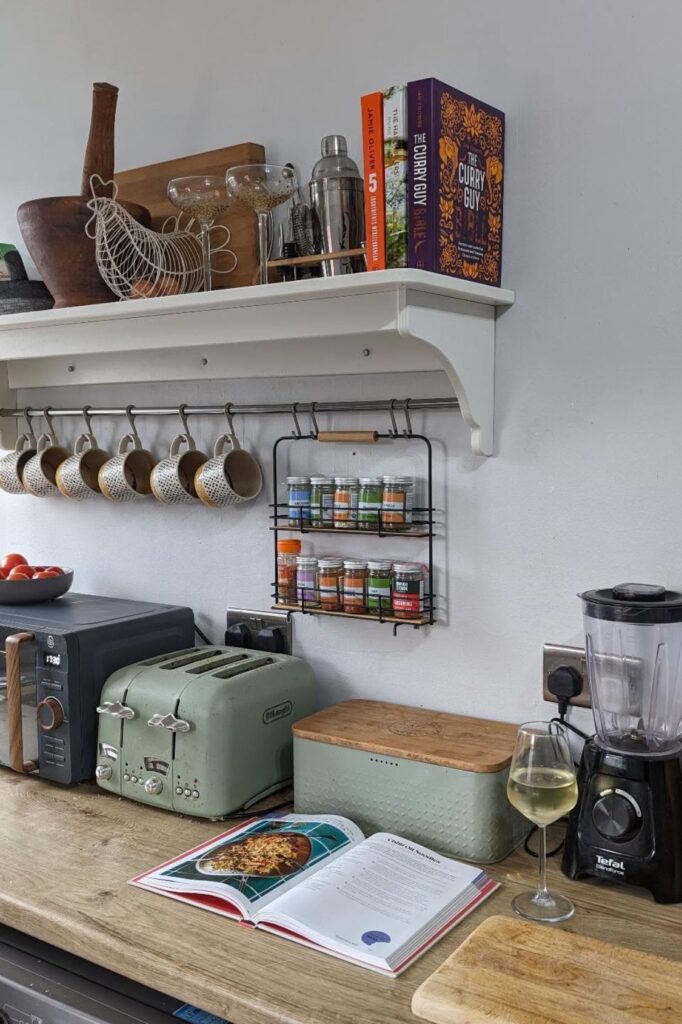
Cabinet space disappears fast when mugs start piling up. Hanging them on a simple rod under a shelf keeps everything visible and easy to grab.
Especially on hectic mornings. You can make one little wall into a coffee or tea station with a row like this, without having to buy more furniture.
The upper shelf is for bigger things like jars, books, or decorations, while the hanging section below is for cups that you use every day.
A little spice rack installed on the wall next to it keeps things close at hand without taking up too much space on the counter.
Put the rod up just low enough so that the mugs hang freely and don’t contact the surface below.
Towel Shelf
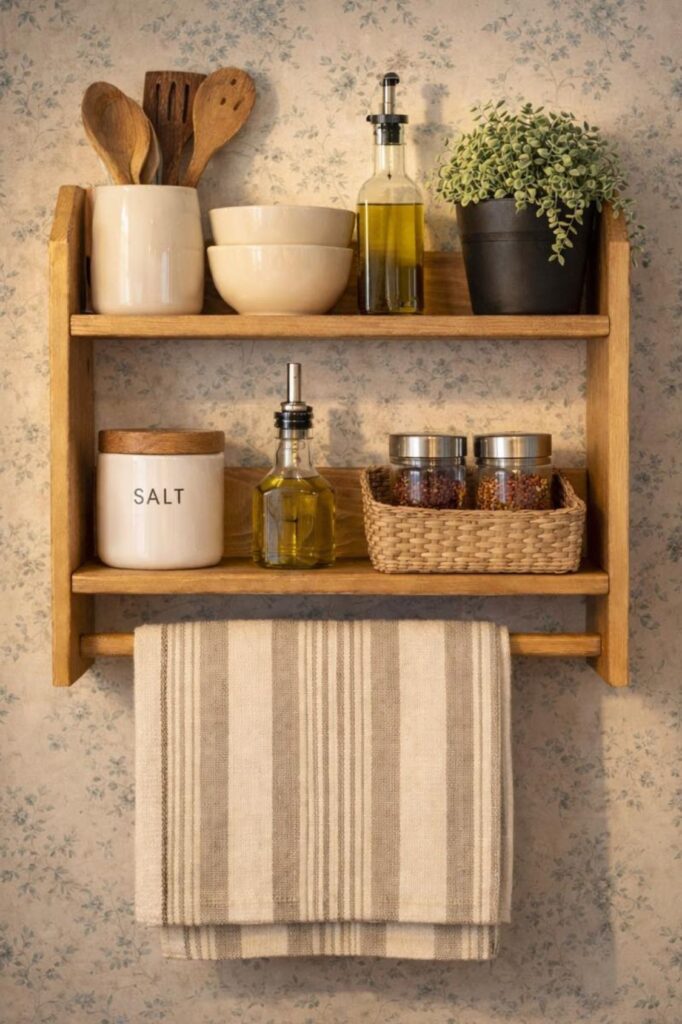
Small wall sections can do more than just hold decor if you use them smartly. A compact wooden shelf like this combines storage and function in one spot.
The upper tiers keep things like oils, spices, and cutlery close at hand, and the bottom bar gives you a place to hang a kitchen towel without taking up counter space.
Keeping things you use often at eye level makes cooking faster and easier. Putting jars or small containers in a basket also helps keep things tidy and reduce clutter.
Putting this in your prep area or next to the sink is excellent because it keeps both the towel and the storage close at hand.
This one simple unit can take the place of other things that are spread out and make your kitchen feel more organized.
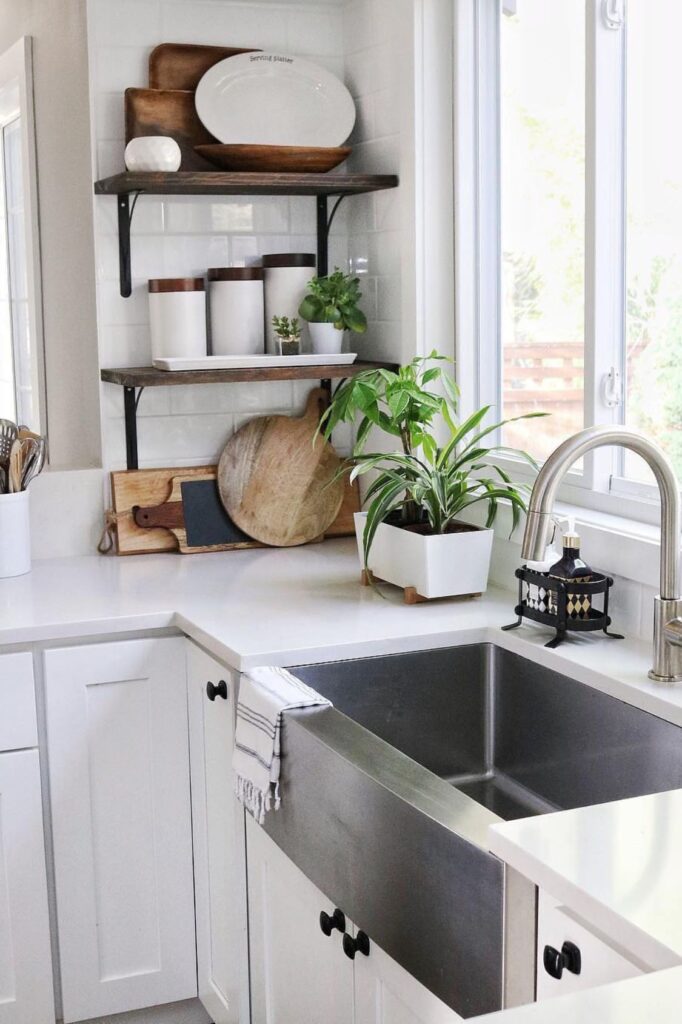
Corner Shelves
Awkward corner walls often end up empty, even though they sit right where you need storage the most.
Putting a few floating shelves in the area makes it a useful place to put common things like jars, boards, or tiny plants.
It keeps things close without getting in the way of your main work area. Vertical stacking works effectively here since it goes up instead of across the wall.
The lower compartment can hold cutting boards or trays, and the upper shelves can hold lighter things like containers or decorations.
Putting this setup near the sink or prep area makes it even more useful because you can access everything while you work.
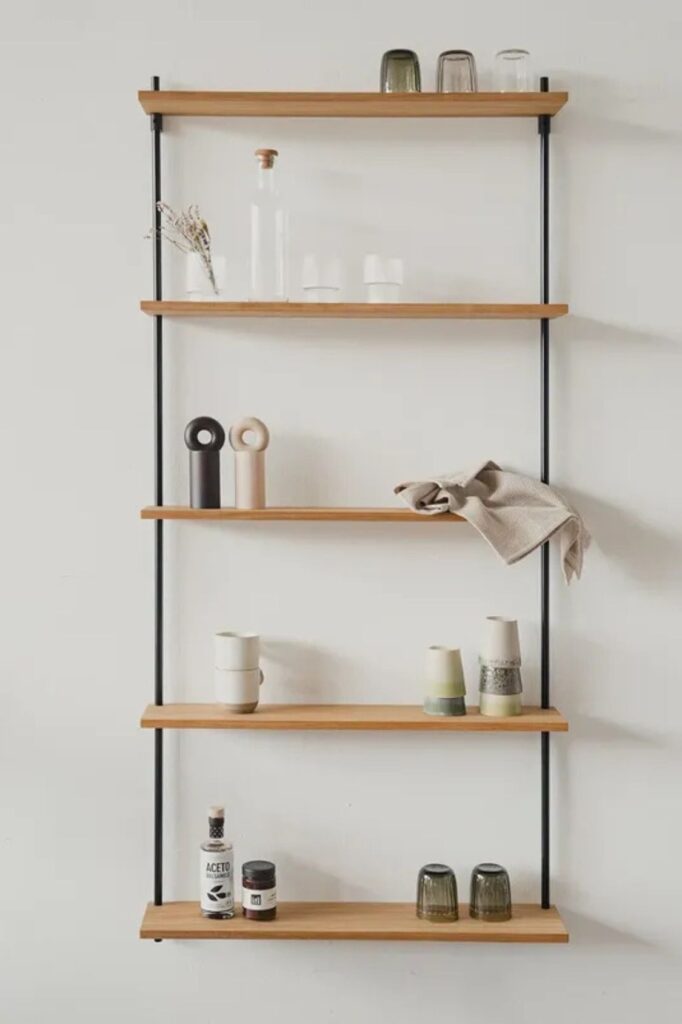
Ladder Shelves
Tall empty walls can handle more storage than you think if you use vertical shelving like this. Instead of spreading items across multiple cabinets, stacking shelves upward.
It has space for everything, from jars and bottles to small kitchen items. There is a different purpose for each level.
Those you use every day should go on lower shelves, while those you don’t use as often or ornamental objects should go on higher shelves.
Also, leaving some space between things might help keep things from looking messy. Putting this near a prep area or on a blank wall makes it useful without getting in the way.
The slim side frames keep the design light, so the kitchen still feels open even with a lot of shelves. It’s an easy method to increase storage without making the room feel full.
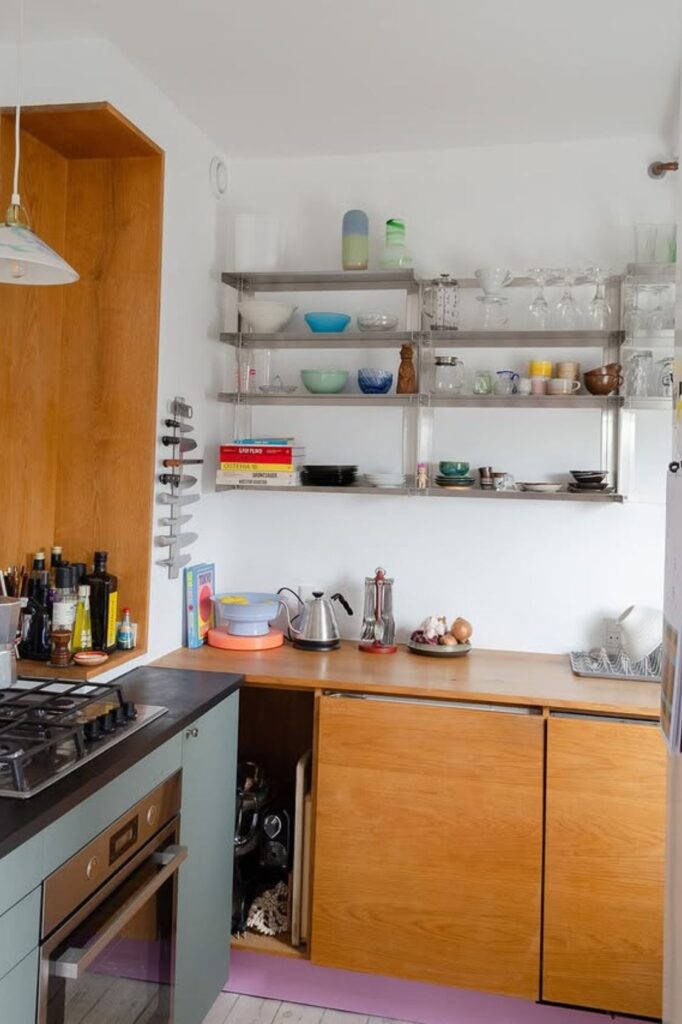
Steel Shelves
Cooking feels easier when everything sits right where you can see it. Wall-mounted steel shelves like these keep dishes, glasses, and bowls out in the open.
Not stashed away in cabinets. It’s easy to grab what you need, especially when you’re busy getting ready.
Open design is great for small kitchens because it doesn’t make them look heavy and closed off. If you space the shelves appropriately.
You can fit different things without having to stack them all on top of each other. Putting glassware on the top and everyday dishes on the bottom keeps everything in order.
Putting a tiny magnetic strip nearby for knives or tools finishes the setup without taking up extra space.
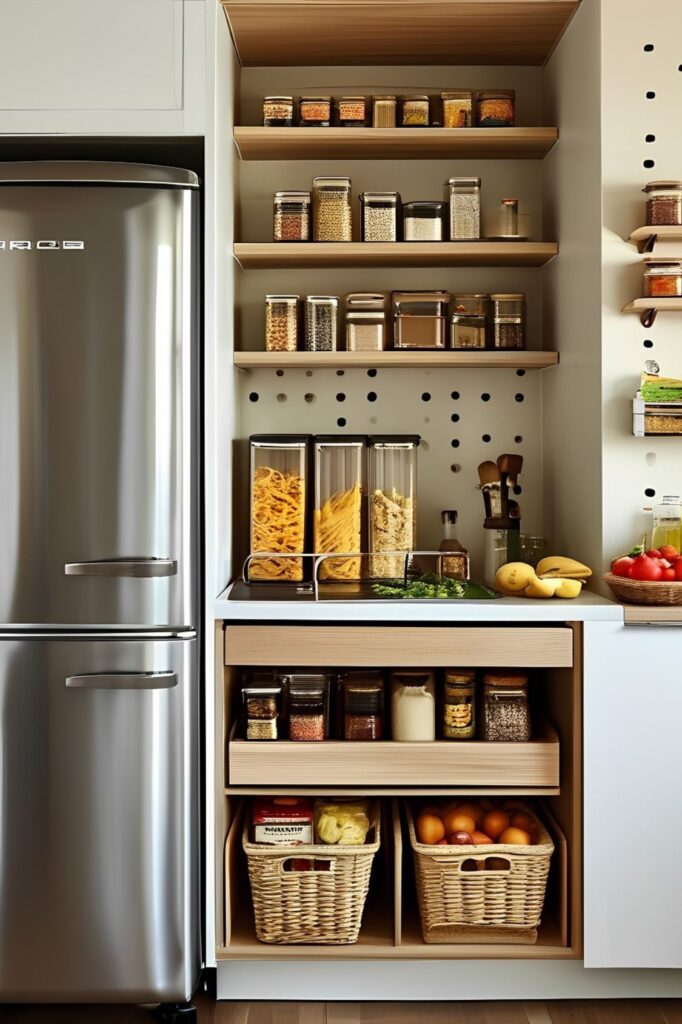
Pantry Wall
Food items often get lost inside cabinets, especially dry goods like pasta, grains, and spices. A dedicated wall setup like this keeps everything visible and easy to manage.
You can easily see what you have and what you need more of when you have open shelves with jars in neat rows.
It’s a major deal to use containers that match. It maintains the area tidy and helps you stack things in a way that doesn’t waste space.
Baskets or drawers on the bottom can hold large objects like fruits or packaged groceries. Adding a pegboard strip to the side gives you more options for storing little things or tools.
Putting this setup next to your kitchen is excellent because it keeps the items close by as you cook. This one orderly wall can take the place of a lot of messy cabinets.
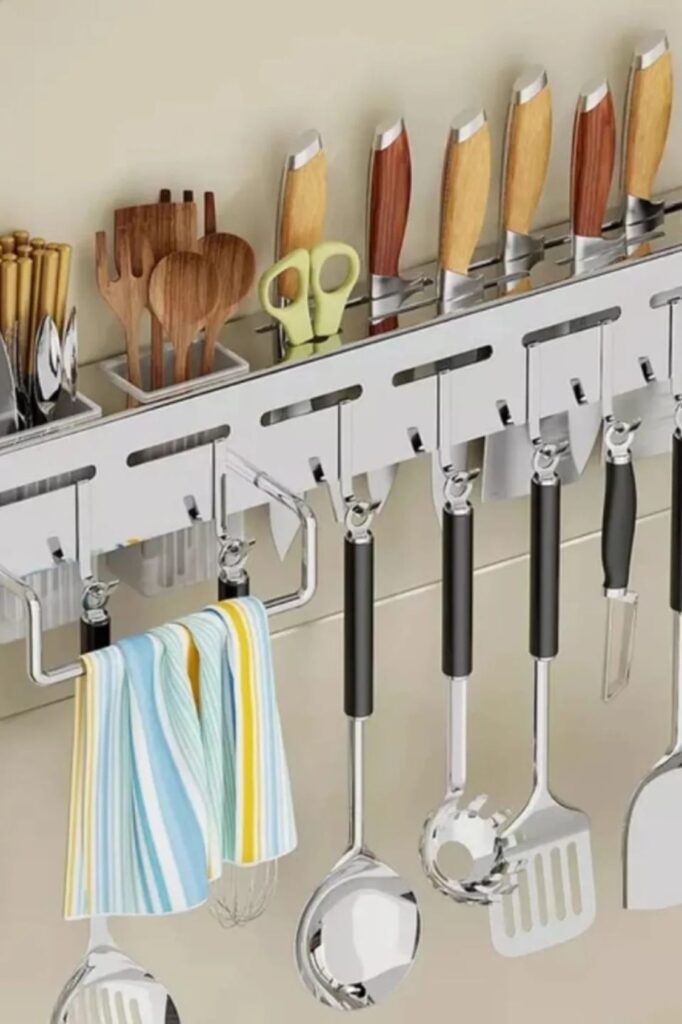
Tool Station
Cooking gets messy fast when utensils are scattered across drawers and countertops. A wall-mounted tool station like this keeps everything in one place.
Where you can get it right away. The hooks hold ladles, spatulas, and peelers, and the top section keeps knives, scissors, and small tools safe.
Built-in holders for chopsticks or spoons make it even more useful, especially when you want to keep things distinct by use.
Putting a towel bar underneath gives you a convenient place to dry your hands without leaving your desk.
Put it near your stove or prep area so that you can easily reach the equipment as you cook. This way of keeping everything out in the open not only saves time.
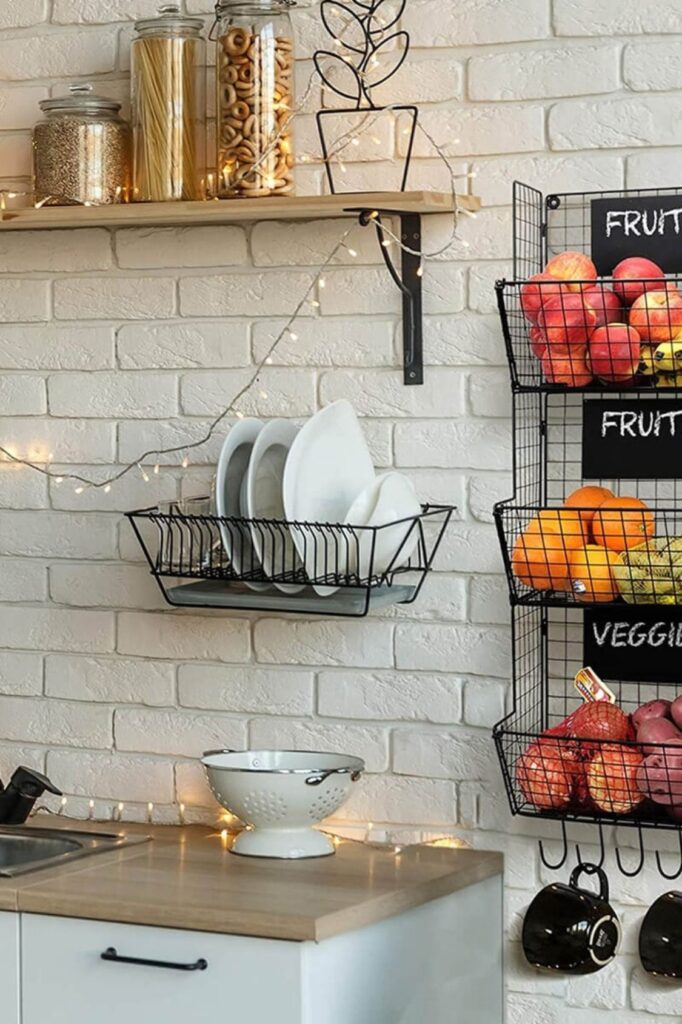
Basket Wall
Fresh fruits and vegetables often end up scattered across the counter or hidden in drawers where you forget about them.
Putting wire baskets on the wall makes things simple to see and reach, which also helps cut down on waste because you can see what you have.
Vertical baskets are great for small kitchens because they use height instead of surface space. To keep things neat, put different things on each level, like fruits, vegetables, or snacks.
Adding hooks at the bottom provides you more room for mugs or kitchen items without having to set up anything else.
Putting this close to your prep area or sink makes it even more useful because it keeps materials close by as you cook.
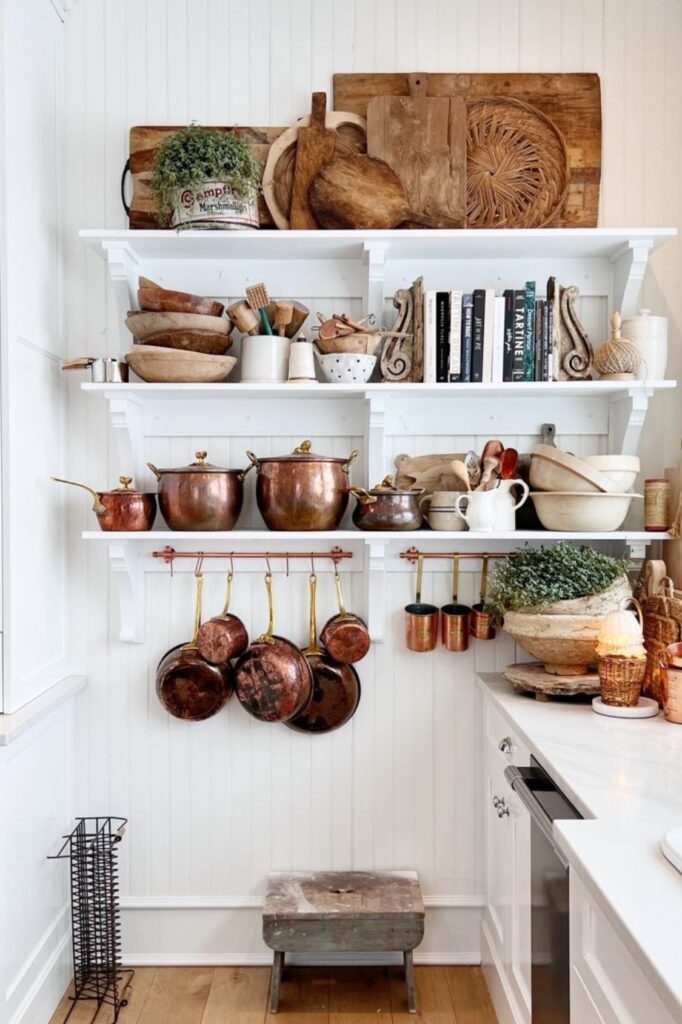
Pot Display
Heavy cookware usually eats up most of your cabinet space, leaving little room for anything else.
Hanging pots on a wall rail fixes that right away and makes them part of your kitchen setup instead of something you can’t see.
It looks great when you show off copper or metal cookware like this. The shelves above can house bowls, books, or serving dishes.
The lower rail keeps your most-used pots close at hand. Putting bigger things on shelves and heavier pots and pans below keeps the weight even.
Make sure the rail is securely fastened to the wall studs so it can support the weight without any problems.
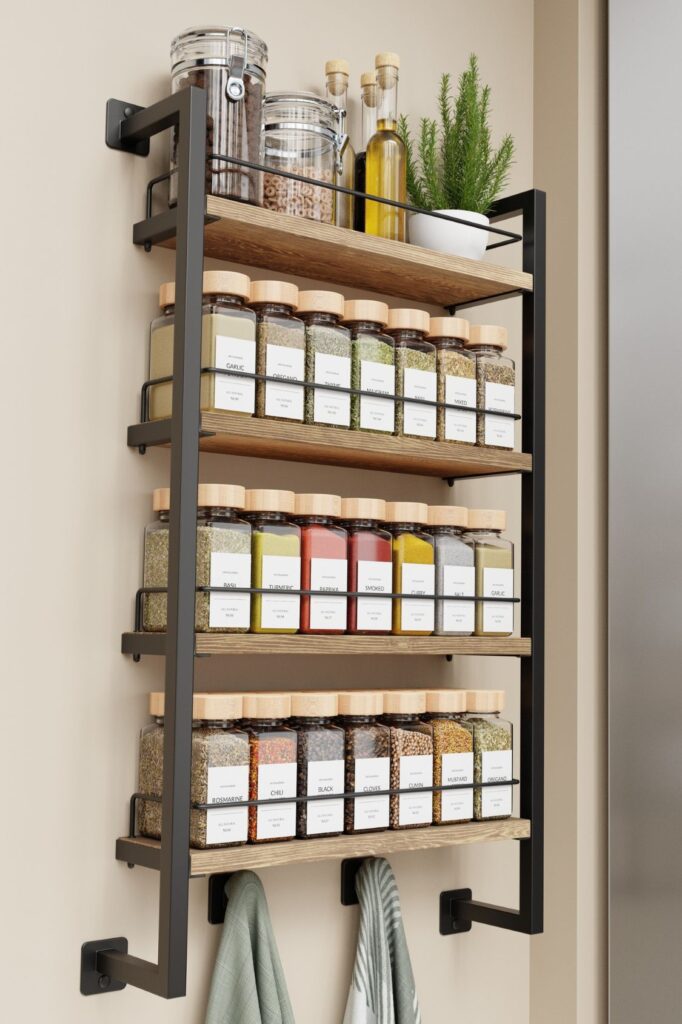
Spice Rack
Spice jars tend to disappear into cabinets where you forget what you even have. Lining them up on a vertical wall rack like this keeps every label visible.
This way, you may get what you need without having to search through everything. It also speeds up cooking because everything is there in front of you.
Using containers that match helps keep the arrangement neat and clean instead of messy. Slim shelves with front rails preventing jars from slipping while still making them easy to get to.
It is best to put this near your cooking area so that you can easily reach the spices while you prepare meals.
A few hooks at the bottom make it easier to hang towels or cloths, turning one narrow wall into a full and useful storage space.
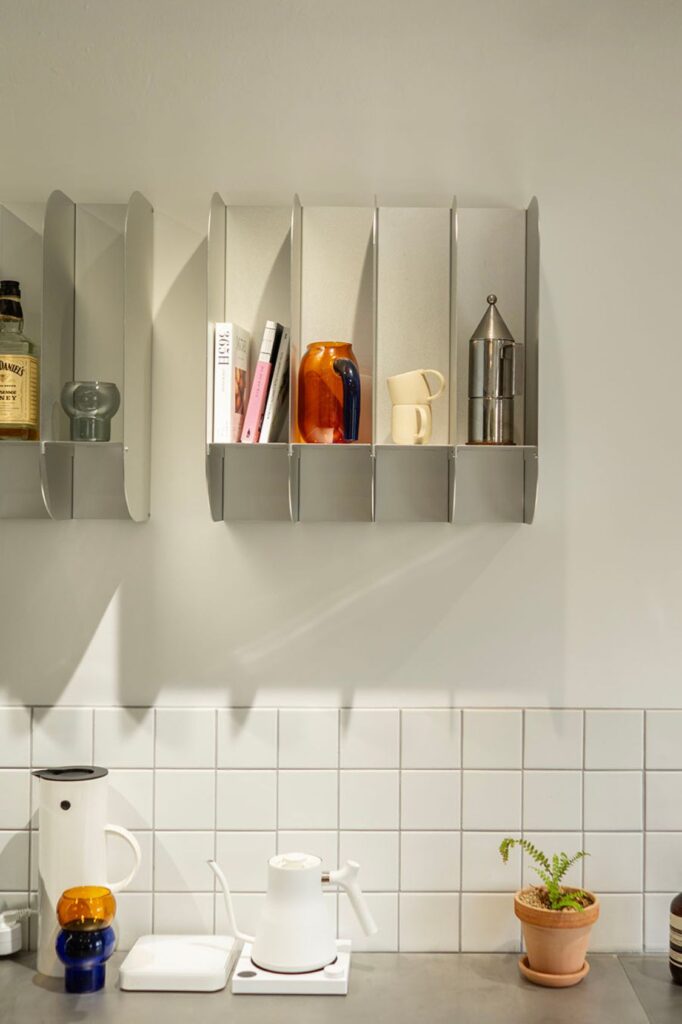
Slot Shelves
Loose items like mugs, books, or small jars often get stacked awkwardly on regular shelves. Divided wall shelves like these fix that by giving each item its own space.
So nothing falls over or gets lost behind something else. Vertical slots are great for holding things like cookbooks, cutting boards, or even plates.
Wider parts can store mugs or small containers. It keeps everything apart without having extra organizers.
If you put this above your prep area or coffee nook, it will be more useful because you can get things fast without moving anything around.
The clear, ordered pattern also makes your wall look neat instead of messy, even if you keep a lot of things in one area.
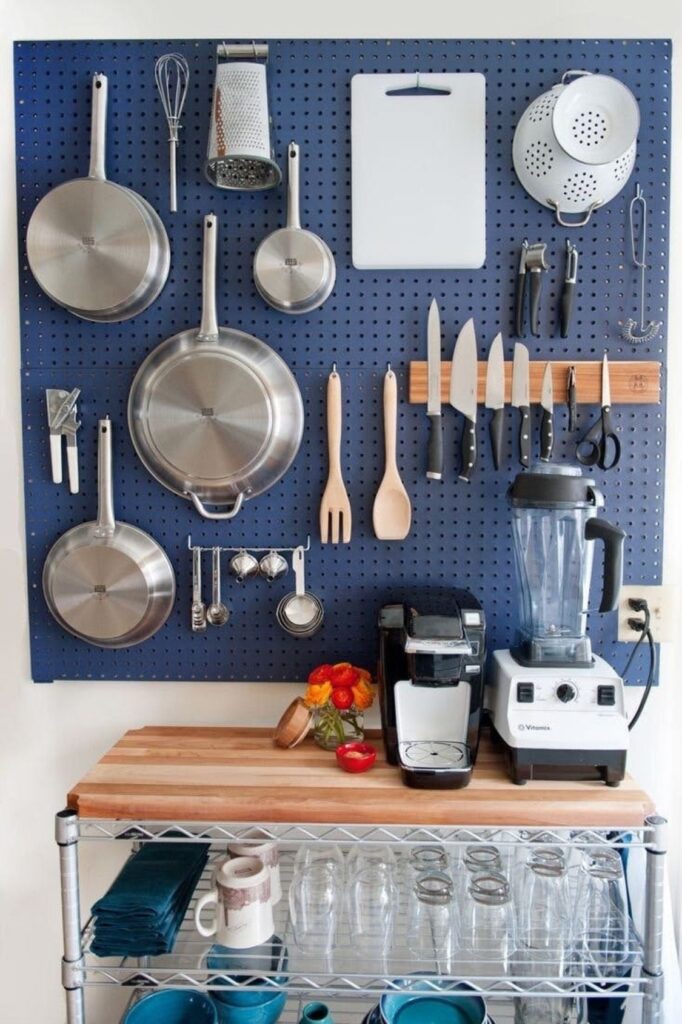
Pegboard Wall
Tools pile up fast when they stay hidden in drawers, especially the ones you use every day. A pegboard setup like this keeps everything in plain sight.
So you can get what you need without having to look for it. Each pot, utensil, knife, and even small tool has its own place.
This system is strong because it is flexible. You may move hooks, racks, and holders around at any moment, so the layout can alter as your needs do.
You should keep heavier things like pans on stronger hooks, but lighter equipment can go anywhere.
Putting this above a prep station is the ideal way to do it because everything is easy to get to as you cook.
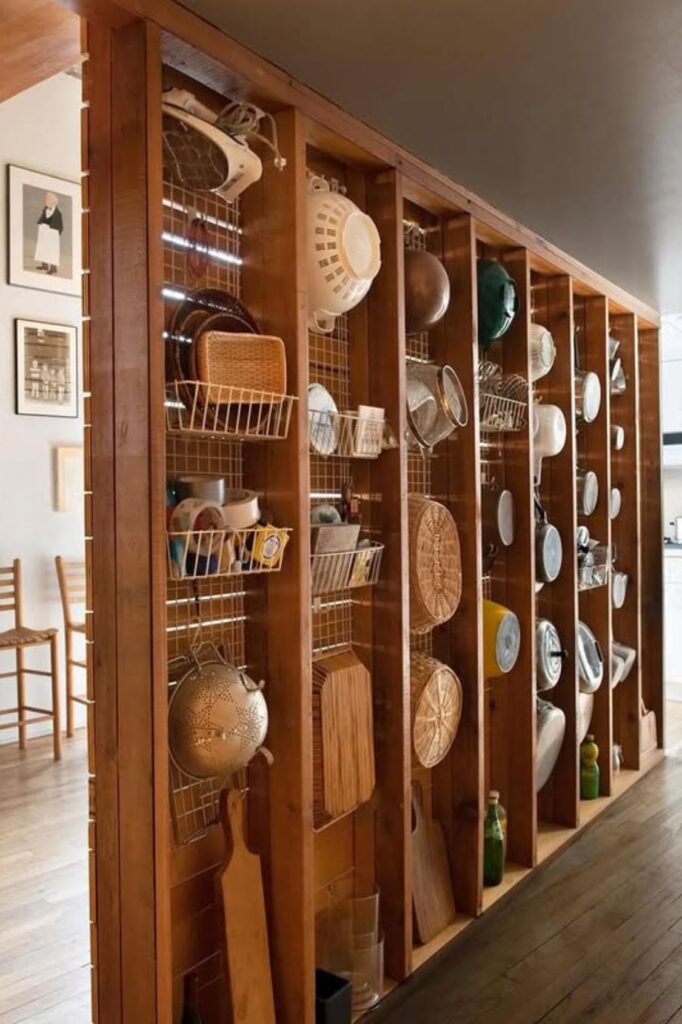
Divider Storage
Large kitchens often have unused divider walls that do nothing except separate spaces. Turning that wall into vertical storage like this gives you room for pans, trays, baskets.
And even cutting boards without having to add more cabinets. Each portion acts like a separate storage area, so things don’t become piled on top of each other.
Wire racks and hooks can handle a variety of shapes, from flat trays to deep bowls. This makes it easy to view and access everything.
This arrangement works well between the kitchen and eating areas because it doesn’t impede light or space.
Making it with open parts saves the kitchen from seeming cramped while also adding a lot of storage where you need it.
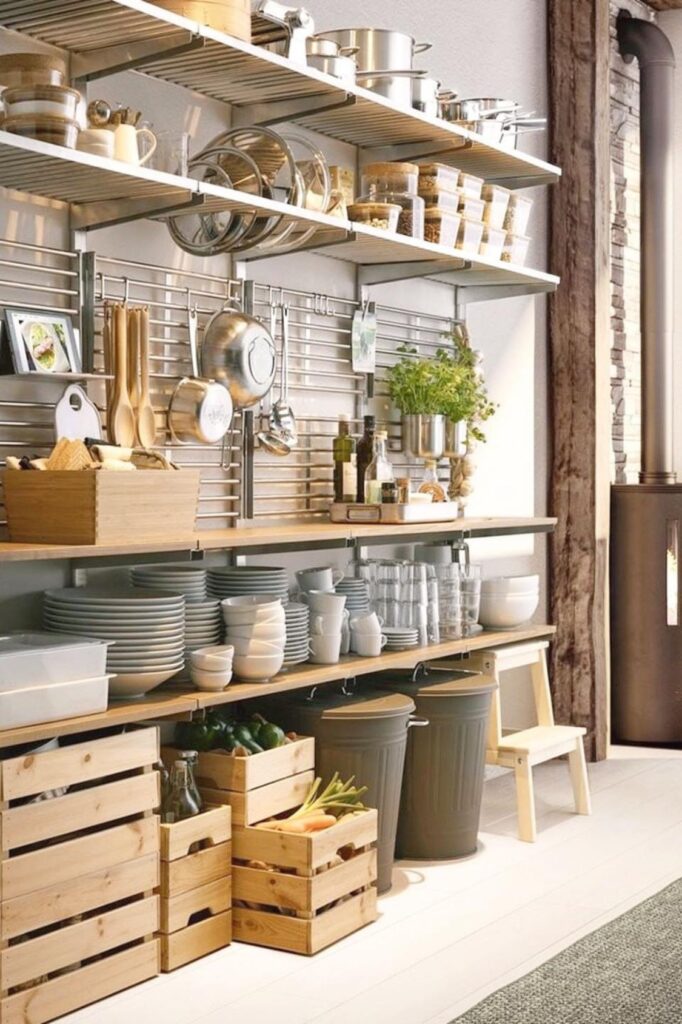
Wall System
One wall can handle almost your entire kitchen storage if you build it the right way. Combining shelves, rails, hooks, and baskets like this creates a complete system.
Where everything belongs. Plates, jars, and containers stay on shelves, and utensils and pans hang down below so you can get to them quickly.
This works because you stack multiple kinds of storage on top of each other. The top shelves house big objects, the middle levels hold tools that are used every day.
And the bottom shelves hold heavy stuff like crates or dishes. You can even put fruits and vegetables in open boxes so you can see them and get to them easily.
Putting this along a long vacant wall gives you the most storage space without having to buy cabinets. It keeps your kitchen open and gives you room for everything you use every day.
Ledge Shelf
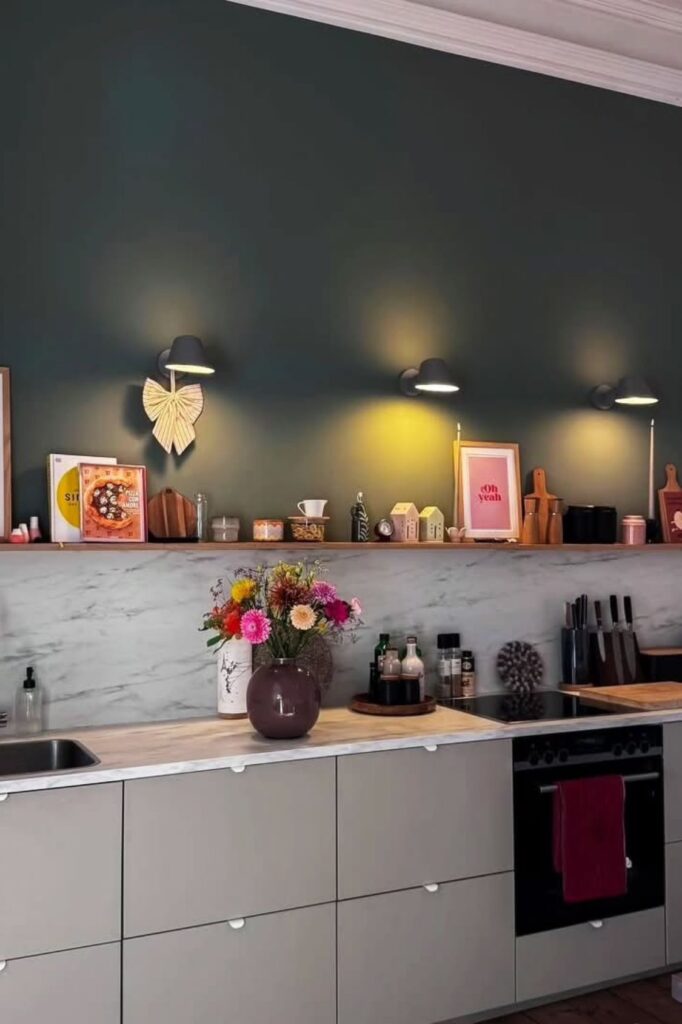
Walls above your backsplash don’t always need bulky shelves to be useful. A simple narrow ledge like this keeps small items lined up without taking over the space.
Your kitchen will still look clean and open, but you can still access your spice jars, decor, and everyday items.
This works because it is shallow. Things don’t get lost behind each other, and you can see everything at a glance. It also works wonderfully in modern kitchens where less is more.
Putting it just above your counter makes it easy to reach without getting in the way of your job.
Adding little wall lights above makes the wall more usable and stylish, turning a basic wall into a discreet but very useful place to store things.
Rustic Shelves
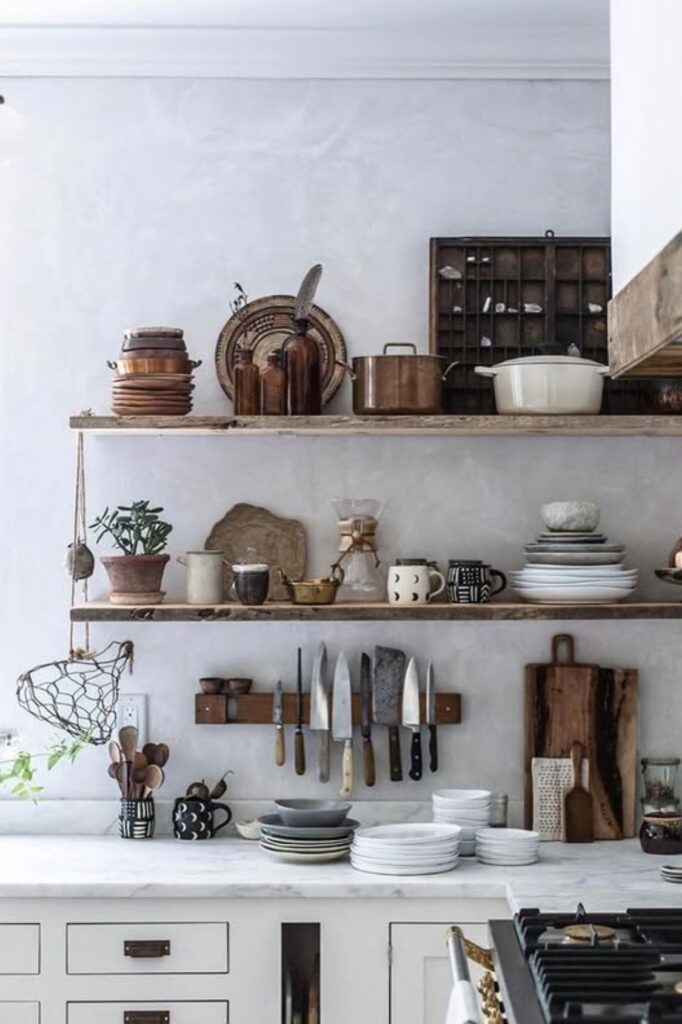
Simple wooden shelves can carry a lot more than just decor when you use them the right way. Layering two shelves like this gives you space for plates, jars, and cookware.
While making sure everything is clear to view. Things don’t get lost in cabinets, so cooking every day is easier.
This setup works better when you mix different ways to save things. The lower shelf is great for stacking plates.
While the higher shelf is great for holding things that are rarely utilized or are bigger. A magnetic strip on the bottom keeps knives close at hand without taking up room on the counter.
Putting this near your kitchen area keeps things close while you prepare. Natural wood also makes the wall seem warm, so it doesn’t look too heavy or cluttered.
FAQs
How high should floating shelves be in a kitchen?
The appropriate height makes a major difference in how handy your shelves are. For most kitchens, the best place to put them is 18 to 24 inches above the surface.
Leave a little additional room between shelves if you want to store things that are taller, such jars or appliances.
Always think about what you’ll be storing first, and then change the height to fit your needs.
What should you avoid putting on kitchen wall shelves?
Not everything should be on open shelves, especially in a kitchen that gets a lot of use. If the shelves aren’t securely fastened, heavy things like big pots can be dangerous.
Also, don’t put things that you don’t use often on the shelves because they merely accumulate dust and make the space look messy.
It’s preferable to save ordinary things like mugs, jars, and small containers. Your kitchen will feel more tidy and easier to use if your shelves are simple and useful.
You may like to read!

Fasial is the founder of the Fizzy Flare. He has been a passionate blogger since 2021. He ran three different websites in the past few years. Now he is focusing on Fizzy Flare to build an audience and help them organize their life.