26 Kitchen Drawer Organization Ideas For 2026
This post may contain affiliate links: full affiliate disclosure.
If your kitchen drawer looks pristine after a good cleaning, only to become a chaotic jumble within days, you are not alone.
The issue isn’t your diligence its the underlying system. Most drawers succumb to the same fate items slide around, accumulate in heaps or get crammed into any available nook.
I’ve experienced this firsthand, repeatedly opening the same drawer in search of a single spoon.
In this article, you’ll explore 26 Kitchen Drawer Organization Ideas made for modern homes in 2026.
Contents
- 1 What Are The Latest Kitchen Drawer Organizer Trends?
- 2 How Can You Organize Deep Kitchen Drawers Without Wasting Space?
- 2.1 Pull-Out Spices
- 2.2 Flat Spices
- 2.3 Bottle Zoning
- 2.4 Double Layers
- 2.5 Pantry Pullout
- 2.6 Spice Grid
- 2.7 Peg Storage
- 2.8 Beverage Drawer
- 2.9 Narrow Spices
- 2.10 Produce Baskets
- 2.11 Modular Cutlery
- 2.12 Plate Pegs
- 2.13 Corner Control
- 2.14 Wrap Station
- 2.15 Vertical Dishes
- 2.16 Cooking Stack
- 2.17 Drink Sorting
- 2.18 Bamboo Zoning
- 2.19 Drink Hub
- 2.20 Tool Zoning
- 2.21 Reset Drawer
- 2.22 Zone Labels
- 2.23 Height Sorting
- 2.24 Prep Flow
- 2.25 Overflow Control
- 2.26 Grip Zones
- 3 FAQs
What Are The Latest Kitchen Drawer Organizer Trends?
The current trend is all about ditching those clunky, immovable organizers that never quite work in real-life drawers.
Folks are leaning towards adjustable dividers, modular trays and non-slip liners, because they actually accommodate how we use our kitchens.
The focus has shifted from cramming everything into a single tray to zoning designating a specific spot for each item to prevent sliding and clutter.
Vertical storage is gaining traction too, particularly for knives and utensils, since stacking quickly eats up space. If an organizer isn’t adaptable or stays put, it’s getting passed over.
Save this article for later! 👇👇
How Can You Organize Deep Kitchen Drawers Without Wasting Space?
Deep drawers can quickly become a jumble if you just stack things. When you shove pots, lids, or containers in, you are wasting space and time, constantly searching.
The solution? Store things vertically or in designated sections, giving each item its own spot. Peg systems, dividers or even basic bins can prevent everything from sliding around.
Keep the things you use most often at the front, and the less frequently used items toward the back.
By abandoning the stacking method and embracing a zoning approach, deep drawers will finally be a help, not a hindrance.
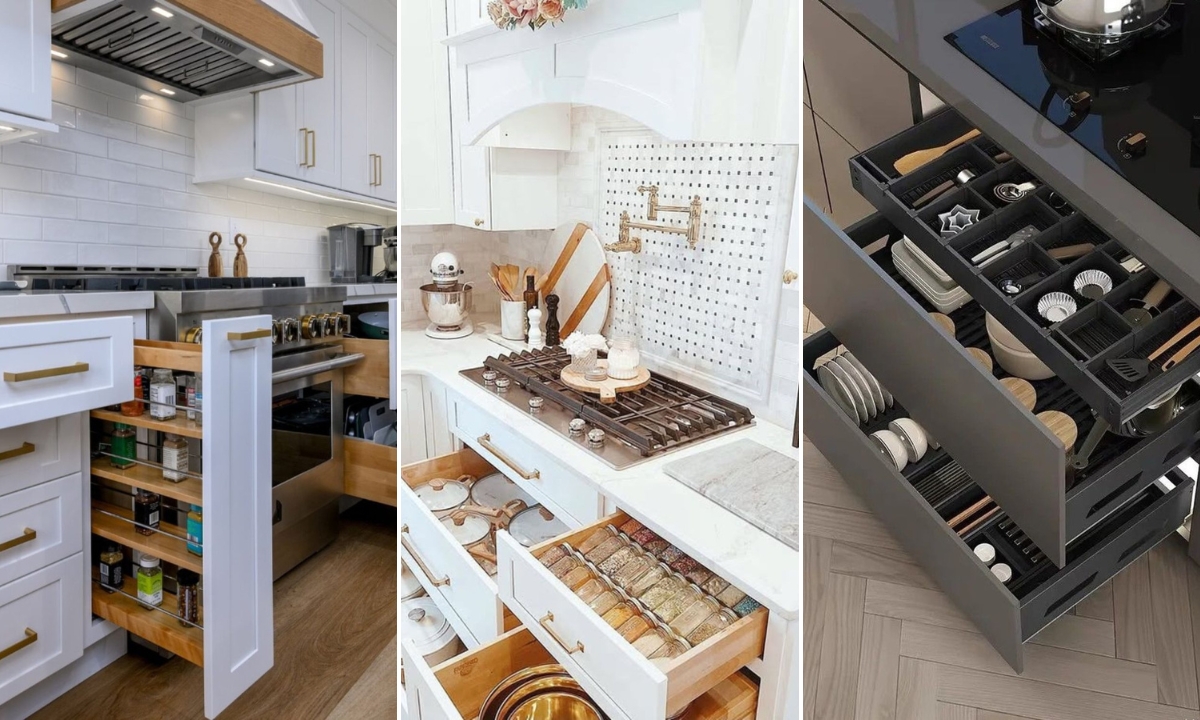
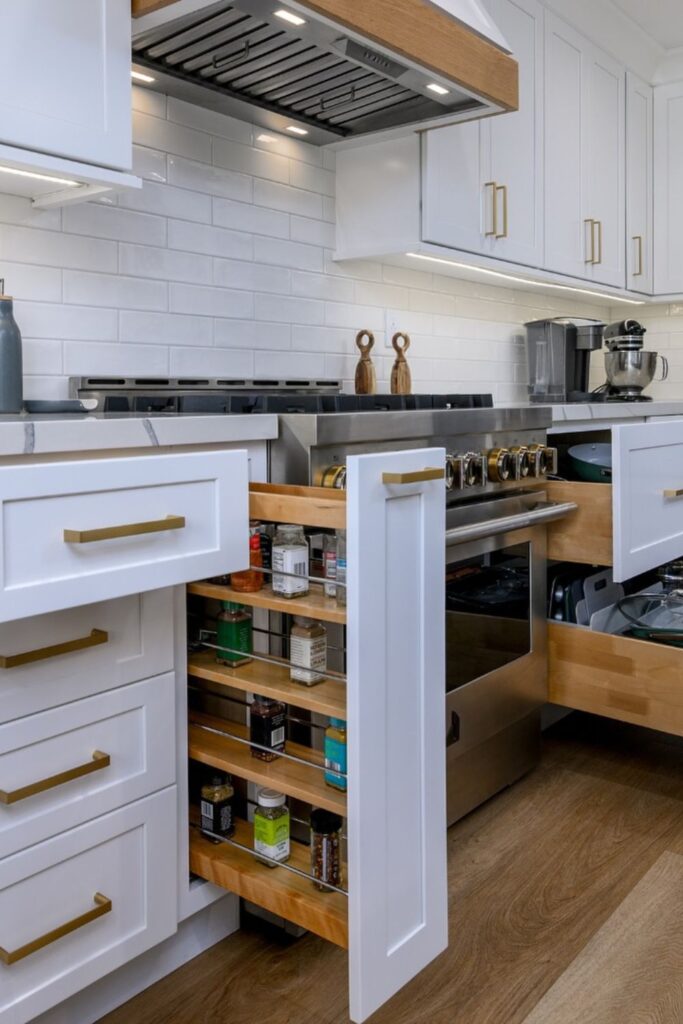
Pull-Out Spices
Spice bottles hidden in the back slow you down while cooking. Slim pull-out drawers beside the stove fix that by keeping everything upright and visible in one glance.
Narrow cabinets are ideal for this space, particularly close to the cooking area. Consider tiered rails or shallow shelves to keep labels visible.
Be sure to measure the height precisely you do not want taller jars to topple or get scratched when the drawer is opened and closed.
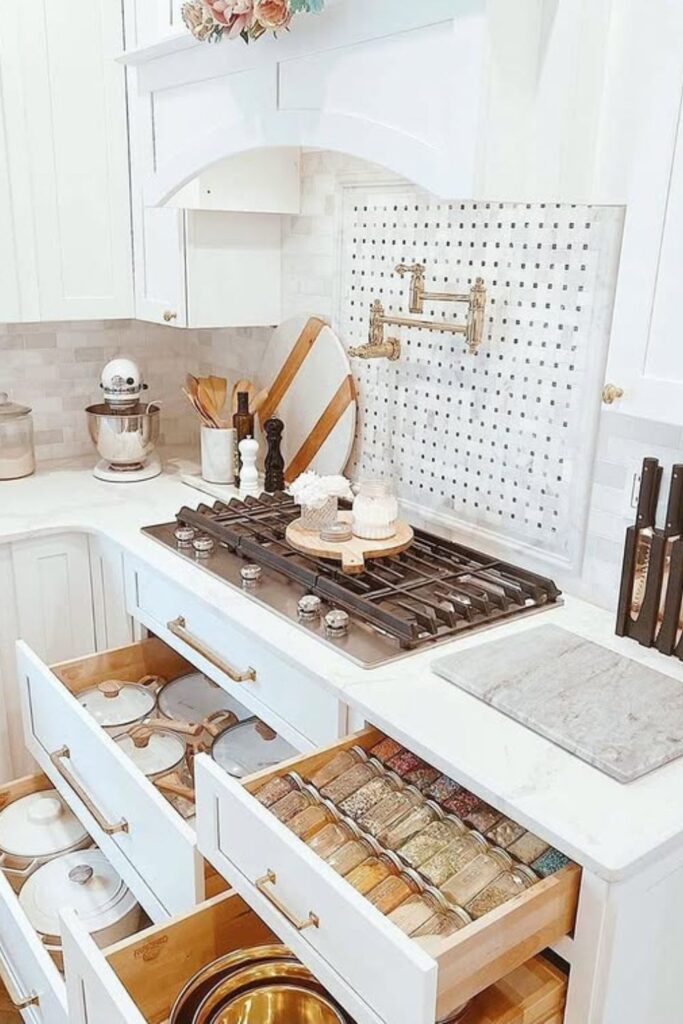
Flat Spices
Cooking gets faster once every spice shows its label at a glance. Wide drawers make this setup work best, especially under a cooktop.
Lay the jars down, labels facing the sky and sort them by how you use them, not by the alphabet.
A shallow insert or a custom grid will stop them from rolling around. This method works better than vertical racks when your drawer is deep but wide.
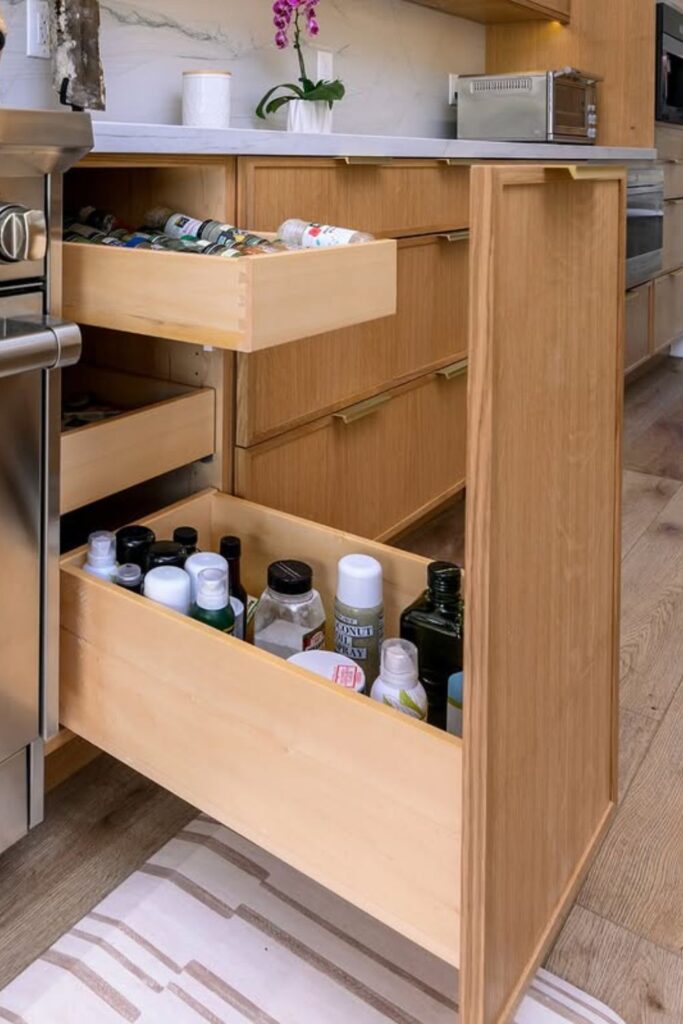
Bottle Zoning
Tall bottles rolling around waste space and cause spills. Deep drawers solve this when oils and sauces stand upright instead of stacking.
Place the heavier bottles toward the back, reserving the front for those you use daily, making them easy to grab.
A drawer box or internal dividers can help keep the bottles upright when you open the drawer.
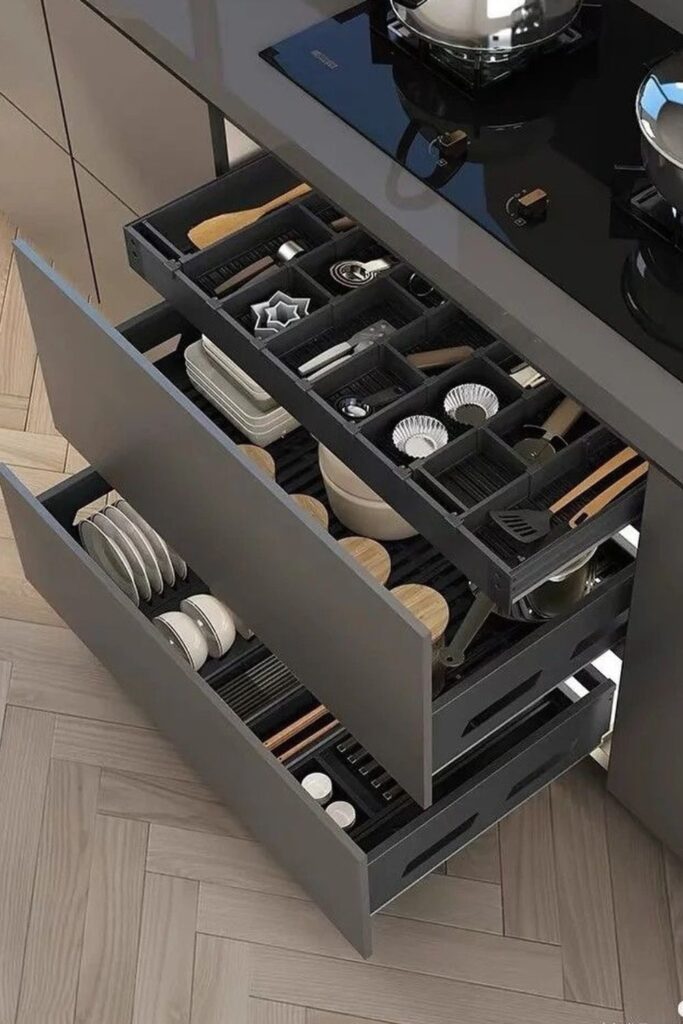
Double Layers
One drawer doing the job of two saves serious space in busy kitchens. Shallow trays sit on top for tools and small items.
While the lower compartment is reserved for bowls and plates, this arrangement excels beneath cooktops or in prep areas where efficiency is key.
Employ sliding or lift up inserts to ensure the top layer glides effortlessly, allowing for easy access to the items placed below.
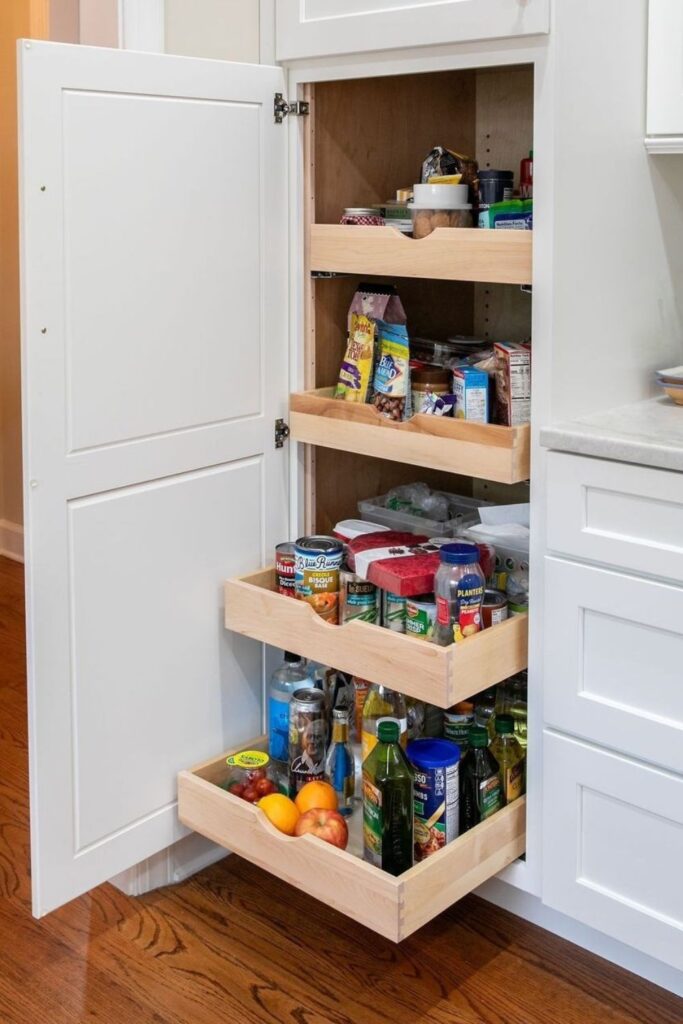
Pantry Pullout
Tall cabinets usually turn into a black hole where food gets lost and forgotten. Vertical pull-out drawers fix that by bringing every item out into full view.
Canned products are best kept low, while lighter snacks are ideal for the upper shelves. Use full-extension slides they ensure nothing gets lost in the back.
This arrangement is particularly effective in tight pantry cabinets, where traditional shelves sometimes waste both space and sightlines.
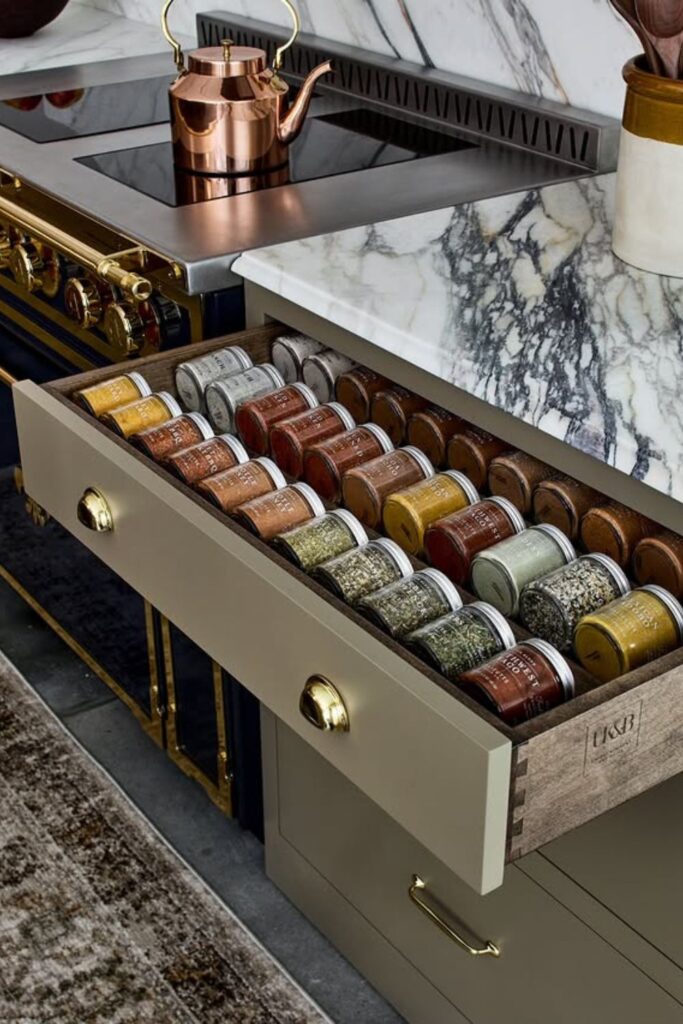
Spice Grid
Cooking feels smoother once every spice sits in its own slot instead of rolling around. Drawer grids lock jars in place and keep labels facing up.
Getting the appropriate seasoning and should not take forever. Wide shallow drawers positioned close to the stove are ideal.
Before you start, make sure the jar sizes are consistent otherwise, the grid would not hold them and everything will quickly become a mess.
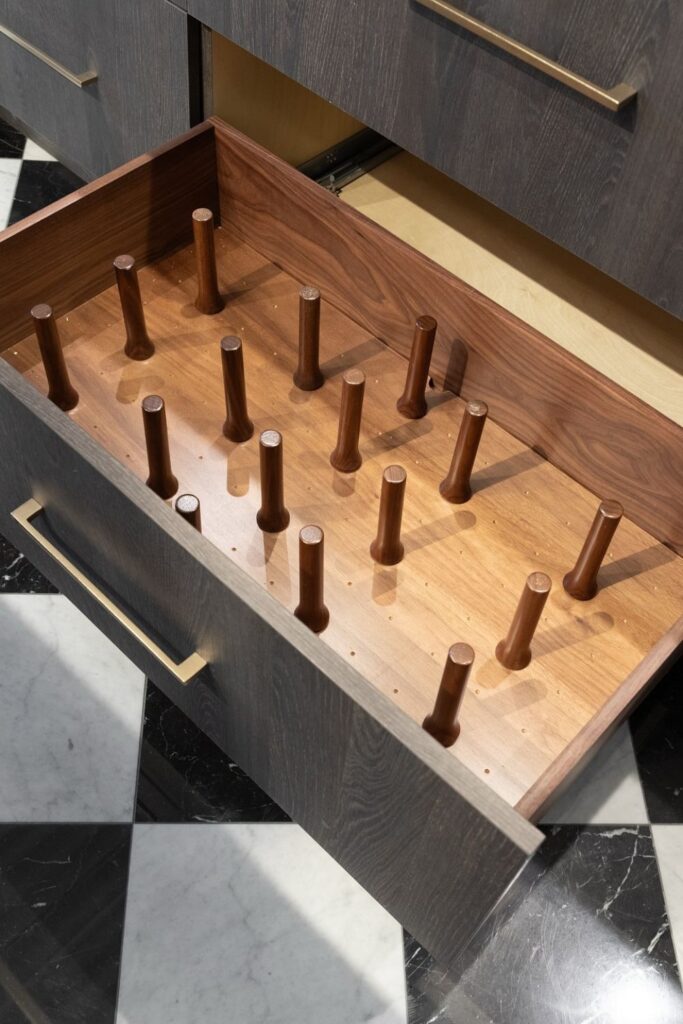
Peg Storage
Heavy pots sliding into each other scratch surfaces and waste drawer space. Wooden pegs fix that by locking cookware in place without stacking.
Deep drawers are ideal for this, particularly close to the cooking area. Start by placing pegs for your biggest pan, then expand from there.
When everythings in place each pot comes out easily, without any clattering, spills or the need to rearrange things later.
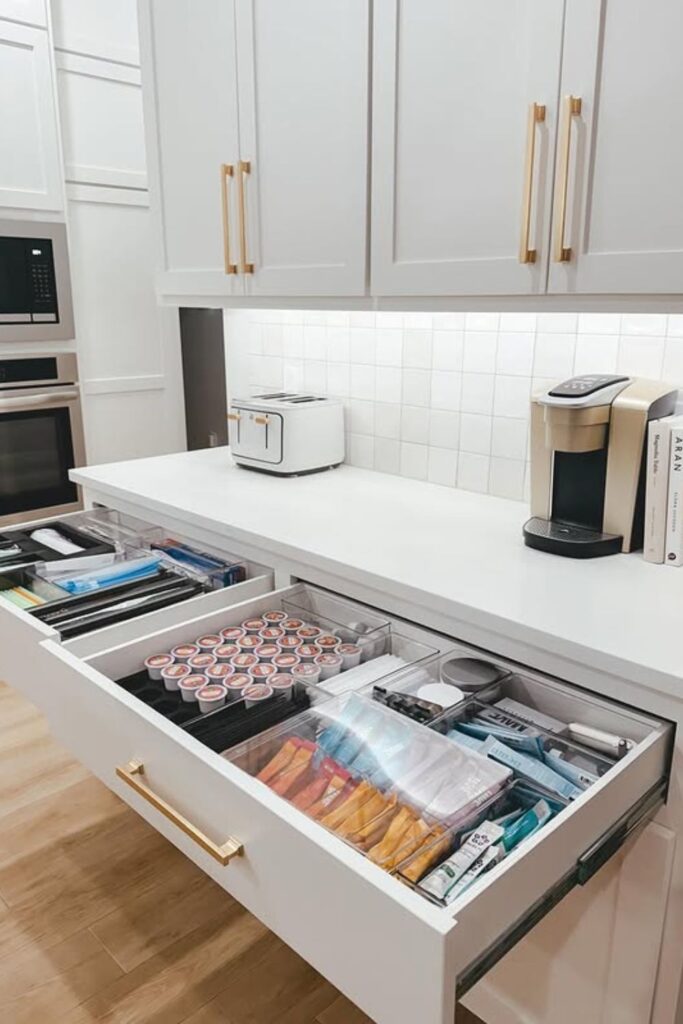
Beverage Drawer
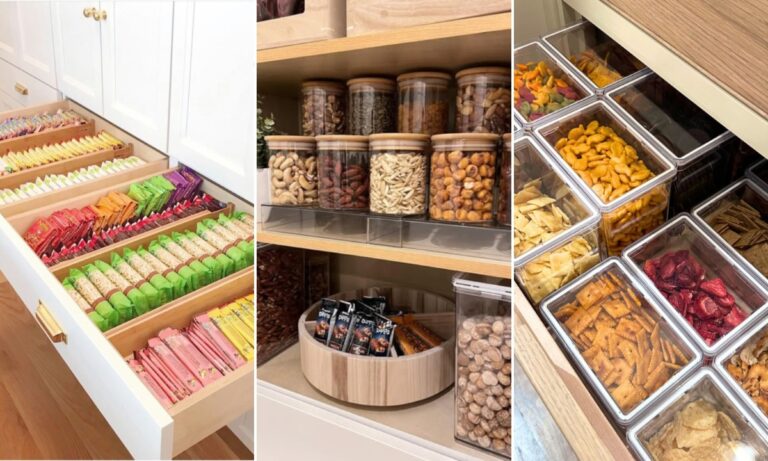
Morning routines get smoother once coffee and tea stop living all over the counter. Deep drawers handle pods, sachets, filters, and tools in one place.
Clear bins keep the tastes distinct, and shallow trays prevent the packets from toppling over. Place this setup close to the coffee machine.
It streamlines both refills and cleanup. With everything in its place, getting a drink becomes a matter of seconds, rather than a hunt.
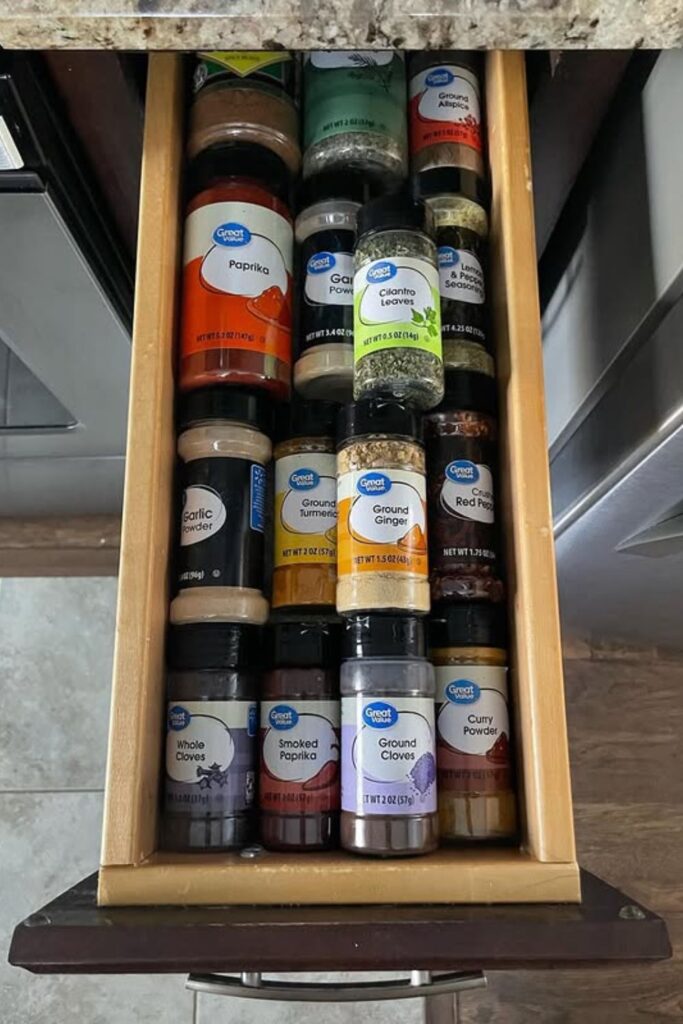
Narrow Spices
Tight drawers benefit from standing spices upright instead of laying them flat. Labels face forward, jars stay packed closely, and nothing rolls into the back.
Slim drawers flanking your oven or range are ideal for this. Use containers of a similar size to keep things tidy.
When everything’s in place, reaching for a spice is as simple as taking a book off a shelf.
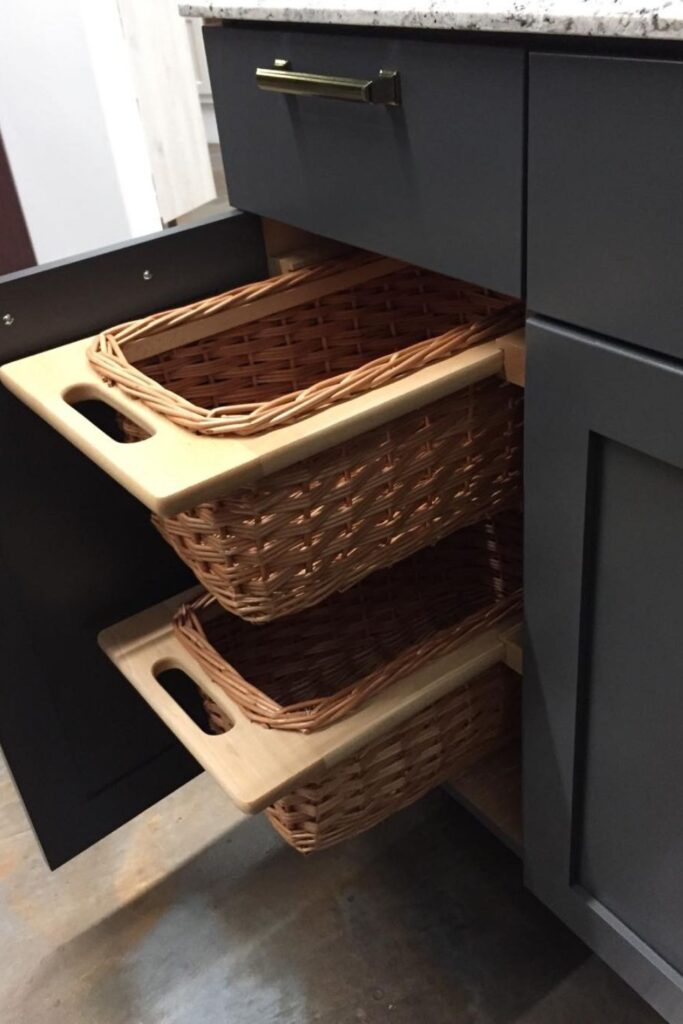
Produce Baskets
Loose fruits and vegetables rot faster once they get buried in cabinets. Pull-out baskets solve that by letting air circulate while keeping items visible.
Positioning lower cabinets next to your food prep zones is ideal. Opt for deeper baskets to hold onions and potatoes.
While shallower ones are perfect for items you need to grab quickly. Sliding trays are a real time saver allowing you to refill without having to empty the entire cabinet.
Modular Cutlery
Messy utensil drawers usually fail because tools share space without rules. Modular trays fix that by giving each category its own boundary.
Mixing tray sizes is key to keeping spoons, knives, and those odd utensils from jostling each other.
This method shines in wide top drawers, ideally located near the dishwasher. When each item has its own designated space the drawers remain tidy, even after a hectic dinner.
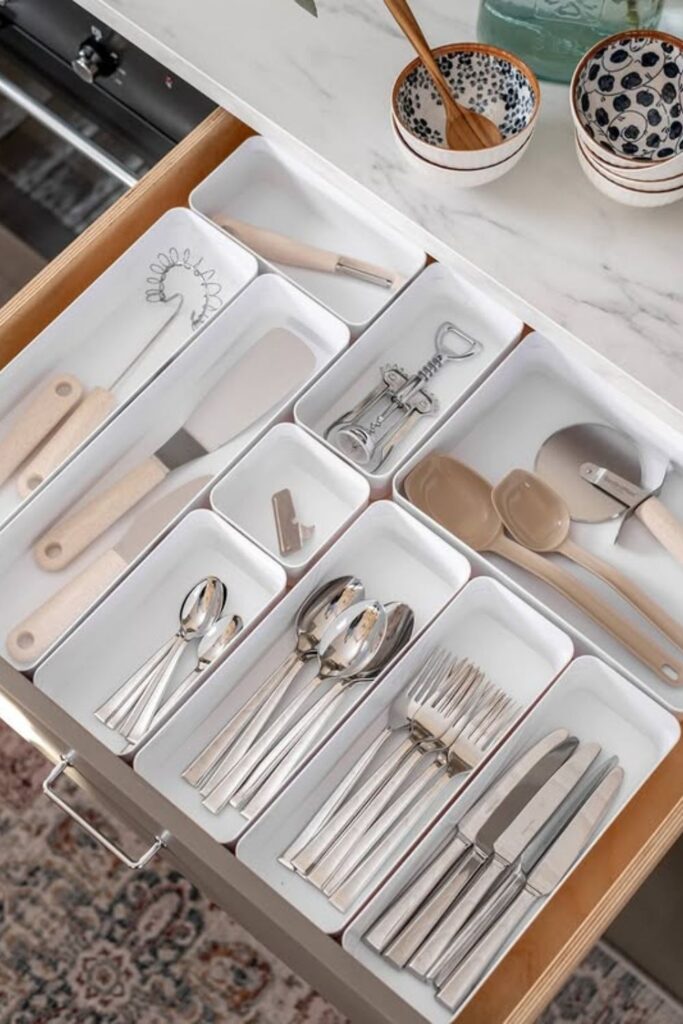
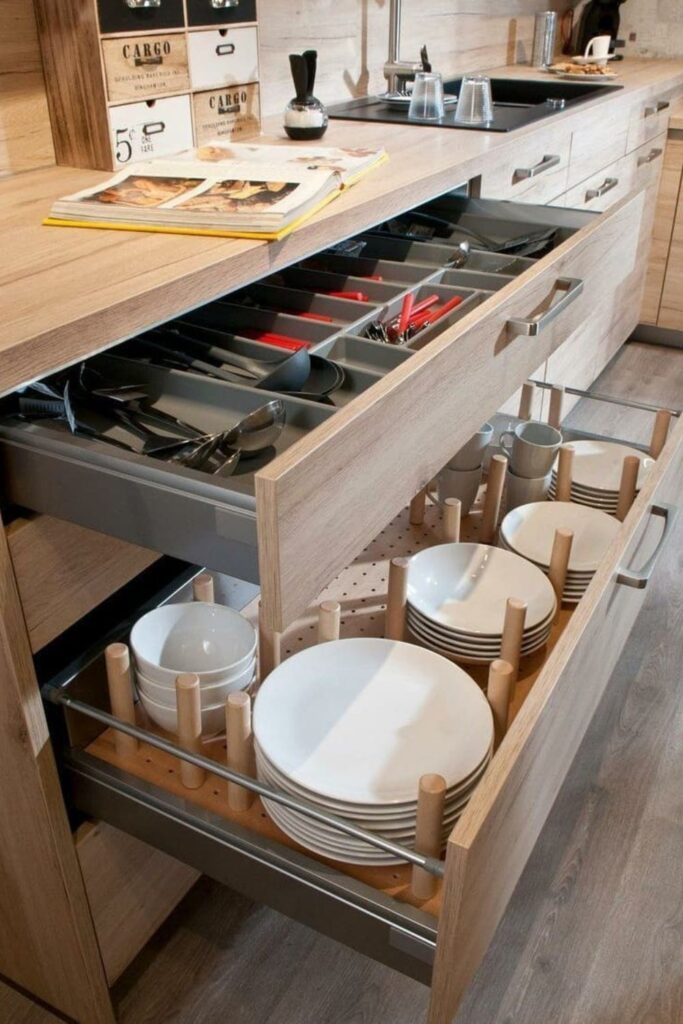
Plate Pegs
Stacks of plates chip when they slide every time the drawer opens. Peg systems stop that by locking each stack in place without piling weight on the edges.
Deep drawers positioned close to the dishwasher are ideal for this arrangement. Start by placing pegs to accommodate your biggest plates.
And then modify the pegs for bowls and smaller dishes ensuring everything stays put while you’re loading and unloading.
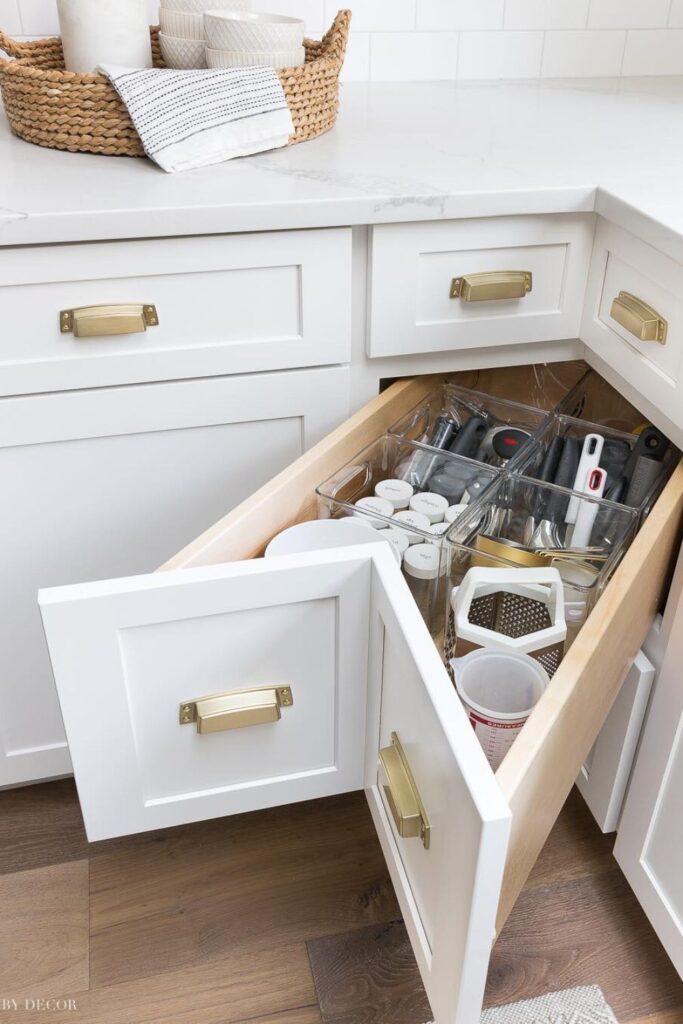
Corner Control
Corner drawers usually turn into dead space where tools disappear fast. Angled drawer boxes fix that by using the full depth without awkward reaching.
Clear bins are a great way to keep your gadgets in sight and prevent things from getting lost in the back of a cupboard.
This approach is particularly useful for baking utensils or other prep gadgets that you don’t use every day, but still want to have readily available when the need arises.
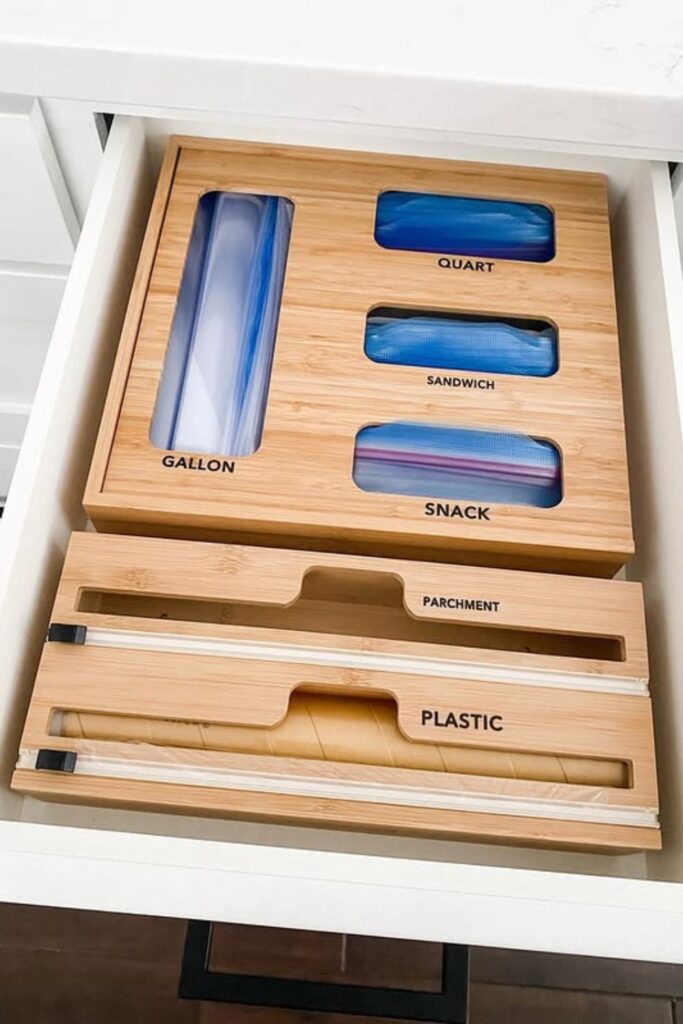
Wrap Station
Loose plastic wrap and foil turn drawers into a tangled mess fast. Built-in wrap organizers fix that by locking.
Each roll should fit snugly into its designated slot the edge crisp. For prep areas, wide shallow drawers are ideal.
Clearly label each part to streamline the refilling process. When the rolls are stable peeling off sheets is a breeze not a battle.
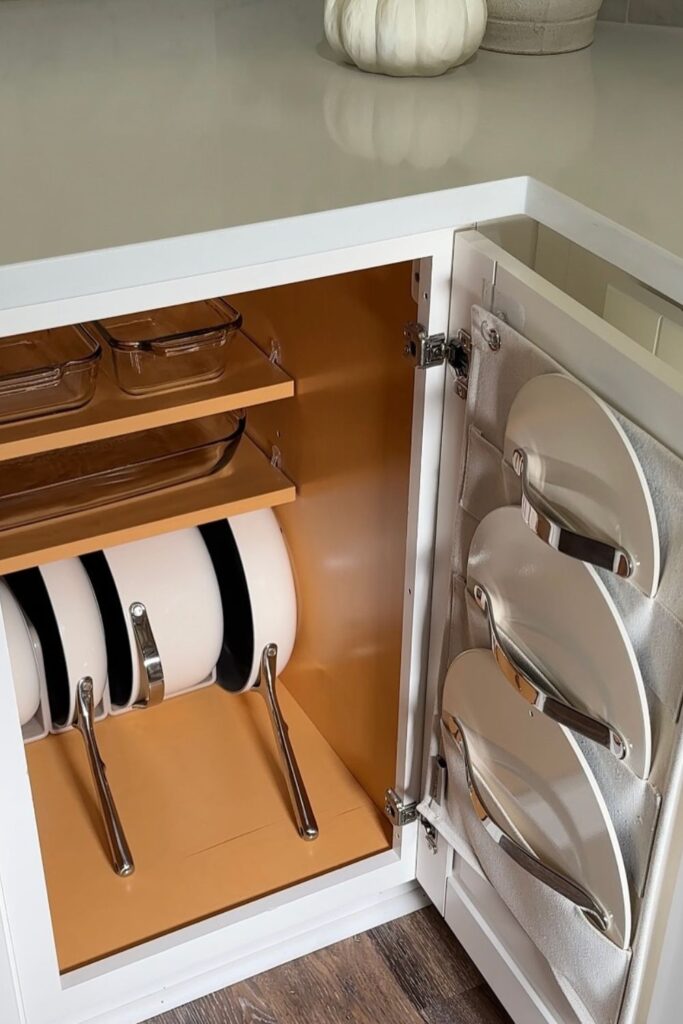
Vertical Dishes
Plates stop chipping once they stand upright instead of stacking flat. Vertical racks turn a lower cabinet into a clean, grab and go zone.
Door-mounted holders are a great way to store lids without taking up precious shelf space. This arrangement is particularly effective when placed near the sink or dishwasher.
You want the slots to feel snug, but not so tight that they’re difficult to use. Also, make sure there’s enough room to easily slide the lids in and out.
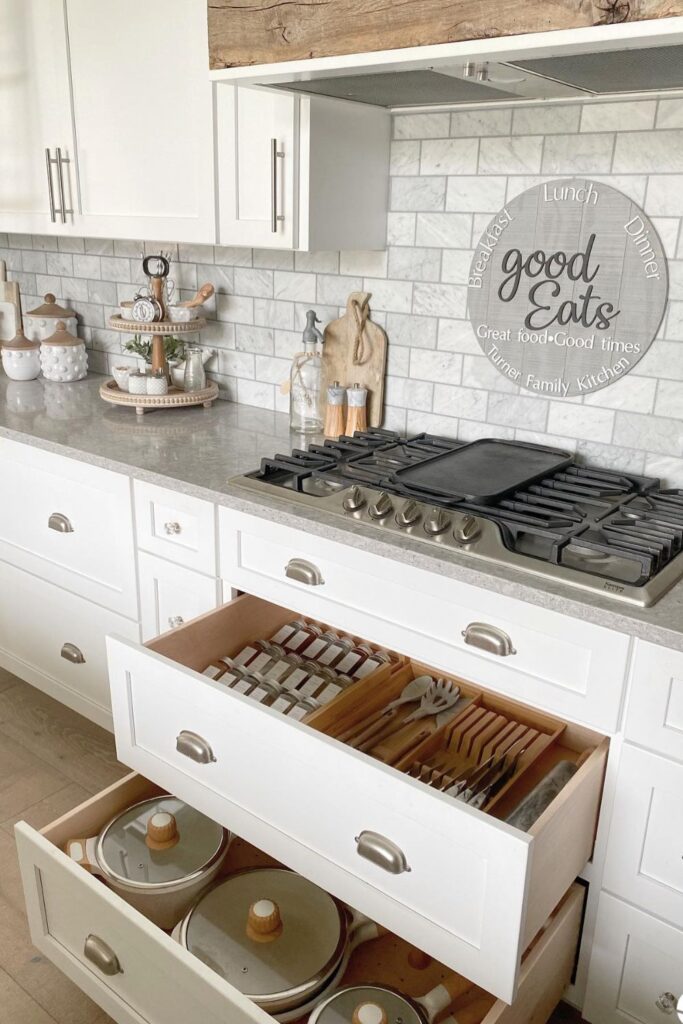
Cooking Stack
Prep feels smoother when tools and cookware live in the same zone. Upper drawers handle spatulas and spoons.
The deeper drawers beneath are perfect for storing pots and lids keeping them from getting jumbled.
This arrangement is ideal and when situated directly under the stovetop, ensuring everything is easily accessible.
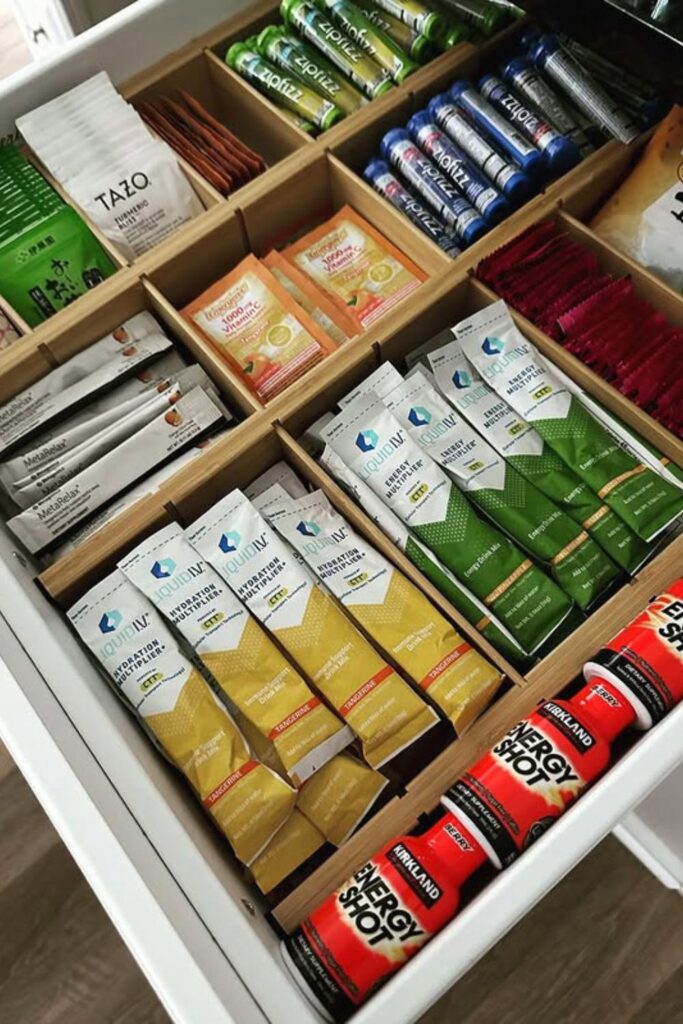
Drink Sorting
Busy households burn through drink mixes fast and loose packets turn chaotic quickly. Divided drawer grids.
Keep flavors distinct and easy to the spot. Wide drawers positioned near the fridge or coffee station are ideal.
Organize by type not brand to streamline replenishing. Setting a limit for each section naturally curb excessive purchasing.
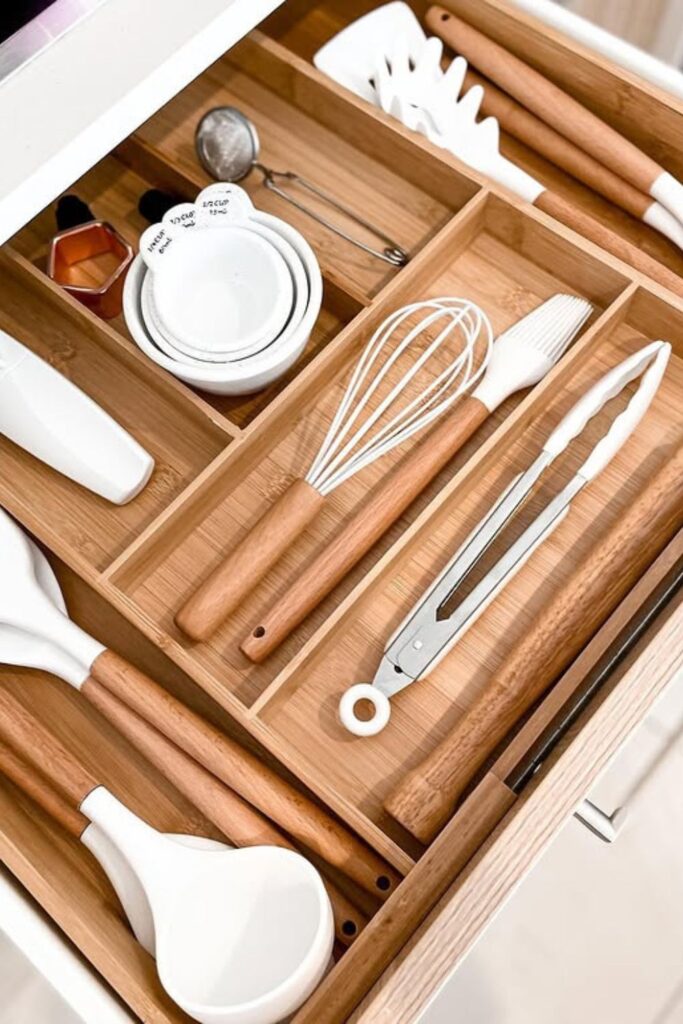
Bamboo Zoning
Cooking tools feel easier to grab once each one stops overlapping the next. Bamboo dividers create natural lanes that separate whisks, tongs and spoons without wasting space.
Medium-depth drawers positioned near prep areas are ideal. Organize the compartments according to the length of the tools rather than their type.
This way, when longer equipment have ample space the drawers close easily and remain quiet or even during busy cooking periods.
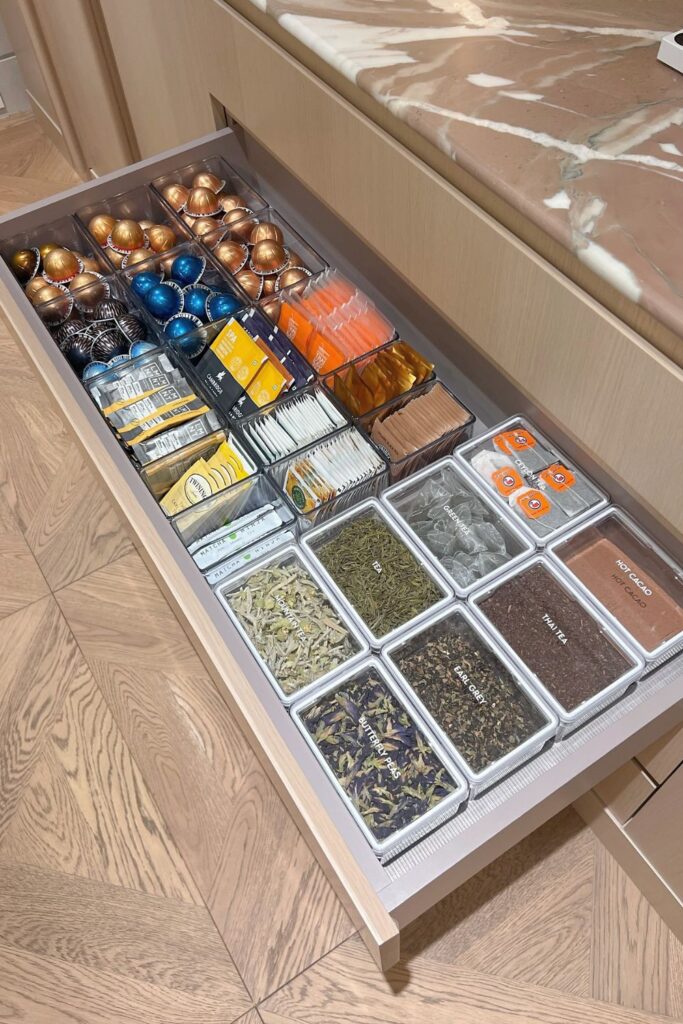
Drink Hub
Caffeine chaos disappears once every pod packet and scoop has a fixed square. Grid style drawers turn mixed drink supplies into a clean, grab first system.
Wide drawers positioned near the coffee station are ideal for this arrangement. Organize drinks by their purpose.
Rather than by brand to streamline refills and prevent morning delays caused by searching for a specific item.
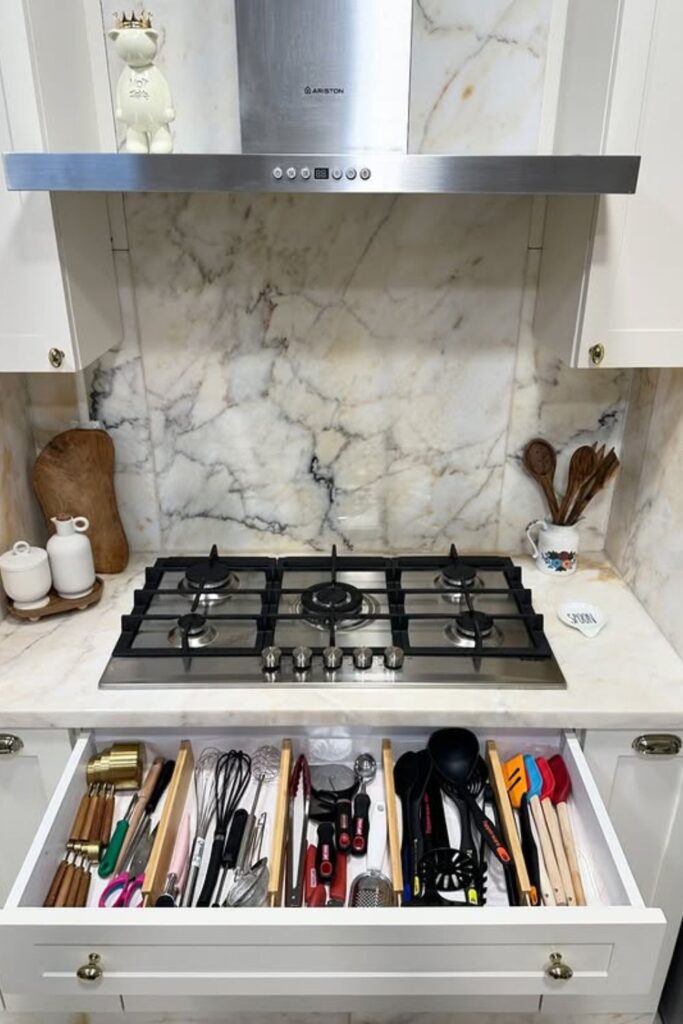
Tool Zoning
Fast cooking falls apart when utensils pile into one long mess. Long dividers fix that by giving every tool its own stretch of space.
Drawers beneath the cooktop are ideal providing easy access to whisks, spatulas, and ladles.
Organize utensils by their function, not their form group stirring tools together flipping tools together. This way, your hands may move instinctively as you prepare food.
Reset Drawer
Mid-cooking chaos builds when used tools pile on the counter. A reset drawer gives dirty or used once tools a temporary home.
Line a shallow drawer with a mat you can wash, and leave it empty when you begin. As you prep, toss your equipment in there.
When you are done just dump everything into the sink in one go. This way, cleanup is a single task, not a series of interruptions.
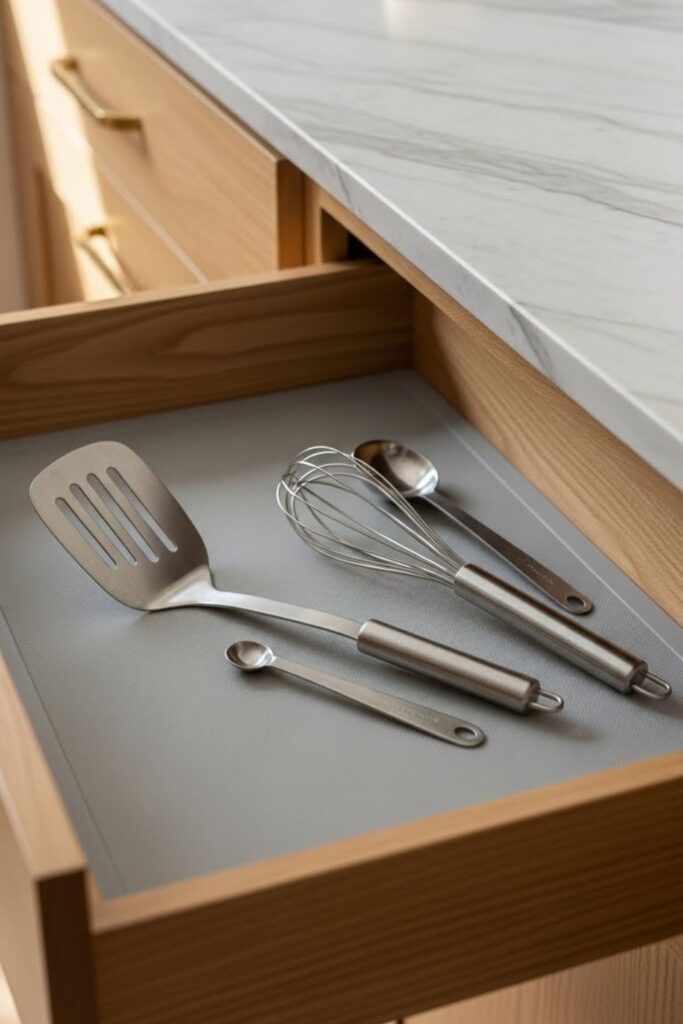
Zone Labels
Memory fails fastest in shared kitchens. Small engraved or taped labels inside drawers silently train everyone where things go.
Label zones by action mix, cut and store instead of item names. Over time, hands move naturally without thinking.
This approach shines in family kitchen and drawer inevitably become a jumble the initial structure forgotten by all.
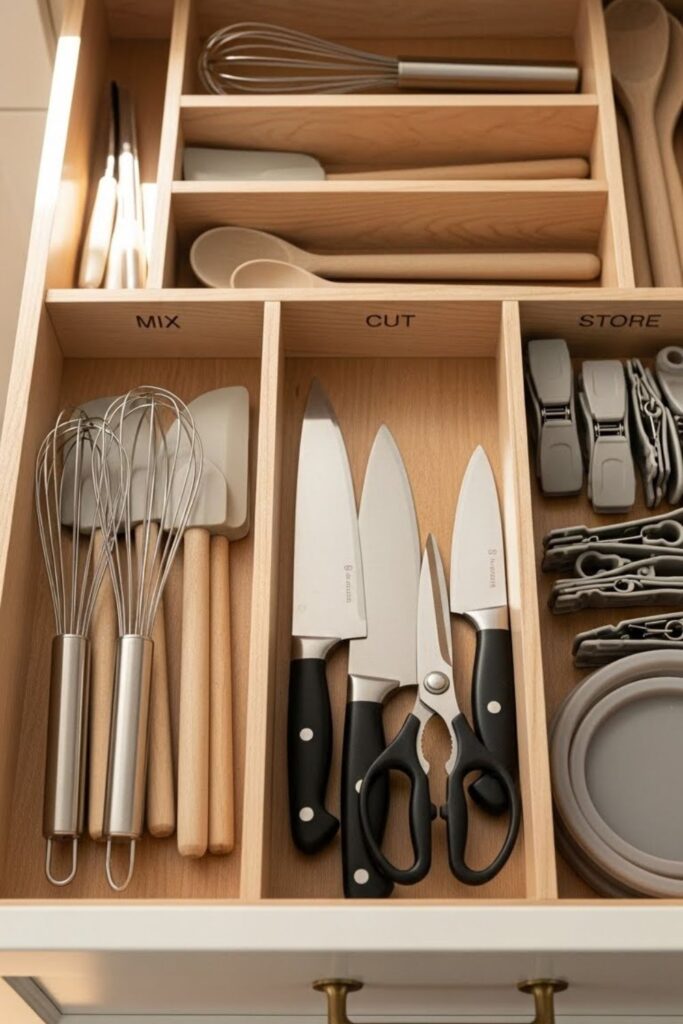
Height Sorting
Drawer clutter happens when tall and flat item compete for the same space. Separate tools by height instead of category.
Flat tools find their place in shallow drawers, while the heftier ones migrate to deeper storage. Measuring cups, presses and peelers no longer obstruct lids and spatulas.
When height dictates the arrangement, drawers close more smoothly, eliminating those frustrating jams that often occur mid recipe.
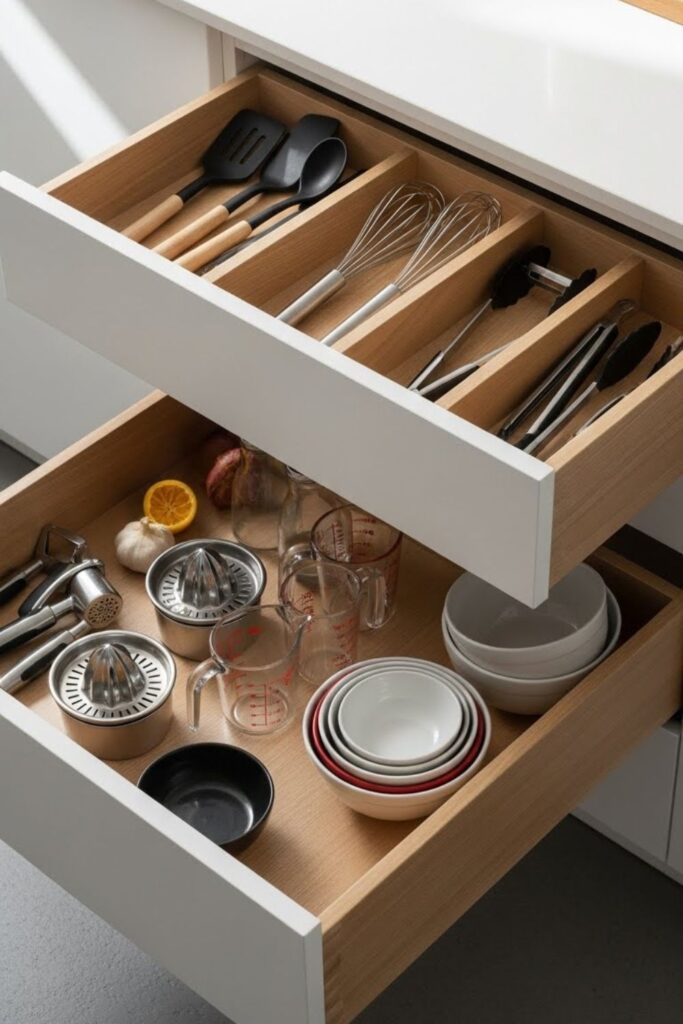
Prep Flow
Cooking slows down when tools live far from where they are used. Arrange drawers based on prep order not item type.
Knives and cutting boards come first followed by mixing tools and finally cooking implement. This arrangement mirrors your workflow eliminating unnecessary trips.
The preparation process become more fluid as each the drawer presents next item precisely and when you need it.
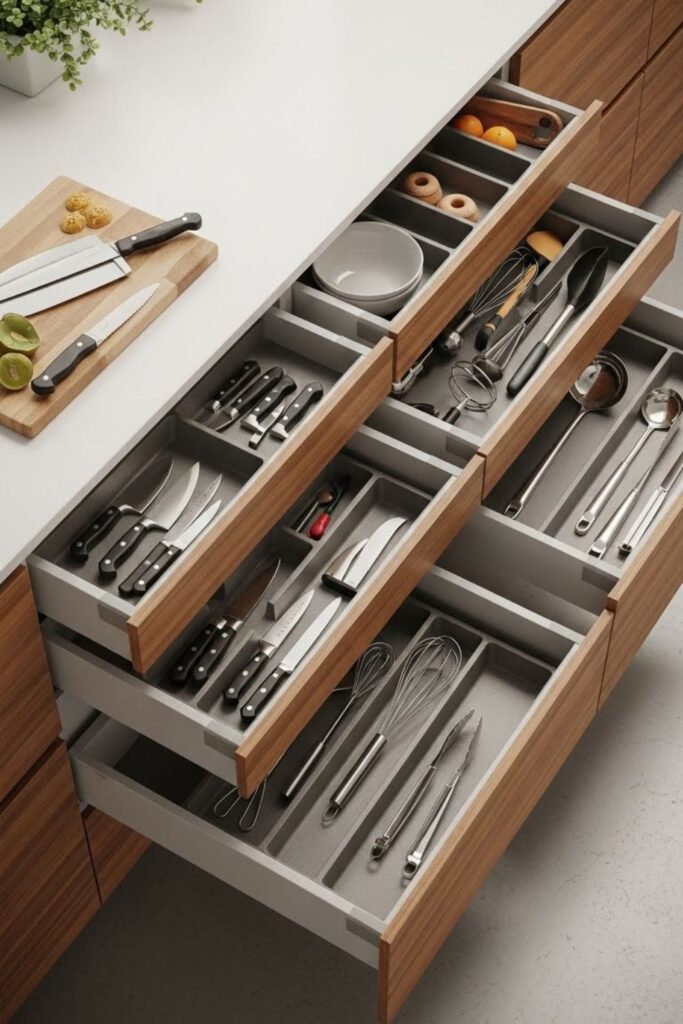
Overflow Control
Overstuffed drawers break systems faster than bad organizers. Designate one hidden overflow drawer for duplicates and backups.
Extra spatulas, spare lids and those seldom used equipment find a home there, freeing up space in the drawers we actually use every day.
Keeping the main drawers less than full means the organization holds up, eliminating the need for regular rearranging or a big clean-out every couple of weeks.
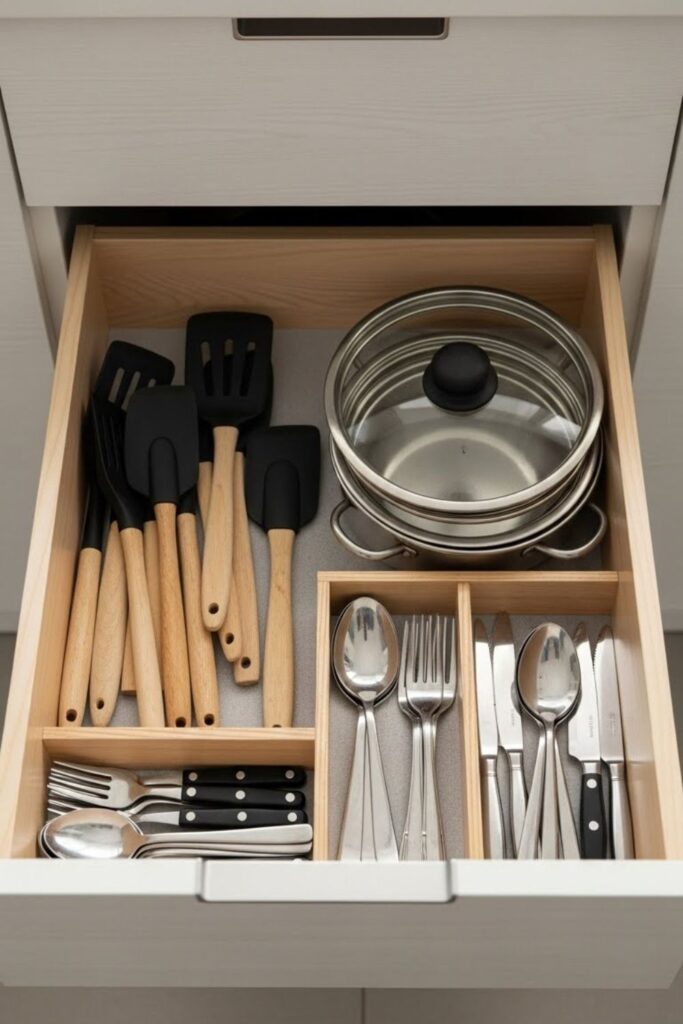
Grip Zones
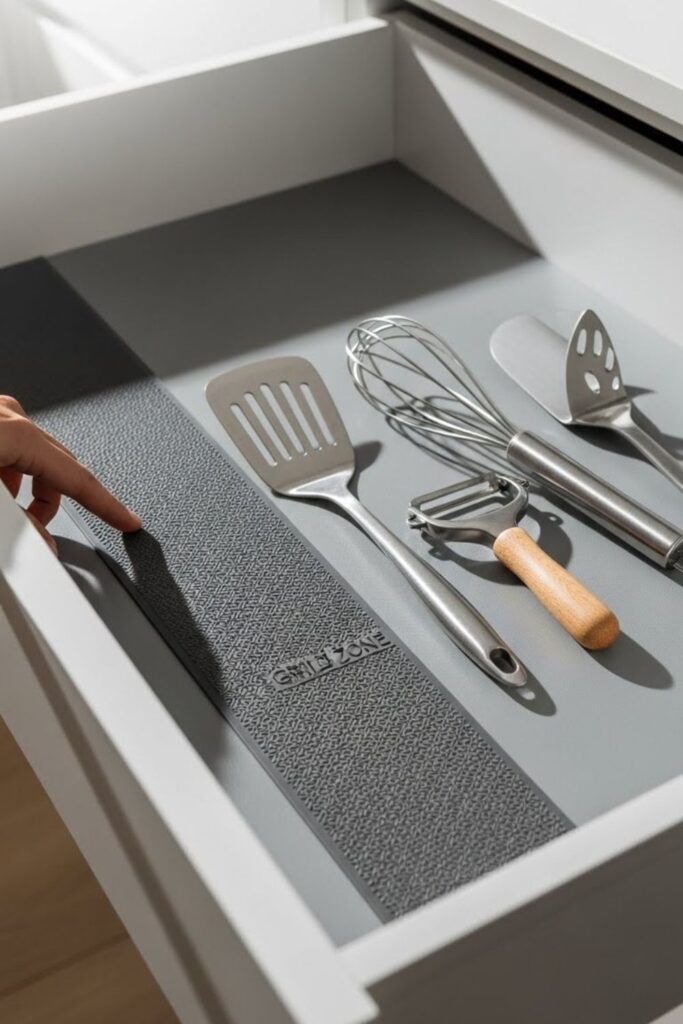
Slipping tools are a nuisance, causing both damage and daily frustration. To remedy this, designate grip zones using textured liners, but only in the areas.
Where hands make contact most frequently. The front sections of the tool drawer will receive the non-slip material, while the back sections will remain smooth.
This design prevents tools from shifting forward, yet they still slide effortlessly when restocking.
FAQs
Why do kitchen drawers get messy again even after organizing them?
Drawers often become a mess because they are stuffed to the brim or just don’t reflect your cooking style.
When utensils are crammed together without designated spots they inevitably end up in disarray.
The key to lasting organization is designing drawers on your actual routines, not just arbitrary categories.
Is it better to organize kitchen drawers by item type or by how often they’re used?
Frequency is the key. Tools you use every day should be readily accessible, right where you need them. Things you rarely touch.
They may go further back, or even into overflow storage. If your drawers are organized based on how often you really use what’s inside, clutter will naturally be kept at bay.
You may like to read!
- 27 Pantry Organization Ideas
- 24 Family Organization Wall
- 22 Sewing Room Organization
- 20 Shelf Organization Ideas
- 24 Art Studio Organization Ideas

Fasial is the founder of the Fizzy Flare. He has been a passionate blogger since 2021. He ran three different websites in the past few years. Now he is focusing on Fizzy Flare to build an audience and help them organize their life.