22 Junk Drawer Organization Ideas for 2026
This post may contain affiliate links: full affiliate disclosure.
If opening your junk drawer feels frustrating, you’re not alone. Small items pile up fast. Things get mixed together. You dig around longer.
You should and still can’t find what you need. Most people don’t struggle because they have too much stuff, they struggle.
The drawer has no system. Here’s how to organize your junk drawer so you can find things quickly and keep it from turning into a mess again.
In this article, you’ll find 22 Junk Drawer Organization ideas that are perfect in 2026.
Let’s jump in!
Contents
- 1 How to Organize the Junk Drawer?
- 1.1 Zone by Function
- 1.2 Clear Modular Trays
- 1.3 Everyday Tool Zones
- 1.4 Contained Categories
- 1.5 Dedicated Item Lanes
- 1.6 Micro-Section Precision
- 1.7 Vertical Packet Storage
- 1.8 Cord Control Zones
- 1.9 Front-Load Essentials
- 1.10 Mixed-Use Balance
- 1.11 Portable Bin Grouping
- 1.12 Flat-Lay Visibility
- 1.13 Personal Item Dock
- 1.14 Grid-Based Control
- 1.15 Color-Coded Sorting
- 1.16 Split-Purpose Drawers
- 1.17 Battery Sorting Station
- 1.18 Vertical Tool Stand
- 1.19 Drop-Zone Rule
- 1.20 Seasonal Rotation System
- 1.21 One-In-One-Out Rule
- 1.22 Drawer Purpose Labeling
- 2 FAQs
How to Organize the Junk Drawer?
To organize a junk drawer, stop treating it like a dumping spot and start treating it like a working space. The goal isn’t perfection.
It’s speed and clarity. You should be able to open the drawer and know exactly where to reach without having to think.
That only happens when you remove what doesn’t belong, group similar items together, and give each group a clear place to live.
When every item has a simple home, putting things back becomes automatic, and the drawer stays organized with very little effort.
Save this article for later! 👇👇
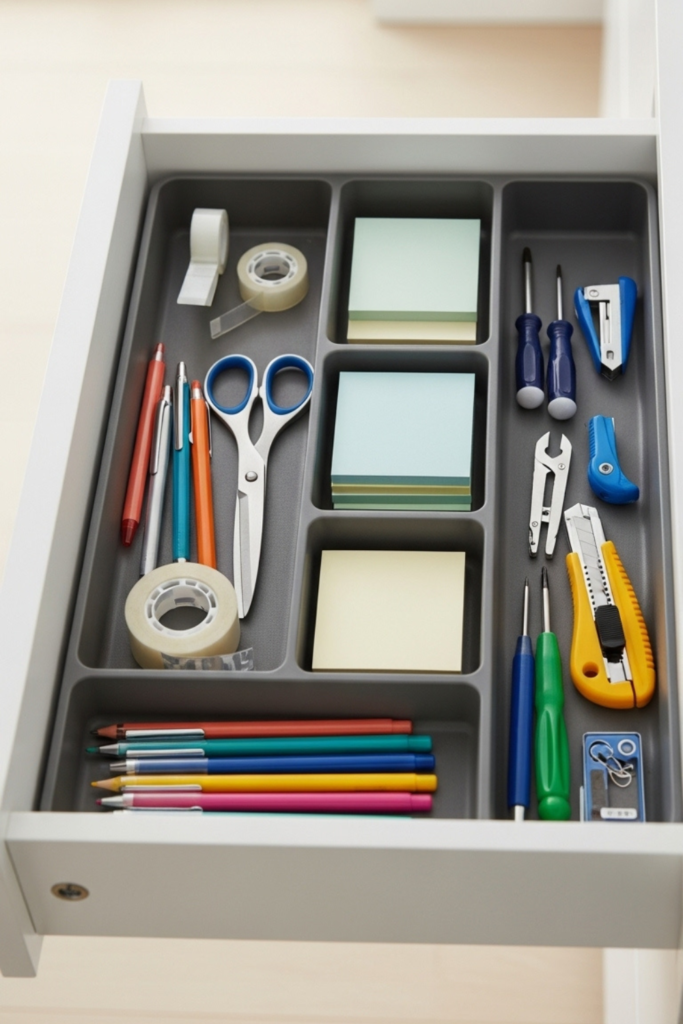
Zone by Function
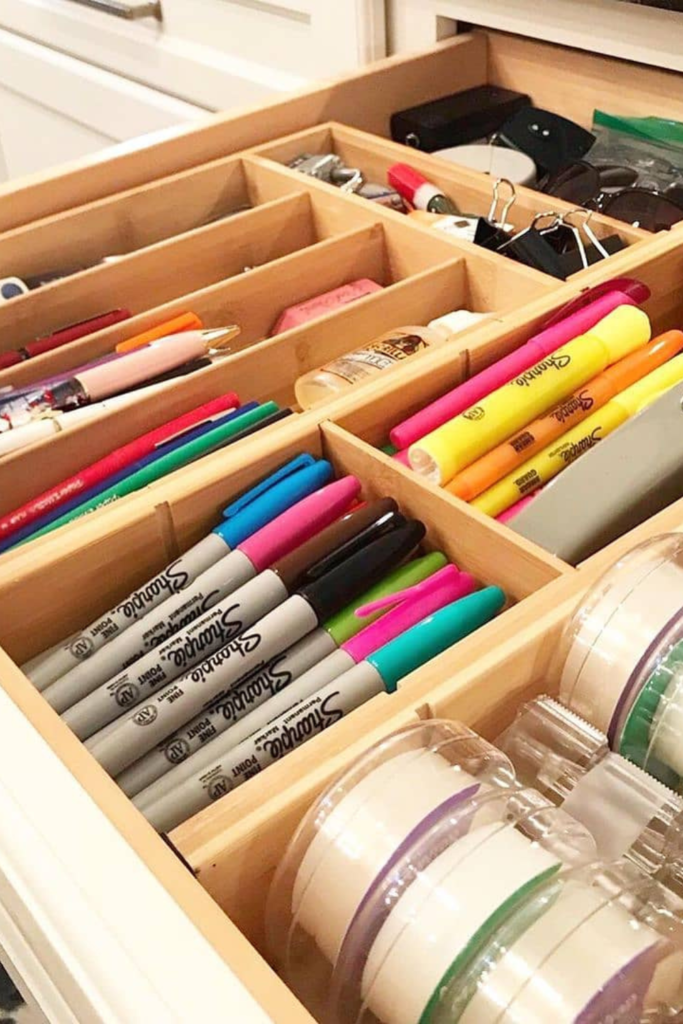
Pens, markers, scissors, and tape stay easy to grab because each category has its own lane, best in drawers you open daily.
Use adjustable wooden dividers and size sections based on how items are used, not on how many you own.
Solid dividers add structure, while shallow compartments keep everything visible and easy to put back.
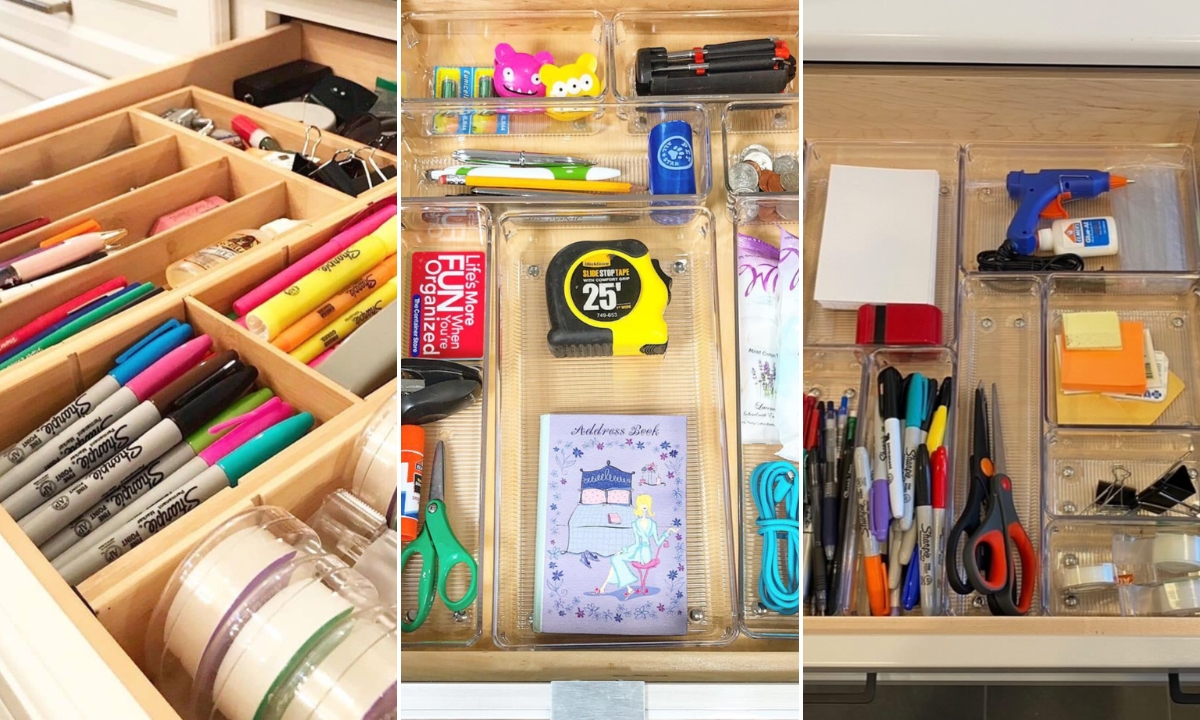
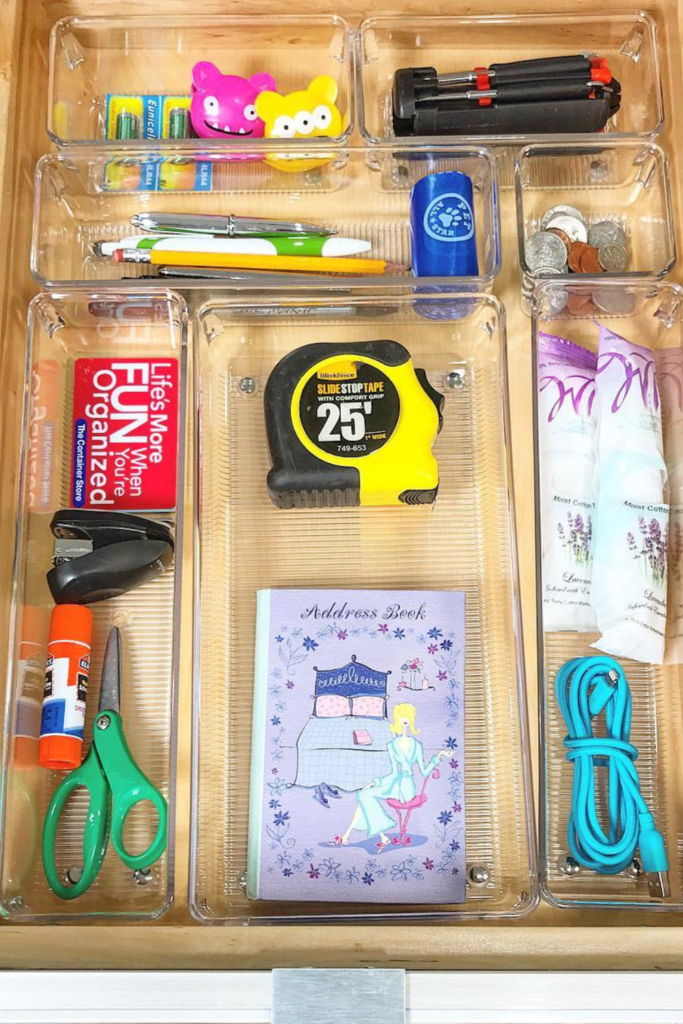
Clear Modular Trays
Seeing everything at once changes how often items get put back. Transparent bins work best in deep drawers.
Recreate this setup by mixing tray sizes rather than forcing symmetry, then assign a single purpose to each bin.
Clear plastic removes guesswork, while raised edges keep pieces from drifting when the drawer slides open and shut.
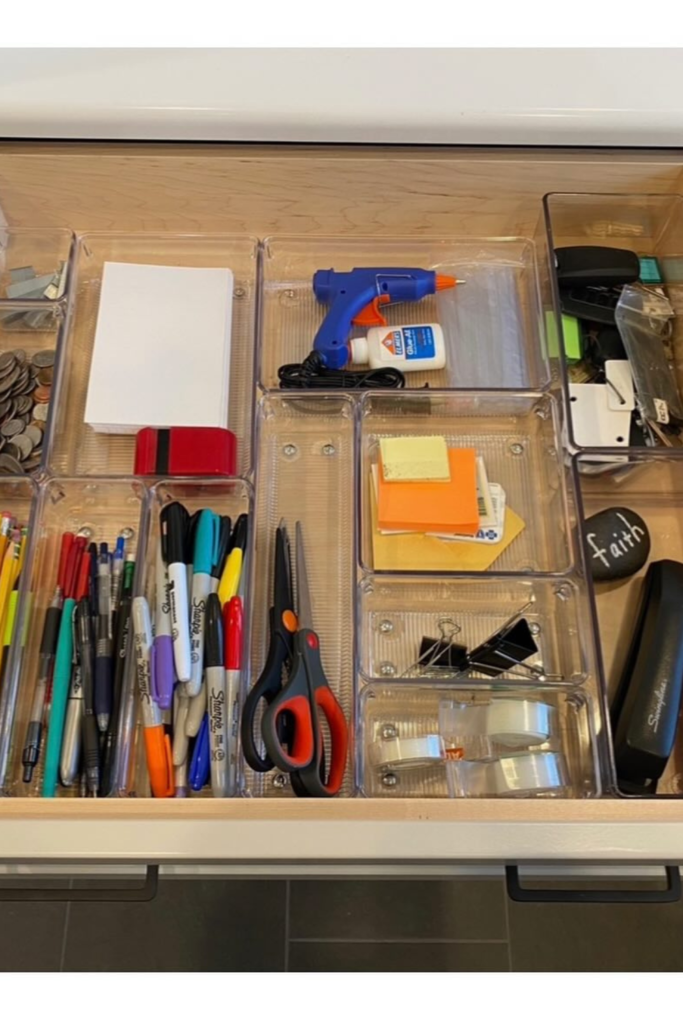
Everyday Tool Zones
Daily-use tools stay easy to reach because space is planned around how often items are grabbed, works best in kitchen or utility drawers.
Reserving wider trays for bulky tools. Layer shallow bins for small supplies so nothing stacks or blocks what you use most.
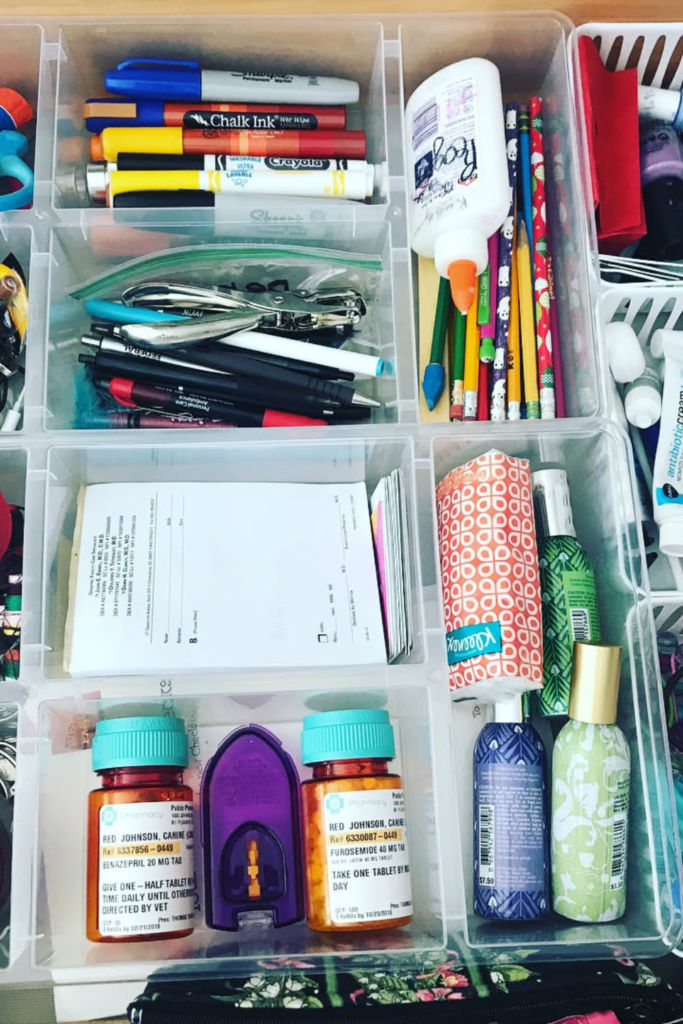
Contained Categories
Crowded drawers only work when every item stays in its lane. Use the same-size containers to box each category, fits best in high-traffic drawers.
Limit what goes into each bin. Solid walls prevent overflow, while tight spacing stops items from drifting and mixing over time.
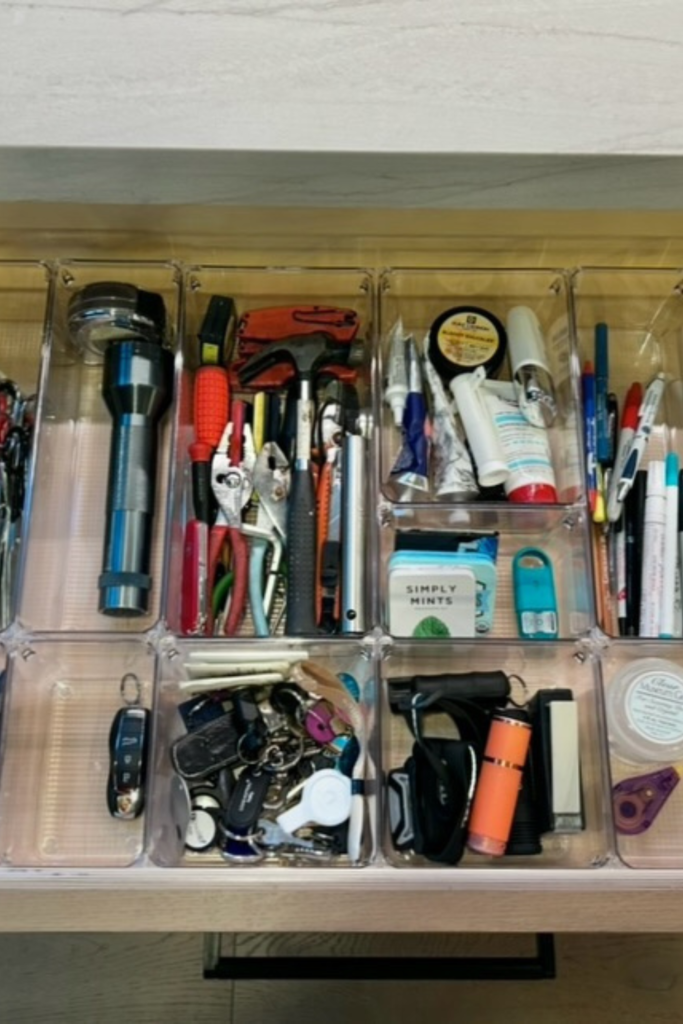
Dedicated Item Lanes
Mess stays away when each item type gets its own stretch of space. Lining up identical clear bins from front to back.
Assigning a single purpose to each lane. Long, narrow containers keep tools straight, while deeper bins handle bulky pieces.
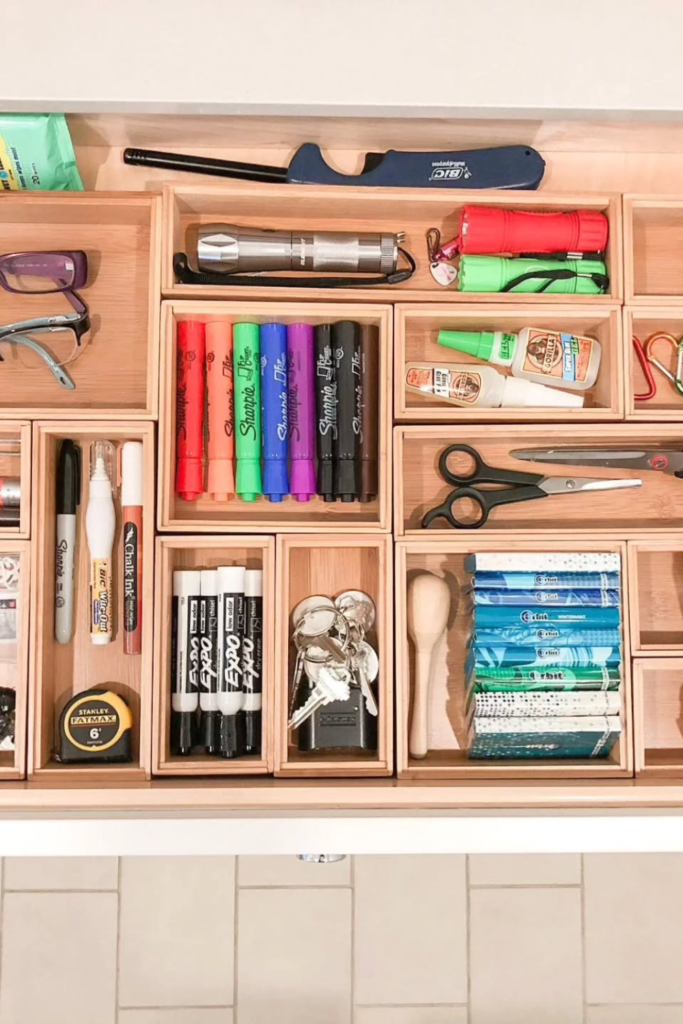
Micro-Section Precision
Sharp order comes from shrinking spaces until clutter has nowhere to hide. Build it using interlocking wooden dividers.
Adjust each pocket to match the item’s exact size. This setup shines in shallow kitchen drawers that hold many small tools.
Tight compartments act as natural limits, layered sections separate grab-and-go tools from backup supplies.
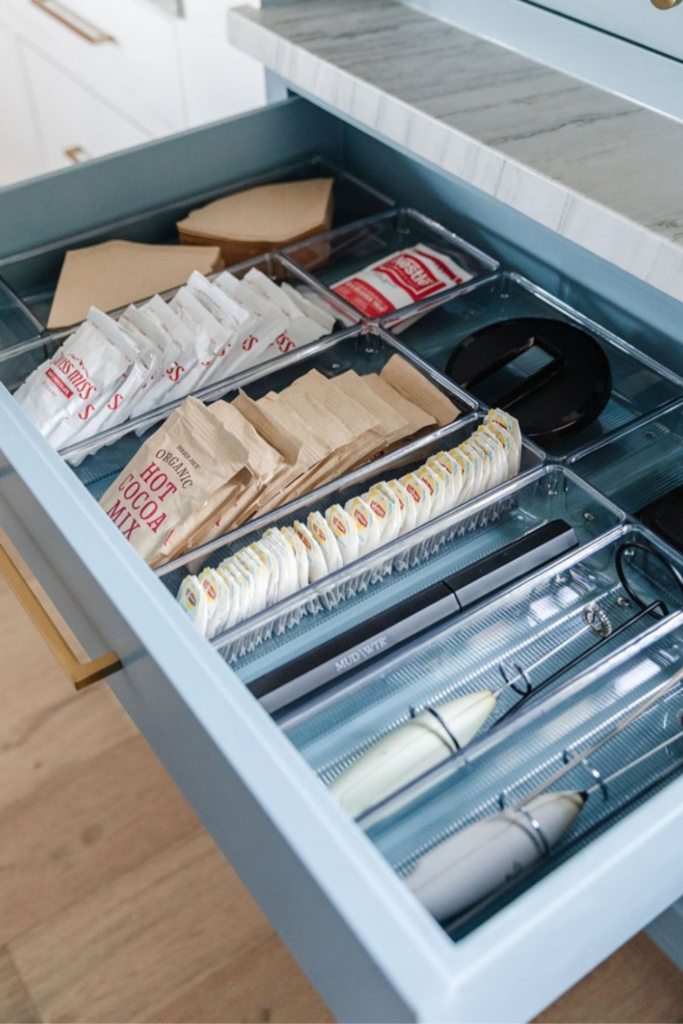
Vertical Packet Storage
Flat packets turn into clutter when they stack, not when they stand. Use narrow upright dividers or file-style bins.
Packets stay visible from the top. Vertical placement prevents digging and makes restocking easy, this idea works best for drawers.
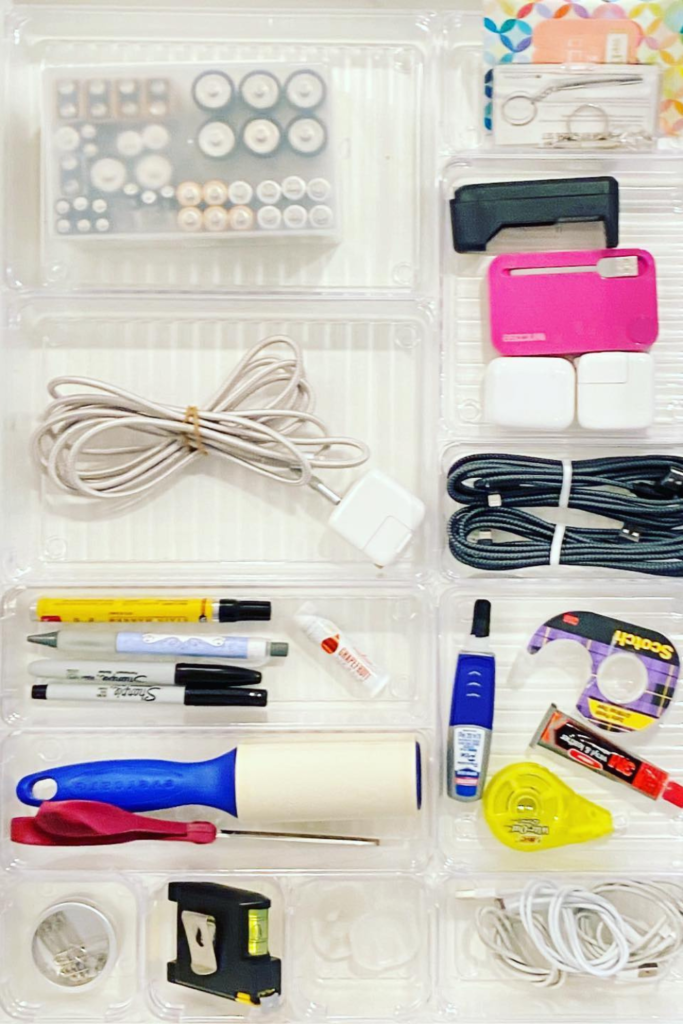
Cord Control Zones
Loose cables create instant chaos when they’re not contained. Assign one tray per cord type and secure each cable with ties.
Use bands before storing. Flat trays prevent tangling, while separation lets you grab the right charger quickly.
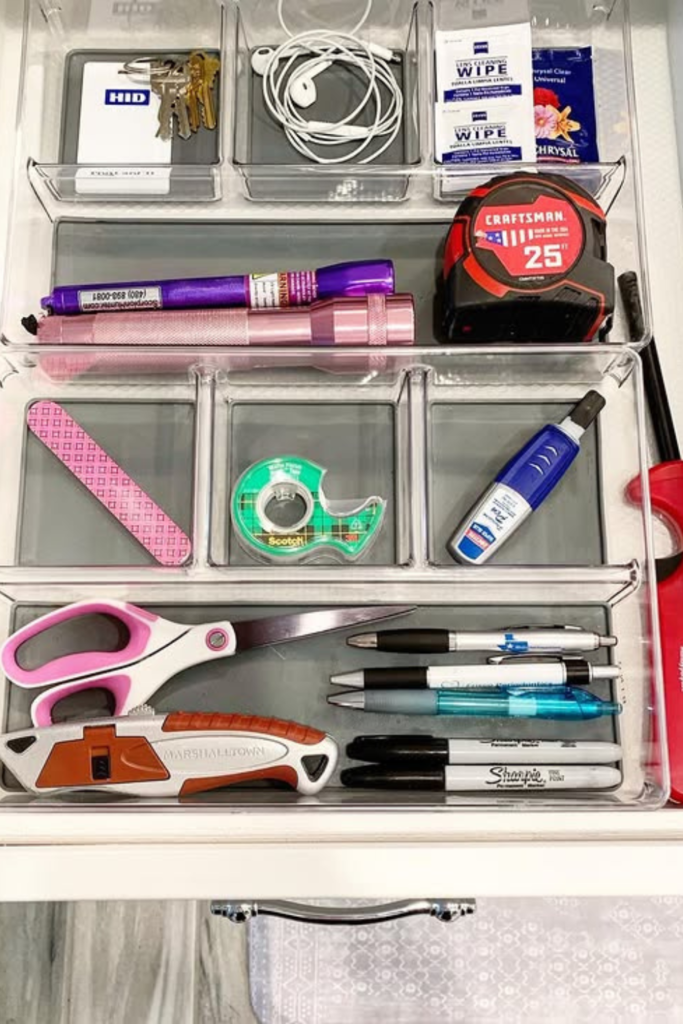
Front-Load Essentials
Daily tools belong where your hand naturally reaches first. Placing frequently used items, such as scissors, tape, and pens, toward the front..
Shallow trays keep everything visible, while front-loading prevents rummaging and cuts down the time spent searching.
Mixed-Use Balance
Busy drawers stay usable when unrelated items still follow clear boundaries. Grouping items by task.
Assigning each task its own container cluster. Clear bins maintain visual order, while spacing between groups.
Prevents everything from blending back into a single pile. This approach fits households that use one drawer for tools.
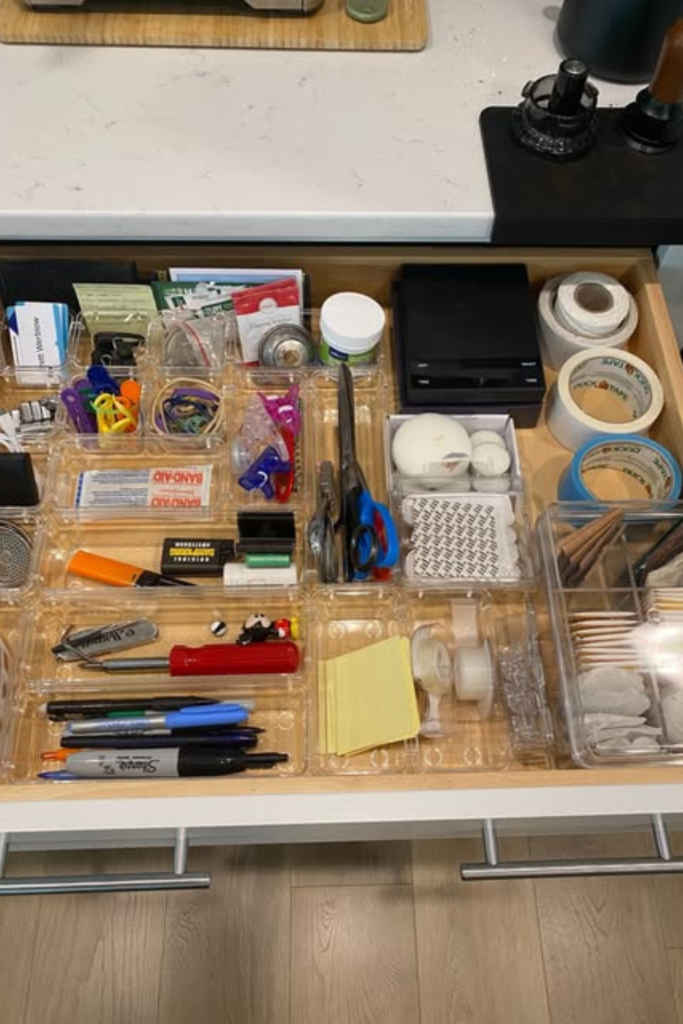
Portable Bin Grouping
Small items stay under control when grouped in lift-out bins rather than loose piles. Use the same-size containers.
It can be removed as a set when needed. This idea works best for drawers that hold personal or travel-related items.
Compact bins create clear limits, while portability makes cleanup fast without reorganizing the entire drawer.
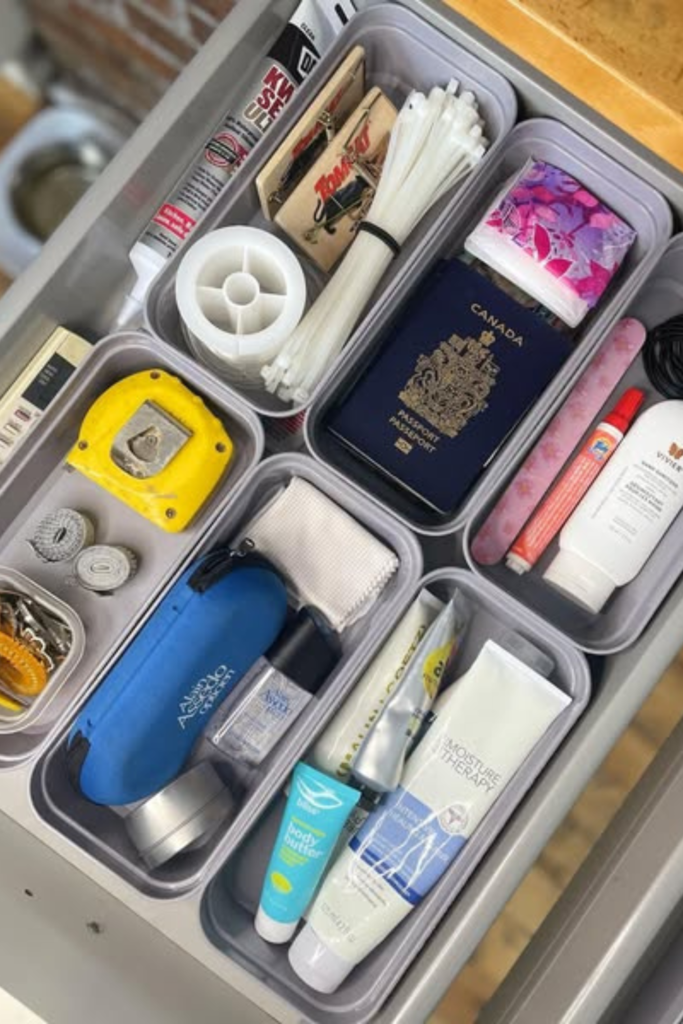
Flat-Lay Visibility
Nothing gets lost when every item stays in one visible layer. Choosing shallow trays that force items to lie flat instead of stacking.
Clear containers keep everything in sight, while equal spacing makes it obvious when something is missing or out of place.
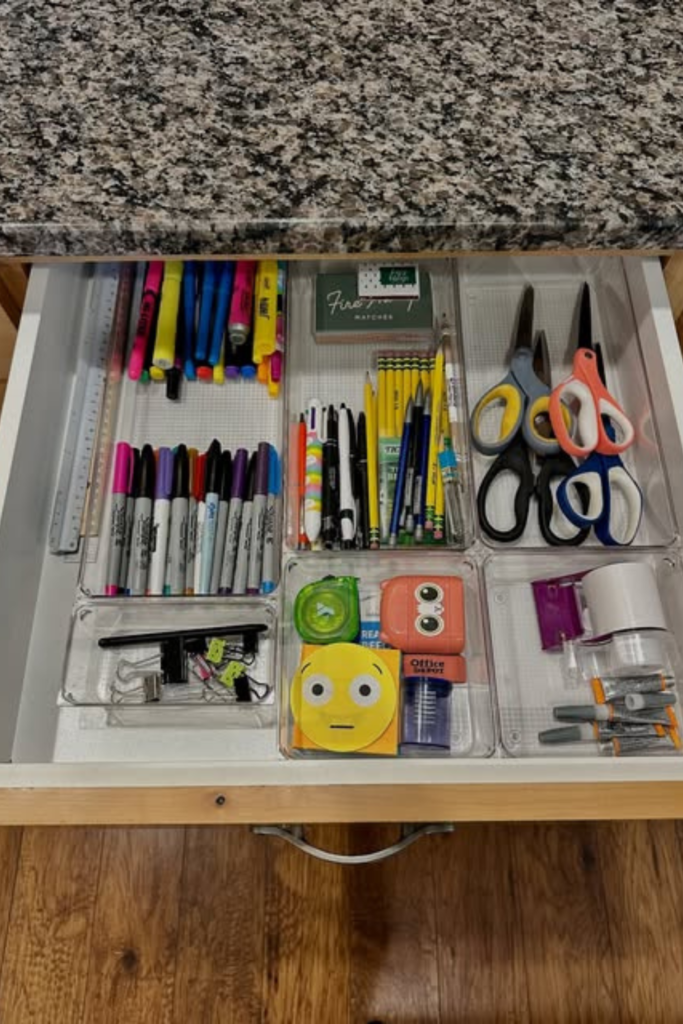
Personal Item Dock
Loose everyday carry items cause clutter when they don’t have a drop zone. Assigning shallow trays to personal items only.
Keeping them grouped together, best for entryway or kitchen drawers that collect keys, wallets, and small essentials.
Clear containers create visual order, while limiting the category prevents random household items from creeping in.
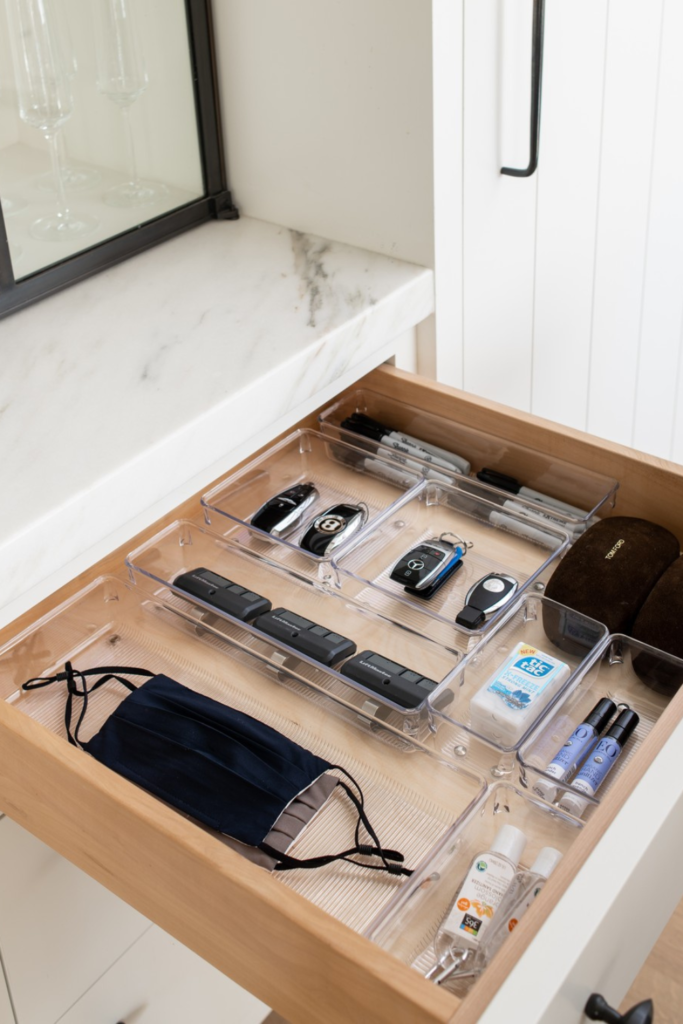
Grid-Based Control
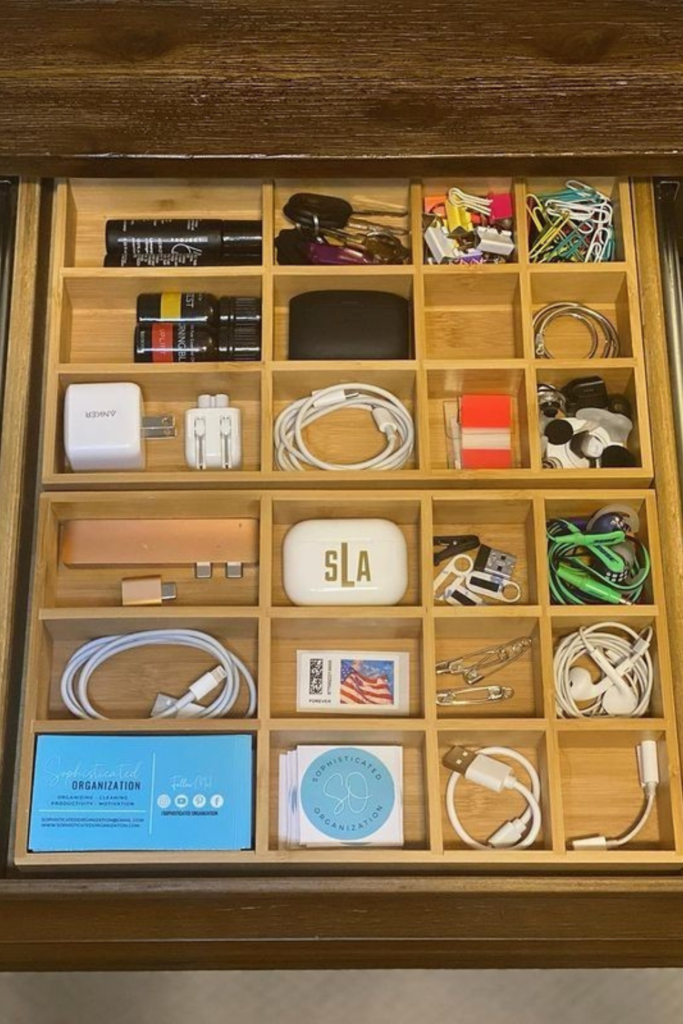
Clutter stays contained when space itself sets the rules. Use a full-grid divider insert and assign each cell a single purpose.
Small compartments force decisions, limit overfilling, and make it obvious when something doesn’t belong.
Keeps the drawer from slowly drifting back into chaos. This system works best for drawers that hold many small, unrelated items.
Color-Coded Sorting
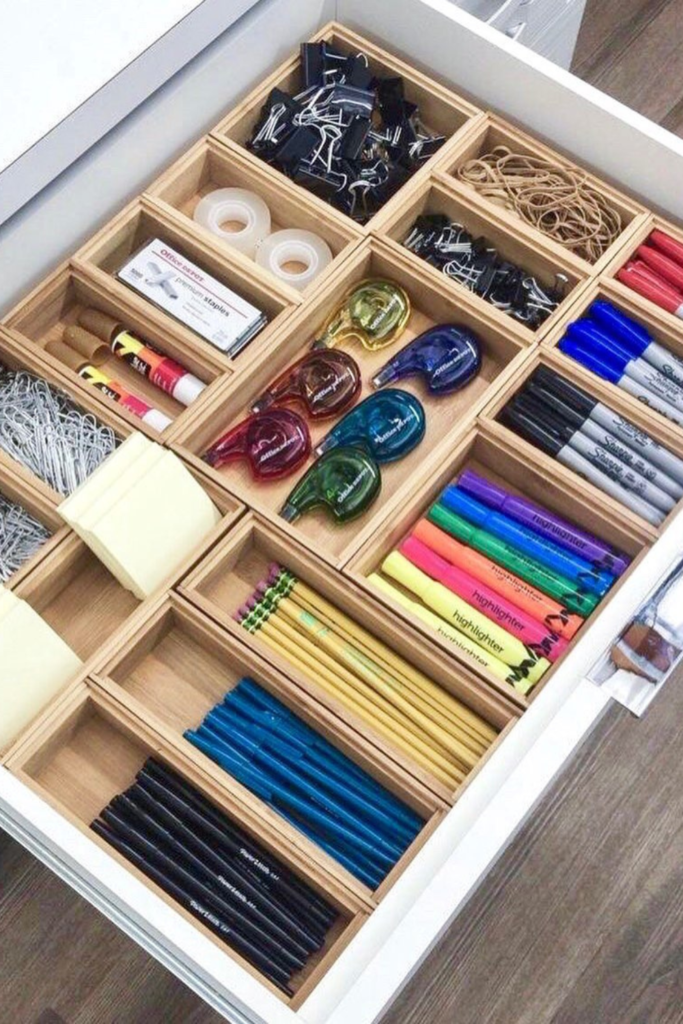
Finding things gets faster when your eyes do the work for you. Grouping items by type first, then loosely by color within each section.
Color clusters act as visual shortcuts, helping you spot what you need instantly without reading labels or digging around.
Split-Purpose Drawers
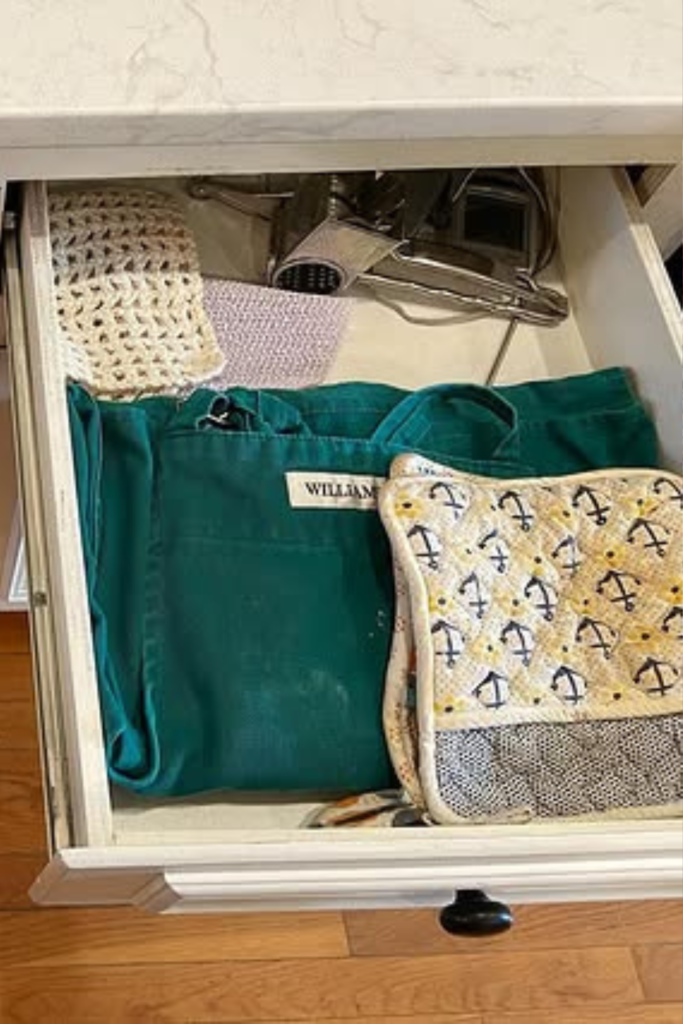
Overflow happens when one drawer tries to do too much. Dividing functions across two drawers, tools in one.
Soft or bulky items in the other. This setup works best in kitchens or utility areas where different item types compete for space.
Clear bins keep smaller tools contained, while open space handles flexible items without forcing awkward storage.
Battery Sorting Station
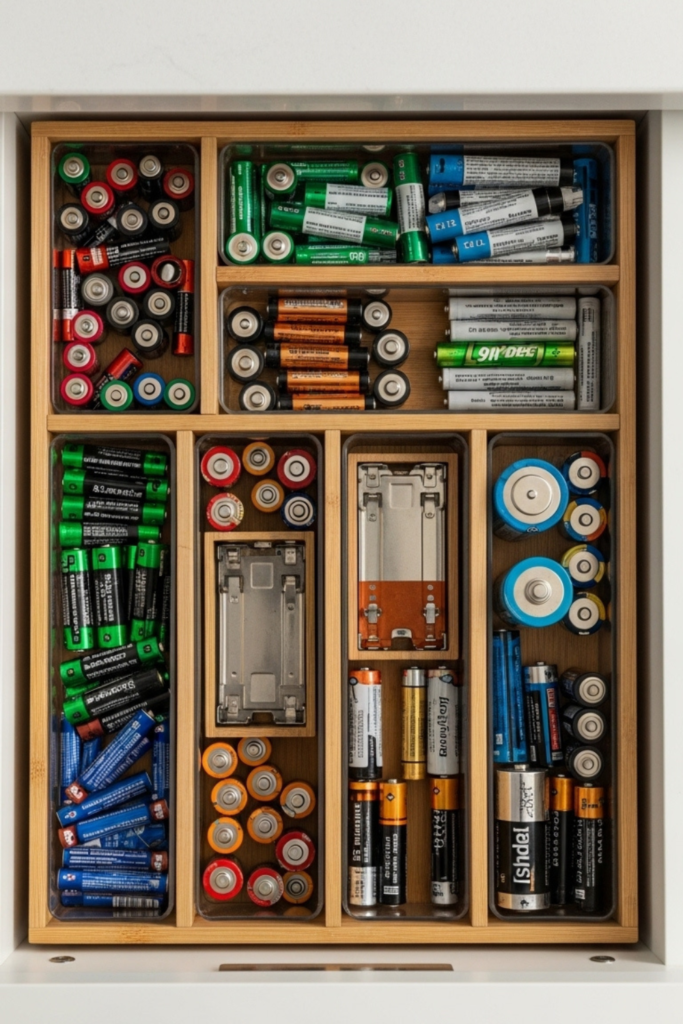
Dead batteries pile up when you don’t separate them from usable ones. This idea works best for junk drawers.
That store electronics or tools. Recreate it by using a small tray with divided sections for each battery size.
One quick glance shows what’s available, and clear separation stops expired batteries from mixing back in.
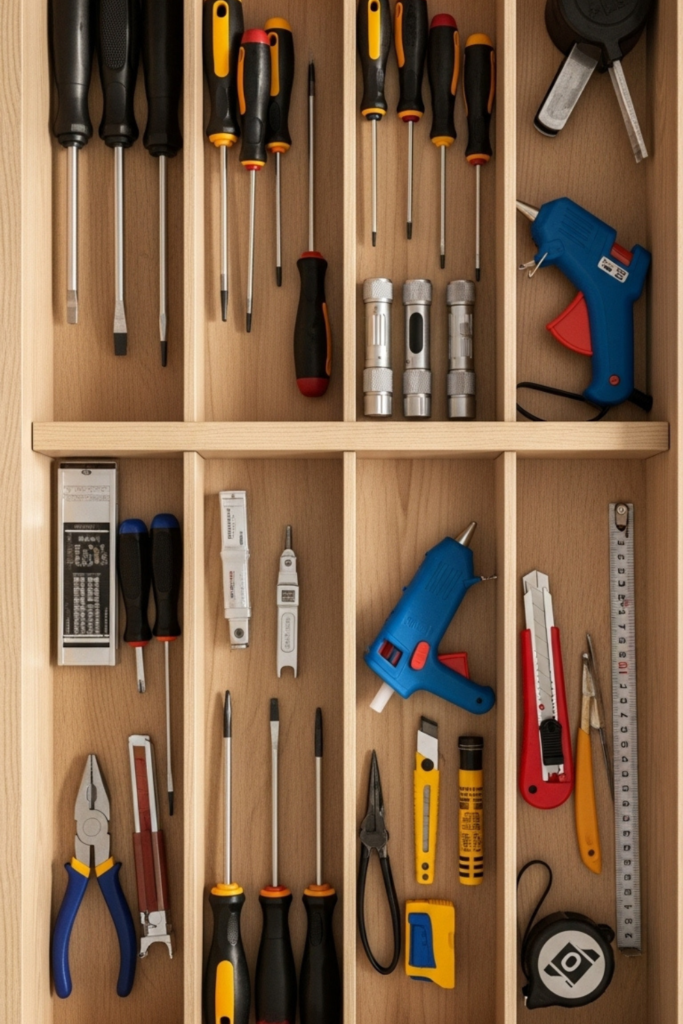
Vertical Tool Stand
Long tools create clutter when they lie flat on top of everything else. Standing tools upright inside narrow containers.
Vertical storage frees surface space, prevents overlap, and keeps handles easy to grab, fits deep drawers with screwdrivers.
Drop-Zone Rule
Random items creep in when a drawer has no purpose. Assigning one small section as a temporary drop zone, this method works best.
Anything left there longer than a week gets relocated or removed. Clear limits prevent the entire drawer from becoming a dumping ground.
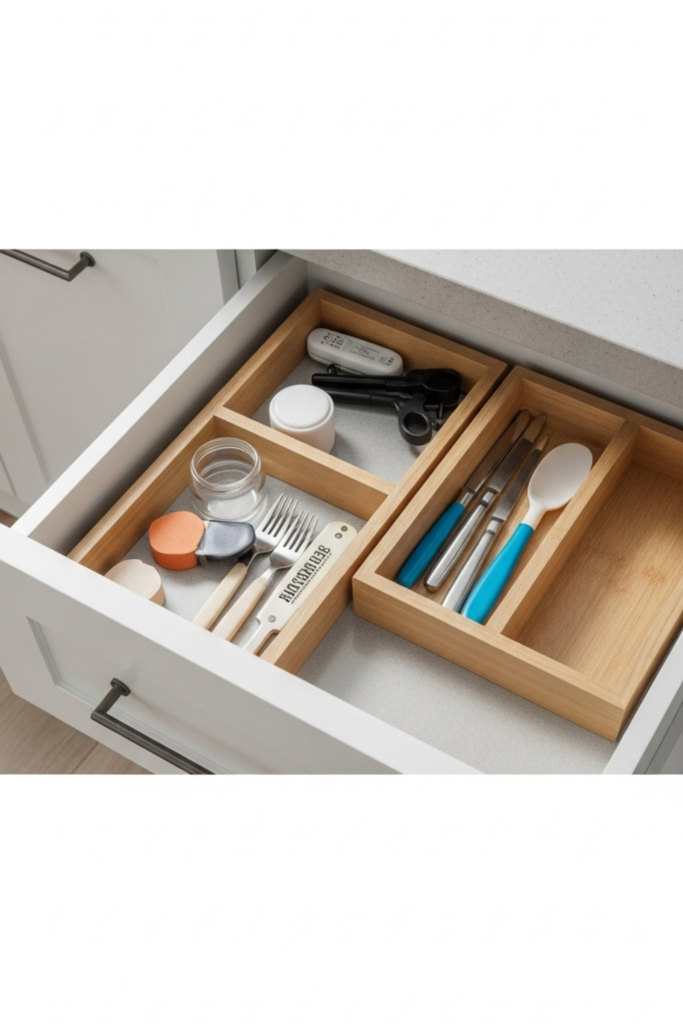
Seasonal Rotation System
Rarely used items don’t belong in daily reach. Recreate it by storing seasonal items in the back or swapping them out entirely.
This idea fits drawers that hold holiday tools. Rotation keeps everyday tools accessible while still giving occasional items a controlled home.
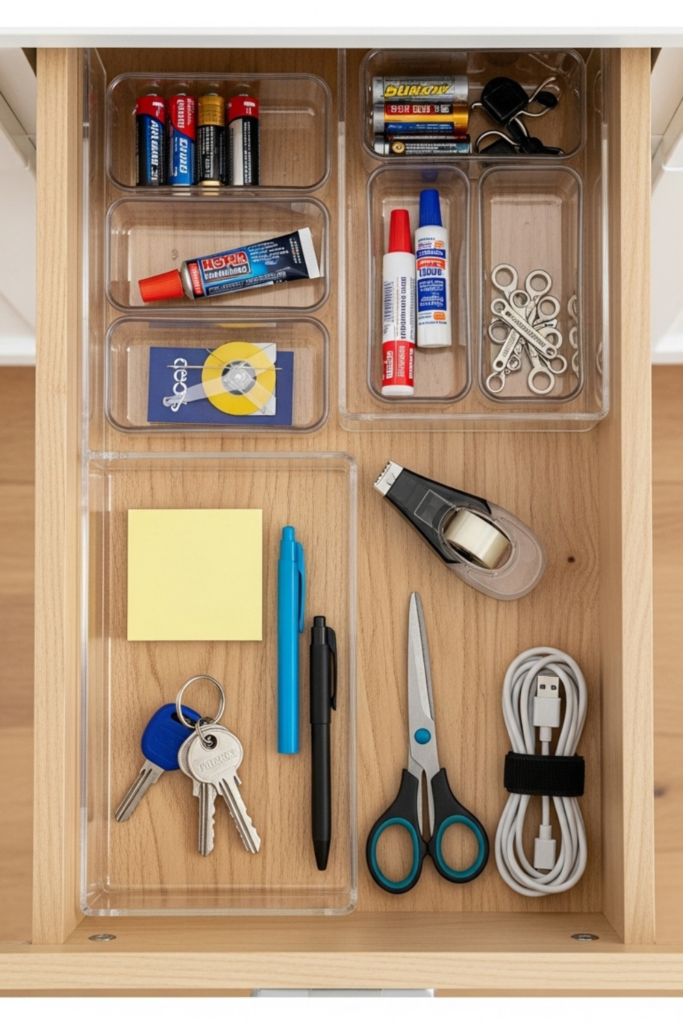
One-In-One-Out Rule
Overfilled drawers don’t fail because of organizers they fail because limits disappear, removing one item every time something new goes in.
Space stays balanced, clutter stays capped, and decisions happen in real time instead of during cleanup marathons.
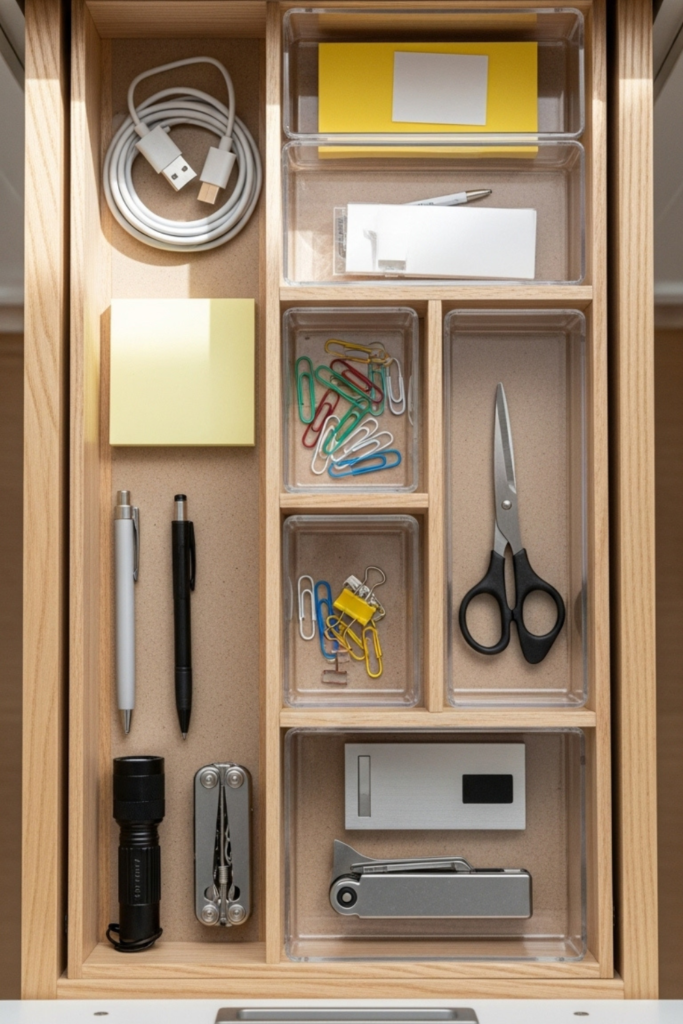
Drawer Purpose Labeling
Confusion grows when people don’t know what belongs inside. Defining the drawer’s role tools only, office only, or daily-use only.
Clear purpose guides behavior, reduces random dumping, and keeps the organization intact, works best in shared households.
FAQs
What is the best way to organize your drawers?
The best way to organize drawers is to start with purpose, not containers. Decide what the drawer is meant to hold, remove everything.
That doesn’t support that purpose, and group similar items together. Use dividers to give each group a clear space, keep frequently.
Used items easy reach, and leave some empty room so the system doesn’t collapse the moment something new is added.
How do you keep a junk drawer from getting messy again?
A junk drawer stays organized when it has clear limits and a simple system. Decide exactly what belongs inside.
Remove anything that doesn’t fit that purpose. Avoid mixing unrelated items, since that’s what causes clutter to spread.
Keep a small amount of open space and do a quick monthly reset. When every item has a defined home, people naturally put things bac.
You may like to read!
- 27 Pantry Organization Ideas
- 24 Family Organization Wall
- 26 Kitchen Drawer Organization
- 22 Cord Organization Ideas
- 25 Rolling Cart Organization

Fasial is the founder of the Fizzy Flare. He has been a passionate blogger since 2021. He ran three different websites in the past few years. Now he is focusing on Fizzy Flare to build an audience and help them organize their life.