25 Hallway Closet Organization Ideas For 2026
This post may contain affiliate links: full affiliate disclosure.
If your hallway closet feels like a black hole, you are in good company. Shoes seem to multiply, coats get crammed.
And somehow, there’s still a shortage of room, even though the closet is just a few feet away.
I’ve experienced it myself standing there, pressed for time, sifting through a jumble that should be a help, not a hindrance.
This article highlights 25 Hallway Closet Organization Ideas that turn messy spaces into functional ones in 2026.
Let’s jump in!
Contents
- 1 How Can You Maximize Storage In A Small Hallway Closet?
- 2 How Can You Organize A Hallway Closet For Both Adults And Kids?
- 2.1 Door Storage
- 2.2 Clear Bins
- 2.3 Zoned Shelving
- 2.4 Cubby Control
- 2.5 Label Logic
- 2.6 Vertical Balance
- 2.7 Bench Storage
- 2.8 Double Hanging
- 2.9 Linen Cabinet
- 2.10 Family Lockers
- 2.11 Personal Sections
- 2.12 Shoe Command
- 2.13 Drawer Wall
- 2.14 Cleaning Command
- 2.15 Assigned Spots
- 2.16 Overflow Storage
- 2.17 Drop Station
- 2.18 Sliding Storage
- 2.19 Pull-Out Pantry
- 2.20 Rotation Shelf
- 2.21 Exit Tray
- 2.22 Soft Divider
- 2.23 Drop Basket
- 2.24 Height Reset
- 2.25 One Rule
- 3 FAQs
How Can You Maximize Storage In A Small Hallway Closet?
If your hallway closet is perpetually crammed, it’s time to rethink your approach. Cramming more in isn’t the answer. Instead, you need to change how the space is utilized.
Begin by keeping only the items you use every day at eye level. Seasonal coats and extra footwear should be stored up high.
The back of the door is often overlooked; hooks or pockets can make good use of that space. Hang shorter coats higher, freeing up the floor for shoes or bins.
When everything has a designated place, the closet becomes a helpful ally, rather than a constant battle.
Save this article for later! 👇👇
How Can You Organize A Hallway Closet For Both Adults And Kids?
When adults and children share a hallway closet the chaos often stems from a single source: everything is positioned at adult eye level.
Consider installing lower hooks and shelves, allowing kids to access their coats and bags independently.
Designate a specific spot for each child’s belongings, and keep it consistent. Store adult items higher up, removing them from the daily fray.
By empowering children to return items to their designated places the closet remains organized without the need for constant supervision or cleanup.
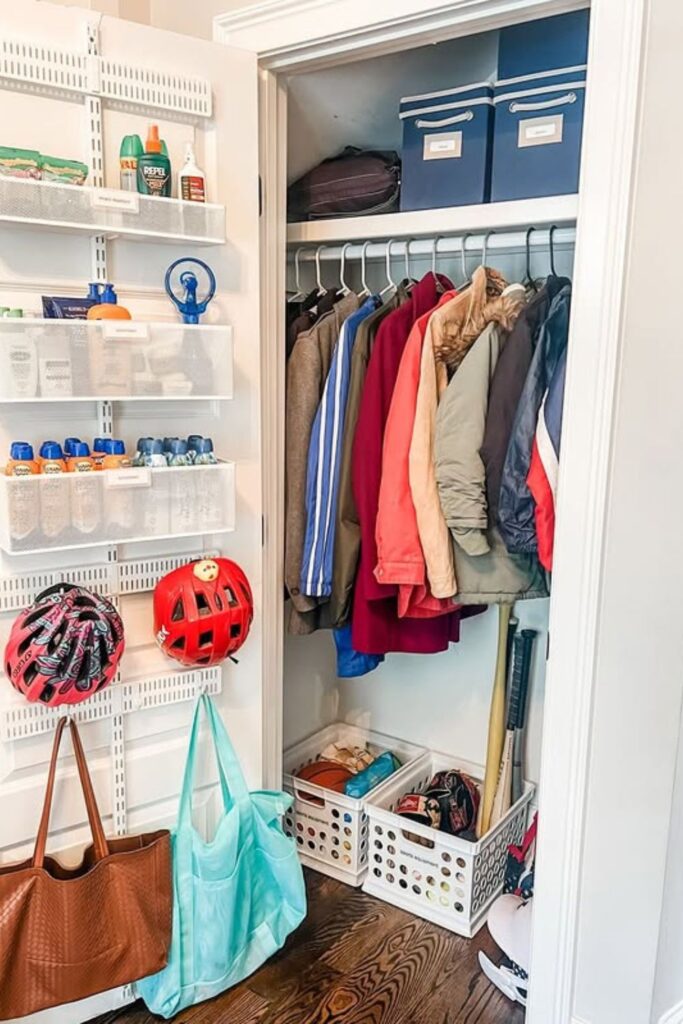
Door Storage
Hidden space on the back of a door can be surprisingly useful. Slim, wall-mounted shelves transform that often-overlooked area into a convenient spot for sprays, sunscreen.
And other small items you need to grab quickly. By keeping these lightweight things off the main shelves, you open up the closet interior for coats and storage bins.
This approach is particularly effective in narrow hallway closets, where floor space and hanging rod space are at a premium.
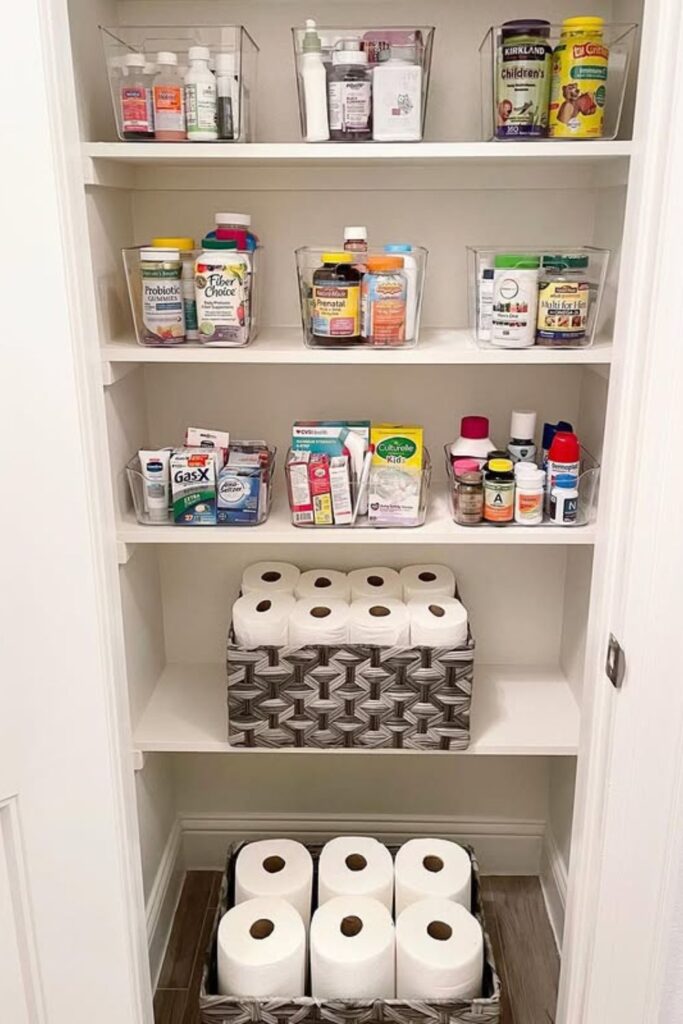
Clear Bins
Clear containers remove the guesswork and stop overbuying. Seeing every bottle at once makes it easier to group items by purpose, not size.
Daily medications are kept at eye level, while spare supplies are stashed higher up. Heavy items, like paper products are best placed low down, where their weight isn’t an issue.
This method shines in hallway closets that feature shelves but lack drawers, particularly when several people are using the same space.
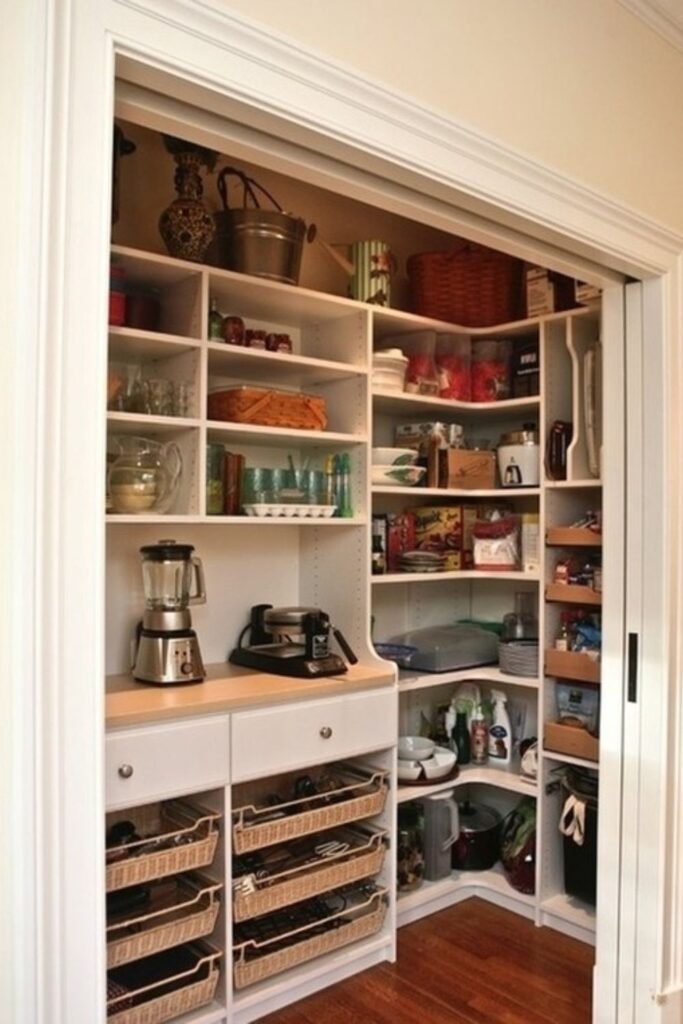
Zoned Shelving
Walking into a closet like this feels calm because nothing competes for space. Dividing the closet into small sections forces every category to stay in its lane.
Appliances, pantry staples and cleaning supplies all have designated spots, which keeps things from getting out of hand.
This approach is particularly effective in deeper hallway closets or repurposed storage areas and where a haphazard mix of materials would otherwise quickly lead to disarray.
Cubby Control
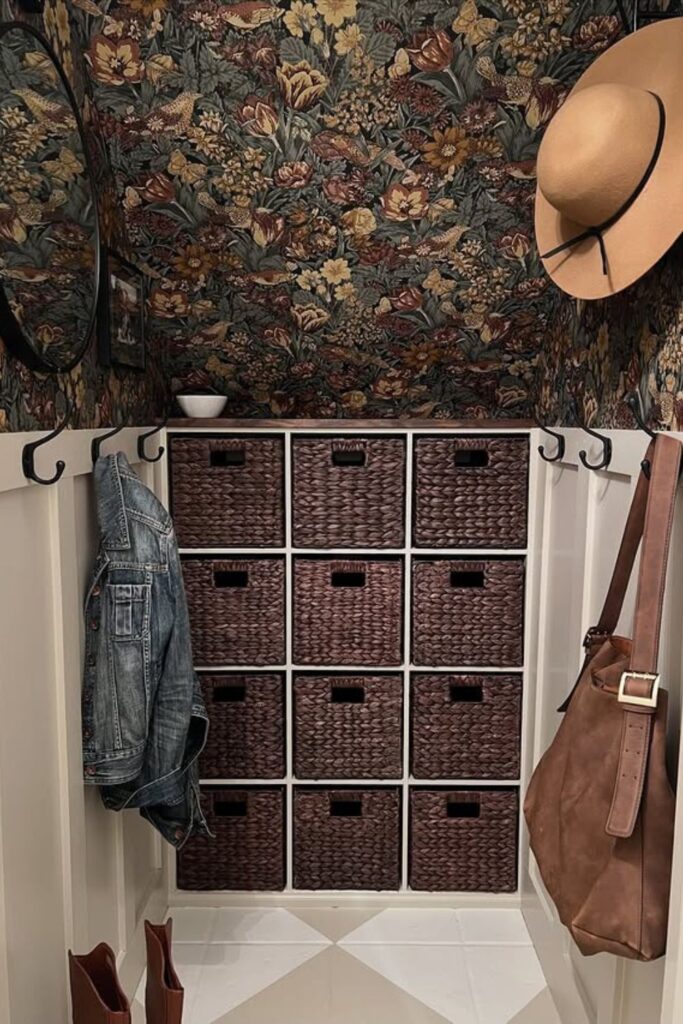
Clutter disappears faster once small items stop floating around. Deep cubbies with baskets give gloves, scarves, and random grab-items a fixed landing spot.
No more clutter on the floor. Hooks flanking the closet rod keep bags and jackets tidy, preventing a jam.
This arrangement is ideal for hallway closets which often serve as entryways providing quick and effortless organizing.
Label Logic
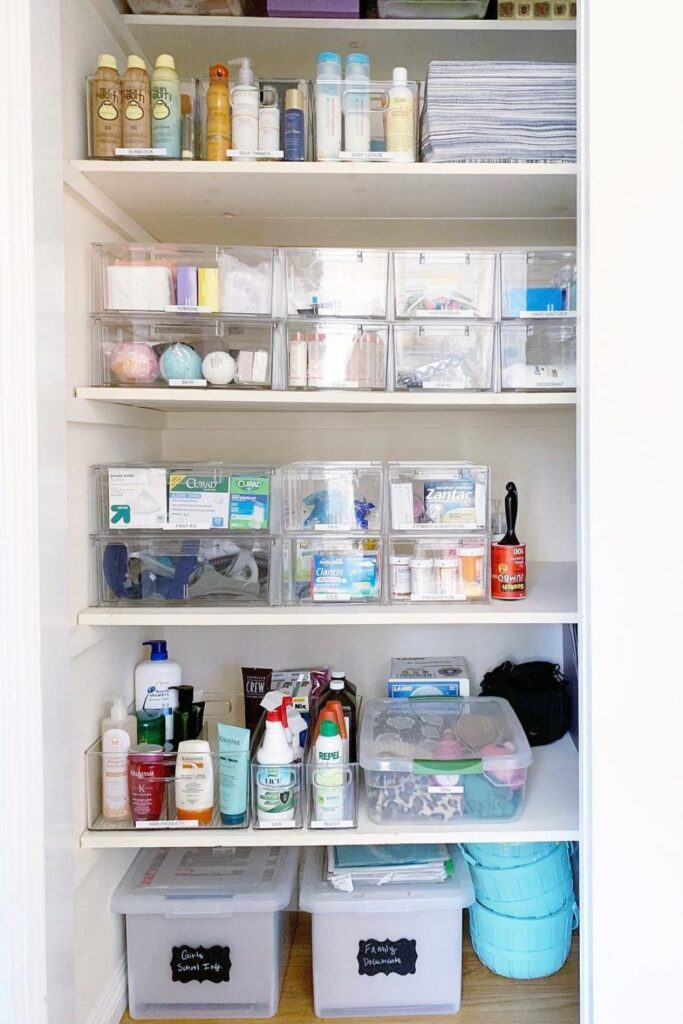
Labels end the daily guessing game. Grouping items by use and marking each bin keeps everyone from the dumping things wherever space appears.
Medication stays organized, toiletries stay put and essential documents don’t go into chaotic piles.
Clear bins are the ideal solution; the combination of labels and transparency simplifies both refilling and tidying up a real boon in common family spaces like hallway closets.
Vertical Balance
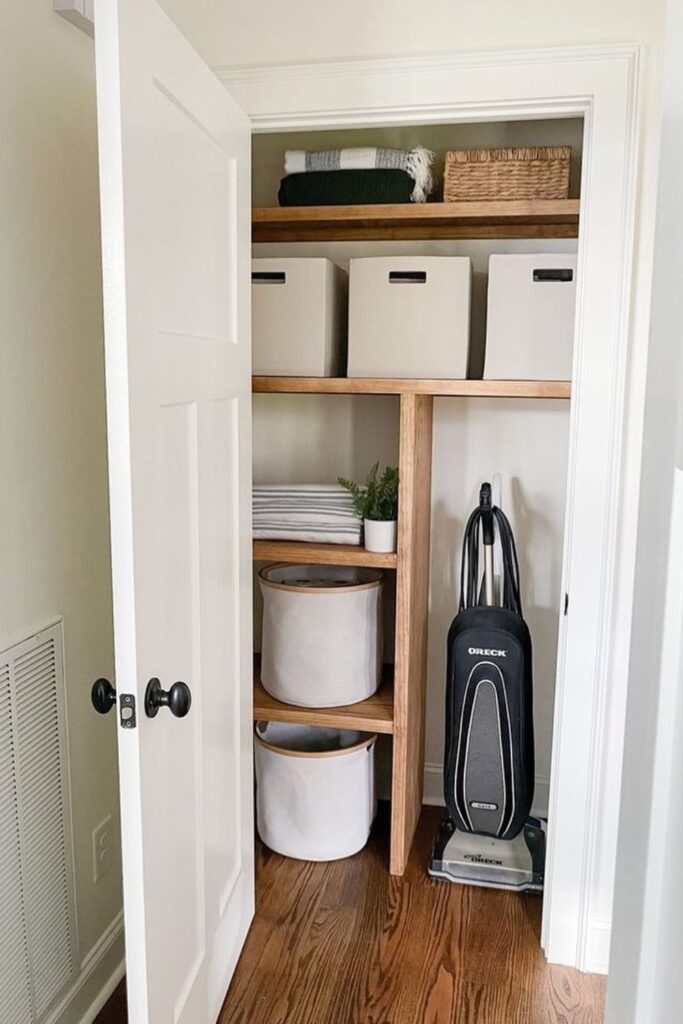
Floor clutter disappears once tall items get their own lane. A narrow shelving unit splits the closet vertically.
Keeping unwieldy instruments like vacuums standing tall, with bins and linens arranged beside them.
This method shines in hallway closets, where cleaning supplies and other domestic odds and ends are stored, and there’s no space to spread things out.
Bench Storage
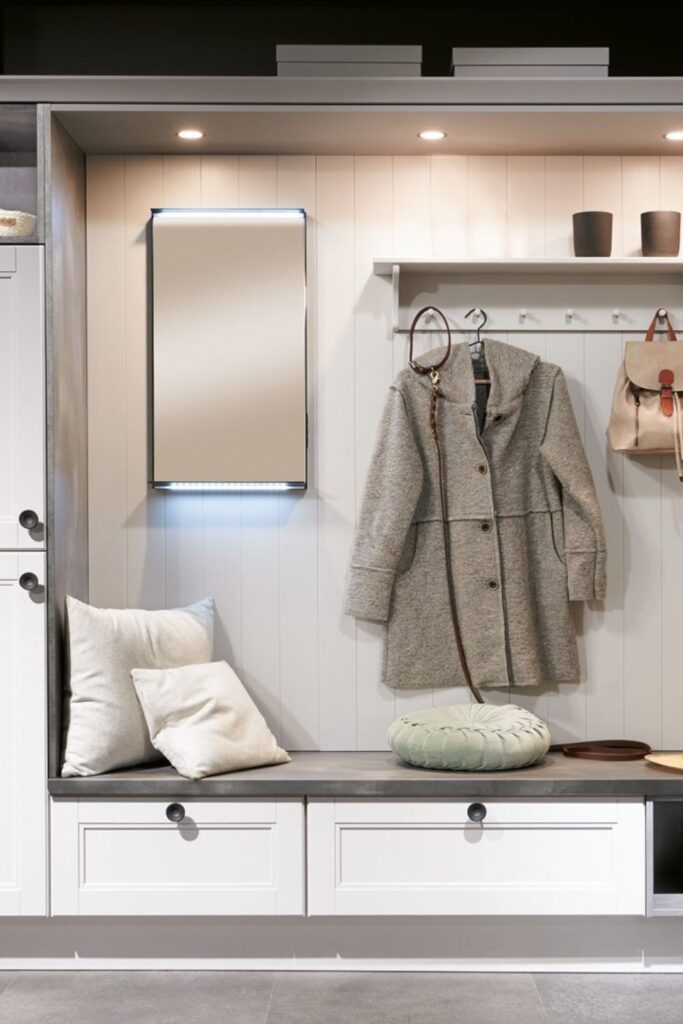
Shoes cease their takeover when sitting and storage converge in a single location. A built-in bench provides a spot for putting on shoes.
Simultaneously concealing clutter within drawers or cubbies. Hooks positioned above keep coats and bags off the ground, and an overhead shelf manages the overflow.
This concept shines in an entryway, particularly when the hallway closet is repurposed as a compact mudroom.
Double Hanging
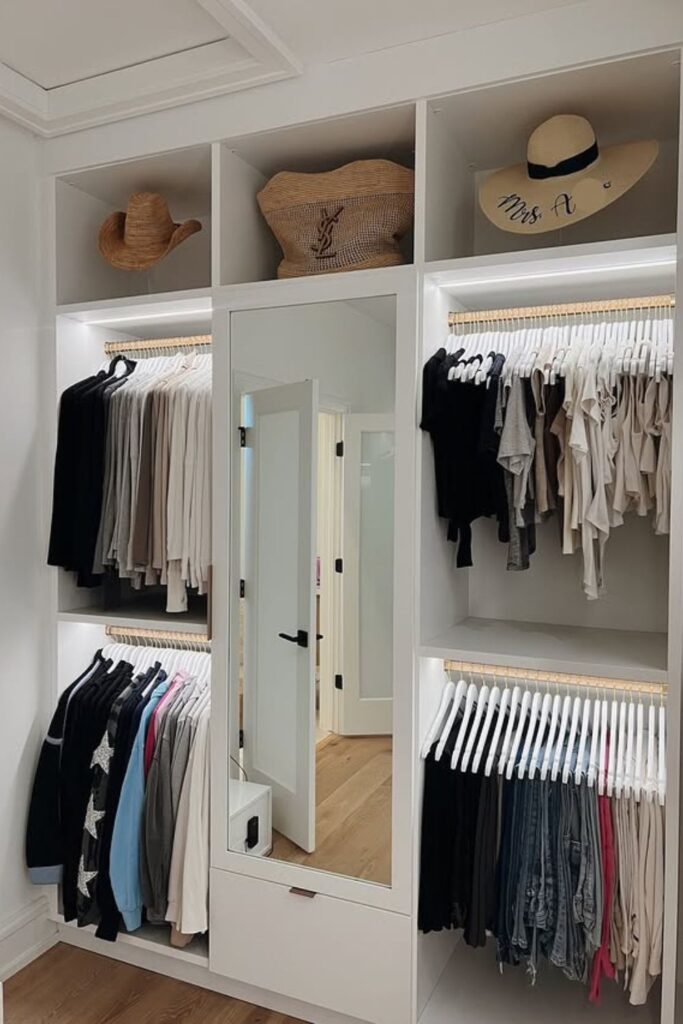
Twice the hanging space changes everything in a narrow closet. Splitting clothes into upper and lower rods keeps outfits visible instead of stacked and forgotten.
Built-in lighting illuminates your belongings making them easy to spot. The upper cubbies are perfect for storing hats or things you don’t use often.
This arrangement is ideal for hallway closets especially those used for everyday jackets and the work clothes or quick outfit adjustments when you’re coming and going.
Linen Cabinet
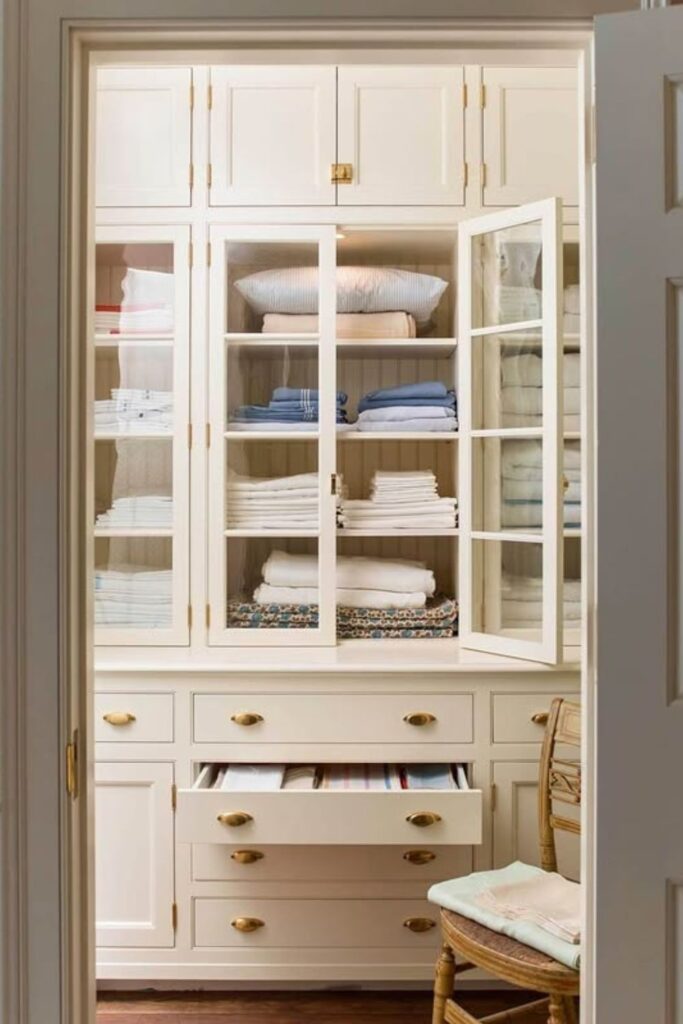
Folding beats stacking when space feels tight. Tall cabinets with shelves keep towels and linens upright and easy to grab with out knocking piles over.
Drawers tucked beneath can corral smaller items, preventing them from spilling onto open shelves.
This concept works well in hallway closets situated near bathrooms or bedrooms particularly when linen storage is encroaching on space in other areas.
Family Lockers
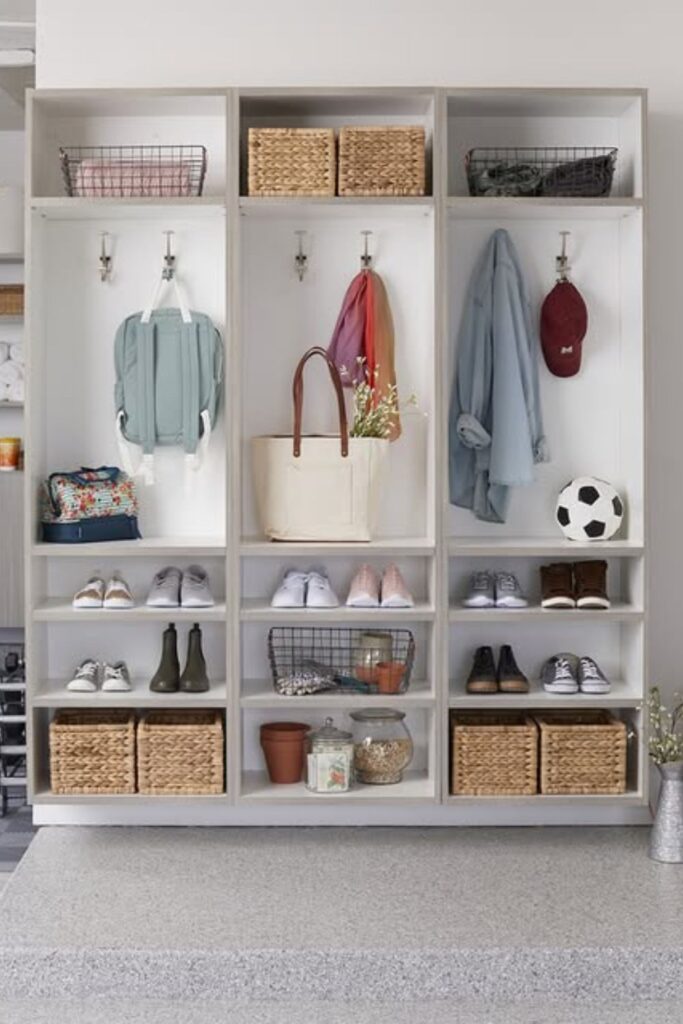
Morning chaos drops once everyone gets their own column. Individual sections keep bags, shoes and jackets separated so nothing blends into one big mess.
Hooks keep things off the floor, baskets corral the little things, and lower shelves give youngsters a fighting chance.
This setup shines in homes where grown ups and children share a hallway closet and everyone needs a quick, drama free system.
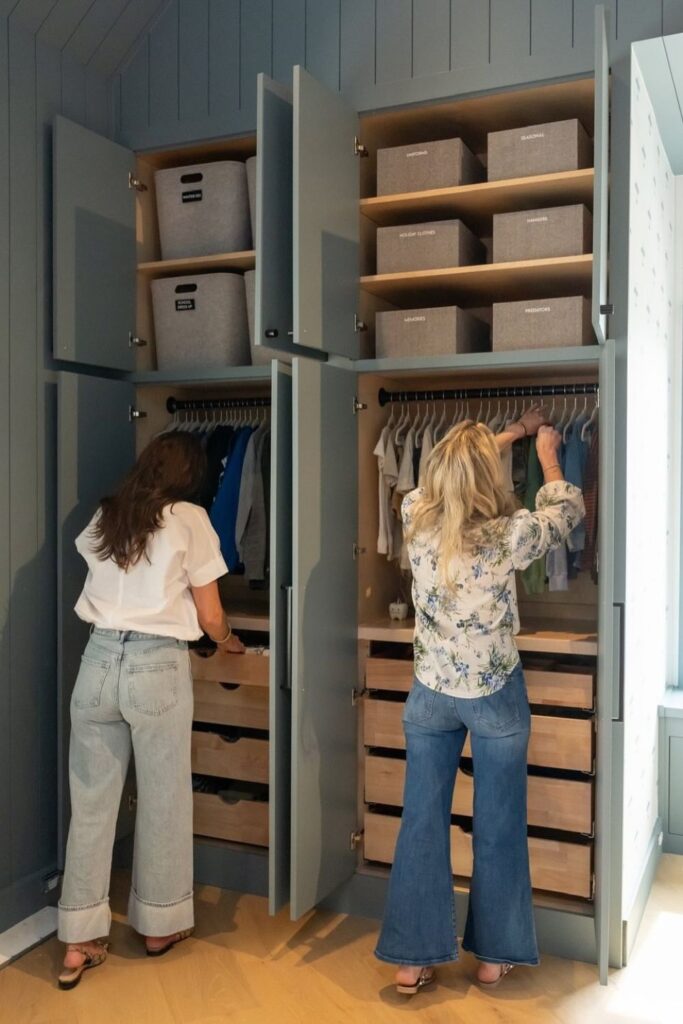
Personal Sections
Shared closets fall apart when ownership feels blurry. Separate vertical sections give each person control over their own clothes, drawers, and bins.
To keep everything separate and accounted for, upper shelves are reserved for seasonal things. The drawers underneath are perfect for everyday clothing.
This organizational method works especially well in the hallway closet, which is utilized by multiple adults. The key goal here is to keep things organized without needing to constantly rearrange them.
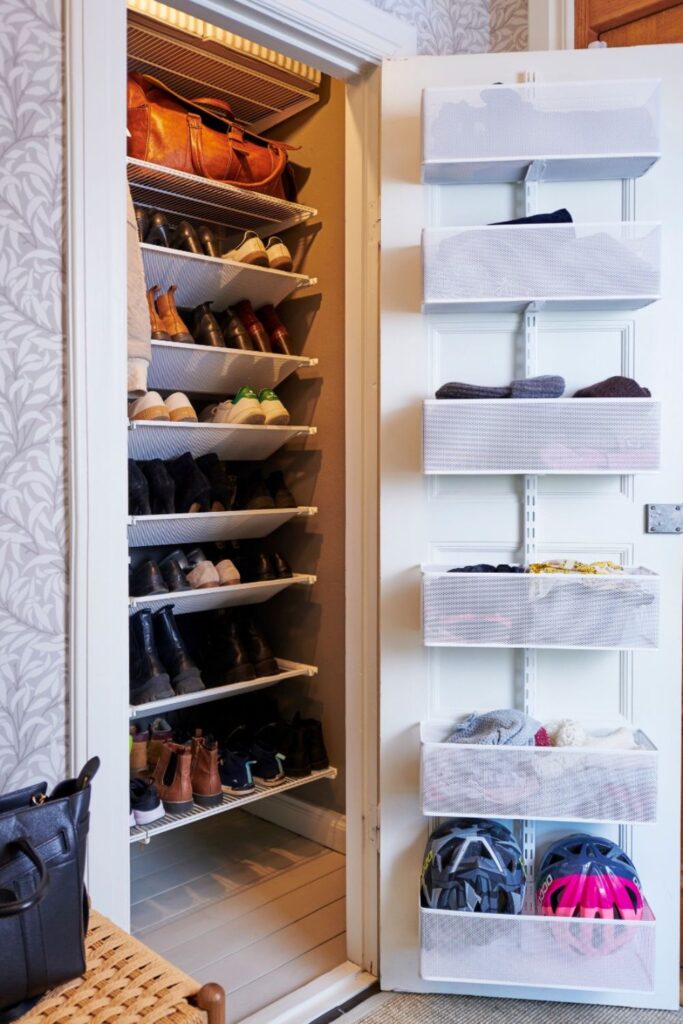
Shoe Command
Footwear chaos ends once shoes stop sharing floor space. Adjustable shelves stack pairs vertically or keeping every option visible instead of buried.
Door-mounted baskets offer a clever solution for stashing accessories such as gloves and helmets freeing up precious shelf space.
This arrangement shines in those cramped hallway closets, the ones where shoes seem to multiply and the daily ritual of bending down feels like a time sink.
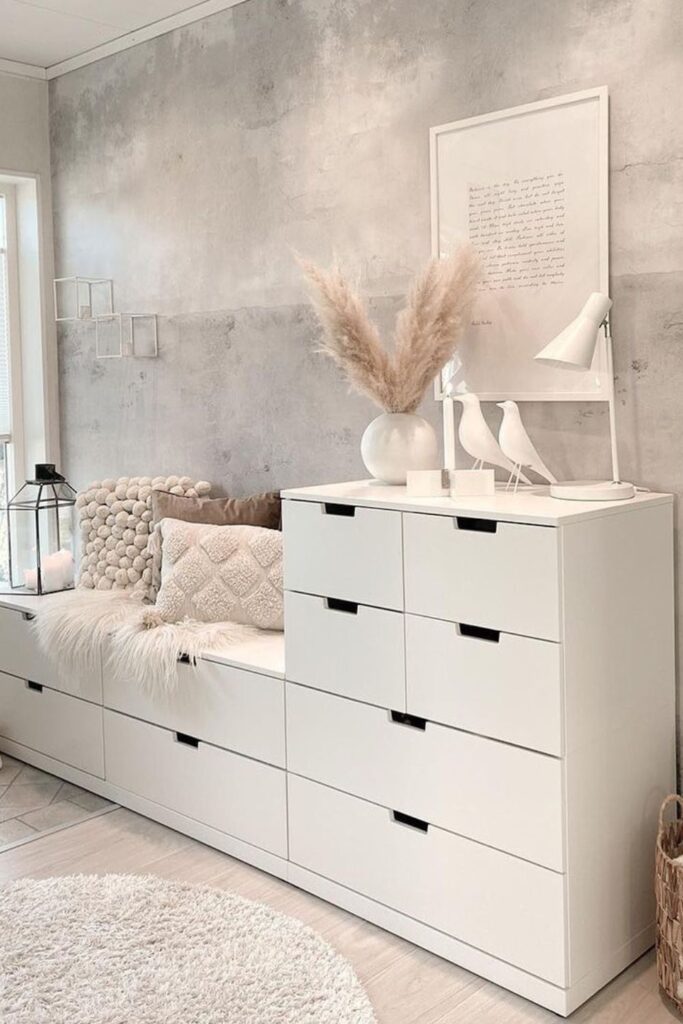
Drawer Wall
Shoes and accessories disappear fast once storage moves outside the closet. A low drawer unit along the hallway wall handles everyday items.
Deep drawers conceal shoes, scarves, and other small items, while the top surface serves as a convenient drop zone.
This setup is ideal when a hallway closet seems tight, yet there’s available wall space nearby that may be put to better use.
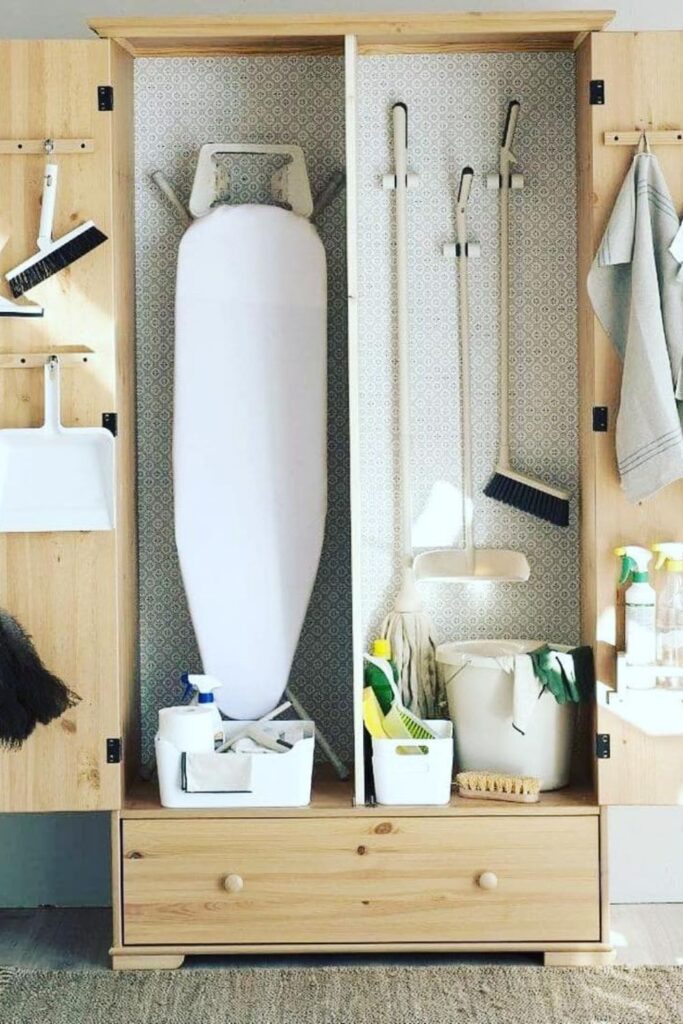
Cleaning Command
Messy supplies stay messy when tools pile together. Vertical hooks turn doors into storage for brooms, brushes, and dustpans.
Tall central area is perfect for awkward goods, like ironing boards, keeping them upright. Small caddies are ideal for sprays and refills, preventing any spills.
This arrangement is perfect for hallway closets, often used for cleaning supplies particularly in spaces where floor space is at a premium and lengthy tools are a challenge to store.
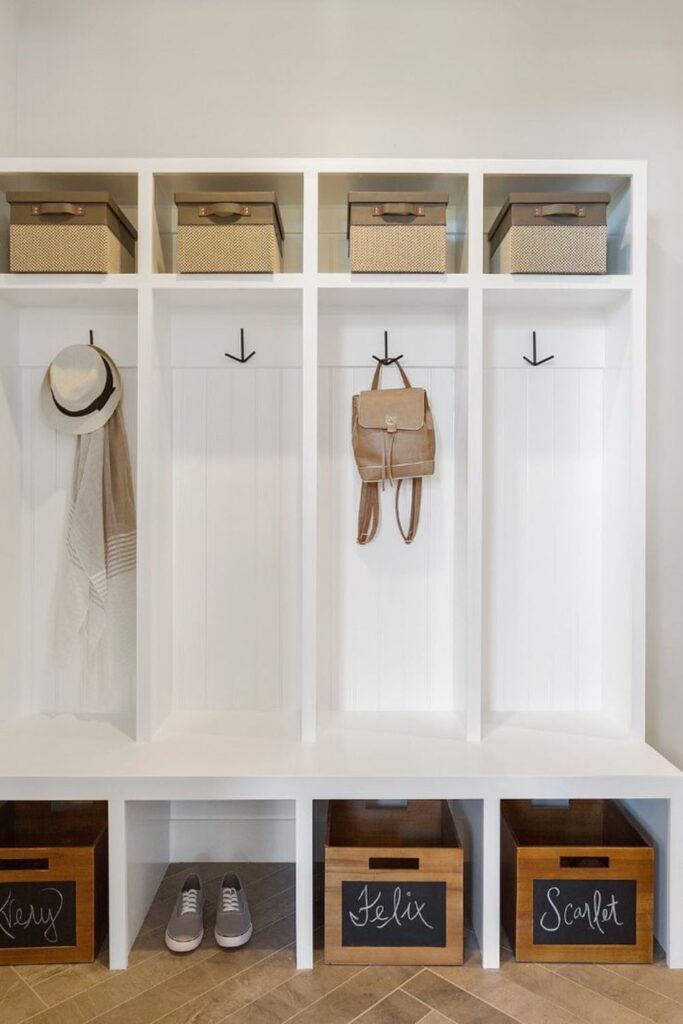
Assigned Spots
Arguments disappear once everyone knows exactly where their stuff belongs. Name labeled bins.
Hooks eliminate the daily where did I put it? dilemma. Shoes remain in place, bags are hung up tidily and the bench provides a quick or unobstructed place to sit.
This setup is perfect for families looking for hallway closet that functions on established habit and not constant nagging.
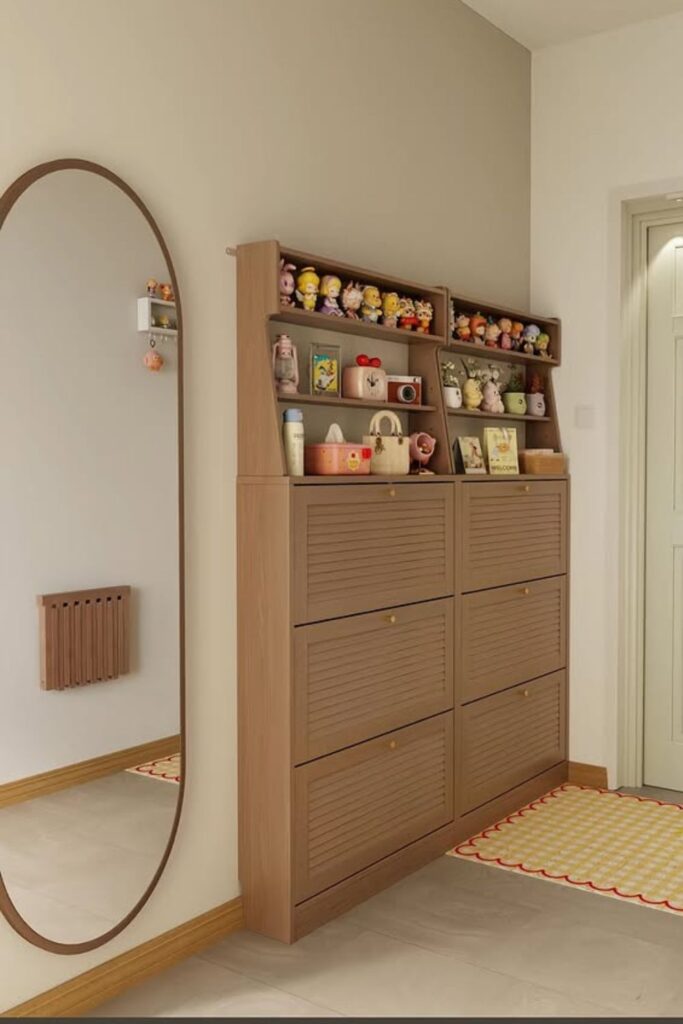
Overflow Storage
Crowded closets breathe again once extra items move outside the door. A slim cabinet in the hallway catches shoes, bags.
Everyday objects that don’t warrant prime closet real estate can find a home here. Open shelves up top are perfect for displaying things or keeping them accessible for kids.
While closed compartments conceal the less-than-tidy stuff below. This setup shines when you’ve got wall space in the hallway, but the closet is already bursting at the seams.
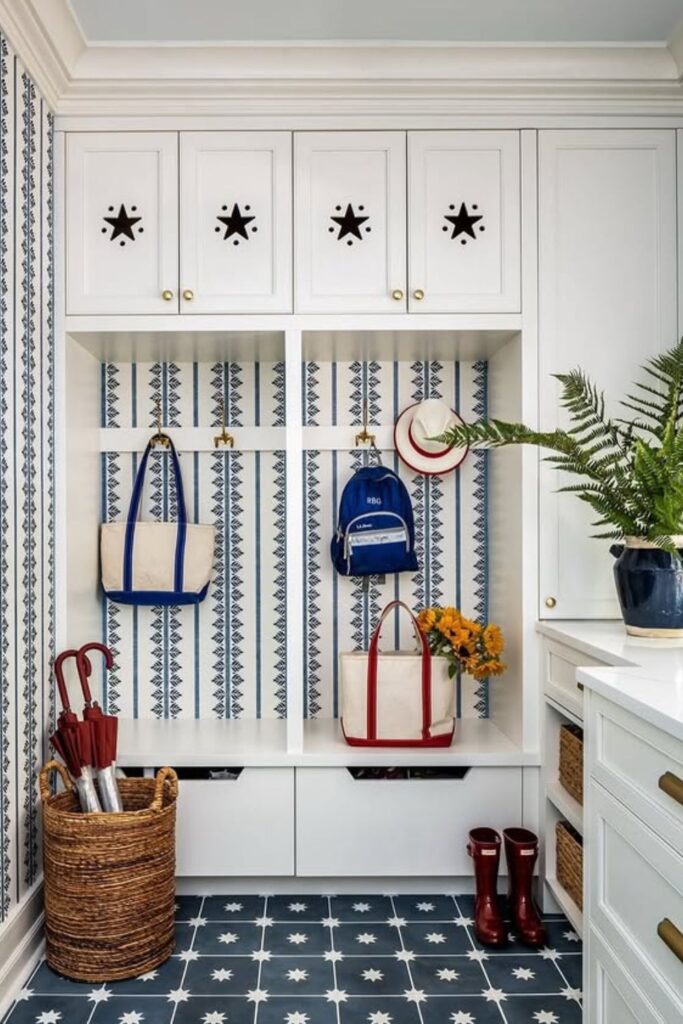
Drop Station
Coming home should feel automatic not messy. Hooks at eye level catch bags and hats the second you walk in.
Drawers tucked beneath conceal the less than desirable items. Closed cabinet overhead store backup and seasonal gear keeping the countertop clear.
This arrangement shines in hallway closets situated near the entrance the initial landing zone for clutter that tend to multiply quickly.
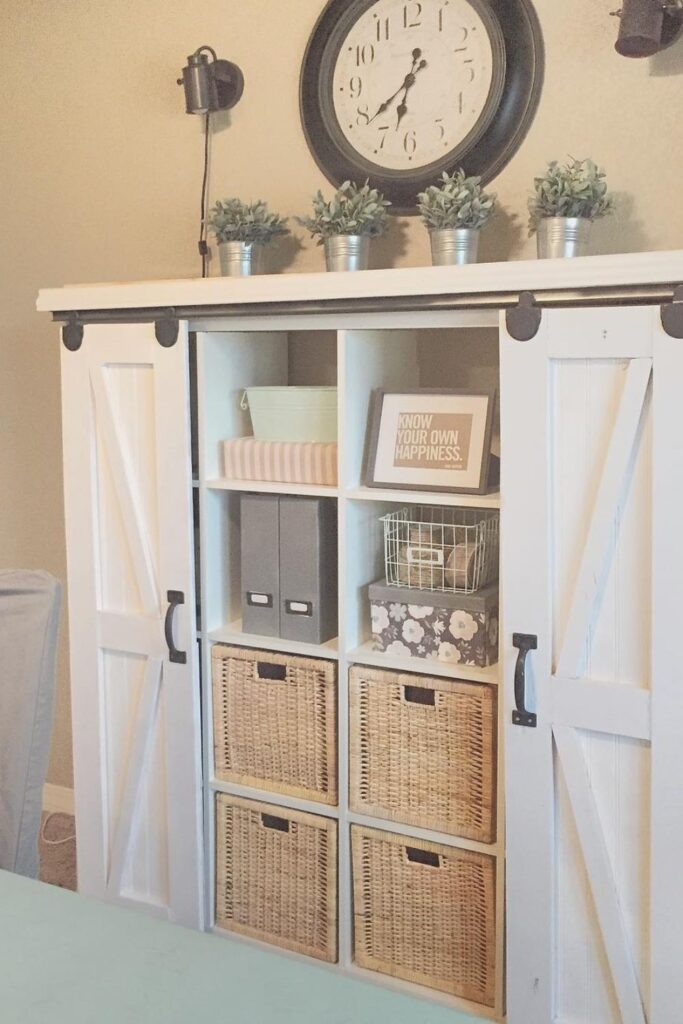
Sliding Storage
Mess stays out of sight without losing easy access. Sliding doors hide visual clutter while cubbies inside keep items grouped and reachable.
Baskets corral the odds and ends while shelves accommodate boxes and files. The surface above serves as a convenient if temporary, landing spot.
This arrangement is ideal for corridors especially when a closet seems inadequate and you require more storage without the permanence of built-in units.
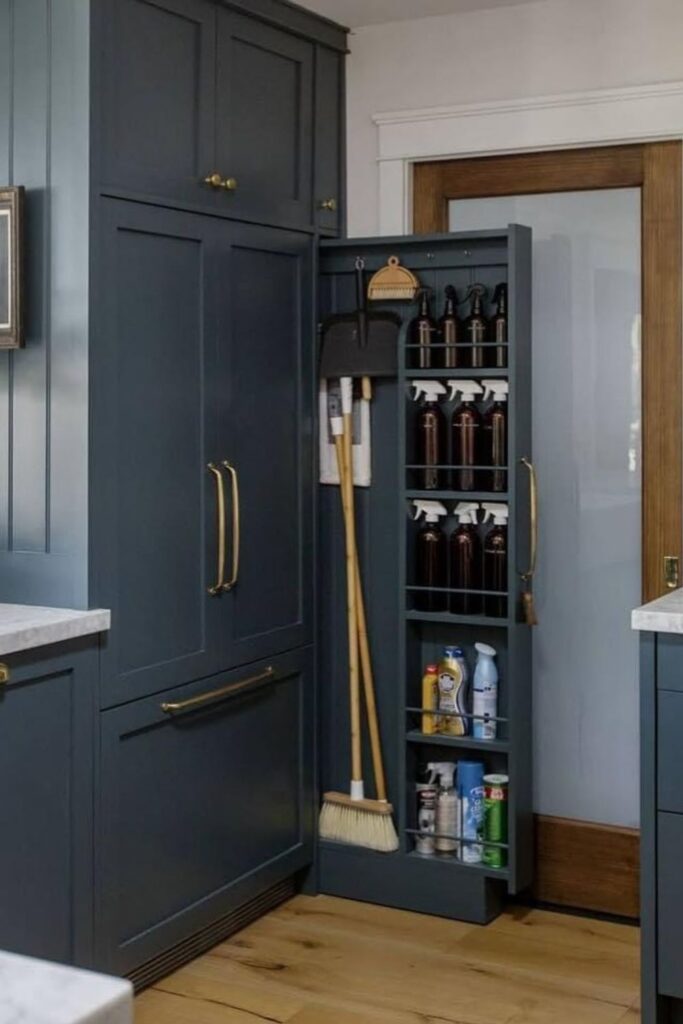
Pull-Out Pantry
Awkward gaps stop going to waste once storage moves sideways. A slim pull-out cabinet keeps cleaning sprays, tools.
Tall bottles, simple to reach without a search party. Everythings on display so nothing gets lost in the shuffle.
This setup shines in spots like hallway closets and utility areas and you are short on depth but have plenty of height to work with.
Rotation Shelf
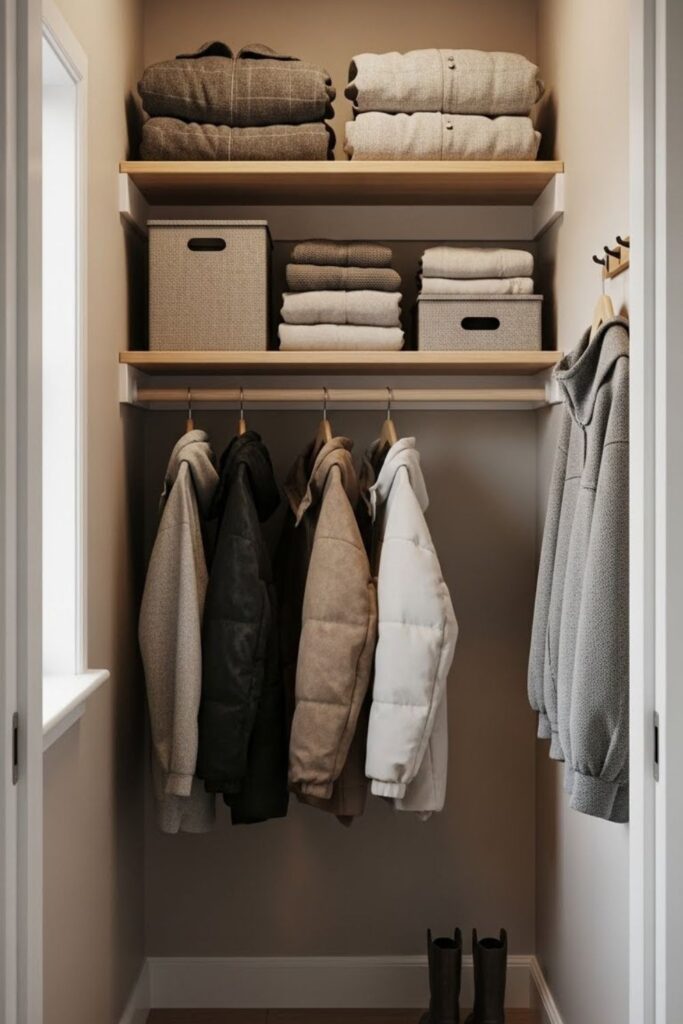
Seasonal overload happens because everything stays visible all year. A single rotation shelf near the top fixes this fast.
Keep just off-season goods in that space, and commit to swapping them out twice a year. If it does not fit on that shelf it does not belong.
This approach is particularly effective in narrow hallway closets where seasonal coat and sometimes commandeer valuable every day space.
Exit Tray
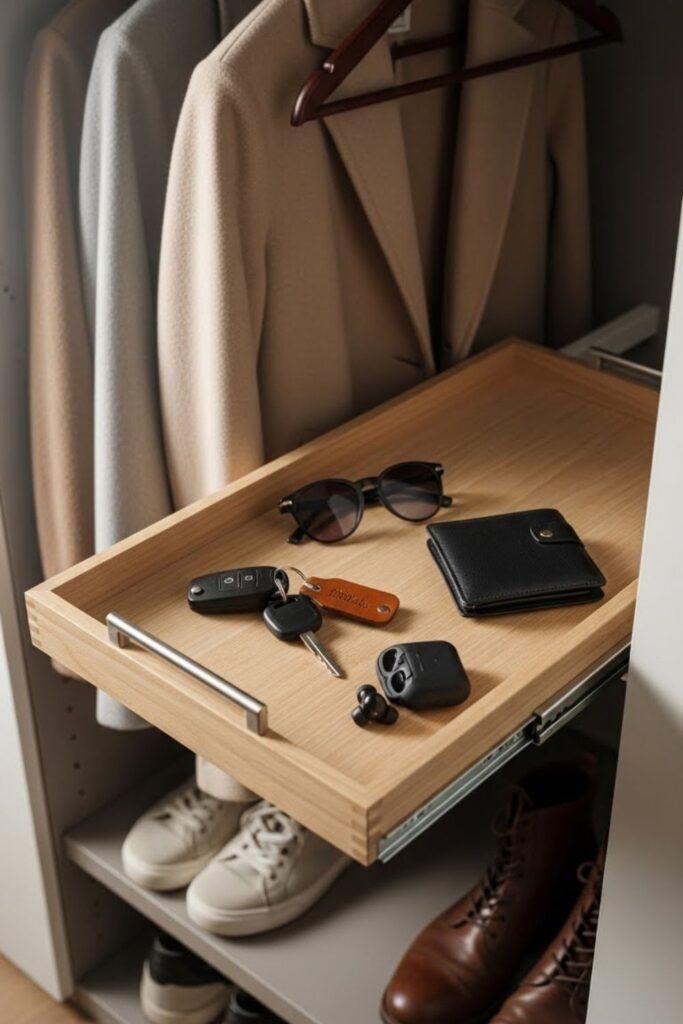
Rushing out the door turns small items into daily clutter. A shallow pull-out tray inside the closet catches keys, wallets, sunglasses and passes in one motion.
No digging around, no frantic searches. Simply install it at eye level, and it’ll seamlessly integrate into your routine.
Ideal for individuals who consistently misplace their keys, wallet or phone right before heading out the door.
Soft Divider
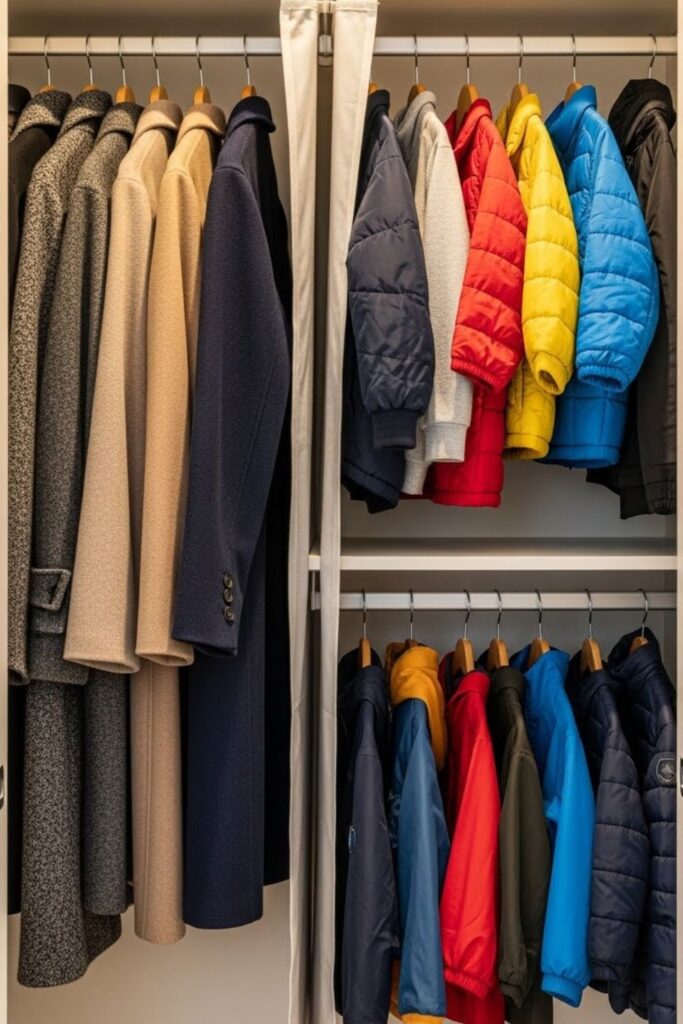
Hanging chaos starts when coats blend together. Fabric dividers slid onto the rod break space without hardware or tools.
Heavy coats and light jackets are kept apart, and adult clothing doesn’t end up mixed with children’s things.
This system shines in shared hallway closets, where a single rod does the work and visual chaos may quickly become a problem.
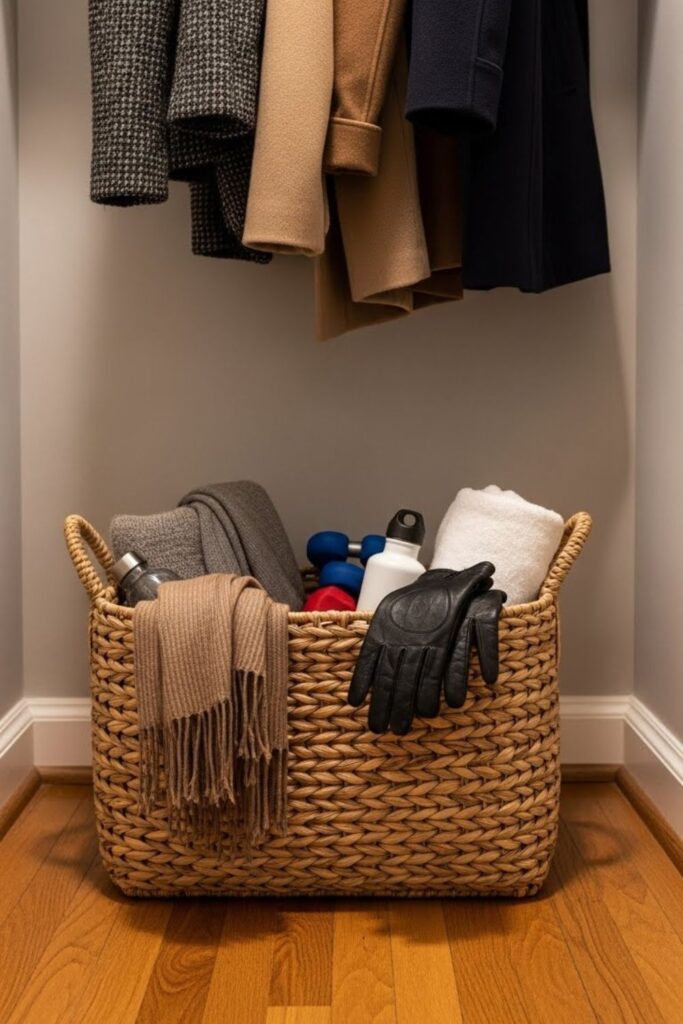
Drop Basket
Floor clutter usually comes from items with no “temporary home.” A single open basket at the bottom of the closet solves that.
Dump your scarves, gloves, or workout clothes in there no need for a precise arrangement. Clear it out weekly.
This approach suits hectic homes that crave order with out the burden of constant upkeep or striving for flawlessness.
Height Reset
Mess builds when everything lives at the same level. Resetting heights fixes that instantly.
Lower hooks and shelves to a comfortable arms reach, and reserve the upper space for items you never use.
It’s a smart move for any hallway closet, particularly those you find yourself opening several times a day.
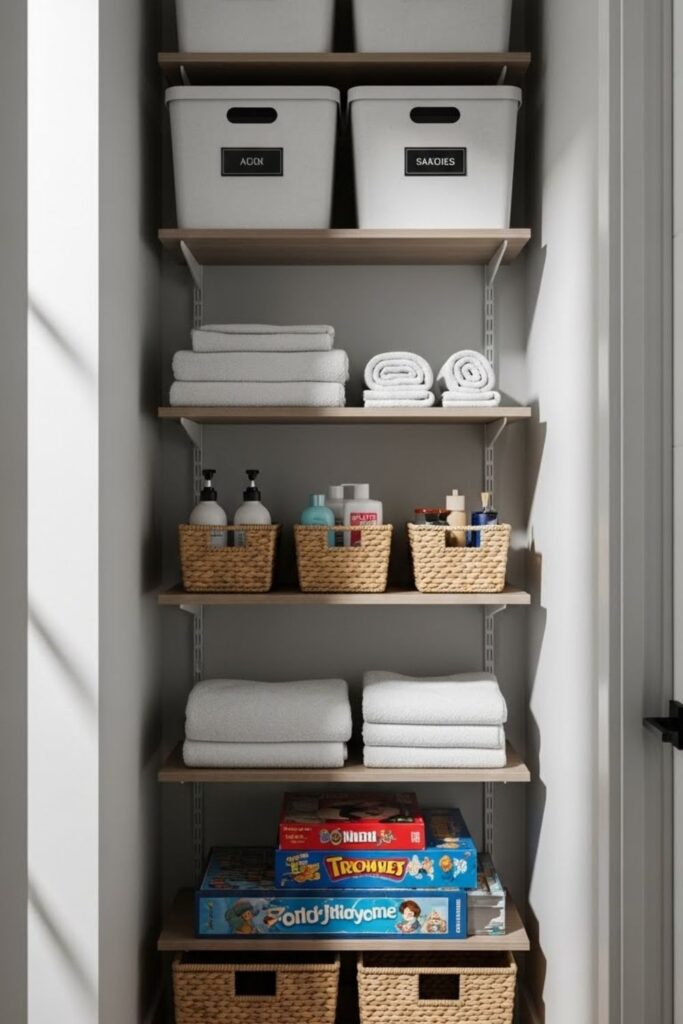
One Rule
Keeping things organized is easier when the rules are straightforward. The “one in, one out” approach is ideal for hallway closets.
Each time you bring in a new coat, bag, or pair of shoes, you have to make an immediate choice. No excess, no procrastination.
This method is the particularly effective in smaller homes and closet space may fill up surprisingly quickly.
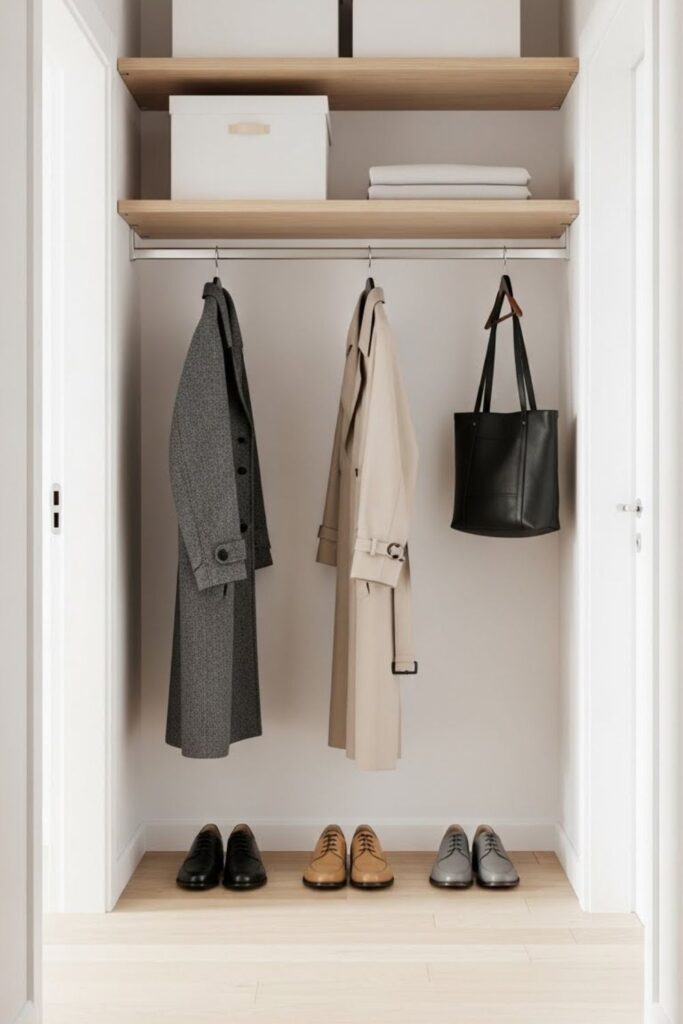
FAQs
Why does my hallway closet get messy even after I organize it?
Hallway closets often struggle when they’re forced to accommodate everyday essentials, seasonal gear and miscellaneous odds and ends all at once.
Without a clear distinction between often used things and those that are only occasionally needed, the chaos quickly returns. The solution lies in fixing the system itself, not just the visible mess.
No, concealing everything just complicates things. The things you use every day should be easy to see and grab.
Extra stuff, like seasonal clothes or things you do not use often, can be tucked away behind closed doors or up on a shelf.
You may like to read!
- 27 Pantry Organization Ideas
- 24 Family Organization Wall
- 26 Kitchen Drawer Organization
- 20 Shelf Organization Ideas
- 24 Art Studio Organization Ideas

Fasial is the founder of the Fizzy Flare. He has been a passionate blogger since 2021. He ran three different websites in the past few years. Now he is focusing on Fizzy Flare to build an audience and help them organize their life.