22 Gym Organization Ideas for 2026
This post may contain affiliate links: full affiliate disclosure.
You know how it feels if you’ve ever almost stumbled over a dumbbell in the gym. There are plates arranged in various places.
Under the bench is one weight. Another one is somehow behind the door. Your training space suddenly looks like a storage room.
And the worst part. That mess slowly takes away your drive. You squander time trying to find the proper weight.
You seem to be distracted. It can even feel dangerous at times. The truth is that you aren’t messy. You just don’t have a good way to store things.
In this article, you will discover 22 brilliant gym organization ideas.These solutions will help you create a cleaner, more functional space in your home.
Let’s jump in!
Contents
- 1 How Do You Store Weights and Dumbbells Safely and Neatly?
- 1.1 Rolling Rack
- 1.2 Built Storage
- 1.3 Cube Shelves
- 1.4 Wall Grid
- 1.5 Pegboard Wall
- 1.6 Slatwall Storage
- 1.7 Mobile Station
- 1.8 Panel Board
- 1.9 Fitness Pegboard
- 1.10 Peg Panels
- 1.11 Display Wall
- 1.12 Mat Hooks
- 1.13 Closet Gym
- 1.14 Wall Cabinets
- 1.15 Rack System
- 1.16 Ball Shelves
- 1.17 Stair Storage
- 1.18 Medal Display
- 1.19 Band Hooks
- 1.20 Vertical Rack
- 1.21 Corner Panel
- 1.22 Plate Wall
- 2 FAQs
How Do You Store Weights and Dumbbells Safely and Neatly?
You shouldn’t leave your weights on the floor. You could trip, damage your floors, or, worse, harm your back if you pick them up the wrong manner.
Being neat isn’t the only thing that matters when it comes to storing things. It’s about keeping you safe and making your workouts easier.
Get things off the ground first. Put each pair of dumbbells on a strong rack so they don’t get mixed up. Put bigger weights on lower shelves so they are simpler to lift safely.
Put dishes on a plate tree or hang them on pegs near your rack. Keep things you use a lot close by. Your gym stays clean and you stay focused when everything has a place.
Save this article for later! 👇👇

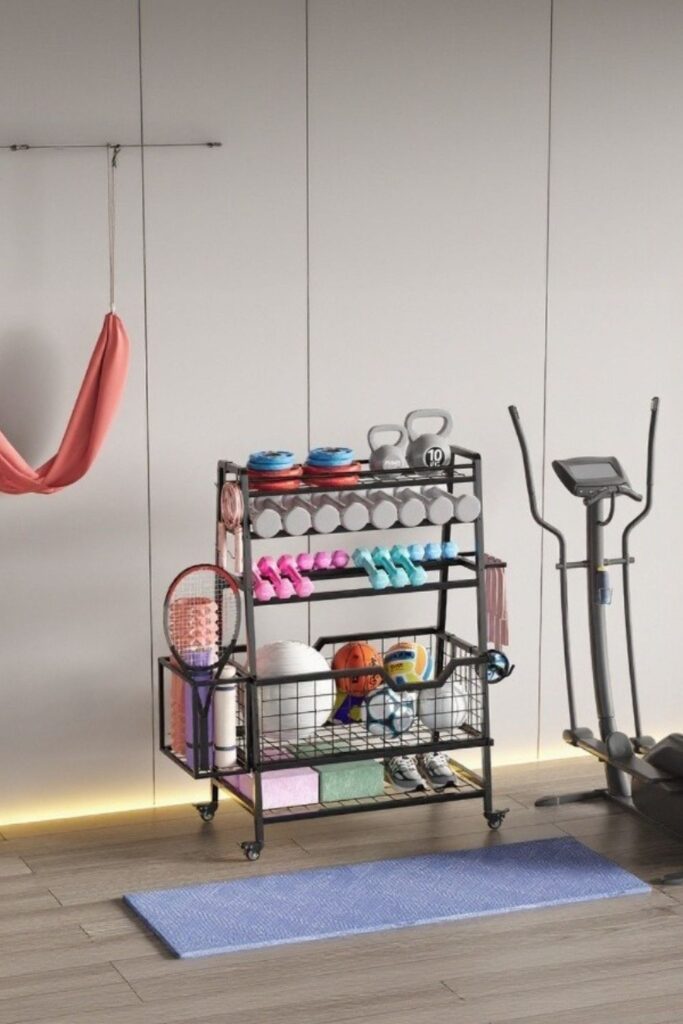
Rolling Rack
Workout gear tends to pile up fast dumbbells here bands somewhere else, a yoga block hiding under the bench. A rolling storage rack fixes that chaos in one move.
Everything stays in view, organized, and easy to reach. The open shelves on top are great for storing lighter dumbbells and kettlebells that you use a lot.
The central bar segment retains smaller weights in a straight line so they don’t slide around on the floor.
Bigger things like balls, resistance bands, yoga blocks, or even shoes can fit in the lower baskets.
The wheels are what really matter. When you need room, slide the rack closer to you while you work out and roll it back against the wall.
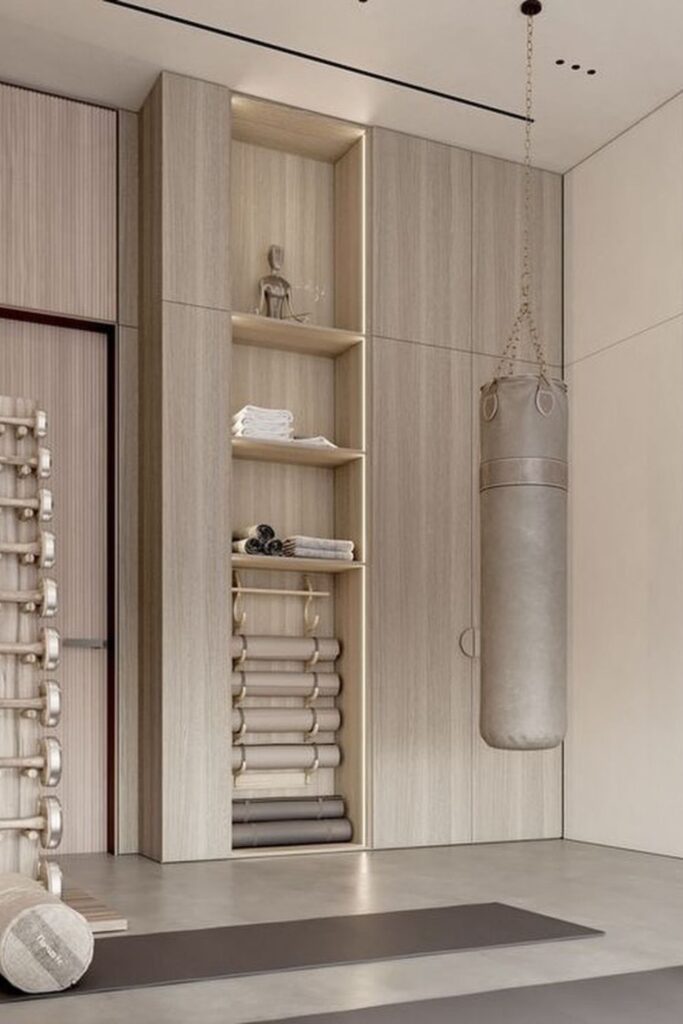
Built Storage
Clutter disappears the moment storage becomes part of the room itself. Built-in shelving like this turns an ordinary wall into a clean workout station.
Everything stays in view, organized, and easy to reach. The open shelves on top are great for storing lighter dumbbells and kettlebells that you use a lot.
The central bar segment retains smaller weights in a straight line so they don’t slide around on the floor.
Bigger things like balls, resistance bands, yoga blocks, or even shoes can fit in the lower baskets.
The wheels are what really matter. When you need room, slide the rack closer to you while you work out and roll it back against the wall.
Cube Shelves
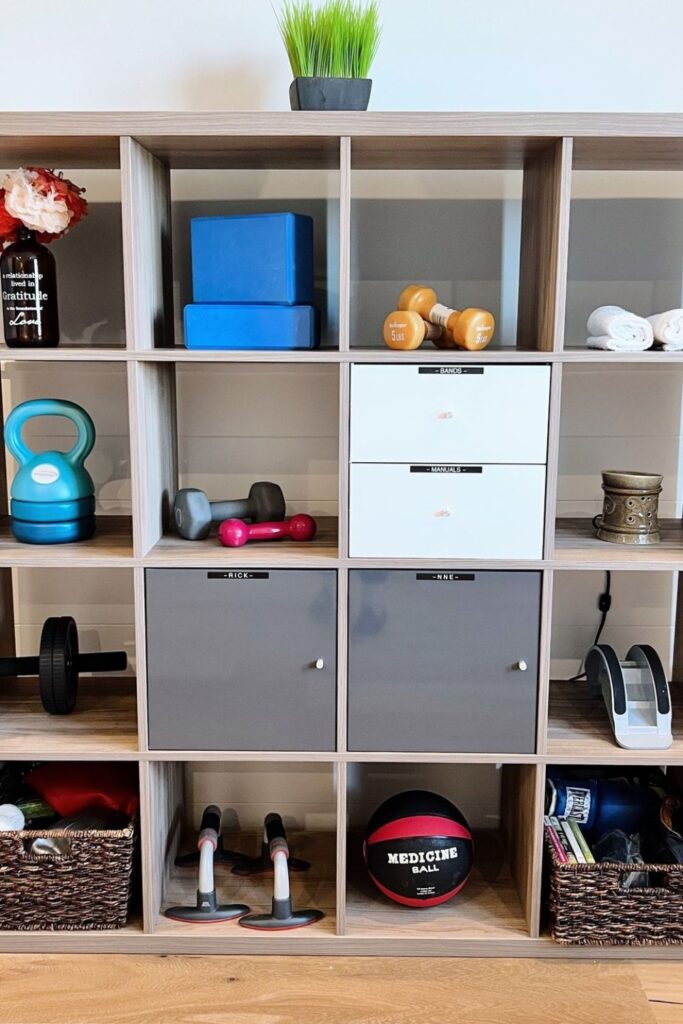
A simple cube shelf can quietly turn a messy workout corner into a system that actually works. Separate compartments stop everything from mixing together.
This makes it much easy to find the correct gear when you work out. Open cubes are perfect for anything you use a lot, including kettlebells, small dumbbells, yoga blocks.
You don’t have to sift through bins before every set if you keep them out in the open. Resistance bands, wraps, and other small items that tend to make a mess can be kept in drawers.
Some cubes have woven baskets inside them that help keep things organized. They are great for jump ropes, gloves, or stretching straps that usually become tangled.
Placement is also important. Put a shelf like this against a wall next to your workout mat so that everything is easy to get to but not on the floor.
Wall Grid
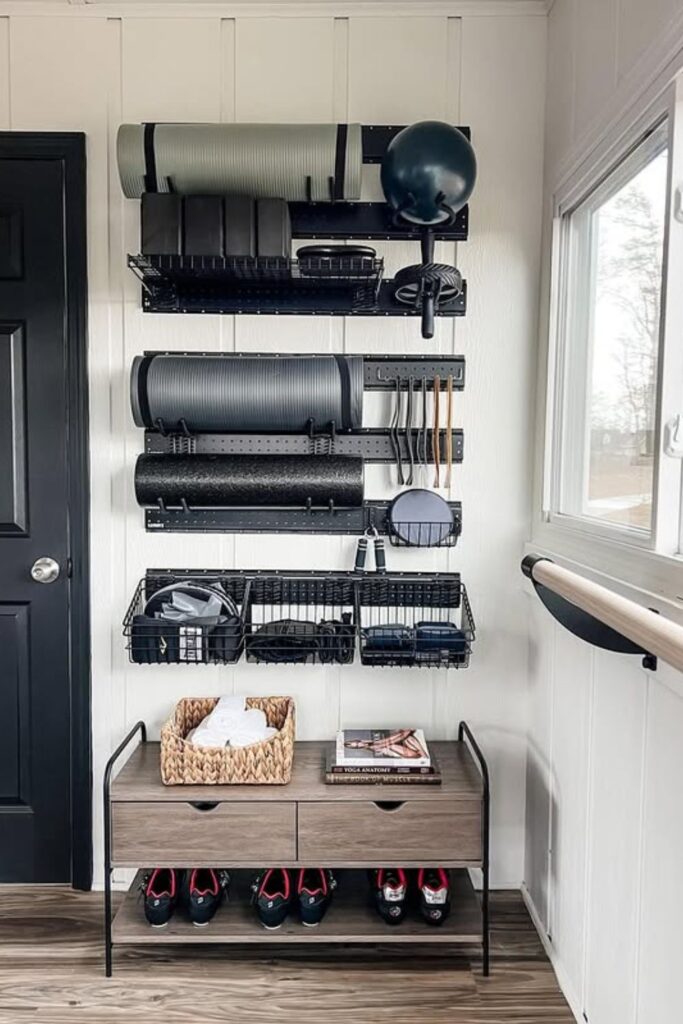
Floor space disappears quickly in a home gym, especially once mats, rollers, bands, and accessories start piling up.
A wall grid system fixes that by putting almost everything on the wall in a neat vertical configuration.
With these perforated panels, you can easily snap shelves, hooks, baskets, and holders into place wherever you need them.
Foam rollers fit perfectly onto horizontal hooks, yoga mats sit on strong bars, and training bands hang without getting tangled.
Small baskets are great for holding gloves, wraps, or mobility items that tend to get misplaced in drawers.
Pegboard Wall
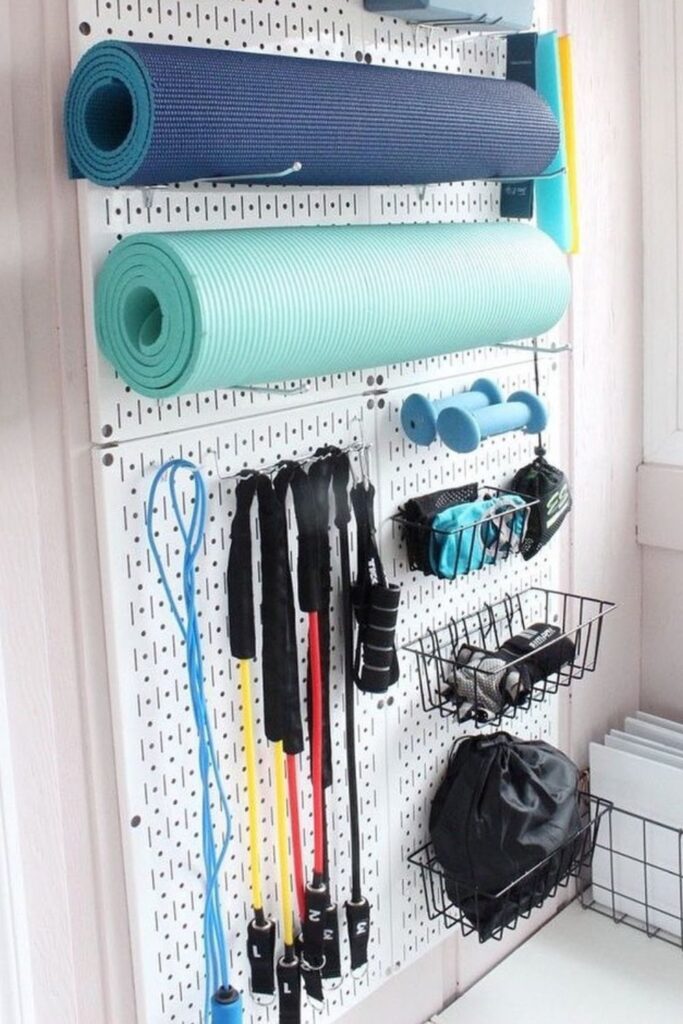
Equipment that’s used often should never end up buried inside drawers or bins. A pegboard wall keeps everything visible, reachable, and neatly separated.
So workouts can start right away without having to look for missing gear. Horizontal hooks keep rolled-up yoga mats safe and out of the way.
So they’re always ready for the next class. Instead than getting tangled up in a bag, resistance bands hang straight down.
Small dumbbells and other gear can be easily grabbed during fast circuits or warm-ups since they fit nicely on hooks or baskets that are mounted.
Wire baskets give another helpful layer. They hold things that don’t hang properly, such gloves, wraps, little towels, or mobility tools, while still letting you see everything.
Slatwall Storage
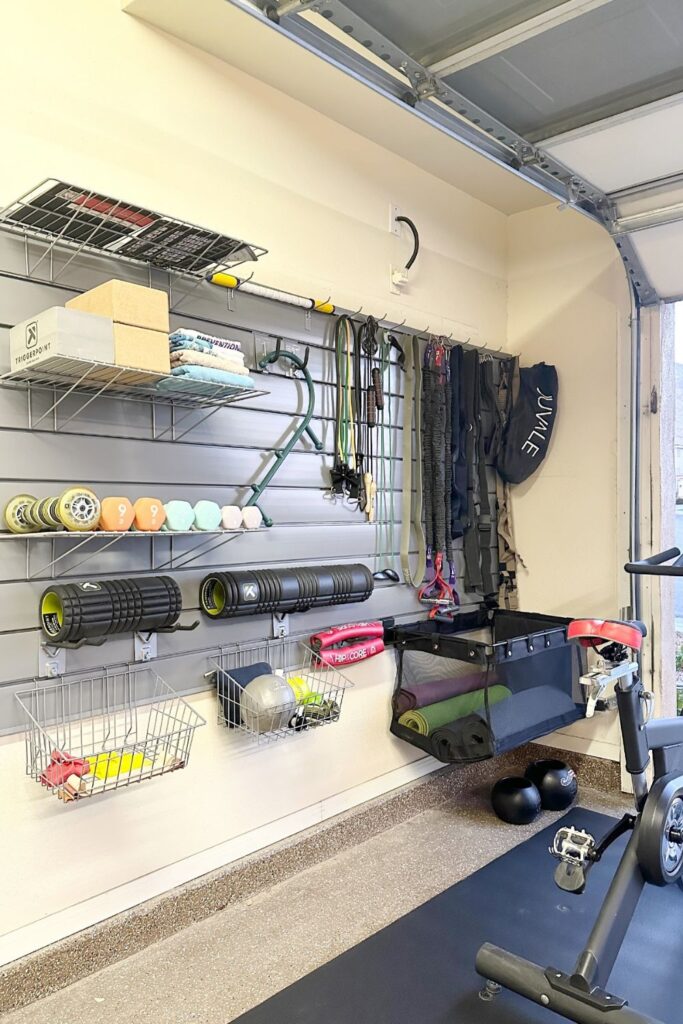
Blank walls inside a garage gym hold far more potential than most people realize. A slatwall system turns that empty surface into a flexible storage station.
That can hold practically all of your workout stuff in one location. Metal shelves can easily hold lighter dumbbells, towels, and small boxes.
Long hooks keep resistance bands, suspension trainers, and straps from becoming tangled up in drawers.
Foam rollers and mobility equipment slide onto horizontal mounts, which keeps them safe but still quick to get to before a workout.
Wire baskets provide you more room for things that don’t fit well on shelves, such massage balls, lifting gloves, or little accessories.
Mobile Station
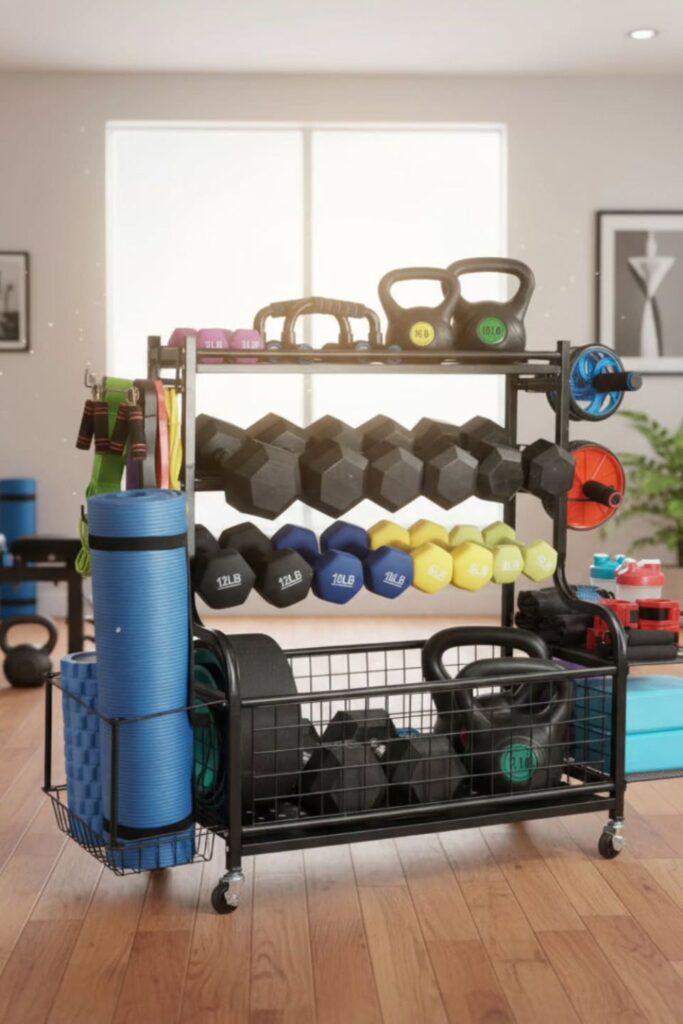
Gym gear often spreads across the room because every item lives in a different place. A mobile storage station fixes that by gathering everything into one organized hub.
Tiered racks make it easy to see where things are. The top shelves hold kettlebells and lighter dumbbells that are used for warm-ups or short circuits.
The middle racks keep heavier weights in place so they don’t roll about on the floor. The lower baskets hold bigger things like extra weights or training gadgets that generally wind.
Side holders make the structure considerably stronger. Yoga mats fit neatly into vertical slots, and hooks keep resistance bands visible and untangled.
The wheels are what make this configuration strong. During workouts, rolling the station closer makes it easy to reach the equipment.
Panel Board
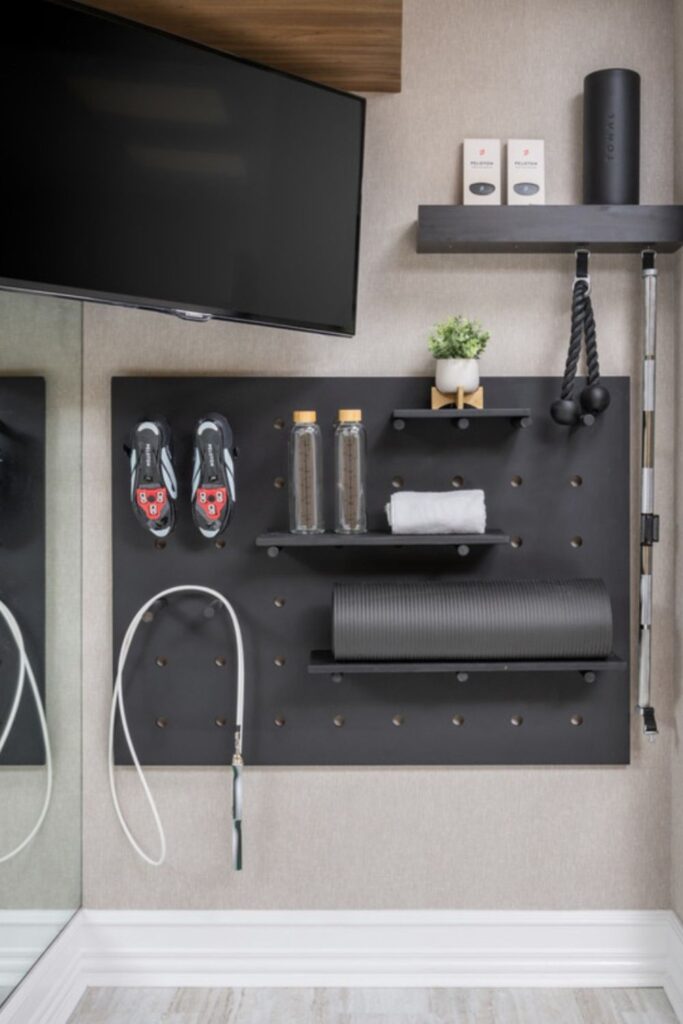
Small workout corners demand smart storage and a panel board like this turns a single wall into a compact command center for everyday gear.
Each accessory gets a clear and easy-to-reach home instead of being left all over the room.
Peg holes make it possible for hooks and shelves to be exactly where they need to be. Jump ropes stay untangled when they hang on hooks.
A strong horizontal shelf holds yoga mats, which keeps them clean and easy to grab before a practice. Small ledges keep water bottles, towels, or recuperation items from getting.
Long vertical holders on the side hold bars or sticks that normally lean against walls in a way that isn’t right. Simple pegs make it easy to find a home for even cycling shoes.
Fitness Pegboard
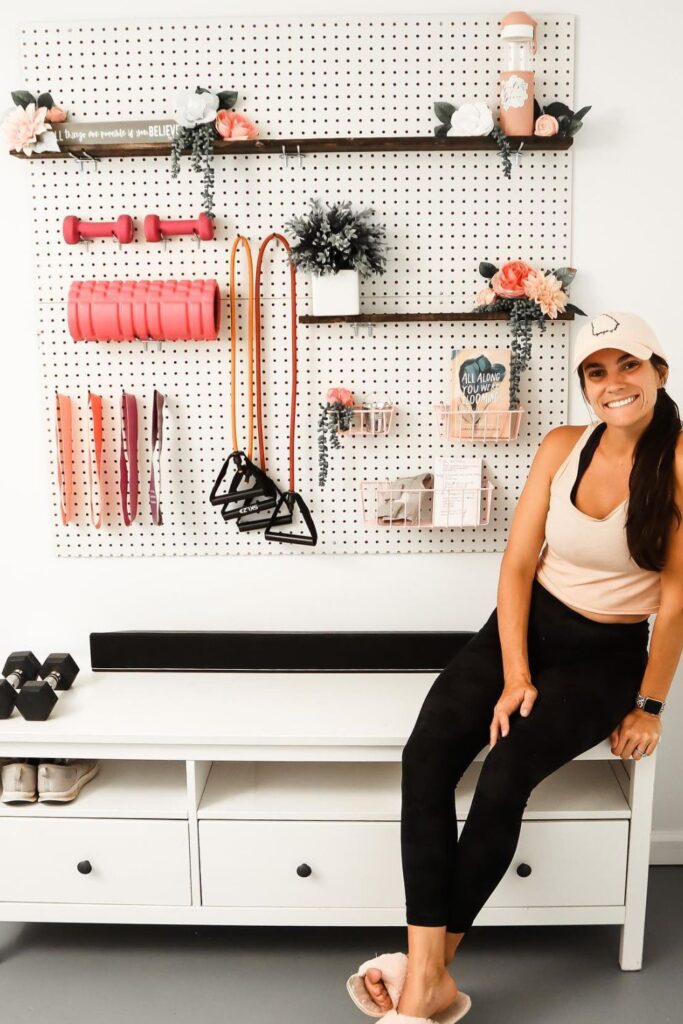
Workout spaces feel more inviting when storage blends function with a bit of personality. A large pegboard like this turns a blank wall into a neat display.
Where everything is easy to find and put away. Adjustable hooks keep resistance bands and training straps from becoming tangled up in a drawer by hanging them straight.
Foam rollers and small dumbbells are on strong brackets that keep them safe and easy to see.
A few wire baskets hold minor things like workout cards, gloves, or accessories that tend to get lost around the house.
Wood shelves on the pegboard provide you more room for water bottles, decorations, or small plants.
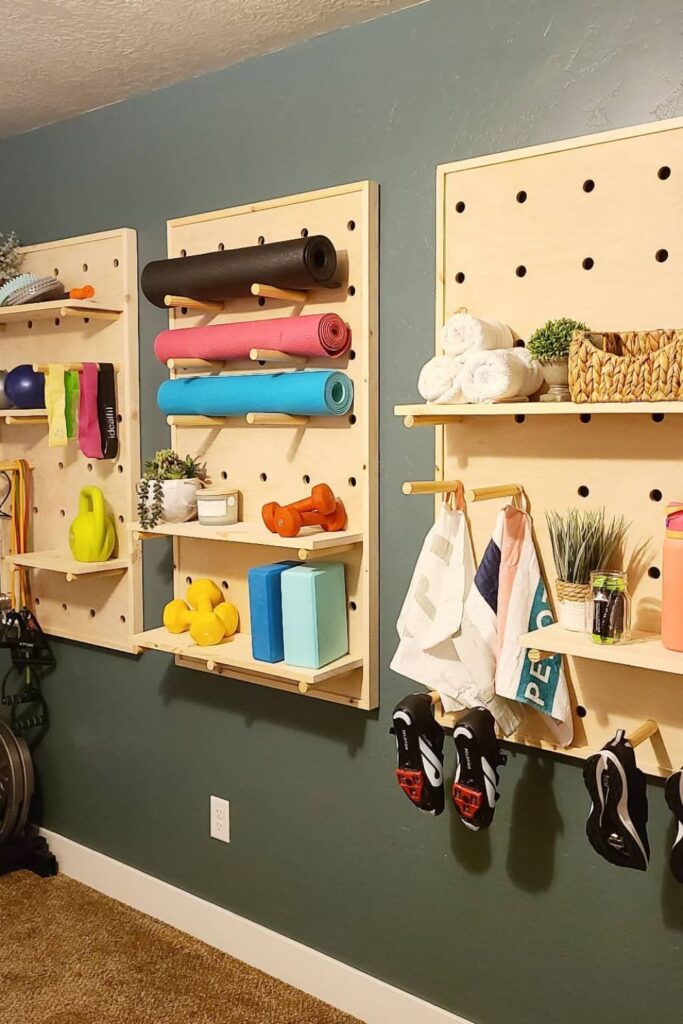
Peg Panels
Workout gear multiplies quickly, and without a clear system it spreads across shelves, corners, and the floor.
These peg panels make it easy to arrange the walls in a way that gives each item its own space without taking up too much area with big cabinets.
Wooden dowels go into the peg holes to make unique supports for rolled-up yoga mats. This keeps them off the ground and easy to grab before stretching or moving.
The panels have small shelves built into them to hold lighter things like dumbbells, yoga blocks, and recuperation equipment. This keeps everything tidy and easy to see.
Lower pegs make it easy to hang up resistance bands, straps, or towels that frequently get tangled up in drawers.
Display Wall
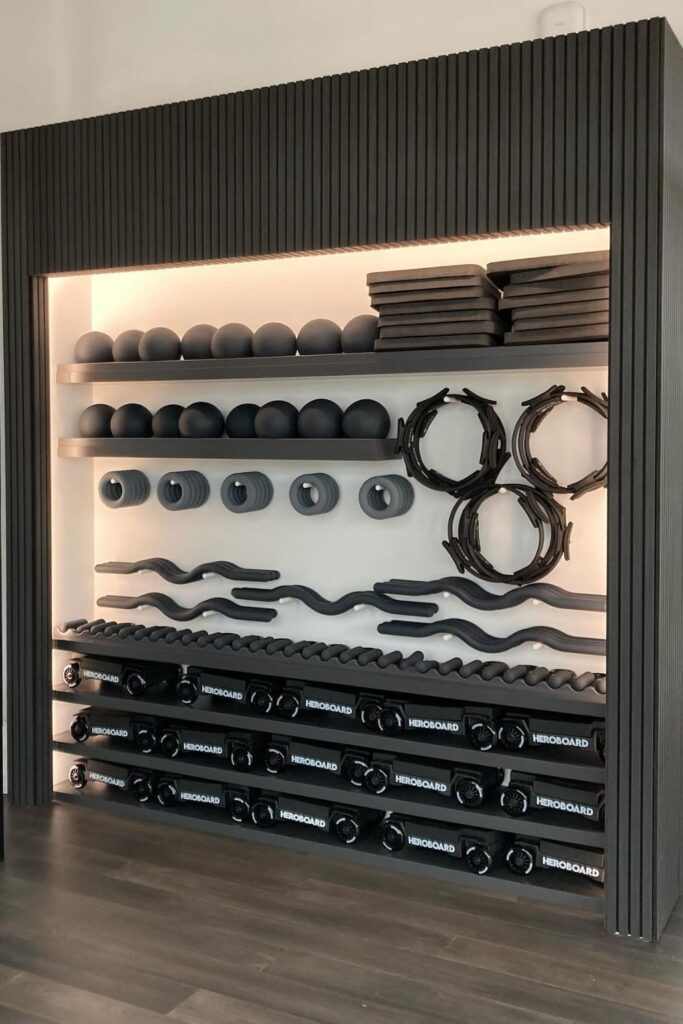
Nothing makes a gym feel organized faster than turning equipment into a clean visual display. A recessed storage wall like this creates a dedicated zone.
Where all the gear fits together perfectly instead of heaping up in corners. Medicine balls and stacked workout platforms are kept on long shelves.
So they are easy to get to but don’t get in the way of exercising. Curved bar holders fixed on the wall keep specialized bars evenly spaced.
Which stops the common problem of bars drooping awkwardly against walls. Circular holders keep mobility tools or resistance rings together without them touching.
Lower racks hold dumbbells or smart weights in a neat row, making it easy to pick the right weight for strength training.
Mat Hooks
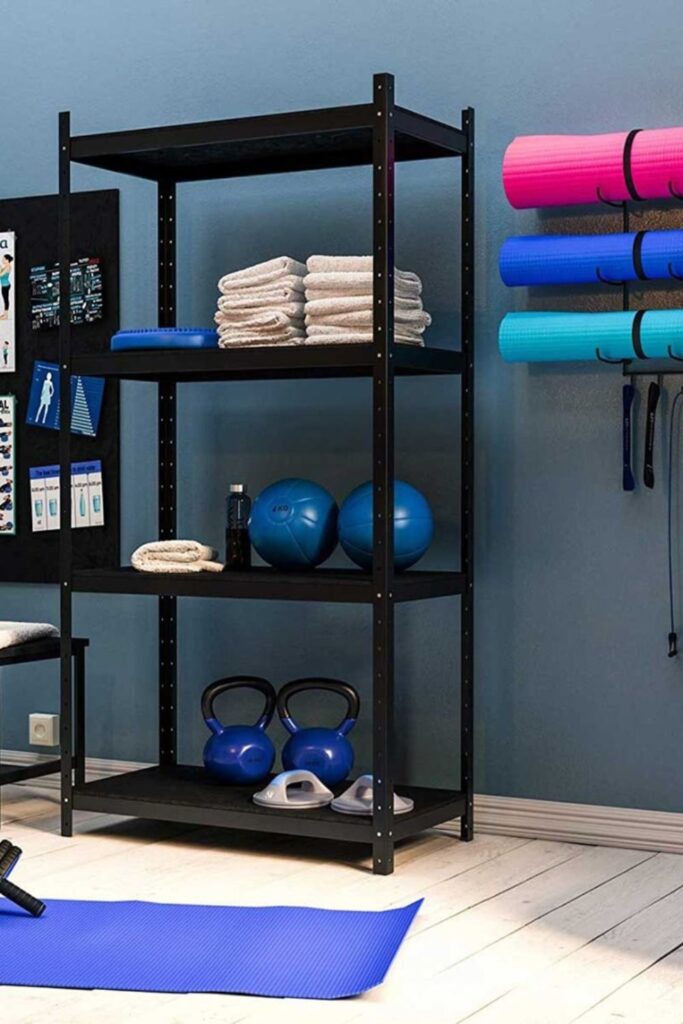
Yoga mats often end up rolled in corners or leaning against walls where they slowly collect dust. A simple wall hook system fixes that problem.
By giving each mat a clean, dedicated spot. Hooks that are mounted on the wall keep the rolled-up mats in place.
Without changing their shape. Putting them vertically on the wall saves room on the floor and keeps the workout area free.
Extra hooks under the mats are a good spot to keep resistance bands, stretching straps, or other light training gear that frequently gets lost in drawers.
It works even better to put this wall storage next to a shelf. The wall keeps bigger things in order, while towels, small exercise balls, or kettlebells can sit on the shelf.
Closet Gym
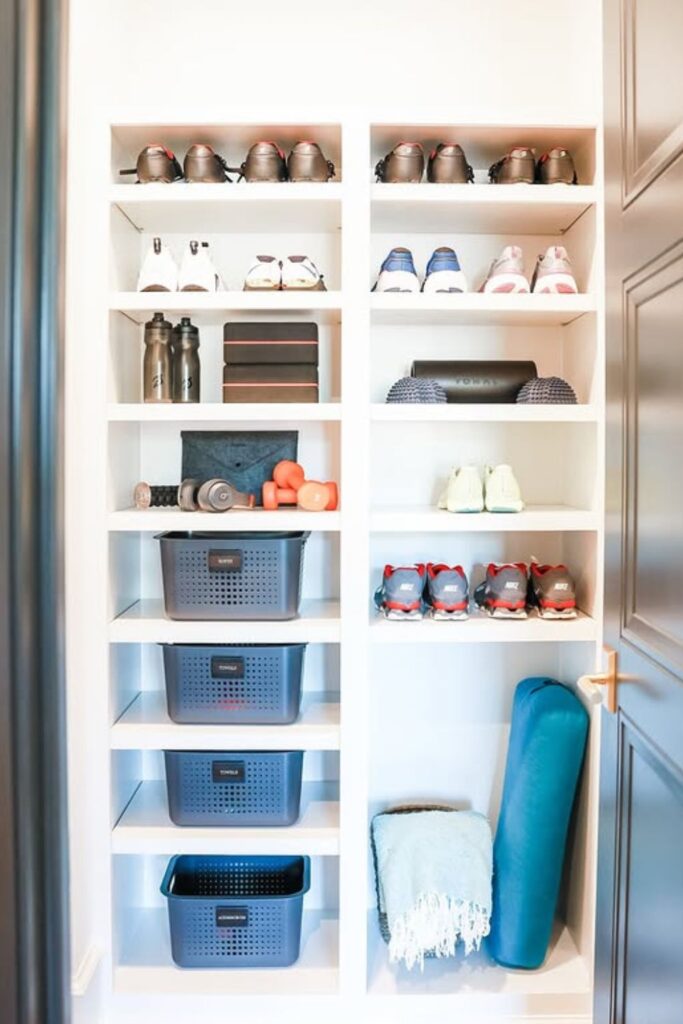
Hidden storage often becomes the cleanest solution when workout gear starts spreading into living spaces.
Changing a closet into a little gym storage area keeps your workout gear tidy without making the whole room a gym.
Shoes, foam rollers, yoga blocks, and water bottles fit wonderfully on open shelves. You can safely put lighter dumbbells on mid-level shelves.
Where they are easy to reach but not in the way. Storage boxes on the lower shelf keep smaller items like resistance bands, wraps, or workout equipment that tend to get lost around the house.
It’s more easier to keep the system up if you keep comparable products together. For example, one shelf for shoes, one for training gear, and one for recovery items.
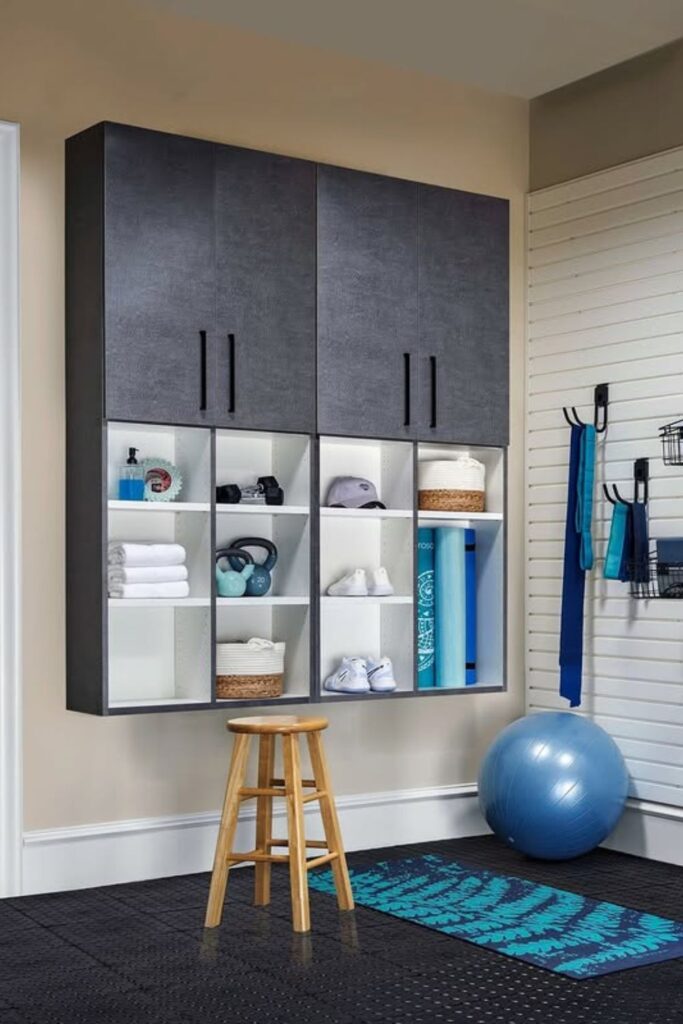
Wall Cabinets
Equipment looks far more organized when storage lifts everything off the floor and groups it in one structured area.
Open cubbies and wall-mounted cabinets work well together to keep workout gear organized and easy to get to.
Open compartments are great for things you use every day, like kettlebells, yoga mats, shoes, and towels.
You can see them all the time, so it’s easy to grab them during a workout. These cubes are great for storing little items like dumbbells or cleaning materials.
Without making the area look messy. Upper cabinets hold things you don’t use every time you work out, such spare gear or seasonal workout accessories.
Rack System
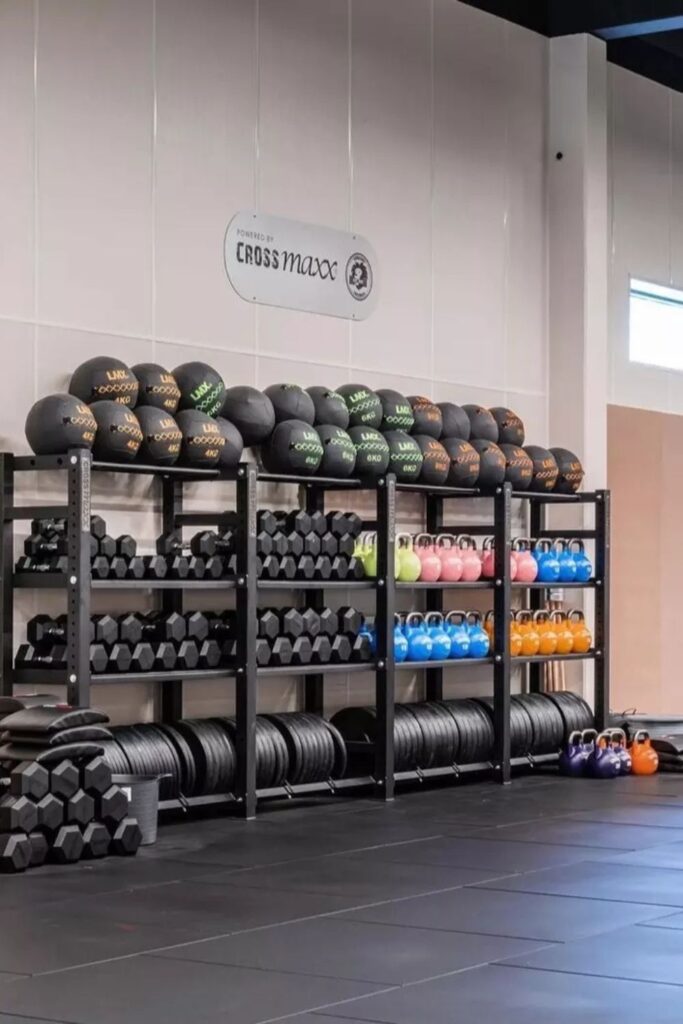
Serious workout spaces stay organized because every weight category has its own level. A multi-tier rack system like this keeps heavy equipment structured.
so that the floor stays free and the training goes well. Upper shelves hold big medicine balls that tend to move around when they’re not in use.
The middle racks organize dumbbells by size, so you can grab the proper pair in seconds instead of having to dig through a pile.
Kettlebells have their own shelves where their handles are easy to grip and don’t get in the way of other equipment.
Lower bars hold stacks of weight plates horizontally, which keeps them from leaning against walls or getting in the way in corners.
Ball Shelves
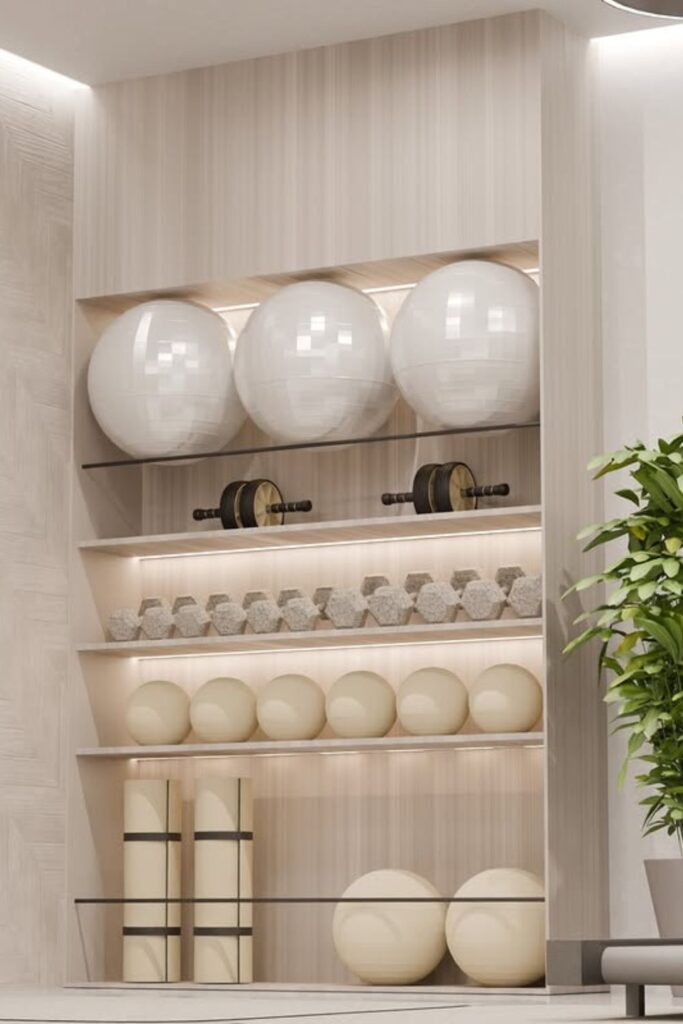
Large workout balls become clutter quickly when they roll around the room. Dedicated open shelves solve that problem by giving every ball a stable place.
where it can be seen yet is out of the way. Wide upper shelves keep stability balls in place so they don’t roll around on the floor between sessions.
Underneath them, slimmer racks hold smaller medicine balls and dumbbells in tidy rows. This makes it easy to find the proper weight without having to look for it.
There are horizontal holes near the bottom that are perfect for storing rolled-up yoga mats. They keep them upright and safe.
With this kind of arrangement, spacing is important. Wide shelves keep bigger balls from slipping off, but they still leave enough space to lift them effortlessly.
Stair Storage
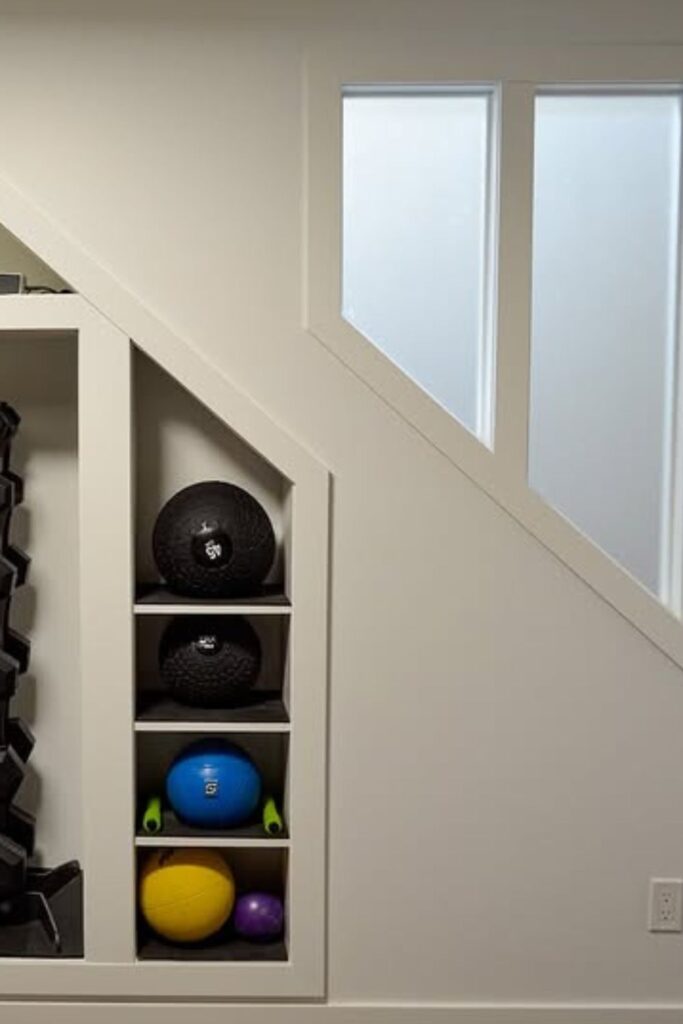
Unused corners under the stairs can quietly turn into one of the smartest storage spots in a home gym.
Instead of leaving that angled space empty, built-in shelves fit precisely along the slope and keep everything organized.
Vertical racks hold dumbbells without spreading them out on the floor, which makes it easier to choose weights during workouts.
Medicine balls and training balls have their own compartments next to the rack, so they don’t roll around the room.
This kind of design works best in homes where the gym is in the same room as other rooms. The storage fits in with the building’s design instead of looking like a pile of training gear.
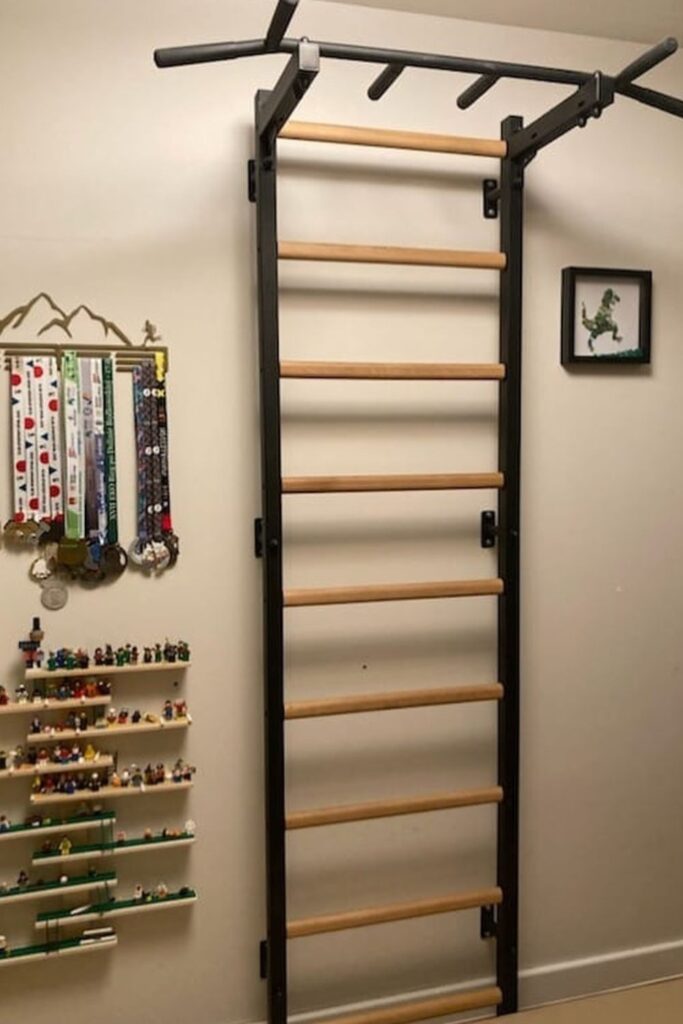
Medal Display
Achievements deserve a place that keeps them visible instead of hidden in drawers. A simple wall-mounted medal rack does exactly that while adding personality to a workout space.
Putting the holder next to a pull-up bar or training ladder makes the wall both useful and inspiring.
Race medals hang on their own hooks, which keeps them from becoming twisted up like they do when they are all in one place.
Seeing them every day might also be a gentle reminder of how far you’ve come and how consistent you’ve been.
Placement is important here. Putting the rack at eye level makes the display easy to see without getting in the way of the workout area.
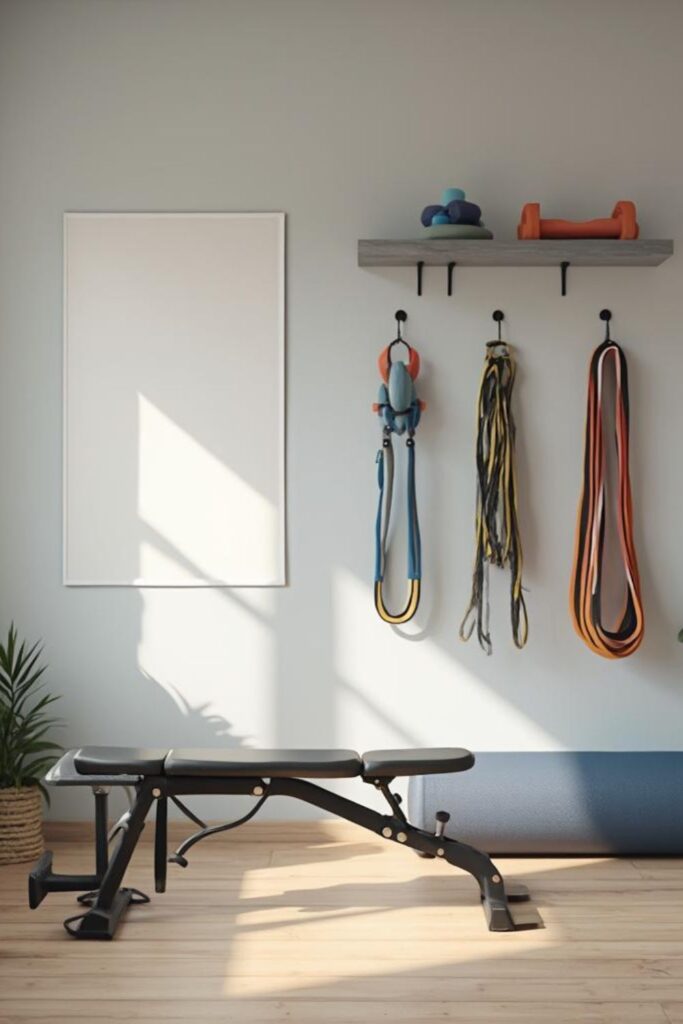
Band Hooks
Resistance bands usually end up stuffed in drawers or tangled inside gym bags. Wall hooks solve that instantly by giving each band its own hanging spot.
When you space the hooks a few inches apart, the bands don’t overlap, which makes them easier to hold during workouts.
Hanging them straight up and down also keeps the material safe because the bands don’t get twisted or folded tightly for lengthy periods of time.
A little shelf above the hooks makes them more useful. You can put light dumbbells, timers, or other tiny gym gear on top without making the floor look messy.
Putting everything on one wall makes a tiny but useful training area. This kind of setup is great next to an exercise bench or a mat for stretching.
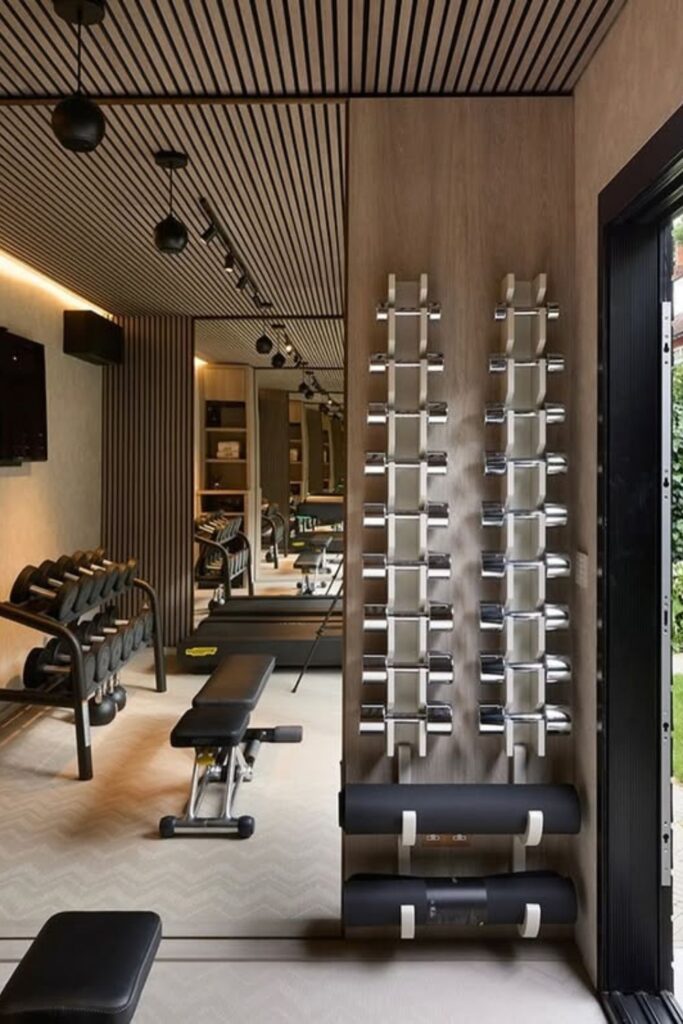
Vertical Rack
Floor racks take space quickly, but vertical storage can hold the same equipment using only a small section of wall.
This vertical dumbbell rack keeps weights piled neatly without taking up too much space.
Each pair of dumbbells fits into its own slot, which keeps them from sliding or bumping into each other.
This setup also makes it easier to choose weights because every pair is evenly spaced and easy to see.
Putting the rack next to a mirror or workout bench keeps the weights close by and maintains the training space tidy.
Corner Panel
Corners usually become dumping spots for workout gear, but a compact wall panel can turn that forgotten space into a clean storage zone.
Putting a peg-style board in the corner right away makes room for shelves, hooks, and holders without making the rest of the gym too full.
Small wooden shelves are great for stacking agility cones, smaller training gadgets, or small items that usually slide around in drawers.
Hooks under the shelves keep resistance bands, suspension straps, and loop bands from getting tangled up by hanging them up.
Lower pegs can hold rolled-up yoga mats or mobility pads, which keeps them off the floor where they stay clean and easy to reach before stretching.
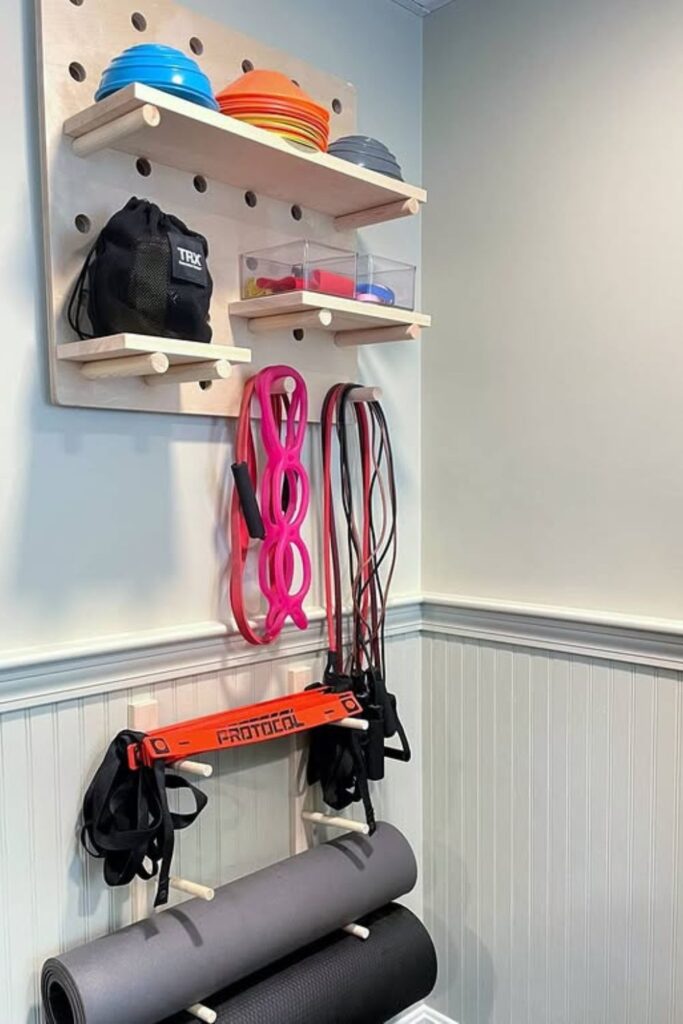
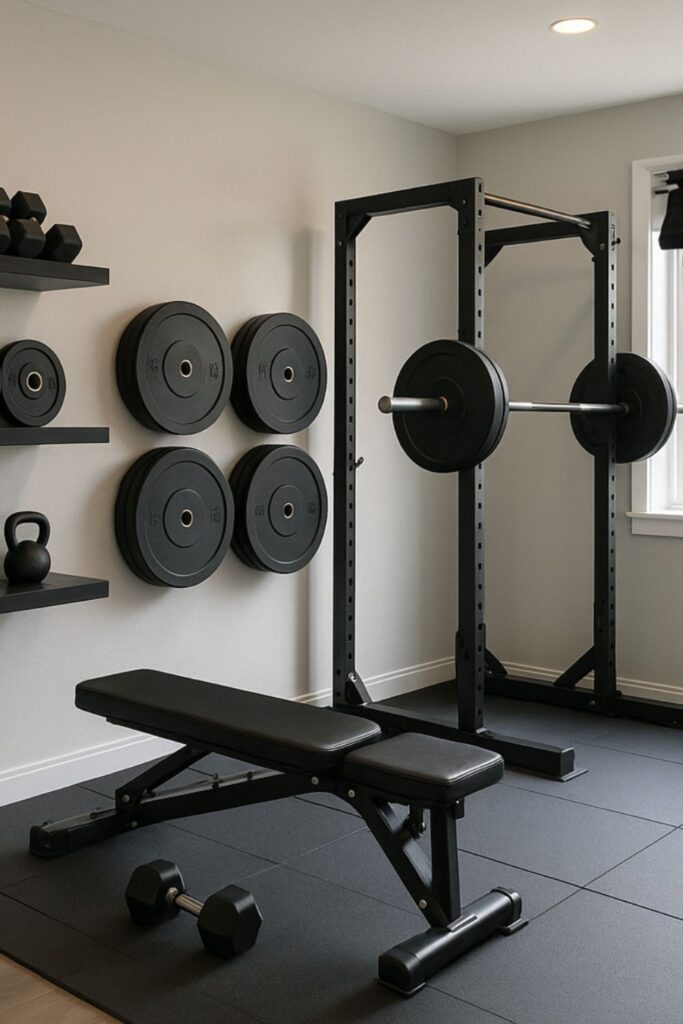
Plate Wall
Weight plates scattered on the floor can make even a clean gym feel cluttered.
Mounting plates directly on the wall creates a simple storage system that keeps heavy equipment organized.
Each plate is held securely by round wall pegs, which also provide a clean grid. Instead of putting plates on the ground or next to the rack.
They are all visible, making it easier to choose the proper weight during workouts. The wall also forms part of the storage plan instead of being empty space.
Nearby floating shelves contain dumbbells and kettlebells in one location, which adds more structure.
Keeping lighter weights off the floor keeps them from rolling around and gives you more room to walk.
FAQs
What is the safest way to store heavy weights in a home gym?
Heavy weights should always be put on strong racks or wall-mounted holders that are made to hold them.
Putting larger plates and dumbbells on lower shelves keeps them from falling and makes it safer to lift them.
A dedicated rack beside your squat rack or bench also cuts down on extra walking during workouts, which helps keep movements safe and controlled.
How can you keep a small home gym organized without taking up too much space?
Vertical storage makes a tremendous impact in tiny gyms. Wall hooks, pegboards, and floating shelves keep things like exercise bands, mats, and dumbbells off the floor.
Putting related things together, like weights in one place and bands in another, also makes the room easier to clean.
The space stays neat and the gym area stays clear for activity when everything has its own spot.
You may like to read!
- 26 Dresser Organization Ideas
- 18 Water Bottle Organization
- 20 Coffee Station Organization
- 21 Small Fridge Organization
- 18 Vanity Drawer Organization

Fasial is the founder of the Fizzy Flare. He has been a passionate blogger since 2021. He ran three different websites in the past few years. Now he is focusing on Fizzy Flare to build an audience and help them organize their life.